Introduction
Avoiding extinctions of species induced by human actions is one of the most significant challenges of the twenty-first century (Groves et al. Reference Groves, Jensen, Valutis, Redford, Shaffer, Scott, Baumgartner, Higgins, Beck and Anderson2002). Brazil, a megadiverse country, holds 13–17% of the world’s biodiversity (Mittermeier et al. Reference Mittermeier, Fonseca, Rylands and Brandon2005). In Brazil, species recovery plans are called National Action Plans for the Conservation of Threatened Species (PAN) and are under the responsibility of the Instituto Chico Mendes de Conservação da Biodiversidade (ICMBio). Their objective is to gather and strengthen conservation efforts, as well as to raise and manage funds for the protection of threatened species (ICMBio 2012). These plans only began to be developed after the Convention on Biological Diversity (CBD) was signed in 1992 (Groves et al. Reference Groves, Jensen, Valutis, Redford, Shaffer, Scott, Baumgartner, Higgins, Beck and Anderson2002). They are also used as Brazilian indicators to measure progress towards Aichi Biodiversity Target 12 (Weigand Jr et al. Reference Weigand, Silva and Oliveira e Silva2011), which aims to ensure that, by 2020, all 1173 threatened animal species in Brazil are being assisted by recovery plans (MMA 2014). However, in 2017, only 643 species (55% of threatened species) were considered in 49 plans (ICMBio 2017a).
In Brazil, historically, most plans have been single-species plans. However, since 2010, to achieve the goal of having all threatened species covered by a recovery plan by 2020 and to minimize costs, a change in strategy has occurred (Andrade Reference Andrade2014), with a tendency to develop plans focused on the conservation of multiple species (ICMBio 2012). As a result, up until March 2018, 64 animal recovery plans (ICMBio 2018) had been published, of which 18 are single-species plans and 46 are multi-species plans. This tendency could be strengthened by the results of the last Brazilian Red List, which included 720 new species, whereas only 170 species were delisted (MMA 2014). However, conservation projects for multiple species experience greater difficulty in terms of recovering populations to achieve a secure status. For example, in Brazil, the Rede BIOMAR project, which has been operational for the last 10 years, aims to protect 56 species, some of them found in six multi-species plans (Fernandes Reference Fernandes2017). However, populations of only two of these species have recovered and were delisted in 2014. The same pattern can be seen between the US delisted species and multi-species recovery plans. Of the 21 recovered domestic vertebrate species in the USA, 13 were included in single-species plans and only two species were included in multi-species recovery plans before delisting (US FWS 2019a, 2019b).
The decision to develop and execute action plans based on single or multiple species is critical to helping biodiversity conservation. Although there are several studies focusing on plans around the world (Male & Bean Reference Male and Bean2005, Taylor et al. Reference Taylor, Suckling and Rachlinski2005, Laycock et al. Reference Laycock, Moran, Smart, Raffaelli and White2009, Reference Laycock, Moran, Smart, Raffaelli and White2011, Reference Laycock, Moran, Raffaelli and White2013, Austin et al. Reference Austin, McVittie, McCracken, Moxey, Moran and White2015) and in Brazil (Andrade Reference Andrade2014, Fileto-Dias et al. Reference Fileto-Dias, Lugarini and Serafini2014, Linares Reference Linares2015, Souza Reference Souza2017), only studies in the USA have compared the effectiveness of plans focused on single species versus multiple species (Boersma et al. Reference Boersma, Kareiva, Fagan, Clark and Hoekstra2001, Clark & Harvey Reference Clark and Harvey2002, Lundquist et al. Reference Lundquist, Diehl, Harvey and Botsford2002). In these studies, the attributes that have been compared are authors with diverse affiliations (Boersma et al. Reference Boersma, Kareiva, Fagan, Clark and Hoekstra2001, Gerber & Schultz Reference Gerber and Schultz2001), the lead partner’s institute (Laycock et al. Reference Laycock, Moran, Raffaelli and White2013), number of lead partner(s) (Laycock et al. Reference Laycock, Moran, Raffaelli and White2013), number of plans in which the lead partner was involved (Laycock et al. Reference Laycock, Moran, Raffaelli and White2013), plan timing (Laycock et al. Reference Laycock, Moran, Raffaelli and White2013) and financial diversity (IPÊ, 2014).
Focusing on a single species is supposedly beneficial because it allows for in-depth assessment of the problems of the species and potentially allows for a focus on particular threats, resulting in the creation of specific management actions (Clark & Harvey Reference Clark and Harvey2002). On the other hand, focusing on multiple species could help save resources (financial and personal) and therefore meet the general needs of a larger number of species (Clark & Harvey Reference Clark and Harvey2002). However, it is unknown whether the management of resources and actions and protection of the species involved is enhanced or the interactions among those involved is hampered by including a larger number of species, geographic area and team in each plan (Bottrill & Pressey Reference Bottrill and Pressey2012) because of difficulties in management, motivation and articulation of the action plan by the advisory group and organizers. In addition, a larger number of species could mean that a greater emphasis might be placed on proposing actions for the conservation of well-known species (e.g., flagship species; La Roe Reference LaRoe1993) to the detriment of those that are less recognized (e.g., rare or uncharismatic species; Boersma et al. Reference Boersma, Kareiva, Fagan, Clark and Hoekstra2001).
The evaluation of the effectiveness of conservation plans is crucial to the design and development of future plans because adjustments can be made based on previous experiences (Laycock et al. Reference Laycock, Moran, Smart, Raffaelli and White2011, Bottrill & Pressey Reference Bottrill and Pressey2012). For all of these reasons, we aimed to evaluate the performance of the recovery plans for the conservation of threatened animal species in Brazil. Specifically, we wanted to: (1) verify and compare the effectiveness (maximization of total conservation gains) and efficiency (maximization of conservation gains per unit of cost) of the action plans focused on single and multiple species; (2) evaluate which of the operational variables of elaboration and execution contributed to the effectiveness and efficiency of the Brazilian action plans; and (3) group the plans based on this set of variables. Our hypothesis was that single-species plans are more effective because the focus on one species positively influences institutional management as the operational characteristics of the team (size, diversity, focus) facilitate the implementation, monitoring and execution of the plans, possibly combating threats and assisting in the conservation of the species.
Methods
Data Collection
First, we selected 24 recovery plans considering the following criteria: (1) plans designed for animal conservation; (2) plans completed in a single phase of 5 years by 2017; and (iii) plans with a monitoring data sheet available online. Subsequently, we selected a total of 16 plans in order to have eight for each type (single species and multiple species). The single-species plans evaluated were: Araripe Manakin, Restinga Antwren, Jaguar, Maned Wolf, Brazilian Bare-Faced Tamarin, American Manatee and Amazonian Manatee. Besides the plans with one species, we decided to categorize Muriquis as single-species because it includes two species of the same genus with adjacent distribution (Jerusalinsky et al. Reference Jerusalinsky, Talebi and de Melo2011). The multi-species plans were: Island’s Herpetofauna, Central Atlantic Forest Mammals (MAMAC), Birds of Caatinga, Passerines of the Southern Fields and Espinilho, Parrots of the Atlantic Forest, Cervids, Southern Herpetofauna and Migratory Shorebirds (for details, see Supplementary Table S1, available online).
After selecting the plans, we elaborated and sent questionnaires to articulators (n = 297), responsible for articulating the implementation of their actions, and coordinators (n = 16), responsible for coordinating the implementation, monitoring and evaluation of each plan (ICMBio 2012). These questionnaires (Appendix S1) included a variety of questions about the ecological, financial and institutional context of the plans such as severity of the threats, origin and expenditure of resources and changes that improved the plans. Such questionnaires were adapted from the models applied by Cifuentes et al. (Reference Cifuentes, Izurieta and Faria2000) and Bottrill and Pressey (Reference Bottrill and Pressey2012). We also reviewed the documents available on the ICMBio website (books, executive summaries, portfolios and monitoring data sheets) to find information on the plan attributes that were not answered by the questionnaires.
Parameters of Effectiveness and Efficiency of the Plans
For each selected plan, we measured two metrics of effectiveness (percentage of completed actions (%CA) and threat reduction assessment (TRA); Salafsky & Margoluis Reference Salafsky and Margoluis1999) and two efficiency metrics (cost per action completed (cost-%CA) and cost per threat reduction (cost-TRA)). The %CA and the total cost of execution of each plan data were available in the final monitoring data sheets of each plan. To calculate TRA, the known threats to the species were taken from the books and executive summaries of the plans and the coordinators were asked to grade the overall severity of each threat of their corresponding plan when completing the questionnaires. Details on the formulae and analytical estimations used can be found in Laycock et al. (Reference Laycock, Moran, Smart, Raffaelli and White2011). Laycock et al. (Reference Laycock, Moran, Smart, Raffaelli and White2011) assumed that the most effective plans were those with the highest %CA and TRA, and the most efficient ones were those with the lowest cost-%CA and cost-TRA. We converted US$1.00 to R$3.65 when evaluating the costs. Moreover, since the plans were not implemented at the same time, we applied an economic discount rate that adjusted the cost over time to present equivalent values. We used a 0% rate because a previous study of recovery plans showed that the rate had little effect on the results (Laycock et al. Reference Laycock, Moran, Smart, Raffaelli and White2011).
Operational Attributes of the Plans
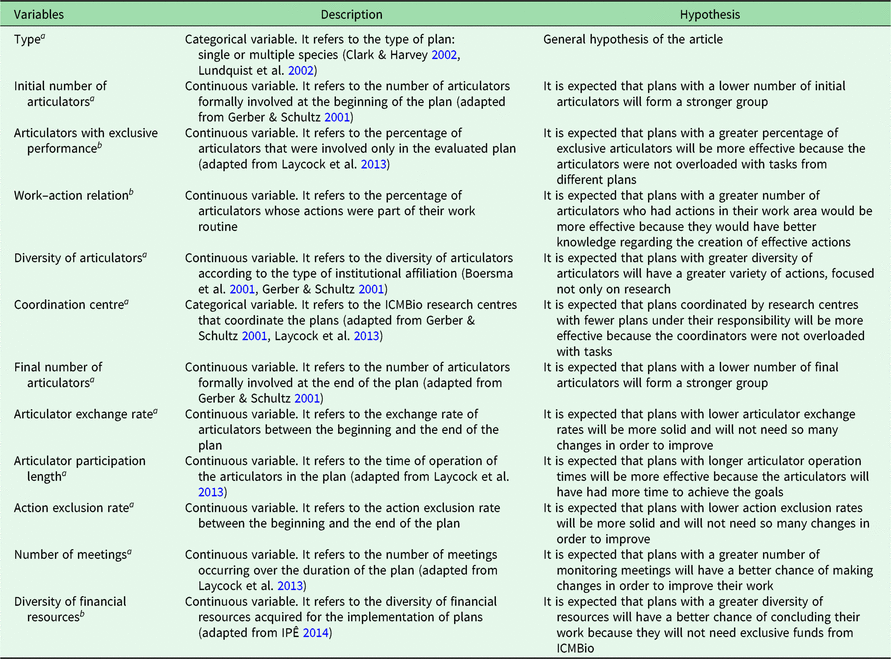
We pre-selected and measured 14 operational attributes of the selected plans, which fell into two categories of operational factors: elaboration attributes (characteristics of the plans in their initial construction phase) and execution attributes (characteristics that were revealed during the 5 years of execution of the plans). However, two variables (initial and final number of actions) were strongly correlated to each other (r > 0.7) and were excluded from the analysis. For the 12 final attributes (Table 1), type, initial and final number of articulators, initial and final number of actions, diversity of articulators, coordination centre, articulator exchange rate, articulators’ participation length, action exclusion rate and number of meetings were provided by monitoring data sheets. On the other hand, the data regarding other variables (percentage of articulators with exclusive performance in the evaluated plans, percentage of articulators whose actions were part of their work routine and diversity of financial resources) were obtained from the responses to the questionnaires (for details on the calculation of the variables, see Supplementary Tables S2 and S3).
Attributes of the elaboration and execution of plans used as explanatory variables for the effectiveness and efficiency of the plans.

a Variables measured from the information present in the monitoring data sheet.
b Variables measured from the answers obtained through the questionnaires.
Statistical Analysis
We evaluated whether there was a difference in effectiveness (%CA and TRA) and efficiency (cost-%CA and cost-TRA) between the single- and multi-species plans by using the Mann–Whitney test through the Past 2.17 program (Hammer et al. Reference Hammer, Harper and Ryan2001). The mean and standard deviation of each variable is presented in the text.
Non-parametric analyses were used because the data did not meet some of the assumptions required for parametric tests. We constructed generalized additive models (GAMs) in order to examine the influence of the operational attributes of elaboration and execution on each variable of the efficacy and efficiency of plans (%CA, TRA, cost-TRA and cost-%CA). We ran the models using the gam function in the mgcv package in R 3.2.4 software (Wood Reference Wood2011, R Core Team 2016). We used the binomial distribution family to constructed the effectiveness models and the Gaussian distribution to run the efficiency models. We selected the more adjusted GAM through the stepwise backward selection approach of Zuur et al. (Reference Zuur, Ieno, Walker, Saveliev and Smith2009). We evaluated models considering the elaboration attributes separately from models using the execution attributes (Table 1). In addition, we used the weight argument in the gam function with the binomial distribution family to balance three of the operational attributes used in the model analysis: the initial number of actions in the efficacy model with %CA and the elaboration attributes; the final number of actions in the efficacy model with %CA and the performance attributes; and the number of threats in the efficacy model with TRA and the elaboration attributes.
Finally, in order to classify the plans based on the operational variables selected by the GAMs, we performed a cluster analysis. This hierarchical clustering analysis was performed using Gower’s distance, which is a similarity coefficient that allows mixed-type data to be analysed together. We used the average linkage method to calculate the between-cluster distances (Zuur et al. Reference Zuur, Ieno and Smith2007). We chose this method due to the results it obtains for the cophenetic correlation coefficient. For such an analysis, we used the daisy function from the gower package in R 3.2.4 software (van der Loo & Turner Reference van der Loo and Turner2017).
Qualitative Analysis
We classified the actions of the plans according to IUCN-CMP (2012) in terms of research, legislation, law enforcement, environmental education, economic incentives, conservation planning, institutional development and species management. After classifying the actions, we described which thematic areas presented the greatest number of completed actions. We further described the main obstacles faced by the articulators, as classified based on the literature (Linares Reference Linares2015).
Results
Of the 16 analysed plans, eight focused on mammals, six on birds and two on amphibians and reptiles. The multi-species plans included from 4 to 33 taxa. A total of 51% of articulators and 94% of coordinators participated in this research.
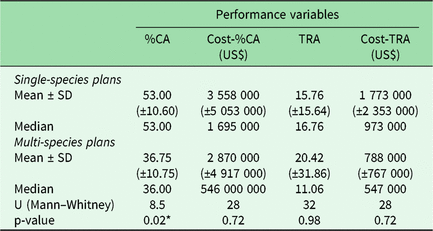
The %CA was statistically greater in the single-species plans than in the multi-species plans (Mann–Whitney U = 8.5, p = 0.02). The other efficacy and efficiency metrics did not differ between these two types of plans (Table 2). It is noteworthy that a total of seven plans (44%) completed ≥50% of their actions, of which five were single-species plans and two were multi-species plans (Supplementary Table S4). Regardless of the strategy, some plans had a greater projected average cost per action than others. For example, two plans had an estimated average cost per action of US$14 million,while two others had an estimated cost of c.US$22 000 per action. The TRA ranged from 0% to 44% in single-species plans and from 0% to 96% in multi-species plans. Only one plan (6.25%) achieved a TRA above 90%, while two plans (12.5%) presented TRA values between 25% and 90%, eight plans (50%) obtained values of up to 25% reductions and five plans (31.25%) did not achieve any reductions (Supplementary Table S4).
Comparison of the effectiveness and efficiency of the recovery plans elaborated on single species and multiple species in Brazil.
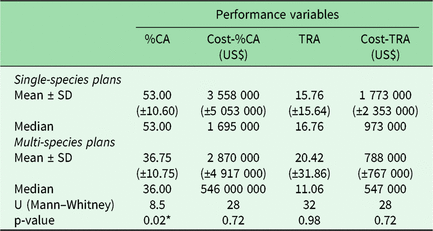
%CA = percentage of completed actions; Cost-%CA = cost per action completed; Cost-TRA = cost per threat reduction; TRA = threat reduction assessment.
* Statistical difference in effectiveness and efficiency between these strategies as shown by the Mann–Whitney (U) statistic when p–values are < 0.05.
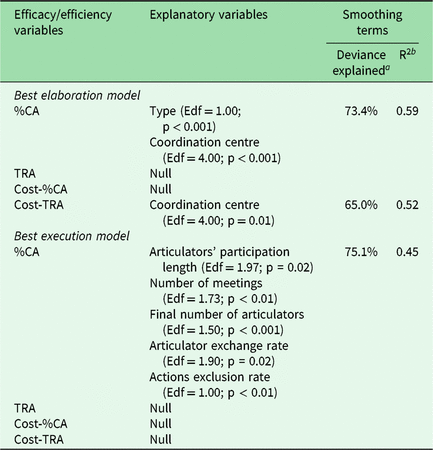
The GAM results (Table 3) indicated that TRA and cost-%CA were not significantly influenced (p > 0.05) by the operational attributes of the plans (Table 3). Furthermore, the %CA was significantly influenced (p < 0.05) by two elaboration attributes (type and coordination centre) and five execution attributes (articulators’ participation length, number of meetings, final number of articulators, articulator exchange rate and action exclusion rate), which explained 73% and 75% of the variation observed in this variable, respectively. The cost-TRA was influenced significantly only by coordination centre, which explained 65% of its variation.
Generalized additive model results explaining which of the 12 operational attributes (elaboration and execution factors) significantly influenced each variable of efficacy (cost per action completed (%CA) and threat reduction assessment (TRA)) and efficiency (cost per action completed(cost-%CA) and cost per threat reduction (cost-TRA)) of the recovery plans.

a The ratio of the total deviation explained by the model.
b The proportion of variance explained by the model.
Edf = estimated degrees of freedom.
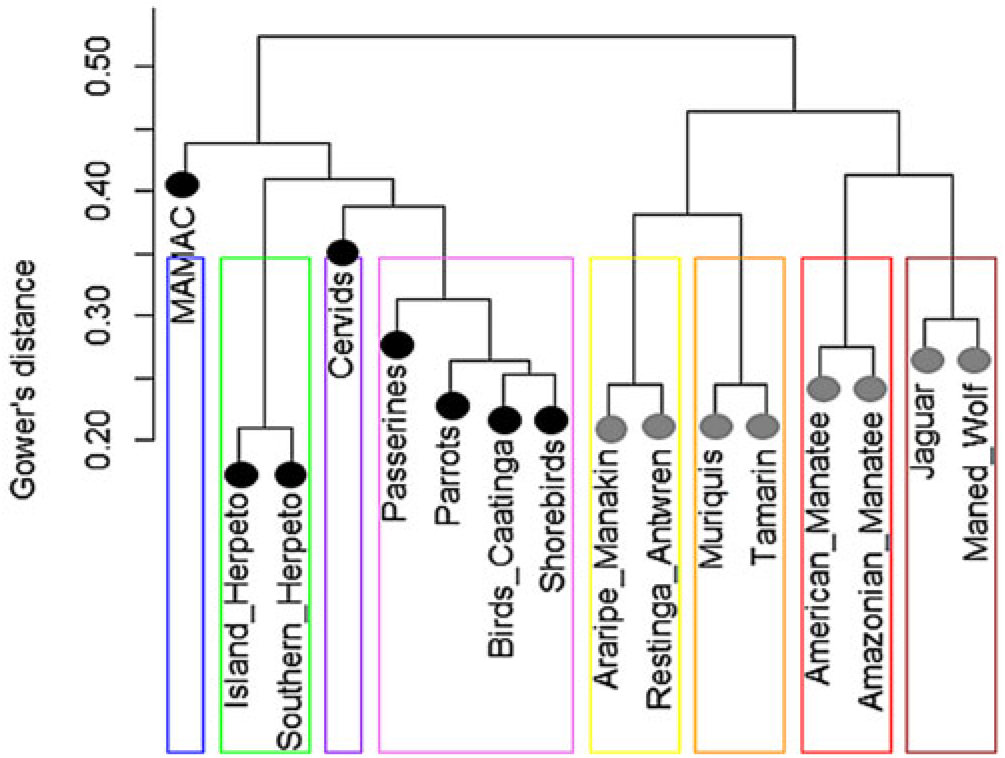
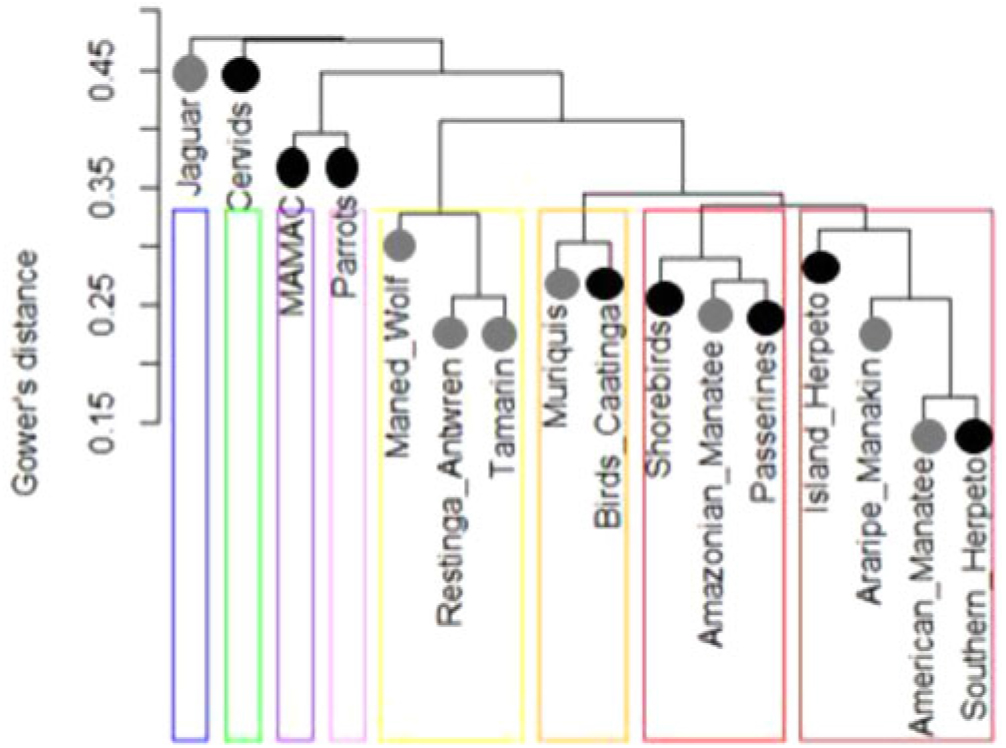
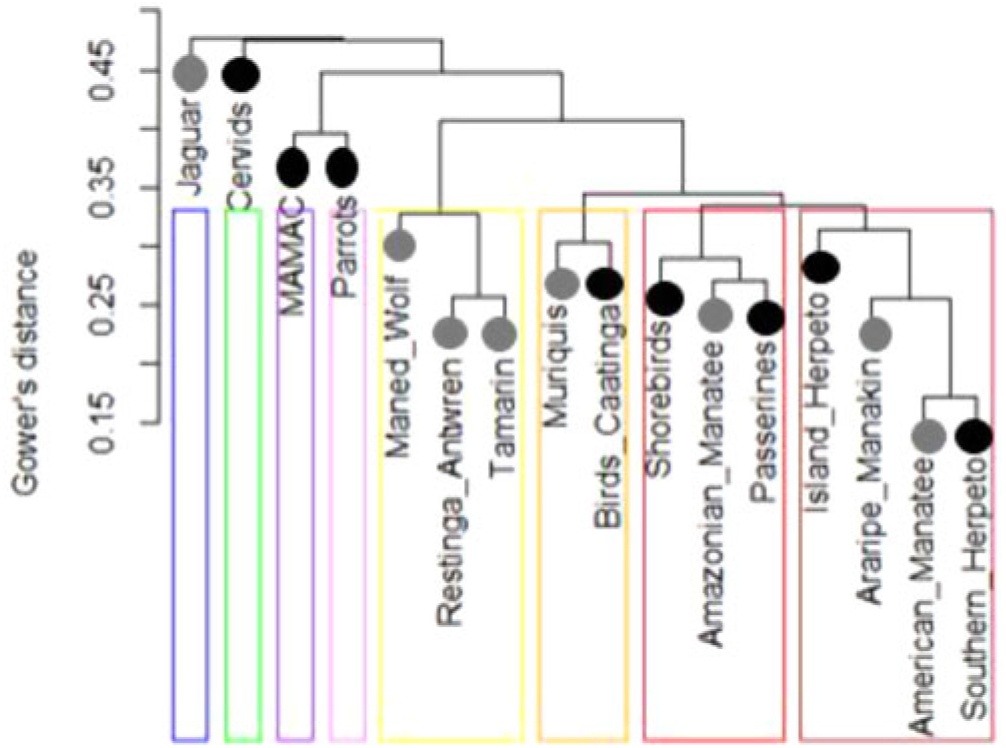
The cluster analysis, using the variables %CA and cost-TRA with the elaboration attributes of the plans (Fig. 1), indicated the existence of eight groups: four formed by single-species plans and four by multi-species plans. The single-species group with the highest %CA and lowest cost-TRA was formed by the Araripe Manakin and Restinga Antwren plans. Among the multi-species plans, the group with the highest %CA and lowest cost-TRA consisted of Island’s Herpetofauna and Southern Herpetofauna. These four plans had higher numbers of exclusive participants and articulators with actions within their work area compared with the medians of these attributes (= 0.70 and 0.69, respectively): Araripe Manakin (0.75, 0.85), Restinga Antwren (0.70, 0.86), Island’s Herpetofauna (0.80, 0.92) and Southern Herpetofauna (0.83, 0.78).
Results of the cluster analysis of the 16 recovery plans evaluating their similarity between the percentage of completed actions and cost of reducing threats with the elaboration attributes of each plan. Dark-shaded circles represent multi-species plans and light-shaded circles represent single-species plans. The rectangles enclose similar plans.
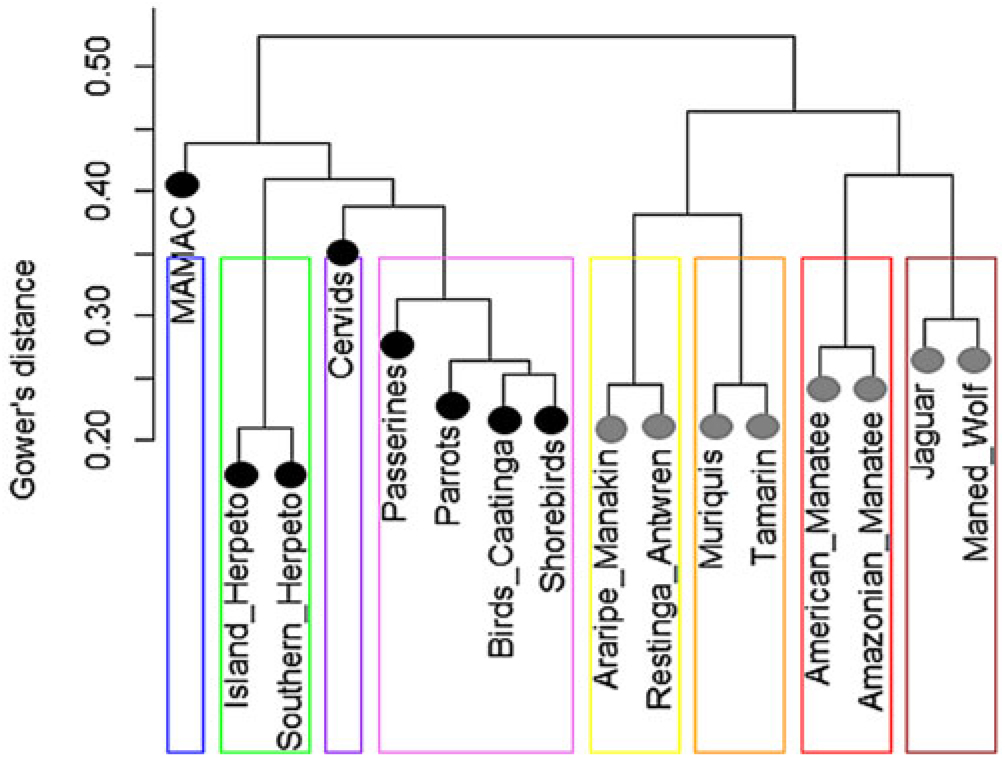
The cluster analysis with the response variable %CA and the attributes of execution (Fig. 2) suggested the existence of eight groups. One group is formed exclusively of single-species plans that had >60% completed actions. Three groups have a mixed formation: Island’s Herpetofauna, Araripe Manakin, American Manatee and Southern Herpetofauna had ≥50% completed actions, while Muriquis and Birds of Caatinga had 46% and 39%, respectively. The Migratory Shorebird, Amazonian Manatee and Passerines of the Southern Fields and Espinilho plans had 30–39% completed actions. The number of final articulators, articulator exchange rate and action exclusion rate were the attributes that varied most between the groups.
Results of the cluster analysis of the 16 recovery plans according to the similarity of the percentage of completed actions with the execution attributes of the plans. Dark-shaded circles represent multi-species plans and light-shaded circles represent single-species plans. The rectangles enclose similar plans.
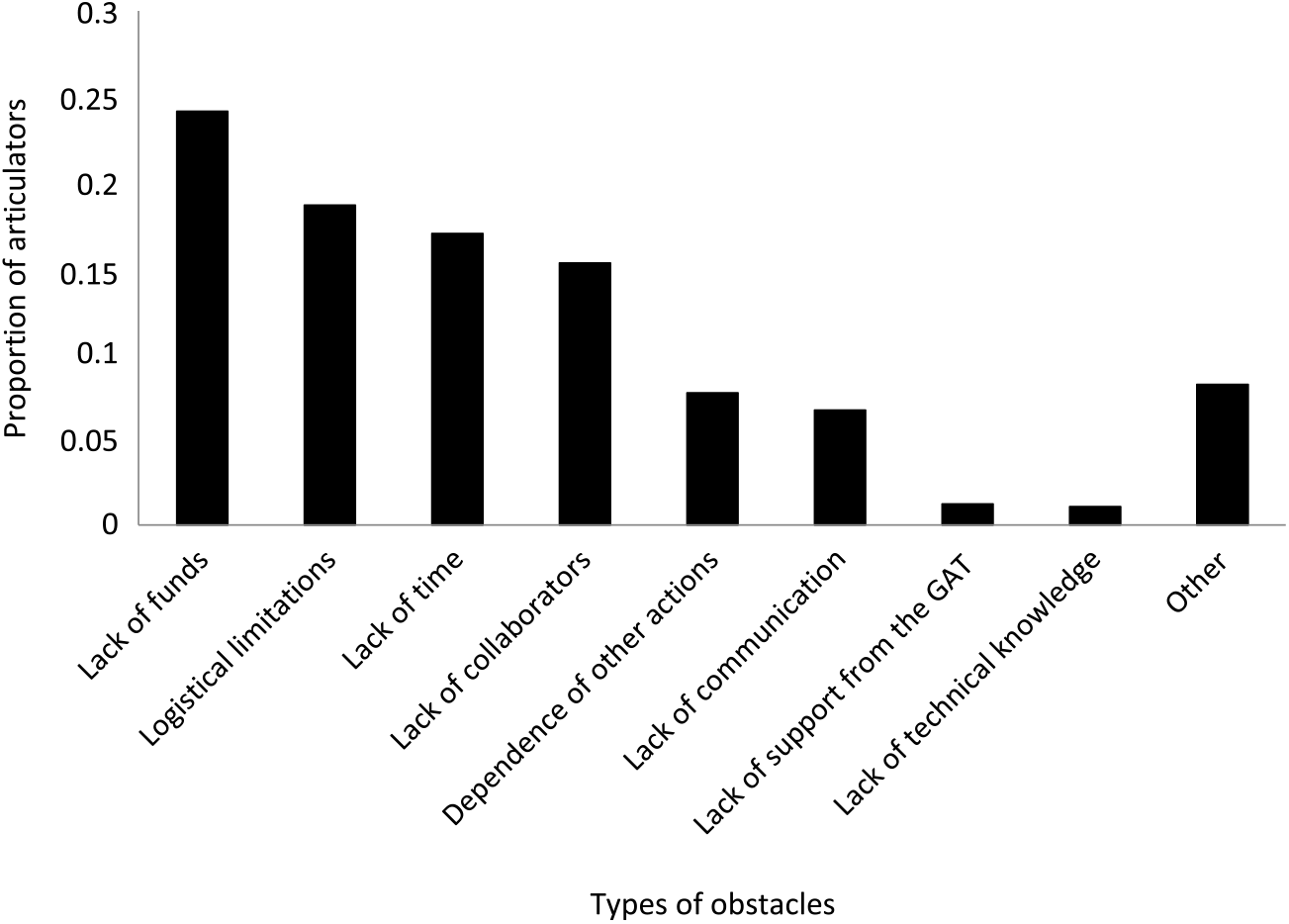
The main obstacles faced by the articulators (Fig. 3) were lack of funds, logistical limitations, lack of time and lack of collaborators, which represented 75% of the responses. The most completed conservation actions in the two plans were research, environmental education and institutional development. However, single-species plans completed a higher number of management actions (Supplementary Table S5).
Obstacles faced by the articulators of actions during the execution of the 16 recovery plans. GAT = Technical Support Group.

Discussion
This is the first study to evaluate whether recovery plans in Brazil focused on the conservation of single species perform better than those focused on multiple species. The results suggest that plans that aim for the conservation of only one species enable the conclusion of a higher percentage of actions than multi-species plans. On the other hand, focusing on one or many species had no significant effect on the power of the Brazilian plans to change the threat levels of target taxa, nor did it influence the costs involved in executing these actions. Even though this work is a starting point in assessing Brazilian plans, we advise that our results suffer from the following limitations: the lack of evaluation of the quality of completed actions and of the contribution of actions at other scales (biological, spatial and political); and the lack of accuracy of some information provided by ‘inexperienced plans’.
Despite the growth of international policies to develop recovery plans with greater geographical and taxonomic coverage (Clark & Harvey Reference Clark and Harvey2002), studies in the early 2000s in the USA demonstrated that single-species plans are more effective regarding the number of completed actions (Boersma et al. Reference Boersma, Kareiva, Fagan, Clark and Hoekstra2001, Gerber & Schultz Reference Gerber and Schultz2001, Clark & Harvey Reference Clark and Harvey2002, Lundquist et al. Reference Lundquist, Diehl, Harvey and Botsford2002). In the present study, we confirm that this is also the case in the megadiverse country of Brazil. Our results further indicate that in Brazil, on average, 53% of the actions proposed in the single-species plans were accomplished, while in the multi-species plans, only 36% of actions were achieved (Table 2). In the USA, these values were 76% and 48%, respectively (Lundquist et al. Reference Lundquist, Diehl, Harvey and Botsford2002), indicating a similar reduction in the effectiveness of the multi-species plans but, in general, a greater effectiveness of the US plans in comparison to the Brazilian ones.
The difference in the degree of implemented actions between plans focusing on single and multiple species can be partially justified by the differing levels of ambition of actions and degrees of team interaction. For example, reducing impacts on biomes is often set as a target for plans (Clark & Harvey Reference Clark and Harvey2002), but this is rarely achieved, partially due to the ambition of the actions (Laycock et al. Reference Laycock, Moran, Raffaelli and White2013). In the present study, single-species plans accomplished a greater number of management actions than multi-species plans. In addition, the latter plans focused on 4–33 species, which adds greater biological complexity and more implementation challenges (LaRoe Reference LaRoe1993, Clark & Harvey Reference Clark and Harvey2002). Thus, less ambitious plans are more likely to be completed (Laycock et al. Reference Laycock, Moran, Raffaelli and White2013). In addition, plans focused on the conservation of a single species generally deal with small teams that have been consolidated previously, while multi-species plans are generally made up of teams working with different species that, in addition to not having the habit of working together, may result in conflicts of interest and priority (LaRoe Reference LaRoe1993, Tear et al. Reference Tear, Scott, Hayward and Griffith1995).
Aware of Brazil’s high level of biological diversity, the need to optimize financial resources and efforts and the small fraction of biodiversity protected by single-species action plans (Boersma et al. Reference Boersma, Kareiva, Fagan, Clark and Hoekstra2001), our results serve as a warning. Although we should not transform all multi-species plans into single-species plans, we show that there is a significant challenge in making multi-species plans more effective. Thus, for the multi-species approach to be effective, deficiencies must be addressed and corrected first. In this context, our results suggest some ideas that might lead to an increase in the efficiency levels of both plans.
First, in order to overcome the greater intrinsic complexity of multi-species plans, it is necessary to reinforce the importance of the team’s stability throughout the stipulated period, thus increasing the chances of successful conclusion. The plans with higher percentages of completed actions were those that contained a committed group of articulators who worked together for longer periods and had a lower level of exchange between articulators and excluded actions. In addition, we recommend that people who are committed to conservation and who have a stable job position be chosen to act on the action plans.
Second, we suggest that regular meetings are needed. Larger numbers of monitoring meetings were associated with greater percentages of completed actions, thus highlighting the importance of commitment from both the articulators and the organizers. Additionally, meetings should be held to guide the team, review actions and maintain cohesion among the articulators and coordinators. These group execution and development actions are shown to be more important for maximizing the completion of actions than other factors such as the number, diversity and exclusivity of the initial articulators or the coherence between actions and the work area of articulators. Although such initial characteristics are desirable during the designing of a plan (Boersma et al. Reference Boersma, Kareiva, Fagan, Clark and Hoekstra2001, Gerber & Schultz Reference Gerber and Schultz2001), they did not appear to influence effectiveness regarding the %CA.
Third, the coordinating institutions of the plans (ICMBio’s research centres) played a crucial role in the effectiveness of the plans. They influenced the %CA and expenditures for reducing threats. We evaluated plans coordinated by five different ICMBio research centres: the National Center for Research and Conservation of Aquatic Mammals (CMA), the National Center for Research and Conservation of Brazilian Primates (CPB), the National Center for Research and Conservation of Wild Birds (CEMAVE),the National Center for Research and Conservation of Carnivorous Mammals (CENAP) and the National Center for Research and Conservation of Reptiles and Amphibians (RAN). Of these five centres, RAN and CEMAVE accounted for 57% of plans that achieved ≥50% of completed actions, while the other three institutions were each responsible for 14% of plans that achieved such a level of completions. With regards to the influence of centres on reducing threats, the three plans coordinated by the CPB presented the greatest cost and were the least efficient. These results can be explained due to the longevity of CEMAVE (created in 1977) and the significant number of employees hired between 2002 and 2007 in the RAN team, despite it only being created in 2001 (Rodrigues Reference Rodrigues2009). Moreover, the number of environmental analysts acting as plan coordinators in each research centre also mattered. Both the CEMAVE and the RAN had a greater variety of employees acting as coordinators of the plans, while the CPB had a lower availability of analysts. Therefore, the %CA and the cost-TRA can be influenced by the number of workers available for the plans, suggesting a demand for people in some of the analysed centres.
Increasing the effectiveness of plans can also be achieved by solving the main obstacles highlighted by articulators. The most significant challenge facing the plans was raising funds, and by 2013, more than US$136 million was needed to implement the 48 existing plans (Andrade Reference Andrade2014). The ICMBio budget has been unstable since its creation (ICMBio 2014) and has suffered cuts since 2014 due to the country’s fiscal crisis and economic recession (Escobar Reference Escobar2016, WWF 2018). These cuts directly affect the provision of essential services needed to fulfil the ICMBio institutional mission (ICMBio 2015). Thus, articulators cannot rely on national financial funds in order to implement their actions, and they need to compete for equally scarce international resources (Brooks et al. Reference Brooks, Mittermeier, da Fonseca, Gerlach, Hoffmann, Lamoreux, Mittermeier, Pilgram and Rodrigues2006, Gregory & Long Reference Gregory and Long2009). Therefore, the funding needed to implement these plans is not being obtained, compromising theirefficiency and effectiveness (Clark et al. Reference Clark, Hoekstra, Boersma and Kareiva2002, Andrade Reference Andrade2014).
It is essential to recognize that action plans are opportunities for exercising dialogue and working together. Given the recent nature of this type of activity in Brazil, we hope that with mutual learning and institutional organization, these effectiveness rates will improve. However, it is worrying that the most completed types of actions are not actually mitigating threats and in fact reflect the lines of research of the participants. Thus, in order for these threats to be reduced, it is essential to rethink these actions. Furthermore, it is important to continue evaluating the effectiveness of plans and conducting periodic reviews of threatened species lists in order to document changes in the status of those species over time (Clark et al. Reference Clark, Hoekstra, Boersma and Kareiva2002).
Conclusion
The present study provided relevant information on the effectiveness of recovery plans in Brazil and how operational factors affect the effectiveness of such conservation plans. The results demonstrated that the strategy of focusing on single species positively influenced the effectiveness of recovery plans in terms of the %CA. Obviously, in a megadiverse country, this type of plan cannot be maintained for all threatened species, being recommended only for those that are endangered, critical or with high specificities such as a narrow distribution. On the other hand, these results warn that there are challenges to be overcome in order to improve the effectiveness of action plans involving multiple species in Brazil. Such improvements depend on: experience gained and the maturity of the coordinating entities; improved techniques for implementing and evaluating plans; and the commitment, motivation and duration of articulators staying in the plan. Improvements will mainly depend on the financial support of national and international institutions for the conservation of threatened species and their ecosystems. Moreover, environmental problems such as these have to enter the political and economic agenda of Brazil as a serious matter. This could both improve the state of conservation of the threatened species in the Brazil and help us to achieve the desired goals.
We recommend arranging the cycles of assessment of the risk of extinction of species together with the final evaluation of these plans and the inclusion of the measurement of the TRA metric at the beginning of the planning and final monitoring of these plans. Since many species and their particular threats need long-term investments in order to achieve the expected results, TRA can detect threat reduction before changes in species status. Another recommendation is to improve the estimation of the costs of plans, a difficulty that will only be overcome when there is a formal request to produce detailed costs of the plans.
Supplementary Material
To view supplementary material for this article, please visit https://multimediafluids.uam.elogim.com/core/journals/environmental-conservation
Acknowledgements
Thanks are given to the coordinators and articulators of the action plans who willingly participated in this work, to ICMBio for supporting this research and to Pavel Dodonov for help with the statistical analyses.
Financial Support
The Conselho Nacional de Desenvolvimento Científico e Tecnológico (CNPQ) funded the first author’s scholarship and the last author’s productivity grant. The funder had no involvement in the conduct of the research and/or preparation of the article.
Conflict of Interest
None.
Ethical Standards
The research was previously authorized by SISBIO/ICMBio (license no. 55862-1; Supplementary Material) and by the Directorate of Research, Evaluation and Monitoring of Biodiversity (DIBIO/ICMBio).