


INTRODUCTION
Pearl millet [Pennisetum glaucum (L) R. Br.] is an important tropical food cereal grown on approximately 26 million ha in semi-arid regions, including West and South Africa and India (Andrews et al. Reference Andrews, Rajewski, Kumar, Janick and Simon1993; Andrews & Bramel-Cox Reference Andrews, Bramel-Cox and Buxton1994). In Niger, pearl millet is the main staple food and is the dominant crop in the agricultural production systems, contributing about 0·75 of the national total cereal production (Amadou et al. Reference Amadou, Gandah, Bielders, Van Duivenbooden, Van Duivenbooden, Pala, Studer and Bielders1999; FAOSTAT data 2005). Pearl millet productivity is usually low (300–550 kg/ha) (Graef & Haigis Reference Graef and Haigis2001) and variable (Rockstrom et al. Reference Rockstrom, Barron, Brouwer, Galle and de Rouw1999), in part because of natural causes, including a short rainy season that is spatially and temporally variable (Graef & Haigis Reference Graef and Haigis2001) and poor soil quality. In Niger, the length of the growing period is mainly a function of the date of the first rains (Sivakumar Reference Sivakumar1988) and varies widely from year to year. However, due to the erratic rainfall pattern in the Sahelian regions, the first rain suitable for planting is often followed by several dry days that cause the planting to fail and require the farmers to replant. According to Bationo et al. (Reference Bationo, Christianson and Baethgen1990) and Bationo & Ntare (Reference Bationo and Ntare2000), during normal or above normal rainfall years, grain yield for pearl millet could be improved by increasing the plant population and N fertilizer applications; but yield could slightly decrease during drought years. However, Maman et al. (Reference Maman, Mason and Sirifi2000) and Kathju et al. (Reference Kathju, Burman and Garg2001) found that even in drier years, a high plant population and fertilizer applications were necessary to obtain higher yields. Bacci et al. (Reference Bacci, Cantini, Pierini, Maracchi and Reyniers1999), in a study conducted in Mali, West Africa, evaluated two planting dates; the first planting coincided with the beginning of the rainy season and the second planting was 20 days later. The two planting dates did not show any statistical differences in yield.
The area planted with pearl millet in the United States of America (USA) is about 241 000 ha (FAOSTAT data 2005). It is grown primarily as a forage crop, although some grain production occurs in the Southeast as a result of the development of adapted hybrids (Hanna Reference Hanna and Teare1995) and recognition of the high feeding value of pearl millet grain by the poultry industry (Amato & Forrester Reference Amato, Forrester and Teare1995; Andrews et al. Reference Andrews, Hanna, Rajewski, Collins and Janick1996). Some pearl millet has also been grown for birdseed. In the USA, the planting date for millet is defined by a minimum threshold for soil temperature (Andrews et al. Reference Andrews, Rajewski and Mason1998). Planting pearl millet in early June when soil temperatures are above 18°C is recommended (Andrews et al. Reference Andrews, Rajewski and Mason1998), although the minimum temperature for growth is 12°C (Ong & Monteith Reference Ong and Monteith1985). Results of experiments conducted in Nebraska showed that the best planting dates for pearl millet were between 7 June and 6 July, suggesting that pearl millet could be an alternative crop for double cropping and/or late replanting situations in Nebraska (Pale et al. Reference Pale, Mason and Galusha2003).
Crop simulation models can be useful tools for the evaluation of alternative management options for a particular location, including fertilizer application rates, planting density, planting dates and others (Tsuji et al. Reference Tsuji, Uehara and Balas1998; Ruiz-Nogueira et al. Reference Ruiz-Nogueira, Boote and Sau2001; Saseendran et al. Reference Saseendran, Ma, Nielsen, Vigil and Ahuja2005). The Decision Support System for Agrotechnology Transfer (DSSAT) is a comprehensive decision support system for assessing management options (Tsuji et al. Reference Tsuji, Jones, Hoogenboom, Hunt, Thornton, Tsuji, Uehara and Balas1994; Jones et al. Reference Jones, Hoogenboom, Porter, Boote, Batchelor, Hunt, Wilkens, Singh, Gijsman and Ritchie2003; Hoogenboom et al. Reference Hoogenboom, Jones, Wilkens, Porter, Batchelor, Hunt, Boote, Singh, Uryaseva, Bowen, Gijsman, Du Toit, White and Tsuji2004). The Cropping System Simulation Model (CSM), which is the main crop simulation model that encompasses DSSAT version 4.0 (Jones et al. Reference Jones, Hoogenboom, Porter, Boote, Batchelor, Hunt, Wilkens, Singh, Gijsman and Ritchie2003; Hoogenboom et al. Reference Hoogenboom, Jones, Wilkens, Porter, Batchelor, Hunt, Boote, Singh, Uryaseva, Bowen, Gijsman, Du Toit, White and Tsuji2004), is a process-oriented, dynamic crop simulation model that simulates crop growth, development and yield for 27 food and other crops, including pearl millet. Crop growth is simulated with a daily time step, starting at planting until harvest maturity is reached, based on physiological processes that describe the crop's response to soil and weather conditions. Potential growth is dependent on the interception of photosynthetically active radiation, whereas actual biomass production on any day is constrained by a suboptimal temperature, soil water deficit and nitrogen deficiency. The input data required to run the DSSAT models include daily weather data (maximum and minimum temperature, rainfall and solar radiation); soil characterization data (by soil layer); a set of cultivar coefficients characterizing the variety being grown; and crop management information, such as emerged plant population, row spacing, seeding depth and fertilizer and irrigation schedules. A detailed description of the CERES-Millet model, the predecessor of the CSM–CERES-Millet, is provided by Ritchie & Alagarswamy (Reference Ritchie, Alagarswamy, Virmani, Tandon and Alagarswamy1989) and Ritchie et al. (Reference Ritchie, Singh, Godwin, Bowen, Tsuji, Hoogenboom and Thornton1998). Fechter et al. (Reference Fechter, Allison, Sivakumar, Verndplog, Bley, Sivakumar, Wallace, Renard and Girou1991) conducted an evaluation of the CSM–CERES-Millet model for south-west Niger, while Thornton et al. (Reference Thornton, Bowen, Ravelo, Wilkens, Farmer, Brock and Brink1997) used the model for estimating millet production in Burkina Faso. The CSM–CERES-Millet was also evaluated for four regions in Niger by Ravelo & Planchuelo (Reference Ravelo and Planchuelo1993); the model predicted growth and development accurately, while the yield estimates had an average relative error of 0·07. Although these studies are considered very valuable, the evaluation of the CSM–CERES-Millet model for different regions of the world has been minimal compared to other crop models. This reflects the need for further modelling studies, especially pearl millet, as it is such an important crop for resource-poor farmers, especially in the semi-arid tropics where environmental conditions for crops are harsh. The goal of the present study was to evaluate the performance of the CSM–CERES-Millet model for two contrasting environments, including Mead, Nebraska, USA and Kollo, Niger, West Africa and to determine the optimum planting dates for these two environments using a modelling approach.
MATERIALS AND METHODS
Experimental data
The CSM–CERES-Millet model of the DSSAT Version 4.0 (Jones et al. Reference Jones, Hoogenboom, Porter, Boote, Batchelor, Hunt, Wilkens, Singh, Gijsman and Ritchie2003; Hoogenboom et al. Reference Hoogenboom, Jones, Wilkens, Porter, Batchelor, Hunt, Boote, Singh, Uryaseva, Bowen, Gijsman, Du Toit, White and Tsuji2004) was evaluated with experimental data that were collected in Kollo, Niger and Nebraska, USA. For Niger, the observed data were obtained from two experiments conducted in Kollo in 1995 and 1996 (Maman et al. Reference Maman, Mason and Sirifi2000). The experimental treatments consisted of a factorial combination of three pearl millet varieties with two levels of management based on plant population and nitrogen fertilizer rate, in a randomized complete block design with three replicates. The varieties were: Heini Kirei (a local land race variety, 2·8–3·0 m tall, with a maturity classification of 110–115 days to physiological maturity), Zatib (an improved variety, 1·8–2·0 m tall, with a maturity classification of 95–105 days) and 3/4 HK (an improved dwarf variety, 0·8–1·2 m tall, with a maturity classification of 85–95 days). The two management factors were: (a) traditional, with a low plant population (30 000 plants/ha) and without fertilizers and (b) enhanced, with an increased plant population (60 000 plants/ha) and 23 kg/ha of N. The planting dates were 12 June 1995 and 26 June 1996.
Daily weather records for the site were obtained from the International Crop Research Institute for the Semi-Arid Tropics (ICRISAT) at Kollo, latitude 13·23N; longitude 2·28E; elevation 210 m. The soil at the experimental site was a Pasammentic Paleustalf with a sandy texture and pH of 4·9.
For Nebraska, the experimental data for model evaluation were obtained from two experiments conducted at the University of Nebraska near Mead under rainfed conditions in 1995 and 1996. The experiment was conducted in a randomized complete block design with four replicates and the treatments consisted of factorial combinations of three dwarf pearl millet hybrids with two levels of management based on fertilizer rates of 0 and 78 kg/ha of N. The three pearl millet hybrids (and their maturity classifications) were 59022A×89-083 (60–62 days to flowering), 1011A×086R (66–68 days to flowering), and 1361M×6Rm (72–74 days to flowering; Maman et al. Reference Maman, Mason, Galusha and Clegg1999). Pearl millet was planted on 19 June for the experiment conducted in 1995 and on 13 June for the experiment conducted in 1996. The plant population at emergence was 98 700 plants/ha in 1995 and 114 900 plants/ha in 1996.
Daily weather records were obtained from an automated weather station located at Mead, Nebraska (latitude 41·25N; longitude 96·58W; elevation 366 m). The soil at the experimental site was a Sharpsburg silty clay loam (fine, smectitic and, mesic Typic Argiudoll) with a pH of 6·0.
Model evaluation
The CSM–CERES-Millet model includes seven cultivar-specific coefficients that require modification for new cultivars that have not been used previously with the crop model. Six specific cultivar coefficients were adjusted for pearl millet during the evaluation process (Table 1). These cultivar coefficients were determined in sequence, starting with the phenological development coefficients and followed by the crop growth coefficients. This order was required because of the dependence of the latter coefficients on the performance of the vegetative and reproductive development simulations (Jones et al. Reference Jones, Mishoe and Boote1987; Hoogenboom et al. Reference Hoogenboom, Jones and Boote1992). An iterative procedure (Hunt et al. Reference Hunt, Parajasingham, Jones, Hoogenboom, Imamura and Ogoshi1993) was used to select the most appropriate value for each phenological and development coefficient. Emergence, flowering, maturity dates, growth analysis data and yield were used to evaluate the performance of the model. However, for Kollo, flowering and maturity dates were only available for 1995 and for Mead, Nebraska only for 1996. The combination of coefficients that resulted in the highest Index of Agreement (d) (Eqn 1) and the smallest root mean square error (RMSE) (Eqn 2) between observed and simulated values were selected as the final cultivar coefficients. According to the d-statistic (Willmott et al. Reference Willmott, Ackleson, Davis, Feddema, Klink, Legates, O'Donnell and Rowe1985), the closer the index value approaches one, the better the agreement between the two variables that are being compared and vice versa.

where n is the number of observations, Pi is a predicted observation, Oi is a measured observation, P′i=Pi – M and O′i=Oi – M (M is the average of the observed variable).
Cultivar coefficients for the three varieties grown in Kollo, Niger and for the three hybrids grown in Mead, Nebraska

The RMSE was calculated according to Loague & Green (Reference Loague and Green1991):
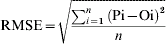
where Pi and Oi refers to the predicted and observed variables.
Optimum planting dates
A planting date analysis was conducted using 20 years of climate records for Kollo and 35 years of climate records for Mead. In this analysis, the effects of varying planting dates on millet yield were studied. For Kollo, 12 planting dates were simulated beginning on 24 March for every 10 days until 12 July. For Mead, 12 planting dates were simulated beginning on 10 April for every 10 days until 29 July. The simulated yields for the different planting dates were analysed using the ANOVA Procedure of SAS (SAS Institute 2001). The means were compared with Tukey's test, with a significance level of P⩽0·05. Simulated yield and cumulative total evapotranspiration for the entire growing season were analysed for each individual planting date. A regression analysis was also performed to identify the relation between simulated evapotranspiration and simulated grain yield.
RESULTS
Weather conditions for Kollo, Niger
Niger's climate is mainly hot and dry, with much desert area. However, in the extreme south there is a tropical climate on the edges of the Niger River basin. The average monthly maximum temperatures for 20 years, i.e. 1982–2001, were always greater than 32°C and the average monthly minimum temperatures were always greater than 18·5°C (Fig. 1a). The rainy season, on average, started in April and ended in September, with a maximum precipitation of 150 mm in July. The 1995 and 1996 growing seasons showed a similar amount of precipitation as the average for 20 years (1982–2001). For the 1995 growing season, total precipitation was 448 mm with 32 rainy days and for the 1996 the total precipitation was 423 mm with 26 rainy days (Fig. 2a).
Average monthly precipitation, average maximum and minimum temperature, and average solar radiation for Kollo, Niger for 1982–2001 (a) and for Mead, Nebraska, USA for 1969–2003 (b).

Total precipitation for 1995 and 1996 for Kollo (a) and for Mead (b) as a function of day of year.

Weather conditions for Mead, Nebraska
In Mead, the summers are hot and humid with intense summer convectional storms, while small quantities of precipitation occur during the winter. The analysis of the series of 35 years (1969–2003) of weather records for Mead, showed that the highest maximum and minimum average monthly temperatures occurred in July (31 and 17·8°C, respectively), while the maximum solar radiation occurred in June (Fig. 1b). With respect to precipitation, the highest monthly values were observed between April and October, with a maximum for May (110 mm).
For Mead, the rainfall was below the 30-year long-term average during the 2 years in which the experiments were conducted. However, the 1996 growing season in Mead was characterized by a higher amount of rainfall (257 mm) than the 1995 growing season (145 mm; Fig. 2b). The number of rainy days for the two growing seasons was similar, i.e. 25 for 1995 and 26 for 1996.
Evaluation of the CSM–CERES-Millet model for Kollo, Niger
For the varieties grown in the field experiments conducted in Kollo, there were no differences for the cultivar coefficients P20 and G1, while the other cultivar coefficients were different between varieties (Table 1). The values for cultivar coefficient P2R (extent to which the phasic development leading to panicle initiation, expressed in degree days, is delayed for each hour increase in photoperiod above P20), were important. The value of P2R for Heini Kirei was 470 degree days, while the values for Zatib and 3/4HK were 410 and 390 degree days, respectively. The cultivar coefficient P5, thermal time from beginning of grain filling to physiological maturity above a base temperature of 10°C, was 108 degree days for Zatib and 3/4HK and 140 degree days for Heini Kirei.
The observed and simulated numbers of days from planting to anthesis were identical for each one of the three varieties (Table 2). The simulated number of days from planting to physiological maturity was similar to the observed number of days to physiological maturity, indicating that the phenology of millet was very accurately predicted by the CSM–CERES-Millet model. The variety Heini Kirei had the longest duration from planting to physiological maturity (116 days) of the three varieties.
Observed and simulated days to anthesis and physiological maturity for the three varieties grown in Kollo for 1995 and for the three hybrids grown in Mead, Nebraska for 1996

The average observed yield for the three varieties was 1130 kg/ha and the corresponding average simulated yield was 992 kg/ha for 1995 (Fig. 3a). The average observed yield for the three varieties for 1996 decreased 50% when compared to the average observed yield obtained for 1995. For 1996, the average observed and simulated yield values were very similar, 547 and 354 kg/ha, respectively (Fig. 3b). The average observed yield for three varieties for the 2 years was 838 kg/ha, while the average simulated yield value corresponded to 673 kg/ha. The RMSE for all three varieties for the 2 years of experiments was 429 kg/ha and the d value was 0·83. In addition, the above ground biomass at harvest was accurately simulated and the value for d was 0·90 for all three varieties for both years.
Simulated and observed yield and biomass at harvest for Kollo for the years 1995 (a) and 1996 (b) and for Mead for years 1995 (c) and 1996 (d).

Evaluation of the CSM–CERES-Millet model for Mead, Nebraska
For the hybrids grown in Mead, Nebraska, the cultivar coefficient P1 that corresponds to the thermal time from seedling emergence to the end of the juvenile phase (expressed in degree days above a base temperature of 10°C) during which the plant is not responsive to changes in photoperiod was set to 100 (Table 1). The cultivar coefficient P2R (extent to which the phasic development leading to panicle initiation is delayed for each hour increase in photoperiod above P20) was 18 degree days for the hybrid 59022A×89-083, 35 for the hybrid 1011A×086R and 55 for the hybrid 1361M×6Rm. The cultivar coefficient P5 (thermal time from beginning of grain filling to physiological maturity above a base temperature of 10°C) varied between 105 degree days for hybrid 1361M×6Rm and 200 for hybrid 59022A×89-083.
The CSM–CERES-Millet model was able to accurately simulate the number of days from planting to anthesis and from planting to physiological maturity for the three pearl millet hybrids grown in Mead, Nebraska during the 1996 growing season (Table 2). The observed number of days from planting to anthesis were 55, 62 and 70 days for the hybrids 59022A×89-083, 1011A×086R and 1361M×6Rm, respectively. The total period from planting to physiological maturity was 90 days for the hybrids 59022A×89-083 and 1011A×086R and 104 days for the hybrid 1361M×6Rm. The simulated values from planting to physiological maturity were similar to the observed values for this period for the three hybrids as shown in Table 2.
For 1995, the average observed yield for the three hybrids was 1336 kg/ha and the corresponding average simulated yield was 1464 kg/ha (Fig. 3c). For 1996, the average observed and simulated yield values were 4241 and 4072 kg/ha, respectively (Fig. 3d). The average observed yield for the three hybrids for 1996 increased when compared to the average observed yield obtained for 1995. Average observed yield for three hybrids for the 2 years was 2788 kg/ha, while the average simulated yield was 2768 kg/ha. The RMSE for all three hybrids for the 2-year experiments was 542 kg/ha and the value for d was 0·97. The above ground biomass at harvest was also accurately simulated and the d value for the three hybrids for the 2-year experiment was 0·92.
Planting date analysis for millet grown in Kollo, Niger
The planting date analysis using 20 years of weather data (1982–2001) for Kollo showed that the best planting date for millet depends, in part, on the variety that will be used. The variety Heini Kirei had an extended period from planting to anthesis, which, on average, varied between 90 and 115 days (Fig. 4a) and also had a more prolonged grain filling period. The extended period of more than 100 days for Heini Kirei was simulated for the planting dates prior to 13 April. For the reproductive phase, the period from anthesis to physiological maturity was prolonged for the planting dates around 1 May for all three varieties.
Simulated number of days from planting to anthesis for different planting dates for millet grown in Kollo (a) and Mead (b).

The statistical analysis (Tukey's test, P<0·05) of the simulated yield showed that for the variety Heini Kirei the planting dates between 13 and 23 May resulted, on average, in significant higher yields in comparison to the other planting dates. The simulated yields for these planting dates ranged from 1095 to 1247 kg/ha, respectively. However, a considerable variation between years was observed, as shown by the high standard deviations (Fig. 5a).
Simulated millet yield for different planting dates for Kollo: without fertilizer (a); with fertilizer (23 kg/ha of N) (b); and for Mead, Nebraska: without fertilizer (c); with fertilizer (78 kg/ha of N) (d).

The duration from planting to anthesis for the varieties Zatib and 3/4HK ranged from 79 to 102 days (Fig. 4a). For the varieties that had shorter planting to anthesis and anthesis to grain filling periods, the planting dates that resulted in a high yield were somewhat later (Fig. 5a). The statistical analysis showed that for the varieties Zatib and 3/4HK, significant higher yields were, on average, simulated from 23 May to 2 June compared to the other planting dates. For early (March to 3 April) or late (July) planting dates, there was a distinct decrease in yield due to unfavourable weather conditions that occurred during certain periods of these planting dates. The simulations with and without fertilizer showed a similar response to varying the planting date (Figs 5a and 5b).
The simulated total evapotranspiration for the entire season had the lowest values for the early planting dates and reached a maximum between 23 May and 12 June for all three varieties (Fig. 6). As expected, the longer the maturity of the variety, the higher the total evapotranspiration for the entire season. The highest total evapotranspiration was obtained for the variety Heini Kirei for the 2 June planting date (262 mm).
Total crop evapotranspiration from planting to physiological maturity for different varieties in different planting dates for Kollo.

Usually, under water-limited conditions yield is correlated to evapotranspiration. The highest coefficient of determination between simulated yield and total evapotranspiration were found for the early planting dates, i.e. from 24 March to 23 April (Fig. 7). The lack of rains for the early planting dates (Fig. 1a) affected crop establishment and resulted in a severe reduction in yield. Also, the lack of rains during critical stages, especially around flowering and during grain filling, could be a cause for yield reduction. For the later planting dates after 13 May, there was a low coefficient of determination between simulated yield and total evapotranspiration. The lack of correlation between yield and evapotranspiration for the 13 May planting date (Fig. 7) can be explained because the yield for this planting date is mainly related to other environmental and management factors that are different from water, such as nutrient stress, as a smaller amount of N uptake was simulated for the entire growing season (data not shown). For the other later planting dates, the poor correlation could also be due to the fact that the critical stages to water stress are probably more exposed to water deficits, as these stages occur near the end of the rainy season. Consequently, the simulated yield was very low for many of the years, although the simulated total evapotranspiration was not low.
Relation between simulated total evapotranspiration and millet yield for Kollo for the three varieties and different planting dates.

Planting date analysis for millet grown in Mead, Nebraska
For Mead, the simulated duration from planting to anthesis for the three hybrids (Fig. 4b) was greater for the early planting dates because of the low temperatures during the spring months in Mead that determined a low accumulation of degree days. This period is reduced from the early planting dates until the 29 June planting date; thereafter the simulated days to anthesis increased. For the reproductive phase from anthesis to physiological maturity, the April to 9 June planting dates had almost the same duration for each hybrid (around 30 days). For late planting dates in July, there was a clear increase in the number of days from anthesis to physiological maturity because of the low temperatures that normally occur during the autumn months (Fig. 1b), resulting in a lower accumulation of degree days.
For the hybrid 1361M×6Rm the duration from planting to anthesis was longer compared to the other two hybrids (59022A×89-083 and 1011A×086R) for all planting dates (Fig. 4b). However, the shortest number of days from planting to anthesis was simulated for the 19 and 29 June planting dates, corresponding to a duration of 66 days for the 1361M×6Rm hybrid. The other two hybrids, 59022A×89-083 and 1011A×086R, also had the lowest number of days to anthesis for these two planting dates, i.e. 54 and 57 days, respectively. The planting date analysis using 35 years of weather records (1969–2003) showed that for the hybrid 1011A×086R the 29 June planting date resulted, on average, in statistically significant high yields (Tukey test, P⩽0·05) in comparison with the other planting dates (Fig. 5c). For the hybrids 1361M×6Rm and 59022A×89-083 the best planting dates were, on average, between 19 and 29 June, with a statistically higher yield compared to the other planting dates. As an example, for the 19 June planting date, the average yield was 937 kg/ha for the hybrid 1361M×6Rm and 1378 kg/ha for the hybrid 59022A×89-083. When 78 kg/ha of N was applied, the simulated yields increased considerably, but the optimum planting dates remained the same. For planting dates that were later than 9 July, there was a significant decrease in yield (Fig. 5d) for both the fertilized and non-fertilized systems. The analysis of the average soil temperature at a depth of 50 mm for the 35 years of weather records for the different planting dates (Fig. 8) showed an increase in soil temperature starting in April until 19 July. At the beginning of May, the average soil temperature was 18°C at a depth of 50 mm; this is the recommended soil temperature for planting pearl millet (Andrews et al. Reference Andrews, Rajewski and Mason1998).
Estimated average soil temperature (1969–2003) at a depth of 50 mm for different planting dates for Mead.

Total simulated evapotranspiration for the entire growing season showed decreased values for the late planting dates for all three hybrids and also showed a high value for standard deviation (Fig. 9). The coefficient of determination between total evapotranspiration and yield was somewhat high for only the early planting dates (Fig. 10). For the May and later planting dates, R 2 was low, indicating that millet yield in Mead is not directly related to evapotranspiration, but more to other factors, such as the incidence of drought periods during critical stages and also in late planting dates the decrease in solar radiation and temperatures can negatively affect the crop grain yield.
Total crop evapotranspiration from planting to physiological maturity for different hybrids in different planting dates for Mead.

Relation between simulated total evapotranspiration and millet yield for Mead, for the three hybrids and different planting dates.

DISCUSSION
The two contrasting environments of the present study were characterized by differences in some of the important weather variables and by different properties of the local soils. For the years 1995 and 1996, as well as for the long-term weather data, the rainfall in Kollo was evidently higher and the rainy season was more pronounced for the millet-growing season than the rainfall and rainy season in Nebraska (Figs 1a and 1b). Also, for Kollo, higher temperatures were observed when compared to Mead, Nebraska.
There were differences in phenology due to the differences in planting dates and the genotypes used. For Kollo, the period from planting to anthesis ranged from 79 to 115 days. For the early planting dates, the number of days to maturity was extended, mainly due to response of millet to photoperiod and temperature. When it is exposed to photoperiods above 12 h, the phasic development leading to panicle initiation is delayed (Reddy et al. Reference Reddy, Rao and Ahmed2004). Millet is a short-day crop that is sensitive to photoperiod, and this means that progress toward flowering is accelerated when day length decreases. For the reproductive phase, i.e. from anthesis to physiological maturity, the planting dates around 1 May resulted in a higher number of days to maturity for the three varieties.
The important differences found in the value of cultivar coefficient P2R for the different varieties grown in Kollo and hybrids grown in Mead, Nebraska are due to the fact that traditional cultivars of most tropical cereals depend on a strong sensitivity to photoperiod to regulate their time of flowering to match the environment of their origin (Vaksmann et al. Reference Vaksmann, Traore and Niangado1996). Moving such germplasm to other latitudes, even within the tropics, results in flowering at inappropriate times for the new environments and increases the probability of drought, damage due to pests, diseases or birds and damage due to weather (Curtis Reference Curtis1968; Bonhomme et al. Reference Bonhomme, Derieux and Edmeades1994). Extensive use of tropical germplasm in breeding programmes for subtropical or temperate latitudes usually requires conversion to a less day length-sensitive form that will flower in the desired time for the long-day environments of these latitudes.
For Mead, Nebraska, in 1996, abundant precipitation resulted in an increase in both observed and simulated yield when compared to 1995. There were significant differences in yield between Mead and Kollo, which can be attributed to several interrelated factors. One important factor to consider affecting the yield is the difference in soil properties, and particularly the difference in texture and acidity levels between the studied environments. For Kollo, the low yield potential of varieties planted by farmers, the poor soil fertility conditions as well as the low level of N that was applied and the low planting population used, can explain in part the low simulated yields. Furthermore, there are also other interrelated factors affecting the yield under real field conditions, such as crust-prone sandy soils with low fertility, combined with unreliable and erratic rainfall, that affect the spatial variability of crops grown in the Sahel (Rockstrom & de Rouw Reference Rockstrom and de Rouw1997; Rockstrom et al. Reference Rockstrom, Barron, Brouwer, Galle and de Rouw1999).
Following the successful evaluation of the CSM–CERES-Millet model for the two environments, the model was used for a planting date analysis. Other studies have shown that models can be rather useful for planting date analysis, compared to resource intensive experimental studies (Mavromatis et al. Reference Mavromatis, Boote, Jones, Irmak, Shinde and Hoogenboom2001; Saseendran et al. Reference Saseendran, Ma, Nielsen, Vigil and Ahuja2005). In relation to planting dates, farmers in Kollo usually plant long season varieties like Heini Kirei between the second week of May and the middle of June, depending upon the start of the rainy season. The shorter season varieties, Zatib and 3/4HK are normally planted later than Heini Kirei. Varieties such as Heini Kirei are promising especially for early and mid-season planting dates.
An important aspect of the planting date decision is not just based upon yield, but also minimizing the risk of failures of the plant stand establishment and the decrease in costs and labour required for replanting. This determines that, in general, local varieties are planted in an extended planting window that finishes during the middle of June. Although the CSM–CERES-Millet does not consider some effects that could affect the actual yields, e.g. pests and diseases, the outcome of the present study still represents important scientific progress because of the scarcity of actual millet yield information from field experiments conducted at different planting dates.
M'Khaitir & Vanderlip (Reference M'Khaitir and Vanderlip1992) evaluated the performance of millet for several planting dates, ranging from mid-May to early July for two locations in Kansas (USA) and for 2 years. They found that the planting date had little impact on pearl millet yield for that particular environment. However, Pale et al. (Reference Pale, Mason and Galusha2003) found that grain yield varied across the years for a planting date experiment conducted in Nebraska because of variable weather conditions. Pale et al. (Reference Pale, Mason and Galusha2003) study did not show a clear relation between planting date and grain yield. The best planting date for pearl millet for one site and 1 year was on 15 May, while for another site the best planting dates were found between 7 June and 6 July for 2 years. Pale et al. (Reference Pale, Mason and Galusha2003) suggested that pearl millet would be an interesting alternative for double cropping and/or late replanting situations in Nebraska. The present results from the planting date analysis showed that the highest average yield for the series of years was between 19 and 29 June; but with a wide window of acceptable planting dates depending on the selected hybrid. These planting dates can be considered late for a summer crop, confirming what previous studies indicated about the possibility of using pearl millet for replanting situations in Nebraska (Figs 5c and 5d). However, at Mead, Nebraska, the planting period can be somewhat wide as shown in Figs 5c and 5d, in which reasonable yields were simulated across a range of planting dates. At the beginning of May, the average soil temperature for the 35 years of climate record was 18°C at a depth of 50 mm. Thus, the results with respect to planting date recommendations for Mead, Nebraska based on the CSM–CERES-Millet model are in agreement with previous studies that suggest that for millet the appropriate soil temperature at planting time should be 18°C (Andrews et al. Reference Andrews, Rajewski and Mason1998).
Evapotranspiration, defined as the water removed from soils by evaporation and plant transpiration, is directly related to yield for most cereals. A reduction in yield may occur when rainfall is insufficient to meet the evapotranspiration demand. Smaller plants transpire less water than larger ones because transpiration increases with an increase in leaf surface area (Cothren et al. Reference Cothren, Matocha, Clark, Smith and Frederiksen2000). In the present study, there were low values for the coefficient of determination between total simulated evapotranspiration for the growing season and millet yield grown in Kollo, for planting dates after 3 May. This indicated that there were other important factors that limited crop production and ultimately yield, besides water supply. These results agree with previous studies (Bley et al. Reference Bley, Van Der Ploeg, Sivakumar, Wallace, Renard and Girou1991; Ravelo & Planchuelo Reference Ravelo and Planchuelo1993), which found that crop water supply in parts of southwest Niger, in general, cannot be considered as the most limiting factor for millet production. Based on experiments conducted in Niger, Brück et al. (Reference Brück, Payne and Sattelmacher2000) found that pearl millet yield was reduced by 34% due to a low water supply and by 48% due to a low P supply. Payne (Reference Payne2000) found that for pearl millet with a sparse stand and leaf area index that was almost always less than two, the yield and evapotranspiration tended to be uncorrelated because evaporation constitutes a major portion of the evapotranspiration process. Under low-input conditions, pearl millet evapotranspiration is roughly one-third of that obtained under intensive management, suggesting that transpiration efficiency is also reduced by environmental stress, especially soil nutrient deficiency. Environmental stresses also cause poor root development, which results in reduction in potential crop water supply, and increased resistance to water uptake. Optimizing crop water use of sparse pearl millet stands will require some form of nutrient inputs (Payne Reference Payne2000). Sivakumar & Salaam (Reference Sivakumar and Salaam1999) found that under the harsh climatic conditions and sandy soils in Niger, nearly all plant-available water is used by the crop. Since evapotranspiration losses are largely controlled by the meteorological conditions, seasonal evapotranspiration is nearly the same whether yields are high or low.
In summary, the CSM–CERES-Millet model was able to simulate accurately growth, development and yield for millet grown in two contrasting environments, i.e. Mead and Kollo, and under different management practices that included various varieties/hybrids and nitrogen fertilizer treatments. Following the evaluation of the model, it was also used to identify the optimum planting dates for different varieties grown in Kollo, and for different hybrids grown in Mead, Nebraska, and to assist in the explanation of potential yield reductions due to the interaction of planting date and local environmental conditions. In general, the results of the simulations confirmed previous field observations and showed the important role that crop simulation models can have in conducting systems analysis research. The planting date analysis using 20 years of climate records for Kollo indicated that the best planting dates, in part, depend on the variety that is going to be used. For varieties with physiological traits similar to Heini Kirei (maturity classification of 110–115 days to physiological maturity), the planting date to obtain the highest yield should be between 13 and 23 May, while for the varieties similar to Zatib (maturity classification of 95–105 days) and 3/4HK (maturity classification of 85–95 days) the planting dates should be, on average, somewhat later, between 23 May and 2 June. However, the starting date of the rainy season for the forthcoming growing season will affect a farmer's decision about the appropriate planting date. For Mead, Nebraska, the planting date analysis using 35 years of climate records showed that for hybrids 59022A×89-083 and 1361M×6Rm, the highest simulated yield, on average, is obtained between 19 and 29 June. However, there was a wide window of potential planting dates without any significant difference in yield. For millet planted after 9 July, there was a significant decrease in simulated yields for all three hybrids. Further studies focused on evaluation and application of the millet model for other agroclimatic regions where pearl millet is an important crop are needed.
This work was supported in part by a grant from the U.S. Agency for International Development through the Sustainable Agriculture and Natural Resources Management Collaborative Research Support Program (SANREM-CRSP) and by State and Federal Funds allocated to Georgia Agricultural Experiment Stations Hatch Project GEO01654.



