The invitation to do this autobiographical article reached me on my seventieth birthday, catching me in an unusually reflective mood, so I decided to take a stab at it. If nothing else, I could honor my mentors, especially James Anderson and René Millon. Without them I might still be doing archaeology but it would be a very different sort of archaeology, probably not as good and certainly not as much fun. But I don't find this kind of writing easy. Social scientists are not used to having “I” as the main subject of a sentence, an analogy perhaps to the difficulty we have in maintaining a balance between our professional and personal lives. However, I seem to have overcome that academic modesty, as this paragraph demonstrates. So here we go.
I was born in Toronto in 1941 to Elizabeth Spence, née Potvin, and Wishart Spence. My mother was part of a long line of French Canadians, her grandfather having moved from Quebec to Ontario. My father's people had emigrated from the Orkney Islands with the Hudson's Bay Company a few generations earlier, and started life in Canada working for the Bay in the far north.
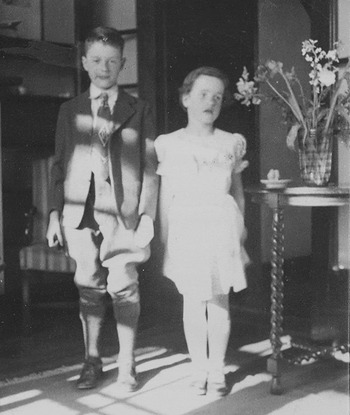
A few years after my birth my father was appointed to a federal board and we moved to Ottawa (Figure 1). One of my earliest memories, age 4, is standing in a cheering crowd in Ottawa, watching a parade of soldiers returning at the end of World War II. To balance that upbeat memory of war, years later my great aunt Elder told me about the ball held for the young men in her social circle who were about to go off to World War I. Everybody was in a festive mood, sure that there would just be a few weeks of adventure and then the war would be over. None of them came back.
Michael with sister Margaret, ca. 1949.

My family returned to Toronto and I attended a private high school there, boys only. That led to some imbalance in my social life but allowed a marvellous concentration on studies. Two events in those high school years pointed the way toward the career I would follow later in life. One was my selection of Spanish for immersion instruction over five years. It wasn't that I was prescient. I just thought it would be easier than German.
The other thing was a book. I read it in the high school library where I had gone to hide out from a grade 11 swim class that I hated. I can't remember the title or author, but it was one of those books about ancient “history” that put Vikings together with the Aztecs. The Aztecs fascinated me, and I asked the school librarian who did that kind of work. He answered “archaeologists,” sealing my fate.
In 1959 I went on to the University of Toronto. I was enrolled in my first year in the Catholic college, but was not happy with it. Greek philosophy was viewed through the eyes of St. Thomas Aquinas, Freud through the eyes of a nun. I had no interest in becoming a priest (unlike my high school, there were girls everywhere) but I couldn't see any other outcome to that sort of education, so I switched over to the non-denominational college and majored in anthropology. Also at that time my parents moved to Ottawa as my father was appointed to the Supreme Court of Canada, which made me enormously proud of that gentle man.
My University of Toronto archaeology training was under J. Norman Emerson, in a department that had previously graduated such notables as Bruce Trigger, Jim Wright, and Tom Charlton. Emerson was concerned with ceramic typology and the movement of the Huron in the sixteenth century from the Toronto area north to Huronia. I was not much taken with that sort of culture history, but found what was to become an enduring perspective while excavating a Huron longhouse. The internal layout of the longhouse and its spatial relationship to other features of the village, and what this might say about the social structure of the community, caught my imagination. I thought then, and still do (Spence Reference Spence, Williamson and Watts1999a), that prior knowledge of the structure and internal relationships of a society is essential for a proper understanding of its external relationships and evolution. Look inside the palisade first.
Also at this time I did some fieldwork with Walter Kenyon of the Royal Ontario Museum (ROM), excavating a Middle Woodland burial mound. This piqued my interest in Middle Woodland and Hopewell, and I soon found myself in the middle of a controversy between J. Russell Harper and the ROM. Harper had excavated another Middle Woodland mound, the Cameron's Point Mound, under contract with the ROM but then had a falling-out with the Museum. Harper kept the field notes, drawings, and photos while the ROM kept the artifacts. With Walter's help I stepped in and, as an apparently harmless and agreeable innocent, got access to both the notes and the collection. The result was a monograph (Spence and Harper Reference Spence and Harper1968) and an interest in Hopewell that I have to this day (Spence and Fryer Reference Spence, Fryer, Carr and Case2005).
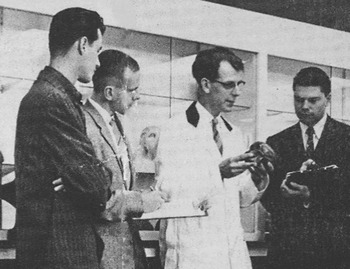
Besides my archaeology courses I had been taking courses in osteology under James Anderson, an inspiring teacher who was using nonmetric traits to measure inter-population relationships and micro-evolution in Ontario (Anderson Reference Anderson1968) (Figure 2). He also analyzed the Tehuacan Valley skeletons (Anderson Reference Anderson and Byers1967). I thought that this method had great potential but did not have the time to do a proper osteological analysis of the Cameron's Point skeletons, despite being aware of the importance of such an analysis. I was redeemed many years later by my student Kathleen Dougherty, who analyzed the skeletal collection for her Master's thesis (Dougherty Reference Dougherty2003).
1962 undergraduate class in physical anthropology. From the left: Michael Spence, Trevor Denton, James Anderson (in the lab coat), and Charles Bishop.

In my last year at the University of Toronto (1964, when I received my Master's) I met Bruce Drewitt, who had just joined the faculty. He was starting up the Teotihuacan Mapping Project (TMP), under the direction of René Millon, and I thought that this would be the opportunity to finally realize my high school dream (not the one about the girls). I asked him if I could join the team, and with my Spanish and some experience in excavating complex architecture from a summer of work on eighteenth century forts in the Maritimes, I got the job. It transformed me.
When I arrived in Mexico, I spent my first night in a hotel in Mexico City. As night fell I went out to look around, with absolutely no idea of where I was or where I was going. I ended up in a crowded bar in a poor section of the city and passed the evening talking with everybody and sampling the local beer (even better than Canadian). At the bar's closing I was escorted back to my hotel by a mob of my new friends who wanted to make sure that I arrived there safely. It was a great introduction to a great country.
Working with René was a wonderful experience. His energy and enthusiasm, and the vision of Teotihuacan that he was developing, carried everybody (Millon Reference Millon, Sabloff and Sabloff1981). I started off doing survey. Each field crew consisted of one or two archaeologists and a couple of local workmen. Our task was to examine every field, no exceptions. At lunch we would sit under a tree and chat. That was a good time to increase my command of Spanish, especially of those nouns and verbs that are essential for some forms of social discourse but that are not likely to appear in high school textbooks. “My red pencil is on your table” just doesn't do it, not even as metaphor.
So I learned the basics of field survey and the Teotihuacan ceramic chronology, much of it from the head workman, Pedro Baños, who in time became my compadre. At the end of the day we would return to the lab and transfer that day's data from our field maps to a large wall map. Then we all poured ourselves drinks and sat around studying the wall map, discussing our finds, and slowly building a picture of the ancient city. René led us in this, locating and voicing the emerging questions that would guide our work over the next day, week, or month. Those were great times.
After a few weeks of survey in other areas, René assigned me to a large area northwest of the Moon Pyramid. The dense ground cover of obsidian there immediately attracted my attention. In fact, Bill Sanders (Reference Sanders1965:102) had already reported this concentration. Realizing its significance, I made thorough collections of the area's obsidian and also started questioning the other field crews to find out if they had seen anything similar. More came to light, and I surveyed and collected them too. At the end of the summer René asked me if I would stay on over the winter, continuing the field survey but also taking on the obsidian as my own analytical project. I considered it for about three seconds and then arranged with Southern Illinois University (SIU), where I had been accepted into the graduate program, to delay my residence for a year.
Without that year in Mexico I don't know if I would have survived the SIU doctoral program. It wasn't just the added field experience and working with René, although that was a huge part of it. It was also Mexico. I was living in a Mexico that is largely gone now. The burro was still a major method of transportation (horses for the rich), men carried side arms, and you could still hear Nahuatl in the hills. Over the winter I observed and slowly grew into this very different lifestyle, realizing at first that these people did not think like I did and then realizing that I was starting to think like they did. Much of what I had studied in anthropology classes came to life for me. The compadrazgo system in particular fascinated me, in part because I was now viewing it from the inside.
It was not always pleasant. One of those paper concepts from my anthropology classes blindsided me—culture shock. At one point I withdrew from the field for several days. I could not stand to speak Spanish and wanted no contact at all with anyone, but just hid in my room and pretended to be sick. I had headaches much of the time. I was aware that they were psychosomatic, but that did nothing to relieve them. After some days I came out of it. I think one reason I survived that episode is that I knew from my classes that I was suffering culture shock. I also knew that it stemmed from a deep uncertainty about how to conduct myself in social situations, how to avoid looking stupid, or unwittingly offending people. It also helped to know that my Mexican friends were indeed friends, and would be patient and non-judgemental with whatever social clumsiness I committed. I doubt they would have received such a generous reception in “El Norte.” So a warning here to graduate students about to work in a different society, and to their supervisors as well: culture shock can happen and probably will happen, but it can be overcome. It need not derail your career, as it unfortunately has with some people I know.
In the fall of 1965 I started at Southern Illinois University, where I had the good fortune to have J. Charles Kelley as my supervisor. I also benefited from the other faculty, particularly Carroll Riley, Robert Rands, and Jerry Handler. Added to this was a great bunch of fellow graduate students, like Phil Weigand, Joe Mountjoy, Ron Bishop, and Charles Trombold. Under a series of research fellowships I analyzed the chipped stone material from Kelley's Chalchihuites and Loma San Gabriel sites (Spence Reference Spence1971a), and also started working on Phil Weigand's Teuchitlan-tradition obsidian collections (Spence et al. Reference Spence, Weigand, de los Dolores Soto de Arechavaleta, Hirth and Andrews2002). However, Kelley allowed me to use the Teotihuacan obsidian data for my dissertation.
Over the following years I collected a great deal of data on Teotihuacan obsidian. In 1966 I presented a talk on the work at the 11th Mesa Redonda of the Sociedad Mexicana de Antropología (Spence Reference Spence1967). It was the first public talk I ever gave, it was in Spanish, and I would not have dared it without the help of another compadre, Salvador Nuñez Hernández. He went over and over it with me, until I could have delivered it even if the audience was stoning me like Moctezuma.
Working with the TMP surface collections and two small test excavations, I developed a model of the Teotihuacan obsidian production system (Spence Reference Spence1981). True to form, I was more interested in its internal structure than in its role in foreign trade, which I considered minor. My view of the system was more modest than Robert Santley's (Reference Santley and Miller1983) extreme formalist model. Nevertheless, John Clark (Reference Clark and Isaac1986, Reference Clark and Hirth2003:28–29, 35) was able to point out some errors in my basic assumptions, errors that had led me to considerably exaggerate the scale of the system. In contrast, John's estimate of scale was very conservative, too much so in my opinion. He suggested that somebody would have to excavate some of those surface concentrations, to see how the surface appearance fit the sub-surface reality. David Carballo (Reference Carballo2007) did so, excavating Classic period deposits associated with the Moon Pyramid. His findings confirmed my idea that craft specialists in the Moon precinct area produced artifacts for state consumption. The output was large, but may not have involved a great number of knappers. Zachary Nelson (Reference Nelson2009) analyzed the material from Evelyn Rattray's earlier excavation of an Epiclassic workshop and suggested that only one knapper was involved. In both cases, only part of the wider surface distribution of workshop debris in the area was excavated, so the question of overall scale will require more research.
I came to realize that I had so much data on the obsidian that I would not be able to complete a dissertation on it within a reasonable time. Through all of this, though, I had been pursuing my other dream (no, not the one about the girls). I had been analyzing the Teotihuacan skeletons recovered by the TMP. Also, I had been reading the “ceramic sociologists” (e.g., Deetz Reference Deetz1965; Whallon Reference Whallon, Binford and Binford1968), excited by how they were able to investigate the internal structure of a community through pottery designs. So it all came together in my head in one of those rare “eureka!” moments: the ceramic sociologists, Jim Anderson's nonmetric traits, and Teotihuacan skeletons. I thought that I could use nonmetric traits to reveal the biological patterning in a Teotihuacan series, and from that make some inferences about its social structure. I talked to Jim about it, and he liked the idea. I also discussed it with Audrey Sublett, another of Jim's students, at the 1969 meeting of the American Association of Physical Anthropologists in Mexico City. Not surprisingly, she had been making similar connections and was interested in applying them, as I recall, to a Florida series, not the Iroquois one that she eventually used (Lane and Sublett Reference Lane and Sublett1972).
The TMP skeletal collection was too small and too scattered to bear this sort of analysis, so with Juan Vidarte's help I got access to the large La Ventilla B series. I spent two weeks analyzing them in the bodega in the Museo Nacional de Antropología. Paul Tolstoy and Louise Paradis were working on Tlatilco material at the next table. The nonmetric traits did allow some insights into the social structure of the La Ventilla B people, and I had my dissertation (Spence Reference Spence1971b).
Repelled by the Vietnam War, I wanted to return to Canada. A position was available at the University of Western Ontario (UWO) in a new anthropology program being developed by one of my former professors from SIU, Lee Guemple. I arrived in London (the Canadian one) in the fall of 1971 with my wife Jean, an SIU art student who had been doing art in Mexico, and our three-year-old daughter Tanya, who had learned to walk in Mexico. Jean connected with the Ontario art world and I re-connected with Ontario archaeology.
The UWO department espoused the four-field view of anthropology but paid only lip service to archaeology and physical anthropology, so most of my real colleagues were in other Ontario universities and in Mexico. Even when a physical anthropologist was hired the position went to a primatologist, on the assumption that a primatologist would best support the social anthropology core of the program. But as some faculty left and new people came in, that attitude thankfully shifted. We hired Chris Ellis, a Paleoindian and Archaic archaeologist with, to my pleasure, a specialty in lithic analysis. Then, after three successive primatologists had failed to enlighten the social anthropologists as they had hoped, we hired Christine White, a bioarchaeologist with a specialty in isotope analysis and the Maya. And more followed. The department became a very rare thing among North American anthropology departments, a place where specialists in all four fields found a good balance and lived happily with one another. It is still that way. Recently my colleagues here published a volume of articles in my honor (Ellis et al. Reference Ellis, Ferris, Timmins and White2010). It was a very pleasing and yet humbling gift, and I made sure that all my family got copies.
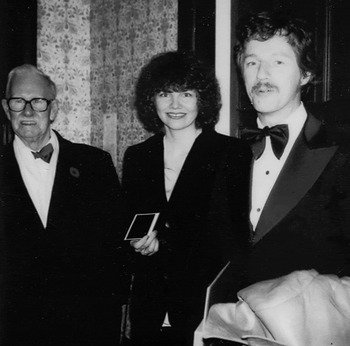
In the period between 1971 and 1987 much of my research was focused on Ontario. I continued to work on Mexican archaeology, but a growing family (my second daughter, Cassandra, came along in 1972) kept me closer to home for the most part. I tried to maintain a balance between family and work, Ontario and Mexico, archaeology and osteology, but it was not easy. For a good many years, until Chris White joined the department in 1990, I was the only person in my part of Ontario who knew how to deal with a human skeleton. I was drawn into a number of archaeological projects in that capacity. Then in the 1980s, my knowledge of archaeological field methods and the human skeleton led coroners and police forces in the region to start requesting my services. I began doing forensic anthropology (e.g., Spence Reference Spence and Fairgrieve1999b). This pleased my father; I was finally working in the legal sphere, his territory (Figure 3). It pleases me too, but forensic work can be very trying. There is no room for error. You are dealing with events that are only a few years old rather than centuries in the past (the last burial that I excavated was only 11 days old). Living people are involved, as survivors or perpetrators. It carries weight.
From the left: father Wishart, wife Jean, and Michael Spence at a 1978 party for his Dad's retirement from Supreme Court of Canada.

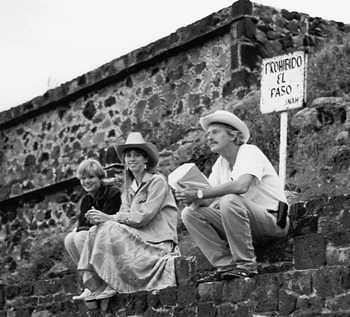
After years of this I became concerned that I was slipping away from archaeology and my Mesoamerican research, losing that balance, so I decided to recapture those original identities. I remembered standing guard many years ago over the carved tomb jamb that we found in Tlailotlacan, the Oaxaca Barrio of Teotihuacan. We had been afraid that looters would take it before we could properly excavate it. I had not been part of the team that René had excavating in Tlailotlacan but I had become very interested in the work and had analyzed the burials recovered there. That came back to me now, and I started to think about the questions that the Barrio posed about acculturation, enculturation, and identity. How had a small group of immigrants managed to maintain their distinctive communal identity over centuries of residence in a huge foreign city, one that furthermore seemed to emphasize standardization and conformity? With financial support from the Social Sciences and Humanities Research Council of Canada I conducted two seasons (1987 and 1989) of excavations there (Figures 4 and 5). I loved being back there. Each time I came to Teotihuacan, the first thing I did was to walk up the Street of the Dead. With the massive bulk of the Sun Pyramid looming to my right and the more graceful lines of the Moon Pyramid ahead, I would feel again the awe that the ancient city inspired in me.
From the left: Ceferino Ortega, Pedro Baños, and Michael Spence at Tlailotlacan excavation, 1987.

From the left: daughters Cassandra and Tanya, and Michael in Ciudadela, 1987.

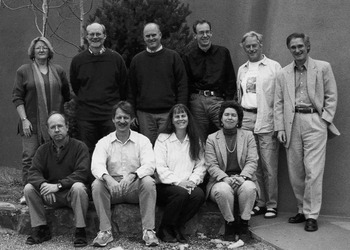
The excavations were productive, but I had a little trouble finding a conceptual framework to interpret the data. Bill Sanders, with his deep interest in Africa as a source of analogy, pointed me towards Cohen's (Reference Cohen1969) monograph on the Hausa enclave in Ibadan. Wobst (Reference Wobst and Cleland1977) presented another line of enquiry, the question of the audience to whom expressions of identity are directed. This all helped, but I felt that I needed something more comprehensive. That came in 2000, at a School of American Research Advanced Seminar organized by Gil Stein (Reference Stein2005). For five intense days 10 archaeologists discussed colonies and enclaves, and my ideas were changing every day (Figure 6). Michael Dietler suggested that I might find Bourdieu (Reference Bourdieu1977) relevant. I did, and delved more deeply into the post-processual literature. That gave me the conceptual tools I needed to organize the Tlailotlacan evidence. The result was a very different article (Spence Reference Spence and Stein2005) from the manuscript that I had initially brought to the seminar. Much of the way that I viewed archaeology, in my fieldwork and in the classroom, changed after that.
Santa Fe seminar, 2000. From the left, back: Katharina Schreiber, Kent Lightfoot, Gil Stein, Peter van Dommelen, Michael Spence, and Michael Dietler. From the left, front: J. Daniel Rogers, Terence D'Altroy, Janine Gasco, and Susan Alcock.

Another source of revitalization was my work with Chris White. She came to UWO in 1990 and we started to collaborate on a series of research projects focussed on oxygen isotope analyses of Teotihuacan and Teotihuacan-related skeletal series. We have done a dozen articles and numerous papers together (e.g., Spence et al. Reference Spence, White, Rattray, Longstaffe and Blanton2005; White et al. Reference White, Spence, Longstaffe and Law2004), with more in the works. Our collaborations include analysis of the Feathered Serpent Pyramid human sacrifices (Spence et al. Reference Spence, White, Longstaffe and Law2004; White et al. Reference White, Spence, Longstaffe, Stuart-Williams and Law2002). Following that I worked with Grégory Pereira on the Moon Pyramid sacrifices (Spence and Pereira Reference Spence and Pereira2007). Between those two projects we have learned a good deal about Teotihuacan's foreign relations, its military, its practice of human sacrifice, and about the interplay among all of these (see also Carballo Reference Carballo2007; Sugiyama Reference Sugiyama2005). Or at least we now have more focussed questions.
Retirement came in 2006, as my work on the Moon Pyramid sacrifices came to an end. It was the last year of mandatory retirement in Ontario but there was no resistance from me. There is plenty for me to do. I am still trying to balance the demands of two areas (Ontario and Mesoamerica) and three fields (archaeology, bioarchaeology, and forensic anthropology). There are costs to this. Keeping up with the literature takes time and you won't control any one aspect as well as somebody who focuses exclusively on it. On the other hand, the breadth that you develop is great for teaching and the cross-fertilization among the fields opens up new avenues for research. Also, an unexpected benefit of retirement is that, not having to keep up with the latest advances and discoveries for teaching purposes, you can narrow your focus in some respects. I buy a lot fewer books than I used to.
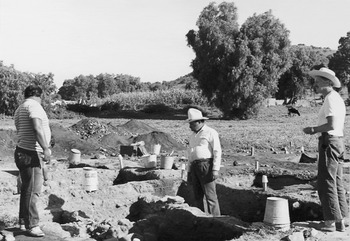
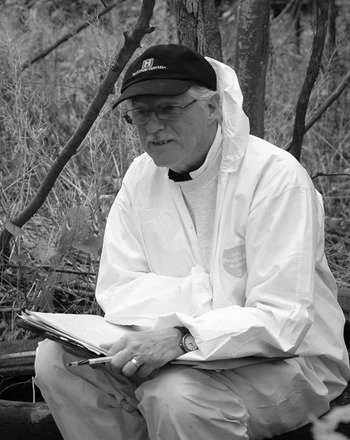
I can now tackle the job of writing up some of my lengthy backlog for publication. I figure that I owe the profession two dozen articles and two monographs. I enjoy writing articles and have started chewing my way through that list. Monographs are more difficult for me, but some research just doesn't fit the shorter format so I will have to start slogging my way through them too. However, as many of you know, as fast as you scratch one off the top of your list you add two at the bottom. I continue to collaborate with Chris White and to work with Ontario archaeologists, and forensic calls are increasing as that profession moves to a more formalized footing in Ontario (Figure 7). Last year I did three archaeological and seven forensic field investigations, each occupying only a few days but carrying with them the obligation to prepare reports, do lab analyses or autopsies, and in some cases testify in court. I should be cutting back but I am reluctant to put down my trowel and forego the fun of new discoveries. I suppose I'll have to find some balance there too.
Michael Spence at a forensic site, 2010.