Introduction
The cardiac ryanodine receptor type 2, encoded by the ryanodine receptor type 2 gene, is a key regulator of calcium (Ca2+) release from the sarcoplasmic reticulum, which is essential for cardiac muscle contraction and maintaining calcium balance within cells. Reference Kushnir, Wajsberg and Marks1 Over 20 years ago, ryanodine receptor type 2 mutations were first linked to catecholaminergic polymorphic ventricular tachycardia, an inherited arrhythmia characterised by exercise-induced ventricular tachycardia in patients with structurally normal hearts. Reference Priori, Napolitano and Tiso2,Reference Swan, Piippo and Viitasalo3 Since then, various other inherited arrhythmia syndromes linked to abnormal ryanodine receptor type 2 function have been identified. These conditions, collectively known as “ryanodinopathies,” include exon 3 deletion syndrome and calcium release deficiency syndrome, both characterised by dysregulated sarcoplasmic reticulum calcium handling, either through excessive or insufficient calcium release. Reference Steinberg, Roston and van der Werf4
While ryanodine receptor type 2 mutations are primarily associated with arrhythmias, recent studies have uncovered a potential link between ryanodine receptor type 2 dysfunction and structural heart conditions like left ventricular non-compaction, a rare cardiomyopathy characterised by deep trabeculations within the heart muscle. Although rare, cases of left ventricular non-compaction associated with ryanodine receptor type 2 mutations, particularly exon 3 deletions, suggest that ryanodine receptor type 2 may play a broader role in heart disease beyond arrhythmia. Reference Bhuiyan, van den Berg and van Tintelen5,Reference Ohno, Omura and Kawamura6
Here, we present a unique case that broadens the spectrum of ryanodinopathies by identifying a homozygous missense mutation in the ryanodine receptor type 2 gene, displaying exon 3 deletion-like features, alongside findings of left ventricular non-compaction and sinus node dysfunction.
Case report
A 3-year-old male patient, whose two older brothers had previously died suddenly, was referred to our centre after a screening electrocardiogram performed at another institution revealed a prolonged QTc interval. Genetic testing in one of his deceased brothers had identified a homozygous missense mutation in the ryanodine receptor type 2 gene. The patient had been started on propranolol at a dose of 3 mg/kg/day by the external centre. His brothers had passed away at the ages of 3 and 13 years. He also had a 10-year-old sister who was healthy. The brother who died at the age of 13 had been followed with diagnoses of ventricular fibrillation, left ventricular non-compaction, and sinus node dysfunction, and had died despite having an implantable cardioverter-defibrillator in place.
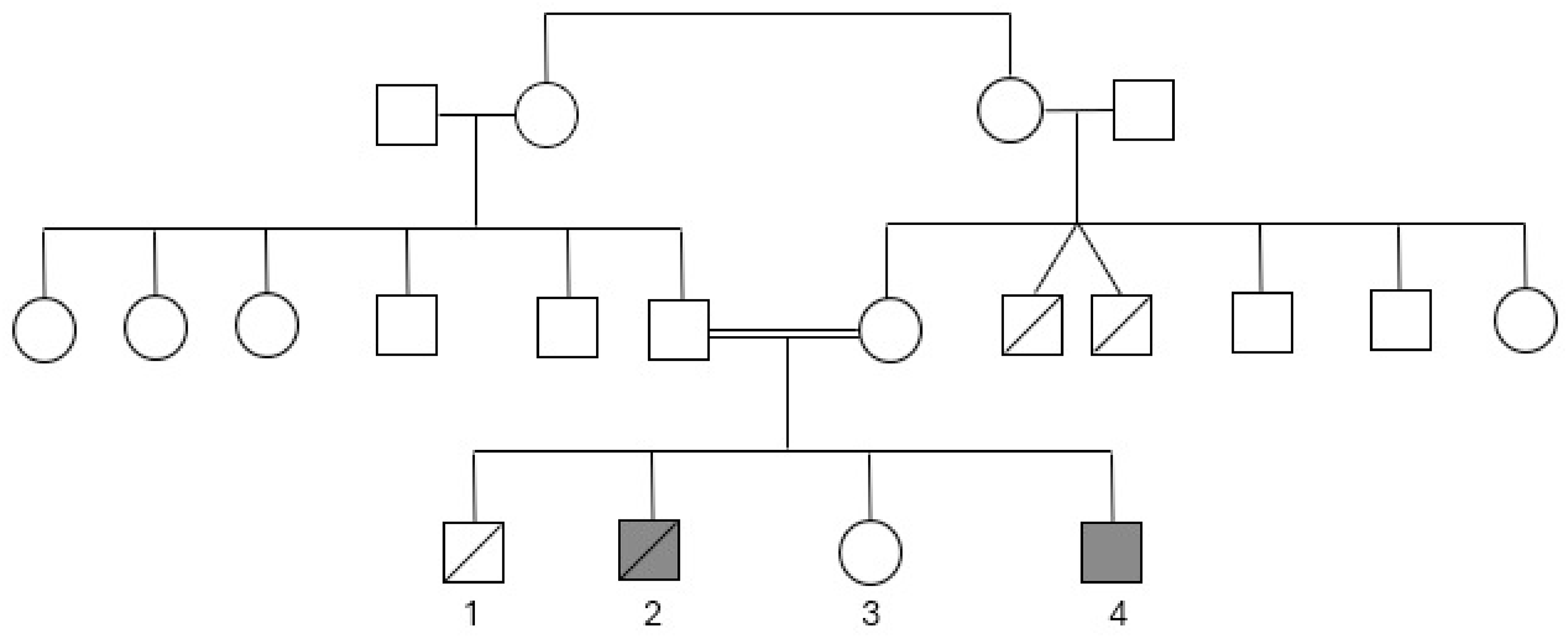
In the patient’s medical history, there were no episodes of syncope or fainting, and he reported no symptoms. His initial electrocardiogram at our centre showed a right bundle branch block, first-degree atrioventricular block, and left anterior hemiblock (a trifascicular block). The QTc interval was prolonged to 483 msec (Figure 1). Holter monitoring revealed first-degree AV block, right bundle branch block, left anterior hemiblock, numerous sinus pauses lasting up to 3.2 s, intermittent second-degree advanced atrioventricular block, rare isolated premature ventricular contractions, and prolonged QT intervals (Figure 2a–d). Echocardiographic evaluation demonstrated increased trabeculation of the left ventricle as well as dilatation of both ventricles (Figure 3a,b). The electrocardiograms of both parents revealed normal sinus rhythm with normal QTc intervals. It was noted that the patient’s parents were consanguineous. Genetic testing was ordered for the patient, and there was no history of other family members lost due to similar causes (Figure 4). Genetic analysis confirmed the presence of a homozygous missense mutation in the ryanodine receptor type 2 gene (NM_001035.3 c.9392A>G / p. Tyr3131Cys). Given the patient’s family history and clinical presentation, a dual-chamber epicardial implantable cardioverter-defibrillator implantation was performed.
Baseline ECG showed a first-degree AVB, RBBB, and left anterior hemiblock (a trifascicular block). The QTc interval was prolonged at 483 msec. ECG:10 mm/mV, 25 mm/s.

The patient’s 12-channel Holter recordings ( a ) sinus pause lasting 3.2 s, ( b ) findings consistent with trifascicular block (right bundle branch block, left anterior fascicular block, and first-degree atrioventricular block) along with a 2.9-second sinus pause, ( c ) atrial tachycardia followed by sinus pause, consistent with sinus node dysfunction (tachycardia-bradycardia syndrome). The second P wave coincides with the preceding T wave and is not conducted due to the ventricular refractory period; the third P wave is blocked as it falls within the AV node’s refractory period, ( d ) premature ventricular contraction with LBBB and inferior axis.

Echocardiography showed (a) dilatation in both ventricles and (b) markedly increased trabeculation and deep recesses, especially in the left ventricle.

A pedigree and clinical characteristics of the family. 1: sudden death at the age of 3, with a permanent pacemaker. 2: sudden death at age 13, with an ICD in place; RYR2 mutation detected. 3: a healthy 10-year-old sister. 4: our patient.

This case highlights the management of a patient with a significant family history and a mutation in the ryanodine receptor type 2 gene, a mutation more commonly associated with catecholaminergic polymorphic ventricular tachycardia. The report aims to emphasise the broad spectrum of ryanodinopathies and their complex clinical presentations.
Discussion
This case report presents a compelling narrative of a 3-year-old male patient with a homozygous missense mutation in the ryanodine receptor type 2 gene. What makes this case particularly unique is the presence of a homozygous variant located in exon 66, which is different from the commonly reported mutations in exon 3 in previous studies. This distinction highlights a novel location for pathogenic RYR2 mutations associated with severe phenotypic manifestations, broadening the understanding of ryanodinopathies.
The ryanodine receptor type 2 gene encodes the cardiac ryanodine receptor, which is a pivotal Ca2+ release channel located on the sarcoplasmic reticulum. This receptor plays an essential role in cardiac excitation-contraction coupling, facilitating the release of Ca2+ needed for muscle contraction and thereby maintaining calcium homeostasis within the cardiomyocyte. Reference Przybylski and Abrams7 The relationship between ryanodine receptor type 2 mutations and inherited cardiac disorders was first established over 20 years ago when they were linked to catecholaminergic polymorphic ventricular tachycardia, a potentially lethal arrhythmia that occurs in structurally normal hearts and is typically provoked by physical exertion or emotional stress. Reference Priori, Napolitano and Tiso2,Reference Swan, Piippo and Viitasalo3,Reference Koponen, Marjamaa and Tuiskula8 However, our case demonstrates that ryanodine receptor type 2 mutations may also manifest with structural abnormalities, such as left ventricular non-compaction and ventricular dilation, as well as conduction system disorders, including trifascicular block and sinus node dysfunction.
Since the initial discoveries, researchers have identified a growing spectrum of inherited arrhythmia syndromes associated with abnormal ryanodine receptor type 2 function. These conditions, collectively referred to as “ryanodinopathies,” include exon 3 deletion syndrome and calcium release deficiency syndrome. Both of these syndromes are characterised by dysregulated sarcoplasmic reticulum calcium handling, which can manifest as excessive Ca2+ release or insufficient calcium release, leading to various clinical consequences. Reference Steinberg, Roston and van der Werf4,Reference Zhong, Guo and Wei9 This diverse phenotypic presentation highlights the complexity of ryanodine receptor type 2-related cardiogenetic disorders and poses ongoing challenges for clinicians managing these patients.
Importantly, recent studies have begun to elucidate a potential connection between ryanodine receptor type 2 mutations and structural heart conditions, such as left ventricular non-compaction, which is a rare cardiomyopathy characterised by abnormal trabeculation of the left ventricle and impaired contractility. Reference Roston, Wei and Guo10 The relationship between ryanodine receptor type 2 dysfunction and structural anomalies suggests that aberrations in calcium signalling may be instrumental in both the development of arrhythmias and the progression of myocardial structural changes. Reference Jiang, Wang and Xiao11 In our patient, clinical findings of left ventricular non-compaction, trifascicular block, and intermittent advanced atrioventricular block suggest an interplay between ryanodine receptor type 2-mediated calcium dysregulation and both electrical and structural cardiac remodelling.
Understanding the mechanistic pathways through which ryanodine receptor type 2 mutations lead to these clinical manifestations is of paramount importance. Ryanodine receptor type 2 dysfunction is known to cause abnormal spontaneous calcium release from the sarcoplasmic reticulum, which can result in heightened intracellular calcium levels during diastole. This phenomenon can trigger arrhythmogenic events, ultimately contributing to the development of ventricular tachycardia. Reference Ormerod, Ormondroyd and Li12 Moreover, calcium dysregulation may also play a role in initiating structural changes, such as increased ventricular trabeculation, as seen in our patient. Such dysregulation not only affects the electrical properties of cardiomyocytes but also their structural integrity, highlighting a dual mechanism of action where genetic mutations in ryanodine receptor type 2 may underlie both arrhythmogenesis and myocardial remodelling.
The family history in our case is particularly noteworthy, as the patient had two brothers who died to unexplained cardiac events, with one sibling having been diagnosed with idiopathic ventricular fibrillation, left ventricular non-compaction, and sinus node dysfunction. The fact that the affected brothers died at a young age, despite having received medical interventions such as an implantable cardioverter-defibrillator, emphasises the importance of identifying individuals at risk within families with a history of sudden cardiac death. Reference Przybylski and Abrams7 Genetic counselling and proactive cardiac monitoring are essential components of managing such high-risk families. In light of this, the decision to implant a dual-chamber epicardial implantable cardioverter-defibrillator in our patient was a critical step in providing protection against potential life-threatening arrhythmias.
While the patient exhibited no syncope or other symptoms at the time of presentation, this does not diminish the significance of the detected arrhythmias on the initial electrocardiogram. The presence of a right bundle branch block, first-degree AVB, and left anterior hemiblock is indicative of underlying conduction system abnormalities that may progress over time. Holter monitoring further revealed a range of findings, including numerous sinus pauses lasting up to 3.2 s, intermittent second-degree advanced atrioventricular block, and isolated premature ventricular contractions. These findings underscore the unpredictable nature of ryanodine receptor type 2-related disorders, where many patients may remain asymptomatic while harbouring potentially lethal arrhythmias. Reference Koponen, Marjamaa and Tuiskula8 This highlights the need for regular, long-term follow-up in patients diagnosed with ryanodine receptor type 2 mutations, regardless of their initial symptomatology.
The genetic analysis performed on the patient revealed a homozygous missense mutation (NM_001035.3 c.9392A>G/p. Tyr3131Cys). Understanding the specific functional consequences of this mutation is crucial, as different mutations within the ryanodine receptor type 2 gene can result in varying clinical phenotypes. Investigations into how this specific missense mutation affects the biophysical properties of the ryanodine receptor could shed light on its role in calcium dysregulation and contribute to a more nuanced understanding of the pathophysiology of ryanodinopathies. Reference Roston, Wei and Guo10
The phenotypic conditions associated with the ryanodine receptor type 2 gene are predominantly reported to exhibit an autosomal dominant inheritance pattern. Reference Steinberg, Roston and van der Werf4 However, in our case, the patient and a deceased sibling were found to carry a homozygous variant in the ryanodine receptor type 2 gene, while the parents and another sibling, who were heterozygous for the same variant, did not display any phenotype. This homozygous inheritance pattern likely contributed to the severe and multifaceted clinical presentation observed in our patient, distinguishing this case from the typical autosomal dominant patterns described in the literature. The absence of symptoms in heterozygous carriers within the family further underscores the critical role of homozygosity in determining disease severity and phenotypic expression. This unique finding highlights the importance of detailed genetic analysis in cases with consanguineous parents and a strong family history of sudden cardiac death.
In the literature, cases of catecholaminergic polymorphic ventricular tachycardia caused by a heterozygous deletion in exon 3 of the ryanodine receptor type 2 gene have been reported to be accompanied by sinoatrial and atrioventricular conduction disorders, atrial arrhythmias, and dilated cardiomyopathy. Reference Swan, Piippo and Viitasalo3,Reference Steinberg, Roston and van der Werf4,Reference Koponen, Marjamaa and Tuiskula8 In our patient, however, there was a homozygous deletion in exon 66, accompanied by clinical features of trifascicular block, intermittent second-degree atrioventricular block, sinus node dysfunction, and left ventricular trabeculation and dilation, which broaden the phenotypic spectrum of ryanodinopathies.
In conclusion, this case underscores the importance of identifying and characterising less common mutations, such as the exon 66 variant in ryanodine receptor type 2, to enhance understanding of the genetic and clinical spectrum of ryanodinopathies. It highlights the critical need for continued research into the mechanistic pathways involved in ryanodine receptor type 2 dysfunction. As our understanding of the genetic basis of these conditions deepens, it is imperative to develop targeted therapeutic strategies that address both the electrical and structural aspects of heart disease. Continued exploration of ryanodinopathies can pave the way for improved diagnostic, therapeutic, and preventive approaches, ultimately enhancing patient care and outcomes for those affected by these challenging conditions.
As the field of cardiogenetics evolves, there is hope that advancements in precision medicine will enable us to identify at-risk individuals earlier, implement effective monitoring protocols, and tailor interventions based on specific genetic profiles. Through such efforts, we can aspire to reduce the morbidity and mortality associated with inherited cardiac disorders, particularly in families with a history of sudden cardiac death, thereby significantly impacting the quality of life and longevity for affected individuals.
Acknowledgements
None.
Financial support
This research received no specific grant from any funding agency in the commercial or not-for-profit sectors.
Competing interests
None.
Ethical standard
Patient data have been anonymised.