INTRODUCTION: RESEARCH PERSPECTIVES
Roman temples are commonly studied by archaeologists for their architectural characteristics and/or religious dedications.Footnote 1 They are thus often debated within discourses of Romanisation and identity at various scalesFootnote 2 and attempts to illuminate public or private actions in relation to overarching belief systems.Footnote 3 Within these approaches, the ‘structured deposition’Footnote 4 of material culture at temple sites is argued to provide significant insights into realms that are normally invisible archaeologically, such as religious feeling and emotions, as well as group behaviours such as elite competition and religious festivity.Footnote 5
Conventional research into these issues has tended to involve an unfortunate distinction between the ‘ritual’ spaces in temples and shrines and the quotidian world.Footnote 6 Criticisms of this approach are part of wider arguments for acknowledging the centrality of lived practice in shaping experiences and understandings of the world at individual, group and multi-generational levels.Footnote 7 Rives is clear that the concept of ‘religion’, in the modern sense, did not exist in the Roman world, even if worship, ritual and belief played an important part in life.Footnote 8 Yet current commentators go further, suggesting that ritual practices were constituted in the daily lives of the population, whether villa-dwelling elites or those tilling fields or herding cattle.Footnote 9
This promotion of the connection between lived practice and ritual activity, although welcome, has tended to mean that such research has concentrated on contexts beyond temples and shrines, mainly because of the central role assigned to such places in earlier interpretive models. Yet ritual behaviours, even when embedded in everyday practice, would nonetheless have been focused most intensively at temples and shrines: these settings were where the most important, or at least the most public, rituals took place. We seek to reinforce this point by describing a case study in which local practices influenced the ritual deposition of material culture at one small temple in one particular Romano-British landscape.
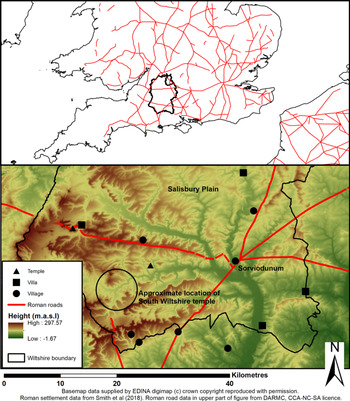
Topography of area discussed in this article.
Source: PASt Landscapes/David Roberts.

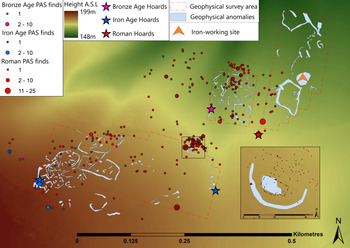
PAS and geophysical survey data from case study landscape, and inset showing area of excavation. Basemap data supplied via EDINA digimap. © Crown copyright, reproduced with permission.
Source: PASt Landscapes/David Roberts.

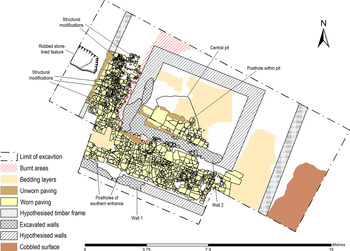
Excavation plan.
Source: Image by David Roberts and Paul Durdin.

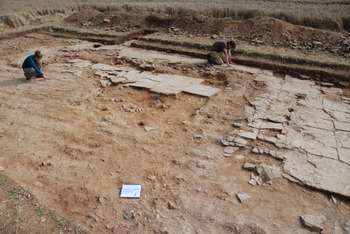
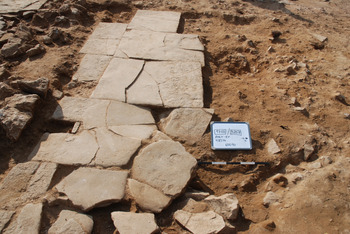
The temple during excavation. Photograph faces south.
Source: PASt Landscapes.

Upstanding limestone fragments.
Source: PASt Landscapes.

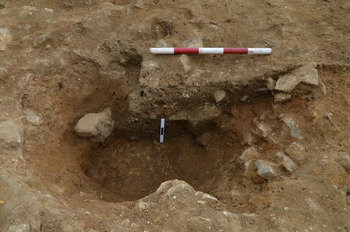
The posthole.
Source: PASt Landscapes.

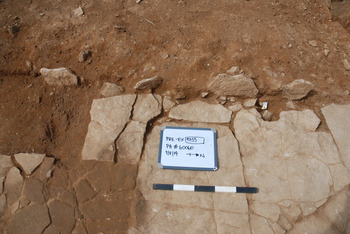
Differential wear on paving surrounding the central pit.
Source: PASt Landscapes.

Reece period comparison of the temple with a 500m radius of its environs.
Source: PASt Landscapes.

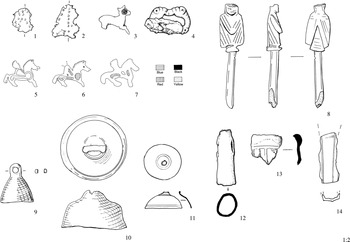
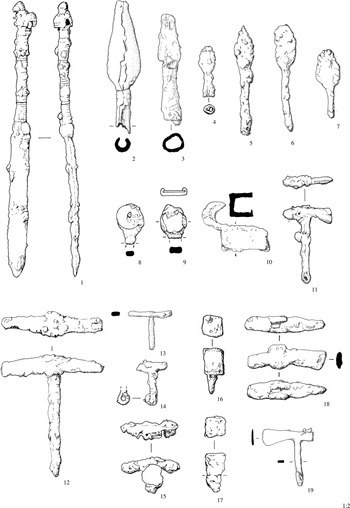
Selected artefacts from the excavated assemblage.
Illustrations: Claire Goodey.

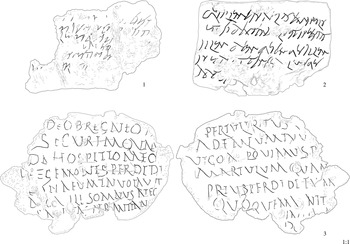
Selected curse tablets from the excavated assemblage.
Illustrations: Roger Tomlin.

Selected artefacts from the excavated assemblage.
Illustrations: Claire Goodey.

Reece period analysis of the forms of mutilation.
Source: PASt Landscapes.

SITE BACKGROUND: SOUTHERN WILTSHIRE IN THE ROMAN PERIOD
The study focuses on a part of Wiltshire that is dominated by chalk downland and river valleys with clay vales to the south-west (fig 1).Footnote 10 The vales were probably quite extensively wooded in the Roman period, encouraging a mixed agricultural economy spanning the chalk and clay throughout the Late Iron Age and Roman periods. Sorviodunum, situated at a river and road junction on the plain below the Iron Age hillfort at Old Sarum,Footnote 11 was the only local Roman small town. The main settlements comprised large villages, with few villas known from the area. Of these, only two have been subject to significant investigation.Footnote 12
Late Roman Wiltshire was a productive and wealthy agricultural landscape generating considerable economic surpluses.Footnote 13 The high number of coin hoards, compared to those of precious metalwork, highlight that coinage was the principle means of holding wealth and, together with finds from rural sites, show that silver coinage was a key medium of exchange (this emphasis of coins over metalwork is true of the south-west region as a whole, in contrast to the east of Britain).Footnote 14 Site finds and hoards in Wiltshire show a significant peak at the time of issues of the House of Valentinian. This peak has been related to a possible increase in grain exports from the reign of Julian the Apostate (ad 355–63) onwards.Footnote 15 Numismatic evidence has been used to suggest that significant numbers of public servants were involved with the production and transport of grain in the region.Footnote 16
METHODOLOGY
The site of ‘South Wiltshire Temple’ was discovered through systematic metal-detecting involving meticulous recording of individual find locations using a handheld global positioning system (GPS). Clusters of Portable Antiquities Scheme (PAS) finds occur elsewhere in Wiltshire, but the high quantity, unusual character and concentration of finds in a c 500m radius prompted further investigation. With no government or museum resources available to investigate the context of PAS finds, and no commercial incentive to do so, such research tends to be undertaken by universities, local museums or archaeological groups.Footnote 17 This project was undertaken by the University of York and the PAS in conjunction with Salisbury Museum.
Combining geophysical survey and analysis of PAS finds has allowed us to characterise the overall landscape in some detail (fig 2). Earlier prehistoric occupation is attested by the presence of an incomplete Neolithic polished axe-head, scrapers, flakes and blades from locally sourced flint and a Bronze Age barbed and tanged arrowhead. Later prehistoric finds of note are a Late Bronze Age to Early Iron Age metalworker’s hoard recovered from one field, and a hoard of Durotrigian silver staters found on the fringes of a major Late Iron Age enclosure complex. This complex, one of several set on a plateau, continued to be used in the early Roman period. Numerous finds of coins and items of personal adornment from the area imply greater levels of monetary wealth than at other Roman sites in the region. Significant coin deposition for the region occurred between ad 69 and 222, alongside the more usual later peaks.
In the mid to late Roman period, occupation moved away from the plateau. The large enclosures were replaced by smaller counterparts slightly downslope and clustered around the head and sides of a coombe. A concentration of PAS finds at the head of this coombe within a circular or penannular enclosure displays a strongly ritual character, notably in coins pierced by iron tacks or nails (see ‘mutilated coinage’ below). Hoarding remained an important part of wealth deposition in later centuries: a hoard of at least twenty-four fragmentary, silver miliarense and two silver siliquae with a terminus post quem of ad 383 suggests that wealth continued to circulate in the area until the end of the fourth century ad.
In 2014, under the supervision of the current authors, a test pit was inserted into the concentration of ‘ritual’ finds noted previously, which coincided with a cluster of stone roof tiles and masonry visible on the surface of the modern ploughsoil. The test pit elucidated the depth and characteristics of the archaeological deposits, and in turn led to a larger area excavation. This revealed a rectangular building, identified as a temple, which is the subject of this article.
Excavation of the structure included total sieving to recover finds from the topsoil and the careful stratigraphic excavation of the underlying remains. Good levels of preservation were recognised in the south of the site, with greater levels of plough damage visible to the north.Footnote 18
The circumstances of discovery, and the variable preservation of the site, lead us here to focus mainly on spatial, artefactual and landscape aspects of the temple. The nature of the temple’s demise and subsequent plough damage preclude any meaningful discussion of the architectural form.Footnote 19 In what follows, we first describe the structural development of the temple and its dating, then explore key parts of its associated finds assemblage before turning to a discussion of ritual activity on the site and its wider implications.
STRUCTURAL DEVELOPMENT
The temple was set out on two level terraces inserted into the gently sloping hillside. The southern limit was revetted by a wall of roughly-squared limestone blocks laid out along the full 9m width of the terraced area (henceforth Wall 1; fig 3). Two associated postholes, 1.7m apart, were inserted just north of this wall. Too shallow to have contained free-standing uprights, they must have been bound into the building’s superstructure, and, as they coincide in location with an un-faced section of Wall 1, are best interpreted as the remains of jambs to a double-door threshold giving access into the temple.
A second, east–west aligned wall, of similar width and construction, was set out 2.7m to the north of Wall 1, and symmetrically-placed at the centre of the terraced area. At least 5m long, it had returns to the north at both ends, to judge by the distinct edges of a dense cobbled surface that flanked it in the east and the line of a possible foundation base in the west (Wall 2). This component acted as a second revetment marking the two terraced levels. Fragments of two layers of off-white lime plaster with evidence for red, red-with-yellow and blue/grey decoration were concentrated just north of Wall 2, suggesting that this wall, or the building’s superstructure, had a better-quality finish here than elsewhere.
Regularly-cut rectangular limestone slabs up to 1.5m long, 1.1m wide and 50mm thick, set on a layer of dense pebbly clay, had been inserted into the terraced area to create the temple’s paved surface (fig 4). This limestone appears very similar to that found in a large outcrop exploited in the Roman period on the north-eastern slope of the coombe above which the temple sits. Differential wear on the paving shows that some zones had clearly been subject to considerable pedestrian traffic. Where the slabs retained their original tool marks in pristine condition, notably at the western edge of the pavement, suggests that they had been protected by a 0.35m-wide base plate. A series of vertically-set limestone fragments (fig 5) are probably packing stones inserted against this base plate, in turn implying a timber-framed superstructure for the building around the paving slabs. Associated destruction debris indicates that this framing was of sufficient strength to carry a stone-tiled roof.
Except for materials deposited in and around its ritual focus (see below), paved surfaces within the building were mostly kept clean. Deposits of silt and sand did, however, survive in localised zones near southern revetment Wall 1, the remains either of once-extensive occupation spreads removed elsewhere by modern ploughing or material accumulated during the building’s use as the result of floor sweeping. The relationship between Walls 1 and 2 and the paved floor could not be securely determined through excavation, but the general articulation of all these elements shows that they were contemporaneous and probably represent a single phase of construction. The metalled area to the east of the building maintained the gentle hillside slope, whilst a much-disturbed, stone-lined linear feature running from its western wall suggests the existence of a subsidiary structure on that side.
The temple lay near the centre of a circular ditch, 1.6m wide and c 40m in diameter. Limited excavation of the ditch recovered only late Roman pottery, suggesting that it was either a late feature, or more likely that it had been maintained over a longer period and then backfilled quickly. It should probably be interpreted as the remains of a temple enclosure.
Within the building the most significant feature was an intrusion inserted just north of Wall 2. This feature had a long and complex history but, in its final incarnation, took the form of a sub-oval pit over 1m across with steep sides 450mm deep (fig 3). The pit had been dug through natural sandy gravels down to underlying clay, which provided a solid foundation for its flat base. Its primary fill of brown, charcoal-flecked silt was overlain by a concentration of unworked flints, sandstones and limestones placed in the south of the intrusion and best interpreted as disturbed packing for a post. All were covered by a second, sandier deposit that not only filled most of the cut but, critically, sloped up its sides to underlie some of the paving stones mentioned above. In one zone, however, this fill also overlapped other paving slabs. Finally, another subsidiary circular feature had been cut into the partially-filled pit late in its life.
Both the function of this intrusion and its wider relationships are problematic. The most plausible explanation of the surviving evidence is that a flat-based, upright post c 400mm across was first placed into the feature, set directly on the underlying stiffer, natural clay and packed with stones on its south side (fig 6). The relatively shallow depth of the cut suggests that the post was either free-standing and of no great height or, if taller, was linked at its top to some form of superstructure. After the removal of this upright, further fills accumulated in the feature. As noted above, some of these deposits were sealed by the temple’s floor, but others overlapped it. The symmetry of the paving slabs implies a single phase of original flooring, so their inter-digitation with successive pit fills seems to suggest that the slabs were lifted periodically to allow deposition in the vicinity of the pit, and then carefully replaced. Evidently, continued access to the pit was important.
The significance of the pit is further reinforced by wear patterns on the adjacent slab surface, suggesting considerable footfall between it and nearby Wall 2 (fig 7). Such abrasion is not visible on the northern portion of three slabs beside the pit, which retained their pristine tool marks in a 2.05m-wide east–west strip. This unworn zone protruded beyond the expected paving line at this point, partially overlapping the later pit fills described above. It is therefore likely that an overlying feature protected part of the slabs from footfall at this point, perhaps suggesting the existence of a cult statue or wooden structure adjacent to, and directly overlooking, the pit.
The pit has been described in considerable detail because it can be shown, on the basis of artefactual evidence set out below, to have been a focus for ritual deposition from its first inception. The post may have been inserted when the structure was first built but removed during its lifetime. Ritual items were deposited both when the post was still in place and after its removal. Some of these activities seem to have involved lifting floor paving, inserting material and then replacing the slabs. In short, this location had an enduring significance within the temple.
The building was later modified internally by a series of shallow features that were inserted into the western paving. These formed a north–south alignment c 1m inside its western wall that articulated, in part, with its slab flooring. A second, parallel alignment is suggested by further features 400mm to the west of the first. All are too superficial to have supported free-standing posts, so whatever timbers they contained must have been tied to the temple’s roof. Various, similarly shallow intrusions were evident in the paved surface near the structure’s southern limit, alongside areas of disturbance and differential wear. Some may be the result of modern plough damage, but others may indicate further modifications of the slab surface; however, unlike their counterparts to the north-west, no clear alignment could be recognised.
The temple’s demise involved the flaking away of wall plaster along one wall, followed by the collapse of masonry filling the timber frame. This was quickly followed by the collapse of the stone roof. The tiles appear to have fallen inwards from the west and down to the north, showing that the perimeter of the building was roofed. Pottery and bone in the base of this collapse may derive from occupation immediately before its demise, whilst iron objects to the north may relate to its superstructure.
Limited robbing was evident above this phase of collapse. Most of the building’s timber framing seems to have been left to rot or burn in situ, and its stone infill and roofing left where it had fallen. There were two exceptions to this pattern. As described in detail previously, a late insertion directly above the central pit, although only 250mm deep, may have resulted from the final removal of whatever had marked this significant location. Secondly, the linear feature to the west of the temple, noted above, seems to have used lining stones that were robbed in their entirety. Naturally formed sand and gravel deposits then accumulated on the site, covering the Roman terraces. These are now sealed by the modern ploughsoil.
In summary, the temple consisted of a rectangular structure, 5.5m east–west and c 3.5m north–south, enclosed within a timber-framed, roofed element, measuring c 13m east–west and c 12m north–south. Whether the smaller, central area was also roofed could not be determined with certainty. As the northern part of the temple was removed by ploughing, the overall orientation is uncertain; the doorway set into the southern wall was offset and thus likely subsidiary. This, together with the position of the central timber post and associated pit towards the southern end of the cella, suggests that the main entrance lay to the north. Alternatively, the alignment of certain ephemeral and plough-damaged contexts on the eastern side of the temple ambulatory and the presence of a cobbled surface beyond this to the east makes an eastern entrance possible. The whole building was set on carefully-engineered terraces and probably enclosed by a ditch.
DATING
The pottery assemblage from the site consisted of 1,161 sherds (7.86kg), unusually dominated by South-East Dorset Black Burnished Ware (903 sherds, 4.80kg) and other British wares, with relatively few local coarsewares or imported wares present. The pottery profile suggests that the temple was first used in the late Roman period, from the third century ad onwards, and this date range fits well with the majority of other finds.
Coins from the excavation allow for more refined dating and are thus considered in detail next. Although plough disturbance means that coins cannot be used to date the specific phases of construction, their date profile furnishes us with a good overall picture of the chronology of the site. 1,151 coins were retrieved, of which 1,032 can be assigned to a Reece period for numismatic analysis (fig 8).Footnote 20 Very few of the recovered coins date to before ad 260, suggesting a construction date in the second quarter of the third century. This contrasts strongly with the immediate vicinity discussed above, where PAS finds and excavated evidence indicate occupation in both the Late Iron Age and earlier Roman periods.
Only seven coins dating to ad 388–402 (Reece Period 21) have been recovered from the site, implying its abandonment in the last decade of the fourth century. Within these parameters, coins from the years ad 348–78 represent a significant peak of activity at the temple.
The coin assemblage also resolves the uncertain stratigraphic relationship between the central pit and building. The pit contained a considerable number of coins from both its primary and secondary fills. In comparison with the overall assemblage, these show an increase in coins between ad 330–64 (in particular Fel Temp Reparatio copies dating to c ad 353–61) and a distinct paucity of issues from ad 364–78 (Reece Period 19). The primary fill of the pit contained just a single Period 19 issue. If this one coin is seen as intrusive, it would suggest that the original post was in place at the start of coin deposition in the temple but removed around the middle of the fourth century (ie existed for c 100 years), with coins being deposited in increasing numbers. After the post’s removal in the last quarter of the fourth century, coins were still placed nearby, but in fewer numbers compared to the site as a whole.
ASSOCIATED FINDS ASSEMBLAGES
Selected excavated assemblages are divided below into categories defined by different ritual practice. Those are: probably apotropaic and/or religious in function (plaques and curses); produced deliberately to perform a ritualistic role (miniature iron objects); fashioned for other reasons but then modified to carry out such a function (in particular mutilated coins); circumstantially linked to ritual deposition (items of personal adornment); and marked out as different in character from assemblages in the adjacent landscape (seeds, Mollusca and bones).
Votive plaques and curse tablets
The fragmentary remains of two triangular copper sheets with repoussé decoration depicting leaves were recovered from the site (fig 9, 1 and 2). The use of pure copper, with low tensile strength, suggests either that they were locally producedFootnote 21 or carefully transported to the site. Three of the nine lead curse tablets have surviving inscriptions (fig 10). One had indications of letters but no distinguishable words (fig 10, 1). The second, surviving as four lines with parts of a fifth, had been nailed in place upside down, the hole driven though part of the script (fig 10, 2). Written in Old Roman Cursive (dated c ad 150–250) by a practised hand using a stylus, the text translates as:
Who has stolen that canaelarem, if he has stolen a dexter, let him find him, the god, who has found him, who (has found) him. Let him bring him (or it) – who – to the temple.
Although the reading of the term canaelarem is clear, the word is otherwise unattested: the scribe may have confused a rare, unfamiliar word such as candelabrum (‘candle-holder’). The word dexter might refer to dextralis, ‘hatchet’. Even though the text is rendered in a literate hand, the syntax is impossible, comprising a string of incoherent formulae. This, and the nailing of the curse upside down, suggests that it may have been a scribbled attempt to fulfil a request from a none-too-literate customer.
The third tablet, apparently complete and unfolded, had seven lines of text on one side and up to nine on the other (fig 10, 3). These translate as:
To the god Bregneus I give the axe which I have lost from my house, [the house] of Hegemon. … has stolen, is not to be permitted sleep or health (until) he has brought it to your temple … as we have …[?] … the hammer which I previously lost, then also … [?]I give.
‘Bregneus’ appears to be an otherwise unknown god, who is clearly being asked to intercede to restore an axe to its rightful owner, as had been achieved before with a hammer. Three other curses from Britain mention axes,Footnote 22 one with an added reference to protective clothing that might suggest a link with woodland management/clearance, but this is the only one to refer to a hammer. Both items seem significant, given the possible reference to a hatchet on the second tablet, and other objects from the site (below).
Miniature iron objects
A range of miniaturised replicas from the site seem to be votive in nature,Footnote 23 and are divided here into possible martial items (sword and spears) and those related to artisanal activity (hammers, axes and anvils).
Miniature iron weaponry comprised a sword and fifty-one spears. The sword, a gladius 230mm in length with a composite hilt decorated with ivory, copper-alloy and horn, clearly involved considerable investment in its production (fig 11, 1). Fragments of mineral preserved leather, in places with coarse threads and vegetation fibres, were evident patchily along its blade. These possibly derive from a bag or wrapping. Iron miniature swords are more common in Continental Europe than in Britain, although four early Roman examples came from the Harlow Temple, one within a copper-alloy sheath.Footnote 24 The sword from ‘South Wiltshire Temple’ is the largest and most complex miniature example from the north-west provinces.
The spears, divided between socketed types and those with combined head and shaft, range in length between 42mm and 92mm (fig 11, 2–7), although even the larger examples can be classed as miniatures (fig 11, 2). Some of the combined type had been attached to clasped or pierced coins (see below), reinforcing their role in ritual practices. Similar forms of votive activity are paralleled at ritual sites in Britain and elsewhere in the north-west empire. The large numbers from a limited area mark out this site, as does the high proportion of hafted to socketed types. Full-sized socketed spears from early Roman levels at Uley were linked to a martial deity, an association thought to die out once civilians were forbidden to carry arms except for hunting. Footnote 25 Our miniature versions belong to the late Roman period, however, as do the miniature spears from Uley, so something other than militaristic factors, such as hunting, might be referred to here.
The hammers from the site are of the cross pein type (fig 11, 12–15). Although one broken, full-sized hammerhead with rounded faces was recovered, the remaining examples were interpreted as miniaturised due to their size and weight (the largest was only 100mm in length and weighed just 82g; fig 11, 12). All lacked the rounded faces expected on tools used for fine metalworking.Footnote 26 The shafts are mostly iron, in contrast to the wooden handles seen with full-sized hammers. Four examples, all unused, terminated in a loop, and may have been pendants (fig 9, 14). Another was attached to a coin, indicating a votive use (see ‘mutilated coinage’ below).
The site also yielded five miniature iron axes (fig 11, 11, 18 and 19). Miniature axes made from copper-alloy or lead are found regularly on Romano-British sites, including temples, where they have been linked to Roman sacrifice or interpreted as good luck charms.Footnote 27 Whilst the latter interpretation could also apply here, these iron items may require an alternative interpretation; for example, the choice of metal could reflect its local availability.
A miniature iron padlock and three miniature iron anvils were included in the assemblage (fig 11, 10, 16 and 17). The padlock bolt was constructed from a hollow sheet of iron and, if a mechanism was also produced, it would have been inserted at the side. Full-sized anvils are recorded elsewhere in Britain, and occasional miniature equivalents are also known.Footnote 28 The quantity of miniature objects here, and their association with the other iron artefacts described below, suggest, however, some form of votive use.
Finally, 580 nails of various types were recovered. A few may relate to upholstery as tacks or to shoes as hobnails, yet the vast majority were all-purpose types. Most, one assumes, are related to the building’s timber superstructure, but some could have an apotropaic significance.Footnote 29
Mutilated coinage
Seventy-seven coins from the site (7 per cent) had been mutilated, seventy-five being copper-alloy and two silver. Nearly all were either perforated (‘pierced’, see fig 11, 8) or attached to an iron miniature object by projecting tabs (‘clasped’, see fig 11, 9). The remaining two coins had broken during the piercing process and were subsequently clasped. Peforation methods included drilling and then inserting an object, or directly piercing a coin with an object. The perforating object was an iron nail or tack on the one complete example. Poor iron survival among the remaining examples means that what the mutilated coinage was ultimately attached to cannot be further defined. Ten pierced coins had been attached to iron minature spears, and fourteen to incomplete iron objects or plates, whilst seven clasped coins were linked to miniature spears or hammers and eight to incomplete iron objects or plates; clearly, both types had a votive function.
The pierced assemblage dates from ad 240–378, suggesting that this form of mutilation spanned much of the temple’s use (fig 12). Coins clasped by an iron plate or miniature item date exclusively, however, to ad 330–61; a distinct, generally later, period of activity. Even among pierced issues, chronological differences in perforation practice are evident, with the diameter of the hole decreasing over time and a change in the form of perforation.
Items of personal adornment
Alongside specific ritual objects such as curse tablets, miniature items and deliberately modified coinage, a range of items of personal adornment were retrieved from the site, including brooches, rings, bracelets and pins.Footnote 30 Such artefact types cannot be ascribed an intrinsic votive function, yet all are key elements of assemblages from other religious sites. The very act of depositing generally circulating, often curated, items in a ritualised context may offer insights into the personal choices of individual worshippers (ie ‘Souvenirs of the Self’).Footnote 31
A number of the brooches within the assemblage could have more specific votive connotations, including the wheel, zoomorphic and horse-and-rider brooches (fig 9, 3 and 5–7). A broken bone hair pin with a female bust, dating from the late first to early second century ad, provides a clear example of a curated object (fig 9, 8). The slight angle of the shaft indicates that it was a replacement, its marginally greater diameter creating a crack in the original head.
These objects can also take us from individual identities into wider social issues. A late Roman zoomorphic lion buckle is of a type associated with late Roman military groups or the imperial bureaucracy (fig 9, 4).Footnote 32 Late Roman buckles are known from Britain, north-east France and north-west Germany. A recent study recorded sixteen late Roman buckles and twenty-four associated fittings from Wiltshire, the majority from north of Salisbury Plain.Footnote 33 The buckle is part of a small concentration from south-west Wiltshire.
Three types of bell were recovered from the site (fig 9, 9–11). Bells are known in Britain from a range of settlement types, and are known in some cases to have both apotropaic and religious/ceremonial functions. Only one other example is known from this region, with very few others known from this part of the province as a whole.Footnote 34
Two fragments of Late Bronze Age to Early Iron Age copper-alloy axes and a flint barbed and tanged arrowhead were found in destruction and topsoil horizons at the temple. An incomplete Middle Bronze Age spearhead came from the secondary fill of the central pit (fig 9, 12–14). This material resonates with other prehistoric metalwork from Roman contexts, including temples such as Hayling Island, a possible burnt example at Wanborough and numerous examples found at Ashwell.Footnote 35 More important for present purposes, its deposition suggests that items regarded as valuable over a thousand years earlier were still being used in Roman ritual activities – an observation that has further implications for our interpretation of this multi-period landscape, as discussed below.
Seeds, molluscs and bones
Secure archaeobotanical data from the temple is limited, due to contamination by modern ploughing and plant growth. Mustard (sp Brassica) was, however, recovered in some numbers from a variety of temple contexts associated with both phases of occupation and abandonment of the main structure and the feature to its west. Such proliferation in diverse settings suggests that mustard was originally associated with ritual activity here, being perhaps burnt in order to produce a distinctive smell and contributing to the atmosphere of the interior space.
The molluscan evidence included various snail species native to their habitat,Footnote 36 with no distinctive implications for the character of the general landscape at the time. In contrast, alongside common periwinkles and some blue mussels, marine Mollusca comprised a profusion of European oysters distributed across the site and through the sequence of temple construction, use and demise.
The common periwinkles showed no diagnostic distribution, but oyster shells were concentrated just south of Wall 2 opposite the central pit, with a few complete half-shells placed vertically against that wall. They were also evident in the primary fill of the pit itself, indicating that they were being deposited at the start of the temple’s use and extensively discarded thereafter, with some complete half-shells perhaps displayed in particularly important settings. The deposition of blue mussel shells, although comprising less than 5 per cent of the assemblage by number of identified specimens (compared to oysters at 50 per cent), derived exclusively from a later fill in the same pit, perhaps replacing oysters as a distinctive form of shell deposition in a secondary activity. It is unclear whether these marine mollusca were actively consumed on the site or whether the shells were imported as objects of significance in their own right. The oysters seem widespread enough to imply dedicated consumption, but the blue mussel shells could have been valued for their colouration and were seemingly only deposited in the pit after the removal of the standing post.
The limited faunal assemblage from the site was dominated by medium domestic mammal remains, sheep being more than twice as common as pig, with cow and horse entirely absent. The only other domestic taxon represented here, chicken, is present only in early horizons. Age data is difficult to interpret meaningfully, but suckling pig was probably deposited in the central pit.
This assemblage also included a possible elite hunting component. The fragmentary remains of a large red deer antler, with skull portion attached, had been placed prominently above the backfilled pit along with associated iron hooks, suggesting it might once have been mounted. Possible game birds such as pheasant, duck and woodpigeon were more broadly distributed across the site, alongside a roe deer metapodial and an element of a hare (both recovered from late horizons after the temple’s demise, hence having an uncertain relationship with the primary use of building). Finally, rock dove (pigeon), and passerines such as finch and thrush were recognised. Pigeon and duck could indicate hunting and consumption, yet none of these are from secure contexts, and all are likely to be commonly present in the local environment in the Roman period.
Three fish elements came from the site: an eel from the temple’s abandonment and, from the central pit, a skull fragment from a sea bream and a second element of eel. In the absence of nearby water sources, they must be a product of human agency. Eels may have been available in the general vicinity, but the bream is a marine species, with the North Sea as its nearest natural habitat.Footnote 37
Finally, the site yielded a substantial quantity of micromammal bones from all horizons, representing mice and voles from a range of taxa. A discrete deposit directly below the floor slabs contained elements from three species of mouse, vole and shrew, whilst rodent gnawing was evident on a fragment of a larger mammal bone from the central pit. Frog/toad bones were present in later phases of temple use, although they may be intrusive (further anuran bones were noted in topsoil contexts).
DISCUSSION OF RITUAL ACTIVITY
Conventional aspects of religious observance
In summary, the above account describes a mid-third century temple in a ditched precinct, set on a carefully-terraced hillside above an important valley to its north, in which a variety of votive depositional practices then took place. This development fits the conventional view of Romano-British religious activity, with a ‘Romano-Celtic’ temple comprising a rectangular ambulatory set around a central cella. The ambulatory at least was roofed in stone, whilst wear patterns on its slab floor and a small post-setting inserted into this suggest the existence of a timber-framed superstructure (fig 3). Further wear patterns suggest that the cella could be perambulated in its full circuit, perhaps with a cult statue next to a centrally-placed timber post acting as a focus for votive deposits. The cella may have been open to the sky, but it is marginally more likely that the structure was fully roofed. Its internal layout implies a main entrance to the north, hence overlooking the major landscape feature in its vicinity – a coombe.
The temple experienced intensive coin deposition during the third and fourth century ad. This is similar to other shrines in this region, although lower value issues were more evident here than among coins circulating more generally. Deposition continued strongly into the last quarter of the fourth century ad, but seems to have ended abruptly before ad 400. This contrasts with evidence from the temple at Uley, which generated significant quantities of coins from ad 388 to 402, suggesting its continued use into the fifth century ad, albeit in a modified form.Footnote 38
The timber post at the heart of the temple was removed in the middle of the fourth century ad, but the void that was left continued as the focus for the deposition of a range of coins, objects relating to personal adornment and unusual votive objects. Carbonised seeds suggest the use of mustard in religious ceremony; parts of suckling pig, marine fish, eel and oyster shells imply dedicated consumption at the temple; and pottery with high proportions of regionally produced tablewares, rather than local vessels for food preparation or storage, also imply selective deposition.
Bregneus, an otherwise unknown god, is named on a curse tablet from the temple and was clearly worshipped there. Syncretisation with, or separate worship of, classical deities is often identified at Romano-Celtic temple sites. In this case, the miniature sword and the spears could be linked to the worship of Mars; the iron-working equipment with Vulcan; and the axe and hammer with Jupiter and/or the Sky God. In similar vein, Leech, in discussing the Lamyatt Beacon temple,Footnote 39 proposes connections to Mars from finds of horse-and-rider brooches and miniature weapons, but also suggests a resonance with a hunting god such as Silvanus or Cernunnos. We question, however, the value of such associations without direct evidence. We have clear epigraphic evidence that the temple was of ‘the [singular] god’ and was considered ‘your temple’ when addressing Bregneus. Assigning any other deity a role, without any further evidence, is an unnecessary elaboration.
The practices of cursing, votive deposition and the sacrifice of food are likely to have been familiar to visitors from beyond the region. In other ways, however, practices at this temple were less typical, notably the deposition of miniaturised and mutilated objects, the use of its centrally-placed pit and the relationship between religious activities and the local landscape. These themes are explored next.
Miniaturisation and mutilation
Items of personal adornment, although deposited at the site in some numbers, appear to play a less prominent role here than at other shrines, their place being taken by miniaturised swords, spears, hammers, axes and anvils. These deliberately-produced votive objects are usually seen as substitute offerings allowing lower social orders to approach, propitiate and thank divine powers with minimal expenditure.Footnote 40
Brooches, rings and bracelets can be seen as expressing a personal, social bond, their modification or mutilation signalling an end of this union.Footnote 41 The intentional mutilation of objects, notably the profuse pierced and clasped coins, is more difficult to interpret, however. Damaged coins have been documented at sanctuary sites outside Britain.Footnote 42 They mostly comprise chop marks on gold and silver issues of Late Iron Age and early Roman date, their character and date thus differentiating them from our assemblage.
Items closer to our material have been found in the Thames at London Bridge, but comprised less than 1 per cent of the whole numismatic assemblage.Footnote 43 Equally, finds from watery contexts at Piercebridge did include mutilated denarii and coins attached to iron objects, but constituted only 8 per cent of the whole assemblage and showed much more varied forms of mutilation.Footnote 44 Artefacts like our own – mutilated low denomination coins forming a significant proportion of a whole numismatic assemblage – are rare beyond religious sites such as Hayling Island and the sacred springs at Bath.Footnote 45
Pierced coins attached to other objects are yet more unusual, certainly in the numbers found here. It is unclear what, if anything, mutilated coins not attached to miniature spears or hammers, originally related to. If fastened to the temple’s timber superstructure, their wide distribution suggests that this included multiple structural components.
The deposition of miniature objects and coin mutilation peaked between ad 330 and 364 but continued strongly thereafter, probably up to the temple’s demise. Within the chronological changes in perforation practice outlined above, there are hints of particular episodes of piercing, most intriguingly the absence of the most common square-shaped perforations and presence of rare oval and rectangular intrusions in coins dated ad 296–318. This could suggest that the piercing process took place on site and that, in the opening decades of the fourth century ad, a particular individual with a dedicated set of tools took on this role. Equally, clasped coins attached to miniaturised objects peak between ad 330 and 361, implying a pulse of this distinctive ritual activity at that time. Similar episodes could be occurring within other, less closely-dated artefact classes, but remain unrecognised.
The ritual pit
This feature, inserted near the southern wall of the cella, was central to religious worship within the temple, both architecturally and ideologically. In its initial form of a standing post, it influenced temple construction. Even after the post was removed to create a pit, in the final decades of temple use, the paved floor in its immediate vicinity appears to have been lifted at intervals to allow materials to be deposited there. In the process, this may have allowed rodents to burrow under the floor, sometimes then gnawing bones deposited previously in the pit.
Within the pit itself, the general faunal signature matched that of the site as a whole, being dominated by medium mammals and the aforementioned micro-mammalian remains, together with minor incidences of chicken, fish and small birds. Two hobnails from both primary and secondary pit fills were probably part of the ‘background noise’ in nail distribution, yet oysters were only evident in its primary fills, and thereafter became distributed more widely on the site, sometimes placed in particular positions. Blue mussels, in contrast, were confined exclusively to the pit’s secondary use, either consumed in place of oysters or deposited due to their colouration. Suckling pig, plus elements of eel and sea bream, were also derived from this fill, all showing the feature’s continuing significance.
There are also some differences between coins from the pit and their general deposition: when the post was removed, after perhaps a century of temple use, we see the reduced deposition of coins of the House of Valentinian (ad 364–78), a type otherwise regularly deposited across the site as a whole. In addition, mutilation of coinage of that date lessens, and what was still mutilated was less likely to be pierced and more often clasped around a miniaturised object.
This move away from coin piercing following the post’s removal might suggest that it was one of the things that these coins were attached to (although not the only one: given their overall distribution, such items could have been nailed to other parts of the temple’s timber framing or furnishings).
Links to landscape
Other evidence from the site reminds us that this temple existed within a rural landscape, something that explains the different species of mouse, vole and shrew that lived around and under its floor slabs and the finches and thrushes that became lodged in its destruction debris. The complete absence of cows or horses, which are both known from the wider area, indicates cultural selection of the species arriving at the temple.
How much control the temple had over animal supplies is unclear. At the Uley temple, cockerels may have been preferentially supplied for votive purposes alongside, in mostly late Roman levels, specially selected but unbutchered goats (thus either not eaten or dismembered before being cooked). The majority of goats were born in spring and killed (perhaps sacrificed?) in autumn, and had had their horns removed using a distinctive technique.Footnote 46 At our site, unfortunately, the size and fragmentation of the faunal assemblage makes it challenging to explore the ‘reach’ of religious demands. That said, the evidence for red deer antler and oyster shell resonates with other temple sites, suggesting that it fits into King’s category of temples indicating diagnostic, dedicated animal remains,Footnote 47 rather than either being simply part of faunal ‘background noise’ in the area or involving the sacrifice of specific animals then found as articulated bone.
The prehistoric materials chosen for deposition show that this landscape had long been used, and indeed that its antiquity was recognised. A scattered metalworker’s hoard of incomplete objects containing artefacts from the Middle and Late Bronze Age, and the Early Iron Age,Footnote 48 was recovered in an adjacent field. It would appear that the practice of accumulating and curating objects of vastly different dates for deposition in ritualised contexts had a long history in the locality.
Other items, clearly Roman in date, show further landscape resonances. Votive artefacts for personal adornment include the horse-and-rider brooches and a zoomorphic plate brooch depicting a deer. As noted previously, these could all be interpreted in martial terms and related to corresponding deities. However, this need not be their only connotation. Red deer antlers at Lamyatt Beacon, are said to indicate hunting,Footnote 49 and may find a parallel at ‘South Wiltshire Temple’ in the antler placed in a prominent position above the central pit. Evidence from across the site for pheasant, duck, woodpigeon, roe deer and hare reinforce this picture, as may the profusion of miniature, votive spears (compared to the single sword; spears are not only used in military contexts).
Horse-and-rider brooches add another dimension to this picture. Their general distribution correlates significantly with temple sites, with two possible foci in Somerset–Wiltshire and Suffolk–Norfolk–Cambridge.Footnote 50 The seven brooches found at ‘South Wiltshire Temple’ represent the largest assemblage from Wiltshire, and may be interpreted similarly, raising the question of the type of religious practice involved.
These brooches show a horse and rider in profile and are often poorly executed, the rider having no clearly defined legs and a disproportionate head. X-ray fluorescence analysis also suggests that they were cheaply produced, with most brooches made of leaded gunmetal or leaded bronze,Footnote 51 leading one commentator to see them as a Roman equivalent of medieval pilgrim’s badges.Footnote 52 They might represent the movement of mounted elites in the landscape, thus reinforcing other evidence for hunting. Exploring such links seems more productive than speculating on whether the depicted rider denotes Mars or Silvanus/Cernunnos.
Overall, this evidence suggests that some artefacts originally in general circulation were chosen for deposition because of their landscape resonances. More importantly, other miniatures and brooches with similar links were deliberately produced as votive offerings. Similarly significant are the miniature axes deposited at the temple, no doubt linked to the mention of an axe on a curse tablet, alongside a possible hatchet. Such items embody not just religious symbolism but reference the exploitation and maintenance of wooded landscapes such as those in the nearby Blackmore Vale. Here the position and possible orientation of the temple, set on terraces overlooking a rich and productive valley to its north, is surely not coincidental.
The emphasis on iron at the temple is also noteworthy. The miniature hammers, axes and anvils are not only made of this material but also reference its production or working (note also the hammer mentioned explicitly on the curse tablet). The site lacks only tongs to have yielded a complete set of miniature blacksmith’s equipment known from other sites in Britain.Footnote 53 This explicit emphasis on iron working can be linked to the presence of a high-quality source of iron ore less than 200m north-east of the temple. Here successive furnaces associated with material of Roman and later medieval date, and an associated profusion of tap slag from bloomery smelting, have been recovered, together with a full-sized Roman cross pein hammer presumably used in the iron production process. Was religious practice commemorating a specific form of landscape exploitation?
Pre-Roman studies of iron production acknowledge the resonances between it and cropping regimes,Footnote 54 and this relationship probably continued into later centuries, given the similarities of the practices. Each involved the systematic disturbance of the ground, the one to gather ore and the other to plant crops (indeed, these seasonal activities could have been integrated); each was followed by pounding and heating to create a useable result; and each employed further heating to manipulate this output, thus creating end products with diverse uses. Overall, they represent twin, ‘magical’ processes, and there is evidence that both took place close to the temple. The iron furnaces are matched by a small corn dryer and paired querns from the coombe settlement overlooked by the temple.
Finally, we consider the demise of the temple by the end of the fourth century ad, some decades before other temples in the region were abandoned. Production of bronze nummi in the western imperial mints at Trier, Arles and Lyon ceased around ad 395. Naturally, the cessation of coin production need not mean cessation in its circulation: clipped silver siliquae may have continued to circulate in the region until c ad 425.Footnote 55 It is noteworthy that a hoard from the field adjacent to the temple with a terminus post quem of ad 383 lacked clipped coins, and there are only few late coins from the temple itself. This implies that this building, in contrast to temples elsewhere, may not have had access to currency after the last decades of the fourth century ad. It appears that the temple’s immediate hinterland could not sustain its religious activities after that point.
Evidence from the other end of the empire shows that the demise of temples was determined largely by the termination of support by locals, not by marauding groups belonging to other faiths.Footnote 56 This would fit with evidence at ‘South Wiltshire Temple’, which involved a piecemeal process in which most of its superstructure collapsed and was left in situ rather than recycled for either symbolic or functional reasons.
Alternatively, this landscape may have continued to generate the surplus needed to create wealth, but its inhabitants now chose to store it not in the form of coin but in prestigious artefacts, animals or whatever else. Such a major shift in social practice could have questioned the need to maintain a traditional temple. Naturally, the community debates involved in making any such choices would generate different decisions in different places. Yet the fundamental issues would have remained: should precious, material resources continue to be deployed to support particular ideological needs, and, if so, what did the latter now comprise? If this argument is accepted, then the corollary should also apply: before the temple’s demise, it must have been actively supported by the inhabitants of the local landscape, a community exploiting the resources of both silva and saltus. Their material concerns centred on hunting, woodland management and iron production – exactly the types of activities that the objects deposited in the temple reference.
In conclusion, it is clear that the material base for ideological choices represented at this site operated at various spatial levels. The votive practices were carried out in a place that, in its architecture and spatial organisation, would have been familiar to people across the north-west provinces. The objects placed in the temple, whether or not linked to specific gods, resonate with depositional practices seen at corresponding temples in this region, certainly in the items of personal adornment, evidence for miniaturisation and profusion of coinage, and perhaps in the mutilation of the latter. Yet, other strands of evidence link these ritual practices to production in the immediate landscape. We would argue that, in the end, it was this last relationship that determined the life of the temple, and its final death.
ACKNOWLEDGEMENTS
The PASt Landscapes project – the vehicle for this work – was supported by a wide range of funders, led by the Society of Antiquaries of London through the three-year Hillgarth Award, and support from the Margaret and Tom Jones fund. We are very grateful to Tristan Hillgarth, John Creighton, Roger Bland and Julian Richards for their support with these grants. Further significant funding was provided by the Discworld Foundation, the John Fell Fund, the British Museum, the Roman Research Trust, the Association for Roman Archaeology, the Ironmongers’ Company, the Haverfield Trust, the Cookson Trust, the Lorne Thyssen Research Fund for Ancient World Topics at Wolfson College Oxford and a range of private donors. The Headley Trust and Salisbury Museum supported an internship working on PAS finds from the site. Salisbury Museum, the University of York, the British Museum, Historic England and the PAS also provided significant help in kind to the project. We are especially grateful to Philippa Reference WaltonWalton, who played a very active role encouraging the project’s formation, in fundraising and in organising and participating in fieldwork.
SR wrote the majority of the text for this article and directed the excavation; DR managed all fieldwork, and led all landscape research; RH co-directed the project and undertook analysis of all small finds from the excavation and reported to the PAS. The on- and off-site post-excavation was managed by Rebecca Venn. Specialist analysis was undertaken by Kayt Hawkins (ceramic building material, mortar and plaster), Kevin Hayward (worked stone), Hayley McParland and Ruth Pelling (archaeobotanical remains), Clare Rainsford (faunal remains), Harry Robson (fish bone and Mollusca) Ruth Shaffrey (querns), Julie Shoemark (flint), Roger Tomlin (curse tablets) and Rebecca Venn (pottery). Rachel Wood supervised geophysical survey. Helpful and perceptive comments on the artefactual assemblages were provided by Martin Henig, Ralph Jackson, Bill Manning, Lorraine Mepham, Sam Moorhead, Rachel Seager-Smith, Roger Tomlin, Philippa Walton and Jacqui Watson. Artefactual illustrations are by Claire Goodey, the curse tablets were illustrated by Roger Tomlin and the landscape/excavation plans are by DR. Thanks are also due to all volunteers and students who have worked on the project. Finally, we would like to thank the landowners for permission to investigate the site, and AW for his dedication to metal-detecting and PAS recording, and vigorous and consistent support through the project.
SUPPLEMENTARY MATERIAL
To view supplementary material for this article, please visit https://doi.org/10.1017/S0003581520000487.
ABBREVIATIONS AND BIBLIOGRAPHY
Abbreviations
- PAS
-
Portable Antiquities Scheme