



1. INTRODUCTION
Hélène Landemore (Reference Landemore2013) has recently built a case for the epistemic virtues of inclusive deliberative democracy based on the cognitive diversity of the group engaged in making collective decisions. By inclusive, Landemore means that all members of the relevant group take part in the deliberation. Cognitive diversity refers to “the variety of mental tools that human beings use to solve problems or make predictions in the world” – their mental toolkits (p. 89). Landemore supports her thesis by appealing to the Diversity Trumps Ability Theorem of Lu Hong and Scott Page (Hong and Page Reference Hong and Page2004). This theorem shows that, in some circumstances, a sufficiently large number of individuals chosen randomly from a cognitively diverse group can be expected to be better at identifying the best outcome than a group of experts with the same number of members. In other words, cognitive diversity brings with it collective wisdom.Footnote 1
The original statement of the Diversity Trumps Ability Theorem in Hong and Page (Reference Hong and Page2004) is rather terse and technical, and therefore inaccessible to many scholars interested in its implications for democratic theory. The informal statements of this theorem in Anderson (Reference Anderson2006), Page (Reference Page2007), and Landemore (Reference Landemore2013) are more accessible, but do not accurately state what Hong and Page (Reference Hong and Page2004) have in fact shown. As a consequence, some of the concerns about Landemore's application of this theorem to democratic politics raised by Gunn (Reference Gunn2014) and Quirk (Reference Quirk2014) are misguided because they are based on an incorrect understanding of what the theorem actually establishes. There is therefore a need for an exposition of this theorem that does not sacrifice precision for accessibility. One of the main objectives of this paper is to fill this need.
The Diversity Trumps Ability Theorem applies whatever the number of options available to the deliberative group. In practice, deliberative assemblies often restrict attention to situations with only two options – a binary decision. The second main objective of this paper is to show that it is not possible to satisfy the assumptions of the Diversity Trumps Ability Theorem when there are only two options being considered. Hence, this theorem cannot provide support for the epistemic virtues of inclusive democratic deliberation for binary collective decisions.
Hong and Page's Diversity Trumps Ability Theorem is concerned with a group of individuals who share the same standard for the goodness of decisions and whose goal is to determine the best outcome according to this standard given their limited cognitive abilities. The group is thus engaged in a cooperative problem-solving exercise.Footnote 2 The theorem applies to a cognitively diverse group of reasonably competent individuals tackling a difficult problem for which there is a best, but a priori unknowable, way to search for a solution.
Cohen (Reference Cohen1986: 34) has famously characterized an epistemic approach to democracy by three desiderata. First, there exist correct decisions according to some procedure-independent standard of correctness. For example, for Cohen this standard is provided by an account of justice or the common good, whereas for Estlund (Reference Estlund2008) the standard is moral truth. Second, democratic decision-making is about individuals expressing their beliefs about what the correct decision is, not about their values and personal preferences. That is, democratic decision-making is inherently cognitive. Third, the decision-making process is one of adjusting individual beliefs in response to the beliefs about the correct decision provided by others. There is thus a deliberative aspect to epistemic democracy.
For an epistemic democrat, one (and for some epistemic democrats, the only) basis on which the authority and legitimacy of democratic procedures rest is their ability to make correct decisions, that is, on their ability to “track the truth”. The authority and legitimacy of a particular democratic institution is enhanced to the extent that it generally tracks the truth better than alternative forms of collective decision-making.Footnote 3 Landemore's application of the Diversity Trumps Ability Theorem to democratic decision-making belongs to this tradition. She is therefore considering an alternative mechanism for tracking the truth than the one provided by the Condorcet Jury Theorem.Footnote 4 While Landemore (Reference Landemore2013) focuses on epistemic success, as she makes clear in Landemore (Reference Landemore2014), the authority and legitimacy of democratic institutions also depend on non-epistemic factors, such as the expressive or intrinsic value of the procedures used to make collective decisions.
One criterion that has been used to judge how well a collective decision-making procedure tracks the truth is that it is more reliable in identifying the correct decision than a random procedure (Estlund Reference Estlund2008: 160). The Democracy Trumps Ability Theorem shows that the democratic procedures to which it applies satisfy a much more demanding criterion: they do better than a group of experts. Thus, to the extent that this theorem does provide support for deliberative democratic decision-making by a cognitively diverse set of individuals in non-binary situations, it passes a stringent test for success.
The plan of the rest of this paper is as follows. In Section 2, the model of individual decision-making employed in the Diversity Trumps Ability Theorem is introduced. Section 3 discusses how the kinds of problems that this theorem applies to is formalized in terms of the procedures individuals use to search for good decisions. How collective decisions are made is described in Section 4. The theorem itself is presented in Section 5. The impossibility of satisfying all of the assumptions of the Diversity Trumps Ability Theorem when collective decisions are binary is established in Section 6. Some comments on the scope of the theorem are provided in Section 7.
2. INDIVIDUAL DECISION-MAKING
The collective decision problem that a group of individuals faces is one of identifying the best alternative from some set X of possible choices. Here, X assumed to be finite. Of course, X must contain at least two alternatives, otherwise there is no choice to be made. For example, if the question is whether to mandate that automobiles have anti-theft alarms installed, whether to ban smoking in bars, or to determine whether a defendant in a trial is guilty, then there are two choices: {Yes, No}. Non-binary choices are also possible. Page (Reference Page2007: 139–43) considers an example in which the problem is one of determining which of 1,000 automobiles on a car dealer's lot gets the best gas mileage. To help motivate her discussion of the Diversity Trumps Ability Theorem, Landemore (Reference Landemore2013: 99–100) contemplates the problem of determining which city in France the government should locate an experimental programme in. Monetary policy committees of central banks face the problem of deciding by how much, if at all, to change the interest rate that is applied to inter-bank loans.Footnote 5 As a final example, in a Scottish jury trial, there are three options: {Guilty, Not Guilty, Not Proven}.
It is assumed that there is some procedure-independent standard for determining the goodness of the alternatives that is shared by everyone. This measure of goodness is modeled by a value function V: X → ℝ that assigns a value V(x) to each alternative x in X, with larger values assigned to better alternatives. It is supposed that there is a uniquely best alternative x* in X. In the car example, the value of a car is its actual gas mileage. In the binary examples, the better decision could be assigned a value of 1 and the other decision a value of 0. Thus, in a jury problem with guilt and innocence as the only options, if the defendant is actually guilty, the value of convicting him would be 1, but if he is innocent, the value of conviction would be 0. If, as in Estlund (Reference Estlund2008), the problem is one of determining moral truths, then the moral truth is assigned the highest value.
The individual decision makers have limited cognitive abilities. This manifests itself in a number of ways. Individuals may conceptualize the alternatives in different ways and focus on particular features of the alternatives so as to render the evaluation of alternatives less cognitively demanding. In the terminology of Page (Reference Page2007), they have different perspectives (how alternatives are conceptualized) and interpretations (how the alternatives are grouped into coarser categories). In addition, because of their limited cognitive abilities, individuals may not be able to evaluate all of the alternatives. Even when there are only two alternatives, it may be sufficiently demanding to determine the value of an alternative that only one of them is chosen for evaluation. How someone structures the way he searches for a good decision is described by a heuristic. This heuristic may take account of the time, effort, and resources needed to keep searching, not just the cognitive difficulty of doing so.
For the purposes of the Diversity Trumps Ability Theorem, the fine structure of an individual's perspective, interpretation and heuristic do not matter. What matters is the alternative he initiates his search with and the alternative his search for a good decision terminates at. Hong and Page (Reference Hong and Page2004) model this procedure by specifying a starting rule and a search rule. A starting rule ν is a probability distribution on X with ν(x) denoting the probability that the search process starts with alternative x. It is assumed that everybody uses the same starting rule ν and that this probability distribution has full support.Footnote 6 A search rule ϕ: X → X specifies what alternative ϕ(x) to recommend for each starting point x ∈ X. Many starting points could terminate with the same recommendation. The collection of alternatives at which the search procedure could stop is  $\phi (X) = \{ \bar x \in X\!:\bar x = \phi (x)\;{\rm for}\;{\rm some}\;x \in X\} $.
As an illustration, suppose that a couple wants to enroll their child in the high school in their city which has the highest proportion of graduates who go to college. The couple obtains a list of the city's schools in alphabetical order and randomly picks a school to inspect first. After gathering graduation statistics for this school, they evaluate the next school on the list, stopping when either the last school alphabetically has been reached or the next school has a worse record of success. In effect, this couple is using a “hill climbing” algorithm (keep searching until the top of a hill has been reached), where here the proportion of graduates who go to college corresponds to hill height. It may well be the case that if this couple had kept searching that they would have found a school with an even better record, but given the time it takes to search, they instead use their simple hill climbing heuristic. Had they evaluated the schools in a different order, say by the size of the student body, they might well end up choosing a different school even if their search starts with the same school.
Someone might start his search near the best alternative x* and find it with little effort. This fortuitous outcome is a matter of luck, not expertise. In the Diversity Trumps Ability Theorem, an individual's expertise – his individual performance – is an ex ante measure of how good a job the search and starting rules he uses do in identifying good alternatives. Formally, the individual performance of someone with search rule ϕ and starting rule ν is given by the expected value E(V; ϕ, ν) of the outcome that is identified using these rules, where
 $$E(V;\phi, \nu ) = \sum\limits_{x \in X} V(\phi (x))\nu (x).$$
In this formula, first, for each starting point x, the value V(ϕ(x)) of the outcome ϕ(x) that is reached from it is weighted by the probability ν(x) of starting the search at x and then these probability-weighted values for all possible starting points are summed. An individual who uses the rules (ϕ, ν) exhibits more expertise than an individual who uses the rules (ϕ ′, ν ′) if and only if
 $$E(V;\phi, \nu ) \gt E(V;\phi ^{\prime},\nu ^{\prime}).$$
Thus, the experts are those individuals whose search and starting rules result in the highest levels of individual performance. As noted earlier, here it is assumed that everybody uses the same starting rule. When this is the case, an individual's expertise is being judged by the effectiveness of his search rule.
3. ADMISSIBLE SEARCH RULES
The Diversity Trumps Ability Theorem does not apply to all collective decisions. Rather, it is concerned with difficult problems for which the individual decision makers are reasonably competent and have a diversity of approaches to solving such problems and for which there is a uniquely best search rule. These four requirements – difficulty, competence, diversity, and the existence of a uniquely best search rule – are formalized by placing restrictions on the set of admissible search rules Φ that are used by the individuals making the collective decision. These restrictions are formalized axiomatically.
Assumption 1 (Competence) For all ϕ ∈ Φ and all x ∈ X,
1. V(ϕ(x)) ≥ V(x), and
2. ϕ(ϕ(x)) = ϕ(x).
This assumption formalizes the competence of a decision maker. The first part of Assumption 1 says that no matter which alternative x the search process starts with, it does not terminate at an alternative ϕ(x) that is worse than x. The second part says that if ϕ(x) is recommended as a result of an individual's search when he starts at x, then it is not possible for him to restart the search process at ϕ(x) and come up with a better alternative. If the search rule ϕ can identify a better alternative starting at ϕ(x), then this individual should not have terminated the search there. This is not to say that there are not better alternatives than ϕ(x), only that the search rule ϕ cannot find them if the search ever gets to ϕ(x).
Assumption 1 can be thought of being as an analogue of how a hill-climbing procedure is used to find a local maximum of a real-valued function—never go downhill and always stop when a local peak is encountered. Thus, with Assumption 1, the collection of alternatives ϕ(x) at which the search procedure could stop can be interpreted as being the set of local optima for an individual with search rule ϕ. When combined with the assumption that the search can start with any alternative in X, an important implication of Assumption 1 is that x* is a local optimum of any search rule that satisfies it because if x* is the first alternative to be evaluated (which happens with positive probability), then the search terminates at x*.
Assumption 2 (Difficulty) For all ϕ ∈ Φ, there exists an x ∈ X such that ϕ(x) ≠ x*.
This assumption captures the idea that the problem of identifying the best alternative is sufficiently difficult that nobody on his own is always going to be able to solve it. When a problem is difficult, it is natural to suppose that there are many alternatives from which the search could be initiated for which the search rule terminates before identifying the best outcome. However, it is sufficient for the Diversity Trumps Ability Theorem that there is at least one such starting point.
Assumption 3 (Diversity) For all  $x \in X\backslash \{ {x^{\ast}}\} $, there exists a ϕ ∈ Φ such that ϕ(x) ≠ x.
Every individual uses a search rule in Φ. Because Assumption 3 applies to any starting point other than x*, it ensures that if someone terminates his search at x ≠ x*, then there is another search rule that recognizes that better alternatives exist when x is used as the starting point for the search. In other words, the search rules in ϕ encapsulate a diversity of approaches to finding the best alternative. The assumption that any non-optimal alternative can be improved on by some search rule in Φ does not imply that any particular group of decision makers uses it. Indeed, if a group is sufficient homogeneous in its choice of search rules, which is the case with a large group of experts, they may well get stuck at an an alternative that differs from x* because nobody in this group is using a search rule that recognizes that further improvements are possible. In contrast, with a group that utilizes a diverse set of search rules, getting stuck at a non-optimal alternative is less likely to happen.
An important implication of Assumptions 1 and 3 is that no alternative other than x* is a local optimum for all of the search rules that satisfy these two assumptions. To see why, suppose on the contrary that  $\bar x$ is a local optimum different from x* for all of the admissible search rules. By Assumption 3, there exists an admissible search rule ϕ such that
 $\phi (\bar x) \ne \bar x$. Because
 $\bar x$ is a local optimum for ϕ, there is an alternative x such that a search using ϕ terminates at
 $\bar x$ if it starts with x. But then Assumption 1.(2) implies that
 $\phi (\bar x) = \bar x$, a contradiction.
Assumption 4 (Unique Best Search Rule) $\arg \max \{ E(V;\phi, \nu)\!:\phi \in \Phi \} $ is unique.Footnote 7
This assumption says that there is exactly one search rule that outperforms all the others given the fixed starting rule ν. An individual who uses this rule exhibits the greatest expertise possible. Individual performance depends on the starting rule ν, not just the search rule ϕ. However, here, everybody uses the same fixed starting rule, so Assumption 4 can be thought of as being just an assumption about the set of admissible search rules. This is the only one of the four assumptions that takes account of the starting rule.
The set of search rules in the following example of a three-alternative collective decision problem satisfies all four assumptions.
Example. The set of alternatives is  $X = \{ \bar x,\hat x,{x^*}\} $ with
 $V(\bar x) \lt V(\hat x) \lt V({x^*})$. Thus, x* is the best alternative,
 $\hat x$ is second best, and
 $\bar x$ is worst. It is assumed that the starting rule ν has full support with
 $\nu (\bar x) = \nu (\hat x)$. Thus, it is equally likely to start the search with either
 $\bar x$ or
 $\hat x$ and there is some chance that it starts at x*. The set of admissible search rules is Φ = {ϕ 1, ϕ 2, ϕ 3} defined as in Table 1. In this table, the entries in a column indicate what alternative is reached by each of the three search rules when the alternative that heads the column is used as the starting point. For example, the entry x* in the second row of the second column is the alternative obtained with the search rule ϕ 2 when the search starts with
 $\hat x$.
An admissible class of search rules for a tertiary decision.

It is readily verified that ϕ satisfies the first three assumptions. Note in particular that the search terminates at x* if it is the starting point, as required by Assumption 1. Because all three search rules choose x* when x* is the starting point, the ordering of search rules in terms of their performance is completely determined by the entries in the first two columns of the table. The first search rule ϕ 1 terminates where it starts. The second search rule ϕ 2 only differs from ϕ 1 when  $\hat x$ is the starting point. Starting at
 $\hat x$, ϕ 2 identifies the best outcome x*, but ϕ 1 does not, so ϕ 2 performs better than than ϕ 1. For analogous reasons (using
 $\bar x$ as the starting point), ϕ 3 also performs better than than ϕ 1. Because
 $\nu (\bar x) = \nu (\hat x)$, ϕ 2 and ϕ 3 are equally likely to identify x*. The probability that ϕ 2 terminates at
 $\bar x$ is the same as the probability that ϕ 3 terminates at
 $\hat x$. Because
 $\hat x$ is the better of these two alternatives, the performance of ϕ 3 is better than that of ϕ 2, which makes it the uniquely best search rule in Φ.
4. COLLECTIVE DECISION-MAKING
I now consider how a group of individuals makes its decision. What they decide as a group depends on the search rules that they employ and on how they utilize the information obtained from their searches.Footnote 8
Suppose that there are n individuals, denoted by N = {1, …, n}. The ith of these individuals uses search rule ϕ i ∈ Φ. The profile of search rules is  ${\rm \bf P} = ({\phi _1}, \ldots, {\phi _n})$. The set of local optima for individual i is ϕ i(X). The set of common local optima for the profile P is
 $$C({\rm \bf P}) = { \cap _{i \in N}}{\phi _i}(\rm X).$$
The alternatives in C(P) consist of every alternative that all of the individuals in the group N agree are local optima. This set is non-empty because, by Assumption 1, x* is a local optimum for every admissible search rule.
The choice made by a group with profile P is denoted by D(P). In the Diversity Trumps Ability Theorem, it is assumed that the group decision D(P) is one of the alternatives in the set of common local optima C(P). Furthermore, it is assumed that if there is more than one common local optimum, then the choice is made by employing a profile-dependent probability distribution  ${\eta _{\bf P}}$ on X whose support is C(P). Thus, it is possible for any of the common local optima to be chosen, but there is no chance that any other alternative is.Footnote 9
The assumption that D(P) is chosen probabilistically from among the set of common local optima is consistent with a variety of more fully specified collective choice procedures. This assumption is a formalization of the idea that the individuals share a common interest in identifying the best alternative that they can given their cognitive limitations and that they will cooperate in order to do so, but that there are random elements in the decision-making process (such as the choice of where to start the search from). In particular, this way of modeling the collective choice problem can be interpreted as capturing some essential features of a deliberative democracy, and it is this interpretation that Landemore (Reference Landemore2013) draws on.
One, but not the only, way that this model of collective decision-making can be interpreted in deliberative democratic terms builds on the sequential decision-making process considered by Hong and Page (Reference Hong and Page2004) and Page (Reference Page2007).Footnote 10 Imagine arranging the individuals clockwise in a circle preserving the order of their “names” (1, 2, etc.). Starting with individual 1 and moving clockwise, each of the individuals is encountered in turn. When individual n is reached, by continuing to move clockwise, the next person in line is individual 1. Individual 1 initiates the deliberative process. He uses the starting rule ν to determine which alternative x to begin his evaluation of the alternatives with. After completing his evaluation, he announces that ϕ 1(x) is the best alternative that he has found, what its value is, and an account of how he came to this conclusion. Then individual 2 determines whether he can improve on the first person's finding by using his search rule starting at ϕ 1(x). This process is repeated sequentially by moving clockwise around the circle, as described above. This process terminates when a complete circuit of the circle has been made in which nobody has suggested an improvement. The alternative that is arrived at in this way is a common local optimum. Had individual 1 started his search with a different alternative, this sequential procedure could terminate in a different common local optimum. With this procedure, the probability distribution  ${\eta _{\bf P}}$ used to select among the common local optima is determined by the starting rule ν and the profile of search rules P. Admittedly, this is a highly stylized model of deliberation, but it captures some of its essential features – making proposals, giving reasons for them, responding in like manner to proposals made by other individuals, and sharing an interest in finding a mutually acceptable decision.Footnote 11
In the descriptions of this sequential procedure in Hong and Page (Reference Hong and Page2004) and Page (Reference Page2007), an individual announces the alternative he proposes but does not provide any reason for this choice. Why should the other individuals take this announcement seriously? One reason that they might is that they recognize their own cognitive limitations so that anything proposed after careful evaluation by anyone else deserves further consideration, particularly when, as here, everybody shares the same objective.Footnote 12 Hong and Page do not discuss the application of the Diversity Trumps Ability Theorem to deliberative democracy. For this application, it is important for an individual to give reasons for his proposal. The offering of these reasons provides a further rationale for his proposal being taken seriously by the other members of the decision-making group.
The set of common local optima depends on which of the admissible search rules are used by the individuals. For the set of admissible search rules in the Example, suppose that the profile P only contains individuals who use the search rules ϕ 1 and ϕ 2. Then,  $C({\bi P}) = \{ \bar x,{x^\ast}\} $ and either one of these alternatives is chosen with positive probability. If, instead, P contains all three of the search rules in Φ, then
 $C({\bi P}) = \{ {x^\ast}\} $ and x* (the best alternative) is chosen for sure.
The fact that x* is the only common local optimum in the Example if every admissible search rule is used by some member of the group does not depend on the particulars of this example. By Assumption 1, x* is a common local optimum for any profile of search rules. The diversity assumption (Assumption 3) ensures that no other alternative is a common local optimum if all of the search rules in Φ are used by the group. These observations play a fundamental role in the proof of the Diversity Trumps Ability Theorem.
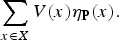
The joint performance of a group of individuals with the profile P is
 $$\sum\limits_{x \in X} V(x){\eta _{\bf P}}(x).$$
That is, the group's performance is measured by the expected value of the alternative it chooses.
5. THE DIVERSITY TRUMPS ABILITY THEOREM
For the kind of collective choice problem considered here, the Diversity Trumps Ability Theorem established by Hong and Page (Reference Hong and Page2004) shows that when selecting a large group of individuals from some larger group to make the collective decision, the joint performance of a randomly chosen set of individuals exceeds that of a group of the same size consisting of the best individual performers in the larger group. In other words, from an ex ante perspective, a diverse set of individuals does a better job of identifying the best alternative than a group of experts.
In the Diversity Trumps Ability Theorem, it is supposed that everybody uses a common starting rule ν with full support and that each of their search rules is chosen from a set of admissible search rules Φ that satisfies Assumptions 1–4. Furthermore, it is also supposed that any group chooses one of its common local optima, as described in the preceding section. Because individuals are only distinguished by the search rules they employ, choosing a group of individuals amounts to choosing what their search rules are. The group of experts is chosen by first picking a group of n individuals, each of whose search rules is independently chosen from Φ using a probability distribution μ on Φ that assigns a positive probability to each admissible search rule. The assumption that μ has full support ensures that when n is sufficiently large, the diversity of search rules found in Φ is preserved by the rules actually used by this group. From this group of n individuals, the n 1 best performers according to the individual performance measure E(V; ϕ, ν) are chosen, where n 1 < n. This group is compared with another group of n 1 individuals whose search rules are independently chosen from Φ using the same probability distribution μ that is used to generate the set of individuals from whom the experts are chosen. Provided that n and n 1 are sufficiently large, the Diversity Trumps Ability Theorem shows that the randomly chosen group outperforms the group of experts.Footnote 13 A precise formal statement of this result is provided by Theorem 1.
Theorem 1 (The Diversity Trumps Ability Theorem)Suppose that X is finite and contains at least two alternatives, ν has full support, and Φ satisfies Assumptions 1–4. Furthermore, suppose that the choice D(P) made by a group with profile Pis determined by a probability distribution  ${\eta _{\bf P}}$on X whose support is C(P). Let μ be a probability distribution on Φ with full support. Then, there exist positive integers n and n 1with n 1 < n such that with probability one, the joint performance of n 1individuals whose search rules are independently drawn from Φ according to μ exceeds the joint performance of the n 1best decision makers among a group of n individuals whose search rules are independently drawn from Φ according to μ.Footnote 14
There is simple intuition for this theorem. When the group chosen at random is sufficiently large, each search rule in Φ will be used by some individual. But then, as has been observed in the preceding section, x* is the only common optimum for this group. Thus, the randomly chosen group correctly identifies the best possible alternative if it is sufficiently large. By Assumption 4, there is a uniquely best search rule in Φ. If the group of experts is sufficiently large, they will all use this rule. However, by Assumption 2, none of the admissible search rules finds x* from every possible starting point. Thus, the experts could get stuck at one of the local optima for their common search rule that is different from x* because of bad luck in the choice of starting point. The randomly chosen group never gets stuck in this way because there is always someone in the group who recognizes that any alternative other than x* can be improved on. The diversity of their search rules trumps the fallible rule used by the experts.
The Example can be used to illustrate these observations. In this example, ϕ 3 is the best search rule. A sufficiently large group of best performers chosen as in the statement of the Diversity Trumps Ability Theorem all use this rule. As a group, they choose either  $\hat x$ or x*, each with positive probability. So, there is some chance that they will make the wrong decision. If the same number of individuals is chosen randomly, then with probability one they will use every search rule in Φ, and so their only common local optimum is x*. Thus, with this group, the correct decision is reached for sure.
It might appear that the Diversity Trumps Ability Theorem is making cognitive demands on the individual decision makers that are unachievable in practice. Each individual needs to determine the exact value of each alternative that he evaluates and then publicly announce the value of the local optimum that his search rule identifies, or so it seems. In fact, this is not the case. For a group to make a collective decision in the way described above, it is sufficient for each individual to be able to recognize when one alternative has more value than any other alternative that he considers, but he does not need to know by how much. An individual terminates his search when he cannot find any better alternative given his limited ability to search for and evaluate alternatives. It is not necessary for him to announce this alternative's value, only that it is a local optimum for him. Given that nobody can always identify the best alternative by himself and that everybody has the same objective, this information provides any other individual with a reason to investigate whether his own search rule can improve on this choice. Moreover, even if someone has announced the value of his local optimum, nobody else need accept this announcement at face value without evaluating it himself. Thus, the information provided by others helps overcome one's own cognitive limits by suggesting further alternatives to consider.
Landemore and Page (Reference Landemore and Page2015) recognize that it is the relative rankings of alternatives that matter to the decision makers, not the alternatives' absolute values. They also say that they “implicitly assume the existence of an oracle, namely a machine, person, or internal intuition that can reveal the correct ranking of any proposed solutions” (p. 234). In other words, once anyone considers a pair of alternatives, which of them is better according to the standard used to determine relative value is apparent. This assumption is unnecessary. What matters is that when someone says that an alternative is a local optimum for him, this announcement induces someone else to consider this alternative. Its (relative) value may take the latter individual some effort to determine or verify.
What the Diversity Trumps Ability Theorem tells us is that whoever the experts turn out to be, they will not outperform a randomly chosen set of decision makers. To prove this result, the actual values of the alternatives are needed to rank individuals in terms of performance and to compare the group performance of a random set of decision makers with that of a group of experts. However, once the epistemic superiority of the randomly chosen group has been established, there is no further need for these values because the random selection of the group members makes no use of these values and because there is no need to know who the experts are. In contrast, if an epistocracy had been assigned the task of making collective decisions, it would then be necessary to identify who the experts actually are, and that depends on the numerical values of the alternatives.
In fact, values do not even need to be measurable on an absolute scale in order to make comparative statements about performance. If values are subjected to an increasing affine transform, then the rankings of individuals by their performance as measured by (1) and groups by their performance as measured by (4) are unchanged.Footnote 15 In the special case in which there are only two alternatives in X, it is only necessary to know which of them is better in order to compare performance because the two parameters that define an affine transform are sufficient to transform any pair of values into any other pair in an order-preserving way.
6. BINARY DECISIONS
In practice, deliberative assemblies often restrict attention to situations with only two options. Unfortunately, with a binary choice, the Diversity Trumps Ability Theorem is vacuous because, as I shall now show, it is not possible to simultaneously satisfy the assumptions imposed on the set of admissible search rules.
To see why, suppose that  $X = \{ \bar x,{x^*}\} $ with
 $V(\bar x) \lt V({x^*})$. There are four possible search rules, as shown in Table 2. Neither ϕ b nor ϕ c satisfy Assumption 1.(1) because if the search starts at x*, it does not terminate there. Because ϕ b always chooses the other alternative wherever it starts, it also fails to satisfy Assumption 1.(2). Because the problem is difficult, by Assumption 2, ϕ d cannot be in Φ because it always chooses x*. Thus, the only possible choice for Φ is {ϕ a}. But with ϕ a, the search always stops where it starts, so there is no diversity, violating Assumption 3. Hence, Φ is empty, thereby establishing Theorem 2.Footnote 16
Theorem 2When the set of alternatives X is binary, it is not possible to satisfy all of the assumptions of the Diversity Trumps Ability Theorem because no non-empty set of search rules Φ can simultaneously satisfy Assumptions 1–3.
All possible search rules for a binary decision.

In terms of democratic decision-making, Theorem 2 shows that the Diversity Trumps Ability Theorem is irrelevant when decisions are binary; it cannot be used to make the case that diversity does a better job of tracking the truth than expertise. In such situations, the Diversity Trumps Ability Theorem offers no comfort to those who want to use it to argue for the collective decision to be made by an inclusive set of individuals rather than by an epistocracy.
7. THE SCOPE OF THE DIVERSITY TRUMPS ABILITY THEOREM
The inconsistency of the assumptions of the Diversity Trumps Ability Theorem for binary decisions renders it irrelevant for jury decisions in which the only options are to determine if the defendant is guilty or not. The theorem's assumptions are consistent when there are more than two alternatives. If, in fact, democratic institutions rarely deal with binary choices, Theorem 2 may not seriously limit the scope and usefulness of the Diversity Trumps Ability Theorem for democratic decision-making. There are, however, reasons for believing that democratic assemblies often choose between two options.
Risse (Reference Risse2004: 43) contends that democratic assemblies typically choose between three alternatives – the status quo, a proposal, and an amendment to this proposal. However, he goes on to say that it may be justifiable to “dissect” non-binary choice situations into pairwise choices (p. 52). Landemore (Reference Landemore2013: 149–50) argues that many democratic assemblies do just that, either by having an agenda setter pick two options to consider or by having a pre-voting deliberative stage. If Landemore is right, then the Diversity Trumps Ability Theorem does not apply once these two options have been identified.
Binary choices naturally arise when there is a moral principle at stake. Here are some examples of questions that a democratic assembly might address, each of which requires a yes or no answer. Should there be public provision of pensions for seniors? Should there be compulsory military service? Should all residents be required to have health insurance? Should there be a minimum wage? Should there be an affirmative action policy? Should sanctions be imposed on a foreign government? In each of these examples, competing reasons can be given for each choice and assessing these reasons can be a complex and time consuming task. An affirmative answer to any of these questions necessitates proceeding to a second stage in which the details of the policy are worked out. At this stage, there will be many options. However, in the first stage, there are only two.
Moreover, there are issues that by their very nature present only two choices. This is the case with the examples mentioned in Section 2 of whether to ban smoking in bars or to require that anti-theft devices be installed in automobiles.
The limitation of the Diversity Trumps Ability Theorem identified here can sometimes be avoided by adding more alternatives to the agenda.Footnote 17 However, for principles that are either right or wrong and for decisions that are inherently binary, this option is not available. Nor will enlarging the set of alternatives eliminate this problem completely if ultimately a final decision must be made between two of them.
The use of the Diversity Trumps Ability Theorem to legitimize an epistemic democracy is controversial. See, for example, Anderson (Reference Anderson2006), Gunn (Reference Gunn2014), and Quirk (Reference Quirk2014).Footnote 18 Landemore (Reference Landemore2014) has defended her use of this theorem in response to her critics. This is not the occasion to consider the merits of the positions taken in this debate, none of which turn on the number of alternatives being considered. There is, however, a further issue about the scope of the theorem that only arises when there are three or more alternatives: the appropriateness of the theorem's implicit assumption that the decision makers behave non-strategically. This is a concern that has been raised about the Condorcet Jury Theorem, but it takes a somewhat different form when applied to the Diversity Trumps Ability Theorem.
The Diversity Trumps Ability Theorem presupposes that any information that is shared is communicated truthfully. In particular, each individual truthfully reports any local optimum that he finds during his search process. However, while everybody shares the same goal of identifying the best alternative, as a result of their searches, individuals have different beliefs as to what this outcome is. As first recognized by Austen-Smith and Banks (Reference Austen-Smith and Banks1996) in the context of the Condorcet Jury Theorem, this difference in beliefs may provide incentives for individuals who share a common goal to misrepresent what they know because they think that this will further the group's interest in finding the best outcome.Footnote 19 Indeed, experts on an issue may well regard the reported local optima of those who they feel are uninformed to be unreliable, and so misreport their own local optima in order to encourage convergence on an outcome that they think is closer to the truth. In her discussion of this problem as it applies to the Condorcet Jury Theorem, Landemore (Reference Landemore2013: 156) notes that strategic considerations play no significant role in large groups because in such settings any single individual has little influence on the outcome. But for realistic sizes of deliberative assemblies, this need not be the case.Footnote 20 Nor need it be the case that a small group of like-minded individuals will refrain from jointly misrepresenting what they have learned so as to influence the outcome in a way that they think better serves the group's interests than telling the truth.
The idea that diversity can enhance the collective wisdom of a group is a powerful one. But, as I have argued, in binary choice situations, the formalization of this idea in the Diversity Trumps Ability Theorem provides no grounds for favouring diversity over expertise when the objective is to identify the best outcome according to some procedure-independent standard of goodness. I have also suggested that when there are more than two options to choose from, the theorem's assumption about the decision makers' behaviour may be questionable. As a consequence, care must be taken when applying the Diversity Trumps Ability Theorem to democratic institutions.Footnote 21





