Introduction
In cases of mass-casualty incidents (MCIs), the Prehospital Emergency Medical System (PhEMS) represents the entry door of casualties to the health system.
In incidents in which the number of casualties exceeds the available resources, the flow of people involved must be channeled as much as possible towards the reference hospital centers. In this context, triage systems have constituted a fundamental tool to carry out this task.Reference Turner, Lockey and Rehn1, Reference Lewis, Sordo and Weireter2
Patients during MCIs are cared for according to a sequential triage. The first triage aims at determining as quickly and accurately as possible the priority of attention, highlighting systems such as Simple Triage and Rapid Treatment (START), Sacco Triage Method (STM), Prehospital Advanced Triage Method (META), CRAMS score (circulation, respiration, abdomen, motor, speech),Reference Silvestri, Field and Mangalat3–Reference Curran-Sills and Franc7 as well as others. In the second triage, once the Basic Life Support (BLS) and/or Advanced Life Support (ALS) maneuvers have been applied, the objective is to identify which casualties have the least chance of surviving if they are not referred to a center that is suitable to their pathology, and have therefore a higher priority of evacuation.
Classically, this second triage has employed systems such as the Revised Trauma Score (RTS), Shock Index (SI), Glasgow Coma Scale-Age-Pressure Score (GAP), Injury Severity Score (ISS), and Canadian Triage Acuity Scale (CTAS).Reference Galvagno, Massey and Bouzat8–Reference Najafi, Abbaszadeh, Zakeri and Mirhaghi11 All systems are based on physiological or anatomical parameters, are validated, and are preponderantly designed for use in patients with traumatic pathology.
In recent times, MCIs (and especially those of an intentional nature) have increased in incidence, creating a special interest in how to determine which patients have highest evacuation priority, as well as which hospital center is most appropriate for their pathology.Reference Massalou, Ichai, Mariage and Baqué12 The PhEMS are implementing in their operating procedures systems that allow responders to discriminate the surgical time, such as point-of-care ultrasound (POCUS)Reference Wydo, Seamon, Melanson, Thomas, Bahner and Stawicki13, Reference Shokoohi, Pourmand and Boniface14 or point-of-care testing (POCT).Reference Kost, Tran, Tuntideelert, Kulrattanamaneeporn and Peungposop15–Reference Lewis, Naumann, Crombie and Midwinter18 However, this equipment implies a significant economic effort and technically requires prior learning to ensure good diagnostic performance.
A diagnostic tool widely used today is the National Early Warning Score 2 (NEWS2), which is validated for the prehospital context.19, Reference Silcock, Corfield, Gowens and Rooney20 The NEWS2 provides a standardized score based on the weighted assessment of different vital signs (respiratory rate, oxygen saturation, systolic blood pressure, heart rate, and temperature) and clinical observations (level of awareness and use of oxygen). The NEWS2 is able to identify serious adverse effects in high-risk patients hours before they appear,Reference Alam, Vegting and Houben21, Reference Hoikka, Silfvast and Ala-Kokko22 providing useful information to PhEMS in MCIs where clinical decision making requires speed, the highest possible degree of accuracy, and its use in a normalized manner.Reference Gerry, Birks, Bonnici, Watkinson, Kirtley and Collins23, Reference Hoikka, Länkimäki, Silfvast and Ala-Kokko24
Although many studies have evaluated the use of the NEWS2 in hospital or even prehospital settings, there are not enough prospective studies that assess the usefulness and accuracy of the NEWS2 as a prehospital triage tool.Reference Abbott, Cron, Vaid, Ip, Torrance and Emmanuel25–Reference Skitch, Tam, Xu, McInnis, Vu and Fox-Robichaud29
The objective of this study was to evaluate the capacity of different prehospital triage systems based on physiological parameters (SI, GAP, RTS, and NEWS2) to predict early mortality (within 48 hours) from the index event for use in MCIs.
Methods
Study Design
This was a longitudinal prospective observational multi-center cohort study in patients over 18 years of age who were attended by ALS and transferred to the emergency department (ED). The study ran from April 1, 2018, through February 28, 2019.
The study was approved by the Research Ethics Committee of all participating centers (reference REC: #PI 18-010, #PI 18-895, #PI 2018-10/119, and #CEIC 2049). All patients (or guardians) signed informed consent. The study was carried out with the highest safety standards, protecting the physical integrity and confidentiality of the participants, complying with national and international regulations for the study in human subjects included in the Declaration of Helsinki. The study protocol is available online. The STROBE statement has been used for this report.
Study Setting
The study was conducted in a reference population of 1,113,073 inhabitants, distributed in four provinces of Spain (Burgos, Salamanca, Segovia, and Valladolid), in a geographical area of 41,403 km2. All the provinces belong to the Autonomous Community of Castilla y León, integrated in the same health system (Gerencia Regional de Salud [SACYL]; Castilla y León, Spain), with the same PhEMS, and the same protocol for responding to MCIs. Patients were included if they were attended by the PhEMS and referred to the reference hospitals of their respective provinces. Patients enter through the 1-1-2 emergency number; after the call is analyzed by an expanded registered nurse (ERN) and/or medical doctor (MD), the most appropriate resource is assigned to the emergency, which can be moving teams of primary care, BLS, or ALS. The BLS units are composed of two paramedics with limited competences, and the ALS is integrated by two paramedics (an ERN and an MD), able to perform standard ALS measures at the incident site or en route, with the usual equipment in this type of assistive devices. The PhEMS has 56 BLS and 12 ALS for the four provinces.
In all hospitals, patients were admitted through the ED. All the hospitals included in this study have a high diagnostic, surgical, and intensive care unit capacity.
Participants
Inclusion criteria for the study were: having been evaluated and transferred by an ALS to the ED of the reference hospital and not meeting any exclusion criteria, which were: age below 18 years, social problems or acute psychiatric pathology, cardiorespiratory arrest, death before or during the transfer, pregnancy, terminal stages of disease (in treatment by palliative care units), arrival time greater than 45 minutes, and having been evacuated by other means of transport or discharged in situ.
Patients were also excluded who could not be followed-up on through the electronic medical record and participants who did not give informed consent.
Triage System Included
Triage systems were chosen based on physiological parameters and simple clinical observations (level of awareness and use of oxygen). These scales are composed of simple parameter systems, multiple parameters, or aggregated weighting systems, the latter being the most reliable.Reference Hoikka, Silfvast and Ala-Kokko22, Reference Kievlan, Martin-Gill and Kahn30, Reference Churpek, Yuen and Winslow31
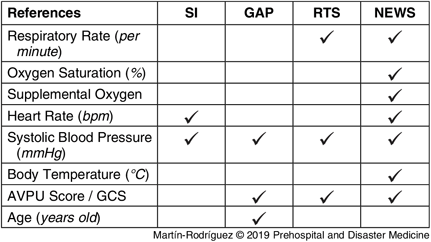
For this study, four triage methods have been selected that can be performed (at least in a theoretical framework) in the context of MCIs at the prehospital level: SI,Reference Myint, Sheng and Xian32, Reference Pottecher, Ageron and Fauché33 GAP Score,Reference Köksal, Torun, Ahun, Sığırlı, Güney and Aydın34, Reference Baghi, Shokrgozar, Herfatkar, Nezhad Ehsan and Mohtasham Amiri35 RTS,Reference Jeong, Park and Kim36, Reference Manoochehry, Vafabin, Bitaraf and Amiri37 and the NEWS2.Reference Silcock, Corfield, Gowens and Rooney20, Reference Patel, Nugawela and Edwards38 Table 1 shows the parameters that are evaluated in each scale.
Triage Scale Evaluated in the Study and Physiological Parameters that Make Up Each Scale

Abbreviations: AVPU, alert, verbal, pain, unresponsive; GAP, Glasgow Coma Scale-Age-Pressure Score; GCS, Glasgow Coma Scale; NEWS2, National Early Warning Score 2; RTS, Revised Trauma Score; SI, shock index.
Outcomes
The objective of this study was to evaluate the capacity of different prehospital triage systems based on physiological parameters (SI, GAP, RTS, and NEWS2) to predict early mortality (within 48 hours) from the index event for use in MCIs.
In addition, the performance of the different triage systems was explored for sub-groups of patients with trauma and injuries by external agents in comparison with patients with medical pathology.
Variables of Interest
During the first contact with the patient in prehospital care, collected were: demographic data (age and gender); times of arrival; assistance and evacuation; vital parameters (respiratory rate, oxygen saturation, heart rate, systolic blood pressure, and body temperature); and clinical observations (consciousness level according to the AVPU [Alert, Verbal, Pain, Unresponsive] scale or Glasgow Coma Scale, and use of supplemental oxygen). It is not about worst values in 24 hours or mean values that are then reproduced as group data. The temperature was measured using a ThermoScan PRO 6000 tympanic thermometer (Welch Allyn, Inc.; Skaneateles Falls, New York USA), and the rest of the vital parameters with a LifePAK 15 monitor (Physio-Control, Inc.; Redmond, Washington USA) and Corpuls3 (Weinmann Emergency Medical Technology GmbH; Hamburg, Germany).
All variables were collected by the ERN of each ALS, who by tabulating the data obtained the values of SI, GAP, RTS, and NEWS2 for each participant. Once prehospital care was concluded, the MD of the ALS, in view of the tests performed and the clinical evaluation, issued a diagnosis based on the International Classification of Diseases (ICD) 11, differentiating two diagnostic groups: trauma and injuries by external agents; and other types of medical pathology (ie, cardiovascular, neurological, respiratory, digestive, endocrine, infectious, and genitourinary).
Data on hospital mortality were obtained through a review of the electronic medical records of the patients three days after prehospital care, including early mortality (within 48 hours of the index event) from any cause within the hospital.
Access to the clinical history of each patient was performed by an associated researcher of each hospital. All the researchers involved in the research project received specific training about the variables to be collected and the times to guarantee the traceability and homogeneity of the data.
Statistical Analysis Methods
Before statistical analysis, the database was cleaned using logical, range (for detecting extreme values), and data consistency tests. Subsequently, the presence and distribution of unknown values of all variables were analyzed.
All data were stored in an XLSTAT BioMED database (Addinsoft; New York, New York USA) for Microsoft Excel (version 14.4.0; Microsoft Corp.; Redmond, Washington USA). Continuous quantitative variables are described as mean (standard deviation) if normally distributed, or as median (interquartile range) if not normally distributed. In that case, the Kolgomorov-Smirnov test was applied. Qualitative variables are described by absolute and relative frequencies (%). For comparing the means of quantitative variables, the Student’s t test was used with normally distributed values and the U-Mann-Whitney test if there was no normal distribution. The Chi square test was applied for 2 x 2 contingency tables and/or proportional contrast to stipulate the relationship between association or dependence between qualitative variables, if necessary (percentage of squares with expected values below five and above 20). Fisher’s exact test was used.
The area under the curve (AUC) of the receiver operating characteristic (ROC) of each of the scales was calculated in terms of early mortality (within 48 hours), globally, and by trauma pathology or medical pathology. It has been determined the cut-off point of each scale that offered highest sensitivity and specificity using the Youden index, calculating in each case sensitivity, specificity, positive predictive value, negative predictive value, likelihood ratio, odds ratio, and diagnostic accuracy. Finally, each AUC was compared from all scales with nonparametric tests.
In all tests performed, a confidence level of 95% and a P value of less than .05 were considered significant.
Results
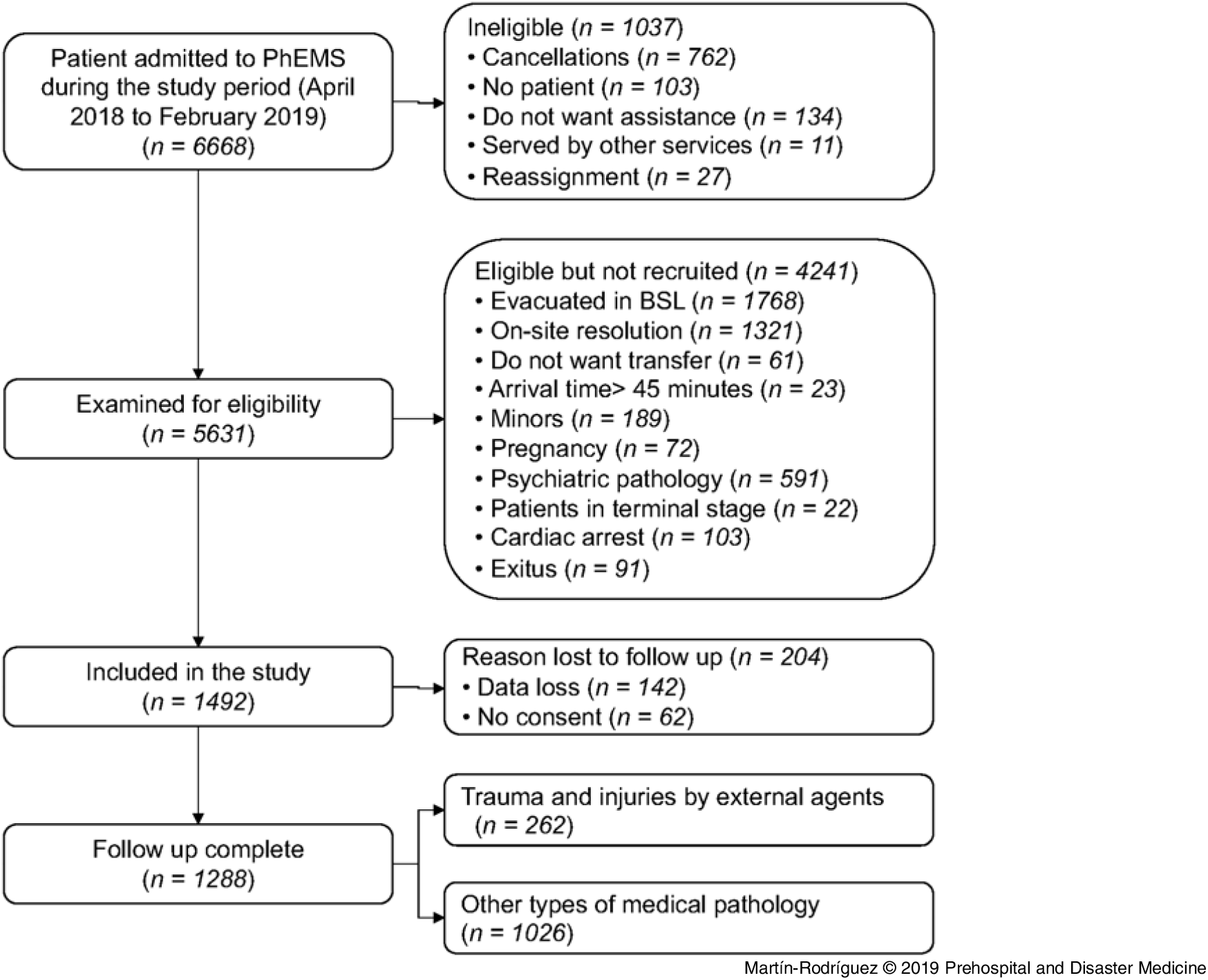
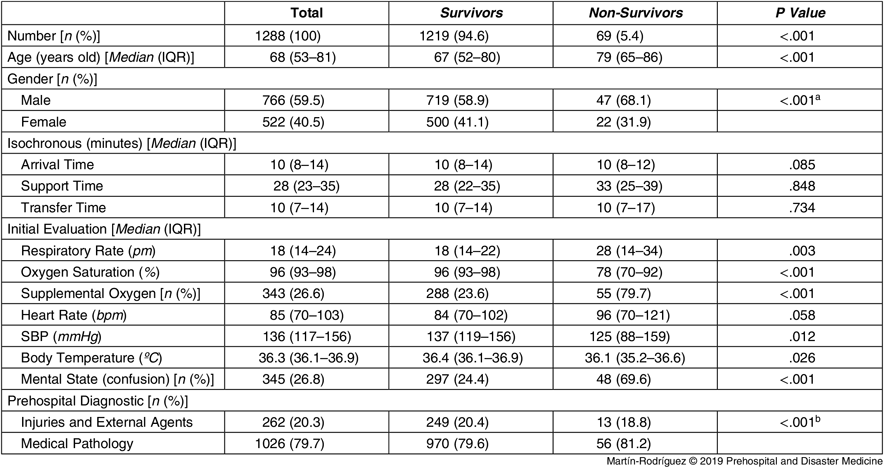
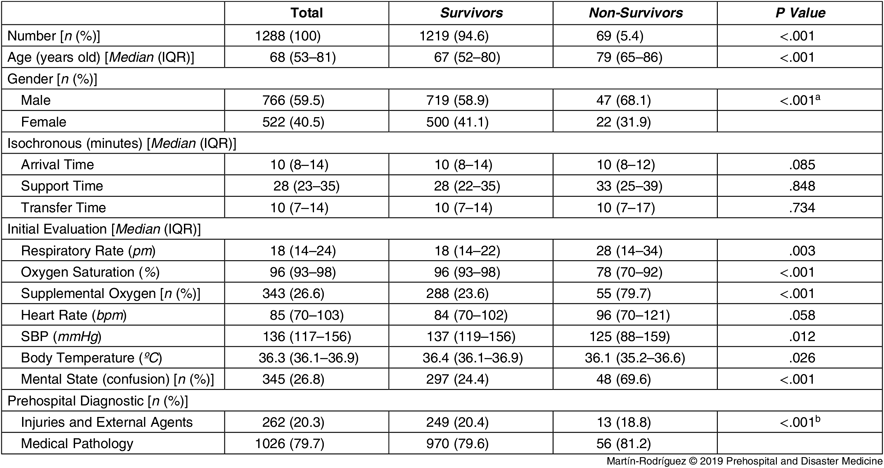
From April 1, 2018 through February 28, 2019, a total of 1,288 patients were included in this study (Figure 1). Median age was 68 years (IQR, 53-81 years); 522 (40.5%) of whom were women. In all, 262 (20.3%) of the participants requested care for trauma and injuries by external agents. Only 69 patients (5.4%) died within the first 48 hours due to any cause.
Flow Chart Enrolled Patients.

The mortality of these patients was associated with advanced age and male gender. All variables used for calculating the different scales were significantly associated with mortality, except for heart rate (P = .05; Table 2).
General Patient Characteristics (Death Statistics Refer to Early Mortality Rates)
Abbreviations: IQR, interquartile range; SBP, systolic blood pressure.
a The p-value refers to the comparison by gender.
b The p-value refers to the comparison by pathology.
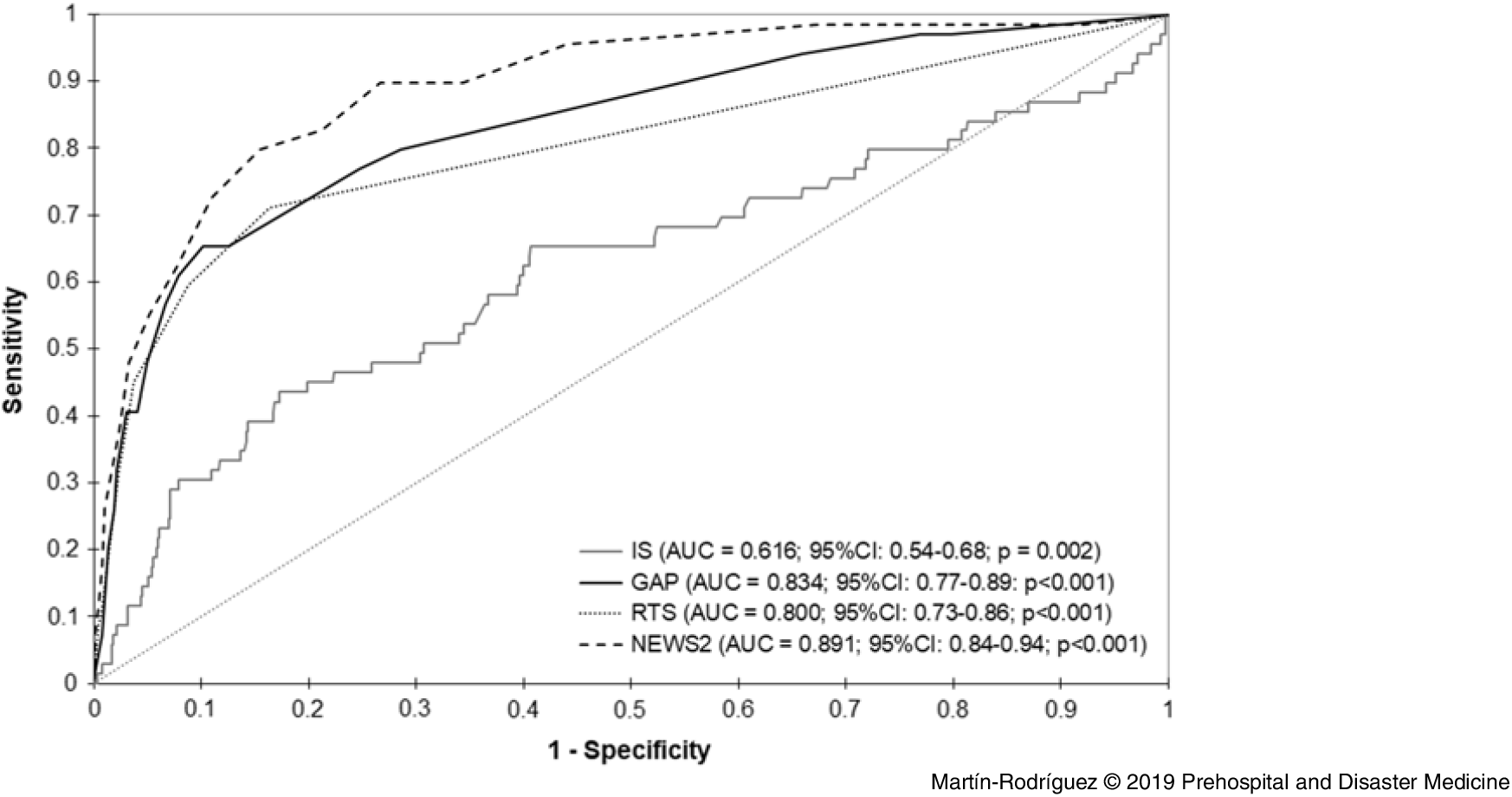
All AUC of the analyzed systems reached statistical significance for predicting early mortality in a global manner (Figure 2). The system with the best predictive capacity was the NEWS2 with an AUC of 0.891 (95% CI, 0.84-0.94), followed by the GAP with an AUC of 0.834 (95% CI, 0.77-0.89). When comparing both scales, statistically significant differences were observed (P = .038). The RTS presented an AUC of 0.800 (95% CI, 0.73-0.86), while the SI scale presented the worst AUC of 0.616 (95% CI, 0.54-0.68; Figure 2).
Global Diagnostic Performance of the Different Triage Systems for Predicting Early Mortality and AUC with a 95% CI.

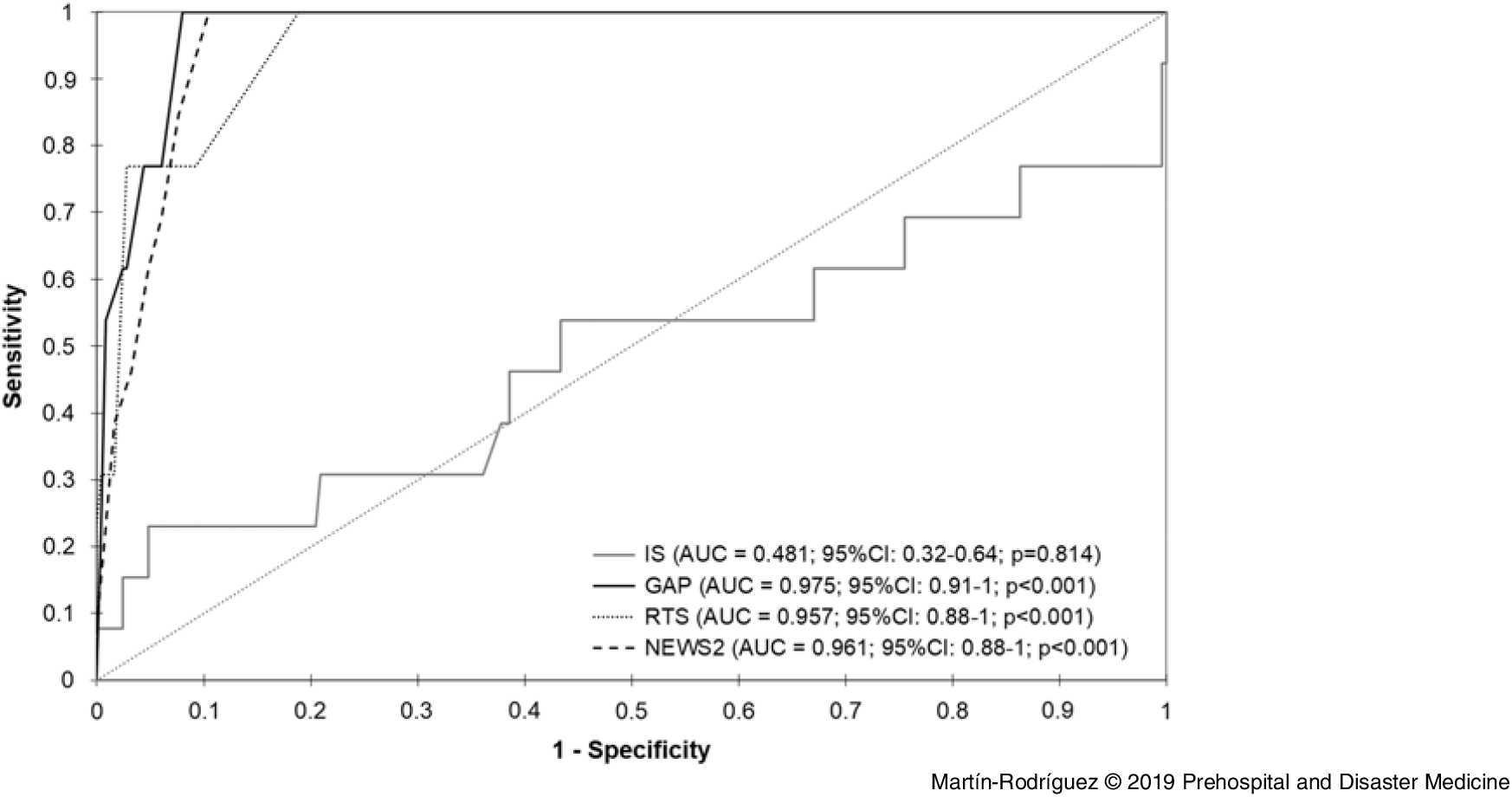
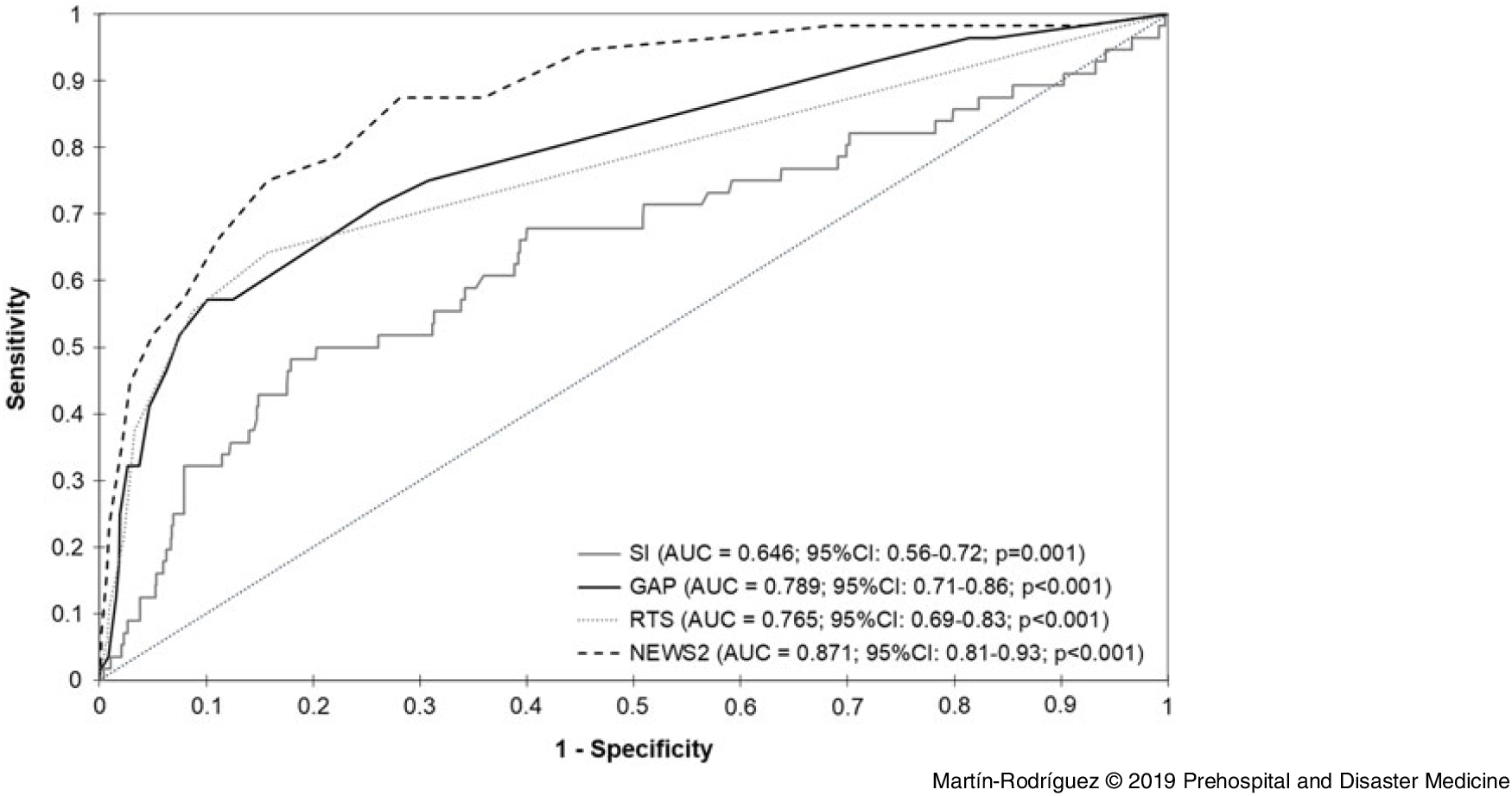
Regarding the behavior of the triage systems according to pathology (trauma and injuries by external agents or other types of medical pathology), the system with better predictive capacity in trauma and injuries by external agents was the GAP with an AUC of 0.975 (95% CI, 0.91-1.00; P < .001), followed by the NEWS2 with an AUC of 0.961 (95% CI, 0.88-1.00; P < .001). When comparing both scales, no statistically significant differences were observed (P = .291; Figure 3). The system with the best predictive capacity in other types of medical pathology was the NEWS2 with an AUC of 0.871 (95% CI, 0.81-0.93; P < .001), followed by the GAP with an AUC of 0.789 (95% CI, 0.71-0.86; P < .001). When comparing both scales, statistically significant differences were observed (P = .019; Figure 4).
Specific Diagnostic Performance of the Different Triage Systems for Predicting Early Mortality from Trauma and Injuries by External Agents and AUC with a 95% CI.

Specific Diagnostic Performance of the Different Triage Systems for Predicting Early Mortality from Other Types of Medical Pathology and AUC with a 95% CI.
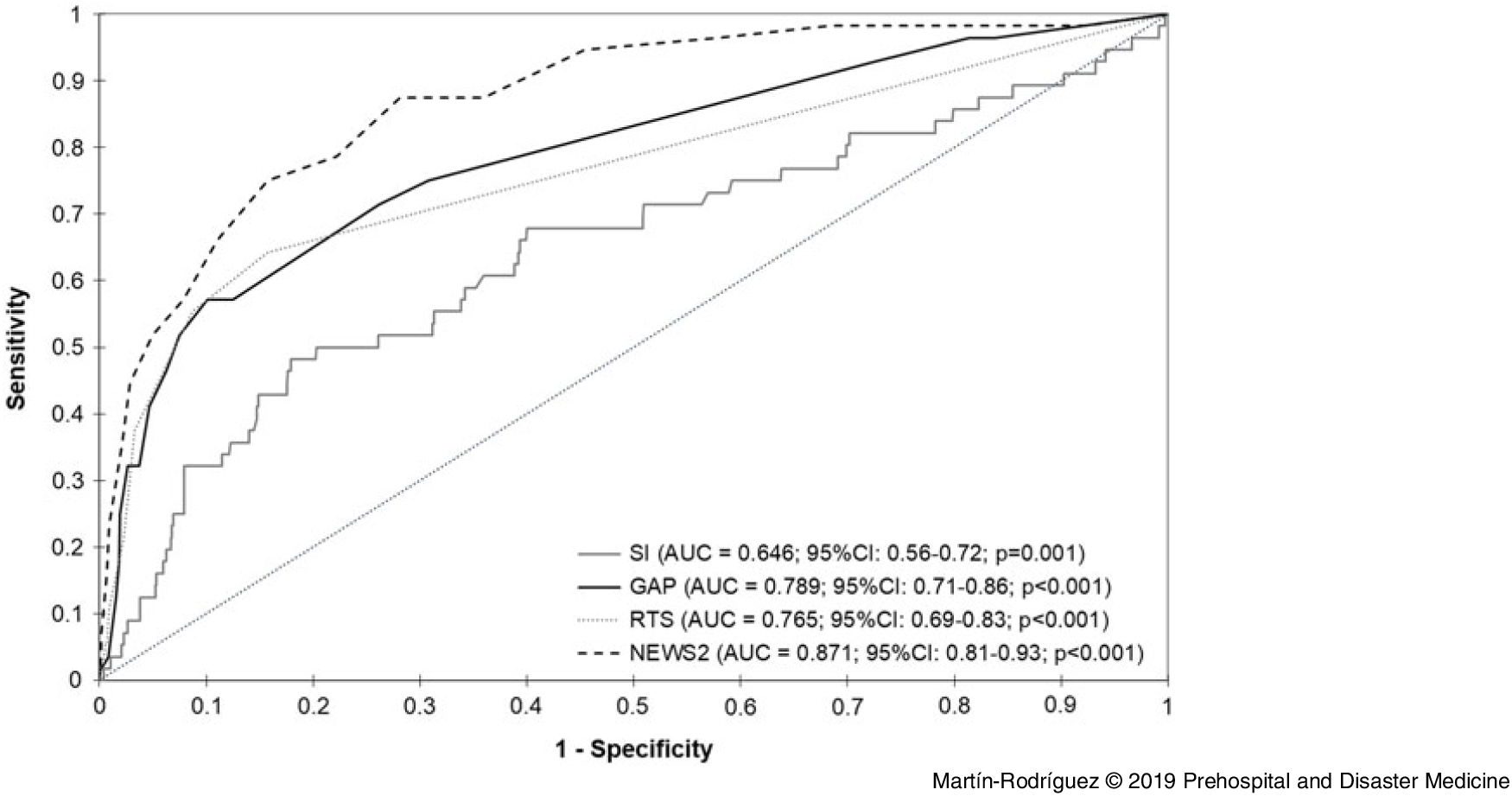
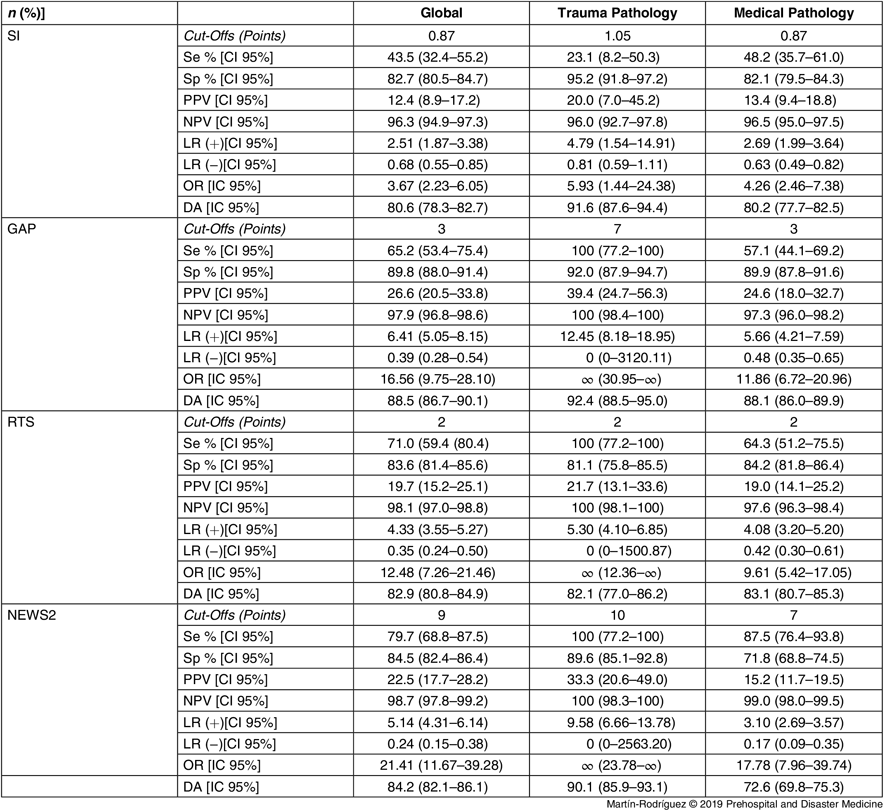
Table 3 shows the best cut-off points of the different triage systems in terms of sensitivity and specificity (Youden’s index). For a value of nine or more points on the NEWS2 scale, it obtained a sensitivity of 79.7% (95% CI, 68.8-87.5) and a specificity of 84.5% (95% CI, 82.4-86.4); while for a score of three points or less on the GAP scale, it obtained a sensitivity of 65.2% (95% CI, 53.4-75.4) and specificity of 89.8% (95% CI, 88.0-91.4). In contrast, with these cut-off points, a negative predictive value of 98.7 (95% CI, 97.8-99.2) and a positive likelihood ratio of 5.14 (95% CI, 4.31-6.14) were observed for the NEWS2 scale, and a negative predictive value of 97.9% (95% CI, 96.8-98.6) and a positive likelihood ratio of 6.41 (95% CI, 5.05-8.15) were observed for the GAP scale.
Cut-Off Points of Sensitivity and Specificity Combined with Best Score (Youden test) for the Different Scores, in General, Trauma, and Injuries by External Agents and Other Types of Medical Pathology
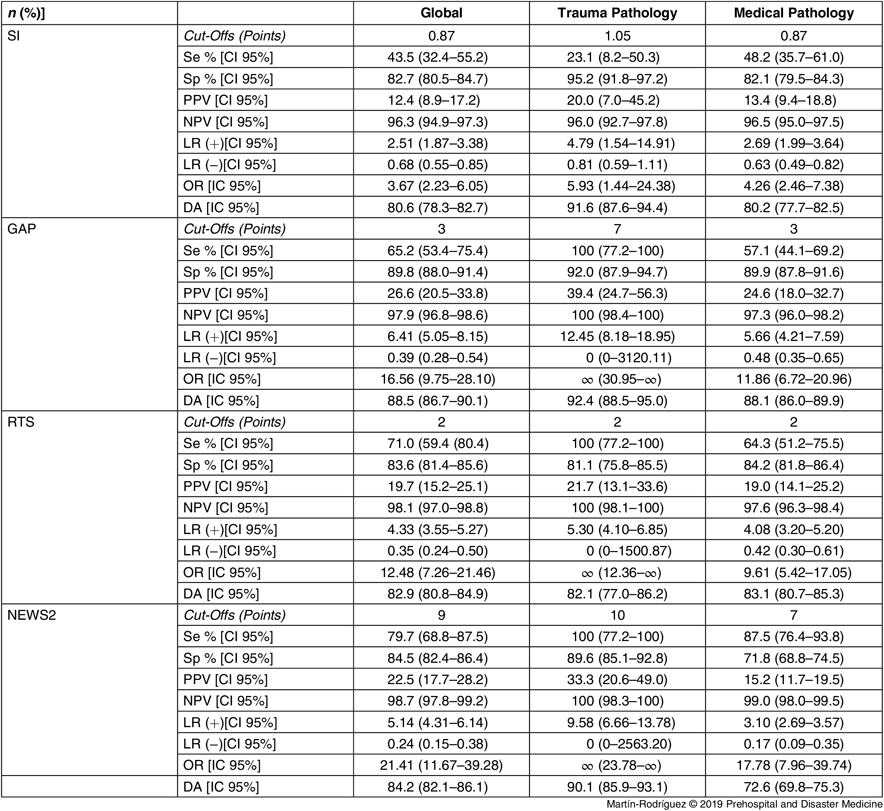
Abbreviations: CI, confidence interval; DA, diagnostic accuracy; GAP, Glasgow Coma Scale-Age-Pressure Score; LR, likelihood ratio; NEWS2, National Early Warning Score 2; NPV, negative predictive value; OR, odds ratio; PPV, positive predictive value; RTS, Revised Trauma Score; SI, shock index; Se, sensitivity; Sp, specificity.
Discussion
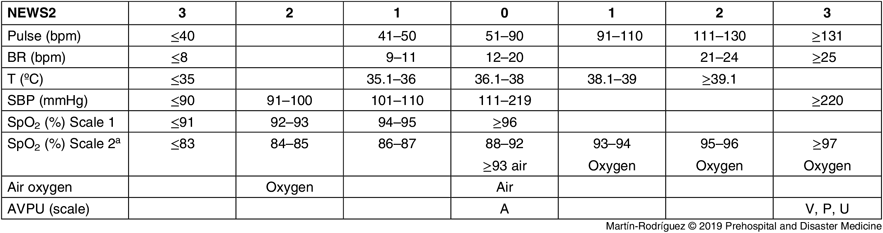
This was a prospective study developed in the prehospital context that evaluates the diagnostic performance of different triage systems. All systems have a high capacity to predict early mortality, highlighting the NEWS2 and GAP as the best triage systems globally. According to trauma or medical pathology, the NEWS2 stands out above the rest of the systems, with an excellent diagnostic capacity for all groups of pathologies. The NEWS2 (Table 4) has also been validated in the prehospital context, is easy to apply, and is widely used world-wide.Reference Silcock, Corfield, Gowens and Rooney20, Reference Williams, Tohira, Finn, Perkins and Ho28, Reference Alam, Hobbelink, van Tienhoven, van de Ven, Jansma and Nanayakkara39 Theoretically, it represents an ideal system to be applied by PhEMS staff in an MCI for performing an accurate second triage and prioritizing the order of referral to hospital centers.
National Early Warning Score 2 (Value Chart)
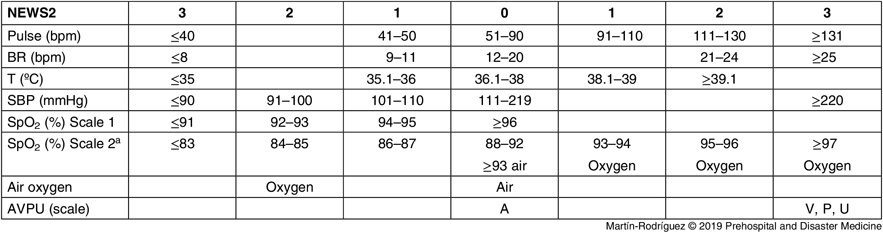
Note: Taken from Royal College of Physicians. 19
Abbreviations: AVPU, alert, verbal, pain, unresponsive; BR, breathing rate; NEWS2, National Early Warning Score-2; SBP, systolic blood pressure; SpO2, oxygen saturation; T, temperature.
a In patients with hypercapnic respiratory insufficiency, scale 2 should be used to weight the oxygen saturation score.
A NEWS2 equal to or greater than nine points serves to identify patients at high-risk of early mortality in less than 48 hours, with a very good predictive capacity both globally and for the sub-groups of trauma and injuries by external agents (cut-off value ten points) and other types of medical pathology (cut-off value seven points).
The scientific community is keen to conceptualize the most appropriate triage system, with interesting systematic reviews in this regard.Reference Najafi, Abbaszadeh, Zakeri and Mirhaghi11, Reference van Rein, Houwert, Gunning, Lichtveld, Leenen and van Heijl40–Reference van Rein, van der Sluijs, Raaijmaakers, Leenen and van Heijl43 These results to predict early mortality are superior to data presented in other studies with different triage systems to predict early mortality.Reference Galvagno, Massey and Bouzat8, Reference Sartorius, Le Manach and David9, Reference Strnad, Lesjak, Vujanović, Pelcl and Križmarić44, Reference Ebker-White, Bein and Dinh45
Triage represents a powerful diagnostic tool for the proper functioning of health systems. An appropriate filtering procedure can help to ensure that the order of arrival of patients to the hospital is most appropriate and that EDs attend those patients most in need.
The prehospital determination of the NEWS2 is easy to obtain and reliable as a test, which makes it an ideal system to help in the initial identification of high-risk patients, and to determine their level of triage in an effective and efficient way. The NEWS2 can be performed by personnel with little experience, does not require complex equipment, and can be used with patients with either traumatic pathology or medical pathology.
Limitations
Generally, MCIs are unexpected situations, difficult to reproduce, changing, and of varied etiology. Developing a common evaluation methodology in these incidents is extremely complex. In this study, it has been analyzed the patients treated by a PhEMS individually to check the accuracy of different triage systems. The systems have not been tested in a real situation with multiple simultaneous casualties. This research is based on a theoretical framework that allows a conceptual approach to the problem, but it is necessary to carry out complementary studies (virtual or in simulations) that allow researchers to prove in a realistic way the different classification systems.
The sample size is adequate to obtain results globally, but it is necessary to increase the sample size for the study of the triage systems by groups of pathologies.
For this study, early mortality was considered the main dependent variable, but for future studies, it may be interesting to discern the need for intensive care, surgery, or special procedures.
Conclusion
The use of the NEWS2 as a prehospital triage system presents a very high AUROC, both globally and specifically for trauma and injuries by external agents and other types of medical pathology. This triage system can help selecting the order of referral and the most appropriate hospital center depending on the patient’s situation.
Thus, PhEMS should evaluate the employment of the NEWS2 as a triage system, especially for the second triage (evacuation priority).
Conflicts of interest/funding
This research has received support from the Gerencia Regional de Salud (SACYL; Castilla y León, Spain) for research projects in Biomedicine, Healthcare Management, and Healthcare Care, with registration number GRS 1678/A/18; principal investigator: Francisco Martín-Rodríguez, as part of the “Use of early warning scales in the prehospital scope as a diagnostic and prognostic tool,” and Scholarship for the intensification of the research activity for the year 2019, with registration number INT/E/02/19 from the SACYL. The authors have no disclosures to make.