Introduction
Plant parasitic nematodes (PPNs) are damaging root pathogens of commercial and ornamental crops and include the cyst (Globodera and Heterodera spp.) and root knot (Meloidogyne spp.) nematodes. PPNs are believed to account for ~12.5% of annual global crop losses (Chitwood, Reference Chitwood2003), with Meloidogyne being arguably the most damaging (Trudgill & Blok, Reference Trudgill and Blok2001). Although various control methods are available (Johnson et al., Reference Johnson, Burtton, Sumner and Handoo1997; Rossi et al., Reference Rossi, Goggin, Milligan, Kaloshian, Ullman and Williamson1998; Chitwood, Reference Chitwood2002; Giannakou et al., Reference Giannakou, Sidiropoulos and Prophetou-Athanasiadou2002; Nico et al., Reference Nico, Jimenez-Diaz and Castillo2003; Piedra Buena et al., Reference Piedra Buena, Garcia Alvarez, Diez Rojo, Ros, Fernandez, Lacasa and Bello2007; Terefe et al., Reference Terefe, Terefa and Sakhuja2009), many are unreliable or have variable efficacy. In addition, the use of conventional chemicals such as methyl bromide and aldicarb has now been greatly restricted or prohibited due to toxicological and environmental concerns (Landau & Tucker, Reference Landau and Tucker1984; Jackson & Goldman, Reference Jackson and Goldman1986; UNEP, 1992; Watson et al., Reference Watson, Albritton, Anderson and Lee-Bapty1992; Calvert et al., Reference Calvert, Talaska, Mueller, Ammenhauser, Au, Fajen, Fleming, Briggle and Ward1998; Sanchez Moreno et al., Reference Sanchez Moreno, Alonso-Prados, Alonso-Prados and Garcia-Baudin2009). Clearly, there is an urgent need for novel controls.
Classical neurotransmitters, such as acetylcholine (ACh), γ-aminobutyric acid (GABA) and glutamate, are found within the nematode nervous system (Johnson & Stretton, Reference Johnson and Stretton1985; McIntire et al., Reference McIntire, Jorgensen, Kaplan and Horvitz1993; Davis, Reference Davis1998; Walker et al., Reference Walker, Franks, Pemberton, Rogers and Holden-Dye2000) and are targets of several nematicides/anthelmintics (e.g. aldicarb blocks the action of acetylcholinesterase, while ivermectin, levamisole and piperazine target ion channels gated by glutamate, GABA and ACh, respectively). The neuropeptidergic arm of the nematode nervous system remains unexploited as a drug target. Much evidence supports the pivotal role played by neuropeptide signalling in nematode biology (reviews include Mousley et al., Reference Mousley, Maule, Halton and Marks2005a; McVeigh et al., Reference McVeigh, Geary, Marks and Maule2006; Li & Kim, Reference Li and Kim2008). The FMRFamide-like peptides (FLPs; short bioactive peptides with C-terminal RFamide motifs) are the most diverse and widely studied group of nematode neuropeptides. In nematodes, FLP diversity appears to exceed that of any other animal group – C. elegans possesses at least 29 flp genes encoding more than 68 FLPs while 32 flp genes have been identified in the phylum as a whole (McVeigh et al., Reference McVeigh, Geary, Marks and Maule2006); analysis of the M. incognita genome suggests that a smaller complement of 19 flp genes exists (Abad et al., Reference Abad, Gouzy, Aury, Castagnone-Sereno, Danchin, Deleury, Perfus-Barbeoch, Anthouard, Artiguenave, Blok, Caillaud, Countinho, Dasilva, De Luca, Deau, Esquibet, Flutre, Goldstone, Hamamouch, Hewezi, Jaillon, Jubin, Leonetti, Magliano, Maier, Markov, McVeigh, Pesole, Poulain, Robinson-Rechavi, Sallet, Segurens, Steinbach, Tytgat, Ugarte, van Ghelder, Veronico, Baum, Blaxter, Bleve-Zacheo, Davis, Ewbank, Favery, Grenier, Henrissat, Jones, Laudet, Maule, Quenseville, Rosso, Schiex, Smant, Weissenbach and Wincker2008). As well as being implicated in control of several C. elegans behaviours (Kubiak et al., Reference Kubiak, Larsen, Davis, Zantello and Bowman2003; Rogers et al., Reference Rogers, Reale, Kim, Chatwin, Li, Evans and de Bono2003; Liu et al., Reference Liu, Kim, Li and Barr2007; Ringstad & Horvitz, Reference Ringstad and Horvitz2008), FLPs are thought to have roles at neuromuscular junctions, since they are potently myoactive in several neuromuscular bioassays (Cowden & Stretton, Reference Cowden and Stretton1993; Franks et al., Reference Franks, Holden-Dye, Williams, Pang and Walker1994; Bowman et al., Reference Bowman, Winterrowd, Freidman, Thompson, Klein, Davis, Maule, Blair and Geary1995; Reinitz et al., Reference Reinitz, Herfel, Messinger and Stretton2000; Moffett et al., Reference Moffett, Beckett, Mousley, Geary, Marks, Halton, Thompson and Maule2003), while some initiate the release or augment the effects of classical transmitters (Bowman et al., Reference Bowman, Winterrowd, Freidman, Thompson, Klein, Davis, Maule, Blair and Geary1995; Brownlee et al., Reference Brownlee, Holden-Dye, Fairweather and Walker1995a, Reference Brownlee, Holden-Dye, Walker and Fairweatherb, Reference Brownlee, Holden-Dye and Walker2000; Pang et al., Reference Pang, Mason, Holden-Dye, Franks, Williams and Walker1995; Jacob & Kaplan, Reference Jacob and Kaplan2003; Mousley et al., Reference Mousley, Moffett, Duve, Thorpe, Halton, Geary, Thompson, Maule and Marks2005b; Trailovic et al., Reference Trailovic, Clark, Roberston and Martin2005; Ringstad & Horvitz, Reference Ringstad and Horvitz2008). FLPs thus represent an attractive target for control of parasitic nematodes. Polyclonal antibodies coupled with immunocytochemical (ICC) methods have demonstrated widespread FLP immunoreactivity within the nervous systems of many nematode species (Atkinson et al., Reference Atkinson, Isaac, Harris and Sharpe1988; Warbrick et al., Reference Warbrick, Rees and Howells1992; Cowden et al., Reference Cowden, Sithigorngul, Brackley, Guastella and Stretton1993; Li et al., Reference Li, Nelson, Kim, Nathoo and Hart1999; Masler et al., Reference Masler, Kovaleva and Sardanelli1999; Kimber et al., Reference Kimber, Fleming, Bjourson, Halton and Maule2001). However, it has been more difficult to localize individual peptides using ICC due to cross-reactivity issues inherent to polyclonal antisera. A few studies have employed different techniques in response to this issue, including in situ hybridization to localize expression of individual flp genes in Globodera pallida (Kimber et al., Reference Kimber, Fleming, Bjourson, Halton and Maule2001), and dual mass spectrometry (MS/MS) analysis of the peptide complements of individual brain ganglia of Ascaris (Yew et al., Reference Yew, Kutz, Dikler, Messinger, Li and Stretton2005). Localization of individual FLPs is essential to predict the roles of individual peptides. In spite of available datasets, knowledge of the nematode FLPergic system remains inadequate, especially with respect to the complement and function of individual FLPs and their receptors.
This study describes the characterization of four flp transcripts (Mi-flp-1, Mi-flp-7, Mi-flp-12 and Mi-flp-14) from M. incognita using RACE-PCR. The open reading frame of a flp-12 sequelog has also been characterized from the root knot species, Meloidogyne minor. These transcripts encode 11 FLPs in total, ten of which are novel to nematodes and a known neuropeptide commonly referred to as AF2 (KHEYLRFamide). In situ hybridization enabled localization of Mi-flp-12 and Mi-flp-14 to neurons possibly involved in locomotion and sensory perception, and also to interneurons, which implicates FLPs as neuromodulators as well as neurotransmitters.
Materials and methods
Cultivation of root knot nematodes
Meloidogyne incognita was cultured on cv. Moneymaker tomato plants (Lycopersicon esculentum) at 25°C at the Pest and Molecular Biology Laboratory, Agri-Food and Biosciences Institute, Northern Ireland. Egg masses were released from galled roots by manual shaking in 5% sodium hypochlorite (NaOCl) for 5 min. The fluid was passed through sieves measuring 180 μm, 60 μm and 38 μm, respectively; eggs retained on the 38 μm sieve were thoroughly washed with cold water before centrifugation at 1000 g for 3 min in a 15 ml tube. The supernatant was removed and 13 ml of 100% sucrose were added; 1 ml of water was carefully pipetted on top of the sucrose and the tube was again centrifuged. Eggs collected in the water layer were transferred to a 38 μm sieve and thoroughly washed to remove the sucrose before being transferred to a 20 μm sieve. This sieve was placed in a Petri dish with 3 ml of water and the eggs were allowed to hatch in the dark at 20°C overnight. Meloidogyne minor J2s were induced to hatch in darkness from infected turf grass root systems (M. minor were collected from a wild-type infestation on a creeping bentgrass (Agrostis stolonifera) golf putting green from Kinsale, County Cork, Republic of Ireland) by placing infected roots in a Petri dish containing water.
Immunocytochemistry
An indirect immunofluorescence technique (Coons et al., Reference Coons, Leduc and Connolly1955) was employed to investigate FLP immunoreactivity in the nervous system of infective M. incognita J2s. Infective J2s were fixed for 4 h at room temperature using 4% paraformaldehyde in 0.1 m phosphate-buffered serum (PFA) and then chopped with a razor blade. PFA was removed by a single wash in antibody diluent (AbD: 0.1 m PBS containing 0.1% (v/v) Triton X-100, 0.1% (w/v) bovine serum albumin (BSA) and 0.1% (w/v) NaN3) for 5 min. Worms were then incubated in anti-FMRFamide antiserum (F1; diluted 1/500 in AbD), raised in rabbit, for 72 h at 4°C on a rotator. Primary antibody was removed by a 24 h wash at 4°C in AbD. Worms were then incubated in FITC (fluorescein isothiocyanate)-tagged secondary antiserum against rabbit immunoglobulin G (1:1000) for 72 h at 4°C on a rotator in darkness. Secondary antibody was removed by a 24 h wash in AbD at 4°C, followed by incubation in TRITC (tetramethylrhodamine isothiocyanate) tagged phalloidin for 24 h at 4°C to allow muscle visualization. Following a final wash in AbD for 24 h at 4°C, specimens were mounted on microscope slides with glycerol/phosphate-buffered serum containing 1,4-diazabicyclo-(2.2.2.)-octane (2.5% w/v) and viewed using a Leica AOBS confocal scanning laser microscope (Leica Microsystems, Milton Keynes, UK). Negative controls included the omission of primary antiserum and the pre-adsorption of primary antiserum with KHEYLRFamide (50 ng/ml).
Rapid amplification of cDNA ends (RACE)
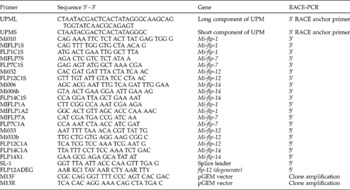
Poly A+ mRNA was extracted from approximately 20 μl packed volume of M. incognita and M. minor J2s using the Dynabeads mRNA DIRECT kit (Invitrogen Ltd, Paisley, UK). RACE-ready cDNA was synthesized, and RACE-PCR performed using the SMART RACE cDNA Amplification Kit (Clontech, Saint Germain, France) according to manufacturer's instructions. Gene-specific primer sequences for M. incognita are detailed in table 1. These were designed from expressed sequence tags (ESTs) available at www.ebi.ac.uk. The accession numbers for the ESTs used are as follows: BM881998 and BM882711 (Mi-flp-1); AW828638 (Mi-flp-7); BE239127 and BM774054 (Mi-flp-12) and BQ548259 (Mi-flp-14). RACE-PCR for Mm-flp-12 was performed using a 5′-directed splice leader primer (table 1) and a 3′-directed degenerate primer for the flp-12 peptide (table 1). This gene was selected for degenerate RACE-PCR based on our laboratory's observations that RNAi-induced disruption of flp-12 in the related plant parasitic nematode, G. pallida, significantly reduced nematode migration (Kimber et al., Reference Kimber, McKinney, McMaster, Day, Fleming and Maule2007). SignalP analysis (www.cbs.dtu.dk/services/SignalP) confirmed that the encoded peptides were preceded by a region of high hydrophobicity which is indicative of a signal peptide. Sequence identity to M. incognita was confirmed using BLASTn software (www.ebi.ac.uk).
Oligonucleotide sequences employed in the current study.

UPM, Universal Primer Mix included in the SMART RACE cDNA kit.
Probe synthesis for in situ hybridization
Digoxigenin (DIG)-labelled, single-stranded DNA probes were produced by asymmetric PCR using the following reaction: 16.5 μl sterile water; 2.5 μl 10 × PCR buffer (Invitrogen, UK); 2 μl DIG DNA labelling mix (Roche Diagnostics, West Sussex, UK); 1.5 μl 50 mm MgCl2 (Invitrogen); 0.5 μl Platinum Taq DNA polymerase (Invitrogen) and 25 ng of purified cDNA. Forward and reverse probes were synthesized in separate tubes containing only the forward or reverse primer, respectively. Probes were visualized on a non-denaturing agarose gel to confirm size, and quantified using a Nanodrop ND1000 spectrophotometer.
Nematode fixation and permeabilization
Newly hatched M. incognita J2s were washed three times in DEPC (diethylpyrocarbonate)-treated water. Following a period of fixation for 24 h at 4°C in 2% PFA in M9 buffer (0.6 g Na2HPO4, 0.3 g KH2PO4, 0.5 g NaCl, 0.025 g MgSO4. 7H2O, 100 ml sterile water), J2s were chopped and washed twice in M9 buffer in a 1.5 ml Eppendorf tube. The cuticle was digested via a 20 min incubation in proteinase K in 1 ml M9 buffer (19 mg/ml) on a rotator at room temperature. Permeabilized nematodes were centrifuged at 2500 g for 2 min and the supernatant removed. The pellet was placed on deep-frozen ice for 15 min and resuspended in 1 ml methanol at − 20°C for 30 s. The methanol was removed and the pellet was resuspended in 1 ml − 20°C acetone for 30 s. Nine hundred microlitres of acetone were removed and 100 μl of sterile water were added dropwise to the pellet to aid rehydration.
Probe hybridization
Nematodes were washed in 1 ml hybridization buffer (De Boer et al., Reference De Boer, Yan, Smant, Davis and Baum1998) to remove acetone and then prehybridized at 50°C for 15 min while the probes were denatured at 90°C for 10 min. Denatured probes were diluted in 125 μl hybridization buffer to a final concentration of 50 ng/μl, added to the nematodes and allowed to hybridize overnight on a rotator at 50°C. Following hybridization, the buffer was removed and the nematodes were subjected to 3 × 15 min washes in 4 × SSC buffer (saline sodium citrate; 1.2 m NaCl, 0.12 m Na3Citrate 2H2O, pH 7) on a rotator at 50°C. These were followed by 3 × 20 min washes in 0.1% SDS/0.1% SSC buffer on a rotator at 50°C.
Probe detection
Nematodes were washed in 1 × maleic acid buffer (1 m maleic acid, 1.5 m NaCl, pH 7.5) for 1 min on a rotator at room temperature, and then incubated for 30 min in 1% blocking agent in 1 × maleic acid. This was followed by a 2 h incubation in alkaline phosphatase conjugated anti-DIG antibody (Roche Diagnostics), diluted 1/1000 in 1% blocking agent in 1 × maleic acid buffer. Nematodes were washed 3 × 1 min in 1 × maleic acid containing 0.01% Tween 20 (Sigma Aldrich Ltd, Dorset, UK) and briefly washed in 1 × alkaline phosphatase detection buffer (Roche Diagnostics) for 1 min. An overnight incubation at 4°C in the substrates nitroblue tetrazolium (NBT) and bromo-4-chloro-3-indolyl phosphate (BCIP) followed. This reaction was allowed to continue until staining could be observed by eye, and then stopped by washing the nematodes twice in sterile water containing 0.01% Tween 20. Nematodes were visualized using an Olympus light microscope.
Results
Immunocytochemistry
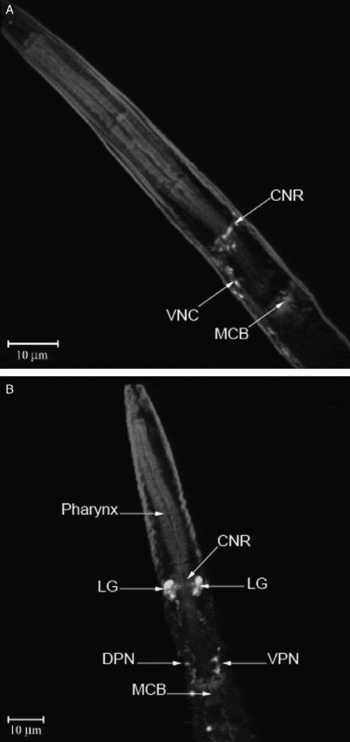
Immunocytochemistry using an antibody raised against FMRFamide demonstrated immunoreactivity in the central nervous system of M. incognita J2s. Staining was observed in the circumpharyngeal nerve ring (CNR; the rudimentary brain in nematodes), lateral ganglia (LG) and the ventral nerve cord (VNC; the most prominent nerve cord responsible for sinusoidal movement via motor neurons serving both ventral and dorsal muscle blocks), which projects posteriorly from the CNR (fig. 1A). Ventral and dorsal pharyngeal nerves were observed projecting posteriorly from the CNR to the highly muscularized metacorpal bulb, which controls pumping during feeding (fig. 1B). No staining was observed in the negative controls.
Confocal scanning laser microscopy of FMRFamide-like peptide immunoreactivity (FLP-IR) in the nervous system of Meloidogyne incognita second-stage juveniles (J2s). (A) FLP-IR in the circumpharyngeal nerve ring (CNR), and the ventral nerve cord (VNC), which projects posteriorly from the CNR. The pharynx is observed, as is the highly muscular metacorpal bulb (MCB). (B) FLP-IR in the CNR, lateral ganglia (LG) and ventral/dorsal pharyngeal nerves (VPN and DPN) of the metacorpal bulb.

Characterization of Meloidogyne incognita flps
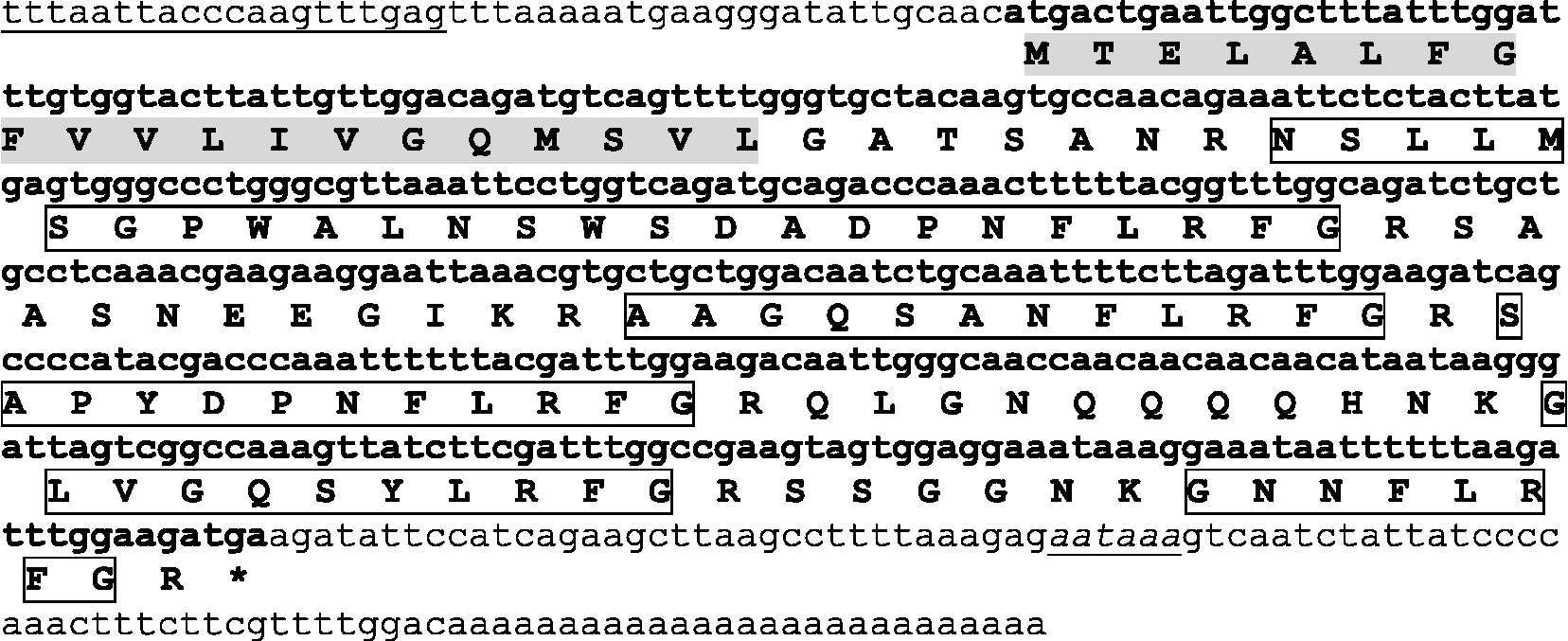
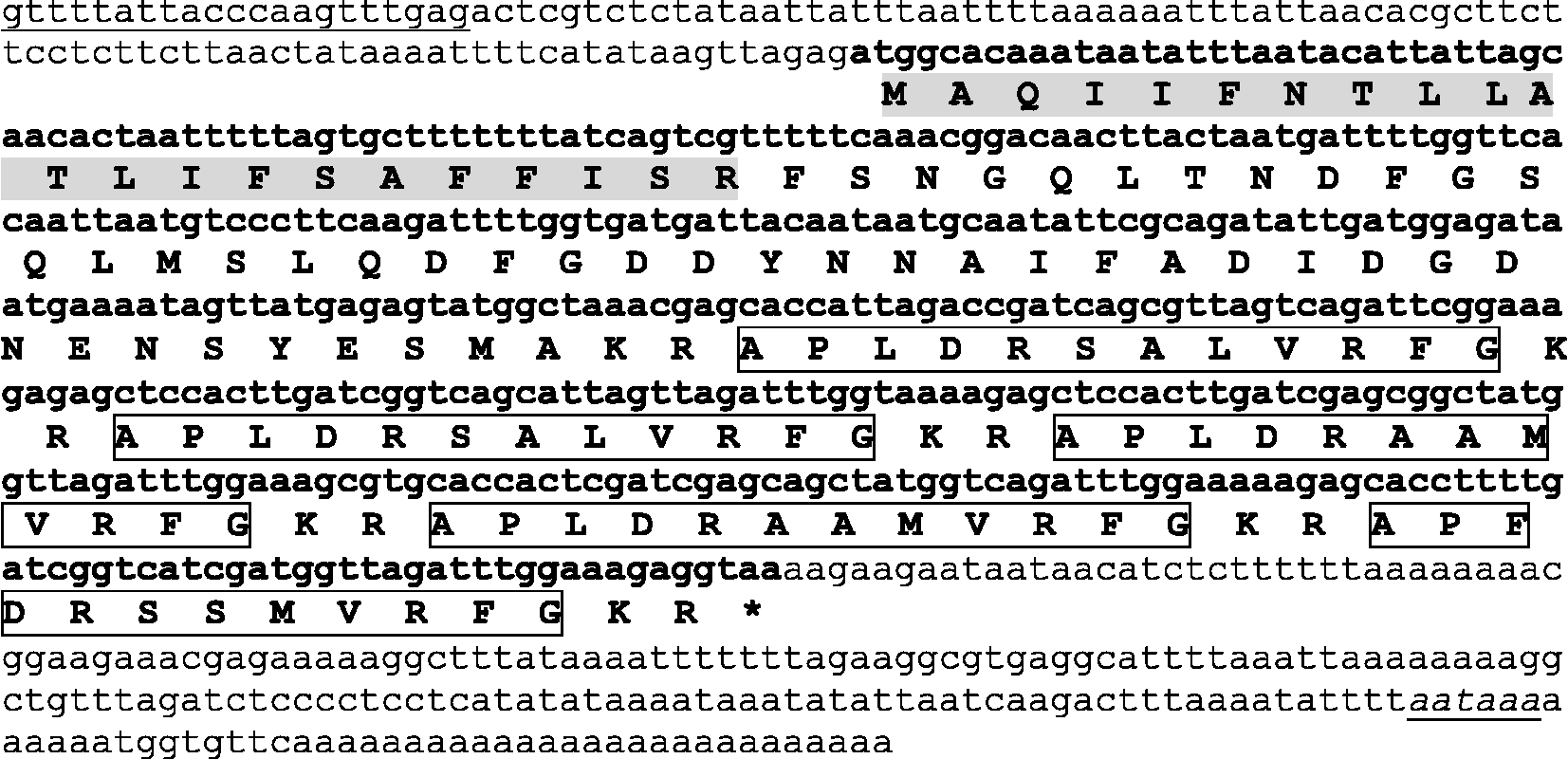
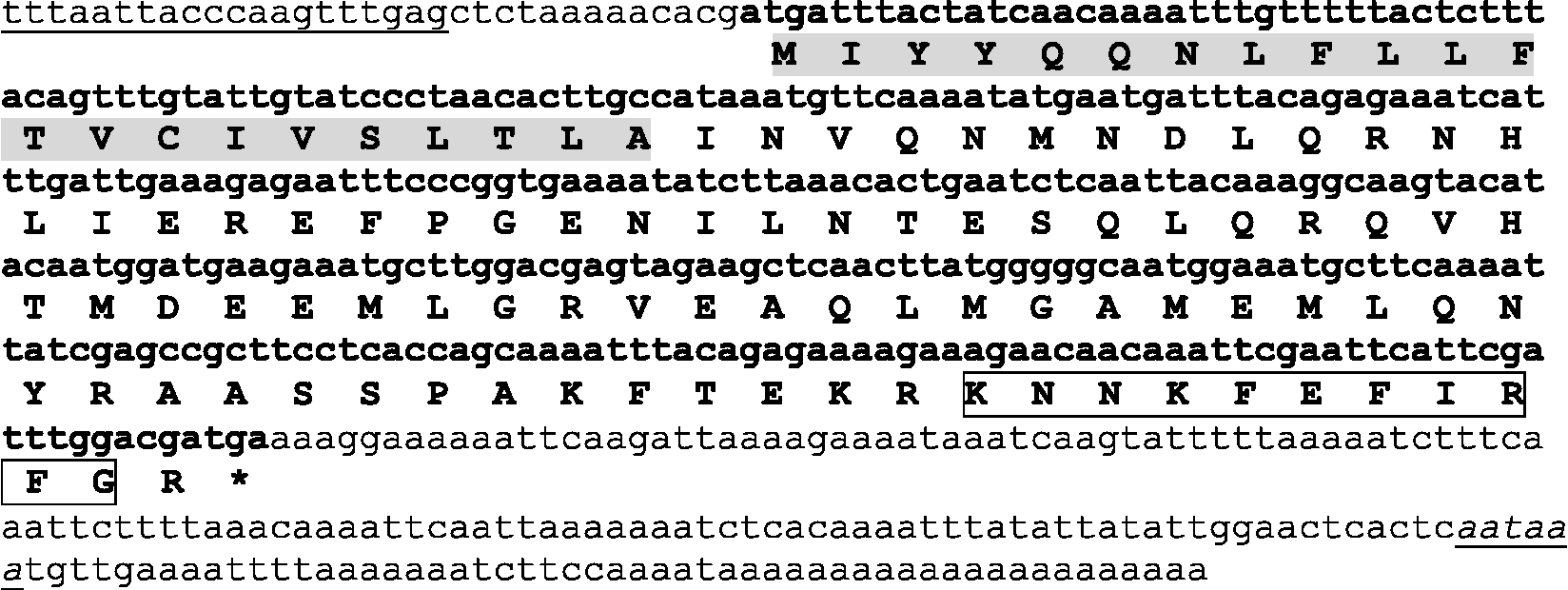
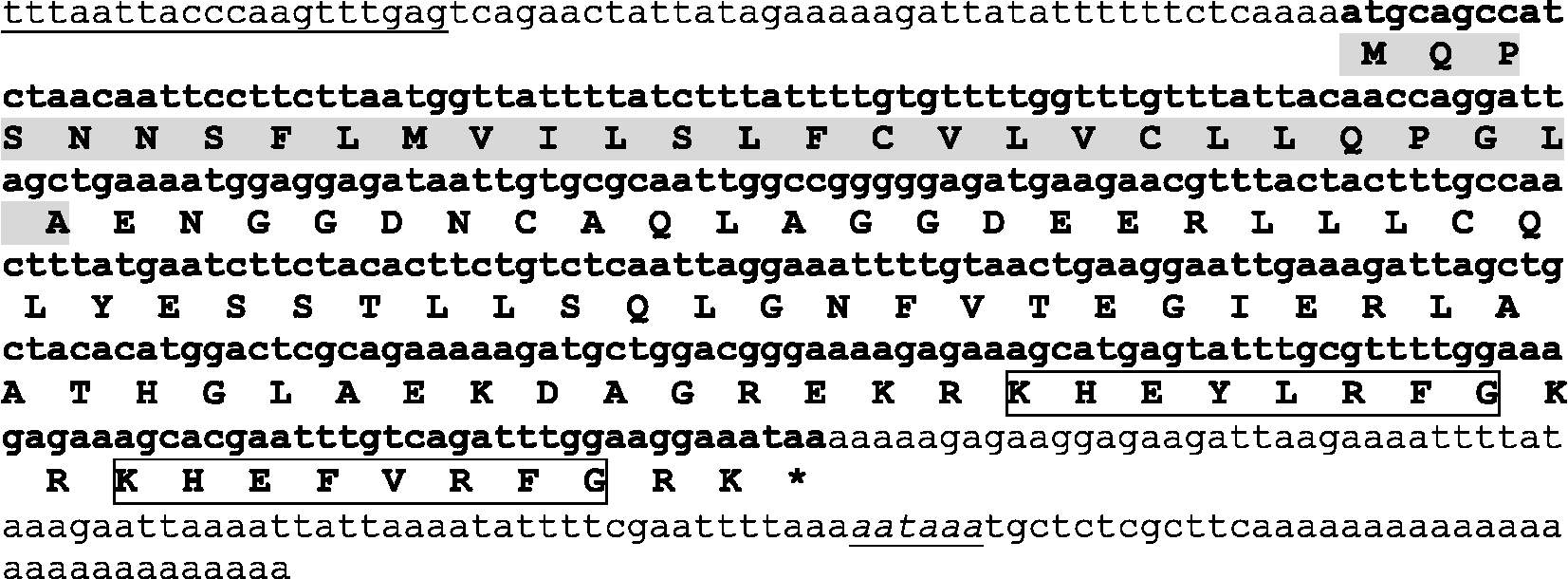
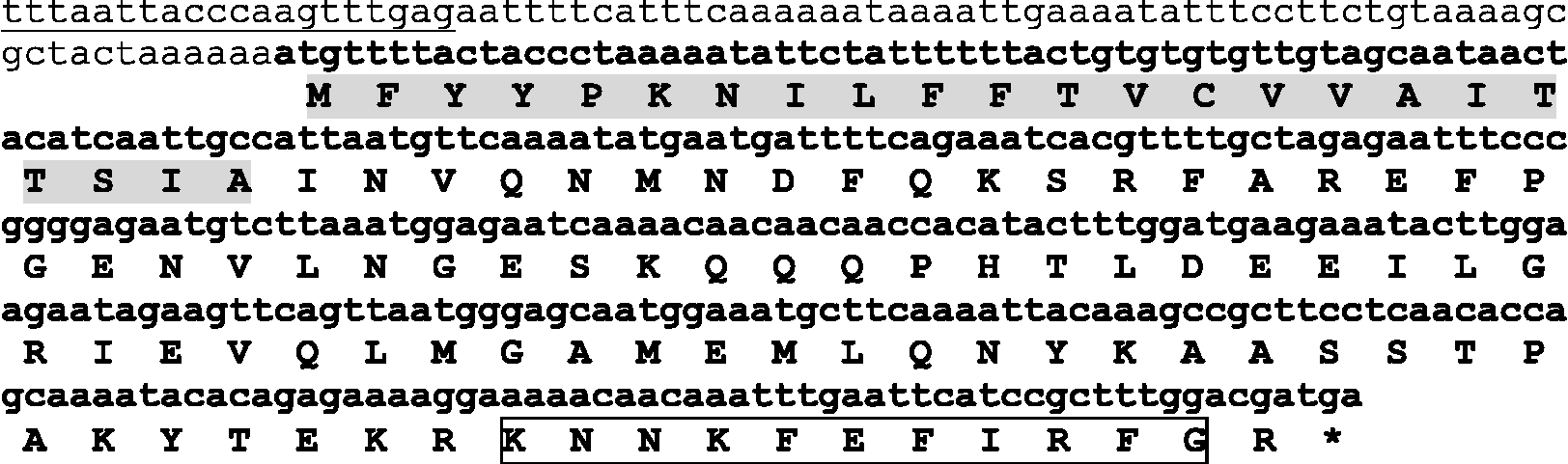
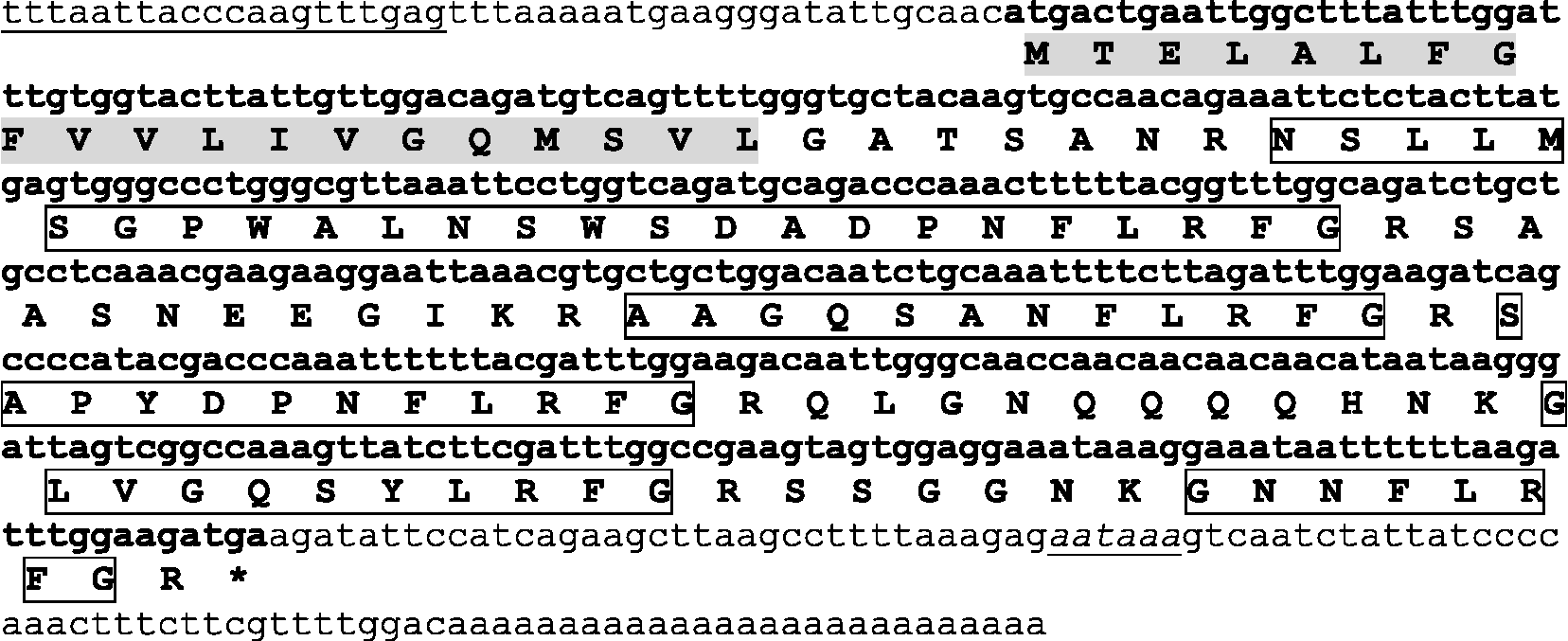
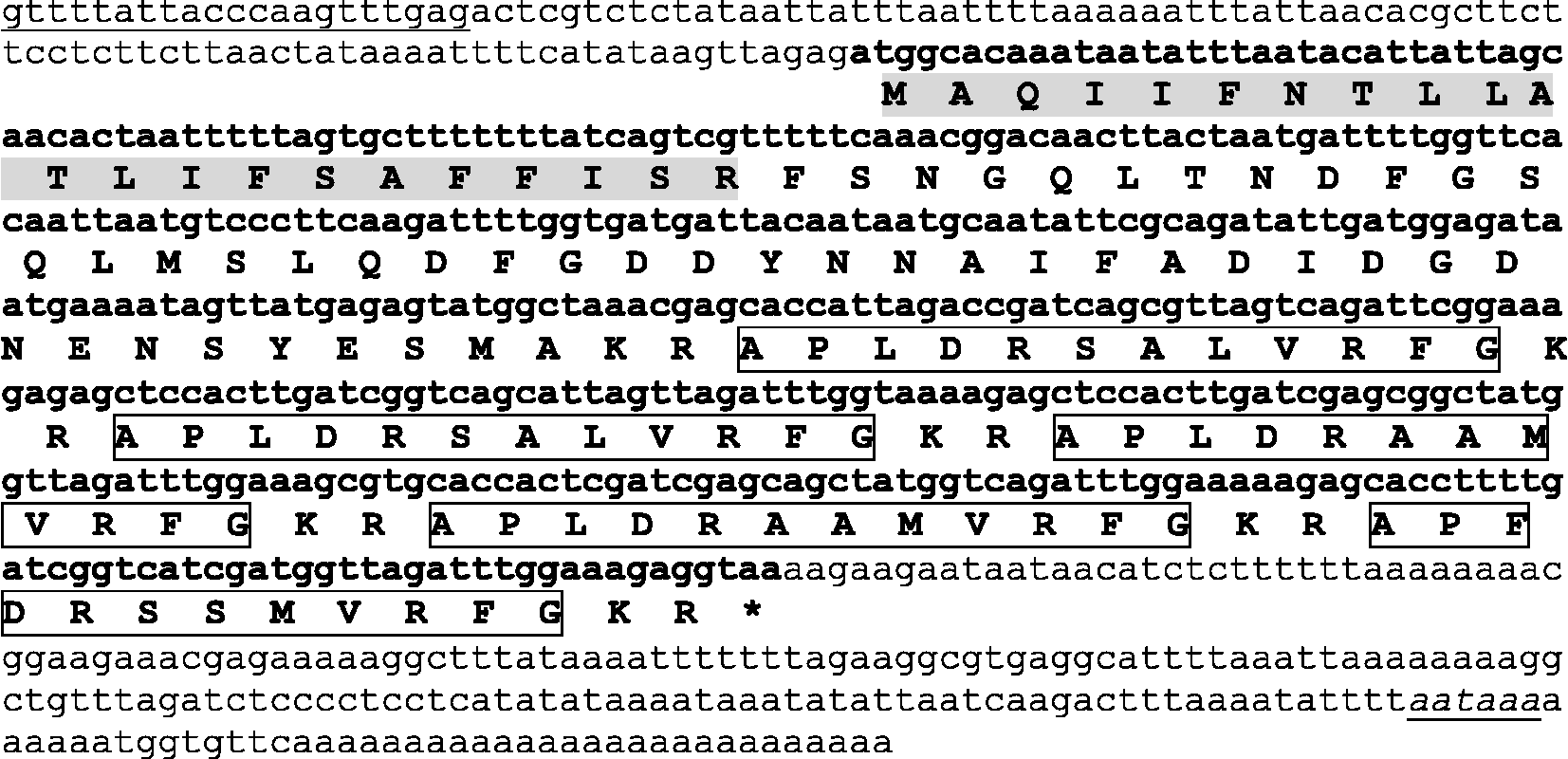
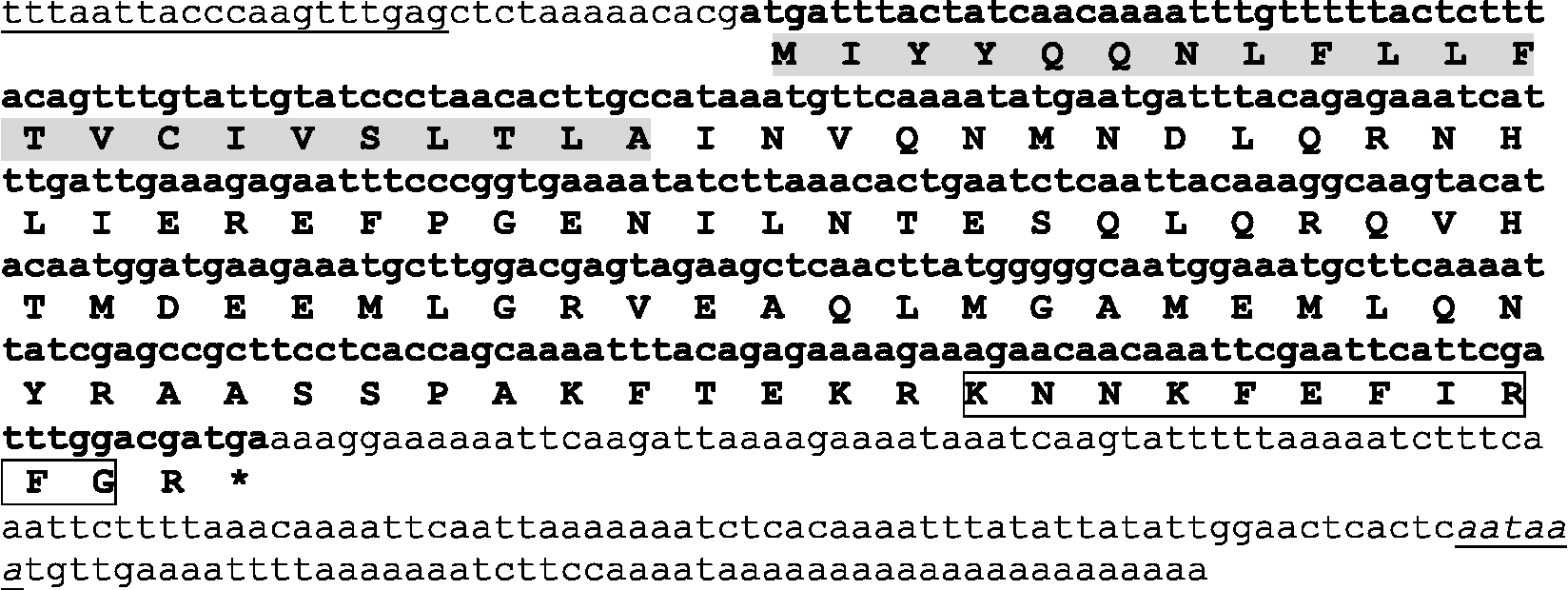
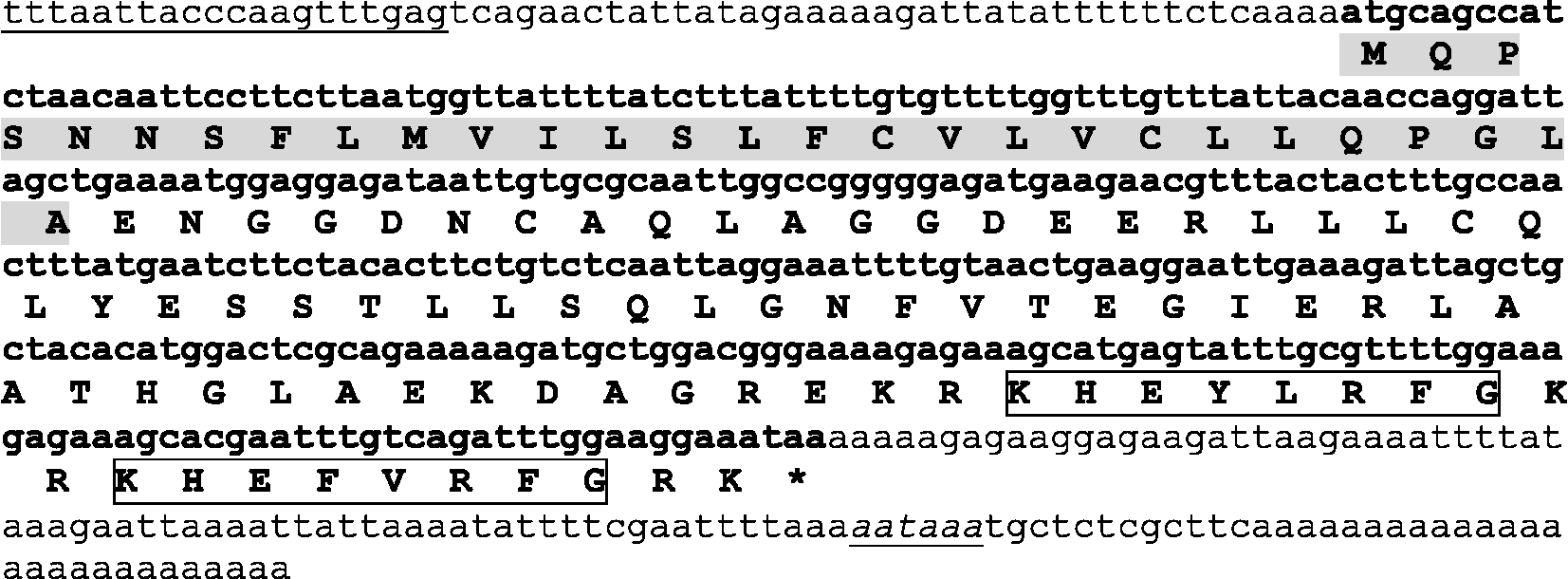
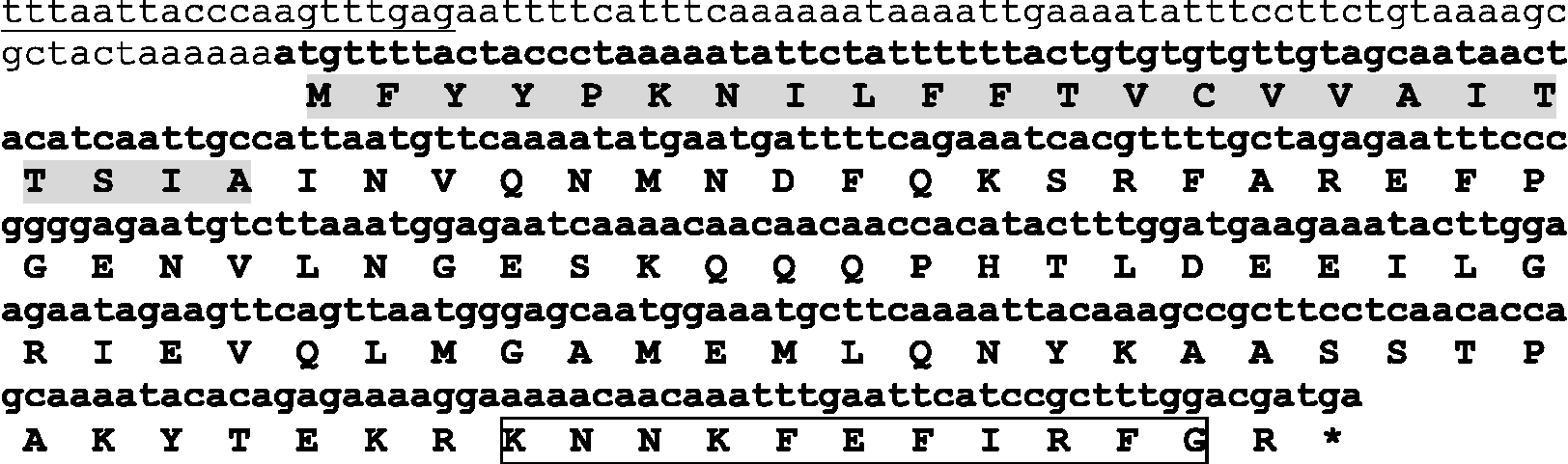
Analysis of full-length transcripts revealed four genes which, based on encoded peptide sequence similarity to those in C. elegans, were designated Mi-flp-1, Mi-flp-7, Mi-flp-12, and Mi-flp-14. Mi-flp-1 is 537 bp and encodes five FLPs, four of which terminate in NFLRFamide (fig. 2). Mi-flp-7 is 740 bp and encodes three FLPs which terminate in VRFamide (fig. 3). Mi-flp-12 is 538 bp and encodes KNKFEFIRFamide (fig. 4). Mi-flp-14 is 504 bp and encodes KHEYLRFamide and KHEFVRFamide (fig. 5). In addition, the open reading frame of a flp-12 sequelog was elucidated from Meloidogyne minor (fig. 6), and was designated Mm-flp-12. This gene also encodes KNNKFEFIRFamide.
Meloidogyne incognita flp-1 (Mi-flp-1) pro-peptide, nucleotide sequence and translation. Mi-flp-1 is 537 bp and encodes five FLPs which share the C-terminal (N/S)(F/Y)LRFamide motif. The signal peptide region is highlighted (grey) and the FLPs are boxed. Splice leader 1 and polyadenylation signal are underlined. *, Stop codon.
Meloidogyne incognita flp-7 (Mi-flp-7) pro-peptide, nucleotide sequence and translation. Mi-flp-7 is 740 bp and encodes five FLPs which share the C-terminal VRFamide motif. The signal peptide region is highlighted (grey) and the FLPs are boxed. Splice leader 1 and polyadenylation signal are underlined. *, Stop codon.
Meloidogyne incognita flp-12 (Mi-flp-12) pro-peptide, nucleotide sequence and translation. Mi-flp-12 is 538 bp and encodes the FLP, KNNKFEFIRFamide. The signal peptide region is highlighted (grey) and the FLP is boxed. Splice leader 1 and polyadenylation signal are underlined. *, Stop codon.
Meloidogyne incognita flp-14 (Mi-flp-14) pro-peptide, nucleotide sequence and translation. Mi-flp-14 is 504 bp and encodes two FLPs. The signal peptide region is highlighted (grey) and the FLPs are boxed. Splice leader 1 and polyadenylation signal are underlined. *, Stop codon.
Meloidogyne minor flp-12 (Mm-flp-12) open reading frame, pro-peptide nucleotide sequence and translation showing the encoded KNNKFEFIRFamide. The signal peptide region is highlighted (grey) and the FLPs are boxed. Splice leader 1 sequence is underlined. *, Stop codon.
In situ hybridization
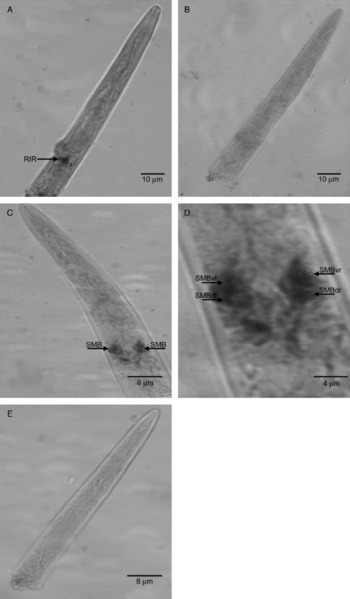
Using DIG-labelled, single-stranded cDNA probes with anti-DIG antibodies conjugated to alkaline phosphatase enabled detection of Mi-flp-12 and Mi-flp-14 expression in M. incognita J2s. The neural map of C. elegans (White et al., Reference White, Southgate, Thompson and Brenner1986) was used as a guide for location of specific neurons. Mi-flp-12 transcript (fig. 7A) appears in cells associated with the CNR and appears to localize to an RIR-like neuron, while Mi-flp-14 staining is more diffuse and covers a larger area which may represent SMBdl, SMBdr, SMBvl and SMBvr-like neurons (fig. 7C and D). The negative controls, using sense DNA strands complementary to the antisense probes for Mi-flp-12 and Mi-flp-14 respectively, did not result in staining (fig. 7B and E). Staining for Mi-flp-1 and Mi-flp-7 was not observed.
In situ hybridization (ISH) of digoxigenin (DIG)-labelled cDNA probes in the anterior of Meloidogyne incognita J2s. Expression is signified by a dark chromagen formed by the enzymatic cleavage of a substrate by alkaline phosphatase conjugated to anti-DIG antibody. (A) Mi-flp-12 expression in an RIR-like neuron and (B) negative control; (C) Mi-flp-14 expression in SMB-like neurons, (D) specifically in SMBdl, SMBdr (dorsal left and right), SMBvl and SMBvr (ventral left and right), (E) Mi-flp-14 negative control.

Discussion
Gene characterization and comparison with other nematodes
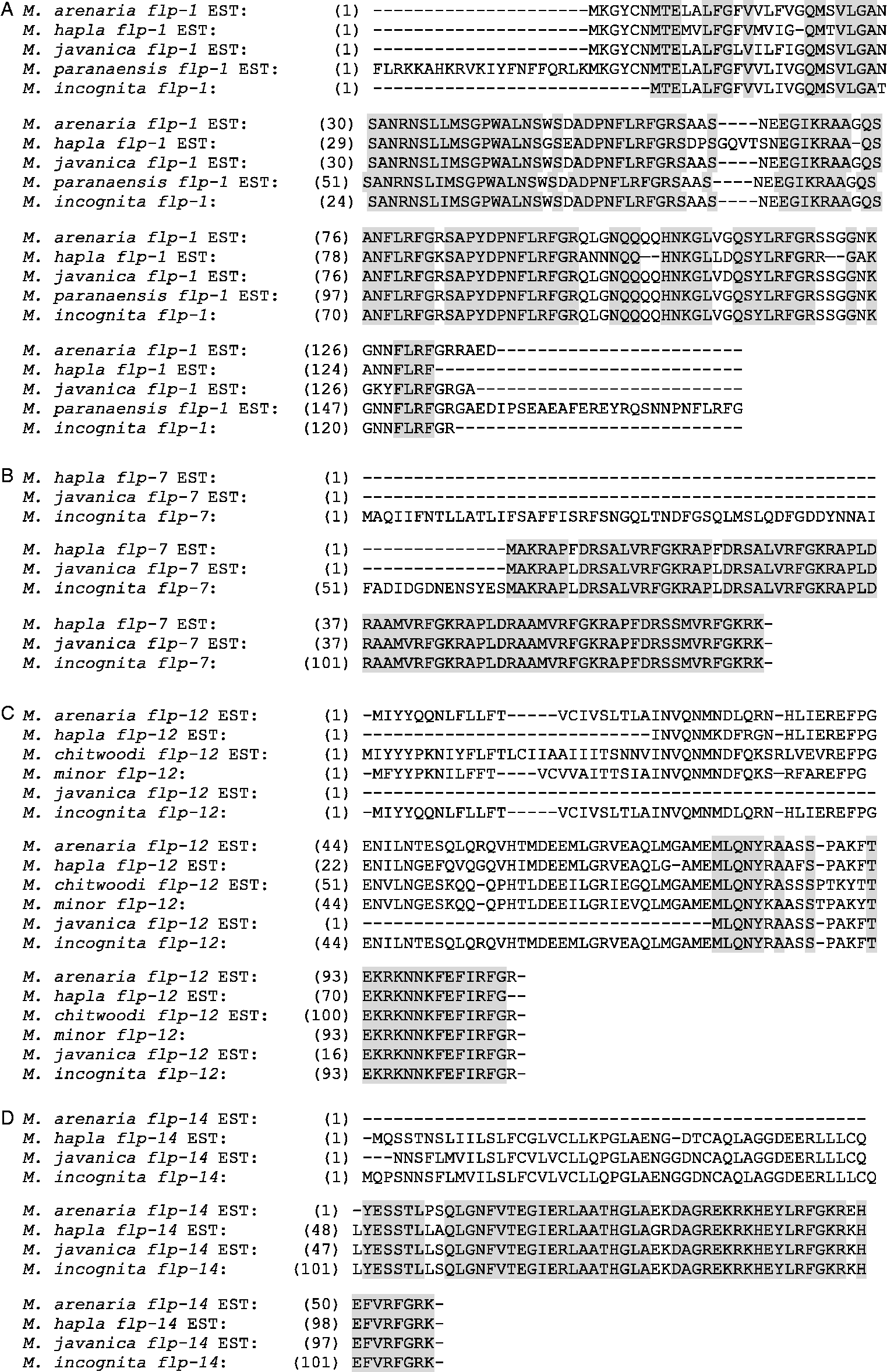
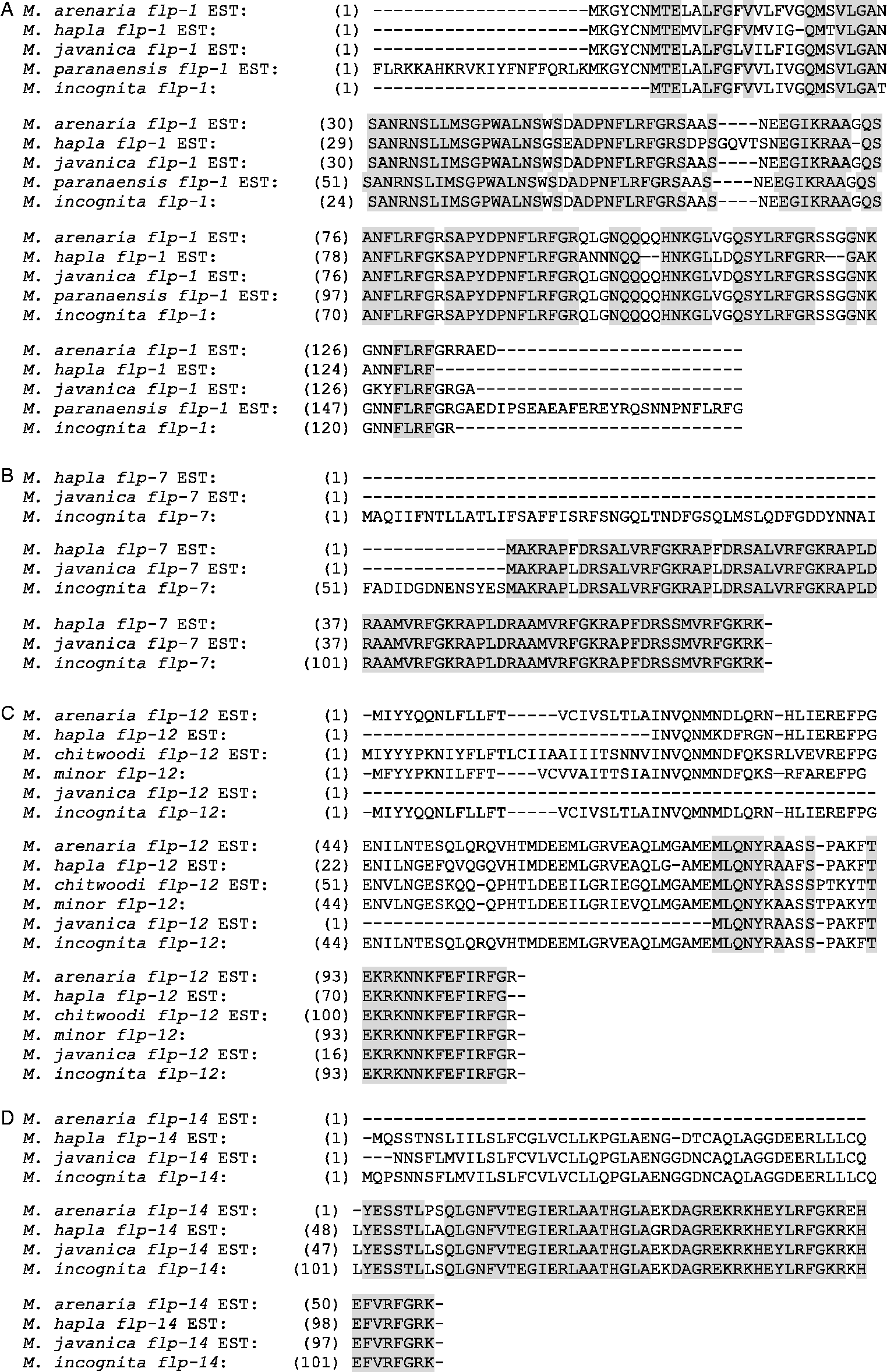
The present study characterized flp transcripts from M. incognita and one from a newly described root knot species, M. minor (Karssen et al., Reference Karssen, Bolk, Van Aelst, van den Beld, Kox, Korthals, Molendjik, Zijlstra, Van Hoof and Cook2004). Alignments of the amino acid sequences (figs 2–6) with homologous genes in other Meloidogyne species illustrate the high degree of sequence conservation between species, ranging from 71 to 97% identity (fig. 8). As might be expected, Meloidogyne FLPs share similarities with those from nematodes of other clades, including the parasitic species of humans and animals. This suggests a possible conserved neurophysiological function between clades and identifies FLPergic signalling molecules as targets for broad-spectrum drugs that might interfere with FLP function.
Amino acid alignments illustrating the degree of conservation between FMRFamide-like peptide transcripts characterized in M. incognita and flp expressed sequence tags (ESTs) in other Meloidogyne species. Conserved regions are highlighted in grey. (A) Mi-flp-1 versus flp-1 ESTs, identity = 72%; (B) Mi-flp-7 versus flp-7 ESTs, identity = 97%; (C) Mi-flp-12 versus flp-12 ESTs, identity = 71%; (D) Mi-flp-14 versus flp-14 ESTs, identity = 88%.
Mi-flp-1 encodes five novel nematode FLPs. One (NSLLMSGPWALNSWSDADPNFLRFamide) is unusually long but probably represents a processed neuropeptide since: (1) it is flanked by monobasic arginyl cleavage sites recognized by subtilisin-like proprotein convertases; no alternative sites exist within the peptide; and (2) it possesses a C-terminal glycine which PAM (peptidylglycine-α-amidating monooxygenase)-like enzymes would convert to a bioactive amide. This peptide is predicted for Meloidogyne hapla and M. arenaria and a similar peptide exists in M. chitwoodi (McVeigh et al., Reference McVeigh, Leech, Mair, Marks, Geary and Maule2005). GLDVQSYLRFamide lacks the typical flp-1 C-terminal motif of (N)FLRFamide, and may fulfil a genus-specific function, as it appears to be encoded by only Meloidogyne species (McVeigh et al., Reference McVeigh, Leech, Mair, Marks, Geary and Maule2005). Indeed, RNAi data from our laboratory suggest that Mi-flp-1 neuropeptides, unlike in C. elegans (Nelson et al., Reference Nelson, Rosoff and Li1998), are not required for locomotion or sensory perception (M.J.G. Johnston, unpublished observations). We speculate that they are needed during the endoparasitic phase of the life cycle (orientation within the host, pharyngeal pumping during feeding/host manipulation and oviposition). Peptides derived from flp-1 genes bearing PNFLRFamide motifs are reported to induce nerve-cord-independent, nitric oxide (NO)-dependent relaxation of A. suum somatic muscle (Franks et al., Reference Franks, Holden-Dye, Williams, Pang and Walker1994; Bowman et al., Reference Bowman, Winterrowd, Freidman, Thompson, Klein, Davis, Maule, Blair and Geary1995) and inhibit rhythmic contractions of the ovijector, the organ that controls egg laying (Moffett et al., Reference Moffett, Beckett, Mousley, Geary, Marks, Halton, Thompson and Maule2003).
Mi-flp-7 encodes three novel FLPs: APLDRSALVRFamide, APLDRAAMVRFamide and APFDRSSMVRFamide. VRFamide peptides increase cAMP and induce flaccid paralysis in A. suum somatic and ovijector muscle (Reinitz et al., Reference Reinitz, Herfel, Messinger and Stretton2000; Davis & Stretton, Reference Davis and Stretton2001; Moffett et al., Reference Moffett, Beckett, Mousley, Geary, Marks, Halton, Thompson and Maule2003). This suggests that FLP-7 neuropeptides activate a similar receptor subtype in different muscle types.
KNKFEFIRFamide, encoded by Mi-flp-12, contains an additional N-terminal amino acid, resulting in a slightly longer peptide than those encoded in C. elegans (flp-12) and G. pallida (Gp-flp-12). It is unclear whether this difference would alter bioactivity; however, the FIRFamides, KNEFIRFamide (AF1) and SGKPTFIRFamide (AF5) potently depolarize the DE motor neuron in A. suum (Davis & Stretton, Reference Davis and Stretton2001); in contrast, flp-12 peptides inhibit ovijector musculature, suggesting the presence of two different receptor subtypes (Moffett et al., Reference Moffett, Beckett, Mousley, Geary, Marks, Halton, Thompson and Maule2003). RNAi-induced disruption of Gp-flp-12 and Mi-flp-12 is reported to significantly impair migration of J2 worms in vitro (Kimber et al., Reference Kimber, McKinney, McMaster, Day, Fleming and Maule2007; M.J.G. Johnston, unpublished observations).
Mi-flp-14 encodes a single copy of KHEYLRFamide (AF2) and the similar peptide, KHEFVRFamide. Typically flp-14 encodes multiple copies of AF2 only (McVeigh et al., Reference McVeigh, Leech, Mair, Marks, Geary and Maule2005), which is reported as being the most abundant peptide present in nematode acid–ethanol extracts (Cowden & Stretton, Reference Cowden and Stretton1993; Maule et al., Reference Maule, Shaw, Bowman, Halton, Thompson, Geary and Thim1994; Keating et al., Reference Keating, Holden-Dye, Thorndyke, Williams, Mallett and Walker1995; Marks et al., Reference Marks, Shaw, Maule, Davis, Halton, Verhaert, Geary and Thompson1995). In A. suum, AF2 exerts a biphasic effect on somatic muscle, characterized by initial inhibition followed by rhythmic contractility (Cowden & Stretton, Reference Cowden and Stretton1993). AF2 is also known to potentiate the effect of ACh on Ascaris muscle (Maule et al., Reference Maule, Geary, Bowman, Shaw, Halton and Thompson1996; Trailovic et al., Reference Trailovic, Clark, Roberston and Martin2005). In striking contrast, AF2 relaxes body wall muscle in H. contortus by inhibiting ACh-induced contractions (Marks et al., Reference Marks, Sangster, Maule, Halton, Thompson, Geary and Shaw1999) and inhibits contractility of the Ascaris ovijector (Fellowes et al., Reference Fellowes, Maule, Marks, Geary, Thompson, Shaw and Halton1998). AF2 may therefore act on different tissue-specific receptors in different species. KHEFVRFamide and AF2 will likely exert similar effects since the amino acid differences between these peptides (F/Y; V/L) are minor.
Localization of M. incognita flp expression
This is the first study to demonstrate FMRFamide-like peptide immunoreactivity (FLP-IR) in M. incognita J2s. FLP-IR was localized to the nerve ring, lateral ganglia (LG), ventral nerve cord and innervations of the metacorpal bulb (fig. 1A and B). The staining pattern is congruent with those of other nematodes. Atkinson et al. (Reference Atkinson, Isaac, Harris and Sharpe1988) demonstrated FLP-IR in the nerve ring, VNC, LG, ventral ganglia, pharyngeal nerves and innervations of the vulva of J2s from the soyabean cyst nematode, Heterodera glycines. FLP-IR has also been demonstrated in the CNR, VNC, dorsal nerve cord and perianal nerve rings of the potato cyst nematodes, G. pallida and Globodera rostochiensis, as well as in nerves innervating the pharynx, sensory apparatus and stylet protractor muscles (Kimber et al., Reference Kimber, Fleming, Bjourson, Halton and Maule2001). Our data support these previous studies and demonstrate the widespread distribution of FLP-IR within the PPN nervous system, implying roles in the regulation of neuromuscular function.
Although the ICC data described above demonstrate widespread FLP immunoreactivity throughout the M. incognita J2 nervous system, the technique has difficulty in localizing the expression of individual FLPs, and thus has limited utility for forming hypotheses regarding functions of individual neuropeptides. To look in more detail at the predicted function of individual M. incognita FLPs, in situ hybridization employing DIG-labelled cDNA probes was performed, to allow localization of expression of individual Mi-flp genes.
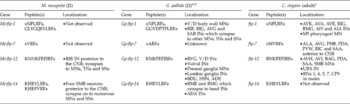
Mi-flp-12 appeared to be expressed in a single neuron posterior to the CNR, positionally resembling the C. elegans RIR neuron. Presuming that neural connectivity is conserved between nematode species, the connectivity and function of RIRs in C. elegans suggest that Mi-flp-12 could be involved in sensory perception and locomotion (White et al., Reference White, Southgate, Thompson and Brenner1986). In C. elegans, flp-12 exhibits sex-specific localization to neurons involved in hermaphrodite body movement as well as in male posterior sensation and mating (table 2) (Kim & Li, Reference Kim and Li2004), while Gp-flp-12 expression in G. pallida has been demonstrated in RVG and PAG motor neurons and the vulval BDU-like neuron (Kimber et al., Reference Kimber, Fleming, Prior, Jones, Halton and Maule2002).
A comparison of encoded FMRFamide-like peptides and flp expression between Meloidogyne incognita, Globodera pallida and Caenorhabditis elegans.

a, Amide; CNR, circumpharyngeal nerve ring; IN, interneuron; MN, motor neuron; RN, ray neuron; RVG, retrovesicular ganglia; SN, sensory neuron; TN, touch neuron.
a From Kimber et al. (Reference Kimber, Fleming, Bjourson, Halton and Maule2001).
b From Kimber et al. (Reference Kimber, Fleming, Prior, Jones, Halton and Maule2002).
c From Kim & Li (Reference Kim and Li2004).
Mi-flp-14 localized to four SMB-like neurons posterior to the CNR. In C. elegans SMBs connect indirectly with amphid (sensory) neurons and motor neurons, suggesting that KHEYLRFamide and KHEFVRFamide may have roles in locomotion and sensory perception. FLP-14 peptides may have similar roles in G. pallida since Gp-flp-14 localizes to RME-like and RMG-like motor neurons as well as ADE-like interneurons which associate with the VNC (Kimber et al., Reference Kimber, Fleming, Prior, Jones, Halton and Maule2002; table 2). Strangely, although AF2 is abundant and biologically active in C. elegans, localizing flp-14 with fluorescent reporter constructs has been unsuccessful in this species (Kim & Li, Reference Kim and Li2004).
DIG-labelled probes specific for Mi-flp-1 and Mi-flp-7 consistently failed to localize gene expression in M. incognita (n = 4 for each gene). It could be that Mi-flp-1 and Mi-flp-7 are present at a level below that of the detection threshold of our in situ hybridization protocol. Another possibility is that Mi-flp-1 and Mi-flp-7 may undergo transcriptional arrest until the nematode establishes a feeding site within the host. This could be assessed using cDNA from adult fourth-stage nematodes feeding in galled roots.
In summary we have characterized FMRFamide-like peptide encoding gene transcripts and demonstrated FLP-IR in arguably the world's most economically important crop pathogen and demonstrated the remarkable structural conservation of these peptides between different species of Meloidogyne. Some flps are expressed in the anterior of the nematode, specifically within the circumpharyngeal nerve ring. The expression profile of flp sequelogs in M. incognita is different from that observed in the related species, G. pallida, which may indicate that similar/identical neuropeptides may play different roles in even the most closely related species (see table 2). Some peptides are found only in M. incognita, suggesting that they fulfil a genus-specific role. RNAi-induced disruption may aid identification of flps that are critical for nematode biology and validate their selection as targets for control.
Acknowledgements
The authors would like to thank Mr Brendan Moreland for his assistance with sequence annotation, Mrs Margaret McDowell for assistance in maintaining host plants, Miss Kathy Catney for assistance in RACE-PCR for M. minor flp-12 and Mr Ronald Hunter for sequencing. This manuscript represents results of a postgraduate thesis project funded by the Department of Agriculture and Rural Development for Northern Ireland. Thanks also go to The Wellcome Trust (grant 069411).