

Introduction
Gibberellins (GAs) are tetracyclic diterpene carboxylic acids found in higher plants. GAs influence every phase of plant growth, including germination, elongation, induction of flowering, and seed and fruit growth (Swain and Olszewski, Reference Swain and Olszewski1996; Lange, Reference Lange1998). Recent improvements in the standard of living and the rapid development of the flower industry have led to an increased demand for pot plants that are miniaturized and compact yet show significant vitality. Carnations are one of the top four cut-flowers in the world. Their long stalks are good for cutting and flower arrangement; however, they are not appropriate as pot plants because they lodge easily. Instead of cut-flowers, dwarf carnations can be used as compact pot -plants, thus expanding their use.
Following the Green Revolution, the genes Reduced height (Rht) from wheat (Peng, Reference Peng1999), Semidwarf (sdl) from rice (Sasaki, Reference Sasaki2002), and GA5, At2353 and YAP169 from Arabidopsis (Cole et al., Reference Cole, Phillips, Croker, Garcia-Lepe, Lewis and Hedden1999) were discovered in succession. Each of these is involved in GA biosynthesis and signalling, and thereby are fundamental determinants of plant height. GA 20-oxidase is the most important rate-limiting enzyme in GA biosynthesis (Radi et al., Reference Radi, Lange, Koshioka and Pimenta Lange2006; Lee and Zeevaart, Reference Lee and Zeevaart2007) and directly catalyses the synthesis of bioactive GAs. Experimental data indicate that the expression of GA 20-oxidase genes varies greatly among different mutants (e.g. dwarf and water-sprouting types). GA 20-oxidase overexpression can significantly improve the level of active GAs and stimulate plant growth (Appleford and Lenton, Reference Appleford and Lenton1991; Cole et al., Reference Cole, Phillips, Croker, Garcia-Lepe, Lewis and Hedden1999). By inhibiting the expression of GA 20-oxidase, the level of active GAs may be reduced in vivo, offering the possibility of obtaining dwarf plants.
RNA interference (RNAi) is an effective and specific form of gene silencing mediated by endogenous or exogenous double-stranded RNAs (dsRNAs). Long dsRNAs are cut into short dsRNAs, which induce the decomposition of a specific mRNA. In this way, the expression of a specific gene can be controlled (Hannon, Reference Hannon2002). RNAi has been used successfully in tobacco (Smith et al., Reference Smith, Singh and Wang2000), rice (Kanno and Naito, Reference Kanno and Naito2000), tomato (Schiebel et al., Reference Schiebel, Pelisser, Riedel and Thalmeir1998), and Arabidopsis (Hamilton and Baulcombe, Reference Hamilton and Baulcombe1999). For example, Yan et al. (Reference Yan, An and Li2003) successfully produced dwarf rice plants using RNAi. There is currently no report showing the use of RNAi to control GA synthesis in the carnation.
In the present study, we used reverse transcriptase-polymerase chain reaction (RT-PCR) and rapid amplification of cDNA ends (RACE) with degenerate primers to clone full-length carnation GA 20-oxidase. Based on its sequence, an RNAi vector containing a sequence with high identity to a segment of the complete gene was constructed. Our results indicate that active GA biosynthesis in carnation plants can be inhibited efficiently by interfering vectors. The application of this technique to reduce the level of active GA may allow the production of stable dwarf carnations.
Materials and methods
Plant material
We selected young ‘Master’ carnation stems (Dianthus caryophyllus L. cv. Master) for differentiation and cultivation. Three- and four-week-old leaves were used in our experiments.
Vector and bacterial strains
The vectors pMD18-T and pMD18-T Simple were purchased from Baoshengwu Co. (Dalian, China). Competent Escherichia coli TOP-10 cells were purchased from Axygen Co. (Beijing, China).
Carnation RNA extraction
Using the SDS method (Palmiter, Reference Palmiter1974), total RNA was extracted from young leaves of carnation plants that were in good condition.
Synthesis of first-strand cDNA
First-strand cDNA was synthesized using an oligo (dT)18 primer and the reverse transcriptase MMLV (Promega, Madison, Wisconsin, USA).
Primer design and gene amplification
We designed degenerate primers specific for GA 20-oxidase based on sequences conserved among the spinach, tobacco, Arabidopsis and pea GA 20-oxidase genes, all of which are registered in GenBank. The primer sequences were:
PF1 (forward): 5′-GCA(TC)TGTGG(CGT)TATGC(TC)AG-3′; and
PR1 (reverse): 5′-GT(GT)GG(AG)TC(AG)CA(AG)TGAGG(TC)CC-3′.
PCR was performed in a 50 μl volume containing 5 μl of 10× reaction buffer, 4 μl of 25 mmol/l dNTPs, 1.5 μl of PF1, 1.5 μl of PR1, 0.5 μl of Taq DNA polymerase (TaKara, Otsu, Japan), 3 μl of template cDNA, and 34.5 μl of double-distilled water (ddH2O). The conditions used for PCR were: 94°C for 5 min, followed by 30 cycles at 94°C for 30 s, 50°C for 40 s, and 72°C for 50 s, with a final extension at 72°C for 10 min. The products were subjected to electrophoresis in a 1.5% agarose gel.
Cloning of the amplified product and selection of the recombined clones
The agarose gel was cut into a few pieces, and the piece containing the PCR product was selected. The product was purified using a gel-reclaiming reagent kit (Axygen, Union City, California, USA) and ligated into pMD18-T. The constructed vector was used to transform competent E. coli TOP-10 cells, which were spread on Luria-Bertani (LB) agar containing ampicillin and incubated overnight at 37°C. Single colonies were selected and incubated in LB liquid medium for 8 h. The medium was then sent to Shanghai Invitrogen Biotechnology Co. Ltd. (Shanghai, China) for sequencing.
5′ and 3′ RACE of the amplified product
Based on our sequencing results, primers specific for the 5′ and 3′ ends of the amplified product were synthesized (primary and nested, respectively). The primers (APP, AURP, CDSIII/3′ PCR current primer and CDSIII anchor primer) and the 5′ and 3′ RACE reagent kit were provided by Invitrogen. The sequences of the primers were as follows:
5′ end outside primary primer: 5′-TTGATATACAGTCCCCAAGTGA-3′;
5′ end inside nested primer: 5′-TTTAGAAGAACAACTCTCCTCA-3′;
AAP: 5′-GGCCACGCGTCGACTAGTACGGIIGGGIIGGGGIIG-3′;
AUAP: 5′-GGCCACGCGTCGACTAGTAC-3′;
3′ end outside primary primer: 5′-TTTTTCAAGGACACGAGTCGGTCA-3′;
3′ end inside nested primer: 5′-TTACTACCCACCATGCCAACGACC-3′;
CDSIII/3′ PCR current primer: 5′-ATTCTAGAGGCCGAGGCGGCCGACATGd(T)30V-3′; and
CDSIII/anchor primer: 5′-CTAGAGGCCGAGGCGGCCGA-3′.
For 5′ RACE, first-strand cDNA was synthesized using the 5′ end outside primary primer and carnation total RNA as the template, plus tailing with 10 mmol/l dCTP. PCR was performed using the tailed cDNA as a template with the 5′ end outside primary primer and AAP. Nested PCR was performed using the above PCR product as a template with the 5′ end inside nested primer and AUAP. The amplified target was recovered and sequenced. PCR was performed as described above, except the reaction conditions were: 94°C for 5 min, followed by 30 cycles at 94°C for 40 s, 50°C for 1 min, and 72°C for 1.5 min, with a final extension at 72°C for 10 min.
For 3′ RACE, first-strand cDNA was synthesized using the 3′ end outside primary primer with carnation total RNA as the template. PCR was performed using the PCR product as a template with the 3′ end outside primary primer and CDSIII/3′ PCR current primer. Nested PCR was performed using the above product as a template with the 3′ end inside nested primer and CDSIII/anchor primer. PCR was performed as described above, except the reaction conditions were: 94°C for 5 min, followed by 30 cycles at 94°C for 40 s, 55°C for 1 min, and 72°C for 1.5 min, with a final extension at 72°C for 10 min. The amplified target was recovered and sequenced.
GA 20-oxidase recombination
Based on the full-length sequence of GA 20-oxidase and our 5′ and 3′ RACE products, we designed the following primers:
PF2 (forward), 5′-ATGGCCATTGATTGCATGAGAAGC-3′; and
PR2 (reverse), 5′-TTACTTCTCTTGATCATCTCTTC-3′.
RT-PCR was performed as described above, except the reaction conditions were: 94°C for 5 min, followed by 30 cycles at 94°C for 30 s, 50°C for 40 s, and 72°C for 50 s, with a final extension at 72°C for 10 min. The amplified product was analysed by electrophoresis, and the target amplicon was recovered and ligated into pMD18-T. After sequencing, the result was analysed using the BLASTn program on the NCBI website.
RNAi vector construction
A 400-bp segment from the open reading frame (ORF) of carnation GA 20-oxidase was used to construct a palindromic sequence. To ligate the fragment into pMD18-T, the restriction sites that had been used for orientation were added to the two pairs of primers. PCR was performed using pMD18-T containing GA 20-oxidase as the template. Forward and reverse sequences were produced separately using the following primers:
Forward segment primer PS1: 5′-GCCTCGAGATGGATGAGTTCTTTGAAXhoICAAC-3′;
Forward segment primer PS2: 5′-CTGAATTCGTTCCTAGGGTTAAGTCCEcoRIGGTC-3′;
Reverse segment primer PA1: 5′-CTAAGCTTGTTCCTAGGGTTAAGTCCHindIIIGGTC-3′;
Reverse segment primer PA2: 5′-GCTCTAGAATGGATGAGTTCTTTGAXbaIIIACAAC-3′.
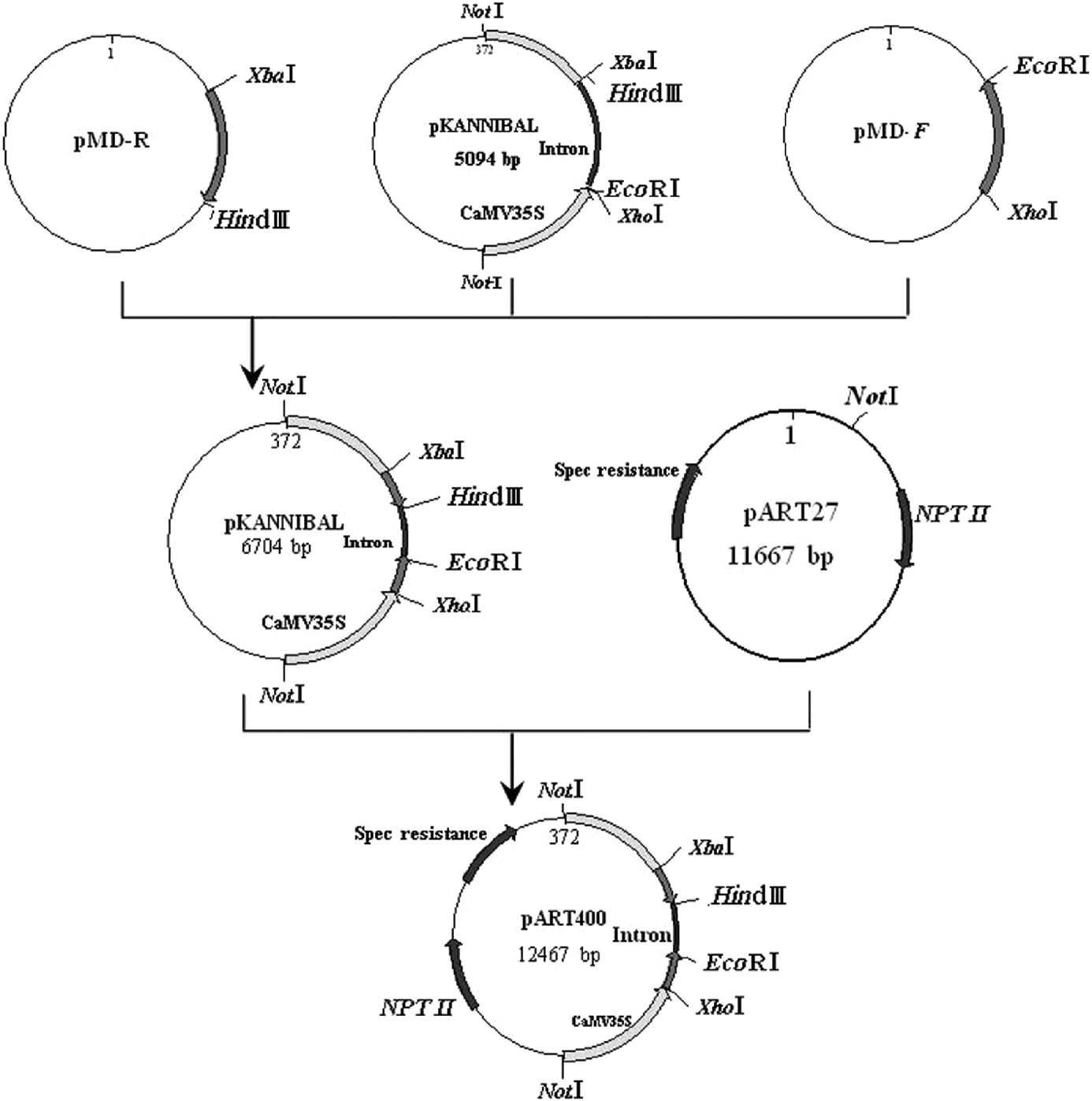
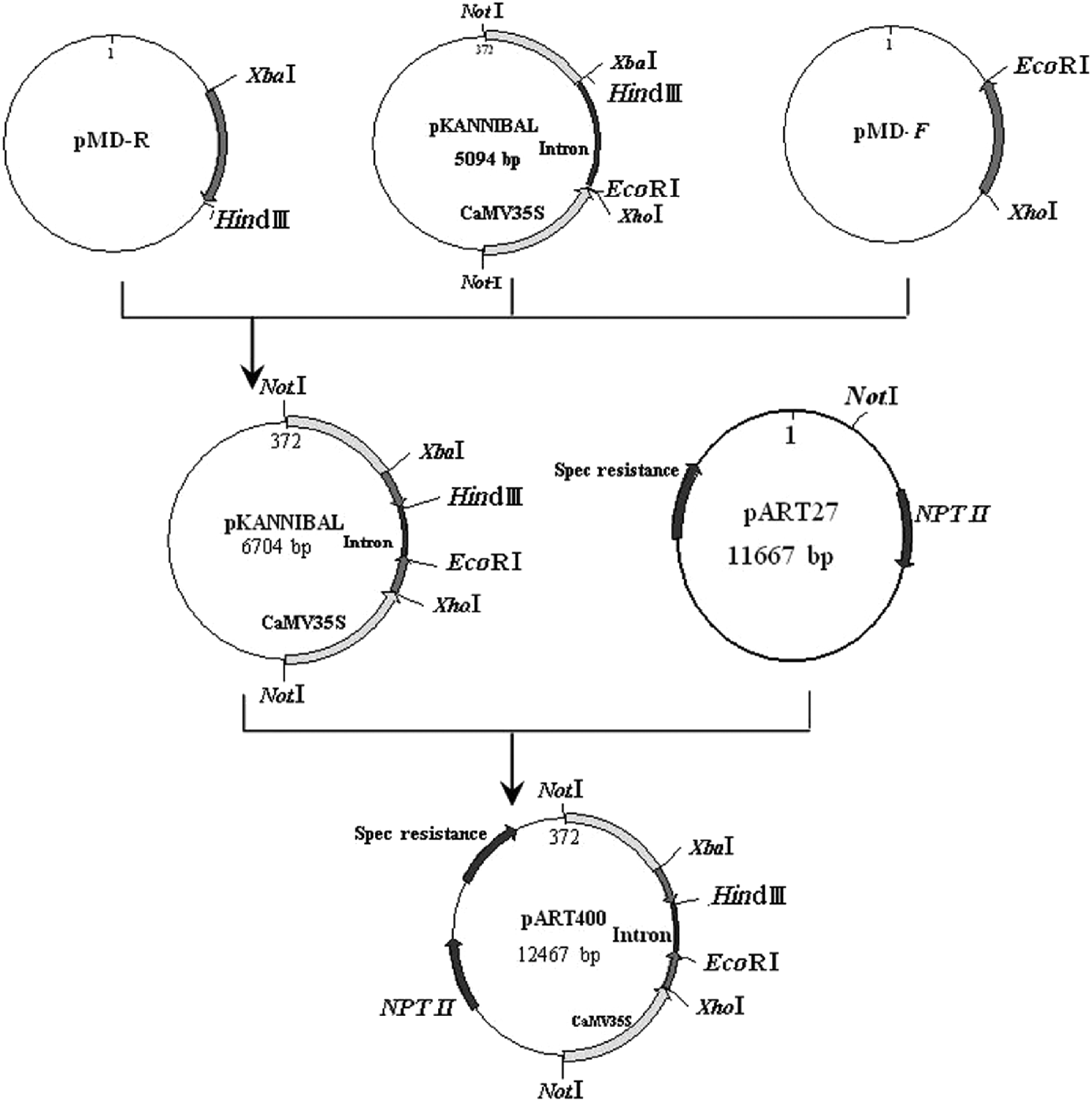
The resulting products, forward segment Fga20 and reverse segment Rga20, were ligated separately into pMD18-T Simple to produce pMD-F and pMD-R, respectively. The vector pKANNIBAL and recombined vector pMD-F were cut simultaneously with XhoI and EcoRI, and then ligated to produce KANF. Next, pKANR and pMD-R were cut simultaneously with HindIII and XbaI, and ligated to produce pKANF-R. The plasmid pKANF-R and expression vector pART27 were then cut with NotI, and the larger segment was ligated into pART27 to give the expression vector pART400 (Fig. 1).
Construction of pART400 vector, see the text for details.
Results and analysis
Cloning of Dc20ox
Cloning of a portion of Dc20ox
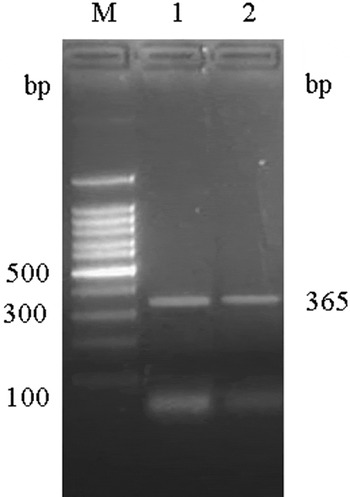
Using the primers PF1 and PR1, a 365-bp fragment was amplified from carnation first-strand cDNA (Fig. 2). The resulting sequence, which was analysed by the BLASTn program on the NCBI website, was 71 and 79% identical to the Dc20ox genes from tobacco and sugar beet, respectively.
PCR amplification of the middle fragment of GA 20-oxidase. Lanes: M, marker 100 bp; 1 and 2, PCR product of GA 20-oxidase fragment.

5′ and 3′ RACE
Nested PCR was performed using specific primary primers, nested primers, AAP, AUAP, CDSIII/3′ PCR current primer, and CDSIII/anchor primer with the template cDNA. In this way, the 5′ and 3′ ends of the gene were obtained. Sequencing of the products revealed that the segment produced by 5′ RACE was 699 bp in length and included a non-coding region followed by an ATG initiation codon. It was also found to overlap with the 365-bp fragment we had cloned. The segment produced by 3′ RACE, which was 713 bp in length, included a poly(A) sequence and also overlapped with the 365-bp fragment.
Cloning and sequencing of full-length Dc20ox cDNA
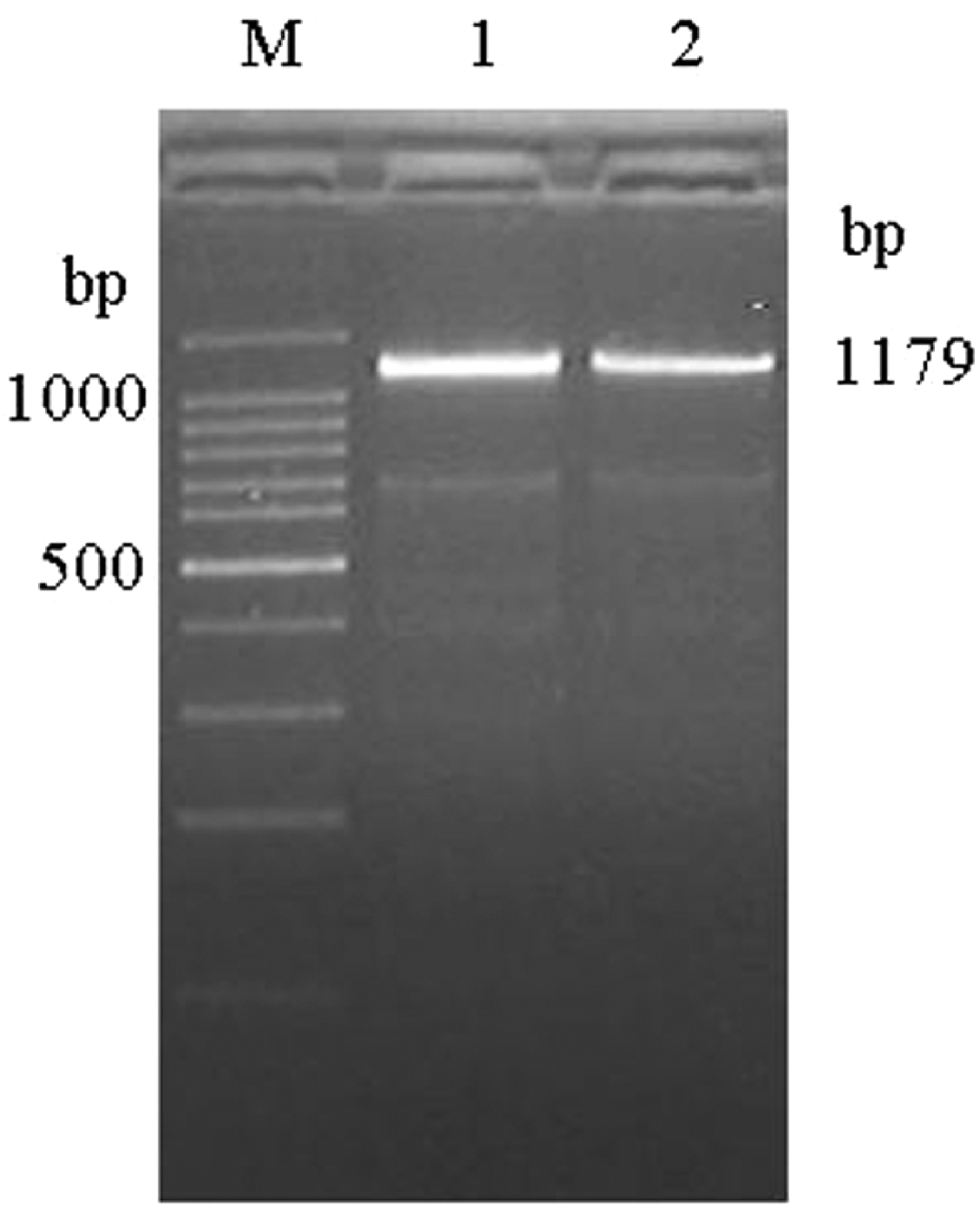
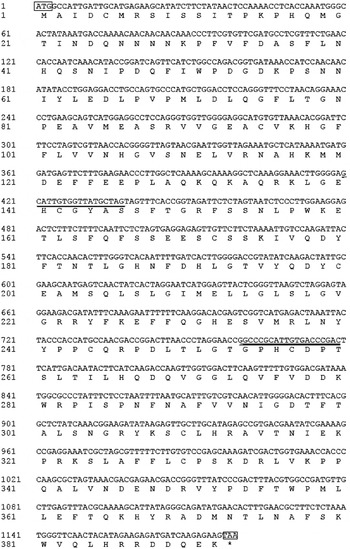
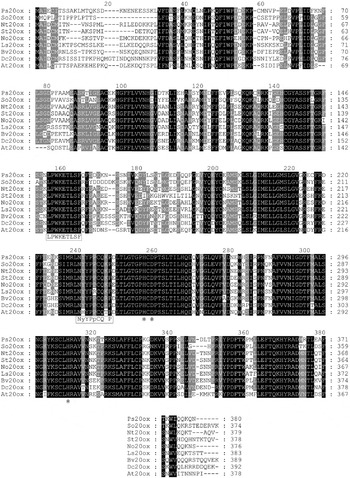
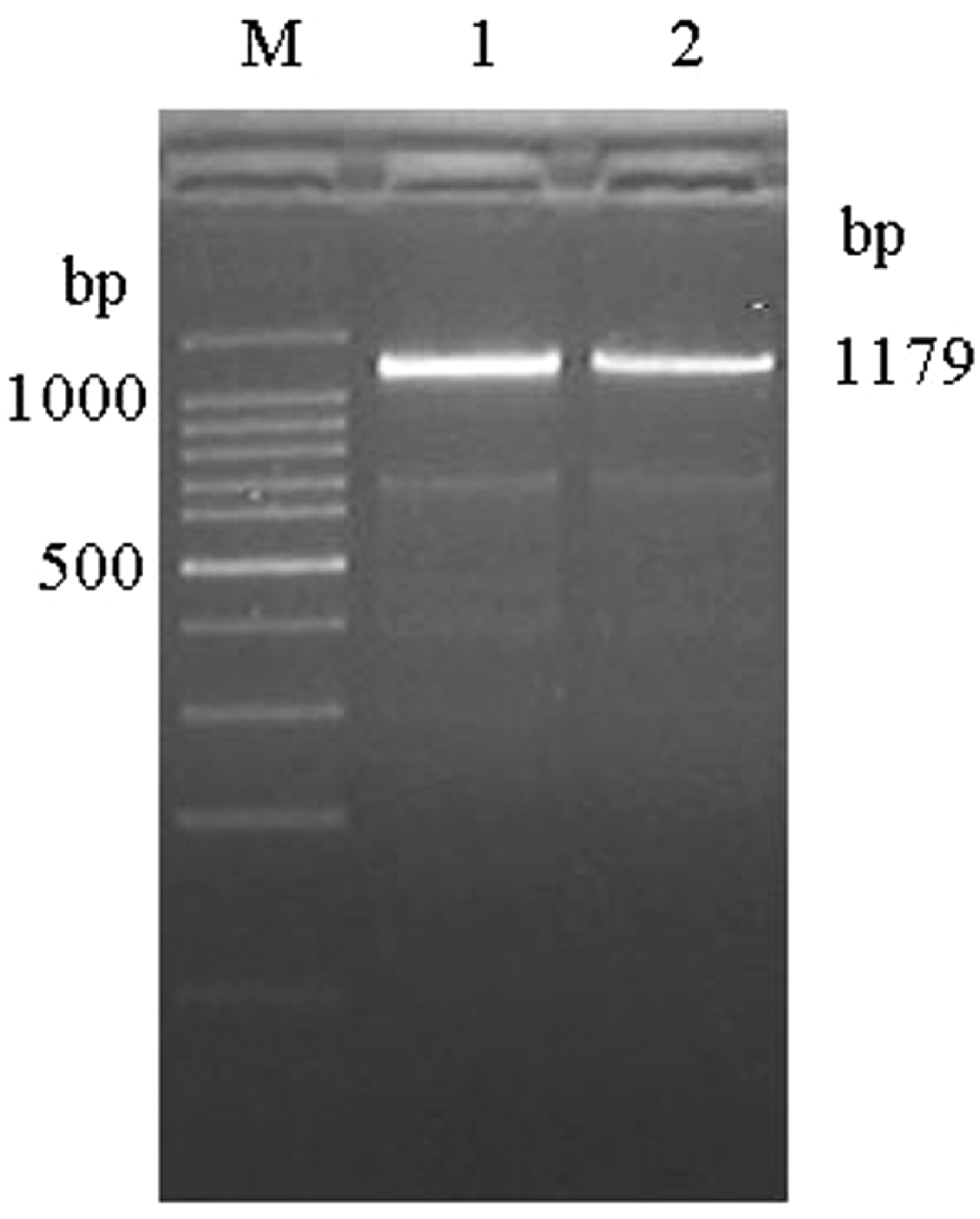
Using primers PF2 and PR2, the full-length gene was obtained by PCR of the template cDNA (Fig. 3). The gene, named Dc20ox, contains initiation (ATG) and termination codons (TAA). The 1179-bp ORF encodes a protein of 392 residues with a molecular weight of 44 kDa (Fig. 4). Based on a BLASTp analysis, the percentages of identity between the primary sequence of Dc20ox and those of the GA 20-oxidases from Arabidopsis, potato, pea, lettuce, spinach, oleander, tobacco and sugar beet were 66, 67, 68, 66, 66, 67, 69, and 75%, respectively. The sequences of the GA substrate site (LPWKET) and 2-oxoglutaric acid site (NYPPCQRP) as well as H256, H312, and D258 combined with Fe2+ were all highly conserved (Fig. 5). Figure 5 illustrates the similarity between the primary sequences of DC20ox and GA 20-oxidase. Thus, DC20ox is the GA 20-oxidase gene in the carnation.
PCR amplification of the full-length cDNA of GA 20-oxidase. Lanes: M, marker 100 bp; 1 and 2, PCR product of GA 20-oxidase.
Nucleotide sequence and deduced amino acid sequence of carnation GA 20-oxidase cDNA. Regions corresponding to the degenerate primers are underlined, ATG is the initial codon, TAA is the termination codon.

Alignments of the Dc20ox deduced amino acid sequences with those of other plants. Ps20ox, pea; So20ox, spinach; Nt20ox, tobacco; St20ox, potato; No20ox, oleander; Ls20ox, lettuce; Bv20ox, beet; Dc20ox, carnation; At20ox, Arabidopsis. Identical residues are boxed in black; similar residues are shaded in grey. The conserved domains of L–P–W–K–E–T and N–Y–P–P–C–Q–R–P regions involved in binding the GA substrate and the 2-oxoglutarate are boxed. Conserved H and D residues involved in the binding of Fe2+ are indicated by *.

Construction of the RNAi vector
Construction of pKANF-R
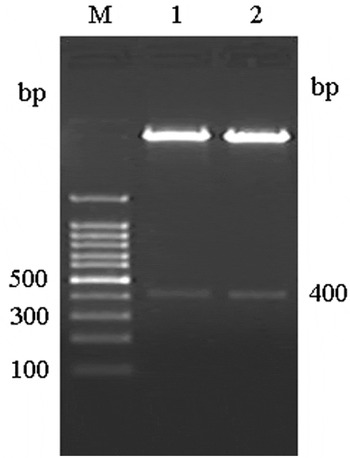
PCR was conducted separately using the primer pairs PS1/PS2 and PA1/PA2 to produce two reverse complementary segments, Fga20 (forward) and Rga20 (reverse), which were then ligated into pKANNIBAL to construct pKANF-R. To confirm that Fga20 and Rga20 had been inserted in the correct orientation, pKANF-R was cut with XhoI and EcoRI followed by HindIII and XbaIII. The resultant fragments showed that pKANF-R was constructed correctly (Fig. 6).
The identification result of pKANF-R. Lanes: M, marker 100 bp; 1, XhoI and EcoRI pKANF-R; 2, HindIII and XbaI pKANF-R.

Construction of the expression vector pART400-RNAi
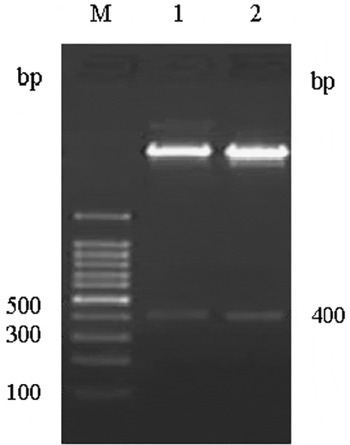
The plasmid pKANF-R and expression vector pART27 were cut with NotI, and the smaller segment was ligated into pART27 to construct the expression vector pART400 containing the RNAi sequence. To demonstrate that the RNAi vector was constructed correctly, pART400 was cut with two pairs of enzymes, XhoI and EcoRI and HindIII and XbaI, to produce the functional segments Fga20 and Rga20 (Fig. 7).
The identification result of pART400. Lanes: M, marker 100 bp; 1, XhoI and EcoRI pART400; 2, HindIII and XbaI pART400.

Discussion
GA synthesis is driven by a series of enzymes (Tomoaki et al., Reference Tomoaki, Koutarou, Hironori, Tomoko, Kanako and Masatomo2004), most of which are subject to feedback regulation, and a change in expression of any one gene has little impact on the level of GA. Given that GA 20-oxidase is a key rate-limiting enzyme in GA biosynthesis and that feedback accommodation does not greatly affect GA biosynthesis, any change in GA 20-oxidase expression should directly influence the level of GA (Carrera et al., Reference Carrera, Jackson and Prat1999) and cause morphological changes in vivo. Thus, GA 20-oxidase is an efficient target for controlling GA synthesis.
In this study, we cloned the full-length cDNA of Dc20ox from carnation total RNA using degenerate primers and RACE. An analysis of the primary sequence revealed two conserved regions, LPWKET (Xu et al., Reference Xu, Li, Wu, Peeters, Gage and Zeevaart1995) and NYPPCQRP, and multiple conserved H and D residues (Roach et al., Reference Roach, Clifton and Harlos1995; Nakayama et al., Reference Nakayama, Nakajima and Yamaguchi2005). The percentages of identity between this sequence and Dc20ox sequences reported for other plants were 66–75%, with the sugar beet sequence being the most identical. The carnation belongs to the same order (Caryophyllales) as the sugar beet, and thus a close genetic relationship would be expected. The results of our primary sequence analysis and previous plant taxonomic studies indicate that Dc20ox is the carnation GA 20-oxidase gene.
Previous studies have shown that GA 20-oxidase expression can be controlled by antisense RNA techniques, resulting in reduced concentrations of active GAs (Cole et al., Reference Cole, Phillips, Croker, Garcia-Lepe, Lewis and Hedden1999). Thus, it may be possible to control GA metabolism in plants through genetic engineering. However, anti-GA 20-oxidase is difficult to detect (Müller-Röber et al., Reference Müller-Röber, Sonnewald and Willmitzer1992; Zrenner et al., Reference Zrenner, Salanoubat, Willmitzer and Sonnewald1995). Furthermore, the transgenic lines produced to date exhibit a dwarf phenotype only 50% of the time and are unstable (Carrera et al., Reference Carrera, Bou, Garcia-Martinez and Prat2000). This is probably caused by the instability of antisense double-stranded RNA, which can limit the efficiency and stability of antisense RNA techniques. The efficiency of gene silencing with RNAi is 100 times that with antisense RNA techniques; moreover, RNAi has greater stability. Thus, RNAi may be the most efficient and dependable method for inhibiting gene expression (Dillin, Reference Dillin2003).
Given the advantages of this method, we constructed an RNAi vector designed to reduce the level of active GA in carnation plants and their offspring. In vector-mediated RNAi, the inhibitory effect on the target gene is largely determined by the length of the interfering segments. Recent studies have shown that the optimal length of the interfering segment is 300–500 bp (Hammond et al., Reference Hammond, Bernstein, Beach and Hannon2000). Several GA 20-oxidases have been identified, each of which catalyses GA synthesis (Nakayama et al., Reference Nakayama, Nakajima and Yamaguchi2005). However, only one gene (Dc20ox) was identified in the present study. Therefore, to efficiently inhibit GA synthesis, a 400-bp fragment encoding a highly conserved Dc20ox sequence was used to construct an RNAi vector for use in carnation. Further research into the biological properties and related physical characteristics of resistant plants is currently under way.
Acknowledgements
This research was supported by the Program for New Century Excellent Talents in Universities of China (NCET-06-0108), the National Natural Science Foundation Projects (30871696), and the 11th ‘Five-Year’ Support Projects (2007BAD3602).