Introduction
Access to sufficient food of an adequate quality is fundamental for maintaining normal body composition and function, and therefore overall health (FAO, 2007). Fish, shellfish and other aquatic organisms suitable for food and feed are of worldwide importance, since they are excellent sources of high quality proteins, superior to those found in meat and poultry (Arularasan et al., Reference Arularasan, Lyla, Kesavan and Khan2010; Govindarajalu et al., Reference Govindarajalu, Muthusamy, Gurusamy, Mani and Arumugam2016). In search of edible organisms considered as new foods, it is vital to know their quality as well as potential human health benefits (Lem et al., Reference Lem, Bjørndal and Lappo2014; Ab Lah et al., Reference Ab Lah, Smith, Savins, Dowell, Bucher and Benkendorff2017), information that is reflected in their biochemical composition (Nagabhushanam & Mane, Reference Nagabhushanam and Mane1978; Babu et al., Reference Babu, Kesavan, Annadurai and Rajagopal2010). In molluscs, biochemical studies can determine their nutritional value, providing relevant information in the context of ecological and energy balance (Giese & Pierse, Reference Giese and Pearse1974). Marine molluscs are harvested around the world for their meat and have been recognized as high-quality nutritious food sources (Leiva & Castilla, Reference Leiva and Castilla2002; Ab Lah et al., Reference Ab Lah, Smith, Savins, Dowell, Bucher and Benkendorff2017). In general terms, molluscs store energy prior to gametogenesis, when food is abundant, in the form of lipid, protein and glycogen, which are subsequently utilized in the production of gametes when metabolic demand is high (Bayne, Reference Bayne and Wiley1976; Barber & Blake, Reference Barber, Blake, Shumway and Parsons2006). Accumulation or utilization of storage compounds depends on the stage of gonad development, the amount of food available (Pazos et al., Reference Pazos, Ruíz, García-Martín, Abad and Sánchez1996) and environmental factors such as temperature, salinity and primary marine productivity (Beninger & Lucas, Reference Beninger and Lucas1984). The data on seasonal variation in some key biochemical components (proteins, lipids and carbohydrates) of the soft tissues is not commonly available for edible gastropods, although it complements the previous information in the context of sustainable resource exploitation policies (Najmudeen, Reference Najmudeen2007; Gharsallah et al., Reference Gharsallah, Vasconcelos, Zamouri-Langar and Missaoui2010; Zarai et al., Reference Zarai, Frikha, Balti, Miled, Gargouri and Mejdoub2011; Nieto et al., Reference Nieto Vilela, Cumplido, González Giorgis, Gil and Bigatti2019). This also represents nutritional quality information that should be available for consumers (D'Armas et al., Reference D'Armas, Yáñez, Reyes and Salazar2010).
Marine gastropod consumption is increasing worldwide, turning them into commercially important resources (Leiva & Castilla, Reference Leiva and Castilla2002; Vasconcelos et al., Reference Vasconcelos, Carvalho, Castro and Gaspar2008; FAO, 2015; Govindarajalu et al., Reference Govindarajalu, Muthusamy, Gurusamy, Mani and Arumugam2016). This is due to their meat (mainly foot muscle), good taste and nutritive qualities (Arularasan et al., Reference Arularasan, Lyla, Kesavan and Khan2010; Periyasamy et al., Reference Periyasamy, Murugan and Bharadhirajan2014). Global capture of abalones, winkles and conchs in the last 10 years varied between 143,000 and 170,643 t (FAO, 2017). Gastropod meat contains high amounts of proteins, carbohydrates and other nutritive substances such as vitamins B and C. In addition, it is free of cholesterol and rich in polyunsaturated fatty acids, which has made them recommended options for people with cardiovascular disease (Manzano & Aranda, Reference Manzano and Aranda1998; Arularasan et al., Reference Arularasan, Lyla, Kesavan and Khan2010; D'Armas et al., Reference D'Armas, Yáñez, Reyes and Salazar2010; Zarai et al., Reference Zarai, Frikha, Balti, Miled, Gargouri and Mejdoub2011; Ab Lah et al., Reference Ab Lah, Smith, Savins, Dowell, Bucher and Benkendorff2017). In southern South America, marine gastropods have been widely consumed by the native Patagonian populations since pre-Hispanic times (Gómez Otero et al., Reference Gómez Otero, Lanata and Prieto1998; Gómez Otero, Reference Gómez Otero2006), but studies regarding nutritional composition are still lacking in several species. In Argentina, marine gastropods have been the subject of increasing fishing interest (Ciocco, Reference Ciocco1995; Lasta et al., Reference Lasta, Ciocco, Bremec, Roux and Boschi1998; Bigatti et al., Reference Bigatti, Cumplido and Averbuj2015). Official marine gastropod landings have been reported since 1936, where volutids were the main exploited species (Lasta et al., Reference Lasta, Ciocco, Bremec, Roux and Boschi1998; Giménez et al., Reference Giménez, Lasta, Bigatti and Penchaszadeh2005; Sánchez et al., Reference Sánchez, Navarro and Rozycki2012), but catch regulations have been implemented in only one province since 2018 (Cumplido, Reference Cumplido2016; Bigatti et al., Reference Bigatti, Díaz de Vivar, Cumplido, Nieto Vilela, Avaro, Sastre and Gil2017).
Currently, there are ~200 people actively carrying out artisanal fisheries in the Valdés Peninsula, which includes San José Gulf as well as other north Patagonian gulfs (Orensanz et al., Reference Orensanz, Parma and Ciocco2003). Here, several small-scale commercial fisheries operate, harvesting bivalves, gastropods and algae along the coastal zone, capturing mainly the ‘Tehuelche scallop’ Aequipecten tehuelchus (d'Orbigny, 1842) (Orensanz et al., Reference Orensanz, Parma and Ciocco2003, Reference Orensanz, Parma, Ciocco, Cinti, McClanahan and Castilla2007). These fisheries are representative of a category that is socially and economically significant worldwide, even taking into account the recurrent crises that affect them (Leiva & Castilla, Reference Leiva and Castilla2002; Orensanz et al., Reference Orensanz, Parma, Jerez, Barahona, Montecinos and Elias2005). In the mid 1990s, a Tehuelche scallop survey performed in the San José Gulf indicated that the stock had been seriously depleted. Consequently, the fishery was closed for 3 years, with devastating economic and social consequences for the artisanal fisher community (Orensanz et al., Reference Orensanz, Parma, Jerez, Barahona, Montecinos and Elias2005). This event led to the first management plan for a fishing resource in the region (Orensanz et al., Reference Orensanz, Parma and Ciocco2003; Soria et al., Reference Soria, Orensanz, Morsán, Parma, Amoroso, Shumway and Parsons2016). This situation requires the search for alternative resources that can contribute to the community of local artisanal fishers, in a sustainable manner.
In this work, we analysed the variation in nutritional composition of four edible marine gastropods during their reproductive cycle in order to add knowledge for this alternative resource. The analysed species were Odontocymbiola magellanica (Gmelin, 1791), Buccinanops deformis (King, 1832), Buccinanops cochlidium (Dillwyn, 1817) and Trophon geversianus (Pallas, 1774), from the artisanal fisheries zone in northern Patagonia. These species exhibit high abundance along the Patagonian Atlantic coast (Scarabino, Reference Scarabino1977; Pastorino, Reference Pastorino2005). In San José Gulf, O. magellanica, B. deformis and B. cochlidium are caught for family consumption and locally commercialized in restaurants (Bigatti et al., Reference Bigatti, Cumplido and Averbuj2015; Cumplido, Reference Cumplido2016). In addition, B. deformis has been caught by artisanal fishers in Northern Patagonian gulfs since 2000 (Narvarte, Reference Narvarte2006) and is sold in various markets in Argentina and exported to Asia (Averbuj et al., Reference Averbuj, Rocha and Zabala2014; Bigatti et al., Reference Bigatti, Cumplido and Averbuj2015). In contrast, T. geversianus is still not consumed or captured in the region, but it has been registered in landing records for 25 years in the Patagonian region of Chile on the Pacific south-east (Santana, Reference Santana1998; González Yáñez et al., Reference González Yáñez, Daza, Vargas, Cortés, Guzmán, Miranda, Vargas and Yannicelli2007; Cumplido et al., Reference Cumplido, Averbuj and Bigatti2010). Patagonian gastropods are rich in essential fatty acids and exhibit a differential accumulation of harmful substances, where the viscera comprise the entry, accumulation and detoxification of metals and toxins (Cumplido, Reference Cumplido2016; Bigatti et al., Reference Bigatti, Díaz de Vivar, Cumplido, Nieto Vilela, Avaro, Sastre and Gil2017; Primost et al., Reference Primost, Gil and Bigatti2017). This study investigated, for the first time, the nutritional values of marine gastropods captured in the region of major extraction by artisanal fishers in northern Patagonia, establishing whether the seasonal variation in the biochemical composition is related to the reproductive season, with implications for capture policy and resource conservation.
Materials and methods
Study site and sample collection
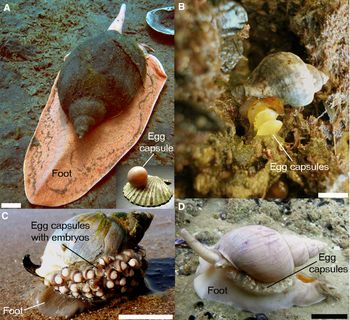
Sampling was performed monthly from September 2010 to July 2011 on Villarino beach, San José Gulf (42°25′S 64°31′W) (Chubut, Argentina). No individuals could be collected during August 2011 because the extreme weather conditions made it impossible to access the sampling site. A total of 56 individuals of Odontocymbiola magellanica (Figure 1A), 156 Trophon geversianus (Figure 1B), 102 Buccinanops deformis (Figure 1C) and 70 Buccinanops cochlidium (Figure 1D) were collected at 5–15 m depth. Odontocymbiola magellanica, B. cochlidium and T. geversianus were captured manually by scuba diving and B. deformis by baited traps. Reproductive seasonality for each species was established in situ by scuba diving, visually recording the presence or absence of egg capsules in the case of the volutid O. magellanica and the muricid T. geversianus, and of females carrying egg capsules in their own shells in the case of nassarids B. deformis and B. cochlidium.
(A) Adult of Odontocymbiola magellanica. Detail of egg capsule attached on half shell of Aequipecten tehuelchus; (B) Female of Trophon geversianus laying egg capsules on hard substrates; (C) Gravid female of Buccinanops deformis with hatching embryos inside egg capsules deposited on its own shell; (D) Gravid female of Buccinanops cochlidium with egg capsules on its own shell. Scale bars: A, D, 2 cm; B, C, 1 cm. Photos C–D by Andrés Averbuj.

Biochemical composition
After sampling, specimens were immediately transported to the laboratory and humanely sacrificed by relaxing them with MgCl2. The soft parts were removed from the shell of relaxed live animals using a press. After removal of the shell, the specimen's soft body was dissected by separating the foot (portion used for human consumption) from the rest of the organs (the viscera are not typically consumed in large gastropods). Since the consumption of the species does not discriminate among sexes, each of these tissues were pooled per month to achieve the amount of tissue necessary for all biochemical determinations. Then samples were dried at 60 °C until constant weight and finally homogenized using a mortar and pestle. A subsample was weighed (SW) and dried at 80 °C to a constant weight (SWC). Thereafter the subsample was combusted in a muffle at 550 °C for 12 h and weighed (AW). The per cent ash content was calculated as (AW SWC−1) × 100, and the per cent moisture content was calculated as ((SW−SWC) SW−1) × 100. For each species, the biochemical composition of the foot and the rest of the organs were analysed using standard analytical procedures. Spectrophotometric methods were used for the estimation of proteins, lipids and glycogen. Proteins was estimated by the Folin-Ciocalteu method using bovine serum albumin as standard (Lowry et al., Reference Lowry, Farr, Rosebrough and Ryall1951), lipids by the sulpho-phospho vanillin method using cholesterol as standard (Zöllner & Kirsch, Reference Zöllner and Kirsch1962), and glycogen by the anthrone-sulphuric reactive method using glucose as standard (Fraga, Reference Fraga1956). Results were expressed as mean value ± SD of the percentage of each component for dry weight of tissues.
Statistical analyses
Biochemical parameters (proteins, lipids and glycogen percentages) were analysed using generalized linear models (GLM) in R (version 3.4.3., http://www.r-project.org). The Shapiro–Wilks test was used for testing normality and the Levene test for examining homogeneity of variances. A value of P ≤ 0.05 was considered as statistically significant. Models included the fixed effects of tissues (foot and organs), seasons (spring, summer, autumn and winter), and the interactions between these factors. Differences in biochemical percentages between tissues and seasons for each edible marine gastropod were compared by analysis of variance (ANOVA), followed by Tukey's post hoc test for comparisons for each factor.
Results
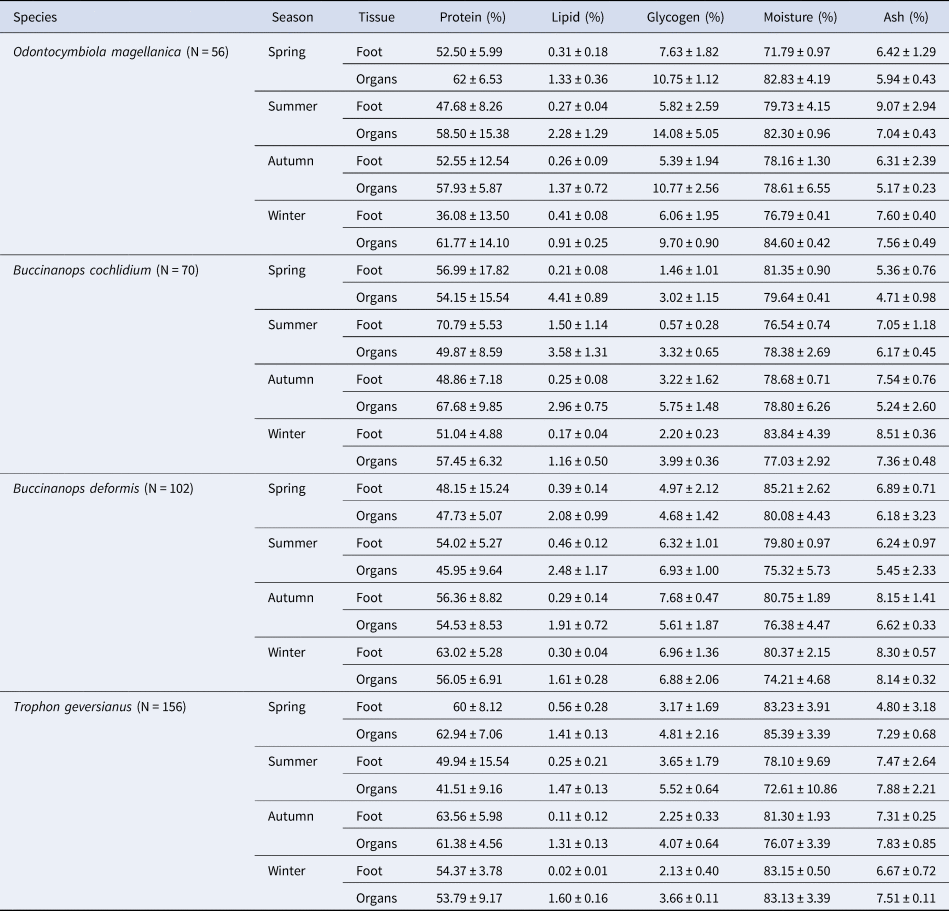
The nutritional mean annual values for all the species showed marked variations throughout the reproductive seasons (Table 1). The ash content was significantly higher in the foot than in organs for all species (F = 5.98, df = 1, P = 0.028), and significantly different between seasons only for B. cochlidium (F = 4.76, df = 3, P = 0.017). Likewise, the moisture content for all species did not differ between seasons (all P > 0.05), but was significantly higher in organs than in the foot for O. magellanica (F = 351.52, df = 1, P < 0.0001) and B. cochlidium (F = 3.08, df = 1, P = 0.047), while for B. deformis it was higher in the foot than organs (F = 8.41, df = 1, P = 0.015) (Table 1).
Seasonal variation in the percentage values (mean ± SD) of proteins, lipids, glycogen, moisture and ash in foot and organs for each of the studied edible marine gastropod

Data are presented as percentage on dry weight basis (g 100 g dw−1).
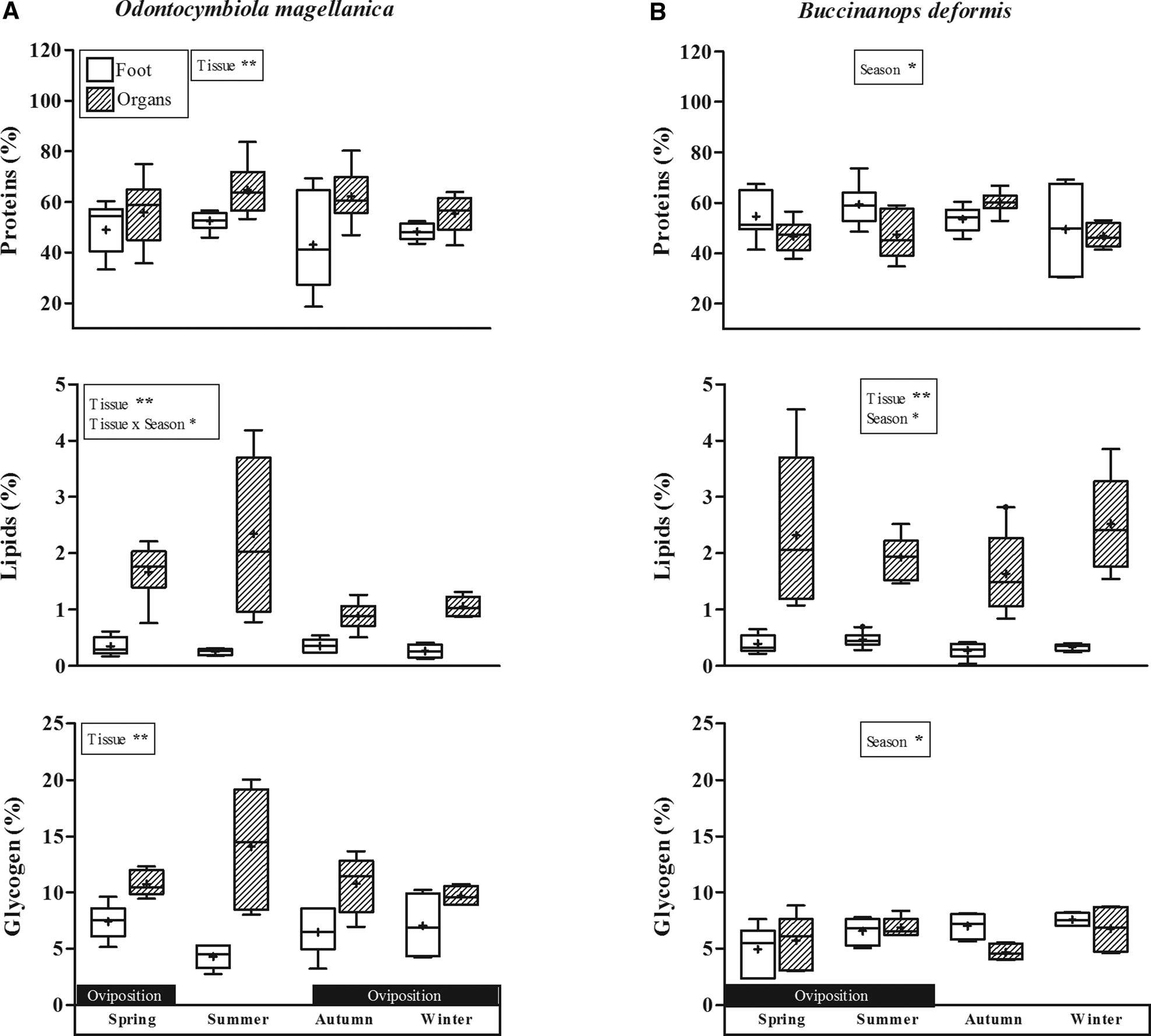
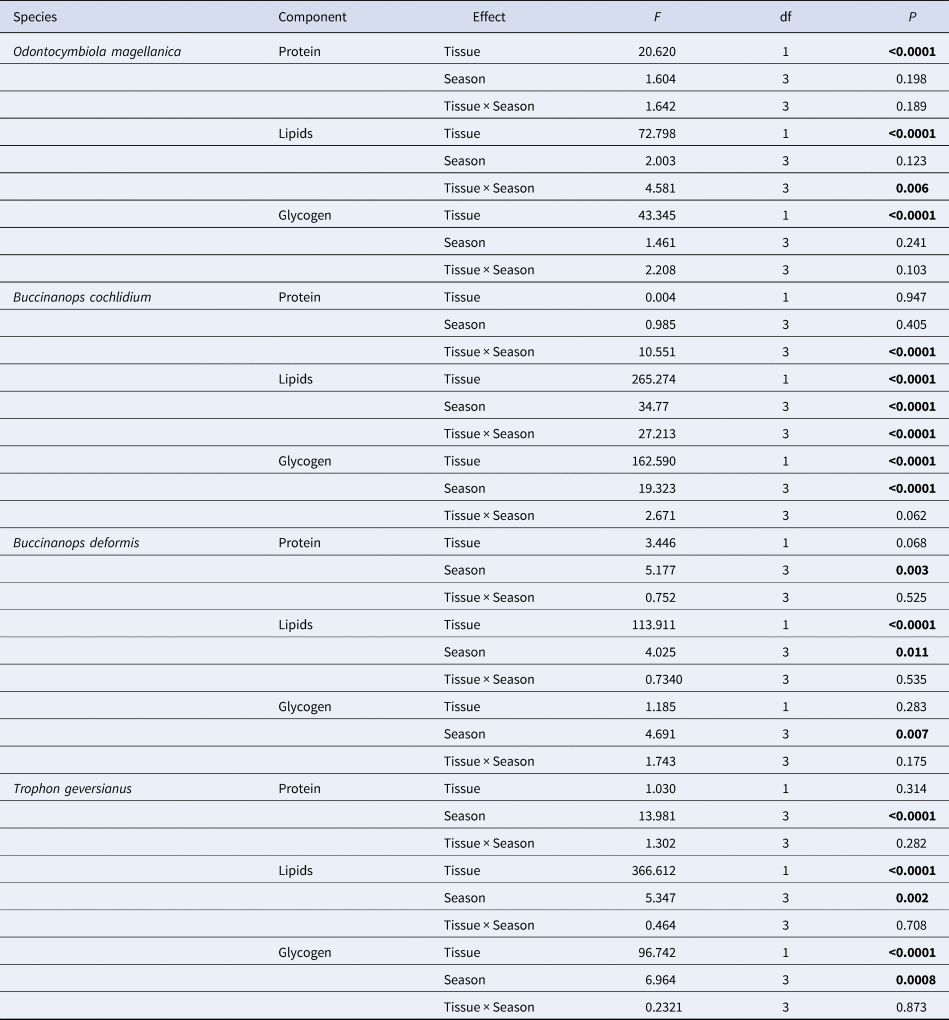
The oviposition of O. magellanica was observed on hard substrates on the bottom during mid-autumn and spring (May–December) with an oviposition peak between July and November (Figure 2A). The protein, lipids and glycogen percentages were significantly different between the foot and organs, being lower in the foot throughout the year (Table 2, Figure 2A). In summer (non-oviposition season), the foot showed a decrease in lipid and glycogen content (Table 2, Figure 2A).
Biochemical composition of (A) Odontocymbiola magellanica and (B) Buccinanops deformis in foot (white) and rest of organs (cross-marked) during 2010–2011 season. Box plots depict medians (horizontal lines inside boxes), means (crosses), 25 and 75 percentiles (edges of boxes), 10 and 90 percentiles (whiskers), and outlying points included in the analyses (dots). Significant effects from models in Table 2 are shown in text boxes and indicated by asterisks (* = P < 0.05; ** = P < 0.0001).

General linear model of biochemical components (proteins, lipids and glycogen) of the studied edible marine gastropods in foot and organs in four seasons during 2010–2011 at San José Gulf

Significant differences are highlighted in bold.
Seasonal reproduction of B. deformis was registered between spring and summer (October–March) (Figure 2B). The biochemical components varied significantly between seasons. Some differences were also detected between tissues, as was the case for lipids, being higher in the organs than in the foot throughout the year. Protein in the organs registered their highest peak in autumn (62.6 ± 3.59 in May) (non-oviposition season) with respect to all other seasons (Table 2, Figure 2B). After oviposition (in autumn), lipids registered their lowest percentage in the organs (0.99 ± 0.16 in April) and significantly differed from winter (t = −2.651, P = 0.040) (Table 2, Figure 2B). The glycogen content in the organs was also significantly lower in autumn than in summer and in winter. On the other hand, glycogen showed lower content in the foot in spring (2.38 ± 0.01 in October) (oviposition season), and significantly differed from winter (t = −2.824, P = 0.035) (Table 2, Figure 2B).
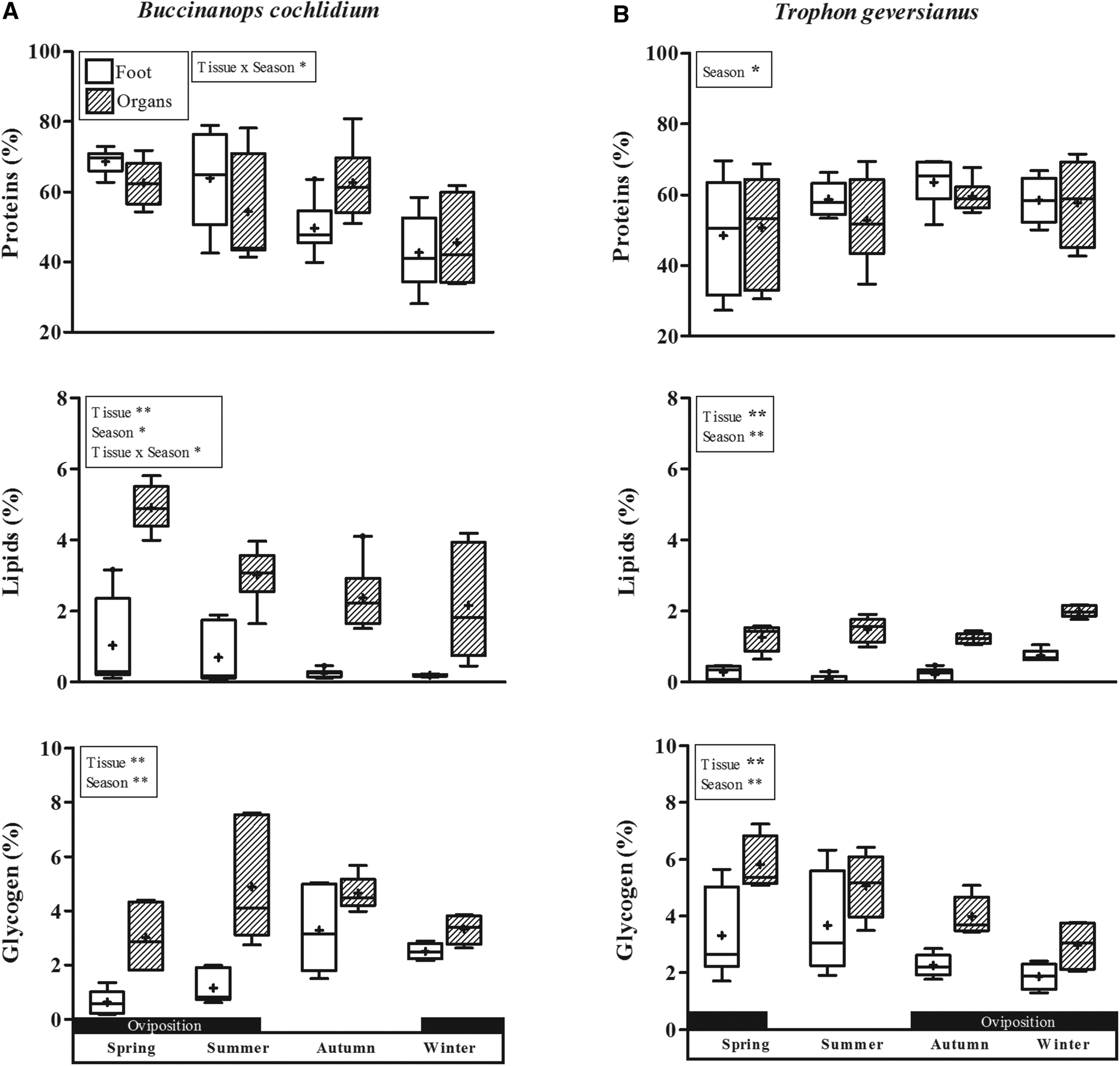
The oviposition of B. cochlidium was registered from early winter to mid-summer (July–February) with several females carrying egg capsules in spring (October–December) (Figure 3A). The biochemical components were significantly different between seasons. The protein content was lower in winter when it reached the lowest value in foot and organs (Foot: 33.75 ± 4.87; Organs: 36.65 ± 1.08 in September) (F = 10.551, df = 3, P < 0.0001) (Table 2, Figure 3A). The lipid content in organs was significantly higher than in the foot during the reproductive season (t = −4.293, P < 0.0001). In spring (oviposition peak), lipids registered their highest percentage in the organs (5.07 ± 0.66 in December) (Table 2, Figure 3A). Glycogen was higher in organs than in the foot across seasons. The glycogen percentage in the foot showed a significant decrease in spring and summer (oviposition season) with respect to autumn (spring: z = −3.520, P = 0.0018; summer: z = −3.640, P = 0.0012) (Table 2, Figure 3A).
Biochemical composition of (A) Buccinanops cochlidium and (B) Trophon geversianus in foot (white) and rest of organs (cross-marked) at season 2010–2011. Box plots depict medians (horizontal lines inside boxes), means (crosses), 25 and 75 percentiles (edges of boxes), 10 and 90 percentiles (whiskers), and outlying points included in the analyses (dots). Significant effects from models in Table 2 are shown in text boxes and indicated by asterisks (* = P < 0.05; ** = P < 0.0001).

The egg capsules of T. geversianus were observed usually attached to the bottom in shelters, resembling crevices, during autumn and spring (April–November) with an oviposition peak in winter (July–September) (Figure 3B). The lipid and glycogen contents were significantly higher in organs than in the foot across seasons. Lipids in the foot showed a reduction in summer (0.10 ± 0.009 in January) (non-oviposition season) and highest per cent values in winter (0.78 ± 0.22 in September) (oviposition peak) (Table 2, Figure 3B). The biochemical components were significantly different between seasons. The lipid percentage in winter significantly varied with respect to spring, summer and autumn. In addition, during winter the glycogen percentage was significantly lower than in summer (z = 3.264, P = 0.0040) (Table 2, Figure 3B).
Discussion
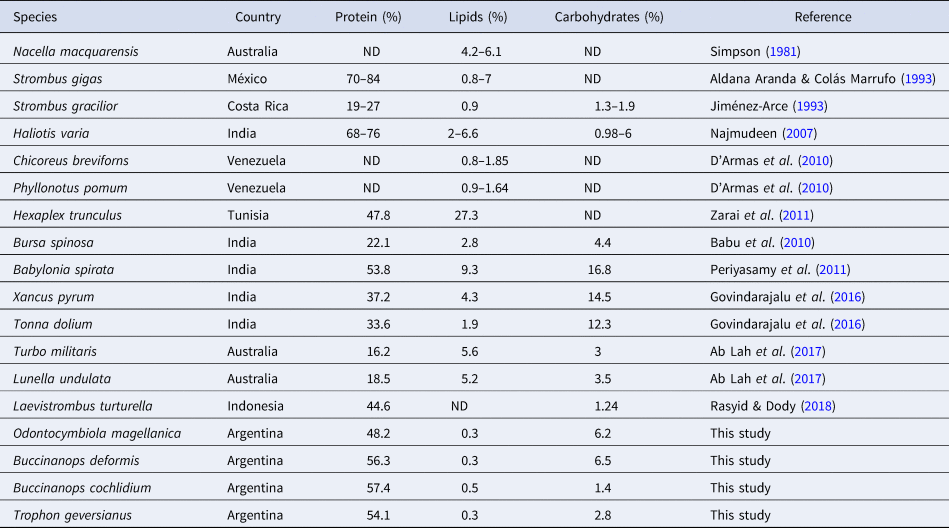
The biochemical composition of O. magellanica, B. deformis, B. cochlidium and T. geversianus was found to be within the ranges of edible molluscs consumed worldwide, such as Glycymeris glycymeris, Crassostrea gigas, Eurhomalea exalbida and Donax incarnatus (Galap et al., Reference Galap, Netchitailo, Leboulenger and Grillot1999; Berthelin et al., Reference Berthelin, Kellner and Mathieu2000; Lomovasky et al., Reference Lomovasky, Malanga and Calvo2004; Periyasamy et al., Reference Periyasamy, Murugan and Bharadhirajan2014). The protein content of the foot was similar to that found in edible marine gastropods of high economic value in international markets, while lipid and glycogen contents of the species studied were lower (see Table 3). This study demonstrates the nutritional value of Patagonian marine gastropod species and shows they are viable alternatives as a healthy food for the human diet. The elevated moisture content is a known characteristic of molluscs: both bivalves (Beninger & Lucas, Reference Beninger and Lucas1984; Cabello et al., Reference Cabello, Villaroel, Figuera, Ramos, Márquez and Vallenilla2004; Marinho, Reference Marinho2011) and gastropods (Litaay & De Silva, Reference Litaay and De Silva2003; Najmudeen, Reference Najmudeen2007; Gharsallah et al., Reference Gharsallah, Vasconcelos, Zamouri-Langar and Missaoui2010) present high water content (65–85%) in their tissues.
Nutritional value of foot muscle (edible tissue) of marine gastropods consumed worldwide

Values expressed as a percentage on dry weight basis. ND: no data.
The fluctuations registered in protein, lipids and glycogen could be attributable to environmental factors (e.g. seawater temperature, food availability and growth) and gonadic stage, both of which affect metabolic activity (Gabbott, Reference Gabbott and Hochachka1983; Carrasco et al., Reference Carrasco, Navarro and Leiva2006; Gharsallah et al., Reference Gharsallah, Vasconcelos, Zamouri-Langar and Missaoui2010). Protein plays an important role in molluscs, as it serves as energy storage (Mao et al., Reference Mao, Zhou, Yang and Wang2006) and can vary across body organs and season (Smoothey, Reference Smoothey2013). The observed protein accumulation in non-oviposition time coincides with a stage of gonadal reabsorption, proliferation and growth (Bigatti et al., (Reference Bigatti and Ciocco2008); Averbuj et al., Reference Averbuj, Bigatti and Penchaszadeh2010), and might be due to the energy stored in the foot (Najmudeen, Reference Najmudeen2007). Protein content in the organs can decrease when metabolic demand is high for gametogenesis (Bayne, Reference Bayne and Wiley1976; Najmudeen, Reference Najmudeen2007), as in the beginning of reproductive activities such as mating and oviposition. In general terms in post-oviposition time, highest protein content was registered in the organs while lower values were observed in the foot. This probably represents a translocation between these tissues, as reproductive changes are associated with a swap of some of the nutritional components between somatic tissue and reproductive organs (Giese, Reference Giese1969; Berthelin et al., Reference Berthelin, Kellner and Mathieu2000; Najmudeen, Reference Najmudeen2007). Several studies carried out on molluscs have reported that energy sources are stored in the foot and the digestive gland (Pazos et al., Reference Pazos, Ruíz, García-Martín, Abad and Sánchez1996; Berthelin et al., Reference Berthelin, Kellner and Mathieu2000; Najmudeen, Reference Najmudeen2007). The digestive gland is involved in nutrient deposit and transfer to other tissues (e.g. gonadal tissues) (Sastry & Blake, Reference Sastry and Blake1971; Najmudeen, Reference Najmudeen2007). In our study, the specific translocation between tissues could not be determined because the digestive gland and gonad were analysed together with other organs, due to methodological constraints. Taking into account the high protein values registered in this study, we recommend the use of these species as an alternative fishery resources.
Lipids constitute the main storage compounds of the gonad and the largest source of metabolic energy in molluscs (Barber & Blake, Reference Barber and Blake1981; Wenne & Polak, Reference Wenne and Polak1989; Sargent, Reference Sargent, Bromage and Roberts1995). In marine gastropods, the lipid composition can be affected by exogenous factors, such as fluctuations in environmental conditions, or by endogenous factors, such as sexual maturity (Galap et al., Reference Galap, Netchitailo, Leboulenger and Grillot1999; Barber & Blake, Reference Barber, Blake, Shumway and Parsons2006). Prior to oviposition, high lipid contents were registered in the organs of all species from this work, possibly associated with proliferation and growth of gametes in the gonads. The high lipid content registered in organs during non-oviposition time is possibly related to a reproductive repose and feeding activity, resulting in lipid accumulation in the digestive organs. These tissues have been identified as important energy reservoirs in molluscs (Berthelin et al., Reference Berthelin, Kellner and Mathieu2000). At the beginning of oviposition, a decrease in organ lipid content was recorded for all species, probably due to energetic wear by reproduction activity (Perron, Reference Perron1981; Averbuj et al., Reference Averbuj, Fernández, Penchaszadeh and Bigatti2017). The foot of the edible gastropods studied registered low lipid content in non-oviposition time, also consistent with a translocation to the organs of energy requirements for reproduction.
Molluscs store carbohydrates mainly in the form of glycogen. Changes in the carbohydrate levels are due to the accumulation of glycogen at different gonadal stages (Ansari et al., Reference Ansari, Parulekar and Matondkar1981; Babu et al., Reference Babu, Kesavan, Annadurai and Rajagopal2010). Glycogen is usually the principal source of energy in molluscs, and muscle tissues are the main site of deposition (Voogt, Reference Voogt and Hochachka1983; Mathieu & Lubet, Reference Mathieu and Lubet1993; Berthelin et al., Reference Berthelin, Kellner and Mathieu2000). In the studied gastropods, the glycogen content in the foot increased at non-oviposition time, becoming an energy reservoir. The glycogen content in the foot decreased at oviposition time, together with an increase of lipids in the organs. These changes may occur due to a translocation and transformation of glycogen to lipids in the organs by reproductive demands (Ren et al., Reference Ren, Marsden, Ross and Schiel2003).
Biochemical components identified in the edible portion (muscle tissue) of Patagonian marine gastropods confirm their high suitability for human consumption. Based on our results, the capture season of the species studied should consider both its energy contribution to the human diet and the reproductive seasonality, in order to ensure the conservation of the resource. Therefore, we propose that O. magellanica and T. geversianus should be captured in summer (January, February and March), and B. deformis and B. cochlidium in autumn (April, May and June). During these seasons, each species is in reproductive repose (non-oviposition time), presenting the highest protein and lowest lipid levels. Overall, the capture periods extend over a six month range, representing an additional advantage for the small fishery industries present in this area, and it is also coincident with the season where no harmful algal blooms are recorded in the studied zone (Santinelli et al., Reference Santinelli, Sastre, Esteves, Ferrario and Reguera2002). This is important, as it is known that toxin accumulation can occur in carnivorous gastropods due to ingestion of bivalve prey (Cumplido, Reference Cumplido2016; Bigatti et al., Reference Bigatti, Díaz de Vivar, Cumplido, Nieto Vilela, Avaro, Sastre and Gil2017). Our recommendation is in accordance with management regulation No. 199/18 of the Secretary of Fisheries of Chubut Province, which established a capture ban of marine gastropods between September and December, as well as in respect of the minimum catch sizes for each species and the temporary closure established by harmful algal blooms. The resource analysed here can be considered beneficial for human health, similar to other widely consumed molluscs such as oysters, mussels and abalones (Zarai et al., Reference Zarai, Frikha, Balti, Miled, Gargouri and Mejdoub2011; Ab Lah et al., Reference Ab Lah, Smith, Savins, Dowell, Bucher and Benkendorff2017; Bigatti et al., Reference Bigatti, Díaz de Vivar, Cumplido, Nieto Vilela, Avaro, Sastre and Gil2017; Rasyid & Dody, Reference Rasyid and Dody2018; among others). Therefore, we encourage the use of this valuable and underutilized resource. The information generated in this study contributes to the responsible management of edible marine gastropods, and provides new data for the safe consumption of this nutritive but fragile resource.
Acknowledgements
The authors thanks Nestor Ortiz and Ricardo Vera (CCT CONICET-CENPAT divers) and members of Laboratorio de Reproducción y Biología Integrativa de Invertebrados Marinos (LARBIM) for field logistics and help in sampling. MC thanks Dr Mauricio Faleschini, Mónica Gil, and especially Dra. Erica Giarratano (CESIMAR CCT CONICET CENPAT) who helped in the laboratory analysis.
Financial support
This work was supported by Agencia Nacional de Promoción Científica y Tecnológica (ANPCyT), Proyectos de investigación Científica y Tecnológica PICTR 01869 and PICT 2709 to GB. All research work including sampling and experiments comply with current Argentinean laws. MC and GB are members of CONICET. This is publication 125 of LARBIM.