I. INTRODUCTION
The development of high-entropy alloys (HEAs) is opening windows for replacement of conventional alloys for various applications in different operating conditions, ranging from cryogenic temperature to elevated temperatures. HEAs are also called multicomponent concentrated alloys (MCCAs).Reference Cantor, Chang, Knight and Vincent1–Reference Cheng, Yang, Zhong, Chen, Hsu and Yeh4 Initially, the HEA was defined as having at least five or more major elements, where the concentration of elements may vary from 5 to 35%. Later, any quaternary alloys (having four elements), which exhibit behaviors similar to HEAs, were also considered under this class, such as CoCrFeNi,Reference Vaidya, Trubel, Murty, Wilde and Divinski5 AlCoCrFe,Reference Praveen, Anupam, Tilak and Kottada6 NbMoTaW,Reference Feng, Zhang, Xia, Fu, Wu, Liu and Sun7 etc. Recently, some special variants of high-entropy materials were also reported, such as high-entropy superalloys, high-entropy refractory alloys, high-entropy bulk metallic glasses, high-entropy carbides, high-entropy nitrides, high-entropy oxides,Reference Gao, Yeh, Liaw and Zhang8 etc. These new classes of special high-entropy materials are also having potential in applications, such as functional coatings, cutting tools, machine parts, temperature barriers, etc.
The four core effects, such as configurational entropy, sluggish diffusion, severe lattice distortion, and cocktail effects, are noteworthy in HEAs than conventional alloys.Reference Gao, Yeh, Liaw and Zhang8,Reference Murty, Yeh and Ranganathan9 The effect of entropy on conventional alloys was previously not given much importance, where prediction of equilibrium phases was done, mostly based on mixing enthalpy. It is now believed that high configurational entropy helps to stabilize the phases in MCCAs.Reference Cheng, Yang, Zhong, Chen, Hsu and Yeh4 The lattice in such an alloy gets distorted when atoms of different sizes (from different elements) form the unit cell; hence, some amount of lattice strains are more likely to present.
The CoCrFeNi alloy is of particular interest in present context; it is one of the well-addressed alloys. This possesses remarkable mechanical propertiesReference Kai, Li, Cheng, Chu, Huang, Tsay and Kai10–Reference Liu, Wang, Liu, Fang, Wu, Chen and Liu16 and it also exhibits high corrosion as well as good oxidation resistance.Reference Kai, Li, Cheng, Chu, Huang, Tsay and Kai10 Due to the high specific strength at elevated temperatures, CoCrFeNi could be a suitable candidate for aerospace and energy industries.Reference Middleburgh, King, Lumpkin, Cortie and Edwards11 The solid solution of this alloy crystallizes with the FCC (face-centered cubic) structure. Recently, Feng et al.Reference Feng, Wang, Wu, Niu, Li, Wang and Liu12 reported the new criteria for solid solution phase formation in CoCrFeNi HEAs. It was suggested that the equimolar fraction of the elements was not an essential criterion to obtain a single phase; the FCC phase was found to be stable even after variation of atomic composition from 20 to 40%. This could help to produce CoCrFeNi-based HEAs easily at industrial scale.Reference Feng, Wang, Wu, Niu, Li, Wang and Liu12 The addition of vanadium and manganese were reported to enhance the properties tremendously.Reference Salishchev, Tikhonovsky, Shaysultanov, Stepanov, Kuznetsov, Kolodiy, Tortika and Senkov13 This alloy also exhibits magnetic properties, which can also be changed with alloy addition. Addition of Al in CoCrFeNi results in the transition of paramagnetic state to ferromagnetic state.Reference Huang, Li, Li, Schönecker, Bergqvist, Holmström, Varga and Vitos14
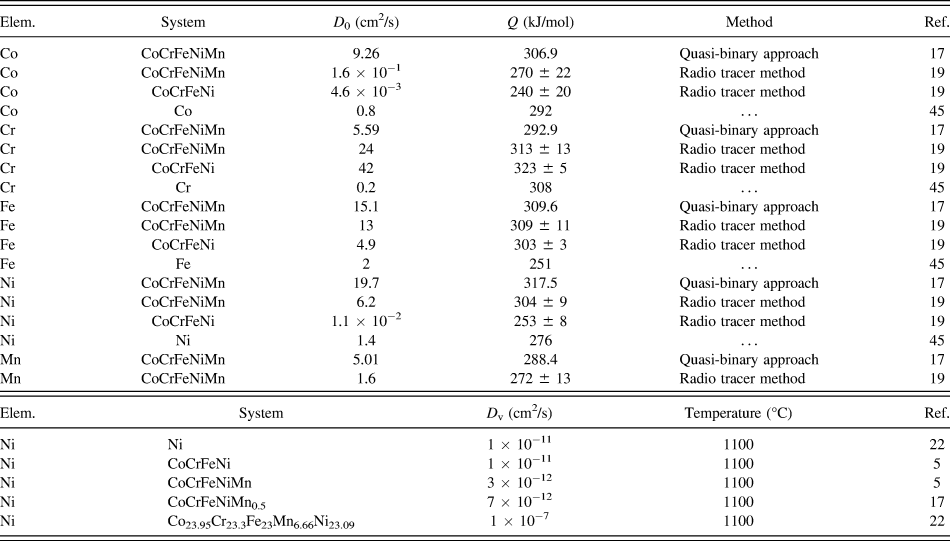
Diffusion is another very important property, which still needs a lot of understanding.Reference Tsai, Tsai and Yeh17–Reference Tsai, Tsai and Yeh26 The sluggish nature of diffusion gives a big advantage to these alloys, to restrict the grain growth and yield fine grain microstructure during processing. Diffusions in HEAs are very complex due to variety of atoms and their arrangements; often characterized with larger values of activation energies. Tsai et al.Reference Tsai, Tsai and Yeh17 reported the diffusion parameters of Co, Cr, Fe, Ni, and Mn in the CoCrFeNiMn HEA system. The diffusion coefficients were lower than the constituting metals, whereas the activation energies in HEA materials were higher than the constituting metals. Furthermore, it was reported that the greater fluctuation in lattice potential energy might be the reason for higher activation energies.Reference Tsai, Tsai and Yeh17 The interdiffusions on AlCoCrFeNi were studied both experimentally as well as through numerical simulations; both methods showed sluggish diffusion and lower diffusion coefficients, than the conventional metals.Reference Dąbrowa, Kucza, Cieślak, Kulik, Danielewski and Yeh18 Mayur et al.Reference Vaidya, Trubel, Murty, Wilde and Divinski5,Reference Vaidya, Pradeep, Murty, Wilde and Divinski19,Reference Vaidya, Pradeep, Murty, Wilde and Divinski20 reported the analysis of tracer diffusion in HEAs (CoCrFeNi and CoCrFeNiMn). The tracer concentrations were kept very small to get reliable diffusion coefficients. The Ni tracer diffusion in quaternary and quinary alloys follows Arrhenius behavior. In both studies, lower values of pre-exponential factor D 0 were observed. It was suggested that the configurational entropy alone is not responsible for the sluggish nature of diffusion but different factors, such as nature of alloying elements, extent of lattice distortion etc.,Reference Vaidya, Pradeep, Murty, Wilde and Divinski20 also play the role. It was suggested that Ni was slowest diffusing species in both alloys, whereas Mn was the fastest diffuser in CoCrFeNiMn.Reference Vaidya, Pradeep, Murty, Wilde and Divinski19 There is not a linear agreement among researchers in diffusion behavior of HEAs.Reference Paul25,Reference Tsai, Tsai and Yeh26 Kulkarni et al.Reference Kulkarni and Chauhan21 studied the interdiffusion in the CoCrFeNi system at 1000 °C, where iron was reported as a faster diffuser, whereas nickel was the slowest diffuser. Table I lists some of the available diffusivity parameters in related alloys.
Pre-exponential (D 0) factor and activation energy (Q) for diffusion of constituent elements in the alloy and self-diffusion data.

HEAs are produced mostly through the melting route (arc-melting, induction melting, etc.) and mechanical alloying, i.e., powder route. There are many reports available for densification of as-milled powders using spark plasma sintering (SPS) and about their properties.Reference Miracle and Senkov3,Reference Gao, Yeh, Liaw and Zhang8,Reference Murty, Yeh and Ranganathan9,Reference Praveen, Basu, Kashyap and Kottada15,Reference Sriharitha, Murty and Kottada27–Reference Joo, Kato, Jang, Moon, Kim, Hong and Kim37 Praveen et al.Reference Praveen, Basu, Kashyap and Kottada15 studied the phase evolution of CoCrFeNi alloy powder prepared through mechanical alloying, followed by SPS. Small amount of sigma phase was also reported along with the major FCC phase. Formation of the sigma phase in chromium-containing alloys is not unusual. It was also reported that minor amount of carbides and oxides formed during sintering, affected the grain growth kinetics of CoCrFeNi.Reference Praveen, Basu, Kashyap and Kottada15 The grain growth resistant microstructure obtained with the help of carbides and oxides were found to be stable even at higher temperatures.Reference Praveen, Basu, Kashyap and Kottada15 To get rid of some impurity formations, such as sigma phase, oxides, and carbides, Liu et al.Reference Liu, Wang, Liu, Fang, Wu, Chen and Liu16 produced a CoCrFeNi dense alloy through the powder extrusion technique.Reference Liu, Wang, Liu, Fang, Wu, Chen and Liu16 The formed billets were crack-free due to excellent formability of the alloy during hot extrusionReference Liu, Wang, Liu, Fang, Wu, Chen and Liu16; the extruded alloy exhibited excellent tensile property.Reference Liu, Wang, Liu, Fang, Wu, Chen and Liu16
Though there have been many reports on mechanical alloying and sintering of HEA powders, however, the sintering mechanisms of many HEA powders have not yet been fully understood. Recently, the sintering behavior of CoCrFeNiMn alloy powders has been reported by the same authors,Reference Mane, Rajkumar and Panigrahi29 where it was shown that the kinetic of the as-milled powder was different than annealed powder. It was suggested that volume diffusion (VD) was dominating the sintering mechanism in fully stabilized single phase powder, with increased activation energy of sintering.Reference Mane, Rajkumar and Panigrahi29 In another study, nonisothermal sintering behavior of CoCrFeNi powder was reported. Annealed CoCrFeNi powders exhibited relatively larger activation energy than the as-milled powder.Reference Mane and Panigrahi30 However, through the limited nonisothermal sintering study, and based on activation energy alone, it is difficult to pinpoint the exact operating mechanism. Therefore, the present investigation has been initiated to carry out more detailed analysis of sintering. The objective of the present work is to understand the sintering mechanisms of CoCrFeNi alloy powder, under as-milled condition and after annealing of milled powder. The idea behind annealing of milled powder is to minimize the defect concentration, eliminate chemical inhomogeneity, and stabilize the major phase. Efforts have been made to analyze the isothermal sintering data through the help of existing sintering models.
II. EXPERIMENTAL
The complete details on a synthesis of CoCrFeNi HEA powder and annealing of the as-milled powder were reported elsewhere.Reference Mane and Panigrahi30 Differential scanning calorimetry of these powders was also reported,Reference Mane and Panigrahi30 to understand the phase evolution. The as-milled powder had shown a broad exothermic domain, indicating strain releases and phase stabilization. To characterize phase evolution sequence, in the current study, separate samples of milled powders were heated at a rate of 10 °C/min from 600 to 1100 °C. For the sintering experiments, two different sets of powders were used: (i) as-milled powders (15 h) and (ii) milled powder annealed at 1100 °C (henceforth called annealed). Powder annealed at 1100 °C was further ground with the help of mortal-pastel and sieved using 325 mesh screens. The green compacts were prepared using steel die of 7 mm diameter at a pressure (uniaxial) of about 70 MPa. The sample was placed on a vertical dilatometer system (Theta Industries Inc., Port Washington, New York) and the thin push rod was adjusted through the counter-weights in such a way, that it should be in contact with the sample without causing additional load. The samples were sintered for the isothermal period of about 60 min at various temperatures (1050–1200 °C). Experiments were performed under high purity argon, purified by passing through the heated titanium chips (at about 800 °C), to remove traces of moisture and oxygen. The samples were characterized using X-ray diffraction (X’Pert PRO, PANalytical, Almelo, the Netherlands, with Cu Kα radiation, λ = 1.5405 Å) a scanning electron microscope (Supra 40 FESEM, Carl-Zeiss, Jena, Germany) and a transmission electron microscope (JEOL JEM 2100FX TEM, JEOL Ltd., Tokyo, Japan).
III. RESULTS AND DISCUSSION
A. Phase and microstructure analysis
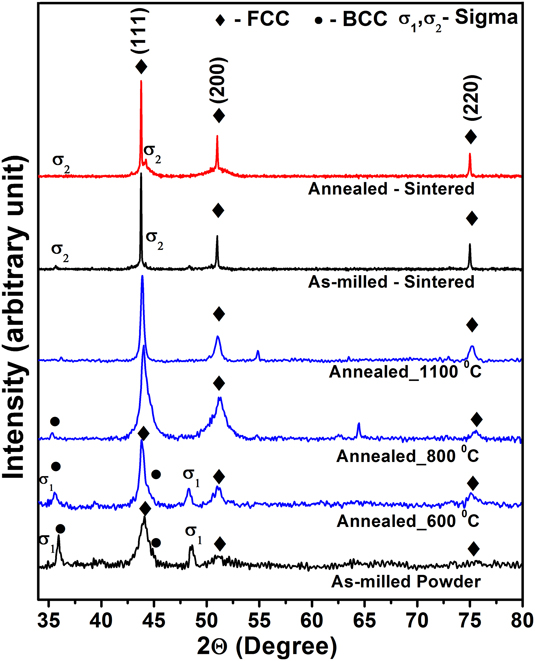
The XRD patterns of as-milled and annealed CoCrFeNi powders at different temperatures have been shown in Fig. 1, where most of the peaks of all the powders are showing FCC as the major phase. Few smaller peaks were also observed, some of which belong to the BCC phase. When the powder was annealed at 600 and 800 °C, a number of very small peaks have reduced slightly. Along with FCC peaks, small peaks of the sigma phase were present at 600 °C. When temperature was increased to 800 °C, peaks correspond to the sigma phase seem to be almost vanished. It is expected that with increasing temperature, solid solubility will also be increasing, which led to the disappearance of intermediate phases for the stable FCC phase. Moreover, recrystallization processes are also expected during annealing, thus contributing in broadening of peaks even at 800 °C. Recrystallization was reported at about 800 °C for this alloy.Reference Chen, Yeh and Yeh38 Powder annealed at 1100 °C shows almost single FCC phase with sharp peaks. Sintered samples show phases almost identical to that of the annealed powder at 1100 °C. A few smaller peaks are observed, which could be the sigma phase, though it is not consistent. Recent reports suggest that there is a possibility of formation of the sigma phase in the same Cr-alloy.Reference Praveen, Basu, Kashyap and Kottada15,Reference Mane and Panigrahi30
XRD patterns of as-milled and annealed powders at 600, 800, and 1100 °C and sintered samples (isothermally at 1200 °C) of as-milled and annealed powders of the CoCrFeNi alloy.

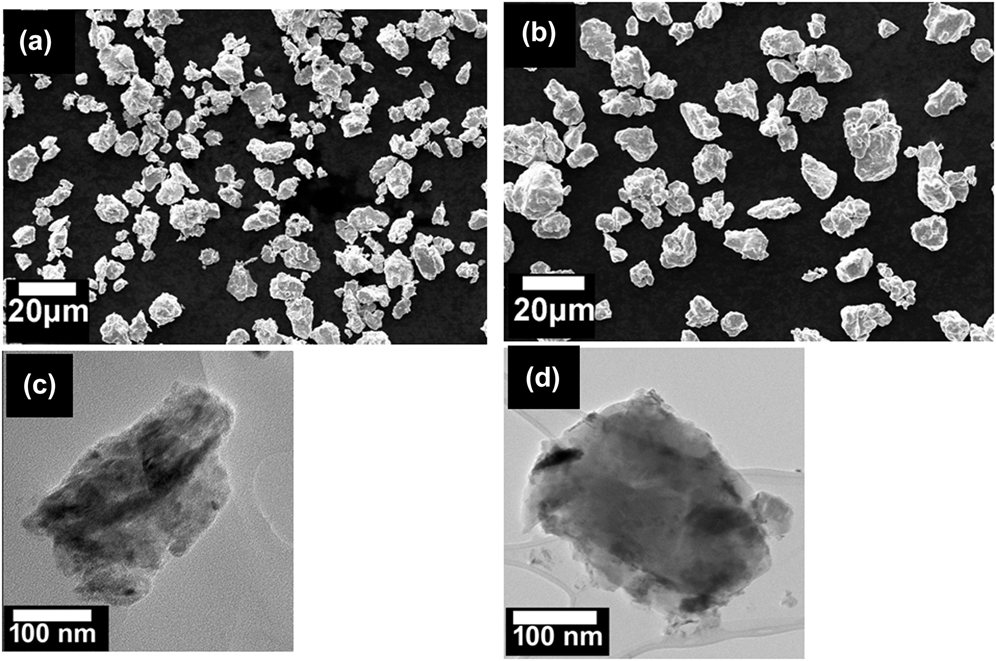
The SEM micrographs of both the as-milled powder [Fig. 2(a)] and annealed powder [Fig. 2(b)] show large agglomerates throughout the powders. After annealing, there is no significant change in the morphology of the powders; however, edges of some agglomerated particles become slightly blunt [Fig. 2(b)]. However, the high resolution imaging on TEM reveals the presence of particles which are smaller than 400 nm in both the powders [Figs. 2(c) and 2(d)].
SEM micrographs showing powders are mostly in agglomerated form: (a) as-milled powder and (b) annealed powder. TEM micrographs show the presence of ultrafine particles: (c) as-milled powder and (d) annealed powder (at 1100 °C).

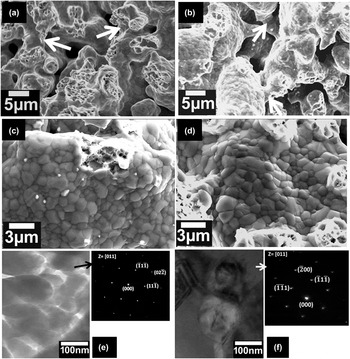
SEM micrographs of the fracture surfaces of sintered samples (at 1200 °C) have been shown in Fig. 3. Necking of the agglomerated particles could be clearly seen in as-milled sintered [Fig. 3(a)] and annealed sintered [Fig. 3(b)] samples. Both samples have significant amount of interagglomerate porosity [Figs. 3(a) and 3(b)]. The higher magnification images of fractured samples (sintered) reveal that grains are mostly in the range of 1–4 μm, in both type of sintered samples [Figs. 3(c) and 3(d)], i.e., samples sintered using the as-milled powder and annealed powder. No significant difference in the morphology of the grains could be seen in both types of samples. With further increase in the resolution, samples show [insets of Figs. 3(c) and 3(d)] facet-like morphology of some of the grains or stepped structures. Although such features were not reported earlier in this alloy, such faceting could be attributed to the magnetic property of the material (this is under scope of separate study). The TEM images of sintered samples of as-milled and annealed powders have been shown in Figs. 3(e) and 3(f), respectively. Crystallites are typically in the order of 100–200 nm in size in both the samples. The corresponding selected area electron diffraction patterns (SAED) from the [011] zone axis have been shown [Figs. 3(e) and 3(f)], confirming that lattices are mostly FCC-type.
(a) Low magnification SEM image of fractured surface of the sintered samples at 1200 °C temperature using (a) as-milled powder and (b) annealed powder. One could clearly see the necking between interagglomerates (as shown by arrows). Grains are clearly visible on the fractured surface at slightly higher magnification: (c) sintered sample using as-milled powder and (d) sintered sample using annealed powder. TEM micrographs of sintered samples at 1200 °C (e) using as-milled powder and (f) using annealed powder, and the corresponding SAED patterns have also been shown in (e) and (f), confirming FCC lattices.

B. Dilatometry
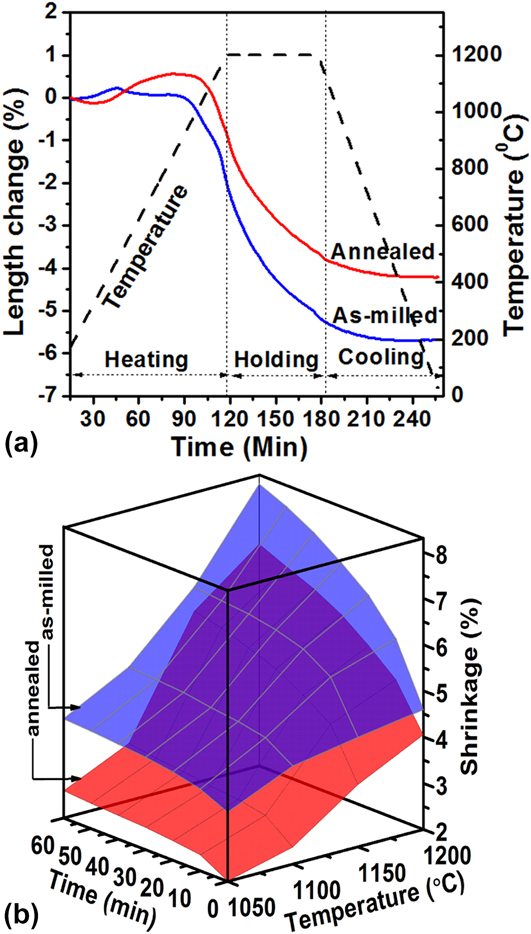
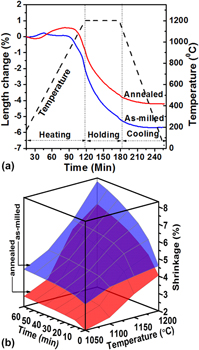
Representative dilatometer curves for the compacts sintered at about 1200 °C as a function of time and temperature have been shown in Fig. 4(a). Three heating sequences could be seen, namely, (i) constant rate heating, (ii) isothermal holding, and (iii) cooling. Dilatometer curves show variations in the expansion and shrinkage behavior of the samples at various temperatures. The as-milled powder as well as annealed powder compact showed onset temperature of sintering at about 920 °C, as reported earlier.Reference Mane and Panigrahi30 Densification was found to be accelerated above about 1050 °C and continued during isothermal period as well. However, during isothermal holding at 1200 °C, densification seems to be gradually slows down slightly, as time progresses. This was observed in both the samples. The as-milled powder yielded significantly larger shrinkage, compared to annealed powder during the isothermal period. When the furnace was stopped after isothermal holding, the samples were allowed to cool in the furnace. The samples exhibit thermal contraction down to room temperature, attributed to the thermal property of the material. Relatively larger shrinkage on the as-milled powder compact could be partially attributed to the presence of minor amount of sigma phase or meta-stable phase, which tends to dissolve at higher temperature in the major FCC phase, i.e., chemical homogenization as well as diffusion processes, whereas annealed powder are fully stable, where sintering largely depends on diffusion. Moreover, the presence of small amount of secondary phase, which has also stabilized, may deaccelerate the densification process.
(a) Dilatometer plots of as-milled and annealed powders of CoCrFeNi, as a function of time and temperature and (b) axial shrinkages obtained through dilatometer curves, as a function of temperature and time.

The measurements of true shrinkages from the independently obtained dilatometer curves, at various temperatures have been done through the usual method.Reference Panigrahi39 Figure 4(b) shows the axial shrinkage as a function of sintering temperature and isothermal holding time. The as-milled powder shows a maximum shrinkage of about 8%, whereas annealed powder could shrink to about 7% only at 1200 °C. The relative sintered density was found to be increased from about 60% (green compact) to about 89% for the as-milled powder, whereas the relative density was about 83% for annealed powder after sintering at 1200 °C, while considering the theoretical densityReference Praveen, Basu, Kashyap and Kottada15 of this alloy to be 7.53 g/cm3.
C. Derivation of apparent diffusivity data
Sintering can be divided into three different stages, i.e., first or initial stage, second or intermediate stage, and final stage sintering; where the present work focuses on the initial stage sintering. Several mass transport paths are possible during sintering which contribute to neck growth and densification. Among the several available sintering models,Reference Ashby40–Reference Young and Cutler42 Young and Cutler modelReference Young and Cutler42 is typically used for nonisothermal sintering or constant rate heating process, as used previously.Reference Mane and Panigrahi30 For analysis of isothermal sintering data, Johnson’s modelsReference Johnson41 were the most accepted and widely used for variety of powders, including metals, alloys, and ceramics. Mostly the diffusion-based mechanisms often dominate the process over other factors, such as VD and grain boundary diffusion (GBD). When these mechanisms dominate independently, following correlations [as shown in Eqs. (1) and (2)] were suggested, for VD and GBD, respectively:
 $${Y^{1.04}}{{{\rm{d}}Y} / {{\rm{d}}t}} = {{5.34{\gamma _{\rm{s}}}\Omega {D_{\rm{v}}}} / {\left( {kT{G^3}} \right)}}\quad ,$$
 $${Y^{2.03}}{{{\rm{d}}Y} / {{\rm{d}}t}} = {{2.14{\gamma _{\rm{s}}}\Omega g{D_{\rm{b}}}} / {\left( {kT{G^4}} \right)}}\quad ,$$
where γs is the surface free energy, t is the time, Ω is the atomic volume, k is the Boltzmann’s constant, G is the grain size, D v is the VD coefficient, D b is the coefficient of GBD, and g is the grain boundary width. Diffusion coefficient (D) is known to vary logarithmically with temperature (ln D = ln D 0 ‒ Q/RT), where D 0 (frequency factor) and Q (activation energy) can be obtained from the Arrhenius plots of ln D versus 1/T for a given mechanism.
Those models were developed for spherical and monosize particles or very narrow size distribution. However, present particles are neither spherical in shape nor uniform in size. There always has been a question about employing such models for mechanically alloyed powders, multicomponent systems, irregular shaped particles, varied sizes, etc. To overcome this uncertainty, recently these models were used in an innovative way, in the powder systems, which are nearly identical to present powders, i.e., in mechanically alloyed CoCrFeNiMn powdersReference Mane, Rajkumar and Panigrahi29 and Cr2AlC powders.Reference Rajkumar and Panigrahi43 To minimize the effect of wide size distribution and irregularity, the grain size normalized forms of above models [Eqs. (1) and (2)] were used, as present in Eqs. (3) and (4), respectivelyReference Mane, Rajkumar and Panigrahi29:
For VD mechanism:
 $${{{D_{\rm{v}}}} / {{G^3}}} = 0.1872kT{Y^{1.04}}{{\left( {{{{\rm{d}}Y} / {{\rm{d}}t}}} \right)} / {\left( {{\gamma _{\rm{s}}}\Omega } \right)}}\quad ,$$
and for GBD mechanism:
 $${{\left( {g{D_{\rm{b}}}} \right)} / {{G^4}}} = 0.4672kT{Y^{2.03}}{{\left( {{{{\rm{d}}Y} / {{\rm{d}}t}}} \right)} / {\left( {{\gamma _{\rm{s}}}\Omega } \right)}}\quad .$$
Another hurdle to use the above models was the nonavailability of some materials specific data, namely Ω and γs for this alloy. Therefore, the value of γs was determined to be 39.57 × 10⁻⁷ J/cm2 in the present work for the CoCrFeNi HEA using the contact angle measurement method,Reference Żenkiewicz44 and Ω was estimated to be 4.59 × 10⁻²³ cm3 in the present work, using the theoretical method.Reference Ashby40
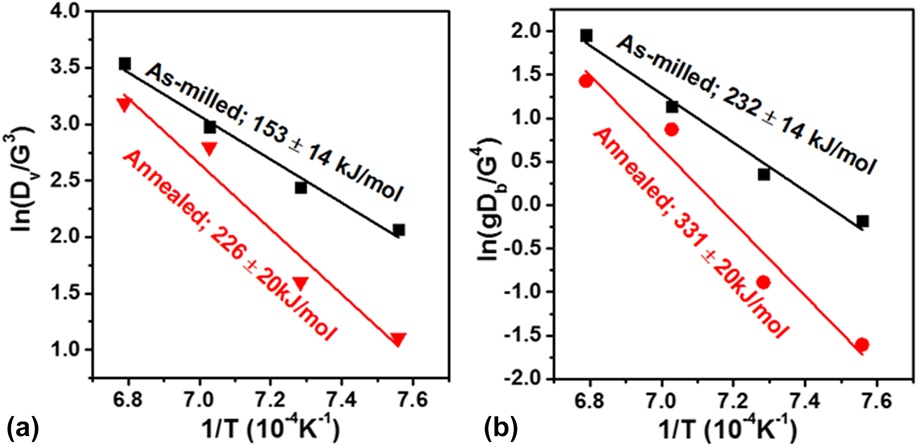
Using Eqs. (3) and (4), first, D v/G 3 and gD b/G 4 were calculated from the isothermal shrinkage data [obtained after 1 h of holding, as shown in Fig. 4(b)] as a function of temperature. Plots of ln (D v/G 3) versus 1/T for VD and ln (gD b/G 4) versus 1/T for GBD mechanisms were then produced [as shown in Figs. 5(a) and 5(b)]. For a given mechanism, the Arrhenius plots were found to have different slopes for the as-milled powder and annealed powders, and yield two different activation energies. The intercepts of the Arrhenius plots give the values of frequency factor components, D 0v/G 3 and gD 0b/G 4 for VD and GBD, respectively.

D. Analysis of sintering mechanisms
To identify the dominating sintering mechanisms, ideally, the diffusivity data of the respective alloy should be compared. The tracer diffusivity data (frequency factor and activation energy) of constituent elements on CoCrFeNi and CoCrFeNiMn HEAs have been collected (Table I). The self-diffusion parameters reported in the literature for GBD and VD various elements are also collected for the reference. It should be noted that in the current alloy, all four elements, i.e., Co, Fe, Ni, and Cr, have a very narrow difference in their atomic sizes and many of them exhibit almost similar diffusivity.
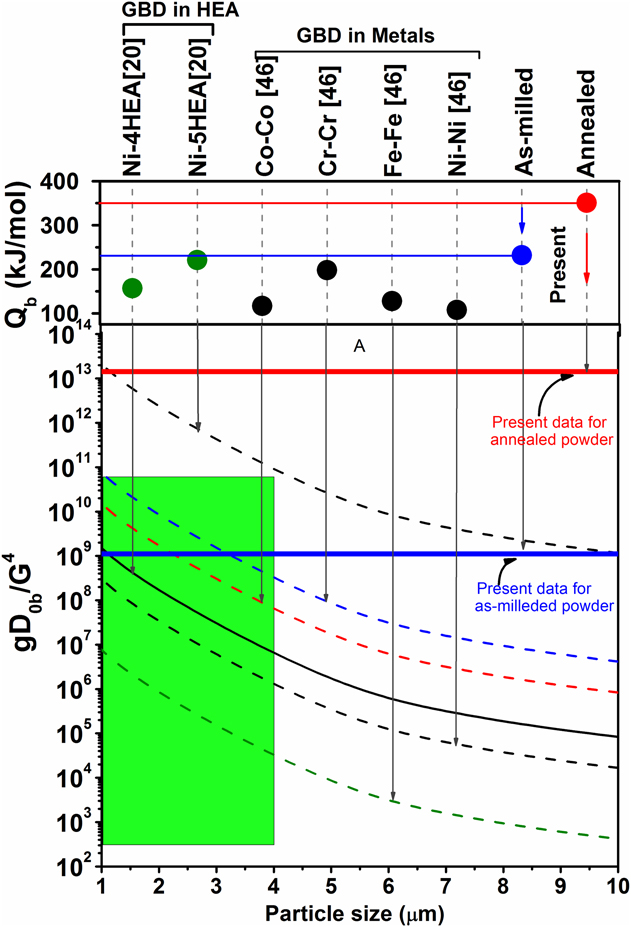
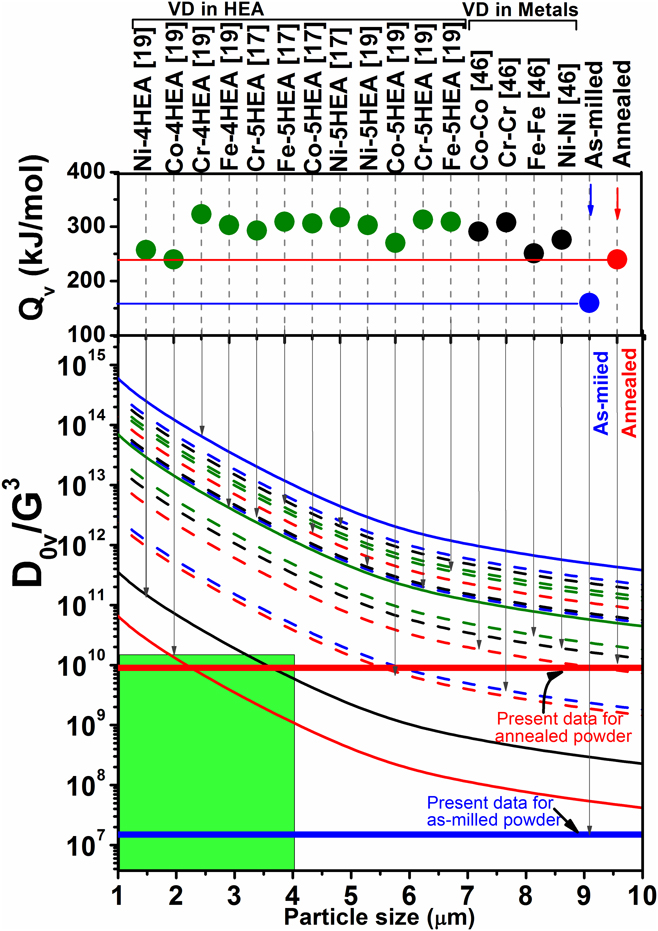
However, the output in the form of gD 0b/G 4 and D 0v/G 3 obtained in the present work could not be compared directly with the literature data. Therefore, the frequency factors (literature data) were normalized in the form of gD 0b/G 4 and D 0v/G 3 for GBD and VD, respectively, as suggested in the previous work.Reference Mane, Rajkumar and Panigrahi29 To follow this step, values of G are needed. However, the value of G is not accurately known; therefore, G was varied from 1 to 10 μm, and corresponding outputs have been taken for comparison. These results have been plotted separately in Figs. 6 and 7 for GBD and VD mechanisms, respectively. With increasing values of G (in the x-axis), the y-axis parameter (derived from literature data) decreases gradually. Derived gD 0b/G 4 and D 0v/G 3 using current shrinkage data have also been shown as horizontal lines in Figs. 6 and 7, respectively.
Normalized diffusivity parameter (gD 0b/G 4) for GBD reported in the literature as a function of G for various available systems, with respective activation energies (at top section of figure). The results obtained in the present work have been shown as horizontal lines for both the powders. The shaded area shows the range of particle size where the mechanism is matching with literature data.

Normalized diffusivity parameter (D 0v/G 3) for VD reported in the literature as a function of G for various available systems, with respective activation energies (at the top section). The results obtained in the present work have been shown as horizontal lines for both the powders. The shaded area shows the range of particle size where the mechanism is matching with literature data.

1. GBD mechanism
It could be seen that for GBD mechanism (Fig. 6), the activation energy (232 ± 14 kJ/mol) of sintering for the as-milled powder is nearly matching with the Ni tracer diffusion data in CoCrFeNiMn, as well as self-diffusion data of Cr. The annealed powders showed slightly higher activation energy (331 ± 20 kJ/mol) than any of the reported values. When the (gD 0b)/G 4 of the as-milled powder was compared, it was found to be matching with the available data for tracer diffusion of Ni in CoCrFeNi and self-diffusion of Co and Cr in the particle size range of 1–4 μm, whereas (gD 0b)/G 4 of annealed powder lies slightly above the reported data. Due to limited literature data, much analysis of GBD could not be made at this stage; however, the role of GBD could not be ruled out, especially at the as-milled condition and during very early heating. Furthermore, it could be supported by the initial condition of powder because the as-milled powder consists of small grains with a large fraction of grain boundaries, which are the major sources for GBD.
2. VD mechanism
Figure 7 shows the complete plots of literature derived data as well as currently estimated values (diffusivity parameters) for the VD mechanism for both as-milled and annealed powders. The literature data reveals that there is no particular trend in diffusivity when self-diffusion and bulk tracer diffusion of constituent elements in HEAs are compared (Fig. 7). This analysis validates the recent report on diffusion,Reference Vaidya, Pradeep, Murty, Wilde and Divinski19,Reference Vaidya, Pradeep, Murty, Wilde and Divinski20 where it was suggested that there are several other factors along with configuration entropy affect the diffusivity.
Data obtained for the as-milled powder lie much below the literature data. Interestingly, data for annealed powder was found to be matching with several data (Fig. 7), particularly diffusion coefficients reported for Ni and Co elements in CoCrFeNi alloys and Co in CoCrFeNiMn alloys. These data are matching fully in the particle size range from about 1 to 4 μm. It should be noted that sintered samples have grain sizes in the similar range [Figs. 3(c) and 3(d)].
When the activation energies were compared (Fig. 7), it was found that the as-milled powder yielded values much lower than available data. On the other hand, on the annealed powder, activation energies are matching closely with that of the Ni and Co diffusion in the CoCrFeNi alloy and Co diffusion in the CoCrFeNiMn alloy (Fig. 7). This means both diffusion coefficients and activation energies for annealed powder are almost matching with the reported data in the literature. This strongly indicates the domination of VD diffusion mechanisms during sintering of annealed powder, where both Ni and Co diffusions may be dominating the process.
IV. CONCLUSIONS
In spite of having susceptible to uncertainty factors, Johnson’s models have been successfully used to analyze the sintering mechanism of CoCrFeNi HEA powders. It was shown that densification rates slow down significantly when the milled powder was annealed before sintering. The as-milled powder indicates the domination of the GBD mechanism, whereas VD was found to be dominating during sintering of annealed powders. In both powders, it appears that both Ni and Co diffusions have been primarily controlling the process.