


Introduction
Burkholderia multivorans is a gram-negative bacteria that is a member of the Burkholderia cepacia complex (Bcc), a group of 22 closely related species within the genus Burkholderia. Reference Coenye, Vandamme, Govan and LiPuma1,Reference Jin, Zhou and Zhou2 Species within the Bcc, including B. multivorans, are known for causing infection in patients with cystic fibrosis and, infrequently, with other chronic lung diseases. Reference Lipuma3 Reports of B. multivorans among persons without these conditions are rare. Reference Dogra, Angrup and Kanaujia4–Reference Peralta, Chang, Ariza-Hutchinson and Ho7 Outbreaks associated with Bcc species are often described among patients in intensive care units (ICU) and have frequently been attributed to a diverse array of contaminated aqueous products (eg, mouthwashes, saline flushes, nasal sprays, nonsterile ultrasound gel, and liquid docusate). Reference Dolan, Dowell, LiPuma, Valdez, Chan and James8–Reference Rhee, Baker and Tucker15 Others have detected Bcc species in sink drains and on the surfaces of medical devices, where healthcare personnel without proper hand hygiene could potentially transfer the organisms to patients. Reference Rhee, Baker and Tucker15–Reference Lucero, Cohen and Trevino17
California Department of Public Health (CDPH) investigated a cluster of 13 patients in an ICU at a hospital in Northern California (Hospital A) with cultures positive for B. multivorans that were all closely related by random amplified polymorphic DNA testing (RAPD) and repetitive extragenic palindromic polymerase chain reaction (Rep-PCR) testing between September 2020 and October 2021. Despite a thorough public health response including two site visits by CDPH infection preventionists, a review of case-patients, environmental sampling, and remote consultation with the Centers for Disease Control and Prevention (CDC), the source of the outbreak could not be identified. Still, transmission was controlled by strengthening water quality and infection control practices. From August 2021 through January 2022, B. multivorans was isolated from 11 patients and reported by a California County Health and Human Services Agency (County HHSA) from two acute care hospitals that belonged to the same healthcare system in Southern California (Hospitals B and C). Site visits were completed to assess infection control practices. In March 2022, environmental testing identified B. multivorans from melted ice and water collected from an ice machine in an ICU nutrition room at Hospital B. Isolates from the ice machine and clinical specimens were closely related to each other and the isolates from Hospital A by RAPD and Rep-PCR testing. Multiple remediation interventions were instituted, including replacing the contaminated ice machine with a new ice machine of the same brand. Still, additional B. multivorans continued to be isolated from additional patients at Hospital B. As a result, CDPH requested onsite assistance from the CDC in July 2022. Onsite response activities focused on the two acute care hospitals with the most recent cases, Hospitals B and C. We aimed to identify potential sources of the outbreak and possible modes of transmission and recommend interventions to halt further transmission at these two hospitals.
Methods
Setting
Acute care Hospitals B and C provide a range of clinical services, including emergency, general medical-surgical, and critical care services.
Case definition
Case-patients were defined as adults without cystic fibrosis at Hospital B or Hospital C with B. multivorans isolated from a specimen collected from any body site between January 2020 and February 2023. RAPD and Rep-PCR confirmed B. multivorans as the outbreak strain.
Case-finding and retrospective review
Both hospitals reviewed laboratory records to identify all cultures from which B. multivorans was isolated and reported these to CDPH and County HHSA. B. multivorans isolates from all potential case-patients were sent to the University of Michigan B. cepacia Research Laboratory and Repository (BcRLR) to assess their relatedness using RAPD and Rep-PCR testing. The extensive BcRLR strain genotyping database was queried for strain matches from other healthcare facilities in the United States. Additional case-finding efforts included a state-wide call for cases issued by CDPH, direct outreach to laboratories by County HHSA, and a posting on the Emerging Infections Network. CDC also contacted the U.S. Food and Drug Administration (FDA) to identify any recent reports of potential product or medical device contamination due to B. multivorans.
Medical record review
Chart abstraction for case-patients was completed using a standardized case report form, and data was recorded in REDCap. Reference Harris, Taylor and Minor18,Reference Harris, Taylor, Thielke, Payne, Gonzalez and Conde19 We collected general demographic and clinical characteristics of case-patients and information on common exposures, including medications, procedures, medical devices, and respiratory therapy interventions. The exposure window for case-patients was defined as the two weeks preceding the patient’s index culture. If two specimens were identified with B. multivorans on the same day, the most invasive site (eg, blood specimen) was reported as the index culture. The associated hospital admission was referenced as the index hospitalization. Descriptive analysis was performed using SAS/STAT software, Version 9.4 of the SAS System for Windows.
Infection control observations
Site visits at Hospitals B and C were completed in July 2022 by CDPH, County HHSA, and CDC staff to assess general infection control practices and identify possible routes of transmission for water-associated organisms, such as B. multivorans. Hospital leadership provided an overview of clinical policies where water or ice may be used for clinical care activities. Direct observations focused on clinical units and procedural suites that were common among case-patients. Informal staff interviews with bedside nurses, physicians, radiology technicians, environmental services, and other patient care staff regarding clinical care practices were completed.
Laboratory testing and environmental sampling
Clinical isolates of B. multivorans were identified by Matrix-Assisted Laser Desorption and Ionization—Time of Flight (MALDI-TOF; MALDI Biotyper, Bruker Daltonics, Billerica, MA) in the clinical laboratory. Twenty-nine targeted water (n = 15) and surface (n = 14) samples were collected from sinks and ice machines in patient rooms, medication preparation areas, and nutrition rooms at Hospitals B and C in July 2022. Environmental samples were tested for the presence of B. multivorans using culture-dependent methods in the CDC laboratory. Heterotrophic plate counts (HPC) were performed on 10 water samples, which included melted ice machine water and paired first-catch and postflush water samples, to evaluate water quality. 20 Thirteen commercial products were tested for B. multivorans based on the United States Pharmacopeial Convention Chapter <60>, Microbiological Examination of Nonsterile Products—Tests for Burkholderia cepacia complex. 21 Criteria for inclusion in product testing included common exposure among case-patients, availability at the time of investigation, and potential for circulation at the time of case-patient hospitalization, which was determined using lot numbers. These products included endoscopic lubricant used on bronchoscopes, non-sterile ultrasound gel, bathing wipes, preoperative skin antiseptic solution, midline insertion trays, chlorhexidine mouth wash, and intravenous contrast solution. B. multivorans isolates recovered from environmental samples were identified using the MALDI-TOF and shared with the BcRLR for comparison with clinical isolates using RAPD and Rep-PCR testing. Select clinical and environmental isolates from both hospitals underwent whole genome sequencing and analysis by the BcRLR to confirm relatedness.
Results
Case finding
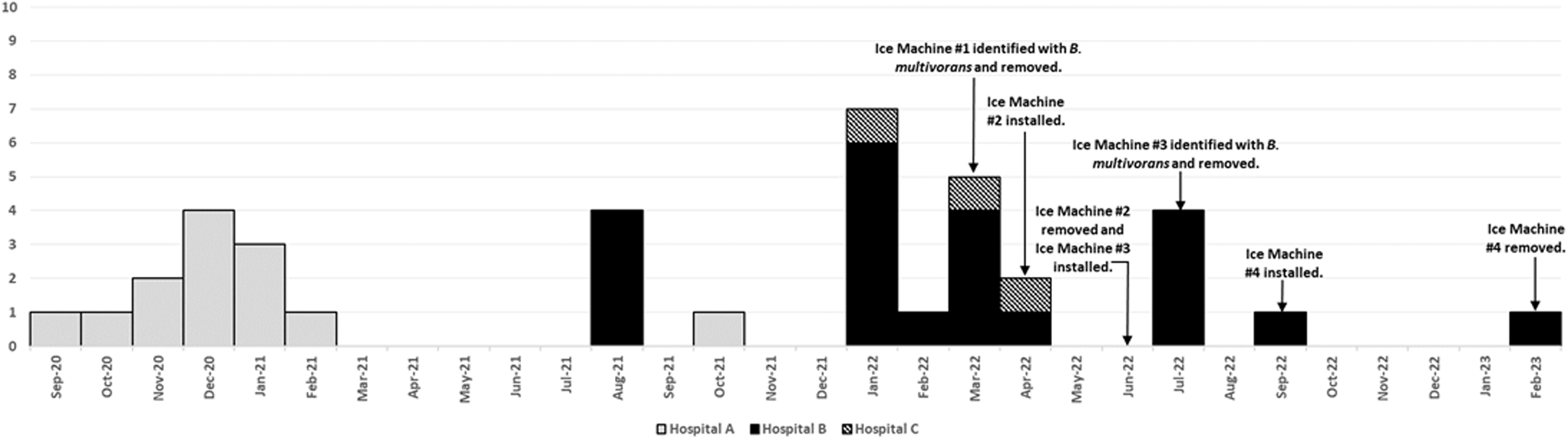
A total of 25 case-patients were identified from Hospital B and Hospital C between September 2020 and February 2023 (see Figure 1). Two additional patients with B. multivorans cultures were identified at Hospital B after February 2023 but did not undergo relatedness testing and therefore did not meet case-patient criteria. Retrospective laboratory review by both hospitals and active case-finding by CDPH and County HHSA did not yield any additional cases matching the outbreak definition, other than those previously identified by CDPH at Hospital A (n = 13). BcRLR national repository review did not identify the outbreak strain from other B. multivorans isolates within their database. Similarly, the FDA did not identify any reports related to product or device contamination with B. multivorans.
Case-patients identified at Hospitals A, B, and C between August 2021 and February 2023—California. The epidemiologic curve illustrates case-patient identification from all three hospitals in relation to detection of B. multivorans from ice machines at Hospital B. Ice machines were numbered in sequential order and reflect separate ice machines.

Figure 1. Long description
Panel A: A bar graph comparing the number of case-patients identified at Hospitals A, B, and C from August 2021 to February 2023. The horizontal axis represents the months from August 2021 to February 2023. The vertical axis represents the number of case-patients, ranging from 0 to 10. The bars are grouped by hospital and color-coded: Hospital A in gray, Hospital B in black, and Hospital C in pattern-fill. Key annotations indicate the identification and removal of ice machines contaminated with B. multivorans at specific times. Notable trends include peaks in case-patients at Hospital B in January 2022 and July 2022, corresponding to the identification of contaminated ice machines.
Medical record abstraction
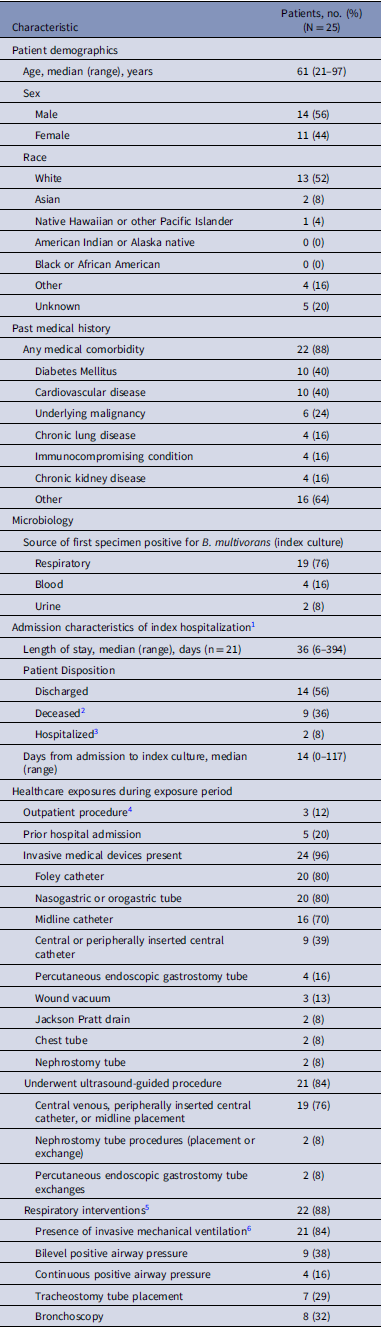
Medical records were abstracted for case-patients hospitalized at Hospital B (n = 22) or Hospital C (n = 3) (Table 1). The majority of case-patients were hospitalized in the ICU at the time of index specimen collection (n = 17, 68%). Index specimens were collected from the following sources: respiratory (n = 19; 76%), blood (n = 4, 16%) and urine (n = 2, 8%) between September 2020 and February 2023. Common exposures among case-patients at Hospital B and C included the presence of an invasive medical device (n = 23, 92%), receipt of respiratory intervention(s) (n = 22, 88%), ultrasound-guided procedures during hospitalization (n = 21, 84%), including ultrasound-guided vascular line insertions (n = 19, 76%), nephrostomy tube procedures (n = 2, 8%), and percutaneous endoscopic gastrostomy tube exchanges (n = 2, 8%) (Table 1). No medications were found to be common among the majority of case-patients.
Characteristics of case-patients hospitalized at Hospital B and Hospital C—January 2020 to February 2023, California

Table 1. Long description
A table detailing characteristics of 25 hospitalized patients. The table has 30 rows and 2 columns. Column headers are Characteristic and Patients, no. (%), (N = 25). Row labels include Patient demographics, Past medical history, Microbiology, Admission characteristics of index hospitalization, Patient Disposition, Days from admission to index culture, median (range), Healthcare exposures during exposure period, Outpatient procedure, Prior hospital admission, Invasive medical devices present, Foley catheter, Nasogastric or orogastric tube, Midline catheter, Central or peripherally inserted central catheter, Percutaneous endoscopic gastrostomy tube, Wound vacuum, Jackson Pratt drain, Chest tube, Nephrostomy tube, Underwent ultrasound-guided procedure, Central venous, peripherally inserted central catheter, or midline placement, Nephrostomy tube procedures (placement or exchange), Percutaneous endoscopic gastrostomy tube exchanges, Respiratory interventions, Presence of invasive mechanical ventilation, Bilevel positive airway pressure, Continuous positive airway pressure, Tracheostomy tube placement, Bronchoscopy. Each row provides specific data points for each characteristic. For example, Row 1: Patient demographics, Age, median (range), years, 61 (21-97). Row 2: Sex, Male, 14 (56). Row 3: Sex, Female, 11 (44). Row 4: Race, White, 13 (52). Row 5: Race, Asian, 2 (8). Row 6: Race, Native Hawaiian or other Pacific Islander, 1 (4). Row 7: Race, American Indian or Alaska native, 0 (0). Row 8: Race, Black or African American, 0 (0). Row 9: Race, Other, 4 (16). Row 10: Race, Unknown, 5 (20). Row 11: Past medical history, Any medical comorbidity, 22 (88). Row 12: Past medical history, Diabetes Mellitus, 10 (40). Row 13: Past medical history, Cardiovascular disease, 10 (40). Row 14: Past medical history, Underlying malignancy, 6 (24). Row 15: Past medical history, Chronic lung disease, 4 (16). Row 16: Past medical history, Immunocompromising condition, 4 (16). Row 17: Past medical history, Chronic kidney disease, 4 (16). Row 18: Past medical history, Other, 16 (64). Row 19: Microbiology, Source of first specimen positive for B. multivorans (index culture), Respiratory, 19 (76). Row 20: Microbiology, Source of first specimen positive for B. multivorans (index culture), Blood, 4 (16). Row 21: Microbiology, Source of first specimen positive for B. multivorans (index culture), Urine, 2 (8). Row 22: Admission characteristics of index hospitalization, Length of stay, median (range), days (n = 21), 36 (6-394). Row 23: Patient Disposition, Discharged, 14 (56). Row 24: Patient Disposition, Deceased, 9 (36). Row 25: Patient Disposition, Hospitalized, 2 (8). Row 26: Days from admission to index culture, median (range), 14 (0-117). Row 27: Healthcare exposures during exposure period, Outpatient procedure, 3 (12). Row 28: Healthcare exposures during exposure period, Prior hospital admission, 5 (20). Row 29: Healthcare exposures during exposure period, Invasive medical devices present, 24 (96). Row 30: Healthcare exposures during exposure period, Foley catheter, 20 (80).
1 Index hospitalization is the hospitalization when the index culture was identified and includes the time from admission to discharge.
2 Cause of death was not ascertained.
3 Hospitalized patients are those who had not been discharged from their index hospitalization as of 08/21/2022.
4 Outpatient procedures included esophagogastroduodenoscopy (n = 2), bilateral percutaneous nephrostomy tube exchanges (n = 1), and suprapubic catheter placement (n = 1).
5 Respiratory interventions during the exposure period are not mutually exclusive.
6 Intubation may have been performed before or during the exposure period.
Infection control observations
Observations at both hospitals identified the following: storage of patient care items, medication supplies, gloves, and disinfectant wipes within sink splash zones in some patient rooms and medication preparation areas; preparation of intravenous medications outside of dedicated medication preparation areas (eg, nursing station); movement of healthcare personnel between patient rooms without doffing personal protective equipment; disposal of nutritive material down sinks in patient rooms; and missed hand hygiene opportunities. Use of ice and water for clinical care activities was unable to be assessed with direct observations. Hospital leadership indicated that using ice and water for activities other than oral consumption was rare, but informal interviews with healthcare personnel identified potential opportunities for patient exposure at both hospitals. Healthcare personnel reported using water and ice from ice machines for patient bathing, cooling febrile patients using fillable icepacks, pain relief, and swallow evaluations. Both hospitals used the same brand of ice machine and brands of filters, descaling, and sanitizing products, which were also used by Hospital A.
Laboratory testing
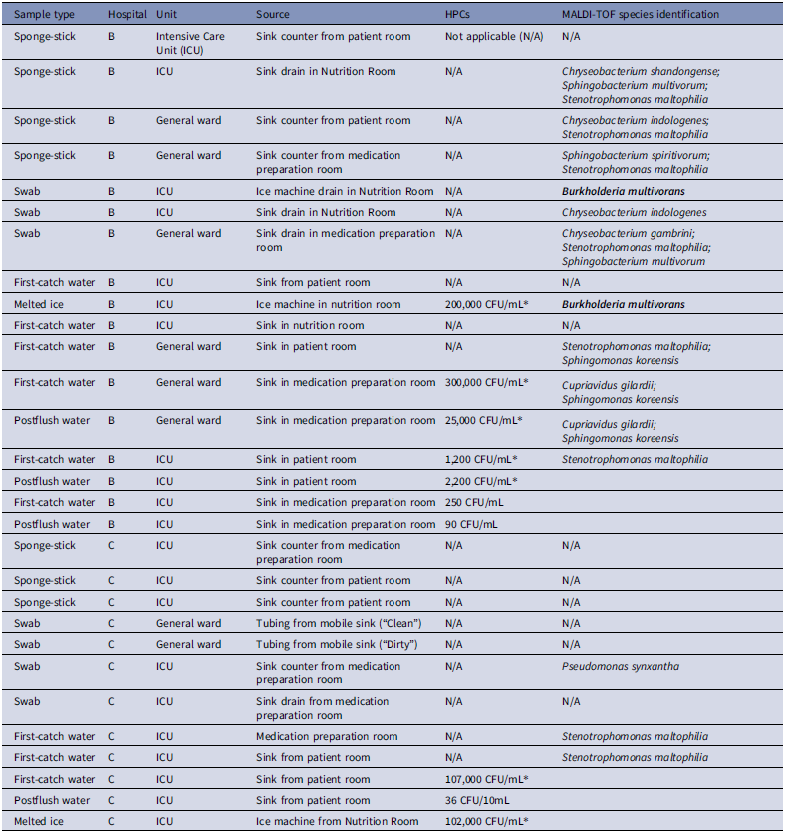
B. multivorans was cultured from melted ice from a new ice machine in the ICU nutrition room and a corresponding swab from its drain pan at Hospital B; B. multivorans was not identified from ice machines at Hospital C or any other samples. Although Hospital C used the same brand of ice machine as Hospital B, ice machine samples were collected from a different brand of ice machine at Hospital C. Multiple other water-associated organisms were detected from water and surface samples collected from sink drains and sink splash zones at both hospitals. These organisms included Stenotrophomonas maltophilia, Pseudomonas spp., Chryseobacterium spp., Sphingobacterium spp., and Cupriavidus gilardii (Table 2). Ten water samples were tested for HPCs and ranged from 90 CFU/mL to >300,000 CFU/mL. Melted ice from the sample from which B. multivorans was isolated yielded 200,000 CFU/mL. Seven of 10 water samples tested for HPCs exceeded the Environmental Protection Agency’s unregulated potable water standard (≥500 CFU/ml) (Table 2). 22 B. multivorans was not identified in commercial products that were tested. The two B. multivorans ice machine isolates were sequenced by BcRLR and confirmed to match the outbreak strain with >85% relatedness. Additionally, whole genome sequence analysis found the clinical and environmental isolates to be ST659, with ≤1 single-nucleotide variant difference.
Results from environmental sampling, including heterotrophic plate counts (HPC), collected from sources at Hospital B and Hospital C—July 2022

Table 2. Long description
A table with 30 rows and 6 columns. The columns are labeled Sample type, Hospital, Unit, Source, HPCs, and MALDI-TOF species identification. The table compares environmental sampling results from Hospital B and Hospital C, including sources, species identification, and heterotrophic plate counts. Row 1: Sample type, Sponge-stick; Hospital, B; Unit, Intensive Care Unit (ICU); Source, Sink counter from patient room; HPCs, Not applicable (N/A); MALDI-TOF species identification, N/A. Row 2: Sample type, Sponge-stick; Hospital, B; Unit, ICU; Source, Sink drain in Nutrition Room; HPCs, N/A; MALDI-TOF species identification, Chryseobacterium shandongense; Sphingobacterium multivorum; Stenotrophomonas maltophilia. Row 3: Sample type, Sponge-stick; Hospital, B; Unit, General ward; Source, Sink counter from patient room; HPCs, N/A; MALDI-TOF species identification, Chryseobacterium indologenes; Stenotrophomonas maltophilia. Row 4: Sample type, Sponge-stick; Hospital, B; Unit, General ward; Source, Sink counter from medication preparation room; HPCs, N/A; MALDI-TOF species identification, Sphingobacterium spiritivorum; Stenotrophomonas maltophilia. Row 5: Sample type, Swab; Hospital, B; Unit, ICU; Source, Ice machine drain in Nutrition Room; HPCs, N/A; MALDI-TOF species identification, Burkholderia multivorans. Row 6: Sample type, Swab; Hospital, B; Unit, ICU; Source, Sink drain in Nutrition Room; HPCs, N/A; MALDI-TOF species identification, Chryseobacterium indologenes. Row 7: Sample type, Swab; Hospital, B; Unit, General ward; Source, Sink drain in medication preparation room; HPCs, N/A; MALDI-TOF species identification, Chryseobacterium gambrini; Stenotrophomonas maltophilia; Sphingobacterium multivorum. Row 8: Sample type, First-catch water; Hospital, B; Unit, ICU; Source, Sink from patient room; HPCs, N/A; MALDI-TOF species identification, N/A. Row 9: Sample type, Melted ice; Hospital, B; Unit, ICU; Source, Ice machine in nutrition room; HPCs, 200,000 CFU/mL; MALDI-TOF species identification, Burkholderia multivorans. Row 10: Sample type, First-catch water; Hospital, B; Unit, ICU; Source, Sink in nutrition room; HPCs, N/A; MALDI-TOF species identification, N/A. Row 11: Sample type, First-catch water; Hospital, B; Unit, General ward; Source, Sink in patient room; HPCs, N/A; MALDI-TOF species identification, Stenotrophomonas maltophilia; Sphingomonas koreensis. Row 12: Sample type, First-catch water; Hospital, B; Unit, General ward; Source, Sink in medication preparation room; HPCs, 300,000 CFU/mL; MALDI-TOF species identification, Cupriavidus gilardii; Sphingomonas koreensis. Row 13: Sample type, Postflush water; Hospital, B; Unit, General ward; Source, Sink in medication preparation room; HPCs, 25,000 CFU/mL; MALDI-TOF species identification, Cupriavidus gilardii; Sphingomonas koreensis. Row 14: Sample type, First-catch water; Hospital, B; Unit, ICU; Source, Sink in patient room; HPCs, 1,200 CFU/mL; MALDI-TOF species identification, Stenotrophomonas maltophilia. Row 15: Sample type, Postflush water; Hospital, B; Unit, ICU; Source, Sink in patient room; HPCs, 2,200 CFU/mL; MALDI-TOF species identification, N/A. Row 16: Sample type, First-catch water; Hospital, B; Unit, ICU; Source, Sink in medication preparation room; HPCs, 250 CFU/mL; MALDI-TOF species identification, N/A. Row 17: Sample type, Postflush water; Hospital, B; Unit, ICU; Source, Sink in medication preparation room; HPCs, 90 CFU/mL; MALDI-TOF species identification, N/A. Row 18: Sample type, Sponge-stick; Hospital, C; Unit, ICU; Source, Sink counter from medication preparation room; HPCs, N/A; MALDI-TOF species identification, N/A. Row 19: Sample type, Sponge-stick; Hospital, C; Unit, ICU; Source, Sink counter from patient room; HPCs, N/A; MALDI-TOF species identification, N/A. Row 20: Sample type, Sponge-stick; Hospital, C; Unit, ICU; Source, Sink counter from patient room; HPCs, N/A; MALDI-TOF species identification, N/A. Row 21: Sample type, Swab; Hospital, C; Unit, General ward; Source, Tubing from mobile sink (Clean); HPCs, N/A; MALDI-TOF species identification, N/A. Row 22: Sample type, Swab; Hospital, C; Unit, General ward; Source, Tubing from mobile sink (Dirty); HPCs, N/A; MALDI-TOF species identification, N/A. Row 23: Sample type, Swab; Hospital, C; Unit, ICU; Source, Sink counter from medication preparation room; HPCs, N/A; MALDI-TOF species identification, Pseudomonas synxantha. Row 24: Sample type, Swab; Hospital, C; Unit, ICU; Source, Sink drain from medication preparation room; HPCs, N/A; MALDI-TOF species identification, N/A. Row 25: Sample type, First-catch water; Hospital, C; Unit, ICU; Source, Medication preparation room; HPCs, N/A; MALDI-TOF species identification, Stenotrophomonas maltophilia. Row 26: Sample type, First-catch water; Hospital, C; Unit, ICU; Source, Sink from patient room; HPCs, N/A; MALDI-TOF species identification, Stenotrophomonas maltophilia. Row 27: Sample type, First-catch water; Hospital, C; Unit, ICU; Source, Sink from patient room; HPCs, 107,000 CFU/mL; MALDI-TOF species identification, N/A. Row 28: Sample type, Postflush water; Hospital, C; Unit, ICU; Source, Sink from patient room; HPCs, 36 CFU/10mL; MALDI-TOF species identification, N/A. Row 29: Sample type, Melted ice; Hospital, C; Unit, ICU; Source, Ice machine from Nutrition Room; HPCs, 102,000 CFU/mL; MALDI-TOF species identification, N/A.
Asterisks (*) indicate values that exceed United States Environmental Protection Agency’s suggested 500 CFU/mL potable water recommendation.
Control measures and subsequent surveillance
In response to this outbreak, recommendations for both hospitals included avoiding tap water, including ice and water dispensed from ice machines, for patient care (eg, pain relief, bathing), especially among vulnerable patients, such as those who are immunocompromised or critically ill. 23,Reference Vazquez Deida, Spicer and McNamara24 Additional recommendations to strengthen sink hygiene were provided, including removing patient care items from sink splash zones in patient rooms; installing sink splash guards in ICU patient rooms, medication preparation rooms, nutrition rooms, and nursing stations; and avoiding disposal of nutritive materials in sinks. 23 Both hospitals reviewed and enhanced facility policies addressing routine ice machine maintenance. This included verifying adherence to manufacturer instructions for cleaning, descaling, and sanitizing and increasing the frequency of ice machine maintenance. Both hospitals also verified water pH, temperature, and residual chlorine levels to evaluate facility-wide water quality. To reduce the risk of exposure to water-associated organisms during instances where tap water could not be avoided, Hospital B also installed point-of-use filters on sinks in the ICU and implemented routine faucet flushes.
The ice machine in the ICU nutrition room at Hospital B was removed in July 2022 following identification of B. multivorans. In September 2022, a refurbished ice machine was re-introduced into the ICU at Hospital B and subsequently removed in October 2022 after an additional case-patient was identified. A different, refurbished ice machine was later installed in January 2023 but again removed from use in February 2023 after a second additional case-patient was identified (Figure 1). Both re-furbished ice machines were the same brand of ice machines that were identified with B. multivorans. No additional environmental samples were collected from ice machines, and as of March 2023, no additional case-patients were identified at Hospital B or C.
Discussion
The use of water and ice from contaminated ice machines, of the same brand, likely contributed to this outbreak. Environmental testing identified matching B. multivorans from two distinct ice machines in the same location at Hospital B, where most case-patients were hospitalized. Ice and water from ice machines of the same brand were used during this time for various clinical care activities at both hospitals, which could have exposed patients to B. multivorans. Identification of two new case-patients between October 2022 and February 2023 occurred after a refurbished ice machine was reintroduced for use at Hospital B. During April 2023-February 2024, additional patients with B. multivorans infections were identified from a hospital in Colorado; subsequent investigation determined Colorado isolates obtained from patients and the same brand of hospital ice machines matched the outbreak strain at Hospitals A, B, and C, which previously had not been identified in the United States. Reference Vazquez Deida, Spicer and McNamara24 Additional investigation is ongoing and suggests the possibility of contaminated ice machines or associated product (eg, descaling and sanitizing products). Reference Vazquez Deida, Spicer and McNamara24
Outbreaks of B. multivorans have not previously been associated with ice machines. However, fixtures that dispense ice, including ice chests or bins or automated ice machines, have been documented as potential sources of other water-associated organisms and multidrug-resistant organisms in healthcare settings. Reference Kanwar, Domitrovic and Koganti25–Reference Laussucq, Baltch and Smith28 Unique design features of ice machines, like large storage bins and shallow drain pans, have been suspected of facilitating microbial growth and contributing to the dispersal of water and ice on surrounding surfaces and items. Reference Kanwar, Cadnum, Xu, Jencson and Donskey26,Reference Guspiel, Menk and Streifel29 Upstream interventions, like water purification systems that filter municipal water into ice machines, have lowered chlorine levels and affected the quality of water and ice exiting ice machines. Reference Klompas, Akusobi and Boyer30 Other investigators have recommended monitoring and validating water quality, regular cleaning and disinfection of ice machines, and avoiding water and ice from contaminated ice machines but have otherwise cited limited evidence to standardize remediation of contaminated ice machines. Reference Kanwar, Cadnum, Xu, Jencson and Donskey26,Reference Oda, Winters and Pacheco27,Reference Klompas, Akusobi and Boyer30
Elevated HPCs obtained from melted ice samples and paired first-catch and postflush water samples raised concern for overall quality of tap water and water and ice from ice machines at both hospitals. Of note, testing of samples from the ice machine in March 2022 found low HPCs from water entering the ice machine but elevated HPCs from water and ice exiting the machine, reinforcing water quality concerns for ice and water exiting ice machines. Most water samples exceeded EPA’s standards for unregulated potable water (>500 CFU/mL) and harbored multiple water-associated organisms, highlighting the potential risks of water for vulnerable patient populations. Previous epidemiologic investigations of water-associated organisms have successfully halted transmission and stopped outbreaks by reducing patient exposure to water. Reference Baker, Lewis and Alexander31–Reference Bringhurst, Weber and Miller35 During outbreaks, strategies to mitigate the use of tap water during clinical care activities have included sterile water protocols, sink removal in high-risk patient areas, and “water-free” patient care. Reference Baker, Lewis and Alexander31–Reference Baker, Stout and Anderson33 Other strategies to prevent indirect contact with tap water have included sink hygiene measures, like removing patient care items from sink splash zones and installing splash guards to prevent splashes or sprays from sinks and drains. Reference Perkins, Reddy, Fagan, Arduino and Perz36,Reference Kanamori, Weber and Rutala37 For this outbreak, removing ice machines at Hospital B and employing measures to enhance water quality and improve sink hygiene at both hospitals was an effective intervention to stop spread of B. multivorans.
Transmission pathways for water-associated organisms can be challenging to detect due to inconsistencies between facility policies and real-world implementation of the use of water during the provision of patient care, as well as, variations in practice among healthcare personnel. Direct observations and informal interviews with healthcare personnel were beneficial in determining how ice and water were used during clinical care activities and were important in identifying routes of transmission. Conducting on-site visits at both hospitals was essential to interacting with healthcare personnel and assessing variations between hospital policy and staff practice.
This investigation has at least three limitations. First, while B. multivorans was only identified from samples obtained from ice machines at Hospital B, failure to detect B. multivorans from ice machines at Hospitals A and C and other environmental samples does not preclude its presence at a prior point in time since environmental testing results do not account for the dynamic nature of biofilm evolution. Second, patient exposure to ice machines was not directly observed or documented in medical records. As a result, we cannot confirm when and how case-patients were exposed to ice and water from contaminated ice machines. However, suspending use of ice machines and strengthening sink hygiene measures halted identification of new cases at Hospitals B and C, and informal interviews with healthcare personnel supported an epidemiologic link to ice machines. Lastly, product testing was constrained by the number and type of products available at the time of onsite investigation and does not represent the entire range of medical products to which case-patients were exposed.
During this outbreak, the use of MALDI-TOF in the clinical laboratory of Hospitals B and C facilitated prompt identification of B. multivorans and subsequent relatedness testing at BcRLR of all isolates. Genomic similarities within the diverse Burkholderia genus make species identification challenging. Reference Coenye, Vandamme, Govan and LiPuma1,Reference Peralta, Chang, Ariza-Hutchinson and Ho7 Laboratory methodologies to accurately identify Burkholderia exist but can vary, and species misidentification has historically been a concern given phenotypic similarities among species. Reference Coenye, Vandamme, Govan and LiPuma1,Reference Vandamme and Dawyndt38 Moreover, variations in clinical microbiology practices at hospital laboratories can influence species identification, adding to the challenge of case-finding in an outbreak setting. Reference Shreve, Butler and Kaplowitz39 Early species identification of Bcc at Hospital A and then at Hospital B and Hospital C led to early outbreak detection and a timely public health response.
In summary, water and ice from ice machines can serve as reservoirs for water-associated organisms and should be investigated as potential sources of healthcare-associated outbreaks. Hospitals and other healthcare facilities should continue to adhere to manufacturer instructions to ensure ice machines are cleaned and disinfected regularly. 40 During outbreak investigations of water-associated organisms in healthcare settings, HPCs may be useful for hospitals and other healthcare facilities to evaluate water quality. 23 Regardless of the underlying cause of ice machine contamination, during outbreaks of water-associated organisms, healthcare facilities should consider avoiding tap water for patient care, including water and ice from ice machines, especially among vulnerable populations, such as those who are immunocompromised or critically ill. Reference Vazquez Deida, Spicer and McNamara24
Supplementary material
The supplementary material for this article can be found at https://doi.org/10.1017/ash.2026.10798.
Acknowledgements
All authors report no conflicts of interest relevant to this article and do not have any financial support to disclose. We would like to acknowledge infection preventionists and healthcare personnel at Hospitals A, B, and C for their conscientious work and collaboration during this investigation.
Financial support
None
Competing interests
There are no conflicts of interest to disclose for any co-author.


 Open access

