Implication
Digestive ecosystem is involved in several key physiological functions and peculiarly in digestion and immune system regulation. Control of the microbiota could therefore improve digestive efficiency and digestive health in farming animals. Improved digestive efficiency has a direct impact on environment and on feed costs. Control of the microbiota could limit digestive problems around weaning, first through its barrier effect and then through its role as immune stimulator. In this review, we proposed three hypotheses of modification of the rabbit ecosystem opening promising research avenues that may lead to changes in farming practices.
Introduction
Mammals can be regarded as super-organisms as they are permanently colonized by a vast and rich community of microorganisms. There is a host/microbiota relationship based on a model of symbiosis that defines ‘the digestive ecosystem’ where each partner benefits from the association. Indeed, microorganisms colonize and grow rapidly under the favourable conditions of the gut, while the rabbit obtains the products of microbial fermentation from materials that could otherwise not be digested. In rabbits, this association is called a combined competition–cooperation model (Mackie, Reference Mackie2002). However, the balance of this ecosystem is fragile and may be disturbed during digestive disorders. In recent years, a considerable research effort using the techniques of molecular biology and microbiology have helped define its composition, understand its functioning and its many physiological roles: hydrolysis and fermentation of nutrients, immune system regulation, motility effects, angiogenesis and intestinal trophism, and acting as a barrier against infectious agents.
Control of the microbiota could therefore improve digestive efficiency or immune status, and thus digestive health. Improved digestive efficiency through optimization of the composition of the microbiota has a direct impact on feed costs, and would also increase the use of ‘fibrous’ raw materials useless for human consumption. Similarly, improving digestive efficiency would reduce emissions to the environment. Note that unlike ruminants, reducing the emission of greenhouse gases is not a major issue of the rabbit industry, as the growing rabbit produces little methane (Franz et al., Reference Franz, Soliva, Kreuzer, Hummel and Clauss2011). Finally, control of the microbiota could limit digestive problems around weaning, first through its barrier effect and partly through its role as immune stimulator. In this review, we will endeavour to take stock of knowledge about the composition and functioning of the ecosystem in the rabbit caecum. This paper highlights the physiological roles of the microbiota and the benefits for the host. Furthermore, we will evaluate the possibility of engineering the microbiota to produce a better outcome for the host. The applied objectives are to reduce the frequency of occurrence of digestive disorders and/or to improve feed efficiency.
Specific diversity of the rabbit gut ecosystem
Microbiota taxonomic composition
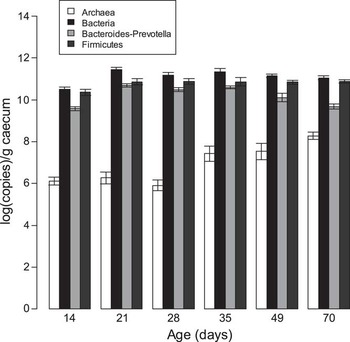
In rabbits, an abundant bacterial community is present throughout the caecum–colon and in hard and soft faeces (1010 to 1012 bacteria/g), (Gouet and Fonty, Reference Gouet and Fonty1973; Forsythe and Parker, Reference Forsythe and Parker1985), whereas the archaeal population is estimated at 107 copy 16S RNA gene per gram of caecal content (Combes et al., Reference Combes, Michelland, Monteils, Cauquil, Soulie, Tran, Gidenne and Fortun-Lamothe2011) (Figure 1). Regarding eukaryotes, the rabbit caecal digestive ecosystem appears to lack anaerobic fungi (Bennegadi et al., Reference Bennegadi, Fonty, Millet, Gidenne and Licois2003) and protozoa (Forsythe and Parker, Reference Forsythe and Parker1985; Bennegadi et al., Reference Bennegadi, Fonty, Millet, Gidenne and Licois2003). Recently, using culture technique Kimsé et al. (Reference Kimsé, Bayourthe, Monteils, Fortun-Lamothe, Cauquil, Combes and Gidenne2012) could not observe the development of commensal yeast. However, Forsythe and Parker (Reference Forsythe and Parker1985) and Zierdt et al. (Reference Zierdt, Detlefson, Muller and Waggie1988) using direct microscopic observations and/or culture-found commensal yeasts: Cyniclomyces guttulatus (Saccharomycopsis guttulata). However, these results need to be confirmed by further investigations, as protozoa and anaerobic fungi were detected in several herbivorous hindgut fermenters of other non-ruminant species.
Evolution of aechaeal and bacterial populations, Firmicutes phyla and Bacteroides-Prevotella genus in rabbit caecum adapted from Combes et al. (Reference Combes, Michelland, Monteils, Cauquil, Soulie, Tran, Gidenne and Fortun-Lamothe2011).

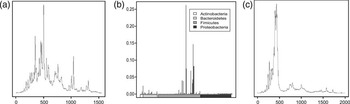
Microorganism culture-based studies have shown that the adult rabbit hosts 107 colony forming unit (CFU) of cellulolytic bacteria per gram of caecal content, although of pectinolytic and xylanolytic bacteria, are between 109 and 1010 CFU. Cultivable species most frequently identified were Eubacterium cellulosolvens for cellulolytic bacteria and Prevotella ruminicola for pectinolytic and xylanolytic bacteria (Boulahrouf et al., Reference Boulahrouf, Fonty and Gouet1991). The cultivable fraction of the rabbit digestive microbiota in healthy adults was characterized by the absence or low density of Lactobacillus, Streptococcus and Escherichia coli (Ducluzeau, Reference Ducluzeau1969; Gouet and Fonty, Reference Gouet and Fonty1973; Fonty et al., Reference Fonty, Gouet and Riou1979; Padilha et al., Reference Padilha, Licois and Coudert1996). In the last 10 years, molecular microbiology techniques have led to substantial progress in the knowledge of the microbial diversity of digestive ecosystems. Bacterial community cloning revealed the uniqueness of the rabbit caecal microbiota and showed that most of the sequences correspond to new uncultivated bacterial species not found in the databases (90% Abecia et al., Reference Abecia, Fondevila, Balcells, Edwards, Newbold and McEwan2005, 80% Monteils et al., Reference Monteils, Cauquil, Combes, Godon and Gidenne2008). The overwhelming majority of the sequences were listed in the Firmicutes phylum (over 90% of sequences), whereas the Bacteroidetes represented only 4%. This corresponded to 10.8 log10 and 9.7 log10 copies of 16S rDNA/g of caecal contents, respectively (Combes et al., Reference Combes, Michelland, Monteils, Cauquil, Soulie, Tran, Gidenne and Fortun-Lamothe2011) (Figure 1). More recently, deep 16S rDNA pyrosequencing, which could be considered as a second generation 16S rDNA fingerprinting (Lamendella et al., Reference Lamendella, VerBerkmoes and Jansson2012), showed in 9-week-old rabbits that, within the Firmicutes phylum, Ruminococcaceae and Lachnospiraceae were dominant families (45% and 35% of whole sequences, respectively) (Massip et al., Reference Massip, Combes, Cauquil, Zemb and Gidenne2012) (Figure 2b).
CE-SSCP profile (a), 454 pyrosequencing profile (b) of the bacterial community and CE-SSCP profile of the archaeal community (c) in rabbit caecum. CE-SSCP = capillary electrophoresis single-strand conformation polymorphism.

Although the bacterial kingdom is the most abundant in the digestive ecosystems, particular interest has been focused in recent years on archaea, whose density was estimated at 7 to 8 log10 16S rDNA copies/g of caecal contents (Figure 1). Integrated at the end of the food chain, they allow the elimination of H2 from fermentation to provide methane (Jones et al., Reference Jones, Nagle and Whitman1987). Methane is a powerful greenhouse gas (23 times as warming as CO2) and also represents a loss of 6% to 8% of the energy and carbon ingested by the animal (Boadi et al., Reference Boadi, Benchaar, Chiquette and Masse2004). In rabbits, methanogenesis was first observed in vitro (Marounek et al., Reference Marounek, Fievez, Mbanzamihigo, Demeyer and Maertens1999; Yang et al., Reference Yang, Cao and Zhang2010; Belenguer et al., Reference Belenguer, Fondevila, Balcells, Abecia, Lachica and Carro2011) and, more recently, in vivo using respiratory chambers (Belenguer et al., Reference Belenguer, Fondevila, Balcells, Abecia, Lachica and Carro2011; Franz et al., Reference Franz, Soliva, Kreuzer, Hummel and Clauss2011). The amount of energy lost as methane is lower in rabbits than in dairy cows (1% v. 6% of gross energy ingested Vermorel, Reference Vermorel1995; Franz et al., Reference Franz, Soliva, Kreuzer, Hummel and Clauss2011). In vitro, the amounts of methane excreted depend on the diet of the rabbits (Belenguer et al., Reference Belenguer, Fondevila, Balcells, Abecia, Lachica and Carro2011) or the nature of the substrate placed in the presence of inoculum (Yang et al., Reference Yang, Cao and Zhang2010). In vivo, great variability of methane excretion was observed between individuals (excretion of methane was detected only in two individuals out of 16; Belenguer et al., Reference Belenguer, Fondevila, Balcells, Abecia, Lachica and Carro2011). The discrepancy between the presence of archaea in all rabbits tested (Combes et al., Reference Combes, Michelland, Monteils, Cauquil, Soulie, Tran, Gidenne and Fortun-Lamothe2011) and the absence of measurable level of methane excretion in vivo in some animals (Belenguer et al., Reference Belenguer, Fondevila, Balcells, Abecia, Lachica and Carro2011) might be explained by the highest sensitivity of detection of methanogen populations using real-time polymerase chain reaction (Stewart et al., Reference Stewart, Chadwick and Murray2006). However, this might suggest both the existence of a genetic variability and the existence for some non-methano-excreting rabbits of another route for the elimination of H2, that is, reductive acetogenesis. In humans, it has been demonstrated that sulphate-reducing bacteria and archaea could be simultaneously present at a high level in methanogenic adults (Stewart et al., Reference Stewart, Chadwick and Murray2006). The authors suggested that competition for H2 gas does not necessarily lead to the predominance of one group. The simplicity of the capillary electrophoresis single-strand conformation polymorphism (CE-SSCP) profiles obtained for the archaeal community (Figure 2c) indicates much lower species diversity than the bacterial population (Figure 2a). The molecular inventory of the archaeal population (Kušar and Avguštin, Reference Kušar and Avguštin2010) confirmed the predominance of the genus Methanobrevibacter and suggested the presence of a new species specific to rabbit.
Microbiota structuring of the rabbit digestive tract
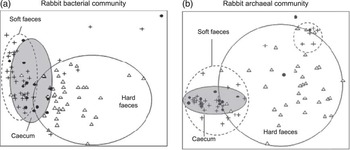
Although the caecum is the primary fermenter in rabbits, a microbial population is also present in the proximal (stomach, small intestine) and distal (colon) segments of the gastrointestinal tract (Gouet and Fonty, Reference Gouet and Fonty1979). Moreover, the bacterial density of soft faeces, which correspond to the caecal contents slightly modified, is of the same order of magnitude as that of the caecum. Conversely, the bacterial density of faeces, is 10 times lower than that in the caecum (Emaldi et al., Reference Emaldi, Crociani, Matteuzzi and Proto1978). According to fingerprinting, bacterial diversity is higher in the ileum than in the caecum (Badiola et al., Reference Badiola, Perez de Rozas, Roca, Carabaño, Gomez, Garcia and Blas2004; Martignon et al., Reference Martignon, Reperant and Valat2010b). This difference is surprising, as a faster passage of food particles in the ileum would not be favourable to bacterial proliferation and diversity. The structure of the archaeal and bacterial community of soft faeces is closer to that of the caecal content than that present in the faeces (Michelland et al., Reference Michelland, Combes, Monteils, Cauquil, Gidenne and Fortun-Lamothe2010a and Reference Michelland, Monteils, Combes, Cauquil, Gidenne and Fortun-Lamothe2010b) (Figure 3). Thus, the use of soft faeces for monitoring the dynamics of the microbiota of the caecum would be a good alternative, limiting surgery or killing of the animal.
Comparison of bacteria (a) and archaea (b) community structure between the caecum (•), the caecotropes (+) and hard faeces (▴) in rabbits using non-Metric Dimensional Scaling (nMDS) from Michelland et al. (Reference Michelland, Combes, Monteils, bayourthe, Cauquil, Enjalbert, Julien, kimsé, Troegeler-Meynadier, Zened, Gidenne and Fortun-Lamothe2012).

In the absence of induced perturbations, the bacterial community of the adult rabbit caecum remained stable over time (Michelland et al., Reference Michelland, Combes, Monteils, Cauquil, Gidenne and Fortun-Lamothe2010a and Reference Michelland, Combes, Monteils, Cauquil, Gidenne and Fortun-Lamothe2011). In agreement with observations made in man (Zoetendal et al., Reference Zoetendal, Akkermans and De Vos1998; Vanhoutte et al., Reference Vanhoutte, Huys, De Brandt and Swings2004), the absence of temporal variations in the rabbit caecal microbiota adult shows a remarkable stability of the dominant microbial composition. In the rabbit, the existence of a pattern specific to each individual, stable in time or space (compartments), could not be demonstrated (Michelland et al., Reference Michelland, Combes, Monteils, Cauquil, Gidenne and Fortun-Lamothe2010a). Indeed, the inter- and intra-individual variability of bacterial and archaeal communities are of similar magnitude (Michelland et al., Reference Michelland, Combes, Monteils, Cauquil, Gidenne and Fortun-Lamothe2010a and Reference Michelland, Monteils, Combes, Cauquil, Gidenne and Fortun-Lamothe2010b). A high variability of the bacterial community composition between individuals has already been shown; however, there are few studies that evaluate the intra-individual variation (repetition of the same individual over time or in space). In humans, a pattern specific to each individual was found within the various segments of the colon (ascending, descending and transverse) (Zoetendal et al., Reference Zoetendal, von Wright, Vilpponen-Salmela, Ben-Amor, Akkermans and de Vos2002) or over time in the faeces (Vanhoutte et al., Reference Vanhoutte, Huys, De Brandt and Swings2004). The lack of pattern of the archaeal and bacterial community specific to the individual host in rabbits may have originated in the genetic similarity between animals from selected lines and the high standardization of rearing conditions and feeding. These parameters would tend to equalize the influence of the host on the composition of the bacterial community.
Roles of the digestive microbiota
Digestion and feed efficiency
In rabbits and monogastric herbivores, digestion of nutrients takes place mainly in the small intestine through the digestive enzymes of the host. These enzymes hydrolyze most components with the exception of components of plant cell walls or fibres (lignins, cellulose, hemicelluloses, pectins, etc.) (Fonty and Gouet, Reference Fonty and Gouet1989), which are hydrolyzed by bacterial enzymes. Because of the low microbial density and fast passage of digesta in the upper part of digestive tract, dietary fibres that enter the caecum are little modified. At the end of the ileal segment, fibre is the major constituent (70% dry matter; Gidenne, Reference Gidenne1992), whereas nitrogen compounds come next (15% dry matter; Villamide et al., Reference Villamide, Nicodemus, Fraga and Carabano2010). The metabolic activities of microbiota depend on the nature of incoming substrates and are organized in a trophic chain. The first step of the trophic chain corresponds to the hydrolysis of complex polymers by a variety of hydrolases (polysaccharidases, glycosidases, proteases, peptidases) provided by hydrolytic species in smaller compounds (monosaccharides, amino acids, etc.). These soluble compounds are used by hydrolytic and fermentative species as energy sources. Fermentation processes lead to volatile fatty acid production (VFA: acetic acid, propionic acid and butyric acid), ammonia (NH3) derived from proteolysis, intermediary metabolites (lactic acid, succinic acid, formic acid) and gas (CO2, CH4, H2). Pectinase, xylanase, cellulase and urease are the major enzymes of the microbial ecosystem in rabbits (Carabaño et al., Reference Carabaño, Piquer, Menoyo and Badiola2010). The hierarchy of bacterial fibrolytic activities (pectinase > xylanase > cellulase) is consistent with that of the digestibility of fibre fractions (pectins > hemicelluloses > cellulose; Gidenne et al., Reference Gidenne, Combes, Licois, Carabaño, Badiola and Garcia2008). VFA production can cover 30% to 50% of maintenance energy requirements of adult rabbits (Gidenne, Reference Gidenne1994). The relative concentration of VFA in the caecum of an adult rabbit is around 75% acetate, 15% butyrate and 10% propionate. However, these proportions change depending on the age of the animal, the level of intake (Bellier et al., Reference Bellier, Gidenne, Vernay and Colin1995) and feed quality, including rapidly fermentable fibre concentration (Gidenne et al., Reference Gidenne, Jehl, Lapanouse and Segura2004a). Finally, the caecotrophy behaviour allows the animal to recycle some of the bacterial proteins. Depending on diet, soft faeces ingestion contributes about 15% of the total nitrogen ingested, but this proportion can reach 70% for a diet very low in nitrogen (Garcia et al., Reference Garcia, de Blas and Carabano2004).
The capacity of the microbiota to provide 30% to 50% of maintenance energy requirements for an adult rabbit emphasizes the significant impact of the caecal ecosystem on the overall digestive efficiency. Moreover, in rabbits, 30% to 50% of the digestible fraction of digestible organic matter is digested in the caeco-colic segment (Gidenne, Reference Gidenne1992; Gidenne et al., Reference Gidenne, Pinheiro and Falcao E Cunha2000). In mice, the involvement of the microbiota in feed efficiency has been proved by observing that germ-free mice (without microbiota) ate more than conventional mice to maintain body weight (Corthier, Reference Corthier2011). When conventional microbiota were introduced into germ-free mice, there was a 60% increase in body fat, concomitant with a decrease in feed intake by 30% in 2 weeks (Backhed et al., Reference Backhed, Ding, Wang, Hooper, Koh, Nagy, Semenkovich and Gordon2004). Moreover, the transfer of the microbiota from obese mice to germ-free mice induced an increase in the energy extraction from ingested diet and a greater weight gain than that induced by the transfer of lean mice microbiota to germ-free mice (Turnbaugh et al., Reference Turnbaugh, Ley, Mahowald, Magrini, Mardis and Gordon2006). Thus, it is demonstrated that the microbiota is involved in feed efficiency in mice. In terms of composition, it has been shown in humans and mice that obese subjects had a ratio of Firmicutes/Bacteroidetes higher than in lean individuals (Ley et al., Reference Ley, Backhed, Turnbaugh, Lozupone, Knight and Gordon2005 and Reference Ley, Turnbaugh, Klein and Gordon2006) and less diversity (Turnbaugh et al., Reference Turnbaugh, Hamady, Yatsunenko, Cantarel, Duncan, Ley, Sogin, Jones, Roe, Affourtit, Egholm, Henrissat, Heath, Knight and Gordon2009). To the best of our knowledge, no study on rabbits has helped to connect the feed efficiency and characteristics of the composition of the microbiota.
Role in defence against infectious agents and in the intestinal immune system
The intestinal immune system of the rabbit (GALT for gut associated lymphoid tissue) is mainly located in the small intestine and colon, as in most mammals, but with two additional special structures: the sacculus rotondus, which is located at the ileo-caecal junction and the vermiform appendix, located at the end of the caecum. In the small intestine, GALT consists of organized lymphoid aggregates: Peyer's patches and isolated cells scattered in the lamina propria and the epithelium of the villi (for review Fortun-Lamothe and Boullier, Reference Fortun-Lamothe and Boullier2007). Besides their barrier role, microbiota is involved in immune organs and cell development, diversification of antibodies and mechanisms of oral tolerance.
The concept of barrier (or colonization resistance) is based on the fact that the microbiota permanently implanted in the digestive tract hinders the implantation of exogenous pathogenic bacteria (Berg, Reference Berg1996). Indeed, in germ-free animals, the transport of antigen across the intestinal mucosa is increased. Different mechanisms have been proposed to explain the barrier effect: (i) commensal bacteria adherence to the mucosa can prevent attachment and entry of pathogenic bacteria. In rabbits, the filamentous bacteria that colonize the ileum reduce the attachment of enteropathogenic E. coli (Heczko et al., Reference Heczko, Abe and Finlay2000). (ii) The microorganisms compete for nutrients to maintain their ecological niche and habitat by consuming all resources. (iii) The bacteria are able to inhibit the growth of competing bacteria by producing antimicrobial substances (Guarner and Malagelada, Reference Guarner and Malagelada2003).
The role of the microbiota on the development of the intestinal mucosa was demonstrated by comparing the intestinal epithelium of germ-free animals to conventional animals. The caecum of germ-free rabbits is enlarged by six to 10 times compared with that of conventional rabbits (Fonty et al., Reference Fonty, Gouet and Riou1979; Coudert et al., Reference Coudert, Licois and Besnard1988). In germ-free mice, the turnover rate and the number of crypt cells was reduced compared with conventional animals, suggesting that the lack of microbiota reduced cell proliferation in the colon (Guarner and Malagelada, Reference Guarner and Malagelada2003). In germ-free mice, GALT is poorly developed and is comparable to that of a newborn, with a low density of lymphoid cells in the intestinal mucosa, reduced Peyer's patches and low blood immunoglobulin concentration. Furthermore, network of blood vessels of the intestinal villi of germ-free mice is only half as dense as in germ-free mice inoculated with conventional microbiota (Stappenbeck et al., Reference Stappenbeck, Hooper and Gordon2002).
In rabbits, the diversification of the primary repertoire of antibodies continues after birth and is dependent on bacterial stimulation. This diversification begins before birth and ends at the age of 10 to 12 weeks. Up to 2 to 3 weeks of age, the young rabbits have their narrow neonatal repertoire of antibodies. The establishment of the primary repertoire of antibodies takes place between 4 and 8 weeks of age by recombination processes of nucleotides, gene conversion and somatic hypermutation in the GALT and, particularly, in the vermiform appendix (Mage et al., Reference Mage, Lanning and Knight2006; Hanson and Lanning, Reference Hanson and Lanning2008). The microbiota is essential to the production and diversification of the first antibody repertoire (Lanning et al., Reference Lanning, Zhu, Zhai and Knight2000). Inoculation of several intestinal bacteria in sterile rabbit vermiform appendix showed that Bacillus subtilis and Bacillus fragilis together stimulate B-cell proliferation and diversification of genes encoding the immunoglobulin (Rhee et al., Reference Rhee, Sethupathi, Driks, Lanning and Knight2004). More recently, Severson et al. (Reference Severson, Mallozzi, Driks and Knight2010) showed that the spores of Bacillus stimulated the GALT by a recognition mechanism of superantigen present at the surfaces of spores. Although the GALT is continually in the presence of a considerable amount of antigens such as food proteins and commensal microorganisms, it does not develop an immune response, suggesting a host tolerance towards these antigens. The establishment of tolerance mechanisms is also dependent on the presence of the microbiota and takes place early in the life of the host (Fortun-Lamothe and Boullier, Reference Fortun-Lamothe and Boullier2007).
Plasticity of microbiota
Microbiota implantation and ecological succession of species
Traditionally, the mammal gastrointestinal tracts have been considered sterile in utero; however, recent studies demonstrated that meconium from healthy newborn were not completely sterile and that a prenatal mother-to-child efflux of commensal bacteria may exist (Jimenez et al., Reference Jimenez, Marín, Martín, Odriozola, Olivares, Xaus, Fernández and Rodríguez2008), but both number and diversity are low (Koenig et al., Reference Koenig, Spor, Scalfone, Fricker, Stombaugh, Knight, Angenent and Ley2011). Microbial colonization really begins at birth in contact with the mother and the immediate environment (birth canal, environment close to the nest and feed) (Berg, Reference Berg1996). Like all mammals, the introduction of species is orchestrated by an ecological succession of species. In 2 day-old rabbits, the bacterial density is already high in the caecum (109 16S RNA copies/g) and increases to reach its maximum at 21 days of age (1011 to 1012 copies of rDNA 16S/g). At this point, the rabbit is still suckling, but has already begun to eat solid food (Gidenne et al., Reference Gidenne, Lebas and Fortun-Lamothe2010a). During the first few weeks of life, the caecal bacterial community is composed of equal numbers of strict anaerobes and facultative anaerobes; then the abundance of the latter falls rapidly and may disappear in some individuals after weaning (Gouet and Fonty, Reference Gouet and Fonty1979). Bacteria of the Bacteroides Prevotella group were detected from 2 to 3 days of age (Kovács et al., Reference Kovács, Szendrõ, Milisits, Biro-Nemeth, Radnai, Posa, Bónai, Kovács and Horn2006; Combes et al., Reference Combes, Michelland, Monteils, Cauquil, Soulie, Tran, Gidenne and Fortun-Lamothe2011) to reach a peak at 21 days (Combes et al., Reference Combes, Michelland, Monteils, Cauquil, Soulie, Tran, Gidenne and Fortun-Lamothe2011). Moreover, 7 days after birth, archaea are present in the caecum at a significant level (105 copies of 16S rDNA/g) (Combes et al., Reference Combes, Michelland, Monteils, Cauquil, Soulie, Tran, Gidenne and Fortun-Lamothe2011). Using fingerprinting, it has been shown that the establishment of the bacterial community in rabbits occurs progressively with a gradual shift of composition and relative abundance of the bacterial species (Combes et al., Reference Combes, Michelland, Monteils, Cauquil, Soulie, Tran, Gidenne and Fortun-Lamothe2011). The implantation of archaea occurs later than that of bacteria as it reaches its maximum density at 35 days of age (Figure 1).
Defining time windows of permissiveness
According to Curtis and Sloan (Reference Curtis and Sloan2004), the digestive community of a newborn mammal is a subset of a wider meta-community including all species capable of living in the digestive tract. For example, communities whose environment is similar, have different compositions because they are formed by random sampling from the meta-community around them (mother, bedding, cage, air, etc.). Indeed, the composition of caecal microbiota of young rabbits is highly variable between individuals up to 49 days of age (Combes et al., Reference Combes, Michelland, Monteils, Cauquil, Soulie, Tran, Gidenne and Fortun-Lamothe2011). Conversely, at 70 days of age, the caecal microbiota composition is very homogeneous between individuals. These results, in accordance with observations performed in human babies (Palmer et al., Reference Palmer, Bik, DiGiulio, Relman and Brown2007; Yatsunenko et al., Reference Yatsunenko, Rey, Manary, Trehan, Dominguez-Bello, Contreras, Magris, Hidalgo, Baldassano, Anokhin, Heath, Warner, Reeder, Kuczynski, Caporaso, Lozupone, Lauber, Clemente, Knights, Knight and Gordon2012), allows us to define an action window (0 to 49 days) during which it would be possible to modify the microbiota. This action window corresponds to a period of permissiveness in which the barrier effect of the microbiota or host immunity allows the installation of new species, beneficial or pathogenic to the host.
Three scenarios to engineer the microbiota can be proposed from this analysis of the microbiota implantation dynamics. (1) Modify the initial composition: the element of chance in the initial composition of the microbiota can be considered as a possible period for manipulation of the original composition; this manipulation period would take place in the nest. (2) Modify the ecological succession of species: the high variability within age groups persisted up to 49 days, which in rabbits is a period of high digestive health risk. As the rabbit consumes solid food from 17 days of age (Padilha et al., Reference Padilha, Licois, Gidenne, Carré and Fonty1995; Fortun-Lamothe and Gidenne, Reference Fortun-Lamothe and Gidenne2000), the path of a nutritional modulation of the microbiota could be relevant. (3) Maturation acceleration: we have shown that irrespective of the initial microbiota composition, the phenomenon of ecological succession seems to lead to a bacterial community, which is very similar between individuals (Combes et al., Reference Combes, Michelland, Monteils, Cauquil, Soulie, Tran, Gidenne and Fortun-Lamothe2011). Therefore, a course of action might be to speed up the installation process so as to accelerate progress towards a climax community. This could correspond to a stable community, as in adult rabbits that are less subject to digestive troubles.
Potential ways to engineer the rabbit digestive ecosystem
Two types of leverage can be considered: those that act on the intrinsic factors, and those acting on extrinsic factors to the ecosystem (Mackie et al., Reference Mackie, Sghir and Gaskins1999). The extrinsic factors concern the immediate environment's microbial community, the maternal microbiota composition (genital tract, intestinal tract and skin) and nutritional factors that act throughout the development of the animal. The intrinsic factors are those related to the host. They correspond to the influence of host genetics, physiological state, qualitative and quantitative availability of endogenous nutrients, pH and redox conditions, motility of the intestinal tract, bile salts and other endogenous secretions, immune response and, finally, the presence of receptors in the host responsible for host–microbiota interactions (dialogue).
Influence of the immediate environment on colonization
The immediate environment at birth plays a role in the initial colonization of the digestive tract. One extreme illustration of this is observed in animals submitted to germ-free breeding. If the birth occurs in a totally sterile environment, there will be no microbial colonization, and a rabbit without microbiota cannot survive for long. Moreover, the microbiota composition of rabbits raised in a pathogen-free system (specified pathogen free (SPF)) differs from those raised in conventional farming: fibrolytic population density is greater in SPF rabbits (Bennegadi et al., Reference Bennegadi, Fonty, Millet, Gidenne and Licois2003).
The meta-community of the immediate environment serves as a reservoir for colonization of the digestive tract of young rabbits. It came from the birth canal, gastrointestinal tract and fur of the doe (direct contact and hairs deposited in the nest). Moreover, during nursing, the doe leaves some faecal pellets in the nest that are eaten by the pups (Moncomble et al., Reference Moncomble, Quennedey, Coureaud, Langlois, Perrier and Schaal2004; Kovács et al., Reference Kovács, Szendrõ, Milisits, Biro-Nemeth, Radnai, Posa, Bónai, Kovács and Horn2006). This behaviour may contribute to the early implantation of the microbiota in neonates. The prevention of ingestion of maternal faeces by the pups delayed the implantation of Bacteroides compared with pups that had access to mother's faeces in the nest. However, this difference did not persist after 8 days of age (Kovács et al., Reference Kovács, Szendrõ, Milisits, Biro-Nemeth, Radnai, Posa, Bónai, Kovács and Horn2006). The influence of the caecal microbiota of the nursing mother rather than the biological mother on the pup's caecal microbiota's initial composition was demonstrated by Abecia et al. (Reference Abecia, Fondevila, Balcells and McEwan2007a). DGGE (Denaturation Gradient Gel Electrophoresis) analyses showed that at 26 days of age composition of microbiota of fostered pups was closer to the cohabiting pups than to that of their own non-fostered brother.
Finally, the breeding environment (nest box hygiene, atmosphere) and the breeder (handling of pups for fostering, for example) are also sources for microbial colonization of the digestive tract. In pigs separated from their mothers and receiving a milk substitute, the structure of microbiota is more dependent on the environment in which they are raised than their genetic origin (Thompson and Holmes, Reference Thompson and Holmes2009). In pigs, the composition of faecal microbiota and ileal mucosa microbiota is influenced by the type of farming (outdoor v. building v. in an isolator with antibiotic treatment). Under these conditions, these differences in microbiota composition persisted until the end of the experiment (56 days old) (Mulder et al., Reference Mulder, Schmidt, Stokes, Lewis, Bailey, Aminov, Prosser, Gill, Pluske, Mayer, Musk and Kelly2009). In humans, it was shown that birth route (cesarean or vaginal), type of milk (breast milk v. infant formula) or antibiotic use influence the initial composition of the microbiota (Penders et al., Reference Penders, Thijs, Vink, Stelma, Snijders, Kummeling, van den Brandt and Stobberingh2006). However, the effect of this initial microbiota composition on the final composition of the microbiota in adults has not been demonstrated.
Influence of nutrition
The food is a key factor affecting the balance of microbial populations in the digestive tract. During the biodegradation of the food, it acts on the physicochemical parameters of the medium such as pH, redox potential, metabolite concentrations, and the size and density of particles. In turn, these parameters determine the balance of microbial communities (Fonty and Chaucheyras-Durand, Reference Fonty and Chaucheyras-Durand2007).
Effect of weaning: transition to solid food
In rabbits, weaning is progressive. From 17 to 18 days of age, consumption of solid food takes place gradually, whereas the proportion of milk ingested decreases (Gidenne and Lebas, Reference Gidenne and Lebas2006). When rabbits were subjected to an exclusively milk diet (without access to solid food) until weaning, development of the caecum and pectinolytic and xylanolytic activity were lower and the biodiversity index was lower at 30 days than in controls. Nevertheless, differences fade at 37 days (Combes et al., Reference Combes, Cauquil and Gidenne2008). Furthermore, ingestion of milk appears to delay colonization by cellulolytic bacteria without affecting the population of E. coli (Padilha et al., Reference Padilha, Licois and Coudert1996 and Reference Padilha, Licois, Gidenne and Carré1999). Weaning seems to have a beneficial effect on the maturation of the caecum and colon. Early weaning increases the weight of the organs and their contents without any effect on mucosal morphology (Gallois et al., Reference Gallois, Gidenne, Fortun-Lamothe, Le Huerou-Luron and Lallès2005) or strictly anaerobic bacteria (Kovács et al., Reference Kovács, Bónai, Szendrő, Milisits, Lukács, Szabó-Fodor, Tornyos, Matics, Kovács and Horn2012), stimulates fermentation activity (Kovács et al., Reference Kovács, Bónai, Szendrő, Milisits, Lukács, Szabó-Fodor, Tornyos, Matics, Kovács and Horn2012) and accelerates the maturation of GALT (Carabaño et al., Reference Carabaño, Piquer, Menoyo and Badiola2010).
Effect of the feed intake level
Dietary restriction is one of the most effective non-drug ways to protect the rabbit against non-specific enteropathy (Gidenne, Reference Gidenne2003; Gidenne et al., Reference Gidenne, Combes and Fortun-Lamothe2012). However, the mechanisms of action remain to be elucidated (Martignon et al., Reference Martignon, Combes and Gidenne2010a). The morphology of the intestinal mucosa, the maltasic and fibrolytic activity, concentration of VFA and, finally, the structure and diversity of caecal microbiota were not affected by a reduction of 25% in the food intake after weaning (Gidenne and Feugier, Reference Gidenne and Feugier2009; Martignon et al., Reference Martignon, Combes and Gidenne2010a). Conversely, Abecia et al. (Reference Abecia, Fondevila, Balcells, Lobley and McEwan2007b) showed that the structure of the caecal microbiota was influenced by the level of intake of does nursing five or nine rabbits.
Effect of the quantity and quality of nutrients
A reduction in indigestible fibre leads to (i) an alterations in the fermentation profile: VFA decrease, the proportion of acetate decreases and that of butyrate generally increases significantly when fibre level decreases (García et al., Reference García, Gidenne, Falcao-e-Cunhac and Blas2002); (ii) a decrease in fibrolytic activity (Gidenne et al., Reference Gidenne, Jehl, Lapanouse and Segura2004a and Reference Gidenne, Garcia, Lebas and Licois2010c); and (iii) a change in the composition of the microbiota (Michelland et al., Reference Michelland, Combes, Monteils, Cauquil, Gidenne and Fortun-Lamothe2011) but not its diversity (Rodriguez-Romero et al., Reference Rodriguez-Romero, Abecia, Balcells, Martinez and Fondevila2009; Michelland et al., Reference Michelland, Combes, Monteils, Cauquil, Gidenne and Fortun-Lamothe2011). The quantities of the major bacterial divisions studied decrease (Bennegadi et al., Reference Bennegadi, Fonty, Millet, Gidenne and Licois2003; Michelland et al., Reference Michelland, Combes, Monteils, Cauquil, Gidenne and Fortun-Lamothe2011). All these microbial and environmental changes are observable on the 2nd day after the change of diet and remained stable throughout this new dietary period (Michelland et al., Reference Michelland, Combes, Monteils, Cauquil, Gidenne and Fortun-Lamothe2011). These results also showed that the bacterial community of the rabbit caecum is able to change and adapt rapidly to reach a new equilibrium in response to a nutritional disturbance (e.g. fibre deficiency).
Fibre quality is one of the most prevailing factors. Several studies have shown that an intake of rapidly fermentable fibre (pectins and hemicelluloses) stimulates fibrolytic activity and the VFA concentration in the caecum (Gidenne et al., Reference Gidenne, Carabano, Garcia and Blas2010b). The most rapidly fermentable fibres such as pectins are probably the most decisive for the caecal microbial activity, as shown by García et al. (Reference García, Gidenne, Falcao-e-Cunhac and Blas2002). Moreover, several studies have shown the favourable effect of digestible fibre on the digestive health of the rabbit (Perez et al., Reference Perez, Gidenne, Bouvarel, Arveux, Bourdillon, Briens, Le Naour, Messager and Mirabito2000; Gidenne et al., Reference Gidenne, Mirabito, Jehl, Perez, Arveux, Bourdillon, Briens, Duperray and Corrent2004b). The inclusion of fibres called ‘soluble’ (criterion NDSF), for example, from beet pulp, also reduces mortality and improves the intestinal mucosa. However, the influence of the level of NDSF on the structure of caecal microbiota remains uncertain (Gómez-Conde et al., Reference Gómez-Conde, Garcia, Chamorro, Eiras, Rebollar, Perez de Rozas, Badiola, de Blas and Carabaño2007 and Reference Gómez-Conde, de Rozas, Badiola, Pérez-Alba, de Blas, Carabaño and García2009) as the animals were in a context of epizootic rabbit enteropathy and medicated in their drinking water (apramycin sulphate and tylosin tartrate).
The protein concentration of the food and its amino acid content have an effect on rabbit digestive health (for review Carabaño et al., Reference Carabaño, Villamide, Garcia, Nicodemus, Llorente, Chamorro, Menoyo, Garcia-Rebollar, Garcia-Ruiz and De Blas2009; Gidenne et al., Reference Gidenne, Garcia, Lebas and Licois2010c). Thus, reducing the protein content (21% v. 18%: Chamorro et al., Reference Chamorro, Gomez-Conde, Perez de Rozas, Carabaño and De Blas2007) or arginine supplementation (Chamorro et al., Reference Chamorro, de Blas, Grant, Badiola, Menoyo and Carabaño2010) reduced mortality and affected the fingerprint of the ileal and/or caecal bacterial community (restriction fragment length polymorphism (RFLP)). Arginine supplementation reduced the frequency of detection of Clostridium spp and Helicobacter spp RFLP compatibility profiles (Chamorro et al., Reference Chamorro, de Blas, Grant, Badiola, Menoyo and Carabaño2010). Similarly, lowering the dietary crude protein content led to a reduction in the frequency of detection of Clostridium spp RFLP compatibility profiles (Chamorro et al., Reference Chamorro, Gomez-Conde, Perez de Rozas, Carabaño and De Blas2007).
Effects of prebiotics
A prebiotic is defined as a ‘non-digestible food ingredient that positively affects the host by selectively stimulating the growth and/or activity of one or a limited number of intestinal bacteria’ (Gibson and Roberfroid, Reference Gibson and Roberfroid1995). Prebiotics are mostly short-chain carbohydrates (or oligosaccharides) that are not hydrolyzed in the small intestine, and arrive unchanged in the caecum and colon. Prebiotics are thus a rapidly fermentable substrate and lead to the production of lactic acid and VFA. Fructo-oligosaccharides (FOS) stimulates the growth of Bifidobacteria and Lactobacilli, both of which are considered beneficial bacteria to the host (Gibson and Roberfroid, Reference Gibson and Roberfroid1995; Kim et al., Reference Kim, Seo, Kim and Paik2011). The manno-oligosaccharides (MOS) used in chicken, veal and pork would reduce the risk of digestive tract colonization by pathogenic microorganisms by a mechanism of competitive exclusion. Indeed, mannose binds to type 1 fimbriae, which corresponds to a filament that many bacteria use to bind to host cells. In chickens supplemented with MOS, salmonellae bind to mannose, thus reducing the carriage density (Oyofo et al., Reference Oyofo, DeLoach, Corrier, Norman, Ziprin and Mollenhauer1989). Depending on the dose, supplementation with FOS and MOS decreased the density of Clostridium perfringens and E. coli in chickens (Kim et al., Reference Kim, Seo, Kim and Paik2011). Moreover, MOS supplementation would alter the structure of the bacterial community of chickens (Corrigan et al., Reference Corrigan, Horgan, Clipson and Murphy2011). In rabbit, studies on the influence of prebiotics concerned mainly growth performance and caecal fermentation activity with contradictory results even for the same type of prebiotic (for review Falcao-e-Cunha et al., Reference Falcao-e-Cunha, Castro-Solla, Maertens, Marounek, Pinheiro, Freire and Mourao2007). According to Falcao-e-Cunha et al. (Reference Falcao-e-Cunha, Castro-Solla, Maertens, Marounek, Pinheiro, Freire and Mourao2007), this lack of consensus may be attributed to variation in experimental factors between studies, but also because of the nature of rabbit feed, which is rich in fibre and thus may contain significant amounts of oligosaccharides. Recently, an effect of MOS on the structure of the mucosa was observed with an increase in the size of ileal villi (Mourao et al., Reference Mourao, Pinheiro, Alves, Guedes, Pinto, Saavedra, Spring and Kocher2006), whereas inulin did not appear to affect the counts of anaerobic bacteria and E. coli (Bónai et al., Reference Bónai, Szendrõ, Matics, Febel, Kametler, Tornyos, Horn, Kovács and Kovács2010).
Effects of probiotics
Probiotics are living microorganisms used as feed additives for animals and humans that can modulate the activities of the digestive microbiota to improve the health or performance of the host. They consist of one or more species of live microorganisms, with or without culture residues. The biological effects of probiotics are generally highly dependent on the microorganism strains used, on their ability to maintain metabolic activity in the digestive environment and on their cellular concentration (Fonty and Gouet, Reference Fonty and Gouet1989). In rabbits, according to the literature reviewed by Falcao-e-Cunha et al. (Reference Falcao-e-Cunha, Castro-Solla, Maertens, Marounek, Pinheiro, Freire and Mourao2007), the addition of a probiotic tends to improve growth performance when the breeding conditions are not optimal. Recent results confirmed the favourable effects of live yeast (Saccharomyces cerevisiae; Kimsé et al. Reference Kimsé, Bayourthe, Monteils, Fortun-Lamothe, Cauquil, Combes and Gidenne2012) or Bacillus cereus var toyoii (Bonai et al., Reference Bonai, Szendro, Matics, Febel, Posa, Tornyos, Horn, Kovacs and Kovacs2008; Pascual et al., Reference Pascual, Moya, Martinez, Calvo, Adelantado, Jimenez, Blanch and Castillo2008) on rabbit health. Although occurrence of Lactobacilli is low in rabbit caecal microbiota, the addition of Lactobacillus acidophilus increased the number of cellulolytic bacteria and reduced ureolytic bacteria (Amber, Reference Amber2004). Addition of B. cereus var toyoii decreased the coliform germ count (Bonai et al., Reference Bonai, Szendro, Matics, Febel, Posa, Tornyos, Horn, Kovacs and Kovacs2008) and tend to decrease Clostridium spp (Pascual et al., Reference Pascual, Moya, Martinez, Calvo, Adelantado, Jimenez, Blanch and Castillo2008). Furthermore, the addition of yeast (S. cerevisiae) increased the proportion of Ruminococcus albus (Gidenne et al., Reference Gidenne, Bennegadi-Laurent, Bayourthe, Monteils and Fonty2006), but did not alter the structure or the diversity of the bacterial community (Kimsé et al., Reference Kimsé, Bayourthe, Monteils, Fortun-Lamothe, Cauquil, Combes and Gidenne2012) and led to an increase of redox without altering the pH (Kimsé et al., Reference Kimsé, Bayourthe, Monteils, Fortun-Lamothe, Cauquil, Combes and Gidenne2012).
Effect of antibiotics
The use of antibiotics as growth promoter is banned since 2006; however, the use of antibiotics for therapeutical effect is still high in animal production and specially in rabbits and pigs (Chevance and Moulin, Reference Chevance and Moulin2012). Two major risks exist additionally to the presence of residues in animal products. The first risk is that the presence of antibiotics in the gut of the animal might select resistant bacteria, which can then be transferred to other animals of the same species, other animal species and humans. This transmission can be direct, in the case of contact with the animal, or indirect if the bacteria are released into the environment (for review Sommer and Dantas, Reference Sommer and Dantas2011). This has been particularly highlighted by the emergence of E. coli strains resistant to apramycin in humans, although this antibiotic is not used in human medicine (Barton, Reference Barton2000). The second risk is that an antibiotic use before 8 weeks in rabbits would alter the digestive microbiota, and thus the diversification of the antibody repertoire. This has led researchers in human medicine to formulate the ‘hygiene hypothesis’. It states that the lack of stimulation or exposure to pathogens and symbiotic microorganisms (microbiota) or frequent use of antibiotics in young children increases the susceptibility of patients to develop allergic disorders and autoimmune diseases. This phenomenon is linked to impaired development of the immune system in relation to changes in the composition of the microbiota (Okada et al., Reference Okada, Kuhn, Feillet and Bach2010; Willing et al., Reference Willing, Russell and Finlay2011). Therefore, it seems important to avoid all practices that might limit the development of the microbiota such as exposure to antibiotics directly or indirectly, such as treatment of mothers. In rabbits, the effect of antibiotics on the microbiota depends on the molecule used (Abecia et al., Reference Abecia, Fondevila, Balcells, Edwards, Newbold and McEwan2007c). The administration of bacitracin (100 ppm), but not that of tiamulin (100 ppm), reduced fermentation activity of the lactating female (Abecia et al., Reference Abecia, Fondevila, Balcells, Lobley and McEwan2007b). Conversely, the molecular fingerprints showed that tiamulin, but not bacitracin, modified the structure of the caecal bacterial community. In rabbits after weaning, the administration of 100 and 120 ppm apramycin tylosin not only reduced mortality but also reduced the microbiota diversity (Chamorro et al., Reference Chamorro, Gomez-Conde, Perez de Rozas, Carabaño and De Blas2007). Conversely, a medicated feed containing 500 mg/kg oxytetracycline and 50 mg/kg tiamulin did not change the cellulase and pectinasic activity, caecal counts of anaerobic bacteria or E. coli (Bónai et al., Reference Bónai, Szendrõ, Matics, Febel, Kametler, Tornyos, Horn, Kovács and Kovács2010). In the last decade, the use of some plant extracts for their antimicrobial and /or antioxidant properties have been investigated as alternatives to the antibiotic growth-promoting effects (Zdunczyk et al., Reference Zdunczyk, Matusevicius, Juskiewicz, Jeroch, Jankowski and Zdunczyk2011; Bónai et al., Reference Bónai, Dalle Zotte, Kametler, Vántus, Morsy, Matics, Dal Bosco, Szendrö and Kovács2012). However, clear effects on microbiota composition are still lacking, although some effects on microbial activity have been reported (Zdunczyk et al., Reference Zdunczyk, Matusevicius, Juskiewicz, Jeroch, Jankowski and Zdunczyk2011).
Influence of host genetics on microbiota
To study the influence of host genetics is equivalent to answering the following question: is there a genetic effect on implantation and/or the final composition of the microbiota of the host? Abecia et al. (Reference Abecia, Fondevila, Balcells and McEwan2007a) tended to show that the influence of genetic origin played a small part in the colonization of the caecal microbiota of young rabbit, as the community structure of fostered pups is closer to that of their cohabiting pups than to that of their non-fostered biological brother. Similarly, in pigs separated from their mothers at birth and nursed artificially, bacterial communities from individuals bred in the same pen were more similar between themselves than to their brothers raised in a different pen (Thompson et al., Reference Thompson, Wang and Holmes2008). Finally, genetically unrelated but cohabiting adult human were significantly more similar to one another than were members of different families (Yatsunenko et al., Reference Yatsunenko, Rey, Manary, Trehan, Dominguez-Bello, Contreras, Magris, Hidalgo, Baldassano, Anokhin, Heath, Warner, Reeder, Kuczynski, Caporaso, Lozupone, Lauber, Clemente, Knights, Knight and Gordon2012). Adult monozygotic twins’ bacterial community are no more similar to one another as are adult dizygotic twins (Turnbaugh et al., Reference Turnbaugh, Hamady, Yatsunenko, Cantarel, Duncan, Ley, Sogin, Jones, Roe, Affourtit, Egholm, Henrissat, Heath, Knight and Gordon2009, Yatsunenko et al., Reference Yatsunenko, Rey, Manary, Trehan, Dominguez-Bello, Contreras, Magris, Hidalgo, Baldassano, Anokhin, Heath, Warner, Reeder, Kuczynski, Caporaso, Lozupone, Lauber, Clemente, Knights, Knight and Gordon2012). Altogether, these observations not only suggest that the transfer of microbiota from one generation to another occurs through contact between parents and offspring, but also suggest that the overall heritability of the microbiota would be low.
Conclusion
Recent technological advances in molecular microbiology have provided new knowledge on the composition of the microbiota in humans and animals. However, in rabbits, knowledge of these organisms is still patchy. The metagenome analysis tool in the rabbit could provide valuable information about the relationship between the functions of the microbiota and digestive problems. In this context, one can also imagine the development of a new probiotic in which the key functions necessary to maintain homeostasis would be integrated. Studies so far indicate a relative plasticity of the digestive ecosystem in rabbits. From them, three hypotheses of modification of the ecosystem were presented in this review (i) a control of implantation in the nest, (ii) the possibility of controlling the microbiota in the period around weaning and/or (iii) an acceleration of microbiota maturation. All these hypothesis open promising research avenues that may lead to changes in farming practices (weaning age, early access to food), nutrition (quantity and quality of fibre, prebiotic and probiotic) and genetics. Moreover, it may be important to avoid all practices that might limit the development of the microbiota, such as exposure to antibiotics directly or indirectly, for example, by treatment of mothers, to ensure optimal development of the immune system of young rabbits. However, although the final objective, which is to optimize ecosystem services to the host in terms of health and feed efficiency is determined, it must be recognized that the composition in term of species and/or functional gene of the targeted microbiota is not yet known.
Acknowledgment
The authors gratefully acknowledge O. Zemb for helpful comments and suggestions to the manuscript.