





1. Introduction
Among the affective and interactional variables shaping second language (L2) communication, willingness to communicate (WTC) has long been recognized as a central construct in explaining learners’ participation in oral interaction (MacIntyre et al., Reference MacIntyre, Clément, Dörnyei and Noels1998; Tai, Reference Tai2024). In L2 contexts, WTC refers to a learner’s situational readiness to initiate communication in the target language with a particular interlocutor at a specific moment (MacIntyre et al., Reference MacIntyre, Clément, Dörnyei and Noels1998). Importantly, this readiness is not a fixed individual trait but a dynamic state that emerges from the interaction of multiple contextual and psychological factors, including interlocutor type, perceived communicative competence, and instructional conditions (MacIntyre & Gregersen, Reference MacIntyre and Gregersen2022). Higher levels of WTC have been associated with increased risk-taking in L2 communication (Tai, Reference Tai2024; Zhang, Reference Zhang2026), greater opportunities for meaningful language use, and ultimately improved speaking fluency and communicative competence (Peng & MacIntyre, Reference Peng and MacIntyre2025). For this reason, fostering learners’ WTC has become a central objective of communicative language teaching.
Despite its importance, cultivating WTC remains challenging in many English as a foreign language (EFL) contexts. Learners frequently encounter limited opportunities for authentic communication and often hesitate to participate in classroom discussions due to restricted linguistic resources, communication anxiety, and fear of negative evaluation (Chen, Reference Chen2022; Mei, Reference Mei2026; Wu et al., Reference Wu, Hapsari and Huang2026; Zhang, Reference Zhang2026). Empirical research has begun to explore the implications of GAI technologies for learners’ WTC. Many studies reported greater WTC with GAI-based conversational agents, such as intelligent personal assistants (e.g., Google Assistant, Amazon Alexa), than with human interlocutors (Şahin Kızıl et al., Reference Şahin Kızıl, Klimova, Pikhart and Parmaxi2025; Tai, Reference Tai2024; Wang & Zou, Reference Wang and Zou2026).
Recent advances in generative artificial intelligence (GAI) chatbots have created new possibilities for integrating GAI-mediated interaction into language learning environments (Wang & Zou, Reference Wang and Zou2026; Zhang, Reference Zhang2026). A growing body of research has examined GAI as a conversational partner for language practice, with most studies comparing human–GAI interaction and human–human communication (Chen et al., Reference Chen, Zhi and Derakhshan2025; Guan et al., Reference Guan, Zhang and Gu2025; Wang & Zou, Reference Wang and Zou2026; Zhang, Reference Zhang2026; Zheng et al., Reference Zheng, Zhou, Chen and Ye2026). Although some studies report reduced communicative anxiety and enhanced WTC, the evidence remains mixed (Jiang & Chen, Reference Jiang and Chen2026; Koç & Savaş, Reference Koç and Savaş2025), and intervention-based investigations remain relatively scarce (Şahin Kızıl et al., Reference Şahin Kızıl, Klimova, Pikhart and Parmaxi2025). More importantly, such comparisons, while informative, risk overlooking a potentially more pedagogically productive role of GAI as a mediational tool within human interaction (Guan et al., Reference Guan, Zhang and Gu2025).
The pedagogical value of GAI lies not in substituting for human interaction but in enhancing learners’ readiness to participate in it. GAI may function as a preparatory resource that supports learners in generating ideas, rehearsing language, and building confidence before engaging in discussion with classmates (Guan et al., Reference Guan, Zhang and Gu2025). Yet productive engagement with GAI cannot be assumed. Learners may struggle to interact effectively with GAI and may rely on superficial prompting strategies that encourage passive consumption of AI-generated content rather than active language use (Creely, Reference Creely2024; Koç & Savaş, Reference Koç and Savaş2025; Wu et al., Reference Wu, Lee, Chai and Tsai2025). Effective GAI interaction requires precise prompts, iterative exchanges, and critical evaluation of AI-generated responses (Wu et al., Reference Wu, Lee, Chai and Tsai2025).
For this reason, prompt instruction – explicit guidance on how to formulate effective prompts – has emerged as an important pedagogical consideration. Drawing on principles of scaffolding and explicit instruction in second language acquisition (SLA), prompt instruction may support the development of prompt literacy, defined as the ability to strategically interact with GAI systems in order to elicit meaningful linguistic support (Liu & Fan, Reference Liu and Fan2025; Zou et al., Reference Zou, Reinders and Amjad2026). However, empirical evidence on structured prompt instruction remains limited, as much existing research has examined self-directed GAI use in informal digital learning of English (IDLE) contexts (Tai, Reference Tai2024; Zhang, Reference Zhang2026; Zou et al., Reference Zou, Reinders and Amjad2026). Less attention has been devoted to how structured prompt instruction in formal classroom settings may shape learners’ communicative behavior (Zou et al., Reference Zou, Reinders and Amjad2026). The pedagogical potential of voice-enabled GAI integrating text-to-speech (TTS) and automatic speech recognition (ASR) also remains underexplored (Liu & Fan, Reference Liu and Fan2025; Zhang, Reference Zhang2026). Few studies have examined how learners’ WTC with GAI and with peers evolves over time as they gain sustained experience with GAI tools.
Addressing these gaps, the present study implements prompt-guided human–GAI–human learning as an instructional approach that integrates GAI interaction into communicative learning cycles. In particular, the study examines whether prompt instruction, compared with self-directed GAI use, enhances learners’ WTC with voice-enabled GAI during task preparation and with peers during subsequent discussions. It also explores learners’ perceptions of factors shaping their communicative engagement. The study is guided by the following three research questions (RQs):
RQ1. How does prompt instruction for voice-enabled GAI influence EFL learners’ WTC with peers during oral discussion tasks, compared with self-directed GAI use, across three measurement points?
RQ2. How does prompt instruction for voice-enabled GAI influence EFL learners’ WTC with GAI during preparing for oral discussion tasks, compared with self-directed GAI use, across three measurement points?
RQ3. What perceived factors influence learners’ WTC with peers and with GAI under prompt-instructed and self-directed conditions?
2. Literature review
2.1 L2 willingness to communicate
The most influential theoretical model for L2 WTC was proposed by MacIntyre et al. (Reference MacIntyre, Clément, Dörnyei and Noels1998), who conceptualized WTC as a situational readiness to initiate communication rather than a stable personality trait. Their model adopts a six-layer pyramid structure in which communicative behavior emerges from the interaction between enduring individual differences and immediate contextual conditions (Figure 1).
The heuristic model of willingness to communicate.
Note. The original black-and-white figure was adapted by the authors, with color added for visual clarity. Adapted from “Conceptualizing Willingness to Communicate in a L2: A Situational Model of L2 Confidence and Affiliation,” by P. D. MacIntyre, R. Clément, Z. Dörnyei, and K. A. Noels, 1998, The Modern Language Journal, 82(4), p. 547. Copyright 1998 by the National Federation of Modern Language Teachers Associations.
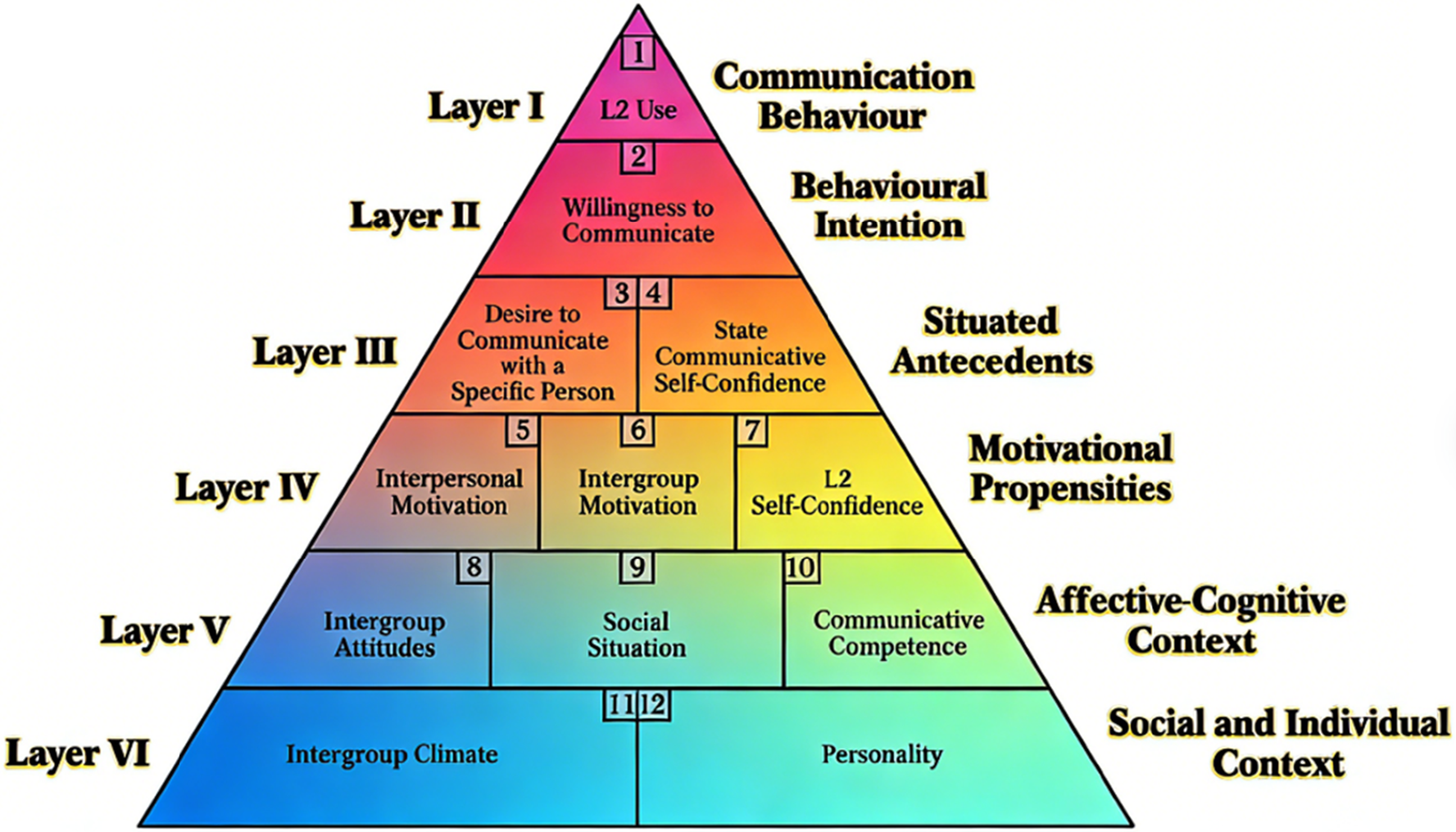
Figure 1. Long description
A pyramid illustrating the six-layer structure of the L2 willingness-to-communicate model. The layers progress from broader, more enduring influences at the base to more immediate, situation-specific influences near the top, culminating in communicative behavior. The model shows how contextual, motivational, cognitive, affective, and situational factors interact to shape willingness to communicate.
At the apex of the model lies actual L2 use, preceded by WTC. The layer immediately preceding WTC comprises situated antecedents. These variables fluctuate across situations and exert a direct influence on communicative behavior. The lower layers of the model include more enduring influences such as motivational propensities, affective–cognitive context, and broader social and individual factors. This multilevel framework provided the theoretical basis for understanding WTC as both enduring and dynamic in classroom contexts (Tai, Reference Tai2024; Zhang, Reference Zhang2026).
2.2 AI chatbot affordances through the WTC framework
AI chatbots have increasingly been explored as tools for supporting L2 speaking development due to their access to extensive linguistic resources, personalization, immediacy of feedback, and accessibility (Koç & Savaş, Reference Koç and Savaş2025; Şahin Kızıl et al., Reference Şahin Kızıl, Klimova, Pikhart and Parmaxi2025; Tai, Reference Tai2024; Tai & Chen, Reference Tai and Chen2024; Zhang, Reference Zhang2026). Recent advances in large language model (LLM)–based GAI systems have further expanded these possibilities (Tai & Chen, Reference Tai and Chen2024; Tang, Reference Tang2026; Wang & Zou, Reference Wang and Zou2026; Zhang, Reference Zhang2026). When interpreted through the WTC framework, these technological affordances may influence several layers of the WTC pyramid.
2.2.1 Layer III: Situated antecedents
Layer III consists of two main factors: the desire to communicate with a specific interlocutor and state communicative self-confidence. MacIntyre et al. (Reference MacIntyre, Clément, Dörnyei and Noels1998) emphasize the importance of affiliative motivation in shaping communicative behaviors. Learners are generally more inclined to interact with interlocutors perceived as accessible, familiar, or socially safe. AI chatbots may alter these affiliative conditions by providing constant availability, immediate responsiveness, and a low threshold for participation (Zhang, Reference Zhang2026). Such characteristics may increase interaction frequency and reduce barriers to initiating communication. Repeated exposure to AI-mediated interaction can foster familiarity and psychological safety, potentially increasing learners’ readiness to use the target language (Tai, Reference Tai2024; Zheng et al., Reference Zheng, Zhou, Chen and Ye2026).
Nevertheless, AI-mediated affiliation differs from human interpersonal affiliation. While AI does not trigger fear of negative evaluation or social embarrassment, it lacks emotional reciprocity characteristic of human interpersonal interaction (Wang & Zou, Reference Wang and Zou2026). Zhang (Reference Zhang2026) found that some learners – particularly those who prefer socially engaging communication – report that AI interaction feels impersonal or resembles self-directed rehearsal rather than authentic dialogue. These findings suggest that AI may reduce social risk while only partially replicating the motivational dynamics of human interaction.
State communicative self-confidence consists of perceived communicative competence and low communication anxiety (MacIntyre & Gregersen, Reference MacIntyre and Gregersen2022). A growing body of research suggests that learners interacting with AI chatbots often perceive themselves as more capable of expressing ideas and experimenting with language (Guan et al., Reference Guan, Zhang and Gu2025; Jiang & Chen, Reference Jiang and Chen2026; Wang & Zou, Reference Wang and Zou2026; Zhang, Reference Zhang2026). The low-pressure nature of AI interaction may reduce anxiety and encourage linguistic risk-taking (Koç & Savaş, Reference Koç and Savaş2025; Tai & Chen, Reference Tai and Chen2023; Zheng et al., Reference Zheng, Zhou, Chen and Ye2026). Several experimental studies report higher WTC levels during AI interaction than during peer- or teacher-led speaking activities (Koç & Savaş, Reference Koç and Savaş2025; Tai, Reference Tai2024; Zhang, Reference Zhang2026).
However, these positive outcomes are not universal. When AI responses become overly complex or lengthy, learners may experience comprehension difficulties or uneven conversational turn-taking (Tai & Chen, Reference Tai and Chen2024). Such challenges can reduce engagement and increase cognitive load (Xin & Derakhshan, Reference Xin and Derakhshan2025), suggesting that the effectiveness of AI-mediated interaction partly depends on learners’ ability to manage AI output.
2.2.2 Layer IV: Motivational propensities
Compared with the stronger evidence at the situational level, empirical support for AI’s influence on deeper motivational layers remains limited. AI chatbots may indirectly support interpersonal motivation by reducing social threat and increasing opportunities for interaction (Tai, Reference Tai2024; Wang & Zou, Reference Wang and Zou2026; Zhang, Reference Zhang2026). More plausibly, repeated successful AI-mediated interactions may contribute gradually to broader perceptions of L2 competence and self-confidence (Guan et al., Reference Guan, Zhang and Gu2025; Jiang & Chen, Reference Jiang and Chen2026). However, because AI lacks genuine social reciprocity, evidence for sustained changes in these deeper motivational propensities remains limited (Wang & Zou, Reference Wang and Zou2026; Zhang, Reference Zhang2026).
2.2.3 Layer V: Affective–cognitive context
The affective–cognitive layer includes learners’ emotional responses to the learning environment and their perceptions of communicative competence. Positive AI-mediated experiences may foster emotional engagement, confidence, and motivation (Wang & Zou, Reference Wang and Zou2026; Xin & Derakhshan, Reference Xin and Derakhshan2025). At the cognitive level, AI interaction can support communicative readiness by providing lexical suggestions, discourse models, and immediate feedback (Tai & Chen, Reference Tai and Chen2024; Zhang, Reference Zhang2026).
However, the extent to which learners benefit from these affordances depends largely on their ability to interact strategically with AI systems. Learners who understand how to formulate effective prompts, evaluate AI responses critically, and integrate AI-generated language into their own production are more likely to transform AI interaction into meaningful communicative preparation (Liu & Fan, Reference Liu and Fan2025; Zou et al., Reference Zou, Reinders and Amjad2026).
2.2.4 Layer VI: Social and individual context
The base layer of the WTC framework encompasses stable individual differences and broader social conditions. Within AI-mediated environments, learner agency plays an important role. Agency refers to learners’ capacity to regulate their learning, initiate action, and mobilize available resources (Wu et al., Reference Wu, Lee, Chai and Tsai2025). Learners with higher agency are more likely to use AI strategically for rehearsal, reflection, and language experimentation rather than relying passively on AI-generated output (Creely, Reference Creely2024; Wu et al., Reference Wu, Lee, Chai and Tsai2025). Through such engagement, AI interaction may reinforce competence beliefs and contribute to the development of communicative self-confidence. Conversely, excessive dependence on AI-generated responses may limit independent language processing and reduce opportunities for self-efficacy development (Creely, Reference Creely2024; Wu et al., Reference Wu, Lee, Chai and Tsai2025).
2.3 The facilitating role of prompt instruction and remaining gaps
Prompt formulation requires linguistic knowledge, task awareness, and metacognitive regulation (Koç & Savaş, Reference Koç and Savaş2025). When learners lack these skills, interaction with AI may remain superficial or lead to communication breakdown. These challenges suggest that explicit prompt instruction may help learners leverage AI more effectively for language learning (Şahin Kızıl et al., Reference Şahin Kızıl, Klimova, Pikhart and Parmaxi2025; Wu et al., Reference Wu, Lee, Chai and Tsai2025). However, most research on GAI-assisted language learning has been conducted in IDLE contexts where GAI use is largely self-directed (Tai, Reference Tai2024; Zhang, Reference Zhang2026; Zou et al., Reference Zou, Reinders and Amjad2026). Fewer studies have examined structured classroom integration. For example, Zheng et al. (Reference Zheng, Zhou, Chen and Ye2026) implemented a four-stage instructional sequence incorporating LLM-based support, while Chen et al. (Reference Chen, Zhi and Derakhshan2025) introduced an AI-powered speaking assistant (not GAI) into classroom tasks. Nevertheless, these studies did not provide systematic prompt instruction aimed at developing learners’ strategic control of AI interaction.
Consequently, little empirical evidence exists regarding how explicit prompt instruction influences learners’ WTC with both GAI and human interlocutors, particularly over time. Addressing this gap is essential for understanding how pedagogical design can harness AI affordances to support sustained communicative development in L2 classrooms.
3. Method
3.1 Research design and participants
To investigate the effects of prompt instruction on learners’ WTC with peers and with voice-enabled GAI, this study adopted a quasi-experimental longitudinal design with two instructional conditions: a prompt-instructed (PI) group and a self-directed (SD) group. In both conditions, learners used a voice-enabled GAI chatbot to prepare for weekly EFL oral discussion tasks over a six-week period. The key instructional difference was that the PI group received explicit teacher-led guidance on how to formulate prompts when interacting with GAI, whereas the SD group used the chatbot independently without structured prompting support (Figure 2). This design enabled comparisons across instructional condition (PI vs. SD), time, and interlocutor type. The six-week intervention length is consistent with recent experimental studies in AI-assisted language learning, which typically implement instructional interventions lasting four to six weeks (e.g., Chen et al., Reference Chen, Zhi and Derakhshan2025; Tang, Reference Tang2026; Zhang, Reference Zhang2026; Zheng et al., Reference Zheng, Zhou, Chen and Ye2026).
Experimental procedure and data collection timeline.
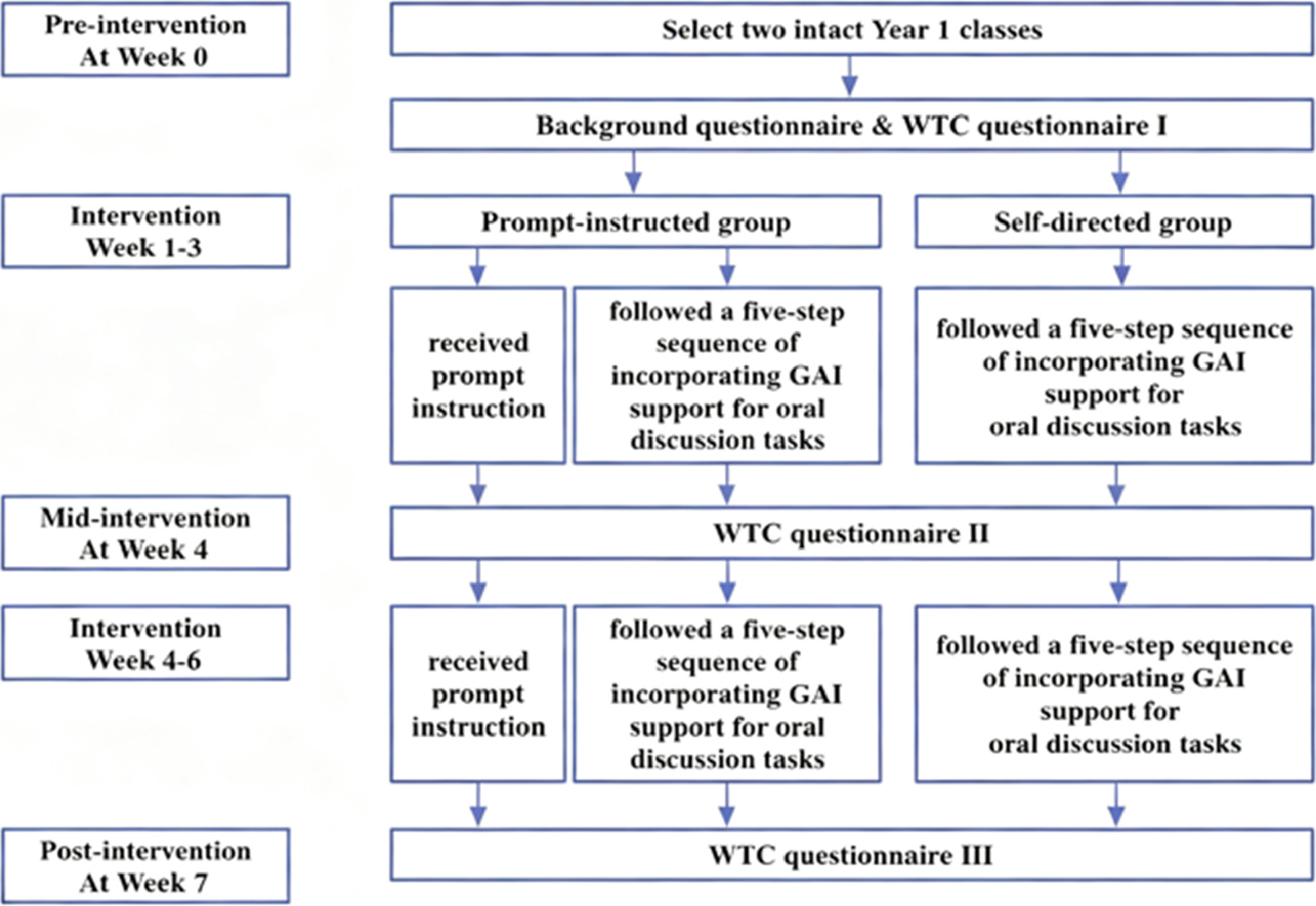
Figure 2. Long description
A flowchart illustrating the quasi-experimental research procedure: two intact Year 1 classes were assigned to a prompt-instructed group and a self-directed group. Data collection occurred at three time points: pre-intervention (Week 0, background questionnaire & WTC questionnaire I), mid-intervention (Week 4, WTC questionnaire II), and post-intervention (Week 7, WTC questionnaire III). Both groups completed a five-step sequence integrating generative AI support for oral discussion tasks across two intervention phases (Week 1–3 and Week 4–6); the prompt-instructed group additionally received prompt instruction.
A total of 80 first-year university students from two intact classes in the same science department at a second-tier Chinese university participated in the study. All students were enrolled in a mandatory College English course, which met weekly for three 45-minute sessions. The oral discussion tasks used in the study were part of the course syllabus. As non-English majors, these students often demonstrated low participation in oral discussions, a common challenge in EFL classrooms associated with language anxiety, limited self-confidence, and restricted opportunities for authentic communication (Chen & Yeh, Reference Chen and Yeh2026; Mei, Reference Mei2026; Wu et al., Reference Wu, Hapsari and Huang2026).
Independent-samples t tests confirmed that the two classes were comparable in English proficiency, learning motivation, and prior GAI experience, with no statistically significant differences observed (statistical significance was set at p < .05). Participants’ English proficiency was jointly assessed by the course instructor and the researchers using the Qualitative Aspects of Spoken Language Use descriptors from the Common European Framework of Reference for Languages (CEFR) (Council of Europe, 2020). Inter-rater agreement was 89%, indicating satisfactory consistency in proficiency classification. The proficiency distribution was similar across the two classes: approximately 34% at A1 (Beginner), 45% at A2 (Elementary), 18% at B1 (Intermediate), and 3% at B2 level (Upper-Intermediate). Students’ learning motivation was measured using a 7-point Likert scale on which students rated how much they enjoyed learning English. Results indicated relatively low motivation levels across both classes (M/SD = 3.31/.73; M/SD = 3.56/.55). Prior experience with voice-enabled GAI was also measured on a 7-point scale; most students reported using such tools between several times per month and once per week. The classes were therefore randomly assigned to the SD group (n = 39) and the PI group (n = 41). Within each class, students were organized into eight small discussion groups of four to six members, with group composition balanced to include a range of proficiency levels.
3.2 Instruments
Two types of instruments were used: GAI chatbots equipped with ASR and TTS functions and questionnaires.
Participants interacted with GAI chatbots through their smartphones. The chatbot Doubao (豆包) was recommended due to its relatively reliable speech recognition and conversational capabilities, and its interface automatically displayed written transcriptions of the oral exchanges. Although four students (two in each group) reported using alternative GAI platforms, given the small number of cases, any potential influence of platform-related variability on the overall findings was likely limited.
Questionnaire data were collected at three stages of the study. The pre-instruction questionnaire gathered background information and measured baseline WTC (Test 1). The mid-instruction questionnaire measured WTC again (Test 2), while the post-instruction questionnaire included both WTC scales (Test 3) and open-ended questions about learners’ interaction experiences.
The WTC scales were adapted from Tai (Reference Tai2024) to assess learners’ WTC and communicative self-confidence in peer (RQ1) and GAI-mediated (RQ2) interactions. An example item in the WTC dimension is “Talk to GAI about an assignment.” Communicative self-confidence encompasses anxiety (e.g., “I am not worried about making mistakes”) and communicative ability (e.g., “I can say what I want to say in English”). All items were rated on a 5-point Likert scale ranging from 1 (strongly disagree) to 5 (strongly agree). Reliability analysis indicated high internal consistency, with Cronbach’s alpha values of .90 and .94. Given the relatively small sample size, these reliability estimates should nevertheless be interpreted with some caution.
The open-ended questions in Test 3 were also adapted from Tai (Reference Tai2024), including the following for discussion tasks: (1) How do you feel about communicating in English with your group? (2) How do you feel about communicating in English with GAI? (3) What do you learn from communicating in English with GAI and your group? The questions were intentionally phrased in a neutral, non-leading manner to elicit participants’ authentic perceptions rather than expected responses (Robson, Reference Robson2011). Responses were thematically analyzed to identify perceived factors shaping learners’ WTC with peers and with GAI under the two instructional conditions (for RQ3).
All questionnaires were administered in the participants’ mother language, Chinese, to ensure comprehension and minimize linguistic constraints. Participants were free to respond in either Chinese or English, were explicitly informed that there were no “correct” or preferred answers, and were encouraged to respond honestly based on their own experiences.
3.3 Instruction procedure
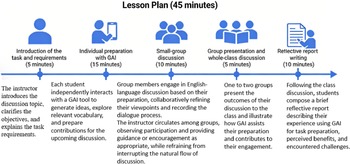
The study followed a human–GAI–human learning sequence integrated into regular classroom activities. Following WTC Test 1, the instructor then introduced the basic functions of voice-enabled GAI chatbots and demonstrated how they could be used to support preparation for oral discussion tasks. From Weeks 1 to 6, both groups completed weekly discussion tasks following a five-step human–GAI–human sequence (Figure 3). Discussion topics were aligned with the course syllabus and included issues such as education systems, technological innovation, and creativity.
Oral discussion task sequence incorporating GAI support.
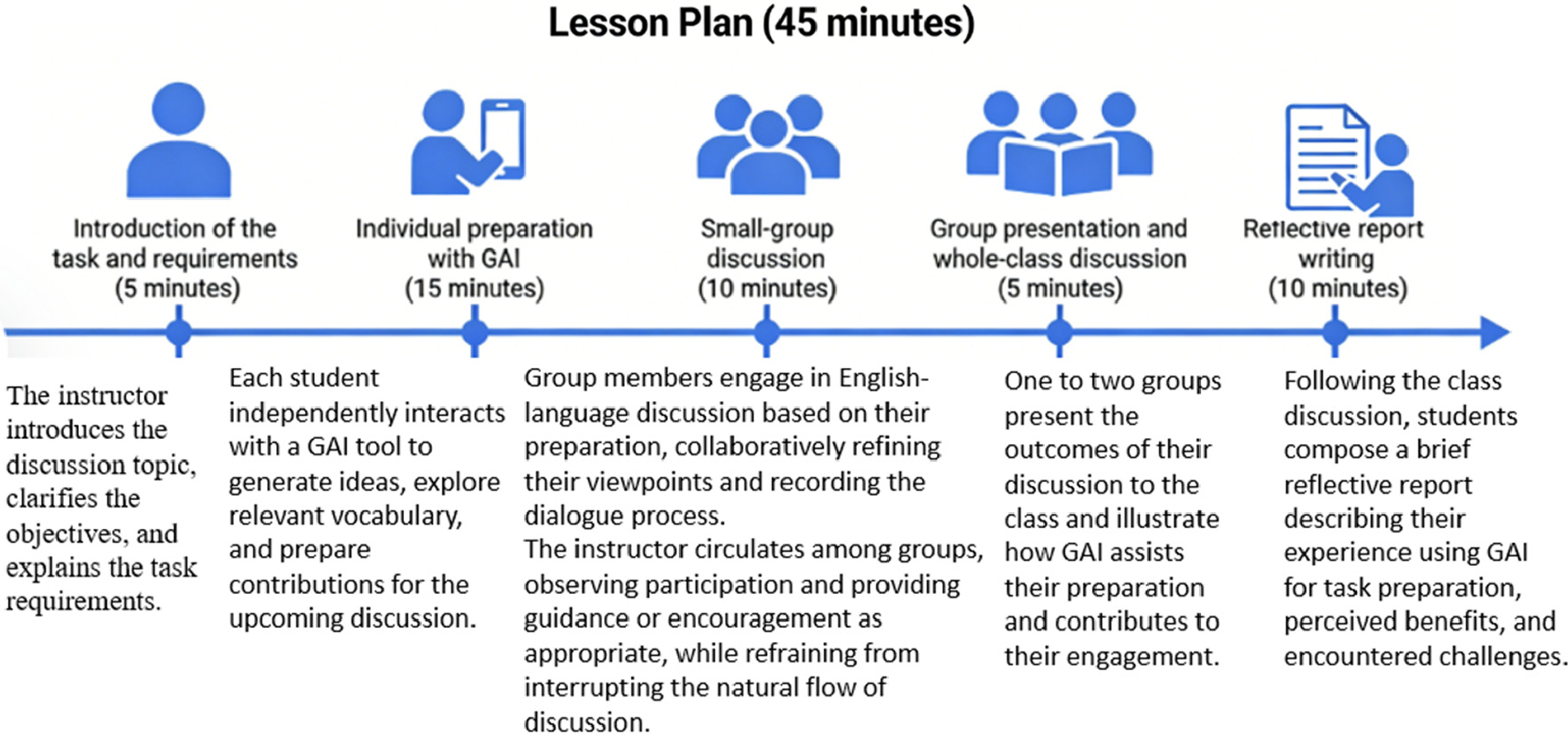
Figure 3. Long description
A chart showing a timeline of a 45-minute lesson plan integrating generative AI (GAI) for English oral discussion tasks. The five sequential phases are: (1) 5-minute introduction of the task and requirements by the instructor; (2) 15-minute individual preparation where students use GAI to generate ideas and vocabulary; (3) 10-minute small-group English discussion with instructor observation; (4) 5-minute group presentation and whole-class discussion; (5) 10-minute reflective report writing for students to document their GAI learning experience.
The reflective report in Step 5 included (1) a description of the content and process of practicing oral conversations with GAI, supported by screenshots; (2) newly acquired vocabulary, phrases, and expressions from GAI interactions, with examples of their use in discussions; (3) self-identified oral language issues (e.g., pronunciation, fluency, or clarity of ideas) and perceived progress; and (4) suggestions and expectations for future oral English learning with GAI. The instructor and researchers reviewed the reports, and the instructor provided feedback in the following week, focusing on students’ effectiveness in using GAI and offering suggestions to address identified difficulties.
Particularly, the prompt-instruction group received explicit teacher-led instruction (Figure 4). These four-step instructional measures follow SLA theories: Step 1 helped students generate smaller, more manageable chunks of GAI output and avoid receiving long, essay-like responses that were difficult to process. Drawing on Krashen’s (Reference Krashen and Alatis1992) input hypothesis, this step was intended to facilitate access to comprehensible input – language that is understandable but slightly beyond their current level (i + 1). Steps 2–3 modeled strategies for acknowledging peers’ contributions, initiating follow-ups, and sustaining discussion turns. This led to richer dialogic exchanges, which are crucial for developing turn-taking skills. Step 4 allowed GAI to function as a personal tutor who provides feedback. These steps helped learners to equip themselves with linguistic and communication resources to allow negotiated interaction between human and AI, and subsequently between peers (Long, Reference Long1983).
Steps of prompt instruction with examples.
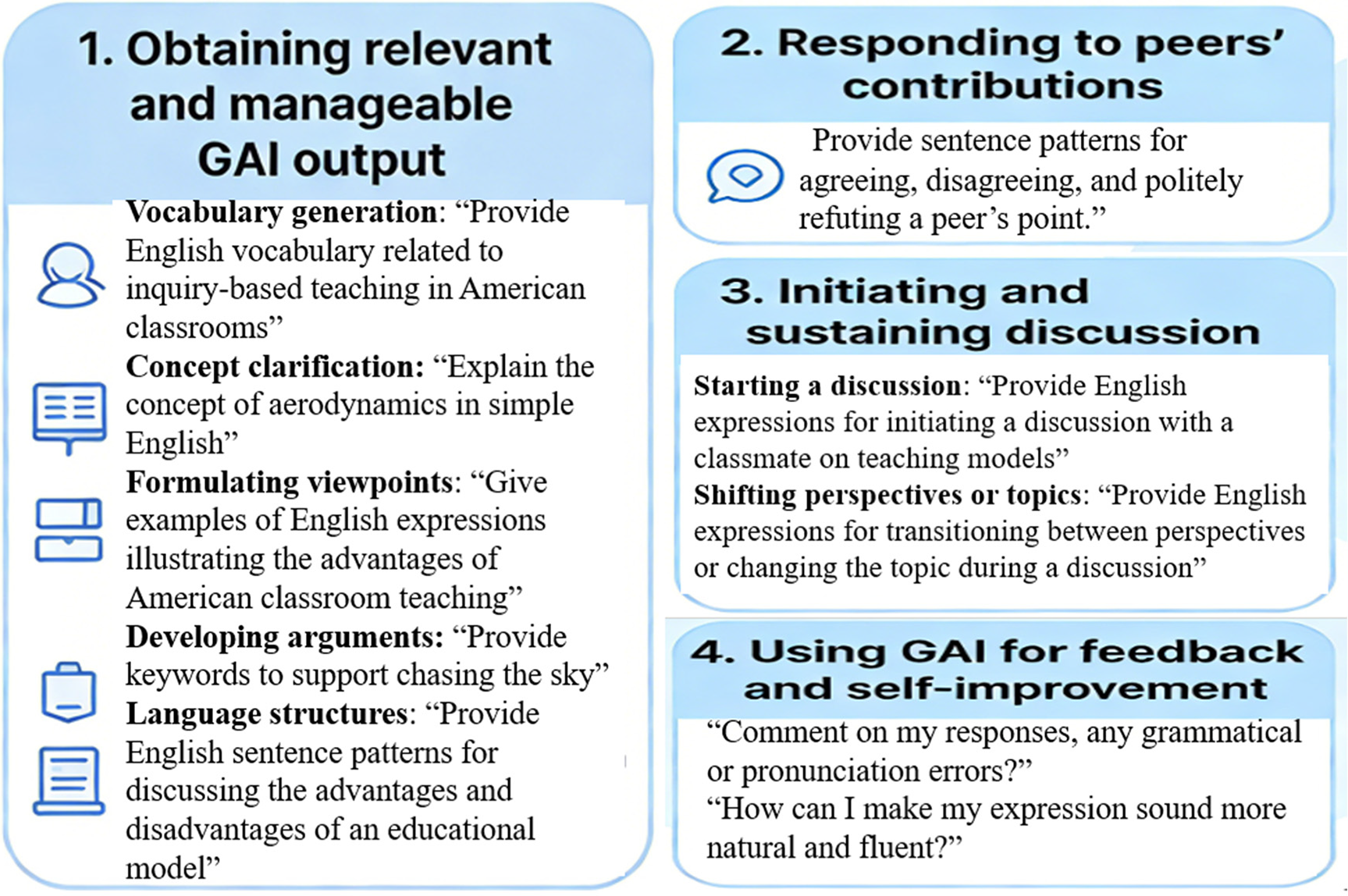
Figure 4. Long description
A chart presenting four categories of GAI prompt types to support students’ English oral discussion, with illustrative sample prompts. The four categories are: 1. Obtaining relevant and manageable GAI output (prompts for vocabulary generation, concept clarification, formulating viewpoints, developing arguments, and language structures); 2. Responding to peers’ contributions (prompts for sentence patterns to agree, disagree, and politely refute); 3. Initiating and sustaining discussion (prompts for opening discussion and shifting perspectives or topics); 4. Using GAI for feedback and self-improvement (prompts for checking grammar, pronunciation, and improving expression fluency).
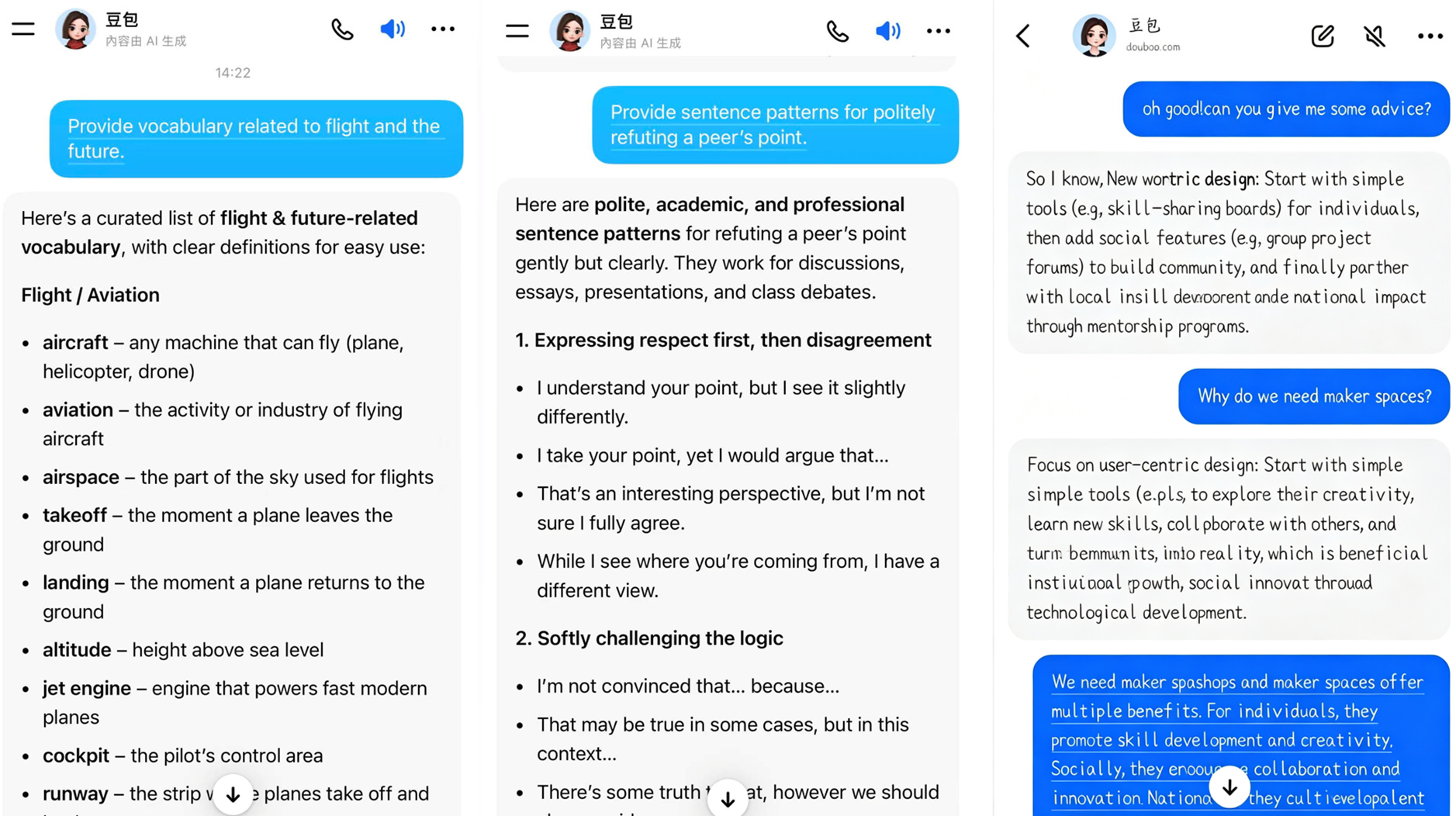
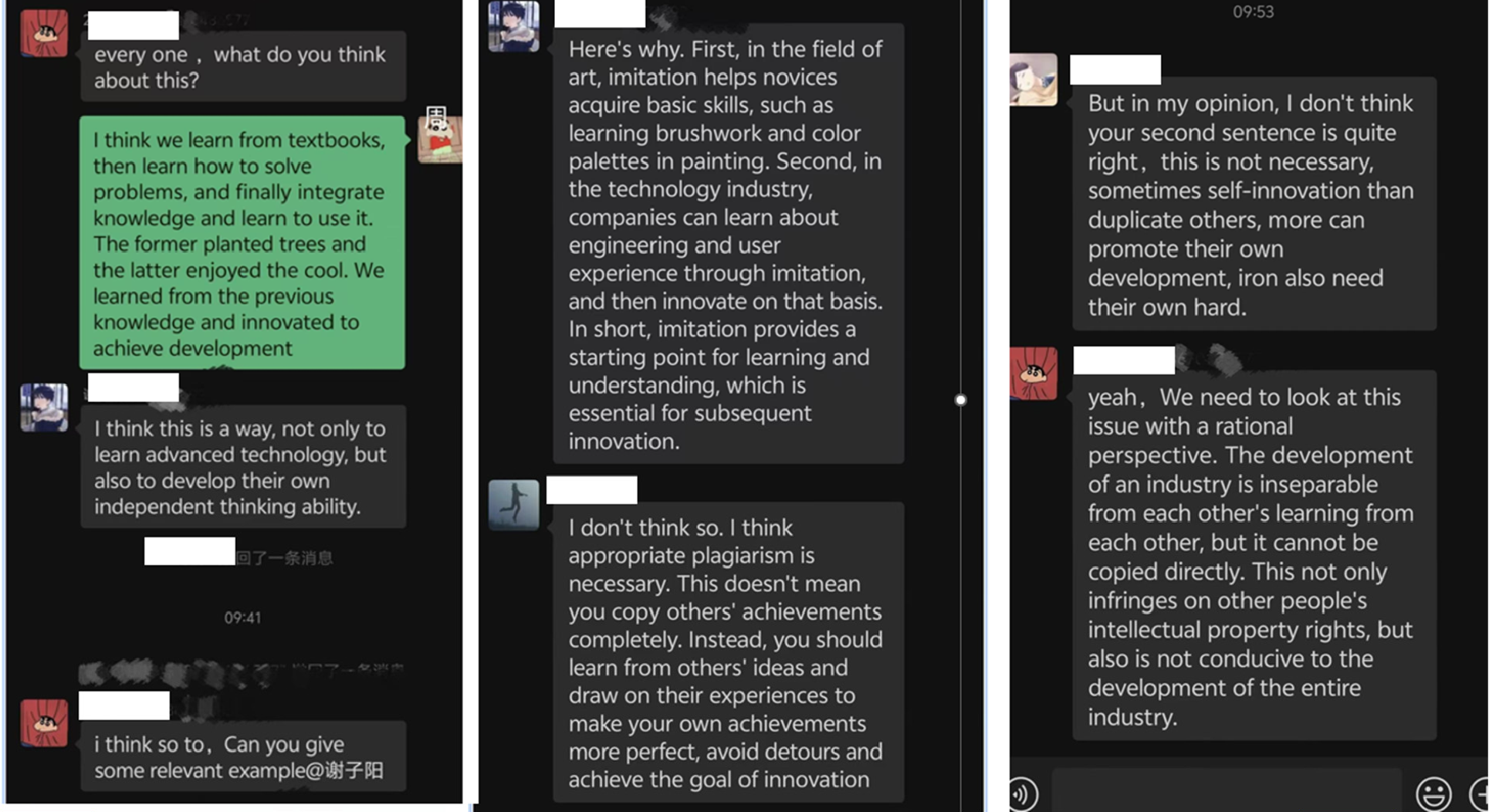
Figure 5 shows a screenshot of a voice-based GAI interaction. Students interacted with GAI orally, while ASR converted their speech into written text displayed in the interface. GAI responses were also displayed as text and could be delivered through TTS. To examine students’ in-class group discussions, which could not be fully captured during class time, groups were required to recall the ideas exchanged and the main content of the interaction and submit a written representation after class. In some cases, groups used WeChat to reconstruct and visually represent the content of their oral discussions, resulting in the typed messages shown in Figure 6.
Screenshot of the GAI interaction interface.
Written documentation of an oral group discussion in the PI group.
3.4 Data analysis
This study adopted an explanatory mixed-methods design (Creswell & Plano Clark, Reference Creswell and Plano Clark2018), combining quantitative analysis of WTC scores with qualitative analysis of learners’ reflections.
To address the quantitative research questions, two separate 2 (Group: PI vs. SD) × 3 (Time: pre, mid, post) mixed-design ANOVAs were conducted for WTC with peers and WTC with GAI, using SPSS (Version 24). Prior to the analyses, data were screened for normality using Shapiro–Wilk tests and skewness and kurtosis values. Homogeneity of variance was examined using Levene’s test. Effect sizes were reported using partial eta squared (η2). Following Cohen’s (Reference Cohen1988) guidelines, values of approximately .01, .06, and .14 represent small, medium, and large effects. Baseline equivalence between the PI and SD groups was examined using independent-samples t tests. These results demonstrate that the groups did not differ significantly in their WTC with peers, t(78) = .48, p = .63, or GAI, t(78) = .53, p = .60.
Qualitative responses from the open-ended questionnaire were analyzed using thematic analysis following Braun and Clarke’s (Reference Braun and Clarke2006) six-phase framework: (1) familiarizing ourselves with the data through repeated reading and note-taking; (2) generating initial codes, informed by both the data and MacIntyre et al.’s (Reference MacIntyre, Clément, Dörnyei and Noels1998) WTC framework; (3) searching for potential themes; (4) reviewing and refining themes; (5) defining and naming themes; and (6) interpreting and reporting themes using representative participant excerpts. Two researchers independently coded the data to identify recurring themes related to learners’ experiences with GAI-supported interaction. Inter-coder agreement reached 90%, and disagreements were resolved through discussion until consensus was achieved.
4. Results
4.1 Development of WTC with peers (RQ1)
For WTC with peers (RQ1), a mixed-design ANOVA revealed a significant main effect of time, F(1.346, 104.95) = 94.23, p < .001, η2 = .547, indicating that learners’ WTC with peers increased significantly across the three measurement points. However, the main effect of group was not significant, F(1, 78) = 3.08, p = .083, η2 = .038, nor was the Group × Time interaction, F(1.346, 104.95) = 2.51, p = .106, η2 = .031 (Table 1). These results suggest that although WTC with peers increased over time, the magnitude of change did not differ significantly between the PI and SD groups.
Mixed-design ANOVA results for WTC with peers

Table 1. Long description
Table showing mixed-design ANOVA results for WTC with peers, listing Type III sum of squares (SS), degrees of freedom (df), F statistic, p-value, and partial eta squared (η²) for the effects of Time, Group, and Group × Time interaction. The note indicates ***p < .001.
*** p < .001.
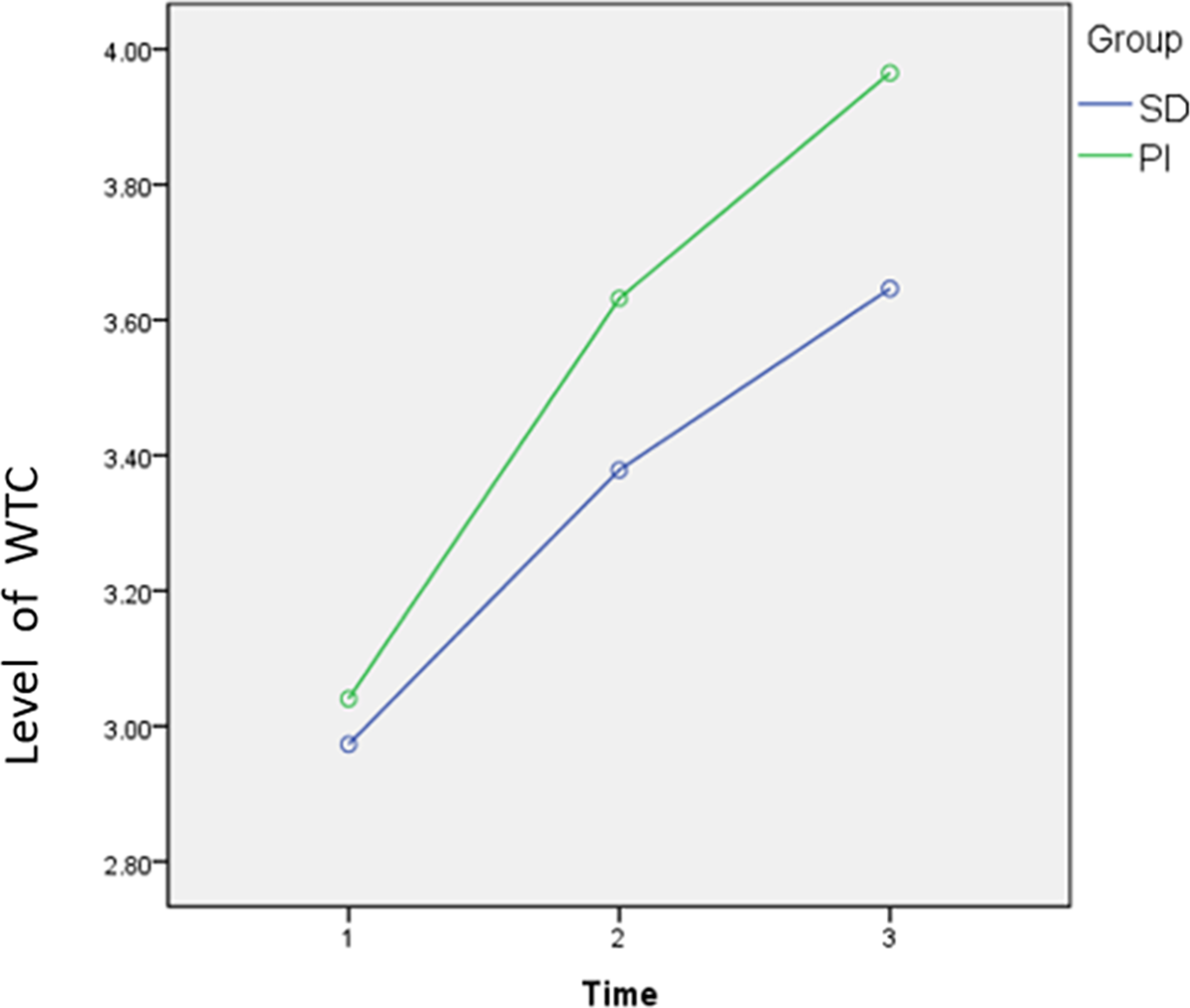
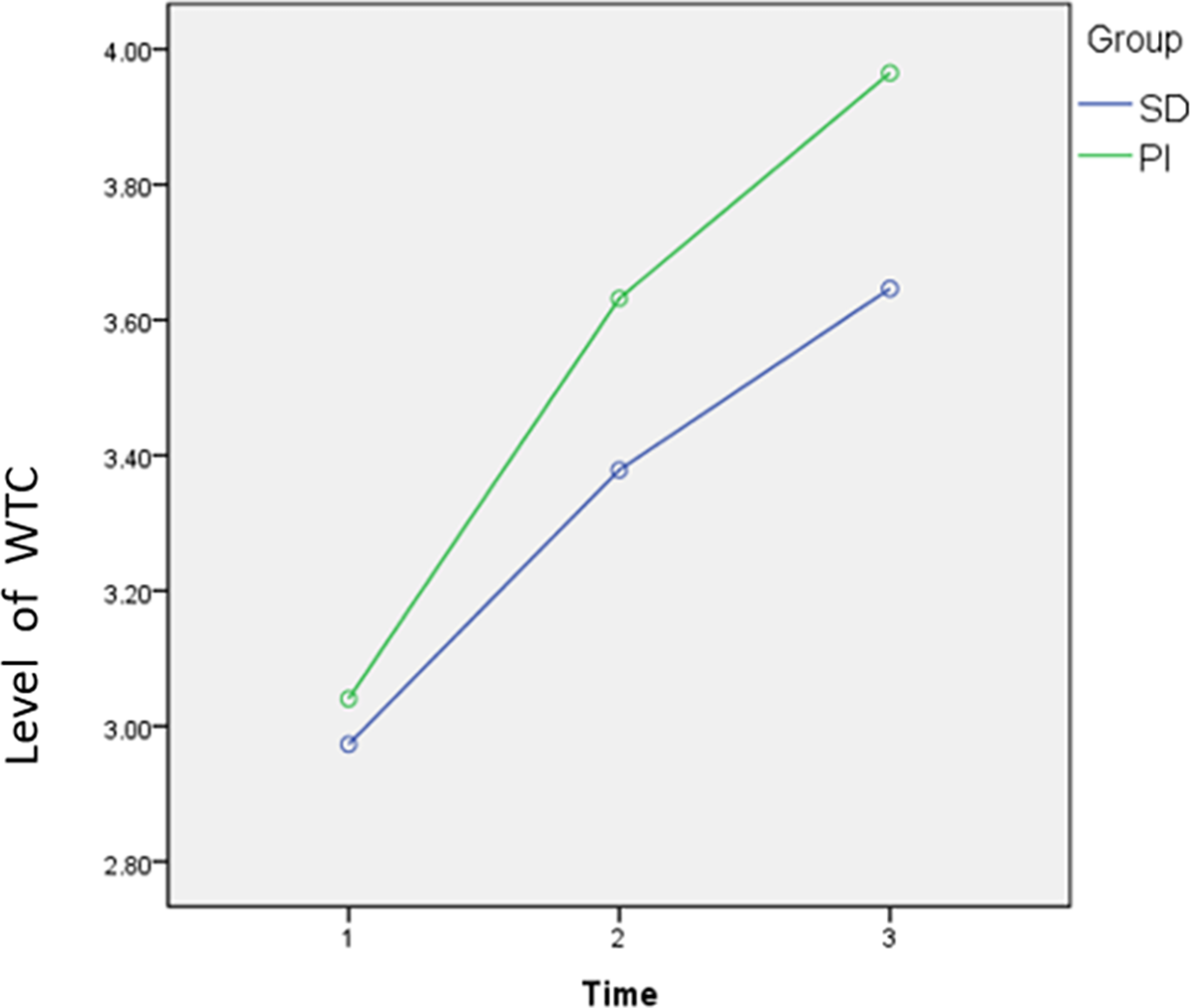
Descriptive statistics showed a steady increase in WTC with peers in both groups (Table 2, Figure 7). In the SD group, mean scores rose from 2.97 at pre-instruction to 3.38 at mid-instruction and 3.64 at post-instruction. Similarly, in the PI group, WTC increased from 3.04 to 3.63 and then to 3.96 across the three time points. Bonferroni pairwise comparisons indicated that WTC with peers increased significantly across all time points. Scores at mid-instruction were significantly higher than at pre-instruction (M diff = .498, p < .001), and post-instruction scores were significantly higher than both pre-instruction (M diff = .801, p < .001) and mid-instruction (M diff = .302, p < .001).
Descriptive statistics of the WTC scores on Tests 1–3

Table 2. Long description
Table 2 displays the mean and standard deviation of Willingness to Communicate (WTC) scores across three test sessions (Tests 1–3) for two participant groups: SD (N = 39) and PI (N = 41). Scores are divided into Peer and GAI ratings for each test. For the SD group, Peer ratings rise from 2.97/0.55 in Test 1 to 3.64/0.66 in Test 3, while GAI ratings increase from 2.91/0.70 to 3.97/0.68. For the PI group, Peer ratings increase from 3.04/0.69 in Test 1 to 3.96/0.60 in Test 3, while GAI ratings rise from 3.01/0.95 to 4.25/0.52. Overall, scores increase across consecutive tests, with GAI ratings consistently higher than Peer ratings in Tests 2 and 3.
The WTC with peer scores over time for the self-directed (SD) and prompt (PI) groups.
4.2 Development of WTC with GAI (RQ2)
For WTC with GAI (RQ2), the analysis also revealed a significant main effect of time, F(1.383, 107.84) = 119.89, p < .001, η2 = .606, indicating substantial growth in learners’ WTC with GAI over the instructional period. In addition, a significant main effect of group was found, F(1, differed between the two instructional conditions. However, the Group × Time interaction was not significant, F(1.383, 107.84) = 1.49, p = .231, η2 = .019, indicating that the rate of change over time did not significantly differ between groups (Table 3).
Mixed-design ANOVA results for WTC with GAI

Table 3. Long description
Table presenting mixed-design ANOVA results examining WTC in interactions with generative AI. Columns display Type III sum of squares (SS), degrees of freedom (df), F statistic, p-value, and partial eta squared (η²) for three effects: Time, Group, and the Group × Time interaction. The Time effect yielded F = 119.89, p < .001, η² = .606; the Group effect yielded F = 4.091, p = .047, η² = .050; the Group × Time interaction yielded F = 1.487, p = .231, η² = .019. A note specifies *p < .05 and ***p < .001.
*p < .05. ***p < .001.
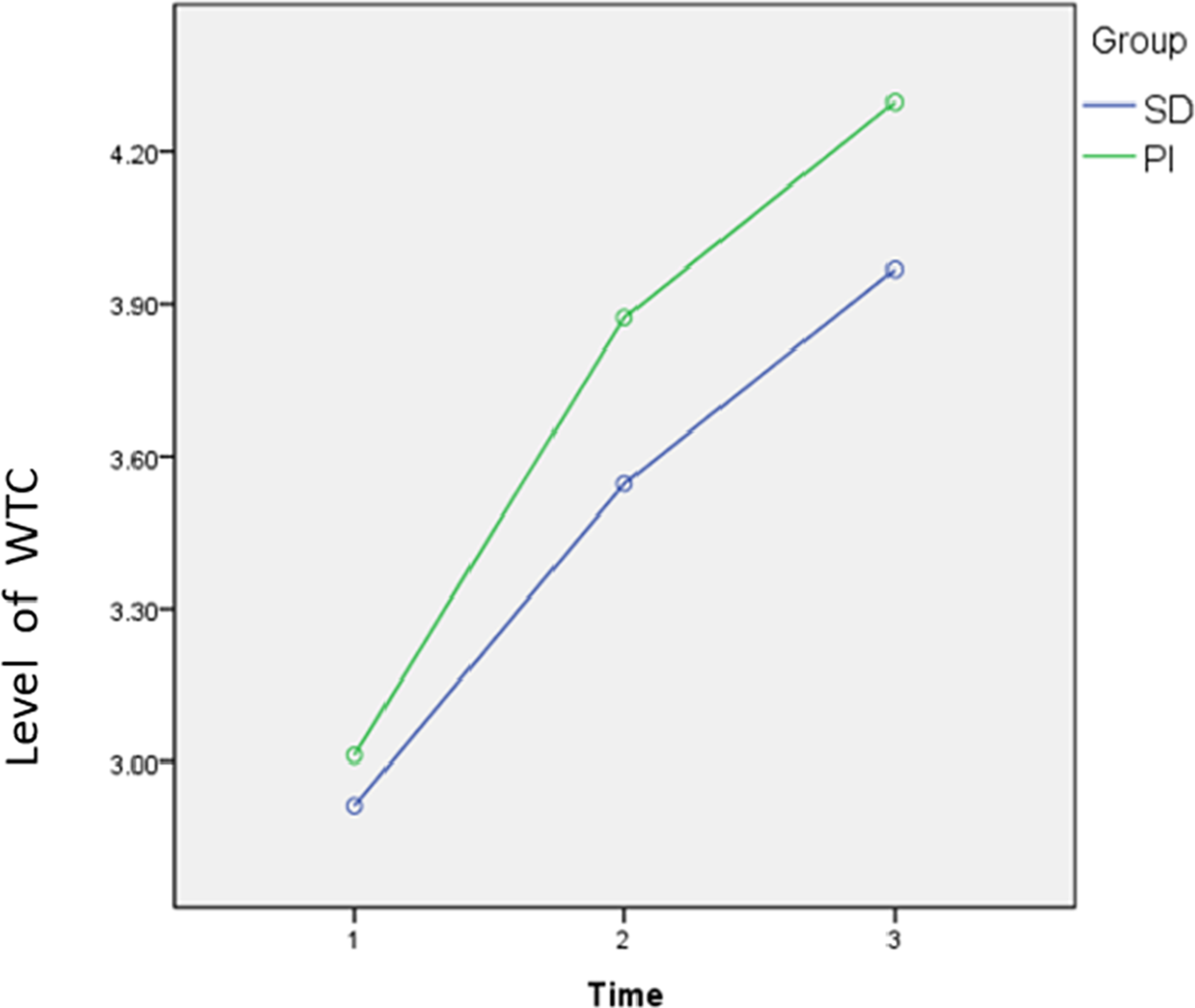
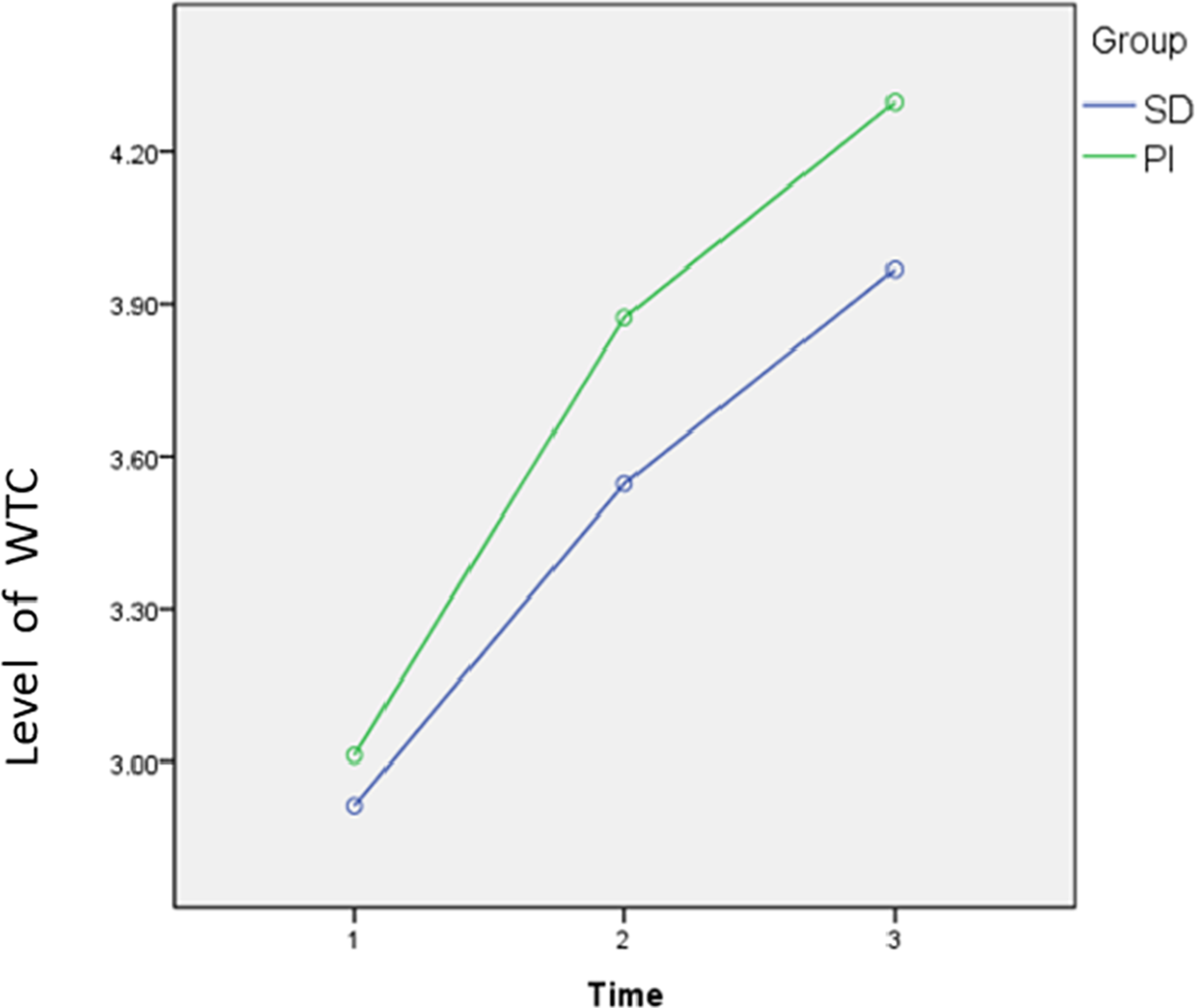
Descriptive results again indicated consistent increases over time (Table 2, Figure 8). In the SD group, WTC with GAI increased from 2.91 at pre-instruction to 3.55 at mid-instruction and 3.97 at post-instruction. In the PI group, higher WTC scores were observed at each stage, increasing from 3.01 to 3.88 and 4.25. Pairwise comparisons showed that WTC with GAI increased significantly from pre-instruction to mid-instruction (M diff = 0.748, p < .001) and from mid-instruction to post-instruction (M diff = 0.423, p < .001). The difference between pre- and post-instruction was also significant (M diff = 1.171, SE = 0.097, p < .001). These results indicate a consistent and substantial increase in learners’ WTC with GAI throughout the instructional period.
The WTC with GAI scores over time for the self-directed (SD) and prompt (PI) groups.
Overall, the findings indicate substantial longitudinal growth in WTC with both peers and GAI, while prompt instruction was associated with generally higher WTC with GAI but did not significantly alter the trajectory of change over time.
4.3 Perceived factors influence learners’ WTC with peers and with GAI (RQ3)
Qualitative analysis identified five main categories of factors influencing learners’ WTC. A hierarchical coding framework for each category, including themes, subthemes, codes, frequencies, and representative participant excerpts, is shown in the appendices in the supplementary material.
4.3.1 Category 1: Linguistic scaffolding in human–GAI interaction
The most prominent theme across both groups concerns GAI’s linguistic support, particularly its ability to provide corrective feedback and language models (Appendix 1). Students frequently reported that AI identified errors in grammar and sentence structure while offering clear explanations. As one PI student explained, “GAI always helps me check sentence structure, tense, and vocabulary collocation, and explains the reasons for errors in a simple and understandable way” (Huang).
Participants emphasized that this feedback encouraged iterative interaction with GAI. Discovering mistakes prompted learners to revisit the task, revise their language, and practice repeatedly. Chen explained, “AI responds immediately and points out problems in pronunciation and word choice. If you practice several times, you become more natural.” These accounts suggest that prompt corrective feedback not only supports linguistic accuracy but also sustains WTC with GAI by encouraging iterative use.
In addition to error correction, both groups mentioned learning colloquial expressions and observing natural phrasing in AI responses. For instance:
When chatting with AI, I pay attention to the natural and authentic expressions it uses and write them down, such as “piece of cake” and “break a leg.” As I accumulate more expressions, I can use them spontaneously in my own speech. (Huang)
Notably, participants also noted that feedback delivered privately through AI increased confidence because mistakes could be addressed without social embarrassment. Within MacIntyre et al.’s (Reference MacIntyre, Clément, Dörnyei and Noels1998) six-layer WTC framework, these findings primarily correspond to perceived communicative competence in Layer V. Learners’ reports of reduced anxiety and increased confidence when receiving feedback privately also relate to state communicative self-confidence in Layer III. Repeated opportunities to practice and receive feedback may further contribute to the development of L2 self-confidence in Layer IV.
Although these linguistic affordances were reported in both groups, PI students more frequently described strategic engagement with AI feedback, such as reviewing errors, categorizing them, and conducting targeted practice. Another notable difference concerns perspective expansion. PI students frequently reported requesting alternative viewpoints from GAI to support argument development, as Hou noted: “GAI can offer suggestions when we present our viewpoints. It also detects details that we may have overlooked.” In contrast, SD learners more often attributed perspective diversification to peer discussion (Appendix 2). This contrast was presumably attributable to prompt instruction.
4.3.2 Category 2: Authentic communication in human–human interaction
Peer interaction was primarily associated with affordances of real-time communication (Appendix 2). Students emphasized that peer discussions required spontaneous responses and adaptation to others’ reactions. As Huang noted, “Talking with classmates feels more like real-life conversation because you have to respond immediately and adapt to their reactions.” Students explained that unlike GAI, peer communication involved unpredictability and reciprocal exchange. Although this immediacy sometimes created communicative pressure, it also enhanced the authenticity of the speaking experience. These accounts indicate that while GAI interaction primarily supported linguistic preparation and rehearsal, peer communication provided opportunities for spontaneous language use and authentic social exchange. Learners perceived these affordances as improving their language skills, thereby fostering WTC. Within the WTC framework, these affordances primarily relate to perceived communicative competence in Layer V, while the resulting confidence to participate may also involve state communicative self-confidence in Layer III and L2 self-confidence in Layer IV.
4.3.3 Category 3: GAI-supported communication self-confidence and situational affordances in human–GAI interaction
Students frequently reported perceiving AI as a non-judgmental conversational partner, which encouraged freer expression and experimentation with language (Appendix 3). Jin described practicing everyday scenarios with AI “like chatting with a friend,” suggesting that anthropomorphizing the chatbot helped reduce psychological barriers to communication. Huang similarly noted that psychological safety promoted “more confidence in expressing opinions.” These themes primarily correspond to state communicative self-confidence in Layer III and L2 self-confidence in Layer IV. Positive motivational dispositions are also relevant to Layer IV (Motivational Propensities).
Participants also valued the accessibility and convenience of GAI interaction. Liang explained: “When I struggle due to the lack of an English-speaking environment, AI can talk with me and provide authentic conversational contexts, which has improved my speaking ability and increased my interest in learning English.” The perceived accessibility of GAI is also relevant to Layer III, particularly the desire to communicate with a readily available interlocutor. These psychological affordances were mentioned in both groups but were described more extensively in the PI group, suggesting deeper engagement with GAI as a communicative resource.
4.3.4 Category 4: Social pressure and support in human–human interaction
Compared with AI interaction, peer communication was perceived as offering less psychological support, while occasionally eliciting evaluation-related anxiety. Some learners reported feeling nervous when speaking with classmates (Appendix 4). The emerging theme of communication anxiety represents an affective barrier to state communicative self-confidence in Layer III and may constrain the development or expression of L2 self-confidence in Layer IV.
Nevertheless, several participants described this pressure as productive because it required real-time communication. Li observed: “Communicating with group members in English makes me feel nervous but rewarding. It helps train real-time response ability, although I need to overcome barriers to expression.” This comment suggests that while peer interaction may elevate anxiety, it simultaneously promotes spontaneity and communicative resilience.
Group climate also emerged as an important factor. A supportive atmosphere encouraged participation and reduced communicative barriers. As Hong noted, “I think there is a good atmosphere for communication in English in our group. Everyone is very active and helps each other.” Unlike the pattern observed in GAI interaction, these peer-related psychological factors were reported in similar frequencies across both instructional groups. The interpersonal support and group climate described by participants are particularly relevant to the affective–cognitive context in Layer V, as these contextual conditions may shape learners’ readiness to engage in communication.
4.3.5 Category 5: Synergistic effects in human–GAI–human collaboration
Students described complementary roles for AI and peer interaction (Appendix 5). AI was perceived as supporting linguistic accuracy, while peer discussion strengthened communicative fluency and authentic interaction. As Liu commented, “From AI, I learn accuracy in language. From the group, I gain practical communication skills and learn natural expressions. They complement each other.”
Students also described a cyclical learning process in which AI-assisted preparation, peer discussion, and collaborative practice reinforced each other. AI was often used to generate ideas, vocabulary, or practice activities, which were then applied and consolidated during group discussions. As Wu described:
During discussions, we communicate with group members to exchange ideas, develop new understanding, and share newly learned words, phrases, and sentence patterns … In this way, we can apply what we’ve just learned and consolidate it through practice.
Importantly, several participants reported that preparation with GAI increased their readiness to participate in peer interaction. Zhang noted, “With preparation using AI, everyone is more willing to express their opinions. The relationships among team members have become closer, making our communication more effective and efficient. I am no longer afraid of speaking English.” Such reflections suggest that AI-mediated rehearsal may facilitate a transfer of linguistic confidence to human communication. Taken together, the complementary roles of GAI-supported preparation and peer interaction were associated with learners’ confidence, perceived communicative competence, and readiness to communicate, corresponding primarily to constructs represented across Layers III–V.
The qualitative findings therefore complement the quantitative results by showing that learners’ experiences with GAI and peers involved multiple interconnected antecedents of WTC rather than mapping neatly onto individual layers.
5. Discussion
Quantitative results showed that WTC with peers increased over time in both instructional conditions, with the PI and SD groups demonstrating similar developmental trajectories (RQ1). For WTC with GAI (RQ2), learners receiving prompt instruction reported higher overall WTC than those in the SD condition across measurement points, although the two groups again demonstrated similar developmental trajectories. The qualitative findings from RQ3 are explicitly integrated into Sections 5.1 and 5.2 to explain and interpret the quantitative patterns identified in RQ1 and RQ2. Section 5.3 addresses the pedagogical implications arising from the findings.
5.1 WTC with peers across prompt-instruction and self-directed conditions
Importantly, both the PI and SD groups demonstrated significant increases in WTC with peers over time. Qualitative findings suggest that two complementary processes may have contributed to this development within the human–GAI–human learning cycle. First, GAI-supported preparation provided linguistic scaffolding that helped learners develop ideas, rehearse language, and refine their expressions before entering peer discussions. Across both groups, learners reported greater readiness and clearer expression after preparing with GAI. This finding is consistent with Wu et al. (Reference Wu, Lee, Chai and Tsai2025) and Zou et al. (Reference Zou, Reinders and Amjad2026), who suggest that GAI-supported preparation may increase learners’ readiness to participate in subsequent peer discussions. Such positive GAI-mediated experiences may also further foster emotional engagement, confidence, and motivation (Wang & Zou, Reference Wang and Zou2026; Xin & Derakhshan, Reference Xin and Derakhshan2025), potentially creating more favorable conditions for subsequent peer communication. From a WTC perspective, these findings suggest that GAI functioned not only as a practice resource but also as a potential mediator of the cognitive and affective conditions underlying subsequent communication (Layer V). Importantly, these forms of support were also available to SD learners, who engaged in repeated cycles of GAI-supported preparation and received teacher feedback on their use of GAI. Second, peer discussion itself provided opportunities for authentic interaction, collaborative meaning-making, and negotiation of perspectives – processes that have been associated with increased WTC in previous SLA research (e.g., Tai & Chen, Reference Tai and Chen2024). The combination of GAI-supported preparation and subsequent peer interaction may therefore help explain why both instructional groups demonstrated similar developmental trajectories in peer-related WTC.
While previous studies have primarily examined learners’ WTC with GAI or compared WTC across GAI and human interlocutors (e.g., Zhang, Reference Zhang2026; Zheng et al., Reference Zheng, Zhou, Chen and Ye2026), the present findings suggest a possible transfer process whereby communicative resources and confidence developed during GAI-supported preparation may carry over into subsequent human interaction. This possibility extends previous research, which has documented reduced anxiety and improved performance in GAI-supported learning environments (e.g., Peng & Liang, Reference Peng and Liang2026; Zheng et al., Reference Zheng, Zhou, Chen and Ye2026) but has paid less attention to whether such benefits extend to subsequent peer communication (Guan et al., Reference Guan, Zhang and Gu2025).
5.2 WTC with GAI across prompt-instruction and self-directed conditions
Within a classroom context in which both the PI and SD groups received GAI-supported preparation, both groups demonstrated similar developmental trajectories across the three measurement points. Qualitative findings help explain this pattern. Learners in both groups valued GAI’s linguistic support, immediate feedback, and psychologically safe and readily accessible communication environment, consistent with previous research on GAI-mediated communication (e.g., Tai & Chen, Reference Tai and Chen2024; Zhang, Reference Zhang2026). Participants also reported that corrective feedback encouraged them to rehearse and refine their language repeatedly. Previous studies have similarly found that interaction with GAI chatbots can reduce communication anxiety and support learners’ confidence in L2 communication (e.g., Mei, Reference Mei2026; Zhang, Reference Zhang2026; Zheng et al., Reference Zheng, Zhou, Chen and Ye2026). While most applications of the WTC model have focused on human–human interaction (Peng & Liang, Reference Peng and Liang2026), the present findings suggest that GAI affordances may activate multiple antecedents of WTC in human–GAI–human communication. At the situational level (Layer III), GAI may increase the perceived accessibility of the interlocutor and reduce affective barriers to communication. Repeated opportunities to rehearse language and receive feedback may further support perceived communicative competence (Layer V) and self-confidence (Layer IV), while fostering positive motivational dispositions toward communication (Layer IV). Because the study was conducted in an authentic classroom context, learners in both conditions received teacher feedback on their use of GAI rather than being left without pedagogical support when engaging with a relatively new technology. Thus, the comparison concerned two modes of supported GAI engagement – prompt-instructed and self-directed use – rather than GAI-supported and non-GAI learning. The shared GAI support may therefore have contributed to the similar trajectories observed across the two groups.
The qualitative findings nevertheless revealed a distinction in how learners in the two conditions engaged with GAI. PI learners more frequently reported requesting sentence patterns, alternative viewpoints, and structured feedback, suggesting a more purposeful and strategic use of GAI resources. These practices may have enabled learners to derive greater communicative value from GAI and may help explain why the PI group reported higher overall WTC with GAI. In this sense, the more strategic prompt practices reported by PI learners suggest that prompt instruction may support the development of prompt literacy and function as a pedagogical bridge between GAI affordances and learners’ WTC by helping them access and mobilize these affordances more strategically (Zou et al., Reference Zou, Reinders and Amjad2026). This interpretation is also consistent with emerging research on GAI literacy, which emphasizes learners’ ability to use generative GAI strategically rather than simply obtain information or direct answers (Liu & Fan, Reference Liu and Fan2025; Wu et al., Reference Wu, Lee, Chai and Tsai2025). These practices may therefore represent emerging GAI-literacy practices that support communicative preparation. This interpretation should be regarded as suggestive rather than as evidence of a direct GAI-literacy effect, as GAI literacy was not directly measured.
Overall, the higher overall WTC reported by PI learners may reflect the additional value of explicit prompt instruction in helping learners use these shared GAI affordances more strategically.
5.3 Pedagogical implications: Designing prompt-guided human–GAI–human learning cycles
The findings suggest several pedagogical implications for integrating voice-enabled GAI into EFL oral discussion activities. First, in classroom settings where GAI is incorporated as part of regular learning activities, providing basic guidance and feedback on its use may help learners engage with the technology responsibly and productively. Although prompt instruction did not significantly alter the developmental trajectory of WTC in the present study, the qualitative findings suggest that it may help learners engage with GAI more purposefully and strategically. Specifically, teachers can model prompts that elicit keywords, sentence patterns, alternative viewpoints, and feedback on language use, helping learners move beyond answer-seeking toward communicative preparation.
Second, GAI use should be embedded within a structured human–GAI–human learning cycle rather than treated as an isolated activity. Teachers should design tasks that encourage the complementary use of GAI and peer interaction. During the preparation stage, learners can interact with GAI to generate ideas, clarify concepts, and rehearse language. Such preparation can support subsequent peer discussions (Peng & Liang, Reference Peng and Liang2026; Wu et al., Reference Wu, Hapsari and Huang2026; Zheng et al., Reference Zheng, Zhou, Chen and Ye2026). Together, the preparation and discussion stages align with sociocultural perspectives that emphasize learning through scaffolded interaction (Vygotsky, Reference Vygotsky1978).
Third, reflective activities should accompany GAI-supported discussion tasks. Regular reflection on how learners use GAI, the prompts they employ, and the benefits and challenges they experience may encourage more strategic use of AI tools over time and help learners use GAI as a learning partner rather than merely as an information source (Wu et al., Reference Wu, Lee, Chai and Tsai2025). Taken together, these findings suggest that the pedagogical value of GAI lies not simply in providing access to AI tools, but in carefully designing prompt-guided human–GAI–human learning cycles that connect AI-supported preparation with meaningful peer communication.
6. Conclusion
This study examined the effects of prompt instruction on EFL learners’ WTC with GAI and peers within a human–GAI–human learning cycle. Three contributions emerge from the findings. First, prompt instruction was associated with higher overall WTC with GAI and more strategic engagement with GAI resources. In particular, the findings suggest that GAI-mediated rehearsal can function as a preparatory scaffold that supports subsequent interpersonal communication within a prompt-guided human–GAI–human learning cycle. Therefore, GAI-supported preparation can complement rather than replace human communication. Second, the findings extend MacIntyre et al.’s (Reference MacIntyre, Clément, Dörnyei and Noels1998) WTC model by suggesting that GAI-supported preparation may influence multiple antecedents of WTC and facilitate the transition from communicative readiness to subsequent peer interaction, a possibility that remains underexplored in previous human-only or chatbot-only studies. Third, the study contributes to emerging discussions of AI literacy in language education. While AI literacy has increasingly been recognized as a core learner competence (Zou et al., Reference Zou, Reinders and Amjad2026), relatively little empirical research has examined its relationship with L2 communication (Liu & Fan, Reference Liu and Fan2025). The findings suggest that prompt instruction provide one way of operationalizing AI-literacy practices in support of communicative engagement, thereby connecting two areas that have largely developed separately in previous research. Future research could examine longer-term human–GAI–human instructional sequences across diverse learning contexts and proficiency levels and incorporate classroom interaction analysis or discourse-based measures of speaking performance to examine how AI-mediated rehearsal relates to actual communicative behavior.
Supplementary material
To view supplementary material for this article, please visit https://doi.org/10.1017/S0958344026100585.
Data availability statement
Data available on request due to privacy/ethical restrictions.
Acknowledgements
We greatly appreciate the editor’s and anonymous peer-reviewers’ constructive suggestions, which have substantially strengthened the manuscript.
Authorship contribution statement
Shihai Huang: Conceptualization, Data curation, Investigation, Resources, Writing – original draft; Yi-Mei Chen: Conceptualization, Formal analysis, Methodology, Project administration, Visualization, Validation, Writing – review & editing.
Funding disclosure statement
This research did not receive any specific funding.
Competing interests statement
The authors declare no competing interests.
Ethical statement
This research was approved by the Human Subjects Ethics Committee of Quanzhou Normal University (Reference No. QZSYLL202561). Prior to the study, all participants were informed about the research objectives, procedures, and their rights as participants. Written informed consent was obtained from all students before data collection began.
GenAI use disclosure statement
The authors declare the use of AI-assisted tools for language editing and linguistic refinement.
About the authors
Shihai Huang is an associate professor at the School of Foreign Languages, Quanzhou Normal University. His research interests include teaching language skills via instructional technology in English as a foreign language classes.
Yi-Mei Chen (PhD) is a professor at the School of Foreign Languages, Quanzhou Normal University. She has published in SSCI-indexed journals on various aspects of second language acquisition and language teaching methodologies, with a particular focus on integrating advanced educational technologies.









 Open access

