Many bioactive peptides have been identified from various food proteins (Kitts & Weiler, Reference Kitts and Weiler2003; Pihlanto & Korhonen, Reference Pihlanto and Korhonen2003; Hartmann & Meisel, Reference Hartmann and Meisel2007; Murray & FitzGerald, Reference Murray and FitzGerald2007). In particular, milk proteins such as casein and whey protein, are known to be rich sources of bioactive peptides including opioid agonist or antagonist peptides, caseinophospho peptides, immunostimulating peptides, angiotensin converting enzyme (ACE; dipeptidyl carboxypeptidase, EC 3.4.15.1) inhibitory peptides, and antihypertensive peptides (Murakami et al. Reference Murakami, Tonouchi, Takahashi, Kitazawa, Kawai, Negishi and Saito2004; Silva & Malcata, Reference Silva and Malcata2005; Tanabe et al. Reference Tanabe, Isobe, Miyauchi, Kobayashi, Suzuki and Oda2006). In Japan, a new category of functional foods, Food for Specified Health Use (FOSHU) which can carry health claims and is composed of functional ingredients that affect the structure/function of the body, was established in 1991. Since then, several antihypertensive peptides such as Val-Pro-Pro and Ile-Pro-Pro (Nakamura et al. Reference Nakamura, Yamamoto, Sakai and Takano1995), Val-Tyr (Matsufuji et al. Reference Matsufuji, Matsui, Ohshige, Kawasaki, Osajima and Osajima1995), and Leu-Lys-Pro-Asn-Met (Fujita & Yoshikawa, Reference Fujita and Yoshikawa1999) have been used as active ingredients in FOSHU.
Blood pressure in mammals is maintained through a balance of antagonist effects between the renin-angiotensin system and the kallikrein-kinin system. ACE is a dipeptidylcarboxypeptidase that cleaves the C-terminal dipeptide of angiotensin I, and converts it to the potent vasoconstrictor angiotensin II. ACE also inactivates the vasodilator bradykinin. Therefore, if ACE activity is inhibited, antihypertensive effects are expected.
Enzyme modified cheese (EMC) has been prepared by lipase and/or proteinase digestion of various cheeses such as Cheddar, Mozzarella, Romano, and so on, to enhance cheese flavour approximately 15 to 30 times greater than the original cheese. And so, cost-effectively confer a cheese flavour or character to a food product by adding the EMC (Kilcawley et al. Reference Kilcawley, Wilkinson and Fox1998). Since proteins in EMC are degraded to peptides and amino acids, EMC may contain several biologically active peptides. Haileselassie et al. (Reference Haileselassie, Lee and Gibbs1999) reported that EMC from Cheddar cheese treated by Neutrase contained β-casomorphin, an opioid agonist peptide, and when treated with Neutrase and Debitrase contained several peptides having antihypertensive alignment in their sequence. We reported that EMC from Danish cheese treated by Protease N Amano, Umamizyme and Flavourzyme 500L showed ACE inhibitory activity and antihypertensive activity in spontaneously hypertensive rats (SHR; Suzuki et al. Reference Suzuki, Uchida, Tonouchi and Oda2007). However, the bioactive components in the EMC have never been studied. In this paper, we isolated and identification of the bioactive component from the EMC.
Materials and Methods
Materials
ACE (from rabbit lungs) and Hippuryl-histidyl-leucine (HHL, substrate for ACE) were obtained from Sigma Co., Ltd. (Tokyo, Japan). Acetonitrile, trifluoroacetic acid (TFA) and distilled water of HPLC grade were obtained from Wako Pure Chemical Co., Ltd. (Osaka, Japan). Chemical synthesis of peptides with N-α−9-fluorenylmethoxycarbonyl (F-moc)-derived amino acids was conducted by Takara Bio Co., Ltd. (Ohtsu, Japan). Lactococcus starter culture (MM100 Starter: Lactococcus lactis subsp. lactis, Lc. cremoris, and Lc. diacetylactis) was purchased from Dairy Connection Inc., Wisconsin, U.S.A. Other chemicals of analytical grade were purchased from Wako Pure Chemical Co., Ltd.
Enzymes
Protease N Amano and Umamizyme were purchased from Amano Enzyme Co., Ltd. (Nagoya, Japan), and Flavourzyme 500L was from Novozymes Japan Co., Ltd. (Chiba, Japan). All enzymes were of industrial grade which were permitted by the Ministry of Health, Labor and Welfare in Japan. Details of origin, optimal pH and temperature, and manufacturer of the three enzymes are summarized in Table 1.
Industrial grade enzymes used in this study

Preparation of EMC
Danish skim-milk cheese containing 48·7% moisture, 5·6% fat, and 38·3% protein was used. Chopped Danish skim-milk cheese (150 g) was mixed with 100 ml distilled water, 0·51 g NaCl and 27 g Lactococcus starter culture were added. The starter culture was previously prepared in 10% (wt/vol) skim milk medium at 37°C for 16 h. Then, Protease N Amano was added to the cheese mixture at a rate of 3g/kg, and incubated for 48 h at 35°C with stirring. Following adjustment to pH 4·1 with HCl, Umamizyme and Flavourzyme 500L were added in a rate for each enzyme of 1·5 g/kg cheese, and incubated for 120 h at 35°C. Following digestion, pH was adjusted to 5·0 with NaOH, and the mixture was heated at 110°C for 15 min, to inactivate enzyme activity.
ACE inhibitory activity (in vitro)
Test samples (250 μg/ml) were dissolved with 1 ml 0·1 m-borate buffer containing 0·3 m-NaCl (pH 8·3), and ACE inhibitory activity was measured by the method of Cushman & Cheung (Reference Cushman and Cheung1971) with some modifications. A sample solution (40 μl) was mixed with 100 μl ACE solution (0·02 U/ml in borate buffer) and 100 μl 5 mm-HHL, and then incubated at 37°C for 60 min. The reaction was stopped by addition of 1 m-HCl (130 μl). Hippuric acid released from HHL was extracted with ethyl acetate, and monitored at 228 nm with a spectrophotometer UV-1600 (Shimadzu Co., Ltd. Kyoto, Japan). To determine the IC50 value of a peptide, chemically synthesized peptides were used. The IC50 value corresponds to the peptide concentration that inhibits ACE activity by 50%. The experiment was done in duplicate, and results were shown as means.
Antihypertensive activity (in vivo)
Male SHR (20 weeks old) were purchased from Japan SLC. Inc. (Hamamatsu, Japan). The rats were housed in cages on a of 12-h light–dark cycle. Temperature and humidity in the cages were controlled at 22±3°C and 55±15%, respectively. Animals were fed with a standard laboratory chow (CRF-1, Oriental Yeast Co., Ltd. Tokyo, Japan), and distilled water was available ad libitum. Animal experiments were performed in accordance with the Guiding Principles for the Care and Use of Laboratory Animals, and were approved by The Japanese Pharmacological Society.
Twelve rats were pre-warmed in a thermoregulated cage at 40°C for 10 min, and then systolic blood pressure (SBP) was measured by the tail cuff method with a programmable electrosphygmomanometer BP-98A (Softron Co., Ltd. Tokyo, Japan). Rats were divided into SBP-matched two groups: (a) distilled water (5 ml/kg) control, and (b) 3 mg Met-Ala-Pro/kg. After 4 and 8 h oral administrations of Met-Ala-Pro by gastric intubation (n=6), SBP was measured in each rat. Chemically synthesized Met-Ala-Pro was used. Results were expressed as means and standard errors (Mean±sem).
Isolation and purification of ACE inhibitory peptides from EMC
EMC was diluted with an equal volume of distilled water, and centrifuged at 10 000 g for 40 min. The supernatant (800 ml) was collected, and dialyzed using a molecular porous membrane tubing (Spectra/Por 3; MW 3 500 cut off; Spectrum Laboratories Inc. California, U.S.A.) against distilled water (8 l) for 48 h at 4°C. The outer dialysate was lyophilized, and then separated by HPLC using reverse-phase and gel-permeate modes, to isolate active peptides. The Waters HPLC system, 2695 Separation Module/2487 Dual wave length absorbance detector (Nihon Waters K.K.) was used in this study. The peptides were run through an octadecyl silica (ODS) column (YMC-Pack R&D ODS, 20×250 mm, YMC Co., Ltd. Kyoto, Japan). Elution was performed at 40°C, with a flow rate of 7·5 ml/min, using a linear gradient of acetonitrile (0·1% TFA) from 0 to 70% for 50 min. Individual fractions monitored at 214 nm were collected, and the most active fraction (ACE inhibition) was lyophilized and further fractionated on a reverse phase column (TSK-gel ODS 80Ts, 20×250 mm, Tosoh Co., Ltd. Tokyo, Japan). This time, elution was performed at 40°C with a flow rate of 7·5 ml/min using a linear gradient of acetonitrile (0·1% TFA) from 0 to 30% for 50 min. The fractions with the highest ACE inhibitory activity were collected and lyophilized, and applied to a gel filtration column (Superdex Peptide HR 10/30, 10×300 mm, Amersham Bioscience Corp. New Jersey, U.S.A.). Elution was performed at room temperature with a flow rate of 0·5 ml/min, using distilled water (0·1% TFA), and peptides were detected at 214 nm. Finally, the active fraction was treated for final purification on a reverse phase column (CAPCELL PAK C18 MG, 4·6×250 mm, Shiseido Co., Ltd. Tokyo, Japan). Elution was performed under isocratic conditions, using 12% acetonitrile (0·1% TFA), with a flow rate of 0·4 ml/min at 40°C.
Structural analysis of ACE inhibitory peptides
Peptides were sequenced using the automated Edman degradation method, with the Procise 494 HT protein sequencing system (Applied Biosystems, California, U.S.A.).
Molecular masses of purified peptides were analysed by using a Hewlett Packard LC/MSD system consisting of the G1946 mass selected detector (MSD), the G1322A degasser, the G1312A binary pump, the G1315A diode array detector, the G1316A column compartment, the G1329A auto sampler, and the G1330A auto sampler thermostat (Agilent Technologies, Inc. California, U.S.A.). Samples were applied on the reverse phase column (CAPCELL PAK C18 MG, 2·0×250 mm, Shiseido Co., Ltd. Tokyo, Japan) and the elution was performed under isocratic conditions, using 12% acetonitrile (0·1% TFA), with a flow rate of 0·2 ml/min at 40°C. The column was connected to the MSD equipped with quadrupole mass spectrometer using electrospray ion source with positive ion polarity mode.
Amino acid composition of each peptide was determined by ninhydrin colouring. Each peptide (10 μg) was dissolved in 100 μl distilled water, and hydrolyzed by 6 m-HCl at 110°C, for 22 h in vacuo. After inspissation, the residue was dissolved in distilled water, and applied to the Amino Acid Analyser System (L-8500, Hitachi Co., Ltd. Tokyo, Japan).
Classification of ACE inhibitory peptides by the pre-incubation method
Classification of peptide was tested by the method of Fujita et al. (Reference Fujita, Yokoyama and Yoshikawa2000), with some modifications. Briefly, peptide was dissolved with 0·1 m-borate buffer containing 0·3 m-NaCl (pH 8·3) at a concentration of 1 mg/4 ml, and incubated with 30 mU ACE at 37°C for 3 h. Then, the mixture was boiled for 10 min to inactivate the enzyme and IC50 values were compared before and after pre-incubation. And the HPLC chromatograms were also compared. Chemically synthesized peptide was used.
Statistical analysis
All results were expressed as means±sem. Statistical comparisons of results between treatments were assessed using the Student's t-test. P value <0·05 was considered statistically significant.
Results
Isolation of ACE inhibitory peptides from EMC
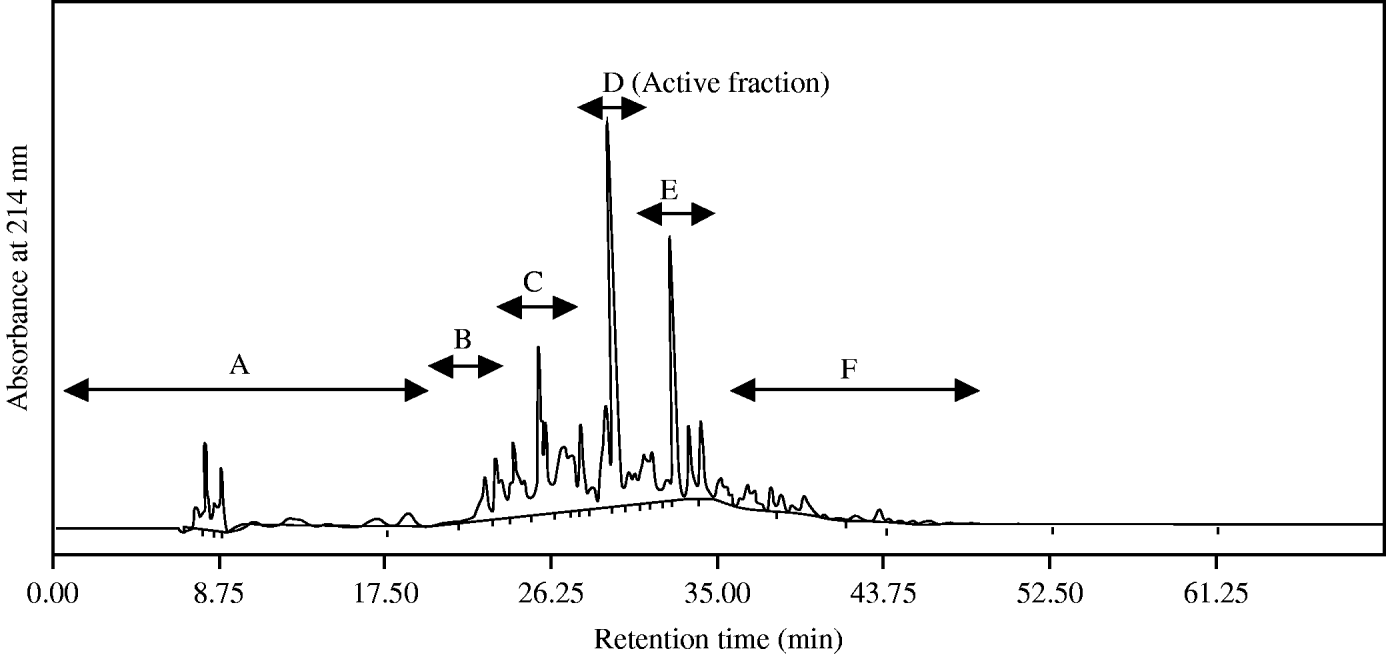
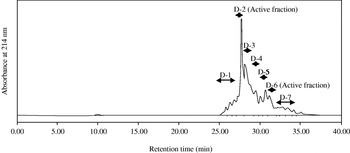
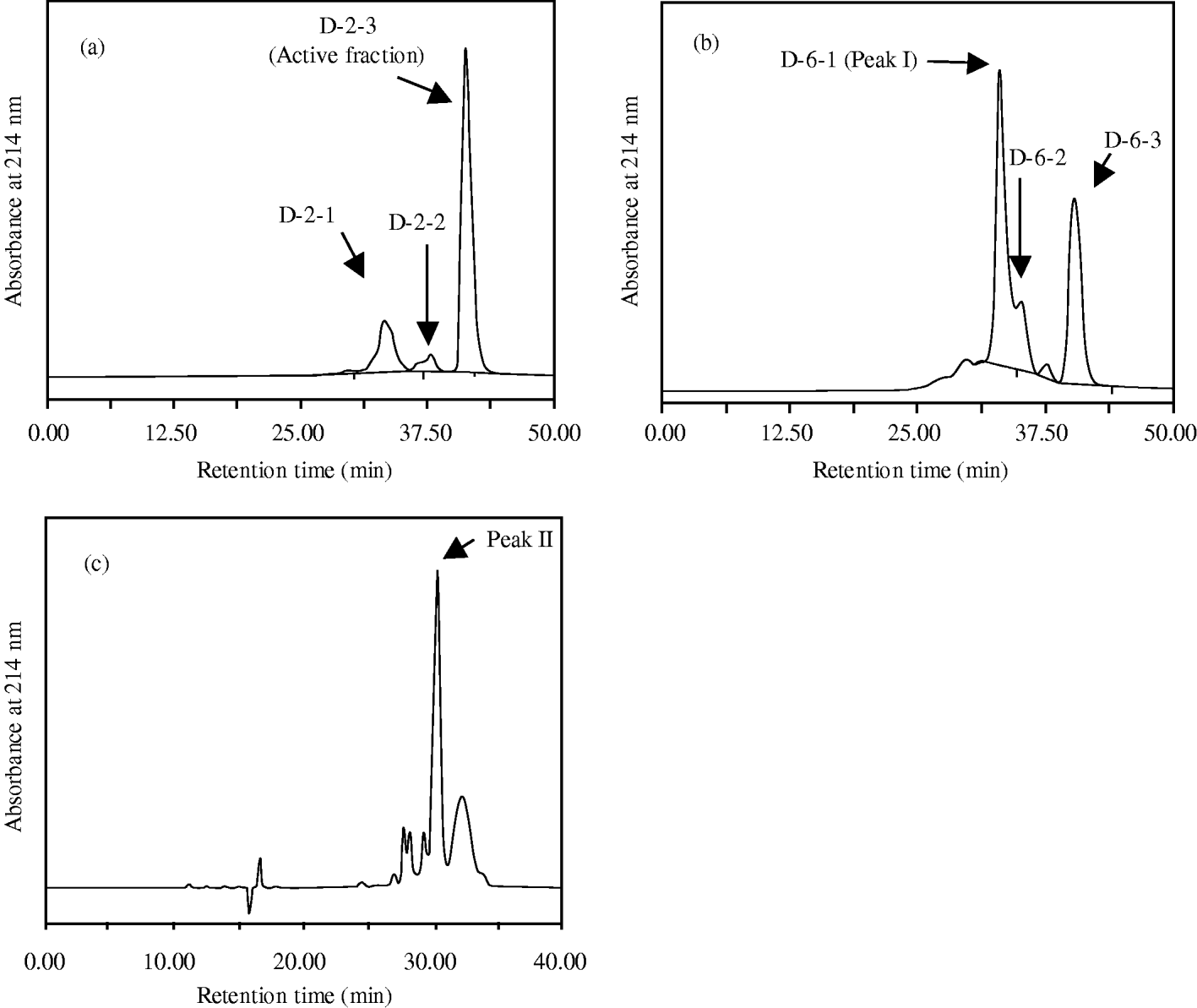
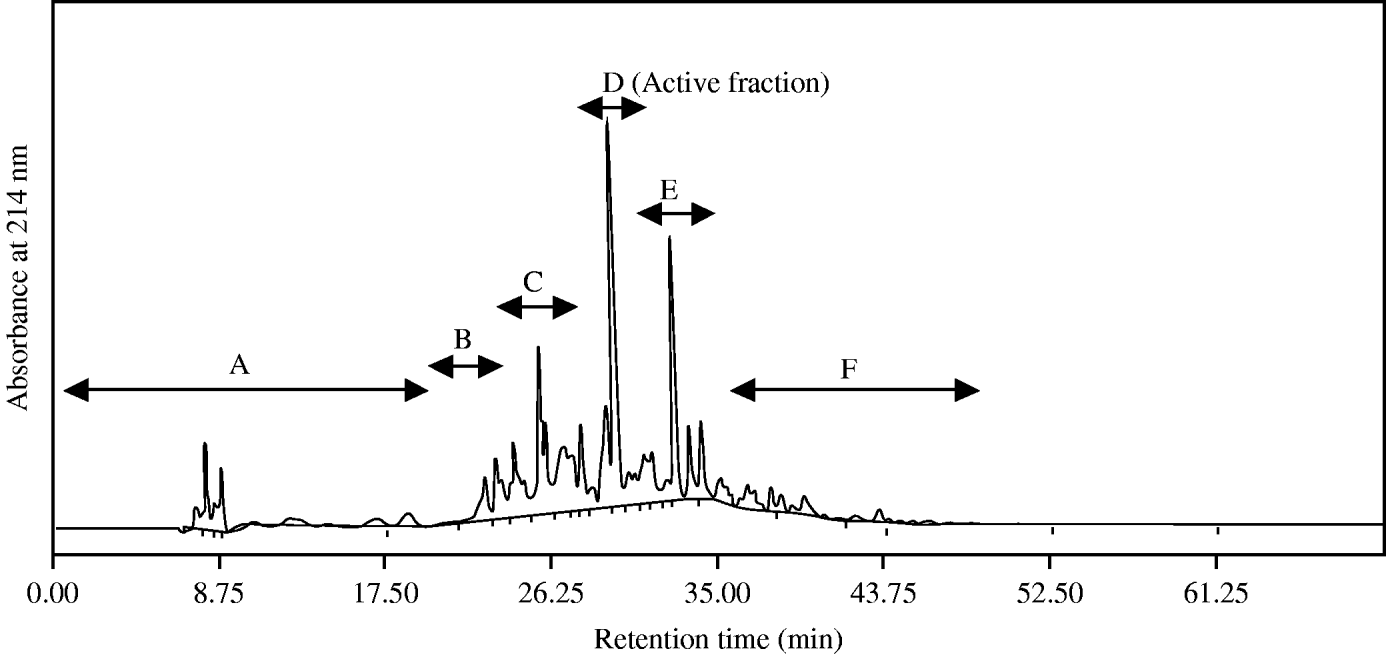
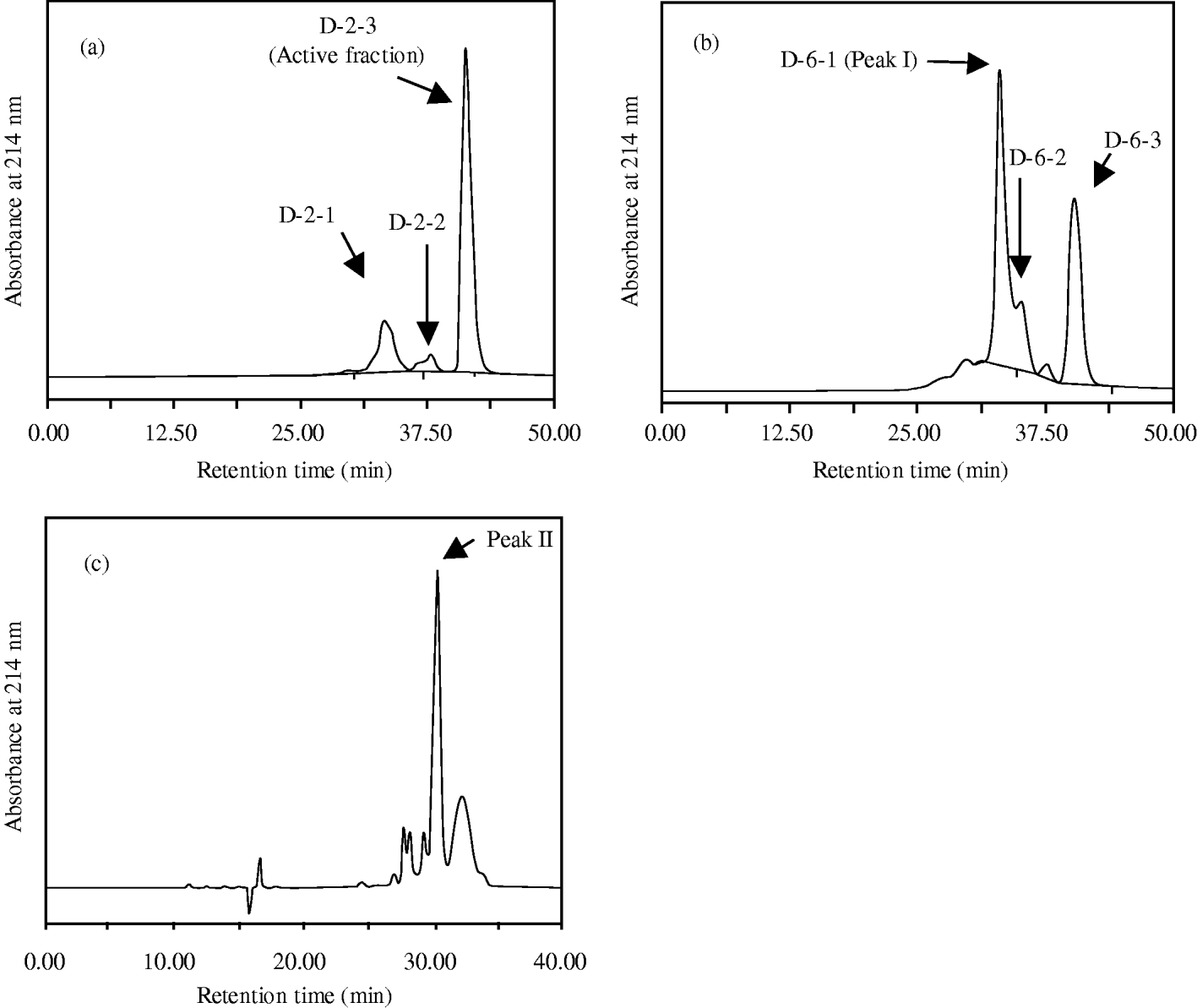
Elution profile of the EMC with the YMC Pack R&D ODS column is shown in Fig. 1. Peptides were fractionated into 6 fractions (A to F), and each fraction was subjected to the ACE inhibitory assay. Fraction D showed the highest inhibitory activity among the 6 fractions, and this fraction was further purified. Figure 2 shows the elution pattern of fraction D with the TSK-gel ODS 80Ts column. The eluate was fractionated into 7 fractions (D-1 to D-7), and fractions D-2 and D-6 had strong ACE inhibitory activity. These fractions were analysed by gel permeate chromatography using a Superdex Peptide HR 10/30 column, and the elution profile is shown in Fig. 3a & b, respectively. Fractions D-2-1 and D-6-1 showed ACE inhibitory activity. D-6-1 was confirmed to contain no contaminants using gel permeate chromatography, and was named Peak I (Fig. 3b). D-2-1 was further purified using the CAPCELL PAK C18 MG column, and the obtained chromatogram is shown in Fig. 3c. Only the fraction named Peak II had ACE inhibitory activity and was confirmed to contain no contaminants. Peak I and II were subjected to structural analyses.
HPLC chromatogram of peptides from EMC. An YMC-Pack R&D ODS column (20×250 mm), elution with a linear gradient of 0 to 70% acetonitrile containing 0·1% TFA for 50 min at 40°C, and a flow rate of 7·5 ml/min were used. Each fraction (A to F) was collected individually and tested ACE inhibitory activity.
HPLC chromatogram of the D fraction. A TSK-gel ODS 80Ts column (20×250 mm), elution with a linear gradient of 0–30% acetonitrile containing 0·1% TFA for 50 min at 40°C and a flow rate of 7·5 ml/min were used. Fraction D was separated into six fractions denoted as D-1 to D-7, and each fraction was collected and tested ACE inhibitory activity.

HPLC chromatograms of (a) D-2, (b) D-6, and (c) D-2-3 fraction. (a) and (b): The column was a Superdex Peptide HR 10/30 (10×300 mm), elution was done with 0·1% TFA solution for 50 min at room temperature, flow rate was 0·5 ml/min. (c): The column used was a CAPCELL PAK C18 MG (4·6×250 mm), elution was performed under isocratic conditions with 12% acetonitrile containing 0·1% TFA at 40°C, flow rate was 0·4 ml/min. Arrows indicate collected peaks which tested ACE inhibitory activity.
Structural analysis
Structural analysis of peptides was done using N-terminal sequencing, analysing amino acid composition, and performing mass spectrometry. From these data, Peak I and II were identified as Leu-Gln-Pro and Met-Ala-Pro, originating from β-casein f 88-90 and f 102-104, respectively. ACE inhibitory activities of Leu-Gln-Pro and Met-Ala-Pro were measured, and strong activities were observed (IC50: 3·4 μM and 0·8 μM, respectively).
Antihypertensive effect of Met-Ala-Pro in SHR
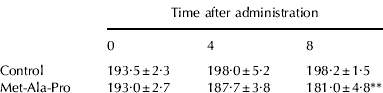
We investigated the antihypertensive activity of Met-Ala-Pro in SHR by single oral administration (Table 2). At a dose of 3 mg/kg body weight, the tendency to exert hypotensive effect was observed at 4 h and a significant effect was observed at 8 h after administration (−17 mm Hg, P<0·01).
Effect of single oral administration of Met-Ala-Pro on SBP (mmHg) in SHRs
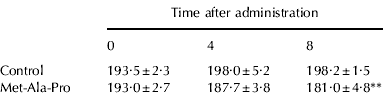
** Significant difference from control (P<0·01)
Classification of ACE inhibitory peptides by the pre-incubation method
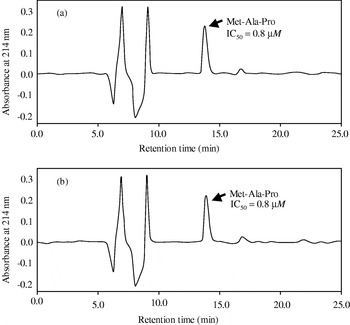
Inhibition activity of Met-Ala-Pro against ACE was examined by the pre-incubation method. As shown in Fig. 4, the IC50 value and HPLC chromatogram of Met-Ala-Pro were not affected by pre-incubation with ACE. Therefore, Met-Ala-Pro was regarded as the true inhibitor type for ACE.
Hydrolysis of Met-Ala-Pro by ACE. (a) before pre-incubation, (b) after pre-incubation. The column used was a CAPCELL PAK C18 MG (4·6×250 mm), elution was done under isocratic conditions with 14% acetonitrile containing 0·1% TFA at 40°C, flow rate was 0·4 ml/min, and detection was at 214 nm.

Discussion
In this study, we identified two active peptides from EMC prepared by Protease N, followed by Umamizyme and Flavourzyme 500L digestion. We reported in our preceding paper that this EMC possesses ACE inhibitory and antihypertensive effects (Suzuki et al. Reference Suzuki, Uchida, Tonouchi and Oda2007).
Among the two peptides identified in this study, Leu-Gln-Pro has been reported as ACE inhibitory peptide from the thermolysin digest of α-zein which is a major component of maize endosperm proteins (Miyoshi et al. Reference Miyoshi, Ishikawa, Kaneko, Fukui, Tanaka and Maruyama1991). On the other hand, Met-Ala-Pro has been newly isolated, and showed strong ACE inhibitory activity compared with Leu-Gln-Pro, tempting us to test antihypertensive activity. After single oral administration, Met-Ala-Pro exhibited hypotensive effect in SHR. Structure-activity correlations among various ACE inhibitory peptides from food proteins revealed that amino acids of the C-terminal tripeptide were important to exert activity. ACE seems to prefer substrates or competitive peptides containing hydrophobic (aromatic, branched chains and imino) amino acid residues at the C-terminus (Cheung et al. Reference Cheung, Wang, Ondetti, Sabo and Cushman1980). Especially, proline residues exist at the C-terminal location of many strong ACE inhibitory peptides. Activities of Met-Ala-Pro and Leu-Gln-Pro are consistent with these observations. Both casein and α-zein contain many proline residues, and this contributes to intensive studies on ACE inhibitory peptides from the two proteins.
To exert in vivo bioactivity, it is important that the bioactive peptide resists digestive enzymes such as pepsin, trypsin, chymotrypsin, and other amino- or carboxy-peptidases. In addition, the peptide must be absorbed from the intestinal tract, and transferred to the target organ in an active form. In a preliminary study, we confirmed that Met-Ala-Pro resists digestive enzymes. Peptides containing proline and hydroxyproline residues are generally resistant to digestive enzymes (Vermeirssen et al. Reference Vermeirssen, Van and Verstraete2004). In view of the ACE inhibitory activity and resistance to digestive enzymes, it may be reasonable to use proline-containing peptides as functional food ingredients to mitigate hypertension problems.
Recently, ACE inhibitory peptides were classified into three groups according to their interactions with ACE (Fujita et al. Reference Fujita, Yokoyama and Yoshikawa2000): (a) true-inhibitor type: IC50 values of peptides are not affected by pre-incubation with ACE, (b) substrate type: IC50 values increase by pre-incubation with ACE because peptides are hydrolyzed to inactive peptides, (c) prodrug-type inhibitor: IC50 values are altered during pre-incubation with ACE by degradation of the parent peptide. True-inhibitor type peptides are produced from parent peptides, and are active in vivo. Met-Ala-Pro was identified as a true-inhibitor type peptide by preincubation with ACE and lowered blood pressure in SHR 8 h after oral administration. Fujita et al. (Reference Fujita, Yokoyama and Yoshikawa2000) observed that true-inhibitor type tripeptide exhibited maximal antihypertensive activity at 4 h or 6 h after oral administration. In this study, antihypertensive activity was examined of Met-Ala-Pro at 4 and 8 h after administration and significant difference was observed at 8 h. The maximum antihypertensive effect of Met-Ala-Pro may have occurred earlier (at 6 h after administration, for example). On this point, further studies would be needed.
In conclusion, we developed EMC with strong ACE inhibitory and antihypertensive activity, and identified the contributory peptide Met-Ala-Pro. We expect this EMC to be useful for applications to functional foods for hypertension. Further work is required to evaluate whether our EMC shows antihypertensive effects in human clinical trials.