
Introduction
The antimicrobial materials are the utmost importance in areas such as medical and food industry[ Reference Cappannella, Benucci, Lombardelli, Liburdi, Bavaro and Esti 1 ] and other areas where the bacteria growth is potential and require to inhibit it,[ Reference Wanga, Qin, Lin, Zhu, Zhang, Liu and Van der Bruggen 2 ] to preventing the bacterial attachment and improving the functionality, lifetime of devices.
The medical area employs these materials in the prevention of clinic complications provoked by bacterial infections that sometimes even leading to death[ Reference Harding and Reynolds 3 , Reference Arciola, Campoccia, Speziale, Montanaro and Costerton 4 ] But in the case of food area, the antimicrobial materials are mainly required for the packaging and processing materials to hinder the accumulation of bacteria with a severe impact on the food quality, productivity, and processing efficiency.[ Reference Mérian and Goddard 5 ]
The covalent immobilization of enzymes offers the possibility to provide to material with antimicrobial activity using the adequate enzyme[ Reference Kacar and Arıca 6 ] avoiding the growth of microorganism by passive antimicrobial activity. Preventing the formation of surface biofilms, and even though improving the enzymatic stability at a wide range of pH and temperature[ Reference Flores-Rojas, Pino-Ramos, López-Saucedo, Concheiro, Alvarez-Lorenzo and Bucio 7 ] due to the enzyme has its tertiary structure stabilized by the covalent bonds with the matrix.
Lysozyme is the most commonly used enzyme to provide high antimicrobial activity[ Reference Guadarrama-Zempoalteca, Díaz-Gómez, Meléndez-Ortiz, Concheiro, Alvarez-Lorenzo and Bucio 8 ] to materials,[ Reference Flores-Rojas, Pino-Ramos, López-Saucedo, Concheiro, Alvarez-Lorenzo and Bucio 7 ] using a moderate amount. Some methods applied for the enzyme immobilization has been by means of exchange reactions of thiol-disulfide,[ Reference Neves-Petersen, Snabe, Klitgaard, Duroux and Petersen 9 ] formation of Schiff bases,[ Reference Flores-Rojas, Pino-Ramos, López-Saucedo, Concheiro, Alvarez-Lorenzo and Bucio 7 ] through the peptide[ Reference Guadarrama-Zempoalteca, Díaz-Gómez, Meléndez-Ortiz, Concheiro, Alvarez-Lorenzo and Bucio 8 ] or diazo bonds[ Reference Masoom and Townshend 10 ] and alquilation reactions.[ Reference Sheldon 11 ] However, the best method is through the formation of a Schiff base using a formyl and amino groups from the matrix and the enzyme. The formyl groups are possible to provide either to the enzyme by modification with periodate or to the matrix with glutaraldehyde.[ Reference Prodanović, Prokopijević, Spasojević, Stojanović, Radotić, Knežević-Jugović and Prodanović 12 ] This reaction offers the advantage to carry out the enzyme immobilization using less aggressive conditions such as at low temperature and the use of water as a medium of reaction, which is a natural medium for the enzymes that also allows the control of pH and ionic strength, guaranteeing the integrity of the enzyme.
Despite there are several methods of enzyme immobilization, these sometimes are difficult because the matrix does not have adequate chemical groups.[ Reference Jin, Han, Zhang, Liu, Jiang, Yin and Liang 13 ] Hence, it is necessary to make the redesign of the matrix through of blends,[ Reference Xu, Zeng, Cao, Ma, Dong and Chen 14 ] composites,[ Reference Wang, Shi, Chen, Wang, Tian, Ning and Zhang 15 ] and grafting polymerization[ Reference Ko, Cho, Han, Sung, Baek, Koh and Yoon 16 ] providing the suitable characteristics such as hydrophilicity and reactive functional groups that allow the immobilization of lysozyme.[ Reference Flores-Rojas, Pino-Ramos, López-Saucedo, Concheiro, Alvarez-Lorenzo and Bucio 7 , Reference Saeki, Nagao, Sawada, Ohmukai, Maruyama and Matsuyama 17 ]
The grafting polymerization is a useful method to obtain materials with the tailored surface or bulk.[ Reference Minko and Stamm 18 ] Therefore, a less number and amount of reagents are required to the redesign one part of the matrix.[ Reference Noein, Haddadi-Asl and Salami-Kalajahi 19 ] This technique has allowed the use of several monomers, which have provided to the matrix pH, thermal and magnetic responsiveness.[ Reference Pino-Ramos, Alvarez-Lorenzo, Concheiro and Bucio 20 ] Other possible improvements are the modification of hydrophilicity, the addition of biocompatibility[ Reference López-Saucedo, Alvarez-Lorenzo, Concheiro and Bucio 21 ] as well as the endowment of chemical groups through the grafting polymer allowing new chemical reactions.[ Reference Flores-Rojas and Bucio 22 ]
The majority of the grafting polymerizations are made with gamma-rays[ Reference Meaburn, Hosszu and Cole 23 ] or different energy sources such as plasma[ Reference Tokuyama, Naohara, Fujioka and Sakohara 24 , Reference Khelifa, Ershov, Habibi, Snyders and Dubois 25 ] or UV[ Reference Domenichelli, Coiai, Pinzino, Taddei, Martinelli and Cicogna 26 ] as pre-treatment or as initiators because many of matrices have a low chemical reactivity, for example, polypropylene (PP),[ Reference López-Saucedo, Alvarez-Lorenzo, Concheiro and Bucio 21 ] silicone rubber (SR).[ Reference Pino-Ramos, Alvarez-Lorenzo, Concheiro and Bucio 20 , Reference Flores-Rojas and Bucio 22 ] Nevertheless, the fair conditions might enable to perform the grafting polymerization by chemical initiators, which have certain advantages since this does not require specialized and expensive equipment and dangerous energy sources as the gamma-rays, allowing standard conditions of reaction.
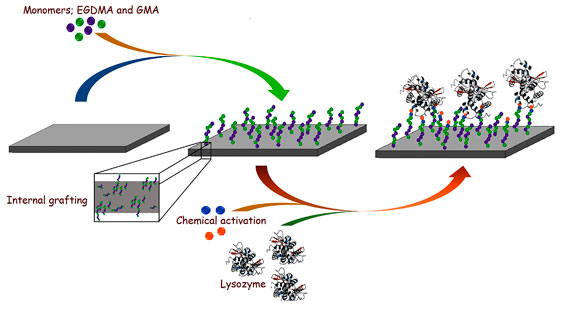
In this research, we report the lysozyme immobilization in SR-film modified through grafting copolymer performed by a chemical initiator. The used monomers were ethylene glycol dimethacrylate (EGDMA), and glycidyl methacrylate (GMA), providing adequate functional groups from GMA for subsequent chemical activation and immobilization of lysozyme.
Results and discussion
Synthesis of materials
SR were modified successfully by grafting of P(EGDMA-co-GMA), using azobisisobutyronitrile (AIBN) as an initiator[ Reference Flores-Rojas and Bucio 22 ] (The complete procedure is in Supplementary information S1.). The monomers provided reactive chemical groups such as epoxide groups from GMA allowing the chemical activation. In the case of EGDMA, this was used to provide non-reactive hydrophilic groups, which also facilitated the removal of copolymer formed in the grafting polymerization since the grafting copolymer and the copolymer were not compatible.
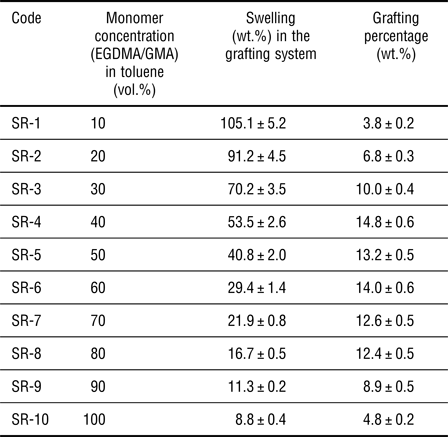
The grafting degree was controlled by the monomer concentration and the swelling degree of the matrix, obtaining a grafting range from 3.8 to 14.8 wt.%. The grafting degree increased as the monomer concentration increased, reaching the maximum grafting degree in at a monomer concentration from 40 to 60 vol.% (Table I) as it was indicated by statistical analysis using the Tukey method [see Supplementary information section ANOVA of the grafting degree at different monomers concentration (vol.%)]. Posteriorly the grafting degree showed a progressive decrease as the monomer concentration increased, giving about 4% of grafting at a monomer concentration of 100 vol.%, being this statistically the same obtained at a monomer concentration of 10 vol.%. The behavior of grafting degree was related to the swelling degree of SR in the monomer solution, as decreasing the area of grafting increased the monomer concentration (Table I).
Percentage of P(EGDMA-co-GMA) grafted in SR at different monomer concentration and the swelling percentage of the pristine SR in the grafting medium.

Moreover, the use of toluene as reaction medium allowed to keep the epoxide groups in the grafting polymerization as this was not a nucleophilic solvent. However, it was not possible to observe the corresponding band of epoxide group in the infrared spectrum because of overlapping with the band assigned to ν s (OC) from SR. Therefore, it was confirmed indirectly after the reaction with ethylenediamine, exhibiting the characteristic bands of ν as(NH2) and ν(OH) groups. Also, the mechanical properties of the SR remained after the grafting polymerization (see the section Mechanical properties) since this method is less aggressive with the matrix as the gamma-rays are able to break the polymer chains of the matrix leading to a loss of mechanical properties of the material.
On another hand, the chemical modifications of grafting copolymer were necessary to facilitate the immobilization of lysozyme. Despite there are several reports on enzyme immobilization through the opening of the epoxide groups with amine groups from the enzyme, this sometimes is difficult to accomplish ending in a denaturalization of the enzyme due to aggressive conditions used. Therefore, we chose the formyl group as an excellent group to carry out this task because of its high chemical reactivity with amine groups from lysozyme in conditions of low temperature, allowing the use of water as a medium of reaction in presence of other chemical species without hindering the immobilization process.
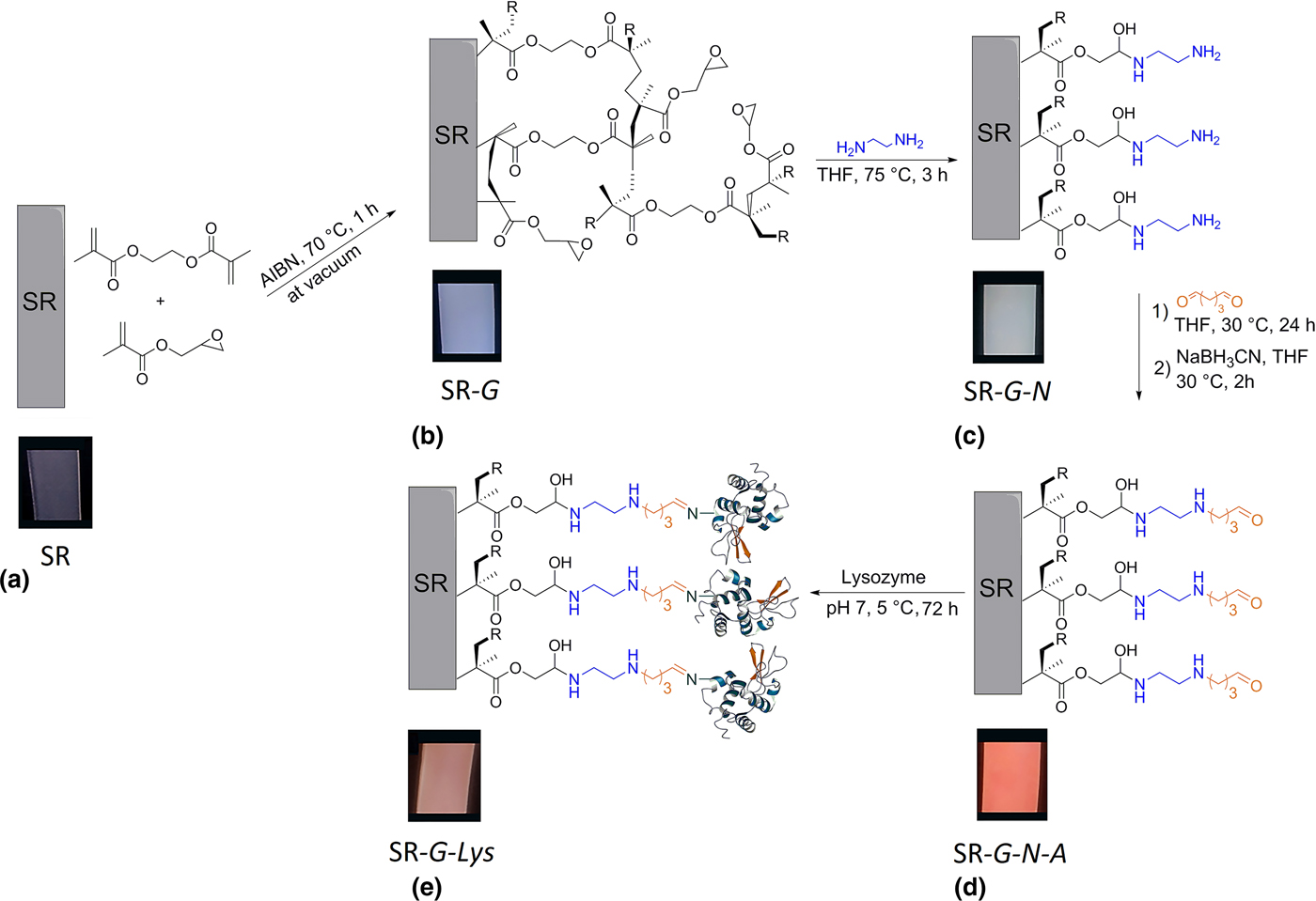
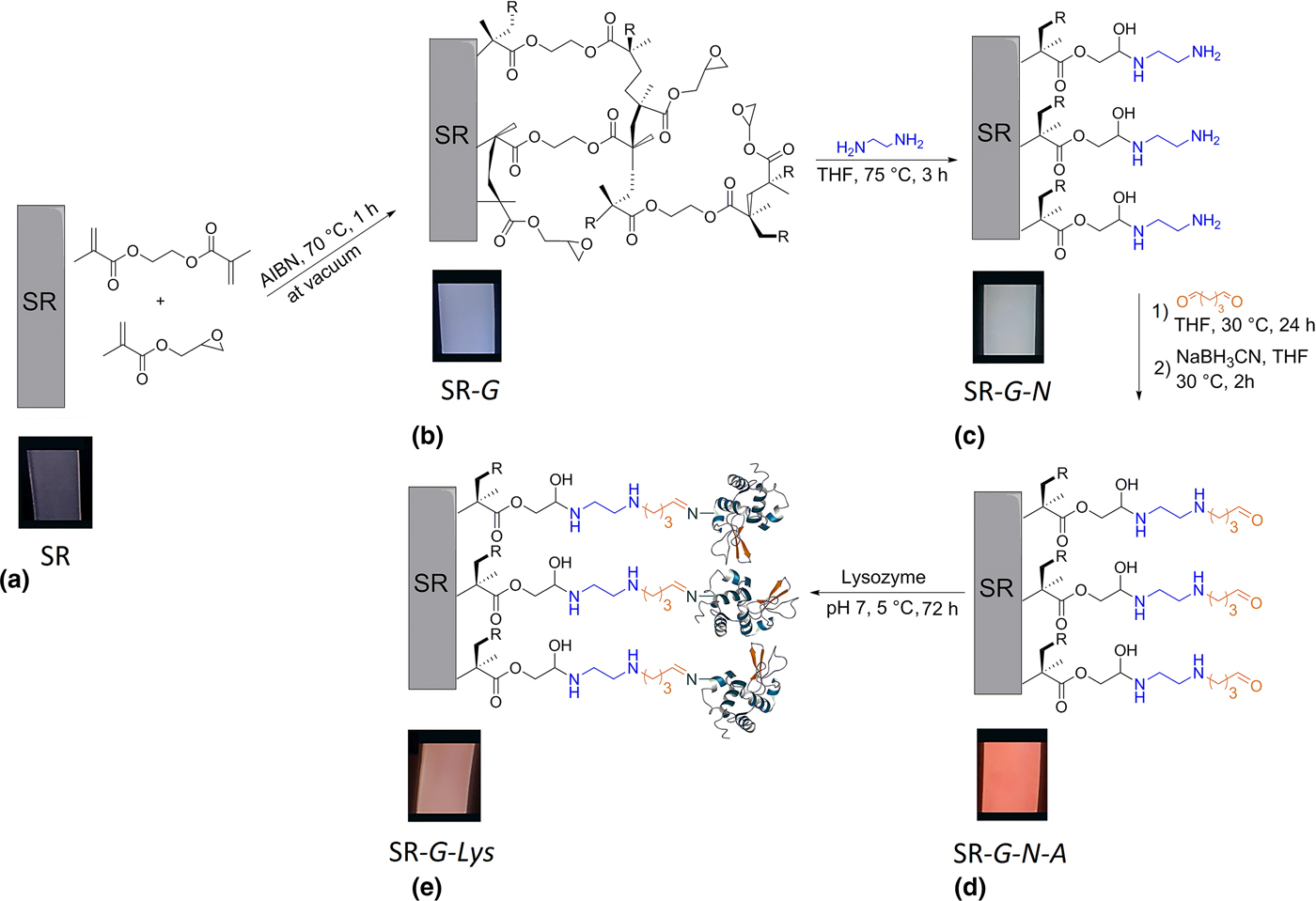
The lysozyme immobilization success was confirmed with Coomassie Brilliant Blue G-250 (CBB), as described in the section Confirmation of lysozyme immobilization. Moreover, it was possible to observe by simple view the appearance changes of the SR in the immobilization process of lysozyme (Fig. 1), but, the most characteristic change was observed with the glutaraldehyde reaction showing an orange color.
Scheme of the immobilization process of lysozyme in SR. (a) Reaction of grafting polymerization using EGDMA and GMA as monomers, and pristine SR as a matrix (SR-G), (b) Reaction of SR-G with ethylenediamine (SR-G-N), (c) SR-G-N made react with glutaraldehyde (SR-G-N-A), the chains of PEGDMA on the image were omitted for a better clarity, (d) SR-G-N-A made react with lysozyme (SR-G-Lys), (e) obtaining of SR-G-Lys.
Attenuated total reflection infrared spectroscopy (ATR-FTIR) analysis
ATR-FTIR analysis provided general information about modifications of SR in the immobilization process of lysozyme. The study was carried out using dry and swollen samples. In the case of swollen samples, these exhibited new bands in the spectrum as they were not possible to observe in dry ones. However, some spectra did not have considerable changes in the shown bands due to overlapping of these provoked by the similitude of the chemical groups. This is the case of the reaction performed with glutaraldehyde since its spectrum did not evidence the corresponding band to the formyl group. Therefore, we only did the discussion on the most significant bands that provided information about chemical modification and immobilization of lysozyme.
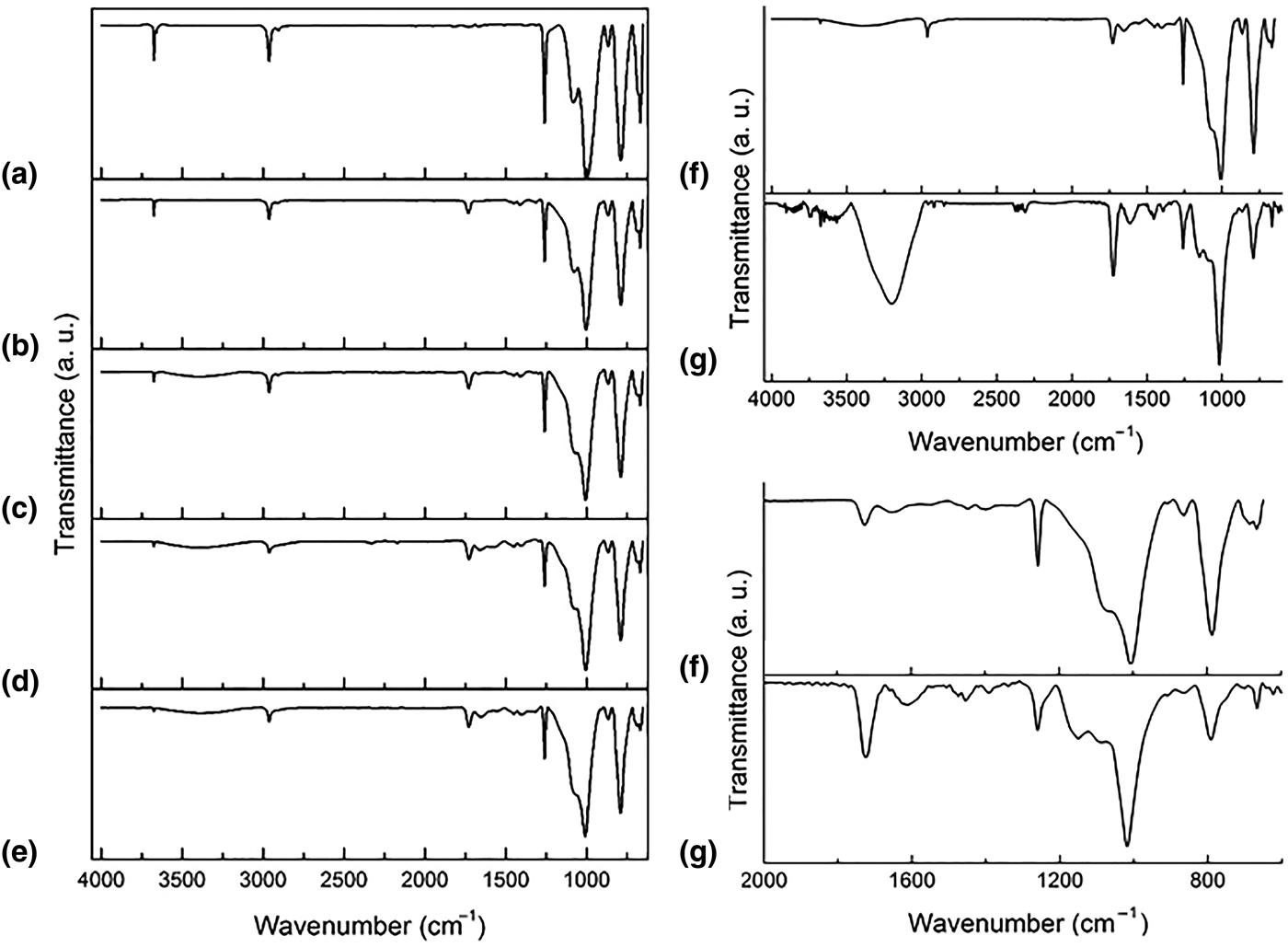
The ATR-FTIR spectrum of SR-G shown in the Fig. 2(b) exhibited the characteristic band of carbonyl groups at 1727/cm corresponding to grafting copolymer (see Supplementary information section Experimental) in the SR. The spectra of chemical modifications [Figs. 2(c) and 2(d)] just provided information about the first chemical reaction carried out with ethylenediamine. The most important bands of the incorporation of the amino groups to the grafted SR [Fig. 2(c)] were located at 3346 and 1488–1409/cm assigned to ν as(NH2), ν(OH), as well as the corresponding bands of the δ(OH) and δ(NH2).
ATR-FTIR study was performed in dry and swollen conditions using water as a solvent at 25 °C. The spectra were recorded from the SR-4 (with a grafting degree of 14.8%, Table I) in each step of immobilization process of lysozyme. Dry samples: (a) SR, (b) SR-G, (c) SR-G-N, (d) SR-G-N-A, (e) SR-G-Lys, (f) SR-G-Lys, and swollen sample: (g) SR-G-Lys.

The spectrum of SR-G-Lys [Fig. 2(e)] evidenced a new band of weak intensity at 1656/cm, assigned to the vibrations of the “amide I” corresponding to the lysozyme. Also, the band at 3350/cm showed an increase of its absorbance because of the additional hydroxyl and amine groups from the immobilized lysozyme [Supplementary Fig. S1(b)].
In the case of the spectra recorded with swollen SR-G-Lys samples [Fig. 2(g)], it was observed an increase of the absorbance in the bands located at 3368 and 1609/cm due to the presence of water as well as the presence of the band at 2312/cm corresponding to ν(CO2). However, the corresponding band of “amide I” for the swollen SR-G-Lys sample was not observed clearly due to overlapping with the band of water located at 1609/cm.
Moreover, the spectrum showed an increase in the absorbance in the bands located from 1727 to 1338/cm assigned to the carbonyl, carboxyl and “amide III” groups from lysozyme [Fig. 2(g)] where the last two groups are associated with hydrogen-bonding between carbonyl and hydrogens from amide.[ Reference Mallamace, Corsaro, Mallamace, Vasi, Vasi and Dugo 27 – Reference Yang, Mantsch, Arrondo, Saint-Girons, Guillou, Cohen and Barzu 29 ] Additionally, it was observed better the band located at 1248/cm corresponding to ν(CO) bonds, which showed a slight shift to a higher frequency, as shown in Fig. 2(g).
The new bands observed in the spectrum of the swollen SR-G-Lys samples were attributed to the chemical groups exposed from immobilized lysozyme since these bands were not observed in any of the previous infrared spectrum of SR in the immobilization process of lysozyme.
These all groups from immobilized lysozyme were not observed in the SR-G-Lys sample in the dry conditions because these groups are hydrophilic. Therefore, lysozyme retains a compact structure at low hydration level[ Reference Careri and Giansanti 30 ] overlapping the bands of the groups or adopting a conformational structure preventing their exposition.
Differential scanning calorimetry (DSC) and thermogravimetric (TGA) analysis
The thermal analyses provided information about the transition and thermal decomposition of the grafted SR and confirmed the grafting copolymer by comparison with the copolymer. Also, the thermal analysis exhibited the changes mainly in the grafting copolymer provoked through the chemical activation and the covalent immobilization of lysozyme.
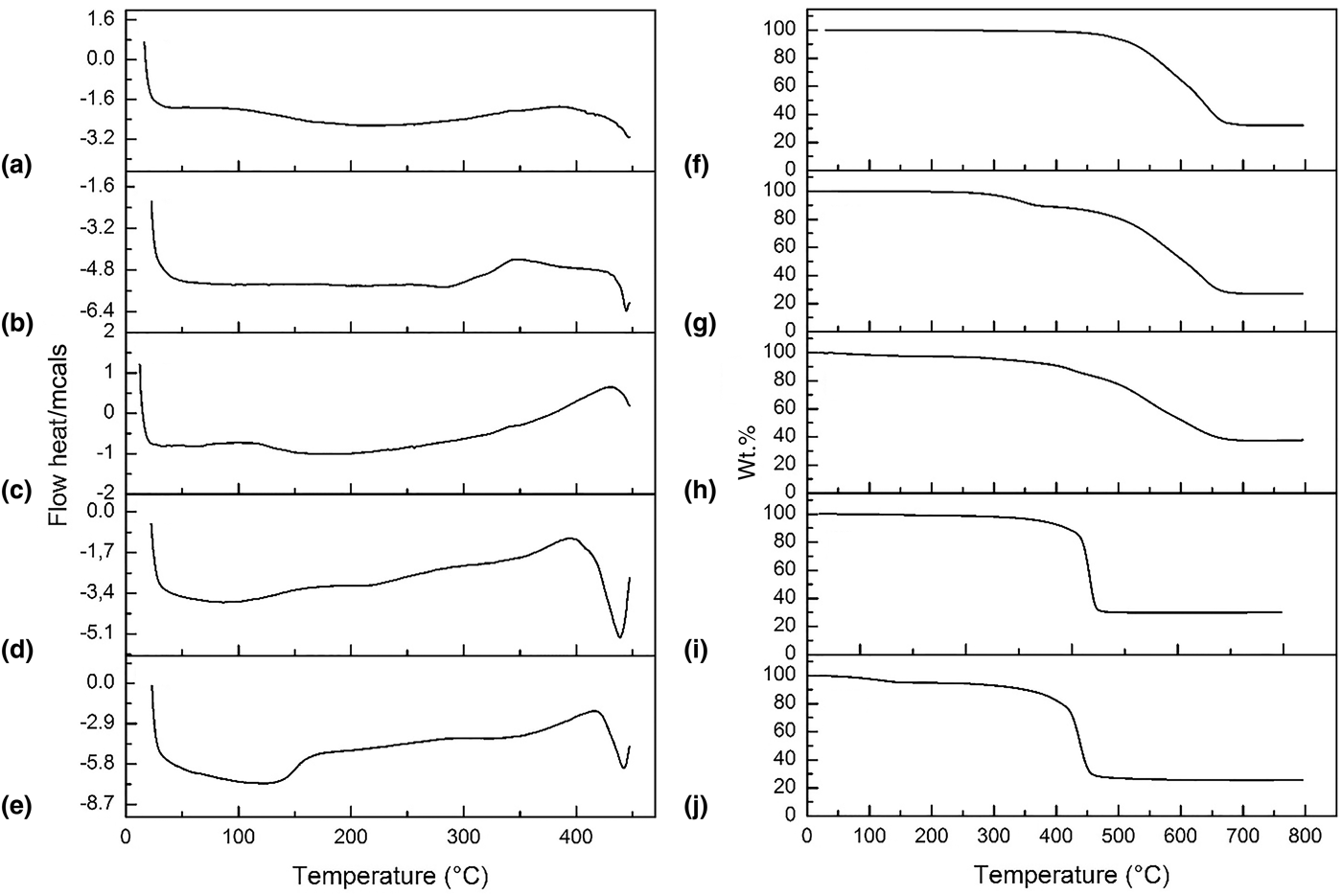
The DSC thermogram of SR-G showed decomposition at 288.9 °C [Fig. 3(b)] corresponding to P(EGDMA-co-GMA) (Supplementary Fig. S2a), while SR-G made react with ethylenediamine (SR-G-N) exhibited additional thermal transition at 180 °C due to the incorporation of the amino groups [Fig. 3(c)]. However, any clear thermal transition was observed for the next chemical reaction with glutaraldehyde (SR-G-N-A), as shown the Fig. 3(d). Nevertheless, the most important changes were observed in the SR-G-Lys with a transition at 120.1 °C [Fig. 3(e)], attributed to the immobilized lysozyme [Supplementary Fig. S2(b)] followed by decomposition.
DSC and TGA thermograms were recorded from the SR-4 (with a grafting degree of 14.8%, Table I) in the immobilization process of lysozyme in dry conditions under a flow of N2 and a rate of 10 °C/min. DSC thermograms: (a) SR, (b) SR-G, (c) SR-G-N, (d) SR-G-N-A and (e) SR-G-Lys. TGA thermograms: (f) SR, (g) SR-G, (h) SR-G-N, (i) SR-G-N-A, and (j) SR-G-Lys.

The TGA analysis performed with SR-G [Fig. 3(g)] showed two-step decomposition with a temperature of 412.7 °C at 10% weight loss. The first step corresponds to the thermal decomposition of the P(EGDMA-co-GMA) grafting [Supplementary Fig. S3(a)], and the second one to the SR with an unstable decomposition step.
The TGA thermograms of the films in the chemical activation process (SR-G-N and SR-G-N-A) exhibited less thermal stability compared with SR-G, with an unstable decomposition for the chemical modification with ethylenediamine [Fig. 3(h)] at 408.6 °C (10% weight loss). In the case of the second reaction with glutaraldehyde (SR-G-N-A), the films had a process of decomposition in one stage [Fig. 3(i)] with a decomposition temperature at 390.3 °C (10% weight loss). Finally, SR-G-Lys had two decomposition steps Fig. 3(j) with a 10% weight loss temperature at 349.2 °C. The first decomposition temperature was attributed to lysozyme [Supplementary Fig. S3(b)]. In addition, these all decomposition temperatures were consistent with those of DSC thermograms.
Contact angle and swelling study
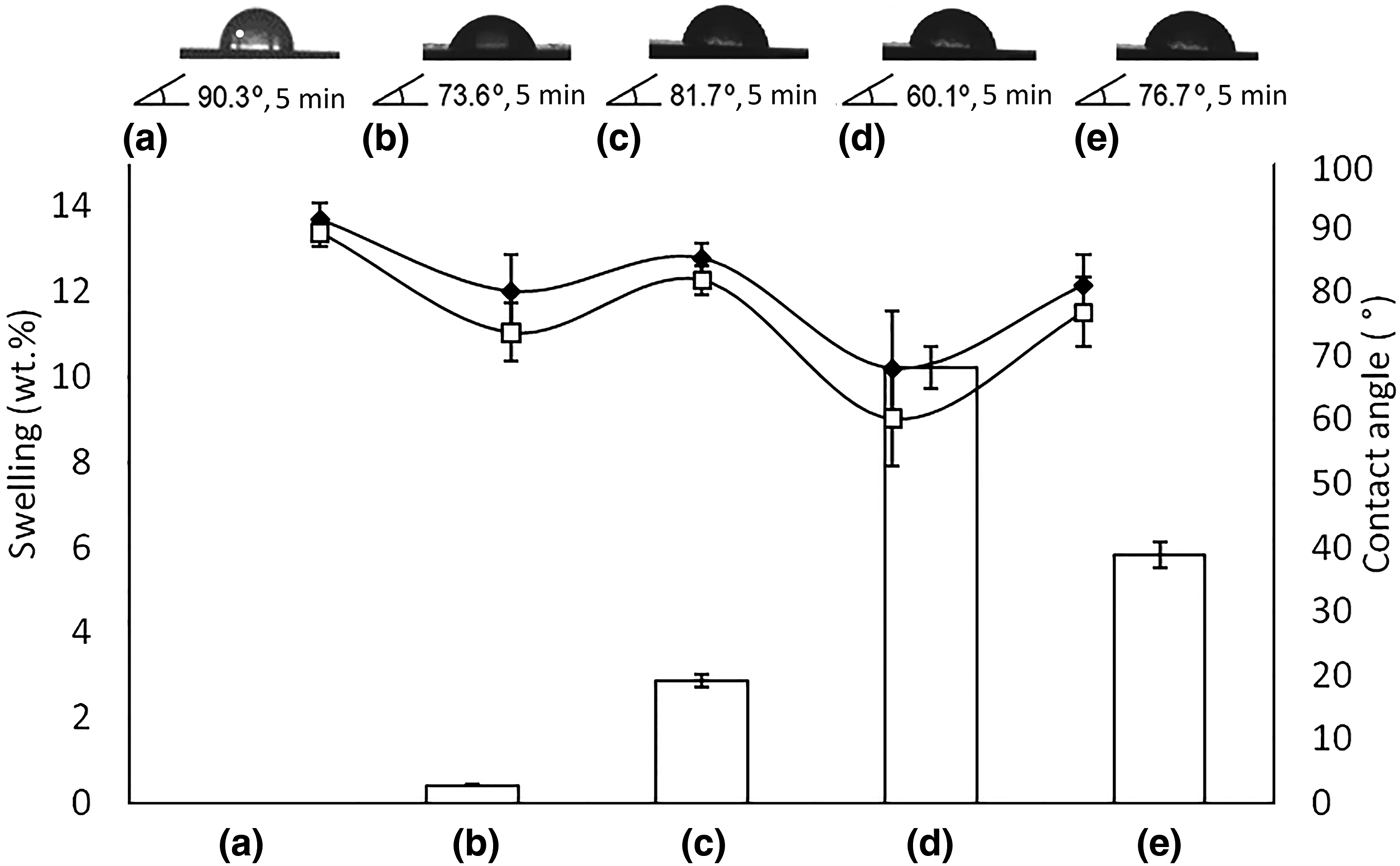
The contact angle of the SR in the immobilization process of lysozyme (Fig. 4) exhibited a considerable change for the SR-G-N-A as the statistical analysis indicated (see Supplementary information section ANOVA of the contact angle study in the immobilization process of lysozyme), which had the least contact angle indicating a major hydrophilicity due to the hydrophilic groups added such as amines, hydroxyl, and formyl groups. In the case of swelling study, this showed in a general way a progressive increase of swelling of the films as the new hydrophilic groups were provided to the matrix. However, the SR-G-Lys had a decrease of swelling percentage attributed to the lysozyme immobilized in the SR-G-N-A, which provoked a higher cross-linking degree, restricting the swelling of this.
Contact angle by drop and the swelling percentage were performed using water at 25 °C with the SR-4 (with a grafting degree of 14.8%, Table I) in each step of immobilization process of lysozyme, (a) SR, (b) SR-G, (c) SR-G-N, (d) SR-G-N-A, and (e) SR-G-Lys.  swelling percentage,
 contact angle at 1 minute and
 5 minutes.

Mechanical properties
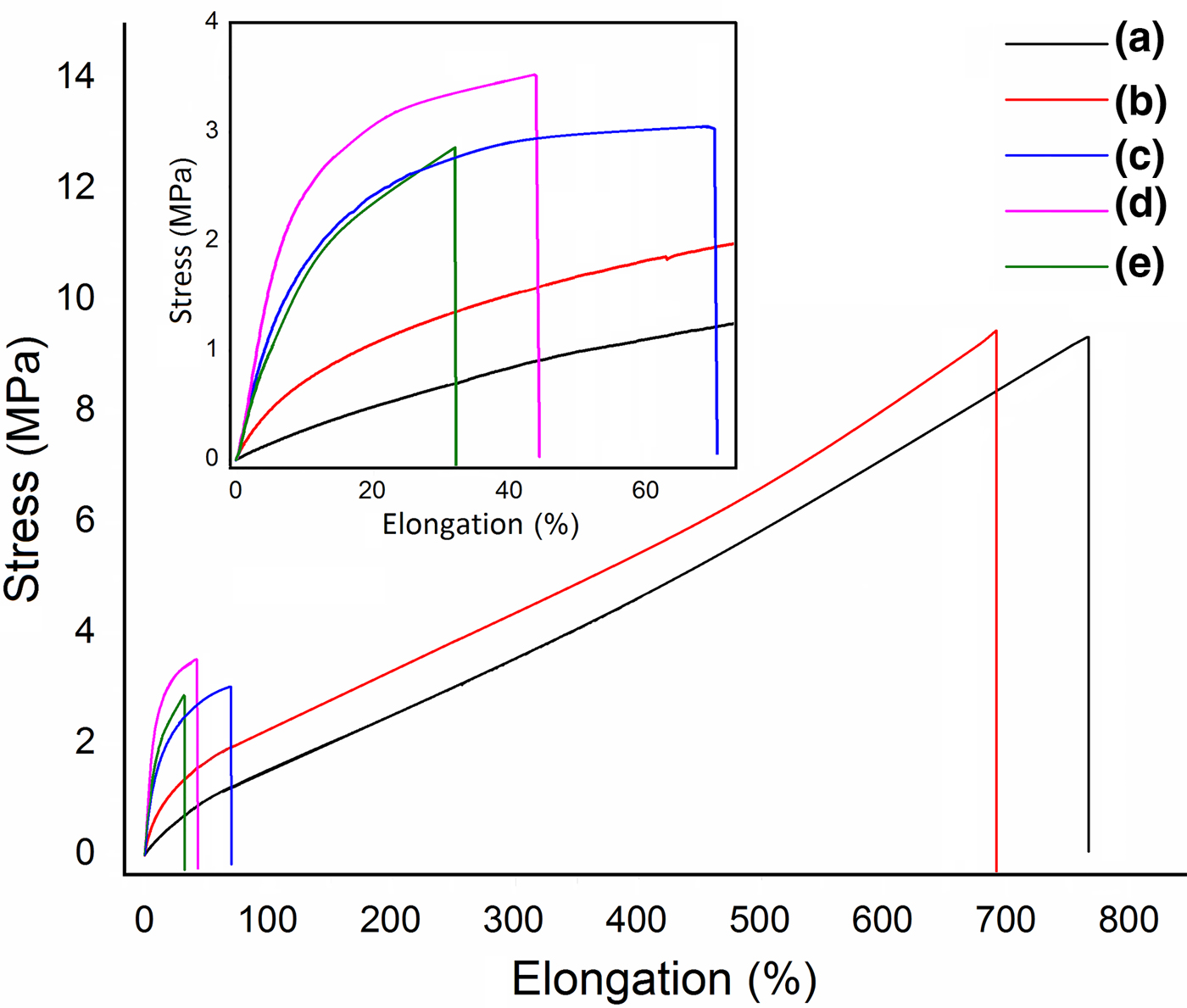
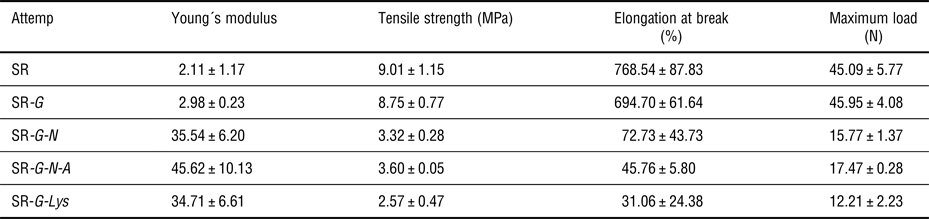
The study of mechanical properties showed that the grafting polymerization did not affect considerably the mechanical properties of SR [Figs. 5(a) and 5(b)]. However, there was a considerable change when the SR-G were made to react with ethylenediamine [Fig. 5(c)] increasing its hardness given as Young´s modulus from 2.98 to 35.54 MPa and decreasing the maximum load from 45.09 N to 15.77 N for SR-G and SR-G-N, respectively. These changes were also observed in the tensile strength and elongation at break of SR-G and SR-G-N, respectively (Table II). All the changes in the mechanical properties were probably due to strong interactions by the hydrogen bonds generated by the amine and hydroxyl groups of the film. After the first chemical reaction, the mechanical properties did not have considerable changes in the next reactions [Figs. 5(d) and 5(e)].
Mechanical properties were recorded using a sample with a grafting degree of 14.8% (SR-4, Table I) in each step of immobilization process of lysozyme in dry conditions at 23 °C and a speed of 10 mm/min, (a) SR, (b) SR-G, (c) SR-G-N, (d) SR-G-N-A, and (e) SR-G-Lys.
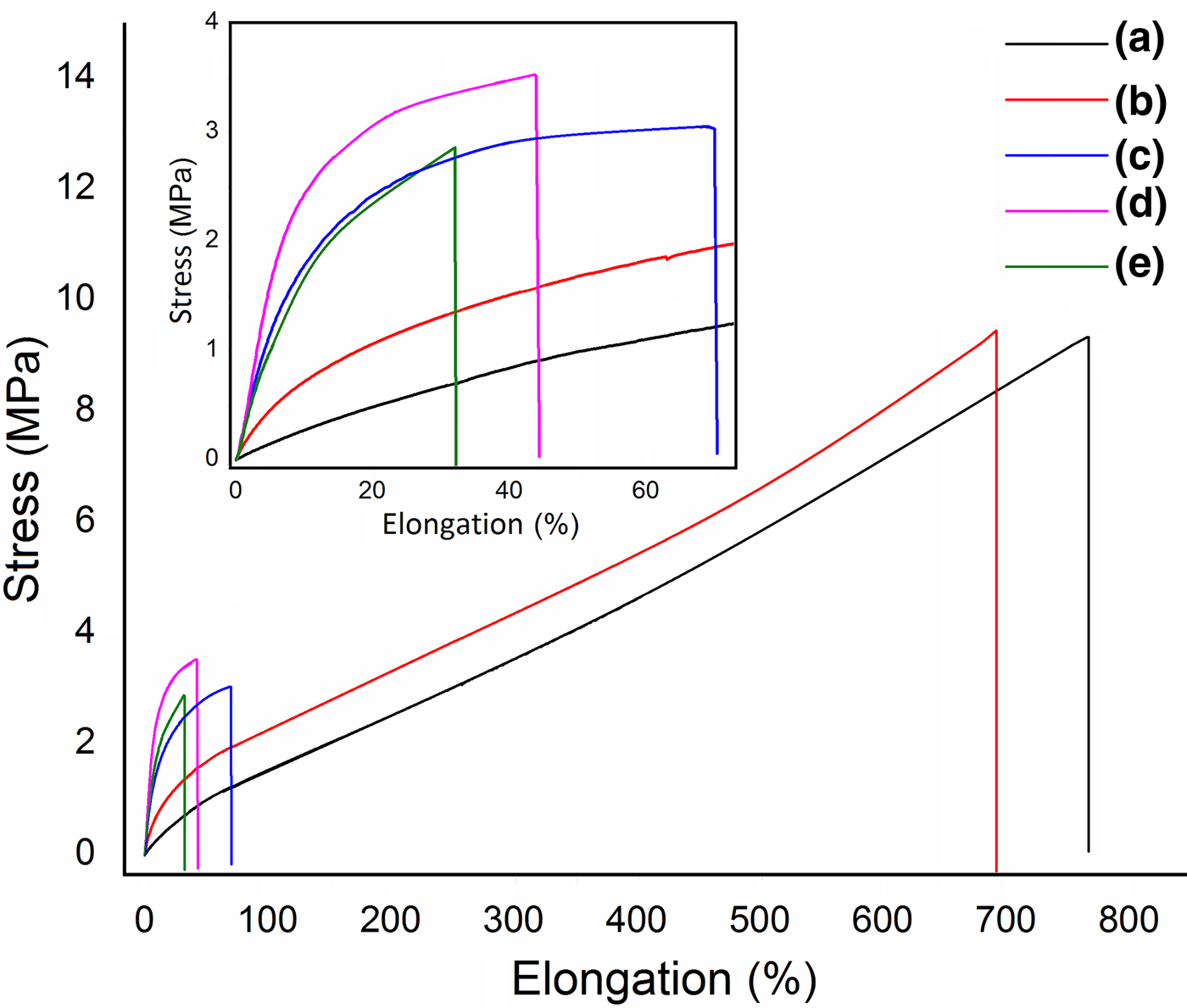
Mechanical properties of the SR in the immobilization process of lysozyme, with a grafting degree of 14.2 wt.% (SR-4, Table I).

AFM study
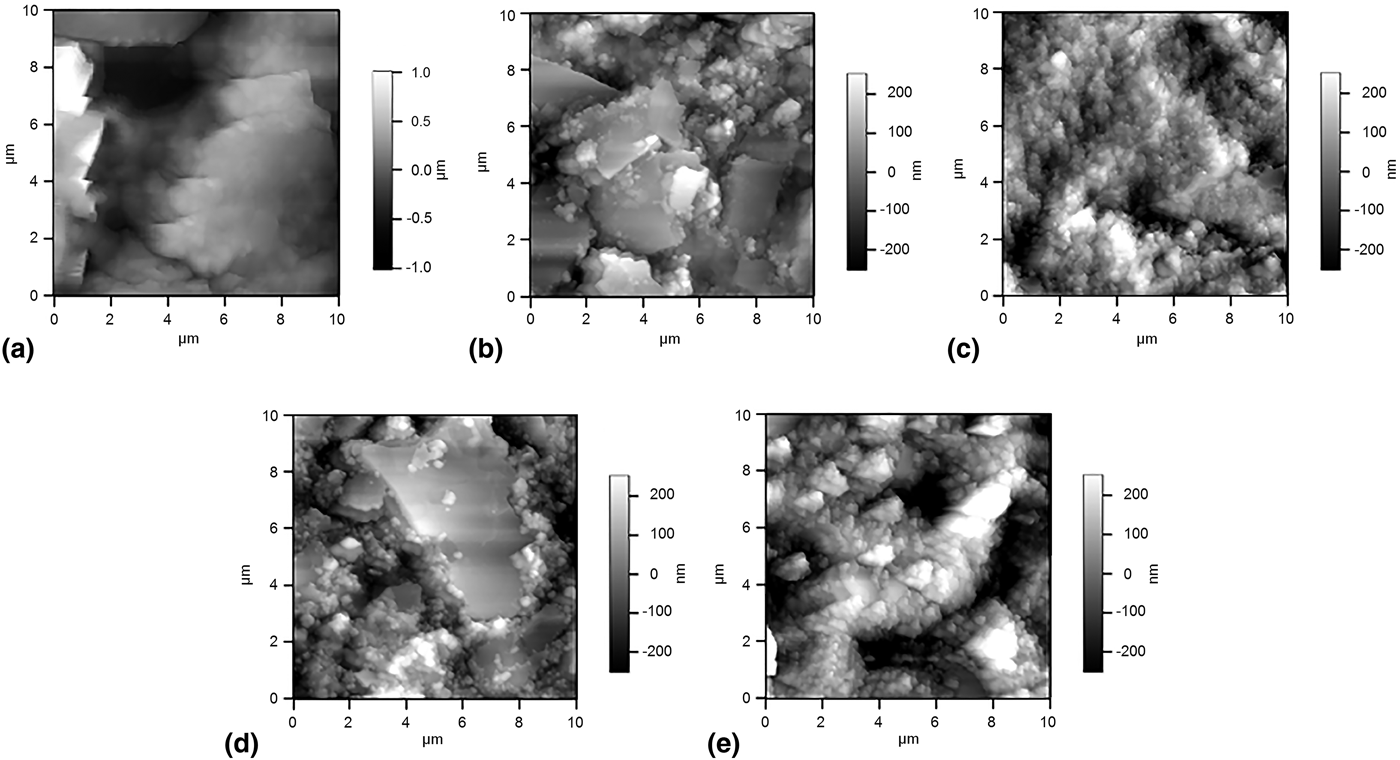
Figure 6 shows the AFM images indicating the changes in the surface morphology of SR provoked by the P(EGDMA-co-GMA) grafting as well as the immobilization process of lysozyme. The SR and SR-G showed a partial change in their surface nanostructures [Figs. 6(a) and 6(b)]. Nevertheless, the chemical modification by the ethylenediamine and glutaraldehyde [Figs. 6(c) and 6(d)] exhibited a more homogeneous surface covered with small particle-like nanostructures. Finally, the image of SR-G-Lys [Fig. 6(e)] showed the formation of spherical nanostructures covering the surface. This nanostructure seems to be homogeneous along the surface, even though it was possible to observe few aggregates of larger size on the surface, possibly generated by the lysozyme immobilized on the surface of SR-G-N-A.
AFM images in air and dry conditions by tapping mode using a sample with a grafting degree of 14.8% (SR-4, Table I) in each step of immobilization process of lysozyme, (a) SR, (b) SR-G, (c) SR-G-N, (d) SR-G-N-A, and (e) SR-G-Lys.

Confirmation of lysozyme immobilization
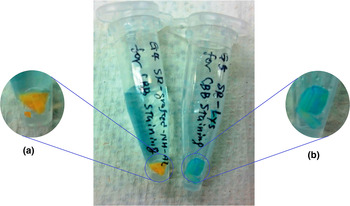
The immobilization of lysozyme was confirmed by several studies and also for a non-specific qualitative test by CBB, which gave positive for the presence of lysozyme showing the characteristic blue color (Fig. 7). Moreover, this test indicated that the immobilization of lysozyme was not limited on the surface of SR-G-N-A since the blue color was observed throughout the sample, suggesting the lysozyme immobilization was carried out in bulk.
Confirmation of lysozyme immobilized in the SR with a grafting degree of 14.8% (SR-4, Table I), using CBB where the blue color indicates a positive presence of lysozyme, (a) SR-G-N-A and (b) SR-G-Lys.

Enzymatic activity of lysozyme immobilized in the SR
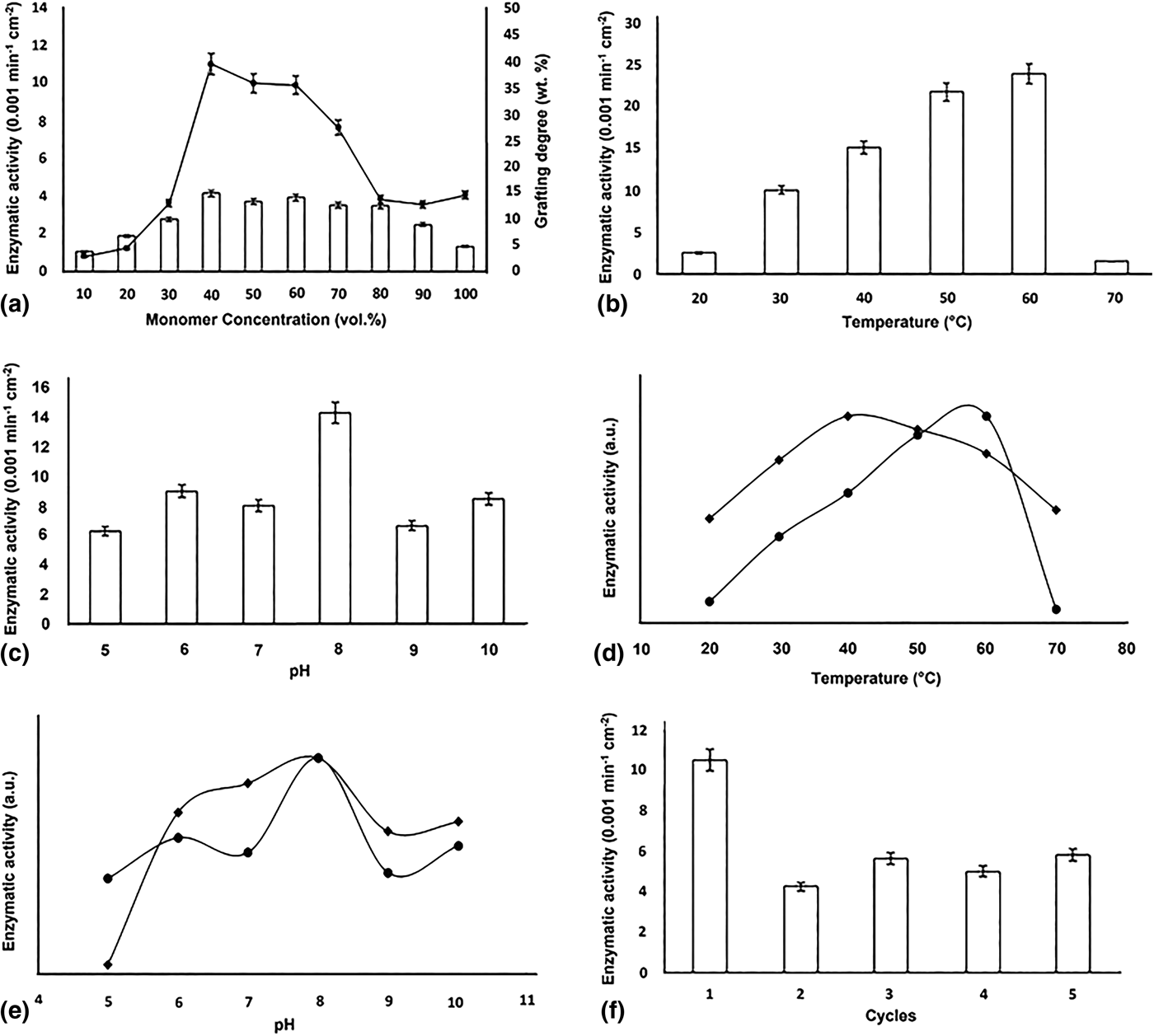
A first screening of the enzymatic activity of the films was performed using the series of SR-G-Lys synthesized from the SR-G films with different grafting degrees as indicated in Table I. The initial conditions were using 4 mL of M. lysodeikticus suspension at pH = 6.2, 30 °C.
The enzymatic activity of lysozyme immobilized in the series of SR-G showed a dependence on the grafting degree, exhibiting an enzymatic activity from 9.9 to 11 (0.001/min/cm2) [Fig. 8(a)] for the SR with a grafting degree between 13.2% and 14.8%, which were obtained in a concentration range from 40 to 60 vol.% of monomer.
Enzymatic activity study of the lysozyme immobilized in the SR-G. All the studies were carried out with 4 mL of a suspension of Micrococcus lysodeikticus, 0.62 mg/mL. (a) Enzymatic activity of lysozyme immobilized in the series of SR-G with different grafting degrees synthesized with different monomer concentration (Table I) using as initial conditions a temperature of 30 °C and a pH = 6.2,  enzymatic activity,
 grafting degree. From the previous study it was chosen the SR-G with a grafting degree of 14.8% (SR-4, obtained at 40% of monomer) as the best film with enzymatic activity for the studies of temperature, pH, cycles as well as the comparison with the free lysozyme using 160 µg: (b) enzymatic activity of at different temperatures at pH = 6.2, 0.01 M, (c) enzymatic activity at different pH values, 0.01 M at 30 °C. For a better comparison with free lysozyme, all the enzymatic activities were normalized, (d) comparison of enzymatic activity between free and the immobilized lysozyme at different temperatures.
 free lysozyme,
 immobilized lysozyme, at pH = 6.2, 0.01M, (e) comparison of enzymatic activity between free and immobilized lysozyme at different pH values (0.01 M) at 30 °C, free lysozyme, immobilized lysozyme, (f) enzymatic activity in different cycles at pH 6.2 and 30 °C.

Study of the enzymatic activity at different temperatures and pH values
Supported by the statistical analysis (see Supplementary information section ANOVA of the enzymatic activity of the immobilized lysozyme in the series of SR-G) we chose from the screening the SR-G-Lys sample synthesized with SR-4 grafted at 40 vol.% monomer concentration (SR-4 in Table I) was chosen as the best sample for a detailed analysis of the effects of pH and temperature on the enzymatic activity, and quantification of lysozyme immobilized. The quantification of lysoszyme for this sample was performed by calibration curve giving an immobilized amount of 160 µg/cm2.
The temperature study was carried out from 20 to 70 °C at pH = 6.2 [Fig. 8(b)]. The results indicated an increase in enzymatic activity as increased the temperature, being about 10 times greater at 60 °C compared with the observed at 20 °C. However, at 70 °C the enzymatic activity had a considerable decrease, probably due to a denaturalization of lysozyme.
In the case of the enzymatic activity study performed at different pH values from 5 to 10 [Fig. 8(c)], there were insignificant differences in all the pH values [Statistical analysis see Supplementary information section ANOVA of the enzymatic activity study in different pH values (0.01 M)] except for the pH = 8, which showed the maximum enzymatic activity, matching with the enzymatic activity of free lysozyme [Fig. 8(e)].
The studies carried out at different temperature and pH, and the statistical analysis of these (see Supplementary information section Statistical analysis) exhibited an improvement of enzymatic activity when this was immobilized the lysozyme. The material presented an enzymatic activity at up to 20 °C higher than free lysozyme [Fig. 8(d)], and this had enzymatic activity at pH = 5 where the free lysozyme did not.
Reusability
The reusability study of the SR-G-Lys was made by cycles. The results showed a considerable change in the enzymatic activity after the first cycle, reaming slight constant (see Supplementary information section ANOVA of the enzymatic activity study in different cycles) for the next one. Despite the decrease of enzymatic activity, this behavior was consistent with the immobilization of lysozyme in the films since the enzymatic activity was keeping after each cycle. This reusability is an advantage due to most of the cases the recovery of free lysozyme is impossible. The results are shown in the Fig. 8(f).
Conclusion
In conclusion, the grafting in SR was carried out successfully by the chemical method using toluene as a solvent, since the toluene solution swells the SR matrix increasing the contact area and therefore improving the grafting degree. The grafting degree showed a dependence on the monomer concentration, reaching the maximum grafting degree in a concentration range from 40% to 60% vol. of monomers.
The infrared study with the swollen samples exhibited new bands corresponding to hydrophilic groups exposed from the immobilized lysozyme. The mechanical properties of the SR did not show a considerable change after the grafting polymerization. However, there was an appreciable change when it was carried out the opening of the epoxide groups by the ethylenediamine, keeping these new mechanical properties through the following steps of the immobilization process of lysozyme.
The AFM study showed the changes in the surface morphology of SR through lysozyme immobilization process indicating a homogenous surface for SR-G-Lys with spherical nanostructures. Finally, the studies of enzymatic activity carried out at different temperatures, and pH values demonstrated an improvement of enzymatic activity at a higher temperature and lower pH value compared with free lysozyme.
The supplementary information provides the methodologies of synthesis, characterization, and enzymatic activity test as well as the statistical analysis of the results. Also, this contains the ATR-FTIR, DSC, and TGA studies of the copolymer [P(EGDMA-co-GMA)] and free lysozyme.
Supplementary material
The supplementary material for this article can be found at https://doi.org/10.1557/mrc.2017.115
Acknowledgments
This work supported by DGPA-UNAM Grant IN201617. The authors thank Dr. Seiichi Tada and Dr. Yoshihiro Ito from Nano Medical Engineering Lab., RIKEN and E. Hernández-Mecinas, G. Cedillo, and M.A. Canseco from IIM-UNAM for their technical assistance.