INTRODUCTION
Three species of sea turtles, the loggerhead turtle Caretta caretta (Linnaeus, 1758), the green turtle Chelonia mydas (Linnaeus, 1758) and the leatherback turtle Dermochelys coriacea (Vandelli, 1761) are encountered in the Greek seas, as well as in the Mediterranean (Margaritoulis et al., Reference Margaritoulis, Koutsodendris, Panagopoulou, Papaconstantinou, Zenetos, Vassilopoulou and Tserpes2007). The loggerhead turtle is common in the whole Mediterranean, the green turtle is more abundant in the eastern part of the basin, while the leatherback turtle is considered a visitor from the Atlantic (Camiñas, Reference Camiñas2004). The loggerhead turtle mainly nests in the eastern basin, with major nesting areas in Greece, Turkey, Cyprus and Libya, while the green turtle nests only in the easternmost region of the Levantine basin, mostly south-eastern Turkey, Cyprus and Syria (Kasparek et al., Reference Kasparek, Godley and Broderick2001; Margaritoulis et al., Reference Margaritoulis, Argano, Baran, Bentivegna, Bradai, Caminas, Casale, De Metrio, Demetropoulos, Gerosa, Godley, Haddoud, Houghton, Laurent, Lazar, Bolten and Witherington2003; Canbolat, Reference Canbolat2004; Rees et al., Reference Rees, Saad and Jony2008).
The exploitation of sea resources by humans, the touristic use of nesting beaches and the pollution of the sea by waste and litter frequently have a negative impact, direct or indirect, on sea turtles (Venizelos, Reference Venizelos1990; Margaritoulis et al., Reference Margaritoulis, Kousias, Nikolopoulou, Teneketzis, Salmon and Wynelan1992; Casale et al., Reference Casale, Affronte, Insacco, Freggi, Vallini, Pino D'astore, Basso, Paolillo, Abbate and Argano2010). Caretta caretta and Chelonia mydas are endangered species, while D. coriacea is critically endangered (International Union for the Conservation of Nature (IUCN), 2012).
As far as Greece is concerned, Caretta caretta is the most abundant, and the only one regularly reproducing. Nesting accounts for about 60% of the total documented nesting of this species in the Mediterranean (Margaritoulis et al., Reference Margaritoulis, Koutsodendris, Panagopoulou, Papaconstantinou, Zenetos, Vassilopoulou and Tserpes2007). Chelonia mydas is less common; the majority of by-catch and stranding data concern young specimens, while a developmental ground was recently identified in Lakonikos Bay, South Peloponnese (Margaritoulis & Teneketzis, Reference Margaritoulis, Teneketzis, Margaritoulis and Demetropoulos2003). No regular nesting areas are documented along the Greek coasts (Margaritoulis & Panagopoulou, Reference Margaritoulis, Panagopoulou, Casale and Margaritoulis2010).
All three species mentioned above are protected in Greece by national legislation and international regulations and conventions (Margaritoulis & Panagopoulou, Reference Margaritoulis, Panagopoulou, Casale and Margaritoulis2010).
Fishing activities are considered a serious threat to marine turtle populations in the Mediterranean and worldwide (Margaritoulis et al., Reference Margaritoulis, Koutsodendris, Panagopoulou, Papaconstantinou, Zenetos, Vassilopoulou and Tserpes2007; Casale et al., Reference Casale, Affronte, Insacco, Freggi, Vallini, Pino D'astore, Basso, Paolillo, Abbate and Argano2010). Stranding records of marine turtles, although depending on various parameters such as natural mortality, interaction with human activities, currents, tides or prevailing winds (Hart et al., Reference Hart, Mooreside and Crowder2006; Bellido et al., Reference Bellido, Báez, Castillo, Pinto, Martín, Mons and Rea2010a, Reference Bellido, Castillo, Pinto, Martín, Mons, Báez and Realb), provide information on anthropogenic mortality—mainly fisheries induced mortality – and on biology and distribution of the species (Panagopoulos et al., Reference Panagopoulos, Sofouli, Teneketzis, Margaritoulis, Margaritoulis and Demetropoulos2003; Casale et al., Reference Casale, Affronte, Insacco, Freggi, Vallini, Pino D'astore, Basso, Paolillo, Abbate and Argano2010).
Rhodes, the largest island of the Dodecanese Archipelago (Aegean Sea, eastern Mediterranean Sea), is located in an important oceanographic position, strongly influenced by the Levantine waters (Pancucci-Papadopoulou et al., Reference Pancucci-Papadopoulou, Raitsos and Corsini-Foka2012). Its population increased from 88,000 in 1981 to approximately 115,000 people (60,000 in Rhodes city), according to the last two censuses (2001, 2011) (Hellenic Statistics Authority, 2013; Municipality of Rhodes, 2013).
Tourism and economic activities related to it constitute the economic base of the island, and they are historically concentrated in the northern triangle, including the town of Rhodes, located at the northern tip of the island, and the neighbouring regions west and east of the capital. The expansion of tourist facilities and the associated urbanization have intensified in the last decade, also involving other regions, like the south-eastern coastal zone, contributing to an accelerated and evident environmental and natural deterioration. Tourist arrivals were about 718,000 by 1980, rising to 1,134,000 in 1990 and 1,200,000 in 2006, while they reached 1,430,000 in 2010 and exceeded 1,700,000 in 2011 (Triantafyllopoulos, Reference Triantafyllopoulos2010; Hellenic Union of Hotel Owners, 2013).
Fishing activities around the island and the nearby region are generally limited, due to the paucity of species of commercial interest and their scarce abundance, while adapted infrastructure and organized fish-wharf are absent (De Grissac et al., Reference De Grissac, Tilot, Sinnassamy and Panayotidis1994; Labropoulou, Reference Labropoulou, Papaconstantinou, Zenetos, Vassilopoulou and Tserpes2007). Twelve bottom trawlers operate in the Dodecanese region (1 October–31 May). Up to the recent past, boat seine was a traditional method used in coastal fishery (Katsavenakis et al., Reference Katsanevakis, Maravelias, Vassilopoulou and Haralabous2010), and in the Dodecanese 44 boat seines were in use. Before 2002 this method was permitted for eight months per year (1 October–31 May) and from 2002 it was restricted to six months (1 October–31 March), while since June 2010 the European Council Regulation (EC) No 1967/2006 was finally applied over all Greek territorial waters, prohibiting the use of trawlers (including boat seines and bottom trawls) ‘within 3 nautical miles of the coast or within the 50 m isobath where that depth is reached at a shorter distance from the coast’. Today trawlers operate within these limits from October to May. Bottom longlines and set-nets of various types throughout the year, and drifting longlines in the summer, are other fishing methods commonly used in the region (Adamidou, Reference Adamidou, Papaconstantinou, Zenetos, Vassilopoulou and Tserpes2007).
Due to the importance and rarity of natural richness, some marine areas and beaches of Rhodes and adjacent small islets are included in the framework of the European network NATURA 2000 and subjected to special regulations for their protection (SCI GR4210005, SPA GR4210030, SPA GR4210029, SPA GR4210031) (Ministry of Environment, Energy and Climate Change, 2013).
Since the beginning of the 1980s, the Hydrobiological Station of Rhodes (HSR) of the Hellenic Centre for Marine Research has systematically collected data on sea turtle strandings along the coasts of the island, providing first care to live injured specimens. The HSR participates in the Nationwide Sea Turtle Stranding Network established by ARCHELON—the Sea Turtle Protection Society of Greece (Panagopoulos et al., Reference Panagopoulos, Sofouli, Teneketzis, Margaritoulis, Margaritoulis and Demetropoulos2003)—in close cooperation with the Port Authorities and the regional Forestry Agency (Corsini, Reference Corsini1996; Kasparek, Reference Kasparek2001; Corsini-Foka & Sioulas, Reference Corsini-Foka, Sioulas and Masseti2002; Corsini-Foka et al., Reference Corsini-Foka, Kondylatos and Hatiris2005).
Regular and occasional nesting of the loggerhead turtle have been observed in Rhodes (Corsini, Reference Corsini1996; Corsini-Foka & Sioulas, Reference Corsini-Foka, Sioulas and Masseti2002; Margaritoulis et al., Reference Margaritoulis, Argano, Baran, Bentivegna, Bradai, Caminas, Casale, De Metrio, Demetropoulos, Gerosa, Godley, Haddoud, Houghton, Laurent, Lazar, Bolten and Witherington2003; authors, 2011, unpublished data), while, up to date, the unique indication of nesting of the green turtle is given by Gambi (Reference Gambi2003).
The aim of this work is to update records on sea turtles strandings at Rhodes, to study their spatial and temporal distribution and to highlight eventual trend. Along the study, attempts to add information and quantify the impact of human activities or actions on species populations in the area were also performed.
MATERIALS AND METHODS
Study area
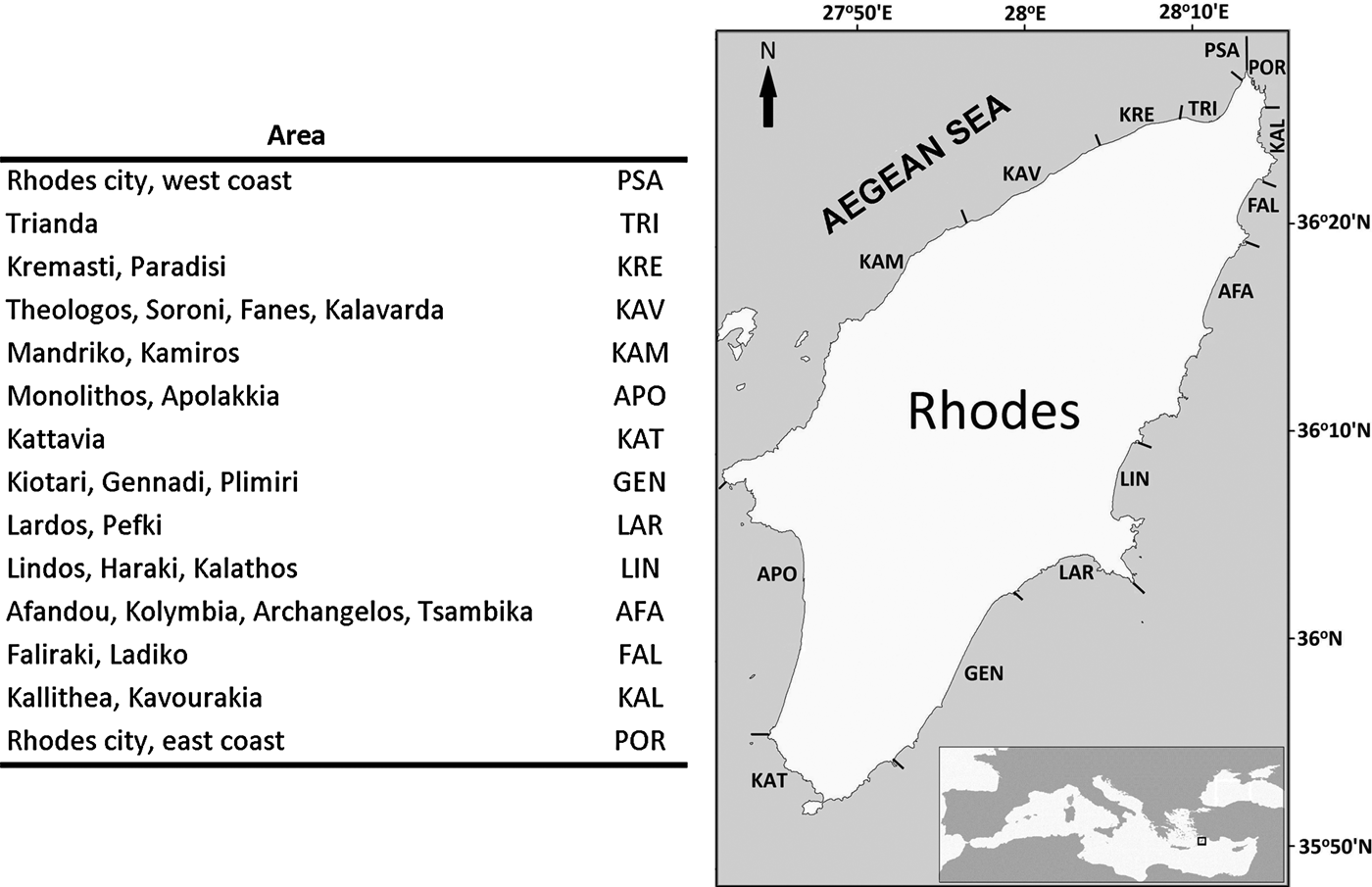
The study on sea turtle strandings was performed in the island of Rhodes, located in the south-eastern corner of the Aegean Sea and very close to the north-western Levantine Sea (Figure 1). The Rhodes gyre, south-east of the island, and the Asia Minor Current (AMC) are the major hydrological features nearby, significantly affecting the area (Pancucci-Papadopoulou et al., Reference Pancucci-Papadopoulou, Raitsos and Corsini-Foka2012). Water temperature at surface ranges from 16.4oC to 28–29oC and salinity from 39‰ to 39.6‰ in winter and summer, respectively. The coastline, approximately 220 km in length, is about 1.4% of the total Greek coast; it is morphologically variable, from sandy to gravelly and rocky, and exposed to winds of different directions and speed, depending on season and other factors.
Map of Rhodes Island showing the coastline subdivisions and their acronyms.

For the purposes of the study, the coastline was subdivided in 14 stranding areas, differing in coast length, five at west, two at south, seven at east (Figure 1). The criteria used for this subdivision were simply operational, according to the main beaches and zones under the jurisdiction of the principal villages located near the coast.
Two bottom trawlers and six boat seines are registered in the island. The most exploited fishing areas are parallel to the coasts, primarily along the west side (areas TRI, KRE, KAV, KAM) and secondarily along the eastern side (areas LIN, LAR, GEN) (Figure 1). In the areas APO and KAT, the most distant from the capital, scarcely inhabited and frequented by people, fishing activities are limited. In particular, a part of the marine region APO (Figure 1) belongs to the site SCI GR4210005 of the European network NATURA 2000, and fishing has been banned there since June 2007, with national legislation preventing the use of trawl nets, dredges, purse-seines, boat-seines, shore-seines or similar nets in Posidonia oceanica (Kalogirou et al., Reference Kalogirou, Corsini-Foka, Sioulas, Wennhage and Pihl2010). Fishing activities are furthermore prohibited in the areas adjacent to the airport (included in area KRE), and the commercial and touristic ports of the capital (included in area POR).
It is worth underlining that fishery activities in the area are not exclusively performed by the local fishing fleet, although shallow water resources are usually exploited by local fishermen.
Data collection
The sea turtle stranding data were recorded between the years 1984 and 2011. Apart from a few exceptions (see below), data were collected in the field by the biologists and/or the technologists–ichthyologists belonging to the team of the HSR after calls by the Port Authorities (Coast Guard). Reports on strandings, officially compiled by the HSR, were addressed to the Central Port Authority of Rhodes and the Forestry Agency.
In most cases, after species identification, the curved carapace length notch to tip (CCLn-t) and the curved carapace width (CCW) were measured (cm) with a flexible tape measure, following Eckert et al. (Reference Eckert, Bjorndal, Abreu-Grobois and Donnelly1999).
Dead or live status was annotated. When exteriorly evident, causes of strandings were described and grouped as follows: debilitated health conditions, presence of injuries and/or cuts and their location on the body (head, legs, carapace, belly), occurrence of hooks, lines, nets or other materials.
Live specimens in good conditions were released after direct evaluation in the field or at the HSR. Injured, debilitated, stressed or problematic live individuals were moved to the HSR facilities for first aid treatment under veterinary assistance. Then, depending on the case, the specimens were transported to the Sea Turtle Rescue Centre of ARCHELON, in Glyfada-Athens, or their treatment continued at the HSR. Necropsy was generally not performed by the HSR staff. Dead animals were buried under the responsibility of the local municipalities. Healthy newborn specimens collected by locals or tourists during summer and immediately released by the HSR staff were excluded from the stranding list.
Some stranded specimens are listed as ‘unidentified’ and they include the cases of dead turtles reported by locals or port authorities, but not supported by the direct observation of the HSR staff; they include also the few cases in which species was not determined due to the advanced state of decomposition of carcasses.
Data analysis
The CCLn-t values of stranded Caretta caretta and Chelonia mydas were tested for normality using the Kolmogorov–Smirnov test (when P < 0.05 the hypothesis that data follow the normal distribution is rejected). When data did not follow the normal distribution, their log-transformed values [log (CCLn-t + 1)] were checked for normality as above.
The control for statistically significant differences between CCLn-t of individuals within each species (Caretta caretta and Chelonia mydas) according to status (alive or dead), season, region (west, east) and between CCLn-t of stranded individuals of the two species was performed by one-way analysis of variance (ANOVA) using the software package STATGRAPHICS. Statistically significant differences were accepted for P < 0.05.
CCLn-t values were grouped by 10 cm size-classes with the aim to visualize their distribution.
Months were grouped in seasons as follows: January, February and March for winter, April, May and June for spring, July, August and September for summer, October, November and December for autumn.
Stranding areas, where at least one identified specimen was found, were also grouped as follows: west side of the island (areas PSA, TRI, KRE, KAV, KAM), east side (areas GEN, LAR, LIN, AFA, FAL, KAL, POR) (Figure 1).
The stranding findings of each species since the first year of data collection for season and location (west, east) were considered and subsequently analysed statistically by one-way ANOVA after log transformation and checking for normality (Kolmogorov–Smirnov test). Statistically significant differences were accepted for P < 0.05.
Furthermore, in order to evaluate the stranding data of both species for the whole period of study, the total number of strandings per species, season and location (west, east) was considered and treated statistically as above.
The seasonal and spatial distribution of dead and live stranded specimens and the frequency of overlap per year and season of the two species were described.
Data on unidentified specimens were added to those concerning identified specimens for a general overview on status and distribution in space and time of total stranded turtles.
RESULTS
Between 1984 and 2011, a total of 209 sea turtle strandings were recorded on the coasts of Rhodes, including 15 dead unidentified specimens. Floating animals were not recorded.
Caretta caretta
A total of 152 stranded C. caretta was recorded, 110 of which were dead (72%) and 42 live specimens. The CCLn-t was measured in 139 specimens.
The log (CCLn-t + 1) values followed the normal distribution (Kolmogorov–Smirnov test, P > 0.05) and were consequently used in statistical analysis.
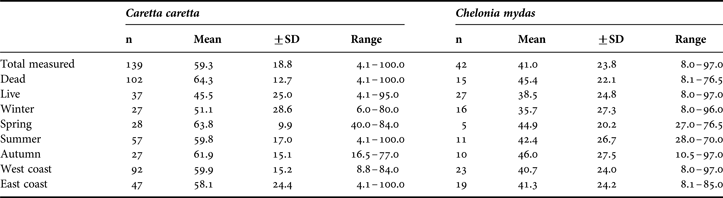
Stranded C. caretta were statistically smaller during winter compared to the other seasons (ANOVA, P < 0.05). In addition, dead loggerhead turtles were statistically larger than alive ones (ANOVA, P < 0.001). On the other hand, the difference between the size of stranded loggerhead turtles found along the west compared to those of the east coast was not statistically significant (ANOVA, P > 0.05) (Table 1).
Curved carapace length (CCLn-t in cm) of sea turtles stranded at Rhodes (1984–2011) according to status, season and coastal region.
n, number of specimens; SD, standard deviation.
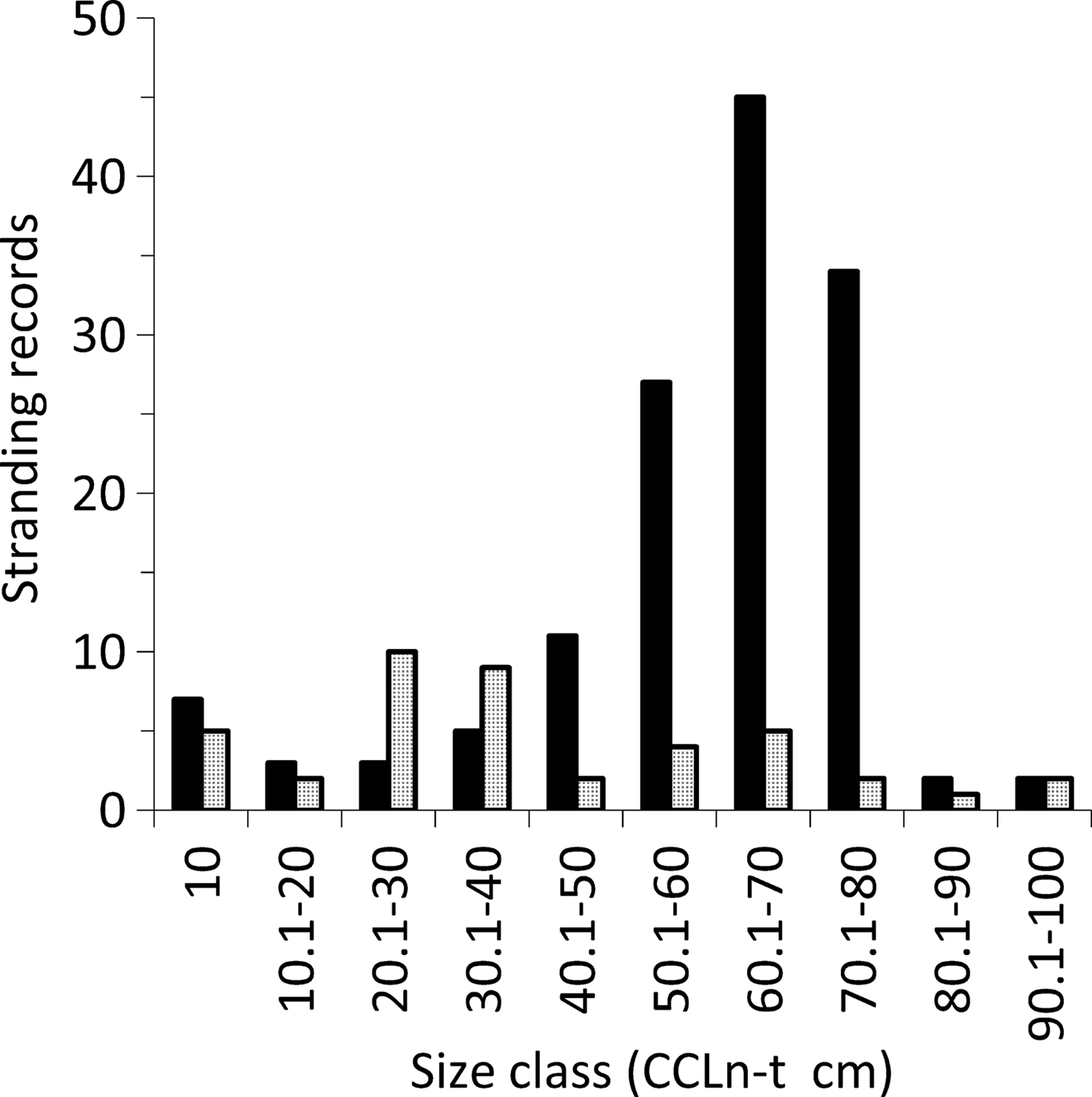
The length was distributed in all size-classes, hatchling included, with the largest numbers, 45 and 34 specimens, belonging, respectively, to the 60.1–70 cm and 70.1–80 cm CCLn-t classes, representing 57% of the total measured specimens (Figure 2; Table 1).
Curved carapace length notch to tip (CCLn-t) distribution in Caretta caretta (black, N = 139) and Chelonia mydas (grey, N = 42) stranded at Rhodes (1984–2011).
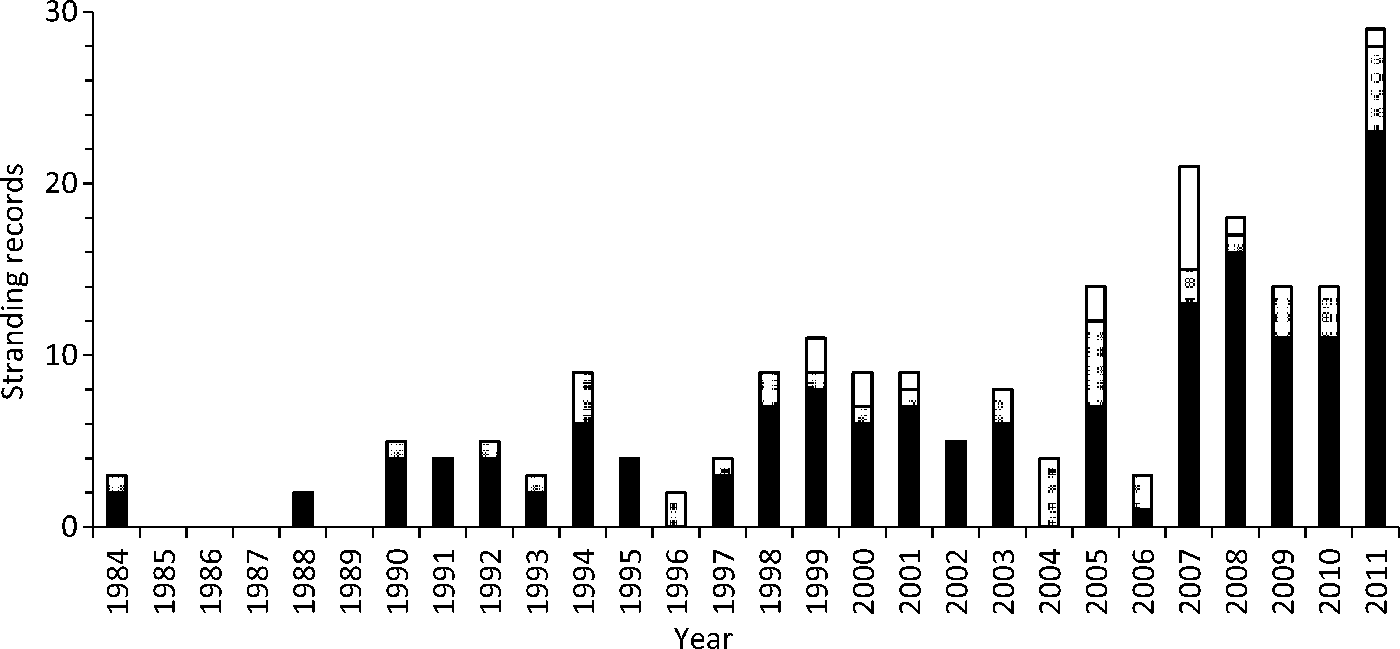
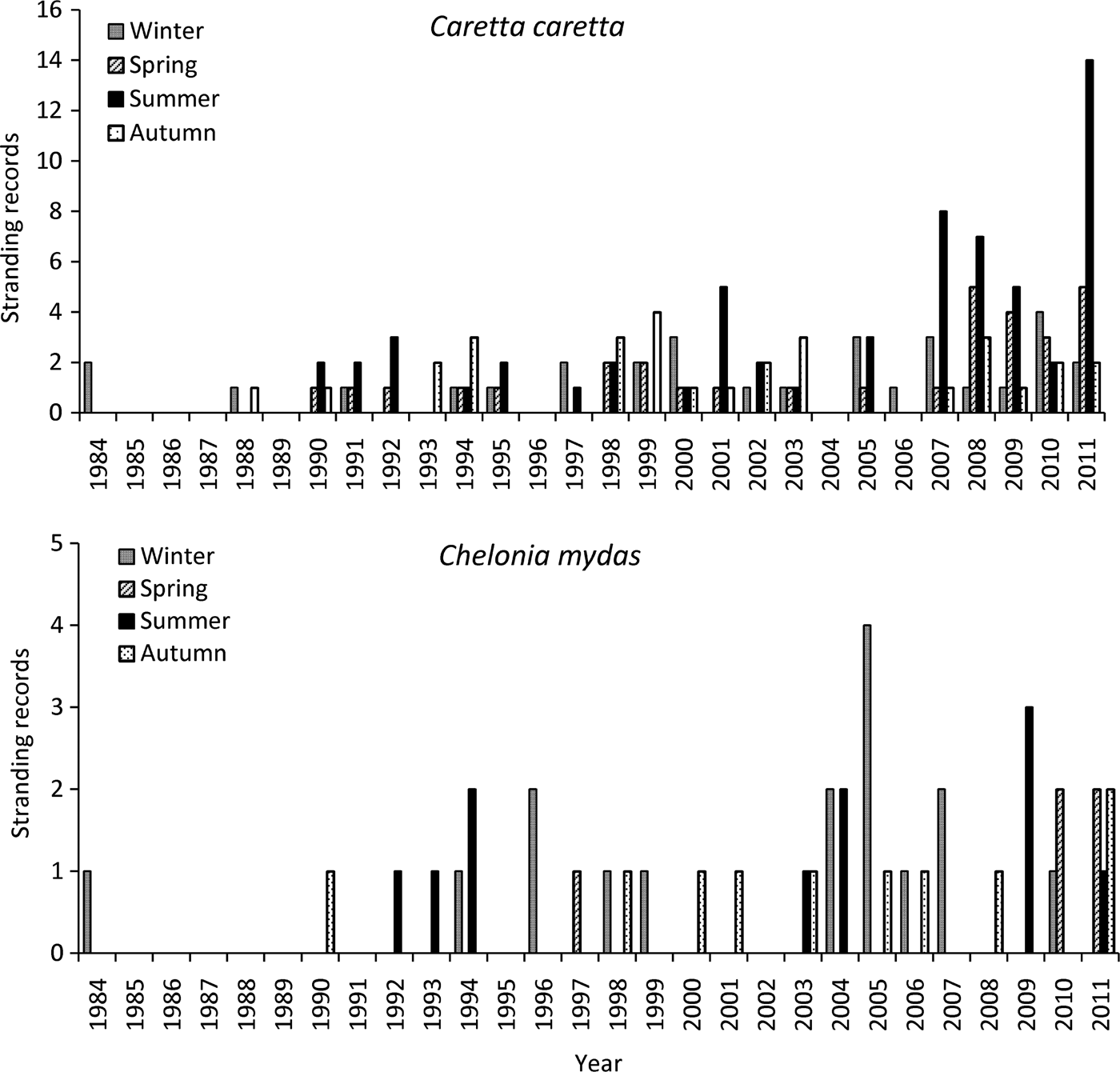
The annual distribution of C. caretta strandings showed an increasing trend, particularly in the last decade (Figure 3). In the period 2004–2011, 82 of 152 total strandings of C. caretta were recorded (54% of total strandings) and the higher number occurred during the summer of 2011 (Figure 4). The number of strandings was 0.56 km−1 during the last 16 years, considering the whole coastline.
Annual sea turtle stranding records in Rhodes (Caretta caretta: black, Chelonia mydas: grey, unidentified species: white).
Seasonal distribution of turtle strandings per year.
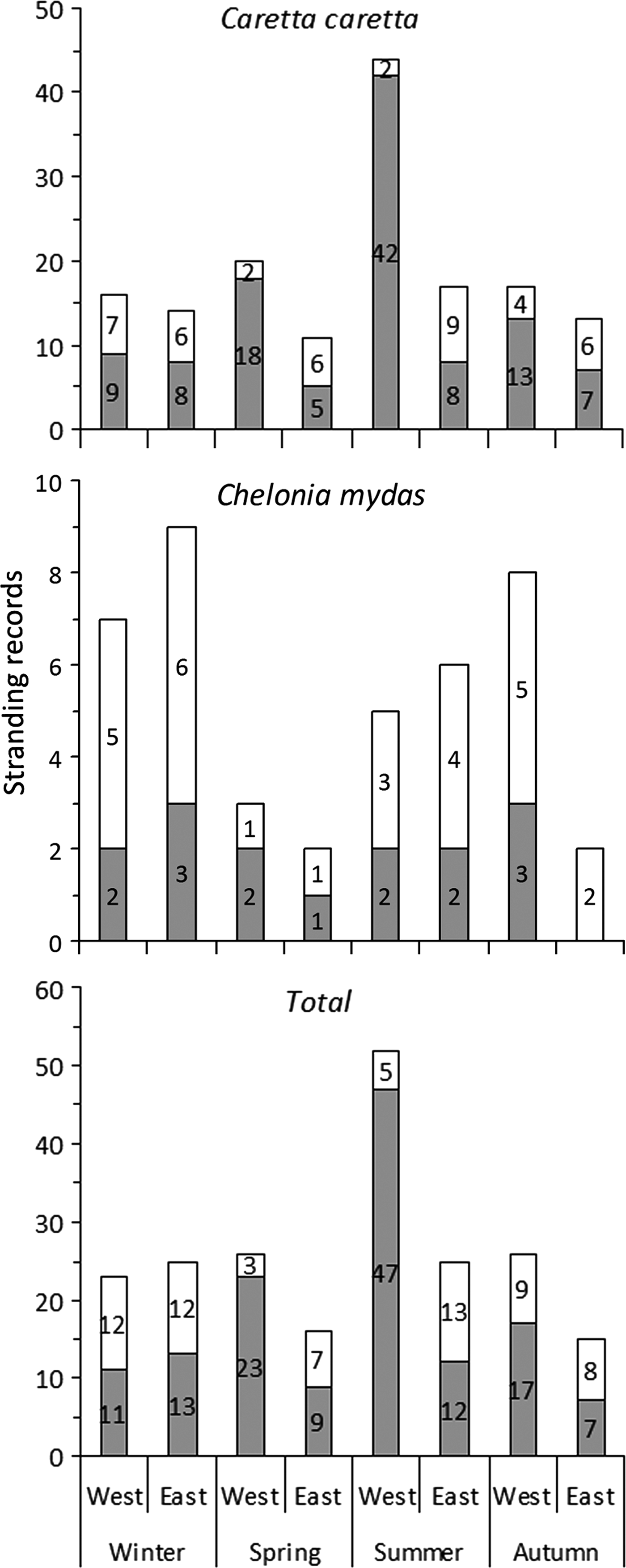
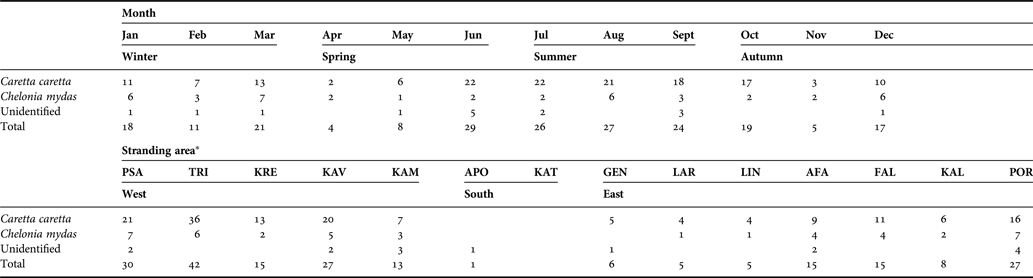
The statistical treatment of seasonal data showed that the number of loggerhead turtle strandings was higher in summer (ANOVA, P < 0.05) (Figure 4). Considering the whole period of data collection, most of the stranding cases were registered in summer (40%), while the remaining cases were equally distributed through the other seasons (20%) (Figure 5; Table 2). Apart from the months of July, August and September, remarkable was the number of loggerhead turtles stranded also in June and October (Table 2).
Overall seasonal and spatial distribution of dead (grey) and live (white) turtles stranded at Rhodes (1984–2011).
Monthly and spatial distribution of sea turtle strandings registered at Rhodes (1984–2011).
*, acronyms of stranding areas are listed in Figure 1.
The difference between the number of strandings on the west and east coast was not statistically significant (ANOVA, P > 0.05), although a tendency to strand more at west existed. Taking into account the whole period 1984–2011, the most impacted areas were TRI and PSA and, in general, the west coast concentrated more strandings (64% of strandings) compared to the east (Table 2; Figure 5). Dead and live specimens were equally distributed in the areas located along the east coast, while along the west side, 85% of stranded specimens were dead.
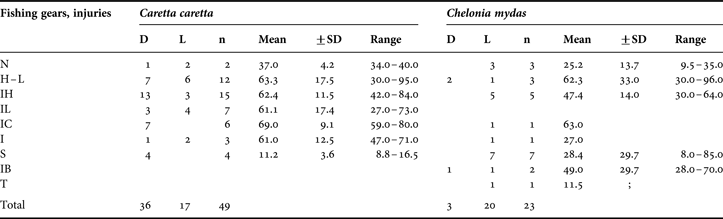
Conditions of debilitation and presence of fishing gear, injuries or other lesions were annotated for 35% (mostly dead) of total stranded loggerhead turtles (Table 3). Occurrence of fishing gear was noted in 11% of specimens, mainly hooks and/or longlines (9%). Hooks extracted, with nominal number 5–6, were those generally used in bottom longline fishery for the capture of groupers and large species of sparids (cf. Adamidou, Reference Adamidou, Papaconstantinou, Zenetos, Vassilopoulou and Tserpes2007). Deep injuries on head were noted in 11% of cases, mostly in dead specimens, while lesions and cuts on legs were observed in 5% of specimens, most at armpit level, probably caused by entanglement in longlines. Another 5% of stranded specimens showed deep cuts on the carapace, probably due to collision with boats, while distressed health conditions were observed only in 3% of cases. The mean size of C. caretta with evidence of gear like hooks and/or long-lines or cuts on head, legs and carapace was >60 cm, was higher than the mean size of turtles debilitated or with evidence of entrapment in nets (Table 3).
Status and carapace curved length (cm) of stranded Caretta caretta and Chelonia mydas according to the presence of fishing gears, type of injuries and other observations.
D, number of dead specimens; L, number of live specimens; n, number of specimens measured; SD, standard deviation; N, nets; H–L, hooks and/or longline; IH, injuries on head; IL, cuts on legs; IC, cuts on carapace; I, injuries; S, debilitated; IB, injuries on belly; T, tar.
Chelonia mydas
A total of 42 stranded C. mydas was registered, 15 dead (36%) and 27 live. The CCLn-t was measured in all specimens.
The log (CCLn-t + 1) values followed the normal distribution (Kolmogorov–Smirnov test, P > 0.05) and were used in statistical analysis.
In contrast with loggerhead turtles, the length of stranded green turtles, according to the ANOVA test (P > 0.05), was not statistically related to season, location (west and east coasts of Rhodes), or their situation (live or dead) (Table 1).
The lengths ranged from 8 to 97 cm, with the largest number of records (10 specimens) in the 20.1–30 cm size-class (Figure 2; Table 1). The size range of stranded C. mydas seemed to increase in the last decade. To date, 26 specimens had a CCLn-t ≤40 cm (62%), of which five specimens were between 8 and 10 cm in CCLn-t, while the remaining 16 specimens with a CCLn-t >40 cm stranded in the period 2000–2011, most (nine specimens) between 50 and 70 cm of length. The largest specimens were three females, with a CCLn-t of 97 cm, 96 cm and 85 cm, stranded, respectively, in December 2000, January 2004 and December 2005 (Figure 2).
Similarly to Caretta caretta, an increasing trend in the annual distribution of Chelonia mydas strandings was observed, mainly in the last decade (Figure 3). Between 2004 and 2011, 25 of 42 total strandings (60%) were registered and the higher values were observed in winter 2005 and summer 2009 (Figure 4).
The number of stranded green turtles was not statistically related to season (ANOVA, P > 0.05) (Figure 4). Nevertheless, concerning the whole period of study and taking into consideration the limited number of green turtles stranded, a higher relative amount of green turtles (38%) stranded in winter, 26% and 24% in summer and autumn, respectively, while only 12% of strandings was observed in spring, most in the last two years of survey (Table 2; Figure 5). Furthermore, ANOVA did not reveal a significant difference between strandings of C. mydas at west and east (P > 0.05), but a tendency to strand more at west was observed, similarly to Caretta caretta. In the whole period of data collection, on the west and east coast the green turtle strandings were 55% and 45% of the total, respectively, and also comparable values of dead and live specimens occurred (Table 2; Figure 5).
Debilitated health conditions, presence of fishing gear, injuries or other lesions were noted for 55% (most live) of total stranded green turtles (Table 3). Occurrence of fishing gear was reported in 14% of specimens. Deep injuries on head were noted in 12% of cases, all live specimens, while debilitated health conditions were observed in 17% of cases, mostly of small size.
Comparing the two species studied, a significant difference existed between their mean CCLn-t values (ANOVA, P < 0.001), showing that the stranded loggerhead turtles were larger compared to green turtles (Table 1).
The stranding recordings of both Caretta caretta and Chelonia mydas per season and location were normally distributed, after log transformation (Kolmogorov–Smirnov test, P > 0.05). The statistical treatment of data showed that the number of strandings per season and region of Caretta caretta was statistically higher than that of Chelonia mydas (ANOVA, P < 0.05) (Table 2). Green turtle strandings accounted for 22% of the total identified sea turtle specimens.
The difference between the total number of strandings of the two species for each season was not statistically significant (ANOVA, P > 0.05), while it was significant, at 90% confidence, concerning regions (higher number of strandings in the west) (ANOVA, P 0.08 < 0.1) (Table 2).
Throughout the whole period of study, the frequency of stranding overlap of Caretta caretta and Chelonia mydas was higher in winter and autumn (both 28%), lower in summer (18%), while strandings of both species were observed in spring only during the last two years (7%) (Figure 4).
Total strandings
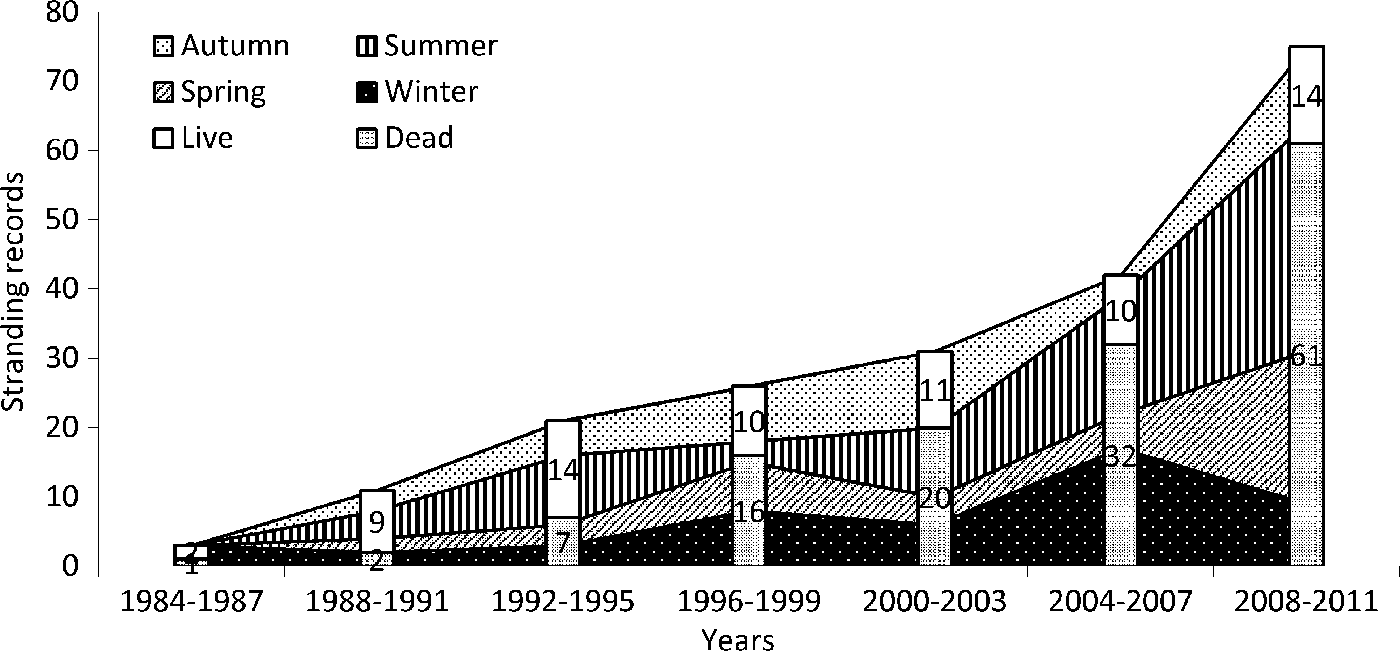
Total strandings, unidentified specimens included, were 209 (67% dead specimens). The annual distribution showed an increasing trend with various peaks appearing in the last decade, particularly in 2005, 2007, 2008 and 2011 (Figure 3). As already mentioned, in these years there was a huge increase of Caretta caretta stranding records, mainly during summer months (Figure 4). Records increased from 3 strandings year−1 in the period 1984–1995, to 7 strandings year−1 in the period 1996–2003, up to 14.6 strandings year−1 from 2004 to 2011, when 117 strandings were registered, corresponding to more than half of the total (Figure 6). Considering the whole coastline, the total strandings resulted 0.79 km−1 in the last 16 years. The linear increasing trend of records observed up to 2007 showed acceleration in the last four years, during which the double of dead specimens was observed, compared to the previous four years (Figure 6).
Four-year grouped strandings of sea turtles.
The general pattern of total strandings was evidently affected by the trend of loggerhead turtle stranding records. Considering the whole period studied, the majority of strandings (37% of total number) occurred during summer, while the remaining records were evenly distributed during the remaining seasons (each one approximately 20% of the total; Figure 5). It is remarkable that the higher number of strandings (29 strandings) was recorded in June; consequently, more than half of strandings were registered during the period from June to September (Table 2). The number of records registered during summer showed an evident increase in the last eight years (Figure 6).
The overall results showed that 61% of cases (127 strandings) were recorded in the western region, with a high predominance of dead specimens (98), while on the east coast the remaining 81 specimens were equally distributed between dead and live (Figure 5). Around the city of Rhodes (areas TRI, PSA, POR), 48% of strandings were reported; the area TRI concentrated the higher number of strandings, 42 records (20%), whereas only one was reported from APO and none at KAT (Table 2).
DISCUSSION
Stranding data showed that both Caretta caretta and Chelonia mydas species constantly frequent the area under study, as assessed by Corsini & Sioulas (2002).
The relative amount of strandings of C. mydas registered during the monitoring period was very close to 22.8%, previously observed (Corsini-Foka et al., Reference Corsini-Foka, Kondylatos and Hatiris2005), but sensibly higher compared to 7.2% observed at national level (1992–2000) (Panagopoulos et al., Reference Panagopoulos, Sofouli, Teneketzis, Margaritoulis, Margaritoulis and Demetropoulos2003). The contiguity with the Turkish coasts, where this species reproduces (Kasparek et al., Reference Kasparek, Godley and Broderick2001; Canbolat, Reference Canbolat2004), combined with the pelagic and sub-tropical character of the area (Corsini-Foka, Reference Corsini-Foka, Golani and Appelbaum-Golani2010) probably favour a more frequent presence of this species compared to other parts of the Aegean.
The size of stranded loggerhead turtles ranged from hatchling to young and adults during the three decades of data collection. The strandings concerned mainly individuals larger than 60 cm, as also observed at national level (Koutsodedris et al., Reference Koutsodedris, Papadopoulou and Margaritoulis2006), however their percentage was higher compared to 44% obtained from a stranding survey performed in the Greek regions of Crete and Attiki between 1990 and 2004 (Kavvadia et al., Reference Kavvadia, Rees, Katara, Haralabous, Kapantagakis, Valavanis, Margaritoulis, Frick, Panagopoulou, Rees and Williams2006). The smaller size of stranded loggerhead turtles during winter could suggest that the coastal environment in this period is less favourable to host larger-sized turtles dwelling in shallow waters, but further research needs to be carried out to support this hypothesis.
The mean size of stranded Caretta caretta was larger than Chelonia mydas. Strandings of small green turtles individuals are usual, indicating that the waters around the island offer a suitable feeding ground for juvenile development, similarly to the nearby Turkish region of Fethiye (Türkozan & Durmus, Reference Türkozan and Durmus2000) and the Lakonikos Bay in the south-western Aegean Sea (Margaritoulis et al., Reference Margaritoulis, Kousias, Nikolopoulou, Teneketzis, Salmon and Wynelan1992, Reference Margaritoulis, Teneketzis and Sioris1999, Reference Margaritoulis, Koutsodendris, Panagopoulou, Papaconstantinou, Zenetos, Vassilopoulou and Tserpes2007; Margaritoulis & Teneketzis, Reference Margaritoulis, Teneketzis, Margaritoulis and Demetropoulos2003). Green turtles do not nest regularly in Greece, although a C. mydas nested in 2007 in Rethymnos, northern Crete (Margaritoulis & Panagopoulou, Reference Margaritoulis, Panagopoulou, Casale and Margaritoulis2010), while an indication of nesting in Rhodes in 2002 was reported by Gambi (Reference Gambi2003). Stranded hatchlings of green turtles were never observed in the area, while post-hatchlings (8–10 cm in size) able to travel great distances were recorded. The nearest nest sites of C. mydas to Rhodes, not recognized as regular, have been identified at Patara, south to Fethiye, western Mediterranean coast of Turkey in 2000 (Erdoğan et al., Reference Erdoğan, Öz, Kaska, Düşen, Aslan, Yavuz, Tunç and Sert2001). As already noted (Corsini-Foka & Sioulas, Reference Corsini-Foka, Sioulas and Masseti2002; Corsini-Foka et al., Reference Corsini-Foka, Kondylatos and Hatiris2005), it is interesting to mention that old data on stranded specimens, including old samples from Rhodes preserved at the HSR collection, concerned small green turtles (Corsini, Reference Corsini1996), but since 2000 there has been an apparent widening in the size, which seems to persist. This trend includes the largest stranded green turtles ever observed in Greek waters.
A difference between the strandings in the west and the east was not shown statistically, for both species, but a higher incidence of strandings on the west coast was noted, in particular for Caretta caretta. This higher tendency of landfall toward the western coasts may be assisted by the north and north-west winds prevailing over the area (Savvidis et al., Reference Savvidis, Dodou, Krestenitis and Koutitas2004; Ruti et al., Reference Ruti, Marullo, D'Ortenzio and Tremant2008; Chronis et al., Reference Chronis, Papadopoulos and Nikolopoulos2011a, Reference Chronis, Raitsos, Kassis and Sarantopoulosb) and furthermore by other factors such as the near-shore currents (Hart et al., Reference Hart, Mooreside and Crowder2006).
Strandings were recorded in all seasons, but a different seasonal distribution was observed in the two species. The higher number of strandings for C. caretta was recorded in summer, while the number was similar in the remaining seasons. This could indicate the presence of a permanent population of loggerhead turtles in the coastal waters of the island, which offer suitable conditions for its concentration in particular during the summer. In contrast to C. caretta, and although a seasonal difference was not statistically highlighted, more Chelonia mydas stranded in winter, fewer in summer and autumn, fewest in spring. In fact, winter and autumn were the seasons during which the strandings of the two species overlapped more frequently. The low number of stranding records during spring could suggest a lower density of the green turtle population in the waters around Rhodes in this period, probably due to adverse biological and/or physical conditions, while they seem to return to the coasts from summer to winter.
Since no strandings were recorded on approximately one-third of the island coastline, the indices of 0.79 total strandings km−1, and 0.56 Caretta caretta strandings km−1, obtained in the last sixteen years for the whole coastline, will be sensibly higher, approaching the peaks reported in other Greek coasts for the period 1990–2005 (cf. Koutsodedris et al., Reference Koutsodedris, Papadopoulou and Margaritoulis2006).
An increasing linear trend of stranding records has been noted in the past (Corsini-Foka et al., Reference Corsini-Foka, Kondylatos and Hatiris2005), but it assumed an exceptional rising pattern in very recent years. The rise of strandings was attributed to an evident increase in the dead individuals registered, since the number of stranded live animals did not show particular changes over time. According to Epperly et al. (Reference Epperly, Braun, Chester, Cross, Merriner, Tester and Churchill1996) only 7–13% of dead turtles are stranded. Consequently, dead turtles stranded on the beaches of Rhodes in 2004–2011 could indicate a mortality at sea between 700 and 1300 animals.
According to Tomás et al. (Reference Tomás, Badillo, Raga, Margaritoulis and Demetropoulos2003), the increase of stranding records does not necessarily reflect the ‘increasing of anthropogenic threats to turtles’, but it may be the result of the ‘improvement of the network developed for their detection’. Public awareness concerning endangered marine turtles and their conservation has largely intensified in the last decades and the HSR has responded to most calls by the Port Authorities reporting a stranding. Taking into account that most of the stranding sightings concerned the warm period and were located in beaches easy to reach, usually frequented by local people and visitors, and corresponding to nearby fishing grounds, the increased public awareness, associated with improved facilities for information dissemination, could be an important factor that may help to explain the huge increase of stranding records of both species on the island.
The rise of the tourist population and related activities may also be implicated in increasing the probability of accidents and distress for animals approaching the coasts. The exceptionally high number of strandings registered during summer 2011 may have a relationship with an intensification of activities at sea due to the exceptional rise of tourists reported in the same period.
In addition to the above, factors linked to climate changes could also be considered in trying to understand the recent higher number of strandings of both species compared to the past.
Climatic changes in the Northern Hemisphere and the rapid warming of the Mediterranean waters in the last decades have been documented, showing that the warming is more accentuated in the eastern Mediterranean (Mediterranean Science Commission (CIESM), Reference Brian2008; Nykjaer, Reference Nykjaer2009; Philippart et al., Reference Philippart, Anadón, Danovaro, Dippner, Drinkwater, Hawkins, Oguz, O'Sullivan and Reid2011), clearly evident in the Aegean Sea, including the Dodecanese region (Raitsos et al., Reference Raitsos, Georgopoulos, Theocharis and Papathanassiou2008, Reference Raitsos, Beaugrand, Georgopoulos, Zenetos, Pancucci-Papadopoulou, Theocharis and Papathanassiou2010; Pancucci-Papadopoulou et al., Reference Pancucci-Papadopoulou, Corsini-Foka and Raitsos2011, Reference Pancucci-Papadopoulou, Raitsos and Corsini-Foka2012). The warming of seawater is also enhanced by other meteorological phenomena like the decrease of north-west summer winds (Etesian/Meltem winds) in the eastern Mediterranean, linked to the Summer North Atlantic Oscillation (Chronis et al., Reference Chronis, Raitsos, Kassis and Sarantopoulos2011b). It is interesting, therefore, to note that the huge increase of stranding records has often appeared in association with several events of earlier beginning and consequent widening of the warm season, characterized by extended periods of sea calm, the so-called, in Greek, ‘μπουνάτσα or μπονάτσα’ (derived from the Italian word ‘bonaccia’), with reduction or complete absence of winds, while high temperatures at sea surface were accompanied by anomalous deepening of the thermocline (cf. Corsini-Foka, Reference Corsini-Foka, Golani and Appelbaum-Golani2010; Pancucci-Papadopoulou et al., Reference Pancucci-Papadopoulou, Corsini-Foka and Raitsos2011).
The above combined factors could favour the intensification of activities at sea, like fishing and maritime–tourist traffic close to the coast (small tourist boats, motorboats, water-sport boats and other watercraft included), increasing the probability of accidental capture or collision or distress, followed by an increased number of strandings of both species, but further investigation is needed.
Among the potential effects of climate change on turtles, range shifts and dietary breadth may be involved (Mazaris et al., Reference Mazaris, Kallimanis, Sgardelis and Pantis2008; Hawkes et al., Reference Hawkes, Broderick, Godfrey and Godley2009; Báez et al., Reference Báez, Bellido, Ferri-Yáñez, Castillo, Martín, Mons, Romero and Real2011). Factors such as seawater warming, prolongation of warm period, and reduction of winds may contribute to providing conditions for higher occurrence of turtles of both species in the coastal areas, increasing the probability of them becoming victims of human activities.
Concerning the larger size of stranded green turtles observed in the last decade, it is difficult to understand whether or not this indicates some real change in the size composition of Chelonia mydas around the island. Only stranding data are available and their number is limited. It is possible that larger C. mydas, including individuals reproductively active in the nearby Turkish coasts, used to frequent or make incursions in the coastal zone in the past, maybe searching for foraging areas, but they were not detected due to less human activity, leading to a lower number of captures and/or accidents and, consequently, to a lower number of stranding records. Nevertheless, the increased temperature of the sea at the surface, in particular the increase of winter minimum values (Pancucci-Papadopoulou et al., Reference Pancucci-Papadopoulou, Corsini-Foka and Raitsos2011) and the amplification of the warm period may contribute to providing an environment more suitable than in the past for hosting and sustaining larger C. mydas individuals, favouring their range expansion from the Levantine coasts to the south-eastern corner of the Aegean Sea.
The majority of stranded turtles were dead specimens, with a proportion similar to the 69% reported along the Greek coastline in 1997–1999 (Kopsida et al., Reference Kopsida, Margaritoulis, Dimopoulos, Mosier, Foley and Brost2002), but lower than the 80% obtained in the period 2002–2006 (ARCHELON, 2013).
Dead loggerhead turtles were 72%, not far from the proportion of 77% obtained over all the Italian coasts (Casale et al., Reference Casale, Affronte, Insacco, Freggi, Vallini, Pino D'astore, Basso, Paolillo, Abbate and Argano2010).
Fisheries have an enormous impact on the Mediterranean turtle stock (Tudela, Reference Tudela2004), Greece included (Kavvadia et al., Reference Kavvadia, Rees, Katara, Haralabous, Kapantagakis, Valavanis, Margaritoulis, Frick, Panagopoulou, Rees and Williams2006; Margaritoulis et al., Reference Margaritoulis, Koutsodendris, Panagopoulou, Papaconstantinou, Zenetos, Vassilopoulou and Tserpes2007). Strandings were concentrated in the northern triangle of the island, east and west of the capital, but the higher number, in the majority dead specimens of Caretta caretta, were observed on the western coast and could suggest a direct link, emphasized by the prevailing winds, to human activities at sea, mainly fisheries, that region being the most exploited.
In contrast to loggerhead turtles, the majority of stranded green turtles were live specimens, equally distributed in the west and east coast, most distressed. Green turtles showed less impact by human pressure, probably due to their smaller size compared to loggerhead turtles and to different use of coastal waters (cf. Bellido et al., Reference Bellido, Báez, Castillo, Pinto, Martín, Mons and Rea2010a).
The relative amount of deep head trauma observed in stranded C. caretta and Chelonia mydas was similar, and it demonstrates that the well-known practice of fishermen to intentionally inflict injuries on turtles captured in fishing gear (Kopsida et al., Reference Kopsida, Margaritoulis, Dimopoulos, Mosier, Foley and Brost2002; Margaritoulis et al., Reference Margaritoulis, Koutsodendris, Panagopoulou, Papaconstantinou, Zenetos, Vassilopoulou and Tserpes2007) is still widespread in the region under study.
The relative occurrence of fishing gear was also similar in stranded specimens of both species. Drifting longline is a fishing method responsible for the highest number of turtle captures in the Mediterranean and Greece (Lewison et al., Reference Lewison, Freeman and Crowder2004; Margaritoulis et al., Reference Margaritoulis, Koutsodendris, Panagopoulou, Papaconstantinou, Zenetos, Vassilopoulou and Tserpes2007; Tomás et al., Reference Tomás, Gozalbes, Raga and Godley2008), also applied in the Dodecanese islands, and it obviously interacts with the sea turtles of the area. However, being a small-scale fishery more intense in the region, and taking into account the size of hooks extracted (used generally for groupers and large sparids), a higher impact is probably to be attributed to bottom longline fishing, widespread in coastal waters (Adamidou, Reference Adamidou, Papaconstantinou, Zenetos, Vassilopoulou and Tserpes2007).
On the other hand, the cause of death of the largest number of turtles, which did not present external injuries or evidence of fishing gears, is unknown. Data from Rhodes provide evidence that human activities detrimentally affect mainly larger-sized loggerhead turtles, living in shallow waters. Dead loggerhead turtles were larger than live stranded specimens, as observed in Italian waters, particularly in the North Adriatic, where this result was mainly attributed to bottom trawlers (Casale et al., Reference Casale, Affronte, Insacco, Freggi, Vallini, Pino D'astore, Basso, Paolillo, Abbate and Argano2010), and in South Spain, where it is mainly due to longline fishery (Bellido et al., Reference Bellido, Báez, Castillo, Pinto, Martín, Mons and Rea2010a). Nevertheless, bottom trawlers in Greece do not seem to catch many turtles, since they operate in waters deeper than where turtles forage (Margaritoulis & Panagopoulou, Reference Margaritoulis, Panagopoulou, Casale and Margaritoulis2010). As previously noted, boat seine (currently but erroneously named ‘beach-seine’) was a traditional fishing method (Adamidou, Reference Adamidou, Papaconstantinou, Zenetos, Vassilopoulou and Tserpes2007; Katsavenakis et al., Reference Katsanevakis, Maravelias, Vassilopoulou and Haralabous2010) locally used up to 2010, when it was wholly withdrawn in shallow waters. This method had a considerable impact on large-sized neritic turtles, as assessed by Margaritoulis et al. (Reference Margaritoulis, Koutsodendris, Panagopoulou, Papaconstantinou, Zenetos, Vassilopoulou and Tserpes2007) and probably it was a serious threat also in the region of Rhodes, at least during the legal fishing period, which did not include the warm months. Excluding, therefore, boat seine impact for explaining the high number of strandings reported in summer, other causes are to be taken into account for dead turtles without external injuries or apparently without fishing gear. Turtles may be damaged by natural causes or pathologies that they suffer in the wild (Bellido et al., Reference Bellido, Báez, Castillo, Pinto, Martín, Mons and Rea2010a). Furthermore, it is possible that turtles have ingested gear (hooks and longlines) or plastic litter or bags (Margaritoulis & Panagopoulou, Reference Margaritoulis, Panagopoulou, Casale and Margaritoulis2010) which have entered the digestive system, causing internal damage, or they were victims of set-nets entanglement. The effects of boat seines or bottom trawls illegally operating near the shoreline during the summer period, and fishing activities, including bottom longline, widely practised by non-professional fishermen as well, are also to be evaluated.
The long-term stranding data collection performed at Rhodes, although incomplete regarding all possible causes of death or injuries, and lacking biological details, like those obtained through post-mortem examination, shows that an accurate monitoring, performed along a very limited part of the Greek coastline, may contribute to gathering useful and representative indications on the evolution of the general trend of sea turtle strandings at a higher level than local, adding more information on species distribution and the impact of human activities on sea turtle populations. It is quite impressive to note how some results, although based on a relatively low number of cases, concentrated in the reduced space of a medium sized island, approach a faithful micrographic reproduction of results obtained from surveys over all of Greece and other Mediterranean countries.
Nevertheless, the huge increase of Caretta caretta and Chelonia mydas strandings documented in this work evidence the precarious condition of sea turtle populations in the area. Severe control of fishing and other human activities, carried on without limitation in the coastal zone, needs intensification, accompanied by rigorous application of laws. Although public awareness for the conservation of these endangered species is today largely widespread, the results of this work reveal that, at regional level, the categories of people exploiting unconditionally the marine resources lack the necessary education: action to fill this lack is an urgent need.
ACKNOWLEDGEMENTS
The authors are greatly indebted to the Port Authority-Coast Guard Office of Rhodes and ARCHELON—the Sea Turtle Protection Society of Greece for helpful and constant collaboration. For logistic support in stranding data collection they are grateful to A. Sioulas, Director of the HSR. They greatly thank their colleagues A. Katsiki and S. Kalogirou for providing valuable support during statistical analysis of data, and P. Margies for veterinary assistance. The authors also wish to acknowledge three anonymous referees for their highly constructive comments and suggestions on a first version of this article.
FINANCIAL SUPPORT
The Hydrobiological Station of Rhodes of the Hellenic Centre for Marine Research has self-supported the sea turtle stranding survey on the island and this study.