


Introduction
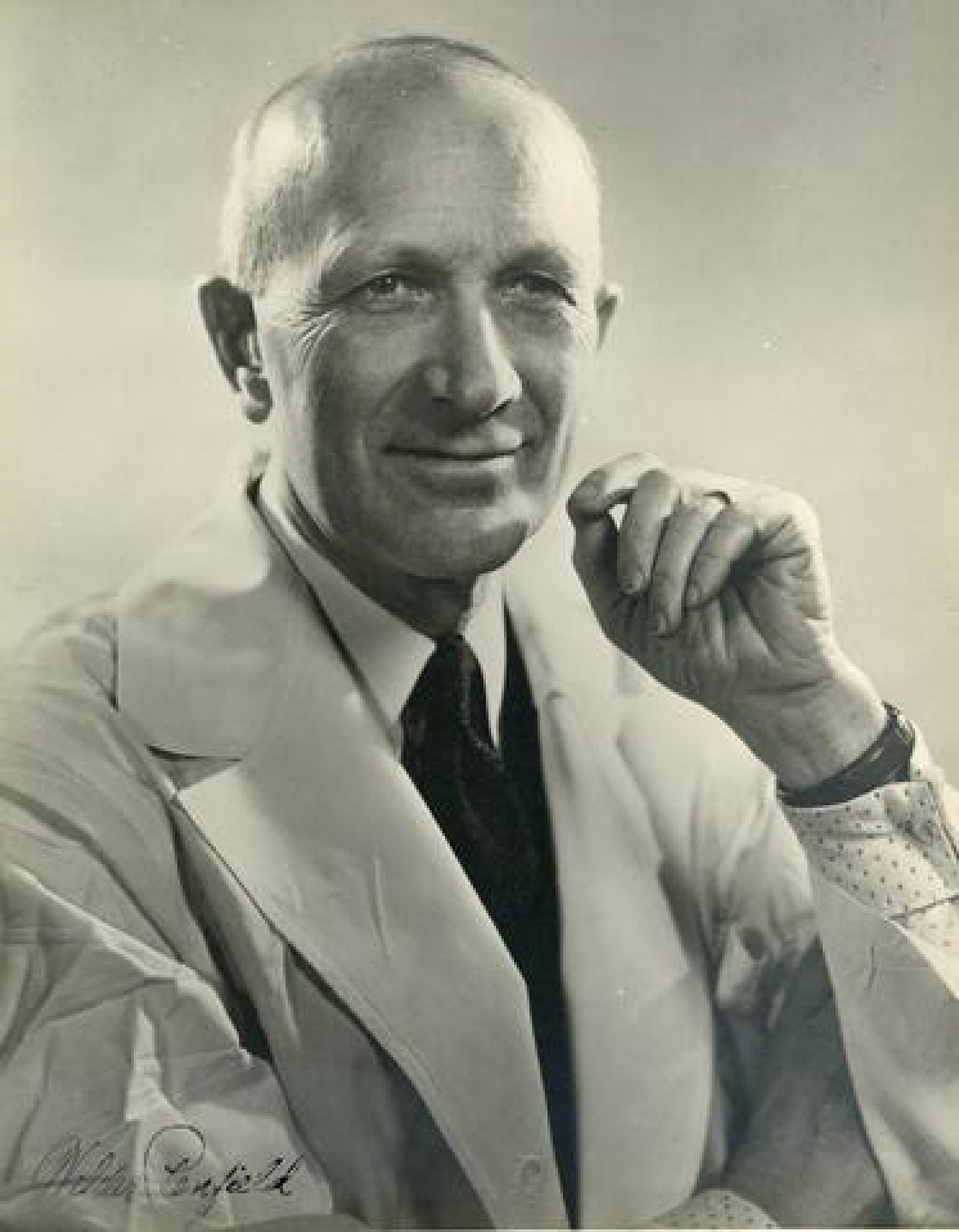
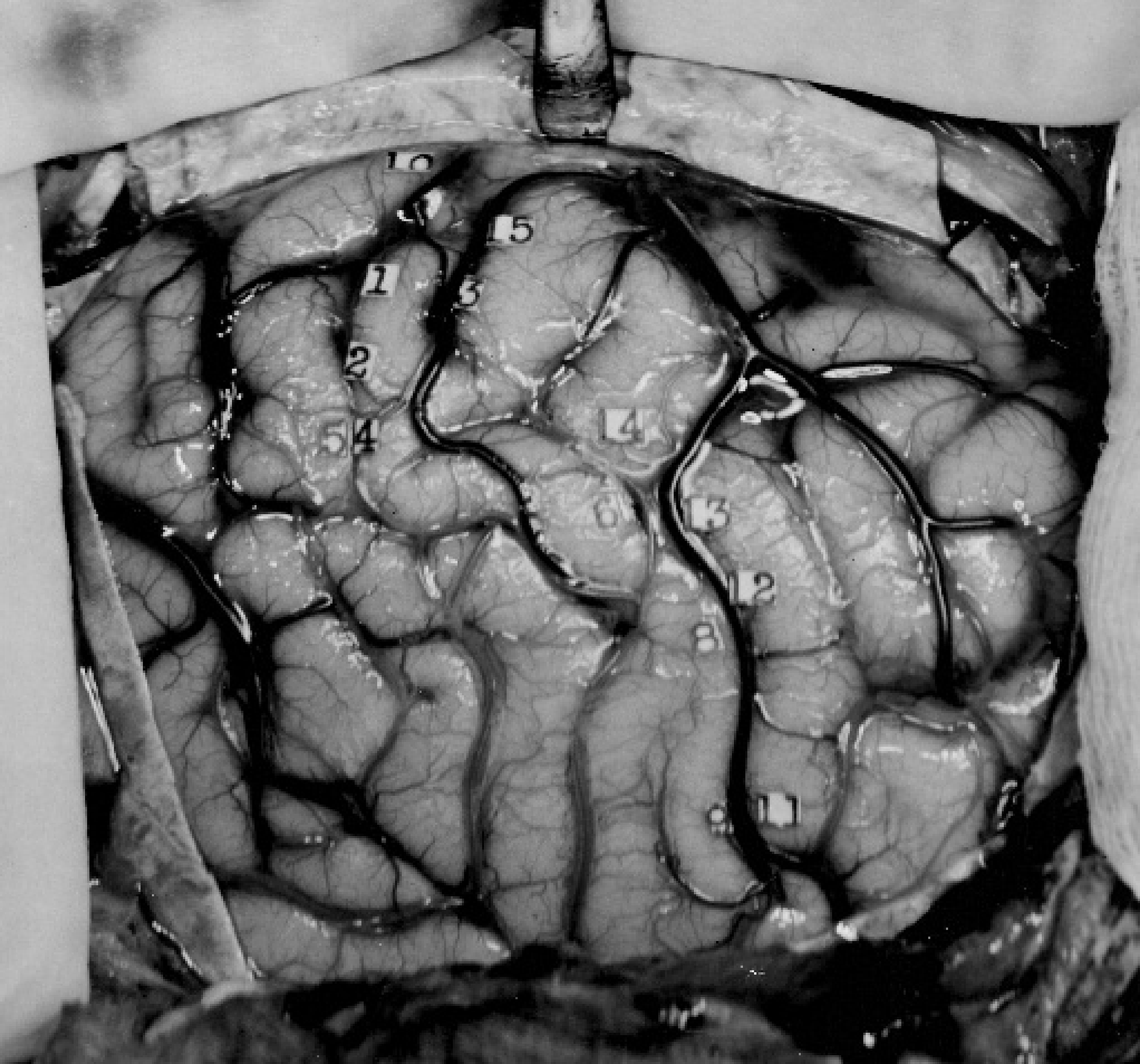
Wilder Penfield was a pre-eminent Canadian neurosurgeon whose career as a clinician-scientist in mid-twentieth-century Montréal brought profound contributions to the advancement of knowledge in neuroscience and neurosurgery (Figure 1). Benefiting from a distinguished education in physiology, neuropathology and surgery under world-class figures such as Charles Sherrington, Reference Feindel1 Pio del Rio Hortega Reference Gill and Binder2 and Allan Whipple, Reference Preul and Feindel3 he dedicated his life’s work to elucidating “the mystery of epilepsy, and how the human brain does what it does.” Reference Penfield4 (p. 48) Today, Penfield is mostly celebrated for founding the Montreal Neurological Institute (MNI) in 1934, describing the cortical homunculus and developing the Montreal Procedure (anterior temporal lobectomy and amygdalo-hippocampectomy) for the treatment of temporal lobe epilepsy. Reference Ladino, Rizvi and Téllez-Zenteno5 The latter involves intraoperative functional cortical mapping in awake patients to precisely delineate and resect the epileptogenic zone (Figure 2). Throughout the procedure, the patient’s subjective experience is paramount in identifying the effect of electrical stimulation on a specific cortical area. Reference Penfield and Jasper6
Photograph of Wilder G. Penfield (1891–1976), neurologist and neurosurgeon, taken in 1954. Image used with permission from the McGill University Health Center Permanent Archives.

The surgical cortex exposed at surgery. The numbered thickets identify the sensorimotor region. © Leblanc R. Radical Treatment: Wilder Penfield’s Life in Neuroscience. 2020 and Montreal Neurological Institute, all rights reserved.

Although most scholarly examinations of Penfield’s work revolve around his scientific legacy, he also significantly advanced the ethical framework governing the practice of neurosurgery, particularly regarding the special ethical needs necessitated by his new surgical technique. Reference Sedney and Bernstein7 In an era characterized by a pronounced norm of physician-dominated paternalism in the patient–doctor relationship, Reference Kaba and Sooriakumaran8 Penfield demonstrated an awareness of medical ethics ahead of his time by upholding approaches promoting patient-centered care, modernization of care delivery and safe surgical innovation. His commitment to these core values becomes apparent through his publications, records of notable cases, biographies, correspondences, personal writings and public addresses. As the surgeon who popularized intraoperative brain mapping through the Montreal Procedure, Penfield influenced the development of the field from the early twentieth century to the present day. This essay outlines his contributions in setting and disseminating ethical standards in awake craniotomies.
Evolution of Awake Craniotomies and Brain Mapping
Prior to Penfield, other neurosurgeons already actively practiced early forms of intraoperative brain mapping within clinical settings. For instance, Fedor Krause, a neurosurgeon in Berlin, mapped the motor and sensory functions of the cortex using direct electrical stimulation in the late nineteenth and early twentieth centuries. Reference Bacigaluppi, Bragazzi and Martini9 Similarly, Otfried Foerster, a neurosurgeon in Breslau who served as Penfield’s mentor during a 6-month sabbatical in 1928, performed resections of epileptogenic scars guided by the sensorimotor response from patients under local anesthesia. Reference Sarikcioglu10 Hence, Penfield’s legacy rests not so much on the creation of the surgical technique but on its systematic refinement, modernization, standardization and, most importantly, ethical oversight.
Regarding the work of Penfield’s predecessors, Krause ensured intraoperative rigor with three dedicated physicians observing the sensorimotor responses to stimulation and maintained a minimum of 5 years follow-up after surgery. Foerster developed a standardized workflow for pre-operative evaluation and epileptogenic focus identification using pneumoencephalography and electrocorticography (ECoG). Reference Leblanc11 However, both surgeons ultimately relied on individual decision-making for their clinical actions. Today, awake craniotomies mandate careful multidisciplinary pre-operative planning and assessment, clear communication with the patient and robust patient comfort measures. The procedure also requires systematic mapping techniques, sometimes extended with the inclusion of cognitive function mapping, Reference Dziedzic and Bernstein12 such as attention, memory or spatial reasoning. Reference Tariq, Aziz and Paracha13 Despite these advances, ethical challenges persist in several areas: defining eligibility criteria for awake craniotomy, mitigating the overreliance on individual decision-making, managing conflicts of interest between the patient and the care provider, obtaining informed consent and ensuring patient safety when pursuing surgical innovation. Reference Kirsch and Bernstein14 Throughout his career, Penfield bridged the gap between his predecessors and several contemporary practices by addressing these ethical challenges.
Shifting toward Patient-Centered Neurosurgery
As a Rhodes scholar at Oxford University, Penfield met and established a close friendship with William Osler, who also proved to be a supporting and caring figure. Reference Penfield15 On one instance in the spring of 1916, Penfield sustained a severe leg injury after a German submarine torpedoed the S.S. Sussex during his crossing of the English Channel. His following convalescence at the Osler home, affectionately known as “The Open Arms,” offered him a unique perspective, throwing “new light on Osler and on the source of his strength” Reference Penfield4 (p. 36). This close acquaintance, coupled with his observation of Osler’s character, led Penfield to develop a lifelong admiration for his mentor. He later wrote that “if I summon before me my highest ideals of men and medicine, I find them sprung from the spirit of Osler.” Reference Penfield16 Likely influenced by this relationship, Penfield’s subsequent approach to patient care stood in sharp contrast with most of his contemporaries. His prominent quality was to foster genuine relationships with his patients. This dedication was noted by Maude Abbott, a pioneering Canadian female physician, following her treatment for a skull fracture at the Royal Victoria Hospital: “There’s something human in the air, / That speaks of W.O.” Reference Andrew-Gee17 (p. 80). A large part of this mutual respect stemmed from Penfield’s ability to empathize with the patient’s experience, understand their anxieties and fears and offer necessary reassurance. When reminiscing about William Ottmann, one of his early patients, Penfield observed: “I had prepared William for this, explaining as much as he could understand. I have often wondered at the courage of my patients. It called for true heroism to lie there” Reference Penfield4 (p. 238). Such admiration indicates a strong ethical stance because the success of the Montreal Procedure requires reciprocal trust between the patient and the surgeon: the surgeon relies on the patient’s subjective input to map the cortical area for resection while the patient, conscious yet unable to feel anything, trusts the surgeon to alter, but not diminish, the functioning of their brain. Hence, when describing the procedure, Penfield remarked that: “If local anesthesia is to be used, it is essential that there should be a friendly relationship between operator and patient.” Reference Penfield and Jasper18 (p. 748).
This trust is further reinforced by Penfield’s effort to dismantle the physician-patient hierarchy, prevalent at his time, by actively including the patient in the treatment process. For him, the need for intraoperative patient feedback extended beyond brain mapping and served as a measure for injury prevention during other procedures. For instance, in his Canadian Army Manual of Military Neurosurgery, Penfield justified the use of local anesthesia as a safeguard against unintended venous injury during pneumoencephalography – the insufflation of air in the space containing the cerebrospinal fluid such that “the patient will object if too great a traction be exerted upon such a vein” Reference Penfield19 (p. 70).
This very concept of patient participation in their treatment is further evidenced by Penfield’s commitment to patient-centered care, a philosophy currently defined as the integration of a person’s preferences, values and beliefs through shared decision-making. Reference Grover, Fitzpatrick and Azim20 At its foundation, this approach requires the surgeon viewing the patient not merely as a carrier of a pathology but more importantly as a sensitive human being with a unique narrative. Penfield exemplified this quality by framing his patients not as passive subjects but as active agents with a rich emotional and psychological dimension. In a publication discussing his first operation on his sister, Ruth Inglis, he wrote that she “spoke to the operator frequently [during the procedure] and talked intelligently about her children, her chief preoccupation” Reference Penfield and Evans21 (p. 117). In the same publication, he also noted how “she expressed her gratitude so nicely” Reference Penfield and Evans21 (p. 118). Moreover, Penfield introduced the practice of patient interviews before surgery to understand their perspectives and expectations, an idea described as revolutionary until the late twentieth century. Reference Sedney and Bernstein7 In the case of Chester Ames, Penfield recorded that he “wanted to be free of his epilepsy and wanted a stronger right hand so he could milk better” Reference Jefferson22 (p. 160). This practice laid the groundwork for shared decision-making, a cornerstone of modern medical ethics.
One truly appreciates the collaborative relationship Penfield fostered with his patients when considering the value he assigned to their subjective experiences, including those related to higher cognitive functions, such as speech, memory or reliving of past experiences – a phenomenon observed upon stimulation of the first temporal gyrus. Throughout his work, he actively urged all neurosurgeons to attend to their awake patients. As he stated during the prestigious 1946 Ferrier Lecture to the Royal Society in London, “if the surgeon will but listen, this observer from underneath the sterile coverings can tell us what he is made to feel, to see, to hear and to dream” Reference Jefferson22 (p. 204). Even in his role as a scientist, Penfield viewed his patients as co-authors and their experiences as primary data: “we cannot claim to have written this monograph alone… there are other authors… We refer to the patients. What each one of them thinks about his seizure, his disability, or the effect of electrical stimulation of his own cortex constitutes important source material” Reference Penfield and Rasmussen23 (p. IX). This profound respect for his patient’s inner experience reflected an early form of patient-centered care.
Aside from interpersonal relationships, Penfield’s commitment to patient care was also demonstrated through his emphasis on patients’ well-being in the operating room. For him, the success of a procedure could not be judged solely by its outcome but equally by the patient’s experience. This unique perspective distinguished him from his contemporaries, including his mentor Otfried Foerster, who occasionally tolerated patient suffering in pursuit of better surgical outcomes. In a report to the Rockefeller Foundation, Penfield remarked that “in his [Foerster] almost universal use of local anesthesia, the patients sometimes suffer acutely” Reference Penfield24 (p. 15). In contrast, Penfield regarded patient comfort as a priority. From a technical perspective, this commitment manifested in two ways, namely the meticulous operating room structure and the refinement of procedures.
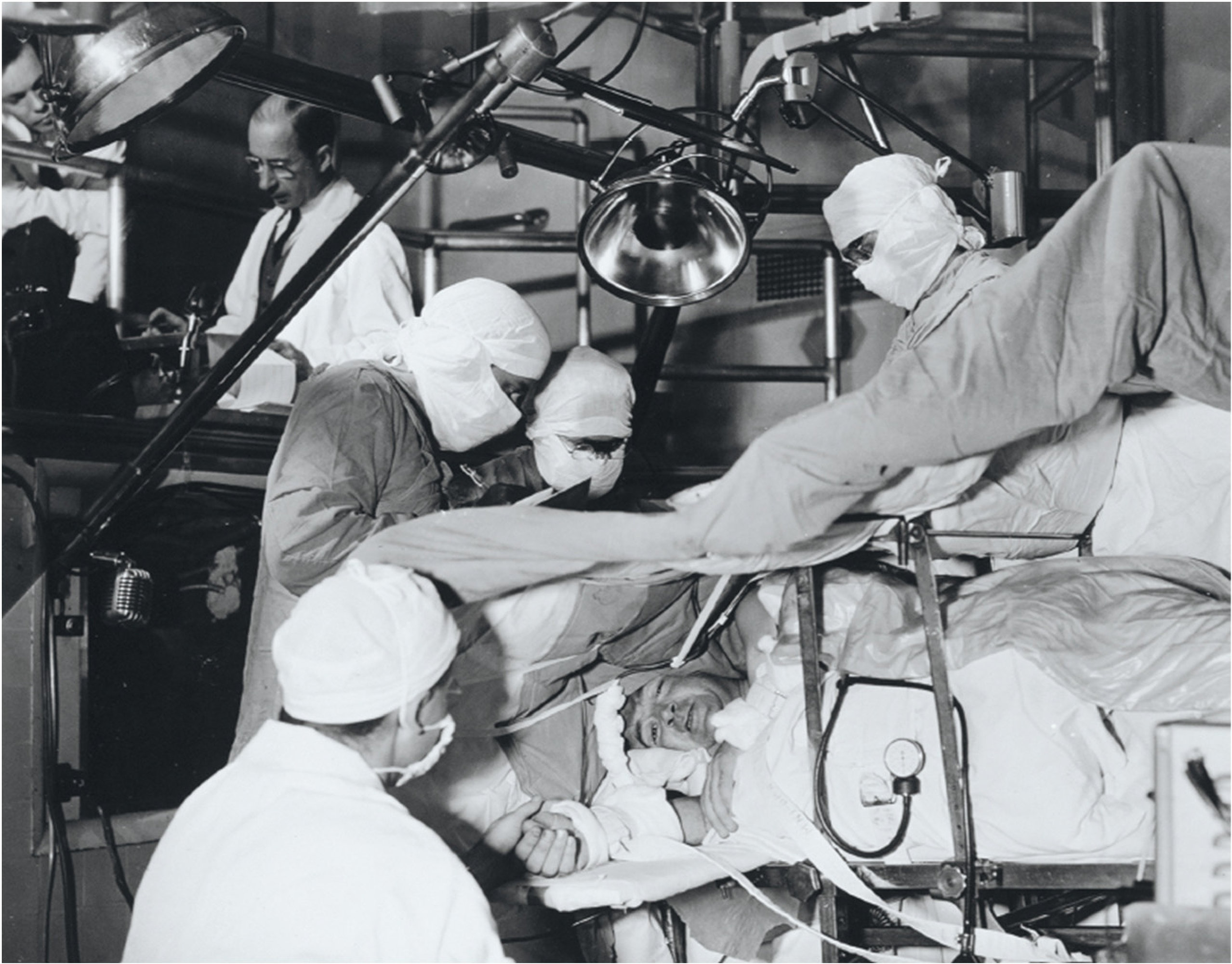
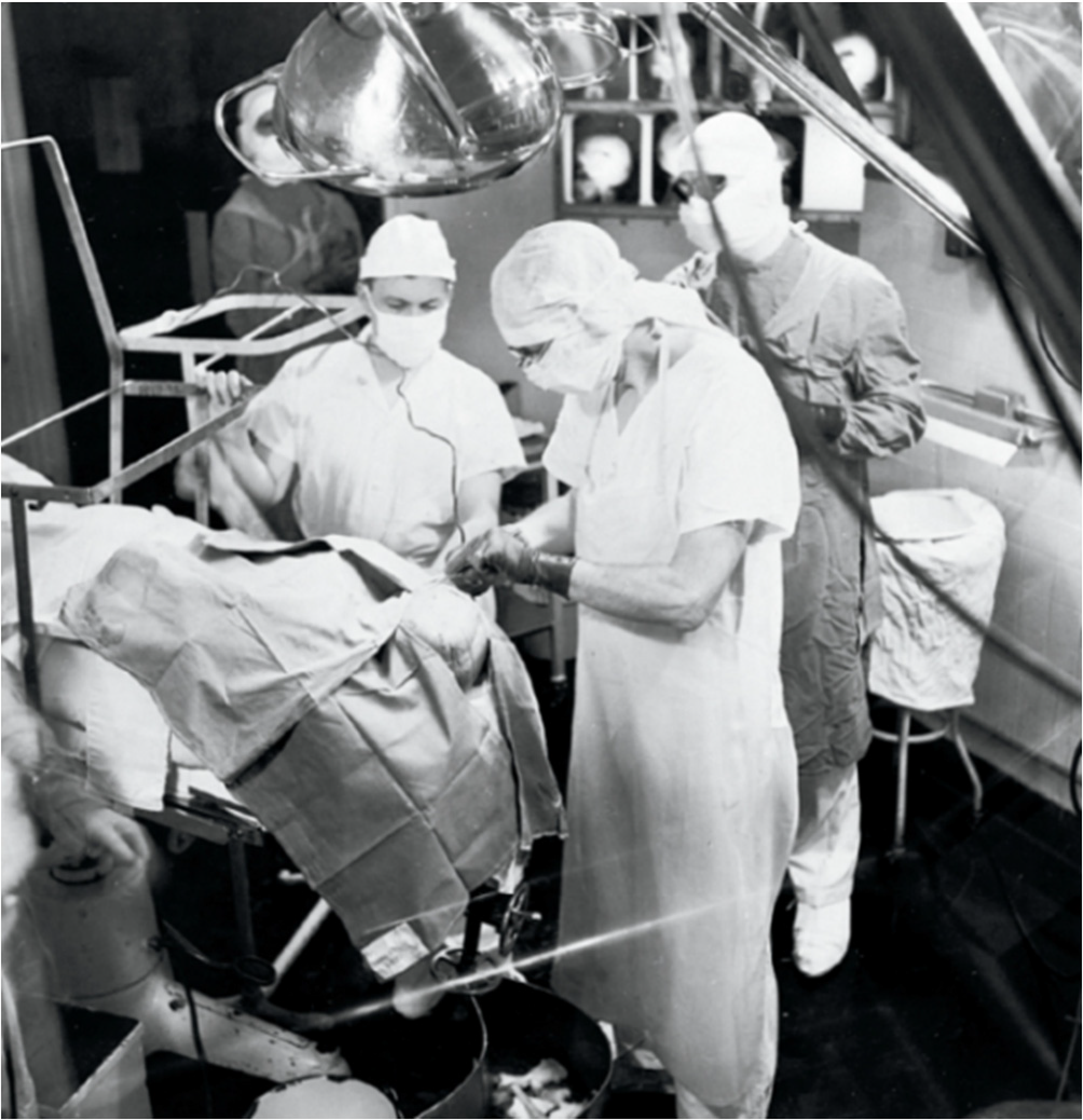
Regarding the operating room, André Pasquet, the anesthetist working with Penfield, described a highly optimized intraoperative positioning that maximizes comfort without compromising the surgical team’s performance: “the patient is made as comfortable as possible. The steel frames supporting the drapes are arranged so as to give the surgical team the optimum working space… while allowing the anesthetist unobstructed access to his patient” Reference Penfield and Jasper18 (p. 752) (Figure 3). On the point of procedure, Penfield’s quest for superior surgical techniques led to several advancements in pain reduction. A notable example is the use of local analgesia. When describing his surgical technique, he explained that “care must be taken to anesthetize the skin at points where surgical drapes are to be sutured as subsequent traction on these points is a frequent cause of discomfort” Reference Penfield and Jasper18 (p. 749) (Figure 4). Beyond the inherent objective of enhancing comfort, Penfield remarked that these measures also promoted patients’ willingness to cooperate.
Setup of the operating room during an awake craniotomy. Penfield is annotating the patient’s brain chart, Jasper is analyzing the EEG recording from the gallery of Operation Theater One, and the anesthetist is seated next to the patient. © Leblanc R. Radical Treatment: Wilder Penfield’s Life in Neuroscience. 2020 and Montreal Neurological Institute, all rights reserved.

Wilder Penfield suturing the drapes to the anesthetized scalp with André Pasquet observing from his right to ensure the patient feels no discomfort. © Leblanc R. Radical Treatment: Wilder Penfield’s Life in Neuroscience. 2020 and Montreal Neurological Institute, all rights reserved.

Furthermore, on numerous occasions, Penfield expressed his understanding that the absence of general anesthesia heightened patients’ awareness of the operating room environment and the procedures performed, which can be a source of anxiety. He recognized that during a craniotomy “the sound of rongeuring or sawing bone is distressing” Reference Penfield19 (p. 32). Similarly, the electrostimulation itself could occasionally trigger disturbing emotional responses. This was the case of patient J.V., a 14-year-old girl who experienced a vivid hallucination episode of a traumatic childhood experience where she was startled by a man in a meadow at the age of 7 years. Reference Penfield and Jasper25 To mitigate these stressors, Penfield maintained a reassuring presence throughout the operation, singing nursery rhymes to children and sharing jokes with patients Reference Andrew-Gee17 (p. 104). Pasquet further emphasized that the anesthetist “must provide encouragement and guidance to a patient who is going through an alarming as well as crucial experience” Reference Penfield and Jasper18 (p. 752). The team thus created a lighter atmosphere to counter the inherent stress induced by the procedure.
Ethics-Guided Technical Refinements
Numerous surgical contributions in awake craniotomies, such as mapping of higher cognitive functions, are directly attributable to Penfield. Fundamentally, they arose from the pursuit of ethical standards aimed at improving the quality of care. Although not the pioneer of intraoperative brain mapping, Penfield standardized the technique by publishing the Montreal Procedure, thus enhancing its reliability, facilitating training and raising patient confidence. From an era where intraoperative cortical mapping was in its early stages and lacked uniformity, Reference Rahimpour, Haglund, Friedman and Duffau26 his involvement guided the field toward a balance between standardization and patient-specific customization, an important principle in modern healthcare. Reference Sinsky, Bavafa, Roberts and Beasley27 Specifically for today’s neurosurgical field, Villeneuve et al. found that “the act of standardization itself can generate quality improvement” by reducing complications, shortening hospital stays, lowering costs and enhancing team collaboration. Reference Villeneuve, Evans and Bowen28 This aligns with Penfield’s vision of maintaining an updated and standardized reference for neurosurgical procedures, also demonstrated by a statement in the preface of his manual of military neurosurgery: “a manual… should tend to standardize treatment… The necessity of periodic restandardization may well make it necessary at some future time to prepare a second and revised edition” Reference Penfield19 (p. 5). Concretely, Penfield described the Montreal Procedure with an exceptional degree of detail, describing the technique step by step: “Examination of speech representation is carried out as follows” Reference Penfield and Jasper18 (p. 764). In addition, his description also included advice on avoiding complications and corresponding corrective measures. Reference Penfield and Jasper6 Not only did these instructions enable the adoption of the procedure in specialized centers, but it also established a powerful precedent for the success of standardization in neurosurgery.
Another key technical contribution from Penfield was his recognition of the need for a collaborating multidisciplinary team to support all stages of patient care – a core pillar of modern healthcare systems. This became apparent in his early career, when he noted in a 1920 article entitled British State Medicine that “the outstanding defect in the British scheme at present is its failure to provide central clinics where physicians may practise in groups.” Reference Penfield29 For Penfield, any significant advance in elucidating the mysteries of the brain required a unified approach integrating neurology, neurosurgery and research. This model was at the origin of the MNI, as evidenced by Penfield’s application to the Rockefeller Foundation to obtain funding for building the Institute: “at the present time, advance is being prevented by… the separation of neurosurgery from neurology… [and] made difficult by the lack of opportunity… to combine laboratory study with clinical observation” Reference Penfield30 (p. 13). The MNI owes its enduring significance precisely to its multidisciplinary nature, as The Gazette newspaper in Montréal highlighted on January 3, 1987: “Care is a team effort. That’s the way Wilder Penfield wanted it when it [the MNI] opened in 1934.” Reference Quig31 While the creation of a platform for multidisciplinary dialog constitutes an ethical triumph in itself by ensuring a broader consideration of the patient’s case, this foundational insight enabled numerous subsequent ethical advances in care delivery, which are discussed below.
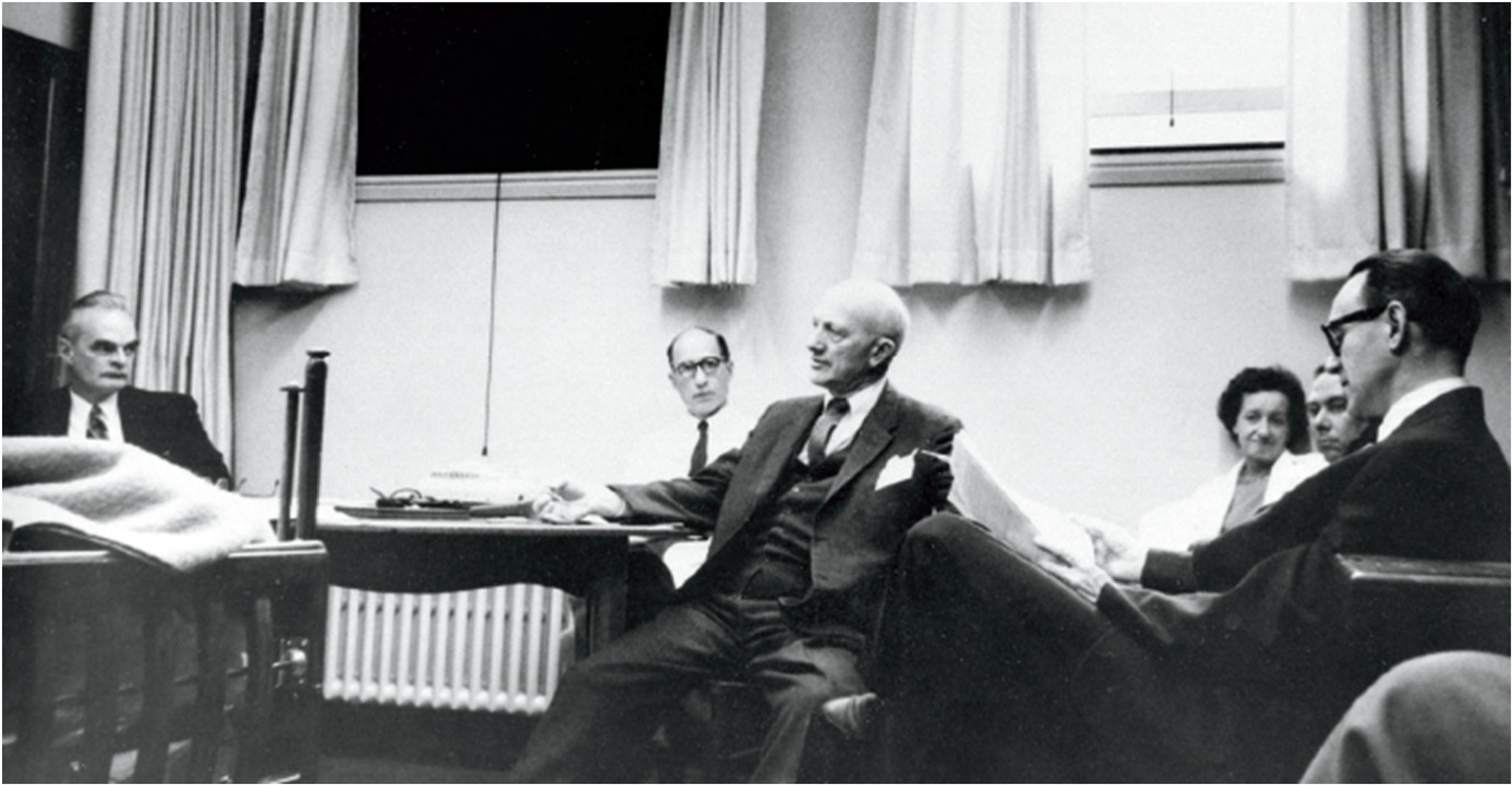
The benefits of a multidisciplinary team were clearly realized across four areas: pre-operative planning, post-operative follow-up, intraoperative collaboration and research. Dr Richard Leblanc, neurosurgeon at the MNI, explained that, before surgery, “the patient’s case and its diagnostic findings were discussed at the Clinical EEG Conference, where a decision on the advisability of surgery was made” Reference Leblanc11 (p. 33). The meetings were attended by Wilder Penfield, Herbert Jasper (neurophysiology and electroencephalography), Donald McRea (neuroradiology), Brenda Milner (neuropsychology) and other staff members Reference Leblanc32 (Figure 5). The decisions thus made were consequently more reliable than that of Penfield’s predecessors, who mostly relied on individual judgments. Simultaneously, the team structure allowed thorough patient evaluation after surgery to assess outcomes and carry out further investigations should unexpected consequences arise. The importance of this structured review was demonstrated by patients P.B. (1951) and F.C. (1952), both of whom suffered severe irreversible anterograde amnesia after bilateral hippocampal damage. Their post-operative follow-up by Milner, Penfield and Jasper brought key clinical and scientific insights. Specifically, not only did it lead to the discovery of the divisibility of memory into recent and long-term recall, but it also initiated a pursuit to design a pre-operative test to assess bilateral hippocampal integrity in patients showing evidence of damage in both temporal lobes – bitemporal epileptic activity on electroencephalogram (EEG). Reference Leblanc11 Consequently, in 1955, the MNI team integrated the Wada test, developed earlier by the Japanese-Canadian neurologist Juhn Wada, into their standard set of psychometric tests. By temporarily anesthetizing one cerebral hemisphere at a time, it allowed the localization of language and memory before surgery, thus safeguarding against the accidental functional loss of both hippocampi. Reference Li, Katz and Huang33 Meanwhile, inside the operating room, other disciplines, such as ECoG, represented by Herbert Jasper, complemented the neurosurgeon by providing crucial information about the electrical activity of the cortex. Reference Leblanc11 This collaboration enhanced Penfield’s ability to locate the epileptogenic zone. Regarding research, Penfield believed that data yielded more value when analyzed from multiple perspectives. For instance, in the outline of a project on temporal lobe seizures carried out by Penfield and Jasper, the latter noted that “such a project requires a coordinated program of work in psychiatry, psychology, neurology, and neurophysiology to achieve the greatest success.” Reference Jasper34 Ultimately, the ethical value of the multidisciplinary model lies in its improvement to safety and reliability of care.
The Clinical EEG Conference. From left to right: Donald McRae, Herbert Jasper, Wilder Penfield, Brenda Milner, Jake Hanberry (later head of neurosurgery at Stanford University), Theodore Rasmussen (later Penfield’s successor as the director of the MNI). Behind are other staff of the institute. © Leblanc R. Radical Treatment: Wilder Penfield’s Life in Neuroscience. 2020 and Montreal Neurological Institute, all rights reserved.

Ethical Boundaries in Surgical Procedures, Research and Innovation
As a clinician-scientist, Penfield frequently encountered ethical challenges related to the boundary between clinical care and research. Despite the near absence of regulation in this aspect in his time, he displayed a remarkable awareness of research ethics, prioritizing patient safety and dignity. In several publications, Penfield insisted that the primary goal of any operation is clinical, asserting that scientific advancements are merely byproducts: “these surgical procedures are not experiments, for we are dealing with human beings. But from time to time conditions present themselves which would satisfy the most exacting requirements of a critical investigator” Reference Penfield and Rasmussen23 (p. IX). Thus, no patients were exposed to risk solely for the pursuit of scientific knowledge. It can be further emphasized that, when discussing frontal leukotomy for psychiatric disorders, Penfield highlighted the inherent contradiction of intentionally damaging the brain to better understand its complexity. In a publication, he maintained that “to destroy a delicate instrument is not the best way to study its function.” Reference Penfield and Evans35 Therefore, the surgeon’s primary mandate is always clinical restoration.
However, as it is still the case today, patients sometimes presented with conditions mandating an experimental procedure. Such was the case of Henry Howland, whom Penfield treated between 1930 and 1931. After confirming his seizures did not originate from an obvious focal lesion and therefore could not be addressed by standard methods, Penfield approached the situation with surprising ethical professionalism. He devised the “Howland operation,” a procedure which consisted of the denervation of the carotid sinus (sympathectomy). Although not a standard procedure, it was supported by a physiological theory Reference Chorobski and Penfield36 and confirmed through prior experiments on monkeys. He explained the situation to Henry’s parents, who consented to the procedure. Even then, two separate operations were performed, one on each side, to minimize damage should the first go wrong. Reference Penfield37 Although the surgeries alleviated Henry’s symptoms, Penfield ultimately abandoned the procedure after finding it ineffective in several subsequent cases, thus demonstrating his commitment to a constant review process. Overall, Penfield’s approach to this case showed many resemblances to expectations from modern surgical innovation committees, Reference Broekman, Carrière and Bredenoord38 despite the absence of an oversight mechanism, thus revealing a genuine concern for patient safety.
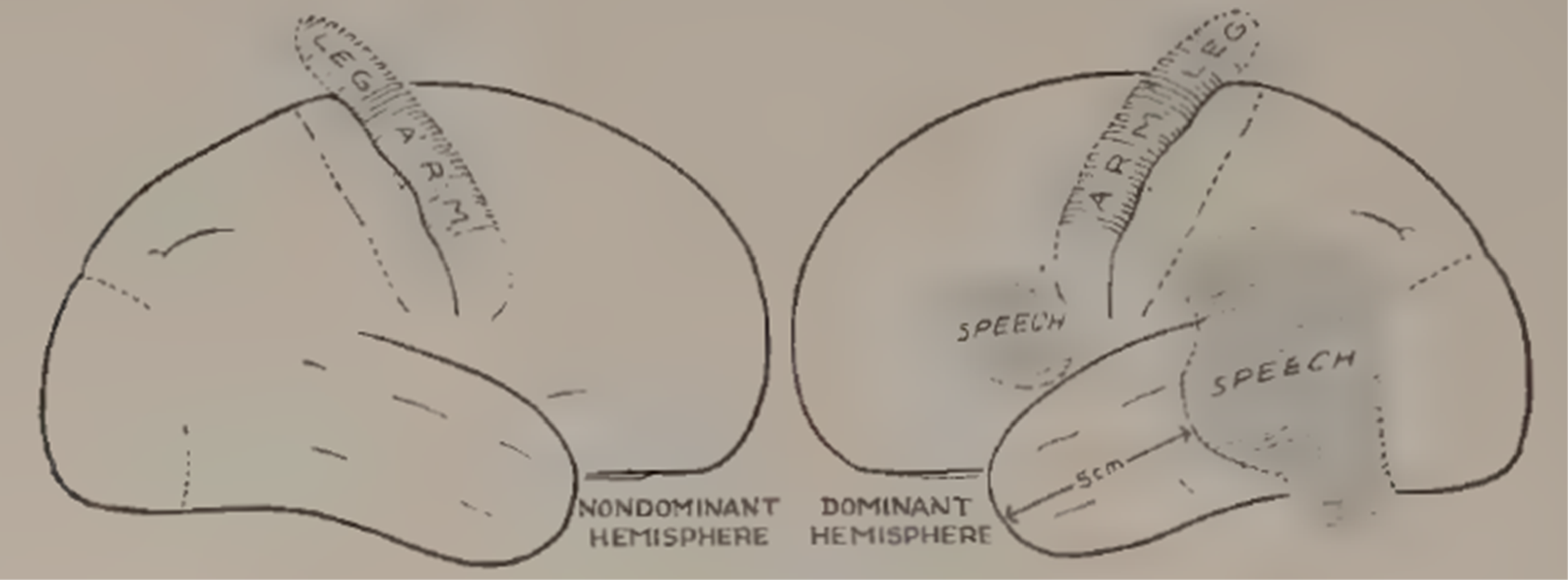
When operating, Penfield rigorously adhered to a set of rules out of respect for the dignity and security of his patients. For instance, regarding the mitigation of harmful consequences of cortical resection, Penfield introduced the concept of eloquent and ineloquent cortex to guide surgical resections. He defined the former as “the areas of functional brain which should not ordinarily be removed even to stop seizures,” while “all other areas may well be sacrificed by the surgeons, if absolutely necessary, to produce cessation of seizures” Reference Penfield and Jasper18 (p. 776) (Figure 6). By explicitly limiting the resection of eloquent cortex, Penfield demonstrated concern for his patients’ post-operative quality of life by minimizing long-term disability.
Penfield’s schematic representation of eloquent cerebral cortex, responsible for motor and speech functioning. Penfield W, Jasper H. Epilepsy and the Functional Anatomy of the Human Brain. Little, Brown and Company; 1954. Used with permission of the Osler Library of the History of Medicine.

In the same vein, throughout his career, unlike most of his contemporaries, Penfield upheld a strong stance against psychosurgery, Reference Leblanc39 which consists of neurosurgical interventions for the treatment of psychiatric disorders. His resistance likely stemmed from a combination of the observed negative repercussions such procedures exerted on patients’ quality of life and the refusal to use medicine as a gateway to personality change. He remarked during the 1948 symposium on gyrectomy that “frontal lobotomy, or leukotomy, had found a place in the therapy of certain psychiatric conditions, in spite of the inevitable sacrifices which the patient must make. These sacrifices occur in the field of personality as well as intellectual ability.” Reference Penfield40 Penfield witnessed these sacrifices during his early Montréal years, specifically following a 1928 operation on his sister, Ruth, to excise a large right frontal tumor. Despite a complication during the awake procedure, no immediate neurological or cognitive deficit was noted at discharge. However, he later noticed that she “lost some of her capacity for initiative” Reference Penfield4 (p. 362) and “can’t think well enough” Reference Penfield4 (p. 362). Penfield’s autobiographical accounts detailed an instance where such a deficit hindered his sister’s daily life. A similar character change was also observed in a later case, patient W.B., from whom Penfield noted loss of initiative and difficulty with simple arithmetic after a left frontal resection. Beyond his concerns for patients’ quality of life, Penfield argued that neurosurgery must remain strictly curative, implying that altering a brain devoid of any pathology would be unethical. The ethical value in his position lies in his clear recognition of the boundaries around the surgeon’s role – that of healing, rather than enforcing a personality perceived as socially acceptable.
Legacy and Modern-Day Influences
Penfield’s contribution to the ethics of awake craniotomy persists today through two major vectors: his scientific publications and the institutional legacy of the MNI itself. First, his corpus of published books and articles, such as “Epilepsy and the Functional Anatomy of the Human Brain” (1954), extensively discussed details on the procedure concerning patient comfort or safety as well as the rationale behind these practices. Such texts ensured that ethical considerations remained linked to surgical methodology. Complementing this literary heritage, the MNI’s role as a training facility served as a second vector for knowledge transfer through direct experiential immersion. Specifically, the unique multidisciplinary model of the MNI, combined with innovative work at the frontier of neurosurgery, attracted trainees from all over the world. Having learned about the procedures and guidelines used at the MNI, they exported this expertise to other places, thus allowing for wide dissemination of practices pioneered by Montreal neurosurgeons, including Penfield. For instance, Maitland Baldwin, who trained with Penfield from 1947 to 1952, later became the head of the Surgical Neurology branch of the National Institute of Neurological Diseases and Blindness (NINDB). Reference Feindel and Leblanc41 As recalled by his friend Cosimo Ajmone Marsan, “Baldwin […] had the greatest admiration for his teacher and made no secret that he aimed to emulate him… in many endeavours.” Reference Ajmone-Marsan42 This global diffusion of practices at the MNI was further exemplified by prominent figures such as Arthur Ward (former head of the Department of Neurosurgery at the University of Washington, Seattle), Arne Torkildsen (founder of a neurosurgery department in Norway), Joseph Evans (former head of Neurosurgery at the University of Chicago), Jacob Jaya Chandy (founder of India’s first Department of Neurological Sciences at the Christian Medical College and Hospital), John Hunter (founder of a neurosurgical service in Hong Kong), Reference Feindel and Leblanc43 Yi-Cheng Zhao (founder of the Beijing Neurosurgical Institute) Reference Zhao and Zhao44 and Fuad Haddad (first neurosurgeon certified by the American Board of Neurological Surgery to practice in the Middle East). Reference Hitchon, Haddad and Afifi45 Consequently, Penfield’s ethical framework was exported to emerging neurological centers across several continents.
Conclusion
Wilder Penfield’s legacy transcends his key scientific contributions to neurology and neurosurgery, with an enduring impact on the ethical performance of awake craniotomies. In an era characterized by medical paternalism, Penfield’s commitment to the core values of mutual trust, patient autonomy, collaboration and safe surgical innovation was ahead of his time. He steered the field of awake craniotomy from an early established technique toward a standardized and multidisciplinary model that values patient experience while dismantling the traditional hierarchical doctor–patient relationship. At the individual level, these achievements brought him the recognition of his patients, who frequently perceived him not only as a skilled neurosurgeon but also a trustworthy caregiver. At the global level, Penfield’s modern-day influence, embodied by his extensive body of published works and the MNI itself, represents a cornerstone of clinical and research guidelines in the field of awake neurosurgery. As we progress through the twenty-first century, scholarly examinations of Penfield’s work remain relevant to draw inspirations and ensure progress remains fundamentally anchored to respect for the patient’s humanity.
Acknowledgments
The authors would like to acknowledge the contributions of Richard Leblanc MD, Physician-scientist, Montreal Neurological Institute and Emeritus Professor, Department of Neurology and Neurosurgery, McGill University. The authors also thank the Osler Library of the History of Medicine for providing access to the primary source materials used in this study.
Author contributions
R.D. conceived the study, conducted the archival and literature research and wrote the manuscript. M.B. supervised the project, provided expert guidance on the history of neurosurgical ethics and critically revised the manuscript. Both authors reviewed and approved the final version.
Funding statement
No funding was received for this work.
Competing interests
The authors declare no financial or non-financial relationships relevant to this manuscript, including no grants or contracts, royalties or licenses, consulting fees, payments or honoraria, payments for expert testimony, support for meeting attendance or travel, patents, data safety monitoring board or advisory board participation, leadership or fiduciary roles, stock or stock options, equipment or materials.

 Open access

