


Introduction
One evening in May 2022, Xing received a call from Mr. Liu of the university’s Faculty Affairs Office (FAO; 教工办). Prior to this, she had never met Mr. Liu, yet she knew he was calling to demand the removal of an anonymous post that she had published on the campus forum two hours earlier, where she had accused the Vice Research Assistant Professor Zhang of sexual harassment. At that moment, Xing stood at a crossroads. On one side, she was empowered by the solidarity of her feminist reading group, whose members validated that “what you experienced was sexual harassment” and encouraged her to warn others. On the other, she faced the chilling warning from institutional authority. Mr. Liu admonished that, as a student, her actions “would generate unfavorable public opinion for the university.” Although Xing did not know how the FAO had identified her despite the forum’s anonymity, she felt unsafe, sensing the implicit threat behind the request. Under this pressure, she deleted the post.
Xing’s dilemma is widespread among Chinese university students in the post-#MeToo era of anti-sexual harassment legal mobilization. They are caught in a tension between social efforts that awaken rights consciousness and the repressive control of authority. This struggle reflects how individuals navigate the legal dualism of the authoritarian state, where the state relies on law to generate rights expectations for social legitimacy while exercising repressive power to suppress mobilization when social stability is perceived to be threatened. This point is frequently reached, given that even seemingly ordinary grievances in China often carry underlying political sensitivity (Gallagher Reference Gallagher2017; Fu Reference Fu2019a, 7, Reference Fu2019b; Hendley Reference Hendley2022, 215). Based on this tension, this study identifies “concern for rights” and “concern for oppression” as the two primary forces shaping consciousness—individual-level manifestations of the state’s dualism.
Building on scholarship regarding relational legal consciousness (Young Reference Young2014; Wang Reference Wang2019; Q. Liu Reference Liu2023; Duan Reference Duan2025) and on Yanhua Deng and Kevin O’Brien’s (Reference Deng and O’Brien2013) work on relational repression in the authoritarian state, this study argues that these forces are generated and transmitted through people’s relations rather than imposed directly upon isolated individuals. It was the support of Xing’s peers that awakened her to the violation of her rights, just as her identity as “a student of the university” made the oppression immediate. From this starting point, the article asks: how is students’ legal consciousness shaped by the tension between rights awakening and repressive control within their relational networks? Drawing on in-depth interviews with forty-eight students and seventeen institutional actors, along with participant observation, I propose a two-dimensional framework capturing the interplay between concern for rights and concern for oppression, which maps four states of legal consciousness: apathy, inhibition, uninhibited mobilization, and watchful awakening. I argue that, theoretically, uninhibited legal mobilization occurs only when rights concern is strong while oppression concern is weak. However, students often find themselves in watchful awakening, aware of rights violations yet constrained by relational oppression.
This framework functions as an ideal typology. Acknowledging that legal consciousness is fluid and relationally situated (Merry Reference Merry1990; Ewick and Silbey Reference Ewick and Silbey1998; Nielsen Reference Nielsen2000; Young Reference Young2014; Wang Reference Wang2019; Q. Liu Reference Liu2023; Duan Reference Duan2025), this model does not imply that students’ consciousness is the product of a mechanical, purely rational calculation of risks and benefits. Individuals are embedded in complex relational webs that shape the formation of these concerns, often introducing variables that intervene and disrupt rational calculus. This study further explores how these forces are relationally constructed. Variables such as the student’s role (victim versus advocate), the student’s gender, the perpetrator’s status (faculty versus peer), the student’s academic stage, and the university’s ranking position all reconfigure the relational landscape in which these concerns are formed and weighted. These variations explain why students in similar cases may inhabit different states of consciousness, leading to divergent mobilization decisions.
Relational legal consciousness facing legal dualism
In authoritarian regimes, the state relies on legislation to cultivate legitimacy and generate citizens’ rights expectations. Yet when rights assertions take collective form or are perceived as threatening social stability, the same state deploys repressive power to obstruct mobilization. Scholars have characterized this structural condition as legal dualism: a system in which law functions effectively in mundane, non-political spheres but remains precarious or suspended in politically sensitive domains (Fraenkel [Reference Fraenkel1941] 2017; Fu Reference Fu2019a; Hendley Reference Hendley2022; Pils Reference Pils2023). In contemporary China, this dynamic extends well beyond obviously political issues as the boundary between the political domain and the normative sphere remains ambiguous and fluid. Even seemingly ordinary disputes can carry underlying political sensitivity once they take on dimensions deemed likely to trigger social instability, such as collective action, gendered claims, or media visibility (Lee and Zhang Reference Lee and Zhang2013; Gallagher Reference Gallagher2017; Fu Reference Fu2019b; Hendley Reference Hendley2022). Moreover, suppression under dualism is not confined to formal legal channels. As Hualing Fu (Reference Fu2019a, 3) observes, the state increasingly relies on “substantively extralegal methods” to resolve sensitive matters, prioritizing political stability over legal procedure.
This duality creates a dilemma for individual citizens who are encouraged to claim their rights and warned against overstepping. It shapes legal consciousness—the way in which people understand, perceive, and orient themselves to law (Merry Reference Merry1990; Sarat Reference Sarat1990; Ewick and Silbey Reference Ewick and Silbey1992). Especially when people must decide whether to mobilize legal norms, discourses, or institutions to address grievances (Zemans Reference Zemans1983; Chua Reference Chua2012, Reference Chua2019), they are compelled to consider whether their rights assertion will be validated by the symbolic endorsement of law or trigger political consequences. This angle resonates with Rachel Stern and Kevin O’Brien’s (Reference Stern and O’Brien2012, 174–75) call for viewing the “state reflected in society,” tracing state power through how social actors receive and interpret the signals sent from above. Legal consciousness provides this lens, shifting attention from abstract state behavior to its lived consequences at the individual level.
But how does this duality reach individuals in practice? Existing scholarship has shown that legal consciousness is formed through family ties, workplace hierarchies, institutional interactions, emotional attachments, and observations of others’ experiences with law rather than by isolated individuals encountering law in the abstract (Young Reference Young2014; Abrego Reference Abrego2019; Chua and Engel Reference Chua and Engel2019; Wang Reference Wang2019; Hertogh Reference Hertogh2023; Q. Liu Reference Liu2023; Tenorio Reference Tenorio2024; Duan Reference Duan2025). These studies demonstrate that relationships shape whether law appears as a source of entitlement, obligation, threat, futility, belonging, or moral responsibility. In this sense, relationships are sites where legality is translated into practical judgments about what one may claim, what one owes to others, and what consequences legal action may bring or what costs it may impose. They are also sites where human agency is exercised in response to law (Chua and Engel Reference Chua and Engel2019).
This study builds on this relational turn by asking how legal consciousness is relationally constructed under legal dualism. I use this setting to examine how relationships mediate people’s interpretations of law, how they transmit and reconfigure the constitutive forces that shape legal consciousness, and how actors respond to those forces by navigating their relationships. Under legal dualism, even the same relational fabric may transmit both the state’s empowering and suppressive signals. Relationships therefore do not merely mediate responses to law, but they also become the very medium through which the state’s ambivalence is reproduced and sometimes strategically managed at the individual level.
A complementary line of work, on relational repression (Deng and O’Brien Reference Deng and O’Brien2013), has shown how Chinese local officials mobilize social ties as a campaign-style response to demobilize identified protesters. The present study brings these two strands into dialogue by extending Deng and O’Brien’s observation that social ties can be deployed preemptively (549n78). Because legal consciousness centers on how individuals make sense of law, including whether to engage mobilization, it enables observation of how the everyday relational fabric routinely transmits contradictory state signals, shaping consciousness well before mobilization is even contemplated. This echoes and extends Qian Liu’s (Reference Liu2023) finding that the state co-opts “relational personhood” to sustain legal hegemony and social inequality. By analyzing how “concern for rights” and “concern for oppression” are generated, transmitted, and shifted within relationships, we can see how the duality of law permeates the individual level, shaping consciousness and influencing legal mobilization decisions, ultimately contributing to the reproduction of the state’s dualism.
Facing legal dualism, relational networks constitute the transmission mechanism of the state’s ambivalent will. On the one hand, legislative empowerment inspires a “concern for rights” within individuals; on the other, the prioritization of stability obstructs rights assertion, generating a “concern for oppression.” This dualism is projected onto the individual through specific interactions within their relational networks.
Rights concern represents the individual’s “what I am fighting for.” It is relationally constituted through connections with supporters, resonance with #MeToo discourse, reflection on past life experiences, and alliances with fellow victims. It is through these relationships that students confirm that their rights have been violated and feel encouraged to care about them. Conversely, the concern for oppression represents the “what I am afraid of.” It is mediated through specific interpersonal interactions, including the evocation of subordinate status within an institution, duties of loyalty, warnings against betrayal, the fear of disappointing others, and the transmission of anxiety from family and peers. Often, this concern has been accumulated and internalized through past interactions, manifesting a seemingly endogenous fear.
Importantly, these two concerns are mutually constitutive and develop non-linearly (Gallagher Reference Gallagher2006, 784). An increasing concern for rights motivates students to understand the consequences of mobilization, which may lead them to learn the costs of oppression through hitting walls in the rights-claiming process. Conversely, encountering suppression might intensify the concern for oppression, but it can also ignite indignation against the unfair structure, fueling a stronger desire for rights. In the process of mobilization, students might also adopt competing frameworks or internalize victim-blaming rhetoric that can diminish the desire for rights assertion (Quinn Reference Quinn2000; Edelman, Riggs Fuller, and Mara-Drita Reference Edelman, Fuller and Mara-Drita2001; Marshall Reference Marshall2003, Reference Marshall2005; Engel Reference Engel2005, Reference Engel2016). The transmission of these concerns is sometimes mediated by different relationships (for example, among peers versus between students and teachers) and sometimes by the same relationship. Such non-linear development allows for dynamic shifts between legal consciousness types, which may become cyclical or reiterative.
To dissect how this relationally mediated legal dualism shapes legal consciousness, I propose a framework centered on the interplay of these two concerns. At any given moment, the relative strength (strong versus weak) of the concern for rights and the concern for oppression produces four ideal types of legal consciousness (see Figure 1).
An ideal typology of two concerns and legal consciousness

When both concerns are weak, students exhibit apathy. They neither feel compelled to act nor fear consequences. These students remain silent, characterized by a lack of demands, reflection, or mobilization efforts.
When the concern for rights is weak but the concern for oppression is strong, students tend toward inhibition. The perceived risks or futility of action loom large, overshadowing a weak sense of entitlement or hope for remedy. This leads to compromise, endurance, or avoidance of claim making.
Uninhibited legal mobilization happens only when the concern for rights is strong and the concern for oppression is weak. Students feel empowered to assert claims and demand remedies (for example, apologies, disciplinary action, or police intervention). They may employ multiple strategies including disruptive tactics (He, Wang, and Su Reference He, Wang and Su2013), formal litigation, and performative actions (Wang and Liu Reference Wang and Liu2020), and they may advocate for broader social change by engaging with anti-gender-based abuse discourses to push for societal transformation in legislation, education, and institutional accountability.
Watchful awakening is a unique state in which both concerns are intense. It is the embodiment of legal dualism at the individual level. “Watchful” signifies an acute perception of environmental risk, while “awakening” represents the awareness of rights violation and the desire to claim. In this state, while the concern for rights drives students to speak out, the concern for oppression influences the construction and tone of their expressions and how they partition relationships to sustain mobilization without triggering the suppression that would end it. Externally, this may manifest as a form of temporary stasis—awake but feigning sleep—such as strategic non-mobilization (Duan Reference Duan2025). It may also appear as limited mobilization, such as pragmatic resistance (Chua Reference Chua2012), everyday resistance (Scott Reference Scott1989), or rightful resistance (O’Brien Reference O’Brien1996; O’Brien and Li Reference O’Brien and Li2006), or as strategic adaptations where actors consciously suppress mobilizing frames, avoid pointing to institutional actors or invoking state failure, or distance themselves from broader social justice narratives (McCammon et al. Reference McCammon, Chaudhuri, Hewitt, Muse, Newman, Lee Smith and Terrell2008). This state is often transient: over time, students may grow apathetic and abandon their concerns for rights, suppress their desire to act due to fear of oppression, or shift toward more open mobilization when the threat of oppression diminishes or when their concern for rights intensifies (for example, inspired by subsequent cases being exposed).
It is important to note that this framework functions as an ideal typology. It does not imply that human hope and fear can be precisely quantified. Instead, it illustrates which concern carries relatively more weight for the actor in a given context. Furthermore, individuals do not always act rationally and may behave counterintuitively. For instance, activists often take action despite a high concern for oppression, as evidenced by the performative actions of Chinese human rights lawyers and feminist activists (Wang and Liu Reference Wang and Liu2020; Ma Reference Ma2025). However, students are generally not typical activists. Positioned within the university’s institutional management, which holds gatekeeping power over their futures, including graduation, they are acutely sensitive to oppression risks. Yet, as young adults, they have not become as cynical or indifferent to rights as older generations might be. This specific sensitivity to oppression and rights offers a more generalizable lens through which to understand the broader dynamics of rights claiming in repressive contexts.
Moreover, this typology is not static. Different relational variables, such as the student’s role in the case (victim versus advocate), the student’s gender, the perpetrator’s power status (faculty versus peer), the student’s academic stage (for example, their proximity to graduation), and the institution’s position, can alter the relative strength of the two concerns, propelling individuals between different states of consciousness. As mediators of the state’s contradictory signals, relationships exert uneven effects. When certain relationships become more salient than others, the influence of the rights or oppression signals that they transmit increases, thereby shifting the state of legal consciousness. Using this typology and the relational perspective, this study seeks to explore mechanisms that remain obscured: how does the web of relationships influence individuals to subjectively weigh and prioritize competing concerns? Under what conditions does the desire for justice override the fear of backlash or vice versa? When state legality presents itself as contradictory to the individual, answering these questions matters for understanding the contradictory and fluid nature of lived legality (Ewick and Silbey Reference Ewick and Silbey1998; Nielsen Reference Nielsen2000; Young Reference Young2014).
The sources of rights and oppression in Chinese legal dualism
Xing’s dilemma, caught between the validation of her peers and the threat from the FAO, serves as a microcosm of the structural tension shaping Chinese campuses today. To understand why Xing felt empowered enough to post while terrified enough to delete it, we must situate her experience within the broader context of rights awakening and the machinery of stability maintenance in contemporary China. This section traces the origin of the two competing forces—concern for rights and concern for oppression—that constitute the legal dualism experienced by students. When Xing hesitated about whether her uncomfortable interaction with Professor Zhang constituted harassment, it was her feminist reading group that provided the vocabulary to define it. This moment of “naming” (Felstiner, Abel, and Sarat Reference Felstiner, Abel and Sarat1980–81) mirrors a broader shift in Chinese society over the past decade. The “concern for rights” that drove Xing to speak out has roots in both the #MeToo movement’s bottom-up cultural awakening and a top-down legal endorsement by the state.
Gender equality in China has historically been a state-led project rather than a grassroots feminist movement (Zhou Reference Zhou2003; Duan Reference Duan2023, 2), and rights claims that lack formal state endorsement have struggled to gain institutional traction. The #MeToo movement, which gained momentum in China in 2018, nonetheless carried lasting ideological significance. It shifted the social ground by generating popular pressure that helped push sexual harassment onto China’s formal legal agenda (Fincher Reference Fincher2018; Kuo Reference Kuo2018; Duan Reference Duan2023). Before this wave, sexual harassment on campuses was frequently interpreted as ambiguous romantic overtures or private morality issues, obscured by patriarchal norms that stigmatized victims. The movement provided students with a discursive framework to recognize gender-based injuries and connect individual grievances to systemic inequality. The dissemination of feminist scholarship and coverage of milestone gender events on social media further heightened students’ awareness (Wang and Liu Reference Wang and Liu2020; Xiong and Ristivojević Reference Xiong and Ristivojević2021). For the current generation of students, particularly female students, gender equality is a lived demand.
More importantly, this awakening is not solely a grassroots phenomenon. The enactment of the Civil Code in 2021 gave it formal legal backing.Footnote 1 For the first time, a Chinese statute explicitly defined sexual harassment; affirmed the rights that it violated; and mandated that institutions, including universities, establish mechanisms to prevent and investigate such conduct (Yang and Ma Reference Yang and Ma2021; Duan Reference Duan2023). Despite persistent practical barriers in evidence and burden of proof (Beijing Yuanzhong 2021; Huang Reference Huang2021), students invoke these provisions, along with the Ministry of Education guidelines on teacher ethics and Communist Party of China (CPC) disciplinary regulations, to legitimize their demands, transforming individual grievances from personal complaints into public legal matters requiring institutional response.
However, alongside the written law, the unwritten logic of the state’s stability maintenance apparatus shapes a divergent public attitude to anti-sexual harassment mobilization. Official discourse often frames feminism as inconsistent with the state-endorsed narrative of “equality between men and women” (B. Liu Reference Liu2020), sometimes viewing it as an imported, potentially destabilizing Western concept (Hsiung and Wong Reference Hsiung and Wong1998, 484, 486). Yet not all gender-equality issues attract equal state suspicion. Anti-domestic-violence advocacy, for instance, secured national legislation in 2015 with the All-China Women’s Federation acting as a central broker. Anti-sexual harassment activism followed a different path: as the political climate tightened after 2013, its growing entanglement with the global #MeToo movement led the party-state to classify it as politically sensitive, prompting state-affiliated actors like the All-China Women’s Federation to distance themselves rather than support it (Jiang and Zhou Reference Jiang and Zhou2022). In other words, the sensitivity of anti-sexual harassment has been politically constructed. This classification is reinforced by the movement’s disruptive capacity as anti-sexual harassment exposes systemic institutional failures and generates rapid online solidarity (Liao Reference Liao2020; Wang and Liu Reference Wang and Liu2020), which the state reads as a direct threat to social stability and a potential conduit for foreign interference (R. MacKinnon Reference MacKinnon2011; Guttenberg Reference Guttenberg2021; Liao and Luqiu Reference Liao and Luqiu2022). Through tools of networked authoritarianism, including pressure on platforms and stigmatizing official media coverage (see, for example, Beijing Evening News 2022), the state preemptively suppresses such mobilization (Guttenberg Reference Guttenberg2021).
This logic of preemptive suppression filters down to campus management through the university’s structural integration into the state apparatus. Chinese universities are politically embedded institutions whose governance and daily operations are shaped by political power (Han and Xu Reference Han and Xu2019). University leaders are appointed by the Organization Department of the CPC, the Ministry of Education, or local governments and thus perform structural loyalty to the party-state (Han and Xu Reference Han and Xu2019, 936–37; Ahlers and Christmann-Budian Reference Ahlers and Christmann-Budian2023; Ruan, Cai, and Stensaker Reference Ruan, Cai and Stensaker2024). Universities have faced markedly increasing pressure for ideological alignment since Xi Jinping’s 2016 speech on ideological work in higher education (Phillips Reference Phillips2016; Han and Xu Reference Han and Xu2019, 932). Consequently, they act as crucial intermediaries in enforcing the state’s line on speech control and stability, especially regarding potentially sensitive “mass incidents” (Yan Reference Yan2014, 493, 507). Universities are thus institutionally cautious toward gender-equality debates and feminist activism, particularly when university students—historically, the vanguard of political mobilization in China (Yan Reference Yan2014)—are involved.
This preventive imperative is operationalized through a system of internal administrative directives. Field interviews indicated that universities receive non-public instructions from the Ministry of Education explicitly aimed at curbing the “expansion” of gender-related movements during sensitive periods, such as the height of the #MeToo movement in 2018 (Interview 2305[17]01; Interview 2309[28]01). Frontline university staff confirmed that receiving such internal alerts regarding student collective action is a routine component of stability maintenance work (Interview 2306[R]01; Interview 2407[R]01). These directives effectively categorize feminist advocacy as a potential security risk, compelling universities to intervene to fulfill a binding political mandate.
Beyond state alignment, universities’ handling of harassment cases is also shaped by their own institutional interests. Foremost is reputational concern. Publicly acknowledging harassment conflicts with the university’s idealized image as an ivory tower of learning and risks damaging recruitment (Liao and Luqiu Reference Liao and Luqiu2022, 741), tarnishing prestige, and jeopardizing leadership careers. This concern is amplified by traditional conservative views that perceive sex-related matters as taboo, associating them with impurity and licentiousness, which makes related complaints particularly sensitive. Even when clear school rules exist, they operate under the principle that “universities are places of education, not courts of judgment,” which was related by an interviewed responsible tutor (Interview 2305[R]03). This frequently leads to informal handling of harassment cases, with outcomes dependent on individual discretion rather than institutional procedure.
This informal approach is further solidified by the principle of close “police-university co-constructing harmonious campuses” (Interview 2402[P]03; Interview 2402[P]02).Footnote 2 Under this principle, incidents of non-serious student misconduct are often handled by the university to avoid official records. While this collaboration is framed as protecting students, it effectively removes the dispute from the legal system and places it under the discretionary power of the institution. In this arrangement, the police tacitly endorse the university’s internal resolution for non-severe cases, intervening only when the institution deems it necessary.
In summary, feminist awakening and legislative empowerment constitute the source of concern for rights, while the politically constructed sensitivity of anti-sexual harassment and the university’s structural alignment with stability maintenance constitute that of concern for oppression. Xing’s fear is therefore a rational response to a system where seeking justice is legally endorsed yet politically redefined as a sensitive act of defiance.
Studying legal consciousness in sexual harassment cases
This study draws on data collected between May 2022 and February 2025. Due to the fragmented and delayed visibility of sexual harassment cases, I adopted a hybrid approach combining in-depth interviews and participant observation. The dataset comprises forty-eight student participants involved in thirty-nine distinct sexual harassment cases, alongside interviews with seventeen institutional actors. Supplementary data were drawn from public statements and media reports. Participant recruitment initially utilized social media platforms (for example, Weibo, WeChat, and RedNote) to identify a wave of high-profile sexual harassment cases that emerged online from universities across Shanghai, Henan, Guangdong, Jiangsu, and Hunan. These high-profile cases were characterized by their wealth of evidence, including text, images, surveillance footage, psychological evaluations, and police reports. Victims and student advocates often compile organized evidence to amplify their claims and pressure universities to act. Some liken this to a “cyber tribunal” where Internet users collectively scrutinize the evidence. These public statements also highlight universities’ responses, providing a rich repository of data. Before contacting victims, I archived these disclosures, media coverage, and institutional follow-ups to prepare for interviews and complement my analysis.
However, the pure inclusion of publicly exposed cases would have carried sampling biases. These cases often represent “mature cases” with ample evidence, severe consequences, and clear narratives. Yet the majority of sexual harassment incidents occur in private spaces, lack sufficient evidence, or involve subtler forms of misconduct, such as inappropriate physical contact or suggestive language. To mitigate this bias, I expanded my recruitment to include participants from universities of varying levels (elite “double first-class” institutions, “non-double first-class” institutions, and vocational colleges) through online recruitment and snowball sampling.Footnote 3 This allowed me to access less publicized or entirely unreported incidents of campus sexual harassment.
Among the thirty-nine cases, thirty-five were reported to universities, while four remained unreported. Only four cases involved faculty-student harassment. This lower representation in the dataset likely reflects the significant barriers to exposure and the hidden nature of such abuses rather than their rarity. Yet these cases were significant, with at least three involving multiple victims. Notably, twenty-eight of the reported cases were not promptly investigated or addressed fairly by the universities.Footnote 4 The forty-eight student participants (predominantly undergraduate and master’s students aged eighteen to twenty-five) included both victims and advocates. Reflecting the gendered power structure inherent in sexual harassment, the student sample is predominantly female, with only four male participants. The interviews ranged from one and a half to four hours and covered their accounts of harassment, their interactions with the perpetrators, and their experiences with university authorities.
To understand the institutional logic of stability maintenance, I interviewed eleven university administrators (two male, nine female), two campus security officers (both male), and four police officers (all male). They explained why campuses lacked anti-harassment mechanisms, how they perceived rights-claiming students, and how various departments collaborated on harassment investigations.
All of the conversations were conducted with consent. School names are only identified when the data have come from publicly available sources, and all participants are identified using pseudonyms. Twenty-one interviews were conducted in person, while the remainder took place online via voice or video calls. Though participant observation was not expected initially, some victims who remained engaged in ongoing legal mobilization invited me to observe silently. I documented their interactions with universities, their evolving strategies, and the progress and outcomes of their cases. The information collected during observation, including university notices, news reports, and students’ social media interactions, played an important role in uncovering more “realities.” Acknowledging the manipulative potential of language, I did not take interview accounts at face value. Instead, I cross-referenced them against multiple participants and contextualized their expressions against the pressures they faced. Inconsistencies, evasions, and embellishments in their narratives were also treated as valuable data, reflecting their fears, risks, and the aspects they sought to protect or conceal. For example, a tutor’s initial denial of a sexual harassment incident was contradicted by persistent student hearsay regarding the event, suggesting the tutor’s inclination to protect the institution’s image during the interview (Interview 2305[R]04).
As institutional actors were often “repeat players” handling multiple cases, while students were “one-shotters” (Galanter Reference Galanter1974), I developed a dual coding system to manage this complexity while protecting anonymity. For student participants, the coding follows a case-centric logic. For example, Interview 2205[01]03 indicates the third participant interviewed in May 2022 for the first case in the dataset, while Interview 2408[35]PO indicates data collected for the thirty-fifth case via participant observation. Conversely, institutional actors are coded using a role-centric logic (R for responsible tutors; P for police officers; and S for security staff).Footnote 5 For instance, Interview 2407[R]01 represents the first responsible tutor interviewed in July 2024. This system preserves the relational structure of same-case participants while distinguishing the positionality of institutional managers.
This study treats legal consciousness not as a static classification but, rather, as a fluid, relational process. Students often oscillated between states, for instance, moving from apathy to watchful awakening upon receiving peer support or retreating into inhibition when facing institutional pressure. Therefore, instead of categorizing the thirty-nine cases into fixed static types, the analysis traces the trajectory of consciousness, examining how relational forces push individuals in and out of different states. Notably, however, watchful awakening emerged as a predominant experience. The majority of participants either passed through it or remained suspended within it.
The relational engineering of watchful awakening
The Chinese university is a relational field woven by dense or loose social ties. Within this field, the concern for rights and concern for oppression are engineered and transmitted through interactions, such as peer encouragement, tutor interventions, family involvement, and attitudes of classmates. This section demonstrates how individuals accumulate relational supports to awaken from apathy, how they retreat to inhibition or watchfulness under relationally transmitted oppression, and under what conditions this tension breaks to prompt further shifts.
Xing’s trajectory
Xing, a master’s student at a double first-class university in Shanghai, was sexually harassed twice in late 2021 and early 2022 by Zhang, a vice research assistant professor (Interview 2307[23]01). The harassment involved explicit verbal remarks and unwanted physical contact. For months, Xing remained apathetic about asserting her rights. She did not report the incidents or share them with anyone, describing herself as being under paralysis: “I was still a compliant East Asian woman back then. I’d call myself a feminist, but it was lip service.”
Her initial response was defined by confusion and sympathy. In a private WeChat message to Zhang, she accused him merely of “betraying her trust.” She later described this message as “long, circuitous, veiled, and very East Asian.” Zhang, capitalizing on her softness, responded by playing the victim. He recounted his struggles with academic pressure and conflicts with his mother, claiming that these difficulties had induced his sexual fantasies and framing the harassment as a form of emotional release. Lacking any external validation to define her experience otherwise, Xing felt sympathy for him and took no further action. At this stage, she was unable to name the injury as sexual harassment. Most apathetic cases like this remain at the base of the dispute pyramid, never progressing to the stage of claiming (Miller and Sarat Reference Miller and Sarat1980–81; Felstiner, Abel, and Sarat Reference Felstiner, Abel and Sarat1980–81).
Naming arrived in May 2022 when Xing described the encounter to two close friends from her feminist reading group. They identified it without hesitation. “She said this is sexual harassment, and I thought, right, sexual harassment,” Xing recalled. From being a confused private sufferer, she became a claimant with a responsibility to warn others. She posted her story on the university’s anonymous forum, calling Zhang a “beast” and declaring: “I know the school authorities are watching, and so is Zhang. But I won’t accept mediation.”
The institution struck back within two hours. Mr. Liu of the FAO, the official mentioned earlier, called her. Liu did not address the harassment but focused on the institutional image, urging her to delete the post to avoid damaging the university’s reputation. He also implied that she bore responsibility for the harassment, asking: “Did you ever ask Zhang if he was married?” Feeling humiliated and sensing the implicit threat, Xing deleted the post. That evening, Liu texted her to say that Zhang had denied everything, signaling the end of the investigation. Xing felt insulted but silenced. The oppression, transmitted through the teacher’s voice and his ability to identify an anonymous poster, had temporarily eclipsed her concern for rights.
The turning point came when two other victims of Zhang reached out to her, providing new evidence. Shortly after, the post that she had deleted drew further attention, eventually connecting her with seven additional victims. Xing’s position shifted again—from solitary complainant to spokesperson for a collective. This time, her mobilization was more watchful. “I was speaking as a representative of eight people. … The deletion of my previous post made many people say I was a liar. I couldn’t let the public think this was just a baseless accusation. I couldn’t let my coming out end with stigmatization of sexual harassment victims,” Xing explained.
She filed a formal complaint but navigated the process with extreme caution. When the university summoned her for meetings, she resisted demands that asserted authority over her rather than advanced the investigation: “Before every meeting, they asked to see my national ID. Why should I? They already knew who I was. I said I didn’t have it with me,” she recounted. When staff suggested that she hand over her phone, she refused. When they claimed that she had an obligation not to record the “[Party] internal conversation,” she retorted: “I’m not a Party member.” She recorded everything covertly. She compiled a thirty-page dossier citing the CPC’s disciplinary rules, the Civil Code, and the Ministry of Education’s ethical guidelines, using the state’s own language to shield her claims.
Xing received significant support from students. She started using the slogan #StandwithXing, which became a rallying cry. Students would reply “Stand with Xing!” to her posts as a show of solidarity, and all her subsequent updates were tagged with this slogan, creating a digital trail of support and documentation. This growing visibility transformed her case into a public issue, amplifying its impact beyond the university’s walls through news reports.
Xing soon encountered intensified obstructions. The Feishu link that she had used to share her evidence was suspended, and the screenshots that she posted in follow-up updates became inaccessible. More significantly, the university began to target her support network. Realizing that the case had evolved into a high-profile incident with significant mobilization potential, university officials identified the student members of her reading group who had supported her online, characterizing them as “a group orchestrating the issue.” The FAO staff threatened her that they would notify her department and reveal her identity.
Xing held her ground by partitioning what each relationship could bear. The school had made her promise “not to peddle the case all around,” while her friends had not promised. Through them, she released some of the victims’ chat records on a separate WeChat public account, restoring public pressure without breaking her own pledge. She also handled all direct dealings with the university herself as several of the victims and advocates were still enrolled students, including one in Zhang’s own department. With graduation only weeks away, the university’s leverage over her was rapidly dissolving; Xing represented the collective in her own name to keep them off-stage. She likewise declined to file a police report or a lawsuit, even after consulting lawyers. Either route would have required naming the other victims, who had agreed only to share evidence privately in support of her account. Because she had shielded this network from exposure and institutional capture, it remained intact to back her. Her friends from the reading group and the other victims continued to defend her against online skepticism, ensuring that she was not isolated.
Shortly after these events, Xing graduated. Once she had her degree, the lever that had kept her watchful dissolved. With nothing left to lose, Xing moved beyond watchfulness into uninhibited mobilization. She called the university discipline inspection office weekly, describing her approach as “poking the toad to make it jump.” She even issued a final threat: “If Zhang faces no punishment, I’ll stand at the school gate with a banner when the Ministry of Education comes to inspect. What’s the worst they can do—arrest me? Fine. I’ll livestream from the gate, drink pesticide, and tell the world this university drove me to death.”
Xing’s trajectory illustrates both the fluidity of legal consciousness and the relational forces that shape it. The sections that follow examine how concern for rights and concern for oppression are constructed within this relational web.
The relational construction of strong concern for rights
The “concern for rights” is relationally constructed rather than emerging from a vacuum (Silbey Reference Silbey2005, 357; see also Bourdieu Reference Bourdieu1990, 130) or deriving from the solitary study of statutes or theories. In practice, students often confirm the validity of their rights through relationships. It often begins with the subtle groundwork laid by pervasive weak ties in generalized social networks, especially social media, and is supported and solidified by social ties with closer, immediate alliances during specific conflicts.
Before any specific incident of harassment occurs, students are often immersed in a digital environment that serves as a reservoir of rights information. As Xing noted, self-identifying as a feminist is not rare among Chinese university students. This rights-awakening signal is cultivated mainly through participation in generalized discussions on social media. For instance, Xing was active in literature and gaming groups on Douban, where she frequently engaged in heated debates with group members regarding the representation of women in pop culture works (Interview 2307[23]01). Similarly, Ye, before exposing a male student for stealing photos to create non-consensual sexual content, had encountered posts on Weibo exposing the “Sun Xiaochuan Ba,” an online community associated with “incel” subculture where users mocked women by reposting their photos from private WeChat Moments (Interview 2205[01]04). Others were continuously exposed to gender-related discussions through podcasts and listener groups (Interview 2206[05]01). This also includes following, reposting, and responding to #MeToo developments, a practice observed across nearly all interviewees (for example, Interviews 2205[03]01, 2206[06]01, 2206[07]01, 2207[08]01).
These Internet interactions serve to educate through weak social ties. Although the Douban users, Weibo posters, and podcasters are, in reality, strangers to the students, these extensive interactions cultivate a specific rights concern over time. Through this engagement, students acquire essential legal and sociological vocabulary, such as “sexual harassment” and “abuse of power.” This allows them to retrospectively identify sensitive experiences and situate their personal grievances within a structural context. When the formal institutions fail, the Internet transforms from a space of discussion into a site of legal mobilization where these weak ties provide support. In Ye’s case, all three victims initially reported to the police, only to be told: “This is not something we can handle.” They then turned to Weibo for exposure (Interviews 2205[01]01–04). “Although there were doubts and abuse,” Ye recounted, “we received many private messages of encouragement, and even evidence regarding the harasser’s reputation from strangers who knew him” (Interview 2205[01]04).
This digital mobilization creates a chain reaction of awakening. Zheng explicitly mentioned that, before she began her own rights defense, she saw the rights-claiming posts by Ye and others in the same city (Interview 2205[03]01). It was this exposure that made her realize that the “stolen photos and fabricated sexual rumors” she experienced were “essentially the same kind” of pervasive gender violence. Observing their struggle, she concluded that “the school will not address my case unless public opinion is mobilized.” This prompted her to write a WeChat public article to expose her case.
However, as Xing confessed, there is often a gap between the intellectual understanding of feminist theory and the embodied reality. When harassment actually occurs, victims may fall into a state of confusion or paralysis, sometimes even accepting the perpetrator’s excuses, which is a common stress response to gender-based violence (C. MacKinnon Reference MacKinnon1979, 48). This is where closer, stronger relationships become indispensable.
Xing’s feminist reading group and the subsequent alliance she formed with other victims of Zhang offer the most typical example. When a victim is trapped in self-doubt, their peers and co-victims provide a critical reference frame, confirming that “this is not your fault; it’s sexual harassment.” This relational support counters competing frameworks, such as victim blaming and the internalization of guilt, that often suppress rights assertion (Engel Reference Engel2016, 143, 207n38). This network also sustains the structure of mobilization beyond the moment of naming. When university pressure forced Xing to promise silence, her reading group and victim alliance became the channels through which evidence and updates continued to reach the public, sustaining the mobilization’s momentum even as its figurehead was constrained.
Furthermore, the alliances often unearth new evidence that creates a structural confidence in rights claiming. This pattern recurs across many cases, just as Zhang’s other victims provided Xing with critical testimony (Interviews 2307[22]01, 2303[09]PO, 2205[02]PO). After Meng exposed her undergraduate teacher, Tang, in an alumni group, multiple junior and senior female students reached out with similar experiences, with some sharing their own evidence (Interview 2412[37]03). One had even reported Tang to the university as early as 2015, but the institution took no action, allowing him to continue his misconduct. This revelation transformed Meng’s narrative from a personal grievance to a systemic critique of the university’s negligence (Interviews 2410[37]01-02; 2412[37]03). Also, while isolated mobilizers are prone to fear, the alliance reduces the terror of oppression by sharing the risk of retaliation (Interviews 2205[01]01–04; 2309[28]01; 2410[37]01–02; 2412[37]03).
In summary, the transition from suspicion to confirmation, from diffidence to confidence, and from inaction to mobilization is engineered by relationships. It is the interplay of weak ties providing the vocabulary and strong ties providing the validation that constructs a resilient concern for rights.
The relational construction of strong concern for oppression
Just as the concern for rights is nurtured through relationships, so too is the concern for oppression. This pattern echoes Deng and O’Brien’s (Reference Deng and O’Brien2013, 549) account of relational repression, where local officials mobilize protesters’ personal ties—the “familiar faces” in their social networks—to persuade them to abandon action rather than resorting to overt coercion. Although university staff are not all local state bureaucrats, the political embeddedness of the public university and the population-management functions borne by its personnel produce a similar behavioral logic. The university strategically leverages students’ relational attachments, including peer solidarity, academic mentorship, family ties, and institutional belonging, and converts them into levers of control. The goal is to induce enough fear to compel students to abandon rights defense, give up visibility, or accept informalized resolutions.
Liang, a master’s student who served as a part-time responsible tutor for two years, described why and how tutors exert pressures through students’ own relationships rather than issuing direct orders:
Of course, we want to prevent them from speaking out publicly. But students today are smart; if you tell them directly to shut up, they will secretly record the conversation or take screenshots. So, we generally avoid direct commands. Instead, we use alternative methods, such as comforting them, persuading them to delete posts voluntarily, finding someone else to persuade them, or asking them to consider the consequences of their actions on others. (Interview 2305[R]03)
In practice, the primary pressure flows vertically from the institution, but the institution also mobilizes horizontal social networks to reinforce it. The most direct transmission of oppression comes from university staff. It ranges from hard administrative commands and technological surveillance to softer tactics, including evoking the student’s institutional membership, mobilizing affective bonds with mentors, and threatening academic futures.
The “hardest” end of this spectrum is exemplified by Xing’s interactions with Mr. Liu from the FAO. In Xing’s case, Liu issued a direct administrative command to delete the post. He invoked her institutional identity, reminding her of her obligation as “a member of the school” to protect the university’s reputation. Most threateningly, the call demonstrated that the forum’s anonymity was transparent to the authority. This piercing of anonymity shattered the student’s sense of safety. As another interviewed responsible tutor confirmed, a tacit agreement often exists between universities and various forum operators, where the latter provide the real-name user data to the school upon request for necessary stability and safety concerns (Interview 2305[R]01).
Ke’s experience illustrates a subtler form of vertical pressure (Interview 2309[27]01). After reporting persistent harassment by a peer, she was advised by teachers to “let it go” because “don’t push him too far, or he might retaliate.” The department tutor warned Ke that a formal disciplinary process would necessitate administrative hearings where her details would be laid bare, asking: “Do you want a bunch of teachers sitting around discussing your private affairs?” He also argued that escalating the case to the university level would “make the department lose face.” Even her academic supervisor urged her to tolerate the situation and avoid confrontation. However, Ke noted that these faculty members were not monolithic oppressors. The Party secretary in her department called repeatedly to check on her health and emotional state. This made Ke feel that the teachers were “human feeling” (有人味) and caring. But she also knew this benevolence served to dissuade her from online mobilization, “especially not making a scene on the Internet.” This affective method proved effective. Ke remarked: “The teachers were kind to me. I didn’t want to make their jobs harder or jeopardize their careers.” She therefore directed her grievance solely at the harasser, refraining from demanding institutional accountability. Her empathy for her teachers became the mechanism that neutralized her potential for broader rights claiming.
Students are not always unaware of this dynamic. Xing, for instance, deliberately bypassed her own responsible tutor, a friendly senior PhD student whom she trusted, and communicated directly with higher-level university administrators instead, precisely to shield the tutor from being forced to choose between the institution and the student (Interview 2307[23]01). It shows that students can identify which relationships are susceptible to institutional co-optation and adjust accordingly, redirecting the transmission of oppression. In addition, such a deliberate choice reveals that protecting valued relationships and asserting personal rights are often of equal importance for these students.
Horizontal relationships, particularly among peers, are also co-opted as channels for oppression. In Xing’s case, her feminist reading group initially provided vocabulary and emotional support. However, as the university recognized the case’s growing influence, these alliances were converted into bargaining chips. Administrators identified members of her reading group and used their potential implication to threaten Xing, holding her social network hostage (Interview 2307[23]01). This weaponization of peer relationships resonates with Qian Liu’s (Reference Liu2023) observation of “collective responsibility,” illustrating how the state’s logic of stability maintenance operates through close social bonds.
Oppression can also be transmitted contagiously through the peer network even without direct threats to the primary actor. In Ye’s case, after three victims posted an anonymous joint accusation on Weibo, a fourth victim, previously unknown to them and unaware of her own victimization until she saw the post, contacted the group. This fourth victim was a master’s candidate at the same university, and her photo appeared among the perpetrator’s posts reproduced in their evidence. The university thus misidentified her as the whistle-blower. Her supervisor was instructed to intervene, warning her that allowing the online storm to continue could force her to change supervisors, which was a devastating blow for a graduate student. Learning of this, the original three mobilizers were struck by a mix of vicarious fear and guilt. They realized that their mobilization could cause collateral damage to others, and such a realization contributed significantly to their decision to cease online escalation (Interviews 2205[01]01–04). This illustrates that oppression is transmissible. The threat received by a peer induces compliance in others through empathy, guilt and shared vulnerability. This experience also constitutes a form of second-order legal consciousness as the understanding of institutional risk was shaped not by mobilizers’ own direct encounters with repression but, rather, by observing what happened to someone who shared their position, from which they derived an understanding of how the university perceived their mobilization and how they themselves would be treated (Duan Reference Duan2025).
Institutions also utilize “moral blackmail” (道德绑架) to weaponize horizontal relationships. Mao, a responsible tutor with two years of experience, described his strategy to dissuade victims:
Sexual harassment cases easily lead to rumors. I reminded the victim: even if you don’t care about your own reputation, shouldn’t you care about the reputation of other girls around the perpetrator? If this gets out, won’t people look at his other female acquaintances with colored lenses, suspecting they were also harassed? If it involves voyeurism, it’s even scarier. Are you afraid other people’s photos might get leaked? How would they live? (Interview 2306[R]01)
While the sexual shame may no longer silence the awakened victim, this narrative mobilizes the sexual shame of the collective. It reframes the rights assertion as selfish acts that endanger innocent bystanders. The student’s own moral compass becomes the instrument of their compliance.
More subtly, the dense living and study arrangements in Chinese universities turn peers into unwitting tools of surveillance, creating a Panopticon effect (Foucault Reference Foucault1995). Jin, after reporting an assault by a male student, found her daily life transparent to university staff: “I smoked a cigarette downstairs, and immediately got a message from my responsible tutor telling me to find a healthier way to relieve stress. I cried in the dorm, and a teacher visited me instantly. I don’t know who told them” (Interview 2408[35]PO). Although the university did have the duty to care for students’ mental health, and the peers who reported Jin’s behavior to staff may well have acted out of genuine concern, Jin experienced it as suffocating surveillance. The act of reporting sexual harassment stripped her of her privacy and safety within the student community.
When direct persuasion fails, the university flanks the students by communicating with their family, leveraging intergenerational anxiety and traditional kinship bonds. Tutor Mao explained this tactic: “When communication with the student hits a wall, we can remind parents of the potential stigmas the girl will face. Parents generally don’t want their child’s reputation tarnished or for her to be the subject of gossip” (Interview 2306[R]01). As Qian Liu (Reference Liu2025, 47) points out, intergenerational love and anxiety in China are accompanied by a sense of obligation, requiring children to meet their parents’ expectations, while those who fail to do so suffer from guilt. In anti-sexual harassment mobilizations, parents rarely act as direct oppressors, but they are anxious about their children’s futures. Fearing that sexual harassment rumors will cause the family to lose face and subject them to gossip, parents generally oppose their children’s mobilization. Parents who recognize the sensitivity of anti-sexual harassment have an additional layer of fear regarding safety. They are even more inclined to discourage students from rights claiming, advising them to move on or endure the situation. Institutional actors are well aware of this dynamic. By choosing to remind parents of the situation, they mobilize this anxiety and the obligations attached to familial love to force students into abandoning their pursuit of accountability.
Beyond interpersonal ties, the weak ties of the Internet, much like strong ties, function as a double-edged sword. While the digital sphere offers a platform for mobilization, it also operates as a precarious cyber tribunal where oppression is transmitted through public scrutiny. Students are acutely aware that seeking online justice is a desperate gamble. The burden of proof in the court of public opinion falls disproportionately on sexual harassment complainants, whose sexual history, motives, and personal conduct are scrutinized in ways that other grievants do not face. Without perfect evidence, they risk being countersued for defamation, facing backlash from public opinion or being accused of “inciting cyber-bullying” to manipulate the masses (Interviews 2205[01]01–04; 2205[03]01). This anticipation generates internalized pressure, forcing students to preemptively weigh their concern for rights against these potential repercussions, thereby installing oppression as a baseline state even before the first relational lever is pulled.
Importantly, the anticipated hostility of the cyber tribunal is here conceptualized as an extension of concern for oppression because it penalizes rights assertion through forces traceable to the state’s ambivalent stance on gender rights. Its existence is a byproduct of inadequate legal protection where formal authorities frequently dismiss harassment claims, leaving students with no choice but to leverage these digital weak ties. The pervasive victim blaming and misogynistic scrutiny reflect a patriarchal order that the authoritarian state, in its conservative pursuit of stability, implicitly sustains. While not always manifesting as direct top-down repression, this social backlash functions as a form of state-tolerated tacit consent, reinforcing the structural constraints that students navigate.
The relational forces documented in this section produce a dynamic tension. The concern for rights, fueled by peer validation and feminist discourse, prevents a return to apathy; the concern for oppression, reinforced by institutional threats and the mobilized relational network, makes uninhibited mobilization seemingly suicidal. The intensity of these two forces engenders watchful awakening. The relational transmission of oppression documented here extends Deng and O’Brien’s (Reference Deng and O’Brien2013) account of relational repression in several ways. The oppression is embedded in the university’s organizational fabric, rather than imposed through recruited intermediaries to target specific students. It relies on existing role-based relationships that routinely carry institutional pressure. The transmission is also preemptive. Many students targeted by relational oppression have not yet become protesters or undertaken any public action. Ambient risk signals have already shaped their consciousness, channeling some away from uninhibited mobilization (or even mobilization itself) altogether and leading them to preemptively adjust the tone, framing, and content of future claims. Finally, the process does not necessarily require the tight-knit community ties on which Deng and O’Brien’s observation depends. As Ye’s case shows, even a previously unknown victim sharing the same institutional position can become an effective conduit of fear. Oppression travels through shared vulnerability and empathy rather than through pre-existing strong ties, and the intermediaries mobilized as relational hostages sometimes do not know they have been conscripted.
Shifting variables and the dynamics of relational legal consciousness
While this tension between rights and oppression pervades Chinese campuses, the legal consciousness of any individual student is contingent upon their unique relational configurations. As demonstrated, watchful awakening is a dynamic equilibrium, a state where the student is pulled by the desire for rights and the fear of oppression at once. This section examines three sets of relational variables that alter the relative weight of these two concerns and propel students to oscillate between the four states of legal consciousness.
Relational positionality of the student
Student anti-sexual harassment mobilization is often viewed as collective, but the students involved occupy different positions within the relational network, and these positions shape what they perceive and what they endure.
Role identity
The distinction between victims and advocates is the most immediate variable shaping the trajectory of consciousness. For victims, the concern for rights is rooted in the embodied trauma. The violation is personal and visceral, creating a powerful incentive to act. However, this embodied position exposes them to multiple oppression concerns. They worry about not only the vertical pressure of institutional discipline but also the fear of perpetrator retaliation and social stigmatization. Ke, for instance, refrained from escalating her complaint against her male peer partly due to a fear of retaliation, alongside the department tutor’s warning that requiring formal discipline would expose her privacy to “numerous teachers and administrators” (Interview 2309[27]01).
Furthermore, the university, understanding the relational structure of mobilization, strategically targets the victims. The logic of stability maintenance posits that silencing the victim removes the legitimacy of other advocates. This was evident in Ye’s case, where the university specifically targeted the fourth victim, even though she was not part of the core feminist advocacy group (Interviews 2205[01]01–04). This targeting threat often pushes the victim toward inhibition.
In contrast, advocates are mobilized by empathy and indignation rather than personal injury. Insulated from the trauma and sexual shame that paralyze victims, their oppression concerns stem mainly from administrative risks. This relative detachment allows them to sustain the state of watchful awakening more effectively than victims. Pan, an undergraduate who participated in two mobilizations, exemplifies this role (Interview 2309[28]01). Despite having no prior personal tie with the victims in either case, she stepped forward, believing that “one more voice forces the school to take the case seriously.” Her distance from the trauma allowed her to act with boldness. She actively spread posts online and even engaged in a performative act, posting photos of herself wearing white gloves and making a “no” gesture. She reasoned: “[T]he school cannot punish the masses.” Yet her mobilization remained watchful of both the victim’s vulnerability and institutional boundaries. She ceased her performance art after a friendly teacher warned her that such aggressive acts were “crossing the line.” Similarly, when a victim indicated that the escalation was making her position precarious, Pan stopped posting.
During mobilization, advocates often function as relational shields. They manage accounts, refine narratives, and filter toxic feedback to protect the vulnerable victims. In the cases of Ye and Meng, although the initial accusations were made by the victims, their social media accounts were operated by advocates (Interviews 2205[01]01–04; 2410[37]01–02; 2412[37]03). Ye recounted that, after the victim, Xiao, registered a Weibo account to expose the harassment, Xiao’s phone was bombarded with harassing messages within hours. Terrified that she had been doxxed, Xiao handed the account to Ye. Ye took over the emotional labor of monitoring the inbox, ignoring abuse and threats while filtering useful legal advice and new evidence to share with the three victims. Similarly, Ruan managed the accounts for Meng, explaining that her motivation was simply to “protect the vulnerable victim from secondary harm” because she, as an advocate, was “less afraid” (Interview 2410[37]01).
Gender
Gender structures the concern for rights. For female victims, the awakening to sexual harassment is bound up with gender. They perceive harassment as a symptom of a structural gender hierarchy instead of an isolated dispute, and this visceral understanding creates a resilient concern for rights. Even when facing intense oppression, they rarely retreat into genuine apathy because they cannot un-feel the violation or un-see the structure. This keeps them suspended in the awakening zone, either watchful or uninhibited.
For male students, awakening is predominantly cognitive and isolated. Male allies often lack the embodied drive of their female peers. Even when male students themselves become victims, the barriers to awakening are uniquely high due to masculinity norms and the invisibility of male sexual victimization. Consequently, they are more prone to remain in apathy or inhibition, failing to name their experiences as a violation or to claim their rights.
The case of Guo is representative (Interview 2310[30]01). As a freshman living in a four-person dormitory, Guo was repeatedly groped by a roommate while sleeping. Yet, until his interview for this study, he had “never shared this experience with anyone.” He began his narrative with a self-deprecating laugh, admitting: “I don’t even know if this counts as sexual harassment,” rationalizing that “guys grabbing each other’s crotches was common horseplay back in high school.” He endured the harassment and “awkwardly cohabited” with the perpetrator for a year until he moved out to live with his girlfriend. However, despite this experience, Guo remained critical of anti-sexual harassment mobilization, expressing worries about “too many girls using this accusation to witch-hunt men.” Internalized masculinity norms and the fear of being “witch-hunted” suppressed his incentive to name his own injury and kept him in apathy.
Male victims often experience a sense of dislocation when confronting the framing of sexual harassment as a “structural issue.” Although feminist theory posits that patriarchy also victimizes men (Lazard Reference Lazard2020, 73), male students face greater struggles to perceive themselves as legitimate subjects of such harm. This perceived inapplicability diminishes the structural indignation that fuels the rights concerns of their female peers, rendering male victimization less visible.
Finally, gender shapes the nature of oppression. While both male advocates and female participants fear institutional oppression, male participants in this study notably did not express fear of having their motives questioned. Women mobilizing against harassment routinely face stigmatizing counter-narratives, such as accusations of revenge, extortion, or “gold digging.” Male advocates appear immune to this specific form of social oppression. Gender inequality thus operates in the cost of rights assertion as much as in the harassment itself, further differentiating the legal consciousness of male and female students.
Power and dependence
Faculty versus peer harasser
The source and intensity of oppression vary significantly depending on whether the perpetrator is a peer or a faculty member. In cases of peer harassment, the perpetrator normally possesses no institutional power to leverage against the victim. The oppression stems primarily from the university’s bureaucratic inertia and desire to avoid public scandal and maintain stability. In such contexts, students perceive a relatively lower threat, making reporting a case more feasible. In contrast, faculty-student harassment involves a vertical abuse of power. Faculty members control vital academic resources such as grades, awards, publications, recommendations, and graduation, allowing them to exploit students and suppress dissent. Furthermore, universities are institutionally incentivized to protect faculty members due to shared interests and liability concerns, and admitting to faculty misconduct often implicates the institution as failing its oversight duties under the Civil Code.
This extreme asymmetry forces students into a state of deep inhibition unless they can strategically navigate the oppression. The 2024 case of Wang D., a doctoral student who accused her supervisor, a former dean at Renmin University, of sexual coercion and academic retaliation, illustrates how high-stakes mobilization requires calculated watchful awakening (China Digital Times 2024). Wang D. faced a “no success, no survival” dilemma. If her accusation failed, her graduation would be jeopardized by the very person she accused. To overcome this, Wang D. adopted a set of pro-institution narratives, positioning herself as a loyal student seeking the university’s protection rather than its antagonist. She sought to align the institution with her cause by invoking the university’s own moral language to compel it to act. In her video exposé, Wang D. carefully framed her language: “Renmin University carries the Red Gene as a pillar of Communist values and is one of the top universities in China. I have deep affection for my school and fully trust that Renmin University will provide a place for justice.” By citing the “Red Gene” and the school’s status, she cornered the university as ignoring her plea would betray its own foundational values. By emphasizing her “deep affection” and “trust,” she signaled to the authorities that she was “safe.” This narrative strategy isolated the perpetrator, framing him as a moral anomaly whose removal was necessary to restore the university’s integrity.
Her strategy proved effective. The day after her video went viral, the university issued an official statement, promising an immediate investigation and declaring “zero tolerance” for such misconduct. That same evening, the school confirmed the allegations and dismissed the supervisor. Once the university fulfilled its obligation, Wang D. deleted her video and related documents. Her withdrawal from the public eye fulfilled the implicit contract of her pro-institutional strategy: having secured accountability for the perpetrator, she ceased the public scrutiny that had fueled widespread public grievance and threatened the institution’s reputation.
Academic stage
The concern for oppression hinges on the student’s institutional dependency. The university controls admission, degrees, awards, and recommendations. Students who rely on these credentials are vulnerable to oppression and often forced into inhibition or watchful awakening.
However, once this dependency is dissolved, the university’s leverage vanishes, often unleashing suppressed grievances. Xing’s trajectory illustrates the shift. Once she secured her degree, she abandoned her cautious compliance, transitioning to aggressive tactics like threatening to “stand at the school gate with a banner when the Ministry of Education comes to inspect” (Interview 2307[23]01). This liberation also applies when students actively reject the university’s validation. Jin, for example, chose to withdraw from her university and restart her degree in Australia (Interview 2408[35]PO). No longer beholden to the school’s gatekeeping power, she felt safe enough to publicly expose how the school and the police had made no effort on her case for two years. Her uninhibited post on Weibo garnered over ten thousand reposts in one day. Similarly, in Meng’s case, multiple victims joined the collective mobilization to hold a teacher, Tang, accountable after they had graduated (Interviews 2410[37]01–02; 2412[37]03).
Graduates also use their immunity to act as proxies for current students. Guan, an alumnus studying abroad, posted on behalf of junior undergraduates to expose a campus voyeur and the school’s failure to act on students’ reports (Interview 2206[07]01). She reasoned: “The juniors haven’t graduated yet. They are afraid of being silenced. But I am already abroad.” When a sympathetic responsible tutor tipped her off that the school was tracking the poster’s IP address, Guan was indifferent: “Let them check. I’m not afraid.”
Notably, whether students can actively sever their institutional dependency or at least distance themselves from the traumatizing environment also reflects a class dimension. Withdrawing and restarting their studies overseas are not universally available. Students with fewer financial resources cannot afford the exit costs, leaving them with no viable alternative to their current enrollment. As a result, class position shapes how long, and how deeply, a student will remain trapped in watchful awakening or inhibition, even when they care about their rights.
The institutional hierarchy
The university’s ranking and status also shape the landscape of mobilization. This influence operates through two levels, including the degree to which the institution is constrained by reputational leverage and the disparity in student resources. First, elite universities (particularly “double first-class” institutions) rely heavily on their prestige for recruitment, funding, and government support. This high status is a double-edged sword. It makes these universities hypersensitive to scandal, motivating them to actively suppress mobilization. It also renders them uniquely vulnerable to being held hostage by public opinion. As one tutor noted, elite schools avoid crude silencing tactics because they fear the “optics” of suppression as much as the scandal itself (Interview 2305[R]03). Therefore, they resort to the relational approaches, such as mobilizing peers and families, rather than direct coercion. Non-elite institutions, by contrast, operate with lower reputational stakes. With less prestige to protect and facing lower public visibility, they may be less bound by the need to maintain a sophisticated public image. This relative invisibility might allow for more direct, yet variable, administrative responses, ranging from swift disciplinary actions on the perpetrator to blunt suppression of the victim.
Second, the hierarchy creates a resource gap in legal mobilization. Students at elite universities typically possess better resources, granting them access to more effective rights-assertion narratives and stronger support networks. They are often more articulate in “naming” their injuries and framing their narratives for public consumption (Felstiner, Abel, and Sarat Reference Felstiner, Abel and Sarat1980–81). Furthermore, the prominence of elite institutions amplifies the newsworthiness of their scandals. A sexual harassment case at a top-tier university creates a dramatic contrast with the school’s prestigious image, generating a high-profile effect that attracts public opinion and forces institutional response. This disparity demonstrates that, although the dynamics of awakening and pressure are universal, their transmission is stratified when filtered through different institutional contexts, complicating the landscape of anti-sexual harassment mobilization in Chinese universities.
In summary, these shifting variables reconfigure the specific relationships that constrain and influence students, adjusting the relative intensity of the concern for rights versus the concern for oppression. Rather than fixing students in a single state, these variables propel them between inhibition, watchful awakening, and uninhibited mobilization, confirming that watchful awakening is an equilibrium maintained or broken by the relational web’s specific configuration.
Discussion and conclusion
This study has deepened the understanding of legal consciousness by revealing it as a precarious negotiation of legal dualism mediated through relationships. By situating students within the interplay of concern for rights and concern for oppression, I have shown that these two concerns are channeled through people’s relational networks and are difficult to disentangle. The peer network that empowers a student to name their injury can be co-opted by the institution to enforce silence or transmit anxiety through collective responsibility (Q. Liu Reference Liu2023). Vertical mentorship can serve as both a channel for demobilization and a source of genuine care. The Internet functions as a reservoir of empowerment vocabulary and a cyber tribunal where public scrutiny may also constitute a source of oppression. The awakening to rights is thus bound up with the realization of relational constraints.
The framework proposed in this study functions as an ideal typology, mapping the relative intensity of these two concerns rather than assigning students to fixed categories. As relational variables shift, such as in the dissolution of institutional dependency upon graduation or the reconfiguration of power dynamics between peers, individual legal consciousness oscillates among apathy, inhibition, uninhibited legal mobilization, and watchful awakening.
This individual-level tension mirrors what Mary Gallagher (Reference Gallagher2017) has theorized as “authoritarian legality”: a governance mode in which the state instrumentally adopts the rule of law to strengthen legitimacy while strictly controlling collective organization (see also Chen and Fu Reference Chen, Fu, Chen and Fu2020). Under this framework, legal mobilization is tolerated insofar as it does not challenge structural arrangements. Students’ watchful strategies echo this logic. Their “awakening” demonstrates law’s symbolic effectiveness in generating rights consciousness, while their “watchfulness” compresses those claims into institutionally legible forms that retain some resisting content without provoking institutional suppression.
The mechanism through which authoritarian legality reproduces at the interpersonal level goes beyond suppression. When universities reframe anti-sexual-harassment mobilization as a threat to collective reputation, when tutors invoke the shame that public exposure would bring to bystanders, and when administrators build affective bonds that generate indebtedness, they displace the legal claim with a moral obligation to relational others. Ke refrained from demanding accountability because her teachers had been “kind” to her. For students caught in this situation, invoking the law begins to feel like betraying the people around them.
This displacement is effective because the institutional actors are not uniform oppressors. They are also embedded within their own relational networks, exercising discretion where possible. Mao sincerely believed that privatizing disputes protected students from sexual shame. Some staff members do attempt to support students’ efforts to assert their rights, yet this exercise of agency is often contingent upon their own safety within the structure. For instance, the tutor who tipped Guan off about IP tracking acted as a covert ally, facilitated by Guan’s alumnus status, which placed her outside of any direct jurisdictional liability. The reproduction of authoritarian legality is thus negotiated through these well-intentioned interactions, where genuine care and institutional obligation blur into each other.
Even when students do mobilize, this displacement reshapes the meaning of rights itself. Under relational pressure, students narrow the scope of what they claim. Ke held only the harasser accountable without challenging the institution, reducing her demand from structural gender justice to individual remedy. The language of rights also shifts under this pressure. Wang D. invoked the university’s revolutionary tradition, grounding her claim in the institution’s political responsibility rather than gender rights. Students may still mobilize out of a sense of gender injustice, but, to reduce risk, they may rewrite their demands in the vocabulary of institutional loyalty. The result is that oppression does more than generate concern for oppression; it also reshapes what students understand as their rights.
Moreover, it is still important to note that not all student inaction stems from a paralyzing fear of oppression. Non-mobilization can be an expression of agency (Duan Reference Duan2025). Some students perceive the harm as relatively minor. Others assess that the severity does not outweigh the relational rupture that mobilization would cause or conclude that legal remedies cannot heal their injuries. Choosing inaction or informal resolution in these cases is a silent manifestation of watchful awakening. Seeking emotional support within a peer network rather than reporting to the institution is itself a valid exercise of agency.
Yet relational engineering does not flow only toward suppression. When universities strip disputes of collective significance and atomize complainants into isolated private parties (see also Fu Reference Fu2019b), watchful students use the same relational channels to sustain mobilization. Strong ties sustain students’ resilience as victims and advocates share evidence, coordinate strategy, and defend each other against public skepticism within trusted circles. Digital weak ties reverse the privatization by transporting grievances through anonymous forums, hashtag campaigns, and cross-platform reposts beyond the institution’s relational reach. Xing’s case illustrates both. She partitioned obligations across relationships to maintain public pressure without breaking her own institutional pledges, while the #StandwithXing slogan carried her case past the university’s walls. Cross-case learning reinforces this process. When students observe how other victims’ cases are handled, they absorb strategic lessons and a sense of shared structural position, transforming private injuries into critiques of institutional failure. This cross-case reflection constitutes a form of second-order legal consciousness (Duan Reference Duan2025). However, these efforts remain fragile. By amplifying a case through digital weak ties, students confirm to the institution and platform operators that the dispute has crossed from a private complaint into politically sensitive, collectively mobilizing territory, which in turn justifies more aggressive suppression. Platform censorship and institutional pressure frequently reverse the gains. But each episode, even when suppressed, leaves durable deposits such as evidence-preservation skills and quiet solidarity networks that may be reactivated when institutional dependency weakens.
Beyond these efforts to counter institutional demobilization, watchful awakening also includes conservatism and compromise. Resistance and compromise could coexist, as Xing channeled information through friends to maintain public attention while promising the university that she would not publicize the case further. Sometimes, they appear in different stages of mobilization. In other cases, mobilizers use public exposure to pressure the institution but accept compromise once warnings are coupled with transactional concessions. Wang D. deleted her posts after university intervention, leaving subsequent public discussion without a foundation to sustain itself. Three victims in Ye’s case halted mobilization after receiving a verbal promise of the perpetrator’s expulsion, only for the university to renege once public attention had dissipated (Interviews 2205[01]01–04). The awakening component drives students to sustain collective visibility, while the watchful component pulls them toward compromise when concessions appear. Mobilization thus often ends in a “successful” individual exit but a collective failure. It generates no lasting pressure for refining institutional accountability or the legal frameworks governing campus sexual harassment. Because students are eager to resolve grievances without antagonizing the institution, some channel demands into individualized solutions and sever connections to broader gender equality agendas. What is sidelined is legal mobilization’s constitutive potential to translate individual grievances into rights claims, articulate collective goals, and open broader critiques of existing power relations (McCann Reference McCann1994, Reference McCann2006; Chua Reference Chua2019; Lehoucq and Taylor Reference Lehoucq and Taylor2020). This echoes Qian Liu (Reference Liu2023) and Duan (Reference Duan2025) on how relational identity and organizational culture reproduce legal hegemony. The victim’s agency, while present, operates within structural constraints that serve to maintain the status quo.
Despite these implications, it is important to recognize that “awakening” itself is irreversible. The consciousness of rights cannot be unseen once ignited because it is rooted in embodied experience. Awareness may be silenced, but it cannot be unlearned. Watchful awakening should therefore also be viewed as a survival strategy that preserves the potential for future mobilization. This potential remains latent, waiting for relational variables to shift—graduation, departure overseas, new alliances with other victims—to reignite the collective pursuit of justice.
Acknowledgments
The author sincerely thanks Xin He, Sida Liu, and Jiahui Duan in the Faculty of Law at the University of Hong Kong, Lynette J. Chua in the Faculty of Law at the National University of Singapore, Qian Liu in the Department of Sociology at the University of Calgary, Mercy R. Xie in the College of Law at Syracuse University, participants in the group meetings convened by Xin He, and participants of the 2024 Early Career/Junior Scholar Workshop organized by the Asian Law and Society Association for their valuable advice and criticism at various stages of this article. The author is also particularly grateful to the three anonymous reviewers for their constructive comments, which were instrumental in refining and improving this article. This research has received ethics approval from the Human Research Ethics Committee of the University of Hong Kong.
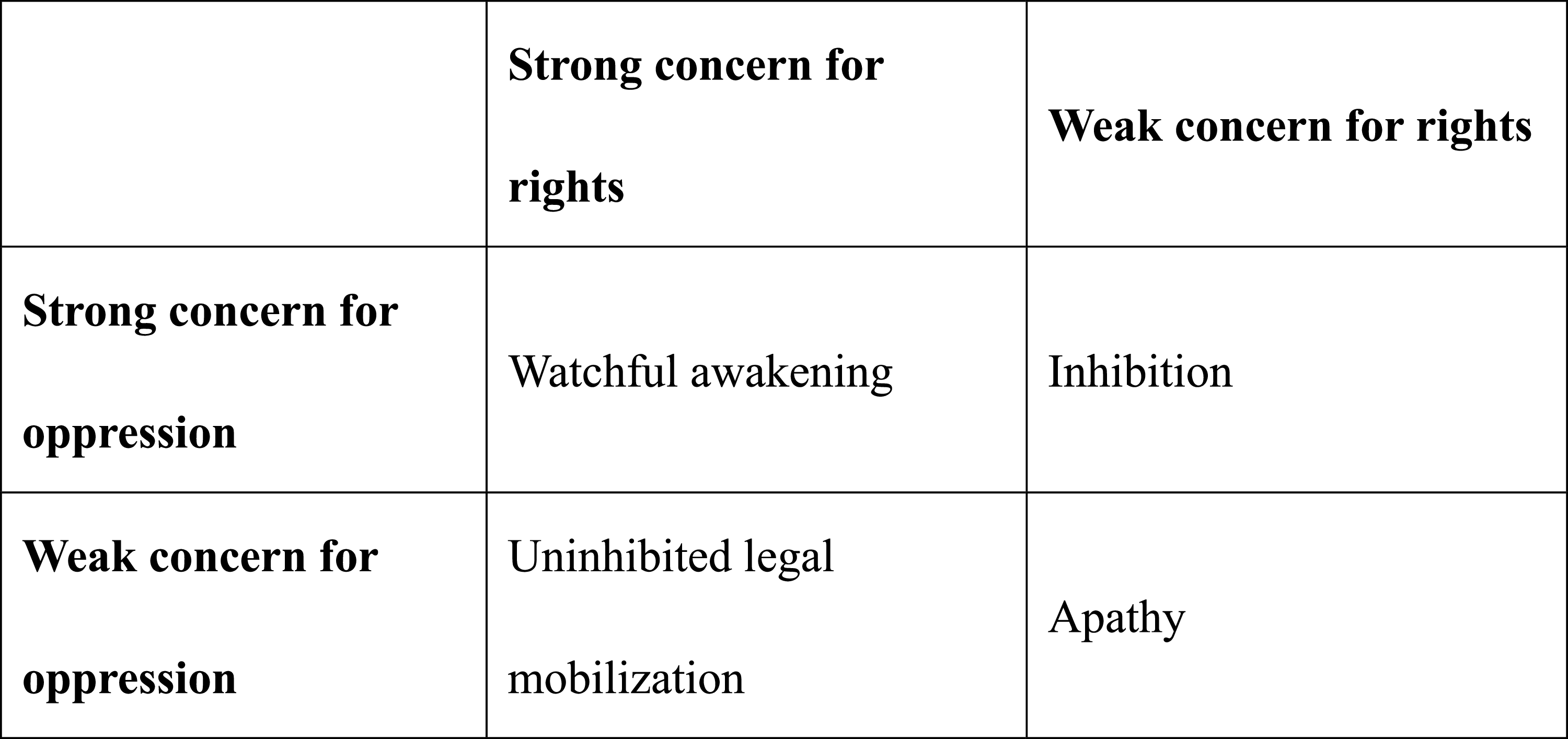

 Open access

