Introduction
Aberrant or inappropriate opioid use, increasingly termed non-medical opioid use (NMOU), is a growing crisis (Arthur and Bruera, Reference Arthur and Bruera2019). In cancer patients, the use of opioids is more frequent, as ~80% of this population experience cancer-related pain. Prior studies by our team suggested that as many as 20% of cancer patients were at elevated risk for NMOU (Yennurajalingam et al., Reference Yennurajalingam, Edwards and Arthur2018). Under diagnosis of risk for NMOU is frequent (Arthur and Bruera, Reference Arthur and Bruera2019). Many of these patients have a prior history of alcoholism, smoking, psychological symptoms, or a history of other addictions such as use of Marijuana, opioids, or cocaine. Patients who are screened for NMOU are at risk for adverse outcomes, including poor pain control, multiple emergency room visits, or hospitalization (Arthur and Bruera, Reference Arthur and Bruera2019). Therefore, there is a great need to screen and adequately manage patients with risk for NMOU.
While universal screening with the use of validated assessment tools such as Screener and Opioid Assessment for Patients with Pain (SOAPP; Akbik et al., Reference Akbik, Butler and Budman2006; Rauenzahn and Del Fabbro, Reference Rauenzahn and Del Fabbro2014; Yennurajalingam et al., Reference Yennurajalingam, Edwards and Arthur2018), Opioid Risk Tool (ORT; Webster and Webster, Reference Webster and Webster2005), or Cut Down-Annoyed-Guilty-Eye Opener (CAGE-AID; Ewing, Reference Ewing1984; Bruera et al., Reference Bruera, Moyano and Seifert1995; Rauenzahn and Del Fabbro, Reference Rauenzahn and Del Fabbro2014), questionnaires would be ideal in both the USA, and globally, the overwhelming majority of cancer patients on opioids do not undergo systematic screening for risk of NOMU (Gilson and Kreis, Reference Gilson and Kreis2009; Rauenzahn and Del Fabbro, Reference Rauenzahn and Del Fabbro2014; Arthur and Bruera, Reference Arthur and Bruera2019). This is partially due to the lack of resources and knowledge among clinicians (Rauenzahn and Del Fabbro, Reference Rauenzahn and Del Fabbro2014; Yennurajalingam et al., Reference Yennurajalingam, Edwards and Arthur2018). A simple nomogram using widely available patient clinical characteristics might help clinical teams better understand the risk for NMOU in patients in the clinical setting.
In this article, we describe our efforts to develop a nomogram to predict the probability of the occurrence of elevated risk for NMOU (+risk), defined as the presence of an SOAPP score of ≥7, among patients receiving outpatient supportive care consultation at a comprehensive cancer center. The online tool functionalizing the nomogram will potentially facilitate early screening and thereby the management of patients with risk for NMOU in routine clinical cancer care by reducing the time and resources needed to identify at-risk patients and address their needs.
Methods
The institutional review board of The University of Texas MD Anderson Cancer Center (UTMADACC) approved this study. In this retrospective study, all consecutive patients attended at the Outpatient Supportive Care Clinic at UTMADACC from February 12, 2016, to July 15, 2018 were considered, as new consults were included. Patients were eligible if they were (1) aged ≥18 years, (2) had a current or past diagnosis of cancer, and (3) were receiving treatment of pain with opioids for least a week.
We reviewed patients’ characteristics, including age, gender, ethnicity, Eastern Cooperative Oncology Group performance status (ECOG), and the scores of the tools which are routinely used in clinical care in all patients seen at the supportive care clinic at UT MDACC. These include the Edmonton Symptom Assessment Scale (ESAS), the Screener and Opioid Assessment for Patients with Pain (SOAPP), and the Cut Down, Annoyed, Guilty, Eye opener (CAGE) — Adapted to Include Drugs (CAGE-AID).
ECOG is a 5-point scale (0 = fully active, able to carry all pre-disease performance without restriction to 5 = dead). It is used to assess the patient level of functioning, how the patient's disease is progressing, and assess how the disease effects daily living abilities of the patient (Oken et al., Reference Oken, Creech and Tormey1982).
ESAS is one of the most frequently used validated symptom assessment tools to assess the severity of symptoms on a 0–10 numerical scale (0, no symptoms; 10, worst possible symptoms) in cancer patients. Pain, fatigue, nausea, depression, anxiety, drowsiness, shortness of breath, appetite, feelings of well-being, sleep, financial distress, and spiritual pain were assessed using this tool (Bruera et al., Reference Bruera, Kuehn and Miller1991).
SOAPP-14 was the validated tool used to assess the risk for inappropriate opioid use or NMOU. It consists of 14 items regarding antisocial behavior, substance abuse history, doctor/patient relationship, medication-related behaviors, and psychiatric and neurobiological need for medicine. A 5-point Likert scale is used to assess the responses, and the choices are 0 (never), 1 (seldom), 2 (sometimes), 3 (often), and 4 (very often) (Butler et al., Reference Butler, Fernandez and Benoit2008; Anghelescu et al., Reference Anghelescu, Ehrentraut and Faughnan2013; Koyyalagunta et al., Reference Manchikanti and Singh2013; Childers et al., Reference Childers, King and Arnold2015; Carmichael et al., Reference Carmichael, Morgan and Del Fabbro2016; Reyes-Gibby et al., Reference Reyes-Gibby, Anderson and Todd2016). The possible score range is 0–56; a score of ≥7 on the SOAPP score suggests elevated risk for NMOU (Akbik et al., Reference Akbik, Butler and Budman2006; Yennurajalingam et al., Reference Yennurajalingam, Edwards and Arthur2018).
CAGE-AID was used to assess alcoholism and illicit drug use. Patient scores from ≥2 to 4 are considered positive for alcoholism and also raise concern for potential non-medical opioid use and chemical coping (Mayfield et al., Reference Mayfield, McLeod and Hall1974; Parsons et al., Reference Parsons, Delgado-Guay and Osta2008; DelFabbro, Reference DelFabbro2014; Kim et al., Reference Kim, Dev and Reddy2016). Prior studies by our team found that patients with a positive CAGE-AID score had a high level of symptom distress and/or an exaggerated and erroneous need for opioid medication (Mayfield et al., Reference Mayfield, McLeod and Hall1974; Parsons et al., Reference Parsons, Delgado-Guay and Osta2008; DelFabbro, Reference DelFabbro2014; Kim et al., Reference Kim, Dev and Reddy2016). The CAGE-AID consists of a 4-item questionnaire (Ewing, Reference Ewing1984; Drews and Zimmer, Reference Drews and Zimmer2010).
Statistical methods
Data were summarized using standard descriptive statistics such as mean, standard deviation, median and range for continuous variables, and frequency and proportion for categorical variables. Association between categorical variables was examined by the chi-squared test or Fisher's exact test when appropriate. The Wilcoxon rank-sum test was used to examine the difference on continuous variables between patients’ characteristics groups. Univariate and multivariate logistic regression models were applied to assess the effect of variables of interest on the presence of elevated risk for NMOU (“at risk” patients defined as an SOAPP score of ≥7). The bootstrapping validation method was employed to estimate the bias-corrected or over-fitting-corrected predictive accuracy of the multivariate logistic regression model, which was presented by the concordance index (C-index) along with its 95% confidence interval.
Nomogram development: The nomogram was used to show the prediction of the probability of elevated risk for NMOU given the predicting factors assessed using the multivariate logistic model. These included gender, race, marital status, smoking status, depression, anxiety, financial distress, MEDD, and the CAGE-AID score. Calibration curves, which plotted the observed probability of NMOU against the predicted probability of SOAPP, were provided to evaluate the performance of the multivariate logistic regression model. Bootstrap-corrected predicted probability of risk for NMOU was based on 500 bootstrap samples. All computations were carried out in SAS 9.3 (SAS Institute Inc., Cary, NC, USA) and R 3.5.1.
Results
Between February 12, 2016, and July 15, 2018, 3,588 /3,615 (99.3%) consecutive consults were evaluable. Twenty-seven patients were ineligible. Reasons for ineligibility of these patients were as follows: 12 patients did not complete the SOAPP assessment during their initial outpatient supportive care consults, nine patients were not on opioids in the past week, two patients did not complete outpatient supportive care consults, one patient failed to complete the SOAPP assessment due to severe symptoms, and three patients’ SOAPP responses were missing.
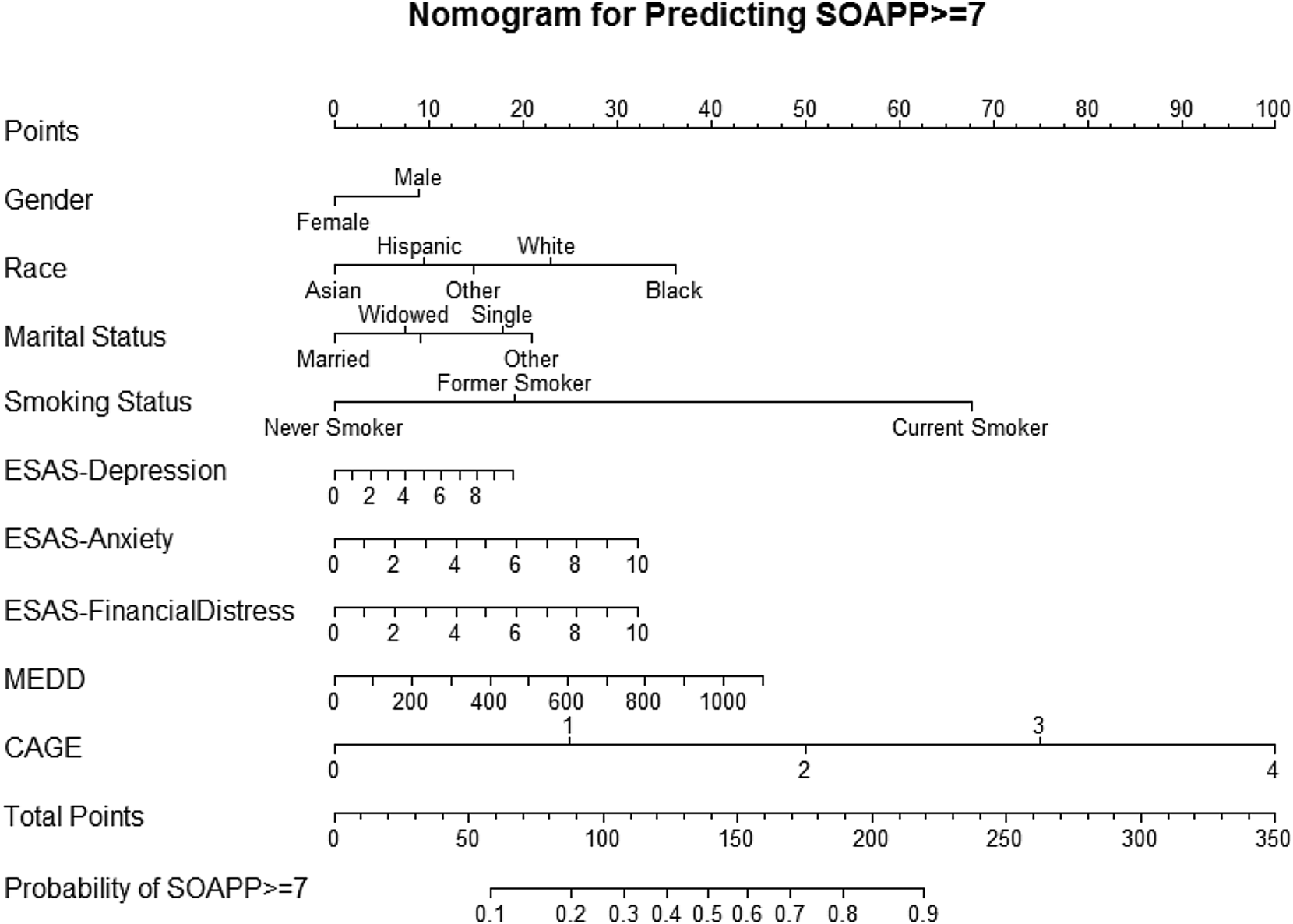
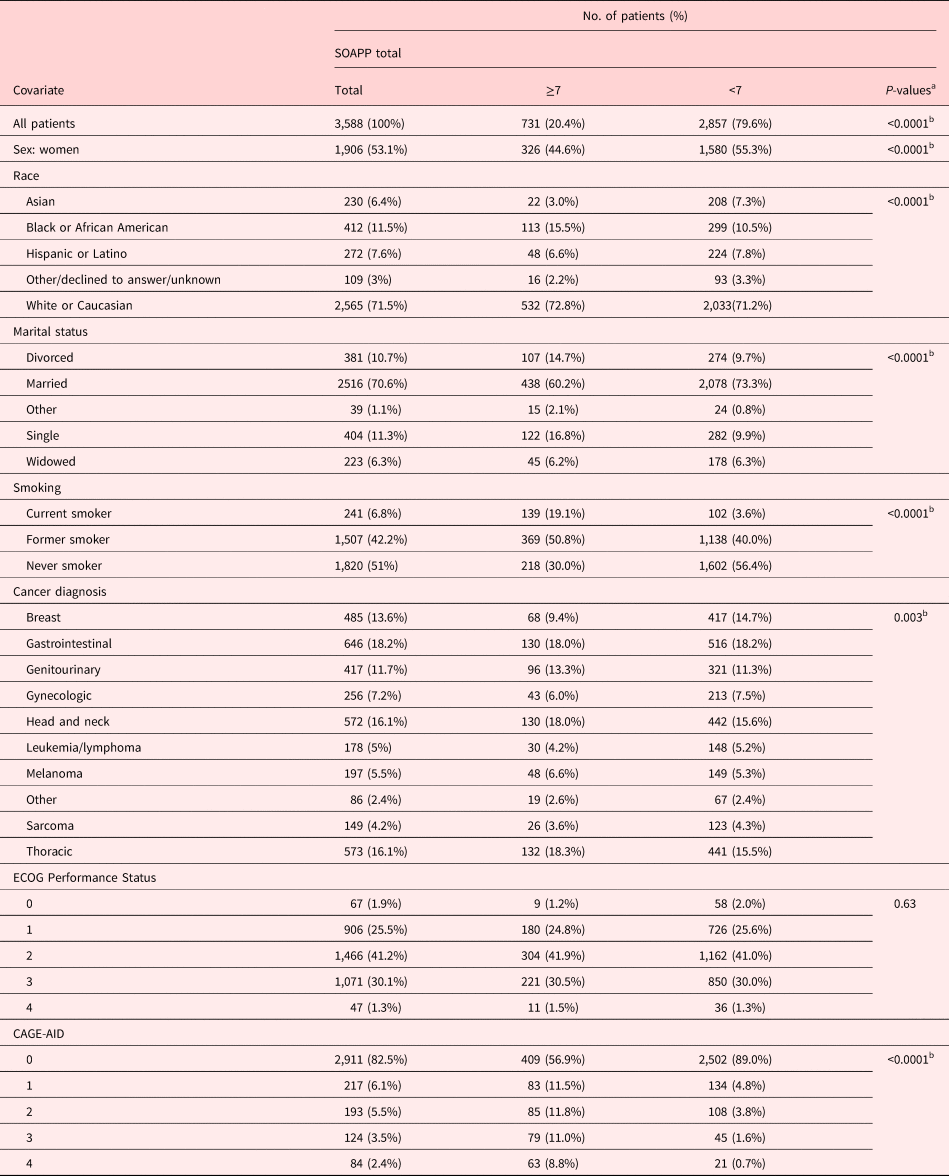
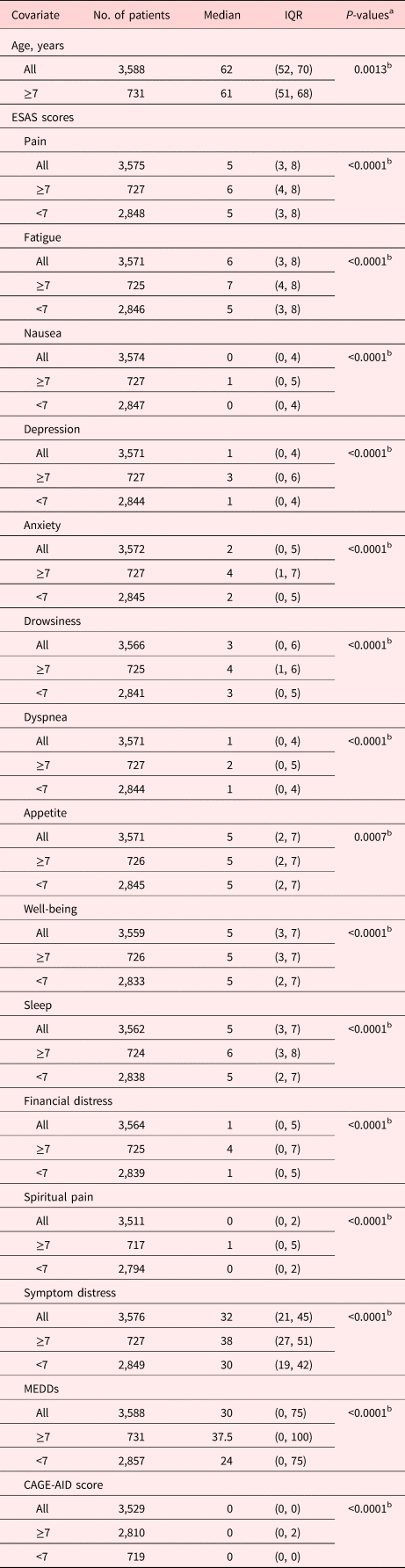
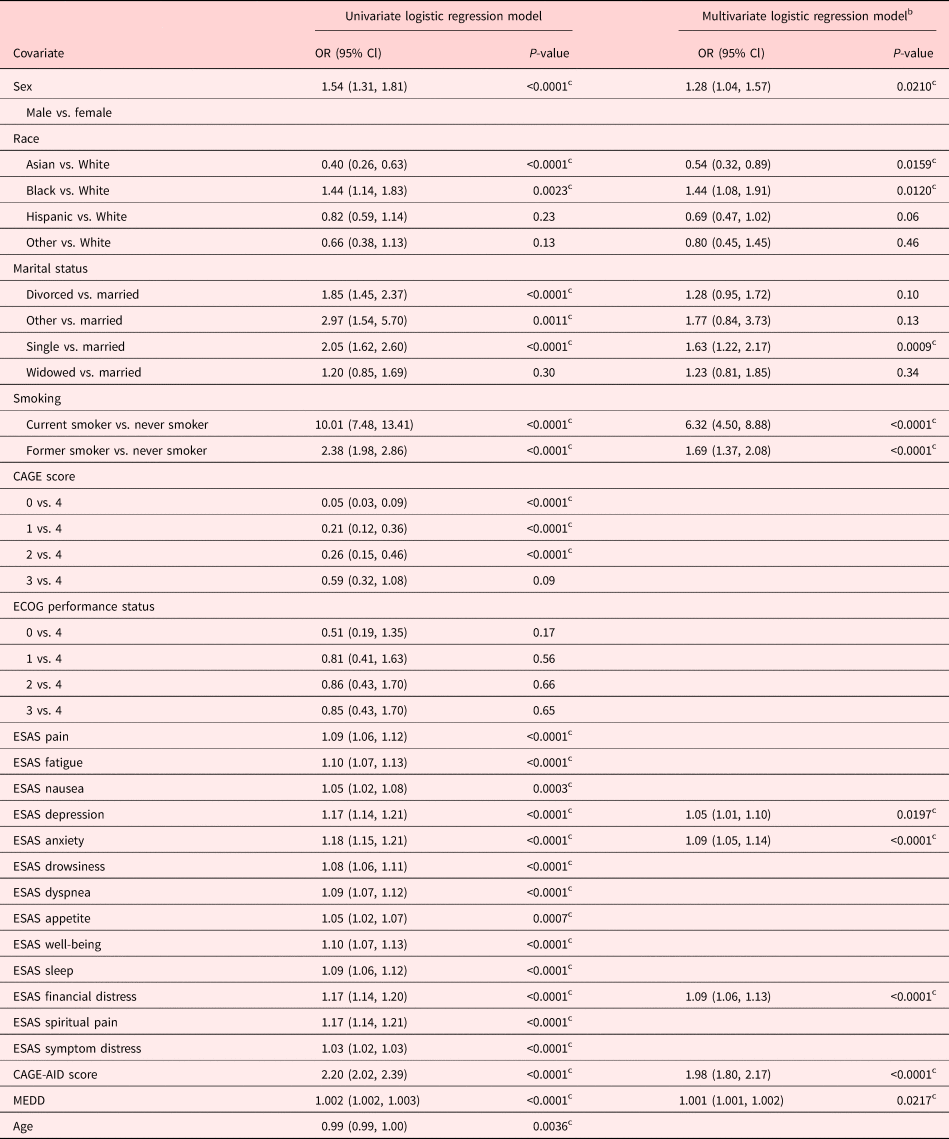
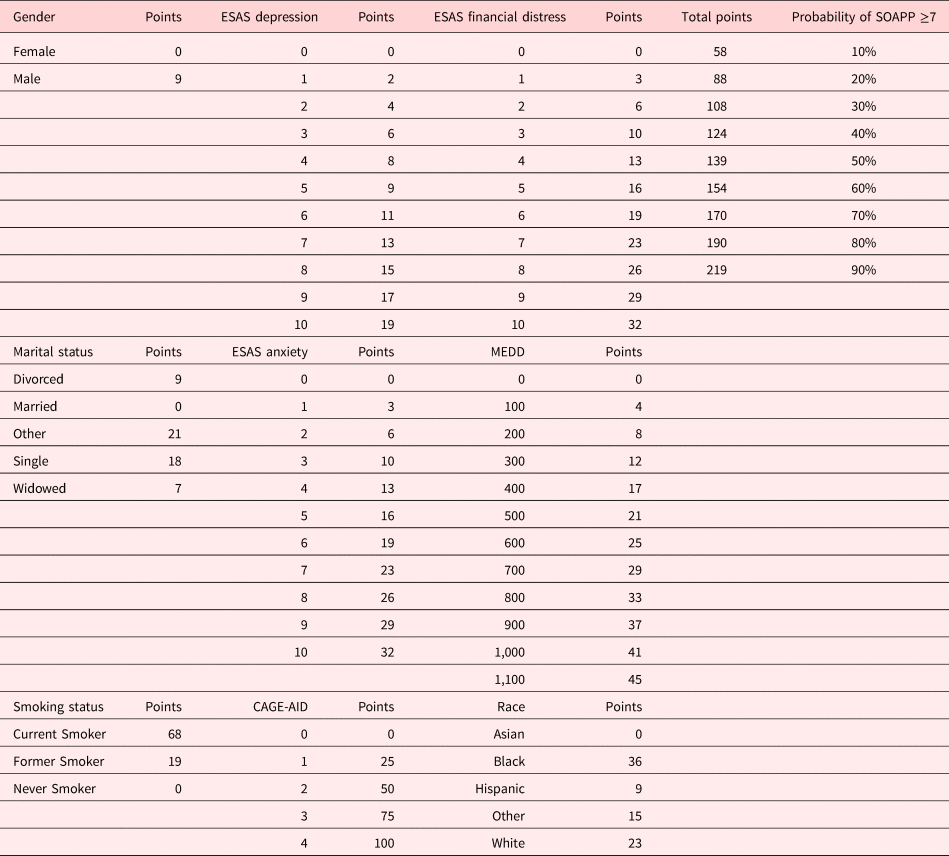
The median age was 62 years. The median ESAS pain item score on consultation was 5, and the median ECOG was 2. Among the patients included in the analysis, 20.4% were +risk of NMOU (SOAPP ≥7) and 10.1% were CAGE-AID+ (Tables 1 and 2). +risk of NMOU status was significantly associated with gender, race, marital status, smoking status, depression, anxiety, financial distress, MEDD, and the CAGE score. The C-index was 0.803. With 500 bootstrap repetitions, the 95% confidence interval of C-index was (0.783, 0.822) (Table 3). A nomogram was developed (Fig 1.) and can be accessed at https://is.gd/soappnomogram.
Nomogram for predicting non-medical opioid use (A score of ≥7 on the Screener and Opioid Assessment for Patients With the pain tool was considered the gold standard for predicting a non-medical opioid use).

Demographic and clinical characteristics

Abbreviations: ECOG Performance Status, Eastern Cooperative Oncology Group performance status; CAGE-AID, Cut Down-Annoyed-Guilty-Eye Opener assessment.
a The chi-square test or the Fisher's exact test was used for categorical variables, and the Wilcoxon rank-sum test was used for continuous variables.
b These P-values indicate a statistically significant difference.
Demographic and clinical characteristics

Abbreviations: ESAS, Edmonton Symptom Assessment System; ESAS symptom distress was the sum of pain, fatigue, nausea, depression, anxiety, drowsiness, dyspnea, appetite, and well-being. MEDDs, Morphine Equivalent Daily Doses (mg/day); IQR, interquartile range; SOAPP, Screener and Opioid Assessment for Patients with Pain tool.
a The chi-square test or the Fisher's exact test was used for categorical variables, and the Wilcoxon rank-sum test was used for continuous variables.
b These P-values indicate a statistically significant difference.
Identification of patients with elevated risk for non-medical opioid usea

Abbreviations: ECOG Performance Status, Eastern Cooperative Oncology Group performance status; CAGE, Cut Down-Annoyed-Guilty-Eye Opener assessment; ESAS, Edmonton Symptom Assessment System; ESAS symptom distress was the sum of pain, fatigue, nausea, depression, anxiety, drowsiness, dyspnea, appetite, and well-being. MEDDs, Morphine Equivalent Daily Doses (mg/day); SOAPP, Screener and Opioid Assessment for Patients with Pain tool; OR, odds ratio (per point in difference).
a A score of ≥7 on the Screener and Opioid Assessment for Patients With Pain tool was considered the gold standard for predicting a high risk of non-medical or inappropriate or aberrant opioid use.
b The concordance index was 0.803, and 95% CIs were determined from Bootstrap validation (0.783–0.822).
c These P-values indicate a statistically significant difference.
For example, for a male Hispanic patient, married, never smoked, with ESAS scores for depression = 3, anxiety = 3, financial distress = 7, a CAGE score of 0, and an MEDD score of 20, the total score is 9 + 9+0 + 0+6 + 10 + 23 + 0+1 = 58. A nomogram score of 58 indicates the probability of +risk of 0.1 (Table 4)
Scores of predicting variables of elevated risk patients of NMOU

Abbreviations: CAGE-AID, Cut Down-Annoyed-Guilty-Eye Opener assessment; ESAS, Edmonton Symptom Assessment System; MEDDs, Morphine Equivalent Daily Doses (mg/day); SOAPP, Screener and Opioid Assessment for Patients with Pain tool.
Note: For example, for a male Hispanic patient, who is married, never smoked, with the following ESAS scores: (depression = 3, anxiety = 3, financial distress = 7), CAGE-AID score of 0, and MEDD of 20, the total score is 9 + 9+0 + 0+6 + 10 + 23 + 0+1 = 58. In the table of total points, a score of 58 indicates the probability of elevated risk patients of NMOU (SOAPP ≥7) being 0.1.
Discussion
In this study of 3,588 cancer patients, we developed a nomogram that assists clinicians in the identification of +risk for NMOU. Using SOAPP as a gold standard, patients with characteristics including smoking status, cancer diagnosis, ESAS severity, MEDD, CAGE-AID score, age, race, and marital status were associated with +risk for NMOU (Tables 1 and 2). Multivariate logistic regression analysis identified single status, gender, race, smoker, ESAS depression, anxiety, financial distress, MEDD, and CAGE-AID+, as independently associated with +risk for NMOU (Table 3). These findings are consistent with our prior preliminary study of frequency and factors associated with SOAPP scores in cancer patients.2 They allowed us to include the independently associated variables to develop a nomogram aimed at predicting +risk for NMOU (defined as an SOAPP score of ≥7).
The opioid overdose crisis has far-reaching implications and is of great concern to the medical community and beyond. Because of this epidemic of opioid misuse, there is an increasing interest in routine screening and management of opioids in both cancer and non-cancer patients. In the context of the healthcare setting, elevated risk for NMOU has the potential to escalate to many seriously detrimental consequences, which may include poor pain control, distress, and increased ER visits, in addition to the physical side effects of opioids. Prior studies by our team and others suggest that about 20% of patients in the ambulatory care setting are +risk for NMOU. However, throughout the country, very few centers have routine screening and management protocols for cancer patients. Among the concerns associated with screening, scales such as the ORT and SOAPP are the time and resources needed to screen and address patients with risk for NMOU compared with the potential benefits to be gained by doing so. In this study, we confirm the findings of our prior study (Yennurajalingam et al., Reference Yennurajalingam, Edwards and Arthur2018); we found that that the +risk for NMOU is associated with gender, race, marital status, smoking status, depression, anxiety, financial distress, MEDD, and the CAGE score. Based on these factors, we developed a nomogram which is user-friendly, fast, accurate and dynamically predicts the +risk for NMOU. The clinician can utilize this nomogram to more accurately calculate the patient's +risk for NMOU and proactively implement appropriate strategies to reduce the risk for NMOU.
In supportive care, as in other specialties, assessment is a critical and integral part of the effective management of +risk for NMOU. However, the systematic assessment of risk for NMOU use is still in its infancy in the cancer care setting. A number of tools have been used in an exploratory fashion, but only on a limited basis (Gilson and Kreis, Reference Gilson and Kreis2009; Rauenzahn and Del Fabbro, Reference Rauenzahn and Del Fabbro2014). In specialized clinics in the non-cancer setting, the routine assessment of pain and addiction patients is common (Manchikanti and Singh, Reference Koyyalagunta, Bruera and Aigner2008; Gilson and Kreis, Reference Gilson and Kreis2009). Assessments used in these non-cancer clinics include the patient self-administered SOAPP (patient-administered; sensitivity, 91%; specificity, 69%), the ORT (patient-administered), the CAGE-AID questionnaire (clinician- or patient-administered; 93% sensitivity; 76% specificity), and the Diagnosis, Intractability, Risk, and Efficacy (DIRE) inventory (clinician-administered; 94% sensitivity; 87% specificity; Ewing, Reference Ewing1984; Akbik et al., Reference Akbik, Butler and Budman2006; Belgrade et al., Reference Belgrade, Schamber and Lindgren2006; Kim et al., Reference Kim, Dev and Reddy2016; Cheatle et al., Reference Cheatle, Compton and Dhingra2019). Tools for risk for NMOU assessment in patients already on long-term opioid therapy include the Current Opioid Misuse Measure (patient-administered; sensitivity, 77%; specificity, 68%; Butler et al., Reference Butler, Budman and Fernandez2007), the Pain Medication Questionnaire (patient-administered; sensitivity, 92%; specificity, 80%; Adams et al., Reference Adams, Gatchel and Robinson2004), and the Addiction Behavior Checklist (clinician-administered; sensitivity, 88%; specificity, 86%; Wu et al., Reference Wu, Compton and Bolus2006). Urine drug testing, prescription drug monitoring programs, and behavioral monitoring are also leveraged to detect risk for NMOU, in addition to ongoing assessment of treatment adherence (Smith et al., Reference Smith, Paillard and McKeown2015). Additionally, there are specific behaviors, including calls for early medication refills or appointments, doctor shopping, frequent emergency department visits, requests for specific opioids, pill count discrepancy, and resistance to changes in analgesic regimen, that should alert clinicians’ attention to a potential risk for NMOU.
This study has some limitations. The retrospective nature of the study may have resulted in bias. In addition, bias was introduced as the data are from a single institution. Therefore, future prospective studies conducted in diverse settings and taking into account relevant ethnic, socioeconomic, and psychological variability may improve the epidemiologic performance of the nomogram.
This is a work in progress. We concede that there is considerable variation in the risk, and this might be due to two main factors: (1) the tools used to assess some variables, e.g., CAGE-AID, have a certain margin of error; therefore, some patients might be CAGE-positive but not at risk for NMOU, while some patients who are CAGE-negative may actually be at risk for NMOU (Yennurajalingam et al., Reference Yennurajalingam, Edwards and Arthur2018). Therefore, the development of better tools to address risk might also potentially improve the performance of the nomogram. (2) There may be other factors associated with +risk for NMOU that are not included in the nomogram. These may include family factors, genetic factors (including factors related to opioids and their metabolism), and other unknown factors. Future studies to discover and assess such additional factors may enable us to improve the epidemiological performance of the nomogram. Further prospective studies are needed to validate the nomogram so to determine the incremental value the nomogram provided in addition to routine clinical care in cancer patients.
Lastly, the use of the nomogram to determine the +risk for NMOU should not deter the treating cancer clinician from using opioids for cancer-related pain but facilitate better pain management and vigilance. The nomogram may also therefore helpful for the treating clinician to prompt for an early referral to supportive or cancer pain specialist. The nomogram can be applied rapidly in an ambulatory cancer setting using criteria that is widely available to bedside clinicians. While it would be ideal to implement universal screening but universal screening measures have been proposed for more than 20 years, they are still not been used in the vast majority of clinical settings (Bruera et al., Reference Bruera, Moyano and Seifert1995).
Conclusion
We have established a practical nomogram to assess the elevated risk for NMOU that is based on routinely collected clinical data can help clinicians establish the risk of a patient engaging in NMOU. We anticipate that the assessment of elevated risk for NMOU will greatly aid clinicians in the planning of patient care.
Acknowledgments
We thank Aimee E. Anderson, M.Sc., Ph.D., for review of the manuscript.
Conflict of interest
No conflict of interest related to the study. Sriram Yennurajalingam, Helsinn (research funding for fatigue study); Bayer (research funding for fatigue study); Genentech (research funding for palliative care study); David Hui (Helsinn: research funding for nausea study; Insys: research funding for dyspnea study), and Eduardo Bruera (Helsinn: research funding for palliative care study) declare funding for research support unrelated to the current study or topic. Rest of the authors (T.E., J.A.A., Z.L., J.S.M., E.E., S.M.N., J.W., D.L., J.L.W., and S.K.R.) declare no conflict of interest.