Introduction
Spina bifida myelomeningocele (SBM) is a congenital birth defect that produces orthopedic, neurological, urinary, and psychological difficulties. Neuropsychological functioning in children with spina bifida has been shown to predict social development (Rose & Holmbeck, Reference Rose and Holmbeck2007), quality of life (Hetherington, Dennis, Barnes, Drake, & Gentili, Reference Hetherington, Dennis, Barnes, Drake and Gentili2006), and functional independence (Heffelfinger et al., Reference Heffelfinger, Koop, Fastenau, Brei, Conant, Katzenstein and Sawin2008). However, the neuropsychological sequelae of SBM are complex and heterogeneous, partially due to differences in the severity of neuropathology (Dennis & Barnes, Reference Dennis and Barnes2010). For instance, SBM is associated with malformations of brain structures (e.g., Chiari II malformation; delayed maturation of gray and white matter; and hydrocephalus; Argento, Warschausky, Shank, & Hornyak, Reference Argento, Warschausky, Shank and Hornyak2011) and children with SBM demonstrate considerable variability with respect to the nature of their neurological insults and cognitive deficits (Yeates, Loss, Colvin, & Enrille, Reference Yeates, Loss, Colvin and Enrille2003).
A neuropsychological phenotype for children with SBM has been described in the literature, emphasizing particular areas of strength or weakness. Reviews of past work (Argento et al., Reference Argento, Warschausky, Shank and Hornyak2011; Dennis & Barnes, Reference Dennis and Barnes2010; Dennis, Landry, Barnes, & Fletcher, Reference Dennis, Landry, Barnes and Fletcher2006; Fletcher & Dennis, Reference Fletcher and Dennis2009) have suggested that children with spina bifida and/or hydrocephalus differ from their typically developing counterparts across various neuropsychological constructs such as reading (Barnes & Dennis, Reference Barnes and Dennis1992), verbal discourse (Barnes & Dennis, Reference Barnes and Dennis1998; Dennis & Barnes, Reference Dennis and Barnes1993), narrative content (Dennis, Jacennik, & Barnes, Reference Dennis, Jacennik and Barnes1994), math skills (Barnes et al., Reference Barnes, Pengelly, Dennis, Wilkinson, Rogers and Faulkner2002), attention (Brewer, Fletcher, Hiscock, & Davidson, Reference Brewer, Fletcher, Hiscock and Davidson2001), executive functions (Fletcher et al., Reference Fletcher, Brookshire, Landry, Bohan, Davidson, Francis and Morris1996), memory (Scott et al., Reference Scott, Fletcher, Brookshire, Davidson, Landry, Bohan and Francis1998; Yeates, Enrile, Loss, Blumenstein, & Delis, Reference Yeates, Enrile, Loss, Blumenstein and Delis1995), and intelligence (Fletcher et al., Reference Fletcher, Francis, Thompson, Davidson and Miner1992; Soare & Raimondi, Reference Soare and Raimondi1977).
To provide a conceptual framework for the pattern of strengths and weaknesses demonstrated by children with spina bifida across neurocognitive domains, Dennis and colleagues (Reference Dennis, Landry, Barnes and Fletcher2006) introduced the terms associative and assembled processing. Associative processing (a relative strength for children with SBM) is defined as, “data-driven and based on the formation of associations, enhancement, engagement, and categorization” (Dennis et al., Reference Dennis, Landry, Barnes and Fletcher2006, p. 289). Assembled processing (a relative weakness for children with SBM) is “based on dissociation, suppression, disengagement, and contingent relations” (Dennis et al., Reference Dennis, Landry, Barnes and Fletcher2006, p 289). In other words, associative processing describes areas of strength for children with spina bifida, such as rote memorization (e.g., vocabulary), while assembled processing describes areas of weakness, such as problem solving or abstract reasoning (e.g., matrix reasoning). To date, most studies of neuropsychological functioning in this population compare children with spina bifida to typically developing children or population norms. While these studies have provided valuable information about group differences for children with and without spina bifida, they have not addressed the cognitive heterogeneity within this population.
Indeed, researchers have found that performance on neuropsychological measures varies among children with spina bifida (Barf et al., Reference Barf, Verhoef, Jennekens-Schinkel, Post, Gooskens and Prevo2003; Fletcher et al., Reference Fletcher, Copeland, Frederick, Blaser, Kramer, Northrup and Dennis2005; Snow et al., Reference Snow, Prince, Souheaver, Ashcraft, Stefans and Edmonds1994; Wills, Reference Wills1993). Significant within group differences could be indicative of variations of severity within the same profile (i.e., quantitative differences across profiles) or different patterns of performance that are indicative of multiple profiles (i.e., qualitative differences across profiles). Fletcher, Ostermaier, Cirino, and Dennis (Reference Fletcher, Ostermaier, Cirino and Dennis2008) report emerging evidence for the latter. Even though no statistical comparisons were conducted, data provided by Fletcher and colleagues (Reference Fletcher, Ostermaier, Cirino and Dennis2008) suggest that “the modal profile is most apparent for the group of children who are not Hispanic and who have lower level (lumbar or sacral) spinal lesions” (p. 9).
Hence, there is some evidence for more than one neuropsychological profile for children with spina bifida (e.g., Hispanic children and children with upper level lesions may have qualitatively different profiles than other children). Instead of examining one cognitive construct (e.g., attention), the current study assessed many constructs (intelligence, attention, comprehension of complex language, affect recognition, and executive functioning) to generate subgroup specific, multidimensional profiles of strengths and weaknesses.
Another issue addressed in the current study is the lack of variability across participants in past studies due to exclusionary criteria. For example, most of the previous studies have excluded children with lower intelligence (e.g., excluded IQ: <70 Dennis et al., Reference Dennis, Fitz, Netley, Sugar, Harwood-Nash, Hendrick, Hoffman and Humphreys1981; <70, Hampton et al., Reference Hampton, Fletcher, Cirino, Blase, Drake, Dennis and Kramer2011; <90, Iddon, Morgan, Loveday, Sahakian, & Pickard, Reference Iddon, Morgan, Loveday, Sahakian and Pickard2004; <70 Lindquist, Uvebrant, Rehn, & Carlsson, Reference Lindquist, Uvebrant, Rehn and Carlsson2009; <80, Snow, Reference Snow1999; <75, Vinck, Maassen, Mullaart, & Rotteveel, Reference Vinck, Maassen, Mullaart and Rotteveel2006). Additionally, previous studies have typically not included an ethnically diverse participant sample and/or have not reported the ethnicity of their participants (e.g., Barf et al., Reference Barf, Verhoef, Jennekens-Schinkel, Post, Gooskens and Prevo2003; Dennis et al., Reference Dennis, Fitz, Netley, Sugar, Harwood-Nash, Hendrick, Hoffman and Humphreys1981; Hommet et al., Reference Hommet, Billard, Gillet, Barthez, Lourmiere, Santini and Autret1999; Iddon et al., Reference Iddon, Morgan, Loveday, Sahakian and Pickard2004; Lindquist et al., Reference Lindquist, Uvebrant, Rehn and Carlsson2009; Jenkinson et al., Reference Jenkinson, Campbell, Hayhurst, Clark, Kandasamy, Lee, Flynn and Mallucci2011; Snow, Reference Snow1999; Snow et al., Reference Snow, Prince, Souheaver, Ashcraft, Stefans and Edmonds1994). Due to this practice, the phenotype that is described in the literature may not be representative of children with lower intelligence or children of diverse ethnicities.
The current study aimed to determine whether there are subgroups of children who have qualitatively different neuropsychological profiles. By identifying subgroups of children with spina bifida, it is possible that more tailored interventions could be designed. Dennis and colleagues (Reference Dennis, Landry, Barnes and Fletcher2006) suggest that biological factors, such as Chiari II malformation, hydrocephalus, shunt malfunction, and lesion level affect assembled processing skills (typically cognitive weaknesses). These researchers suggest that greater biological severity is associated with greater cognitive impairment. Thus, we assumed that the level of general cognitive functioning would depend on biological severity, such that children with more severe biological risk factors would perform at a generally lower cognitive level.
Dennis and colleagues (Reference Dennis, Landry, Barnes and Fletcher2006) also suggested that strength in associative processing skills (cognitive strengths for youth with spina bifida, i.e., vocabulary) are reduced by environmental factors such as poverty, low socio-economic status (SES), and poor parenting. They state, “environmental moderators are important, not because of their influence on assembled processing (areas of weakness), but because they reduce SBM assets in associative processing (areas of strength)” (Dennis et al., Reference Dennis, Landry, Barnes and Fletcher2006, p. 293). Thus, it was expected that children with positive environmental predictors (e.g., higher SES) would have more apparent strengths relative to other scores in the cognitive profile.
Based on these expectations, it was hypothesized that there would be four subgroups of children with spina bifida with distinct profiles. The hypothesized clusters were as follows: cluster 1, “generally higher functioning with clear strengths”; cluster 2, “generally lower functioning with clear strengths”; cluster 3, “generally higher functioning without clear strengths”; and cluster 4, “generally lower functioning without clear strengths.” It was expected that cluster membership would depend on biological and environmental predictors. Biological predictors were expected to affect the general level of performance (i.e., higher or lower overall functioning). Environmental factors (e.g., high SES) were expected to predict whether strengths were apparent in the profile (i.e., whether there were clear differences in scores for areas of strength vs. weakness).
Several risk factors have been associated with differences in cognitive functioning, such lesion level (Argento et al., Reference Argento, Warschausky, Shank and Hornyak2011; Fulton & Yeates, Reference Fulton and Yeates2010), number of shunt revisions (Barf et al., Reference Barf, Verhoef, Jennekens-Schinkel, Post, Gooskens and Prevo2003; Brown et al., Reference Brown, Ris, Beebe, Ammerman, Oppenheimer, Yeates and Enrile2008; Hetherington et al., Reference Hetherington, Dennis, Barnes, Drake and Gentili2006), a history of seizures (Barf et al., Reference Barf, Verhoef, Jennekens-Schinkel, Post, Gooskens and Prevo2003; Brown et al., Reference Brown, Ris, Beebe, Ammerman, Oppenheimer, Yeates and Enrile2008), age (Wills, Reference Wills1993), ethnicity (Fletcher et al., Reference Fletcher, Ostermaier, Cirino and Dennis2008; Sattler, Reference Sattler2008; Sternberg, Reference Sternberg2004), and SES (McLoyd, Reference McLoyd1998; Swartwout, Garnaat, Myszka, Fletcher, & Dennis, Reference Swartwout, Garnaat, Myszka, Fletcher and Dennis2010). These factors were hypothesized to predict group membership, such that clusters 2 and 4 would have more biological risk factors than clusters 1 and 3; and clusters 1 and 2 would have more advantageous environmental factors than clusters 3 and 4 (hypothesis 2).
For the third hypothesis, it was expected that group membership would predict differences in the following areas of daily functioning: independence (Barnes, Dennis, & Hetherington, Reference Barnes, Dennis and Hetherington2004; Heffelfinger et al., Reference Heffelfinger, Koop, Fastenau, Brei, Conant, Katzenstein and Sawin2008; Tuminello, Holmbeck, & Olsen, Reference Tuminello, Holmbeck and Olson2012), academic success (Barnes et al., 2006; Swartwout et al., Reference Swartwout, Garnaat, Myszka, Fletcher and Dennis2010), parental expectations for the future (Creed, Conlon, & Zimmer-Gembeck, 2007), and quality of life (Barf, Post, Verhoef, Prevo, & Goosken, 2010; Hetherington et al., Reference Hetherington, Dennis, Barnes, Drake and Gentili2006). It was expected that participants’ daily functioning would depend on cluster membership, in the following order from highest to lowest level of functioning: cluster 1 “generally higher functioning with clear strengths”; cluster 3 “generally higher functioning without clear strengths”; cluster 2 “generally lower functioning with clear strengths”; and cluster 4 “generally lower functioning without clear strengths.”
Methods
Participants
The current study included participants from a larger, longitudinal study of psychosocial adjustment in adolescents with spina bifida (e.g., Devine, Holmbeck, Gayes, & Purnell, Reference Devine, Holmbeck, Gayes and Purnell2012), which was approved by local institutional review boards and was completed in accordance with the Helsinki Declaration. Families of children with spina bifida, ages 8–15 years old, were recruited from four main sources: a children’s hospital, a children’s hospital that exclusively serves children with physical disabilities, a university-based medical center, and a statewide spina bifida association. Participants were eligible if they were able to speak and read English or Spanish, if at least one primary caregiver could participate, if they were cognitively able to complete questionnaires and neuropsychological measures, and if they lived within 300 miles of Chicago, IL. Families were approached in several ways (letters and follow-up calls, fliers, or during their outpatient clinic appointment). Of the original 246 families approached, 163 agreed to participate; however, 21 of those families could not be contacted or later declined, and 2 families did not meet inclusion criteria, resulting in a sample size of 140 families (57% participation rate).
Demographic Information
There were no significant differences between those who participated and those who declined on the following characteristics: type of SB (i.e., myelomeningocele vs. other), χ2(1)=0.0002, shunt status, χ2(1)=0.003, and occurrence of shunt infections χ2(1)=1.08 (Devine et al., 2012). The current study used data from the first time-point. Additionally, the current study only included individuals with myelomeningocele, and only those who completed every neuropsychological measure. Of the 45 participants who were excluded in the current study: 15 had some other form of spina bifida (e.g., lipomeningocele) and 30 did not complete the entire neuropsychological battery.
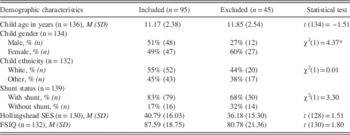
Participants did not complete the neuropsychological battery for several reasons including low comprehension of test instructions (n=13), fatigue/ refusal to complete home visits (n=11), inability due to limited fine motor skills (n=3), and administrator error (n=3). There were no significant differences between those who were (n=95) and were not included (n=45) based on the following characteristics: age, SES, race, and IQ (WASI Full, 2-scale IQ). There were significant differences for gender, such that a greater percentage of males were included from the larger sample (see Table 1).
Demographic variables for included vs. excluded participants

Note. The Hollingshead (Reference Hollingshead1975) Four Factor Index of SES is based on a composite of maternal education, paternal education, maternal occupational status, and paternal occupational status. Percentages do not add up to 100% due to missing data.
*=p<.05.
The final participants in the current study included 95 families of children with SBM. Of the 95 children with spina bifida, 49% were female, the mean age was 11.13, 55.2% were Caucasian, 26% were Hispanic, and 18.8% were of another ethnicity. Parent report indicated that 86.5% of the children almost always spoke English, 5.8% spoke it very often, 2.9% spoke it moderately often, and 4.8% were unknown. Medical information was gathered from the medical chart or from mother or father report when the medical chart information was not available. Half of the children had lumbar level spinal lesions (50%), 34.4% were sacral, and 13.5% were thoracic (2.1% missing); 83.3% had a shunt; 54.2% had at least one shunt revision (5.2% missing); and 13.5% had a history of seizures. Data were missing when the medical record and parent survey data were not available or because it was “unknown.”
Measures
Neuropsychological Assessment
Youth with spina bifida participated in about 2 hr of neuropsychological assessments that took place over 2 home visits (1 hr of testing during each visit). Trained research assistants administered all neuropsychological assessments. All neuropsychological assessments were conducted in English, but instructions were clarified in Spanish if needed. After the home visit, the neuropsychological measures were scored by another research assistant.
Intelligence
Two subtests from the Wechsler Abbreviated Scale of Intelligence (WASI) were used to assess verbal (Vocabulary) and non-verbal (Matrix Reasoning) intellectual ability (Wechsler, Reference Wechsler1999).
Academic Achievement
The Wide Range Achievement Test 3 (WRAT3) was used to measure the development of basic of reading, spelling, and arithmetic (Wilkinson, Reference Wilkinson1993). The WRAT3 has demonstrated adequate internal consistency across subscales.
Attention/executive functioning
The planned connections subtest of the Cognitive Assessment System (CAS) was used to assess nonverbal planning skills that are a part of executive functioning (Naglieri & Das, Reference Naglieri and Das1997).
Verbal executive functioning was assessed with the verbal fluency subtest of the Delis Kaplan Executive Function System (D-KEFS). The D-KEFS provides normative and qualitative data assessing higher level executive functions (Delis, Kaplan, & Kramer, Reference Delis, Kaplan and Kramer2001).
Subtests from the Test of Everyday Attention for Children (TEA-Ch) were administered to assess selective/focused visual attention (Sky Search); sustained auditory attention (Score); sustained-divided visual/auditory attention (Sky Search Dual Task); and auditory divided attention (Score Dual Task; Manly, Robertson, Anderson, & Nimmo-Smith, Reference Manly, Robertson, Anderson and Nimmo-Smith1999).
Social-emotional processing
The Diagnostic Analysis of Nonverbal Accuracy 2 (DANVA2) was used to assess social-emotional processing (Child Facial Expression Test and Child Paralanguage Test). The subtests have adequate internal consistency, with coefficient alphas ranging from .69 to .81 (Nowicki, Reference Nowicki2003).
Social-Contextual Language
Two subtests from the Comprehensive Assessment of Spoken Language (CASL) were used to assess comprehension of complex language (Inference subtest) and awareness of the appropriateness of language in relation to the situation in which it is used (Pragmatic Judgment subtest; Carrow-Woolfolk, Reference Carrow-Woolfolk1999).
Predictors
Demographics
Mother questionnaire data were used to assess the child’s age and ethnicity (coded as Caucasian, Hispanic, and other), as gathered with the Parent Demographic Questionnaire (PDQ), which was developed for this study.
SES
The Hollingshead Four Factor Index of socio-economic status was used to assess SES (Hollingshead, Reference Hollingshead1975). Education and occupation scores for mother and father were combined and these scores were averaged across caregivers to calculate the family SES. In the case of single-parent families, or two-parent families in which only one parent was employed, that individual’s score was used to represent the family SES. Scores ranged from 8 to 66; higher scores reflect higher SES.
Family stress
The 19-item Family Stress Scale (FSS) was used to measure parent report of common stressors in families of children with chronic health conditions (Quittner, Glueckauf, & Jackson, Reference Quittner, Glueckauf and Jackson1990). Higher scores indicate a higher amount of perceived stress. There are 13 non-disease specific items and 6 spina bifida-specific items that were added to the existing measure. The FSS showed good internal consistency (α=.88 to .92) in the current study.
Medical information
The Medical History and Adherence Questionnaire was adapted from the Parent-Report of Medical Adherence in Spina Bifida Scale (PROMASB, Holmbeck et al., Reference Holmbeck, Belvedere, Christensen, Czerwinski, Hommeyer, Johnson and Kung1998) to obtain information about the youth’s lesion level, shunt status, history of shunt surgeries, and seizure history and was completed by the youth’s parents.
Outcomes
Independence
The Scales of Independent Behavior-Revised (SIB-R; Bruininks, Woodcock, Weatherman, & Hill, Reference Bruininks, Woodcock, Weatherman and Hill1996) was used to assess parent report of an individual’s level of independent functioning. The following subscales were included in the protocol: Fine-Motor, Money and Value, Language Comprehension, and Time and Punctuality. Each item was rated on a four-point Likert scale. The total raw score was used for each subscale, with a higher score indicating greater independence. Excellent internal consistency was found for the current study (α=.92–.95).
Academic success
Teachers of participants in this study completed the Teacher Report Form (TRF; Achenbach & Rescorla, Reference Achenbach and Rescorla2001). The academic performance subscale was used.
Parental expectations for the future
Questions about the Future-P, is a parent-reported questionnaire that was developed for the current study. Respondents rated statements about the child’s future (e.g., future employment, education, independence, romantic relationships, and parenting) on a four-point scale, from very unlikely to very likely. A higher mean score indicated the parent expected his/her child to achieve more developmental and independence milestones. Internal consistency was excellent in the current study (α=.94–.95).
Quality of life
Youth with spina bifida and their parents completed the Pediatric Quality of Life Inventory Version 4.0 Generic Core Scales (PedsQL; Varni, Seid, & Kurtin, Reference Varni, Seid and Kurtin2001). The measure consists of 4 subscales: physical health, emotional functioning, social functioning, and school functioning. This measure uses a five-point Likert scale with response categories ranging from “never a problem” to “almost always a problem.” Adequate internal consistency across subscales was demonstrated in the current study for parent (α=.59–.82) and child report (α=.65–.72).
Data Analysis Plan
Hierarchical and nonhierarchical cluster analyses were conducted, as outlined by Steele and Aylward (Reference Steele and Aylward2007) and Henry, Tolan, and Gorman-Smith (Reference Henry, Tolan and Gorman-Smith2005), to identify and confirm the number of subgroups. SPSS (v21.0) was used for all analyses. Squared Euclidean distance was used as the similarity measure. Ward’s clustering method was chosen for the first cluster analysis, as it is commonly used in behavioral research (Clatworthy, Buick, Hankins, Weinman, & Horne, Reference Clatworthy, Buick, Hankins, Weinman and Horne2005). Because cluster analysis is an exploratory method, precautions were taken to support the stability of the cluster solution.
First, a hierarchical, agglomerative clustering method (Ward’s method) was used to identify a cluster solution, as determined by examining the agglomeration coefficients for a significant “jump” in value (Aldenderfer & Blashfield, Reference Aldenderfer and Blashfield1984). Second, as recommended by Borgen and Barnett (Reference Borgen and Barnett1987), another method of hierarchical clustering (average linkage, between groups) was used to validate the first cluster solution. Last, a nonhierarchical analysis was conducted (K-means), which “clusters” participants based on a pre-specified number of clusters. The cross-method stability of the cluster solution is supported if the nonhierarchical analysis results in similar cluster profiles and if a high percentage of participants are placed in the same profiles across clustering methods (as exemplified in Fisher et al., Reference Fisher, Chesla, Skaff, Gillis, Kanter, Lutz and Bartz2000; Steele, Dreyer, & Phipps, Reference Steele, Dreyer and Phipps2004).
A multinomial logistic regression was conducted to evaluate associations between the predictor variables and cluster categories. The dependent variable was group status (individual’s cluster membership). The predictors were lesion level, number of shunt surgeries, history of seizures, age, ethnicity, SES, and family stress. Analyses of variance (ANOVAs) or multivariate ANOVAs (MANOVAs) were conducted to examine associations between group status and the outcome variables.
Results
Preliminary Analyses
Before examining the main hypotheses of the study, mother and father report were combined, as they were significantly correlated for all questionnaire scales (r=.40 to .87; p<.01). Child report was not significantly correlated with parent report; thus child and parent report were analyzed separately. Outliers were examined for each neuropsychological, predictor, and outcome variable as described by (Tabachnick & Fidell, Reference Tabachnick and Fidell2013). An outlier was defined as a score greater than 3.29 standard deviations from the mean. Outliers were identified for number of shunt surgeries. As suggested by Tabachnick & Fidell (Reference Tabachnick and Fidell2013), three participants with more than eight shunt surgeries were recoded to eight shunt surgeries to make outlier scores less deviant. One outlier was also identified for the Family Stress Scale. This participants’ score was changed to one more than the next most extreme score (Tabachnick & Fidell, Reference Tabachnick and Fidell2013).
Correlations were examined between all neuropsychological variables to determine whether there were subscales that were highly correlated and, thus, might indicate that they were measuring a similar neuropsychological construct. That is, it is possible that one construct may be overrepresented in the cluster analysis if multiple, highly correlated variables are included (Moodi & Sarstedt, Reference Moodi and Sarstedt2011). Four pairs of subscales had a Pearson correlation coefficient above 0.80 (WRAT spelling and WRAT reading; DKEFS switching accuracy and DKEFS switching total correct; TEAch sky search-time/target efficiency and TEAch sky search motor control-attention; and CASL inferences and CASL pragmatic judgment).
Authors examined each pair of highly correlated subscales and retained the one believed to be most clinically relevant (e.g., retained WRAT reading over WRAT spelling). The following 15 variables were retained for the cluster analysis: (1) Verbal IQ, (2) Non-verbal IQ, (3) Math, (4) Word reading, (5) Nonverbal executive functioning, (6) Letter fluency, (7) Category fluency, (8) Category switching fluency, (9) Visual attention score, (10) Verbal sustained attention, (11) Multi-modal (visual/verbal) divided attention, (12) Verbal divided attention, (13) Non-verbal emotion recognition, (14) Verbal emotion recognition, and (15) Pragmatic judgment. To reduce the chance that the cluster analysis would prioritize variables with a larger range in their scores, all measures in the cluster analysis were converted to standard scores with the same mean and standard deviation (N=100; SD=15).
Cluster Analysis
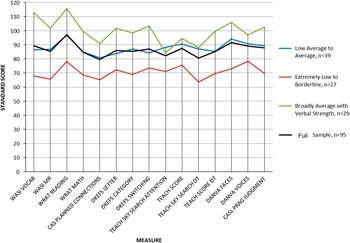
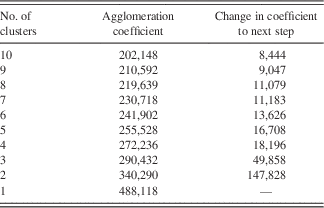
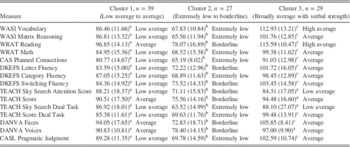
Contrary to the hypothesized four cluster solution, Ward’s method indicated that a three-cluster solution best fit the data (see Table 2). The mean scores for each cluster, based on Ward’s method, are shown in Table 3. The standard score profiles are presented in Figure 1. The average linkage within-in groups method also indicated a three-cluster solution that paralleled the profiles generated by Ward’s method. Ninety-three percent of the participants classified by Ward’s method were classified in a similar cluster generated by the average linkage method. This level of consistency is greater than that found in previous studies, i.e., 69.2% and 73% in Fisher and colleagues (Reference Fisher, Chesla, Skaff, Gillis, Kanter, Lutz and Bartz2000) and Steele and colleagues (Reference Steele, Dreyer and Phipps2004), respectively. K-means, set at a three-cluster solution, also created similar cluster profiles and 94% of the participants were classified in similar profiles as with the Ward’s method. A label was developed for each cluster, based on the group’s mean profile, as follows.
Wards linkage cluster profiles. Mean standard scores for each neuropsychological variable, based on Wards linkage clusters.

Agglomeration coefficients and change across steps in Ward’s cluster analysis
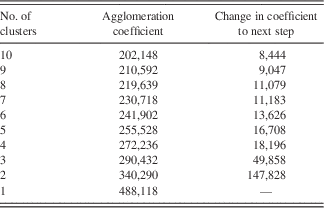
Note: A large increase in the agglomeration coefficient suggests that two very distinct clusters have been combined. When three clusters were reduced to two clusters, the agglomeration coefficient increased by 49,858, which is compared to relatively trivial earlier increases (i.e., 18,196; 16,708; etc).
Mean standard score (and standard deviation) for Ward’s cluster solution

Note. Superscripts with the same letters are not significantly different from each other, as determined by MANOVA post-hoc analyses. Those with different letters are significantly different (p<.05).
Cluster 1 “Low Average to Average” (n=39; 41%)
On average, these participants performed in the low average range on all measures except for reading, verbal sustained attention, and social-emotional processing (see Table 3). Based on this profile of strengths and weaknesses, this cluster was labeled “low average to average.”
Cluster 2 “Extremely Low to Borderline” (n=27; 28%)
Participants in cluster 2 performed, on average, in the extremely low to borderline range on all measures. The most notable aspect of this cluster’s average profile was their consistent performance in the extremely low to borderline range across the board. Thus, this cluster was labeled “extremely low to borderline.”
Cluster 3 “Broadly Average with Verbal Strength” (n=29; 31%)
On average, participants in cluster 3 performed in the average range on measures of non-verbal intelligence, math achievement, executive functioning, social-emotional processing, and social-contextual language (see Table 3). Their average performance was in the low average range on two attention measures, but given the high standard deviations, these findings do not indicate a consistent pattern of weakness. However, a consistent pattern of relative strength in verbal ability was apparent in their high average verbal intelligence and high average reading skills. This cluster was labeled “broadly average with verbal strength.”
Predictors of Cluster Membership
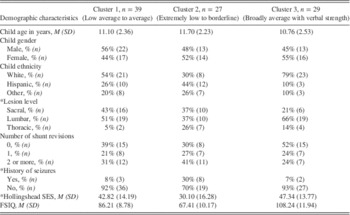
The second hypothesis stated that the following variables would predict cluster membership: lesion level, number of shunt revisions, a history of seizures, age, ethnicity, SES and family stress. The multinomial logistic regression indicated that the model explained a significant amount of the original variability χ2(18)=43.96, p<.01, and was a good fit of the data. Of the 7 predictors, SES (χ2(2)=7.14; p<.05), seizure history (χ2(2)=6.79; p<.05), and lesion level (χ2(4)=11.68; p<.05) had a significant main effect on cluster membership. More specifically, SES significantly predicted whether a participant was placed in the “broadly average with verbal strength” group versus the “extremely low to borderline” group, b=0.07, Wald χ2(1)=6.24, p<.05, d=1.15. The model suggested that participants with higher SES were more likely to be placed in the “broadly average with verbal strength” than the “extremely low to borderline” group (see Table 4). Seizure history significantly predicted whether a participant was placed in the “broadly average with verbal strength” group versus the “extremely low to borderline” group, b=2.49, Wald χ2(1)=5.07, p<.05, d=0.96, as well as the “low average to average” versus “extremely low to borderline” groups b=1.88, Wald χ2(1)=4.22, p<.05, d=0.89. Also, the “low average to average” cluster was more likely to have participants with lumbar level lesions than the “extremely low to borderline” cluster, b= −2.14, Wald χ2(1)=4.12, p<.05, d=0.39 (see Table 4).
Demographic and medical descriptions for each cluster

Note. The Hollingshead (Reference Hollingshead1975) Four Factor Index of SES is based on a composite of maternal education, paternal education, maternal occupational status, and paternal occupational status. Percentages do not add up to 100% due to rounding or missing data.
*p<.05.
Outcomes of Cluster Membership
Independence
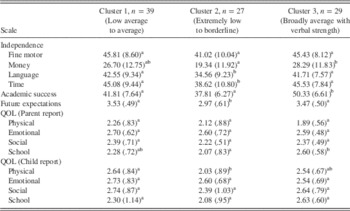
A MANOVA was conducted to examine the association between cluster membership and the four subscales from the SIB-R, assessing level of independence. Using Wilk’s statistic, the results suggested that cluster membership did not significantly predict overall level of independence λ=0.84, F(8,170)=1.91, p =.06. Despite the nonsignificance of the omnibus test, separate univariate ANOVAs on the outcome variables revealed significant effects of cluster membership for some subscales: money F(2,88)=4.07, p <.05; language F(2,88)=6.90, p <.01; and time F(2,88)=4.60, p<.05. Post hoc tests revealed participants in the “broadly average with verbal strength” group had significantly greater levels of independence than those in the “extremely low to borderline” group in regard to money (p<.05; d=0.15). Participants in the “extremely low to borderline” group demonstrated significantly less independence than those in the “low average to average” and “broadly average with verbal strength” with respect to language (p<.01; d=0.15 to 0.17, respectfully), and time (p<.05; d=0.11 to 0.14, respectfully; see Table 5).
Means for each outcome variable by cluster

Note. Superscripts with the same letters are not significantly different from each other. Those with different letters are significantly different (p<.05).
Academic success
An ANOVA was run to test the association between cluster membership and teacher-reported academic success. Results indicated that group status significantly predicted academic success, F(76)=21.00, p<.01. Post hoc analyses revealed significantly greater academic success for participants in the “broadly average with verbal strength” group than those in the “low average to average” group (p<.01; d=0.20) and the “extremely low to borderline” group (p<.01; d=0.37; see Table 5).
Expectations for the future
An ANOVA was run to test the association between cluster membership and parent-reported expectations for the future. Results suggested group status significantly predicted parental expectations for the future, F(91)=9.60, p<.01. Post hoc analyses indicated significantly lower parental expectations for the future for the “extremely low to borderline” group, when compared to the “low average to average” and “broadly average with verbal strength” groups (p<.01; d=0.18 and d=0.17, respectively; see Table 5).
Quality of life
Two MANOVAs were conducted to examine the relationship between cluster membership and quality of life (parent and child report). Results indicated that cluster membership did not have a significant effect on parent reported quality of life, λ=0.85, F(8,174)=1.83, p=.08. Despite nonsignificance of the omnibus test, separate univariate ANOVAs on the outcome variables revealed significant effects of cluster membership for the school subscale, F(2, 90)=3.78, p<.05. Participants in the “broadly average with verbal strength” group had higher parent reported school quality of life than those in the “extremely low to borderline” group (p<.05; d=0.14). Cluster membership did not predict overall child reported quality of life, λ=0.84, F(8,170)=1.91, p=.06. But, follow-up univariate ANOVAs revealed that cluster membership was significantly associated with the physical scale, F(2, 88)=4.72, p<.05. Post hoc tests indicated participants in the “low average to average” group reported significantly greater physical quality of life than participants in the “extremely low to borderline” group (p<.05, d=0.12; see Table 5).
Discussion
The purpose of this study was to examine neuropsychological performance among children with spina bifida to determine if there are distinct groups or “profiles” of cognitive functioning and to examine predictors and outcomes of such subgroups. Contrary to the hypothesis that there would be 4 clusters, results indicated that a three-cluster solution best fit the data: low average to average (cluster 1); extremely low to borderline (cluster 2); and broadly average with verbal strength (cluster 3). Of interest, the most notable differences in subgroup profiles was the overall differing severity (see Figure 1). However, the prototypical pattern of strength and weaknesses, as described by Dennis and colleagues (Reference Dennis, Landry, Barnes and Fletcher2006), is most evident in the highest scoring group: “broadly average with verbal strength.” The profiles for the other 2 clusters do not have clear strengths or weaknesses. Thus, while there are certainly cluster differences in level of functioning, the profiles are also qualitatively different in their pattern of relative strengths and weaknesses. Snow and colleagues’ (Reference Snow, Prince, Souheaver, Ashcraft, Stefans and Edmonds1994) also found a three-cluster solution for the neuropsychological functioning in youth with spina bifida. Although Snow and colleagues (Reference Snow, Prince, Souheaver, Ashcraft, Stefans and Edmonds1994) used different measures, (i.e., Halstead-Reitan Neuropsychological Test Battery and Wechsler Intelligence Scale) and their sample was smaller, older, and had fewer participants with shunts, their cluster labels were similar to the those of the current study: mostly borderline functioning in IQ, visual scanning, and abstraction abilities (cluster 1); average IQ and low average visual scanning and abstraction abilities (cluster 2); and extremely low functioning in IQ, visual scanning, and abstraction abilities (cluster 3).
The second hypothesis proposed that age, ethnicity, lesion level, number of shunt surgeries, positive seizure history, SES, and family stress and would predict cluster membership. Of these seven variables, SES, lesion level, and history of seizures were found to have a significant main effect on cluster membership. These findings are congruent with past research. In typically developing children, it is well established that low SES is a risk factor for poorer cognitive, academic, and socio-emotional outcomes (McLoyd, Reference McLoyd1998), although it is also known that lower SES is associated with poorer school conditions (Aikens & Barbarin, Reference Aikens and Barbarin2008). Thus, it is possible the educational environment also has an effect on cognitive outcomes.
Previous research has also demonstrated an association between higher lesion level and lower cognitive functioning (Argento et al., Reference Argento, Warschausky, Shank and Hornyak2011; Fulton and Yeates, Reference Fulton and Yeates2010). While this association was not as clear in the current study, the lowest scoring group, the “extremely low to borderline” cluster, also had the most participants with upper-level (thoracic) lesions. As previously mentioned, Fletcher and colleagues (Reference Fletcher, Ostermaier, Cirino and Dennis2008) suggest that “the modal profile is most apparent for the group of children who are not Hispanic and who have lower level (lumbar or sacral) spinal lesions” (p. 9). Of interest, the 3rd cluster, with an average profile that most closely resembled the “associative and assembled” profile, was made up of participants with mostly lower level lesions (87%) and non-Hispanic ethnicity (89%). One caveat, however, is ethnicity was not a statistically significant predictor of cluster membership in the current study.
History of seizures has also been associated with poorer cognitive functioning in children with spina bifida (Barf et al., Reference Barf, Verhoef, Jennekens-Schinkel, Post, Gooskens and Prevo2003; Brown et al., Reference Brown, Ris, Beebe, Ammerman, Oppenheimer, Yeates and Enrile2008), and most of the participants in the current study with a history of seizures were placed in the lowest functioning, “extremely low to borderline” group. It is important to note, however, that the majority of participants in each group did not have a history of seizures. For children with spina bifida and shunted hydrocephalus, seizures are often associated with other difficulties including structural abnormalities, shunt infections, shunt malfunctions, and resulting hydrocephalus (Bourgeouis et al., Reference Bourgeouis, Sante-Rose, Cinalli, Maixner, Malucci, Zerah and Aicardi1999). Thus, it is possible that seizure status predicted group membership due to some of these other concerns. On the other hand, the lack of imaging data complicates our ability to draw conclusions about seizure status.
Because three of the seven predictors had a significant effect on the cluster solution, the validity of the cluster solution was supported by a subset of the hypothesized predictors. Still, it is possible that other biological or environmental predictors (e.g., brain malformations or education) may have an even greater effect on cluster membership and cognitive outcomes (Fletcher & Dennis, Reference Fletcher and Dennis2009; Hampton et al., Reference Hampton, Fletcher, Cirino, Blase, Drake, Dennis and Kramer2011).
With respect to the final set of analyses, cluster membership was found to significantly predict independence (money, language, and time), academic success, parental expectations for the future, parent-reported school quality of life, and child-reported physical quality of life. Thus, subgroups based on different neuropsychological profiles, were significant indicators of differences in the children’s level of every-day functioning. The “extremely low to borderline” group had, on average, the lowest levels of functioning. Of note, the “low average to average” and “broadly average with verbal strength” groups were rated similarly across all areas of functional outcomes, except for teacher-reported academic success. Thus, differences between these two groups might be more apparent in the school setting than at home.
Study Limitations And Future Directions
While several precautions were taken to support the validity of these findings, the cluster analysis method is exploratory and thus should be replicated. Unfortunately, due to the small sample size, it was not possible to attempt replication by splitting the sample in the current study. We also were unable to run other types of clustering methods such as latent class analyses, due to the small sample size. In addition, the current study used only cross-sectional data. Thus, it is unclear whether the cluster solution identified in the current study would be stable across time. It is also uncertain whether the child’s current cognitive profile would predict future adaptive functioning.
As well, the study excluded participants who could not complete the entire assessment battery, and thus there is potentially another cluster or group of children whose profile is unknown because of possible floor effects. Moreover, neuroimaging was not included, and it is possible that hydrocephalus status or structural abnormalities could be more robust predictors of one’s neuropsychological profile than the predictors examined in this study. Finally, this battery was part of a larger, longitudinal study and was not specifically chosen for this research project. Thus, a battery that more thoroughly assesses all documented areas of strength and weakness for children with spina bifida (e.g., weakness in visual-spatial processing) would provide for a better test of our hypotheses.
Clinical Implications
Results support previous research suggesting that individuals in this population present with a wide range of functioning. It is important that professionals (e.g., teachers, doctors, nurses, etc.) obtain specific information about the individual’s cognitive functioning before developing an appropriate lesson plan or discussing medical decisions. Also, several suggestions can be made for neuropsychologists assessing a child with spina bifida. First, findings suggest that a significant percentage of children with spina bifida could be classified as having a mild intellectual disability. Indeed, several participants in the current study were so cognitively impaired that they could not complete the neuropsychological battery. Thus, it may be important for neuropsychologists to use measures that are sensitive to lower levels of functioning, and are easier to complete.
Additionally, only teacher report differentiated the two higher functioning subgroups in terms of functional outcomes. Thus, it may be important for neuropsychologists to include teacher report in their assessments of adaptive behaviors and academic success in children with spina bifida. Finally, this study suggested that the neuropsychological profiles were associated with functional outcomes, providing support for the utility of neuropsychological assessments in determining how a child with spina bifida might perform in school or how independent they might become in the future. Thus, a neuropsychological evaluation may be helpful in determining what can/should be expected of the individual with spina bifida.
Acknowledgments
Completion of this manuscript was supported in part by grants from the National Institute of Child Health and Human Development (R01 HD048629) and the March of Dimes Birth Defects Foundation (12-FY13-271). This study is part of an ongoing, longitudinal study. The authors have no conflicts of interest to disclose.