Introduction
There is a major gap between the development of new health interventions and their delivery to communities in the developing world (Madon et al., Reference Madon, Hofman, Kupfer and Glass2008). Many potentially effective disease control programmes have had only limited impact on the burden of disease because of inadequate implementation, which results in poor access, even to very simple and affordable products (TDR, 2007). Among the various programme options for disease control, community-directed treatment (ComDT) is regarded as a timely strategy that could be used as a model for public health programmes (Amazigo et al., Reference Amazigo, Obono, Dadzie, Remme, Jiya and Nyomugyenyi2002b). The ComDT approach was developed as a response to the need for a cost-effective, affordable and sustainable method for the mass treatment of onchocerciasis with ivermectin in endemic countries of Africa (World Health Organization, 1996; African Program for Onchocerciasis Control, 1998). It is based on the principle of active community participation such that communities themselves plan and carry out treatment of their members. The process empowers community members to make decisions and direct drug distribution for a sustained period of time. The term ‘community’ in this paper is defined as geographical areas of local neighbourhoods and villages consisting of people linked by social ties and who share common perspectives. The community members share common values, intent, beliefs, resources, preferences, needs and risks. However, they also show diversity in these same characteristics and a number of other conditions affecting their identity and degree of cohesiveness. These communities are nested, such that one community can contain another – for example a geographic community may contain a number of ethnic or political communities.
Several factors have been identified that have led to successful ComDT. These include adoption of collective decision-making by community members, avoidance of paying monetary incentives to community drug distributors (CDDs), health education in mobilizing other community members to take part, and the use of the local system of administration, which can be strong in rural settings (Katabarwa & Mutubazi, Reference Katabarwa and Mutubazi2000; Rowley et al., 2000; Katabarwa et al., Reference Katabarwa, Mutabazi and Richards2000, Reference Katabarwa, Habomugisha and Richards2002a, Reference Katabarwa, Richards and Ndyomugyenyi2002b, Reference Katabarwa, Richards and Rakers2004, Reference Katabarwa, Habomugisha, Richards and Hopkins2005; Ndyomugyenyi & Kabatereine, Reference Ndyomugyenyi and Kabatereine2003; Panter-Brick et al., Reference Panter-Brick, Clarke, Lomas, Pinder and Lindsay2006). Factors at community, household and individual levels have been identified that are significantly associated with treatment coverage of ComDT interventions, in addition to implementation issues. These include the method of distribution, ethnicity, sex, age, past experience with ComDT and perceptions about personal risk of the disease (Brieger et al., Reference Brieger, Otusanya, Oke, Oshiname and Adeniyi2002; Nuwaha et al., Reference Nuwaha, Okware and Ndyomungyenyi2005).
The principal barriers to implementing community-directed interventions are usually social and health system constraints (TDR, 2008). These include: the acceptability of the intervention, a reluctance on the part of health workers to empower community implementers to manage drug administration, a shortage of supplies, delays in the process of transferring drugs through the various levels of the programme, transport-related problems and the issue of distance and the absence of health workers at the health centres when needed by CDDs (Amazigo et al., Reference Amazigo, Brieger, Katabarwa, Akogun, Ntep and Boatin2002a; Burnham & Mebrahtu, Reference Burnham and Mebrahtu2004; TDR, 2008).
A study was implemented where the current health facility approach of delivering anthelminthic drugs to children aged 12–59 months was compared with an approach where ComDT was added to the health facility approach (Halwindi et al., Reference Halwindi, Magnussen, Siziya, Handema, Meyrowitsch and Olsen2010). As part of this study, factors that were associated with treatment of children by CDDs in the ComDT approach were investigated and the results are reported in this paper.
Methods
Study area and population
The study was conducted in the catchment area of Chivuna rural health centre, in Mazabuka district, where the ComDT approach was implemented. Chivuna lies 63 km from Mazabuka town centre, and 40 km from the nearest hospital (Monze General Hospital). This area was selected mainly because of the low proportion of under-fives attending child health week programmes (25 to 40%) and the presence of soil-transmitted helminth (STH) infections in the area (Halwindi et al., Reference Halwindi, Magnussen, Siziya, Handema, Meyrowitsch and Olsen2011). Chivuna rural health centre has an estimated catchment population of 15,551 (2400 under-five children) inhabiting 58 villages. All villages are accessible by road except in the rainy season when some of them become difficult to reach because of bad roads and a lack of bridges across some of the streams. The furthest village in the catchment area is 18 km from the health centre.
Like many rural areas in Zambia, the population in Chivuna is sparsely and unevenly distributed in small and scattered villages. This uneven and dispersed distribution of the population creates serious problems for the provision of social services in these areas. Levels of health and education provision are consequently adversely affected. A small number of households have access to piped water and electricity, mainly those living in institutional houses at the clinic and schools and also a few commercial farmers. Formal education levels are low and rarely go beyond 7th grade, the last year of primary school. The majority of the population are peasant farmers who depend on subsistence agriculture for food. The majority of adults own their land, which is given to them by the village headmen. A significant factor determining the level of agricultural development has been identified as closeness to the railway, which generally corresponds to closeness to markets and supplies of agricultural supplies (Atack & Margo, Reference Atack and Margo2011). This consequently affects the patterns and systems of agricultural production. Hybrid maize production dominates market-related small-scale agriculture, while other crops, including local maize, ground nuts, sweet potatoes and sorghum, dominate the subsistence agriculture. The study area is very homogeneous in terms of ethnicity, with more than 90% of residents being native Tonga-speaking people. The other 10% is made up people from different ethnic groups within Zambia, notably the Luvale, Ngoni, Lozi and Bemba. There are cultural differences between the different groups, but they are not very pronounced partly because of inter-marriages between different ethnic groups. The people from different ethnic groups live peacefully together. There isn't any reported marginalization of minority ethnic groups in terms of health and other social services.
The local leadership comprises the chief, the ngambela (messenger for the chief), senior headmen, village headmen, village messenger, village secretary and the village council. The chief and headmen play a critical role as gatekeepers to the communities. The village headman and council are responsible for day-to-day administration and decision-making in the village. Women participate in many village activities but they do not play a significant role in decision-making at village level. The village leaders are usually the important decision-makers on issues of community development. Once the leaders agree on a programme the villagers will in most cases accept it. Matters that involve the active participation of all community members are usually first considered by the leaders, and the final decision is made by the community through the village council or community meetings.
There are a number of community-based organizations in the area, but the neighbourhood health committee is the main one. The catchment area for the rural health centre is divided into eleven zones and each zone has a neighbourhood health committee made up of a representative from each village. The functions of the neighbourhood health committee include provision of basic health education to the communities, and co-ordination of all health activities at community level, acting as a link between the community and the rural health centre. The health centre supervises the neighbourhood health committees.
In most cases, community members are either Christians or not religious. The majority of the Christians belong to the Catholic faith. This is because of the presence of the Catholic mission in the area. There is a parish in the area that runs the only secondary school and provides a lot of support to the local health centre. This has resulted in a strong influence on the community's religious affiliation to Catholicism. The Catholic priests also play an important role of local leadership. However, their role is more inclined to matters that relate to religion and the welfare of community members. Other Christians mainly belong to other mainstream denominations like the Anglican Church, Seventh Day Adventist Church, United Church of Zambia, Baptist Church and new apostolic churches.
Implementation of the ComDT approach
Sensitization meetings for implementation of ComDT were held with health authorities at national, district and health centre levels, and with neighbourhood health committee chairpersons and village leaders. The details of the problem of STH infections and the necessity and the benefits of treatment were discussed. The concept of the ComDT approach was introduced; that is, the villagers were given full responsibility for selecting, organizing and implementing their own method of distributing drugs to children in their villages. The community members were informed that the drugs would be provided for free by the rural health centre. Following these initial meetings, eleven community meetings were held, and the issues debated with the health workers, neighbourhood health committees and village leaders were subsequently discussed with community members. At these meetings the communities selected the CDDs and the method, venue and time of drug distribution. Two methods of drug distribution to children were used by the CDDs: a door-to-door method and a ‘central place’ method. In the door-to-door method, the CDDs moved from one household to another to deliver the drugs to the children. In the ‘central place’ method treatment was done at a specific location in the community chosen by community members. A total of 29 CDDs participated in drug distributions. The CDDs were ordinary community members chosen by communities to carry out drug distribution. All the selected CDDs received training on STH infections, how to administer a single dose of 500 mg of mebendazole (Johnson & Johnson) and 200 IU of vitamin A supplementation (0.3 μg retinol), and on record keeping. During each child health week in June and December children were treated on two different occasions. First, treatment was offered at the health centre and outreach posts during child health week. Second, children who were missed on this first occasion were treated by CDDs within the villages the following week. Only children who had not received treatment from the health centres were treated by the CDDs. The two drug delivery approaches are described in detail elsewhere (Halwindi et al., Reference Halwindi, Magnussen, Siziya, Handema, Meyrowitsch and Olsen2010).
The drugs used by the CDDs were supplied by the district health office and were collected from the district pharmacy by the rural health centre and stored there. The rural health centre was supplied with enough drugs to cater for all eligible children in the catchment area. The supply of drugs for the study was not prioritized but the drugs were brought to the rural health centre using the normal supply chain.
Study design and sampling
For the main study, the ComDT intervention was implemented and monitored between June 2006 and December 2007. Four treatment rounds (child health weeks 1, 2, 3 and 4) were monitored during this period. After determining the treatment coverage for June and December 2005 for all the rural health centres in Mazabuka district, Chivuna and Magoye rural health centres were selected based on comparable low treatment coverage, equal-sized population of under-five children and comparable staff situation. Chivuna rural health centre was then randomly selected as the intervention area where the ComDT approach was implemented simultaneously with the regular work of the rural health centre, thereby becoming the HF+ComDT area. Magoye rural health centres were then the control area where only the health facility approach was implemented.
Villages in each catchment area were grouped into local geographical areas based on the existing neighbourhood health committee zones. Five local geographical areas were created in each catchment area. Each local geographical area was comprised of two to three neighbourhood health committee zones. A census was conducted in each local geographical area to record all children aged 12–59 months living in the area. The stratified sampling method, using local geographical area as stratum, was used to select the sample of carers to be interviewed. In each local geographical area 100 eligible children were randomly selected by systematic sampling, where children were chosen at regular intervals from the sampling frame. The sampling frame was the list of all eligible children who were registered during census and thus a total of 500 children were sampled from each study area.
The present study consisted of two cross-sectional surveys conducted in December 2006 and December 2007, during the treatment rounds for child health weeks 2 and 4. On the two occasions, 371 and 427 carers of the randomly selected children were interviewed, respectively. The results from the health facility area (Magoye rural health centre) do not contribute to the results discussed in this paper.
Data collection
Ten trained field assistants and the first author conducted the interviews. Data were collected using semi-structured questionnaires on factors related to treatment of children by CDDs. Data were also collected from four health workers, eleven neighbourhood health committee chairpersons and 29 CDDs. Simple random sampling was used to select the children, whose carers were interviewed. The purposive sampling method was used to select the health workers that were interviewed. The health workers that were selected and interviewed were the clinical officer, the Maternal and Child Health (MCH) co-ordinator, and two nurses. All CDDs and neighbourhood health committee chairpersons were interviewed.
The first author interviewed the health workers, neighbourhood health committee chairpersons and CDDs, while the field assistants interviewed the carers. Interviews with the health workers were conducted in English, but interviews with the CDDs, carers and neighbourhood health committee chairpersons were conducted in the local language, Tonga. All interviews were conducted at the place of choice of participants. Treatment records were also reviewed to determine the total number of eligible children for treatment and the proportion of children treated by CDDs.
Quality control was assured by training the field assistants on general interview techniques and in administering the specific questionnaire. All questionnaires were pre-tested and necessary adjustments were made prior to actual data collection. The factors investigated for their effect on utilization of ComDT were perceptions of STH infections, the decision-making process, drug supply and distribution method, community awareness about ComDT, supervision of CDDs and evidence of support for CDDs.
Data analysis
Microsoft Office Excel (Microsoft Corp., Redmond, WA, USA) and EpiData 3.2 (EpiData Association, Odense M, Denmark) software was used for data entry. Data were analysed using STATA 9.2 (StataCorp, College Station, TX, USA). The main outcome variable was treatment of children by CDDs. The differences in proportions were tested for significance using the chi-squared test. Analysis of the qualitative data was done manually using a systematic text analysis procedure (Ulin et al., Reference Ulin, Elizabeth and Tolley2005). The text from open-ended questions was reduced to specific thematic categories. Descriptive codes were assigned to the thematic categories and sub-categories were generated that were used to describe and summarize the findings. For data generated from semi-structured interviews, each group of questions was first analysed by the ‘Question analysis’ method (Morse & Field, Reference Morse and Field1995), whereby the interviews were first sorted by question number and then ‘content analysis’ (Morse & Field, Reference Morse and Field1995) was applied on the data from each of the questions.
Ethical considerations
The research proposal was reviewed and approved by the University of Zambia Ethics Committee (Ref.: 003-01-06) and the Danish National Committee on Biomedical Research Ethics (Ref.: 2006-7041-83) before the research was carried out. In addition, the Ministry of Health (MoH) in Zambia gave permission for the study to be conducted. At implementation, an explanation of the project was given to the communities during community meetings, and to the carers, health workers and neighbourhood health committee chairpersons during the interviews. Informed consent was also obtained from the carers for their participation in interviews. Participants were told that they were free to withdraw from the study at any time. They were informed that the information they provided was going to be treated as confidential and no participant's identity would be associated with the published data.
Results
Proportions of participants treated during child health week
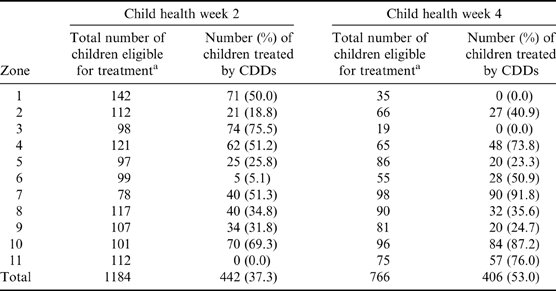
The proportions of children treated by CDDs during the treatment rounds for child health weeks 1, 2, 3 and 4 were 29.0% (306/1053), 37.3% (442/1184), 58.1% (289/497) and 53.0% (406/766), respectively. There was a significant increase over time in the proportion of children treated by CDDs from child health week 1 to 4 (p<0.005). In this paper the results of child health weeks 2 and 4 are compared in order to assess the change over time of different parameters (Table 1). Child health week 2 was used instead of child health week 1 to allow for the community members and CDDs to appreciate the ComDT approach before evaluation.
The number and proportion of children treated by CDDs during treatment rounds for child health weeks 2 and 4, Mazabuka district, Zambia

a The total number of eligible children was the number of children that remained untreated after conducting the health facility treatment component during child health week. These were the children who were targeted for treatment by the CDDs. The proportion of children treated was therefore calculated as ‘the number treated divided by total number of eligible children’.
Factors associated with treatment of children by CDDs
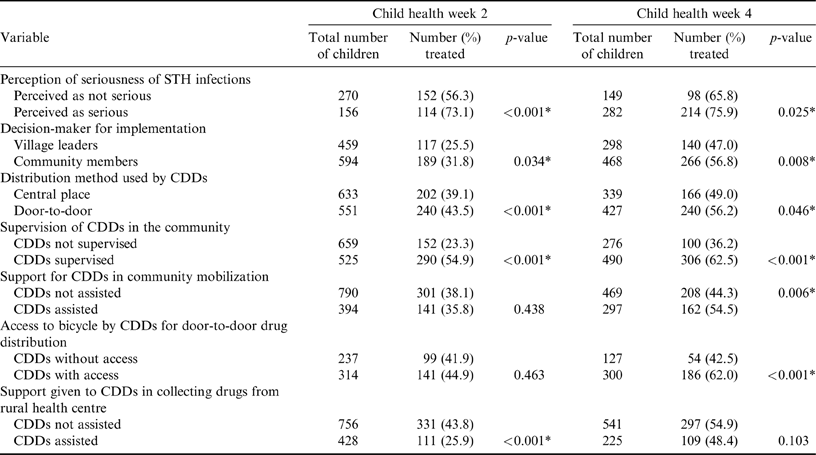
Table 2 summarizes the quantitative results for factors associated with treatment of children by CDDs.
Factors associated with the treatment of under-five children by community drug distributors, Mazabuka district, Zambia
CDD: community drug distributor; STH: soil-transmitted helminths.
* Statistically significant result.
Community awareness of the ComDT programme
The levels of awareness in the community about the ComDT programme, that is the proportion of carers interviewed who knew about the ComDT programme, were moderate. Fifty-three per cent (195/371) and 60.8% (260/427) were aware of the ComDT programme during the treatment round for child health weeks 2 and 4, respectively. However, the level of awareness during the treatment round for child health week 4 was higher than that of child health week 2 and was statistically significant (p=0.018). Among carers who were aware of the ComDT programme, a higher proportion utilized the programme during the treatment round of child health week 4 (66.2%, 172/260) as compared with child health week 2 (56.9%, 111/195), and this difference was statistically significant (p=0.044). Carers cited a number of reasons during the interviews for not utilizing ComDT despite being aware of the presence of the programme. First, some of the children still needed to receive vaccinations and therefore had to go to the rural health centre during child health week. This meant that these children could not utilize the ComDT because the CDDs were not mandated to give vaccinations. Second, it was more convenient to take children to the health facility for child health week, for mothers who lived nearer to the health facility, than to the ComDT treatment sites (where the ‘central place’ method was used). Third, some carers were uneasy about having their very young children treated by CDDs, who are not professional health workers, and this deterred them from utilizing the ComDT approach. These carers believed that very young children had delicate bodies that were prone to many ailments and as such needed to be treated by skilled health workers rather than CDDs. One young mother said:
…the children are still young, they have a lot of diseases, some were born sick, and their bodies are weak…they need to be treated by trained health workers from the clinic who understand these diseases well.
Fourth, there were also questions about whether the drugs were really meant for deworming or for something else that would harm the children. The carers mentioned that some of their colleagues were sceptical of the drugs and thought they could be used to infect their children with the HIV/AIDS virus. For instance, one woman asked:
Are these drugs you are giving our children for worms or they are for something else? People say the drugs are meant to infect the children with AIDS, that's why some of our friends are not taking their children for treatment.
However, these concerns did not seem to have had a big effect on the levels of utilization of ComDT, probably because many of the CDDs were conducting treatment within their own villages, and this could have increased confidence in the aims of the programme among the community members. In addition, the introduction of ComDT to community members through community meetings could have helped clarify a number of issues concerning the whole programme, including the safety of the drugs. However, the CDDs, community health workers and neighbourhood health committee members cited a number of challenges that health workers faced in reaching out to the mothers of under-five children. Children who were aged 2 years and above were said to be less likely to be taken to the health centre for treatment either because it was difficult to carry the bigger child for a long distance, or the mothers had lost the under-five cards for the child. Therefore the mother would not take the child to the health centre for fear of being scolded by health workers. There was also the belief that if a child had worms and was given medicine the worms would come out through the mouth, and might kill the child, especially if the child accidentally bit the worm whilst it was still in the mouth.
Community perceptions of STH infections
Local understandings of the aetiology and seriousness of STH infections were explored in order to gain insight into how they might affect the treatment of children. From the open discussions conducted during community meetings it appeared that STH infections were well known to the community members as they were mentioned as one of the common illnesses in children. They were referred to as mayoka in the local language, literally meaning snakes. The term mayoka is mainly used to describe the round worm Ascaris lumbricoides, and the general population was less likely to characterize the different types of worms. The effects and symptoms of infection by different types of worms were known to some extent. Two different perceptions of the seriousness of the infections to the health of children emerged from community members. One group considered worm infections as a serious health problem because they cause loss of weight, abdominal pain, anaemia and children look weak. The other group of participants believed the worms were not a serious health problem because all children at one time in their lives will be infected with worms, which is a natural thing to happen; and with worm infections the child never died, unlike with ‘serious’ illnesses like malaria.
A higher proportion of children were treated whose carers perceived STH infections as having significant health effects as compared with children whose carers did not perceive them as having significant health effects, and these differences were statistically significant during treatment rounds for child health week 2 (p<0.001) and child health week 4 (p=0.025).
Decision to launch and implement ComDT approach
The relationship between local hierarchies (chiefs and headmen) and the national and district authoritative structures were collaborative in most instances. The Ministry of Health and other sectors endeavoured to work with traditional leaders to mobilize and equip them with the necessary skills to be effective change agents and to lead their communities in identifying problems and developing solutions. For instance, local and civic leaders were working side-by-side to spread and promote total sanitation; local chiefs had led efforts to ban childhood marriages in a bid to protect vulnerable young girls and address issues of inter-generational partnerships. Other local chiefs had begun to include discussions about HIV in traditional ceremonial gatherings, utilizing long-established methods of communication.
In the present study, it was found that different methods of decision-making were used at the community level to decide whether or not to participate in the ComDT project, but generally it was by community consensus. Thus during discussions everyone's opinions were heard and understood, and a decision was made that respected these opinions. In this case consensus was not what everyone agreed to, nor was it the preference of the majority: it was the decision that the communities believed would be to the benefit of everyone. In four out of eleven community meetings the headmen told the community members that they themselves had accepted the implementation of the project. In such cases the headmen asked the community members what they thought about their accepting of the project. The village headmen in the four communities said they made the decision to launch the ComDT programme even before consulting their communities because they understood the importance of the project and were looking forward to having it implemented in their villages. The consensus was affirmative in three of the community meetings. For instance, in one community meeting, a middle-aged woman said:
…we will accept whatever you decide since you are our leaders … you know what is best for us.
However, in one meeting some community members complained that their leaders had a bad tendency of accepting anything that came from outside before consulting community members. For instance, one community member in his twenties said:
Mr Chairman, your project is very good and we will accept it. But let me appeal to my leaders. It was going to be better to consult us before they agreed to implement the project so that we decide on our own from the beginning.
All the community meetings were well attended when compared with the usual pattern of attendance. The chairperson for the neighbourhood health committees said that these meetings were amongst the most well attended, and that at some meetings there were more women than men present. In most community meetings the attendance was said to have between 60 to 75% men. The possible reason for the relatively high numbers of women at the meetings was because the meetings were addressing an issue that was targeting them, and which involved their under-five children. Emphasis was also made during community mobilization that all women needed to attend the meetings. People from the different ethnic groups and religious denominations attended the meetings equally. The number of people who attended each meeting was approximately between 50 and 200, and was closely related to the population sizes of the villages.
A comparison of the proportion of children treated in the different zones showed that a higher proportion was treated in zones where the decision to implement ComDT had been made by community members compared with zones where the decision had been made by community leaders, and this difference was statistically significant during the treatment rounds for child health week 2 (p=0.034) and child health week 4 (p=0.008).
Drug supply and distribution method
The drug supply system through the rural health centre was effective because the drugs were available at all stages of the supply chain throughout the study period. No problem was reported relating to availability of drugs at the rural health centre level, and their transportation from the district pharmacy to the rural health centre. In addition, all the CDDs reported having received a sufficient quantity of drugs and on time. Two drug distribution methods were used by CDDs: central place and door-to-door. A higher proportion of children were treated under the door-to-door method as compared with the central place method, and this difference was statistically significant during the treatment rounds for child health week 2 (p<0.001) and child health week 4 (p=0.046). The data presented reveal the proportion of mothers that were directly observed giving the drugs to their children.
Supervision of CDDs
The supervision of CDDs was scheduled to take place in the villages and at the health centre during community mobilization for treatment, during and immediately after drug distribution and during handing-in of records by CDDs to the health centre. The supervisors were members of the neighbourhood health committees and health workers at the health facility. They were responsible for ensuring the following: that communities were well sensitized about each treatment round in good time; that drug distribution was done as scheduled; that the drugs and weighing scales were returned to the health centre immediately after each treatment round; that all the treatment records (number of drugs collected, number of children treated and number of drugs returned) were correct; and that all issues needing attention in the field were attended to in good time. No remuneration was given to the supervisors.
A higher proportion of children were treated in the zones where supervision occurred at any stage of the process as compared with zones without supervision, and these differences were statistically significant during the treatment rounds for child health week 2 and child health week 4 (p<0.001).
Evidence of support for CDDs
Three factors relating to support given to CDDs were investigated: that is, assistance in mobilizing the community members for treatment, access to a bicycle from the community and assistance in collecting drugs from the rural health centre. During the treatment round for child health week 2 the proportion of children treated by CDDs who received assistance in mobilizing community members for treatment did not differ significantly (p=0.438) from that of children treated by CDDs who were not assisted. During the treatment round for child health week 4, a higher proportion of children were treated by CDDs who received assistance in mobilizing community members as compared with the number of children treated by CDDs who did not receive assistance, and this difference was statistically significant (p=0.006).
A higher proportion of children were treated by CDDs who had access to a bicycle from the community as compared with children treated by CDDs who did not have access to a bicycle. This difference was not statistically significant during the treatment round for child health week 2 (p=0.463) but was statistically significant during child health week 4 (p<0.001).
A lower proportion of children were treated by CDDs who received assistance in collecting drugs from the rural health centre as compared with children treated by CDDs who did not receive such assistance, and this difference was statistically significant during treatment round for child health week 2 (p<0.001) but not during child health week 4 (p=0.103).
Discussion
This study identified several factors that were associated with the treatment of children by CDDs in the context of STH control in under-five children in Mazabuka district, Zambia, including perceptions of STH infections, participation in decision-making, community mobilization, drug distribution method, support given to CDDs and the supervision of CDDs.
It is important to understand health beliefs about the target disease if programmes for the control of these diseases are to be effective. A study in Ng'ombe compound in Lusaka by Halwindi (Reference Halwindi2002), for example, showed that lay beliefs about the cause of symptoms of intestinal worm infections vary in Zambia. The perceived causes included excessive consumption of particular vegetables, eating soil and contaminated food, eating vegetables that have been sprayed with pesticides and playing in contaminated soil and water, and they are also perceived as congenital. Many people also thought intestinal worm infections were natural, or no more than a minor health problem. While some people believed in seeking biomedical help, others distrusted biomedical treatment and chose to seek treatment from herbalists and spiritualists. The study further revealed that different health care providers in the community recommended different treatment for these infections. Religious figures were more likely to recommend biomedical treatments, whilst traditional leaders recommended a variety of local remedies.
The health belief model suggests that people are more likely to take action against a disease if they believe it to have serious consequences and if the course of action available to them would be of benefit (Rosenstock, Reference Rosenstock1966). It is likely that the low levels of utilization of the ComDT approach in the present study was in part the result of the perception among some carers that STH infections had no serious health consequences. Such perceptions underscore the need for concerted effort in raising awareness among communities on the subtle yet serious nature of the morbidity that results from STH infections. Studies on control of onchocerciasis using ComDT have shown that perceiving personal risk of onchocerciasis, and believing that ivermectin prevents onchocerciasis, favoured compliance with treatment (Nuwaha et al., Reference Nuwaha, Okware and Ndyomungyenyi2005). Furthermore, a study by Ramaiah and co-workers (Reference Ramaiah, Vijay Kumar and Ramu1996) showed that sensitization of communities to utilization of interventions was difficult when knowledge of the disease was poor.
There was a concern by carers over the safety of young children being treated by CDDs who were non-medical professionals. This concern is valid and might have also contributed to the low levels of utilization of ComDT. It has been shown by other studies that people are sometimes reluctant to accept drugs from CDDs, whose knowledge about drugs is considered to be poor, thus constraining the implementation and utilization of ComDT and in turn resulting in low treatment coverage (Geissler, Reference Geissler1998). Continuous effort is required to raise awareness in communities on the safety of the drugs and also of how unlikely it is for a CDD to overdose a child with mebendazole, since children are given a single dose of 500 mg in one tablet (Albonico et al., Reference Albonico, Allen, Chitsulo, Engels and Gabrielli2008). Such efforts are likely to build confidence among community members on the use of non-medical professionals in treating very young children.
Community participation in decision-making on the implementation of ComDT, selection of CDDs and the drug distribution method should lead to a high degree of awareness and acceptability of ComDT. Otherwise, the concept of community ownership of the programme will not fully develop and will in turn impede the implementation and achievement of the programme goals. It is important to understand in great detail what is considered as community participation in each community. In certain settings and circumstances ‘the voice of the community leaders is accepted as the voice of the community, and this should not be ignored’ (Amazigo et al., Reference Amazigo, Brieger, Katabarwa, Akogun, Ntep and Boatin2002a). In the current study the decision by some headmen to agree to implement the project before consulting the community members acted in some communities as a sign of the programme being relevant to the community. However, other communities expressed concern with this decision by the headmen. The significantly higher proportion of children treated in communities where the decision to implement ComDT was made during community meetings still suggests that decision-making through community meetings was more effective in achieving the programme goals than where the leaders decided on behalf of the community. This may be the result of the adequate discussion and clarification of issues with community members that is possible at community meetings. Earlier studies observed that community participation in decision-making was positively associated with treatment coverage and was predictive of sustainability of ComDT (Katabarwa & Mutabazi, Reference Katabarwa and Mutubazi2000; Amazigo et al., Reference Amazigo, Obono, Dadzie, Remme, Jiya and Nyomugyenyi2002b; Ndyomugyenyi & Kabatereine, Reference Ndyomugyenyi and Kabatereine2003).
Higher treatment coverage is likely to be achieved by offering assistance to the CDDs in their work, as reflected by the higher proportion of children treated by CDDs who received assistance in mobilizing community members for treatment during child health week 4. The effect on treatment coverage of this assistance was significant during child health week 4, partly because the study area was experiencing a flood at that time and the mobility of CDDs was greatly hampered. As a result the assistance had a significant effect on the proportion of children treated. Similarly, access to bicycles by CDDs during child health week 4 is likely to have mitigated the difficulty in movement that the CDDs faced when they did not have transport, especially since it was the rainy season. However, rendering assistance to CDDs also had negative effects on treatment coverage: a significantly lower proportion of children were treated by CDDs who were assisted in collecting the drugs from the health centre just before drug distribution.
Another important factor associated with utilization of ComDT is supervision of CDDs. Adequate supervision has been positively associated with treatment coverage (Amazigo et al., Reference Amazigo, Brieger, Katabarwa, Akogun, Ntep and Boatin2002a). Supervision by health workers has also been associated with willingness of CDDs to continue working (Emukah et al., Reference Emukah, Enyinnaya, Olaniran, Akpan, Hopkins and Miri2008). In these studies, supervision ensured that activities were implemented correctly and on time, and that any mistakes made by CDDs were resolved on the spot. In this way the confidence and performance of the CDDs in their work is likely to be enhanced. However, the problem of supervisors being too busy or not having enough resources to regularly visit all CDDs was one problem experienced in the current and earlier studies (Emukah et al., Reference Emukah, Enyinnaya, Olaniran, Akpan, Hopkins and Miri2008).
The use of an already existing and well established drug delivery system enables timely delivery and supply of adequate quantities of drugs. In the present study ComDT was integrated into an established child health week programme with a well established drug supply system from the district pharmacy to the health centres. The late delivery of the drugs by the health services and/or non-governmental development organizations, inadequate drug supplies and treatment being given to none-target groups have been identified as major determinants of low treatment coverage in ComDT programmes (Amazigo et al., Reference Amazigo, Brieger, Katabarwa, Akogun, Ntep and Boatin2002a, Reference Amazigo, Okeibunor, Matovu, Zouré, Bump and Seketeli2007; Ndyomugyenyi & Kabatereine, Reference Ndyomugyenyi and Kabatereine2003). A study by Amazigo and co-workers (Reference Amazigo, Obono, Dadzie, Remme, Jiya and Nyomugyenyi2002b) found that integrating ComDT into a weak programme resulted in a drop in treatment coverage, delayed supplies and increased drug wastage. The type of drug distribution method used can also affect the proportion of children treated by CDDs. The door-to-door method of drug distribution produced better results than the central place method in the present study. This is contrary to some earlier studies, where significantly higher treatment coverage was found among communities that used the central place method (Katabarwa & Mutubazi, Reference Katabarwa and Mutubazi2000; Brieger et al, Reference Brieger, Otusanya, Oke, Oshiname and Adeniyi2002; Burnham & Mebrahtu, Reference Burnham and Mebrahtu2004). Most of these areas where the central place method performed better had larger villages than in the present study. In such cases, the central point distribution method enhanced treatment coverage because the organization of treatment turned into special events with villagers encouraging each other to attend (Brieger et al, Reference Brieger, Otusanya, Oke, Oshiname and Adeniyi2002). The door-to-door method may have the potential of missing people, especially where the villages are large (Brieger et al., Reference Brieger, Otusanya, Oke, Oshiname and Adeniyi2002). However, in our study the door-to-door method achieved higher coverage because the population of children per village was relatively small and therefore the CDDs were able to follow up these children in their homes with relative ease. Each CDD treated an average of fifteen children during each treatment round.
Despite the effectiveness of ComDT in raising treatment coverage (Halwindi et al., Reference Halwindi, Magnussen, Siziya, Handema, Meyrowitsch and Olsen2010), there are factors in the implementation process that will still affect the number of children that utilize the ComDT intervention, and ultimately affect treatment coverage. Divergence between local and biomedical understandings of worm infections, perceptions about the treatment, fear of side-effects, inadequate health education and the social and economic contexts have been identified as important factors (Halwindi, Reference Halwindi2002; Parker & Allen, Reference Parker and Allen2011, Reference Parker and Allen2013). Identification and understanding of the influence of these factors on interventions is paramount to achieving the desired levels of utilization of such interventions.
Acknowledgments
The authors thank the Mazabuka district health office for allowing the study to be conducted in the Chivuna rural health centre catchment area, and the parents and children for participating in the study. The input of the field assistants is also acknowledged. All authors planned and designed the study protocol. The authors have no conflict of interest concerning the work reported in this paper.