Introduction
Individuals with an intellectual disability (ID) have a significantly increased risk of co-morbid major mental illness, with an approximate prevalence rate of 30–35% (Luckasson et al. Reference Luckasson, Borthwick-Duffy, Buntinx, Coulter, Craig, Schalock, Snell, Spitalnik, Spreat and Tassé2002; Cooper et al. Reference Cooper, Smiley, Morrison, Williamson and Allan2007). Schizophrenia, for example is approximately three times more common in individuals with ID than in the general population (Hassiotis et al. Reference Hassiotis, Tyrer and Oliver2003). To date, treatment for most individuals with co-morbid mild ID and major mental illness is delivered predominantly by the mental health services alone (Patil et al. Reference Patil, Keown and Scott2013). However, inter-agency and/or intensive support approaches providing co-ordinated and integrated services have been associated with improved clinical outcomes in some (Hassiotis et al. Reference Hassiotis, Ukoumunne, Byford, Tyrer, Harvey, Piachaud, Gilvarryu and Fraser2001; Chaplin, Reference Chaplin2004, Reference Chaplin2009; Lunsky et al. Reference Lunsky, Bradley, Durbin and Koegl2008, Reference Lunsky, Gracey, Bradley, Koegl and Durbin2011; Davis et al. Reference Davis, Barnhill and Saeed2008), but not all cases (Martin et al. Reference Martin, Costello, Leese, Slade, Bouras, Higgins and Holt2005; Oliver et al. Reference Oliver, Piachaud, Tyrer, Regan, Dack and Alexander2005). The provision of a more person-centred care approach with the aim of improving social functioning and quality of life for people with ID and/or enduring mental health difficulties is increasing worldwide (Richmond, Reference Richmond2013), with policy documents in Ireland similarly supporting this approach (Department of Health and Children, 2006; Department of Health, 2012).
There are a number of treatment models for individuals with co-morbid major mental illness and ID that may be of potential benefit for this patient cohort. Assertive community treatment (ACT) is one such model, originally designed to support individuals with severe and enduring mental illness (Herman, Reference Herman2013). The principal aims of ACT include maximising medication compliance; minimising relapse; meeting basic social and occupational needs; enhancing quality of life; improving social and vocational functioning; promoting independent living skills; reducing carer burden; and facilitating community integration (Martin et al. Reference Martin, Costello, Leese, Slade, Bouras, Higgins and Holt2005). ACT differs from many traditional management models as it emphasises working with small caseloads (fewer than 15 clients), using a multi-disciplinary framework, treatment in the patient’s home and assertive follow-up or outreach (Hassiotis et al. Reference Hassiotis, Tyrer and Oliver2003).
Individuals with chronic schizophrenia (Wane et al. Reference Wane, Owen, Sood, Bradley and Jones2007) or mild ID (Coelho et al. Reference Coelho, Kelley and Deatsman Kelley1993) have demonstrated clinical and functional benefits from ACT. However, this approach has rarely been employed for individuals with both schizophrenia and mild ID and when employed results to date have been mixed (Van Minnen et al. Reference Van Minnen, Hoogduin and Broekman1997; Hassiotis et al. Reference Hassiotis, Ukoumunne, Byford, Tyrer, Harvey, Piachaud, Gilvarryu and Fraser2001; Balogh et al. Reference Balogh, Ouellette-Kuntz, Bourne, Lunsky and Colantonio2008). One potential reason for these divergent findings; may be that the ACT-type service approaches employed varied significantly (Hassiotis et al. Reference Hassiotis, Tyrer and Oliver2003), with some services favouring a ‘team within a team’ model in which clinicians adopted a more intensive approach whilst being part of a wider community ID team and others favouring a ‘separate ACT team’ model (Hemmings et al. Reference Hemmings, Bouras and Craig2014). The employment of an assertive outreach model with significant support for individuals with co-morbid ID and schizophrenia is however postulated to be of potential clinical and functional benefit for this cohort (Hemmings et al. Reference Hemmings, Bouras and Craig2014).
Individuals with co-morbid major mental illness and ID incur higher treatment costs than individuals presenting with either condition alone (Behan et al. Reference Behan, Kennelly and O’Callaghan2008). Evaluation of costs associated with the provision of care in addition to therapeutic benefits of such care can assist a service when making decisions about resource allocation, with recent evidence suggesting that the provision of personalised supports for people with ID is cost effective compared with care provision in congregated settings (McConkey et al. Reference McConkey, Bunting, Ferry, Garcia-Iriarte and Stevens2013).
In this study, we wanted to ascertain the clinical benefits of an intensive personalised support (IPS) programme for individuals with mild ID and co-morbid psychosis over an 18-month period. Such an approach is similar to the ACT approach outlined above but incorporates a smaller group of participants attaining a greater degree of support. The IPS programme used a Personal Outcomes Approach, which is an evidence-based organisational approach that puts service users and their carer’s at the centre of the support they receive. Outcomes are defined as the priorities of people using services, as well as the end result or impact of activities, and can be used to both determine and evaluate activity. Personal outcomes are identified through ‘quality conversations’ with people using services during assessment and support planning (Cook & Miller, Reference Cook and Miller2012). The IPS programme implemented consisted of a variety of biopsychosocial interventions including but not restricted to medical review, social skills interventions, mood monitoring and management, preparation for independent living, support with activities of daily living (ADL), accommodation needs, budgeting and community integration. We also wanted to examine the cost effectiveness of the IPS intervention.
Method
Participants
Four participants with co-morbid mild ID and psychosis were included in this 18-month IPS programme. One service user (GD) only engaged in the programme for 12 months. Participants included individuals attending both the local adult mental health and Brothers of Charity services (for individuals with ID). Of the eight identified individuals, two individuals did not wish to engage in the IPS programme. The four included participants represented those with the four lowest functioning scores as measured on the Global Assessment of Functioning (GAF) Scale, with all four of these participants not engaged in either part-time of full-time employment. We obtained informed consent from all participants. Consent forms included a visual communication system to ensure service users understood the study information provided. Ethical approval was attained from the clinical research ethics committee at Galway University Hospital.
Case 1: PA
Ms PA had a long history of poor engagement in social and vocational activities, and had limited community and natural supports. In addition, she had a history of significant emergency medical service and inpatient hospital use and a history of engagement with the forensic and probation services due to several minor assaults on others. Her most predominant psychotic symptoms related to persecutory delusions, which were exacerbated at times of stress and with treatment non-adherence. She had very limited insight into her diagnoses of either ID or schizophrenia. Ms PA also had prominent anxiety symptoms including both cognitive and physical symptoms with these symptoms most pronounced in social settings (see Table 2). She also had a history of procyclidine misuse.
Case 2: SB
Ms SB lived in supported Health Service Executive accommodation, but had regular family contact (weekly). She had no personal financial access due to significant concerns related to her capacity to manage her own finances. She had poor social and community engagement and presented clinically as lethargic, which her clinical team believe was at least in part due to her prescribed psychotropic medications (see Table 1). She also engaged on an irregular basis in some socially inappropriate behaviour in public environments. Her most predominant psychotic symptoms related to third person auditory hallucinations, which were relatively independent of stress or treatment adherence. In recent years, there was no evidence of any persecutory delusions. She had limited insight into either her diagnoses of ID or schizophrenia, although there were no concerns in relation to her treatment adherence.
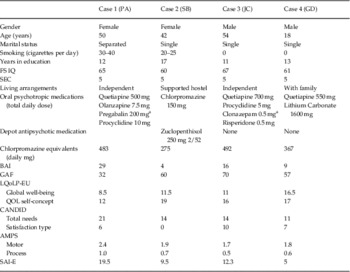
Demographic and clinical data (baseline)

AMPS, Assessment of Motor and Process Skills; BAI, Beck Anxiety Inventory; CANDID, Camberwell Assessment of Need for Adults with Developmental and Intellectual Disabilities; GAF, Global Assessment of Functioning; FS IQ, Full Scale Intelligence Quotient; LQoLP-EU, Lancashire Quality of Life Profile – European Version; QOL, Quality Of Life; SAI-E, Schedule for the Assessment of Insight Expanded Version; SEC, socio-economic class; 1/12, monthly; 2/52, fortnightly.
a Treatments for mental health (anxiety) rather than physical health difficulties.
Case 3: JC
Mr JC presented with significant anxiety symptoms at the beginning of this programme, which related to bereavements of his two residing first-degree family members. He demonstrated difficulties adjusting to living alone and had difficulties with several ADL and social skills. His most predominant psychotic symptoms were persecutory delusions, which were more evident at times of stress and were prominent at the onset of this study. He had not experienced auditory hallucinations for many years and displayed relatively few negative symptoms of schizophrenia. Mr JC had minimal insight into having either ID or schizophrenia and at times had poor treatment adherence.
Case 4: GD
Mr GD had recently transitioned into the adult ID services from the child and adolescent ID services, where he had a lengthy inpatient admission (18 months pre-dating the 12 months pre-study period) and had been diagnosed with schizo-affective disorder. One of his parents was deceased; however, he had a close relationship with remaining family members, with whom he resided. His other principal difficulties related to speech dysfluency, gait abnormality, and poor social skills. His most predominant psychotic symptoms related to delusions of a persecutory and referential nature which were related to stress. He displayed minimal perceptual abnormalities and few negative symptoms of psychosis. He displayed reasonable insight into his diagnoses of ID and schizo-affective disorder and there were no concerns in relation to his treatment adherence.
Psychometric instruments
The following psychometric instruments were conducted at six monthly intervals throughout the programme.
1. Camberwell Assessment of Need (CAN) for Adults with Developmental and Intellectual Disabilities – Revised (CANDID-R): the CANDID assesses the needs of people with intellectual disabilities and mental health problems. It is a modification of the CAN and assesses met and unmet needs in 25 areas, covering a full range of social, physical health and mental healthcare needs. The perspectives of staff, the service user and carer are assessed so that care planning is fully informed. The CANDID was completed by the IPS worker (first author), and has demonstrated good reliability and validity indices in ID populations (Xenitidis et al. Reference Xenitidis, Thornicroft, Leese, Slade, Fotiadou, Philp, Sayer, Harris, McGee and Murphy2000).
2. Assessment of Motor and Process Skills (AMPS): the AMPS is a functional assessment tool to evaluate motor and process skills and examine their effect on the ability of an individual to perform complex or instrumental and personal ADL (Fisher & Bray Jones, Reference Fisher and Bray Jones2010). The AMPS consists of 36 items and was completed by a senior occupational therapist. A change in score of >0.5 logits between evaluations on either the motor or process skill scale indicates a clinically relevant change in occupational performance, whilst a change of 0.3 or 0.4 logits in reassessment may not be statistically significant, but may still be clinically meaningful in terms of a change in occupational performance (Fisher, Reference Fisher2003). The AMPS has well-documented validity and reliability (Fisher & Bray Jones, Reference Fisher and Bray Jones2010).
3. Schedule for the Assessment of Insight Expanded Version (SAI-E): the SAI-E is a semi-structured interview consisting of 11 items assessing three main dimensions of having a mental illness, ability to rename psychotic phenomena as abnormal and treatment compliance and has well-documented validity and reliability (Kemp & David, Reference Kemp and David1997; Sanz et al. Reference Sanz, Constable, Lopez-Ibor, Kemp and David1998). The SAI-E was completed by the IPS worker (first author) and consultant psychiatrist (sixth author).
4. GAF: the GAF has documented validity and reliability indices and assesses an individual’s ability to function in daily life, specifically in psychological, social and occupational functioning measured on a 100-point scale (Spitzer et al. Reference Spitzer, Gibbon, Williams and Endicott1994; Jones et al. Reference Jones, Thornicroft, Coffey and Dunn1995; American Psychiatric Association, 2000). The GAF was completed by the service user’s treating consultant psychiatrist (sixth author, fifth author).
5. Lancashire Quality of Life Profile – European Version (LQoLP-EU): the LQoLP-EU is a structured instrument with demonstrated validity and reliability (Van Nieuwenhuizen et al. Reference Van Nieuwenhuizen, Schene, Koeter and Huxley2001) for measuring the health and welfare of people with mental disorders. The LQoLP-EU examines personal characteristics, objective quality of life indicators (work/education, leisure activities, religion, finances, living situation, legal and safety, family relations, social relations, health), subjective quality of life indicators and a global well-being measure (Thornicroft et al. Reference Thornicroft, Becker, Knapp, Knudsen, Schense, Tansella and Vazquez-Barquero2006). The LQoLP-EU was completed by the IPS worker (first author).
6. Beck Anxiety Inventory (BAI): the BAI has documented reliability and validity (Beck et al. Reference Beck, Epstein, Brown and Steer1988) as a tool for discriminating between anxious and non-anxious diagnostic groups in a variety of clinical populations. Patients’ rate their anxiety on 21 items rated on a scale from 0 to 3. Each item is descriptive of subjective, somatic or panic-related symptoms of anxiety, and was self-rated with support from the IPS worker (first author).
7. Mental Health Recovery Star: Mental Health Recovery Star was developed as an outcomes tool with the aim of enabling recovery-focussed organisations to work with service users to measure and summarise change (Mental Health Providers Forum, 2008). It is a multifaceted 10-item tool measuring concepts such as hope, quality of life, treatment satisfaction, empowerment, overcoming ‘stuckness’, learning, well-being and relationships. It was completed by a senior occupational therapist (fourth author) initially and the IPS worker (first author) in collaboration with the individual. This item has strong test–retest reliability (Killaspy et al. Reference Killaspy, White and King2012) and validity metrics (Dickens et al. Reference Dickens, Weleminsky, Onifade and Sugarman2012). Percentage changes over time were attained for each individual on these psychometric instruments. Changes in clinical variables (i.e. hospital days, legal issues) between the 18-month pre-study period and the duration of the intervention were evaluated.
Cost analysis instruments
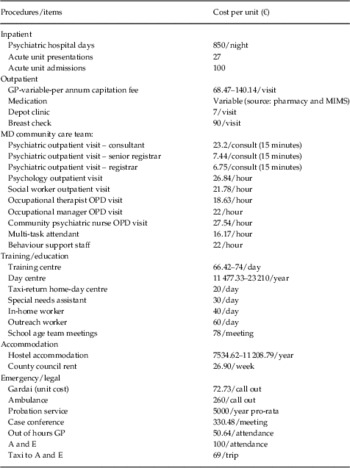
Direct costs were attained for the 18-month period before study commencement and the 18-month period of the study intervention (12 months costs were prorated pre-study for GD who completed 12 months of IPS). Costs were calculated using the Client Socio-demographic and Service Receipt Inventory (CSRI-IE) (Behan, Reference Behan2007), which was adapted from the CSRI-EU and is intended for use in the Irish healthcare system. This instrument was completed by face-to-face interview and clinical record analysis and assessed costs across the domains of (1) inpatient care, (2) outpatient care, (3) training/education, (4) accommodation, (5) emergency/legal expenses and (6) medication. Percentage changes in costs over time were calculated for the four study participants.
IPS
An IPS worker (first author) spent ~8 hours per week supporting each participant, with 30% of this time at weekends or between 05:00 p.m. and 09:00 p.m. (Monday to Thursdays). The nine main focusses of the IPS approach were (1) promoting the participant’s personal outcomes (personal priorities), (2) reviewing the participant’s daily programme, (3) supporting participants with ADL, (4) supported participants with budgeting and finance management, (5) supporting participants with time management, (6) ensuring timely healthcare reviews, (7) supporting participant’s engagement in the community, (8) training in communication skills and (9) crisis support.
Joint case conferences between the community mental health and the community ID teams were organised by the IPS worker at the beginning and end of the project and at four monthly intervals to monitor the progress of the study and ensure sustainability of structures for the patient at study completion. These meetings also ensured that both teams were aware of the supports that were in place and who was providing these supports thus ensuring no replication of supports and that all potential avenues of appropriate support were been provided.
Results
Demographic and clinical data relating to each participant at study entry are detailed in Table 1. Of note, all patients were treated with antipsychotic medications, with one participant in receipt of three antipsychotic agents (JC) and one participant in receipt of four antipsychotic agents (PA).
Additional clinical and social information pertinent to each of the four included participants is described in brief below.
Clinical data
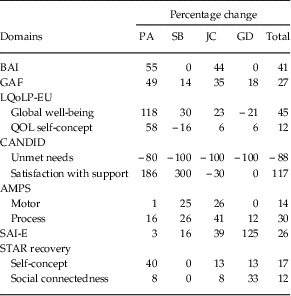
On examining the entire group, significant clinically relevant benefits were noted in several areas. These included a 27% increase in global functioning (GAF), a 45% increase in global well-being (LQoL-EP), a 26% increase in insight regarding mental health symptoms (SAI-E), a 41% reduction in anxiety (BAI) and an 88% reduction in unmet needs (CANDID). In addition, improvements of questionable clinical significance included a 14% increase in motor skills and a 30% increase in processing skills as measured on the AMPS and a 17% increase in self-concept and a 12% increase in social connectedness as measured by the Star Recovery.
Data pertaining to individual participants are presented in Table 2.
Individual clinical profiles: percentage change over the course of the programme

AMPS, Assessment of Motor and Process Skills; BAI, Beck Anxiety Inventory; CANDID, Camberwell Assessment of Need for Adults with Developmental and Intellectual Disabilities; GAF, Global Assessment of Functioning; LQoLP-EU, Lancashire Quality of Life Profile – European Version; SAI-E, Schedule for the Assessment of Insight Expanded Version.
Negative figures denote a decrease in clinical outcome measures, with negative percentage change on ‘unmet needs’ for CANDID demonstrating that more needs are been met.
Increased quality of life, functioning, anxiety, satisfaction with supports and reduced unmet needs were noted for PA. In addition, no new legal cases ensued secondary to aggressive incidents. Although the number of emergency presentations remained relatively high with PA (33 compared with 50 pre-study intervention), her inpatient psychiatric bed usage reduced from 16 nights to three nights during the study period.
Increased satisfaction with supports, functioning, motor skills, processing skills and reduced unmet needs were noted for SB. Training and education days attended at the training centre managed by the mental health service reduced from 204 days attended in the year pre-study to 165 days at the study end, due to engagement in alternative, community-based further training and education courses. In addition, SB spent significantly less days in supported accommodation with her transitioning into her own home on a full-time basis by the end of the IPS intervention.
Improvements in motor and processing skills were noted, primarily due to increased functioning in independent living areas such as household tasks, social skills and anxiety management skills for JC. In addition, Mr JC had no further psychiatric inpatient bed usage and engaged in increased his attendance at a local day centre to 4 days per week at study end (from 2 days per week pre-study). In addition, treatment adherence was achieved during the IPS intervention period.
Increased insight, functioning and a reduction in unmet needs were noted for GD. He actively engaged in an adult day service with the ongoing provision of personalised supports from staff and engaged well with education and training in social skills, anxiety management and varied work experience opportunities through the IPS intervention.
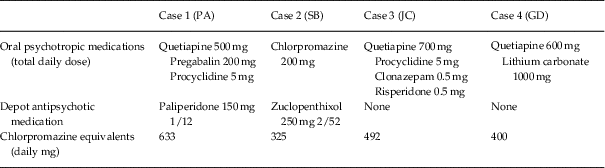
Medications at follow-up are presented in Table 3. Three of the four participants had an increased level of psychotropic medication as measured by chlorpromazine equivalents, with the addition of the depot antipsychotic agent paliperidone for PA.
Psychotropic medication at study end

Cost analysis
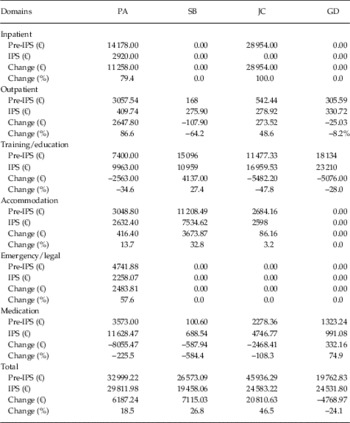
Overall cost reductions were noted in inpatient care (93%), outpatient care (68%), accommodation (25%) and legal/emergency expenses (52%), whilst increases in training/education (17%) and medication costs (148%) were noted (see Table 3). Significantly reduced inpatient costs for two participants (PA and JC) were noted due to a marked reduction in inpatient days after commencing this programme. A reduction in legal or emergency services costs were noted for the one individual who had previously incurred these expenses (PA). Medication costs increased in three individuals due to both psychotropic and non-psychotropic (JC) medications prescribed. Training or education costs increased in three of the four participants due to increased involvement in community-based education opportunities (see Appendix 1 for specific costing information). Accommodation costs reduced for one participant (SB) due to a move towards independent accommodation. The cost analysis did not account for the salary of the ISW (which would vary based on employer and grade) (Table 4).
Analysis of direct costs

IPS, intensive personalised support.
Negative figures represent a cost increase.
Discussion
In this study, intensive biopsychosocial support was provided to four individuals with a diagnosis of mild ID and co-morbid psychosis over an 18-month period across a range of areas such as social development, psychological support, self-care, ADL, budgeting and time management. An individualised programme was utilised to address individual clinical needs. A cost analysis was undertaken to evaluate the cost effectiveness of the provision of the IPS service.
Improvements in multiple areas associated with quality of life, functioning and well-being were demonstrated for all individuals and included satisfaction with support, reduced unmet needs, increased global functioning and well-being. Reduced anxiety levels, increased motor and processing skills, improved social connectedness and self-concept and increased insight into their psychosis was also noted.
A number of components of the IPS model may be responsible for these positive clinical changes overtime. First, the IPS approach aims to promote individuals’ personal outcomes using a collaborative partnership ethos throughout, foster empowerment in individuals, encourages responsibility for one’s own actions and thus aims to increase motivation and self-esteem (McConkey et al. Reference McConkey, Bunting, Ferry, Garcia-Iriarte and Stevens2013). Second, the IPS approach allows for regular skill teaching and review, including greater community-based activities and involvement, with the IPS worker acting as a key communications link for all services with the participant whenever possible. IPS facilitated the building of collaborative relationships with community, social and natural supports; increased community engagement including supported employment, and local activities; improved daily living tasks skill-set; and increased adherence to healthcare provision. Third, the IPS worker adopts a flexible approach which allows for the support structure to be adapted to best suit clients needs. This includes greater support at times of service user crisis, with approximately one-third of all support occurring at evenings and weekends. Thus, whilst some of the benefits attained can potentially be due to increased interaction with the IPS worker, many other aspects of support as detailed, we believe played a role in the positive clinical changes noted. We expect gains to continue after study completion (without the IPS worker), given the increased integration of the participants within their community and their greater skill-set and hope to examine this in the future.
Results of the cost analysis illustrated distinct savings in areas such as inpatient care, accommodation and legal/emergency costs; however, these cost savings were in individual cases as not all participants had difficulties or expenses in these areas. However, some increased costs were also noted, particularly in relation to training and medication costs. These findings are consistent with a cost-effectiveness study of ACT for homeless persons with severe mental illness (Lehman et al. Reference Lehman, Dixon, Hoch, Deforge, Kernan and Frank1999), which found ACT costs to be significantly lower for mental health in-patient days and mental health emergency room care, and significantly higher for mental health out-patients visits for treatment and substance misuse.
The current study’s increased costs in the areas of medication and training/education do not necessarily reflect poorer functioning, increased psychopathology or negative sequelae of the IPS approach. Medication costs included both psychotropic and non-psychotropic costs and were increased for three individuals. One patient (PA) consented to treatment using a long-acting injectable antipsychotic medication for the first time. However, the cost of this agent was in excess of her previous oral psychotropic agent(s) (Monthly Index of Medical Specialities (MIMS), 2014). Long-acting injectable antipsychotics have been demonstrated at any stage of schizophrenia to be associated with lower hospitalisation and lower relapse rates compared with oral antipsychotic agents (Adams et al. Reference Adams, Fenton, Quraishi and David2001; Leucht et al. Reference Leucht, Heres, Kane, Kissling, Davis and Leucht2011; Tiihonen et al. Reference Tiihonen, Haukka, Taylor, Haddad, Patel and Korhonen2011) and despite clinician reluctance to prescribe at times due to potential objections from patients are associated with high levels of patient acceptability (Heres et al. Reference Heres, Lambert and Vauth2014). It is probable that the IPS programme was instrumental in ensuring the greater adherence in psychotropic medication for these patients, with all participants claiming full (100%) treatment adherence with psychotropic and non-psychotropic medication at study-end, with only one participant who resided in a supported hostel claimed such adherence rates before study commencement. These findings are consistent with previous research noting participants with schizophrenia (Valenstein et al. Reference Valenstein, McCarthy, Ganoczy, Bowersox, Dixon, Miller, Visnic and Slade2013) and those with co-occurring psychotic and substance use disorders (Manuel et al. Reference Manuel, Covell, Jackson and Essock2011), assigned to ACT reported significant improvement in medication adherence compared with those assigned to standard case management. Thus, medication cost increases, reflected to some extent at least, increased treatment adherence or a positive change in psychotropic usage. Furthermore, non-psychiatric medication costs were included in the analysis, and this cost increased significantly for one participant (JC). Appropriate engagement in physical care management was an important component of the IPS programme which resulted in patients attending medical appointments more regularly, being prescribed and being adherent to non-psychotropic medications.
Similarly, the increase in training/education costs positively reflect the participant’s engagement in courses and learning opportunities which may result in participants having lower costs in relation to disability payments in the future. We propose that the cost-effectiveness of this programme is re-evaluated in the future to ascertain if these clinical and cost benefits are maintained, which would be consistent with some previous literature (McConkey et al. Reference McConkey, Bunting, Ferry, Garcia-Iriarte and Stevens2013).
A significant move towards community treatment of patients with either mild ID or schizophrenia has occurred in recent years (National Disability Authority, 2003). These transitions provide opportunity for improved functioning and inclusion in society with the findings of this study tentatively supporting this approach. However, one should also be aware of the difficulties and potential draw-backs of such a position. First, transitioning from inpatient to community care can be a stressful process for the individual and could potentially negatively impact their well-being (Herman, 2013). Thus, the pace of transition and progress needs to be monitored closely to ameliorate any undue stress or anxiety for service users (or staff). Differing staff or service views and working approaches can cause tension within teams and impact negatively on individuals in transition. For example, some services or staff may have a more traditional authoritarian approach, whereas others may have a person-centred partnership approach to their relationships with individuals. Thus attaining cross-service agreement on the essential components of community working with individuals with ID and co-morbid psychosis, and using these in a structured, consistent and streamlined manner can be associated with significant clinical and functional gains for this patient cohort (Hemmings et al. Reference Hemmings, Bouras and Craig2014).
There are a number of limitations with this study. Due to the small sample size, caution should be exercised in relation to the generalisability of these findings, despite consistent benefits for the four study participants in relation to global well-being; motor and process skills, insight into their illness; global functioning and a reduction in number of unmet needs and anxiety symptoms. Similarly, caution is required in relation to interpretation of the cost effectiveness of the provision, given the small sample size, however a validated instrument modified for use in the Irish healthcare system was employed to ensure all costs were assessed accurately (see Appendix 1 for specific costing information). The occurrence of life events before study commencement could also potentially confound costs (as in the case of JC). In addition, the cost of the IPS worker was not included which would have affected overall costs in this study.
Conclusions
The employment of an IPS programme was associated with significant improvements in participant functioning, quality of life and psychopathology including reduced anxiety, time in hospital, and public service use. In addition, this programme was cost effective with three individuals demonstrating cost savings (albeit without including the salary of the IPS worker). This pilot study provides evidence to support the clinical and cost effectiveness of the IPS approach but future larger scale studies are necessary in order to expand these findings.
Acknowledgements
The authors wish to acknowledge Dr Behan for kindly providing the Client Socio-Demographic and Service Receipt Inventory (CSRI-IE), the four service users for engaging in this project and the staff members at the Roscommon Mental Health Services and Brothers of Charity Service for their support with this project, with particular mention for Ms Dawn Hunt who monitored the financial aspects of this project and Paula Smith who completed the AMPS assessments on all clients.
Financial Support
This study was funded by Genio, Genio Trust, Marlinstown Office Park, Marlinstown, Mullingar, Co. Westmeath. Grant stream: 2012 Dis\MH\Stream 4-Supporting Recovery, #937.
Conflicts of Interest
The corresponding author was also employed as the Intensive Personalised Support (IPS) worker for the project.
Ethical Standards
The authors assert that all procedures contributing to this work comply with the ethical standards of the relevant national and institutional committee on human experimentation with the Helsinki Declaration of 1975, as revised in 2008. The study protocol was approved by the institutional review board of each participating institution. Written informed consent was obtained from all participating patients.
Appendix 1
Full costings list document