





Introduction
Developmental Origins of Health and Disease (DOHaD) is a scientific framework that posits that environmental exposures during critical developmental periods, from conception through pregnancy, infancy, and early childhood, can shape biological systems and influence health and disease risk across the life course. The concept originated from the pioneering work of David J. P. Barker, whose research demonstrated associations between low birth weight and increased risk of cardiovascular disease in adulthood. Reference Barker1 Since then, DOHaD scholarship has expanded to encompass the roles of maternal nutrition, early feeding practices, infection and inflammation, psychosocial stress, environmental and commercial determinants of health, and social and structural inequities. DOHaD reframes chronic disease prevention by emphasising upstream determinants; DOHaD highlights that many noncommunicable diseases (NCDs) originate in early developmental conditions rather than arising solely from adult lifestyle behaviours. This upstream emphasis is increasingly reflected in national and regional health policies that prioritise the earliest years of life as a window for lifelong NCD prevention. 2–4
The WHO Global Oral Health Status Report (2022) identifies dental caries as one of the most prevalent global health conditions, with a substantial unmet treatment need, particularly in low- and middle-income countries and small island states where preventive infrastructure is often constrained. 5 Pacific Island countries exemplify these challenges through limited workforce capacity, geographic dispersion, and increasing exposure to imported ultra-processed foods and sugar-sweetened beverages (SSBs). 2˒4 These commercial and structural determinants closely align with DOHaD concerns regarding how early-life environments, including food systems, establish risk trajectories long before NCDs become clinically apparent.
Despite these shared developmental pathways, oral health has remained largely peripheral within DOHaD research. Global analysis continues to identify significant surveillance gaps in early childhood caries (ECC), particularly among children younger than 36 months, leading to an underestimation of disease burden during the earliest stages of life. Reference Foláyan, Mfolo and El Tantawi6 These limitations are especially relevant in Pacific settings where routine oral health surveillance in early childhood remains fragmented. The Cook Islands National Health Information Bulletin 2024 similarly identifies important gaps in oral health surveillance and highlights the need for strengthened life course monitoring systems. 7 Together, these gaps represent an important opportunity for DOHaD informed oral health research.
Emerging international policy consensus supports sugar reduction, fluoride optimisation, primary care integration, and cross-sector NCD action as foundational strategies for preventing dental caries. Reference Pitts, Twetman, Fisher and Marsh8 More recently, oral diseases and sugar consumption have been proposed for explicit inclusion within the global NCD framework through a 6 × 6 approach. This approach recognises oral diseases as part of the broader NCD burden and identifies free sugars as a major shared risk factor. Reference Benzian, Daar and Naidoo9 The Pacific region provides an important context for operationalising these approaches because of its high NCD burden and existing commitments to maternal, child, nutrition, and early-life health. 10 ˒ 11 Yet oral health remains largely absent from DOHaD discussions, despite ECC arising during the same critical developmental windows that influence later NCD risk.
Several factors have contributed to this limited integration. Historically, oral diseases have been viewed primarily as local conditions managed within dentistry rather than as developmental outcomes influenced by early-life biological and social environments. Consequently, major DOHaD research programs and birth cohort studies have focused largely on cardiovascular, metabolic, respiratory, and neurodevelopmental outcomes, while oral health indicators have rarely been incorporated. Emerging evidence suggests that this separation reflects disciplinary boundaries rather than underlying biology. Developmental pathways central to DOHaD, including nutrition, microbiome development, immune maturation, and social determinants of health, are equally important in shaping oral health. As a result, opportunities to recognise oral health as both a developmental outcome and an early indicator of future NCD risk have largely been overlooked. Reference Fisher-Owens, Gansky and Platt12–15
A developmental biology perspective further supports integrating oral health within DOHaD frameworks. Craniofacial development, enamel formation (outermost tooth structure), immune maturation, and oral microbiome establishment occur during critical developmental windows extending from pregnancy through infancy and early childhood. Reference Gomez and Nelson16–Reference Kawakubo-Yasukochi, Hayashi and Hirata18 Early-life nutrition, microbial colonisation, and environmental exposures influence these biological processes and contribute to ECC risk while potentially affecting broader health outcomes across the life course. Reference Abanto, Oliveira, Paiva, Guarnizo-Herreño, Sampaio and Bönecker19–Reference Duan, Du, Tong, Zeng, Zhang and Shi21 Developmental programming during these sensitive periods may therefore influence both oral and systemic health, reinforcing the biological rationale for integrating oral health within DOHaD. Reference Barker1,Reference Kawakubo-Yasukochi, Hayashi and Hirata18
The prenatal environment, early feeding practices, microbial colonisation, and caregiver behaviours that shape metabolic and cardiovascular outcomes also influence enamel development, oral microbiome establishment, and dietary behaviours associated with ECC. These shared developmental pathways create opportunities to integrate oral health within broader maternal, child, and NCD monitoring frameworks already prioritised by Pacific health leaders. 7˒10
This omission is particularly important because ECC is one of the most common chronic diseases of early childhood and shares many upstream determinants with other NCDs, including high sugar diets, constrained preventive environments, and social disadvantage. Across Pacific Island countries, high levels of untreated dental caries have been consistently reported among young children, representing some of the highest prevalence rates globally. 5 ˒ 11 ECC is also associated with considerable direct and indirect costs for families and health systems, including pain, emergency presentations, treatment under general anesthesia, and caregiver time away from work, thereby amplifying existing social and economic inequities. Reference Sheiham22,Reference Casamassimo, Thikkurissy, Edelstein and Maiorini23 Nevertheless, ECC continues to be framed primarily as an individual clinical condition requiring treatment rather than as a developmental and structural outcome shaped by early-life environments.
The consequences of this conceptual gap are particularly evident in the Cook Islands, where national reports identify oral health as a major public health concern closely linked to diet, prevention, and broader NCD patterns. 2˒7˒Reference Benzian, Daar and Naidoo9 Recent community screening of children attending Early Childhood Education Centres reported ECC prevalence ranging from 44% in Rarotonga to 100% in the Ngatuporu group, with an overall prevalence of 51% across the Southern Group of Islands and the highest burden observed in the Pa Enua communities (outer islands). Reference Lal-Kumar, Lee and Williams24 The Cook Islands National Health Strategic Plan 2023–2027 and the National Health Reorientation Plan 2024+, both of which prioritise oral health, prevention, early detection, and integrated primary care. 3˒4
Against this background, this paper repositions ECC within a DOHaD informed and culturally grounded framework for early childhood development in Pacific contexts. 3 It argues that integrating oral health within developmental and ecological models is essential for understanding health inequities and designing upstream prevention strategies. Reference Fisher-Owens, Gansky and Platt12 Recent analysis of WHO Global Oral Health Action Plan (GOHAP) implementation further reinforces the importance of primary care integration and positions the Cook Islands as a regional exemplar for operationalising these principles within a life course approach. Reference Groisman, Abiola and Kumar25
Conceptualising oral health within DOHaD
Integrating oral health into DOHaD requires reframing ECC as more than a behavioural disease. Within a developmental framework, ECC can be conceptualised as a biologically embedded outcome shaped by early sugar exposure, oral microbiome development, immune programming, and enamel maturation. It is also socially patterned, reflecting caregiving practices, socioeconomic position, and food environments.
Furthermore, ECC represents an intergenerational phenomenon influenced by shared behaviours and structural constraints. Importantly, ECC shares upstream determinants with obesity and other NCDs, aligning with the common risk factor approach and more recent proposals to explicitly integrate oral diseases within the broader NCD framework through a 6 × 6 model. 5,Reference Benzian, Daar and Naidoo9 Sugar consumption is a major determinant of both dental caries and metabolic disease. Reference Moynihan and Kelly26 This convergence positions oral health as a strategic entry point for integrated prevention. Viewing ECC as a potential early-life marker of broader NCD risk creates opportunities to embed oral health assessment and anticipatory guidance into existing maternal, child, and NCD services, as envisaged in the National Health Reorientation Plan 2024+. 3
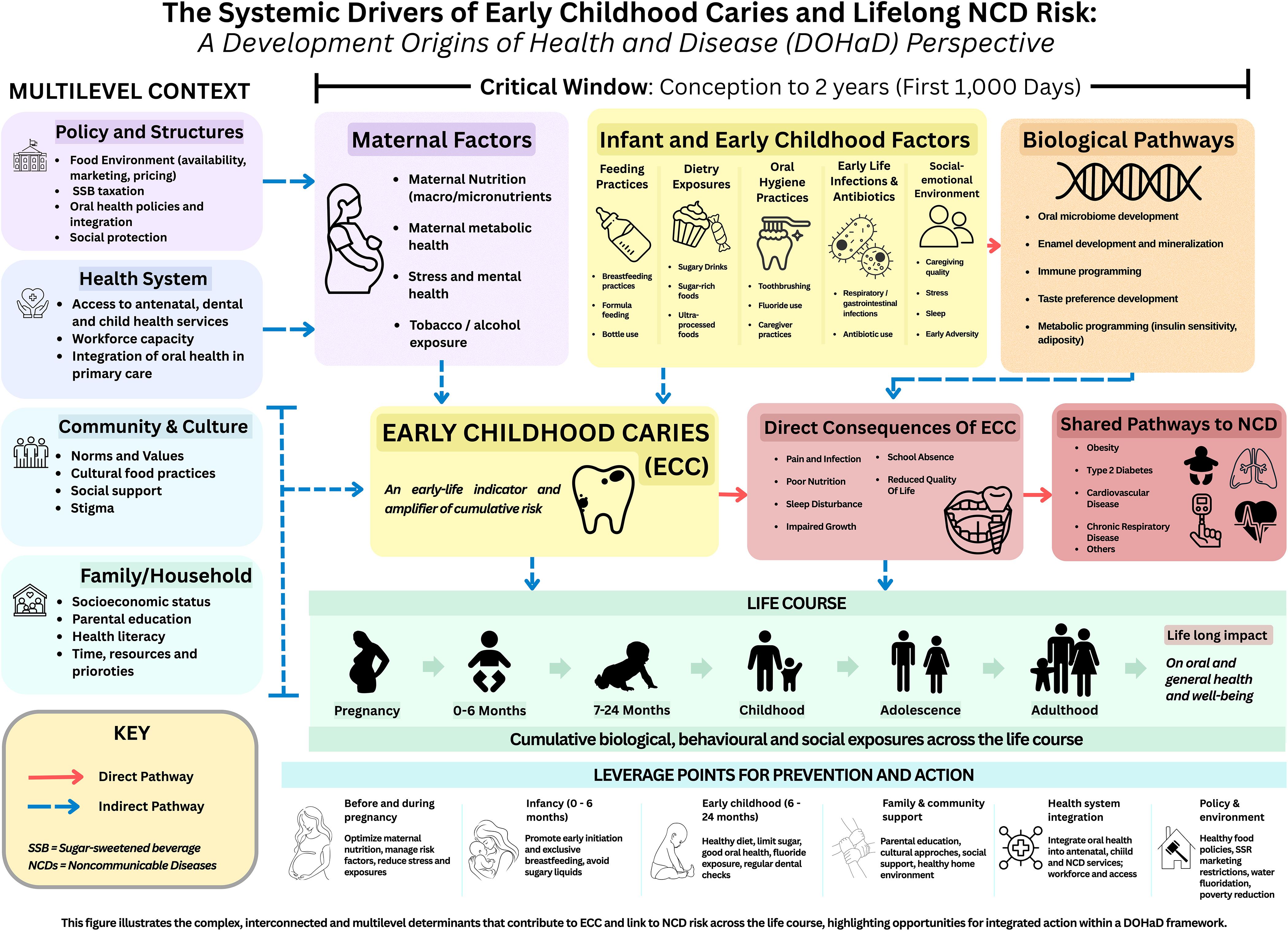
Paediatric oral health research strengthens this developmental framing. Evidence demonstrates that ECC is not merely a localised oral condition but is strongly associated with broader indicators of child well-being, including growth patterns, nutritional status, quality of life, and psychosocial functioning. Reference Sheiham22,Reference Casamassimo, Thikkurissy, Edelstein and Maiorini23,Reference Moynihan and Kelly26 Children experiencing severe ECC are more likely to demonstrate pain, sleep disturbance, impaired eating, and reduced school participation, reinforcing ECC as a marker of systemic and social vulnerability rather than an isolated disease process. Reference Lee, Briskie, da Fonseca, Lawrence, Wandera and Inglehart27–Reference Abanto, Carvalho, Mendes, Wanderley, Bönecker and Raggio30 These findings support positioning ECC within DOHaD as a potential early clinical indicator of cumulative biological and structural risk exposure in the Cook Islands context. 3,Reference Fisher-Owens, Gansky and Platt12,Reference Peres, Macpherson and Weyant13,Reference Lal-Kumar and Dayal20 The Rarotonga Hospital breastfeeding policy, for example, explicitly promotes exclusive breastfeeding and the delayed introduction of sugary foods and beverages, 31 thereby providing a practical platform for integrating ECC prevention messages into existing perinatal and infant care pathways. The evidence presented highlights the need for a broader conceptualisation of oral health within life course health research. Figure 1 synthesises these interconnected biological, behavioural, social, health system, and policy influences into a Pacific-centered DOHaD framework that positions early childhood caries as an early indicator of cumulative developmental risk and a shared pathway to later NCDs.
Systemic Drivers Linking Early Childhood Caries (ECC) and Lifelong Noncommunicable Disease (NCD) Risk. This figure illustrates the interconnected factors contributing to ECC and their overlap with risk factors for chronic NCDs, including poor nutrition, socioeconomic status, maternal health, and inflammatory pathways. Arrows indicate the direction of influence among factors.

Figure 1. Long description
The diagram is divided into several sections: Multilevel Context, Maternal Factors, Infant and Early Childhood Factors, Biological Pathways, Early Childhood Caries, Direct Consequences of ECC, Shared Pathways to NCD, and Life Course. The Multilevel Context section includes Policy and Structures, Health System, Community and Culture, and Family and Household. The Maternal Factors section covers maternal nutrition, metabolic health, stress and mental health, and tobacco and alcohol exposure. The Infant and Early Childhood Factors section includes feeding practices, dietary exposures, oral hygiene practices, early life infections and antibiotics, and social-emotional environment. The Biological Pathways section details oral microbiome development, enamel development and mineralization, immune programming, taste preference development, and metabolic programming. ECC is depicted as an early-life indicator and amplifier of cumulative risk. Direct Consequences of ECC include pain and infection, poor nutrition, sleep disturbance, impaired growth, and reduced quality of life. Shared Pathways to NCD include obesity, type 2 diabetes, cardiovascular disease, and chronic respiratory disease. The Life Course section shows the cumulative biological, behavioral, and social exposures from pregnancy to adulthood. Leverage Points for Prevention and Action are also highlighted, including optimizing maternal nutrition, promoting early initiation of breastfeeding, a healthy diet, parental education, health system integration, policy, and the environment.
The first 1000 days as a shared window
Having established the conceptual basis for integrating oral health within DOHaD, attention now turns to the First 1000 days, the critical developmental window during which these biological and social influences are established and interact. The First 1000 Days, spanning from conception to two years of age, represents a critical period for biological and behavioural programming. During this window, nutrition, microbiome establishment, immune maturation, and taste preference development influence lifelong health trajectories. Reference Gomez and Nelson16,Reference Abanto, Oliveira, Paiva, Guarnizo-Herreño, Sampaio and Bönecker19,Reference Duan, Du, Tong, Zeng, Zhang and Shi21,Reference Schwarzenberg and Georgieff32 Tooth eruption introduces surfaces vulnerable to cariogenic exposure, while feeding practices such as night-time bottle use shape both caries risk and metabolic programming. Maternal nutrition influences enamel development and early microbial colonisation. Integrating oral health into First 1000 Days strategies enables the simultaneous addressing of ECC and broader NCD risk. The Cook Islands National Health Strategic Plan 2023–2027 and the National Health Reorientation Plan 2024+ both emphasise strengthening maternal, newborn, and child health services in this period, presenting concrete entry points for embedding oral health promotion, caries risk assessment, and anticipatory guidance into routine contacts. 3,10
Health promotion scholarship highlights the importance of early, family-centered, and structurally informed approaches during this window. Recent health promotion research highlights that parental beliefs, cultural feeding norms, exposure to commercial marketing, and trust in health systems significantly shape infant feeding and oral health behaviours. Reference Sheiham and Watt33 Interventions that are culturally grounded, relationship based, and embedded within primary care and community systems demonstrate greater acceptability and sustainability than behaviour only strategies. These findings align closely with DOHaD principles and highlight that modifying early-life environments requires coordinated action across family, community, and policy levels rather than isolated educational messaging. 3,10 This interpretation aligns with global policy evidence: the WHO Global Oral Health Status Report (2022) emphasises that oral diseases share common risk factors with other NCDs and must be addressed through integrated, upstream prevention across the life course.5 The Healthy Cook Islands 2030+: Te Ara Ora, Pathways to Healthy Living, further articulates a vision of healthy food environments, active living, and reduced sugar exposure across the life course, which provides a natural policy home for First 1000 Days oral health integration. 4
If ECC is understood as a condition shaped by the same developmental systems that give rise to NCDs, responses cannot remain confined to clinical care or individual behaviour change. A DOHaD informed approach demands action across multiple, interacting levels: supporting caregivers during pregnancy and infancy, shaping healthier food and commercial environments, strengthening primary health and early childhood services, and aligning national policies with prevention in the earliest years of life. 2,3,10
The question, therefore, changes from how to treat ECC to how to design environments that prevent its occurrence. The following sections examine how these principles apply in the Pacific regional context, specifically in the Cook Islands. In doing so, they speak directly to ongoing policy debates around SSB taxation, marketing restrictions, and school-based health promotion, which are already being pursued as part of the national NCD response. 2,3,Reference Groisman, Abiola and Kumar25
DOHaD in Oceania: structural determinants and nutrition transition
Although developmental programming begins early in life, these biological processes are shaped by the broader environments in which children are born, grow, and develop. In Pacific settings, structural, nutritional, and social transitions strongly influence these early-life exposures. Oceania encompasses diverse populations across Polynesia, Melanesia, Micronesia, Aotearoa, New Zealand, and Australia. Despite differences in culture and governance, shared structural determinants shape early-life health outcomes, including reliance on imported foods, the widespread availability and marketing of SSBs, geographic dispersion, and health workforce constraints. 2,4,7 These challenges are particularly acute in Small Island Developing States (SIDS), where economic dependence on sectors such as tourism and vulnerability to food system disruptions heighten exposure to unhealthy, highly processed foods while limiting access to affordable, nutritious alternatives. Reference Bay, John and Barrett-Watson34
Rapid nutrition transition across the region has increased consumption of energy dense, nutrient poor products, contributing to rising NCD risk. 2,4 In Oceania (excluding Australia and New Zealand), the prevalence of overweight among children under five years was 5.2% in 2000 and 8.0% in 2020, reflecting early dietary shifts. 35 At the same time, food insecurity remains substantial across Asia and the Pacific, illustrating the paradoxical coexistence of constrained access to healthy foods alongside growing availability of ultra-processed products such as SSBs. These conditions create a double burden in which undernutrition and obesity-related risks emerge simultaneously, often beginning in early childhood. 35
From the perspective of DOHaD, early dietary exposures play a crucial role in shaping health outcomes. Suboptimal breastfeeding practices, defined as feeding methods that do not adhere to recommended guidelines for infants and young children, include delayed initiation of breastfeeding, non-exclusive breastfeeding, premature cessation of breastfeeding, inappropriate complementary feeding, and the early introduction of sugary drinks. 36 The early introduction of sugary drinks acts as a key biological programming influence shaping taste preferences, oral microbiome development, and metabolic pathways. Reference Schwarzenberg and Georgieff32 These shared exposures are associated with both ECC and later NCD risk through common mechanisms. Reference Abanto, Oliveira, Paiva, Guarnizo-Herreño, Sampaio and Bönecker19,Reference Moynihan and Kelly26,Reference Sheiham and Watt33 Unlike metabolic diseases that typically manifest later in life, ECC can develop in infancy, making it a sensitive and visible marker of unhealthy early-life environments. 37
Optimal breastfeeding, defined according to the WHO recommendations as initiation of breastfeeding within the first hour after birth, exclusive breastfeeding for the first six months of life, and continued breastfeeding alongside appropriate complementary foods up to two years of age and beyond, Reference Lal-Kumar, Lee and Williams24,Reference Moynihan and Kelly26 supports healthy growth, metabolic regulation, and oral health. Conversely, suboptimal feeding practices have been associated with poorer nutritional status, impaired growth and development, and increased susceptibility to adverse health outcomes during early childhood, highlighting their importance as early-life determinants within the DOHaD framework. 36 Early introduction of sugary beverages can displace breast milk, Reference Abanto, Carvalho, Mendes, Wanderley, Bönecker and Raggio30 increase cariogenic exposure, and contribute to long-term disease vulnerability. Reference Moynihan and Kelly26
These early-life risks are mirrored in later childhood and adolescence. Evidence from Rarotonga’s Ora’anga Tūmanava programme identified high levels of overweight, central adiposity, and metabolic risk markers among secondary school students, suggesting that NCD risk trajectories may begin early in life and are associated with parallel dietary exposures associated with ECC. Reference Bay, John and Barrett-Watson34 The program’s co-design with schools and communities, and its integration into the education system through culturally grounded approaches, demonstrates how school and community based platforms can operationalise life course prevention while strengthening local capacity to monitor shared risk factors. 3,10,Reference Bay, John and Barrett-Watson34 These findings highlight how shifts in dietary practices and family feeding environments reflect broader nutrition transition processes that simultaneously influence oral and metabolic health. Addressing ECC within this context provides an opportunity to intervene early in the life course, aligning oral health strategies with breastfeeding promotion, healthy food environments, and integrated NCD prevention efforts across the Oceania. 3,4,Reference Bay, John and Barrett-Watson34
Policy alignment: the cook islands as exemplar
The multilevel influences outlined in this framework require coordinated policy responses that extend beyond individual behaviour change. The Cook Islands provide a practical example of how DOHaD principles can be translated into integrated maternal, child, oral health, and NCD policies. Effective integration of oral health within DOHaD requires attention to multiple interacting levels. At the biological level, maternal nutrition and early microbial colonisation shape oral and metabolic pathways. At the family level, caregiving norms guide feeding practices. At the community level, early childhood education settings and faith networks shape dietary norms. At the health system level, service integration enables early screening and anticipatory guidance. At the policy level, commercial determinants such as SSB marketing and import patterns influence exposure. 5,Reference Groisman, Abiola and Kumar25,38 Future framework development should explicitly address these interconnected levels. 3,Reference Fisher-Owens, Gansky and Platt12 The Cook Islands policy landscape, spanning the NCD Action Plan, the National Health Strategic Plan, the National Health Reorientation Plan 2024+ and Healthy Cook Islands 2030+, already articulates multilevel, whole-of-government approaches that are highly congruent with DOHaD and common risk factor perspectives. 2–4,10
The Cook Islands provide a context in which national NCD and health strategies align with early-life prevention priorities. Policy tools, including SSB taxation, restrictions on marketing unhealthy foods and beverages to children, community based prevention initiatives, and consideration of water fluoridation where appropriate, align oral health with broader population level NCD prevention efforts. 2–4,15,Reference Sheiham and Watt33 This policy environment provides a foundation for developing and testing a comprehensive, culturally grounded framework for oral health integration. 3,4,Reference Peres, Macpherson and Weyant13 In particular, the National Health Reorientation Plan 2024+ calls for strengthening primary care, rebalancing resources toward prevention, and enhancing multisectoral action, thereby creating an enabling environment for pilot initiatives that formally integrate ECC prevention into antenatal, well-child, and school health programmes. 3 Implementation and evaluation of such initiatives would generate practice based evidence to inform other Pacific Island countries seeking to operationalise DOHaD principles in oral health.
Importantly, the Cook Islands have operationalised this strategic intent through the 2024 launch of the E Puapinga Katoa Te Nio Tamariki initiative. Reference Lal-Kumar, Lee and Williams24 This programme integrates oral health into the First 1000 Days of life by embedding preventive oral health messaging, community based nutrition workshops, and parents and caregiver education within existing maternal and child health services. It also prioritises workforce capacity building and inter professional collaboration among medical, nursing, midwifery, and dental teams, strengthening early prevention pathways within routine care. Reference Lal-Kumar, Lee and Williams24 In a setting where ECC remains a significant public health concern. This initiative demonstrates how small island health systems can leverage existing maternal and child health, primary care, and community platforms to advance WHO GOHAP priorities while also aligning with DOHaD principles.
Implications for research
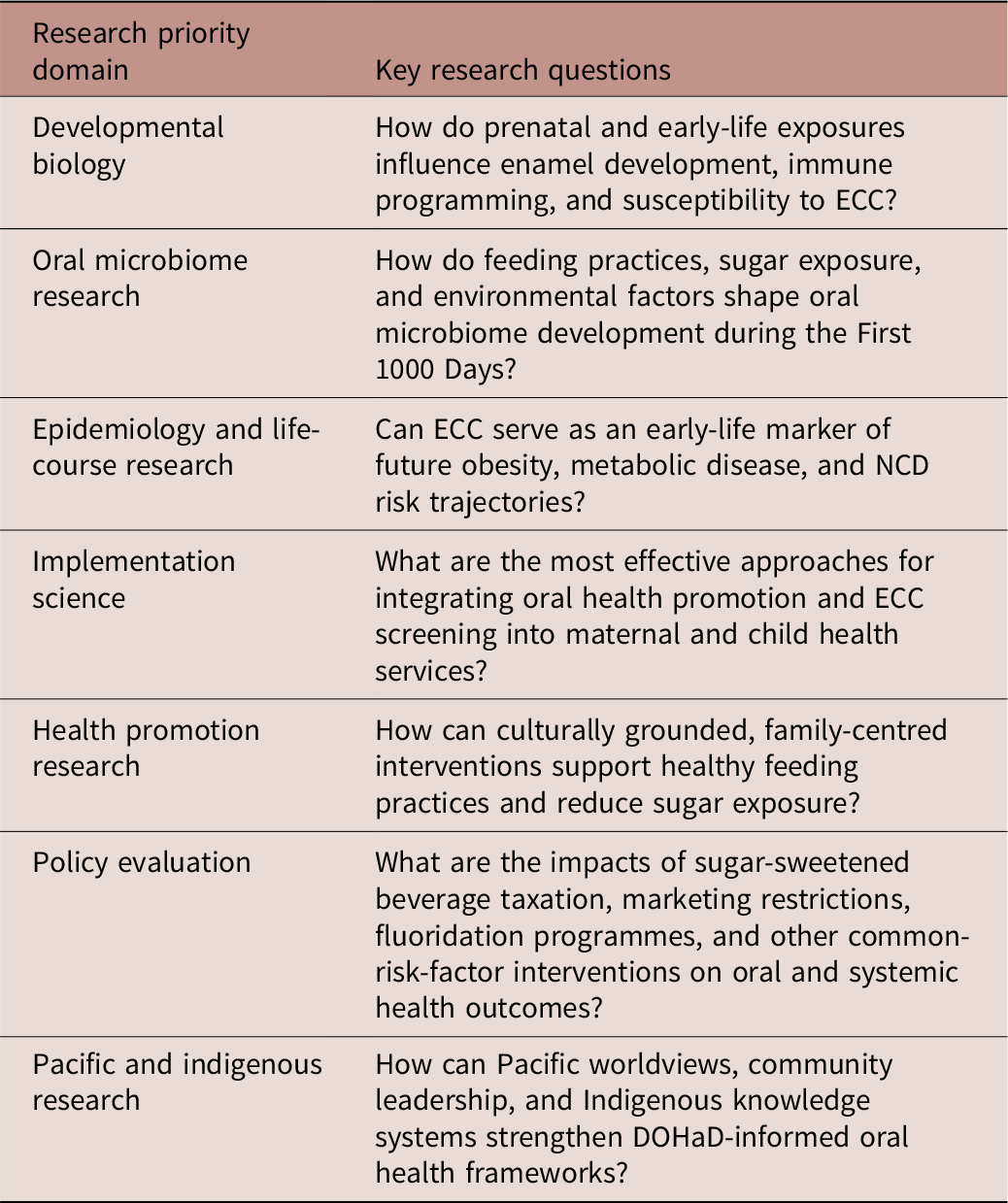
The proposed framework also highlights important opportunities to strengthen research, surveillance, and implementation across Pacific health systems. This paper identifies several directions for future research, including studies investigating the underlying mechanisms of oral microbiome development, Reference Gomez and Nelson16 population based investigations exploring the use of ECC as a potential early-life marker of future NCD risk, Reference Abanto, Oliveira, Paiva, Guarnizo-Herreño, Sampaio and Bönecker19 and examination of the functional, psychosocial, and quality of life impacts of ECC throughout early childhood Reference Sheiham22,Reference Casamassimo, Thikkurissy, Edelstein and Maiorini23,Reference Moynihan and Kelly26,Reference Clarke, Locker, Berall, Pencharz, Kenny and Judd29 It also highlights the importance of implementation research to integrate oral health into primary care and maternal and child health services, 39 as well as health promotion research on culturally grounded, family-centered interventions targeting the commercial and structural determinants of sugar exposure. 15,Reference Bay, John and Barrett-Watson34 Finally, it highlights the central role of policy research evaluating common risk factor interventions Reference Sheiham and Watt33 in supporting translation of DOHaD informed oral health integration into scalable public health action. Priority areas include evaluating the oral health impacts of SSB taxation and marketing restrictions, assessing the feasibility and acceptability of integrating ECC screening into service delivery during the First 1000 Days of life, and documenting how culturally grounded approaches influence caregiver engagement and behaviour change in the Cook Islands. Table 1 below summarises key research priorities for improving the integration of oral health within the DOHaD frameworks. The proposed priorities show current evidence gaps and opportunities for future research in developmental biology, oral microbiome research, epidemiology, implementation science, health promotion, and policy evaluation.
Summary of DOHaD literature relevant to oral health and proposed research priorities

Table 1. Long description
A table with two columns and eight rows. The first column is labeled ʼResearch priority domainʼ and the second column is labeled ʼKey research questionsʼ. Row 1: Developmental biology, How do prenatal and early-life exposures influence enamel development, immune programming, and susceptibility to ECC?. Row 2: Oral microbiome research, How do feeding practices, sugar exposure, and environmental factors shape oral microbiome development during the First 1000 Days?. Row 3: Epidemiology and life-course research, Can ECC serve as an early-life marker of future obesity, metabolic disease, and NCD risk trajectories?. Row 4: Implementation science, What are the most effective approaches for integrating oral health promotion and ECC screening into maternal and child health services?. Row 5: Health promotion research, How can culturally grounded, family-centred interventions support healthy feeding practices and reduce sugar exposure?. Row 6: Policy evaluation, What are the impacts of sugar-sweetened beverage taxation, marketing restrictions, fluoridation programmes, and other common-risk-factor interventions on oral and systemic health outcomes?. Row 7: Pacific and indigenous research, How can Pacific worldviews, community leadership, and Indigenous knowledge systems strengthen DOHaD-informed oral health frameworks?.
The Cook Islands experience offers a foundation for testing these research priorities. High ECC prevalence in infancy Reference Lal-Kumar, Lee and Williams24 and metabolic vulnerability in adolescence Reference Sheiham and Watt33 provide baseline data from which longitudinal, intervention, and implementation studies could be developed. Embedding such studies within existing national strategies and community partnerships would ensure that evidence generation is directly linked to policy cycles and service redesign processes, increasing the likelihood that DOHaD informed oral health frameworks translate into measurable improvements in oral health outcomes for children and families across the Cook Islands and the wider Pacific region.
Conclusion
The evidence and conceptual framework presented in this paper demonstrate the value of positioning oral health within a Pacific-centred DOHaD approach. Reframing ECC within this framework elevates oral health from a minor clinical concern to a central component of life course science. ECC develops early in life and is shaped by interacting biological, social, and environmental influences. It shares common risk factors with NCDs and may serve as an important indicator of early-life exposures. Situating ECC within the DOHaD framework provides a mechanism for operationalising these priorities in practice, shifting the focus to early-life environments, systems, and policies. This shift supports clearer, prevention focused strategies and offers a practical way to integrate oral health into maternal, child and NCD frameworks, thereby enhancing equitable, system wide responses across the life-course. By positioning oral health within DOHaD, the framework offers a foundation for integrated research, policy, and practice that can strengthen maternal and child health and reduce future NCD burden across Oceania.
Acknowledgments
The authors gratefully acknowledge Te Marae Ora (TMO), Ministry of Health, Cook Islands, for granting access to and permission to use national policy documents. We sincerely thank Mrs Roana Mataitini, Director, Mrs Abegail Tuazon, Manager, and the staff of the Policy and Planning Unit for their dedication in developing these national documents. We also acknowledge the Dental Therapists of Oral Services, Te Marae Ora, Ministry of Health, for delivering the E Puapinga Katoa Te Nio Tamariki programme in the Cook Islands. We further extend our appreciation to the directorates and staff across Te Marae Ora who provide maternal and child health services, as well as key stakeholders from Cook Islands Child Welfare and the Nui Programme, whose ongoing commitment supports the health and wellbeing of mothers, infants, and children throughout the Cook Islands.
Author contribution
SLK, BW and MB conceptualised the manuscript. AM, SLK, and AA drafted the manuscript. SLK, AM, AA, BW and MB revised the final manuscript. All authors have read and agreed to the published version of the manuscript.
Financial support
No monetary funds were involved directly.
Competing interests
All authors report no conflicts of interest.
Ethical standard
The authors assert that all procedures contributing to this work comply with the ethical standards.

 Open access

