Since assuming leadership of the Berlin University's fledgling Zoological Museum in 1813, it had been Martin Hinrich Lichtenstein's goal to fulfil the ‘fundamental law’ established three years prior by the museum's founders: that the director must ‘always see to expanding [the collection] and filling its holes’, so that it achieves the utmost possible degree of ‘completeness’.Footnote 1 At the time of Lichtenstein's appointment, the museum – pieced together with material from the Berlin Academy of Sciences and the Royal Kunst- und Naturalienkabinett – barely managed to fill three rooms of the university's eastern wing.Footnote 2 The museum's initial reliance on donations from professors joining the university faculty or from local naturalists yielded disappointingly insufficient returns, totalling only around eighty new specimens over the course of its first five years.Footnote 3 Yet before the end of the decade, Lichtenstein dramatically accelerated the museum's growth by recruiting university students and other willing volunteers to undertake collection voyages to the British Cape Colony, the South Pacific, Russia's North American colonies and Brazil (among other destinations).Footnote 4 In the autumn of 1818 the museum director reported to his supervisors at the Prussian Ministry of Culture, ‘I am beginning … to find myself in a quandary due the excessive diligence of our collectors … We have now once again become richer with over 1,000 birds and 11,000 insects’.Footnote 5 A year later he announced that for the first time the museum ‘premises are becoming too cramped’ to house all the specimens now flowing into Berlin.Footnote 6 Something had to give.
Rather than stem the tide of incoming specimens, Lichtenstein had an alternative solution to this unexpected crisis of surplus: the museum, he proposed to his supervisors, would vend its ‘duplicate’ material at public auction – ‘duplicate’ being a category of object for which he offered no defining criteria, but simply characterized as ‘quasi dead capital’ that the museum would be better off ‘liquidating’ rather than stockpiling.Footnote 7 His plan to transform an institution designed to accumulate specimens in service of natural science and education into one involved in the business dispersing specimens for profit is striking. It collapses into a single space two domains, whose practices, missions and social dynamics are seemingly opposed and whose histories have thus far largely been told separately:Footnote 8 the nineteenth-century European model of public museum, according to both contemporary institutional ideals and subsequent historiographical accounts, was supposed to be a permanent repository of objects, subject to study by select experts in pursuit of knowledge as well as to the reverent gaze of a strictly disciplined, quantitatively limited and, ideally, well-educated public body in pursuit of civic and moral self-improvement.Footnote 9 The auction hall, by contrast, represents a commercial node through which objects flowed in and out again. In its nineteenth-century form, it constituted a dynamic space, where professional auctioneers, skilled in the art of galvanizing consumers, sought to draw in large crowds from across social strata and encourage competitive bidding to drive profits.Footnote 10 In his 1926 history of the British auction house Christie's, H.C. Marillier drew out this contrast between the stasis of the museum and the liveliness of the auction:
In the realm of material things there is no such liberal education to be found anywhere else, unless it be in the less invigorating atmosphere of a museum, where everything is dead and laid to rest. In the sale-room things are alive and changing hands; sometimes, in the case of great sales, with an intensity of suspense and subdued excitement which is quite sensational.Footnote 11
Though intent on highlighting the differences between these two spaces, Marillier simultaneously pointed out a kinship: museums and sale rooms can both function as sites of learning and tools of knowledge.
Indeed, it is this very overlap which Lichtenstein attempted to capitalize on over a century earlier. Reassuring his ministry supervisors (and perhaps hoping to dismiss presumptions of museums’ and auctions’ mutual incompatibility) that the sales would be conducted in a manner ‘worthy of a royal institution’ and ‘truly beneficial to science’, Lichtenstein framed the duplicate auction as a business venture that would promote, rather than detract from, the museum's responsibilities towards scientific research and public education.Footnote 12 For one thing, as Lichtenstein elaborated in the preface to his first auction catalogue in 1818, the sales would generate funds that the museum could reinvest into the maintenance of its existing holdings as well as in the acquisition of rare specimens not yet represented in an otherwise overabundant collection.Footnote 13 Second, and more importantly, by selling authoritatively classified specimens directly to customers (thus circumventing intermediary commercial dealers more interested in profits than in science), the museum could ‘rapidly disseminate good and rigorous knowledge’ amongst the ‘citizens of the state and the scholarly world’.Footnote 14 This kind of circulation of objects and knowledge beyond the walls of the collection, Lichtenstein insisted, and not simply the ‘accumulation of a horde of rarities for the admiration of the crowds’ or the ‘equipment of scholars with the space and material for study’, was the chief purpose of a well-endowed natural-history museum.Footnote 15
This article examines how Lichtenstein's vision of conducting commercial duplicate trade in harmony with the museum's scholarly and educational mission functioned in practice. Starting by contextualizing the museum's sales within a broader history of duplicate auctions between the late eighteenth and early nineteenth centuries, it then focuses on the procedures and media involved in commodifying Berlin's natural-historical specimens as ‘duplicates’ that could legitimately be deaccessioned from the museum and sold to the highest bidder. It attends particularly to the making of the auction catalogue, a crucial site upon which both tensions and productive harmonies between selling commodities and advancing knowledge played out. Ultimately, as this article demonstrates, an analysis of duplicate sales can blur the border between museal institutions and sites of commerce, paving a path for an entangled history of these two spaces.
Defining the duplicate
Defining duplicate specimens is as much a question of what as it is of when and where. In nineteenth-century natural history, a specimen's ‘duplicate’ status did not necessarily first emerge in the museum upon comparison with other items in the collection, but sometimes formed during fieldwork conducted by travelling naturalists, or while en route from the field to an institutional collection. Shipping natural-historical specimens across the globe in the early 1800s was a complicated, risky affair: moisture in ships’ cabins could rot carefully dried herbarium sheets; entire ships could sink, taking specimens with them; glass vials of alcohol-preserved specimens could burst on bumpy land roads; and nosy customs agents were known to open up collectors’ crates and disturb the fragile contents.Footnote 16 Aware of the abundant hazards that could befall their painstakingly accumulated objects, collectors frequently distributed several specimens of what they judged to be the same species across their shipments, hoping thereby to increase the chances of at least one making it to its destination intact.Footnote 17 Without access to extensive reference material for comparison, travellers also erred on the side of caution, sending multiples of similar specimens and relying on collection-based naturalists to determine whether they represented identical or discrete species.Footnote 18 At the Berlin Zoological Museum in the early nineteenth century, for every specimen accessioned into the main collection, one or more specimens apparently of the same species – usually regardless of geographic origin or small morphological variations – were relegated to a separate duplicate repository.Footnote 19 These specimens typically were of lesser quality than their counterparts in the main collection: those whose feathers were bent, shells fractured or pelts gnawed away by pests during transit, or those that had once belonged to the main collection but had been replaced with a newer, better-conserved and hence more ‘instructive’ version of themselves.Footnote 20 Some specimens on the duplicate shelf no doubt matched the high quality of main-collection equivalents; indeed, this was increasingly the case as Berlin's collections grew exponentially in the 1820s and 1830s.Footnote 21 Still, in an institution with limited space and abundant pretension to comprise the entirety of the world's fauna, priority was given to taxa not yet represented in the collection.
By no means was this attitude limited to Berlin. Before Charles Darwin's seminal Origin of Species (1859), minimal variations within members of a single species were not widely considered to be a worthy object of research. Long series of specimens classified under the same species were more likely to be seen as material to be bartered, magnanimously donated to less endowed collections or, simply, purged in the interests of good housekeeping.Footnote 22 Though few other public natural-history collections seem to have participated in duplicate trade in the same commercial form or with the same frequency as the Berlin Zoological Museum, it was not out of a principled objection to the practice.Footnote 23 Indeed, in the 1830s, amidst a parliamentary inquiry aimed towards improving the public accessibility and utility of the British Museum, the zoological keeper John Edward Gray cited the Berlin model of auctioning specimens as one of the ‘best ways of disposing of duplicates’, but one requiring significant logistical planning.Footnote 24 At Leiden's natural-history museum, Gray observed during his parliamentary interview, the director Coenraad Temminck opted for a slightly different dispersal mode, whereby duplicates were given a symbolic price but exchanged – exclusively among other museum directors – for specimens of equivalent monetary value, rather than for actual cash.Footnote 25 While no money changed hands in the Dutch model of duplicate disposal, Gray reported that he ‘more than once heard [Temminck] complain of the extreme difficulty’ of the process.Footnote 26 Furthermore, with exchange parties frequently dissatisfied by the lack of parity between the duplicates they gave and those they received, Gray declared Temminck's practice to be a ‘continual source of heart-burning between naturalists, who would otherwise be good friends’.Footnote 27 Even into the late 1850s, the Treasury and Trustees of the British Museum still favoured publicly selling the collection's duplicates, in order to avoid the ‘jealousies, discontent and complaints’ that might arise from distributing surplus through less transparent institutional channels.Footnote 28 By this point, however, Gray evidently was more inclined to avoid the strenuous business of duplicate exchange altogether by deflecting shipments with duplicates to needier institutions before they could even enter his collection.Footnote 29
The concept of the duplicate as an essentially identical, yet often sub-par, version of another specimen was not only prevalent in early nineteenth-century natural-history collections, but also in libraries. In the bibliographic context, at least until the mid-1800s, the term was broadly applied to multiple copies of a printed work; whether copy-specific details (e.g. binding, pagination, paper, book format) were considered relevant criteria for determining difference and identity was ultimately left to the discretion of the librarian.Footnote 30 Particularly when entire private collections were incorporated – either through purchase or compulsion – into courtly and state libraries, the problem of duplicates and their strain on perennially insufficient resources of time, personnel and space became acute.Footnote 31 Hence, in the case of both natural-historical objects and books, the ‘duplicate’ was less a stable, precisely defined category of thing with broad disciplinary consensus than something that often became visible and nameable to individual collection keepers when storage and management capacities became overwhelmed.
The similarities between natural-history collections and book collections in their shared predicament of ‘duplicate overload’ do not end here: in fact, the solution of some prominent libraries to realize much-needed funds for restructuring their holdings by discarding their surplus via auction seems to be the very model Lichtenstein applied to his museum. The Royal Library in Berlin, incidentally, is one example of a public collection that began auctioning off its duplicate material in the late eighteenth century. As diagnosed in 1828 by the librarian and historian Friedrich Wilken, the lack of a consistent acquisition policy throughout nearly 150 years of the library's existence had resulted by the 1790s in an extensive but poorly assorted collection of books – hardly worthy of the ‘capital of German scholarship’ that Berlin strove to be at the turn of the nineteenth century.Footnote 32 While not a single subject area could boast comprehensive representation of the most important canonical works, many individual books existed in duplicate and triplicate.Footnote 33 To raise funds that could help fill collection gaps and sustain rising operational costs, the library held its first public duplicate auction in 1797. The sale's unexpectedly high returns, together with budgetary cutbacks during the Napoleonic occupation in 1806 and the sharp rise in library users following the 1810 establishment of the university, compelled the library to continue this enterprise. The institution could no longer afford not to raise money via auctions.Footnote 34
The Berlin Royal Library was not alone in its approach towards duplicates: the Royal Court and Central Library in Munich also maintained a successful business in the first half of the nineteenth century of systematically auctioning off its 220,000-strong surplus of duplicates.Footnote 35 In the wake of the 1803 secularization of Bavaria's ecclesiastical estates, the holdings of nearly 150 monastic libraries were merged into the Central Library. With the library's cataloguing and storage capacities pushed to the brink by the collection's sudden exponential growth, keepers began liberally applying the category ‘duplicate’ to their holdings – including many incunabula, rare woodblock prints and vellum prints – and selling these at public auction from 1815.Footnote 36 ‘A large library need not own two copies of works, whose only value lies in their rarity, and which go decades without anyone desiring to consult a single copy’, the Munich librarian Karl Felix Halm explained in 1859.Footnote 37 Justifying his curatorial strategy, he continued, ‘Just as no library indulges in the luxury of buying a second copy of a rare work already in its possession, so too should it dispense of duplicate copies insofar as it can retain an appropriate equivalent’.Footnote 38 His approach also found sympathy in the press, with one article praising the library's divestment of ‘worm-eaten “old treasures”’, provided the funds were put towards acquiring ‘missing books’ and ‘liberally’ making these ‘accessible to the public’.Footnote 39 Yet around the same time as Darwin's evolutionary framework gradually rendered the traditional concept of the natural-historical duplicate scientifically dubious (albeit not obsolete), the notion of a ‘duplicate’ incunabulum, free to be dispensed with or exchanged for money at public auction, became the target of vehement rebuke. Arguing that even the slightest variations between copies in the page material, binding, decoration, rubrication, traces of previous usage and geographical origin ‘granted significant insights into the way of thinking and custom, indeed into the spirit of the time’, the librarian and Bavarian parliamentary member Anton Ruland waged a highly public protest against the library's auctions, effectively bringing them to a halt by 1860.Footnote 40 Yet until the mid-1800s liquidating the value of duplicates to achieve a more balanced collection – whether of books representing branches of human knowledge or specimens representing taxa of a natural system – was broadly considered a legitimate, even socially beneficial, way for a public institution to deal with surfeit.
Preparing specimens, publishing catalogues
Turning specimens into cash required a series of operations not only on the specimens themselves, but also on paper. The first step involved selecting the specimens to be sold. For strategic and pragmatic reasons, the Berlin museum did not make the entire contents of its duplicate repository available for purchase at once. For one thing, uncertain in 1818 of how strong or widespread the demand for the museum's duplicates would be among a German – or even Berlin – public, museum director Lichtenstein was cautious to begin with only a portion of the museum's extensive duplicate stocks: namely with birds and mammals. Should the first auction proved to be a success, Lichtenstein planned to continue with the museum's fish, amphibian, crustacean and conch duplicates.Footnote 41 But not even all the museum's birds and mammal duplicates were chosen for sale. Justifying his decision to reduce the supply at auction to ‘as few duplicates as possible’, Lichtenstein assured his ministry supervisors that the collective demand for specimens would thereby remain high, resulting in greater profits for the museum over a longer period of time.Footnote 42 Additionally, while Lichtenstein hoped to use the profits of the sales towards acquiring the museum's desiderata, he also was aware that not every specimen circulating in the natural historical community could be acquired for cash. Lichtenstein hence insisted on reserving a small collection of particularly rare and valuable duplicates that could be traded when an opportunity presented itself – as it often did when he embarked on official trips to visit private and public collections throughout Europe.Footnote 43 Finally, duplicates were not only useful to the museum as capital assets to be liquidated or exchanged, but also as teaching material for university students, one of Lichtenstein's target audiences in his dual role as museum director and as professor at the Berlin University.Footnote 44 A former student of the university in the 1820s, entomologist Julius Ratzeburg, in fact recalled Lichtenstein as one of the few professors at the time who incorporated practical lessons into his lectures by allowing students to handle and inspect specimens from the duplicate repository.Footnote 45
Once Lichtenstein made a selection under these economic, strategic and pedagogical considerations, he then gave the duplicates to the museum's preparator August Rammelsberg, who conserved them with insecticide; repaired any damages to feathers, fur, scales or skin; outfitted them with glass eyes; and stuffed and mounted them on pedestals.Footnote 46 As the demand for the museum's duplicates increased in the years following the first auction in 1818, Lichtenstein was even able to hire two more assistant preparators at a monthly salary of fourteen taler each.Footnote 47 Lichtenstein rationalized to the ministry this investment of time and personnel resources into preparation by asserting that ‘exceedingly few enthusiasts … understand how to process our raw natural products’ and that many often ‘abstain from purchasing for this sole reason’.Footnote 48 Collectors who did know how to prepare animals skins for display, he continued, ‘desire at the very least specimens that are completely free of defects and do not require great effort in mounting’.Footnote 49
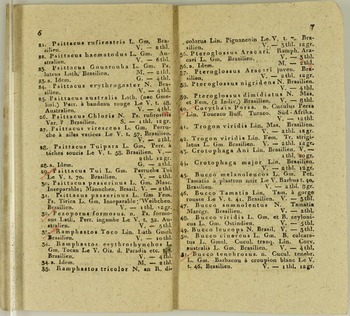
Equally important to the ‘mechanical labour’ of preparing specimens was the work of assembling and circulating the sales catalogue.Footnote 50 Lichtenstein's first attempt at a sales catalogue in 1818 was a simple, pragmatic affair – both compared to the lavish antecedents of the eighteenth century, which often featured allegorical frontispieces and illustrations of the finer lots, and compared to those Lichtenstein would later publish.Footnote 51 His 1818 catalogue consists of a title page announcing the date, location, institutional organizer and acting auctioneer of the sale; a preface detailing the conditions of the sale; and thirty-nine pages of lots destined for sale. Each entry for a duplicate specimen had the same pattern: first, a lot number and the specimen's Latin binomial name; an abbreviated name of the author to first describe the taxon; the sex of the specimen, if known; occasionally Latin, German or French synonyms; the region where it was collected, which could be as general as ‘Europe’ or as specific as the ‘Cape of Good Hope’; and sometimes a brief comment on its condition.Footnote 52 Finally, an initial indicating the quality of the specimen as excellent, good, mediocre or bad, and the starting bid for a specimen in taler and groschen, concluded an entry (Figure 1).
Lichtenstein's first auction catalogue printed in octavo (11 × 18 cm). [Martin Hinrich Lichtenstein], Verzeichniss von ausgestopften Säugethieren und Vögeln welche am 12ten October 1818 u. folg. Tage im zoologischen Museum der Königl. Universität zu Berlin durch den Königl. Auctionscommissarius Bratring dem Meistbietenden öffentlich verkauft werden sollen, Berlin: s.n., 1818, pp. 6–7. Reproduced with permission of the Museum für Naturkunde Berlin, Historische Bild- und Schriftgutsammlungen.

The catalogue makes no mention – either in the preface, or in the entries themselves – of the individuals responsible for collecting the specimens, thus marking a further distinction from auction catalogues of the eighteenth century. Typically comprising only one person's collection, older catalogues often featured a preface celebrating the life and connoisseurship of the collector, which effectively served to attract more potential buyers and increase bidding competition.Footnote 53 Lichtenstein's catalogue severs the tie between collector and specimen; in the place of the former is now the institution of the museum, whose authority in preparing, naming and classifying the specimens is promoted as the chief purchasing incentive.Footnote 54 Though Lichtenstein does not call attention to the order of entries in his catalogue, all lots are arranged according to the taxonomy developed by the Zoological Museum's founder, Karl Illiger.Footnote 55 This was in fact an uncommon choice at the time for an auction catalogue – even one advertising natural-history specimens. Since the order of the catalogue entries dictated the order in which the lots could be sold, cataloguers usually tried to strategically arrange entries to correspond with or promote buyers’ enthusiasm: highly anticipated lots were placed at the beginning, when crowd energy was high, while those likely to fetch lower values at auction were listed towards the end.Footnote 56 Similar lots were broken up and dispersed throughout the catalogue to diversify the presentation of wares and avoid tedious stretches, during which the same kind of items were placed under the hammer.Footnote 57 For naturalists charged with compiling entries on lots – such as Daniel Solander, a Linnaean disciple who helped prepare the 1786 catalogue for the auction of the late Margaret Cavendish Bentick's private Portland Museum – the demand to generate profit often meant sacrificing the systematic order that ‘would have proved extremely satisfactory to every true Lover of Science’.Footnote 58 Lichtenstein, by contrast, seemed intent on satisfying both the museum's pecuniary needs and natural-history enthusiasts’ desire for an instructive arrangement in his catalogue.
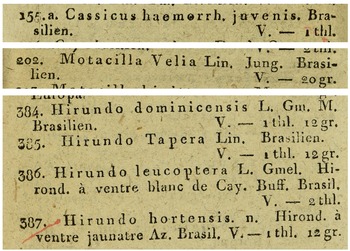
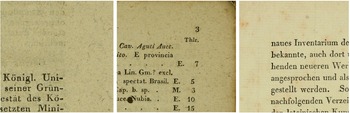
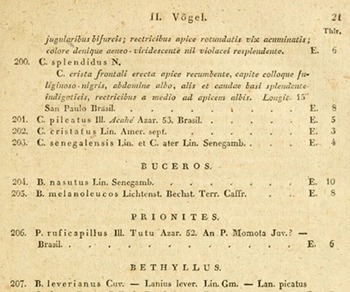
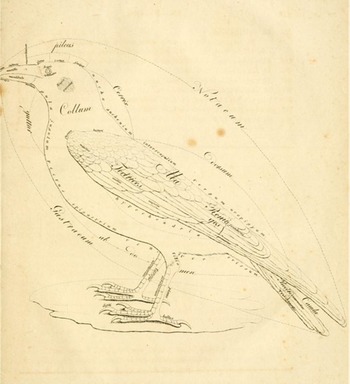
While no manuscript drafts of the catalogue or correspondence relating to its compilation have survived in the archives, the museum's financial records help fill in some gaps of information on how the final print version came about. Lichtenstein likely relied on various scribes, paid at three groschen per written sheet, to transfer specimen information from the museum's collection records and commit dictations to manuscript auction catalogues.Footnote 59 The final draft was then taken to the local printer, Ernst Jacob Vogt.Footnote 60 The print runs for the catalogues are not disclosed in the museum's account books, though they are likely to have been high, judging from Lichtenstein's intention to circulate them throughout Berlin, as well as other German and European cities.Footnote 61 The relatively modest commissions for the print jobs – ranging from thirteen to twenty taler in the early 1820s – hence suggest that the early sales catalogues were not intended to be high-quality publications, but rather quickly and affordably produced ephemera. The typographical inconsistencies riddled throughout the catalogue, perhaps due to hasty proofreading, and the cramped, difficult-to-read octavo-format pages, likely a means to save space and paper, bolster this interpretation (Figures 1, 2). The fact that later museum sales catalogues were printed on finer paper, in a larger, easier-to-read layout, indicates that Lichtenstein eventually recognized the aesthetic weaknesses of his earliest catalogues and sought to enhance their legibility and instructive character (Figures 3, 4). Experimenting with hybrid scientific and commercial forms in subsequent duplicate catalogues, Lichtenstein would further add brief formal descriptions of new species in Latin, German-language commentary on choice specimens’ beauty and quality of preservation, and diagrams illustrating zoological terminology (Figure 5).Footnote 62 But in 1818, it seems that Lichtenstein, prioritizing fast, low-budget production, did not yet conceive of the catalogue itself as a commodity with its own epistemic and aesthetic value, but rather more as a tool to commodify specimens.Footnote 63
Top and middle: age of specimen 155a is given in Latin (juvenis) while age of specimen 202 is described in German (Jung, or ‘juvenile’). Bottom: lots 384 and 386 bear inconsistent abbreviations for Linnaeus Gmelin and for locality Brazil. [Lichtenstein], Verzeichniss von ausgestopften Säugethieren und Vögeln, op. cit., pp. 14, 17, 27. Reproduced with permission of the Museum für Naturkunde, historische Bild- und Schriftgutsammlungen.

Paper quality across sales catalogues in 1818, 1823 and 1842. [Lichtenstein], Verzeichniss von ausgestopften Säugethieren und Vögeln, op. cit., p. i; Martin Hinrich Lichtenstein (ed.), Verzeichniss der Doubletten des zoologischen Museums der Königl. Universität zu Berlin nebst Beschreibung vieler bisher unbekannter Arten von Säugethieren, Vögeln, Amphibien und Fischen, Berlin: T. Trautwein, 1823, pp. 3, 4. Left image reproduced with permission of the Museum für Naturkunde, historische Bild- und Schriftgutsammlungen. Middle and right images in public domain from the Biodiversity Heritage Library. Contributed by the Smithsonian Libraries.

Layout of 1823 catalogue. Lichtenstein, Verzeichniss der Doubletten, op. cit., p. 21. Public domain. Image from the Biodiversity Heritage Library. Contributed by the Smithsonian Libraries.

Bird diagram marked with Latin terms for body parts in 1823 catalogue. Lichtenstein, Verzeichniss der Doubletten, op. cit., back cover. Public domain. Image from the Biodiversity Heritage Library. Contributed by the Smithsonian Libraries.

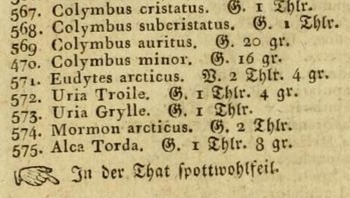
Once printed, the catalogues were circulated among various networks, travelling widely at least three months before the auction took place. Beyond advertising the wares to a wide group of interested buyers, the published catalogue was also a legal prerequisite for holding an auction and a means of protecting consumers. As early as 1756, King Friedrich II passed a ‘Regulation and Instruction’ for Prussian auctions which enshrined the necessity of disseminating an ‘accurate, legible catalogue’.Footnote 64 The catalogue was intended to hold the seller accountable to offer up at the actual auction only those items featured – no more and no less – and thereby prevent ‘confusion’ and ‘needlessly raising the hopes of the public’.Footnote 65 Locals hoping to participate in the auction could obtain copies of the catalogue at the residences of Berlin's auction commissioner Friedrich Bratring and two of the city's book commissioners.Footnote 66 Details on how to contact these officials, as well as on the time and place of the auction, were disclosed in an advertisement that Lichtenstein placed prominently at the top of the rubric ‘Auctions in Berlin’ in the city's most widely circulated newspaper at the time, the Berlinische Nachrichten von Staats- und gelehrten Sachen.Footnote 67 To achieve an even wider scope of potential buyers beyond Berlin, Lichtenstein then sent catalogues to museum directors and collectors in more distant German and European cities.Footnote 68 At the same time, he sent a copy of his catalogue to be printed, in condensed form, in Lorenz Oken's scientific journal Isis, one of the most important natural-scientific organs in early nineteenth-century Central Europe.Footnote 69 To pique readers’ interest in buying the museum's lots, the journal's editor or perhaps even Lichtenstein himself borrowed from the rhetorical repertoire of the salesman, closing the lot list with the exclamation ‘dirt-cheap as a matter of fact’ (Figure 6).Footnote 70
Lots from 1818 auction as printed in Oken's Isis. [Anonymous], ‘Verzeichniß von ausgestopften Säugethieren und Vögeln’, Isis, oder Encyclopädische Zeitung von Oken (1818) 1(6), pp. 1103–4 plus four unnumbered pages, https://www.biodiversity.org/page/13264242 (accessed 1 April 2021), n.p. Public domain. Image from the Biodiversity Heritage Library. Contributed by the American Museum of Natural History Library.

Catalogues did not only emanate from the museum prior to the auction; they also circled back through its doors. As explained in the catalogue's preface, those unable to attend the auction in person were invited to mark their booklets with the specimens they desired and the highest bids they were willing to place. These annotated copies could then be sent to ‘loyal middlemen’ in the museum's employ, who would fill the bidders’ orders during the event.Footnote 71 Hence, long before the hammer fell on the museum's first lot in November 1818, Lichtenstein could confidently report to his supervisors,
The catalogue of our duplicate auction is received in all of Germany with great applause and bids have been placed from all regions in such significant numbers that I might be permitted to already declare the undertaking a total success.Footnote 72
The operations involved in transforming objects into commodifiable duplicates required multiple workers in and outside the museum – from the museum director and his chief preparator to scribes and printers – and hours of labour, as well as various forms of scientific and market expertise. And, despite its formal shortcomings, the small, cheaply produced catalogue accomplished a great deal prior to the actual sale by sparking interest in the museum's objects and gaining people's trust to engage with the museum in a new way – as consumers.
Auction day
With prospective buyers’ attention successfully captured and channelled through the catalogue over the course of several months, the duplicate specimens were ready to be sold to the highest bidder. Before being outsourced to local sales rooms in the 1830s, the duplicate auctions were held directly in the Zoological Museum, effectively blurring the line between the (idealized) stability of a museum and the dynamism of a commercial marketplace.Footnote 73 While few sources providing eye-witness testimonials of these events have survived in archives, prescriptive legal sources combined with the museum's sales records can shed light on the people, objects, and practices that made up the hybrid space of the museum auction. Though Lichtenstein was in attendance, he did not engage in selling the lots himself. Rather, as defined in Prussia's 1756 auction regulation, the sale was to be carried out by two officials with no personal stake in the items being sold: the auction commissioner, or auctioneer (Auctionator), and his appointed crier (Ausrufer).Footnote 74 The former was responsible for cross-checking entries in the catalogue with the lots offered for sale, for exhorting the public ‘to refrain from tumult’ and for maintaining a protocol of final bids and buyers for each lot.Footnote 75 The crier, in turn, was in charge of arranging the lots according to the order given in the catalogue; in the case of the museum's first auction, the arranged lots were made available for public inspection eight days before bidding actually began.Footnote 76 During the sale, the crier was then to ‘freely’ hold up each lot for all onlookers to behold while ‘loudly and distinctly’ calling out the name of the item.Footnote 77 After waiting for the bids to increase as high as possible, the crier would then call out three times before the auctioneer hit the hammer, thereby closing the transaction.Footnote 78 In its new function as specimen vendor, the museum had to prove its integrity to the public, which now played the role of customer. The catalogue circulated prior to the auction was the first step in demonstrating the museum's good faith, but it ultimately came down to the degree to which the printed entries accorded with the actual lots made available for sale. The procedures of arranging the lots in order, holding them up, proclaiming their names and maintaining order so that all could see and hear the display were designed to prove this accordance between document and object to the attending public. The protocol, which recorded the final bidder and selling price for each lot in the margins or on interleaved pages of the catalogue, effectively validated the collective acceptance of the identity of the wares and the legitimacy of the transaction. Depending on its context of use, the catalogue hence functioned both as a precondition for and as a testament to the museum's probity as a commercial dealer.
Auction protocols help us not only to understand the trust dynamics between the museum as seller and the public as consumers, but also, more concretely, to partially reconstruct attendees. The protocol of the very first auction, for instance, bears the names of sixteen buyers, six of whom were bidding for others outside Berlin. Of those outside buyers whose names were recorded (quite a few remained anonymous), many were professors who themselves oversaw public or university natural-history collections or, in one case, the French diplomat Charles-François, Marquis de Bonnay.Footnote 79 Several bidders’ names can be attributed to individuals who were already connected to Lichtenstein and the Zoological Museum, namely a student volunteer at the museum (who later became a schoolteacher for the natural sciences), Johann Ruthe; the preparator, Rammelsberg; Lichtenstein's former student Wilhelm Hemprich, who later served as travelling collector for the museum; and Dietrich Franz Leonhard von Schlechtendal, Lichtenstein's curatorial counterpart at the Berlin Royal Herbarium.Footnote 80 Given the lack of buyers’ institutional affiliations, cities of origin or first names recorded in the protocol, it can be harder to identify individuals less closely associated with the museum. Still, educated guesses can be made in a few cases: the buyer Reuss likely refers to Bohemian naturalist Franz Ambrosius Reuss, who was educated in Freiberg and since 1800 had been a member of the Gesellschaft der Wissenschaften zu Göttingen.Footnote 81 Siemssen could be the same mineralogist referred to simply as ‘Herr Dr. Siemssen from Rostock’ in the membership list of a September 1830 meeting of the Gesellschaft Deutscher Naturforscher und Ärzte.Footnote 82 Von Gansauge is probably Hermann von Gansauge, a Pomeranian officer and military historian who corresponded with many of Berlin's prominent academics (Friedrich Schlegel, Friedrich Schleiermacher, Adelbert von Chamisso and the aforementioned Schlechtendal, to name a few).Footnote 83
All told, the purchases made by the sixteen bidders in 1818 amounted to over 2,340 taler – at a time when the museum's acquisitions budget was set at three hundred taler.Footnote 84 Lichtenstein's commercial ambitions were hence more than fulfilled by the end of the first auction. The ostensible mission to spread specimens and knowledge widely among ‘citizens of the state and the scholarly world’, by contrast, seems to have been more limited in its success.Footnote 85 The small circle of buyers recorded in the 1818 protocol hardly differ from those who already enjoyed virtually unlimited access to the spaces and resources of elite natural research: university-educated bourgeois men, with the occasional learned aristocrat and military officer rounding out their ranks.Footnote 86 Yet, for all that protocols can reveal about buyers, it remains silent on the wide range of individuals who may have simply come to watch the distribution of lots or even attempted to buy one before ultimately being outbid. While this segment of the public did not consume the museum's wares in the same way as purchasers, they still fundamentally shaped the event, such as by heightening crowd energy and driving competition. Indeed, following the conclusion of the 1818 auction, Lichtenstein reported that ‘so many enthusiasts from our city and local region as well as commissaries for foreign [buyers] were in attendance, such that from the very first day until the end of the sale the competition exceeded expectations’.Footnote 87 Whether or not they went home with a museum duplicate, attendees could, moreover, glean natural-historical knowledge simply by witnessing auction officials present the classified, taxonomically arranged specimens; call out their names, perhaps in Latin and German; and then determine the monetary value of that specimen in interaction with the crowd. Auction historian H.C. Marillier, who drew attention to the educational potential of the sales room, describes eighteenth- and nineteenth-century spectators of London art auctions in a way that – geographic and material differences notwithstanding – is insightful for understanding how onlookers in the Berlin museum might still actively learn from and hence participate in the auction event:
There are people … who haunt [sales rooms] from a sheer sense of fascination, attracted by who knows what spirit of curiosity … They cannot or do not buy, but they like looking on and watching things sold. As a rule, they mark their catalogues religiously. But whether their attendance be on this or on a higher plane, they cannot help learning. They see displayed in turn all the works of brain and hand that men count precious. Pictures, tapestries, furniture, china, jewels, plate, the rarest books, the most historic armour. All the treasures … come before them, catalogued, dated and described with surprising accuracy considering the vast range of art which has to be dealt with.Footnote 88
For auction attendees in early nineteenth-century Berlin, the fascination with commercial transaction described by Marillier was no doubt further heightened by the contrast it presented to the hushed and hands-off museum manners that had increasingly taken hold in public collections since the end of the eighteenth century. While museums after 1800 were firmly expected to open their doors on a regular and gratis basis to a general audience, the ensuing growth in crowd sizes had led to a decline of an older museum culture, whereby small groups could inspect objects outside their cases and engage in conversation about these objects with the keeper and other visitors.Footnote 89 Throughout European collections, in place of touch and talk came locked glass repositories, descriptive labels intended to render the objects self-explanatory, and guards ready to reprimand visitors to silence.Footnote 90 In most respects, the Berlin Zoological Museum followed this trend, allowing the public to enter the collection twice weekly free of charge, where cabinets outfitted with clear panes and object labels displaying specimens’ names, taxonomic rank and geographic origin would allow for all collection items to be ‘perfectly identifiable without direct handling’.Footnote 91 But when Lichtenstein held auctions in the museum, the space transformed into an event that centred around talk of specimen names and values and ultimately entailed specimens leaving not only their glass enclosures, but the museum itself. Attendees thus were able to experience a museum and its collection in ways that, under the circumstances of a normal visit, were increasingly rare by the nineteenth century.
Duplicate sales after 1818
Spurred by the high financial returns and public enthusiasm at the close of the 1818 auction, Lichtenstein immediately started planning the next auction, which would take place in 1822. Indeed, the event was so successful that other public collections in Berlin, such as the Royal Kunstkabinett, began holding similar duplicate auctions in the 1820s as a way to supplement their acquisitions budget, once again demonstrating that this practice was prevalent beyond the Zoological Museum.Footnote 92 Parallel to sustaining his own museum's auctions throughout the 1830s and 1840s, Lichtenstein desired to conduct the enterprise ‘with greater liberality’ by selling duplicates at fixed prices throughout the year.Footnote 93 The expansion of duplicate sales provided individuals of sufficient financial means yet another form of taking part, quite literally, in the museum's material and intellectual products. Moreover, for smaller, less generously funded museums, like the Prussian university collections in Halle and Breslau, the institutionalization of Berlin's duplicate sales allowed them to stock their shelves with rare and – from the perspective of their collections – singular specimens from around the world.Footnote 94 Unlike buyers and spectators at auction, participation in fixed-priced sales largely did not depend on being physically present in the museum, but rather took place in a virtual sphere, underpinned by correspondence, catalogues, account books and receipts.
What was lost in personal interaction was made up for in the diversification of the museum's customer base, as sale records from the years 1820 to 1822 show. While the professors, collection custodians, university students, university-educated scholars and high-level bureaucrats comprising the buyers at the 1818 auction remained the dominant consumers in fixed-price sales, the demographic was shifting slightly. For one thing, several women are listed as buyers – though they make up only seven of the ninety-two individuals and institutions (7.6 per cent) listed as buying Berlin's duplicates over these two years. The largest acquisitions among these collectors were made by the Prussian princess Friederike Luise Radziwiłł, who spent nearly 250 taler on over a hundred bird specimens, and by the Duchess of Cumberland Friederike of Mecklenburg-Strelitz, who purchased 117 conches from the museum for a mere fifteen taler.Footnote 95 Other female naturalists who bought museum duplicates came from similarly royal or noble circles, such as Princess Marie of Hesse-Kassel Grand Duchess of Mecklenburg-Strelitz, Lucia Migliaccio Princess of Partanna and Caroline Erdmuthe Christiane von Bischoffwerder, a lady of the Prussian court.Footnote 96 Two other women – a Madame Bencke and the courtly Postmaster's wife Schneider – are the only non-aristocratic women recorded as purchasing specimens from the museum during this period.Footnote 97 Members of the nineteenth century's ever-widening educated public are also represented in the sales records, as the sporadic notation of customers’ occupations reveals.Footnote 98 For instance, two merchants – a Herr Ploss from Leipzig and Herr Schwidersky from Memel – are listed as having bought, respectively, seventy talers’ worth of bird skins and insect specimens and 125 talers’ worth of bird skins, crabs, reptiles and corals.Footnote 99 A master carpenter Stieber bought five insect specimens from the museum for seven taler and twenty groschen, while a painter by the name of Weber bought fourteen silkworm and butterfly specimens for five taler and twenty groschen.Footnote 100
The combination of buyers’ names, titles, occupations and purchases seldom allows for anything more than speculation on possible motivations behind the acquisition or the further usage of the items. Aristocratic women placing orders for large quantities of a single kind of specimen likely sought to round out their specialized private cabinets; a painter buying a handful of butterfly specimens could have used them as artistic reference material; merchants stocking up on an assortment of natural-history specimens perhaps resold them in their own stores or integrated them into their personal collections. Taken together with the public at the auctions, these examples nevertheless underscore that the museum's sales and the catalogues that structured them attracted a growing and diversifying group of individuals, whose various interests in natural-historical specimens were fed by the museum's surplus: those from inside the learned ranks of university-based natural research, but also those from outside; those ready to spend hundreds of taler on collection items, but also those who could only afford to part with several taler; as well as those simply curious to watch specimens change hands between the museum and its customers.
All told, according to Lichtenstein's own calculations of sales revenue between 1818 and 1840, the duplicate auctions generated 39,495 taler.Footnote 101 While on the surface an impressive sum, it concealed a general decline in yearly duplicate revenue, which, after peaking in 1824 with 3,956 taler, began to fall to below a thousand taler in the 1830s and finally down to a mere 265 taler in 1841.Footnote 102 Meanwhile, the museum's deficit had ballooned during this period, reaching over ten thousand taler by 1828.Footnote 103 Because of the museum's apparent early success in generating profit, however, the ministry had taken the liberty to chip away at its annual acquisitions budget (from the already scant three hundred taler to just 130 taler by 1836) and siphon off the state funds to other portfolios in more urgent need of support.Footnote 104 Over time, the museum could no longer afford to use the liquidated duplicates for selective acquisition of desirable specimens, compelled instead to put the money towards sustaining the ever-growing operational costs.Footnote 105
But even before it became unmistakably clear by the 1840s that the museum was falling deeper into financial crisis, Lichtenstein's efforts to cater to the museum's growing consumer base through duplicate sales was not always met with praise. Particularly among members of the university and keepers of its collections there was growing unease regarding the propriety of commercial duplicate trade in scientific institutions. Already in 1822, Lichtenstein's colleague and director of the Berlin Mineralogical Cabinet Christian Samuel Weiss categorically opposed the idea of selling duplicate material from his collection, finding the very idea of ‘even engaging in mercantile commerce’ distasteful.Footnote 106 Karl Asmund Rudolphi, director of the Zootomical-Anatomical Museum, insisted in 1824 that it was ‘outrageous that expensive [collection] voyages are undertaken, only to then deprive the museums of the acquired items for a paltry bit of cash … If this is economy, then I have a faulty understanding of this subject’.Footnote 107 Beyond their aversion to mixing business with science, they furthermore offered discipline-specific, epistemic reasons for taking issue with the notion of the duplicate and hence superfluous specimen: a mineralogist's chemical analysis of specimens inevitably involved the incremental destruction of collected samples; an anatomist, in turn, required multiple carcasses of the same animal in order to prepare specimens of the nervous system, muscular system and skeleton.Footnote 108 Neither discipline could afford the luxury of selling off ‘extra’ study material. But even among zoologists, there was growing tension over the duplicate and its commercialization: in 1827 Christian Gottfried Ehrenberg, a naturalist recruited to embark on one such expensive collection voyage to northern Africa, returned to Berlin to find that his shipments had been successively mined for duplicates while he was abroad. Having hoped to publish a research survey based on the analysis of his (undisturbed) specimen shipments – which, he maintained, had never contained any duplicates, but only ‘a wealth of forms ample enough to determine the nature of the species’ – Ehrenberg lamented that these plans were rendered utterly pointless by duplicate auctions. Now ‘every buyer and owner’ of his collected specimens had essentially purchased the right to study, name and publish on the fruits of his labour.Footnote 109
These critical voices sought to redraw a line between the museum as a permanent repository for objects of research and the dynamic world of commerce – a boundary which the museum's duplicates had uncomfortably revealed to be anything but stable. The historiography of collections has long recognized that the nineteenth-century museum cannot be understood solely in relation to itself, but rather in connection to other cultural institutions that share similar practices of displaying and explicating things as well as organizing people and shaping their behaviour.Footnote 110 While historians have productively analysed museums within a common ‘contact zone’ alongside trade shows, fairs and international exhibitions, the auction hall and its interactions and moments of overlap with the museum remain understudied.Footnote 111 Exploring duplicates and the practices involved in their selection, commodification and commercial circulation, this article has shown, can offer a lens that brings these two imbricated domains into sharper focus. Moreover, at a time when museums today grapple with collection accessibility, with the kinds of knowledge represented in the museum space and with ways to bring different voices into dialogue about collections, the Berlin specimen sales might offer instructive lessons: beyond the financial success or crisis the sales brought to the museum, Lichtenstein's fundamental willingness to loosen the museum's hold on its objects ushered in a reformulation of the institution in ways that allowed a gradually diversifying citizenry to take part, sometimes quite literally, in the collections and knowledge generated in the museum. Against twenty-first-century debates over the possibility and propriety of deaccessioning – especially pertinent to institutions either buckling under the weight of overly profuse collections, addressing calls to restitute unjustly obtained objects, or both – Berlin's historically open attitude towards parting with collection objects suggests that deaccessioning need not always constitute a net loss, inherently at odds with a museum's research and educational mission. Releasing collected objects from a collection institution can, under certain circumstances, potentially support these goals. Yet it is precisely the historically specific and context-specific negotiation of circumstances – who gains and loses access to deaccessioned objects? Which channels are used to release collection objects? Who materially profits in the process – that affects the compatibility of museums’ commitments to research, education and collection management.
Acknowledgements
I am grateful to all the participants of the 2020 workshop on The Issue of Duplicates for their thoughtful comments and suggestions: Rainer Buschmann, Dominik Hünniger, Katja Kaiser, Daniel Margócsy, Anaïs Mauuarin and Hilke Thode-Arora. I especially want to thank Ina Heumann for initiating and hosting the workshop as well as for providing invaluable support of my research at the Museum für Naturkunde Berlin that led to this article. I also wish to thank Amanda Rees, Trish Hatton and the two anonymous reviewers whose insightful feedback and careful editing improved the piece. Finally, I am indebted to Anke te Heesen, who accompanied this work from the beginning and generously offered constructive criticism on early drafts.