


In 2007, a former taxi driver in his fifties died from starvation in the city of Kitakyushu, Japan, leaving the note “want to eat a rice ball” in his diary. He had kidney disease and could not work but had been denied welfare assistance. In 2013 in Osaka, a mother and her three-year-old son were found dead; the mother had divorced an abusive husband and tried to work in bars to make ends meet. She left a note saying, “I am so sorry I could not feed you much for the last time” (Konno Reference Konno2013). These cases of death from hunger might be extreme, but more hidden cases of hunger and malnutrition have been reported as well. The Japan Broadcasting Corporation (NHK) featured the experiences of 200 families receiving food assistance from a food bank in 2014. The NHK survey found they had less than 400 yen per day for food, making it very difficult for them to provide nutritious meals for their children (Japan Broadcasting Corporation 2014). The newspaper Asahi Shinbun similarly reported in 2015 on the problem of families who did not have enough to eat every day. It quoted a single mother of two who said that they survived by eating very little, sometimes trying to fill their stomachs by eating tissue paper seasoned with salt. The mother had divorced her abusive husband and had a temporary job at a factory, although depression sometimes prevented her from working (Asahi Shinbun 2015).
In addition to other manifestations of precarity, such as kodokushi (lonely death), social withdrawal, and suicide, food insecurity is increasingly visible in contemporary Japan. The United Nations defines food security as having physical and economic access to sufficient, safe, and nutritious food (Mechlem Reference Mechlem2004). Unlike the United States, Japan does not collect periodic national data on household food insecurity. But surveys are beginning to show that 15–17 percent of its population can be considered food insecure (National Institute of Population and Social Security Research 2007, 2012).
The conditions of food security in Japan are not yet fully understood, and there is an urgent need to shed light on who suffers from food insecurity and what strategies they use to cope. This article focuses on a slightly different aspect of the matter, however, by inquiring into emergent structures of societal responses to food insecurity. Until the mid-2010s, policy makers discussed food security primarily in relation to national food self-sufficiency and food safety issues. Now that the existence of another aspect of food insecurity—individual- and household-level access to adequate food—is clear, how is this form of precarity being tackled? What are the roles of private charity organizations and the government?
This article describes the growth of private food charities since the mid-2000s and the converse lack of action by the government. The emergent structures of the food security regime in Japan need critical investigation as part of larger conversations about precarity under neoliberalism in Asia (Allison Reference Allison, Baldwin and Allison2015; Goodstadt Reference Goodstadt2014). The active involvement of private charities mirrors a broader pattern observed in Japan, in which volunteer organizations play increasingly important roles in the provision of socially important services in the context of neoliberal cuts (Miura Reference Miura2012; Ogawa Reference Ogawa2009).
Volunteer organizations are usually considered creative grassroots responses to precarious conditions. For instance, Anne Allison (Reference Allison, Baldwin and Allison2015, 51) sees volunteerism as a way of reclaiming “hope out of precarity” and argues that “these new(er) forms of sociality that have arisen in response to the precariousness of the times bear seeds of hope for possible futures of Japan/ese.” Yet volunteerism might not necessarily be external to the logic of the market and neoliberalism, which have exacerbated precarity (Cabot Reference Cabot2016; Dolhinow Reference Dolhinow2014; Muehlebach Reference Muehlebach2012). Many countries that have been touched by neoliberal policies and discourses have observed a concomitant growth in voluntary organizations (Milligan and Conradson Reference Milligan and Conradson2006). Their emergence and growth are compelled by the stark resource deprivation that has resulted from neoliberal cuts and accelerated volatility, yet their work also reinforces and facilitates the cycle of austerity and welfare retrenchment. Allison (Reference Allison2012, 362) acknowledges this tension in another paper: “When citizens assume more responsibility for their own welfare, it relieves the state from doing so.”
Andrea Muehlebach has proposed the concept of ethical citizenship, as opposed to social citizenship, to understand this tension in volunteerism and neoliberalism. Writing in the context of contemporary Italy, she argues that neoliberalism actually relies on a particular discourse of citizenship (ethical citizenship) that compels citizens to help each other out rather than making claims vis-à-vis the state as bearers of social citizenship. Ethical citizenship, a “new form of citizenship that is taking shape under neoliberal conditions” (Muehlebach Reference Muehlebach2012, 42), enables neoliberal reformers to deny that citizens have a right to state-mandated care, and results in the growth of volunteerism to tackle various problems rooted in the lack of the government support and publicly funded social safety nets that are central to the discourse of social citizenship. It “shifts nationally scaled modernist welfare to regionally and locally embedded forms of collective belonging” (43). To a certain degree, ethical citizenship acknowledges that social disintegration and precarity are rooted in the shortfall of public services and publicly funded social safety nets. However, it justifies amending precarity through civil society rather than through (re)building of public programs in what Muehlebach calls “humanitarianization of the public sphere” (46). Social citizenship gets thwarted by ethical citizenship in that citizens’ entitlement to basic services is considered less a matter of government obligation and more the citizens’ own responsibility and/or a matter of mutual assistance. But this shift might not be apparent because ethical citizenship's moralistic and affective conjuring of “belonging” and “community” seems incongruent with the image of neoliberalism as a philosophy of individualism and cutthroat competition.
The Right to Food or Charity?
The tensions of volunteerism versus government responsibility, or ethical citizenship versus social citizenship, are particularly vexing in food insecurity programs, which generally fit into one of two broad frameworks. One addresses food insecurity as a breach of basic human rights. The United Nations has long pushed for this framing and argued for the “right to food” (Mechlem Reference Mechlem2004). This framework would oblige governments to ensure food security for all citizens.
However, in reality, governments are often unwilling to accept the human rights framing, and voluntary organizations play a big role in food assistance (Anderson Reference Anderson2013). As a result, three types of food programs operated by voluntary organizations have expanded rapidly in the last several decades. Soup kitchens are where needy clients can come to be served a meal. Food banks serve as central depots to receive food donations to redistribute to soup kitchens and other organizations. Food pantries interface directly with end clients, distributing donated food to the hungry people themselves.
Food banks in particular have seen major growth, and some food banks fulfill all three of these functions. They first started in the 1960s in the United States (Poppendieck Reference Poppendieck1999), but the concept is spreading to other areas, with food banks opening in Canada (Tarasuk and Eakin Reference Tarasuk and Eakin2005) and Europe in the 1980s (Lambie-Mumford and Dowler Reference Lambie-Mumford and Dowler2014). The growth of food banks in Japan that I document in this article can also be seen in other Asian countries. For instance, in Hong Kong, where the first food bank was opened in 1998, there are twenty-one food banks operating more than 170 sites (Tang, Zhu, and Chen Reference Tang, Zhu, Chen, Riches and Silvasti2014). In Korea, where food banks were started after the economic crisis in 1998, there are currently more than 400 of them (Kim Reference Kim2010). Second Harvest Asia, a regional network of food banks, was established in 2010, covering Japan, Hong Kong, the Philippines, Malaysia, Singapore, and Taiwan. Similarly, the Association of Asian Food Banks was established in 2014.
Researchers who analyzed the growth of these private charity programs have raised several concerns regarding the structure of food security programs that are dependent upon private voluntary organizations. One criticism is that donated food does not necessarily meet the nutritional and other needs of hungry people. Much of it might be processed, durable goods rather than fresh fruits and vegetables (Irwin et al. Reference Irwin, Ng, Rush, Nguyen and He2007; Tsang, Holt, and Azevedo Reference Tsang, Holt and Azevedo2011). Because many corporate sponsors feature food donation as part of their corporate social responsibility programs, they tend to emphasize quantity rather than quality (Tarasuk and Eakin Reference Tarasuk and Eakin2005).
A second criticism is that many food-insecure people might be prevented from benefiting from these programs because of physical and temporal inaccessibility (particularly for rural, elderly, and disabled people), frequently insufficient quantities of food (Tsang et al. Reference Tsang, Holt and Azevedo2011), and social stigma (Loopstra and Tarasuk Reference Loopstra and Tarasuk2012).
A third criticism is that this structure benefits the food industry. Corporations can use donations to take advantage of tax deductions, improve their image, and reduce their waste disposal costs (Lindenbaum Reference Lindenbaum2016). While corporate donation is often presented as an environmentally friendly project that reduces food loss, waste is actually part of corporate capital accumulation processes. Manufacturers can afford to overproduce because the cost of additional ingredients is negligible—perhaps because the true costs of large-scale, labor-exploiting, chemically intensive, and monocropped farming are externalized.
Most fundamentally, the growth of private food charities is problematic if they do not question the dismantling of social safety nets, income inequality, poverty, and precarity—the fundamental causes of food insecurity. Private food charity might depoliticize the issue by giving people the sense of doing something for a cause (Anderson Reference Anderson2013; Poppendieck Reference Poppendieck1999; Tang et al. Reference Tang, Zhu, Chen, Riches and Silvasti2014).
In light of these critical perspectives, the present research considers the implications of the rapid spread of food banks and other private charity groups in Japan. The next section briefly describes how social understandings of food insecurity have changed in the postwar period in Japan.
Food Insecurity and Assistance in Japan
Media reports on food insecurity among Japanese in the new millennium have been filled with a sense of surprise and disbelief. Until recently, hunger and malnutrition were usually discussed as something belonging to the past, symbolized by the diluted porridges and sweet potatoes eaten during World War II and often recalled nostalgically. As Japan counts itself as one of the richest nations in the world and food is seemingly everywhere, it is overconsumption rather than underconsumption of food that has been considered a cause for concern. Food insecurity thus has only slowly been recognized as a social problem.
The Japanese suffered from massive food insecurity during and after World War II. Not only was the infrastructure for food production badly damaged during the war, but in 1945 Japan suffered from one of the worst rice harvests in its recorded history. Food aid from abroad was of major significance in combating hunger in this postwar period, such as the aid provided by Licensed Agencies for Relief in Asia from the United States (Japan National Council of Social Welfare 2010).
But as Japan achieved economic growth, societal recognition of the problem of food insecurity waned. Hunger and malnutrition came to be seen as a rare problem affecting a small segment of the population, namely homeless people. By the 1970s, the idea that “all 100 million [citizens] are middle class” (ichioku s ō chū ryū) became widely accepted. It helped to promulgate the view that Japan was a relatively equal society and that no one in Japan was really hungry. This equality myth began to be challenged in the 1990s (Sato Reference Sato2000; Tachibanaki Reference Tachibanaki1998), but the issue of poverty was slower in receiving recognition. As recently as 2006, Minister for Internal Affairs and Communications Takenaka Heizō said, “There is no big social problem of poverty in this country” (Moromugi 2008).
Additionally, the postwar welfare system largely bypassed the issues of hunger and malnutrition. As the Japanese government began establishing basic laws on welfare in the postwar period, it focused on six social groups: physically disabled people, mentally disabled people, children, the elderly, mothers and children, and widows. The laws were codified into what are called the Six Welfare Laws, none of which is considered responsible for food security. This is not to say that food pantries and soup kitchens were nonexistent in the postwar period. But they were often marked as only for homeless people (who were geographically concentrated and mostly men), and homelessness was often indexed as a socialization problem rather than a matter of poverty.
The invisibility of food insecurity is also due to a lack of data. As mentioned above, there is still no national data on food insecurity in Japan. Even the general data on poverty were not available to the public until the mid-2000s. Nor did the government systematically survey the relationship between income and malnutrition. This lack of statistical data helped perpetuate the image of all citizens as middle class.
Furthermore, until the 1990s, the concept of “food security” tended to evoke not the issue of citizens’ access to food but rather issues of food safety and the general decline in national food self-sufficiency along with high dependence on imported foods. Therefore, food policies tended to be concerned with food safety issues, such as the Food Safety Basic Act of 2003, which was a response to food-related scandals, or with agricultural revitalization projects to increase domestic food production. The focus also included shokuiku, or food education, as exemplified in the establishment of the Food Education Law in 2005 (Kimura Reference Kimura2011).
It was only in the mid-2000s that food insecurity among Japanese citizens came to be recognized as a social problem. The awareness was partly driven by a greater recognition of poverty thanks to the growing network of antipoverty activists who organized visible events such as toshikoshi hakenmura (temp workers’ campout) (Assmann and Maslow Reference Assmann and Maslow2010). The poverty data also became available. In 2009, the Democratic Party won the general election, ending the long rule of the Liberal Democratic Party. The new administration released data on poverty to the general public for the first time. The data showed that more than 16.1 percent of households were in poverty and the proportion had increased since the 1980s (Ministry of Health, Labor, and Welfare 2010).
How many people are food insecure in Japan? The food bank Second Harvest Japan estimates the number at over 2.3 million, of which 70 percent are elderly, 20 percent are members of single-mother-headed households, 9.8 percent are foreigners, and 0.2 percent are homeless people (Second Harvest Japan 2014). Further, in National Institute of Population and Social Security Research surveys of over 10,000 households, 15.6 percent in 2007 and 14.8 percent in 2012 responded positively to the question “In the past one year, have you been unable to afford foods needed by your family?” (National Institute of Population and Social Security Research 2007, 2012).
Private Charity Responses to Food Insecurity
As the problem of food insecurity surfaces in Japan, how is it being addressed? Pressured by the growing awareness and evidence of poverty, particularly among children, the government established the Law on Measures to Counter Child Poverty in 2013 and the Law on Self-Reliance Support for Needy People in 2015. But neither of these focused on food insecurity. The Child Poverty Law contains a phrase about the need to “improve school lunches and expand school lunch fee subsidies and food education for low-income households in order to improve nutritional status,” but fails to outline clear plans for how this will be done or to state what the government's responsibility is.
Mirroring the trend in other countries, private groups staffed by volunteers are those in the trenches addressing food insecurity in Japan. Below, I describe two types of programs that are rapidly emerging: food banks and kodomo shokud ō.
Food Banks
There are currently forty food banks in Japan. The growth of food banks in the 2000s was impressive. The first, Second Harvest Japan, started in Tokyo in 2000, while another, Food Bank Kansai, began to operate in western Japan in 2003. The others were all established after 2007 (Ministry of Agriculture, Forestry, and Fisheries 2013a). Unlike in Korea, where the government operates some food banks, all food banks in Japan are nongovernmental organizations.
The pioneer, and by far the largest in terms of tonnage of food used, is Second Harvest Japan. An American man who came to Japan as an exchange student founded it as an organization to feed homeless people. It eventually grew into today's food bank, which collects food from corporations to distribute to welfare institutions such as orphanages and programs for poor mothers and children. Currently, it also runs a food pantry where individuals in need, who are typically referred by welfare organizations, can come and pick up a basket of food items. Its soup kitchen operation continues as well, serving about 200–400 meals every Saturday in Tokyo's Ueno Park.
Second Harvest Japan partners with many corporations, including Walmart Japan, Suntory, and Kikkoman. The number of these partnerships has expanded rapidly, from two in 2002 to over 900 in 2016. It serves four million meals annually and has as many as 100 volunteers working weekly. Despite its rapid growth, Second Harvest points out that it is still not reaching all the hungry people in the area it serves. For instance, when the organization distributed flyers about the food pantry to single-parent households in one district of Tokyo, 800 people came to pick up food. The district was some distance from the pantry location, which means people had to pay for transportation to get there, suggesting that the potential need in the district was likely much larger. Second Harvest also states that it needs more locations to reach potential clients (Ministry of Agriculture, Forestry, and Fisheries 2013a; Second Harvest Japan, n.d., 2014).
Japan's second-largest food bank is Food Bank Kitakantō, which serves areas north of Tokyo and is managed by a nonprofit run by a Buddhist temple. The nonprofit had provided free funerals for the poor and those without family members and had worked to prevent lonely death since 2005. It started food banking in 2010. The food bank has established relationships with more than forty companies, including Costco. It receives more than 1,300 tons of foods annually and distributes food to over 100 institutions such as senior homes and afterschool programs (Ministry of Agriculture, Forestry, and Fisheries 2013a; Sanshoukai, n.d.; Second Harvest Japan 2013).
The third largest is Second Harvest Nagoya, in the central part of Japan. It started in 2008 and currently gets donations from about thirty corporations. It distributes about 500 tons of foods annually to approximately 300 organizations, including homes for single mothers and their children and churches that run soup kitchens. It has three staff members and twenty volunteers. The local welfare offices also refer people in need, to whom the food bank will give a package of food a maximum of three times (Second Harvest Nagoya 2015).
Kodomo Shokud ō
The second type of program that has gained a strong presence in contemporary Japan is the kodomo shokud ō, which can be translated as “children's cafeteria.” These are usually programs that provide free or subsidized meals to children. Although they are called “cafeterias,” most kodomo shokudō are not open every day. According to an Asahi Shinbun article that cataloged kodomo shokudō nationwide in 2016, 44 percent offer meals just once a month, and 22 percent are open only twice or thrice a month (Asahi Shinbun 2016b). The vast majority are operated by volunteers. Some are offshoots of existing nonprofit organizations that work with children who have learning disabilities, address issues such as social isolation and school avoidance, or provide job training for dropouts. The popularity of the concept has resulted in some government funding as well; for instance, Shiga Prefecture established a small grant (about 300,000 yen per kodomo shokud ō) that funded sixteen kodomo shokud ō in 2015 and 2016.
Kodomo shokudō are different from food banks in that they serve cooked meals directly to individuals rather than providing foods to be used at home or in institutions. They are different from traditional soup kitchens in that they focus on children, although adults are welcome at many of them. Unlike soup kitchens, they do not have an exclusive focus on the poor. Most are open to anyone, charge a small fee (about US$1–5) rather than being completely free, and are focused more on creating a space (ibasho) for people with various challenges including, but not limited to, food insecurity.
The first kodomo shokud ō opened in Tokyo in an organic vegetable shop called Kimagure Yaoya Dandan. The owner, a mother of three, was a dental hygienist who quit her job to start a business delivering organic vegetables, which eventually led her to open a small shop. Attracting many neighbors, her shop became a community gathering space. She opened up a corner of the shop for children to come and study, and volunteers began to come to tutor the children as well. One day, she was shocked when she heard from a school principal that some children were dependent on school lunches for sufficient nutrition; they would come back to school thinner after breaks. Wanting to do something about this situation, she opened a kodomo shokud ō in the summer of 2012. It now serves dinners (at a cost for children of 100 yen) once a week.
The second kodomo shokud ō to open was Kanamechō Asayake Kodomo Shokudō in Tokyo, which was started by Kuribayashi Chieko, a mother of four. She had been volunteering to operate a free play space, and had started a study support program after learning about poverty issues among children. Kuribayashi noticed a child who always bought a cheap meal from a convenience store for dinner and ate alone because his mother was at work. She offered to make him dinner and began to consider ways to prevent koshoku (eating alone). An acquaintance mentioned Kimagure Yaoya Dandan to her, and said that he would like something similar to happen in their neighborhood. His wife had passed away, and he was depressed and lonely. He was willing to open up his home for the project, and Kuribayashi mobilized volunteers to open a kodomo shokud ō there. It is held twice a month, and the meal costs 300 yen (Kuribayashi Reference Kuribayashi2015).
Mass media began to report on this and other early kodomo shokud ō, and the idea gained strong traction nationwide. Additionally, in 2015, Kuribayashi organized a Kodomo Shokudō Summit. It was held in Tokyo, and another summit was held in Fukuoka in 2016. According to an Asahi Shinbun article, there were more than 300 kodomo shokud ō as of May 2016 and 90 percent of them started after 2015. More are being planned across Japan (Asahi Shinbun 2016a).
Asahi Shinbun data provide a general picture of kodomo shokudō, but they are diverse in terms of their origins, volunteers, objectives, and operations. To illustrate their diversity, the following section describes five kodomo shokudō in Kyoto based on interviews that I conducted in 2016.
Case 1
This kodomo shokudō was started by a mother of two children. She evacuated from the Tokyo metropolitan area after the Fukushima nuclear accident, relocating to the western part of Japan. Eventually, she started a café that also functioned as an art gallery and event space. She and a group of friends who met through an evacuee recuperation project heard about kodomo shokudō on the media and thought they were a great idea. They wanted to feed impoverished children but also include adults—hence they call theirs a fami-shoku (family canteen). Since opening in 2016, they offer hot food every Friday evening.
The café is in a traditional Japanese wooden house in a residential area. On the day of the kodomo shokudō, three main volunteers and some others cook in a tiny kitchen. The eating space is also small—about ten people can sit down on the tatami floor—but there are several rotations throughout the evening. Customers are given a slip on which they can choose the amount they will pay, from “free” to whatever they can afford. Rice is donated by a friend's mother who has a small rice paddy, and a lot of vegetables are donated by farmers through various acquaintances.
The main leader was not sure whether there were impoverished children among the customers who came to the kodomo shokudō. She said that their goal was more broadly conceived—to provide “a space where you can stop by if you feel lonely, troubled, exhausted, [and] you can feel a little relief,” as their flyer says.
Case 2
This kodomo shokudō is run by a nonprofit organization for neglected children. The director, a woman in her sixties or seventies, started the nonprofit more than a decade ago. One of the organization's college volunteers heard about the concept of kodomo shokudō, and it started one in March 2016. Four college volunteers run the kodomo shokudō several times a month, and around ten children from the neighborhood usually come. The organization rents a single home with a spacious kitchen and two adjacent rooms where people can eat.
The organization does not intend the kodomo shokudō to be solely for impoverished children. The director is concerned that if it is called an antipoverty measure, people might be ashamed to come. People in the neighborhood might also object to the idea if they see it as a gathering of the poor. She considers the kodomo shokudō as a project to create a space of support (yoridokoro) for people in the neighborhood. She also considers the mission of the kodomo shokudō to include conducting food education or shokuiku, to transmit culinary traditions and manners that should be transmitted at home but increasingly are not. This kodomo shokudō therefore has a strong emphasis on shokuiku. Volunteers come up with a shokuiku lesson and cook the food with the children with the help of neighbors. For instance, in March 2016, they made chirashizushi (sushi with various toppings) to celebrate Girls’ Day and taught the children about the tradition around it.
Case 3
This kodomo shokudō is organized by local welfare commissioners and held at a nonprofit organization for disabled people. Local welfare commissioners are regular citizens who volunteer as liaisons for public welfare services. The main leader is a retired legal office worker. He heard about the idea of kodomo shokudō in early 2016. He knew of the nonprofit organization for disabled people, which already had a kitchen and space for people to eat, and as the organization for commissioners gets a small budget from the government, the preparation to open the kodomo shokudō went smoothly.
The food is free and is made by volunteers at the nonprofit organization, who already have experience preparing and delivering food for elderly people in the neighborhood. Because its district is quite well-off, it is not framed as feeding the hungry. The program's leader would like the kodomo shokudō to help people avoid koshoku and also to provide ibasho for people. In the interview, he emphasized that the low percentage of people on welfare in the official statistics did not necessarily mean that people were not struggling. He hoped that creating an ibasho would facilitate finding the hidden needs of the people in the community.
Case 4
This kodomo shokudō is in a hospital cafeteria and run as a corporate social responsibility project by the hospital. Every Saturday around lunch time, it is offered in the cafeteria where staff, patients, and visitors usually dine. Six to seven children usually come. Unlike the other examples, this kodomo shokud ō is simply a separate option that participants can order at the counter. If patrons are regular hospital staff, they pay the normal cost, but if they order a kodomo shokud ō plate, they are charged only 100 yen.
Unlike the other kodomo shokud ō I observed, here there is not much interaction among the staff and the children who come for the kodomo shokud ō, although the kitchen manager told me that he spent his pocket money to give goody bags of snacks to the children. The neighborhood is working class, and hence the anti-hunger aspect is much more emphasized. The kitchen manager also talked about how some people walked to the kodomo shokudō from quite far away.
Case 5
This kodomo shokudō was started in 2016 by a mother of two who is a registered dietitian. Her son has a developmental disability, and she felt “chiiki ni najiminikui” (difficulty fitting into the community). She wanted to nurture a community in the neighborhood that was more understanding of these disabilities and to create spaces for children like her son who were facing obstacles being accepted. When she saw a television show on kodomo shokudō, she liked the idea. She talked with a nonprofit that provided hair-cutting services to children with developmental disabilities, which agreed to help out. The local community and welfare groups also joined forces.
The kodomo shokudō operates once a month using a room in a retirement home. The meal costs 300 yen per child. The costs are covered by the fee as well as in-kind and cash donations from farms and individuals. For instance, there is a man (“a typical salary man” as she put it) who contacts her every month and asks her what he can donate for the meal. She cooks with a friend and student volunteers. Typically, about fifteen children come but, because the kodomo shokudō started only recently, most of these children are friends and acquaintances. The area is not considered poor, and there was some resistance to the idea of the kodomo shokudō. She herself does not consider it to be an anti-hunger program but rather a place for chiiki kōryū (community interaction) and chiiki no ibasho zukuri (community efforts to create a space).
To summarize these cases, the systems of meal provision (frequency, physical space, financing, and donations) and the backgrounds of the people involved are quite diverse. However, the overall emphasis on creating a relational space (in the interviews, described variously as ibasho, yoridokoro, and chiiki kōryū) is apparent. On the surface, kodomo shokudō might be likened to soup kitchens, but their missions cannot be reduced to the provision of calories; they also provide ibasho where people can nurture caring relationships. This reflects a broader theme in the discourse of kodomo shokudō. One of the pioneers of kodomo shokudō, Kuribayashi Chieko of Kanamechō Asayake Kodomo Shokudō, has also called them “kodomo no ibasho” (space for children) where children can “connect with others” (Kuribayashi Reference Kuribayashi2015, 93).
The kodomo shokudō’s emphasis on ibasho can be situated in a larger discourse of “relationless society” (Tachibanaki Reference Tachibanaki2011). This concept, which has become popular lately, refers to the idea that Japan is increasingly suffering from an absence of belonging and social alienation (Allison Reference Allison, Baldwin and Allison2015). Kodomo shokudō are seen as intervening not only in financial poverty but also in “tsunagari no hinkon,” or “relational poverty,” to use the words of Kuribayashi (Reference Kuribayashi2015, 95).
The kodomo shokudō’s emphasis on ibasho is also linked to the idea of osekkai, which is seen as a creative form of intervention to address such relationlessness and its devastating effects. The term was used several times in my interviews but is also common in the broader discourse about kodomo shokudō. Osekkai can be translated as “officious” or “meddling” and connotes that a person is unnecessarily interfering in another person's business. The original meaning of the term is that it is impolite and offensive, but it is increasingly seen as a way to mend the problems of a relationless society. People who are osekkai will not mind asking others about their problems and offering help, even if they are not relatives or coworkers. In her promotion of the concept of the kodomo shokudō, Kuribayashi has identified herself as osekkaina obasan (officious aunty). The logo of her group, Toshima Wakuwaku Network, is called Osekkaeru (officious frog; see figure 1), a pun on osekkai and kaeru (frog). Kuribayashi has called on other adults to be osekkai and create kodomo shokud ō in order to combat the relationless society that she sees as lying at the heart of poverty and precarity.
Osekkaeru (officious frog), the logo of the Toshima Wakuwaku Network.

In this discursive environment, the kodomo shokudō melds community and home. It is where officious adults care about children in the community as if they were their own. It is where people eat together and hence can avoid koshoku, a hallmark of a relationless society where ikka danran (eating together as a family) has been lost (see Cwiertka Reference Cwiertka2006). Similarly, the food at a kodomo shokudō is usually made from scratch and by volunteers and resembles food cooked by a mother at home (“dishes by regular housewives,” as one of the interviewees put it). Kodomo shokudō also may transmit culinary culture and manners to children, as emphasized in the second case above. The discourse of the kodomo shokudō builds on a strong cultural attachment to home as a place of caring, security, and stability despite its fragility under precarity. The growth of kodomo shokudō makes it clear that home “still indexes social health” (Allison Reference Allison, Baldwin and Allison2015, 46) in contemporary Japan.
Government Responses to Food Banks and Kodomo Shokud ō
How does the government respond to these grassroots efforts? In what ways does the theory of ethical citizenship help explain the recent growth of food banks and kodomo shokud ō in Japan? As for the food banks, the government has tried to facilitate them to a degree. It provided some funding to five food banks in 2015 (Finance Committee 2016). Similarly, the Law on Self-Reliance Support for Needy People mentioned food banks as one of the private institutions that the municipal government should work with, and refer needy people to if they seem hungry. But unlike in Korea, which has government-run food banks, the Japanese government does not consider food banking a public responsibility.
Furthermore, the Japanese government has framed food banking in a very particular manner, less as a matter of hunger relief and more as a matter of reducing food waste and a reflection of the mottainai (roughly, “waste nothing”) spirit. For instance, the primary bureaucracy that has dealt with food banking is the Ministry of Agriculture, which has positioned food banking as a strategy of food waste reduction. Its website states that the ministry “considers that food banking can be effectively utilized to reduce food waste,” with no mention of food insecurity (see also Ministry of Agriculture, Forestry, and Fisheries 2013b).
This particular framing of food banking by the government has several drivers. First, the food waste framing works well with the hitherto predominant understanding of food security that focuses on improving national self-sufficiency. As the Ministry of Agriculture points out, “Japan depends a lot on food imports. In order to have a stable food life in the future, we need to use food without wasting it as well as to increase the self-sufficiency rate and the domestic supply of food” (Ministry of Agriculture, Forestry, and Fisheries, n.d.). Second, food waste reduction is already a national and global mandate; Japan established the Food Recycling Law in 2000, and the UN Sustainable Development Goals incorporated food waste reduction in 2015. Third, food waste can be construed as a win-win proposition for the food industry. The industry spends about two trillion yen on the disposal of foods that are damaged, expired, or otherwise unsellable (Azumi Reference Azumi2014). The reduction of food waste thus helps increase corporate profitability. Fourth, when food banking is framed as a matter of food waste, it is primarily in the domain of the private sector and households, whereas an alternative interpretation might position food banking as an element of the social safety net—a responsibility of the government.
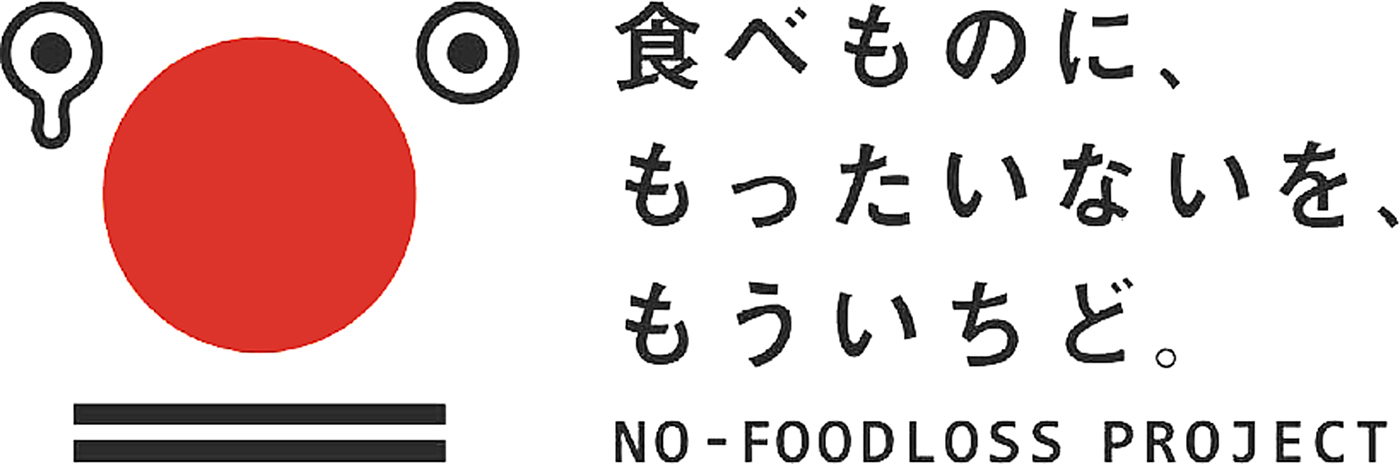
In addition, food waste is rendered a moral issue with the concept of mottainai, which can be roughly translated to refer to not being wasteful, but strongly connotes a moral concern with throwaway culture and environmental degradation. When the government started a national movement for reducing food loss, it adopted the catchphrase “bringing back mottainai to food” (see figure 2).
The logo of the government's national no-food-loss project: “bringing back mottainai to food.”

Mottainai has come to evoke a uniquely Japanese wisdom that precedes modern ecological thought and is something of which Japanese can be proud (Siniawer Reference Siniawer2014). This invocation of mottainai as a national cultural heritage also underpins the idea of mottainai in food waste. The government's promotional song for the reduce-food-loss movement includes the lines “spirit of mottainai Japanese culture that we are proud of / spirit of mottainai let's push it globally” (Consumer Affairs Agency, n.d.). In line with the injunctions of ethical citizenship, food banking is refashioned into a matter of citizens’ responsibility to uphold the traditional Japanese value of mottainai and to help feed each other.
What is the government's response to the kodomo shokud ō? Rather than being taken as a sign of the failure of the social safety net and government inaction regarding food insecurity among children, it is usually seen as a manifestation of the spirit of ō en (support) among citizens. Kato Katsunobu, Minister in Charge of Promoting the Dynamic Engagement of All Citizens, commented,
I hope that this fund will expand the citizen groups’ assistance such as kodomo shokudō or study support and create a network of ō en.… I myself visited a kodomo shokudō the other day and spoke with volunteers and children who use the kodomo shokudō and their parents. I feel that it is very important to have collaboration among local residents, corporations, schools, and local municipalities [and] to have grassroots assistance that is close to children and offered in an integrated manner including but not limited to kodomo shokudō. (Cabinet Office 2016b)
The theme of kodomo shokud ō as ō en among citizens is also evident from another government initiative. Kodomo shokud ō is one of the types of programs that the government hopes will be supported by the Fund to Assist the Future of Children, a privately sourced grant that the government started as a centerpiece of its antipoverty policy. The Fund's PR video similarly emphasizes citizens’ mutual assistance. It features a fashion model who visits a kodomo shokud ō, which it situates as an example of “grassroots activities” that are “helping children to look to the future.” The model talks about how her family was poor but she grabbed the chance to succeed by participating in beauty contests to become a fashion model. In line with the neoliberal ideology of entrepreneurship and individual effort as the ingredients of success, the central message is “If you believe in it, your dream will come true,” to quote her words in the video (Cabinet Office 2016a; see also Cabinet Office 2016c). By featuring individual entrepreneurship and voluntarism, not the public social safety net, the clip reveals the central tenets of ethical citizenship.
In summary, the government's framing of food banks and kodomo shokud ō centers around a moralistic urging toward self-help and mutual help by citizens. The government subtly reframes food banks’ role around environmental and economic issues of food waste, which is primarily the responsibility of corporations and individual consumers. Furthermore, the government uses the concept of mottainai to highlight citizens’ moral and nationalistic obligations. Kodomo shokud ō are seen as ibasho created by communities to help each other out in the age of precarity. Ethical citizenship's trope of self-responsibility and caring among fellow citizens is quite evident in the government's portrayal of hunger relief programs.
Implications
The prominence of nongovernmental actors in providing assistance and communal self-help might be interpreted more as a continuation of past practices than as something unique to neoliberal influence. The literatures on the welfare state and civil society in Japan have noted the prevalence of civil society organizations working in close relation to the state (Haddad Reference Haddad2007; Pekkanen Reference Pekkanen2006; Pharr Reference Pharr, Schwartz and Pharr2003), particularly in social welfare (Kawato, Pekkanen, and Yamamoto Reference Kawato, Pekkanen, Yamamoto and Babb2015). The literature has also noted that Japan's governmental expenditure on social welfare remains relatively low, supplemented by the corporate sector and women's unpaid work (Schoppa Reference Schoppa2008). In addition, the government has enlisted nonstate actors such as neighborhood associations and local welfare commissioners (who are not paid civil servants) to provide social services, a practice going back to before World War II (Garon Reference Garon1998; Takahashi and Hashimoto Reference Takahashi and Hashimoto1997; Yamaoka Reference Yamaoka and Yamamoto1998).
The small government role in welfare provision is therefore not entirely novel, but it is important to recognize the influence of neoliberalism. The earlier ideological basis for a small government role in welfare was rooted not in neoliberalism but what Miura (Reference Miura2012) describes as the combination of statism, productivism, and cooperatism (emphases on building national solidarity, economic growth, and labor-management harmony). Since the 1980s, it was neoliberalism, along with other factors such as electoral politics and demographic shifts, that drove welfare retrenchment. Ogawa (Reference Ogawa2009) also notes how neoliberalism increased the NGO-as-subcontractors model.
A neoliberal effect is also clear in the ethos of communal help. Japan has a long history of community-based poverty relief, but it was justified on religious teachings and the imperial benevolence to be replicated by subjects (Shiigi Reference Shiigi2003; Yamaoka Reference Yamaoka and Yamamoto1998). The neoliberal discourse advocates self-help by casting citizens as bound more by affective ties among citizens and less by citizens’ rights or duties to god, emperor, or the state. In addition, the idea of assistance among the equals diverges from the historic pattern where even community-based groups such as local welfare commissioners tended to be local notables (Takahashi and Hashimoto Reference Takahashi and Hashimoto1997; Tanizawa Reference Tanizawa2006). The neoliberal idea conjures more horizontal relations, and the kodomo shokud ō’s emphasis on sociality rather than charity is a good example of this, at least ideally. Most importantly, ethical citizenship invokes citizens’ mutual assistance as external to and countering the competitiveness of a neoliberal market economy. As Muehlebach (Reference Muehlebach2012, 12, 6, 17) observes, “the ethical labor of citizens is thus much more than merely cheap” and it “allows for the emergence of utopic promise at the heart of neoliberal reform” with the “fantasy of gifting” in “a newly sentimentalized public sphere.” Communal help is presented as antithetical to the cutthroat neoliberal marketplace.
The impacts of neoliberalism on the existing dynamics of the welfare state and civil society documented in this article raise important questions. First, how does the idea of ethical citizenship shape political advocacy by civil society groups? It is noteworthy that none of the kodomo shokudō staff with whom I talked were engaged in policy advocacy to oppose welfare cutbacks. (This is not to say that they were representative of all kodomo shokudō, since the sample was small.) Scholars have pointed out that advocacy (as opposed to service provision) is marginal for the majority of civil society groups in Japan due to the governmental regulations and control, as well as a lack of funding and professional staff (Garon Reference Garon1998; Pekkanen Reference Pekkanen2006; Pharr Reference Pharr, Schwartz and Pharr2003). LeBlanc (Reference LeBlanc1999) also suggested that many women who identified as housewives did not see politics as congruent with their identity or as effective way to address their concerns. This article suggests the need to consider the influence of the discourse of ethical citizenship in pulling community groups away from political advocacy. Food insecurity is ultimately tied to poverty and precarity, and needs to be addressed as such. Consider, for instance, female-headed households, which are likely among the groups most vulnerable to food insecurity (National Institute of Population and Social Security Research 2012). More than half of single mothers are considered to be under the poverty line, yet only 14 percent of them receive public livelihood assistance. Giving them emergency food would probably be appreciated, but it falls far short of addressing the root cause. Advocacy that targets systemic problems—including sexism in the labor market, feminized non-full-time work, and the male breadwinner–centered pension system—is necessary. It is important to emphasize that the limited advocacy is not necessarily because the community groups are unaware of the impacts of neoliberalism and become willing subcontractors for the state; rather, the positioning of voluntarism as antithesis to neoliberalism might satisfy citizen groups as sufficient as oppositional politics.
Second, this article's findings lend urgency to longstanding questions about the governance implications of the balance between government and civil society. The civil society's role in social services can be valued as contributing to efficient and responsive governance. For instance, Haddad (Reference Haddad2007, 165, 166) argued that these “embedded organizations” in Japan that work closely with the government help “keep government accountable to their publics” and work “as mechanisms of democratic accountability.” This article also points to how volunteer organizations such as kodomo shokud ō and food banks are trying to meet the needs of the food insecure in a creative manner. The kodomo shokud ō in particular reflects an expansive interpretation of food insecurity as not simply a matter of food but also a symptom of broader issues of sociality. In contrast to the government, which can be expected to be bureaucratic and inflexible, private entities might be more nimble in devising solutions to unique problems in the community. Furthermore, there is no guarantee that the government's actions will address underlying precarity driven by neoliberalism.
However, the case of food charity also points to profound tensions in the expansive role of civil society groups in the welfare services. One problem is the unevenness of a safety net. That some kodomo shokud ō staff whom I interviewed talked about how their areas were not impoverished is suggestive of this potential gap. Because no data on food insecurity, or even on poverty levels in geographical units smaller than prefectures, are available for Japan, the gaps between charities and actual needs cannot be known. Charity organizations might emerge in places where more human and other resources are present rather than where the need is. The scale of operation is also insufficient. Second Harvest Japan—the largest food bank in the country—estimates that even it is reaching only a fraction of the food insecure in the area it serves. In terms of kodomo shokud ō, there are no data on the total number of children who utilize them, but media accounts suggest that most of them are like those where I interviewed, in that they serve less than fifty people at a time. Given that most kodomo shokud ō also operate infrequently, the number of meals they feed to children must be much smaller than what it would take to actually reach food security. Another problem is the stability of the programs. The extremely rapid expansion of kodomo shokud ō was described by one of the interviewees as “a boom in kodomo shokud ō,” inspired by television and other media reporting on it. While it reflects citizens’ earnest desires to do something about the layered issues of poverty, social isolation, and food insecurity, continuing to operate a kodomo shokud ō in the long run may not be easy. As one interviewee (at the kodomo shokud ō discussed in case 5 above) indicated, even the provision of a once-a-month meal is a lot of work for volunteers. Studies on food banks in other countries have also noted the labor intensity of operating them (Tarasuk and Eakin Reference Tarasuk and Eakin2005).
Furthermore, the yearning for “home” as a refuge from market brutality and relationlessness begs a feminist analysis of ethical citizenship and anti-precarity responses. Counterpoised to the public sphere and the workplace, home and domesticity (and food and feeding in particular) tend to be socially marked as women's space. The degree to which women's cheap or free labor is mobilized is an important topic to explore further.
The problem of food insecurity makes salient the dilemma observed by Allison (Reference Allison2012, 350), in which grassroots networks for “survival and reconnection” can become entrenched in the very structures that are making lives increasingly precarious. The growth in private groups working to feed their fellow citizens can be simultaneously celebrated as a reflection of a caring and moral citizenry and lamented as a sign of the failure of government policies. However, the problems of sociality and those of social safety nets are at risk of being conflated in policymaking in a way that undermines political advocacy for the latter.
Acknowledgments
I would like to thank all the interviewees who shared their stories for this research and the editor and anonymous reviewers for their helpful comments. I would also like to express gratitude to Dr. Uenoya Kayoko and Dr. Futamura Taro at Doshisha University.