



Introduction
The infestation by the ectoparasite Rhipicephalus microplus is one of the main parasitic problems associated with losses in cattle production, mainly in tropical and subtropical regions of the world. The infestation by this tick leads to weight loss, reduced milk production, decreased leather quality and higher production costs. Also, it is one of the vectors of potentially fatal tick-borne diseases, such as anaplasmosis and babesiosis (Lew-Tabor and Rodriguez Valle, Reference Lew-Tabor and Rodriguez Valle2016; Braz et al., Reference Braz, Gomes, Galina, Saramago, Braz, Vaz, Logullo, Fonseca, Campos and Moraes2019).
The main method of tick control has been generally based on the continuous and intensive use of synthetic acaricides on infested cattle. Currently, there are six main classes of acaricides for tick control: organophosphates, formamidines (amitraz), pyrethroids, macrocyclic lactones, phenylpyrazoles (fipronil) and benzoylphenyl ureas (fluazuron). Most of these products act on the tick's nervous system (neurotoxic action), interacting with ion channels, neurotransmitter receptors or enzymes, except for benzoylphenyl ureas, which act by inhibiting chitin synthesis (inhibitors of development) (Agwunobi et al., Reference Agwunobi, Yu and Liu2021).
The systematic and indiscriminate use of these pesticides has favoured the selection of resistant tick strains to different chemical groups available on the market (Silva et al., Reference Silva, Lima, Freitas, Rocha Pita, Santos Luz, Figueiredo, Uzêda, Branco, Costa, Batatinha and Botura2021). The high fecundity and the short life cycle in a single host of R. microplus associated with the high exposure to acaricides have contributed to the acceleration of the resistance process. A recent study reported five annual peaks of R. microplus infestations on animals and pastures that were correlated with climatic conditions, mainly an increase in the environmental temperature (Nicaretta et al., Reference Nicaretta, Zapa, Couto, Heller, Cavalcante, Cruvinel, Melo Júnior, Ferreira, Nascimento, Soares, Borges, Monteiro and Lopes2021). Rhipicephalus microplus has been ranked 6th among the resistant arthropods and resistance to almost every chemical has been reported from different parts of the world (Ghosh et al., Reference Ghosh, Gupta, Ajith Kumar, Sharma, Kumar, Nagar, Kumar, Paul, Fular, Chigure, Nandi, Manjunathachar, Mohammad, Verma, Saravanan and Ray2017; Kumar et al., Reference Kumar, Kumar Sharma and Ghosh2019).
Considering that one of the main mechanisms of resistance is associated with genetic alterations that cause changes in the site of action, there is growing interest in the identification of new molecular targets for the research and development of antiparasitic drugs. It is worth mentioning that a synthetic acaricide with a new action mechanism, used in the control of the cattle tick, has not been released since the introduction of fipronil, in the mid-1990s, which was registered in the USA in 1996 (Agwunobi et al., Reference Agwunobi, Yu and Liu2021). After this period, other new classes of ectoparasiticides were discovered, such as spinosad and isoxazolines, but they are currently not registered for use in cattle. Spinosad is a fermentation metabolite of the actinomycete, Saccharopolyspora spinosa, and its mechanism of action is the disruption in the binding of acetylcholine (Ach) in nicotinic Ach receptors at the postsynaptic cell. The isoxazolines (fluralaner, afoxolaner, lotilaner and sarolaner) and the bispyrazole (tigolaner) act by the inhibition of γ-aminobutyric acid (GABA) chloride channels and glutamate-gated chloride channels (GABACls and GluCls, respectively) of insects and acarids (Rufener et al., Reference Rufener, Danelli, Bertrand and Sager2017; Selzer and Epe, Reference Selzer and Epe2021).
A promising strategy for the research of new active compounds is the application of in silico methods, such as screening by fragment, pharmacophore models and molecular docking (Leveridge et al., Reference Leveridge, Chung, Gross, Phelps and Green2018). These analyses allow one to evaluate the prediction of potential ligand–target interactions, requiring the characterization of molecular targets (protein, receptors) (Davis, Reference Davis2020). Among the acaricide targets, macromolecules related to essential metabolic pathways or specific to parasites are promising to identify antiparasitic candidates with lower toxicity.
In this context, considering the resistance mechanisms developed by R. microplus and the need to discover new molecular targets for pest control, we have investigated previous studies on molecular targets of R. microplus with potential use for the research of new acaricide compounds.
Materials and methods
Literature searches were conducted to identify studies describing molecular targets of R. microplus in electronic databases: PubMed, Science Direct and CAB Direct. The following descriptors were used: ‘Rhipicephalus microplus’, ‘Boophilus microplus’, ‘molecular targets’ and ‘action’, using the Boolean operator ‘AND’. The inclusion criteria were: (1) peer-reviewed articles (experimental research and review manuscripts) without geographical limitation; (2) articles written in the English language and published between January 2010 and June 2021 and (3) studies related to the molecular target of the R. microplus species for acaricide product. Articles not found through databases and those that did not meet the selection criteria, comprising editorials, letters, book chapters, studies about molecular targets to vaccines and research in other tick species were excluded.
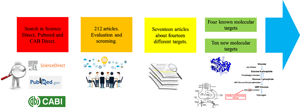
Literature was initially screened by the title and abstract, and citations judged as potentially eligible were obtained as full text. The full-text publications were evaluated considering inclusion and exclusion criteria previously described. The selection was performed by two independent evaluators, and, in case of disagreement, the study was discussed between reviewers so that a consensus could be reached. Figure 1 shows a flowchart of the methodology employed to perform this work and the number of articles evaluated.
Flowchart of the process of articles included to review the molecular targets of Rhipicephalus microplus for the development of new tick control compounds.

Results and discussion
Firstly, 212 studies were identified, of which 17 met selection criteria (15 articles were searched in ScienceDirect, 1 article on PubMed and CAB Direct was found in both platforms). It can see a greater number of publications in 2013 (4), while no publications about the theme were found in 2010, 2012 and 2016. The studies were performed in 6 different countries, and Brazil and USA had the larger number of publications (6 articles in each). Brazil plays an important role in global livestock production and tick infestation in cattle causes considerable economic losses in this country (Calvano et al., Reference Calvano, Brumatti, Barros, Garcia, Martins and Andreotti2021).
Molecular targets of R. microplus
This review identified 14 molecular targets of R. microplus associated with anti-tick activity. Among these, there are targets related to enzymes that participate in the energetic metabolism [glycogen synthase kinase 3β (GSK-3β), hexokinase, triosephosphate isomerase (TIM), NADH cytochrome c reductase, succinate cytochrome c reductase and glutamate dehydrogenase], in the detoxification mechanism [glutathione S-transferase (GST)], in neurotransmission [glutamate decarboxylase (GAD)] and in neuropeptide receptors [leucokinin-like peptide receptor (LKR) and CAP2b receptor (periviscerokinin)]. Four known targets of commercial acaricides, with neurotoxicity action, were found: acetylcholinesterase (AChE; organophosphates and carbamates), GABACls and GluCls (macrocyclic lactones and isoxazolines) and octopamine/tyramine receptor (amitraz) (Table 1).
Molecular targets and their physiological functions in R. microplus

The characteristics of each target identified in this work, as well as their potential use in the development of acaricides, are discussed below.
Glutathione S-transferase
GSTs (EC: 2.5.1.18) are present in a great variety of tissues in almost all of the eukaryotes. They are an enzyme family involved in the biotransformation of several xenobiotics, in the presence of glutathione (GSH) (Parizi et al., Reference Parizi, Utiumi, Imamura, Onuma, Ohashi, Masuda and Vaz2011).
The increase in GST activity in resistant strains of tick species, including R. microplus, was reported in literature (Nandi et al., Reference Nandi, Singh and Singh2015; Fular et al., Reference Fular, Sharma, Kumar, Nagar, Chigure, Ray and Ghosh2018). This increase is probably related to the GST participation in the metabolic detoxification of xenobiotics in arthropods because it catalyses the conjugation of glutathione (GSH) with molecules containing an electrophilic centre (thioether bond is formed between the sulphur of GSH and the substrate). The conjugated products are more water soluble, and consequently can be quickly eliminated (Bandara and Karunaratne, Reference Bandara and Karunaratne2017; Le Gall et al., Reference Le Gall, Klafke and Torres2018).
Besides the function of detoxification of xenobiotics, the GSTs also perform other important physiological roles, such as sequestration and transport of endogenous hydrophobic compounds, such as hormones, steroids, haem, bilirubin and bile acids. This enzyme showed a strong positive correlation with lipid peroxidation, an indication that it plays a role in oxidant protection in R. microplus eggs (Freitas et al., Reference Freitas, Rosa, Moraes, Campos, Logullo, Vaz and Masuda2007).
Sabadin et al. (Reference Sabadin, Salomon, Leite, Benfato, Oliveira and Silva Vaz2021) analysed expression profiles of three genes that codify GST (SG2, GST4 and GST3) in engorged and partially engorged females of R. microplus and demonstrated that the GST3 gene was transcribed in all tested organs (salivary glands, ovaries, midguts and fat bodies), while GST4 genes were transcribed in the fat body. This ubiquitous transcription pattern suggests that the GST3 gene has substrates present in several organs, probably related to a common cellular function such as protection against oxidative stress, acting in S-glutathionylation.
Considering these physiological functions, GST represents a potential molecular target of acaricides since the inhibition of GST activity can cause tick death. The association of commercial acaricides with GST inhibitors may decrease the resistance of ticks to antiparasitic products. Le Gall et al. (Reference Le Gall, Klafke and Torres2018) demonstrated that a combined treatment of ivermectin and diethyl maleate, a GST-specific inhibitor, increased the mortality by 30% in an ivermectin-resistant strain compared with the mortality of the same strain treated only with ivermectin. The in vitro effect of terpenes isolated from Arisaema anurans on R. microplus was associated with multiple mechanisms of action, including the inhibition of GST activity (Jia et al., Reference Jia, He, Wang, Dai and Zhu2018).
Enzymes related to energetic metabolism
The carbohydrate metabolism represents an essential role in the physiology and development for most living organisms, such as in arthropods’ embryogenesis. A number of biosynthetic pathways are activated to support the process of cellular growth and differentiation, as well as embryonic growth. The high energy demanded by the developing embryo is supplied by the catabolism of biomolecules such as carbohydrates and lipids, which participate in other biosynthetic pathways (Moraes et al., Reference Moraes, Galina, Alvarenga, Rezende, Masuda, Vaz and Logullo2007; Silva et al., Reference Silva, Vital, Fonseca, Martins, Lemos, Vaz and Logullo2019).
Variations in glucose and glycogen levels during R. microplus embryogenesis are related to glycolysis and gluconeogenesis (Moraes et al., Reference Moraes, Galina, Alvarenga, Rezende, Masuda, Vaz and Logullo2007). In the first stage from embryogenesis (from oviposition to the cellular blastoderm), an increase in the consumption of glycogen occurs, while the second stage (from the blastoderm to larval hatching) is characterized by intense gluconeogenesis (Braz et al., Reference Braz, Gomes, Galina, Saramago, Braz, Vaz, Logullo, Fonseca, Campos and Moraes2019).
Hexokinase (EC 2.7.1.1), the first enzyme of glycolytic pathways, phosphorylates glucose to glucose-6-phosphate, the essential substrate to cellular biosynthesis (Moraes et al., Reference Moraes, Galina, Alvarenga, Rezende, Masuda, Vaz and Logullo2007). In R. microplus, this enzyme is found on cytosol or in the outer membrane of mitochondria. The inhibition of hexokinase can cause deleterious effects on the tick, such as the production of reactive oxygen species (ROS) and reduction of ATP levels (Fraga et al., Reference Fraga, Ribeiro, Lobato, Santos and Silva2013; Braz et al., Reference Braz, Gomes, Galina, Saramago, Braz, Vaz, Logullo, Fonseca, Campos and Moraes2019). Then, the enzymes involved in energetic metabolism during embryogenesis represent potential molecular targets for parasitic control, since they may interfere with embryonic development and consequently interrupt the life cycle of the tick (Logullo et al., Reference Logullo, Witola, Andrade, Abreu, Gomes, Vaz, Imamura, Konnai, Ohashi and Onuma2009).
Another important enzyme present in the glycolytic and gluconeogenic pathways is TIM (EC 5.3.1.1), responsible for the catalysis of the reversible interconversion of dihydroxyacetone phosphate and glyceraldehyde-d-phosphate. TIM is the only enzyme of R. microplus whose crystallographic structure was obtained from X-ray diffraction, and it was deposited in the Protein Data Bank (PDB ID: 3TH6) (Moraes et al., Reference Moraes, Arreola, Cabrera, Saramago, Freitas, Masuda, Vaz, Gomez-Puyou, Perez-Montfort, Gomez-Puyou and Logulloet2011). This enzyme belongs to the (βα)8-barrel class of proteins in which 8 parallel β-strands form the central core of the barrel, surrounded by 8 α-helices (Yang et al., Reference Yang, Chen, Hurlburt, Li, Zhang, Fei, Shen, Cao and Liu2017; He et al., Reference He, Zhang, Shen, Guo, Ren, Xie, Gu, Lai, Peng and Yang2018).
TIM from various parasites has been extensively studied, and their three-dimensional (3D) structure and catalytic properties from different species are very similar. This enzyme plays an essential role in the production of ATP in glycolysis and represents a promising target for drug design against pathogens, which depends on glycolytic metabolism (Kumar et al., Reference Kumar, Bhargava and Roy2012; Romero-Romero et al., Reference Romero-Romero, Becerril-Sesín, Costas, Rodríguez-Romero and Fernández-Velasco2018). Despite a great structural similarity among the species, one can use non-conserved amino acid residues to get selective inhibitors to homologue enzymes (Tungtur et al., Reference Tungtur, Meinhardt and Swint-Kruse2010).
Investigations about the effects of dimerization on the activity and the role of loop motions in the catalysis of TIM indicate that dimerization is necessary for their stability and proper conformation of the active site loops. Thermodynamic studies indicate that the energy required to dissociate the homodimer in TIM is greater than the energy required to unfold the monomers. Furthermore, several studies proposed that a cysteine (Cys) residue located at the interface stands out as a promising target because molecules that interact with exposed cysteines, such as methyl methane thiosulphonate (MMTS), inhibit TIMs from various species (Kumar et al., Reference Kumar, Bhargava and Roy2012; Lopez-Zavala et al., Reference Lopez-Zavala, Carrasco-Miranda, Ramirez-Aguirre, López-Hidalgo, Benitez-Cardoza, Ochoa-Leyva, Cardona-Felix, Diaz-Quezada, Rudiño-Piñera, Sotelo-Mundo and Brieba2016; Chang et al., Reference Chang, Park, Colquhoun, Khoury, Seangmany and Schwans2018).
Moraes et al. (Reference Moraes, Arreola, Cabrera, Saramago, Freitas, Masuda, Vaz, Gomez-Puyou, Perez-Montfort, Gomez-Puyou and Logulloet2011) investigated TIM from R. microplus embryos (BmTIM) and observed that BmTIM is a homodimer with amino acid sequence, secondary structure and kinetic parameters like other TIMs already described. However, BmTIM is richer in Cys moieties, which are significantly accessible to interact with molecule inhibitors. The authors also reported that BmTIM shows high sensitivity to the action of the thiol reagents dithionitrobenzoic acid and mMMTS. TIM inhibition can promote an increase in the formation of methylglyoxal (intermediary metabolite of the reaction catalysed by TIM), a harmful molecule for ticks (Braz et al., Reference Braz, Gomes, Galina, Saramago, Braz, Vaz, Logullo, Fonseca, Campos and Moraes2019).
Another important enzyme in arthropod metabolism is GSK-3 (EC: 2.7.11.26), which acts mainly in the glycogen metabolism regulation, through the inhibition of glycogen synthase enzyme during embryonic development. This enzyme is present in the cytoplasm, mitochondria, nucleus and other subcellular compartments. GSK-3 is considered as a multifunctional enzyme since it is involved in various cellular processes such as glucose metabolism, apoptosis, cell proliferation, transcription, cell migration and immune response (Saraswati et al., Reference Saraswati, Ali Hussaini, Krishna, Babu and Kamal2018). These multiple actions can be explained by its capacity to interact with some different substrates. Studies reported that about 100 proteins are phosphorylated by GSK-3 (Sutherland, Reference Sutherland2011; Waltero et al., Reference Waltero, Martins, Calixto, Fonseca, Abreu, Silva Vaz and Logullo2020). In the tick R. microplus, only an isoform from the enzyme was identified, GSK-3β, and the ovaries represent the main transcription site. GSK-3β inhibition may lead to a reduction of oviposition and egg viability (Waltero et al., Reference Waltero, Martins, Calixto, Fonseca, Abreu, Silva Vaz and Logullo2020).
Enzymes related to mitochondrial respiratory chain have also been studied for the identification of new potential molecular targets for tick control. The respiratory chain consists of four multi-enzymatic protein complex and electron carriers, such as Q co-enzyme and cytochrome c. Among these enzymes, the complex NADH cytochrome c reductase and succinate cytochrome c reductase stands out, which participates in important stages of ATP production. Mitochondrial respiratory chain changes are related to the increase in intracellular levels of ROS, which can compromise the development of ticks at different stages (Braz et al., Reference Braz, Gomes, Galina, Saramago, Braz, Vaz, Logullo, Fonseca, Campos and Moraes2019).
Braz et al. (Reference Braz, Gomes, Galina, Saramago, Braz, Vaz, Logullo, Fonseca, Campos and Moraes2019) investigated the in vitro activity of 3-bromopyruvate (3-BrPA) against different molecular targets from R. microplus and demonstrated that 3-BrPA inhibited the activity from hexokinase, TIM, NADH cytochrome c reductase, succinate cytochrome c reductase and glutamate dehydrogenase. These effects against different metabolic pathways were related to the death of embryo-derived cells and the reduction from cellular respiration in developing embryos.
Octopamine and tyramine receptors
Octopamine (OA) and tyramine (TA), biogenic amines found in several invertebrates, are characterized as neurotransmitters, neurohormones and neuromodulators. In arthropods, the tyraminergic/octopaminergic system bears a relation with the adrenergic system in vertebrates (Cossío-Bayúgar et al., Reference Cossío-Bayúgar, Miranda-Miranda, Narváez Padilla, Olvera-Valencia and Reynaud2012).
These neurotransmitters act in different physiological functions and behaviours from invertebrates, such as egg-laying, aggressive behaviours, feeding rates and defensive jumping. Firstly, TA was considered only as a precursor for the synthesis of OA. However, literature suggests that it is an independent neurotransmitter because it has a different localization within the insect nervous system, different receptors and transporters; in some cases, it can behave as an OA antagonist (Cossío-Bayúgar et al., Reference Cossío-Bayúgar, Miranda-Miranda, Fernández-Rubalcaba, Padilla and Reynaud2015).
The octopaminergic/tyraminergic receptors have been classified in different groups, namely α-adrenergic-like (αOCT), β-adrenergic-like (βOCT) and octopamine/tyramine (OCT/Tyr) or tyraminergic type 1 (TA/AO or TAR1), tyraminergic type 2 (TAR2) and 3 (TAR3), although TAR3 is only identified in Drosophila melanogaster (Wu et al., Reference Wu, Xu, Qi, Xia, Huang and Ye2014; Baron et al., Reference Baron, Van Der Merwe, Madder and Maritz-Olivier2015). The activation of these receptors induces transient alterations in the intracellular concentration of cyclic-AMP and calcium. The OA receptors have been extensively studied as acaricide targets, and an example of OA agonist is amitraz, which causes neuronal hyperexcitability and tick death (Ohta and Ozoe, Reference Ohta and Ozoe2014; Baron et al., Reference Baron, Van Der Merwe, Madder and Maritz-Olivier2015).
The effect of OA, TA and 83 adrenergic compounds was screened for their ability to block oviposition in R. microplus by Cossío-Bayúgar et al. (Reference Cossío-Bayúgar, Miranda-Miranda, Narváez Padilla, Olvera-Valencia and Reynaud2012). They identified inhibition of oviposition in this tick at pharmacological concentrations of different molecules: α-agonists (10), α-antagonists (3), β-adrenergic agonists (5), β-antagonists (7) and norepinephrine. The most potent molecules are TA and other α-adrenergic, while the OA was not active, suggesting that oviposition is primarily controlled by the tyraminergic pathway. In ticks, oviposition occurs on a massive and nearly explosive basis, probably requiring extensive smooth muscle contraction, which is mediated by TA (Cossío-Bayúgar et al., Reference Cossío-Bayúgar, Miranda-Miranda, Narváez Padilla, Olvera-Valencia and Reynaud2012).
The TA receptor type 1 from R. microplus was expressed to heterologous form in ovary cells from Chinese hamster and it showed 39 times more power to TA compared to OA. Furthermore, the expressed receptor was strongly antagonized by yohimbine and cyproheptadine, and mildly antagonized by mianserin and phentolamine. Agonistic or modulatory activity against the expressed receptor was observed by tolazoline, naphazoline and BTS-27271 (amitraz metabolite). However, BTS-27271 activity was only observed in the presence of TA (Gross et al., Reference Gross, Temeyer, Day, Pérez De León, Kimber and Coats2015). The activity of terpenoids against the TA receptor from R. microplus was related by Gross et al. (Reference Gross, Temeyer, Day, Pérez De León, Kimber and Coats2017), who observed agonist action from pulegone and a modulator activity by carvacrol, isoeugenol and 1,4-cineole. These authors indicate that the TA receptor can represent a possible target for the action of new compounds for tick control.
Neuropeptide receptors: leucokinin-like peptide receptor and periviscerokinin receptor
Ticks, particularly haematophagous ectoparasite, consume large amounts of blood in a single feeding and need to remove excessive water after a blood meal. Like haematophagous insects, this complex regulation is mediated by different neuropeptides (Neupert et al., Reference Neupert, Predel, Russell, Davies, Pietrantonio and Nachman2005).
Leucokinin-like neuropeptides, also known as leucokinin or kinins, were found in invertebrates and they are associated with different physiological effects, such as myotropic and diuretic activities. The receptors of this family of peptide (LKR, leucokinin receptor and kinins receptor) are coupled to the G protein (GPRS) and are present in all life stages of a tick in both sexes (Holmes et al., Reference Holmes, He, Chen, Lvie and Pietrantonio2000; Pietrantonio et al., Reference Pietrantonio, Xiong, Nachman and Shen2018; Brock et al., Reference Brock, Temeyer, Tidwell, Yang, Blandon, Carreón-Camacho, Longnecker, Almazán, Pérez De León and Pietrantonio2019).
Leucokinin-like neuropeptides play important functions in insects, including digestive enzyme release, regulation of water balance and pre-ecdysis control (Kersch and Pietrantonio, Reference Kersch and Pietrantonio2011; Pietrantonio et al., Reference Pietrantonio, Xiong, Nachman and Shen2018). However, knowledge about physiological functions from this family of neuropeptides in ticks is still limited (Brock et al., Reference Brock, Temeyer, Tidwell, Yang, Blandon, Carreón-Camacho, Longnecker, Almazán, Pérez De León and Pietrantonio2019). In an analogy with insects, tissues expressing leucokinin receptors in ticks may be involved in water balance or neuromodulation such as the Malpighian tubules and hindgut, or the central nervous system (synganglion) (Holmes et al., Reference Holmes, He, Chen, Lvie and Pietrantonio2000).
Brock et al. (Reference Brock, Temeyer, Tidwell, Yang, Blandon, Carreón-Camacho, Longnecker, Almazán, Pérez De León and Pietrantonio2019) identified, by immunolocalization, the presence of LKR in the midgut of R. microplus female. These authors carried out the process of silencing the LKR genes and observed alterations in reproductive parameters of females, such as decreases in weights of egg masses and in the percentages of eggs hatched per egg mass, as well as delays in time of oviposition and egg hatching. Considering that LKR is a selective G protein-coupled receptor (GPCR) only found in invertebrates, it can be considered a promising target for R. microplus control.
Another important neuropeptide found in arthropods is the cardioacceleratory peptide 2b (CAP2b)/periviscerokinin (PVK), also associated with the regulation of the processes of diuresis and/or antidiuresis in a variety of insects (Nachman et al., Reference Nachman, Wang, Etzkorn, Kaczmarek, Zabrocki, Lopez and Coast2013). Yang et al. (Reference Yang, Bajracharya, Castillo, Nachman and Pietrantonio2013) cloned and functionally characterized the first Rhimi-CAP2b-R receptor from R. microplus. The analyses of the predicted protein sequence, phylogenetics and functional expression indicate that this receptor is the orthologue of the insect CAP2b/PVK. The expression of Rhimi-CAP2b-R was detected in synganglion, salivary gland, Malpighian tubule and in the ovary of female ticks.
γ-Aminobutyric acid- and l-glutamate-gated chloride channels
GABACls and GluCls are members of the Cys-loop receptor channel family characterized by a large N-terminal extracellular domain, four transmembrane domains (M1–M4) and a long, variable intracellular loop connecting the M3 and M4 segments as the hallmarks of every subunit (Ozoe, Reference Ozoe2013). Both channels are widely distributed in the nervous system and neuromuscular junctions from invertebrates, and act as neurotransmitter receptors to mediate inhibitory synaptic transmission.
The GABACls and GluCls channels are molecular targets from acaricides used in the control of ectoparasites, as phenylpyrazoles, macrocyclic lactones and isoxazolines. The compounds of phenylpyrazole classes (fipronil) act, especially, to block the GABACls promoting parasite death by hyperexcitability. Macrocyclic lactones (avermectins and milbemycins) activate GABACls and GluCls in invertebrates (Ozoe, Reference Ozoe2013; Rufener et al., Reference Rufener, Danelli, Bertrand and Sager2017; Bae and Kwon, Reference Bae and Kwon2020). These actions result in a block of nervous stimulus transmission, causing immobilization and paralysis of the parasite. Compounds of the isoxazoline class (fluralaner, lotilaner) act as non-competitive antagonists from GABACls channels, and to a lesser extent, they also show inhibitory action against GluCls (Gassel et al., Reference Gassel, Wolf, Noack, Williams and Ilg2014; Rufener et al., Reference Rufener, Danelli, Bertrand and Sager2017).
Glutamate decarboxylase
Besides GABACls channels, other components from the GABAergic system can represent molecular targets, but that is still too little scientifically explored (Ilg et al., Reference Ilg, Berger, Noack, Rohwer and Gaßel2013). This system is composed of four primary parts: GABA synthesis by GAD action, GABA catabolism by GABA-transaminase, GABA transporters and GABA receptors (Dionisio et al., Reference Dionisio, Rosa, Bouzat and Esandi2011; Ilg et al., Reference Ilg, Berger, Noack, Rohwer and Gaßel2013; Tang et al., Reference Tang, Li, Shi, Jia, Dong, Jiao, Wang, Xu, Yao and Kan2020).
GAD (EC 4.1.1.15) is an enzyme that catalyses the irreversible α-decarboxylation of l-glutamate to GABA. GAD is a key enzyme in the dynamic regulation of neural network excitability because both its substrate and product are neurotransmitters and exhibit opposite actions (l-glutamate – excitatory effect and GABA – inhibitory action). GAD is considered as an initiator on the GABAergic system and is frequently used as a molecular marker from GABAergic neurons (Li et al., Reference Li, Wang, Qiu, Wang, Xin, Xu, Wang and Song2016; Tang et al., Reference Tang, Li, Shi, Jia, Dong, Jiao, Wang, Xu, Yao and Kan2020).
The GAD activity was reported in various arthropods, including insects (cockroach, grasshopper, moth, bee and fly) and ectoparasites (Ctenocephalides felis and R. microplus) and the functional proprieties of arthropod GADs are analogous to mammals (Ueno, Reference Ueno2000).
Considering that the block of chloride channels controlled by GABA is lethal to ticks, it is expected that the negative regulation of the production of GABA, through GAD inhibition, has the potential to produce the same phenotype. Ilg et al. (Reference Ilg, Berger, Noack, Rohwer and Gaßel2013) evaluated the effect of 109 591 compounds on the GAD of C. felis and R. microplus using high-throughput inhibitor screening methods. Barbituric acid and phenothiazine derivative show a more potent effect on arthropod GADs (IC50 = 14.9 μ m and 28.4 μ m, respectively) in comparison with mouse GAD forms (IC50 = 59.3 μ m and >100 μ m, respectively). These two compounds appear to be promising molecules for the design of parasiticidal products.
Acetylcholinesterase
AChE, target carbamate and organophosphate acaricide, is a central enzyme from the eukaryotic nervous system and it acts on Ach hydrolyses. When AChE is inactivated, there is the accumulation of Ach and the excitation neural time is consequently extended, causing paralysis and the death of ticks (Temeyer et al., Reference Temeyer, Olafson, Brake, Tuckow, Li and Perez de Leon2013).
AChE transcription is different among the species: a single gene is responsible for the transcription in vertebrates (Massoulié et al., Reference Massoulié, Anselmet, Bon, Krejci, Legay, Morel and Simon1998), while in invertebrates, it is associated with different genes (Fournier et al., Reference Fournier, Mutero and Rungger1992; Ilg et al., Reference Ilg, Schmalz, Werr and Cramer2010). In R. microplus, three genes were identified that codify AChEs: RmAChE1 (Baxter and Barker, Reference Baxter and Barker1998), RmAChE2 (Hernandez et al., Reference Hernandez, He, Chen, Ivie, George and Wagner1999; Baxter and Barker, Reference Baxter and Barker2002) and RmAChE3 (Temeyer et al., Reference Temeyer, Darvey and Chen2004).
RmAChE1, RmAChE2 and RmAChE3 were biochemically characterized from the baculovirus expression by Temeyer et al. (Reference Temeyer, Pruett and Olafson2010), who attested that the three forms had properties to degrade Ach. RmAChE 1 shows a higher affinity to Ach and is considered as the most important isoform for tick survival. The post-transcriptional gene silencing by RNA interference was used by Temeyer et al. (Reference Temeyer, Olafson, Brake, Tuckow, Li and Perez de Leon2013) to investigate the functional role from three RmAChEs, and they suggest that there is a functional complementation by RmAChEs genes in vivo, but their specific functional role is still not elucidated.
The different classes of synthetic and natural compounds have been studied against R. microplus cholinesterase. Swale et al. (Reference Swale, Tong, Temeyer, Li, Lam, Totrov, Carlier, Pérez De León and Bloomquist2013) characterized the inhibitor profiles of AChE from R. microplus (RmAChE1) compared to human and bovine AChEs, and showed that RmAChE had low sensitivity to tacrine, and a serial of dimer bis(n)-tacrine compounds. The crystallographic structure of R. microplus cholinesterases is not still available, thus 3D models were developed by molecular homology to predict the in silico potential of AChE inhibitors. Cerqueira et al. (Reference Cerqueira, Santana, Araújo, Lima, Batatinha, Branco, Santos Junior and Botura2021) built a 3D model of AChE1 and conducted docking studies with flavonoids. Among the evaluated flavonoids, quercetin presented high affinity to RmAChE1 and exhibited in vitro larvicidal effect.
Prado-Ochoa et al. (Reference Prado-Ochoa, Ramírez-Noguera, Díaz-Torres, Garrido-Fariña, Vázquez-Valadez, Velázquez-Sánchez, Muñoz-Guzmán, Angeles and Alba-Hurtado2014) evaluated the in vitro effects produced by the new synthetic carbamates [ethyl-(4-bromophenyl) carbamate and ethyl-(4-chlorophenyl) carbamate] on two R. microplus strains. The anti-tick effects of these compounds were independent of AChE inhibition and the action of carbamates probably occurred due to morphological alterations in the reproductive organs (vitellogenesis and viability of the ovarian cells). The in vitro larvicidal effect of alkaloids (berberine and piperine) on R. microplus was correlated with AChE inhibition by Silva et al. (Reference Silva, Lima, Freitas, Rocha Pita, Santos Luz, Figueiredo, Uzêda, Branco, Costa, Batatinha and Botura2021). These authors characterized the molecular inhibition profile through in silico studies (docking and molecular dynamic) and reported that berberine interacts with RmAChE1 by π-stacking, cation-π and hydrophobic bonds with peripheral anionic site residues.
Among the targets described in this review, only four are associated with mechanisms of action of acaricides available on the market. However, the R. microplus presented several enzymes and receptors that are of pharmaceutical interest and could be used in the search for new acaricides.
Concluding remarks
The characterization of molecular targets from a tick is essential for the search for novel, more effective and more selective anti-tick compounds, with less risk to human and animal health. In this review, we were able to describe 14 molecular targets of R. microplus: four known targets of commercial products with action in the nervous system (AChE, GABA- and l-glutamate-gated chloride channels and OA and TA receptors) and 10 new molecular targets (enzymes and neuropeptide receptors) that can cause changes to the homoeostasis, reproductive parameters and neurotoxic effects. The enzymes are related to energetic metabolism (hexokinase, triosephosphate isomerase, GSK-3β), respiratory process (NADH cytochrome c reductase, succinate cytochrome c reductase and glutamate dehydrogenase), neurotransmitter activation (GAD) and detoxification mechanism (GST). The neuropeptide receptors [LKR and CAP2b (periviscerokinin) receptor] are important for hydric equilibrium and neuromodulation. These targets can be useful to identify compounds able to act in resistant strains through new action mechanisms or different molecular interactions in known targets.
This review gives an overview of molecular targets of R. microplus that are essential to parasite life, over the past 10 years. Knowledge about the molecular target enables the search for molecules with greater selectivity, improving their action and reducing toxicity. The new approaches and targets described in this study provide the basis for the research of novel antiparasitic agents, especially in target-based drug design, which represents a valuable route for drug design.
Acknowledgements
The authors acknowledge the Programa de Pós-Graduação em Biotecnologia (PPGBiotec) of the Universidade Estadual de Feira de Santana (UEFS) for all the support for the research.
Author contributions
Amanda Ponce Morais Cerqueira: study conception and design, data collection, analysis and interpretation of data, manuscript preparation. Matheus da Cunha Santos: data collection, analysis and interpretation of data and draft manuscript preparation. Manoelito Coelho dos Santos Junior: study conception and design, supervision and manuscript review. Mariana Borges Botura: study conception and design, funding acquisition, project administration, supervision and manuscript review.
Financial support
The authors acknowledge the Fundação de Amparo à Pesquisa do Estado da Bahia (FAPESB) and Universidade Estadual de Feira de Santana (UEFS) for the financial support.
Conflict of interest
None.



