

Introduction
In the USA and Europe, between 70% and 86% of deaths have been attributed to chronic diseases (World Health Organisation Europe, 2006; Centers for Disease Control and Prevention, 2007). These diseases have a major impact on disability and quality of life as well as being the main cause of premature mortality. They also account for a high proportion of health care costs. Chronic diseases are likely to increase in absolute and relative importance as further progress is made in reducing the burden from communicable diseases in low and middle income countries and as obesity and other risk factors impact on population health throughout the world (WHO, 2005).
Health care systems are beginning to rise to this challenge by placing higher priority on the prevention of disease and by considering how to reorient the provision of care to support not only people with life-threatening acute medical conditions but also those with chronic illnesses. Kane et al. (Reference Kane, Priester and Totten2005) have described the principal differences between acute care and chronic care and have emphasised that a paradigm shift in the provision of health care is required to meet the needs of a population in which most of the disease burden is attributable to chronic diseases. The paradigm shift calls for a radical reappraisal of current patterns of investment in health care if changing population needs are to be met effectively.
This paper traces the history of attempts in the last decade to give higher priority to chronic care, starting with a description of the Chronic Care Model developed by Wagner and colleagues and summarising evidence on its impact. This is followed by a review of international evidence on gaps in the quality of chronic care. These gaps suggest that, useful and influential as the Chronic Care Model is, more is needed to help health care decision makers bring about the reorientation required to meet the needs of populations in which chronic diseases predominate.
The second half of the paper therefore sets out the ten characteristics and four implementation strategies needed in a high-performing chronic care system. In doing so, it builds on the work of Wagner (Reference Wagner1998) and Kane et al. (Reference Kane, Priester and Totten2005) to provide practical guidance to policy makers and health care leaders on the most promising strategies for improving the provision of chronic care, drawing particularly on experience and evidence from USA, England and New Zealand. The need for practical guidance of this kind derives from experience of working with policy makers and health care leaders who are grappling with the challenge of what they can do to make progress based on available evidence and experience in different systems.
The paper is based on a combination of methods and sources. In the first half of the paper, evidence from reviews of existing research is used to describe the way in which the Chronic Care Model has been applied in different systems and to assess the impact of the Model (Singh and Ham, Reference Singh and Ham2006). This is supplemented by a summary of evidence on chronic care programmes drawn from systematic reviews (Singh, Reference Singh2005a; Zwar et al., Reference Zwar, Harris, Griffiths, Roland, Dennis, Powell Davies and Hasan2006) and of survey evidence on gaps in the quality of chronic care in different countries (Schoen et al., Reference Schoen, Osborn, Huynh, Doty, Peugh and Zapert2006). The second half of the paper blends evidence from research with personal experience of policy making in the English National Health Service (NHS) and visits to study chronic care policies and practices in USA and New Zealand.
In setting out the characteristics of the high-performing chronic care system in this way, the paper seeks to combine academic rigour on the one hand with policy relevance on the other. Specifically, it aims to join an understanding of the evidence base with an appreciation of the reality of formulating and implementing policy on the ground, informed by first-hand exposure to the experience of three countries at different stages in their reorientation to the needs of the chronic care populations they serve. The opportunity to spend time in England, New Zealand and USA comparing and contrasting the approach taken to the prevention and management of chronic diseases, was particularly helpful in distilling the characteristics of the high-performing system described here, not least through debate and discussion with those involved in work at the leading edge of reform. The learning gained from these countries was supplemented by a visit to Denmark and Sweden to study chronic care policies in northern Europe.
The Chronic Care Model
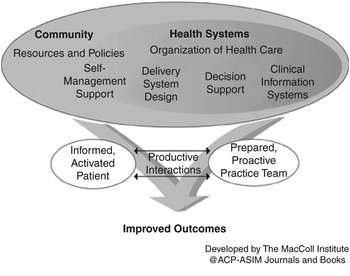
The Chronic Care Model developed by Wagner provides a framework for describing the elements needed in a system that aspires to provide high-quality care for people with chronic diseases (Wagner, Reference Wagner1998). The Model was based on a review of available literature about promising strategies for chronic illness management, much of which derived from experience in European health care systems. Key elements in the Model are the community, the health system, self-management support, delivery system design, decision support and clinical information systems. Later refinements of the Model by Wagner and colleagues included an emphasis on patient safety, care coordination and case management. The Model has been described as “a functional blueprint or template, as well as a set of organising principles, for basic changes to support care that is evidence-based, population-based and patient-centred. It defines the broad areas that must be considered (e.g. information systems, self-management support), but not a specific set of interventions; rather, it is a framework in which improvement strategies can be tailored to local conditions” (Glasgow et al., Reference Glasgow, Orleans, Wagner, Curry and Solberg2001: 581) (Figure 1).
The Chronic Care Model

The Chronic Care Model has been used in a range of settings to support the reorientation from acute care to chronic care (Singh and Ham, Reference Singh and Ham2006). The WHO’s Innovative Care for Chronic Conditions Framework is an example. Other approaches include the Expanded Chronic Care Model developed in British Columbia, which gives greater attention to population health than the original Model, and the NHS and Social Care Model used in the English NHS. Australia and New Zealand have also drawn inspiration from the Chronic Care Model, both in the development of national frameworks and in strategies developed by individual states and regions (National Health Priority Action Council, 2006; National Health Committee, 2007).
There have been a number of evaluations of the Chronic Care Model. A systematic review of 41 studies found that multifaceted professional interventions and organisational interventions that facilitate structured and regular review of patients with diabetes were effective in improving the process of care (Renders et al., Reference Renders, Valk, Griffin, Wagner, van Eijk and Assendelft2001). The addition of patient education and the enhancement of the role of nurses led to improvements in the process and outcomes of care. Another systematic review reported that in most studies interventions based on the elements of the Model improved at least one process or outcome measure for diabetic patients (Bodenheimer et al., Reference Bodenheimer, Wagner and Grumbach2002). The same review found evidence of reduced costs or lower use of services for patients with congestive heart failure, asthma and diabetes.
A meta-analysis of a number of studies found that no single element in the Model was essential to improving outcomes but that changes to delivery system design significantly improved processes and outcomes, as did self-management support (Tsai et al., Reference Tsai, Morton, Mangione and Keeler2005). Other work has also emphasised that it is the cumulative effect of the different elements of the Model that is likely to have the greatest impact, rather than individual elements (Bodenheimer et al., Reference Bodenheimer, Wagner and Grumbach2002). A series of studies by researchers at RAND reported better processes and outcomes of care from use of the Model in relation to adults and children with conditions such as asthma, diabetes, heart failure and depression (http://www.rand.org/health/projects/icice/findings.html). RAND also found that teams participating in a collaborative programme were able to make improvements in care in line with the Model and most of these improvements were sustained after a year (Pearson et al., Reference Pearson, Wu, Schaefer, Bonomi, Shortell, Mendell, Marsteller, Louis, Rosen and Keeler2005).
Evidence on chronic care programmes
These findings echo the results of other reviews of the evidence on chronic care programmes. A project undertaken by the Australian Primary Health Care Research Institute used the Chronic Care Model as a framework for undertaking a systematic review of the evidence of interventions for chronic disease management in primary health care and found benefits of self-management support, particularly for diabetes and hypertension (Zwar et al., Reference Zwar, Harris, Griffiths, Roland, Dennis, Powell Davies and Hasan2006). The review also found that delivery system design, through the use of multidisciplinary teams, improved disease measures and adherence to guidelines. The combination of self-management support and delivery system design was noted to be particularly effective, for example, nurses acting as case managers for people with diabetes. Decision support and clinical information systems were effective in that evidence-based guidelines and educational meetings for professionals improved professional adherence to guidelines and some patient outcomes.
A rapid review of the evidence about interventions to improve chronic care undertaken to inform work being done in the English NHS confirmed the benefits of self-management support and multidisciplinary team working while also highlighting evidence to support broad chronic care models such as those developed by Wagner and colleagues. In addition, the review found evidence to support integrated community and hospital care, greater reliance on primary care and the use of nurse-led strategies. On the other hand, there was less evidence to support case management and the use of care pathways to improve chronic care, and insufficient evidence to draw conclusions about the use of the voluntary sector. The review emphasised the uncertainty associated with the interpretation of these findings, particularly relating to the components of multifaceted interventions that contributed to improved outcomes (Singh, Reference Singh2005a).
Despite this caveat, the review underlined the conclusions of other studies in highlighting the actions that can be taken to meet the needs of people with chronic diseases. These actions include giving greater attention to supporting people with chronic diseases to care for themselves, increasing the emphasis on the provision of high-quality primary care by multidisciplinary teams, and achieving effective integration of primary care and specialist care. Moreover, as the WHO has argued in its assessment of the global challenge of chronic disease, there is an urgent need to tackle modifiable risk factors (World Health Organisation, 2005). This requires a renewed emphasis on evidence-based preventative interventions to reduce tobacco use, increase the use of healthy food and promote physical activity. These interventions are as relevant in high income countries as in the rest of the world, particularly given adverse trends in risk factors such as obesity and the likely consequences for the health of the population in future if these trends are not reversed (Olshansky et al., Reference Olshansky, Passaro, Hershow, Layden, Carnes, Brody, Hayflick, Butler, Allison and Ludwig2005).
Gaps in the quality of chronic care
Against the background of increasing understanding of ‘what works’ in the care of people with chronic diseases, there is evidence of gaps in the care that is provided and the care that should be provided. The nature of these gaps was illustrated in a survey undertaken by the Commonwealth Fund comparing care for patients with chronic diseases in six countries (Schoen et al., Reference Schoen, Osborn, Huynh, Doty, Peugh and Zapert2006). Eighty per cent of chronically ill patients in the survey said that they were taking medications regularly, and one-third to one-half reported four or more medications. Despite this, sizable majorities of these patients in all countries said that their physicians had not always reviewed all of their medications during the past year. Patients’ reports also indicated sizable gaps in physicians’ explanations about side effects.
Another area of concern revealed by the survey related to advice on self-management. Such advice was not routine in any country. Similarly, there were gaps in the use of nurses to provide chronic care with responses varying from only 16% of chronically ill patients in Australia reporting that nurses were involved in providing care compared with 52% in the UK. Among patients with diabetes and hypertension, the survey found that although relatively high proportions of patients received recommended tests and examinations, those receiving all tests fell short of recommended care, particularly in the case of patients with diabetes. Other shortcomings identified in the survey concerned physician–patient communication, care coordination and the ability to obtain timely access to care.
A major part of the challenge involved in bridging these gaps in care is to find ways of shifting historic patterns of investment in delivery systems. During the past half-century, health care systems throughout the world have strengthened the role of acute hospitals in order to make available the benefits of medical advances to patients. This approach made eminent sense when the principal challenges were to provide specialist care to patients suffering life-threatening conditions such as heart attacks. With the increasing availability of effective medical interventions, and declining premature deaths from cardiovascular diseases, cancer and other major causes, there has been increasing emphasis on enabling people diagnosed with these conditions to experience a high-quality life, as well as a continuing focus on improving care for people with life-threatening conditions.
This requires a different pattern of investment, less concerned with further expanding the role of acute hospitals and directed more to strengthening primary care, where much chronic disease management is located, and ensuring effective integration of primary care and specialist care. The latter includes improving the coordination of care, especially for the growing numbers of people with more than one chronic disease who consume a high proportion of available resources in all health care systems. A further priority is to recognise the role played by patients themselves (with their families and carers) in the management of chronic conditions and to support them to do so more effectively. Equally important is the need to support health care professionals to change their practices in line with the precepts of the Chronic Care Model, in the face of survey evidence indicating incomplete implementation of the Model in primary care practices (Hung et al., Reference Hung, Rundall, Tallia, Cohen, Halpin and Crabtree2007).
To make these points is to highlight the difficulties involved in making the paradigm shift called for by Kane and colleagues. These difficulties suggest that, useful and influential as the Chronic Care Model undoubtedly is, more is required to help health care decision makers and health care professionals bring about the reorientation needed to meet the needs of populations in which chronic diseases predominate. One approach that has been developed in a related context is to describe the characteristics of a high-performing system (The Commonwealth Fund, 2006). The aim of such an approach is to assist decision makers and others in the task of envisioning the main features of a system that better meets the needs of the population and, in doing so, addresses weaknesses in existing arrangements.
With this in mind, the rest of this paper sets out the ten characteristics of the high-performing chronic care system. As already discussed, these characteristics are drawn from experience of formulating and implementing policy in the NHS in England, and visits to study chronic care policies and practices in New Zealand and USA. Through debate and discussion with those involved in the leading edge of reform in those countries, and by comparing and contrasting the approaches taken, it was possible to build on the Chronic Care Model to describe the practical steps available to policy makers in making further progress in this area. Each of the ten characteristics is described briefly, and this is followed by an assessment of the four implementation strategies needed to turn them into reality.
As with the Chronic Care Model, the aim is to describe a heuristic model that offers a framework for health care leaders to make further progress in introducing a new care paradigm. This heuristic model is based on evidence as well as experience, and the research that lies behind the ten characteristics and four implementation strategies is referenced in the pages that follow. By focusing on a limited number of characteristics and implementation strategies, the paper seeks to avoid the risk of listing a large number of desirable features in a general and vague manner that is of little practical use to those leading the process of health care reform. The next steps in developing the approach set out here are to compare existing systems in relation to the model and, in doing so, to assess the likely costs and benefits of taking actions to align these systems more closely with the characteristics described.
The ten characteristics of the high-performing chronic care system
The first and arguably most important characteristic of the high-performing chronic care system is ‘ensuring universal coverage’, for without universal coverage it is difficult to act consistently on the other characteristics. Recent confirmation of the critical importance of universal coverage can be found in a study of the health of Medicare recipients which reported dramatic improvements in health of previously uninsured adults who gained health coverage, especially those with cardiovascular disease and diabetes (McWilliams et al., Reference McWilliams, Meara, Zaslavsky and Ayanian2007). This provided evidence, if it were needed, that lack of universal coverage contributes to poorer health outcomes. The importance of this characteristic has been recognised and acted on in almost all developed countries, USA being the most significant exception.
The second characteristic is the provision of ‘care that is free at the point of use’, or at least care that is provided at a cost that does not act as a major deterrent to sick patients seeking medical help. The RAND study of the Health Insurance Experiment, which highlighted the deterrent effects of co-payments on service use, especially among people in the poorest health, underscores the importance of this characteristic (Newhouse, Reference Newhouse1993). The Commonwealth Fund’s surveys have found wide differences between countries in this regard, with USA again appearing as an outlier in the countries studied. The cost of care is also reported as a barrier to use by between one-quarter and almost two-fifths of respondents in Canada, Australia, Germany and New Zealand. In recognition of the adverse effects of co-payments, even those levied at a modest level, policy makers in some systems have sought to counter these effects by increasing public subsidies of care. New Zealand illustrates this trend with the Labour Government elected in 1999 providing extra funding for primary care with the aim of reducing out-of-pocket payments, particularly for children and those on low incomes.
The third characteristic is that ‘the delivery system should focus on the prevention of ill health’ and not just the treatment of sickness. Despite progress in a number of systems in implementing population health measures such as controls over tobacco consumption, and in targeting medical support at individuals deemed to be at high risk of chronic disease, policy makers have found it difficult to invest in prevention to the same degree that they have invested in treatment services. A partial exception to this that holds pointers for the future is the pay for performance contract for family physicians in the UK introduced in 2004 that links the payment of physicians to the achievement of targets for the provision of high-quality preventative chronic care (Doran et al., Reference Doran, Fullwood, Gravelle, Reeves, Kontopantelis, Hiroeh and Roland2006) (Box 1).
Nurses working in primary care carry a major part of the workload involved in achieving the quality targets contained in the contract and in thereby enabling family physicians to increase their incomes and profits. This includes maintaining registers of patients with specified conditions and implementing review and recall systems to ensure these patients are checked at regular intervals and have their care plans updated as appropriate. Beyond this specific policy initiative, Glasgow et al. (Reference Glasgow, Orleans, Wagner, Curry and Solberg2001) have shown how the Chronic Care Model can act as a template for improving prevention.
Box 1
The new contract for general practitioners in the UK introduced in 2004 is the world’s biggest pay-for-performance initiative. The contract included a quality and outcomes framework which offered family physicians the opportunity to increase their income by around 25%, depending on their performance with respect to 146 quality indicators relating to ten chronic diseases, organisation of care and patient experience. The quality indicators cover conditions such as coronary heart disease, hypertension, diabetes and asthma, and practices earn points for their performance on these indicators. Examples of indicators include the existence of registers of patients with the designated conditions, evidence that the practices have undertaken reviews of these patients, and evidence that practices have achieved specified outcomes, for example, control of blood pressure and cholesterol levels. Studies have shown that practices achieved a high level of performance in the first year of the new contract, and that the rate of improvement in performance increased modestly after 2004 in comparison with the historic trend (Campbell et al., Reference Campbell, Reeves, Kontopantelis, Middleton, Sibblad and Roland2007).
The fourth characteristic is that ‘priority is given to patients to self manage their conditions with support from carers and families’. The importance of self-management support has been captured well by David Sobel in his argument that people with chronic diseases are the most important primary care providers in a context in which chronic diseases represent the major burden of disease. As Sobel shows, self-management support is critical because most care is and always has been self care, and a small reduction in the propensity of people to self care will result in a significant and potentially insupportable increase in demand for organised care services (Sobel, Reference Sobel1995). The pioneering work, in this area, of Kate Lorig et al. (Reference Lorig, Seleznick, Lubeck, Ung, Chastain and Holman1989) at Stanford University has been extended and adapted in other health care systems through a range of generic and disease-specific training programmes designed to enable people with chronic disease to take control of their conditions. An example is the Expert Patient Programme in England, which had delivered training in self-management support to an estimated 30,000 people by the end of 2007. There is evidence to show the benefits of this programme in terms of greater self-efficacy compared with patients not receiving this kind of support (Kennedy et al., Reference Kennedy2007).
A number of reviews have summarised the evidence on the benefits of self-management support (Singh, Reference Singh2005a; Zwar et al., Reference Zwar, Harris, Griffiths, Roland, Dennis, Powell Davies and Hasan2006). One of the most comprehensive studies focused on randomised trials of self-management interventions relating to type 2 diabetes, asthma and arthritis (Newman et al., Reference Newman, Steed and Mulligan2004). This study underlined the variety of interventions that have been used, both between and within illnesses, and the range of objectives they have addressed. It also highlighted variations in the outcomes that were achieved from different interventions. One of the conclusions of this study was that it was important to establish the extent to which generic chronic disease self-management programmes such as those developed by Lorig and Sobel were sufficient compared with disease-specific programmes. This conclusion is important in underlining the uncertainties that exist in relation to the specific interventions needed to turn some elements of the Chronic Care Model into practice.
The fifth characteristic is that ‘priority is given to primary health care’. This characteristic derives from evidence on the contribution that primary care makes to overall system performance (Starfield et al., Reference Starfield, Shi and Mackino2005), and to the everyday reality that most chronic disease management takes place in primary care in most health care systems (and commensurately that most primary care entails the management of chronic disease, especially, but not exclusively among older people). To be more specific, there is evidence of the value of multidisciplinary team work in primary care with much of the responsibility for the management of chronic diseases resting with nurses working as part of the team (Grumbach and Bodenheimer, Reference Grumbach and Bodenheimer2004; Singh, Reference Singh2005b). The role that nurses play alongside physicians in the implementation of the new contract in the UK (see above) illustrates this point well.
Primary health care is important in many systems in providing a medical home for patients. Evidence from the Commonwealth Fund’s 2007 international health policy survey found that in all seven countries in the survey, between 45% and 61% of respondents said they had a medical home, defined as a regular source of care with easy contact by phone, a physician with a knowledge of the patient’s medical history and a physician able to coordinate care. Respondents who reported having a medical home were more positive about their experiences in areas like primary care access and communication with physicians than those who reported not having a medical home (Schoen et al., Reference Schoen, Osborn, Doty, Bishop, Peugh and Murukutla2007).
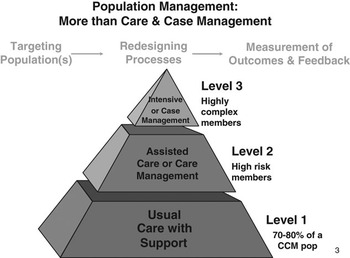
The sixth characteristic is that ‘population management is emphasised’ through the use of tools to stratify people with chronic diseases according to their risk and offering support commensurate with this risk.
The risk pyramid used within Kaiser Permanente and adapted in other systems, for example, the NHS and Social Care Model developed in England, illustrates the practical application of a population management approach. The pyramid organises the chronic disease population into three categories: people requiring usual care and support to self manage; people needing regular contact with a multidisciplinary team to ensure effective management of their disease; and people requiring more intensive support, perhaps from a specialist case manager, often when they are coping with the complications of co-morbidities, and are at risk of their condition deteriorating and needing to make use of specialist hospital care. Disease registers play an important part in population management by enabling primary health care teams to recall patients for regular checks and to review their treatment and care plan (Figure 2).
The Kaiser Permanente Risk Pyramid

A wide range of tools have been developed to support population management, designed to analyse patient data to enable care to be provided pro-actively. These tools are important in ensuring that case management is targeted at patients most at risk and also those most likely to benefit from intensive support. There is a cautionary tale here from the experience in England of adapting the Evercare approach to case management, originally developed in USA to support at risk nursing home residents, to the population served by the NHS. Specialist nurses were employed in the NHS to provide care to people who had experienced two or more unplanned admissions in the previous year. The evaluation of this scheme reported no significant effect on hospital admissions, although the people receiving care valued the support they were given (Boaden et al., Reference Boaden, Dusheiko, Gravelle, Parker, Pickard, Roland, Sargent and Sheaff2006). Part of the explanation of these findings is that there is regression to the mean in the use of health services by the chronically ill population, with periods of high use being followed by periods of average use even in the absence of interventions. The lesson from this example is that the method of identifying the recipients of case management needs to use indicators other than (or in addition to) hospital admissions. In England this is being done through the use of the patients at risk of rehospitalisation (PARR) tool (Billings et al., Reference Billings, Dixon, Mijanovich and Wennberg2006).
The seventh characteristic is that ‘care should be integrated to enable primary health care teams to access specialist advice and support when needed’. The importance of this characteristic relates to the dynamic and fluid nature of chronic diseases and the tendency for people to require different types of support and intervention at different times depending on the progression of their condition. It also relates to the particular needs of people with two or more conditions who may find themselves seeking a range of advice from different specialists while also having a continuing relationship with a primary health care team. In these circumstances, there is a risk of care not being coordinated and of complications arising, for example, through drug interactions resulting from polypharmacy. Evidence summarised above from the Commonwealth Fund’s surveys underlines the reality of this risk, and the importance of overcoming professional, organisational and financial barriers to the integration of care. Integrated delivery systems like Kaiser Permanente, the Veterans Health Administration and Group Health Cooperative appear to be better placed than other systems in addressing this challenge (Box 2). Partly in recognition of this, New Zealand has reorganised its health care system to create integrated district health boards with responsibility for the full range of health care for the populations they serve.
Box 2
Integrated delivery systems have led the way in improving care for people with chronic diseases. One of the most notable examples is the Veterans Health Administration (VA) which has been described as “the country’s best health care system” (Longman, Reference Longman2005). Research has shown the improvements in quality of care achieved within the VA over time and the superior performance of the VA compared with Medicare fee-for-service (Jha et al., Reference Jha, Perlin, Kizer and Dudley2003). Another example is Kaiser Permanente which has been highlighted by the New York Times as achieving consistently excellent ratings in the assessments undertaken by the National Committee for Quality Assurance, and as being a possible model for the future of American health care (Lohr, Reference Lohr2004). Group Health Cooperative in Seattle is a close cousin of Kaiser’s and similarly achieves high levels of performance for the population it serves. The record of integrated delivery systems as high performing systems has been acknowledged by Porter and Teisberg (Reference Porter and Teisberg2006) in their critique of health care in the US, although these authors advocate even more radical reform of the health care market.
The eighth characteristic, closely linked to the last point, is ‘the need to exploit the potential benefits of information technology in improving chronic care’. Not least, information technology underpins effective population management in enabling primary health care teams to develop disease registers and to stratify the population according to risk. In some applications, it also supports patient self-management through easing communication between patients and health care professionals and facilitating shared decision-making.
Two other aspects of information technology appear to have a particularly promising part to play at this stage in their application to health care. First, there is the role of the electronic patient care record in supporting communication between health care professionals and in reducing the possibility of errors. This includes the use of clinical decision support systems to provide prompts and reminders to professionals in relation to adherence to guidelines on tests and treatment reviews. Data captured on these support systems can in turn be used to compare the performance of providers in undertaking tests and reviews as a tool for continuous quality improvement. Integrated systems like Kaiser Permanente are already utilising their investment in information technology to prepare ‘missed opportunity’ reports that highlight ways in which providers can do more to systematically implement planned care for patients with chronic diseases.
Second, information technology is beginning to demonstrate its value in enabling people to be supported at home through telecare and telehealth applications. The Veterans Health Administration (VA) has been at the forefront of these developments and has pioneered the use of technology in this way through the Care Coordination/Home Telehealth (CCHT) programme. CCHT was piloted between 2000 and 2003 and targeted at a specific population of patients at risk of long-term institutional care by virtue of their resource use and disease-specific factors related to one or more of the following conditions: diabetes, chronic heart failure, hypertension, depression and chronic obstructive airways disease. In the approach adopted by the VA, a care coordinator (usually a nurse or social worker) uses telehealth systems to monitor vital sign and disease management data entered into technology placed in the patient’s home. Through regular monitoring of these data, the care coordinator can provide services to a panel of approximately 125 patients. The promising early results from the pilot programme led the VA to commence implementation of CCHT on a national basis in 2003 (Darkins, Reference Darkins2007). Partly influenced by the experience of the VA, the NHS in England has recently instituted a demonstration programme covering one million people to test the impact of telecare and telehealth in the management of chronic diseases (http://www.dh.gov.uk/en/Healthcare/Longtermconditions/DH_4140328).
The ninth characteristic is to ensure that ‘care is effectively coordinated’. Coordination is particularly important in the care of people with multiple conditions who are at much greater risk of hospital admission than people with single diseases (Wolff et al., Reference Wolff, Starfield and Anderson2002). The role of primary care physicians in providing coordination has been emphasised in a number of studies (Starfield et al., Reference Starfield, Lemke, Bernhardt, Foldes, Forrest and Weiner2003). Also important are patient activation through coaching interventions, and the role of key staff such as specialist nurses in supporting patients at level three in the Kaiser pyramid and during care transitions, for example, from hospital to home. Trials of coaching and transitional care interventions have demonstrated benefits including reduced hospitalisation rates. In his review of the various models being used to improve care coordination, Bodenheimer places particular emphasis on the role of primary care, arguing that “the most efficient structure for coordinating care is a system with a strong primary care foundation in which the primary care practice, in partnership with its patients, consciously assumes the responsibility for coordinating care throughout the health care system” (Bodenheimer, Reference Bodenheimer2008: 1069).
In the UK and other European countries, efforts to strengthen care coordination encompass social care as well as health care. These efforts reflect the need of people with chronic conditions to access a range of support, not just medical interventions. Various approaches have been adopted including the development of intermediate care in the UK, the use of individual budgets and direct payment systems to enable people to purchase their own care, and the establishment of agencies that integrate health and social care. These agencies are broadly analogous to organisations like On-Lok in San Francisco that have been recognised as providing innovative care for their populations. A European example of care coordination is the Esther project in Jonkoping County Council in Sweden which focuses on how to improve the quality of chronic care for a fictitious older woman (Esther) through more effective team working, and improved communication between providers involved in Esther’s care (http://www.ihi.org/IHI/Topics/Flow/PatientFlow/ImprovementStories/ImprovingPatientFlowTheEstherProjectinSweden.htm).
The tenth characteristic, alluded to in the review of the evidence above, is to ‘link these nine characteristics into a coherent whole as part of a strategic approach to change’. This is important in view of evidence that it is the cumulative effect of different elements that explains the degree of impact of the Chronic Care Model rather than individual components. By extension, the argument of this paper is that chronic care policy needs to address several issues at the same time, linking reforms to health financing (universal coverage and limited or zero co-payments), an increased focus on prevention, self management and primary health care, a commitment to achieve closer integration of care and more effective care coordination, and the greater use of tools such as population management and information technology. Action on some of these characteristics and not others is likely to limit and slow the implementation of models of care that are required to meet the needs of the chronic care population.
In identifying these ten characteristics, it is worth adding that the evidence on disease management, while much discussed in the literature, is equivocal. As a review undertaken by the Congressional Budget Office in 2004 showed, studies of disease management programmes for congestive heart failure, coronary artery disease and diabetes found that there was insufficient evidence that they could reduce the overall cost of health services, although there was evidence that they improved adherence to practice care guidelines and led to better control of the disease (Congressional Budget Office, 2004). Advocates of the Chronic Care Model such as Wagner argue that disease management programmes that are not part of a coherent approach to chronic care may accentuate the problems of care coordination and are therefore likely to be less effective than programmes that focus on improving primary care provision through multidisciplinary teams. As the Institute of Medicine put it, “One of the main concerns associated with disease management programs is the potential for fragmenting care, especially if the patient’s primary care physician is not involved in the program” (Institute of Medicine, 2001: 100).
Implementation strategies
The ten characteristics described in this paper require action at different levels. Reforms to health financing depend on the willingness of policy makers at the system level to contemplate and implement changes to extend insurance coverage where it is incomplete and to reduce co-payments where these act as a barrier to patients accessing care. Action is also required at the organisational level to bring about the reorientation of care needed to rise to the challenge of chronic diseases. Research into organisations that have a demonstrated record of achievement in the provision of high quality chronic care has pointed to a number of implementation strategies that can contribute to change at this level (Dixon et al., Reference Dixon, Lewis, Rosen, Finlayson and Gray2004).
First, physician leadership appears to play a critical role in the reorientation of health services from the acute care to the chronic care paradigm. This is well illustrated by the experience of Kaiser Permanente, an integrated delivery system organised in three parts, including a series of regionally based medical groups in which physicians are centrally involved in the provision of care and the leadership of change. A number of studies have highlighted physician leadership as a strong characteristic of Kaiser Permanente and one of the factors that contributes to its achievement as a high-performing system (Crosson, Reference Crosson2003). This includes the role of physicians in leading quality improvement programmes.
Second, measuring patient outcomes and using the results of measurement to drive continuous quality improvement is critically important. This is well illustrated by the transformation that occurred at the VA where, beginning in the mid 1990s, Ken Kizer led a turnaround in the organisation’s fortunes that resulted in the VA being identified as an exemplar for the rest of the country (Oliver, Reference Oliver2007). Kizer adopted a multifaceted approach that included a relentless focus on measuring quality of care, particularly in relation to preventative care and chronic care, and using the results to encourage the directors of the VA’s regions to compare their performance with that of their colleagues and to bring about continuous improvement. The approach has been described as follows:
Each regional director was held accountable through a performance contract, which included incentives equivalent to roughly 10% of the director’s salary, for meeting specified quality standards. The director, in turn, held managers and clinicians accountable for the performance standards, and the performance results of each regional network and facility were widely available within the administration. Consequently, regional networks began to compete with each other on performance, and facilities within each network did the same.
(Kerr and Fleming, Reference Kerr and Fleming2007: 971)
Third, organisations that are focusing on chronic care have thought carefully about the best way of aligning incentives in support of their strategies. At one level, this means recognising and rewarding the delivery of good outcomes of care as in the new contract for family physicians in the UK described earlier. At another, it entails ensuring that the flow of resources supports the development of primary health care and discourages the further expansion of inappropriate specialist care. By seeing acute hospitals as cost centres rather than profit centres, and by empowering physicians to provide care in the most appropriate setting, organisations with aligned incentives are finding ways, slowly but surely, of challenging historic patterns of investment and funding new models care appropriate to an era in which chronic diseases predominate. The VA again illustrates this point, having changed from a hospital-centred system to an integrated system, and in the process reducing its reliance on hospitals considerably (Ashton et al., Reference Ashton, Souchek, Petersen, Menke, Collins, Kizer, Wright and Wray2003).
Fourth, community engagement appears to be an important implementation strategy in some systems, although more research is needed to understand how community engagement contributes to high performance. Two examples illustrate the way in which the community is being engaged. The first concerns Group Health Co-operative in Seattle, an integrated delivery system established over 60 years ago as a consumer-owned and governed organisation committed to the provision of accessible and high-quality medical care. The second example derives from New Zealand where there is a strong focus on working with and through churches and community organisations to provide health care to population groups most in need (Box 3). In New Zealand, these groups are drawn from Maori and Pacific Island populations who experience worse health than the population of white European extraction, and who often are least inclined to use mainstream medical care services. By working with community groups, the health care system in New Zealand is finding ways of delivering care to patients who otherwise are hard to reach.
As other studies have recognised, community engagement is particularly important in ensuring that prevention receives higher priority (Glasgow et al., Reference Glasgow, Orleans, Wagner, Curry and Solberg2001).
Box 3
Like other countries, New Zealand is faced with a growing burden of chronic disease. Diabetes presents one of the biggest challenges, particularly in Maori and Pacific Island populations among whom prevalence rates are much higher than in the rest of the population. The Let’s Beat Diabetes campaign initiated by Counties Manukau District Health Board (DHB) in south Auckland is a five-year community wide plan aimed at preventing the onset of type 2 diabetes and improving the quality of life for people diagnosed with type 2 diabetes. The campaign involves a wide range of actions, many of which entail inter-sectoral collaboration, and based on the concept that a ‘whole society, whole life course, and whole family/whanau’ effort is needed to beat diabetes. In Counties Manukau, as in the rest of New Zealand, the DHB works closely with community groups to provide advice and care to hard to reach groups. This includes funding churches and third sector organisations to provide care in a variety of settings, alongside the provision of mainstream medical services.
Conclusion
The evidence summarised in this paper indicates that a start has been made in reorienting health care systems to meet the challenge of chronic diseases. Guided by the Chronic Care Model, policy makers and health care leaders are beginning to take the actions required to rise to this challenge, notwithstanding evidence of gaps in the quality of chronic care. There is increasing understanding of the changes that need to be made both in policy interventions and clinical practice in the next stage of the journey, despite the resilience of the acute care paradigm. The ten characteristics of the high-performing chronic care system set out here, and the four implementation strategies to achieve such a system, are intended to serve as practical guidance to policy makers and health care leaders as the journey continues. Deriving as they do from both evidence and international experience, these ten characteristics and four implementation strategies provide an agenda for action for the future.
As a concluding comment, what are the limitations of the methods used in preparing this paper? By combining evidence from reviews of research studies with experience of policy making in one country and direct observation of experience in others, we have been able to outline an approach that is intended to assist health care reformers. The main limitations of this approach are that it is confined to a small number of countries and does not meet the standards required of formal systematic reviews (although it does draw on work conducted in accordance with those standards). The paper is also open to the criticism that the experience and observation on which it draws were particular to the author at a certain time and place (England), and to the people and organisations visited in New Zealand and USA. Future research needs to address these limitations through testing the relevance of these ten characteristics and four implementation strategies in a wider range of systems, and by drawing on the findings of other studies to refine the heuristic model that has been described. More work is also needed to compare existing systems in relation to the model and, in doing so, to assess the likely costs and benefits of taking actions to align these systems more closely with the characteristics described here.
Acknowledgements
The ideas in this paper have emerged from many sources. Most proximately, they arose from discussions in July 2007 at the 8th International Meeting on Quality of Health Care organised by the Commonwealth Fund and the Nuffield Trust where the main focus of debate was improving transitions and coordination of care for people with chronic illness. In addition, the ideas set out here reflect visits undertaken to the US, New Zealand and Europe to study services for people with chronic diseases, during which I have been able to see at first hand how chronic care is organised and provided in different setting. A further influence has been experience of working in government on the development of strategies for chronic care in England. I have learned much from working with Debbie Singh on reviews of the literature and research evidence pertaining to different aspects of chronic care. A seminar held in London in June 2007 involving Ed Wagner, Rafael Bengoa and John Dean was particularly helpful in crystallising my thinking. Many debts have been incurred along the way to colleagues who have been involved in these programmes. I am particularly grateful to Robin Osborn for her comments on an earlier draft.