



Introduction
Rice (Oryza sativa L.) is the staple cereal in the diet of about 2 billion people in the world (Ziska et al. Reference Ziska, Gealy, Burgos, Caicedo, Gressel, Lawton-Rauh, Avila, Theisen, Norsworthy, Ferrero, Vidotto, Johnson, Ferreira, Marchesan, Menezes and Sparks2015). Brazil is the largest rice-producing country outside of Asia, and in the 2019 to 2020 season, it produced 11.16 billion kg in an area of 1.6 million ha (CONAB 2020). In the 2019 to 2020 season, the Rio Grande do Sul (RS) and Santa Catarina (SC) states accounted for more than 80% of Brazilian rice production, producing 8.2 billion kg of rice in the flooding system (CONAB 2020). The rice crop in RS and SC is characterized by permanent flood irrigation, allowing these areas to produce very high yields (SOSBAI 2018).
One of the most important factors limiting rice yield is weed infestation, especially weedy rice (WR) (Oryza spp.) (Ziska et al. Reference Ziska, Gealy, Burgos, Caicedo, Gressel, Lawton-Rauh, Avila, Theisen, Norsworthy, Ferrero, Vidotto, Johnson, Ferreira, Marchesan, Menezes and Sparks2015). WR can reduce rice grain yield by more than 70% (Dai et al. Reference Dai, Dai, Song, Lu and Qiang2014; Singh et al. Reference Singh, Burgos, Singh, Gealy, Gbur and Caicedo2017) if uncontrolled. Weedy rice is very competitive, because it is morphophysiologically similar to rice, as both plants belong to the same genus and species (Fontana et al. Reference Fontana, Agostinetto, Pinto, Rosenthal, Rigoli and Figueredo2007; Kraehmer et al. Reference Kraehmer, Jabran, Mennan and Chauhan2016). WR populations infesting rice fields in southern Brazil have high phenotypic and genotypic variability (Kalsing et al. Reference Kalsing, Goulart, Mariot, Menezes, Matzenbacher and Merotto2019; Roso et al. Reference Roso, Merotto, Delatorre and Menezes2010) just like those in other regions of the world (Shivrain et al. Reference Shivrain, Burgos, Scott, Gbur, Estorninos and McClelland2010; Wongtamee et al. Reference Wongtamee, Maneechote, Pusadee, Rerkasem and Jamjod2017). However, in most rice fields, WR-predominant populations are taller, have low tillering capacity, and have shorter and thicker grains than commercial rice cultivars (Fleck et al. Reference Fleck, Agostinetto, Galon and Schaedler2008). WR populations usually have high seed-shattering capability and seed dormancy (Nunes et al. Reference Nunes, Markus, Delatorre and Merotto2015), usually have seeds with a pigmented pericarp, and have a high tolerance to stressors (drought and cold) (Bevilacqua et al. Reference Bevilacqua, Basu, Pereira, Tseng, Zimmer and Burgos2015; Dai et al. Reference Dai, Song, He, Valverde and Qiang2017; Piveta et al. Reference Piveta, Roma-Burgos, Noldin, Viana, Oliveira, Lamego and Avila2021; Zhao et al. Reference Zhao, Xu, Meng, Qiang, Dai, Zhang and Song2020). Due to its botanical similarity with cultivated rice, WR is difficult to control chemically and culturally (Fontana et al. Reference Fontana, Agostinetto, Pinto, Rosenthal, Rigoli and Figueredo2007).
Thus far, the most effective alternative for the selective control of WR in the rice crops has been the ClearfieldTM rice (CL) system, which includes the use of imidazolinone (IMI) herbicides in IMI-resistant rice cultivars (Fruet et al. Reference Fruet, Merotto and Ulguim2020), initially marketed in the United States in 2002 (Burgos et al. Reference Burgos, Norsworthy, Scott and Smith2008) and in Brazil in 2003 (SOSBAI 2018). This technology is based on the use of rice cultivars tolerant to IMI herbicides, inhibitors of acetolactate synthase or acetohydroxy acid synthase. CL rice allows the PRE or POST application of IMI herbicides, with excellent crop selectivity and effective WR control (Ulguim et al. Reference Ulguim, Carlos, Zanon, Ogoshi, Bexarira and Silva2019). In Brazil, this technology has been adopted in approximately 1 million ha yr−1, constituting one of the world’s largest areas planted with non-transgenic cultivars resistant to herbicides and exerting intense selection pressure on weeds. Even though herbicides are quite efficient in controlling WR, some escapes happen in the field, allowing some WR to grow with the crop, and some biotypes can flower simultaneously with the crop, resulting in the transfer of the herbicide-resistance gene from cultivated rice to the WR population (Villa et al. Reference Villa, Marchezan, Massoni, Santos, Avila, Machado and Telo2006b), eventually precluding the use of the CL system in future seasons. Although the outcrossing rate of 0.065% is low, it is enough to enable the transfer of the resistant gene from the CL rice to the WR population (Villa et al. Reference Villa, Marchezan, Avila, Massoni, Telo, Machado and Camargo2006a). Consequences associated with the recurrence of WR infestation have forced the adoption of crop rotation. However, in areas where crop rotation is not possible, producers have encountered high yield losses, resulting in economic and social problems for individual farmers and whole regions that rely solely on rice production (Merotto et al. Reference Merotto, Goulart, Nunes, Kalsing, Markus, Menezes and Wander2016).
In the commercial launch of the technology employing CL cultivars, it was recommended that producers should use the system for only two successive years, then plant another crop to prevent the evolution of resistant WR populations (SOSBAI 2018). Also, additional practices have been recommended, such as early soil preparation with the adoption of direct sowing (minimum cultivation), control of WR escapes before shattering, and use of certified rice seeds with zero tolerance for WR seed contaminants (Agostinetto et al. Reference Agostinetto, Fleck, Rizzardi, Merotto and Vidal2001; Burgos et al. Reference Burgos, Norsworthy, Scott and Smith2008; Dauer et al. Reference Dauer, Hulting, Carlson, Mankin, Harden and Mallory-Smith2018; SOSBAI 2018).
There is a lack of information based on farmers’ and consultants’ actions and strategies regarding the effective adoption of CL technology and its consequences on WR infestation dynamics in paddy rice. This information is essential to understand the management of crops and the many challenges farmers face, including weed infestation (Norsworthy et al. Reference Norsworthy, Bond and Scott2013). Based on producers’ information, the cause-and-effect relationship between soil and water management practices and the WR issues are known at the farm level. In recent years, the cultivated area in RS with soybean [Glycine max (L.) Merr.] in rotation with rice has increased, with the need to change the production system and increase the use of the no-tillage or minimum cultivation system and crop rotation (Fruet et al. Reference Fruet, Merotto and Ulguim2020). In SC, the rice production system is characterized by the predominant use of the water-seeded system (pre-germinated system), where crop rotation is difficult (SOSBAI 2018). The knowledge of the rice production system characteristics, as well the weed control practices adopted by the producers are essential for diagnosing the problem caused by WR and for improving recommendations either with the current control system or with new technologies related to rice varieties resistant to acetyl-CoA carboxylase (ACCase)-inhibiting herbicides, which are expected to be introduced by the industry in Brazil in 2023. In this scenario, we aimed to evaluate the current situation of WR infestation and the primary crop management practices adopted by rice producers in RS and SC.
Materials and Methods
Extension agents from the Rio Grande do Sul Rice Institute (IRGA) and from the Institution for Agricultural Research and Extension of Santa Catarina State (Epagri) and consultants from the private sector in SC distributed a questionnaire (Table 1) to 180 rice producers from RS (10.8% of the total planted area) and 33 producers from SC (2.5% of the total planted area) (Figure 1), from all rice-producing regions of each state (Figure 1). In RS, rice producers from the regions of Campanha, Central, Fronteira Oeste, Planície Costeira Externa, Planície Costeira Interna, and Zona Sul were interviewed. In SC, we interviewed rice producers from the Região Sul, Vale do Itajaí, and Litoral Norte regions. These regions differ in landscape, soil types, cropping systems, crop seedling systems, and crop management. The farmer interviews were conducted during the 2018 to 2019 growing season. In RS, 85% of the producers were interviewed in person by IRGA extension agents, and 15% answered the questionnaire by email (data not shown). In SC, all producers were interviewed in person by Epagri’s extension agents or private consultants. The questionnaire focused on the management of the rice crop and the WR infestation situation. The questionnaire consisted of three sections: (I) characterization of the crop and planting systems, (II) CL technology and WR infestation, and (III) WR management (Table 1).
Questionnaire on rice crop characterization, weedy rice infestation, and management practices, 2018–2019 growing season.
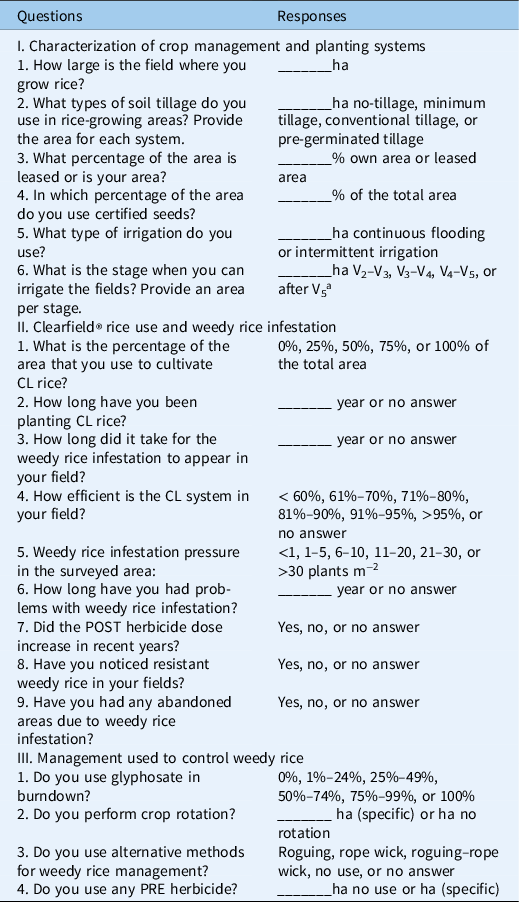
a V x : V is rice vegetative stage growth, and x is number of leaves fully expanded.
Rice-growing regions of the states of Rio Grande do Sul and Santa Catarina, southern Brazil, localization of rice fields (CONAB 2020), and locations of surveyed farms.

Section I was designed to characterize producers’ areas, soil management, and irrigation systems. The questions aimed to understand the general aspects of rice production, and the responses were either in hectares or percentage (%) of the total area. Section II evaluated the challenges related to WR and the impact of CL technology. In this section, producers were questioned about the history of WR infestation and the first occurrence of resistance and area abandonment. The answers to this section were categorized for better data presentation (Table 1). Section III analyzed the primary practices adopted for WR management. When it comes to crop rotation and the use of PRE herbicides, producers responded freely about the management of their areas. Some questions, when not answered, were cataloged as “no answer.”
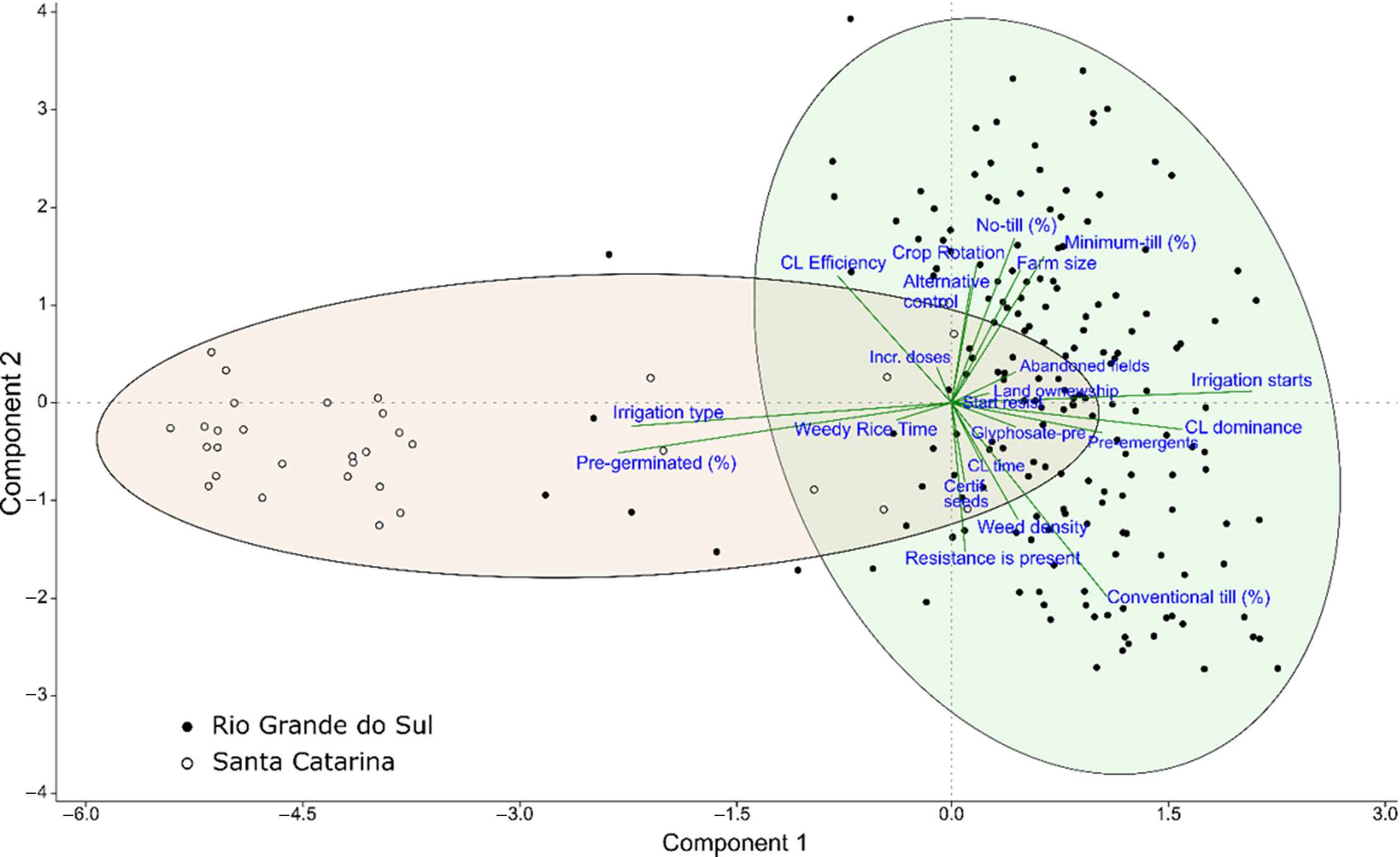
Statistical analysis was performed using analysis of variance (GLM-ANOVA), with Welch’s approximation for unbalanced data sets. Principal component analysis (PCA) was performed for a group of 22 variables (presented in Figure 2) and plotted in a bi-dimensional graph. Variables were transformed to adjust for the PCA algorithm. Descriptive analysis was used to generate the data summarized in tables (means and respective percentages). ANOVA and descriptive analysis were handled in the software SAS v. 9.4 (SAS Institute 2016), and PCA and scatter plots were generated in the software PAST v. 4.05 (Hammer et al. Reference Hammer, Harper and Ryan2001).
Scatter plot of the principal component analysis of the data set. Ellipses represent the 95% confidence intervals for the two groups formed. CL, Clearfield® rice.
Results and Discussion
Section I: Characterization of Crop Management and Planting Systems
The states of RS and SC have distinct characteristics regarding irrigated rice production systems (Figure 2). The PCA (Figure 2) identified differences between RS and SC within the context of the production system and aspects related to WR resistance. The ellipses formed (representing the 95% confidence intervals for the two groups formed) show the main characteristics related to the production systems in each state, which we discuss here.
When analyzing farm size, we found a significant difference between the RS and SC states (P < 0.01). In SC, the farms are small, with 79% smaller than 150 ha (Figure 3A). In contrast, in RS, only 45% of producers farmed <150 ha in the 2018 to 2019 crop season (Figure 3A). Farm size also differs across rice production regions within RS. In Depressão Central and Planície Costeira Interna, rice farms were smaller (up to 150 ha), while in the other regions, rice farms were predominantly larger than 150 ha (data not shown). Farm size is significantly distinct between the regions (P < 0.01), but exploring these differences was not the objective of this study.
The estimated proportion of surveyed rice fields relative to the total planted area (A) and rice production systems (B) in the Rio Grande do Sul (RS) and Santa Catarina (SC) states, southern Brazil, 2018–2019 growing season. Size of surveyed rice fields reported by 180 producers in RS, with areas ranging from 3 to 8,000 ha, and 33 producers in SC, with areas ranging from 7.5 to 1,200 ha.
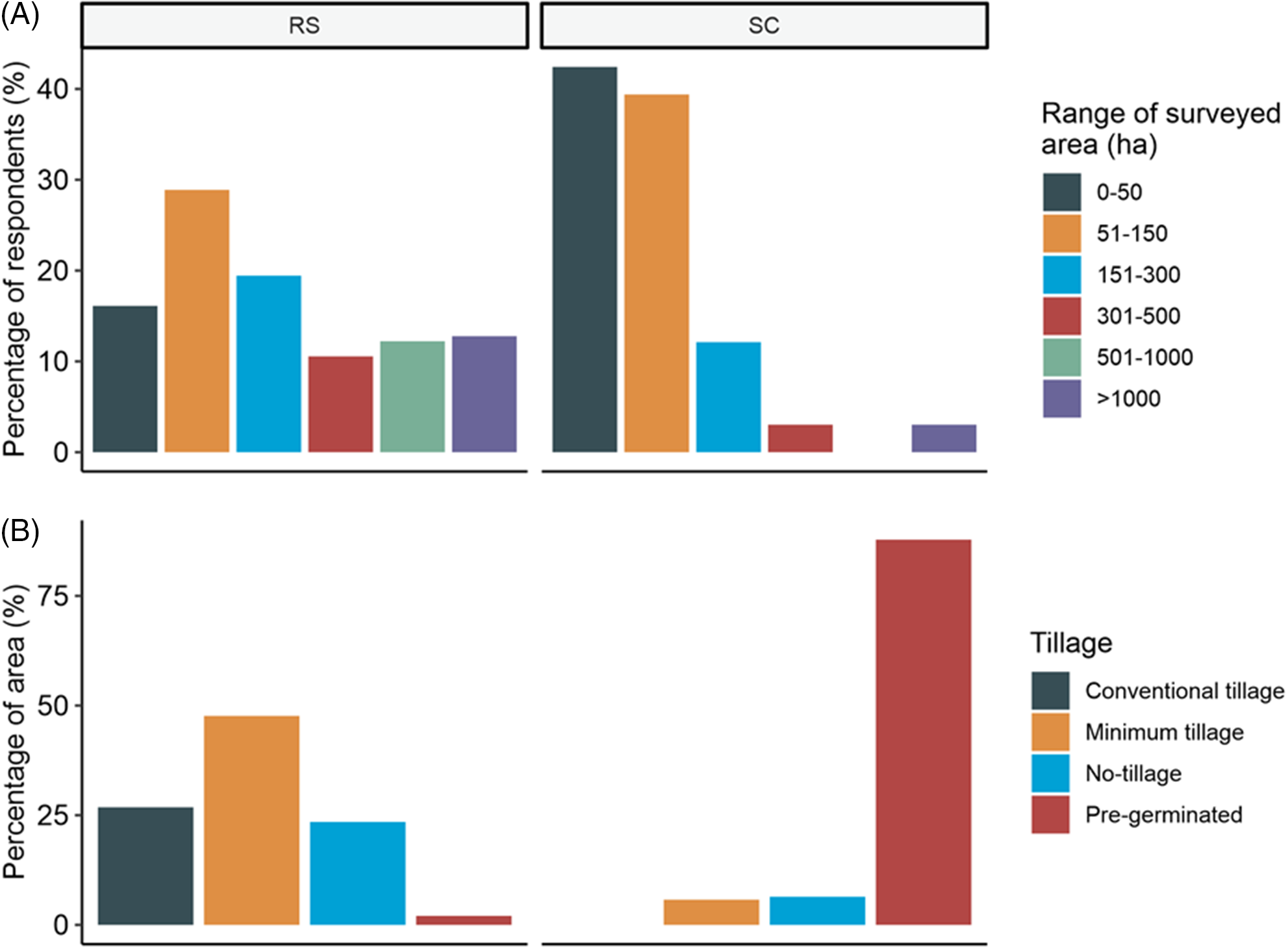
Regarding the planting system, the pre-germinated system was used in 85% to 90% of the areas in SC and only in 8% to 10% of the farms in RS (Figure 3B), mainly in the regions of Depressão Central and Planície Costeira Interna. The results from the PCA showed that the pre-germinated system is the predominant system in SC, while the other systems (conventional till, minimum till, and no-till) were predominant in RS (Figure 2). The planting of pre-germinated rice entails sowing pre-germinated seeds in a flooded paddy (SOSBAI 2018). Producers prefer production systems with less demand for land preparation operations, such as no-tillage or minimum tillage, which are practiced on the largest proportion of rice farms in RS (Figure 3B).
About 50% of the respondents (50% to 55%) grow rice on leased land (Table 2). Land leasing is one of the limiting factors for proper management, because renting precludes long-term planning. The lease is generally centered around obtaining the highest possible income for each planting season, and the fields usually end up quickly infested with weeds because the landowners expend no effort on upkeep. Another important aspect regarding leasing is that a large proportion of landowners only lease the fields during the rice-growing season; in the off-season, the landlords use the rice fields for livestock farming and release the land to the rice producers late in the season. This practice reduces the time for early and proper land preparation and significantly limits the preplanting burndown of weeds (Denardin et al. Reference Denardin, Martins, Carmona, Veloso, Carmona, Carvalho and Anghinoni2020).
Characterization of farm ownership, use of certified seeds, irrigation methods, and stage of rice flooding in the Rio Grande do Sul (RS) and Santa Catarina (SC) states.
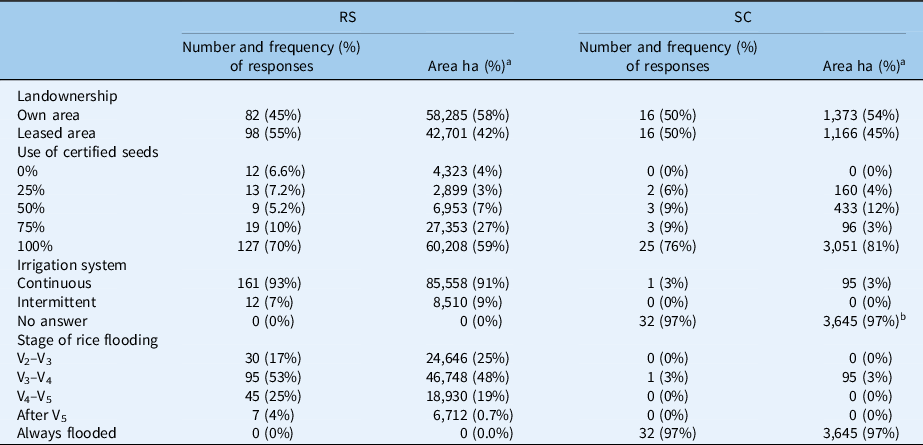
a Values in parentheses correspond to the percentage of the total cultivated area.
b As most rice in SC is pre-germinated, it can be assumed that in normal cropping seasons (without drought), water scarcity is not a problem and water is maintained continuously in the field throughout the rice-growing cycle.
More than 70% of the respondents use certified seeds (Table 2). Although this percentage is still low, it is an improvement compared with previous years, when only 42% of the RS producers used certified seeds (Kalsing et al. Reference Kalsing, Goulart, Mariot, Menezes, Matzenbacher and Merotto2019). Since 2005, the use of certified seeds has been strongly promoted in SC (Noldin et al. Reference Noldin, Knoblauch and Martins2010). The present data suggest greater awareness among producers of strategies to prevent and reduce WR infestations. A survey of rice producers in SC in the 2007 to 2008 growing season revealed that 78% plant certified seed (Noldin et al. Reference Noldin, Knoblauch and Martins2010). The use of certified seed by rice farmers in SC has not improved lately for some reason, with the proportion of producers planting certified seed staying about the same, at 76% (Martins et al. Reference Martins, Noldin, Lucietti, Oliveira, Haverroth, Souza and Fernandes2017). It is worth noting that using certified WR-free seeds is a crucial tactic for managing WR (Roso et al. Reference Roso, Merotto, Delatorre and Menezes2010). Interestingly, in the PCA (Figure 2), the use of certified seeds was coincident with the variables commonly associated with weedy resistance, like “Weed density” and “Resistance is present.” Although this outcome seems counterintuitive, we emphasize that this finding probably occurred because producers faced with fields highly infested with WR look for quick and available alternatives to reduce the problem, and employing certified seeds is commonly one of the first approaches adopted.
Concerning irrigation systems, 90% of producers in RS use continuous flooding throughout the rice-growing cycle (Table 2). Although an intermittent irrigation system improves water-use efficiency (Avila et al. Reference Avila, Martini, Mezzomo, Refatti, Campos, Cezimbra, Machado, Massey, Carlesso and Marchesan2015), some producers have concerns about the risk of compromising weed and disease control in aerobic rice or alternate wetting-and-drying rice culture (Massey et al. Reference Massey, Walker, Anders, Smith and Avila2014). Some researchers report that this alternative irrigation system entails more investment in residual herbicides to mitigate the loss of weed control afforded by permanent flooding (Marchesi and Chauhan Reference Marchesi and Chauhan2019; Massey et al. Reference Massey, Walker, Anders, Smith and Avila2014).
When producers were asked about their timing for establishing permanent flooding, 53% in RS flooded their rice at the V3–V4 stage (vegetative stage with three to four leaves fully expanded), and 25% at the V4–V5 stage (vegetative stage with four to five leaves fully expanded) (Table 2). The time point at which permanent flooding is established is critical for successful WR management, and ideally it should be done at the V3–V4 stage, immediately after POST herbicide application (SOSBAI 2018). A small proportion of producers (17%), representing 25% of the cultivated area, flooded their fields early, at V2–V3 (Table 2). In SC, 97% of the producers flooded their rice fields at planting, because they practice the water-seeded system. Early flooding has also been found to be beneficial for weed control in the U.S. Midsouth, specifically Arkansas, without compromising rice yield (Counce and Burgos Reference Counce and Burgos2006). Early flooding is not popular among rice farmers, perhaps due to lack of information dissemination, and because it requires a larger volume of water, which is not always available. Early flooding improves herbicide performance on difficult to control weeds, such as WR and barnyardgrass [Echinochloa crus-galli (L.) P. Beauv.], because the water layer can control small weed seedlings as well as prevent the germination of many weed species (Agostinetto et al. Reference Agostinetto, Galon, Moraes, Tironi, Dal Magro and Vignolo2007; SOSBAI 2018).
Section II: Clearfield® Rice Use and Weedy Rice Infestation
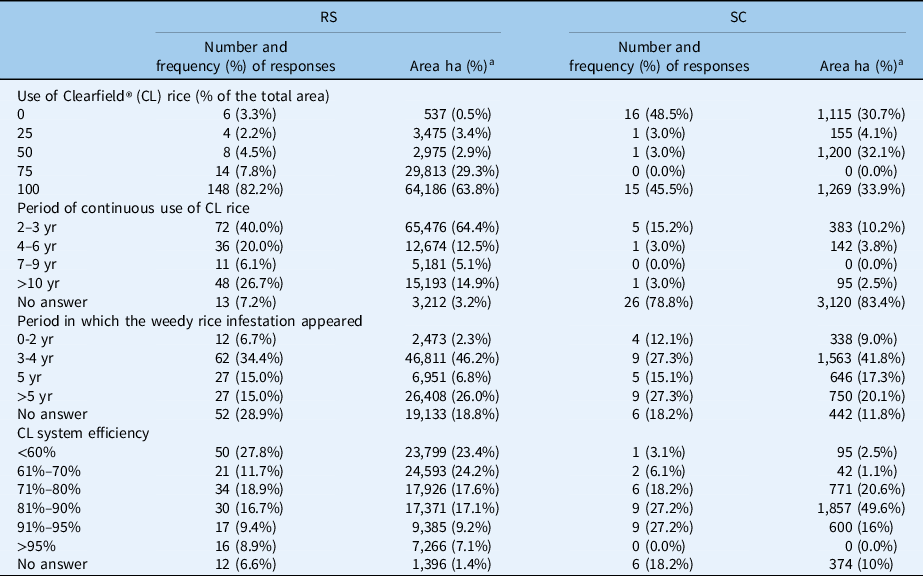
The great majority of rice producers surveyed (90%, n = 162) in RS use CL rice cultivars on 75% to 100% of their acreage (Table 3). The adoption of CL rice was significantly lower in SC than in RS (P < 0.01). In SC, 45.4% (n = 15) of the respondents planted CL cultivars in 100% of their cultivated areas, while 48.5% (n = 16) did not use it. The high adoption rate of CL cultivars in RS is due to the high yield improvement resulting from effective, selective WR control (Merotto et al. Reference Merotto, Goulart, Nunes, Kalsing, Markus, Menezes and Wander2016). In SC, the predominant practice of planting pre-germinated rice into flooded fields serves as an important tool for WR management, which compensates for the limited use of CL rice technology (Avila et al. Reference Avila, Marchezan, Machado and Silva2000).
Use and efficiency of the ClearfieldTM (CL) rice system in the Rio Grande do Sul (RS) and Santa Catarina (SC) states according to the frequency of responses and the crop area.
a Values in parentheses correspond to the percentage of producers or the percentage of cultivated area.
One of the critical stewardship recommendations for the CL system is that it should not be used in the same area for more than two growing seasons to reduce the risk of accumulating herbicide residue in the soil and to avoid or minimize carryover injury to non-CL cultivars grown in succession (SOSBAI 2018). Another fundamental stewardship recommendation is monitoring the remnant WR plants after herbicide application, as any remaining plant could potentially outcross with CL rice and start the introgression of the herbicide-resistance trait into WR (BASF 2020). However, 40% of RS producers and 15.2% of SC producers reported using CL cultivars for up to three consecutive years (Table 3). In RS, 26.7% of producers have used the CL technology for more than 10 consecutive years. In SC, 78.8% of producers did not answer this question; as previously noted, 48.5% of them do not use this technology.
A study on WR populations collected from paddy rice areas in RS confirmed the occurrence of IMI herbicide–resistant WR (IMR-WR) populations after 2 yr of cultivation in the same area (Kalsing et al. Reference Kalsing, Goulart, Mariot, Menezes, Matzenbacher and Merotto2019). WR resistance to IMI herbicides was probably due to gene flow from cultivated rice to WR, where the outcrossing rate can vary from 0.02% to 52%, thus allowing the evolution of IMR-WR populations (Goulart et al. Reference Goulart, Menezes, Bortoly, Kupas and Merotto2016; Merotto et al. Reference Merotto, Goulart, Nunes, Kalsing, Markus, Menezes and Wander2016; Noldin et al. Reference Noldin, Yokoyama, Antunes and Luzzardi2002; Villa et al. Reference Villa, Marchezan, Avila, Massoni, Telo, Machado and Camargo2006a). The introgression of IMR traits into WR populations reduced the effectiveness of the CL system. The rate of gene flow depends mainly on environmental factors, the rice cultivars, WR and rice flowering synchrony, and the distance from cultivated rice (Shivrain et al. Reference Shivrain, Burgos, Gealy, Sales and Smith2009). Selection pressure caused by frequent IMI herbicide use also results in the evolution of IMR weeds, not as much with WR (Goulart et al. Reference Goulart, Pacheco, Nunes and Merotto2012; Sudianto et al. Reference Sudianto, Beng-Kah, Ting-Xiang, Saldain, Scott and Burgos2013) but in other species such as Echinochloa spp. and Cyperus spp. (Chiapinotto et al. Reference Chiapinotto, Schaedler, Fernandes, Andres and Lamego2017; Matzenbacher et al. Reference Matzenbacher, Kalsing, Menezes, Barcelos and Merotto2013).
After the commercialization and widespread adoption of the CL rice system, there was a period of almost perfect WR control (98% to 99%), resulting in increased yield (Villa et al. Reference Villa, Marchezan, Avila, Massoni, Telo, Machado and Camargo2006a). By analyzing this record and the interviewees’ perceptions, we tried to estimate the period of WR resistance evolution, assuming that the reduced control is mostly due to resistance (Table 3). Overall, few resistant WR reports were documented in both states in the first 2 yr (6.7% in RS and 12.1% in SC). After that, reports of resistant WR increased. For 34.4% and 27.3% of RS and SC producers, respectively, resistant WR populations occurred after 3 or 4 yr of using the CL system. Once resistant WR was detected, the producers perceived that the efficacy of the CL rice system fell below 60% in 23.4% and 2.5% of the rice areas in RS and SC, respectively. IMI herbicide efficacy >80% was reported in 33.4% of the surveyed farms in RS and 65.6% in SC, a significant difference (P < 0.01;Table 3).
To assess the WR situation, we asked the producers about the level of WR infestation (Figure 4). In RS, 37.7% of producers estimated that they had less than 1 WR plant m−2, while 26.7% of producers admitted to having infestations between 1 and 5 WR plants m−2 on their farms. These two groups of producers represented more than 64% of respondents in RS. Almost one-fourth (24.4%) of producers estimated that they had 6 to 10 or 11 to 20 WR plants m−2 (15% and 9.4%, respectively). A minority of producers (5.5%) stated that they had between 21 and 30 and >30 WR plants m−2 in their fields. These last three groups of respondents, representing roughly 40% of rice farmers in RS, had very high levels of WR infestation levels, which is a grim situation concerning the status of this major rice weed. In SC, more than 80% of the producers (n = 22) reported having an infestation of up to 5 WR plants m−2 (Figure 4). The remaining SC respondents (n = 5) reported having severe WR infestation of up to 20 plants m−2.
The proportion of surveyed fields infested with weedy rice (plants m−2) reported by 180 respondents in the Rio Grande do Sul (RS) and 33 respondents in Santa Catarina (SC).
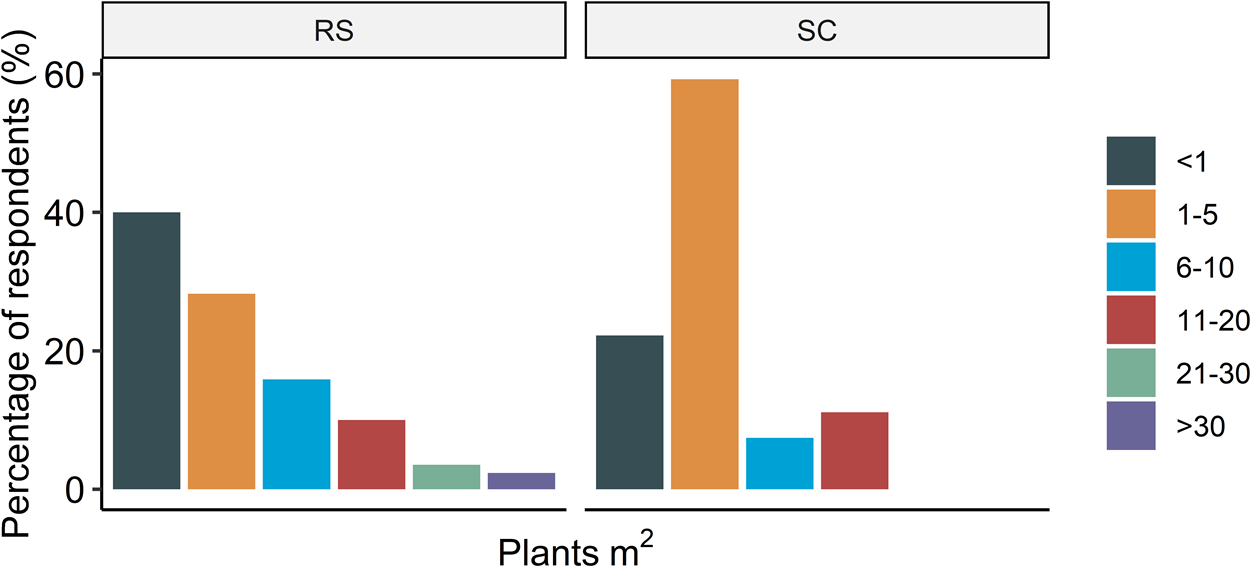
These infestation-level data reflect the producers’ perception of WR infestation in the rice crop and do not necessarily represent the actual infestations within fields. Hence, although these data bear some degree of uncertainty, the information behind them is a good indicator about the intensity of the WR problem as perceived by the farmers. In general, most producers in RS and SC reported low WR infestations (up to 5 plants m−2). That the SC producers have better apparent control of WR is noteworthy, and can generally be attributed to the predominant use of the pre-germinated rice planting system in SC. When analyzing the estimated potential for rice yield losses due to WR density, a study showed that 6 WR plants m−2 reduced rice yield by up to 20% (Zhang et al. Reference Zhang, Dai, Song and Qiang2014). The same study also showed that a predicted infestation of 30 WR plants m−2 could reduce yield by up to 50% (Zhang et al. Reference Zhang, Dai, Song and Qiang2014). A previous study conducted at three SC sites on pre-germinated rice culture revealed losses of 16.7% to 54.8% in productivity in areas with an infestation of 100 WR panicles m−2 (Eberhardt and Noldin Reference Eberhardt and Noldin2005).
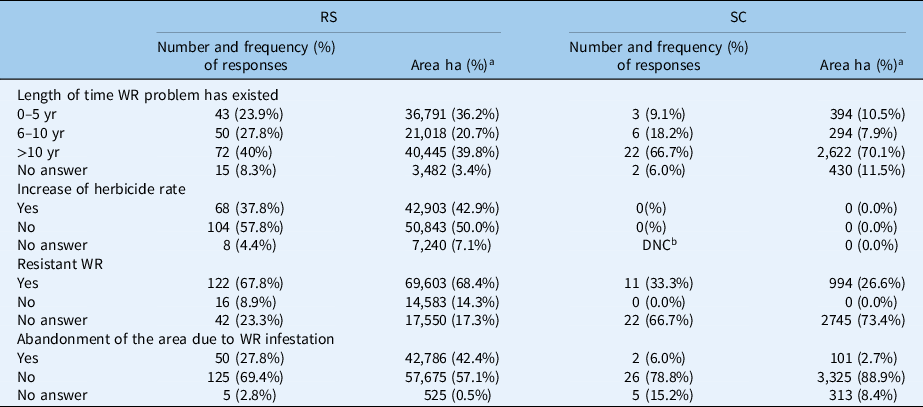
Producers were also asked how long they had had WR infestation regardless of resistance (Table 4). More than half of the RS producers reported having problems with WR for a period of 0 to 5 or 6 to 10 yr (23.9% and 27.8% of rice producers, respectively). However, the largest group of RS rice producers (40%) claimed to have been experiencing WR infestation for more than 10 yr, while 66.7% of producers in SC have been experiencing WR infestation for more than 10 yr. For this specific factor, the difference between the two states was significant (P < 0.01). Based on the commercialization period of CL rice and the field history, there is evidence that WR has existed for a long time and is currently being maintained by the resistance factor.
Characterization of rice crops concerning weedy rice (WR) infestations in the Rio Grande do Sul (RS) and Santa Catarina (SC) states.
a Values in parentheses correspond to the percentage of the area.
b DNC, Data not collected.
Due to the long period of WR infestation, the producers were asked whether there was a need to increase POST herbicide doses during this time (Table 4). In RS, 37.8% of producers responded that they had used higher herbicide rates than the label rate (label doses: 1.25 L ha−1 Only® [75 + 25 g L−1 imazethapyr+imazapic] and 280 g ha−1 Kifix® [525 + 175 g kg−1 imazapyr+imazapic]; both BASF S.A., São Paulo/SP, Brazil, 04794-000) to obtain the same control levels. However, 57.8% said they had not increased the herbicide rates. As for the occurrence of IMR-WR in the surveyed regions, most producers in RS (67.8%) acknowledged this, while a lower proportion of respondents in SC (33.3%) reported having observed IMR-WR in their fields. These high incidences, especially in RS, are undoubtedly the result of using the CL technology in the same fields for several years and the continuous use of the same management practices (Fruet et al. Reference Fruet, Merotto and Ulguim2020; Ulguim et al. Reference Ulguim, Carlos, Zanon, Ogoshi, Bexarira and Silva2019). The first report on IMR-WR in Brazil was in 2006, 2 yr after the CL technology launch (Heap Reference Heap2020). This was the same period when outcrosses were detected in small plots in the southern United States (Shivrain et al. Reference Shivrain, Burgos, Moldenhauer, Mcnew and Baldwin2006). A survey of 228 WR populations in RS in 2009 showed that 56% had resistance to an imazethapyr+imazapic herbicide premix (Menezes et al. Reference Menezes, Mariot, Kalsing and Goulart2009). Another study conducted with 38 populations resulting from escapes in CL rice fields showed that WR resistance was due to gene flow from CL rice (Roso et al. Reference Roso, Merotto, Delatorre and Menezes2010).
With all these challenges in WR management and infestation, producers were asked if they had to abandon rice fields at some point. A little more than one-fourth (27.8% of rice growers in RS) had abandoned some of their fields due to severe WR infestation. On the other hand, just 6% of farmers in SC had to abandon rice cultivation in their fields due to weed problems (Table 4). This highlights the importance of WR management in irrigated rice crops in southern Brazil. The lack of WR management options outside the CL rice system and the resulting severe yield loss and loss of rice grain quality had forced a substantial number of farmers to abandon rice production for a while. And the continuous and indiscriminate use of the CL system, which quickly caused the appearance of the IMR-WR and reduced the effectiveness of the CL rice system, could lead to this situation again.
Section III. Management Used to Control Weedy Rice
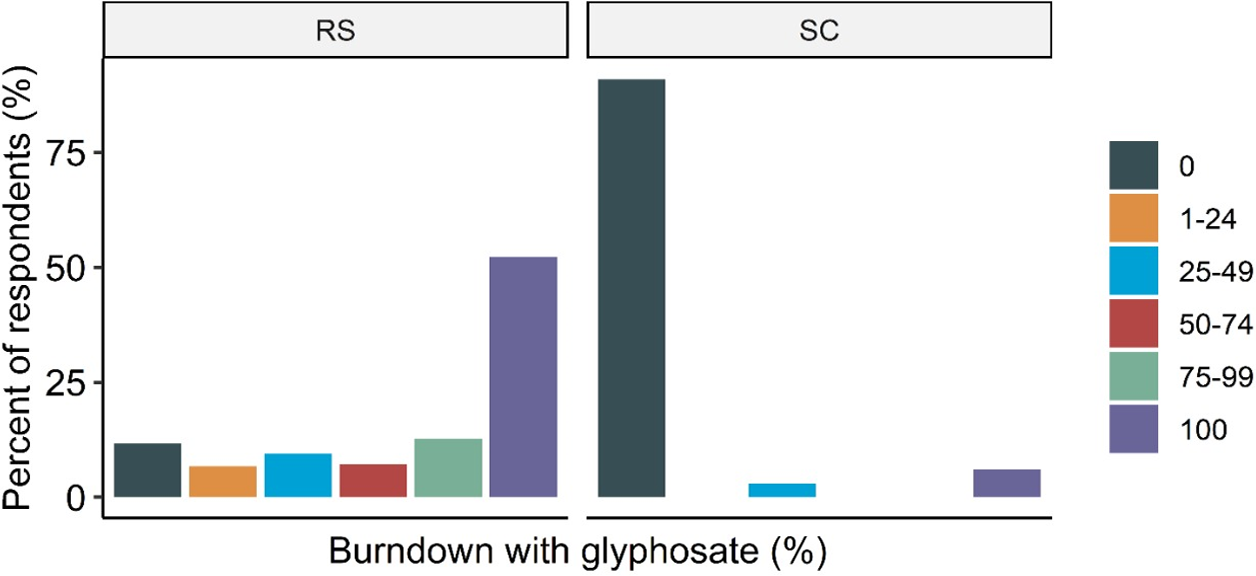
Among the first line of defenses for WR is glyphosate application in burndown when rice is at the spiking (S3) stage. To be effective, land preparation should be done far enough in advance of rice planting (approximately 20 d) to allow WR to emerge. Then, as soon as the rice starts emerging, glyphosate is sprayed to kill the WR seedlings. In RS, more than 64% of producers use glyphosate in this manner in 75% or more of the fields, and only 11% of respondents said otherwise (Figure 5). Most producers in SC (90%) do not use glyphosate at rice spiking (Figure 5). These findings in SC are related to the predominance of the pre-germinated system, which precludes PRE application of glyphosate in rice. The use of nonselective or broad-spectrum herbicide to kill emerged weeds before rice planting results in effective weed control. If done close in time to the S3 stage rice, it allows rice seedlings to develop without weed competition (Burgos et al. Reference Burgos, Shivrain, Scott, Mauromoustakos, Kuk, Sales and Bullington2011). The application of glyphosate at the S3 stage reduced the WR population up to 75% and increased rice yield up to 40% in Brazil (Menezes et al. Reference Menezes, Mariot, Kalsing, Freitas, Grohs and Matzenbacher2013).
Use of burndown with glyphosate at the spiking stage in Rio Grande do Sul (RS) and Santa Catarina (SC) in rice areas. Size of surveyed rice fields reported by 180 respondents in RS: overall range of 3 to 8,000 ha, with an average of 561.03 ha; and 33 respondents in SC: overall range of 7.5 to 1,200 ha, with an average of 113.33 ha.
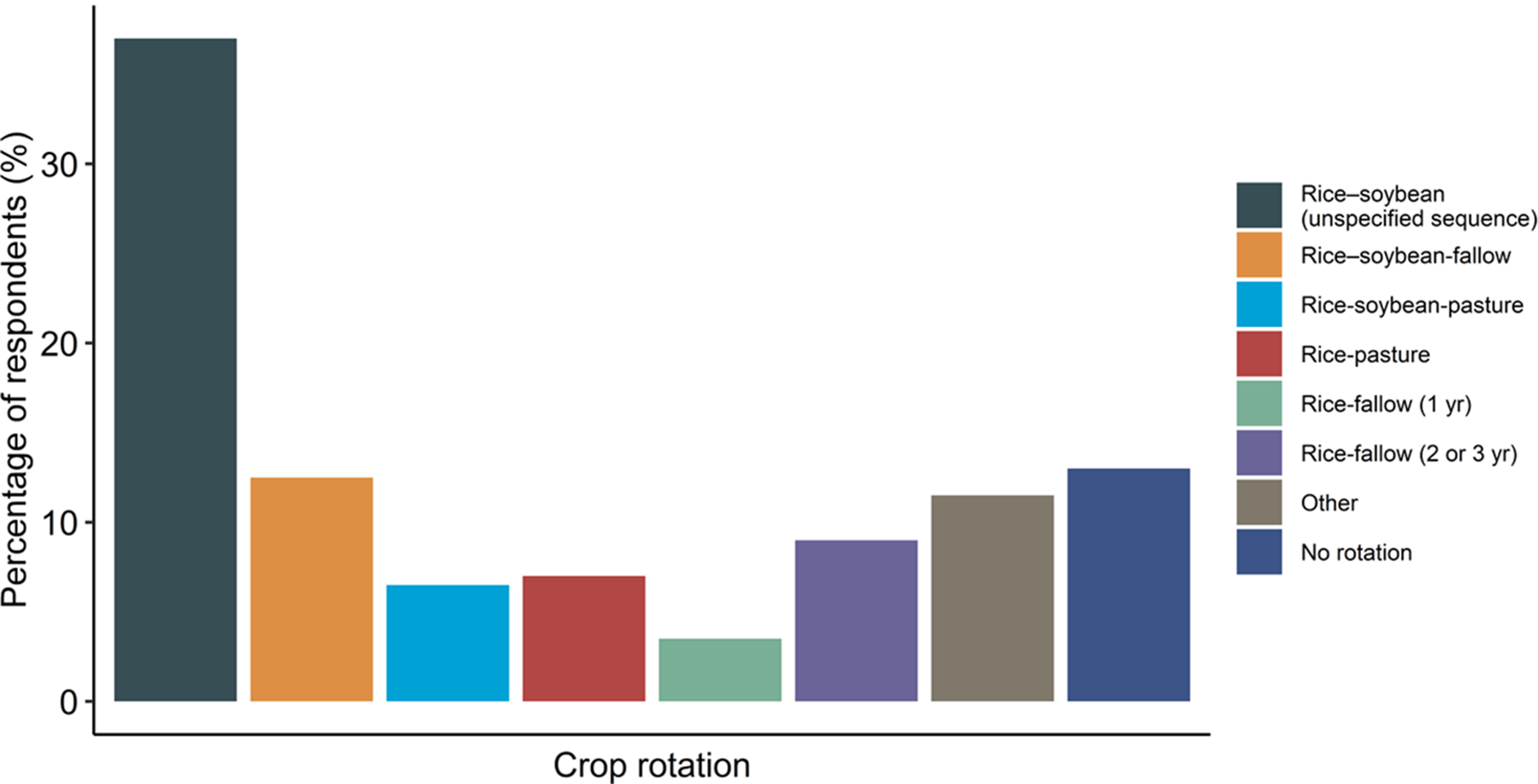
Producers have identified crop rotation as one of the most efficient management practices for WR control. In this regard, only producers in RS responded to the question (Figure 6), with only 14.4% not practicing crop rotation with rice. The rice–soybean rotation was the primary practice of 41.1% of producers. It was also the traditional cultural means of curtailing WR infestation in the southern United States (Burgos et al. Reference Burgos, Norsworthy, Scott and Smith2008). Interestingly, producers described the rice–soybean–fallow (13.9%) and rice–soybean–pasture (7.2%) systems (Figure 6) as being more effective rotation management strategies than just rice–soybean. Management practices such as crop rotation should be adopted to reduce gene flow and selection pressure on WR (Burgos et al. Reference Burgos, Norsworthy, Scott and Smith2008). A previous survey of rice producers in RS showed that approximately 30% had adopted crop rotation systems, and the preferred crop for rotation with rice was soybean (28%) (Kalsing et al. Reference Kalsing, Goulart, Mariot, Menezes, Matzenbacher and Merotto2019).
Crop rotation in rice areas of the Rio Grande do Sul. Size of surveyed rice fields reported by 180 respondents: overall range of 3 to 8,000 ha, with an average of 561.03 ha.
Producers were also asked about the use of PRE herbicides (Table 5). Clomazone was most commonly used by RS producers (76.1%), while only 18.2% of rice farmers in SC use this herbicide, a significant difference (P < 0.01). Most SC rice farmers (78.8%) do not apply PRE herbicides because of planting in already flooded fields; they rely instead on foliar herbicides. Those who used PRE herbicides also mentioned pendimethalin, imazethapyr, imazapic+imazapyr, and oxadiazon. In the CL system, IMI herbicides are the basis of WR control and other weeds, especially grasses. However, to improve the spectrum of activity, the IMI herbicides are recommended with other soil-applied or foliar-applied herbicides with different mechanisms of action (Sudianto et al. Reference Sudianto, Beng-Kah, Ting-Xiang, Saldain, Scott and Burgos2013).
Characterization of complementary tools in the management of weedy rice (WR) in rice in the Rio Grande do Sul (RS) and Santa Catarina (SC) states.
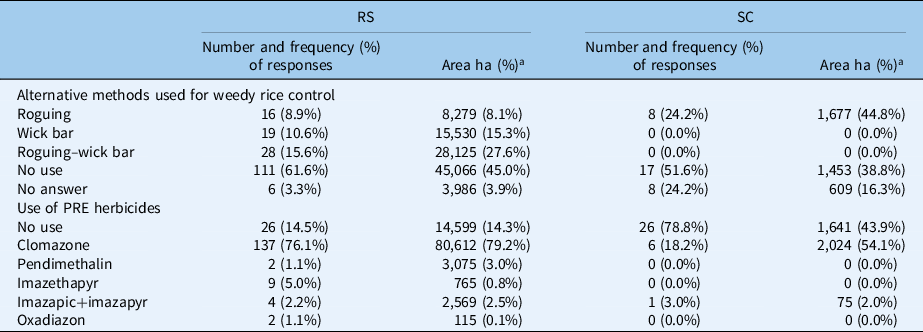
a Values in parentheses correspond to the percentage of the total area.
Producers were also questioned about alternative, complementary practices for WR control. Of the total number of producers, 61.6% and 51.6% in RS and SC, respectively, said they did not adopt any additional practices. In RS, 35.1% of producers mentioned that they also practice roguing and herbicide application by wick bar (15.6%), also known as “wipe-on” herbicide application. This allows application of nonselective herbicides like glyphosate during the rice-growing season to control WR or other weeds growing above the rice canopy. In SC, 24.2% of the producers practiced roguing as a complementary strategy to control WR.
To complement this analysis and find some additional underlying information, a multivariate analysis of the data was done. The scatter plot of the PCA (Figure 2) provides a general view of the entire data set; it allowed differentiation of SC and RS states (x axis) concerning issues associated to WR resistance (y axis). We highlight that the main factors related to the increase in WR resistance are the conventional till, WR density, and the presence of WR (highlighted mainly in RS), in opposition to soil management methods associated with conservation tillage (no-till and minimum till), practices of crop rotation, alternative control methods, and farm size. As already mentioned in the discussion of Section I, although the use of certified seeds was not associated with the decrease in WR, this is likely due to the fact that use of certified seed is one of the first management strategies adopted by producers when facing high WR infestations. Increased use of certified seed is not a cause of WR; indeed, it is a reaction of producers trying to reduce and manage the problem.
WR is still a significant concern in rice paddy production in Brazil. The high efficacy of the CL rice system played a significant role in eliminating WR in the early phase of the technology’s adoption. However, many producers reported decreased control efficiency as early as 2 yr after the first use. This survey indicates changes (generally improvements) in crop management and WR control, especially concerning increased crop rotation, use of certified seeds, burndown at spiking stage, and alternative control methods, such as roguing and wick bar applications. These advances indicate a better awareness on the part of producers about the need to adopt a set of strategies to control WR instead of solely using herbicides associated with the CL system. However, the adoption of integrated practices has been occurring non-uniformly, with approximately 25% of farmers reporting that they have abandoned rice fields due to WR infestation.
Furthermore, there are reports of medium to high WR infestations and the application of higher off-label herbicide rates for their control. This evidence, as well as the outcomes of this study, indicates that irrigated rice farmers in Brazil are managing WR based on minimal integration of methods, which has improved WR control and resulted in rice yield improvement. In our view, the availability of new WR control systems, for example, the ACCase inhibitor herbicide-resistant cultivars, should not be considered a new silver bullet that will decrease the use of these strategies. In addition to reporting the situation related to WR control with the CL system in southern Brazil, we believe this survey also provides useful information for countries beginning to use herbicide-resistant rice technology.
Acknowledgments
This survey was conducted with the support of Epagri and IRGA. We thank the CNPq (Conselho Nacional de Desenvolvimento Científico e Tecnológico) for the Research Fellowship granted to LAdA (310538/2015-7) and to AM (303379/2019-7). No conflicts of interest have been declared.



