Nigeria is the most populous black nation in Africa with more than 206 million people. Reference Michael and Odeyemi1,2 There are high levels of unemployment and poverty as well as moderate-income inequality. A low level of education and certification among the working-age population and a loss of tertiary graduates secondary to brain drain phenomenon 2 are very evident.
Nigeria has not had the benefit of increased cardiac surgery development as the population has risen, and only 5 functional cardiac surgery centres are accomplishing more than 75 cases annually. Although thoracic surgical procedures have developed better, cardiac surgery often requires cardiopulmonary bypass and requires highly skilled personnel the infrastructure of suitably trained support staff, specialist equipment, and financial support for the purchase of disposables on a regular basis. Reference Gleen3 These essentials are currently mostly lacking in Nigeria, and a similar shortfall is evident in many countries in African countries except South Africa, Egypt, and Sudan. Cardiac surgical patients usually require invasive monitoring devices instituted in them and these may have contributed as potential causes of infection.
Our ability to properly screen patients before procedures has been frustrated by the fact that most come from severely deprived home settings, rural areas, with poor clinic support. The time between cardiological evaluation and surgery is very varied, so patients may acquire clinical or sub-clinical infections or vector exposure during the interval before surgery. Dental care, both prophylactic and remedial, is usually unavailable. We have found that the <24 to >144 hours onset of fever post-operatively is a common time period in our evaluation of post-operative fever, including immediate fever, acute fever, sub-acute fever, and delayed fever.
Patients being treated by many specialist staff who had received broad-spectrum antibiotics or who had been hospitalised for an extended period beyond 5 days had infections from microorganisms including methicillin-resistant bacteria, coagulase-negative Staphylococci, vancomycin-resistant Staphylococcus aureus, enterococci, and gram-negative bacilli. Reference Maryan and Medinilla4
In Sub-Saharan Africa, malaria is endemic. Its incidence in the general population of Nigeria has historically been inaccurately determined due to civil conflict, very rural and sometimes, poorly accessible regions where communities live, and the lack of available personnel to properly screen them. Almost every individual admitted into the hospital for any surgery including cardiac surgery, harbours malaria parasites in the blood/liver in the sub-clinical form. These parasites may become activated following surgery on account of reduced immunity during the early post-operative period. In cardiac surgical patients, this may be enhanced due to the very substantial exchange of blood, plasma, and third-spacing that occurs with the use of cardiopulmonary bypass. Abuse of antibiotics and anti-malarial drugs is also extensive in Nigeria and the entire Sub-Saharan African region because many patients, through ignorance and poverty, patronise non-accredited drug sellers when they are sick.
In trying to address the clinical scenarios faced in our location, we examined other centre’s experience to plan our own study. Those conducted in advanced and higher case-volume centres show that 27–45% of patients in ICU are febrile at some point. Reference Livelli, Johnson and McEnamy5 The cause of fever in the ICU was found to be infectious, malarial, and or non-infectious. Reference Alfallaj, Aljaafary and Alqahtani6–Reference O’Grady, Barie and Bartlett8
Materials and methods
International Cardiac Surgery Mission visits took place in our centre for 7 years, between 2013 and 2019. During this period, 266 numbers of cardiac surgeries were performed. We carried out a retrospective study of those patients with post-operative fever examining data from our hospital Record Department. Specimens sent for investigations included blood, urine, wound cultures, full blood count (FBC), malaria parasites (peripheral blood smears), and antigen–antibody (Widal) tests. Data analysis was done using Special Package for Social Sciences (SPSS) version 20 (Chicago) and the significance level was set at p < 0.05.
All the patients selected for cardiac surgery both adults and children underwent clinical and investigative evaluation according to our pre-operative protocol for open-heart surgery: accordingly, these patients underwent mandatory urinalysis, microscopy, culture, and sensitivity. Those with co-morbidities, including diabetes mellitus, malignancy, anaemia, asthma, chronic obstructive airway disease, and pre-operative cerebrovascular accident (CVA), were optimised for surgery to minimise the emergence of infections. In most patients, this required in-hospital stay for 3–5 days, which in itself may have contributed to a higher risk of infection. Those who failed optimisation at pre-operative evaluation (which included mandatory dental examination) were excluded from the study. During the patients’ Intensive Care Unit (ICU) stay, our protocol for managing POF was to routinely perform:
-
Full blood count (FBC) and blood smear for malaria parasites. If FBC was abnormal and Malaria Parasite (MP) was positive, new peri-operative antibiotic and anti-malarial treatment (artemether/lumefantine) were instituted.
-
If FBC was normal, but MP smear was positive, patients received anti-malarial treatment alone.
-
If FBC was abnormal and the MP smear was negative, the new peri-operative antibiotic was selected and instituted according to our microbiologist’s advice.
-
IF POF persisted, blood cultures were obtained in addition to the measures mentioned above.
Clinical procedures to minimise infection:
In view of the sub-optimal operating conditions our centre has had to endure, the operating theatre was usually fumigated 48–36 hours prior to commencement of surgery.
The operating team scrubbed at the designated room outside the OR.
After positioning, patients were usually cleansed and draped maintaining zones of containment and zones of exclusion as performed and recommended in established, advanced centres. Peri-operative antibiotic (Cefazolin) was given at the induction of anaesthesia and repeated for procedures lasting for more than 6 hours. In the course of the operations, however, many resident doctors and members of the local cardiac team observed the procedures and follow-up care in the Intensive Care Unit. This was in keeping with the practice of our university teaching programme, and especially as the cardiac surgery programme was new to the hospital. It is possible that some of our measures to follow an aseptic protocol for these additional team members may have been breached at times.
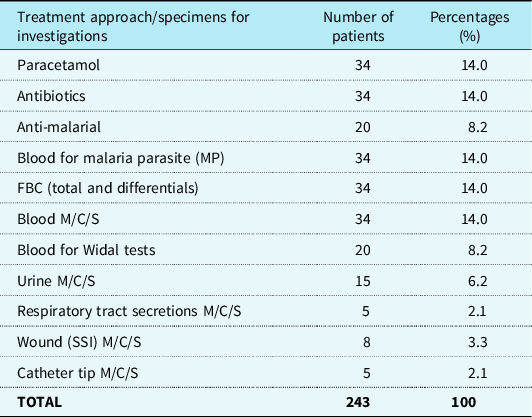
All patients with POF (34) received a common standard of care: paracetamol, antibiotics, blood smear for malaria parasites, and blood culture and sensitivity. Other sites for culture and sensitivity were urine (15), respiratory (5), wounds (8) and catheter tips (5); blood for Widal tests were obtained in 20 cases. These 20 cases exhibited symptoms and signs of gastroenteritis in addition to pyrexia.
For the purposes of the study, we defined post-operative fever as a temperature greater than 38 °C (100.4 °F) on 2 consecutive post-operative days or greater than 39°C (102.2°F) on any post-operative day. Reference Villasís-Keever, Zapata-Arenas and Penagos-Paniagua9
Duration on time on ventilatory support ranged from <24 hours to 5 days depending on the type of case being carried out. Those on ventilator beyond 5 days underwent tracheostomy.
Results
In this review, we found that 34 (14.1%) of patients were diagnosed with POF.
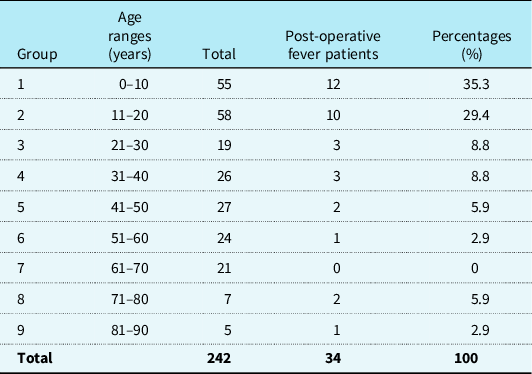
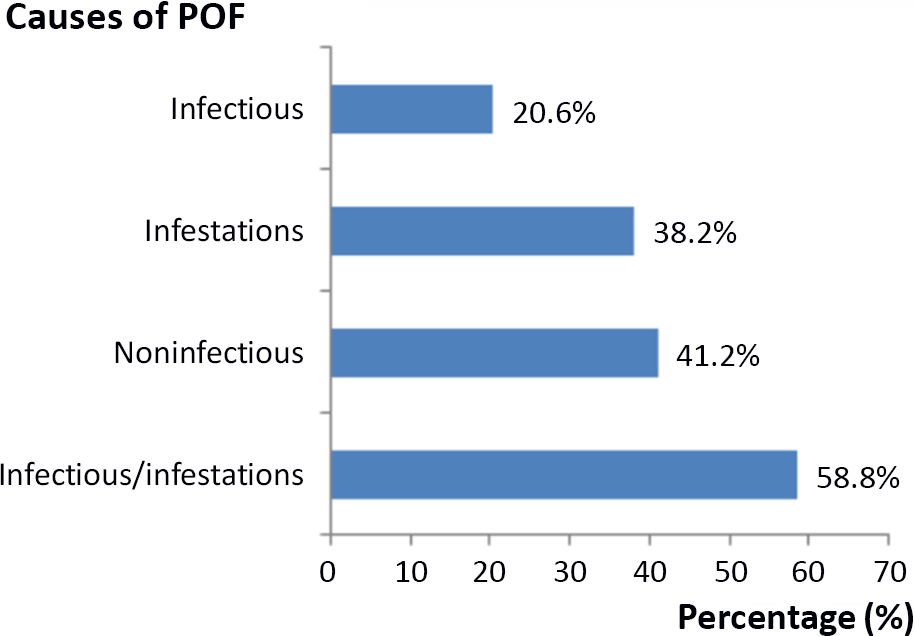
The age ranges of patients (Table 1) were between 0–10 and 80–90 years with 11–20 years accounting for the highest number followed by 0–10 years. In cases of POF, a significant number was observed in the age range 0–10 years (35.3%) followed by 11–20 years (29.4%). Of the patients studied, 14.1% patients (34/242) were identified to have developed POF; 5.6% of these were found to be non-infectious while the remaining; 8.5% were divided into 5.3% malaria infestation and 3.2% infectious, respectively (Fig 1). Of the 34 patients with POF, age groups mostly affected were 0–10 and 11–20 years with the absolute value of (n = 12, 35.3%) and (n = 10, 29.4%) respectively (Table 1).
The distribution of patients according to demography and patients that had post-operative fever

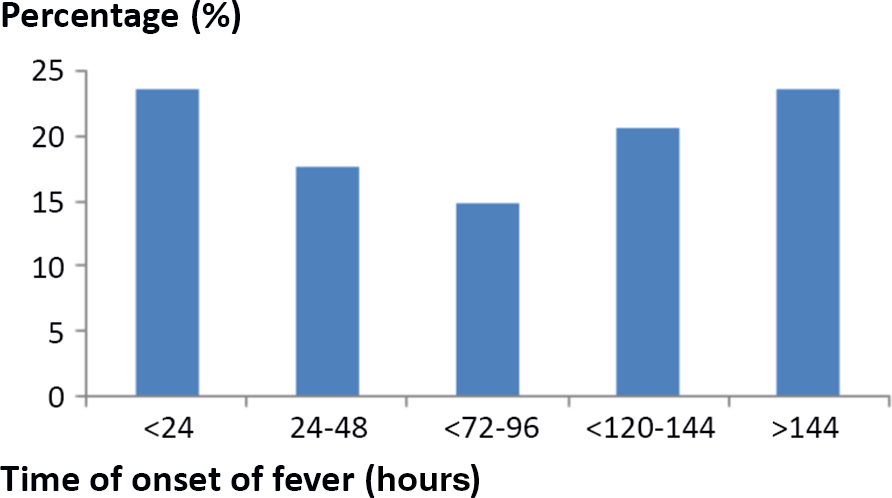
Showing the distribution of patients according to the time of onset and duration of fever (n = 34).

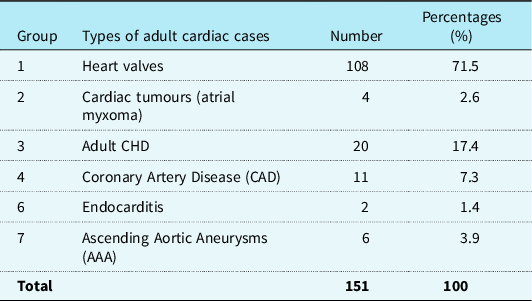
The types of adult cardiac surgical procedures treated are shown, and heart valve surgery was dominant (71.5%), followed by patients with adult CHD (17.4%).
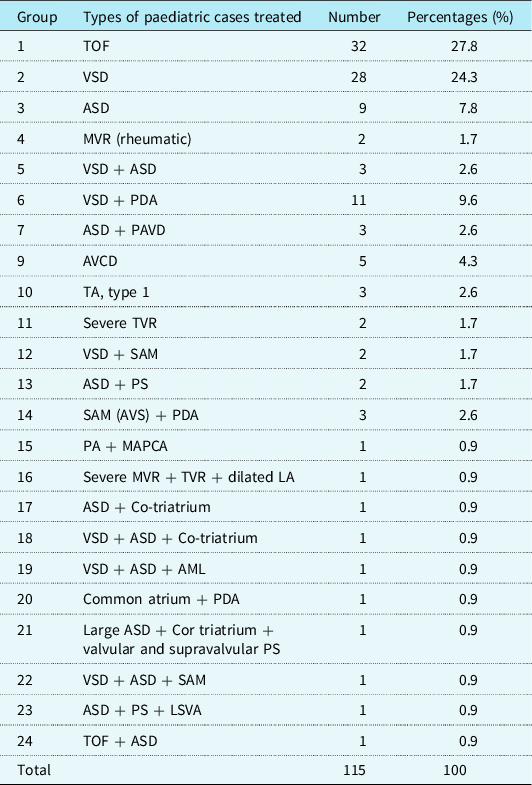
The cardiac procedures, both simple and complex, performed in children during the study period were carried out by our local team in collaboration with visiting teams. Of 115 paediatric cardiac cases done, TOF was the most frequently performed (27.8%) followed by VSD (24.3%).
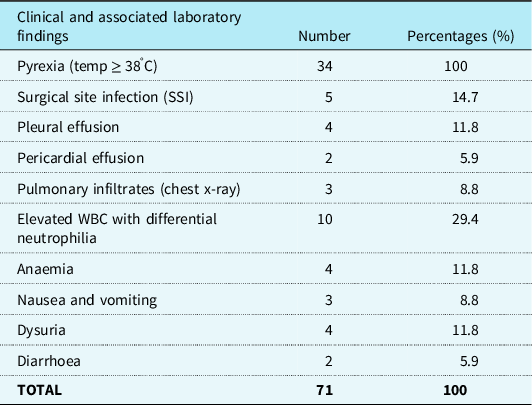
The clinical and associated laboratory findings in the patients affected with POF were displayed (Table 2), and showed that pyrexia was the common variable in all of them. Apart from the pyrexia, elevated white blood cell count (WBC) with differential neutrophilia was significant (29.4%). This was closely followed by surgical site infections (SSI – 5.0%).
The distributions of patients with types of clinical and associated laboratory findings in 34 patients with pyrexia

The distribution of patients according to the time of onset and duration of fever (Fig 2) illustrates a bimodal peak in the affected patients. The first was those whose onset and duration were less than 24 hours (23.5%). The second peak was those patients whose onset and duration were beyond 144 hours (23.5).
Analysis of POF patients (n = 34) in the study.

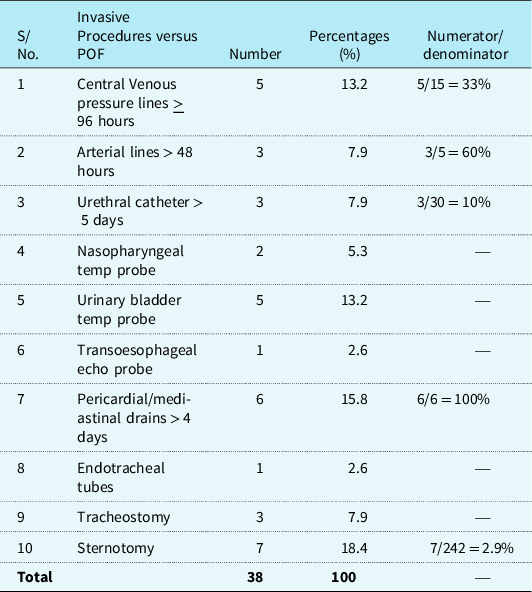
The invasive procedure mostly commonly associated with post-operative fever in the treated patients (Table 3), was sternotomy (18.4%), closely followed by pericardial/mediastinal tubes beyond 96 hours (15.8%). The procedures associated with post-operative fever in the patients were endotracheal tube intubation (2.8%).
Relationship between timing of Invasive Procedures to post-operative fever

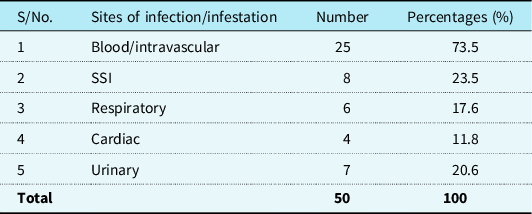
The distributions of patients according to organs/sites of infections/infestations (Table 4), showed that blood/intravascular accounted for the highest number of sites or organs involved (73.5%), and were implicated in both infections and infestations. Surgical site infections (wound infections) [23.5%] were ranked second which was closely followed by urinary tract infections (20.6%).
The distributions of patients according to organs/sites of infections/infestations (n = 34)

Table 5 displays the distributions of patients according to the treatment approaches and samples of specimens for investigations. By applying a structured clinical evaluation of patients with POF, we were able to ensure appropriate specimens for malaria parasites, blood culture, and full blood count (Total and Differentials) were carried out in all affected patients.
The distributions of patients according to the treatment approaches and samples for microscopy, culture, and sensitivity (M/C/S) [n = 34]

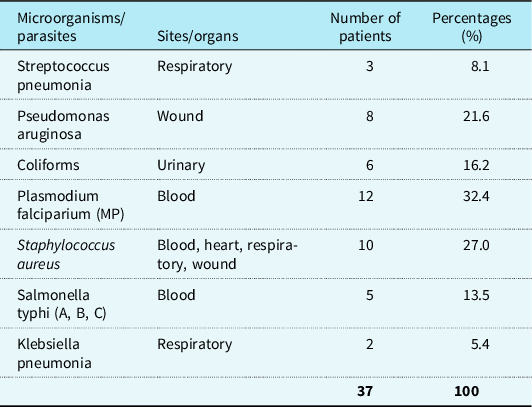
Table 6 shows the distributions of patients with infectious microorganism/parasite infestations according to the organisms and the sites of predilection. POF in the affected patients showed that malaria parasite infestation in the blood (32.4%) accounted for the most cause of post-operative fever. Staphylococcocus aureus was identified in the blood, respiratory tract secretions, and wound specimens of 10 patients (27.0%), and in some respiratory samples, Klebsiella pneumonia was found.
The distributions of patients with infectious microorganism/parasite infestations according to organisms and the sites of predilection (n = 34)

In this study, 14.1% of patients (34/242) were identified to have developed POF. In this 34 (41.2%, n = 14) were found to be non-infectious while the remaining (58.8%, n = 20) were divided into (38.2%, n = 13) malaria infestation and (20.6%, n = 7) infectious, respectively. Within the infectious group, one patient developed systemic inflammatory syndrome (SIRS) which complicated to multiple organ dysfunction syndrome before death. Detail analysis of sternotomy with POF showed that of the 18.4% with POF, 4.2% were due to malaria, 5.7% were due to infectious causes while 8.5% were due to non-infectious cause. In the 5.7 infectious causes, 4.5% and 1.2% were superficial and deep infections, respectively.
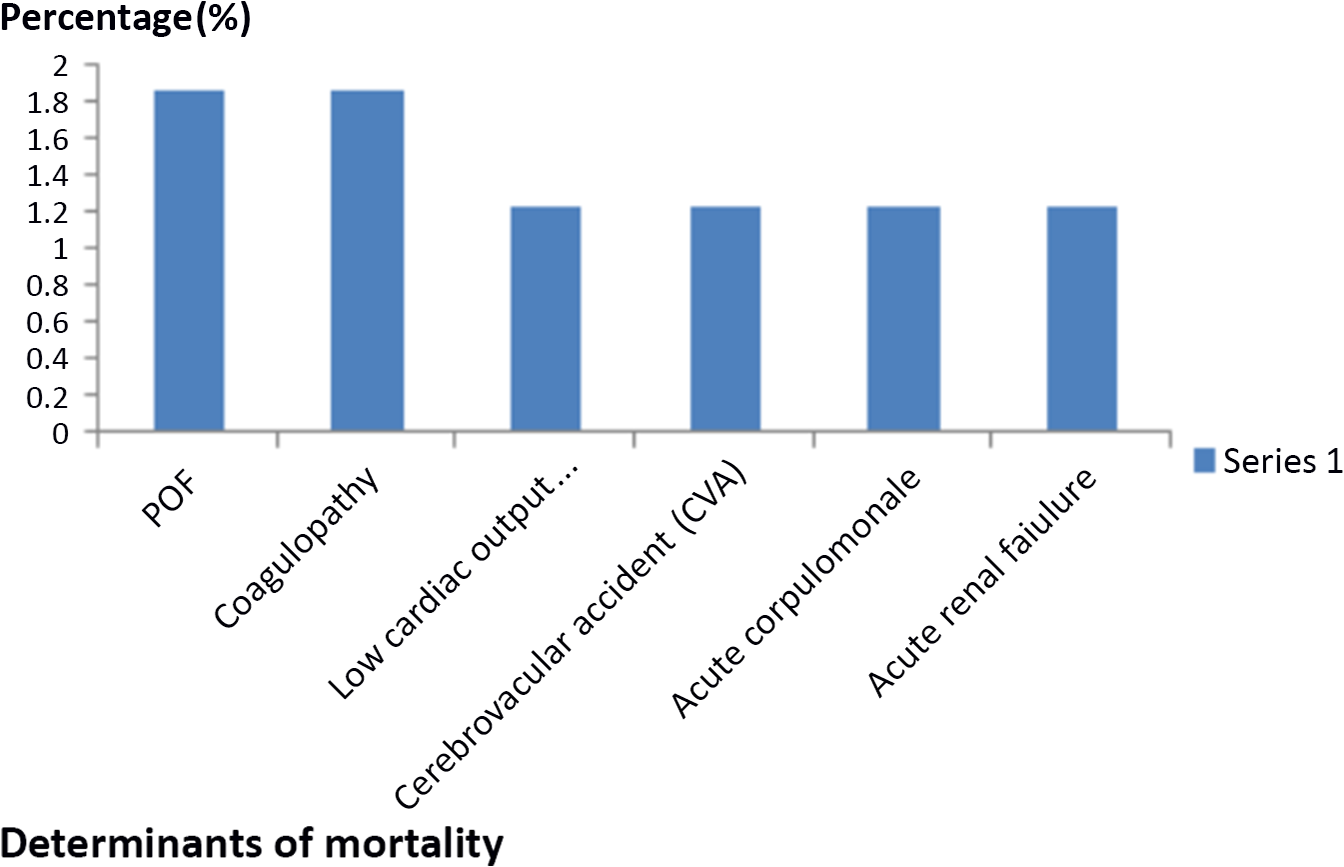
In this study, 21 patients out of 242 died, representing 8.7% mortality. The determinants of such mortality are represented in this figure. POF and Coagulopathy were the highest, accounting for 1.86% each while others accounted for 1.24% each.
All the patients that had cardiac surgery received a blood transfusion, but in our review, no POF was clearly linked to blood transfusion. Sources of blood were from free-donation sources (medical students, seminarians, and unrelated individuals) and through fee-associated blood donation. None of the implanted valves required re-implantation and none of the POF patients suffered re-infection or re-emerging infection upon returning home. Our post-operative care protocol required communication 30 days after surgery to specifically confirm satisfactory resolution.
Discussion
Determining the differential diagnosis, and applying a systematic approach, helped our programme institute proper management. Information on the frequency of post-operative fever in cardiac surgery is limited, and the results are different reflecting the varying levels of clinical standards and operating facilities. Frequencies ranging from 12 to 73% have been described. Reference Clarke, Kimelman and Raffin7,Reference Villasís-Keever, Zapata-Arenas and Penagos-Paniagua9 There does not seem to be a consensus as to the time of its onset, while some authors consider it is after the first 48 hours following surgery, others have reported it appearing on the sixth post-operative day. Reference Avarez, Gonzalez, Herrera, Cassanova, Cardenas and Diaz10 In our study, the first peak was those whose onset and duration of post-operative fever were less than 24 hours (23.5%). The second peak was those whose onset and duration were beyond 144 hours (23.5%). The onset and duration of post-operative fever occurred in other patients at variable time periods.
In a Cuban study, Alverez et al Reference Avarez, Gonzalez, Herrera, Cassanova, Cardenas and Diaz10 found 15.6% cases of post-operative fever in patients that underwent cardiovascular surgery in their centre. That is in agreement with ours in that the frequency of POF in cardiovascular surgery was variable but values between 12 and 73% have also been reported. Reference Rodríguez-Baño, Paño-Pardo, Álvarez-Rocha, Asensio, Calbo and Cercenado11 In their study, the age mostly affected was 30–49 years, which differed from our findings.
In the adult surgical group, valve surgery was the most common operation performed (71.5%) followed by various adult CHD presentations (17.4%). The least was valve endocarditis and vegetations on the tricuspid valve disease with 0.7% each. In the paediatric surgical group, of 115 cases done, Tetralogy of Fallot was the highest (27.8%) followed by Ventricular Septal Defect (24.3%) (see Tables 7 and 8). In a similar study in Sub-Saharan Africa, the ventricular septal defect was the highest followed by the atrial septal defect. Reference Zimmerman and Sable12 POF has been shown to occur after coronary artery bypass graft and other adult cardiac surgeries. Reference Avarez, Gonzalez, Herrera, Cassanova, Cardenas and Diaz10,Reference Rodríguez-Baño, Paño-Pardo, Álvarez-Rocha, Asensio, Calbo and Cercenado11
The distribution of patients according to the types of heart surgery in the adults

The distribution of types of surgery performed in paediatric patients

Keys: ASD = atrial septal defect; AVCD = atrioventricular canal defect; MVR = mitral valve regurgitation; PAVD = partial anomalous venous drainage; PDA = patent ductus arteriosus; PS = pulmonary stenosis; SAM = sub-aortic membrane; TA = truncus arteriosus; TOF = Tetralogy of Fallot; VSD = ventricular septal defect.
Apart from the pyrexia, elevated white blood cell count (WBC) with differential neutrophilia was very common (29.4%). This was closely followed by surgical site infections (SSI) [5.0%] (Table 2). If atelectasis was suspected, a chest x-ray was ordered, blood and urine culture for sepsis and a urinary tract infection, and duplex ultrasound if a deep vein thrombus was suspected. The key was to examine the patient as it might provide a clue to the cause of fever. We found intensive post-operative respiratory therapy to be very helpful in managing this.
In this study, the invasive procedure mostly commonly associated with POF in the treated patients was sternotomy (5.7% – infectious cause), closely followed by pericardial/mediastinal tubes beyond 96 hours (15.8%). In a similar study in Norway in 2011 evaluating 2440 patients undergoing heart surgery, 5.1% had sternotomy infections and 8.9% had intravenous infections. Reference Chhabi, Jakovljevic, Dhimal and Kim13
When the sites of infections/infestations were evaluated, it was found that infections or infestations in the blood or within intravascular space were the highest (73.5%). This is closely followed by wound infections or surgical site infections (SSI) with urinary tract infections (UTI) coming 3rd.
In discussing the issues of POF with colleagues from severely health-care restricted countries, especially in Sub-Saharan Africa (SSA), Reference Freischlag and Busuttil14 malaria has also been found to be a prominent cause of post-operative fever in their experience.
In our study, 3 patients out of 34 (8.8%) developed systemic inflammatory response syndrome (SIRS) and consequently multiple organ dysfunction syndrome, which led to their demise. Four patients out of 34 (11.8%) who were diagnosed with malaria post-operatively but were treated had extended ICU stay averaging 8 days. Mortality of 21 patients out of 242 representing 8.7% was recorded (Fig 3). The determinants of the mortality were described with POF alone contributing 1.86%.
The determinants of mortality in the treated patients.

Conclusion
International cardiac mission visits have assisted our own team carry out cardiovascular surgery in our centre for 7 years. By applying a carefully planned protocol for managing patients suspected of fever, we have gained a step-wise improvement in several features of our clinical care. We have managed over 242 patients treated medically and 266 surgeries have been accomplished. Among these, 34 (14.1%) patients had post-operative fever. Structured clinical and laboratory workup has helped us improve our identification of the causes of post-operative fever. The institution of appropriate treatment ranged from antipyretic, anti-inflammatory, anti-malaria drugs and antibiotics and included simple measures such as tepid sponging to combat the fever. By following this practice, a 91.2% success rate has been achieved, and the mortality rate from several causes has been reduced to 8.7%. Despite many shortcomings in equipment, disposables, and staff levels, we are encouraged by this early programme evolution.
Acknowledgements
We are indebted to the members of foreign cardiac teams especially CardioStart International and William Novick Cardiac Alliance for their roles in caring for indigent patients. We are particularly grateful to members of our hospital record department and the entire secretarial staff of the National Cardiothoracic Center of Excellence for their varied roles in the production of this manuscript.
Financial support
This research received no specific grant from any funding agency, commercial or not-for-profit sector.
Conflicts of interest
The authors have no conflicts of interest to disclose.
Ethical standards
Approved by the Institutional Ethics Committee.