The last several decades have witnessed considerable progress in the development of effective cognitive and behavioural interventions for a range of psychological problems (Hofmann, Asnaani, Vonk, Sawyer, & Fang, Reference Hofmann, Asnaani, Vonk, Sawyer and Fang2012). However, there is considerable room for improvement. A proportion of patients fail to respond to frontline treatments, and many of those who respond relapse after treatment has ended (Hofmann et al., Reference Hofmann, Asnaani, Vonk, Sawyer and Fang2012; Vittengl, Clark, Dunn, & Jarrett, Reference Vittengl, Clark, Dunn and Jarrett2007). The purpose of this article is to review an emerging body of research on one prominent barrier to positive treatment outcomes and relapse prevention: poor patient memory for treatment contents. As we discuss in detail below, improved patient memory for treatment contents may function as a transdiagnostic mechanism of change to enhance effects from established treatments.
We begin by providing a conceptual definition of patient memory for treatment contents and describing the measures used to assess this construct. We then review initial findings on patient memory for treatment contents and the development and evaluation of the Memory Support Intervention (MSI). The MSI is an adjunctive intervention focused on improving patient memory for treatment contents to enhance treatment outcome. Finally, we enumerate a variety of future directions for this line of research.
Definition of Patient Memory for Treatment Contents
For this review, patient memory for treatment contents refers to memory for treatment points. We define treatment points as the concepts, skills, and insights discussed during therapy that the therapist thinks are important for the patient to remember and/or implement as a part of treatment (J.Y. Lee & Harvey, Reference Lee and Harvey2015). For example, in cognitive behavioural therapy (CBT), treatment points may include the concept of the cognitive model of emotional distress, the skill of cognitive restructuring using a thought record, and personal insights into individualised patterns of thought and behaviour that contribute to emotional distress (e.g., ‘I tend to anticipate rejection from others’; J.S. Beck, Reference Beck2011).
We distinguish patient memory for treatment contents from general psychoeducational knowledge, which includes knowledge about the prevalence, course, and treatment options for mental health problems (de Souza Tursi, von Werne Baes, de Barros Camacho, de Carvalho Tofoli, & Juruena, Reference de Souza Tursi, von Werne Baes, de Barros Camacho, de Carvalho Tofoli and Juruena2013; Rouget & Aubry, Reference Rouget and Aubry2007). Psychoeducational knowledge may also increase as a part of treatment, but typically serves as inert, orienting information (e.g., Strandskov et al., Reference Strandskov, Ghaderi, Andersson, Parmskog, Hjort, Wärn and Andersson2017), in contrast to the ‘active ingredients’ of treatment points. We also differentiate between the literature investigating patient memory for treatment and that examining methods to enhance safety learning in the context of treatment for anxiety, which has been reviewed elsewhere (Kredlow, Eichenbaum, & Otto, Reference Kredlow, Eichenbaum and Otto2018). Whereas safety learning refers to the modification of fear associations through exposure to corrective information (Lang, Davis, & Öhman, Reference Lang, Davis and Öhman2000), memory for treatment, as we define it here, refers to memory for treatment contents (e.g., the skills, concepts, and insights discussed in therapy).
Measurement of Patient Memory for Treatment Contents
For this relatively new domain of research, it has been necessary for investigators to develop novel measures. Most studies examining patient memory for treatment contents have used free recall tasks (Chambers, Reference Chambers1991; Hahlweg & Richter, Reference Hahlweg and Richter2010; Harvey et al., Reference Harvey, Lee, Smith, Gumport, Hollon, Rabe-Hesketh and Abrons2016; J.Y. Lee & Harvey, Reference Lee and Harvey2015). To the best of our knowledge, the Patient Recall Task (Harvey et al., Reference Harvey, Lee, Smith, Gumport, Hollon, Rabe-Hesketh and Abrons2016; J.Y. Lee & Harvey, Reference Lee and Harvey2015) is the only measure with established reliability and validity. For the task, patients are given a blank sheet of paper and asked to take 10 minutes to write down all the treatment points they can remember from all sessions they have had so far, as well as to indicate the points that were discussed during the last session. Trained coders evaluate the written responses to tally the total number of distinct treatment points recalled. The Patient Recall Task has demonstrated excellent interrater reliability (r = .82, p < .001) and predictive validity of the amount of memory support received (rs = .29–0.36, ps =.022–.073) (J.Y. Lee & Harvey, Reference Lee and Harvey2015; J.Y. Lee, Worrell, & Harvey, Reference Lee, Worrell and Harvey2016).
While free recall methods of assessing patient memory for treatment contents represent a simple and face-valid approach, they may also provide conservative and limited estimates of memory. For example, free recall tasks typically result in less information recalled compared with recognition and cued-recall tasks (e.g., Hart, Reference Hart1967; Tulving & Pearlstone, Reference Tulving and Pearlstone1966). Additionally, the scoring rubric for the Patient Recall Task (one point for each treatment point recalled) assumes that all treatment points are equally significant. While this counting method of measuring patient recall shows evidence of reliability and validity (Harvey et al., Reference Harvey, Lee, Smith, Gumport, Hollon, Rabe-Hesketh and Abrons2016; J.Y. Lee & Harvey, Reference Lee and Harvey2015), there may be important differences in the quality, importance, or impact of recalled treatment points (Dong, Zhao, Ong, & Harvey, Reference Dong, Zhao, Ong and Harvey2017). Moreover, we do not know the extent to which free recall relates to the utilisation of treatment points in daily life situations. Alternative approaches to measuring patient memory for treatment contents are described in the future directions section below.
Patient Memory for Treatment Contents is Poor
There is robust evidence in the medical literature that patients display poor memory for treatment contents, including diagnostic information and behaviour change recommendations (Flocke & Stange, Reference Flocke and Stange2004; Jansen et al., Reference Jansen, Butow, van Weert, van Dulmen, Devine, Heeren and Tattersall2008; Kessels, Reference Kessels2003). Fewer studies have investigated memory for treatment contents in the context of psychological interventions. However, findings to date suggest a similar pattern of poor memory. In an early study of behavioural treatment for insomnia, patients forgot approximately 40% of treatment recommendations in the months after termination (Chambers, Reference Chambers1991). Additionally, recall was as low as 13% for specific treatment recommendations (Chambers, Reference Chambers1991). In a more recent study of CBT for insomnia, patients only recalled approximately 35% of recommendations presented from one week of treatment to the next (J.Y. Lee & Harvey, Reference Lee and Harvey2015). One decade after receiving behavioural couples counselling, 30% to 50% of patients cannot recall any skills presented (Hahlweg & Richter, Reference Hahlweg and Richter2010). Moreover, recall was as low as 3% for certain skills (Hahlweg & Richter, Reference Hahlweg and Richter2010).
Why is Patient Memory for Treatment Contents Poor?
Several characteristics, both of the patients seeking mental health treatment and the context of therapy sessions, may contribute to poor patient memory for treatment contents. First, for all humans, normative memory functioning involves notable imperfections in encoding, storage, and later retrieval, resulting in both forgetting and distortion of past events (Schacter, Reference Schacter1999). Second, relative to healthy controls, individuals across different forms of psychopathology show worse performance on tasks assessing working memory, declarative memory, and non-declarative memory (Airaksinen, Larsson, & Forsell, Reference Airaksinen, Larsson and Forsell2005; Gotlib & Joormann, Reference Gotlib and Joormann2010; Torres, Boudreau, & Yatham, Reference Torres, Boudreau and Yatham2007). Third, typical therapy sessions are 50 minutes long, and challenge patients to conceptualise and solve their problems in novel and complex ways, potentially presenting a significant learning challenge. Finally, therapy sessions may often elicit high negative emotional arousal in patients, and negative emotional arousal during encoding has been linked to impaired memory for new information (Andreano & Cahill, Reference Andreano and Cahill2006). In one of the few studies investigating the relationship between emotion and memory in the context of therapy sessions, men and women who showed greater negative emotional arousal at baseline remembered fewer skills after behavioural couples counselling (Baucom, Weusthoff, Atkins, & Hahlweg, Reference Baucom, Weusthoff, Atkins and Hahlweg2012). Being a challenging population to teach in a difficult learning environment, it is perhaps unsurprising that patient memory for treatment contents is so poor. Moreover, most therapists are not optimally trained to support patient memory treatment contents, even though the ultimate responsibility for patient memory lies with the therapist.
Patient Memory for Treatment Contents and Treatment Outcome
Studies investigating the relationship between memory for treatment contents and outcome have shown mixed results. In the context of psychological treatment for insomnia, one initial study did not find an association between recall of treatment contents and outcome (Chambers, Reference Chambers1991). However, a subsequent study with a similar population demonstrated moderate to strong correlations (rs = .50–.69) between recall and outcome such that greater recall was associated with better outcome (J.Y. Lee & Harvey, Reference Lee and Harvey2015). Recall of skills learned in behavioural couples counselling one decade after completing treatment was not associated with relationship outcomes (Hahlweg & Richter, Reference Hahlweg and Richter2010). On the other hand, greater recall is associated with better therapist and patient ratings of treatment adherence in cognitive therapy for depression (Dong, Lee, & Harvey, Reference Dong, Lee and Harvey2017a), and treatment adherence has been linked in turn to better outcomes (Taylor, Abramowitz, & McKay, Reference Taylor, Abramowitz and McKay2012). Additionally, patients receiving cognitive therapy for depression who recall the process of cognitive restructuring are more likely to show a good response to treatment (Dong et al., Reference Dong, Zhao, Ong and Harvey2017). In a recently completed study, participants who recalled more treatment points from an online intervention to reduce procrastination showed greater change in key mechanisms of procrastination one week later (Zieve & Harvey, Reference Zieve and Harvey2018b).
Several factors may contribute to these mixed findings. First, studies to date have analysed relatively small samples (n = 20 to 70), potentially lacking statistical power and increasing the probability of false negative results. The literature would benefit from adequately powered studies of the relationship between memory for treatment contents and outcome. Second, studies have utilised a variety of measures of memory for treatment contents, with no clear gold standard. Finally, the relationship between recall and outcome may depend on the timing relative to treatment. Studies investigating memory for treatment contents and outcome during treatment have generally found significant relationships between these variables (Dong, Lee et al., Reference Dong, Lee and Harvey2017a; Dong, Zhao et al., Reference Dong, Zhao, Ong and Harvey2017; J.Y. Lee & Harvey, Reference Lee and Harvey2015). Two studies that investigated the association between memory for treatment contents and outcome months to years after treatment ended did not find significant relationships between these variables (Chambers, Reference Chambers1991; Hahlweg & Richter, Reference Hahlweg and Richter2010). This pattern of results suggests that patient memory for treatment contents may exert its strongest influence on outcome during treatment (through mediating variables such as treatment adherence), while separate factors may better account for outcome after treatment. Alternatively, the declining relationship between memory for treatment contents and outcome after treatment may reflect a shift in patients from declarative memory for treatment contents (e.g., as assessed by recall or self-report) to implicit or procedural memory born from repeated practice and increasingly automatic use of treatment points (Schacter, Reference Schacter1987). Future research is needed to investigate these possibilities.
Development and Evaluation of the Memory Support Intervention (MSI)
These initial findings demonstrating poor patient memory for treatment contents and the association between memory for treatment contents and treatment outcome highlighted patient memory for treatment contents as a potentially efficacious intervention target for improving clinical outcomes. Within the experimental therapeutics framework (Insel & Gogtay, Reference Insel and Gogtay2014), novel intervention targets should be both (a) associated with treatment outcome, and (b) modifiable such that they may be manipulated through intervention. There is evidence that general memory functioning may be significantly improved in those with affective disorders by cognitive training ‘games’ (Medalia & Freilich, Reference Medalia and Freilich2008; Naismith, Redoblado-Hodge, Lewis, Scott, & Hickie, Reference Naismith, Redoblado-Hodge, Lewis, Scott and Hickie2010). These studies suggest that patient memory for treatment may also be improved through carefully devised techniques. As described in Onken et al.’s (Reference Onken, Carroll, Shoham, Cuthbert, Riddle, Cuthbert and Riddle2014) model of intervention development, the next stage after the identification novel treatment targets is intervention generation and piloting. Subsequent stages involve efficacy studies in research and community settings, effectiveness trials, and implementation and dissemination studies, with a cross-cutting emphasis on evaluating mechanisms of change (Onken et al., Reference Onken, Carroll, Shoham, Cuthbert, Riddle, Cuthbert and Riddle2014).
As a first step in the intervention development process we conducted extensive literature reviews in the educational and cognitive psychology literature to identify strategies to improve memory. We then specified four criteria that each strategy should meet for retention in the intervention: (1) identifiable: the strategy must be precisely defined and operationalizable; (2) distinct: the strategy must not overlap or be redundant with other categories, though there may be instances in which a therapist uses multiple strategies at the same time; (3) effective: evidence in the cognitive psychology or education literatures must indicate that this strategy will improve memory; (4) actionable: therapists can realistically use this strategy within the context of a therapy session (Harvey et al., Reference Harvey, Lee, Williams, Hollon, Walker, Thompson and Smith2014).
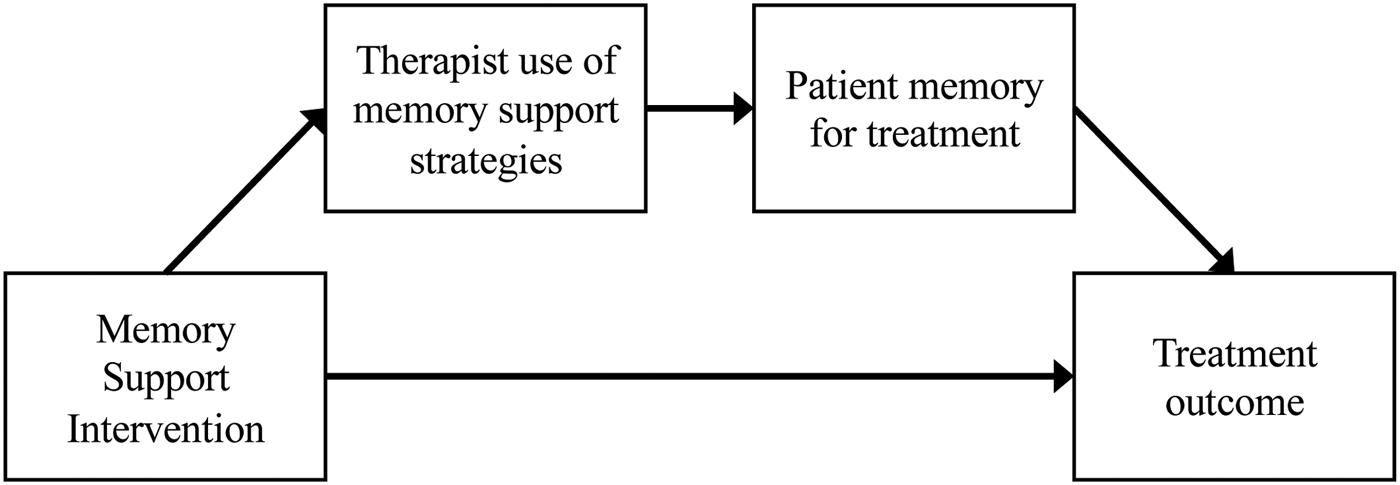
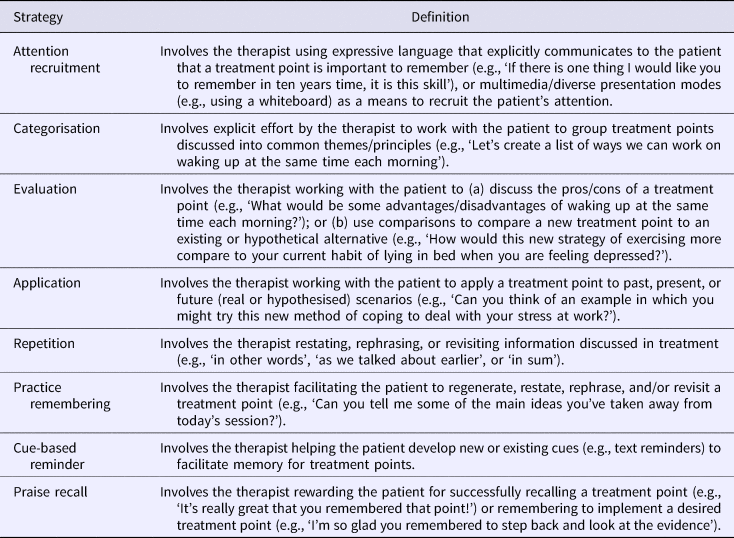
This process yielded the eight memory support strategies that compose the MSI (Table 1; Harvey et al., Reference Harvey, Lee, Williams, Hollon, Walker, Thompson and Smith2014). Therapists are meant to incorporate these strategies strategically and intensively into treatment-as-usual. The strategies may be delivered individually or in bundles of two or more strategies at the same time (Dong, Lee, & Harvey, Reference Dong, Lee and Harvey2017b). For example, a therapist may use practice remembering to prompt a patient to recall treatment points from the last session, then praise the patient's successful recall, or repeat treatment points from the last session if the patient fails to recall some points. The MSI aims to increase patient memory for treatment points specifically, rather than to enhance general memory functioning per se, with the goal of improving treatment outcome (Figure 1). Because the MSI is delivered within treatment-as-usual, it does not increase session time or the overall number of sessions. Additionally, the MSI does not constrain the definition of a treatment point to any specific type of treatment for a specific disorder. As such it may be considered transdiagnostic and transtreatment. While treatment-as-usual may involve some memory support strategies (e.g., asking the patient to summarise at the end of the session), the MSI involves incorporating memory support strategies much more frequently than is typically found in treatment-as-usual. For example, in one of our studies, well-trained and thoroughly supervised cognitive therapists delivering treatment-as-usual used memory support strategies approximately eight times per session, across an average of three different types of memory support strategies (Harvey et al., Reference Harvey, Lee, Smith, Gumport, Hollon, Rabe-Hesketh and Abrons2016). However, the evidence suggests that approximately 14–18 uses of memory support strategies across four different types of strategies are needed to maximise the impact of the intervention (J.Y. Lee, Dong, & Harvey, Reference Lee, Dong and Harvey2018).
Conceptual model of Memory Support Intervention effects.

Memory Support Strategies

While the MSI was designed to operate across treatments and disorders, investigating these broader possibilities seemed premature without first establishing the overall efficacy in a more controlled setting. Thus, to create a platform for the next step in investigating this approach, an initial pilot trial (Harvey et al., Reference Harvey, Lee, Smith, Gumport, Hollon, Rabe-Hesketh and Abrons2016) was conducted to test the efficacy of the MSI in the context of one treatment for one disorder: cognitive therapy for depression (A.T. Beck, Rush, Shaw, & Emery, Reference Beck, Rush, Shaw and Emery1979). Depression was selected as a focus for several reasons: (1) depression is prevalent and impairing (Lopez & Mathers, Reference Lopez and Mathers2006; Mathers & Loncar, Reference Mathers and Loncar2006); (2) there is a need to improve treatments for depression because a proportion of patients do not recover, and of those who do recover, the majority relapse (Vittengl et al., Reference Vittengl, Clark, Dunn and Jarrett2007); (3) depression is associated with poor memory (Taconnat et al., Reference Taconnat, Baudouin, Fay, Raz, Bouazzaoui, El-Hage and Ergis2010); and (4) poor memory in depression is modifiable (Hertel & Rude, Reference Hertel and Rude1991; Taconnat et al., Reference Taconnat, Baudouin, Fay, Raz, Bouazzaoui, El-Hage and Ergis2010). Cognitive therapy for depression was selected because this treatment is well articulated and has been widely studied. Meta-analyses confirm cognitive therapy as a frontline treatment (Cuijpers et al., Reference Cuijpers, Hollon, Van Straten, Bockting, Berking and Andersson2013). However, there is room for improvement in the efficacy of cognitive therapy (Vittengl et al., Reference Vittengl, Clark, Dunn and Jarrett2007).
Evaluating the efficacy of the MSI also required a method to assess treatment fidelity, leading to the development of the Memory Support Rating Scale (MSRS; J.Y. Lee et al., Reference Lee, Worrell and Harvey2016). The MSRS is an observer-rated measure of memory support usage by treatment providers, yielding two primary count outcomes per session for (a) the overall number of times memory support strategies were used across all memory support strategy types, and (b) the total number of different memory support strategy types used. The MSRS has demonstrated acceptable interrater reliability, convergent validity with Patient Recall Task scores, and discriminant validity with observer-rated measures of overall session quality (J.Y. Lee et al., Reference Lee, Worrell and Harvey2016). One limitation of the MSRS is the time intensive process required for training coders and coding session recordings. We are currently evaluating the reliability and validity of a simpler and minimally time intensive therapist self-report measure of memory support strategy use.
In the pilot trial of the MSI, we randomised 48 adults with diagnosed major depressive disorder to cognitive therapy-as-usual or to cognitive therapy plus memory support. Both groups received 14 weekly sessions of cognitive therapy (Harvey et al., Reference Harvey, Lee, Smith, Gumport, Hollon, Rabe-Hesketh and Abrons2016). Therapists of patients in the memory support condition additionally incorporated the strategies from the MSI into treatment-as-usual. Results showed effect sizes favouring cognitive therapy plus memory support for therapist use of memory support (ds = 1.46–1.53), patient recall of treatment contents (ds = 0.17–0.38), depression outcomes (ds = 0.22–0.54), and functional impairment outcomes (ds = 0.28–0.57). The effects on patient recall, depression outcomes, and functional impairment did not reach statistical significance in this small pilot trial that was designed more for ‘learning than confirming’ (E.C. Lee, Whitehead, Jacques, & Julious, Reference Lee, Whitehead, Jacques and Julious2014). Interestingly, participants with less than 16 years of education experienced better long-term treatment outcomes in cognitive therapy plus memory support, while participants with 16 or more years of education experienced better outcomes in cognitive therapy-as-usual. This pattern of results suggests that those who have completed a college education (typically taking 16 years) may naturally use effective learning techniques in the context of therapy sessions, and therefore do not benefit from additional memory support delivered by therapists.
Again following Onken et al.’s (Reference Onken, Carroll, Shoham, Cuthbert, Riddle, Cuthbert and Riddle2014) model of intervention development, these promising initial findings prompted further testing of the MSI in an ongoing, confirmatory, efficacy trial of a similar design with 178 adults with major depressive disorder (Harvey et al., Reference Harvey, Dong, Lee, Gumport, Hollon, Rabe-Hesketh and Armstrong2017). In this trial, therapists delivering the MSI are instructed to aim for an average of 19 instances of memory support strategies per session in order to produce a strong experimental manipulation. In order to achieve this high level of memory support, we developed several tools to assist therapists to use memory support strategies frequently and consistently in every session. First, the memory support cue card (see Appendix A in the Supplementary material) is a small print-out that lists the eight memory support strategies and bundles with brief examples. The card is intended to be placed in a visible location beside the therapist in the session in order to remind the therapist to use memory support. Second, the ‘session companion’ (see Appendix B in Supplementary material) is a worksheet intended to be completed by the patient at every session, which involves a variety of memory support strategies. For example, the check-in question, ‘In what situation(s) have you used CBT skills since our last session?’, serves as application.
Future Directions
The findings reviewed above suggest several promising areas of future research, which we discuss next.
Mediators
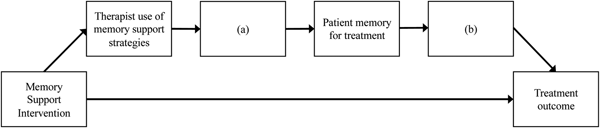
Future development of the MSI may be aided by clarifying the mechanisms through which (a) therapist use of memory support leads to enhanced patient memory for treatment and (b) enhanced patient memory for treatment leads to improved treatment outcome (Figure 2). Regarding path (a), therapist use of memory support strategies may evoke a variety of learning behaviours from patients, such as listening to new information presented by the therapist, repeating previously discussed information, or constructing new ideas, inferences, or connections concerning treatment information. These different patient learning behaviours have varied implications for patient memory. For example, constructive learning behaviours (e.g., making inferences above and beyond the information being presented) have been shown to result in better memory outcomes than activities that involve passively absorbing information (e.g., just listening to the therapist) or interacting with learning material without constructing new ideas (e.g., rehearsing previously learned information; Chi & Wylie, Reference Chi and Wylie2014). Interestingly, only a subset of strategies in the MSI appear to elicit constructive learning behaviours. For example, in contrast to repetition, when the therapist simply repeats information to the patient while the patient passively listens, evaluation involves the therapist giving the patient an opportunity to construct new ideas about the pros, cons, and comparisons regarding an idea or skill discussed in the session. Prioritising memory support strategies that elicit patient constructive learning behaviours could result in better patient memory for treatment (Zieve, Dong, Weaver, Ong, & Harvey, Reference Zieve, Dong, Weaver, Ong and Harvey2018).
Expanded conceptual model of Memory Support Intervention effects. Box (a) represents mechanisms that link therapist use of memory support strategies to improved patient memory for treatment. Box (b) represents mechanism that link enhanced patient memory for treatment to improved treatment outcome.
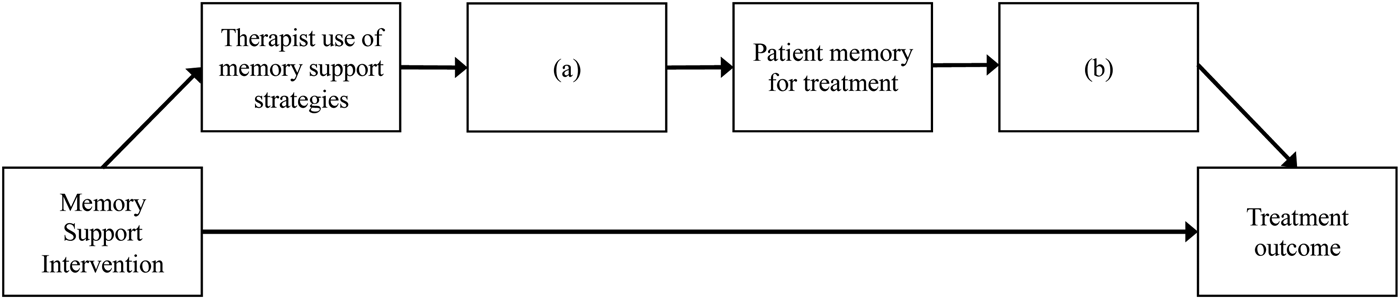
Further research examining the mechanisms through which enhanced patient memory for treatment leads to improved treatment outcome is also needed (path ‘b’ in Figure 2). Initial findings suggest that better memory for treatment is associated with greater treatment adherence, which is composed of treatment receipt (e.g., understanding of and agreement with treatment information) and treatment enactment (e.g., homework completion, mastery of skills; Dong, Lee et al., Reference Dong, Lee and Harvey2017a; Lichstein, Riedel, & Grieve, Reference Lichstein, Riedel and Grieve1994). Moreover, the relationship between adherence and memory may be bidirectional, with greater adherence also predicting greater memory for treatment. Greater memory for treatment may also result in improved self-efficacy for therapy skills, which has been linked to better outcome (Goldin et al., Reference Goldin, Ziv, Jazaieri, Werner, Kraemer, Heimberg and Gross2012). Clarifying these mechanisms could help identify the most active components of the MSI. For example, application shows a stronger relationship to treatment adherence than other memory support strategies (Dong, Lee et al., Reference Dong, Lee and Harvey2017a).
Moderators
The effect of the MSI may depend on the population or intervention context. Patients with lower baseline cognitive abilities or learning skills may benefit more from the MSI, as suggested by the finding that those without a college education had better outcomes when receiving memory support (Harvey et al., Reference Harvey, Lee, Smith, Gumport, Hollon, Rabe-Hesketh and Abrons2016). For this reason, children, older adults, or those with impaired cognitive abilities (e.g., those suffering from traumatic brain injury) may also benefit more from memory support. Additionally, the MSI might be ideally suited to brief treatment contexts (e.g., primary care settings, short online treatments), where patients must learn new ideas, concepts, and skills quickly, as opposed to longer courses of treatment that may include more natural repetition of treatment contents over time. The MSI should be tested in these diverse settings and populations to investigate these possibilities.
Measurement of Memory for Treatment Contents
Addressing the limitations of free recall measures of patient memory for treatment contents discussed above, future studies could test cued-recall (e.g., ‘What is the cognitive model of emotional distress?’) or recognition measures (e.g., ‘Was the following treatment point discussed in your therapy?’). However, even cued-recall and recognition tasks rely on declarative memory. Measures that assess learning more broadly through changes in performance may represent a fruitful area of future research (Gluck, Mercado, & Myers, Reference Gluck, Mercado and Myers2007). For example, memory for coping skills may be inferred by better performance in role-played situations (Kiluk, Nich, Babuscio, & Carroll, Reference Kiluk, Nich, Babuscio and Carroll2010). We are currently developing an assessment of memory for treatment contents that involves presenting patients with standardised clinical vignettes (Zieve & Harvey, Reference Zieve and Harvey2018a). Patients’ responses to the vignettes are scored to quantify their ability to provide conceptualisations and recommend change strategies for the vignette characters that are consistent with the treatment they are receiving. For example, more points would be awarded to a response that provides a cognitive conceptualisation of a vignette character if the patient is receiving cognitive therapy.
Another approach involves assessing patients’ thoughts about and applications of treatment points in between sessions, and generalisation of treatment points to hypothetical scenarios (Gumport, Dong, Lee, & Harvey, Reference Gumport, Dong, Lee and Harvey2018; Gumport, Williams, & Harvey, Reference Gumport, Williams and Harvey2015). Thoughts about and application of treatment points are assessed by asking patients to write down in a free response format all of the treatment points that came to mind in the past 24 hours, as well as all the treatment points they applied in the same timeframe. Similar to the Patient Recall Task, coders then evaluate how many distinct treatment points were described. Generalisation of treatment points is assessed by presenting patients with two hypothetical scenarios (e.g., being rejected for a job, social rejection at a party), and asking them to describe in a free response format ‘What would you think?’ (to assess cognitive generalisation) and ‘What would you do?” (to assess behavioural generalisation). Coders then determine whether patient responses reflect successful generalisation of treatment points to the scenario. Intercoder agreement for these tasks is high, ranging from 84.44% to 96.88% (Gumport et al., Reference Gumport, Dong, Lee and Harvey2018; Gumport et al., Reference Gumport, Williams and Harvey2015). Thoughts, application, and generalisation of treatment points show some convergent validity with performance on the Patient Recall Task (rs = .33–.48), and predictive validity of the amount of memory support received (Gumport et al., Reference Gumport, Williams and Harvey2015, Reference Gumport, Dong, Lee and Harvey2018). While thinking about CBT skills in between sessions is not associated with symptom change in computerised CBT for depression, patients’ ability to generalise skills to hypothetical situations predicts lower depression scores (rs = .46–.61; Gumport et al., Reference Gumport, Williams and Harvey2015). Conversely, in face-to-face CBT for depression, thinking about treatment contents in between sessions was associated with treatment response, but skills generalisation was not (Gumport et al., Reference Gumport, Dong, Lee and Harvey2018). Future research with these measures may help clarify these promising but conflicting findings.
Types of Treatment Points
The MSI aims to improve patient memory for any and all treatment points, but there may be identifiable subtypes of treatment points that show differential associations with outcome. For example, when recalling cognitive restructuring, a patient may recall the general concept (e.g., ‘challenging thoughts to change mood’), the procedural details (e.g., ‘ask myself if there's any evidence against my negative thoughts’), or the personal insights that resulted from the process of cognitive restructuring in the patient's actual sessions (e.g., ‘when comparing myself to others, I need to remember that there's a lot about them that I don't see’; de Jong & Ferguson-Hessler, Reference de Jong and Ferguson-Hessler1996). Perhaps memory for personal insights predicts improvement during treatment, but memory for the conceptual and procedural details of treatment prevents relapse after treatment has ended and the patient is faced with new situations in which they must flexibly apply the skills they have learned.
Dissemination
Increasing attention in recent years to the substantial barriers hindering the dissemination of evidence-based interventions has created a beneficial pressure on treatment developers to consider dissemination at every step in the development process (Damschroder et al., Reference Damschroder, Aron, Keith, Kirsh, Alexander and Lowery2009; Onken et al., Reference Onken, Carroll, Shoham, Cuthbert, Riddle, Cuthbert and Riddle2014). Rogers (Reference Rogers2003) identified five intervention characteristics that are associated with timely and sustained dissemination, including: (1) relative advantage of the new intervention in comparison to existing alternatives; (2) compatibility of the new intervention with providers’ existing values, experiences, and needs; (3) low complexity of the new intervention; (4) the ability to easily observe the benefits of the new intervention; and (5) the possibility to experiment with the new intervention on a limited or trial basis. An initial survey study we conducted showed that practising cognitive-behavioural therapists frequently observe their patients struggling to remember ideas, concepts and skills discussed during therapy sessions, and considered patient memory for treatment contents to be a relevant component of the treatment process (Zieve, Gumport, Weaver, McNamara, & Harvey, Reference Zieve, Gumport, Weaver, McNamara and Harvey2018). This suggested that the MSI may be compatible with these providers’ existing values, experiences, and needs. More research is needed to evaluate practising therapists’ perceptions of the MST along the other dimensions identified by Rogers: relative advantage, complexity, observability, and trialability. Clarifying these perceptions may suggest modifications to the MSI needed to maximise the intervention's potential for dissemination.
Conclusion
In this article we have reviewed emerging findings and outlined future directions for a promising transdiagnostic mechanism of change: patient memory for treatment contents. Patient memory for treatment contents tends to be poor, and worse memory is associated with worse treatment outcome (Chambers, Reference Chambers1991; Hahlweg & Richter, Reference Hahlweg and Richter2010; J.Y. Lee & Harvey, Reference Lee and Harvey2015). Training therapists to deliver the MSI alongside treatment-as-usual to enhance memory for treatment points may yield better outcomes (Harvey et al., Reference Harvey, Lee, Smith, Gumport, Hollon, Rabe-Hesketh and Abrons2016). Future research is needed to understand how to best measure patient memory for treatment contents, and the mediators, moderators, and dissemination potential of the MSI.
Supplementary material
The supplementary material for this article can be found at https://doi.org/10.1017/bec.2019.1.
Acknowledgment
This research was supported by National Institute of Mental Health Grants R34MH094535 and R01MH108657.