A central bank's balance sheet is a microeconomic data source with an undisputable macroeconomic significance. Whereas a central bank's discount rate, though heavily influenced by market mechanisms, retains a part of discretionary power and decision, a series of balance sheets go one step further in that direction. For some of the items recorded in its balance sheet, the central bank merely acts as an automatic provider, with little or no discretionary power – at least in the short termFootnote 1 – and thus only responds to other agents' actions. In general, however, the central bank's balance sheet shows the leverage a central bank has on economic decisions of a myriad of agents. The very choice of its instruments, as reflected in the balance sheet categories, is also an example of discretionary choice. Last but not least, labels matter: the way items are named, broken down or aggregated, and the clarity or obfuscation this can generate, teach us a great deal about monetary policy, financial supervision and macroeconomic dynamics, well beyond the history of the central bank itself.
The database introduced here is the main outcome of a project launched in 2001 by Olivier Feiertag and Michel Margairaz, with the support of the Mission Historique of the Bank of France, to collect and publish statistical material from the Bank's archival records and publications.Footnote 2 The balance sheets used for this database, called situations hebdomadaires (weekly situations), were published from 1840 to 2003; however, the database stops in December 1998, when the French franc was replaced by the euro. The characteristics of situations evolved considerably over time, as the tasks, tools and missions of the Bank changed, but they retained two key features over this long period of time: (a) they summarised the complete balance sheets according to the contemporary principles of money and central banking (including only the accounts that were regarded as most significant for an understanding of the mechanism of money issuance), and (b) they were published on a rather regular basis, mostly at weekly frequency.
Drawing on a long familiarity with the Bank's balance sheets and history, in this article I aim to provide the essential keys for a proper understanding of the data and their use by scholars. Section i briefly outlines the historical evolution of the legal status of the Bank of France to put data in context. Section ii explains where the situations were published, while Section iii provides details about their content and elaborates on their importance, both as a source of information for the public and as a reference for accounting principles. Section iv focuses on the issues of the Bank's transparency and accountability. For that purpose it reconstructs on the basis of archival records the debate over the disclosure of the Bank's figures (what to publish, how frequently) that took place, both within the Bank and between the Bank and the government, at various turning points in the nineteenth and twentieth centuries. Finally, the article introduces examples of data inaccuracies and explains how the presentation of the situations changed over time, with special attention given to the consequences of World Wars I and II.
I
The database reflects the considerable evolution of the Bank of France over time, from a chartered publicly incorporated bank enjoying a local (and later national) monopoly over the issue of banknotes, to that of a modern state-owned central bank, responsible for macroeconomic tasks and permanent supervision over the payment system and second-rank financial actors (key references are Gille Reference Gille1970; Plessis Reference Plessis1982, Reference Plessis1985a, Reference Plessis1985b, Reference Plessis1998; Koch Reference Koch1983; Lescure Reference Lescure, Feirtag and Margairaz2003; Margairaz Reference Margairaz, Feiertag and Margairaz2003; Leclercq Reference Leclercq2010. For an extended review, see Annex 1 ‘The Bank of France: one history, two literatures', published online jointly with the database on the FHR website). Created in 1800 through an alliance between private bankers and the new strongman of France – Napoléon Bonaparte – the Bank of France's monopoly established in 1803 was by then limited to Paris and allowed to broker a compromise between the interests of the state (to facilitate transfers of tax revenues and public expenses), the private bankers (as an exclusive ‘club’ offering a rare access to liquidity) and the merchants aimed at bringing down interest rates (Bergeron Reference Bergeron1978). However, recurring economic and political crises forced the Bank (either on its own initiative or under heavy pressure by the government) to extend its operations and to agree, though reluctantly, to play an increasingly countercyclical role, on both the national and the international stage.
After World War I, the French franc lost its gold convertibility status – though it went back to gold from 1928 to 1938 – which pushed a still reluctant Bank of France towards new responsibilities and policies. World War II and the German occupation furthered this evolution, and led to a complete redesign of the Bank's missions and tools, completing its mutation from a privileged for-profit issuing institution to a full-fledged – though Government-dependent – modern central bank (Capie et al. Reference Capie, Goodhart, Schnadt, Capie, Fischer, Goodhart and Schnadt1994; see also Perroux Reference Perroux1945). But until 1973, the Bank enjoyed a remarkably, if misleadingly, stable legal status, of which a significant part dated back to the years of its inception, i.e. 1800–8. Of course, each charter renewal (1840, 1857, 1867, 1897, 1918) and, more significantly, the law of 24 July 1936 had altered the original laws and statutes until complete nationalisation in 1945. But the relationships between the state, the public and the Bank remained frozen in out-dated wording, the law having failed to reflect the evolution of the Bank's accountability from its shareholders to its stakeholders, i.e. the general public.
Nevertheless, the law of 3 January 1973 and the decree of 30 January of the same year did not come as a major change, since they merely sanctioned what had been the lawFootnote 3 and practice since the mid 1930s. The Bank was given responsibility for the management of the money supply, the security of the payment system, the management of the external value of the French franc, the supervision of ‘banks’ (strictly defined in the highly segmented and regulated financial sector of the time), and the establishment and publication of data and statistics. In a very telling manner, the shift in the Bank's preferred monetary tools, from discount and quantitative management to open market policy (Feiertag Reference Feiertag and Feiertag2005 and Reference Feiertag2006; Monnet Reference Monnet2014), was not part of the 1973 regulatory transition, while it had been a notable on-going process at least since 1967Footnote 4 and the publication of the Marjolin–Sadrin–Wormser report in 1969.Footnote 5 This transition to open-market policy was almost completed between 1973 and 1975 (Monnet Reference Monnet2014). In sum, the 1973 modification of the Bank of France's legal status came too late, while it did not acknowledge the changes under way, nor did it prepare for the dramatic mutations already brewing: the collapse of the Bretton Woods order and the development of a European currency union.
As a consequence, two major reforms had to be implemented later on. In 1984, the loi bancaire (banking law) endorsed a de-specialised, de-segmented and de-compartmentalised globalised financial system, tearing down the walls that had been built between financial markets and banking, and among various categories of financial institutions (Bourguinat Reference Bourguinat1987). The 1984 law did not address the Bank of France specifically, except in a few provisions, but led to a complete restructuring of the French financial system, which deeply impacted the set of goals and tools of the central bank. Finally, in 1993, a law guaranteed the independence of the Bank and marked its final departure from the legacy of its nineteenth-century roots – a necessary step in the perspective of creating a functional European currency union. The 1993 law thus epitomised the quest for a definition of the Bank's independence at the very moment it paved the way for its vanishing as a full-fledged central bank under the future European System of Central Banks (ESCB).
To summarise, although the situations were published almost continuously from 1840 to 2003, they were produced by an institution whose tasks, responsibilities and goals constantly evolved, although within a legal framework that barely changed for almost 130 years (from 1808 to 1936) and then lagged behind the Bank's new mission for the next 50 years (from 1936 to 1993). In fact, deed and word were eventually aligned only in the last decade, just before the situations were suppressed by the law of 1 August 2003 (Cabannes Reference Cabannes2004). This is a telling sign of the degree of leverage the Bank, and to some extent the Treasury, enjoyed over the design of this publication.
II
The guiding principle in the construction of the database has been to focus exclusively on the published situations. This choice calls for some explanation. The first reason is that the rest of the accounts published by the Bank did not follow a consistent pattern over the years. The first accounts published in the annual reports to the general assembly of the Bank of France were called comptes de profits et pertes (accounts of profits and losses) and mixed up balance sheets figures with operating accounts figures, thus preventing the establishment of a true balance sheet, i.e. one were assets balance liabilities. It was only in 1899 that the Bank published its first balance sheet (for the year 1898) in its annual report to the shareholders. In 1900 it also published, besides the 1899 balance sheet, that of 1 Ventôse An viii (20 February 1800) to celebrate one hundred years in operation. This demonstrates that true balance sheets were redacted and preserved in the Bank's archives from the very beginning,Footnote 6 and reveals the limits of transparency in the Bank's disclosure practices over the nineteenth century. Moreover, as these accounts were published annually and are easily accessible in various yearbooks and scholarly publications, they were somehow less interesting for researchers. It also explains why our database starts in 1840, with the first published balance sheets, and not in 1800. To reconstruct a comprehensive and consistent series for the period 1800–39 would have depended on unpublished archival records, which was not the focus of the original project. The second reason for this choice is that the unpublished balance sheets, which exist on a daily or weekly basis, represented an almost insurmountable challenge. Daily balance sheets were redacted in very heavy ledgers, mostly handwritten, and difficult to access. Moreover, the existence of a continuous series of daily balance sheets was not guaranteed.
The Bank's annual reports and situations had to be published in the official gazette, i.e. the daily publication (either private or state-owned) that published laws and decrees, parliamentary debates and government statements. From 1840 to 1998, several publications were successively used for that purpose. Le Moniteur Universel, whose origins date back to the Ancien Régime, first published the quarterly Bank's situation from 1840 to 1848. The 1848 February revolution changed both the frequency and the outlet: the Moniteur became, for a short period, the first Journal Officiel de la République Française (JORF), before being renamed in 1852 the Journal Officiel de l'Empire français. Due to a conflict between the private publisher of the Journal and the state, the Journal was discontinued and recouped its old name of Moniteur, while a new Journal Officiel de l'Empire was created by the state as an official publication. As a result, both newspapers published the Bank's situations, but the Moniteur progressively loosened its link to official publications and became an important conservative and literary journal until its bankruptcy in 1901. In the meantime, after the reinstatement of the Republic on 4 September 1870, the Journal was renamed Journal Officiel de la République Francaise (JORF) and became the exclusive venue for all legal and state publications.
Due to the growing importance given to economic and financial information, the publication of the Bank's situations, as well as the balance sheets of other financial institutions, was not confined to the Moniteur or the Journal Officiel. The figures and data were frequently reprinted in various newspapers, particularly during the interwar period when the public interest in the Bank's situations – especially the gold reserve and the banknotes circulation – grew with the perceived threats against the French franc, for whose value the Bank's assets and liabilities were considered of crucial importance (Perrot Reference Perrot1955).
In spite of being extensively used by bankers, businessmen and academics, the Bank's situations have never been collected or republished in a convenient format.Footnote 7 In fact, the only known collection of situations was located in the Bank's own archives. Once it could be confirmed that the archived situations and those officially published were one and the same, this collection became the basis for the data digitalisation project. Before 1870 it seems that the Bank did not collect its situations in an archived volume, therefore I had to resort to both the JORF and the Moniteur to complete the database. Last, the Cujas Library gave me access to the rare and fragile paper version of the JORF, to bridge the 1870–80 gap (volumes are missing for this period in the Bank's archives) and thus complete the database.
III
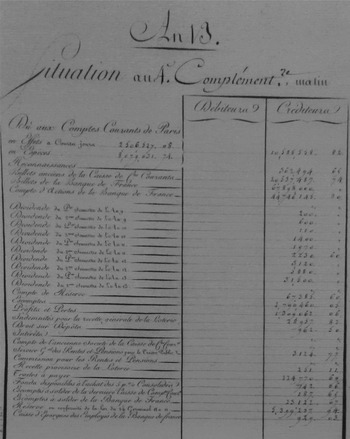
The database collects the main figures and data that banks, firms, the press and the general public used to assess, understand, compare or comment on the Bank's policy at the time of their publication. As a simplified balance sheet, the situations represented an innovation among the Bank of France's publications. Initially they provided an average of different accounts published over the course of a quarter (i.e. a quantitative representation of the actual ‘situation’ (position) of the Bank), but evolved over time into a statement of accounts as they were on the exact day of publication (including an average of on-going transfer operations). The term situation itself had been in usage for a while, as demonstrated by the Bank's archives (Figure 1). This may explain why no precise definition was included in the law of 1840 that rendered their publication compulsory.
Situation of 4e jour complémentaire an 13 (21 September 1805)

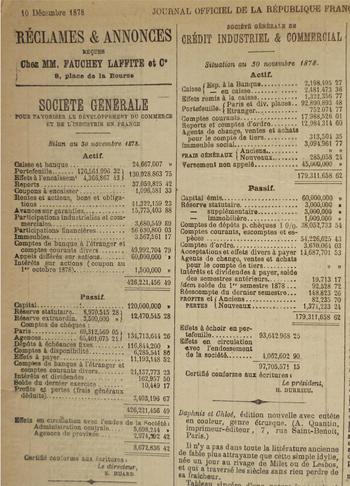
The format of the situations was also adopted (and adapted) by other institutions, and contributed to shaping the financial and accounting literacy of the general public. As the incorporation of banks and insurance companies gained momentum, many of them chose this term, rather than bilan (balance sheet), for their published monthly or quarterly accounts. For example, the 10 December 1878 issue of the JORF (Figure 2) clearly shows – with the example of two large deposit banks still operating today, Société générale and Crédit industriel et commercial – that the two terms were interchangeable. Both referred to a simplified balance sheet and its two important features: the balance of asset and liabilities, and the comparability from one period to the other.
S ociété Générale’s balance sheet and Crédit Industriel & Commercial’s situation in the Journal Officiel de la République française, 10 December 1878

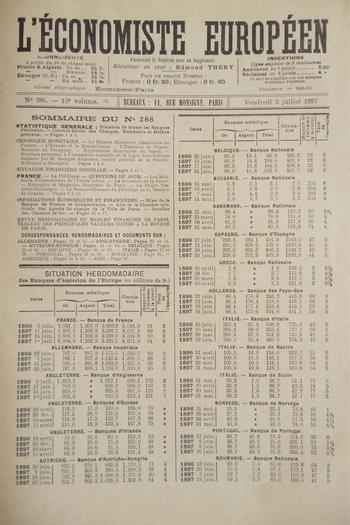
These situations were also published in various foreign newspapers and journals, from The Banker to the Moniteur des Intérêts Industriels, a prominent Belgian economic newspaper. Figure 3 shows an interesting example of the way the term situation came to encapsulate some elements of both a ‘balance sheet’ and a financial position, paying tribute to the influence of the Bank's publication.
Weekly situations of European banks of issue in L’ É conomiste Européen, 2 July 1897

It is clear from Figure 3 that the term situation refers mainly to the metallic position of the various banks of issue under review, i.e. their metallic reserve in gold and silver and the fiduciary circulation thus ‘guaranteed’, which is demonstrated by the metallic coverage ratio that follows, and completed by the rate of discount, one of the main forces attracting precious metals to the banks’ vaults.
It must nevertheless be noticed that the situations were the result of a careful summary of data from the unpublished, more detailed daily and yearly balance sheets made both by the Bank's governing body and the government. How operations on public securities could be reflected in the situations was an especially sensitive issue. Direct advances to the Treasury were most of the time faithfully recorded in the published balance sheets, but indirect financing, through rediscounts of Treasury bonds in favour of commercial banks or repo operations, could easily – and were often – concealed under vague labels such as ‘French bills’, ‘bills on Paris’ mixed with purely commercial paper, or in an unclear category of ‘advances to the market’ (see below). Window dressing also took advantage of the vagueness of these labels, and made extensive use of overnight operations in order to ‘clean’ the Treasury's account on the eve of publication (Thursday) before reversing, just 24 hours later, to business as usual.
The Procès-verbaux du Conseil général de la Banque de France, in 1938, offer a good example of this practice and its justification. Jacques Lemaigre-Dubreuil (Manas Reference Manas2013, pp. 31–42), an overarching conservative highly dissatisfied by the 1936 legal reform of the Bank and its Board, was reported saying:
He cites entries made on various dates since 9 December: as a result, at these dates, coinciding with those of the establishment of the balance sheet of the Bank [i.e. the situation], the Treasury was credited with certain sums by debiting the account of institutions such as Caisse Autonome, Caisse des Dépôts, Crédit Foncier, Banque de l'Algérie, etc., that at the same time it made advances to its advance account which reduced their debit balance, and that, the next day or the following days, transfers were made to the benefit of the said institutions, while the Treasury advances account increased again.Footnote 8
In short, Lemaigre-Dubreuil was saying that, on the eve of the publication of the situation, the Treasury would credit its account at the Bank by debiting dependent financial institutions, and reversed the operation over the following days. It is beyond doubt that Lemaigre-Dubreuil focused too much on the Wednesday evening operations instead of looking at the larger picture of permanent operations between these financial bodies and the Treasury. He nevertheless captured a very clear pattern of window-dressing that vice governor Jacques Rueff, himself a conservative and a champion of orthodox monetary policy, somehow vindicated:
It appears to him that Mr Deroy has responded decisively to the criticisms of Mr Lemaigre-Dubreuil and showed that the transactions between the Caisses and the Treasury were, in fact, perfectly regular. Moreover, they are subject to controls which cannot leave any doubt in this respect. As for the date on which these operations take place, it is normal that it be at the moment when the need arises. The Treasury is concerned every Thursday to centralise its resources to minimise the flow of its account advances; this is nothing but absolutely natural.Footnote 9
Rueff thus confirmed that the centralisation of the Treasury operations occurred on Thursday precisely at the time of publication of the Bank's situations, a tribute to their influence on public opinion and, therefore, on the Treasury.
IV
The publicising of the Bank of France's operations was imposed from the start. Its ‘primitive statutes’, dated 13 February 1800,Footnote 10 stated that during the shareholders' annual meeting ‘summarised accounts of the previous year operations' (art. 14) should be presented. The ‘fundamental statutes’ of 1808, which by and large governed the Bank of France until 1973, entrusted the Conseil général (the Board) with the establishment of the ‘yearly account’ of the Bank's operations (art. 39), which had to be presented at the shareholders' meeting, usually during the third week of January. This yearly account was more akin to a general statement than to a precisely defined accounting document. Indeed, absent a formal balance sheet, the general assembly was not entitled to ask for any further explanation related to the accounts nor to criticise the Bank's statement: its sole, though important, power was to elect the Board members.
The annually published accounts of the Bank, from 1800 to 1898, took the form of two biannual mixed accounts, combining different statistical and accounting documents and two profit and loss accounts tables, one per term. They were annexed to the document of the shareholders' general meeting. The nature of these accounting documents published during the general assembly seems to have been based on past habits, i.e. those of the previous French issuing bank, the Caisse d'escompte, founded in 1776 and forced into liquidation during the Revolution in 1793 (Baubeau Reference Baubeau and Garner2016).
In spite of being made public, these accounts did not shed much light on the actual operations of the Bank. This was due to the complexity of accounts carried forward from one term to the next, the practice of window dressing and the absence of a key feature of any true balance sheet: the necessary equality of assets and liabilities. As already explained, it was only in 1898 that the Bank started to include an actual balance sheet within its annual report. The law of 30 June 1840, which renewed its charter, compelled the Bank to hand over to the Finance Minister an ‘average situation of the Bank’ on a quarterly basis (art. 5), that the Minister would then publish. This innovation came from the Parliament, in order to impose more binding legal obligations to the Bank's disclosures practices, and was thus explained in the Parliamentary Commission report:
While other institutions of the same nature surrounded their operations with a profound mystery, the Bank of France sought its credit and strength in publicising them … Your Commission thought that these accounts published at too long intervals did not enlighten the public often enough on the situation of the Bank.Footnote 11
The two terms stated in the law are very important. ‘Quarterly’ meant a significant increase in the quality of disclosure, especially relevant for the metallic reserve, the loans to the Treasury and the banknotes circulation. ‘Average’ removed the possibility of window dressing, as the published document should reflect not only the most recent (and possibly manipulated) entries, but rather the ordinary course of its operations. Such a practice also had its drawbacks, of course, mainly in that it prevented readers from grasping the actual position of the Bank or the Treasury at the time of publication.Footnote 12
This first step towards a greater accountability was motivated by the Bank's operations during the serious financial crisis of 1839, which had brought to the forefront the interrelated issues of the metallic guarantee of its fiduciary issuance and the increasing weight of the loans to the Treasury within its assets. But this move did not raise any technical problem: the Bank had been circulating weekly accounts within its Board – that usually met every Thursday – that were also transmitted, sometimes alongside its daily position, to the Minister of Finance (Figure 1).
This also explains why it was so easy to adopt a weekly publication as a direct consequence of the cours forcé (suspension of banknotes convertibility into precious metals) implemented by the decree of 15 March 1848, art. 6. In order to support public trust in its banknotes and reaffirm the commitment of the Bank not to issue banknotes in excess of a safe metallic reserve ratio, the Bank was compelled to publish its situation weekly as long as banknotes remained unredeemable. As before, the weekly situation, relative to the previous week's operations, was to be published in the Moniteur, but contrary to the previous situations, the weekly ones were not an average of the previous seven days and aimed at giving an exact picture at the closing of accounts.
The law of 6 August 1850 put an end to the legal tender of the banknotes but did not cancel the other provision, i.e. the weekly publication of the situation. Also, members of the Board started complaining against the high frequency of publication, considered a source of public disorder and a way to sow doubt about the metallic reserve and the banknotes' value. But when the decree of 3 March 1852 (art. 5), authorised the Bank to go back to its quarterly publication, a public outcry ensued, prompting a telling reaction by the Bank's Governor:
The Governor believes he must draw the attention of the Council to the provision of the decree of 3 March, which substitutes for weekly publications the old quarterly publications prescribed by the law of June 30, 1840. This new measure has not been so favourably received by the public as the rest of the Treaty. Several people expressed the opinion that monthly publications would be preferable to quarterly publications, in the interest of the bank as well as in the general interest.Footnote 13
A previously assembled commission stated that it was possible to give satisfaction to the public without infringing on the 1852 decree, considering that the three months frequency was but a ceiling. Some members of the Board disagreed, either on the legal interpretation of the decree or on what the interest of the state would be. Indeed, since the decree had been published only after an agreement was reached with the Finance Minister, that demonstrated the absence of any interest by the latter in a more frequent publication – which is of course obvious since, anyway, the Finance Minister received daily reports from the bank.Footnote 14 But the key argument used by those opposing a more frequent publication also rested on the public, more precisely on the risk (as Regent Lebeuf argued) ‘of exposing oneself to the reiterated complaints from the public’,Footnote 15 and especially:
Then we must think that the metallic reserve could drop one day, and this, in difficult circumstances: one would then repent of being subjected to publications too frequent.Footnote 16
Thus, whether the argument ran pro or contra the increased publication, the public was invoked in support of the preferred solution, in one case as a stakeholder, in the other case as a risk. The discussion also shows which were the key issues about disclosure: the metallic reserve, the amount of circulating banknotes, the Treasury current account and the advances to the state, and only as a last item, discounts and loans. However, the Regent Adolphe Durand cleverly suggested:
in the absence of certain and incontestable documents, the imagination can go beyond the truth, and there is more danger there than in the exact knowledge of the Situation.Footnote 17
In fact, almost all Regents (save Durand) agreed with Charles Legentil that ‘weekly publications are recognised as dangerous' but also that ‘credit lives off publicity alone’.Footnote 18 Thus, the monthly publication appeared as a compromise between the dangers of the weekly situation – caused mainly by press comments – and the disadvantages of a quarterly publication. As the Board neared a settlement on a monthly publication, the Governor expressed the desire to postpone it until the Treasury could give its agreement.Footnote 19 The independence of the Bank was out of question on sensitive issues such as disclosure and accountability:
In the Governor's conference with the Minister of Finance, he pointed out that there were precedents on this question: thus, in 1840, it was by mutual agreement between the Minister of Finance and the General Council that the mode of publication prescribed by the law of 30 June 1840 had been adopted; in 1848, the same agreement was made for weekly publications. If we wanted to act differently today, we would raise the delicate question of the limits of the respective rights of the Minister and the Bank with respect to publications …Footnote 20
In the end, the Board decided in favour of a monthly publication, to be published on the second Thursday of each month (except if it fell on a compulsory bank holiday, such as Christmas, New Year's Day and Easter). Frédéric Pillet-Will, one of the most eminent members of the Board at the time, stated that this innovation was motivated by their concern to ‘give satisfaction to the legitimate curiosity of the public’.Footnote 21 One explanation for this move is that the relationship between the Bank and the state was muddled by (false) rumours regarding the Bank's financial support of the coup d’état of Louis-Napoléon Bonaparte (soon to become Emperor Napoléon III) a few months earlier, on 2 December 1851 (Plessis Reference Plessis1985a). By publishing monthly situations, the Bank could prove its relative autonomy vis-à-vis the state.
Soon afterwards, the Bank had to tackle its most important challenge. As a consequence of the annexationist policy of Napoléon III, a new chartered bank of issue was incorporated into the continental French territory: the Bank of Savoy (Banque de Savoie), headquartered in Annecy (Bouvier Reference Bouvier1960). Under the control of the Péreire brothers, this bank challenged the de facto monopoly of the Bank of France established in 1848, promoting aggressive rate cuts and extensive banknote circulation to fund industrial and public utilities investments.Footnote 22 The quagmire that ensued forced the Bank of France to justify its policy, triggering a national debate. In 1865, the government appointed a special commission to inquire into the monetary and fiduciary circulation,Footnote 23 which held hearings and gathered evidence and memoirs.
The Bank had to prove that it was not managed in the sole interest of its largest shareholders and Board members: transparency and accountability became an asset in such a context. That is why the General Council decided in June 1864 in favour of a weekly situation publication. This was one of the rare occasions in which a long and detailed debate was held about the situation, the various forms in which it was published and the reasons behind the proposed changes, as exposed by the committee in charge of reporting on the matter:
The Committee, considering the example of the Bank of England, the wishes of the public, the advantages that result from the exact knowledge of the situation of the Bank, pronounced itself in favour of the weekly publications. It remembered the good effects produced under difficult circumstances, by the decree of 15 March 1848; it was considered beneficial then to summon the light of publicity to the aid of the Bank's reputation, for good repute thrives on light, and it is not in mystery or concealment that the Bank seeks its means of success. As a result, the Committee now proposes to publish the situation of the Bank every eight days in the Moniteur.Footnote 24
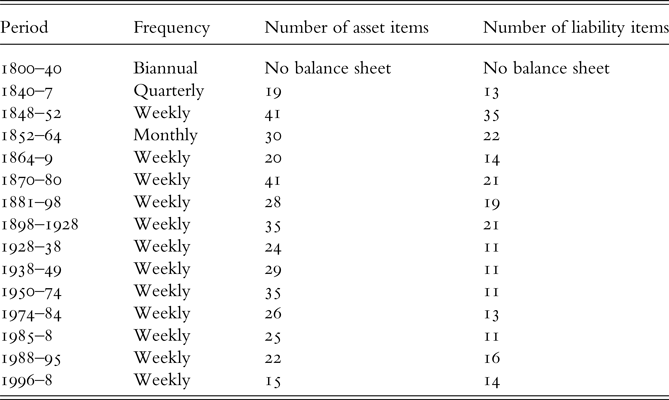
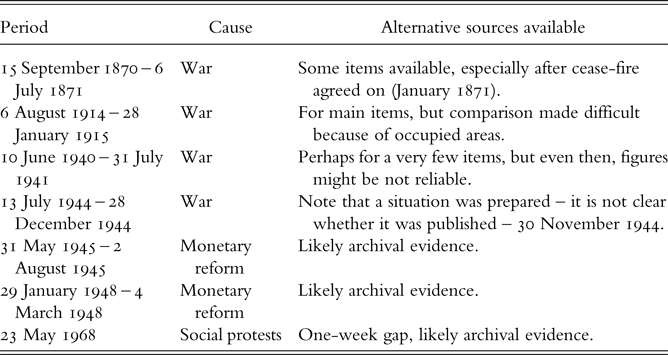
Contrary to what had happened in 1840 and 1848, the change in the publication of the situation had been decided and conceived by the Bank itself, even though the matter was discussed beforehand with the Ministry of Finance. The Bank thus appeared as both the controller and the controlled – even if the Finance Minister kept a wary eye on this publication, to block the disclosure of any information that could backfire. Nevertheless, as Table 1 shows, publication of the situations was continuous, even though its periodicity varied, from 1840 to 1870. It is only as a consequence of the Franco-Prussian War that publication was first interrupted. But when it resumed, the overall practice did not change.
Bank of France's balance sheet's accounting sequences

What is truly remarkable, then, is that the 1897 and 1918 charter renewals did not lead to any specific provision related to the situations, despite their importance and impact. The bickering that occurred in relation to the publication of the situation at the Paris Stock Exchange is a good testimony to its growing relevance to business. It all started with a visit by Baron Rothschild – one of the wealthiest and most powerful men in France at the time – to the Paris Bourse, where he saw ‘that the weekly situation is already on display’,Footnote 25 even though it had not yet been presented to or approved by the Board of the Bank. ‘It does not seem fit to him that the public is made aware of it before the very members of the Council’,Footnote 26 a disconcerted Rothschild concluded. The ensuing debate contrasted the interest of the public (since delaying the display of situations at the stock exchange would considerably reduce its interest as newspapers would publish it) and the prestige and privilege of the Board. But the real stake was stated by Comte Pillet-Will: the display was decided ‘to give satisfaction to the newspapers and put an end to the exclusive privilege the evening [edition of the] Moniteur had to publish the Bank's balance sheet before all the other news outlet’.Footnote 27 The Governor then revealed how this idea had emerged during a conversation with the Ministry of Finance. As difficult as it is to reconstruct a posteriori the motives for this move, the conflict between the Government and the Moniteur, which led to the creation of the Journal Officiel in 1868, may have played a role. In the end the debate made clear that the situation could not be published without the formal agreement of the Board, but also that this publication was decided by the Bank, and not by the Minister, as its display at the stock exchange bypassed any official approval.
Even though the situations were not included in the charter renewal provisions of the 20 December 1918 law, a debate about them broke out from November 1918 to July 1919 between Raphaël Milliès-Lacroix, General Rapporteur to the Senate Finance Committee, and the Bank's Governor, through the mediation of the Finance Minister, Louis-Lucien Klotz. Milliès-Lacroix used the debate on transparency to push for wider access to credit, while the Bank resisted publishing a more detailed situation on two grounds: (1) the already detailed character of the situation, which, with 43 items, was considered the most detailed among European banks of issue or commercial banks;Footnote 28 and (2) the operational risks that further disclosure would incur for the Bank. Milliès-Lacroix was especially interested in the ‘sundry’ accounts that had undergone a ‘considerable inflation’Footnote 29 during the war. To justify these accounts the Bank stated that the purpose of the situation was to present its position relative to the public, i.e. the fiduciary circulation and the assets that backed its liabilities. As explained in 1970, ‘The principle governing the establishment of the published situation responds to a desire for monetary information.’Footnote 30 All other elements were included in the sundry accounts, which offered multiple opportunities for hiding actual operations.
Moreover, the balance sheet and the situation were not supposed to reflect the patrimonial situation of the Bank. This had special bearing when it came to real estate. According to article 17 of the Fundamental Statutes (16 January 1808), the real estate expenses of the Bank could be funded only with the reserves accounts to avoid the financing of acquisitions through monetary issuance.Footnote 31 Consequently, acquisitions were amortised and thus ‘erased’ from the balance sheet. As late as 1973, the Stirn Report on the Bank's accounting practices heavily criticised the fact that ‘the total accounting value if the real estate (1,424 million) does not appear’Footnote 32 in the balance sheet, and that the way the real estate expenses were financed and accounted for may fuel ‘a too fast development of the investments’.Footnote 33 Consequently, the Commission and the Governor agreed to let the ‘accounting value of real estate appear entirely in the balance sheet’.Footnote 34
As for the legal status of the situations, things started changing with the Loi monétaire (Monetary Law) of 25 June 1928, which made a 35 per cent coverage ratio between gold reserve and the total amounts of circulating banknotes and current accounts compulsory (art. 4). The law did not state how this ratio was to be publicised, but the 23 June 1928 agreement between the Bank of France and the head of the Government, Raymond Poincaré, annexed to the law and published alongside it, explicitly referred to the ‘situation hebdomadaire’ in the first of its eleven articles. By doing so, it gave an official endorsement to the technical and political value of the weekly situation, stipulating the exact accounts that had to be modified in consequence of the 80 per cent devaluation of the French franc vis-à-vis gold.Footnote 35
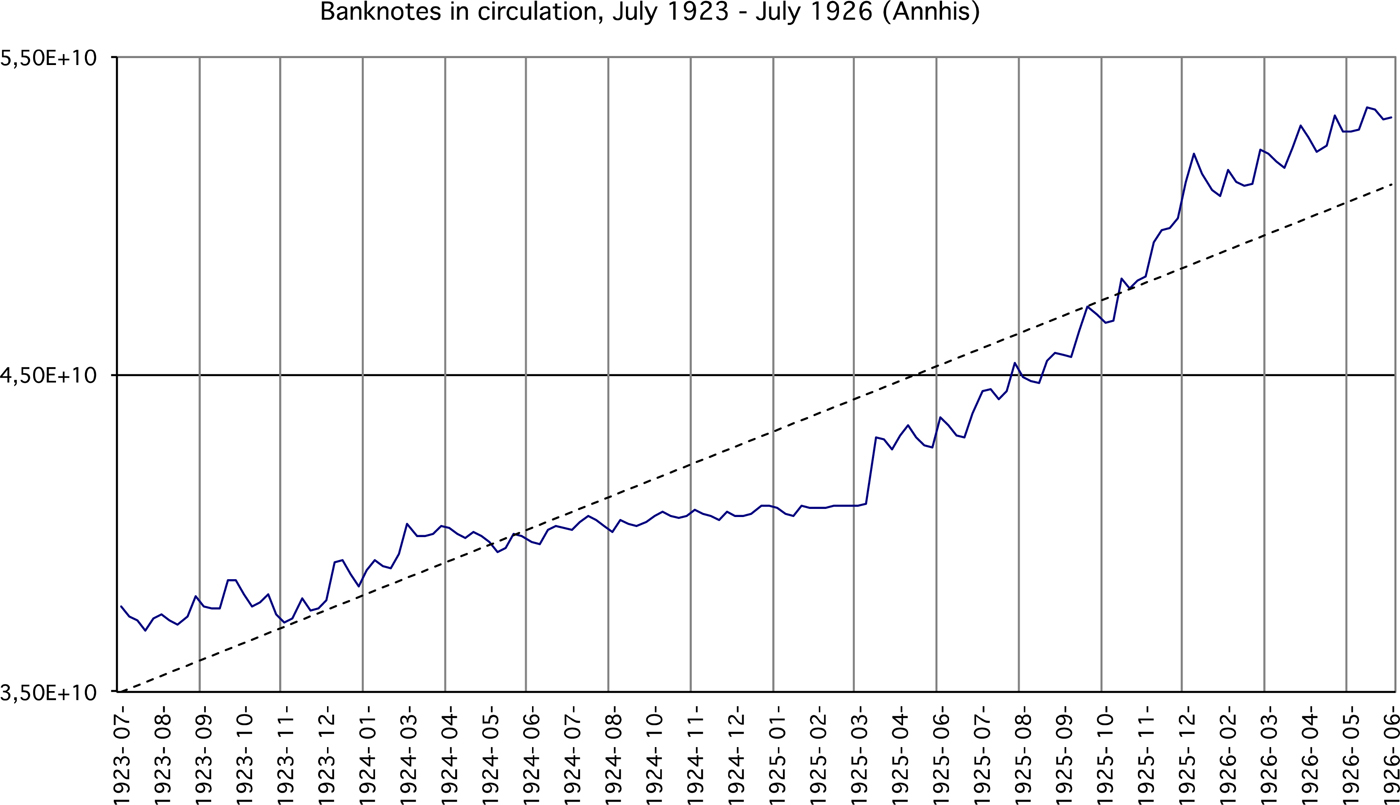
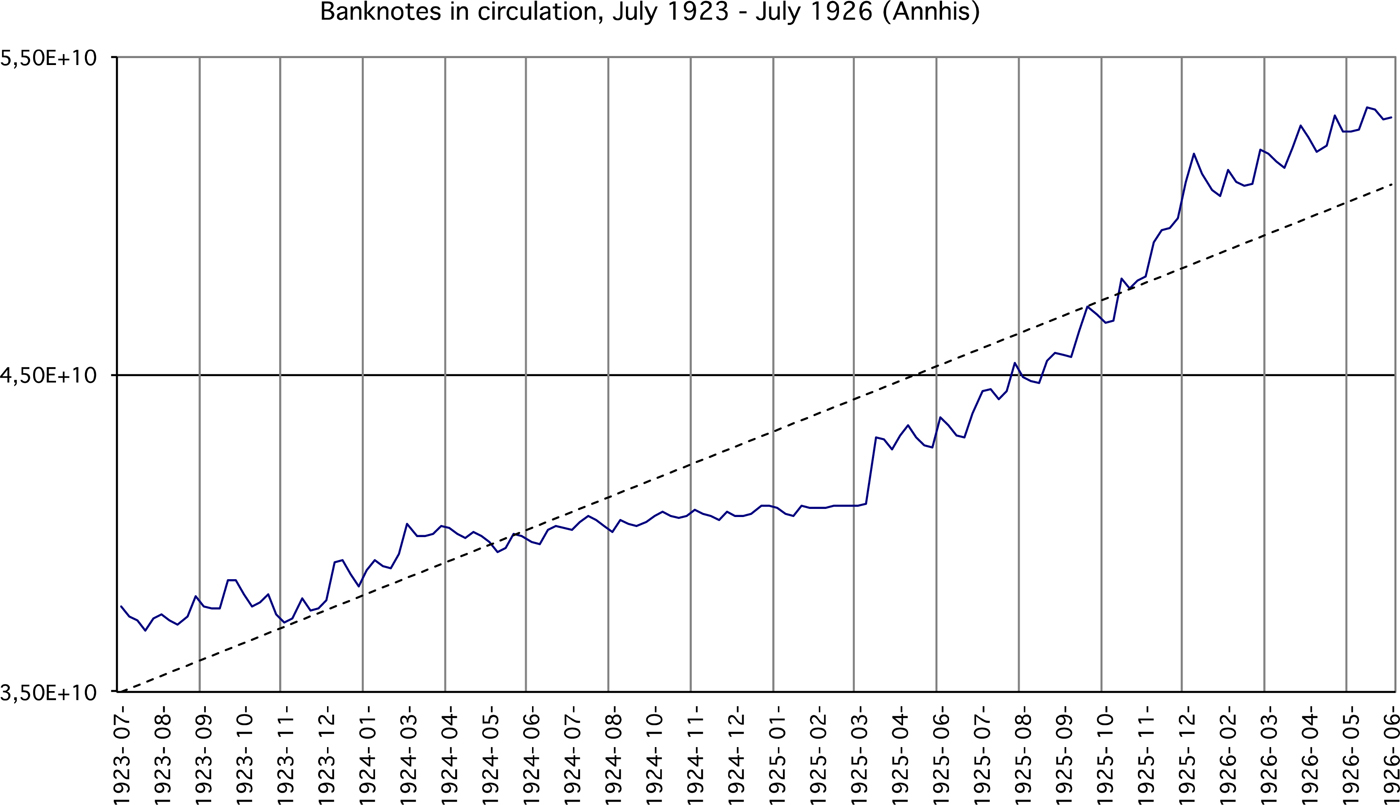
A major cause of this change was of course the huge scandal that tainted the accuracy and trustworthiness of the situations and caused the demise of the Herriot government in April 1925: ‘le scandale des faux bilans’ (Jeanneney Reference Jeanneney1976; Blancheton Reference Blancheton2001 and 2012). This well-known episode was the result of a double constraint, i.e. the ceilings imposed on both banknote circulation and the Bank's advances to the Treasury. Since the law of 12 August 1870, the Bank's circulation was bound by a legal ceiling, periodically increased before and during World War I. As peace was restored, this ceiling and that of the Bank's advances to the state became the subject of an intense political row over budgetary and monetary policies, with the orthodox camp opposing an increase in the ceiling in order to force the state to curb its expenses and implement an anti-inflationary policy.Footnote 36 Because the Bank's situations were published every week, the ‘ceiling’ became a key element of the political debate (Perrot Reference Perrot1955), and a sensitive one: the fact that a government was not able stop circulation from breaking the ceiling was considered a major failure, liable to trigger capital exports and a depreciation of the franc, or even the government's demise given the parliamentary regime of the time. The fragile and undecided Herriot government, unable to choose between two camps – getting the Parliament's approval for an increase in the ceilings or its endorsement of the franc devaluation – embraced the ‘technical’ solution engineered by Albert Aupetit, the General Secretary at the Bank of France, in order to avoid breaking the ceilings in the published situations. The solution, as demonstrated by Blancheton (Reference Blancheton2012), was to manipulate the published figures by increasing the value of en route (under way) accounts related to the circulation, and accelerating the accounting of banknotes withdrawn. This smoothing out is very much apparent when using the weekly database (see Figure 4). When the trick was revealed in April 1925, the effect was devastating both for the government, which had to resign, and for the Bank's reputation (Aupetit had to leave a few months later).
The ‘forged balance sheets’ (weekly situations) scandal, 1924–5
Finally, it was with the decree of 14 December 1936 (‘Decree modifying the texts governing the administrative management of the Bank and deciding the principles for establishing the balance sheet’), connected to the law of 24 July 1936 on the Bank of France, that the new principles became a public rather than a Bank matter. In order to strengthen the public trust in the national money, the decree (part vii, ‘Of the periodical situations and balance’) established that the Bank had to deliver every week ‘an extract of its situation’ to the Finance Minister, to be published in the Journal Officiel. Article 26 thus stated: ‘This weekly statement will make clear the amount of the metallic reserve and of liabilities at sight as well as the coverage percentage resulting from these two figures. It will also state in a detailed manner the asset entries which liabilities at sight originate from and guarantee them.’
This decree actually demonstrated the changing nature of the Bank of France. Contrary to some proposals, and against the 1935–6 populist campaigns against the ‘200 hundred families’ and the ‘financial feudalism’ (Delaisi Reference Delaisi1936; Dard Reference Dard, Feiertag and Margairaz2003), the Front Populaire did not nationalise the Bank. However, the reform converted the Bank into the state's arm in monetary matters, replacing bankers and capitalists in the General Council with representatives of the ‘general economic interests of the nation’: a few higher-ranking civil servants, heads of state financial agencies, and delegates from employers’ associations and labour unions.
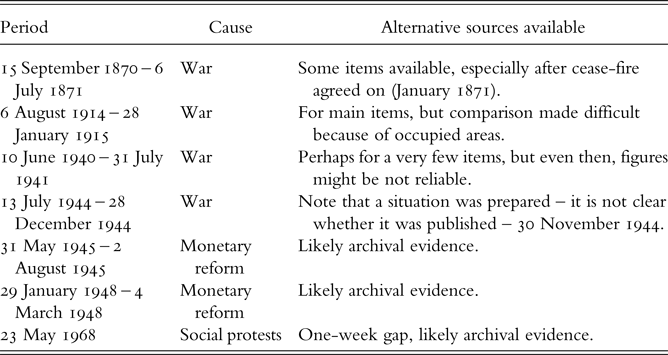
Of course, such commitments depended heavily on the good will of the Bank's and government's heads, the more so since the Bank was from now on in the hands of the state and had thus lost interest in using information compliance as a way to resist the state. Besides, the following years proved particularly bumpy, with a fast succession of major crises, from the Munich crisis in 1938, to the war in 1939, and to the military defeat and occupation in 1940, followed by the second battle of France in 1944–5 and the reconstruction from 1945 to 1950. However sincere or involuntarily deformed by the heavy inflation of the years 1940–50, the publication of the situation was also suspended on several occasions, while changes in labels and structure were made necessary by the evolving circumstances. Finally, a more regular publication resumed after January 1948, once the withdrawal of the FF5,000 banknotes from circulation was completed, and it continued uninterrupted until 1998, with the exception of one week during the national strikes of May 1968.
As a result (see Table 2), the original database covers the 1840–98 period and presents itself as a collection of subseries, each of which presenting a higher degree of homogeneity. Thus, each chronological discontinuity corresponds either to a major reshuffle in the balance sheet's structure or to a major historical break that introduced new labels or caused an interruption in publication.
Interruptions in the publication of situations
V
One major interest of the situations series lies in the window they open on the actual operations of the Bank of France. Even though they were sometimes frustratingly lacking in detail, the different labels and their succession over time offer a rich perspective on the Bank's history and its evolution towards a modern central bank as well as on the secular development of the French monetary system. As evidenced by Tables 1 and 2, the continuity of publication over 150 years did not preclude large changes in general structure nor in the way the situation was presented to the public. If the main cause for these changes was wars, one should not overlook the degree of dissimulation associated with some of the most politically sensitive accounts.
A first and recurring example is linked to what has been more or less labelled, over the years, the ‘commercial portfolio’. As its name suggests, one would expect to find here trade bills, but no Treasury bills. The reality is much more nuanced. After the fall of the Empire in 1814–15, the Bank again started to buy Treasury bills from ‘private’ agents in 1831. These bills had to be less than 90 days to maturity, but could be discounted with two instead of three signatures.Footnote 37 The important point is that these bills were accounted for in the commercial portfolio, which could lead to concealment. The situation of political and social crisis that followed the 1871 military defeat against Germany led to the introduction of a new category in the situations, based exclusively on Treasury bills, until the state's debt to the Bank was extinguished, in 1879.Footnote 38 The economic crisis of the late 1880s caused a new inflow of Treasury bills at the Bank, included in the ‘Paris portfolio’. The Board discussed, in 1888, whether the situations should mention them separately, to which the Governor answered that it would be the case if the amount increased. Two weeks later, as this figure had indeed increased, the Governor asked the Ministry of Finance, who answered that ‘he would be happy to see the continuation of the current state of affairs’.Footnote 39 This short example shows how labels and accounting categories could become political issues at stake, and how the situations had to be negotiated between the Bank and the state. This same phenomenon happened again during the interwar period, most notably in 1935, and after World War II.
The accuracy of the situations regarding gold and currencies can also be questioned. When gold and foreign currencies flowed to France following the Poincaré de facto stabilisation of 1926, a large part of these resources was included in the sundry assets figures (Figure 5). But even after the monetary reform of June 1928, some gold remained unaccounted for in the different official metallic reserve accounts. When the political and monetary crisis deepened, in 1934, the Governor declared to a dismayed Board:
The Governor says that the special gold reserve established when the metal was flowing in large quantities into the Bank and intended to mitigate the metallic reserve movements, is now 1,744 millions. He thinks that the circumstances would entail a deduction from this reserve, in order to avoid alarming the public opinion by the publication in the next balance sheet [situation] of an excessive reduction in the metallic reserve …Footnote 40
The gold reserve indicated in the situations from 1928 to 1934 thus understated the real amounts by a considerable amount, which calls for some precautions to be taken in the use of the data.
Fifty years of war-related structural breaks
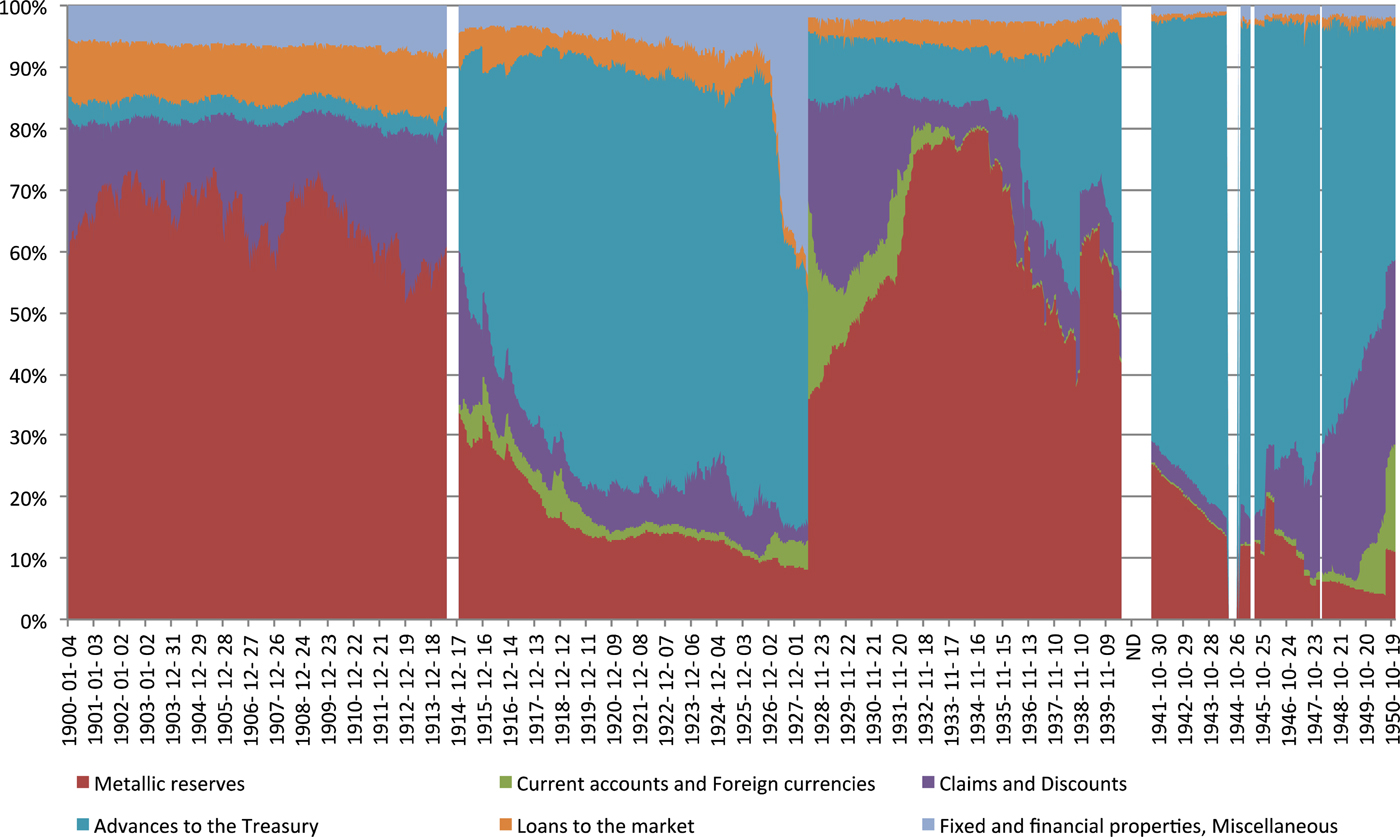
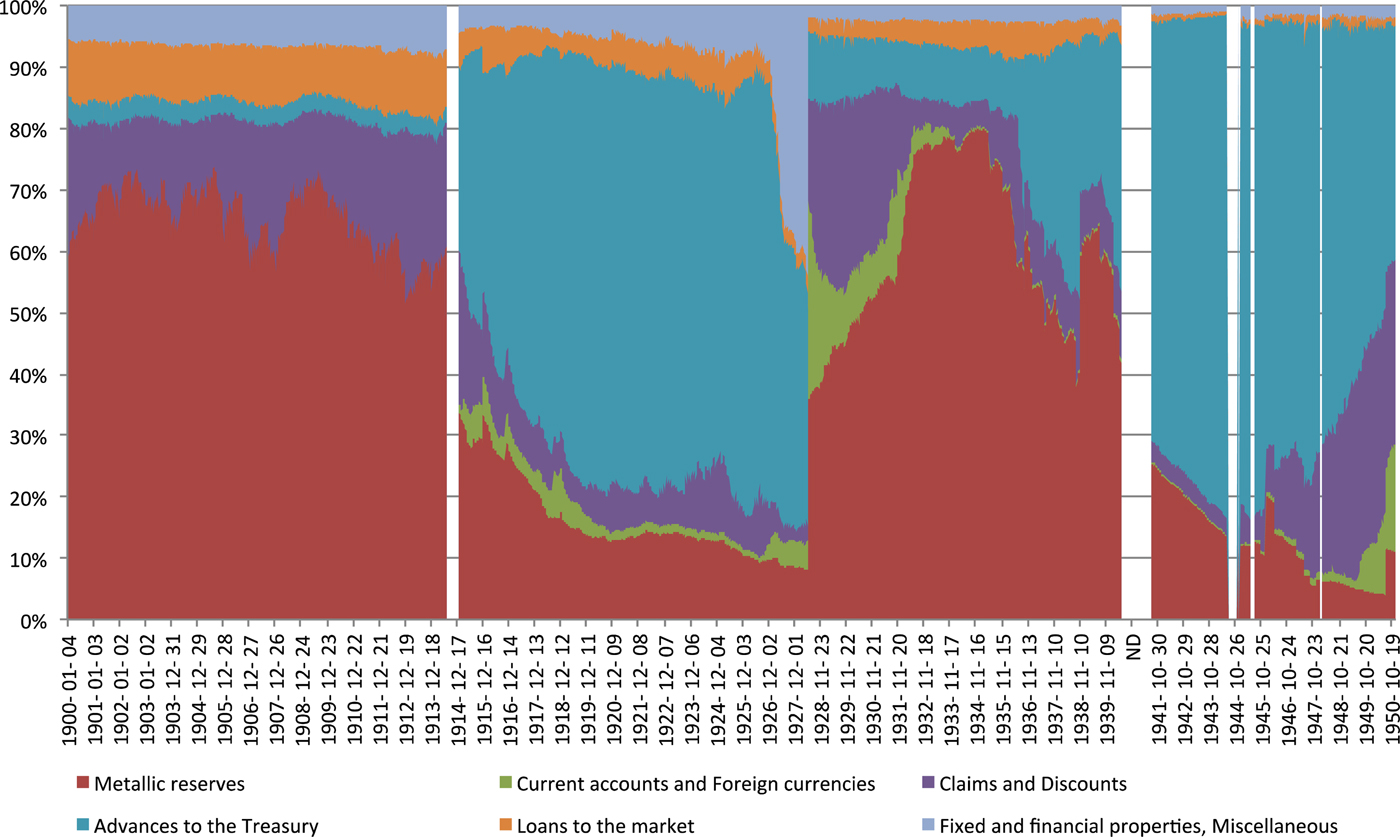
Nevertheless, the main cause for the situations’ distortion did not come from concealment, but from wars. Figure 5 illustrates this by aggregating the balance sheets’ assets into six different categories between 1900 and 1950. This uncovers their dramatic evolution over half a century. In short, before 1914, the balance sheet's structure was pretty stable, just reflecting the highs and lows of the business cycle, in a very traditional ‘Juglarian’ way.Footnote 41 At this time, the metallic reserves represented about 60 per cent of total assets, offering a very high coverage ratio to banknote circulation (up to 90 per cent) that made the bulk of the liabilities side.
The war violently impacted this traditional structure, as shown by the fast decline in the share of metallic reserves and the extraordinary inflation of the advances to the Treasury. Clearly visible on the graph is also a reverse change in two steps a few years later. First, in December 1926, the share of the ‘Advances to the Treasury’ started to fall steeply, a decline matched by the increase in ‘Fixed and financial properties’. Of course, no fixed and financial properties were involved here, only an accumulation of external balances with foreign central banks, i.e. current accounts in foreign currencies or drawing rights in gold or gold-pegged currencies (Blancheton Reference Blancheton2001). Thus, the underlying dramatic change was somehow dissimulated, as the shift was visible but impossible to ascribe to a precise category of assets – an uncertainty that contributed to the debate between revalorisateurs (those looking for a higher value of the French franc relative to the pound sterling or the US dollar after the parity reached in December 1926) and stabilisateurs (those arguing for legalising the parities reached in December 1926) (Mouré Reference Mouré1998). The next step came in June 1928, when the French franc was legally devalued, which led to a dramatic increase in the franc value of the gold and gold-pegged currencies at hand, on the one hand, and a deep streamlining of the ‘sundry’ account, thanks to a complete reshuffle of the balance sheet and its accounts (two balance sheets were actually published the same week, one according to the previous methodology, the other after the devaluation and incorporating the new methodology), on the other hand.
From then on, a steady move towards a ‘back to normalcy’ situation may have been at hand: the ratio of metallic reserves to total assets kept rising towards the supposedly healthy pre-war level. One can thus ‘see’, almost first-hand, the gold fetishism building up in pre-depression era France. Nevertheless, that episode was doomed to fail, and from 1935 on, amidst much window-dressing – as evidenced by the ‘Loans to market’ relative increase – what had already happened after July 1914, occurred again and even before World War II actually broke out, i.e. an increase in the ‘Advances to the Treasury’ and a matching decrease in the ‘Metallic reserves’.
It is very difficult to interpret the violent and contradictory movements during World War II, especially since publication was often interrupted. In any case, the post-1945 period exhibits a stark contrast with the post-1918 era. Indeed, instead of trying to build up the reserves and trim down the ‘Advances to the Treasury’, the government and the Bank of France pursued a different strategy, giving the impression of a continued policy from 1935 to the late 1940s. The only major change was the rapid build-up of ‘Claims and discounts’. Nevertheless, the sheer novelty of this phenomenon in the history of the Bank is not captured here. The reason is that, if in the past these ‘Claims and discounts’ had mainly been in the form of short-term commercial paper (90 days maturity at most, for most of the portfolio), the change brought about during the 1940s was a rapid increase in so-called medium-term loans, still discounted in the form of 90 days claims, but rolled over the five to seven years until the credit maturity.
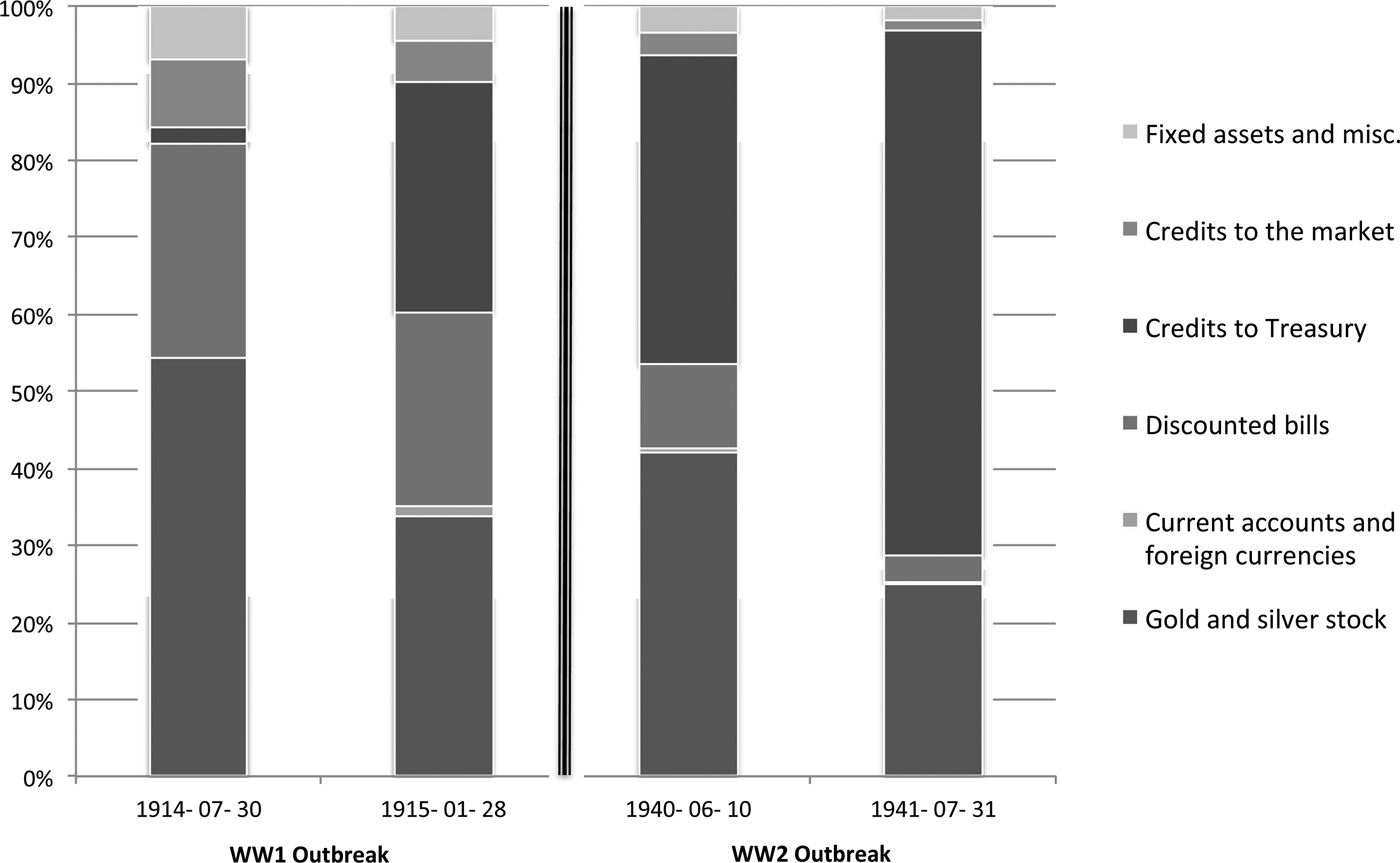
What Figure 5 shows over 50 years, to summarise, is the deep transformation of the Bank. In 1913, it was a ‘circulation’ bank, whose main role was to extend commercial credit in exchange for gold-redeemable banknotes, which were actually almost gold certificates given the high reserve to circulation ratio, and whose main concern was to avoid any kind of fiduciary inflation. In the late 1940s, it had transformed itself, under much external pressure, into a ‘central’ and ‘credit’ bank, whose main roles were to freely refinance the state, the commercial banks and industry, with limited concern for inflationary pressures and maximum concern for economic growth (Baubeau Reference Baubeau and Feiertag2005). From an orthodox microeconomic point of view, it had moved to a heterodox macroeconomic one. Figure 6 reveals the impact of wars even more clearly, by showing the structure of assets on the eve of both wars and when the publication of the situations resumed.
Structural breaks in the BDF's balance sheet immediately before and after interruption: World Wars I and II

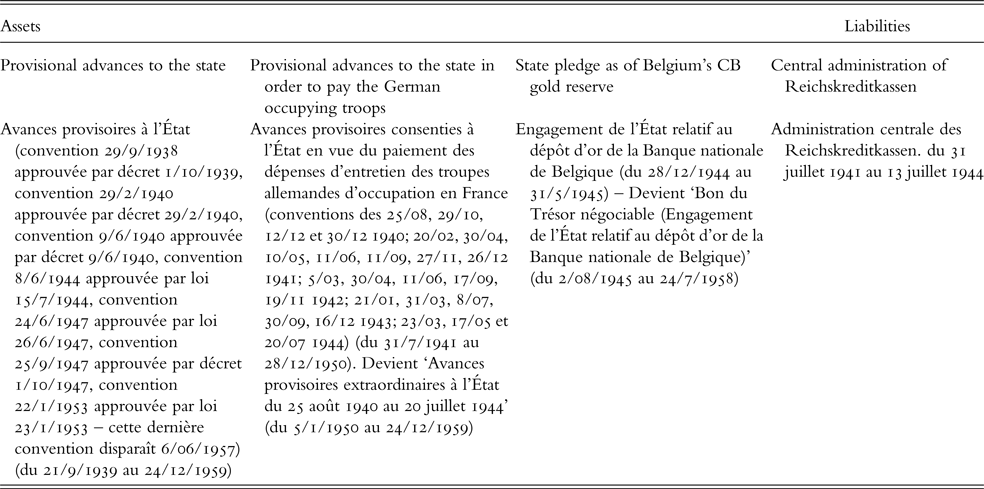
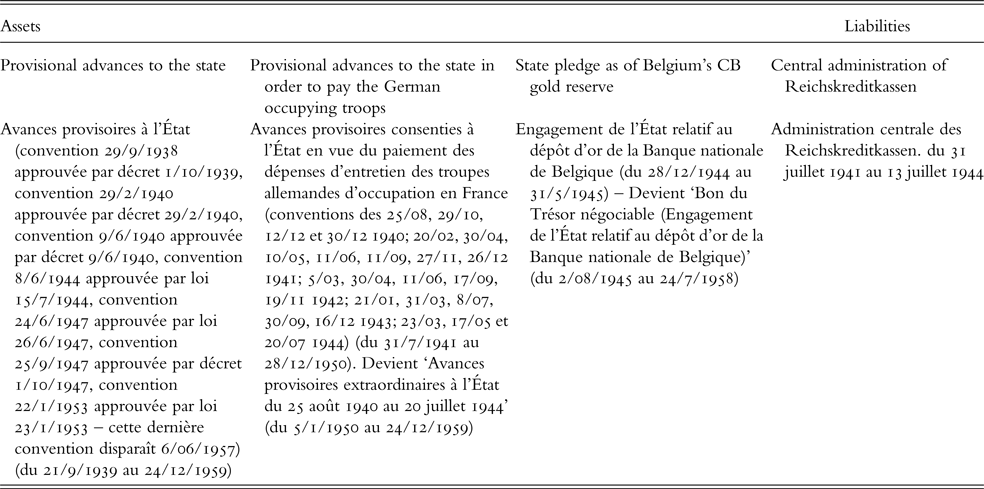
Last, another interesting consequence of wars and their aftermath is their impact on labels. For example, during and after World War II, many new labels appeared and were subsequently modified, illustrating the political turmoil that was shaking the Bank and the country. Table 3 exhibits four examples – among others – of this phenomenon.
Accounts labels created and modified during and after World War II
VI
The balance sheet of the Bank of France changed over time to reflect the declining importance of its commercial operations and its growing interventions in the currency, in the interbank lending market and towards the state. If such shifts pose a problem of time consistency, they also illustrate the emergence of the ‘art of central banking’ and the changing conditions and instruments of monetary policies. The database presented here allows scholars to take a fresh look at these, and many other issues, by building their own subsets over a wide range of consistent and high-frequency data, as well as creating comparative frameworks.
Supplementary materials and methods
To view supplementary material for this article, please visit https://doi.org/10.1017/S0968565018000070