




No CrossRef data available.
Article contents
Identification of some heat-induced genes of Trichinella spiralis
Published online by Cambridge University Press: 28 November 2001
Abstract
Three heat-induced genes of the infective-stage larvae of Trichinella spiralis were successfully identified by the suppression subtractive hybridization (SSH) technique. As indicated by reverse Northern blotting, 19 of 25 clones were scored as differentially transcribed in the heat-shocked infective-stage larvae. The sequencing data showed the presence of 12 different genes. Three were homologous to histone H3, histone H2B and translationally controlled tumour protein (TCTP). A 0.6 kb cDNA of histone H3 was generated by the RACE method and sequenced. It contained an open reading frame of 136 amino acids that demonstrated 94% identity with genes from Drosophila hydei. Semi-quantitative RT-PCR indicated that after heat-shock treatment, the expression levels of histone H3, histone H2B and TCTP increased 4.8, 27 and 5.7-fold, respectively. Northern analysis confirmed the upregulation of histone H3, histone H2B and TCTP transcripts. The upregulation of these genes during stress conditions has not been reported in parasitic organisms. The stress proteins may play an active role to sustain the parasite after exposure to hostile host factors.
Keywords
Information
- Type
- Research Article
- Information
- Copyright
- © 2002 Cambridge University Press
INTRODUCTION
Parasitic organisms commonly encounter adverse conditions especially during host invasion and development in multiple sites. They are invariably exposed to a variety of stressful conditions, e.g. immune attack and sudden changes in temperature, pH, oxidation-reduction potential, chemical environment etc. The heat-shock response is an important defensive mechanism to protect cells from irreversible protein damage during stress (Lindquist & Craig, 1988). The gene expression of the stressed cells is reprogrammed to increase the synthesis of heat-shock proteins (HSPs) which have numerous important functions. They may act as molecular chaperones or are involved in conferring thermo-tolerance, facilitating development and protection from immune attack (Maresca & Carratu, 1992; Hartl, 1995). However, as compared to the free-living species, little is known about the molecular mechanism of heat-shock response of parasites.
Trichinella is a unique nematode. It lives in 2 precarious, dynamically unstable habitats i.e. the intestinal epithelium and striated muscles. The former is replaced every 2–4 days (Wright, Weidman & Hong, 1987). In the striated muscles, the worms are subjected to constant changes due to muscle contractions/relaxations. Its 1st-stage larva can reorganize the host muscle cells into a new syncitium known as the ‘nurse cell complex’ (Purkerson & Despommier, 1974). In T. spiralis infection, the complex is encapsulated by collagenous fibres but in T. pseudospiralis, the capsule is absent. The latter species can also thrive in 2 physiologically distinct hosts which have different body temperature i.e. mammals and birds. Trichinellids, with the ability to survive at a wide range of temperatures, can serve as an excellent model for studies on stress adaptations.
In an earlier study, we demonstrated for the first time, the presence of a wide range of conserved and non-conserved HSPs in both somatic extracts and excretory–secretory (E–S) products of T. spiralis and T. pseudospiralis when the larvae were treated at the optimal heat shock temperature, 43 °C. The synthesis of at least one of the HSPs (HSP 80) was regulated at the transcriptional level (Ko & Fan, 1996). Vayssier et al. (1999) detected HSP 72 in the nuclei of the infective-stage larvae of T. britovi.
In view of the paucity in information on stress adaptations of Trichinella, the present study was undertaken to identify some of the key genes which could be induced to increase expression by heat-shock treatment. The recently developed technique of suppression subtractive hybridization (SSH) as described by Diatchenko et al. (1996) was used to identify the heat-induced genes of the infective-stage larvae of T. spiralis. The method enables the normalization of frequent and rare transcripts and subtraction of the common cDNAs between 2 populations at the same time. The suppression PCR step allows for the exponential amplification of differentially expressed genes. The technique has been successfully applied to isolate oxidative stress-regulated genes in rat aortic smooth muscle cells and mosquito midgut stage-specific genes of Plasmodium (Sakamoto et al. 1999; Dessens et al. 2000). We have isolated 12 different heat-induced genes by suppression subtractive hybridization (SSH). These transcripts included putative genes encoding histone H3, histone H2B and translationally controlled tumour protein. The present study would lay the groundwork for further studies on the underlying mechanisms of worm survival under stress conditions.
MATERIALS AND METHODS
Culture of parasites
Infective-stage larvae of T. spiralis were isolated from muscles of experimentally infected ICR mice at 45 days post-infection (p.i.) using the standard pepsin digestion method (Chan & Ko, 1990). After recovery, the larvae were incubated in DMEM medium supplemented with penicillin (100 U/ml) and streptomycin (100 μg/ml) at a concentration of 10000 larvae/ml of medium. They were incubated at 37 °C for 48 h (to ensure better recovery from stress after pepsin digestion) or at the optimal heat shock temperature, 43 °C for 6 h (worms incubated at 43 °C for more than 24 h will have a lower survival rate), respectively. The worms were then washed twice with PBS.
RNA preparation
A total of 300000 infective-stage larvae were lysed in 5 ml of TRIZOL reagent (Life Technologies). The solution was homogenized and one-fifth volume of chloroform was added. The total RNA retained in the aqueous phase was purified by isopropanol precipitation. The purity of the RNA was determined by the absorbancy at OD260/OD280. Two mg of total RNA was spun down and polyadenylated RNA was isolated using the Micro-Fast Track mRNA isolation system (Invitrogen).
Primers and adaptors
The primers and adaptors used in SSH are as follows. Adaptor 1: GTAATACGACTCACTATAGGGCTCGAGAGGCCTCTAGAGGGACTGATCTCCCTGA. Adaptor 2: TGTAGCGTGAAGACTCGAGAAAGCAGCTGCTCTAGACTGGGACGATCTGACCCTGC. Primer P1: GTAATACGACTCACTATAGGGC. Primer P2: TGTAGCGTGAAGACTCGAGAAA. Primer PN1: TCGAGAGGCCTCTAGAGGGACT. Primer PN2: GCAGCTGCTCTAGACTGGGACG. Thymidylate synthase sense: GGAACGCAGTCTCGGTATTGC. Thymidylate synthase anti-sense: GTGTCAGTAAAGAATAGCTG.
Suppression subtractive hybridiziation
The double-stranded cDNA was generated from mRNA of T. spiralis being treated at 37 °C (Driver cDNA) or 43 °C (Tester cDNA). SSH was performed as described by Diatchenko et al. (1996) with some modifications. Two mg of tester and driver cDNA were digested with RsaI restriction enzyme and 1/5 of the digested tester products was ligated to adaptor 1 and adaptor 2 at 14 °C for 20 h, separately. After the primary and secondary hybridization, the target sequences were amplified by PCR, using P1 and P2 primers. The amplified products were diluted 50-fold prior to amplification in the secondary PCR (with primer set PN1 and PN2). The control sample was treated similarly, except water was used in lieu of the driver cDNA. To determine the efficiency of subtraction, the diluted primary PCR products were amplified with the thymidylate synthase sense and antisense primer set.
Alternatively, subtracted and control PCR products were resolved in 1% agarose gel and then Southern blotted. The latter was hybridized with the probe generated from 100 ng of driver cDNA, using the RTS RadPrime DNA labelling system (Life Technologies). After hybridization for 20 h at 42 °C, the blot was washed with 0.1×SSC, which contained 0.5% sodium dodecyl sulfate at 60 °C for 15 min and exposed to autoradiography.
Cloning of the SSH repertoire
The SSH-cDNA repertoire was cloned into pGEM-T-Easy vector (Invitrogen). Individual recombinant clones were screened with the probe generated from SSH-cDNAs. Plasmid DNAs were isolated by the alkaline lysis method. The size of the insert was determined by electrophoresis after digestion with EcoRI.
Reverse Northern blot analysis
Clones containing the SSH-cDNAs were amplified using specific primers PN1 and PN2. After PCR, 5 μl of the samples were loaded onto a 1% agarose gel. The amount and size of the PCR products were determined by comparing with 1 μg of DNA marker. Then 2.5 μg of the PCR products were blotted onto Hybond N membranes in duplicate, using a 96- well dot-blotting apparatus (Bio-Rad). The filters were then hybridized to 32P-labelled RsaI digested double-stranded cDNA. The latter was derived from normal and heat-shocked T. spiralis larvae. Both probes showed similar specific activity of approximately 2×10⁵ cpm/ng. The filters were washed with 1×SSC, which contained 0.5% sodium dodecyl sulfate at 65 °C for 30 min. Differential signals were identified after overnight exposure. The ratio of signals was analysed by densitometric scanning, using an imaging densitometer (GS-700, Bio-Rad).
Isolation of 0.6 kb histone H3 cDNA
mRNA isolated from infective-stage larvae was transcribed to cDNA with Superscript reverse transcriptase (Life Technologies). Complementary DNA of histone H3 was generated by rapid amplification of cDNA ends polymerase chain reaction (RACE-PCR) using the SMART RACE cDNA amplification kit (Clontech). Sense (GGCCCCTCGCAAACAGTTGGC) and antisense primers (CGTCGAATTTCGCGAAGAG) of histone H3 were designed according to the sequence of the isolated clone. One μl of 100-fold-diluted products of reverse transcription was used as the template for PCR using the universal and the specific primer sets. The PCR conditions were as follows: 35 cycles of denaturation at 94 °C for 1 min followed by annealing at 58 °C for 1 min and polymerization at 68 °C for 2 min. The 3′ and 5′ RACE products were mixed together and amplified using the universal primer with PCR conditions as mentioned. Amplified products were subcloned into pGEM-T-Easy vector (Invitrogen) and screened with the probe derived from the 137 bp SSH-generated histone H3 clone.
Sequence analysis
Positive clones (with signal differences greater than 5-fold in reverse Northern blotting) and the cloned RACE products of histone H3 were sequenced by the ALFexpress AutoRead Sequencing system (Amersham Pharmacia). Gene database searches were performed through the National Center for Biotechnology Information (National Institutes of Health, Bethesda, MD, USA) using the BLAST network service.
Semi-quantitative RT-PCR
Gene-specific primers were designed according to the sequences obtained. Samples of 100 ng each of the undigested tester and driver cDNAs were used to amplify cDNA fragments during 28 cycles of RT-PCR. The primers used for RT-PCR were shown in Table 1.

The RT-PCR products were resolved in 1% agarose gels. The band intensities between the matched samples of the control and heat-shocked T. spiralis cDNA were compared. PCR products derived from thymidylate synthase were used as control to ensure that an approximately equal quantity of templates had been used in the reactions.
Northern blot analysis
Northern blot analysis was performed according to the standard procedures, using total RNA extracted from larvae treated at 37 or 43 °C. Ten μg of total RNA were resolved by 1.2% agarose gel electrophoresis before being transferred to a Hybond-N+ membrane. 32P-labelled DNA probes were generated from cDNA fragments of the following by PCR: histone H3, H2B, translationally controlled tumour protein (TCTP), and 2 isolated clones Ts13 and Ts17. After hybridization with the labelled probes at 42 °C, the membranes were washed twice in 2×SSC, 0.1% SDS buffer at 60 °C for 15 min. The exposure time of autoradiography varied from 1 to 2 weeks. After autoradiography, the membranes which were washed in 0.1% SDS were reprobed using labelled cDNA fragments derived from thymidylate synthase. The membranes were washed and exposed as above.
RESULTS
Identification of heat-induced genes
PCR amplification using the same quantity of control and heat-induced double-stranded cDNA showed that about the same amount of thymidylate synthase (Thy) transcript occurred in both the tester and driver cDNAs. This indicates that Thy is not a heat-inducible transcript (Fig. 1A).

Fig. 1. Efficiency of suppression subtractive hybridization (SSH). Double-stranded cDNA from heat-shocked Trichinella spiralis infective-stage larvae was subtracted with 37 °C treated sample or water (control) by SSH. Agarose gel electrophoresis of PCR products amplified by thymidylate synthase primers using (A) Double-stranded cDNA from: lane 1: 43 °C heat-shocked larvae; lane 2: 37 °C treated larvae; and (B) primary PCR products from: lane 1: SSH subtracted products; lane 2: SSH control. (C) Gel electrophoresis of secondary PCR products generated from SSH. Lane 1: subtracted PCR products; lane 2: SSH control. (D) Southern blot of SSH PCR products probed with 37 °C treated larval cDNA. Lane 1: subtracted PCR products; Lane 2: SSH control. Molecular sizes are shown on the right.
After a series of suppression subtractive hybridization and amplification, the putative heat-induced cDNA repertoire was isolated. The efficiency of subtraction was determined by using the Thy transcript as an indicator. The Thy transcript was detected by PCR in the control but not in the subtracted samples (Fig. 1B). After subtraction, the cDNA fragments were amplified. The electrophoretic data indicated that they varied from 100 to 500 bp in size (Fig. 1C). The average fragment size corresponded to the statistically predicted 256 bp, as generated by the 4 bp restriction enzyme used in SSH. The effectiveness of SSH was further demonstrated by Southern blotting, using probes derived from the driver cDNA. A clear hybridization signal was detected only in the lane of the control (lane 2), and not in the subtracted sample (lane 1) (Fig. 1D).
The subtractive cloning strategy of SSH generated 37 clones. By comparing the length of inserted cDNA fragments, clones with inserts smaller than 50 bp were rejected (data not shown) and 25 of the 37 clones were isolated and dot-blotted onto Hybond-N membranes in duplicate. The two blots were hybridized with 32P-labelled cDNAs derived from the control and heat- shocked larvae separately. Dot blot data for selection of heat-induced cDNAs showed that 19 clones were clearly overexpressed in the heat-treated larvae (Fig. 2). The number of false positives in SSH was relatively low and 76% of the cloned inserts represented true putative heat-induced genes.

Fig. 2. Differential screening of the SSH subtracted cDNAs by reverse Northern blotting. Clones corresponding to the putative heat-induced cDNA fragments were numbered as Ts1 to Ts25 (Ts- Trichinella spiralis infective-stage larvae). The same quantity of PCR amplified cDNAs from the indicated clones were dot-blotted onto 2 identical Hybond-N membranes. The blots were then hybridized with cDNA probes derived from (A) 37 °C treated larvae and (B) 43 °C heat-shocked larvae. After washing in 1×SSC/0.5% SDS buffer, blots were exposed overnight on films.
Among the 19 clones, the differences in expression varied from 8-fold to on/off. The 19 clones were sequenced, and their sizes varied from 68 to 240 bp. Seven redundant sequences were discarded. The 12 different sequences obtained were compared with the Genbank database using the BLAST network service. Three showed significant homology to the previously described genes in the database (Table 2). The transcripts included genes encoding histone H3, histone H2B, and translationally controlled tumour protein. The remaining 9 genes showed no significant homology with any functionally annotated coding sequences in the Genbank database.

Isolation of histone H3 cDNA
A 0.6 kb T. spiralis histone H3 cDNA was obtained by RACE. The sequence of the 594 bp cDNA is shown in Fig. 3. The cDNA contains an open reading frame encoding 136 amino acids, and 32 bp and 154 bp 5′ and 3′ untranslated region respectively. Comparison with the Genbank database showed that the sequence has a 94% identity with the Drosophila hydei histone H3 gene at the amino acid level.

Fig. 3. Nucleotide and deduced amino acid sequence of the Trichinella spiralis histone H3 cDNA. The 594 bp nucleotide sequence of histone H3 contained an open reading frame which encoded a protein of 136 amino acids as indicated.
Confirmation of overexpression of selected genes
To further verify the overexpression of the selected genes, semi-quantitative RT-PCR was performed using primers designed from the 12 isolated clones. Two of the 12 genes, Ts19 and Ts24, could not be amplified by PCR.
Fig. 4 compares the results of RT-PCR using matched samples of 37 °C and 43 °C pre-treated larval double-stranded cDNAs as template. To ensure that the same quantity of templates was used in RT-PCR, primers derived from thymidylate synthase of T. spiralis were employed as controls. The data showed a 1.05-fold increase in the intensity of the amplified thymidylate synthase fragment in the control cDNA samples (as compared to those of the heat-treated samples).

Fig. 4. Semi-quantitative RT-PCR of 10 selected overexpressed genes. Primer sets used in RT-PCR were named after the selected putative heat-induced clones. The figure shows gel electrophoresis of the semi-quantitative RT-PCR products from matched total RNA of (A) 37 °C treated and (B) heat-shocked Trichinella spiralis infective-stage larvae. The intensity of the PCR products was normalized using the amplified products of thymidylate synthase, which did not show a significant differential signal between the samples. The ratio of RT-PCR products from 37 °C and heat-shocked larvae was determined by densitometric analysis using the Gel Doc 1000 system.
After normalization, the expression levels of clones Ts4 (histone H3), Ts1 (histone H2B), Ts2, Ts7, Ts8 (TCTP), Ts13, Ts14 and Ts15 were increased by 3.6 to 27-fold. Two other clones, Ts16 and Ts17 showed increases of 1.4 to 1.5-fold in expression (Table 2).
The Northern blotting data clearly confirmed the overexpression of some genes. After normalization with the thymidylate synthase gene, the following transcripts showed prominent signals of induction: histone H3, histone H2B, translationally controlled tumour protein (TCTP), and Ts13 transcripts (Fig. 5). However, the sample of Ts17 failed to show a significant induction. This might be due to the low level of induction of the transcripts (1.5-fold as indicated by RT-PCR) or the limited sensitivity of the Northern blotting technique.

Fig. 5. Northern blot analysis of 5 selected overexpressed genes. Northern blots were performed using 10 μg of matched total RNA samples isolated from heat-shocked (H) and 37 °C treated larvae (N). (A) Agarose gel electrophoresis showing the integrity and quantity of the total RNA samples loaded on the gel. (B) Membranes were hybridized with probes derived from cDNA fragments of histone H3 (H3), histone H2B (H2B), translationally controlled tumour protein (TCTP), clone Ts13 and Ts17. (C) The same blots were hybridized with thymidylate synthase probe (Thy) to normalize the loading and transfer of the total RNA. Northern blots were placed on film with a screen at −80 °C for 1–2 weeks.
DISCUSSION
Little is known about the heat-induced genes of T. spiralis. Only HSP 72 has been cloned recently (Vayssier et al. 1999). Therefore, the molecular basis of the heat-shock response of the nematode is poorly understood. In the present study, 12 differentially expressed genes were successfully generated from the heat-shocked infective-stage larvae by SSH. Our data may help to establish a profile of the stress-regulated genes of the trichinellids.
Among the overexpressed genes, the histones (H2B and H3) appear to be more prominent. Semi-quantitative RT-PCR indicated that the mRNA levels of histone H3 and H2B scored an expression ratio H/N (Heat/Normal) of 4.8 and 27 respectively. A 594 bp histone H3 cDNA has been identified. Sequence analysis demonstrates extensive homology with the gene of Drosophila hydei. Of the 136 amino acid residues identified, the residues at position 32, 33, 75, 79, 91 and 97 have been substituted.
Mackey, Morgan & Dewey (1988) showed that nuclear fragmentation and premature chromosome condensation is induced by heat shock. Changes in the transcriptional level, ubiquitination, methylation, phosphorylation and acetylation of histone are well known to play important roles under stress conditions (Silver, Andrews & Pekkala, 1983). Interactions between HSP 90, histones (H1, H2A, H2B, H3 and H4) and the high mobility group (HMG) protein-derived peptides suggest that histones are involved in chromatin condensation after cellular stress (Schnaider et al. 1999). The phosphorylation of histone H3, a cell cycle-related gene, was correlated to the premature chromosome condensation (Ajiro & Nishimoto, 1985). Schiaffonati & Tiberio (1997) associated liver damage with an increase in the expression level of the HSP 70 family, superoxide dismutases and histone H3. The upregulation of histone H3 and the HSP 70 family genes further suggest that histone H3 may play a role in the stress adaptation of the parasite.
Phosphorylation of H2B is a universal phenomenon in apoptotic cells associated with apoptotic-specific nucleosomal DNA fragmentation (Ajiro, 2000). A confocal immunofluorescent microscopic study by Zunino et al. (1996) has demonstrated the co-localization of histone epitopes with the clumped chromatin in apoptotic cells. Tanguay et al. (1983) found that in Drosophila Kc cultured cell lines, heat-shock treatment could induce an increase in the transcriptional level of H2B, accompanied by a reduction in the rate of synthesis of H1 and other core histones. Therefore, further studies are required to delineate the role of histones in trichinellosis.
The transcription level of clone Ts8, which showed 76% homology to the translationally controlled tumour protein (TCTP), increased by 5.7-fold after heat shock. This represents a significant increase and Northern blotting further confirmed the heat-induction of the transcript. TCTP, a 23 kDa protein binding to calcium, is known to be induced by stress e.g. ammonium starvation, calcium depletion, exposure to heavy metal and programmed cell death (Xu, Bellamy & Taylor, 1999). Cell death induced by 1,25-dihydroxyvitamin D3 has been associated with an up-regulation of TCTP (Baudet et al. 1998). However, the functional role of this transcript remains elusive.
Besides the 3 conclusively identified genes, 9 other clones were also isolated but they possessed limited sequence homology to the genes published in the Genbank databases. Six of these genes showed a 1.4 to 17-fold induction in semi-quantitative RT-PCR after heat treatment. Ts13 and Ts17 displayed limited homology to glutamine synthetase and ubiquitin-protein ligase. Glutamine synthetase, a gene upregulated by oxidative stress, is important for the maintenance of nitrogen metabolism (Vats et al. 1999). Oxi-1, an ubiquitin-protein ligase related gene of Caenorhabditis elegans, is inducible by oxidative stress (Yanase & Ishi, 1999). For the former transcript, Northern blotting indicated that it was heat inducible. For the latter, Northern blotting failed to produce a significantly positive result. However, this may be related to the low induction of the transcript (increase of 1.5-fold) as revealed by RT-PCR.
One drawback of SSH was that it generated only short cDNA fragments. Therefore, it would be less likely to show homology with the functional annotated sequences, especially when only 76 sequences of Trichinella are currently available in the Genbank database (till Oct. 2000). Of the 76 sequences, there are 37 different types of cDNA sequences. Only 23 showed homology to other known genes. In view of this, it is not surprising that some of our clones showed a limited homology.
In conclusion, despite some limitations, the SSH method is generally a useful technique to identify differentially expressed genes. One advantage is that it allows an equalized representation of differentially expressed genes irrespective of their relative abundance (Diatchenko et al. 1996). The 3 heat-induced genes positively identified in the present paper can serve as the basis for further functional studies on the stress adaptation of Trichinella.
The work was supported by a grant from the Hong Kong Research Grant Council (HKU 426/96M) to R.C.K. and a grant from The University of Hong Kong Research Committee (HKU 10202533) to C.H.M.
References
AJIRO, K. (2000). Histone H2B phosphorylation in mammalian apoptotic cells. An association with DNA fragmentation. Journal of Biological Chemistry 275, 439–443.CrossRefGoogle Scholar
AJIRO, K. & NISHIMOTO, T. (1985). Specific site of histone H3 phosphorylation related to the maintenance of premature chromosome condensation. Evidence for catalytically induced interchange of the subunits. Journal of Biological Chemistry 260, 15379–15381.Google Scholar
BAUDET, C., PERRET, E., DELPECH, B., KAGHAD, M., BRACHET, P., WION, D. & CAPUT, D. (1998). Differentially expressed genes in C6.9 glioma cells during vitamin D-induced cell death program. Cell Death and Differentiation 5, 116–125.Google Scholar
CHAN, S. W. & KO, R. C. (1990). Cross-reactions between crude antigens of Trichinella spiralis and other nematodes of Chinese pigs. Tropical Biomedicine 7, 143–150.Google Scholar
DESSENS, J. T., MARGOS, G., RODRIGUEZ, M. C. & SINDEN, R. E. (2000). Identification of differentially regulated genes of Plasmodium by suppression subtractive hybridization. Parasitology Today 16, 354–356.CrossRefGoogle Scholar
DIATCHENKO, L., LAU, Y. F. C., CAMPBELL, A. P., CHENCHIK, A., MOQADAM, F., HUANG, B., LUKYANOV, S., LUKYANOV, K., GURSKAYA, N., SVERDLOV, E. D. & SIEBERT, P. D. (1996). Suppression subtractive hybridization: A method for generating differentially regulated or tissue-specific cDNA probes and libraries. Proceedings of the National Academy of the Sciences, USA 93, 6025–6030.CrossRefGoogle Scholar
HARTL, F. U. (1995). Principles of chaperone-mediated protein folding. Philosophical Transactions of the Royal Society of London, B. 348, 107–112.CrossRefGoogle Scholar
KO, R. C. & FAN, L. (1996). Heat shock response of Trichinella spiralis and T. pseudospiralis. Parasitology 112, 89–95.CrossRefGoogle Scholar
LINDQUIST, S. & CRAIG, E. A. (1988). The heat shock proteins. Annual Review of Genetics 22, 631–677.CrossRefGoogle Scholar
MACKEY, M. A., MORGAN, W. F. & DEWEY, W. C. (1988). Nuclear fragmentation and premature chromosome condensation induced by heat shock in S-phase Chinese hamster ovary cells. Cancer Research 48, 6478–6483.Google Scholar
MARESCA, B. & CARRATU, L. (1992). The biology of the heat shock response in parasites. Parasitology Today 8, 260–266.CrossRefGoogle Scholar
PURKERSON, M. & DESPOMMIER, D. D. (1974). Fine structure of the muscle phase of Trichinella spiralis in the mouse. In Trichinellosis (ed. KIM, C. W.), pp. 7–23. Intext Educational Publishers, New York.
SAKAMOTO, K., YAMASAKI, Y., KANETO, H., FUJITANI, Y., MATSUOKA, T., YOSHIOKA, R., TAGAWA, T., MATSUHISA, M., KAJIMOTO, Y. & HORI, M. (1999). Identification of oxidative stress-regulated genes in rat aortic smooth muscle cells by suppression subtractive hybridization. Federation of European Biochemical Societies Letters 461, 47–51.CrossRefGoogle Scholar
SCHIAFFONATI, L. & TIBERIO, L. (1997). Gene expression in liver after toxic injury: analysis of heat shock response and oxidative stress-inducible genes. Liver 17, 183–191.CrossRefGoogle Scholar
SCHNAIDER, T., OIKARINEN, J., ISHIWATARI-HAYASAKA, H., YAHARA, I. & CSERMELY, P. (1999). Interactions of Hsp90 with histones and related peptides. Life Sciences 65, 2417–2426.CrossRefGoogle Scholar
SILVER, J. C., ANDREWS, D. R. & PEKKALA, D. (1983). Effect of heat shock on synthesis and phosphorylation of nuclear and cytoplasmic proteins in the fungus Achlya. Canadian Journal of Biochemistry and Cell Biology 61, 447–455.CrossRefGoogle Scholar
TANGUAY, R. M., CAMATO, R., LETTRE, F. & VINCENT, M. (1983). Expression of histone genes during heat shock and in arsenite-treated Drosophila Kc cells. Canadian Journal of Biochemistry and Cell Biology 61, 414–420.CrossRefGoogle Scholar
VATS, P., MUKHERJEE, A. K., KUMRIA, M. M., SINGH, S. N., PATIL, S. K., RANGNATHAN, S. & SRIDHARAN, K. (1999). Changes in the activity levels of glutamine synthetase, glutaminase and glycogen synthetase in rats subjected to hypoxic stress. International Journal of Biometerorology 42, 205–209.CrossRefGoogle Scholar
VAYSSIER, M., LE GUERHIER, F., FABIEN, J. F., PHILIPPE, H., VALLET, C., ORTEGA-PIERRES, G., SOULE, C., PERRET, C., LIU, M. Y., VEGA-LOPEZ, M. & BOIREAU, P. (1999). Cloning and analysis of a Trichinella britovi gene encoding a cytoplasmic heat shock protein of 72 kDa. Parasitology 119, 81–93.CrossRefGoogle Scholar
WRIGHT, K. A., WEIDMAN, E. & HONG, H. (1987). The distribution of cells killed by Trichinella spiralis in the mucosal epithelium of two strains of mice. Journal of Parasitology 73, 935–939.CrossRefGoogle Scholar
XU, A., BELLAMY, R. & TAYLOR, J. A. (1999). Expression of translationally controlled tumor protein is regulated by calcium at both the transcriptional and post-transcriptional level. The Biochemical Journal 342, 683–689.CrossRefGoogle Scholar
YANASE, S. & ISHI, N. (1999). Cloning of the oxidative stress-responsive genes in Caenorhabditis elegans. Journal of Radiation Research 40, 39–47.CrossRefGoogle Scholar
ZUNINO, S. J., SINGH, M. K., BASS, J. & PICKER, L. J. (1996). Immunodetection of histone epitopes correlates with early stages of apoptosis in activated human peripheral T-lymphocytes. American Journal of Pathology 149, 653–663.Google Scholar
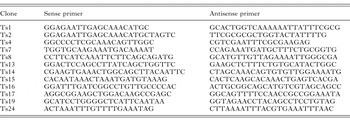
Table 1. Primers used for RT-PCR

Fig. 1. Efficiency of suppression subtractive hybridization (SSH). Double-stranded cDNA from heat-shocked Trichinella spiralis infective-stage larvae was subtracted with 37 °C treated sample or water (control) by SSH. Agarose gel electrophoresis of PCR products amplified by thymidylate synthase primers using (A) Double-stranded cDNA from: lane 1: 43 °C heat-shocked larvae; lane 2: 37 °C treated larvae; and (B) primary PCR products from: lane 1: SSH subtracted products; lane 2: SSH control. (C) Gel electrophoresis of secondary PCR products generated from SSH. Lane 1: subtracted PCR products; lane 2: SSH control. (D) Southern blot of SSH PCR products probed with 37 °C treated larval cDNA. Lane 1: subtracted PCR products; Lane 2: SSH control. Molecular sizes are shown on the right.
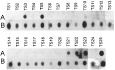
Fig. 2. Differential screening of the SSH subtracted cDNAs by reverse Northern blotting. Clones corresponding to the putative heat-induced cDNA fragments were numbered as Ts1 to Ts25 (Ts- Trichinella spiralis infective-stage larvae). The same quantity of PCR amplified cDNAs from the indicated clones were dot-blotted onto 2 identical Hybond-N membranes. The blots were then hybridized with cDNA probes derived from (A) 37 °C treated larvae and (B) 43 °C heat-shocked larvae. After washing in 1×SSC/0.5% SDS buffer, blots were exposed overnight on films.
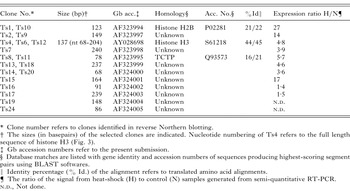
Table 2. Identification, database comparison and semi-quantitative RT-PCR analysis of differential expression of SSH clones of Trichinella spiralis infective-stage larvae upregulated by heat shock

Fig. 3. Nucleotide and deduced amino acid sequence of the Trichinella spiralis histone H3 cDNA. The 594 bp nucleotide sequence of histone H3 contained an open reading frame which encoded a protein of 136 amino acids as indicated.
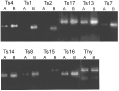
Fig. 4. Semi-quantitative RT-PCR of 10 selected overexpressed genes. Primer sets used in RT-PCR were named after the selected putative heat-induced clones. The figure shows gel electrophoresis of the semi-quantitative RT-PCR products from matched total RNA of (A) 37 °C treated and (B) heat-shocked Trichinella spiralis infective-stage larvae. The intensity of the PCR products was normalized using the amplified products of thymidylate synthase, which did not show a significant differential signal between the samples. The ratio of RT-PCR products from 37 °C and heat-shocked larvae was determined by densitometric analysis using the Gel Doc 1000 system.
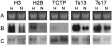
Fig. 5. Northern blot analysis of 5 selected overexpressed genes. Northern blots were performed using 10 μg of matched total RNA samples isolated from heat-shocked (H) and 37 °C treated larvae (N). (A) Agarose gel electrophoresis showing the integrity and quantity of the total RNA samples loaded on the gel. (B) Membranes were hybridized with probes derived from cDNA fragments of histone H3 (H3), histone H2B (H2B), translationally controlled tumour protein (TCTP), clone Ts13 and Ts17. (C) The same blots were hybridized with thymidylate synthase probe (Thy) to normalize the loading and transfer of the total RNA. Northern blots were placed on film with a screen at −80 °C for 1–2 weeks.
 You have
Access
- 39
- Cited by