Introduction
Lipid bilayers represent a significant obstacle for the development of drugs directed against intracellular targets that are discretely located in defined intracellular compartments. As a consequence, a variety of quite disparate technologies, including viruses, proteins and liposomes, have been developed as pharmacokinetic modulators to facilitate the effective intracellular delivery of a chemically diverse range of therapeutic agents. During the 1990s cell-penetrating peptides (CPPs), alternatively named protein transduction domains, were identified as another distinct class of intracellular delivery vector. The first obvious examples of CPPs included penetratin (RQIKIWFQNRRMKWKK; Ref. Reference Derossi1), and Tat peptides (GRKKRRQRRRPPQ; Ref. Reference Vivès, Brodin and Lebleu2), cationic stretches of amino acids identified within the primary sequences of both insect- and virally-encoded transcription factors, respectively. These polycationic CPP motifs seemingly confer upon their native proteins the capacity to cross biological membranes to fulfil their biological roles as transcriptional activators. Moreover, similar CPP sequences have since been identified in a range of other human proteins (Refs Reference Futaki3, Reference Jones4). Thus, it is tempting to speculate that these polycationic mini-domains may enable a broader range of proteins, not only transcription factors, to translocate biological membranes. Indeed, the concept of supercharged proteins has been developed (Ref. Reference Cronican5) to describe human proteins with unusually high net positive charge capable of crossing biological membranes and serving as drug delivery agents.
Many other CPPs that are relatively short (<30) cationic and/or amphipathic sequences have since demonstrated a remarkable ability to translocate into cells in a relatively inert manner (reviewed in Ref. Reference Langel6). With particular regard to clinical applications, CPPs can efficiently deliver a wide range of therapeutic moieties, including small drugs, more bulky proteins and a range of oligonucleotides, as both covalent constructs and non-covalent complexes (Refs Reference Langel6, Reference Mae and Langel7, Reference Svensen, Walton and Bradley8).
It is likely that the internalisation of CPP conjugates may be achieved by a combination of both direct plasma translocation and a plethora of energy-dependent endocytotic mechanisms. These in turn are influenced by many biological and biophysical parameters including cell type, CPP concentration and the size and nature of the conjugated cargo (Refs Reference Langel6, Reference Duchard9, Reference Richard10, Reference Rothbard, Jessop and Wender11). Moreover, there is convincing evidence that larger therapeutically efficient cargoes, including oligonucleotides and proteins, are predominantly located in endosomes when delivered using CPP technologies. Thus, various strategies have been investigated in an effort to increase the release of therapeutic agents, including siRNA, from endosomes and so enable the treatment of human diseases using gene therapy approaches (Refs Reference Meade and Dowdy12, Reference Räägel13).
The utilisation of CPPs as inert pharmacokinetic modifiers is well established (Ref. Reference Langel6) and yet there is abundant evidence that even common CPP vectors may demonstrate biological side effects within the low micro-molar concentrations required for effective cellular uptake (reviewed in Ref. Reference Verdurmen and Brock14). In an effort to distinguish bioactive CPPs from the more usual vector peptides, we have more recently introduced the term bioportide to describe any CPP with intrinsic biological activity (Refs Reference Howl and Jones15, Reference Howl16, Reference Lukanowska, Howl and Jones17). As recently reviewed (Ref. Reference Lukanowska, Howl and Jones17), the emergent technology of bioportides encompasses a very wide variety of putative therapeutic agents that have the potential to overcome some limitations of conventional drug development strategies. However, it is fair to conclude that many of these studies lack a detailed explanation of the molecular mechanisms by which bioportides achieve a therapeutically beneficial action. Nevertheless, it is most likely that a quantitative majority have a dominant negative mode of action, a consequence of the blocking or altering of patterns of binding events between intracellular proteins (Ref. Reference Kiosses18). This in turn may induce a spectrum of changes in cellular biology and biochemistry that include acute variations in enzyme activity, the modulation of signal transduction pathways, alterations in protein stability and epigenetic influences leading to chronic changes in cellular phenotype (Refs Reference Howl16, Reference Lukanowska, Howl and Jones17, Reference Kiosses18, Reference Gangoso19, Reference Khavinson20).
The sequencing of human genomes, coupled with strategic developments in proteomics and interactomics, have clearly identified ubiquitous protein-protein interactions (PPIs) that maintain the structure of complex proteins, guide protein trafficking and contribute to all major intracellular signalling pathways (Refs Reference Jones and Thornton21, Reference Smith and Gestwicki22). The therapeutic targeting of PPIs with selective inhibitors is a widely accepted strategy to expand the repertoire of druggable proteins; though these relatively extended and often flat surfaces are a challenging drug target for conventional small molecules (Refs Reference Smith and Gestwicki22, Reference Ivanov, Khuri and Fu23, Reference Arkin and Wells24). PPI stabilisers also represent an attractive therapeutic modality (Refs Reference Hopkins and Groom25, Reference Thiel, Kaiser and Ottmann26). However, in 2011 only ~2000 of 130 000 estimated PPIs in the human interactome had been investigated as putative drug targets (Ref. Reference Rask-Andersen, Almén and Schiöth27) and there is a clear need to address this substantial challenge. We anticipate, therefore, that bioportides will prove to be a valuable starting point for the identification of therapeutic agents that discretely and efficiently target PPIs. Our reasons for this conclusion are as follows: Firstly, it is feasible to employ various iterative approaches, including predictive algorithms (Refs Reference Hansen, Kilk and Langel28, Reference Hällbrink29), to map CPPs to known PPI sites. Secondly, it is obvious that many PPIs have a relatively high affinity for arginine, a common amino acid in both cationic and amphipathic CPPs and bioportides (Ref. Reference Jones and Thornton21). Thirdly, bioportides that derive from helical protein domains, a major component of PPIs (Ref. Reference Jochim and Arora30), could be structurally stabilised in a helical conformation to further enhance cell permeability, target site affinity and biological efficacy (Ref. Reference Verdine and Hillinski31). It is also pertinent that numerous PPI inhibitors are now entering clinical trials, many of which are putative anticancer agents (Refs Reference Mullard32, Reference Zhao, Bernard and Wang33, Reference White, Westwell and Brahemi34).
The current status of CPP technologies
There is now a bewildering variety of relatively inert CPP vectors that have been successfully employed as pharmacokinetic modulators to markedly improve the intracellular delivery of cargoes that are usually unable to cross an intact lipid barrier. An overwhelming majority of these CPPs are polycationic, possessing a net positive charge because of multiple Arg, Lys and, less commonly, His residues. It is noteworthy that other CPPs, including the transportans (Refs Reference Pooga35, Reference Soomets36), and the mitochondriotoxic bioportide mitoparan (Ref. Reference Jones37), can be modelled as an amphipathic alpha-helix. This common structural motif appears to contribute to both the translocation efficacy of amphipathic CPPs and, as further described below, the bioactivities of many bioportides. An excellent recent publication (Ref. Reference Vasconcelos, Pärn and Langel38) classifies numerous CPPs according to their therapeutic potential and also lists a dozen examples of CPP-conjugates that are known to be under clinical development. It is surely only a matter of time before further optimisation enables the targeting and delivery advantages associated with CPP technologies to be realised in a human therapeutic setting (Refs Reference Mae and Langel7, Reference Vasconcelos, Pärn and Langel38, Reference Vivès, Schmidt and Pèlegrin39, Reference Johnson, Harrison and Maclean40).
Cell- and tissue-selective targeting
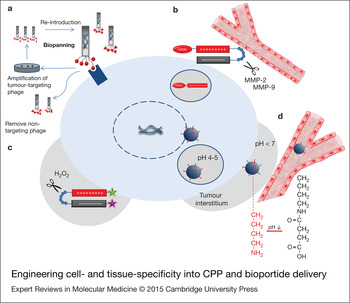
A major caveat to all therapeutic applications of CPP and bioportide technologies is the issue of target-selective delivery; there are no rigorous guidelines to direct the choice of CPP vector for in vivo applications. As reviewed elsewhere (Refs Reference Mae and Langel7, Reference Svensen, Walton and Bradley8, Reference Vasconcelos, Pärn and Langel38, Reference Vivès, Schmidt and Pèlegrin39, Reference Johnson, Harrison and Maclean40, Reference Tréhin and Merkle41, Reference Gump and Dowdy42), hundreds of studies have progressed our understanding of CPP vectors and their therapeutic advantages which include low toxicity, more precise target-specificity and routes of administration that may be relatively non-invasive. For clinical applications it is feasible to adopt a variety of structural modifications that can further improve the target-specificity. Moreover, structural modifications to provide or improve target-specificity are fully compatible with the modular nature of both CPPs and bioportides (Fig. 1).
Engineering cell- and tissue-specificity into CPP and bioportide delivery. CPPs and bioportides are readily amenable to the incorporation of site-specific delivery motifs/mechanisms thereby conferring selectivity into drug delivery. (a) Phage display technologies have generated an abundance of homing peptides (Refs Reference Aina43, Reference Rivinoja and Laakkonen44) which can easily be incorporated into bioportide technologies as either simple N- or C-terminal extensions of the peptide chain or via a flexible linker. Phage display libraries, such as the T7 and M13 (as shown here) systems, are composed of a multitude of short random peptide sequences which are genetically fused to a coat protein of a bacteriophage, whereas the DNA encoding the peptide resides within the virion. Identification of high affinity peptide ligands for the intended target is performed by an in vitro or in vivo selection process called biopanning. The phage library is incubated with the target, unbound phage is washed away and the specifically bound phage is eluted and amplified in E. coli. The process of binding and amplification is repeated so as to enrich the pool of high affinity peptide ligands. After 3–5 rounds of biopanning, high affinity individual clones are identified by DNA sequencing (Refs Reference Aina43, Reference Rivinoja and Laakkonen44). Exploitation of the tissue micro-environment is another mechanism whereby CPPs and bioportides can ensure site-specific delivery (b, c, d). ACPPs are constructs in which the penetrative ability and cationic charge of the CPP is shielded by a region of anionic charge and both regions are linked by a protease-specific sequence (b) or a labile linker sensitive to the specific micro-environment (c,d). These constructs thereby act as prodrugs, only permitting the penetrative ability of the CPP once the CPP has been unmasked within the tissue of interest (Refs Reference Nguyen45, Reference Weinstain46). For instance, ACPPs cleavable by proteases expressed at the tumour-stromal interface, matrix metalloproteinases-2 and -9 (MMP-2, MMP-9), demonstrate potential for the delivery of chemotherapeutic agents and imaging moieties to enable the demarcation of tumour tissue (b) (Ref. Reference Nguyen45). Fluorescent ACPP constructs sensitive to hydrogen peroxide (H2O2) can be utilised, through fluorescence resonance energy transfer, to image lung inflammation (c). Additionally, these constructs are of potential utility in pathologies characterised by oxidative stress (Ref. Reference Weinstain46). Amidisation of the lysine residues of Tat to succinyl amides (shown in grey) renders the CPP inert until it reaches micro-environments associated with acidic conditions (d). The subsequent regeneration of primary amines (shown in red) restores the penetrative propensity of this CPP. Tat-modified nanocarriers have therefore demonstrated efficient and specific delivery of doxorubicin to the acidic environment of the tumour interstitium (Ref. Reference Jin47). Moreover, these constructs not only penetrate the plasma membrane, but are re-activated in the acidic micro-environment of endosomal/lysosomal structures and are thus free to access the nucleus (d).

Many cell- and tissue-selective homing peptides have been identified and such sequences can be readily incorporated into the design of peptides, usually as N- or C-terminal chimeric extensions (Refs Reference Svensen, Walton and Bradley8, Reference Sidhu48, Reference Aina43, Reference Rivinoja and Laakkonen44). As an example, the glioma-targeted drug delivery vector gHoPe2 comprises a glioma-homing peptide sequence (gHo) conjugated to a CPP (pVec). Moreover, gHoPe2 is capable of delivering bioactive cargoes in mice bearing xenografted human glioma (Ref. Reference Eriste49).
A second strategy employed to achieve tissue-selective targeting is the synthesis of activatable CPPs (ACPPs); these become cell penetrant only after chemical modification in an appropriate micro-environment such as a solid tumour (Fig. 1). For example, Roger Tsien's group has engineered fluorescent ACPPs in which a polycationic CPP is conjugated to a polyanionic neutralising sequence that is liberated upon enzymatic cleavage by proteases expressed at high levels in tumour tissue (Ref. Reference Nguyen45). These ACPPs can be used to delineate the margins of tumours and so improve the precision of surgical resection. Structurally similar ACPPs that are instead sensitive to hydrogen peroxide can be employed to visualise lung inflammation and offer potential for the imaging and therapy of human diseases related to oxidative stress (Ref. Reference Weinstain46). A different approach, recently employed to target tumours with CPPs, is to engineer sequences in which the ε-function of lysine residues in the Tat CPP are reversibly blocked by amidisation (Ref. Reference Jin47). The regeneration of primary amines in an acidic micro-environment enables these ACPPs to accumulate and deliver doxorubicin to cells in the acidic tumour interstitium (Fig. 1).
Common strategies to improve CPP pharmacokinetics and efficacy
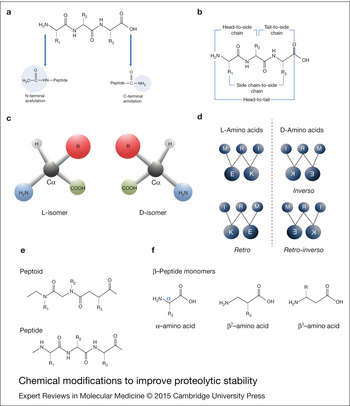
Endogenous bioactive peptides, including hormones and neuropeptides, are generally fast acting mediators that influence many aspects of human physiology and pathology. The relatively short duration of action of most peptide mediators is due in part to a variety of circulating and tissue-bound proteases that rapidly degrade them (Ref. Reference Pollaro and Heinis50). Indeed, such proteases are themselves considered an emerging therapeutic modality (Ref. Reference Turk51). Another limitation of peptide drugs is rapid renal clearance (Ref. Reference Pollaro and Heinis50). Moreover, and as reviewed elsewhere (Ref. Reference Järver, Mäger and Langel52), studies with CPPs in vitro do not always translate into success in vivo. However, a variety of structural modifications (Fig. 2) can be employed to inhibit proteolytic degradation and/or prevent glomerular filtration and so improve the half-life and general efficacy of synthetic peptides (Refs Reference Pollaro and Heinis50, Reference McGregor57). Simple modifications to N- and C-termini, including acetylation and amidation can inhibit degradation by exoproteases. Sequence inversion and retro-inversion may also improve pharmacological properties (Refs Reference Jones37, Reference Pollaro and Heinis50, Reference Guichard53, Reference Werle and Bernkop-Schnürch54) and peptoids, assembled from N-alkylglycines, can also achieve efficient cellular uptake (Refs Reference Wender55, Reference Simon56). Conjugation to larger polymers, including polyethylene glycol and serum proteins, will increase molecular size and so improve the bioavailability of both CPPs and bioportides (Refs Reference Pollaro and Heinis50, Reference McGregor57).
Chemical modifications to improve proteolytic stability. Chemical modifications to enhance the proteolytic stability of otherwise labile peptides include modifications to N or C termini, including acetylation and amidation, respectively (a), and peptide cyclisation (b). Panel b shows conventional approaches to peptide cyclisation, though backbone amides provide additional opportunities to convert linear sequences into cyclic analogues. Substitution of L-amino acids with protease resistant unnatural amino acids is another strategy favoured to prevent premature proteolysis and can include substitution with optical D-isomers (c). A more rigorous strategy frequently employs complete or partial synthesis of retro-inverso mimetics (Refs Reference Jones37, Reference Pollaro and Heinis50, Reference Guichard53, Reference Werle and Bernkop-Schnürch54). Synthesised in reverse and composed of D-amino acids, retro-inverso transformation ensures that amino acid side chains are maintained in the same orientation to that of the parent peptide whereas the carbonyl and amine groups that form the backbone amides are reversed and therefore resistant to proteolysis (d). Other unnatural amino acids utilised to overcome premature proteolytic degradation include peptoids (e), in which the side chain is attached to the backbone nitrogen instead of the α-carbon. Additionally, ß-peptides are oligomers of ß-amino acids whereby the amino group is on the ß-carbon as opposed to the α-carbon. ß-amino acid monomers can adopt two configurations, ß3 in which the amino acid side chain (R) is next to the amine, or ß2 in which the R group is next to the carbonyl (f). Both peptoids and ß-peptides are traditionally classed as foldamers, unnatural oligomers which adopt a predicable conformation and are routinely modified to form a stable α-helical conformation (Refs Reference Wender55, Reference Simon56).

Bioportides: CPPs with intrinsic bioactivities
Many studies have indicated that common polycationic CPP vectors are not always as biologically inert as might be desired (reviewed in Ref. Reference Verdurmen and Brock14). Cellular toxicity is a potential caveat to the clinical application of some CPPs (Refs Reference Vasconcelos, Pärn and Langel38, Reference Vivès, Schmidt and Pèlegrin39, Reference Johnson, Harrison and Maclean40, Reference Tréhin and Merkle41), particularly when employing higher (>5 μm) concentrations. Moreover, such problems may be exacerbated when using CPPs containing unnatural D amino acids (Ref. Reference Holm58). However, there are now many examples of bioportides that display desirable biological activities and these are predominantly constructed from natural L amino acids (reviewed in Ref. Reference Lukanowska, Howl and Jones17). Thus, the term bioportide is a useful descriptor of many important research tools and a subset of those CPP-based peptides technologies, including Amgen's protein kinase C inhibitors, subject to clinical evaluation and intended for immune disorder therapy (Ref. Reference Vasconcelos, Pärn and Langel38). A recent review of the advantages and limitations of peptide-based drugs (Ref. Reference Craik59) highlighted the challenge of developing cell permeable agents that are relatively resistant to metabolism by intestinal, plasma and cellular proteases. Hence, the major focus of this review is the synthesis and applications of cell permeable peptides, both stabilised helical peptides and bioportides that can target PPIs and so satisfy the requirements of peptide and peptide-like drugs (Refs Reference Ivanov, Khuri and Fu23, Reference Mullard32, Reference Zhao, Bernard and Wang33, Reference White, Westwell and Brahemi34, Reference Craik59, Reference Olmez, Akbulut and Abdelmohsen60).
Molecular topography
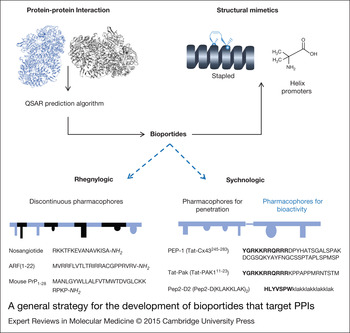
Using the data derived from the structure activity relationships of adrenocorticotropin hormone and other neuropeptides (Ref. Reference Schwyzer61), Schwyzer employed the terms sychnologic and rhegnylogic to describe two different organisations of message and address sequences, informational elements identifiable within bioactive peptides. The same nomenclature has been adopted to provide a general description of the spatial distribution of pharmacophores within bioportides (Fig. 3), where two distinct types of organisation can again be recognised (Refs Reference Howl and Jones15, Reference Howl16, Reference Lukanowska, Howl and Jones17). Employing this nomenclature, the side-chains of amino acids that contribute to cellular penetration are equivalent to Schwyzer's address whereas those responsible for bioactivity constitute the message. Informational elements in rhegnylogically-organised bioportides are discontinuous or a secret code whereas the continuous arrangement of functional elements in sychnological peptides can be likened to whole words or even sentences (Ref. Reference Schwyzer61). Of course, given the increased propensity of arginine residues within PPIs for example (Refs Reference Jones and Thornton21, Reference Crowley and Golovin66, Reference Moreira, Fernandes and Ramos67), it is most likely that some side chains within bioportides will contribute to both bioactivities and cellular uptake whereas others may have little contribution to either.
A general strategy for the development of bioportides that target PPIs. As extensively detailed in the text, PPIs are a promising therapeutic modality that can be addressed using bioportides. Proteomimetic peptides, particularly sequences derived from the cationic helical domains at PPI interfaces, may have intrinsic cell penetrating capability and so conform to the rhegnylogic organisation. Examples of such sequences, further described in the text, include nosangiotide (Ref. Reference Howl16), ARF(1–22) (Ref. Reference Johansson62) and PrP1−28 (Ref. Reference Löfgren63). As an alternative strategy, bioactive peptide mimetics can also be delivered as a sychnologically-organised chimera conjugated to CPPs (shown in bold) including Tat, PEP-1 (Ref. Reference McGuire64) and Tat-Pak (Ref. Reference Kiosses18), and Pep2, Pep2-D2 (Ref. Reference Li65). In this conceptual diagram the pharmacophores responsible for penetration (e.g. Lys and Arg side chains) are illustrated in black, whereas those conferring bioactivity are coloured blue. As described herein, the bioactivities and clinical utility of bioportides could be further enhanced by including a chemical staple or alternative helix promoter to induce α-helical secondary structure.

Sources of bioportides
It is perfectly feasible to identify putative CPPs and bioportides simply by selecting polycationic segments of human proteins (Ref. Reference Futaki3). Although this intuitive approach has the intrinsic merits of simplicity and universality, we prefer to employ a QSAR prediction algorithm that compares the bulk properties of amino acids within a defined sequence of amino acids (Refs Reference Hansen, Kilk and Langel28, Reference Hällbrink29). This iterative process has been employed to positively identify CPPs from proteins that include G protein-coupled receptors (GPCRs; Ref. Reference Östlund68), a quantitatively dominant class of drug target, and cytochrome C, an intracellular regulator of apoptosis (Ref. Reference Jones37). The same algorithm also enabled the identification of nosangiotide, a 16 amino acid fragment of a regulatory loop of endothelial nitric oxide synthase (eNOS492–507; Fig. 3), as a bioportide with potent anti-angiogenic properties (Ref. Reference Howl16). Once putative CPP sequences have been identified and synthesised, appropriate cellular assays can then be employed to characterise their import into cells and to identify those that possess intrinsic bioactivities. For example, bioportides derived from GPCRs can modulate the synthesis of the second messenger cyclic adenosine monophosphate in a manner analogous to agonist-stimulated GPCRs (Refs Reference Howl16, Reference Schwyzer61).
In the case of larger multi-domain proteins such as the Leucine Rich Repeat Kinase 2 (LRRK2), a potential drug target in Parkinson's disease, Crohn's disease and leprosy (Ref. Reference Lewis and Manzoni69), QSAR analysis can be logically restricted to appropriate functional units rather than consider the >5000 CPPs predicted to reside within the entire LRRK2 protein.
Bioportides: mechanisms of action
Intracellular concentration of CPPs and bioportides
If we accept that the internalisation of cell permeable peptides may be through a combination of direct membrane translocation and energy-dependent endocytosis (Refs Reference Langel6, Reference Mae and Langel7, Reference Svensen, Walton and Bradley8, Reference Duchard9, Reference Richard10, Reference Rothbard, Jessop and Wender11), then the next relevant parameter to consider is the effective intracellular concentration. Two approaches have commonly been employed to address this question which variously employ fluorescence (Ref. Reference Holm70) or matrix assisted laser desorption/ionisation time-of-flight (MALDI-TOF) mass spectrometry (Ref. Reference Burlina71) respectively to provide a readout of the amount of peptide that has been internalised into cells. These approaches are validated following the exogenous application of peptides usually to a monolayer of cultured cells. In post incubation with fluorescent or biotinylated peptides, cells are extensively washed and residual membrane bound peptide is removed by enzyme treatment. Cell lysates are then subjected to fluorimetry (Ref. Reference Holm70) or quantitative MALDI-TOF analyses following the capture of biotinylated peptides by streptavidin beads (Ref. Reference Burlina71). Both methods can provide a reasonable estimate of [CPP]i assuming that the intracellular volume of the lysed cells can be accurately calculated.
There are, of course, several caveats that could introduce significant errors in such calculations of [CPP]i. A majority of CPPs and bioportides that are composed primarily of L amino acids are excellent substrates for proteases that may rapidly hydrolyse them. Intracellular peptide degradation may have little influence on fluorescence measurements but could be significant when using MALDI-TOF to quantify peptide amounts. Fortunately, the application of protease inhibitors can reduce peptide degradation when employing mass spectrometric analyses (Ref. Reference Burlina71). It is also certain that many CPPs and bioportides are sequestered within defined intracellular compartments (Refs Reference Derossi1, Reference Vivès, Brodin and Lebleu2, Reference Langel6, Reference Jones37, Reference Jones and Howl72). Thus, the local concentration of peptides within the nucleus, mitochondria or other intracellular sites could be significantly higher than estimates which assume a homogeneous cytoplasmic concentration.
Despite the limitations alluded to above, estimates of [CPP]i, obtained using very different methodologies, show some correlation. Fluorescent quantifications of the intracellular concentration of the model amphipathic peptide (MAP; KLALKLALKALKAALKL) indicate that this peptide achieves an intracellular concentration of 8.5 and 24 μm in 2-day old and 6-day-old Chinese hamster ovary (CHO) cell cultures, respectively (Ref. Reference Hällbrink73).Using MALDI-TOF analyses, the CPPs nonaarginine ((Arg)9), penetratin and Tat achieve intracellular concentrations of 4.5, 3.5 and 0.7 μm, respectively, in CHO cells (Ref. Reference Burlina71). Similar analyses (Ref. Reference Gomez74) indicate that the intracellular concentration of a cell penetrating pentapeptide VPLTK ranges from 20 nm to 6.0 μm in CHO cells cultured with 1 μm – 1.6 mm VPTLK. It should be noted, however, that an extracellular peptide concentration of 1.6 mm is several orders of magnitude higher than that could be reasonably achieved in vivo. Fortunately, there are many other data (Refs Reference Howl16, Reference Lukanowska, Howl and Jones17) to indicate that bioportides readily achieve active intracellular concentrations when exogenously applied to cells at low micro-molar concentrations. Finally, quantitative MALDI-TOF mass spectrometry can also be employed to determine the intracellular concentration of a bioactive peptide cargo delivered as a sychnologically-organised bioportide (Ref. Reference Sagan and Castanho75). Thus, the intracellular concentration of a peptide inhibitor of protein kinase was dependent upon the CPP delivery vector and varied as follows: penetratin, 7 μm; (Arg)9, 4 μm; Kno, a CPP derived from the H3 helix of the knotted 1 transcription factor (KQINNWFINQRKRHWK), 12.3 μm (Ref. Reference Sagan and Castanho75).
The dominant negative action of proteomimetic bioportides
In the field of molecular genetics a dominant negative (antimorphic) mutation can be defined as an altered gene product that acts antagonistically to the wild-type allele. Many dominant negative mutations, including those leading to functional changes in signalling mediated by GPCRs and monomeric G proteins, may be causatively linked to human diseases (Refs Reference Dosil76, Reference Williams77). The same term is regularly applied to describe the action of proteomimetic peptides that inhibit one or more of the biological actions attributed to the protein from which they are derived. It is reasonable to assume that the diverse bioactivities exhibited by many bioportides (Refs Reference Jones4, Reference Howl and Jones15, Reference Howl16, Reference Lukanowska, Howl and Jones17) are a consequence of a dominant negative effect though, in many cases, a discrete intracellular target has not been identified. For example, Kiosses and co-workers (Ref. Reference Kiosses18) have described a dominant negative peptide mimetic of PAK 1, a protein kinase downstream of small GTPases. This sychnologically-organised bioportide (Tat-PAK111–23; Fig. 3) comprises a 13 amino acid sequence from the first proline-rich domain of PAK 1 covalently coupled to the carboxyl terminal of the Tat CPP. Following efficient translocation into endothelial cells, this peptide inhibits the binding of PAK 1 to the SH3 domain of the adapter protein NCK, so disrupting the intracellular localisation of PAK 1 leading to an attenuation of angiogenesis (Ref. Reference Kiosses18).
A similar dominant negative strategy was reported by Harada et al. (Ref. Reference Harada78) who employed the cell permeable undecaarginine (Arg11) to deliver a peptidomimetic fragment of the zinc finger 224 (ZNF224) interacting domain of human DEP containing 1 protein (DEPDC1611–628). This sychnologic bioportide, aptly named DEPDC1-ZNF224, inhibited the interaction of DEPDC1 and ZNF244 to trigger transcriptional activation of the A20 zinc finger protein leading to the growth repression of bladder cancer cells (Ref. Reference Harada78).
The signal transducer and activator of transcription 6 protein (STAT-6) regulates the differentiation of T helper type 2 cells and interleukin-13-dependent responses, both of which have a significant impact upon allergic airways disease-associated pathologies. In an effort to inhibit experimental allergic airways disease, McCusker et al (Ref. Reference McCusker79) constructed a sychnologic bioportide identified as PTD4-STAT-6-IP. This chimeric peptide linked a STAT-6 inhibitory peptide (GRGYVSTT) derived from amino acid sequences surrounding STAT-6 Tyr641, an identified region which mediates homodimerisation of activated STAT-6, to the carboxyl terminal of a Tat-derived CPP PTD4 (YARAAARQARA). Exogenous application of PTD4-STAT-6-IP inhibited the production of cytokines in vitro in a dominant negative manner. Moreover, in murine models, the intranasal application of PTD4-STAT-6-IP suppressed symptoms of both allergic rhinitis and asthma including eosinophilia, mucus production and airway hyper-responsiveness (Ref. Reference McCusker79).
Epigenetic regulation and alternative mechanisms of action
Following their efficient permeation into cells and sequestration within intracellular compartments, numerous other modes of action are feasible for bioportides (reviewed in Ref. Reference Johansson, El Andaloussi and Langel80). For example, a variety of cell permeable peptide fragments of the intracellular domains of GPCRs have been identified that bind and activate heterotrimeric G proteins to mimic agonist-occupied receptors (Refs Reference Howl16, Reference Östlund68). Prion-protein (PrP) derived CPPs, comprising a hydrophobic N-terminal signal sequence and a basic domain at the carboxyl terminal, appear to access a discrete intracellular compartment where the basic segment binds specifically to the disease-induced scrapie protein isoform (PrPSc) to disable the formation of prions (Ref. Reference Löfgren63).
Finally, bioportides may exert an epigenetic influence to modulate gene expression leading to the reprogramming of cells. Considering the propensity of some CPPs and bioportides to accumulate in the cell nucleus, it is possible that cationic peptides directly bind double stranded DNA (reviewed in Ref. Reference Khavinson20). Indirect mechanisms leading to epigenetic modulation of gene transcription are also possible modes of action for bioportides. For example, a Tat-SID sychnologic bioportide, comprising amino acids 5–24 of the sin3-interactiong domain (SID) of mitotic arrest deficient protein (MAD) covalently joined to a Tat-derived leader sequence designed to enable nuclear transport (YGRKKRRQGGG), interferes with the binding of Sin3 PAH2 domains to partner proteins. This disruption of the function(s) of Sin3, a master transcriptional scaffold and corepressor, induces epigenetic reprogramming, cellular differentiation and the re-expression of important genes silenced in breast cancer (Ref. Reference Farias81).
Helicity, a recurrent theme in CPPs and bioportides
It is now approximately 20 years since the field of CPP research gathered momentum with the identification of penetratin and Tat peptides located within helical domains of transcription factors (Refs Reference Derossi1, Reference Vivès, Brodin and Lebleu2, Reference Langel6). Moreover, it is most likely that many other proteins possess similar functional domains that facilitate their movement across cell membranes. Indeed, the concept of supercharged proteins has been more recently developed (Ref. Reference Cronican5); a term that describes any aggregation-resistant protein with a ratio of positively charged units per kDa >0.75. Some human supercharged proteins have been demonstrated to readily cross plasma membranes and can be employed to deliver other functional moieties (Ref. Reference Cronican5). One interesting example is human cytochrome c (Cytc), a relative small protein (103/4 amino acids) that readily enters eukaryotic cells when exogenously added to culture medium (Ref. Reference Howl and Jones15). Cytc also contains CPP and bioportide sequences predominantly located within a major α-helical domain towards the carboxyl terminal of the folded protein (Refs Reference Howl16, Reference Lukanowska, Howl and Jones17). This latter observation, as developed below, is almost certainly not a coincidence, nor an artefact of QSAR prediction, but a finding indicative of the many advantages that a helical secondary structure conveys to proteomimetic bioportides.
A majority of short peptides possess little or no defined secondary structure in aqueous solution. In such a conformational state, usually defined as random coil (Ref. Reference Smith82), an ensemble of conformers gives rise to an average solution structure. Moreover, it is possible that more amphiphilic membrane active peptides may fold in solution to adopt a more globular or micelle-like form that is stabilised by cohesive forces between hydrophobic domains (Ref. Reference Deshayes and Langel83). What is clear, nevertheless, is that membrane interfaces have an intrinsic capacity to induce secondary structures in a range of peptides that include hormones (Ref. Reference Schwyzer84) and antimicrobial peptides (Ref. Reference Ladokhin and White85). Of particular significance to this review are studies with mastoparan (MP) analogues (reviewed in Ref. Reference Jones, Howl, Howl and Jones86). Thus, the tetradecapeptide MP (INLKALAALAKKIL) is disordered in aqueous solution but adopts an ordered α-helical conformation in a lipidic environment or when bound to its target heterotrimeric G protein (Ref. Reference Jones, Howl, Howl and Jones86). Since MP and its many structural analogues traverse plasma membranes to activate G proteins, we would now classify these peptides as rhegnylogic bioportides. It is noteworthy that the MP sequence is included as the carboxyl segment of the amphipathic transportan sequence (GWTLNSAGYLLGKINLKALAALAKKIL) and various deletion analogues have proven to be very efficient CPPs (Refs Reference Pooga35, Reference Soomets36).
As described in detail elsewhere (Refs Reference Bechara87, Reference Esbjörner, Gräslund, Nordén and Langel88), the interaction of many positively charged CPPs, including penetratin and transportan, with negatively charged polymers (lipids and glycoconjugates) can induce a helical peptide conformation at the cell surface. Intriguingly, the addition of tryptophan residues to basic CPPs causes them to adopt a predominant ß-structure under similar conditions (Ref. Reference Bechara87).
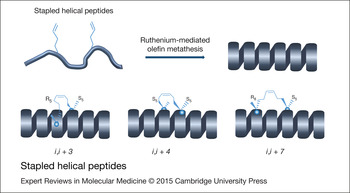
After binding to the surface of cells, CPPs and bioportides then access the cellular interior by a variety of mechanisms that may include both direct translocation and various energy-dependent endocytotic processes (Ref. Reference Langel6). It is currently uncertain whether all CPPs and bioportides adopt a secondary structure when bound to membranes immediately prior to internalisation. Indeed the biophysical requirements for direct membrane translocation and endocytotic transport are likely to be very different. However, one point of interest to this review is the observation (Ref. Reference Verdine and Hillinski31) that the chemical stapling of linear peptides into a predominantly helical conformation does itself promote cellular import by endocytosis. Thus, an unmodified peptide targeting the p53-binding cleft in the ubiquitin protein ligase hDM2 is impermeable whereas an i,i+7 stapled homologue demonstrates significant accumulation in living cells (Ref. Reference Verdine and Hillinski31; Fig. 4).
Stapled helical peptides. Ruthenium-mediated olefin metathesis (Ref. Reference Grubbs89) produces an all hydrocarbon staple, converting random coil peptide sequences into α-helical conformations with improved pharmacokinetic and pharmacodynamic parameters. As detailed (Refs Reference Verdine and Hillinski31, Reference Kim, Kutchuklan and Verdine90, Reference Kim and Verdine91, Reference Kim, Grossmann and Verdine92), α-methyl,α-(alkenyl)glycine monomers of appropriate length and chirality are incorporated into the peptide chain at optimised positions (i,i+3, i,i+4 and i,i+7) to produce stable secondary structures closely mimicking natural α-helices. This diagram is adapted from (Ref. Reference Verdine and Hillinski31).

Many other proteomimetic bioportides also derive from helical protein domains (Ref. Reference Lukanowska, Howl and Jones17). For example, the sequence of nosangiotide (RKKTFKEVANAVKISA), a highly potent hexadecapeptide anti-angiogenic biportide (Ref. Reference Howl16), represents a segment of a highly helical domain of endothelial nitric oxide synthase (eNOS492–507) that is bound by activated calmodulin. Similarly, the SID decoy peptide (MAD5–25) described above (Ref. Reference Farias81) also mimics a well-defined α-helical domain of the MAD protein (Ref. Reference Le Guezennec, Vriend and Stunnenberg93).
It would appear likely, therefore, that there are many advantages to the consideration of helicity as the basis for bioportide selection and refinement and these can be summarised in general terms as follows:
-
(i) CPPs and bioportides can adopt an α-helical conformation in a membrane environment that promotes their uptake into cells
-
(ii) Many known bioportides derive from helical protein domains and most likely also interact with intracellular targets in a helical conformation.
-
(iii) Cationic alpha helices, particularly those containing arginine residues, are major determinants of PPIs (see below).
PPIs as a common intracellular target for bioportides
When employing CPP technologies to modulate cellular biology in a clinically-useful direction it is often anticipated, and in some cases proven, that the bioactive sequence will discreetly inhibit PPIs. The sequencing of human genomes and comparative analyses of protein structure (Refs Reference Ponting and Russell94, Reference Basu95) have provided new insights into the structural organisation of human protein domains. From such studies it is obvious that many human proteins consist of multiple accreted domains that are relatively ancient in evolutionary terms. Moreover, it is particularly striking that, among proteins involved in intracellular signalling networks, there are many common promiscuous domains typically involved in PPIs (Refs Reference Smith and Gestwicki22, Reference Ivanov, Khuri and Fu23, Reference Arkin and Wells24, Reference Vasconcelos, Pärn and Langel38, Reference Olmez, Akbulut and Abdelmohsen60, Reference Ponting and Russell94, Reference Basu95, Reference Pawson and Nash96).
There is also a widespread recognition that PPIs play a central role in the development of many human diseases. It is perhaps no surprise, therefore, that we are currently witnessing an increased focus on peptide therapeutics that offer distinct advantages to the targeting of intracellular proteins (Refs Reference Verdine and Hillinski31, Reference White, Westwell and Brahemi34, Reference Craik59, Reference Olmez, Akbulut and Abdelmohsen60, Reference Wilson97, Reference Verdine and Hilinski98). We concur that it is most likely that the molecular mode of action of many bioportides (reviewed in Ref. Reference Lukanowska, Howl and Jones17) is a consequence of PPI mimicry and the interruption of intracellular signalling pathways. Moreover, a consideration of the sources and biophysical properties of bioportides suggest that they are ideal candidates to achieve effective targeting of the PPIs that underlie the pathophysiological function of therapeutically-relevant intracellular proteins. Firstly, bioportides are intrinsically cell permeable and so are able to more readily access intracellular targets. Secondly, human proteins are a rich source of CPP sequences (Ref. Reference Futaki3) and QSAR predictive algorithms can be applied to identify CPPs and bioportides within discrete protein domains (Refs Reference Howl16, Reference Lukanowska, Howl and Jones17, Reference Hansen, Kilk and Langel28, Reference Hällbrink29, Reference Östlund68). Thirdly, many bioportides contain arginine residues and this amino acid is statistically enriched within PPIs (Refs Reference Jones and Thornton21, Reference Crowley and Golovin66, Reference Moreira, Fernandes and Ramos67). This latter observation is significant since the cation-π interactions which stabilise PPIs (Refs Reference Jones and Thornton21, Reference Crowley and Golovin66) commonly involve interactions between arginine and tyrosine residues. Moreover, arginine methylation is emerging as a fundamental regulator of protein function and signalling pathways mediated by PPIs (Refs Reference Bedford and Richard99, Reference Boisvert, Chénard and Richard100, Reference Jones and Thornton101). In addition to the dominant negative disruption of PPIs that is the most likely mode of action of bioportides others could act to stabilise PPIs and so regulate intracellular signalling by an allosteric mechanism (Ref. Reference Thiel, Kaiser and Ottmann26).
Helical proteomimetic peptides
As discussed above, it is apparent that folded sub-domains enable proteins to interact in a temporal and spatial fashion with their cognate binding partners. As the stabilisation of peptides in an α-helical conformation can confer distinct pharmacodynamic advantages, many strategies have been developed to achieve this synthetic goal. Thus, disulphide bonds, lactam- and metal-mediated bridges and a variety of other covalent bonds are commonly employed to introduce relatively flexible or rigid crosslinks that stabilise a helical peptide conformation (reviewed in Ref. Reference Henchey, Jochim and Arora102).
A review of recent literature suggests that a chemical staple formed by ring closing olefin metathesis (Fig. 4) offers a convenient and general approach to the synthesis of stapled α-helical peptides or miniproteins (Refs Reference Verdine and Hillinski31, Reference Verdine and Hilinski98, Reference Kim, Kutchuklan and Verdine90, Reference Kim and Verdine91). Such approaches are expected to confer upon linear peptides a high degree of helicity, enhanced resistance to proteases and longer half-lives in vivo, improved affinity for protein targets and enhanced endocytotic cellular uptake (Refs Reference Kim, Kutchuklan and Verdine90, Reference Jones and Thornton101, Reference Henchey, Jochim and Arora102). Typically, conventional solid phase peptide synthesis, employing amino acids with acid-labile side chain protecting groups and a base-labile fluorenylmethoxycarbonyl (Fmoc) group to protect the α-amino function, is the synthetic strategy of choice for stapled peptides (Ref. Reference Verdine and Hillinski31). The N-α-Fmoc-α-methyl,α-(alkeneyl)glycine monomers required to introduce staples by ring-closure are becoming more widely available though they remain relatively expensive. Conveniently, detailed protocols are available for the synthesis for i,i+3, i,i+4 and i,i+7 staples formed by the closure of a macrocyclic bridge by ruthenium-catalysed olefin metathesis using monomers of appropriate length and chirality (Ref. Reference Kim, Grossmann and Verdine92; Fig. 4). Following ring-closure, a chemical staple is generated that bridges one or two turns of an α-helix that closely mimics similar secondary structures in native proteins (Refs Reference Verdine and Hillinski31, Reference Verdine and Hilinski98, Reference Kim, Kutchuklan and Verdine90, Reference Kim and Verdine91, Reference Kim, Grossmann and Verdine92). Of course, the introduction of a chemical staple into any peptide, including a bioportide, can potentially lead to a loss of pharmacophores and so compromise either biological activity and/or cellular uptake. To preserve bioactivity it is essential to identify appropriate sites for the incorporation of non-natural amino acids. One approach to this is to substitute one or more amino-isobutyric acid (Aib) residues, a known helix promoter, into bioportides and determine the influence of this upon both bioactivity and cellular uptake (Ref. Reference Jones37). Indeed, this approach can itself markedly change the bioactivity of bioportides and other bioactive peptides and so negate the need for a chemical staple.
With regard to cellular uptake, there is convincing evidence that the introduction of an all-hydrocarbon chemical staple (Fig. 4) can convert impermeable linear peptides into helical analogues that enter cells by endocytosis (Ref. Reference Verdine and Hillinski31). This latter observation may reflect a generalised increase in hydrophobicity following the introduction of a chemical staple (Ref. Reference Verdine and Hillinski31) and this could compromise the excellent aqueous solubility of cationic bioportides. Thus, it is likely that a variety of stapled analogues will need to be compared and evaluated in order to identify one or more with therapeutically useful properties. Nevertheless, and as described below, there has been recent notable success in the development of stapled helical peptides as novel therapeutics and, clearly, there is a tremendous scope to apply the same principles towards the clinical development of cationic bioportides.
Recent clinical developments
The studies highlighted below provide obvious evidence that intrinsically cell permeable proteomimetic peptides have seemingly unlimited potential to target intracellular proteins and PPI sites that enable the formation of multi-protein complexes and control signal transduction events. Moreover, though stapled helical peptides and bioportides are distinguishable in these discussions, the chemical process of stapling a peptide to promote helicity, cell permeability and bioactivity can be considered to convert a linear peptide into a bioportide. By extension, we can hypothesize that the inherent biophysical and biological properties of bioportides, many of which derive from helical protein domains or can adopt a helical conformation when bound to lipids or proteins, will be positively enhanced by further modifications that promote a more defined secondary structure.
Stapled helical peptides
Critical developments in the journey towards clinically-viable stapled helical peptides are expertly reviewed elsewhere (Ref. Reference Verdine and Hillinski31). As is reported therein, comparatively early reports confirmed in animal models that stapled helical peptides exhibited safe, efficient and selective modes of action. For example, in BCL-2 driven models of human cancer (Ref. Reference Walensky103), stapled mimetic peptides of the BH3 helical domain of BCL-2 family proteins specifically activated apoptosis in leukaemia cells. Moreover, high-affinity binding of the stapled helical peptide SAHM1, a dominant negative mimetic of a helical domain of the Mastermind-like protein 1, prevented assembly of an active transcriptional complex involving the transcription factor NOTCH (Ref. Reference Moellering104). Significantly, exposure of leukaemia cells to SAHM1 results in genome-wide suppression of NOTCH-activated genes and anti-proliferative effects in a mouse model of NOTCH1-driven T-cell acute lymphoblastic leukaemia (Ref. Reference Moellering104).
Aileron Therapeutics have more recently reported the development of a stapled α-helical peptide, ATSP-7041, that is a dual inhibitor of the murine double minute (MDM) family members MDM2 and MDMX (Ref. Reference Chang105). These proteins are negative modulators of the human transcription factor p53, a key regulator of cell-cycle arrest and apoptosis (Ref. Reference Cheok106). Moreover, because the activity of p53 is often compromised in human cancers the reactivation of its ubiquitous function is an attractive therapeutic option. Since MDM2 and MDMX are overexpressed in human cancers, ATSP-7041 was designed to bind both regulatory proteins with nanomolar affinity to achieve robust p53-dependent tumour growth suppression.
Bioportides
A recent review (Ref. Reference Vasconcelos, Pärn and Langel38) has highlighted nine key areas for potential therapeutic applications of CPPs and associated technologies. The same report has also identified 12 examples of CPP-conjugates known to be undergoing clinical development; the likelihood is that there are and will be many more. Descriptions of the exact chemical structure of these compounds and details of their pharmacology are often obscure, yet some are clearly identifiable as bioportides. For example, the rhegnylogic bioportide p28 (azurin50–77) is a 28 amino acid fragment of azurin a member of the copper-containing cupredoxin family of redox proteins (Ref. Reference Warso107). This peptide preferentially penetrates cancer cells, enter the nucleus and binds to a non-mutable region within the p53 DNA binding domain. The outcome of this novel mode of action is inhibition of the proteosomal degradation of p53 leading to an increase in both protein levels and DNA binding activity and a concomitant repression of tumour cell proliferation (Ref. Reference Warso107).
Many additional studies (recently reviewed in Ref. Reference Lukanowska, Howl and Jones17) have also identified bioportides with a range of therapeutically useful activities and there is a tremendous potential to further exploit the specificity and selectivity of cell permeable protein mimetic peptides in a clinical setting (Refs Reference Howl16, Reference Lukanowska, Howl and Jones17, Reference Gangoso19, Reference Khavinson20, Reference McGregor57, Reference Craik59, Reference Johansson, El Andaloussi and Langel80). Cancer is a common therapeutic target of many of these studies (Refs Reference Ivanov, Khuri and Fu23, Reference White, Westwell and Brahemi34) and, very recently, a sychnological approach has been successfully applied to transform glioma stem cell phenotype (Ref. Reference Gangoso19). In this study, peptides mimicking the intracellular tail of connexin43 (Cx43; see Pep-1 Fig. 3)) were delivered to Cx43-deficient glioma stem cells using Tat as a CPP vector. This intervention restored Cx43 function, as measured by a reduction in the activity of the tyrosine kinase c-Src, to induce positive changes in stem cell phenotype (Ref. Reference Gangoso19).
McGuire et al. (Ref. Reference McGuire64) biopanned three phage-displayed peptide libraries to identify 11 novel peptides that selectively bound with high affinities to non-small lung cancer cell lines. Such studies provide further evidence of the general utility of homing peptides (Fig. 1) and their potential application to support the utilisation of bioportide technologies to combat cancer.
Li et al. (Ref. Reference Li65) employed a sychnologic bioportide, Pep2-D2 (Fig. 3) consisting of a cell permeable toll-like receptor 2 (TLR2) targeting peptide for leukaemia cells covalently linked to a propapototic all D amino acid message sequence D(KLAKLAK)2. Thus, Pep2-D2 selectively internalised in acute myeloid leukaemia cells to induce apoptosis (Ref. Reference Li65). Moreover, there are many other bioportides that induce cell death following effective translocation (Ref. Reference Lukanowska, Howl and Jones17). The rhegnylogically-organised ARF(1–22) sequence, derived from the amino terminus of the tumour suppressor p14ARF, was one of the first reported examples (Ref. Reference Johansson62; Fig. 3). Thus, exogenous application of ARF(1–22) induces apoptosis in a range of tumour cells and it is likely that the peptide has a dominant negative influence on the interaction of p14ARF with other binding partners including Myc (Ref. Reference Johansson62).
Summary and conclusions
The study and exploitation of inert CPP delivery vectors and bioportides, their bioactive variants, is a fascinating scientific discipline that offers enormous potential for the development of novel diagnostics and therapeutics. Translation of academic discoveries into clinical reality will almost certainly require close and dedicated collaboration with the pharmaceutical industries and it must be hoped that appropriate long-term links will support this process. Certainly, there now appears to be a greater willingness among the commercial drug discovery communities to consider biologics or therapeutic macromolecules that do not conform to Lipinski's rule of 5 with regards to the molecular properties of orally available drugs (Ref. Reference Lipinski108).
As we learn more about the human proteome and the interactomes that underlie disease processes (reviewed in Ref. Reference Vidal, Cusick and Barabási109) we will uncover many additional therapeutic targets. These, we would argue, can be readily and conveniently addressed using bioportides, particularly those that mimic the cationic helical domains that contribute to PPIs. Perhaps some of these, after structural modifications to improve cell targeting, in vivo stability and target affinity (Ref. Reference Gentilucci, De Marco and Cerisoli110) might even be selected for clinical trials. A chemical staple could also be employed productively to further improve cellular permeability, prolong plasma residence time and enhance target site affinity. Moreover, it is possible that chemical stapling will also reduce the length of peptide required to achieve target-selective binding and a beneficial therapeutic action. As recently suggested (Ref. Reference Craik59), the low toxicity and exquisite selectivity usually associated with peptide-based drugs will also satisfy the increasingly more stringent safety standards usually demanded by regulatory authorities.
Acknowledgements and funding
We gratefully acknowledge the support of the Michael J Fox Foundation who have financially supported some of our more recent studies.