Healthcare-associated infections (HAIs) are among the most common complications of hospital care. Each year, nearly 2 million patients develop an HAI in the United States, and ~99,000 of these patients die as a result.Reference Klevens, Edwards and Richards 1 Surgical site infections (SSIs) are the most common HAIs among surgical patients and have been associated with increased morbidity, mortality, and healthcare costs.Reference Anderson, Kaye and Classen 2 – Reference Mangram, Horan, Pearson, Silver and Jarvis 4 Nearly 20,000 patients in the United States receive a kidney transplant each year and thus are at risk for the development of SSIs. 5 Multiple risk factors for SSI have been identified including both surgical (eg, duration of procedure) and host factors (eg, obesity). The literature on risk factors for SSI among patients undergoing renal transplantation, however, is relatively sparse, and most studies were not performed in the United States. In this study, we aimed to identify factors associated with the development of SSI following renal transplantation in adult patients. We hypothesize that there are identifiable and modifiable risk factors for SSI unique to this population that would allow prospective interventions aimed at decreasing the incidence of SSI.
METHODS
We designed a retrospective cohort study of adult patients (ie, ≥18 years of age) who underwent renal transplantation at the University of Maryland Medical Center (UMMC) between January 1, 2010, and December 31, 2011. The transplant program performs ~200–250 renal transplant surgeries each year. UMMC guidelines for surgical antimicrobial prophylaxis prior to renal transplantation included weight-based dosing of cefazolin as the first-choice antibiotic. This study was approved by the University of Maryland Institutional Review Board.
Eligible patients (ie, adult patients who underwent renal transplantation during the study period) were identified from the hospital transplant database and confirmed using the central data repository. Patients who underwent dual transplants (eg, kidney–liver or kidney–pancreas) were not included in the final analyses. For each patient in the cohort, the patient medical record (including inpatient and outpatient follow-up) was reviewed by trained and experienced infection preventionists to identify the development of SSI within 30 days following the initial procedure. SSIs were classified as either superficial-incisional, deep-incisional, or organ-space using criteria established by the National Healthcare Safety Network (NHSN) of the Centers for Disease Control and Prevention (CDC).Reference Horan, Andrus and Dudeck 6 Potential risk factors were identified via a combination of manual chart review and extraction from central data repositories, which contain administrative, pharmacy, surgical, laboratory, and outcome data on all patients. Data contained within the tables of this repository have been validated for this and other research studies and were found to have positive and negative predictive values >99%.Reference Schweizer, Furuno and Harris 7 , Reference Thom, Johnson, Strauss, Furuno, Perencevich and Harris 8 The anesthesiology repository contains perioperative medication and other clinical information; fields obtained were validated for this study and were accurate. Pretransplantation patient variables considered to be potentially associated with the development of SSI included age, sex, race, body mass index (BMI), American Society of Anesthesiologists (ASA) score, and presence of underlying comorbid diseases. Transplant and surgical variables considered to be potentially associated with the development of SSI were repeat transplantation, deceased versus living donor, cold ischemic time, receipt and appropriateness of antimicrobial prophylaxis, induction immunosuppression, procedure duration (the time from incision to wound closure), and estimated blood loss (Table 1). Presence of underlying comorbid diseases were analyzed individually and as part of composite scores as determined using the Charlson Comorbidity Index (CCI), the Chronic Disease Score (CDS), and the CDS-ID. The CCI, an aggregate comorbidity measure, was calculated using discharge codes (ie, from the International Classification of Diseases, 9 th Revision, Clinical Modification, ICD-9-CM) as indicators for comorbid conditions.Reference Deyo, Cherkin and Ciol 9 , Reference McGregor, Kim and Perencevich 10 The CDS and the CDS-ID (a modified version of the CDS) utilizes patient medication, ordered within the first 24 hours of hospital admission as indicators for the presence of comorbid conditions (Table 2).Reference McGregor, Kim and Perencevich 10 – Reference McGregor, Perencevich and Furuno 12 The NHSN risk, which has been previously described elsewhere,Reference Haley, Culver, Morgan, White, Emori and Hooton 13 is used as a measure of risk adjustment and considers the following equally weighted variables: wound class, ASA score, and procedure duration.
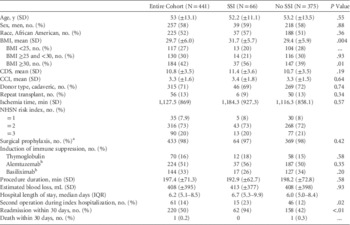
Characteristics of the Cohort

NOTE. SSI, surgical site infection. SD, standard deviation; BMI body mass index; CDS, chonic disease score; CCI, Charleson comorbidity index; NHSN, National Healthcare Surveillance Network; IQR, interquartile range.
a Surgical prophylaxis: documentation of receipt of appropriate antibiotics (as defined by University of Maryland Medical Center protocol) within 1 h of surgical incision.
b Two patients received both alemtuzemab and basiliximab to induce immune suppression.
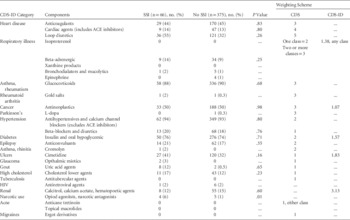
Chronic Disease Score (CDS) and CDS-ID Components for Patients with or without Surgical Site Infection (SSI)

NOTE. ACE, angiotensin-converting enzyme inhibitor; HIV, human immunodeficiency virus.
All data were analyzed using SAS software version 9.2 (SAS Institute, Cary, NC). The Fisher’s exact test and χ2 test were used to compare categorical variables, and the Student t test was used for continuous variables. Multivariate logistic regression was used to calculate odds ratios (ORs), and 95% confidence intervals (CIs) were used to identify the risk factors for development of SSI following renal transplantation. Variables associated with the outcome (P<.10) were included in the regression model. Furthermore, NHSN score was forced into the model to explore its utility in risk adjustment.
RESULTS
During the 2-year study period, 441 adult patients underwent renal transplantation. The mean age was 53 years (SD±13.1), 257 (58%) were men, and 225 (47%) were African American. The average BMI among cohort patients was 29.7 (SD±6.0) and 184 (42%) were obese (BMI >30). Additional characteristics of the cohort are provided in Table 1.
A total of 66 of 441 cohort patients (15%) developed an SSI; among these, 31 of 66 (47%) were superficial-incisional and 35 of these 66 (53%) were deep-incisional or organ-space. Patients who developed an SSI, compared to those who did not, were more likely to undergo a second operation during the index hospitalization and were more likely to be readmitted within 30 days of discharge from the index admission. One patient, who did not develop an SSI, died of complications related to a subdural hematoma within 30 days of transplantation (Table 1).
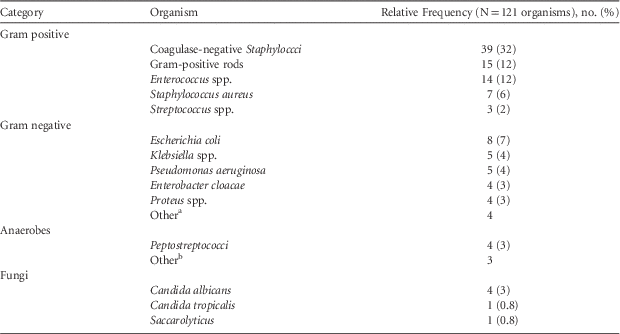
Of patients undergoing renal transplantation, 433 of 441 (98%) received prophylactic antibiotics within 1 hour prior to incision according to current guidelines;Reference Bratzler, Dellinger and Olsen 14 there was no difference in receipt of antibiotics between those that developed SSI (64 of 66; 97%) and those that did not (369 of 375; 98%) (P=.42). Among all 433 patients that received antibiotics prior to renal transplant, 336 (78%) received cefazolin and 97 (22%) received an alternate regimen. There was no difference among outcome groups with respect to antibiotic choice; 46 of 64 (72%) patients with an SSI received cefazolin, compared with 290 of 369 (79%) patients without SSI (P=.23). A total of 138 patients with a BMI >30 received cefazolin as antibiotic prophylaxis; 87 of 138 (63%) of these received 1 g cefazolin and thus were underdosed according to hospital weight-based dosing standards. There was no difference in antibiotic dosing; 15 of 25 patients (60%) who developed an SSI were underdosed, and 72 of 113 control patients (64%) were underdosed (P=.73). Among the 66 patients that developed an SSI, a responsible organism(s) was identified by culture in 63 (95%). In total, 121 organisms were identified from the 66 patients; for 26 patients (39%) the infection was monomicrobial and for 37 (56%) the infection was polymicrobial. Of 121 organisms identified, 104 (86%) were considered cefazolin resistant (either based on susceptibilities or known intrinsic resistance). In 57 of 66 of patients (86%) at least 1 organism was identified that was resistant to cefazolin, and in 61 of 66 patients (92%) at least 1 organism was resistant to the surgical prophylaxis regimen given. The organisms identified and their relative frequencies are shown in Table 3.
Organisms Responsible for Surgical Site Infection

a Other Gram-negative organisms included 1 each of the following: Serratia spp. Achromobacter xylosoxidans, Acientobacer spp., and non-aerugina Pseudomonas spp.
b Other anaerobic organisms included 1 each of Proprionobacterium spp., Veillonella spp., and Prevotella bivia.
The bivariate analysis demonstrated that patients with a higher BMI were more likely to have an SSI (31.7 versus 29.4, P=.004; Table 1). Although there was no difference in either comorbidity index (CCI or CDS-ID) between patients who developed an SSI and those who did not, individual components differed between groups. Among transplant recipients who developed an SSI, there was a trend toward increased odds of having peripheral vascular disease (Fisher’s exact P=.06) and rheumatologic disease (Fisher’s exact P=.10). In addition, patients with cerebrovascular disease had decreased odds of developing an SSI (Fisher’s exact P=.06). Finally, history of narcotic use/abuse as indicated by hospital prescription of opioids typically used to treat withdrawal symptoms (eg, methadone, buprenorphine HCL, and naloxone) was associated with development of SSI (Fisher’s exact P=.03).
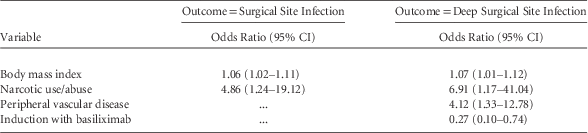
The multivariate analysis showed BMI (odds ratio [OR] 1.06; 95% confidence interval [CI], 1.02–1.11) and past history of narcotic use/abuse (OR, 4.86; 95% CI, 1.24–19.12) to be significantly associated with development of SSI after controlling for NHSN score and presence of cerebrovascular, peripheral vascular, and rheumatologic disease (Table 3). The OR of 1.06 for BMI indicates a 6% increase in the odds of developing an SSI for every 1 point increase in BMI. BMI remained a risk factor whether it was included in the model as a continuous variable or a categorical variable (eg, obesity, BMI >30; data not shown).
We also examined the outcome of deep SSI. After excluding patients who were identified to have a superficial SSI, 410 patients remained in the cohort. Of these patients, 35 (8.5%) developed a deep SSI. Patients who developed a deep SSI were more likely to undergo a second operation during their index admission and were more likely to be readmitted within 30 days. Patients who developed an SSI were on average younger and had greater BMI than patients who did not develop an SSI. These patients were also less likely to receive basiliximab as induction immunosuppression. In addition, the presence of rheumatologic, peripheral vascular, and Parkinson’s disease was more common among patients who developed a deep SSI. Multivariate analysis showed BMI and the presence of rheumatologic disease to be independent risk factors for the development of deep SSI after controlling for NHSN score, age, and the presence of peripheral vascular and Parkinson’s disease. In addition, basiliximab as induction immunosuppression remained protective against SSI (Table 4).
Multivariate Analysis

NOTE. CI, confidence interval.
DISCUSSION
In this study, we found that BMI was a risk factor for the development of SSI following renal transplantation. Somewhat surprisingly, we did not find other biologically plausible or transplant-specific risk factors such as presence of comorbid conditions, receipt of appropriate (type and dose) antibiotic prophylaxis, organ ischemia time and donor type (cadaveric versus living donor). The receipt of basiliximab as induction immunosuppression, however, was protective for the development of deep SSI. Of note, NHSN risk index, used for decades by the CDC in risk adjustment when comparing SSI rates across different facilities, was not associated with SSI.
Previous studies analyzing risk factors for SSI following renal transplantation have been scarce. To our knowledge, none of the studies considered aggregate measures of comorbidity (eg, CCI or CDS) or the NHSN risk index as potential associated factors. Furthermore, only 1 study prior to ours was performed in the United States, that of Lynch et al.Reference Lynch, Ranney, Shijie, Lee, Samala and Englesbe 15 They studied 869 patients undergoing renal transplantation from 2003 to 2008 at a single institution, and their primary aim was to assess whether obese patients were at higher risk of developing an SSI than were non-obese patients. Although they did not use NHSN definitions for SSI (and thus, direct comparisons cannot be made), they found that age, delayed graft function, and BMI >30 were independently associated with SSI development. Menezes et alReference Menezes, Wey, Peres, Medina-Pestana and Camargo 16 performed the largest study to date, a matched case-control study among 1,939 kidney transplant patients in Brazil and found that chronic glomerulonephritis, pretransplant diabetes, high BMI, acute graft rejection, reoperation, and delayed graft function were all risk factors for SSI. However, several potential risk factors identified (ie, rejection, reoperation, and delayed graft function) are measured after the transplant procedure; thus, it is not clear whether these factors contributed to the development of SSI or if they were the result of an SSI. Finally, Ramos et alReference Ramos, Asensio and Munez 17 considered the risk for development of superficial incision infection in a Spanish cohort. Among 1,400 patients that underwent renal transplantation, diabetes and the receipt of a sirolimus-based immunosuppressive regimen demonstrated an increased risk of developing an SSI; aggregate comorbidity scores, NHSN risk index, and obesity were not investigated as potential risk factors for the development of SSI.
Obesity is the most consistently identified risk factor for the development of SSI after renal transplant as well as after other surgical procedures.Reference Lynch, Ranney, Shijie, Lee, Samala and Englesbe 15 , Reference Menezes, Wey, Peres, Medina-Pestana and Camargo 16 , Reference Huttunen and Syrjanen 18 , Reference Waisbren, Rosen, Bader, Lipsitz, Rogers and Eriksson 19 The underlying mechanisms for increased risk of infection is unknown and likely includes obesity-related immune dysregulation, the presence of unmeasured obesity-related confounders, and pharmacologic issues such as inadequate dosing of medications. Perhaps based on this premise as well as concern for poor compliance with weight-based dosing and favorable toxicity profile, new antibiotic guidelines are urging consideration for more routine use of higher doses of commonly used antimicrobial prophylactic agents. One example is the routine use of 2 g IV cefazolin in place of 1 g or weight-based dosing.Reference Bratzler, Dellinger and Olsen 14 However, in this study, we found no association between the receipt, type of dosing of antibiotics, and the development of SSI, even after adjusting for BMI.
According to the NHSN/CDC, 3.8% to 6.6% of U.S. patients undergoing renal transplantation from 2006 to 2008 developed an SSI.Reference Edwards, Peterson and Mu 20 For more than 20 years, the method of risk adjustment, in order to make comparisons of rates between facilities, involved the use of the NSHN risk index that includes 3 equally weighted variables: wound class, procedure duration, and ASA score. A major limitation of this method is that, for most surgical site procedures, only 1 of the 3 variables (eg, procedure duration) can be used because the other 2 variables are the same for all patients. In fact, in our population all patients had the same wound class, and 98% of the patients fell into the same NHSN classification for ASA score. In addition, the use of procedure duration in risk adjustment is debated regarding what the procedure duration variable represents; a longer duration may represent a more complicated procedure due to patient factors, or it may represent a less skilled surgeon. This risk index has received considerable criticism and numerous observations have been made regarding situations in which the risk index performed poorly.Reference Moehring and Anderson 21 – Reference Fraser and Gordon 24 The NHSN is currently exploring the use of additional risk-factor adjustment; their most recent adjustment also includes the variables of age, sex, emergency, trauma, general anesthesia, ASA score, wound classification, procedure duration, medical school affiliation, number of hospital beds, endoscope, and staus as an outpatient.Reference Mu, Edwards, Horan, Berrios-Torres and Fridkin 25 , Reference Berrios-Torres, Mu, Edwards, Horan and Fridkin 26 However, these additions may have significant limitations. Using renal transplantation as an example, only age, sex, procedure duration, medical school affiliation and number of hospital beds are useful; other variables are either not relevant or are likely to be the same for all patients. Furthermore, no studies to date have identified sex or procedure duration as potential risks factors for the development of SSI in this population, and because no multicenter studies have been performed in the United States, it is not clear whether medical school affiliation or number of hospital beds are indeed risk factors. Larger, multicenter studies are needed to identify potentially modifiable risk factors and to improve risk adjustment strategies.
Our study has several limitations. First, although our study is large compared to other studies in the literature, the sample size is still relatively small, and this study was performed at a single site. Second, our study was retrospective. Finally, there are inherent limitations to the comorbidity scores used, specifically the reliance of CCI on ICD-9 coding.
In conclusion, our study identified BMI as a predictor of SSI among renal transplant patients. Larger, multi-institution projects are needed to analyze risk factors for SSI among renal transplant recipients. This future research will hopefully lead to the identification of modifiable risk factors for the development of SSI and to improvements in risk adjustment when making comparisons across different healthcare facilities.
Acknowledgments
The authors acknowledge Elizabeth Kim, Lisa Pineles, Megan Tripoli, Julie Utz, and Jingkun Zhu for their assistance with data extraction.
Financial support: ADH is supported by National Institutes of Health (NIH) grant 5K24AI079040-05 and Agency of Healthcare Research and Quality (AHRQ) grant 1 R01 HS022291-01; JSB is supported by NIH RO1 AI062765; KAT is supported by NIH Career Development Grant 1K23AI08250-01A1.
Potential conflicts of interest: All authors report no conflicts of interest related to this report.