Obsessive-compulsive disorder (OCD) is a common and debilitating mental illness with 12-month prevalence rates ranging from 1.2% to 1.9% (Ruscio, Stein, Chiu, & Kessler, Reference Ruscio, Stein, Chiu and Kessler2010; Slade, Johnston, Oakley Browne, Andrews, & Whiteford, Reference Slade, Johnston, Oakley Browne, Andrews and Whiteford2009). This disorder is characterised by obsessive thoughts that cause marked distress and/or compulsive actions aimed at reducing this distress (American Psychiatric Association [APA], 2013). The obsessions and compulsions are either time consuming, taking at least 1 hour per day, or significantly interfere with an individual's daily functioning (APA, 2013).
OCD has a chronic course, with a gradual onset and symptoms that may vary in intensity over time (Pinto, Mancebo, Eisen, Pagano, & Rasmussen, Reference Pinto, Mancebo, Eisen, Pagano and Rasmussen2006). The average age of onset for OCD is estimated to be between mid-adolescence and late 20s (Crino, Slade, & Andrews, Reference Crino, Slade and Andrews2005; Fontenelle, Mendlowicz, Marques, & Versiani, Reference Fontenelle, Mendlowicz, Marques and Versiani2004; Ruscio et al., Reference Ruscio, Stein, Chiu and Kessler2010). Males generally have an earlier age of onset than females (Ruscio et al., Reference Ruscio, Stein, Chiu and Kessler2010) and OCD is slightly more common in women than men (Fontenelle et al., Reference Fontenelle, Mendlowicz, Marques and Versiani2004; Pinto et al., Reference Pinto, Mancebo, Eisen, Pagano and Rasmussen2006; Torres et al., Reference Torres, Bebbington, Bhugra, Brugha, Farrell, Jenkins and Singleton2006; Wootton, Titov, Dear, Spence, & Kemp, Reference Wootton, Titov, Dear, Spence and Kemp2011).
Compared to the general population, those with OCD are more likely to be unmarried (Pinto et al., Reference Pinto, Mancebo, Eisen, Pagano and Rasmussen2006; Torres et al., Reference Torres, Bebbington, Bhugra, Brugha, Farrell, Jenkins and Singleton2006), to reside in urban areas (Torres et al., Reference Torres, Bebbington, Bhugra, Brugha, Farrell, Jenkins and Singleton2006) and to experience comorbid mood, anxiety and/or substance use disorders (Crino et al., Reference Crino, Slade and Andrews2005; Pinto et al., Reference Pinto, Mancebo, Eisen, Pagano and Rasmussen2006; Ruscio et al., Reference Ruscio, Stein, Chiu and Kessler2010; Torres et al., Reference Torres, Bebbington, Bhugra, Brugha, Farrell, Jenkins and Singleton2006). OCD is not associated with ethnicity (Fontenelle, Mendlowicz, & Versiani, Reference Fontenelle, Mendlowicz and Versiani2006), intelligence, or education (Crino et al., Reference Crino, Slade and Andrews2005; Torres et al., Reference Torres, Bebbington, Bhugra, Brugha, Farrell, Jenkins and Singleton2006), although there is some evidence that symptom presentation may vary with ethnicity and cultural background (Fontenelle et al., Reference Fontenelle, Mendlowicz, Marques and Versiani2004).
The major empirically supported treatment approaches for OCD are pharmacotherapy with serotonin reuptake inhibitors (Eddy, Dutra, Bradley, & Westen, Reference Eddy, Dutra, Bradley and Westen2004) and psychological interventions using behavioural therapy (Abramowitz, Reference Abramowitz1997; Franklin & Foa, Reference Franklin and Foa2011; Rosa-Alcazar, Sanchez-Meca, Gomez-Conesa, & Marin-Martinez, Reference Rosa-Alcazar, Sanchez-Meca, Gomez-Conesa and Marin-Martinez2008), cognitive therapy (CT; Abramowitz, Reference Abramowitz1997; Jones & Menzies, Reference Jones and Menzies1998; Rosa-Alcazar et al., Reference Rosa-Alcazar, Sanchez-Meca, Gomez-Conesa and Marin-Martinez2008) or a combination of cognitive and behavioural techniques (Eddy et al., Reference Eddy, Dutra, Bradley and Westen2004; Olatunji, Davis, Powers, & Smits, Reference Olatunji, Davis, Powers and Smits2013; Rosa-Alcazar et al., Reference Rosa-Alcazar, Sanchez-Meca, Gomez-Conesa and Marin-Martinez2008). Selective serotonin reuptake inhibitors (SSRIs) remain the first-line medication of choice for OCD, although it is recognised that a minority of those treated with SSRIs will not respond to this treatment, and that a discontinuation syndrome and relapse can occur when medication use is terminated (Fineberg, Brown, Reghunandanan, & Pampaloni, Reference Fineberg, Brown, Reghunandanan and Pampaloni2012). Further, Odlaug, Weinhandl, Mancebo, Mortensen, and Eisen (Reference Odlaug, Weinhandl, Mancebo, Mortensen and Eisen2014) argue that translational research is required to evaluate the usefulness of pharmacotherapy in unselected community samples.
The most empirically supported psychological intervention for OCD is behavioural exposure with response prevention (ERP; Franklin & Foa, Reference Franklin and Foa2011). Despite evidence of an effectiveness rate of between 70% and 80% for those who complete treatment, ERP requires individuals to engage in prolonged exposure to the stimuli that they are anxious about, while refraining from carrying out compulsions (Franklin & Foa, Reference Franklin, Foa, Nathan and Gorman2008), and this can be very distressing. When factors such as drop-out, treatment refusal and failure to respond are taken into account, estimates of rate of treatment response to ERP drop to 50% (Abramowitz, Reference Abramowitz2006).
Cognitive therapies that do not require exposure have been developed to address concerns about the number of people who do not complete or respond to ERP (St Clare, Menzies, & Jones, Reference St Clare, Menzies and Jones2008; Vaccaro, Jones, Menzies, & St Clare, Reference Vaccaro, Jones, Menzies and Clare2010; Wilhelm et al., Reference Wilhelm, Steketee, Fama, Buhlmann, Teachman and Golan2009). These may be more acceptable and efficacious for individuals who refuse or do not respond to behavioural approaches (Whittal, Robichaud, Thordarson, & McLean, Reference Whittal, Robichaud, Thordarson and McLean2008). Meta-analyses that have separated CT and ERP have found both treatments to be equally efficacious (Abramowitz, Reference Abramowitz1997; Rosa-Alcazar et al., Reference Rosa-Alcazar, Sanchez-Meca, Gomez-Conesa and Marin-Martinez2008; Olatunji et al., Reference Olatunji, Davis, Powers and Smits2013).
Evidence-based self-help treatments for OCD are also increasing in use in Australia, with the two most common being cognitive behaviour therapy (CBT) delivered through bibliotherapy, or administered over the internet (Wootton, Dear, Johnston, Terides, & Titov, Reference Wootton, Dear, Johnston, Terides and Titov2013). Recent Australian research has found no significant differences in outcome between bibliotherapy or internet-administered CBT for OCD (Wootton et al., Reference Wootton, Dear, Johnston, Terides and Titov2013).
The existence of evidence-based treatments for OCD is crucial, given that OCD has a significant negative impact on the individual in areas including quality of life (Crino et al., Reference Crino, Slade and Andrews2005; Fontenelle et al., Reference Fontenelle, Fontenelle, Borges, Prazeres, Range, Mendlowicz and Versiani2010; Kugler et al., Reference Kugler, Lewin, Phares, Geffken, Murphy and Storch2013), functional impairment (Markarian et al., Reference Markarian, Larson, Aldea, Baldwin, Good, Berkeljon and McKay2010), and independent living, if the condition is untreated (Jones, Wootton, & Vaccaro, Reference Jones, Wootton and Vaccaro2012). Despite this, there is evidence that as few as 35% to 40% of individuals living with OCD seek any type of treatment (Goodwin et al., Reference Goodwin, Koenen, Hellman, Guardino and Struening2002; Mayerovitch et al., Reference Mayerovitch, du Fort, Kakuma, Bland, Newman and Pinard2003), and international epidemiological research suggests that fewer than 10% of those with OCD receive empirically supported treatment (Torres et al., Reference Torres, Prince, Bebbington, Bhugra, Brugha, Farrell and Singleton2007). Further, within Australia, delays of up to 10 years between symptom commencement and treatment for OCD have been identified (Thompson, Issakidis, & Hunt, Reference Thompson, Issakidis and Hunt2008). Despite this, there is a paucity of literature examining the reasons underlying the low rates of treatment for OCD. Research to identify barriers to accessing effective treatment for OCD is needed to inform strategies for improving service access for those with OCD.
The barriers to accessing effective treatment for OCD that have been identified in the international research include limited availability of suitably trained professionals to treat those presenting with OCD using psychological treatments (Kenwright, Marks, Graham, Franses, & Mataix-Cols, Reference Kenwright, Marks, Graham, Franses and Mataix-Cols2005; Marques et al., Reference Marques, LeBlanc, Weingarden, Timpano, Jenike and Wilhelm2010; Reddy et al., Reference Reddy, D’Souza, Shetti, Kandavel, Deshpande, Badamath and Singisetti2005), cost of services (Goodwin et al., Reference Goodwin, Koenen, Hellman, Guardino and Struening2002; Marques et al., Reference Marques, LeBlanc, Weingarden, Timpano, Jenike and Wilhelm2010), lack of knowledge about where to obtain treatment (Goodwin et al., Reference Goodwin, Koenen, Hellman, Guardino and Struening2002; Marques et al., Reference Marques, LeBlanc, Weingarden, Timpano, Jenike and Wilhelm2010), shame, discrimination and stigma (Belloch, Del Valle, Morillo, Carrio, & Cabedo, Reference Belloch, Valle, Morillo, Carrio and Cabedo2009; Goodwin et al., Reference Goodwin, Koenen, Hellman, Guardino and Struening2002; Marques et al., Reference Marques, LeBlanc, Weingarden, Timpano, Jenike and Wilhelm2010) and negative perceptions about the usefulness of treatment (Goodwin et al., Reference Goodwin, Koenen, Hellman, Guardino and Struening2002; Marques et al., Reference Marques, LeBlanc, Weingarden, Timpano, Jenike and Wilhelm2010; Williams, Domanico, Marques, Leblanc, & Turkheimer, Reference Williams, Domanico, Marques, Leblanc and Turkheimer2012).
International research has shown that factors such as ethnicity (Alvidrez, Snowden, & Kaiser, Reference Alvidrez, Snowden and Kaiser2008; Williams et al., Reference Williams, Domanico, Marques, Leblanc and Turkheimer2012) and religious affiliation (Alvidrez et al., Reference Alvidrez, Snowden and Kaiser2008; Al-Solaim & Loewenthal, Reference Al-Solaim and Loewenthal2011; Siev, Baer, & Minichiello, Reference Siev, Baer and Minichiello2011) also influence decisions about when and where to seek OCD treatment. Al-Solaim and Loewenthal (Reference Al-Solaim and Loewenthal2011) found that Muslim women with OCD in Saudi Arabia initially sought assistance from a faith-based healer as they believed that this was the most appropriate place to find help. Similarly, individuals experiencing obsessions about religious or moral fears, known as scrupulosity, have been shown to be more likely to seek treatment from a pastoral counsellor, possibly because they perceive their issues to be related to religion (Siev et al., Reference Siev, Baer and Minichiello2011). Additionally, OCD may be under-recognised in some communities due to cultural norms (Williams et al., Reference Williams, Domanico, Marques, Leblanc and Turkheimer2012). For example, Demet et al. (Reference Demet, Deveci, Taskin, Erbay Dundar, Turel Ermertcan, Mizrak Demet and Ozturkcan2010) note that the Turkish culture values extreme cleanliness, so that OCD-related washing activities may be defined as normal behaviour. This work is significant because ethnicity and religious affiliation are important considerations for treatment access within the diverse, multicultural Australian population, and these may be important factors in understanding barriers to treatment access among those with OCD.
The international OCD help-seeking literature has also identified characteristics of individuals who are more likely to seek help. These include: female gender, Caucasian race, and holding the belief that one is ready for treatment (Goodwin et al., Reference Goodwin, Koenen, Hellman, Guardino and Struening2002); greater number of symptoms and violent obsessions (Mayerovitch et al., Reference Mayerovitch, du Fort, Kakuma, Bland, Newman and Pinard2003); comorbid diagnoses (Torres et al., Reference Torres, Prince, Bebbington, Bhugra, Brugha, Farrell and Singleton2007); greater insight into OCD symptoms (Belloch et al., Reference Belloch, Valle, Morillo, Carrio and Cabedo2009; Demet et al., Reference Demet, Deveci, Taskin, Erbay Dundar, Turel Ermertcan, Mizrak Demet and Ozturkcan2010); history of other psychiatric treatment (Demet et al., Reference Demet, Deveci, Taskin, Erbay Dundar, Turel Ermertcan, Mizrak Demet and Ozturkcan2010; Levy, McLean, Yadin, & Foa, Reference Levy, McLean, Yadin and Foa2013); and experiencing greater distress as a result of symptoms (Belloch et al., Reference Belloch, Valle, Morillo, Carrio and Cabedo2009).
As noted above, there is little Australian research examining barriers to service access and international findings must be cautiously interpreted due to differences between health systems (Thompson, Hunt, & Issakidis, Reference Thompson, Hunt and Issakidis2004). The characteristics of the Australian health system, especially access to low cost or free mental health services through the Medicare system (Australian Government Department of Health, 2009) and through internet-based interventions, such as Anxiety Online (Australian Government Department of Health and Ageing, 2012) mean that international findings describing the barriers to accessing effective treatments may not translate to the current Australian health context. Consistent with this view, one Australian study used a mixed sample with mood and anxiety disorders from a specialist anxiety clinic to explore self-reported barriers to treatment. The findings indicated that barriers such as cost and treatment being unavailable were less endorsed by participants than beliefs and attitudes about mental illness, lack of knowledge about mental health issues, and not knowing where to find treatment (Thompson et al., Reference Thompson, Hunt and Issakidis2004). However, the sample recruited by Thompson et al. (Reference Thompson, Hunt and Issakidis2004) came from a specialist clinic who had, by definition, already sought help. Using the same data set to explore treatment delay, Thompson, Issakidis, and Hunt (Reference Thompson, Issakidis and Hunt2008) concluded that individuals not recognising that they had a mental health problem played a major role in delay to seek help.
The present study used an online survey protocol and aimed to identify the most commonly reported barriers to seeking treatment among Australians who self-reported that they experienced OCD symptoms. It was expected that some of the barriers to OCD treatment would be similar to those previously reported in the international literature, such as availability of specialised OCD services, lack of knowledge about where to seek help, shame, discrimination and stigma, and negative perceptions about the effectiveness of treatment. However, barriers involving cost of treatment were expected to be less important in Australia.
The study also sought to determine the proportion of the sample who had received a diagnosis by a health professional, and to examine whether there were differences between those who had received a diagnosis of OCD and those who had not, in demographic characteristics, severity of self-reported symptoms, quality of life, symptom intrusiveness, religious affiliation and identified barriers to treatment. Relationships between specific treatment barriers and religious affiliation were also explored. A final aim of the study was to obtain information about the types of treatment being received by Australians with OCD symptomatology and the level of satisfaction with these treatments. Thus, the study was designed to fill a significant gap in the Australian OCD treatment literature.
Method
Design
The study used a cross-sectional design with an online self-report survey.
Participants
Participants were recruited through online advertisements placed on OCD support group websites, university clinic websites, OCD social networking sites, and print advertisements placed in psychology clinics and provided to OCD support groups in the Sydney area. An article containing details about the research was also published in a Sydney-based local newspaper. Additionally, the current study was advertised through the Australian College of Applied Psychology (ACAP) undergraduate student research participation system.
The survey link was in operation for 20 weeks from April 2013 to August 2013 and a convenience sampling method was used. The survey was commenced by 150 individuals. Incomplete surveys were removed (n = 49; 32.67%). Respondents were asked to provide the postcode and responses containing international zip codes were also removed (n = 9; 6.0%). Responses were also excluded if the respondent indicated no current obsessions or compulsions and no previous diagnosis of OCD. The final sample consisted of 86 participants aged 18 to 66 years (M = 33.57; SD = 10.48).
Measures
Florida Obsessive Compulsive Inventory (FOCI; Storch et al., Reference Storch, Kaufman, Bagner, Merlo, Shapira, Geffken and Goodman2007)
The FOCI is a 25-item self-report questionnaire used to assess the presence (FOCI-A) and the severity (FOCI-B) of OCD symptoms over the past month. The five-item severity scale has previously been used in an OCD sample with scores ranging from 4 to 20 (Storch et al., Reference Storch, Kaufman, Bagner, Merlo, Shapira, Geffken and Goodman2007). A higher score indicates a higher level of severity. Each item on the severity measure is rated on a 5-point scale that ranges from 0 (none, complete control or no avoidance) to 4 (extreme or no control). This measure has demonstrated strong internal consistency (checklist: Kuder-Richardson-20 formula = 0.83; severity scale: α = 0.89). The symptom checklist strongly correlates with the Obsessive Compulsive Inventory —Revised (Foa et al., Reference Foa, Huppert, Leiberg, Langner, Kichic, Hajcak and Salkovskis2002; rs = 0.66–0.76; Aldea, Geffken, Jacob, Goodman, & Storch, Reference Aldea, Geffken, Jacob, Goodman and Storch2009). Furthermore, the severity scale has a correlation of 0.89 with the Y-BOCS demonstrating good concurrent validity (Storch et al., Reference Storch, Kaufman, Bagner, Merlo, Shapira, Geffken and Goodman2007). In the current sample the reliability for the severity scale was α = 0.89.
The Quality of Life Enjoyment and Satisfaction Questionnaire Short Form (Q-LES-Q-SF; Endicott, Nee, Harrison, & Blumenthal, Reference Endicott, Nee, Harrison and Blumenthal1993)
The 16-item Q-LES-Q-SF assesses life satisfaction and enjoyment over the past week. Scores range from 14 to 70 and a higher score indicates higher life satisfaction and enjoyment. Each item is rated on a 5-point Likert scale that ranges from 1 (very poor) to 4 (very good). This measure has demonstrated high internal consistency (α = 0.90–0.96) as well as sensitivity to change and discriminant validity (Endicott et al., Reference Endicott, Nee, Harrison and Blumenthal1993). In the current sample, the reliability was α = 0.90.
OCD Intrusiveness Rating Scale (OCD-IRS modified from Devins et al., Reference Devins, Binik, Hutchinson, Hollomby, Barré and Guttmann1983)
This measure assesses how OCD interferes with 13 life domains that constitute quality of life and was adapted from the Illness Intrusiveness Rating Scale (IIRS; Devins et al., Reference Devins, Binik, Hutchinson, Hollomby, Barré and Guttmann1983). Scores range from 13 to 91 with a higher score indicating a higher level of symptom intrusiveness. Each item is rated on a 7-point Likert scale that ranges from 1 (not very much) to 7 (very much). Construct validity and reliability for the IIRS has been established across a range of physical health problems (α = 0.82–0.94; Devins et al., Reference Devins, Dion, Pelletier, Shapiro, Abbey, Raiz and Edworthy2001). Research suggests that the IIRS can be reliably used with individuals experiencing anxiety disorders (Bieling, Rowa, Antony, Summerfeldt, & Swinson, Reference Bieling, Rowa, Antony, Summerfeldt and Swinson2001). In the current sample, the reliability was α = 0.92.
DUREL: Duke University Religion Index (Koenig, Meador, & Parkerson, Reference Koenig, Meador and Parkerson1997)
The DUREL is a five-item measure of the level of organised religious involvement (DUREL-attendance), level of non-organised religious participation (DUREL-private) and intrinsic religiosity (DUREL-intrinsic). The first two questions are rated on a 6-point scale ranging from 1 (more than once) to 6 (rarely or never). The final three questions are rated on a 5-point Likert scale ranging from 1 (definitely true of me) to (definitely not true). This questionnaire has good internal consistency (α = 0.78–0.91) and convergent validity with other religiosity measures (rs = 0.71–0.86; Koenig & Bussing, Reference Koenig and Büssing2010). In the current sample, the reliability was α = 0.92.
Treatment History Questionnaire (THQ; based on Marques et al., Reference Marques, LeBlanc, Weingarden, Timpano, Jenike and Wilhelm2010)
The THQ was designed to assess OCD treatment history and was based on the measure designed by Marques et al. (Reference Marques, LeBlanc, Weingarden, Timpano, Jenike and Wilhelm2010). The items assessed age of symptom onset, whether the person reported receiving a diagnosis from a health professional or not (OCD_DX: yes or no), age of receiving the diagnosis, previous treatment, comorbid diagnoses, and current and previous health professionals involved in diagnosis and treatment. The THQ also assessed medication use and types of interventions received, and included ratings of satisfaction with current treatment.
Barriers to Treatment Questionnaire (BTQ; Marques et al., Reference Marques, LeBlanc, Weingarden, Timpano, Jenike and Wilhelm2010)
The BTQ is a 24-item questionnaire that assesses domains that have been identified as perceived barriers to seeking treatment for OCD. Participants rated how much each of the first 23 items had been experienced as a barrier to treatment for OCD using a 5-point Likert scale from 0 (not at all) to 4 (extremely). Item 24 required participants to rank their three greatest barriers to delaying or avoiding OCD treatment over the previous 12 months from the same list of 23 reasons.
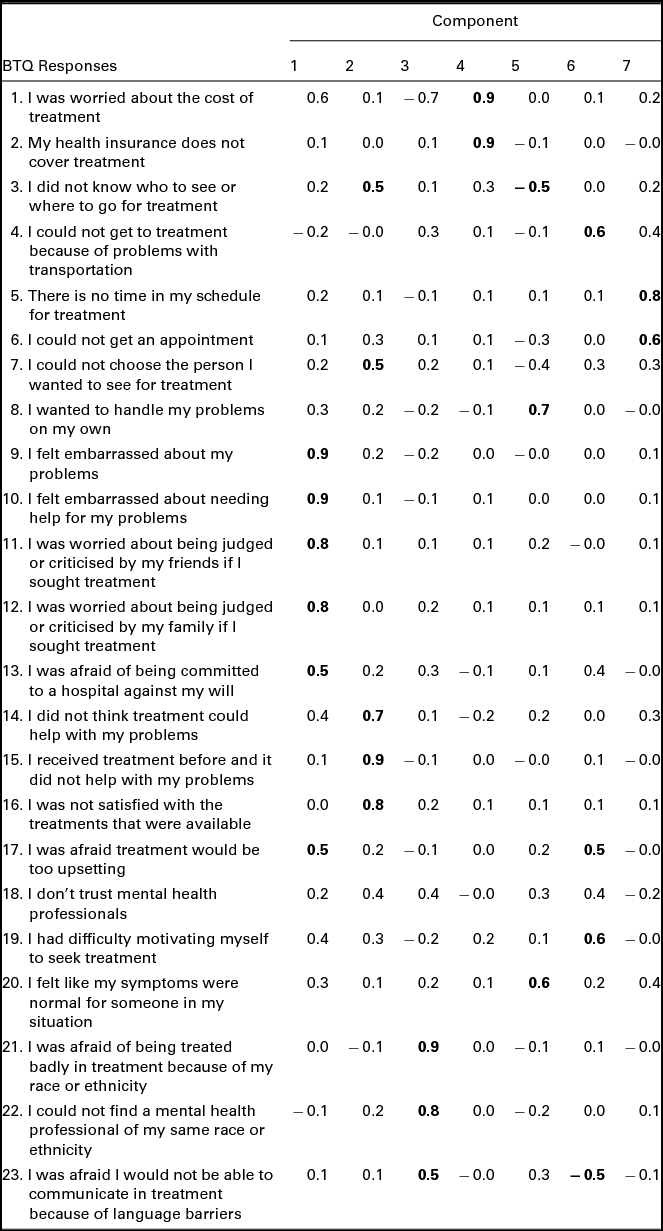
A principal components factor analysis with varimax rotation and pairwise deletion of cases with missing values was carried out on responses to the BTQ. Seven factors with an eigenvalue greater than one were found, accounting for 71% of the total variance. A minimum loading of 0.5 was required for an item to be included in a factor. Table 1 shows the factor loadings on the seven factors. Only one item did not load onto any factor. This was the item ‘I don't trust mental health professionals’. The remaining items had a loading greater than 0.5. Based on the factor analysis, seven scores were created to summarise responses on the BTQ. These concerned stigma and fear (STIGMA; items 9, 10, 11, 12, 13, 17), unsatisfactory treatment options (OPTIONS; items 3, 7, 14, 15, 16), ethnicity (ETHNICITY; items 21, 22, 23), cost of treatment (COST; items 1, 2), lack of knowledge about services and low perceived need for help (HELP NOT NEEDED; items 3, 8, 20), general difficulties including low motivation to seek help (MOTIVATE; items 4, 17, 19, 23), and scheduling problems (SCHEDULE; items 5, 6). The seven scales had adequate reliability (α = 0.88, 0.76, 0.66, 0.79, 0.58, 0.57, 0.51 for STIGMA, OPTIONS, ETHNICITY, COST, HELP NOT NEEDED, MOTIVATE and SCHEDULE respectively).
Factor Loadings for Exploratory Factor Analysis with Varimax Rotation on the Barriers to Treatment Questionnaire (BTQ) Responses (N = 86)

Note: Factor loadings ≥ 0.5 are in bold type. 1 = fear and stigma about treatment; 2 = unsatisfactory treatment options; 3 = ethnicity; 4 = cost; 5 = lack of knowledge about services and low perceived need for help; 6 = general difficulties including low motivation to seek help; 7 = scheduling problems.
Sociodemographic questionnaire
Ten questions were included concerning the sociodemographic characteristics of participants. Specifically, participants were asked to report their age, gender, relationship status, religious affiliation, level of education, employment situation, region of origin, occupation, postcode and income.
Procedure
Prior to commencement of this study, ethical approval was obtained from the Human Research Ethics Committee (HREC) of the Australian College of Applied Psychology. The survey was presented using the Survey Monkey online survey software. Pilot testing of the survey was undertaken with five people (four mental health professionals and one non-health professional) to examine the length and clarity of the survey. Participants were directed to a link to the survey from advertising material. The link directed participants to an information sheet, and those who wished to continue after reading this followed a link to the survey where they were advised that completing the questionnaire indicated consent to participate. The survey took approximately 20 minutes to complete. Participants who accessed the survey through the ACAP research participation system (n = 16) were granted course credit if they responded to all questions.
Statistical Analyses
Statistical analyses were performed using IBM SPSS Statistics for Windows, Version 20.0 (IBM, 2011). Univariate statistical tests were used for the preliminary analyses. SPSS Frequencies was used to examine sociodemographic information, types of OCD symptoms, OCD interventions previously tried and barriers to OCD treatment. For variables that followed a normal distribution (FOCI-B, Q-LES-Q-SF, OCD-IRS), parametric independent groups t tests were used to compare those who reported they had received a diagnosis of OCD by a health professional to those who reported they had not. For variables that were not normally distributed (age, DUREL-attendance, DUREL-private, DUREL-intrinsic), non-parametric Mann-Whitney U tests were used. The chi-square test of independence was used to examine the association between the categorical variable, OCD_DX: yes or no and sociodemographic variables (gender, relationship status, religion, level of education, employment, region of origin, income, living in capital city).
Six of the seven BTQ factors (OPTIONS, ETHNICITY, COST, HELP NOT NEEDED, MOTIVATE and SCHEDULE) violated assumptions of normality, therefore non-parametric Spearman's rho was used for correlations, including the BTQ factors. Non-parametric hierarchical logistic regression was conducted to identify the predictors of presence of diagnosis from a health professional.
Results
Sample Characteristics
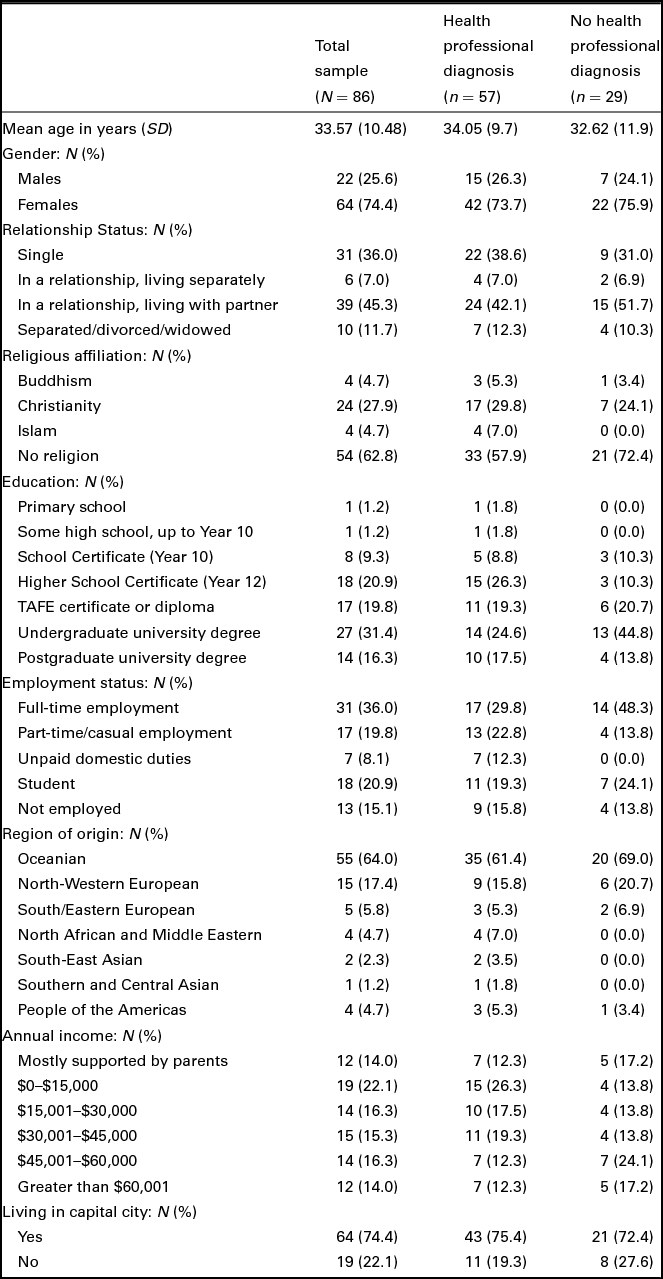
The demographic characteristics for the total sample and for subgroups based on whether the individual reported receiving a diagnosis from a health professional are presented in Table 2. Almost three quarters of the total sample (n = 64; 74.4%) were female, with average age in the mid-30s (M = 35.57; SD = 10.48). Over half of the sample were in a relationship (n = 45, 52.3%). Almost two thirds of the sample reported no religious affiliation (n = 54, 62.8%), with the remainder endorsing Christianity (n = 24, 27.9%), Buddhism (n = 4, 4.7%) and Islam (n = 4, 4.7%). The majority (n = 84, 97.67%) had completed at least Year 10 high school. Around one third were employed in a full-time capacity (n = 31, 36%). Not surprisingly, the majority of the sample identified their region of origin as being Oceanian. In terms of annual income, the sample was relatively evenly distributed across income brackets, with slightly more reporting earning up to $15,000 (n = 19; 22.1%). Approximately three quarters of the sample lived within an Australian capital city (n = 64; 74.4%; see Table 2).
Characteristics of the Sample (N = 86)
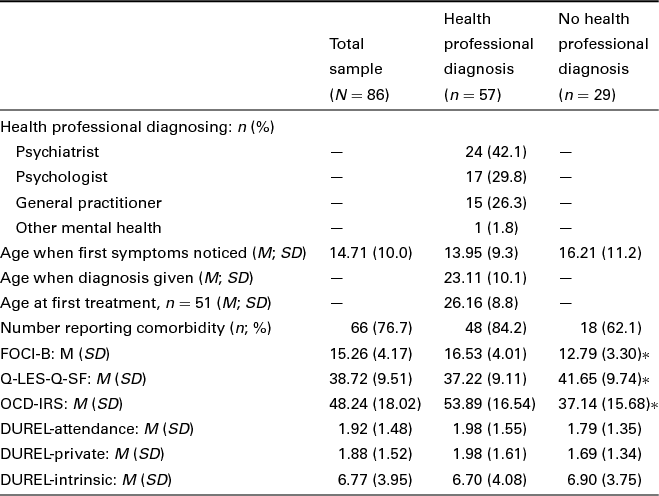
The average age that participants reported noticing OCD symptoms was 14.71 years (SD = 10.0), and a comorbid diagnosis was reported by more than three quarters of the sample (76.70%; n = 66; see Table 3). For those who self-reported receiving a diagnosis, the average age when a diagnosis was first given was 23.11 years (SD = 10.1), most often by a psychiatrist (n = 24, 42.1%), followed by psychologists and general practitioners (see Table 3). The average age that OCD treatment was commenced for this group was 26.16 years (n = 51, SD = 8.8; see Table 3).
Characteristics of OCD Diagnosis and Treatment (n = 86)
Note: — = no data. FOCI-B = Florida Obsessive-Compulsive Inventory — severity scale; Q-LES-Q-SF = Quality of Life Enjoyment and Satisfaction Questionnaire — Short form; OCD-IRS = Obsessive-Compulsive Disorder Intrusiveness Rating Scale; DUREL-attendance = Duke University Religion Index: level of organised religious involvement; DUREL-private = Duke University Religion Index: level of non-organised religious participation; DUREL-intrinsic = Duke University Religion Index: intrinsic religiosity.
*p < .05
There was no significant relationship between having an OCD diagnosis and gender, χ2(1, N = 86) = 0.05, p = .83, relationship status, χ2(6, N = 86) = 3.81, p = .70, religious affiliation, χ2(4, N = 86) = 3.51, p = .48, level of education, χ2(6, N = 86) = 6.11, p = .41, employment, χ2(4, N = 86) = 6.43, p = .17, region of origin, χ2(6, N = 86) = 4.22, p = .65, annual income χ2(8, N = 86) = 5.92, p = .66, or residing in a capital city χ2(2, N = 86) = 2.15, p = .34 (see Table 2). However, there were significant differences between the group who reported receiving a diagnosis of OCD by a health professional when compared to the group who had not for FOCI-B, t(83) = 4.60, p < .001, OCD-IRS, t(84) = 4.52, p < .001, and Q-LES-Q-SF, t(84) = 2.08, p = .04. Means indicated that those in the diagnosis group had higher severity and illness intrusion scores and lower quality of life scores than those in the no diagnosis group (see Table 3). There was no significant difference between those who reported that they had received a diagnosis and those who reported they had not, on religious attendance, private religious activity, or intrinsic religiosity.
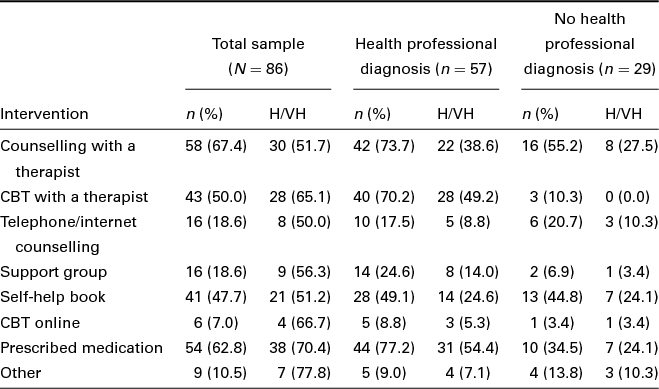
As can be seen in Table 4, the treatments most often used were counselling with a therapist (n = 58, 67.4%), prescribed medication (n = 54, 62.8%), CBT with a therapist (n = 43, 50.0%) and self-help books (n = 41, 47.7%). Among those who had used these interventions, about 70% reported that medication was helpful or very helpful and 65% rated CBT with a therapist as helpful or very helpful. About half of those who reported using self-help books or counselling with a therapist reported this to be helpful or very helpful (see Table 4 for more details).
Treatment Types and Satisfaction for Total Sample and for Those With and Without a Reported Diagnosis of OCD
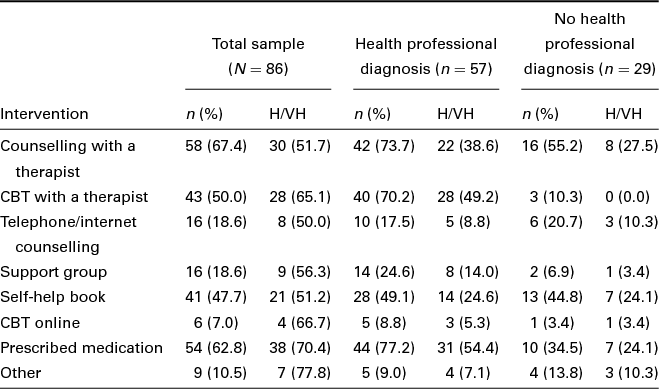
Note: Individuals could endorse more than one type of treatment therefore the numbers do not add up to the column totals. H/VH = Helpful/Very Helpful. Other: acceptance and commitment therapy, psychodynamic and family systems therapy, psychological intervention unspecified and other non-psychotherapy.
Barriers to OCD Treatment
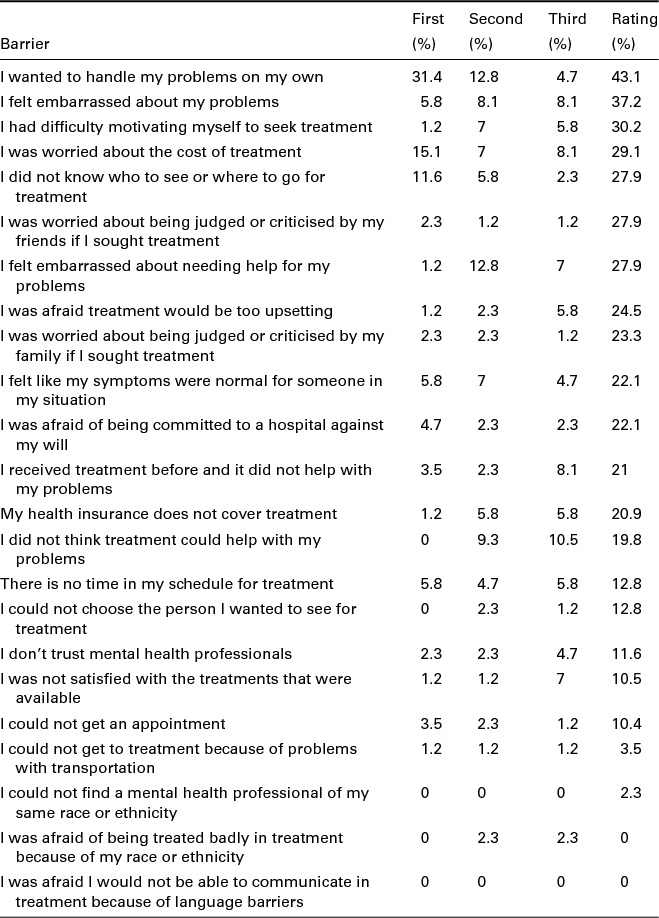
Table 5 presents the number of people who ranked each barrier associated with delaying or avoiding seeking treatment in the last 12 months as first, second or third most important for them, and also the percentage of the group who rated each barrier as very much or extremely important. The greatest barrier to treatment was ‘I wanted to handle my problems on my own’, with 31.4% of the sample ranking this barrier first and 43.1% ranking this barrier as very much or extremely influential in their decision to delay or avoid OCD treatment in the last 12 months. Embarrassment, both about the OCD and about needing help, lack of motivation, cost of treatment, lack of information about available services, and concerns about being judged or criticised were rated as very much or extremely influential by more than 25% of respondents.
Self-Reported Barriers to Treatment for OCD By Ranking, and Ratings of Barrier as Very Much or Extremely Influential (N = 86)
Note: Participants were asked to rank and rate barriers that contributed to avoiding or seeking treatment over the last 12 months. The final column lists the percentage of the group (from highest to lowest) who rated each barrier as very much or extremely important.
Associations Between Barriers to Treatment and Religiosity
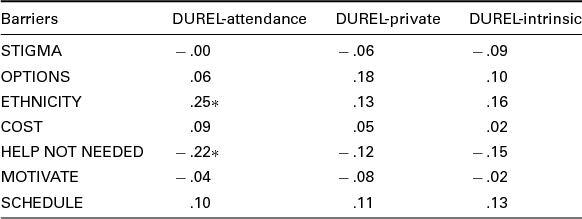
The only significant correlations were between DUREL-attendance and ETHNICITY, rs (84) = .25, p = .020, and DUREL-attendance and HELP NOT NEEDED, rs(84) = −.22, p = .041 (see Table 6).
Correlations Between OCD Treatment Barriers and Religious Attendance, Private Religious Activity and Intrinsic Religiosity
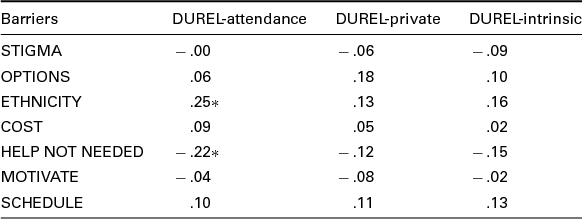
Note: DUREL-attendance = Duke University Religion Index: level of organised religious involvement; DUREL-private = Duke University Religion Index: level of non-organised religious participation; DUREL-intrinsic = Duke University Religion Index: intrinsic religiosity; STIGMA = fear of treatment barrier; OPTIONS = unsatisfactory treatment options barrier; ETHNICITY = ethnicity barrier; COST = cost of treatment barrier; HELP NOT NEEDED = lack of knowledge about services and low perceived need for treatment barrier; MOTIVATE = general difficulties including low motivation to seek treatment barrier; SCHEDULE = scheduling problems barrier.
*p < .05 (two-tailed).
Predicting Reported Diagnosis From a Health Professional From Symptom Severity and Treatment Barriers
A hierarchical logistic regression analysis was carried out with presence of reported diagnosis by a health professional as the dependent variable, and FOCI-B, STIGMA, OPTIONS, ETHNICITY, COST, HELP NOT NEEDED, MOTIVATE and SCHEDULE as predictor variables. A total of 86 cases were analysed and the full model significantly predicted whether a diagnosis was reported (omnibus chi-square = 17.69, df = 1, p < .0005). FOCI-B was entered as the first predictor variable followed by the seven treatment barriers entered together. The model accounted for between 33.7% (Cox & Snell R square) and 46.7% (Nagelkerke R square) of the variance. The group who reported that they had received a diagnosis (n = 57; 87.5%) was more accurately predicted than the group who reported that they had not received a diagnosis (n = 29; 69%) and there was an overall accuracy rate of 81.2%. According to the Wald criterion, the only reliable predictors of reporting a diagnosis from a health professional were FOCI-B, χ2(1) = 8.97, p = .003, and HELP NOT NEEDED, χ2(1) = 8.47, p = .004. Those with higher FOCI-B scores were more likely to report a diagnosis from a health professional (odds ratio = 1.364; 95% CI = 1.113–1.671). Those who scored higher on the HELP NOT NEEDED factor were less likely to report a diagnosis from a health professional (odds ratio = .412; 95% CI = .226–.749).
Discussion
This study sought to examine the barriers to treatment for self-reported OCD symptoms using an internet sample of Australian adults, and is the first study in Australia to examine treatment barriers specific to OCD. The mean age, reported educational attainment of respondents and proportion of females in the current sample was consistent with previous Australian OCD samples recruited through the internet (Wootton et al., Reference Wootton, Titov, Dear, Spence and Kemp2011). The gender, age, educational level, employment status and income level reported in the current sample were also comparable to a sample recruited via the internet in the United States (Marques et al., Reference Marques, LeBlanc, Weingarden, Timpano, Jenike and Wilhelm2010). The OCD severity scores for the whole current sample were also similar to previous face-to-face research using the FOCI with a sample of individuals diagnosed with OCD (Storch et al., Reference Storch, Kaufman, Bagner, Merlo, Shapira, Geffken and Goodman2007). Overall, the current sample appears to be a reliable representation of an OCD population.
The existing OCD literature has reported delays of up to 10 years between symptom onset and seeking treatment (Marques et al., Reference Marques, LeBlanc, Weingarden, Timpano, Jenike and Wilhelm2010; Thompson et al., Reference Thompson, Issakidis and Hunt2008). The findings of the current study are consistent with this, demonstrating an average self-reported delay of 9 years between noticing OCD symptoms and receiving a diagnosis from a health professional. About one third of those recruited for this study reported that they had not received a diagnosis from a health professional. These findings demonstrate the need for early intervention, particularly given the severe impact the disorder has on functioning if symptoms remain untreated (Crino et al., Reference Crino, Slade and Andrews2005; Jones et al., Reference Jones, Wootton and Vaccaro2012). The current finding regarding treatment delay reinforces the real-world importance of examining the barriers to individuals with OCD symptoms seeking help.
The present study aimed to differentiate between characteristics of those who self-reported receiving an OCD diagnosis from a health professional versus those who had not. No significant relationships were found between presence of a diagnosis and sociodemographic characteristics or religious affiliation. This contrasts with previous research that has separated treatment and non-treatment seekers with OCD and found demographic differences (Goodwin et al., Reference Goodwin, Koenen, Hellman, Guardino and Struening2002). However, significant differences were found between the groups based on diagnosis for symptom severity, quality of life and intrusiveness of symptoms. Individuals who reported that they received an OCD diagnosis from a professional had more severe symptoms, a poorer rating of life satisfaction and enjoyment, and reported their symptoms caused more interference. The only variables that reliably predicted whether a health professional had provided an OCD diagnosis were severity of symptoms and the factor concerning lack of knowledge of services, preference for handling problems alone, and belief that the symptoms were ‘normal’. Those with higher severity were more likely to have received a diagnosis. Alternatively, those who endorsed the latter set of barriers were less likely to have received a diagnosis. This finding adds further support to the work of Thompson et al. (Reference Thompson, Issakidis and Hunt2008), who found that an Australian sample with depressive and anxiety disorders were likely to delay treatment because they did not recognise that they had a mental health problem, and further highlights the need for improving mental health literacy about OCD in Australia.
In the present sample 59% of individuals reported receiving OCD treatment, most often counselling, medication, therapist-delivered CBT, and self-help books. There is evidence to support the use of pharmacotherapy (Eddy et al., Reference Eddy, Dutra, Bradley and Westen2004) and CBT (Abramowitz, Reference Abramowitz1997; Rosa-Alcazar et al., Reference Rosa-Alcazar, Sanchez-Meca, Gomez-Conesa and Marin-Martinez2008; Olatunji et al., Reference Olatunji, Davis, Powers and Smits2013) with OCD. This overall level of treatment use is much higher than reported in the international literature, which has found that between 35% and 40% of those with OCD sought treatment (Goodwin et al., Reference Goodwin, Koenen, Hellman, Guardino and Struening2002; Mayerovitch et al., Reference Mayerovitch, du Fort, Kakuma, Bland, Newman and Pinard2003), with fewer than 10% per cent reporting they had accessed evidence-based treatment for OCD (Torres et al., Reference Torres, Prince, Bebbington, Bhugra, Brugha, Farrell and Singleton2007). This may be due to several factors, including increasing community awareness of OCD in Australia over the past decade with the implementation of effective, high profile public mental health initiatives such as Beyond Blue (Dunt, Robinson, Selvarajah & Pirkis, Reference Dunt, Robinson, Selvarajah and Pirkis2010) and the Medicare-funded Better Access to Psychiatrists, Psychologists and General Practitioners, where access to mental health care increased markedly each year during the evaluation (Pirkis, Harris, Hall, & Ftanou, Reference Pirkis, Harris, Hall and Ftanou2011). Findings such as these highlight the importance of obtaining current, contextually relevant information about service access.
With regard to available treatments, of the four most frequently used treatment modalities, high proportions of those who had used medication (70%) and therapist-delivered CBT (65.1%) found these to be helpful or very helpful. Within Australia, CBT-based self-help books and internet programs are gaining increasing popularity as a treatment for OCD (Wootton et al., Reference Wootton, Dear, Johnston, Terides and Titov2013). The current findings support the use of self-help material to treat OCD, as almost half of the sample had utilised a self-help book and just over half of those individuals rated this form of treatment as helpful. Previous international literature examining OCD treatment-seeking and barriers has not considered the use of self-help books, and the evidence-base for the effectiveness of bibliotherapy is much less than that for therapist-delivered CBT or medication. Establishing the usefulness of this alternative and easily accessible strategy for individuals with OCD has the potential to lessen the gap between symptom onset and seeking healthcare in Australia and overseas.
This study used an overall measure of symptom severity (FOCI-B), which incorporated time occupied by symptoms, level of distress, level of control, level of avoidance and level of life interference. This severity measure was a significant predictor of whether an individual had received a diagnosis from a health professional. This finding adds to previous research that has identified severe obsessions about violence or other unpleasant thoughts and total number of OCD symptoms as reliable predictors of seeking help (Mayerovitch et al., Reference Mayerovitch, du Fort, Kakuma, Bland, Newman and Pinard2003). This finding is also important because it suggests that help for OCD may only be sought when symptoms become more severe, emphasising the need for addressing delays in help seeking. The only other significant predictor of health professional diagnosis was the factor comprising the barriers concerning lack of knowledge of services, preference for handling problems alone, and belief that the symptoms were ‘normal,’ highlighting again that despite the focus on mental health promotion in recent years, there remains a need to reach out to those experiencing OCD symptoms to equip them with information about the condition, available services, and the likely course of the disorder if untreated.
The most important barrier to delaying or avoiding seeking treatment that was endorsed by the sample was preference for handling their problems alone. This was ranked as the largest individual barrier and rated as very much or extremely influential by 43% of the sample. Understanding and addressing the reasons why those with OCD prefer to deal with their problems themselves has the potential to reduce delays in seeking treatment and therefore improve treatment outcomes for this disabling condition. Reasons may include not recognising the extent to which the symptoms represent a serious mental health problem or having a poor understanding of available treatments. Further research is needed to explore this question. Previous research from the United States has also identified wanting to handle problems independently as a barrier; however, this barrier was secondary to cost and feeling ashamed for needing help (Marques et al., Reference Marques, LeBlanc, Weingarden, Timpano, Jenike and Wilhelm2010). More than one third (37%) of the current sample reported feeling embarrassed to speak about their problems and this may contribute to why individuals would prefer to handle their problems alone.
Contrary to expectations, and despite access to Medicare and free online treatment services in Australia, 15% of those sampled ranked cost as the most important barrier to seeking treatment. This barrier has also been identified as a reason to delay seeking treatment in previous international research (Goodwin et al., Reference Goodwin, Koenen, Hellman, Guardino and Struening2002; Marques et al., Reference Marques, LeBlanc, Weingarden, Timpano, Jenike and Wilhelm2010). Similarly, consistent with previous research, almost 12% ranked poor knowledge of services first as the most important reason for delaying or avoiding treatment (Goodwin et al., Reference Goodwin, Koenen, Hellman, Guardino and Struening2002; Marques et al., Reference Marques, LeBlanc, Weingarden, Timpano, Jenike and Wilhelm2010). This barrier has also been found to be significant in the Australian mood and anxiety disorders literature (Thompson et al., Reference Thompson, Hunt and Issakidis2004), further confirming that improving community knowledge of mental illness generally, and of OCD in particular, needs to be considered when addressing barriers to OCD treatment.
This study also explored whether there was a link between specific treatment barriers and religious affiliation. Findings revealed a weak positive association between participating in organised religious activity and identifying ethnicity as a barrier. Those who reported greater involvement in organised religious meetings were more likely to be concerned about being treated differently because of race/ethnicity, not being able to find a health practitioner of the same race/ethnicity, or being worried about language barriers. The present sample originated mainly from the Oceanian region and more than half did not endorse any religious affiliation. This finding suggests that barriers to accessing treatment are likely to vary, depending on cultural factors, and approaches to improving access to treatment will need to take this into account. Organised religious attendance was also weakly associated with the factor comprising the barriers lack of knowledge of services, preference for handling problems alone, and belief that the symptoms were ‘normal’, where increased religious attendance was associated with lower scores on this factor. Those who engage in regular community faith-based practices may receive information and support in these settings that assists them to understand the nature of OCD symptoms and treatments better than those who do not. Although conclusions cannot be drawn from these preliminary correlational findings, previous research has linked OCD symptoms to seeking faith-based help (Al-Solaim & Loewenthal, Reference Al-Solaim and Loewenthal2011) and scrupulosity to seeking church-based counselling (Siev et al., Reference Siev, Baer and Minichiello2011). These findings are consistent with literature suggesting that religious personnel may be important supports for those with OCD.
While this study is innovative in a number of ways and is the first to explore barriers to seeking OCD treatment in Australia, a number of methodological limitations must be recognised. First, the study relied on retrospective self-report that may be subject to forgetting and bias. Furthermore, while the sample was similar to those identified in previous OCD research, clinical interviews were not conducted, so that diagnosis of OCD was not independently established. Another limitation was that individuals self-selected to take part in the survey. Further, the cross-sectional, correlational design means that causal conclusions cannot be drawn from this research.
There were two major advantages of using an online survey for this study. First, participants remained anonymous, which is beneficial when seeking sensitive personal information. Second, an online method can potentially access a range of individuals with OCD symptoms through the internet who may not have volunteered otherwise due to experiencing barriers associated with location or feeling embarrassed to acknowledge symptoms.
This study highlights the need in Australia for more public mental health campaigns to educate the population about OCD and about how to access evidence-based treatment. The perceptions identified in this study about wanting to manage symptoms oneself, being concerned about cost and not knowing where to go for treatment suggest that some Australians are unaware of the significance of OCD symptoms, the availability of effective treatments for OCD, and the importance of receiving treatment before the severity of the illness increases to a point where quality of life is significantly impacted. Having perceptions surrounding wanting to manage independently, lacking knowledge about treatment options and thinking symptoms are normal were found to be linked to receiving an OCD diagnosis from a health professional. These findings also suggest that public awareness about OCD needs to be increased. Furthermore, these preliminary findings highlight the need for tailored approaches to empowering people with OCD symptoms to access effective treatment. For those who have a religious affiliation, religious personnel may be an important group to target for educational initiatives concerning OCD. Clearly, there are subgroups of Australians for whom cultural and language barriers may limit treatment access and further research aimed at better identifying these subgroups is needed to inform targeted approaches for these groups.
This research has also corroborated the use of self-help materials in Australia as a viable treatment option. Further research could explore the effectiveness of using CBT self-help materials as a way of increasing public awareness about the disorder and introducing treatment concepts while providing access to an evidence-based treatment. Such approaches may balance the desire to manage OCD without assistance with provision of evidence-based treatment in a format that may be less stigmatising than attending a clinic. In Australia, most self-help material, whether bibliotherapy or online, is available in English, so that people with language barriers will have difficulty accessing these modalities of treatment, highlighting again the need for a nuanced approach to meeting the treatment needs of Australians with OCD symptomatology.