DUEL OF EXPERTS
In 1881, James Zohrab, the British Consul in Jidda, had samples of Zamzam water sent to London for chemical analysis. The samples were tested by Dr. Edward Frankland, a professor at the Royal College of Chemistry. His gruesome findings were published in the Times and later reproduced by the Lancet in 1883. Frankland put forward the shocking claim that the holy water of the Zamzam Well was six times more contaminated by animal waste than London sewage. He also claimed that Mecca's system of waste removal was responsible for the contamination of the groundwater feeding the well. As he explained, “These latrines empty themselves into pits dug outside the houses. When these get filled they are emptied into other pits, which are made in the streets or any convenient spot, and then covered over with earth.… This system of burying foul matter in every direction has been pursued for centuries; it is not, therefore, surprising that the ground in and around Mecca is surcharged with excrementitous matter….” Frankland concluded, “there can be no doubt” that due to its “surroundings” Zamzam water “is the most potent source of cholera poison.” Thus, “It would scarcely be possible to devise a more effective means for the diffusion of this poison throughout Mahomedan countries.” He even called for the closure of the Zamzam Well in order to protect “the health of Europe and Asia” from “this abominable and dangerous pollution.”Footnote 1
Later that year, the Dutch representative to the Ottoman Board of Health, Dr. Stekoulis, published a treatise in French and Ottoman Turkish on cholera and the hajj featuring Frankland's results. The Ottoman medical establishment perceived this attack on Zamzam water as a deeply offensive work of anti-Islamic propaganda. Mehmed Şakir Bey, an epidemiology expert at Haydarpaşa military hospital, was so outraged that he enlisted Bonkowsky Paşa, who was named the sultan's head chemist (Saray Serkimyageri) in 1894, and Ahmet Efendi, professor of chemistry at the Ottoman War College, to conduct their own chemical tests.Footnote 2
Bonkowsky wrote a scathing letter admonishing Frankland's “mistakes and quite bizarre conclusions” and expressing his deep dismay at his obliviousness to the “most severe indignation” that the comparison of these holy waters with London sewage would arouse among the world's 300 million Muslims. He reported that his own sample of Zamzam water was colorless, odorless, slightly saline, and had a slightly basic pH value. In short, it was harmless. He even noted that it could be bottled for up to a year without spoiling. Bonkowsky cited a long list of chemical differences between his sample and Frankland's, and explained that the salinity observed in Frankland's results was so high that it resembled seawater. He pointed out the difference between the sources of Zamzam water and Mecca's main supply of drinking water, the ‘Ayn Zubayda aqueduct. He also tried to disabuse Frankland of the idea that pilgrims bathed anywhere near the well, and concluded with a pointed question: “If Zamzam were cholera's source, wouldn't one suppose that cholera would appear in Mecca every year?”Footnote 3
Bonkowsky and Mehmed Şakir were convinced that the sample provided to Frankland could not have been authentic or else it had been tampered with prior to testing. In his Lancet article, Frankland alluded to his concerns over the sample's authenticity and even included Consul Zohrab's reply to his inquiries. Zohrab explained that the sample was procured by a “Mahomedan gentleman in whose good faith I have implicit confidence.”Footnote 4 Bonkowsky and Mehmed Şakir suspected that Zohrab's Muslim associate was Yusuf Kudzi, the translator for the British consulate in Jidda. Kudzi was a British-protected person of Russian-Jewish origin born in Jerusalem. Prior to surfacing in Jidda in 1870, he claimed to have spent years in India and China and to have converted to Islam.Footnote 5 However, as Bonkowsky and Mehmed Şakir's mention of his conversion suggests, the Ottomans were highly suspicious of Britain's use of Muslim consular employees as intelligence operatives in Mecca. The nature of their work aroused suspicions that these men were not “genuinely” Muslims. They theorized that Kudzi had introduced some sort of contaminant in order to produce the embarrassing test results.Footnote 6 Although Bonkowsky and Mehmed Şakir's accusations are impossible to prove, their skepticism regarding the objectivity of Dr. Frankland's analysis was well founded.
In the wake of repeated pilgrimage-related cholera outbreaks at an 1866 International Sanitary Conference in Istanbul the hajj had leapt to the center of European hygienic consciousness.Footnote 7 Taking a strongly “contagionist” stance, delegates identified the steamship-going hajj from India as the primary conduit for the globalization of cholera.Footnote 8 Following their recommendations, the Ottoman state was tasked with organizing a Red Sea quarantine system to halt cholera's progress before it could reach the Suez Canal and Europe's Mediterranean shores.Footnote 9
For the next three decades British officials struggled to deny India's image as an exporter of cholera and worked to obstruct the imposition of quarantine regulations. They feared that interference with this pillar of the Islamic faith would spark a backlash in India and that strict quarantine measures might be punitively applied to vessels from India, threatening the free flow of trade. Britain and the Anglo-Indian medical establishment became deeply invested in “anti-contagionist” or “localist” theories of cholera's etiology, which blamed cholera on mysterious influences in the atmosphere, fermentative products of the soil, miasmas caused by festering human waste, or other predisposing causes.Footnote 10 According to localists, the presence of a specific germ and susceptible human victim could not alone produce cholera symptoms. Rather, they hypothesized that cholera required the presence of specific soil or groundwater conditions. This idea was especially attractive because it offered an environmental explanation for spontaneous outbreaks of disease, which were seen as evidence of the inefficacy of quarantines.Footnote 11 These were the theories that formed the intellectual backdrop to Frankland's findings.
In 1883–1884, at the same time that Frankland was attacking Zamzam water as a source of “cholera poison,” the German bacteriologist Robert Koch was conducting research in Egypt and India that would provide definitive proof of cholera's causal agent, the comma bacillus. Koch's discovery of the role the human intestinal tract played in the bacterium's lifecycle and his confirmation of cholera's waterborne transmission through infected human waste products should have brought the scientific debate surrounding cholera's spread to a screeching halt.Footnote 12 And yet, throughout the 1880s and into the 1890s British scientists remained stubbornly wedded to their anti-contagionist views. Anti-contagionist Zamzam articles continued to circulate in Britain and India as late as 1895.Footnote 13
What are we to make of this duel of experts? In light of Koch's discoveries, the ideological character of anti-Zamzam polemics becomes more evident. But are we to read this episode as a footnote in the struggle between advocates and opponents of contagion and quarantine? Or are we missing an opportunity by reducing water to a proxy in Britain's anti-contagion campaign? In a sense, Frankland's sanitarian concerns were not unfounded. Mecca's water systems actually were on the verge of a massive overhaul. However, we shall see that the ways in which Ottoman administrators understood and prioritized the management of Mecca's water resources suggests a very different story than the one Frankland imagined.
While European observers viewed Mecca primarily through the international lens of cholera and quarantine, for Ottoman administrators an additional yet inextricably linked responsibility was to provide enough safe, potable water for both pilgrims and permanent residents. As a result, Ottoman analyses of the Hijaz's public health often moved along a more localized set of axes, and gave as much or more attention to the Hijaz's “water supply” (su tedariki) and the repair and upkeep of the region's aqueducts, water tanks, cisterns, pipes, and fountains. Ottoman reporting also conveys a much stronger sense of the mutually reinforcing relationship between the region's susceptibility to water scarcity and its vulnerability to waterborne disease.Footnote 14
In many respects, potable water was a microcosm of Istanbul's incomplete projects of modernization and state building on the empire's Arab peripheries. Water questions sat at the intersection between international pressures surrounding cholera, drought, Wahhabi and Bedouin disorder, and the state's inability to impose its will on the semi-autonomous Amirate of Mecca. To be sure, Ottoman public health reforms and increased attention to water infrastructure were partly a product of the intense international attention generated by cholera and the capitulatory nature of the Ottoman Board of Health. However, like other projects with more overt military and strategic implications, most notably the Hijaz telegraph and railway, the Ottoman state also saw an opportunity to harness the increasing medicalization of the hajj to serve a broader set of efforts to consolidate the empire's most vulnerable frontier provinces.Footnote 15
In the 1880s Ottoman administrators began to envision an ambitious re-spatialization of the empire's Arab tribal frontiers. Modern engineering, technology, and ethnographic approaches to the particularities of local populations were taken up as the keys to solving the frontier's biopolitical problems. Armed with this emergent techno-scientific vision, they set out to manage human life and the resources needed to sustain it, improve Arabia's defective nature, transform Bedouins into proper subjects, and gradually replace autonomous forms of political life with more rigorous territorial power. This essay takes this broader assemblage of agendas as a whole, and traces the making of a very different brand of provincial administration—a nascent frontier technostate.Footnote 16 Despite the Hijaz's conventional associations with Sultan Abdülhamid II's (1876–1909) Pan-Islamic legitimacy structures, I will suggest an alternative narrative rooted in secular reasons of state.
By locating the Hijaz at the heart of the Hamidian technopolitical turn, I also seek to tell a larger story about the evolution of state building and development in Arabia, one that would be obscured without reference to both its late Ottoman and Saudi histories. By viewing the evolution of hydraulic management in the Hijaz as a continuous process that unfolded across the long nineteenth century, we gain a new perspective on the role that Ottoman technopolitics played in shaping the Saudi state that eventually succeeded it. By privileging water in our analysis, we discover that the consolidation of the Saudi state was not solely a function of Islamic legitimacy or the discovery of oil. Instead, the provision of potable water emerges as a fundamental component of the state's capacity to manage the hajj, settle the nomadic frontier, and impose modern forms of governance.
By tracing how Ottoman infrastructures shaped the early Saudi hydro-state, we find that the quest for water security in the Hijaz, particularly in Jidda, played a critical role in setting the stage for the discovery of the Saudi Arabia's massive petroleum reserves. As it turns out, the initial aims of geological surveying in the kingdom had more to do with hajj-related water security than with the mapping of petroleum resources in al-Hasa and the Persian Gulf. Indeed, Saudi anxiety over the Hijaz's hydrology was the original motivation to enlist the American geological expertise that led to the discovery of oil. It also becomes clear that the nexus between pilgrimage, international public health, and water management served as the midwife of the Saudi petro-state.
THE HIJAZ AND OTHER “HOT PROVINCES”: TECHNOPOLITICS ON THE TRIBAL FRONTIER
Between 1870 and World War I, the Ottoman state displayed renewed vigor in the Red Sea. Following the opening of the Suez Canal in 1869 and the re-conquest of Yemen by 1872, Ottoman efforts to consolidate control over the Hijaz and defend the Muslim Holy Places from European encroachments gained a new sense of urgency.Footnote 17 During the reign of Abdülhamid II, stewardship over Mecca and Medina also took on a new significance for the Sultan-Caliph's Pan-Islamic image.Footnote 18 At the outset of his reign, however, control of this semi-autonomous province remained tenuous. The first half of the century had been an unmitigated disaster in that the center had lost control of the region during the Wahhabi-Saudi occupation (1803–1811) and the Egyptian campaigns and administration that followed (1811–1841). During the 1850s, the province had been rocked by an anti-Ottoman insurrection stemming from the prohibition of the slave trade in 1855 and the massacre of Jidda's Christian population in 1858.Footnote 19 Not until the 1880s did Istanbul began to exert a stronger influence over the province.
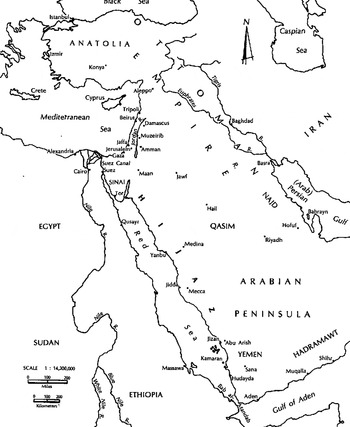
The Hijaz and Nearby Areas. William Ochsenwald, Religion, Society, and the State: The Hijaz Under Ottoman Rule, 1840–1908 (Columbus: Ohio State University Press, 1984), 11. Reproduced with the author's and copyright holder's permission.

In the aftermath of the devastating defeats of the Russo-Ottoman War of 1877–1878, most of the empire's European provinces were lost. Abdülhamid inherited an empire that was more Muslim than ever. This demographic shift has been cited as one of principal reasons for the sultan's promotion of supranational Islamism as an alternative to the secular ideology of the Tanzimat. Another outcome of the empire's changing demography was the increased value placed on bringing the empire's Arab frontier provinces under more direct control in order to tap into their neglected manpower and economic potential.Footnote 20
Ussama Makdisi observes, “In an age of Western-dominated modernity, every nation creates its own Orient. The nineteenth-century Ottoman Empire was no exception.” As he explains, articulating Ottoman modernity was a delicate operation that required the Turkish core of the empire to prove that its state, military, and technological advancement, and its level of civilizational attainment, were equivalent to Europe, while still maintaining its sovereignty and cultural distinctiveness as a Muslim empire. It also necessitated a parallel recalibration of the relationship between the Turkish center and its subject peoples, most notably the empire's Arab provinces. Beginning in the Tanzimat period, Ottoman reformers had identified these subjects as “potential” citizens, yet they also came to see them “as backward and as not-yet-Ottoman, as hindrances as well as objects of imperial reform.”Footnote 21 While the state worked to consolidate and homogenize its core territories in Anatolia and Eastern Thrace, its Arab provinces were increasingly looked upon as a colonial space characterized by “nomadism and savagery.” Thus, as Selim Deringil observes, at some point “in the nineteenth century the Ottoman elite adopted the mindset of their enemies, arch-imperialists, and came to conceive of its peripheries as a colonial setting.” Within its remaining frontier territories the Ottoman state began to adopt its own “civilizing motif” and to imitate and borrow a variety of practices from European colonial empires.Footnote 22 As Tahsin Pașa, head of Abdülhamid's royal secretariat from 1894 to 1908, confirms in his memoirs, this new posture toward “far away” provinces was understood as something akin to a “colonial policy” (müstemleke siyaseti).Footnote 23
In part, this was a critique of the failed one-size-fits-all approaches of Tanzimat centralization. Hamidian-era administrators claimed that the “customs and dispositions” of the local inhabitants in provinces like the Hijaz, Trablusgarb (Libya), Yemen, and parts of Iraq rendered them unfit for full incorporation into the imperial system imagined by the universalizing ideology of the Tanzimat. The lack of censuses, cadastral surveys, land registration, conscription, and the nizamiye court system indicated that local inhabitants remained outside the realm of civilized Ottoman subjects. In response, the state sought to articulate new forms of provincial governance designed to narrow this presumed civilizational gulf. At the same time, the Hamidian state's efforts to extend its administrative reach farther into frontier provinces than ever before required a greater reliance on local tribal and religious leaders and the management of various degrees of autonomy. Ottoman readings of indirect rule in places like British Aden, Sudan, and India also inspired new debates on how best to “repackage and rehabilitate” older pre-Tanzimat Ottoman practices, which had tolerated various measures of decentralization and local autonomy.Footnote 24
While the Hijaz's role as a symbol of Hamidian Pan-Islamic legitimacy has been well documented, less attention has been paid to its role as a laboratory for the state's shifting approaches toward its tribal frontiers. Early in his reign Abdülhamid flirted with the idea of wresting power from the Sharif of Mecca in order to subordinate the semi-autonomous Amirate of Mecca to the will of the Ottoman center. Ultimately, Abdülhamid reasoned that a direct attempt to subdue the Amirate of Mecca and his Bedouin levies would prove expensive, foment unrest, and increase the potential for European intervention in the Hijaz.Footnote 25 Nevertheless, the career and ideas of the man to whom this mission was entrusted are illuminating.
In 1882, Osman Nuri Paşa received the governorship of the Hijaz and achieved the empire's highest military rank. Over the next decade he served as governor of Yemen, Aleppo, and then again in the Hijaz, garnering a reputation as an expert on the empire's Arab tribal frontiers.Footnote 26 Ultimately his differences with the Sharif of Mecca led to his removal as governor of the Hijaz in 1886, but his dismissal was not a repudiation of his ambitious policies. Over the next two decades, Abdülhamid embraced many of Osman Nuri's proposals, particularly his vision of tribal education and his strong emphasis on technological and infrastructural development.
In 1885, Osman Nuri wrote a report outlining his plans for provincial reforms in the Hijaz and Yemen.Footnote 27 In it he attempted to adapt Istanbul's vision of modernity and civilization to better suit the Bedouin profile of these provinces. His priorities included political and administrative divisions, taxation and revenue, educational and legal reform, the construction of government buildings and infrastructure, and transportation and communications. He argues that without this slate of reforms there will be “no way the state can bring any executive power to bear” on the Bedouin, and “they will continue to live according to their savage old customs which are against Sharia and modern laws.” He lamented that the state's failure to provide appropriate access to “imperial” education had left the population “like so many lifeless corpses of no benefit to humanity.”Footnote 28 Eventually, his ideas on Bedouin education came to have empire-wide implications. In 1892, he would write the curriculum for the Aşiret Mektebi (or Tribal School).Footnote 29 Rather than forced sedentarization programs, the Tribal School aimed to foster allegiance to the state by training the sons of tribal notables for government service.
Osman Nuri observed that tribal populations hindered Istanbul's ability to project force along its Arab frontiers, and he conceded that Muslims from Arab, Kurdish, and Albanian tribal areas all remained in “a state of nomadism and savagery” (hal-i bedeviyet ve vahşet). They represented a massive, untapped reservoir of military recruits, agricultural and economic productivity, and tax revenue. This problem was not limited to Bedouins; rather, it was the autonomous status of both the urban and tribal populations of these regions that most hampered provincial administration. In the Hijaz, Yemen, and Trablusgarb, the Bedouin question was compounded because even the settled Muslim populations were “exempt” (muaf) from military service. This was exacerbated by the burden of the “blood tax” (kan vergisi) shouldered by Anatolian Turks, or the “fundamental element” (unsur-ı asli). Difficulties of forcing soldiers to go to these provinces were also tied to environmental factors, since their high mortality there came from not only local resistance but also disease, poor water and sanitation, and the extreme climate. Owing to these dangers, Osman Nuri proposed that this trio of “hot provinces” (vilayat-ı harre) be considered as a special administrative unit earmarked for reforms that would reduce the burden placed on soldiers from the more temperate climes of the Balkans and Anatolia.Footnote 30
On one hand, Osman Nuri succinctly expressed Istanbul's desire to assert modern notions of territorial power in previously autonomous frontier regions. Timothy Mitchell has noted that Bedouin territories constituted a “geographical margin, partly within and partly beyond government control.” By the standards of modern governmentality these “forms of marginal political life, where allegiance to the central authority was graduated or variable,” demanded elimination and replacement by “more uniform and rigorous methods of control.”Footnote 31
On the other hand, Osman Nuri reframes the assumed civilizational gap between center and periphery in environmental terms.Footnote 32 Just as colonial expertise represented tropical environments as “strange and defective” in comparison with Western Europe's supposedly “normal” climates, Osman Nuri's reporting demonstrates how Ottoman modernization discourse resorted to similar forms of “environmental orientalism” when describing the Arab periphery. Bedouin disorder was seen as a defining element of the frontier's “foreign nature” and the underlying impediment to the eventual Ottomanization of these “hot provinces.”Footnote 33 Given this slippage between human and natural objects of development, Ottoman efforts to address the region's water supply, aridity, and disease profile were often indistinguishable from those to tame “unruly” autonomous populations both Bedouin and urban.Footnote 34
If Osman Nuri diagnosed Bedouin disorder as the Hijaz's primary ailment, infrastructural development was his panacea. His prescriptions display an almost magical faith in the construction of government buildings, military instillations, courts, schools, and other desired infrastructure as a means to “reflect the glory of the state” and bind the local population to it.Footnote 35 Not surprisingly, he was an early advocate for the construction of telegraph (1899–1902) and rail lines (1900–1908) in the Hijaz.Footnote 36 Conventionally, the story of Ottoman technical expertise in the Hijaz has been narrated through the construction of the Hijaz Railway as the “physical embodiment” of Abdülhamid's Pan-Islamic ideology.Footnote 37 However, Pan-Islam is an inadequate container for the broader secular aims of state-building efforts that were being applied across the empire's Arab frontiers at the same time. These projects were meant to ameliorate the negative effects of autonomy and accelerate the frontier's integration with the Ottoman center. Particularly in light of the British occupation of Egypt in 1882 and the scramble for Africa, both overland telegraph and rail links were seen as essential to insulate the Hijaz and Yemen from British naval dominance.Footnote 38 Telegraph and rail construction played a similar role in strategies to more effectively integrate Eastern Anatolia and Iraq and stave off British expansion via the Persian Gulf.Footnote 39
This infrastructural turn served multiple audiences. Mostafa Minawi argues that Istanbul was reacting to new developments in international law following the 1884–1885 Berlin Conference, which stipulated that international claims to territory had to demonstrate “effective occupation.” These conditions were supposed to define the methods by which European powers could claim “spheres of influence” within Africa. From that point forward, mere “discovery” or the process of surveying the land by a citizen or subject of an empire would not provide sufficient grounds to claim control. Internalizing this concept, the construction of large-scale infrastructure projects in provinces like Libya and later Hijaz was meant to serve as physical proof of Ottoman sovereignty and compensate for the state's inability to demonstrate fuller territorial control over the autonomous Bedouin spaces these projects traversed. Then again, the imposition of poles, telegraph offices, low-voltage lines, train tracks, and stations could be also be “read” by local inhabitants as symbolic markers of the “colonization” of “tribal domains that had been outside the purview of the Ottoman state.”Footnote 40
As these projects attest, Osman Nuri's recommendations proved startlingly clairvoyant. Indeed, they were signature statements of Hamidian technopolitical approaches to the tribal frontier. Yet the governor's wide-ranging report remained curiously silent on one subject: water infrastructure. One explanation for this is that Osman Nuri's reconstruction of the Hijaz's water systems was already well underway.
REPAIRS NEEDED: ENVIRONMENTAL IMAGINARIES OF WAHHABISM AND WATER INFRASTRUCTURE
Diana K. Davis defines an “environmental imaginary” as “a constellation of ideas that groups of humans develop about a given landscape, usually local or regional, that commonly includes assessments about that environment as well as how it came to be in its current state.” Environmental imaginaries often assess blame and reveal “who wins and who loses when that imaginary is operationalized.”Footnote 41 Thus, while European observers may have seen Mecca through the prism of their own hygienic concerns, from an Ottoman perspective the decline of the Hijaz's urban water systems was imbedded in a different environmental imaginary that featured Istanbul's quintessential tribal bête noire, the Wahhabis.
In June 1880, Eyüp Sabri Paşa, an Ottoman naval officer and avid historian of the Hijaz, Wahhabism, and the wider Arabian Peninsula, wrote a series of articles in the semi-official newspaper Tercüman-ı Hakikat.Footnote 42 In both these articles and in his magnum opus, Mirat ül-Haremeyn (1883–1888), he alerts readers to the plight of Mecca's ‘Ayn Zubayda water system and promotes the recent efforts of a partnership between Hijazi notables and the Ottoman administration, known as the ‘Ayn Zubayda Commission, to restore the aqueducts.Footnote 43
For Eyüp Sabri, this was more than a public-works project; it symbolized the exorcism of the ghosts of the Wahhabi occupation.Footnote 44 In the wake of that occupation and the wider crises set in motion by Mehmed Ali's empire building at the expense of the Ottoman center during the 1830s, Ottoman control would not be restored until 1841, when Mehmed Ali's Egyptian troops were forced to withdraw from the Hijaz and Syria in accordance with the terms of the 1840 Convention of London. During these occupations the region's water systems were badly damaged and their upkeep neglected. The damage sustained formed the backdrop to a decades-long struggle to repair and expand the province's water supplies to meet the increasing demands posed by the greater accessibility of the steamship-era hajj. In Eyüp Sabri's narration of the environmental and infrastructural history of the Hijaz, the Wahhabi occupation of Mecca and Medina represents the beginning of an era of overlapping social, technical, and natural collapse, providing an alternative reading of the uneven restoration of the Ottoman Hijaz. This construction of the past provides a blameworthy old regime against which he favorably compares the “civilizing” zeal of the Hamidian-era reassertion of Ottoman power in the Hijaz in the late 1870s and early 1880s. From this perspective, interest in the region's water infrastructure could not be understood solely as a response to water scarcity; it was also a measure of the provincial administration's increased capacity.
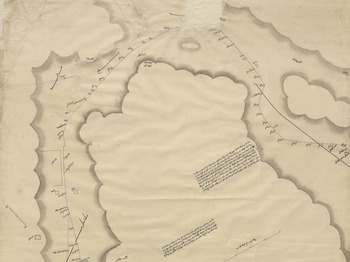
Ottoman Map of the ‘Ayn Zubayda aqueduct system. BOA, HRT, 541 (29 Z 1264/26 November 1848). Reproduced by permission of T. C. Devlet Arșivleri Genel Müdürlüğü.

The waterworks were named after Zubayda, wife of the Abbasid Caliph Harun al-Rashid, whose philanthropy funded the engineering that brought the waters of Wadi Nu‘man and Wadi Hunayn to Mecca so as to provide a reliable source of potable water for both the local population and pilgrims. After the Hijaz came under Ottoman control in the sixteenth century, the system was overhauled and expanded by Sultan Süleyman I's daughter Mihrimah Sultan.Footnote 45 After recounting this overhaul, Eyüp Sabri provides a detailed summary of the Ottoman state's subsequent efforts to maintain the aging watercourses and repair damages sustained during the occasional floods experienced in Mecca and its environs. He explains that the last major repairs to the system before the Wahhabi occupation were undertaken in the late 1760s and the next maintenance did not take place for nearly a half-century, until Mehmed Ali had expelled the Wahhabis from the Hijaz.Footnote 46 Due partly to this prolonged neglect and partly to the “destruction” (hedm ü harab) directly attributable to the Wahhabi occupation, the aqueduct system was severely damaged and Mecca began to suffer from “water scarcity” (su müzayakası).Footnote 47 Around 1820, Sultan Mahmud II ordered Mehmed Ali to repair the crippled waterworks, but due to the extent of the damage and the considerable cost of the renovations, “the repairs were [only] of a partial sort.”Footnote 48
Most sources dwell on the Wahhabi vandalism of tombs and sacred spaces, and little attention has been paid to their exploitation of the Hijaz's water infrastructure as a tool to terrorize the local population into submission during the 1805 siege of Medina. According to Eyüp Sabri, as soon as the Syrian pilgrimage caravan and its accompanying soldiers had departed and distanced themselves from Medina, the Wahhabis laid siege to the city's fortifications and sealed off all access in and out. The final blow was their destruction of the ‘Ayn Zarqa watercourse, which subjected the city's people to calamitous famine and drought.Footnote 49 Again, the Ottoman center could do little more than promise to send assistance via Mehmed Ali.Footnote 50
For the period between 1820 and 1878, Eyüp Sabri highlights only one major initiative to improve Mecca's water supply. In 1847, Elmas Agha, an Indian philanthropist, oversaw a project to connect the waters of ‘Ayn Zafran to the ‘Ayn Zubayda system to increase its output. Despite this addition, the city's water supply was gradually leaking away due to the combination of long periods during which the aqueducts were left without cleaning or repair and Mecca's vulnerability to “frequent flooding” (sık sık zuhur eden seylab). Although Mecca receives only around 4 inches of rainfall annually, torrential downbursts are not uncommon, and due to the region's aridity there is little soil to absorb the runoff. Local wells were inadequate substitutes. Thus, seasonal and hajj-related shortages became a regular occurrence that inspired “fear and dread” (havf ve dehşet) among the locals that “the waters of ‘Ayn Zubayda would completely run dry.”Footnote 51 Although Eyüp Sabri does not provide specific examples of severe floods or assign them the same agency as Wahhabi predations, he does acknowledge that their cumulative effects exacerbated the blockages and leaks incurred during the Wahhabi occupation.Footnote 52
Flooding was also a trigger for waterborne epidemics. John F. Keane in his 1877–1878 pilgrimage narrative told of one flood that struck Mecca just after the conclusion of the hajj. The whole of the Haram was “turned into a lake, the water lying about three feet deep in the western arcades, six feet around the Ka‘ba.” The next morning, “in every place where the water had been it left a layer of about six inches of tough springy earth cutting like clay—in many places it was much thicker: round the Ka‘ba it was eighteen inches deep.” Keane said that the pollution of the water supply was the most dangerous aspect of the flood. “For many days after the flood the water in all the wells was brown and muddy, and if left standing all night would not be more than half settled in the morning.” As a result of the contamination, “cholera, small pox, and typhus epidemics broke out and raged wildly for about three weeks.”Footnote 53
By the late 1870s it was clear that dramatic steps would be needed to ensure Mecca's future water security. In 1878 the Indian shaykh ‘Abd al-Rahman Siraj, the Hanafi Mufti of Mecca at the time, took on the enormous task of restoring ‘Ayn Zubayda. For two months he was able to raise a work force of two hundred to three hundred men per day composed of Indian pilgrims and Bedouins. Following the positive results of Siraj's initial efforts, later that year Abdülhamid issued a decree calling for the formation of a “repair commission” (tamirat komisyonu) to raise money and oversee a thorough overhaul of the aqueducts.Footnote 54 Initially headed by ‘Abd al-Rahman Siraj, the commission was composed of local notables from Mecca and Jidda, ulema, Ottoman officials, and local Indian notables.Footnote 55 Naturally, members of the commission and other local elites were enthusiastic contributors to the effort, but as the composition of the commission itself suggests, the largest donations came from Indian princely states.Footnote 56 Local notables played an important role in launching the commission, but given the technical and engineering challenges involved, as the project progressed Osman Nuri Paşa took over the direction of the construction.Footnote 57
Beginning from ‘Ayn Zubayda's source at Wadi Nu‘man, approximately 30 kilometers northeast of Mecca, more than three thousand workers labored for four years to refurbish the ancient waterworks. The restoration greatly enhanced Mecca's water output, yielding 5,000 kıyye (approximately 6,140 liters) per minute, and this brought a dramatic drop in the “exorbitant price” (fahiş fiat) for freshwater during hajj season. Taking advantage of the restored flow, nine reserve cisterns and several other storage depots were built, new ablution facilities were established around the perimeter of the Haram, and new fountains were built across all quarters of the city. The improved water supply also ensured that the city's hospital, soup kitchens, pharmacy, government offices, military barracks, printing press, laundry, and bathhouses all had taps installed.Footnote 58
THE MILIEU OF TANKS AND TOILETS
Despite these improvements, the ‘Ayn Zubayda system remained extremely vulnerable to microbial contamination. Although repairs were also made to smaller branch pipelines and basins serving Arafat and Mina, the aqueduct was not a closed system. In a number of places the Bedouins had opened sections of the main pipeline in order to draw water. The main aqueduct also had to pass through the stations of the pilgrimage at Arafat and then Mina before arriving in Mecca.Footnote 59
Even before the revolution in bacteriology yielded the secrets of cholera's etiology, sanitarian questions of miasmas and filth associated with overcrowding and human waste had placed the non-urban portions of the hajj circuit in Arafat and Mina under suspicion. Although the 1880s was a decade of flux between older miasmic understandings of human waste and more precise bacteriological analyses of contagion, Ottoman and European colonial officials had already begun to map cholera's movements through Mecca's water supply.Footnote 60
In 1885, Osman Nuri ordered a thorough cleaning of the open tanks and basins at Arafat and Mina, which had been implicated as potential cholera hotspots.Footnote 61 At Arafat, he ordered a military cordon to protect the basins and open sections of the watercourse from being fouled by pilgrims bathing or washing clothes in the water. Still, as Mehmed Şakir notes, preventing pilgrims from bathing in the basins remained a perennial struggle. He cites Bedouins, Indians, and Yemenis as frequent offenders.Footnote 62
The need to police this behavior becomes clearer in light of the inadequate latrines in both locations. In 1878 the government of India appointed an Indian Muslim physician, Dr. Abdur Razzack, to surreptitiously make the hajj and report on the sanitary conditions of the Hijaz. He was stunned by the omnipresence of human waste in Arafat. “Except taking care of the drinking water, there was no other arrangement for the pilgrims. Every one had a temporary privy near his tent, while the poorer people, having nothing of the sort, did not hesitate to answer the calls of nature wherever they found it convenient.” His depiction of the situation in Mina was even gorier. The latrines there consisted of shabbily stacked rock partitions enclosing sand pits “with no arrangement for the water to run off, every particle thereof being supposed to be absorbed by the sand.” In short order the pits were saturated until the latrines were abandoned and “then the space around the body of the building itself was made use of, not to speak of all the nooks and corners formed by the tents and litters in every part of the field.” Owing to this, “Inside the town it was the same thing again; excepting the main street, all along the walls of the houses in every lane and corner there was human excrement lying and covering the whole place, which made it almost impossible to walk through.” The danger posed by Mina's latrines was compounded by their proximity to the ritual slaughter of animals performed there in accordance with the hajj.Footnote 63
Osman Nuri ordered that the water tanks at Mina be filled no more than a week prior to the hajj.Footnote 64 To bring in freshwater he had a steam-powered pump installed about 150 meters above the main water ducts.Footnote 65 Despite his efforts to provide clean water and guard against its contamination, ‘Ayn Zubayda water was not the only source in circulation. Stagnant rainwater was also sold. As Mehmed Şakir explains, before the repair of ‘Ayn Zubayda a highly profitable system of water profiteering had taken root across the Hijaz, but especially in Mina and Jidda. Privately owned tanks and cisterns (sahrınçlar) were used to collect rainwater that was distributed to water carriers to sell to pilgrims at inflated prices, and tanks were ubiquitous in Mina homes.Footnote 66 Water was often stored in tanks for six months or a year before hajj season. Tanks placed beneath the ground level were especially dangerous. While some were housed on rooftops, others were vulnerable to organic debris from flash flooding and runoff carrying excrement and refuse from the streets.Footnote 67 On top of all this, the water was served from unhygienic water-skins (kırbalar) the town's water carriers used to transport it. Ottoman officials lamented that the product Mina's water carriers provided was invariably “fetid” (müteaffin) and “microbe-filled” (mikroplu).Footnote 68
Ottoman officials came to realize that their attempts to manage and sustain human life in the face of water scarcity and cholera required new and more precise understandings of water as a complex milieu of social and biological pathologies.Footnote 69 Even after the supposed victory of bacteriological science by the 1890s, older sanitarian efforts to alter the “pathogenic terrain” of cholera continued to play their part.Footnote 70 Mecca's water supply presented a tangled web of hybrid processes, blurring any assumed boundaries between technical, natural, and human elements. Efforts to provide potable water, therefore, were not merely public works—they were radical restructurings of the existing social and economic organization of the hajj, which local elites met with an equally determined campaign of resistance.
“TYRANTS IN FEAR OF CIVILIZATION”: PROFITEERING AND PIPELINE SABOTAGE IN JIDDA
Abdur Razzack's account also paints a grim picture of the almost total dependence on rainwater in Jidda. In 1853, a prominent Indian merchant and banker named Faraj Yusr had raised funds and successfully rehabilitated a Mamluk-era well and canal that brought water from a spring 20 kilometers east of town. By the 1880s it had fallen into disrepair, leaving Jidda with no reliable source of running water. The resulting dependency on rainwater had concentrated enormous power in the hands of the city's tank owners and spawned an ugly system of water profiteering. Abdur Razzack explained how Jidda's people suffered at the “caprice and whims of those who are the owners of the sehreejes or tanks for collecting rainwater.” Large stone tanks dotted the landscape just outside the city's walls, and their “proprietors” were among the “first men in the place.” Each tank owner was allotted “a certain number of tanks and a plot around a particular set is hollowed out, and the earth that is thus dug up is formed into banks all around, so that the rain that falls over one hollow does not run off into another man's tanks, but flows in those around which the embankment is formed.” The water was sold via slaves or else the tanks were leased to water carriers. During times of drought, Abdur Razzack found, “the owners of these tanks make immense profits, and they can whenever they choose cause the townsmen the greatest sufferings.”Footnote 71
Mehmed Şakir recounts how Abdur Razzack's report greatly embarrassed the Ottoman government. Following its release in 1879, the British delegate on the Ottoman Board of Health, Dr. Dickson, drew on it in his scathing indictment of Jidda's water supply in the Gazette Medical D'Orient (Ceride-i Tıbbıye-i Şarkiye). A result was that during the early 1880s great pains were taken to “silence foreigners' objections” by preventing “the sale of the harmful and infested waters of the local profiteers' tanks and basins to the pilgrims and local residents at high prices.”Footnote 72
On the heels of the restoration of Mecca's water supply, Osman Nuri set Jidda's water supply as the ‘Ayn Zubayda Commission's next project. He proposed bringing water from a well at ‘Ayn Waziriyya, about 10 kilometers away.Footnote 73 Although less difficult than Mecca's restoration, Jidda's waterworks still required a workforce of over three thousand and took roughly three and a half years to finish.Footnote 74 On its completion in 1888, Jidda was graced by a new ornamental fountain, an ablutions station, a water depot, and a distribution reservoir and it appeared that the city had been rescued from the clutches of its water profiteers.Footnote 75 Yet just two years later, Mehmed Şakir recalled, the fountain's output was greatly diminished and it was becoming increasingly difficult to fill the water depot and distribution reservoirs. He makes clear that the spring's rapid decline was no engineering malfunction; local tank owners, prevented from selling rainwater, had hatched a plot to “cancel” the benefits of Jidda's new water supply by purposefully “clogging the water pipes.”Footnote 76
Mehmed Şakir was not alone in charging sabotage. Writing in 1907, the British representative to the Ottoman Board of Health, Dr. Frank G. Clemow, observed that the drought-stricken Jidda of 1906 was again limited to tank water and the brackish water from wells dug just outside the city walls. Clemow pointed out that there were four springs nearby, but only one was serviceable and its water had to be transported by camel or donkey. The pipes leading from the other three, including ‘Ayn Waziriyya, were constantly sabotaged. As Clemow suspected, the city's influential tank owners had directed Bedouin agents in a campaign to cripple the pipelines and regain their monopoly.Footnote 77
El-Hac Hüseyin Vassaf's narrative of his 1905–1906 pilgrimage paints a vivid picture of the Turkish center's frustration with the locals' stubborn refusal to accept the gifts of the civilizing mission started during Osman Nuri Paşa's governorship:
The now deceased Osman Paşa brought water here from a far-away source. He established a thriving fountain providing sweet drinking water for the pilgrims and the locals free of charge. However, the Arab notables who own the tanks were financially harmed by the establishment of the waterworks, and are suspected of damaging the watercourses. They extort heavy fees from the people and the pilgrims. They are ignorant and oppressive men. For personal gain they prefer to harm the general welfare. They are tyrants in fear of civilization and public health. As a result of the water here, there is unbearable drought. Due to the worm-infested and microbe-filled water and the brackish water of the wells, diseases and infirmities, especially cholera and diarrhea, are endless.Footnote 78
From the perspective of the sweeping visions of civilization and authoritarian modernism guiding both Europe's colonial powers and the Ottoman center, Osman Nuri was a hero who had struggled to rationalize both nature and human activity in the Hijaz. In the end, though, local resistance would recast the future of Ottoman and Saudi hydropolitics.
DRINKING THE SEA: THE OTTOMAN TURN TO DESALINATION
By the early 1890s the sabotage of Jidda's pipelines once again reduced the city to dependence on rainwater. The magnitude of this setback became painfully clear as the decade emerged as one of escalating drought in both Jidda and Yanbu‘.Footnote 79 Recognizing both the drought's severity and their inability to protect their freshwater pipelines from tampering, by 1894–1895 Ottoman officials were exploring the feasibility of importing European equipment in order to distill sea water.Footnote 80 Although local authorities had identified a source of spring water located six hours' distance from Yanbu‘, the severity of the drought rendered long-term planning obsolete. Without rain, it was feared that the town was headed for disaster during the upcoming hajj season. The Hijaz vilayet requested that the Naval Ministry import two machines capable of producing freshwater from seawater (denizden tatlı su yapmak üzere iki makina). In the meantime, they pleaded that a steamship like those located at Suez, capable of producing desalinated freshwater (su yüklü bir vapur), be sent to Yanbu‘ as soon as possible. As an additional precaution, all hajj traffic was prohibited from landing in Yanbu‘ and rerouted to Jidda.Footnote 81
Throughout the 1890s and 1900s emergency operations were the new normal. As the situation worsened, pilgrims arriving in Jidda were transferred to the nearby Ebu Saad quarantine station so as to ease the strain on the city's resources. A tugboat equipped with a distillation machine capable of producing five tons of drinking water per day was ordered from Geneva. This vessel, aptly named the Zülal (meaning “pleasant to drink”), became the coastal towns' emergency reserve. In 1899 this floating desalination unit provided relief to pilgrims arriving in Yanbu‘ from Medina. A 50-ton iron container was shipped in to be filled with potable water produced by the Zülal. Concerned that even this would not stave off a catastrophe, each of the İdare-i Mahsusa steamship service's three departures between Jidda and Suez were ordered to bring drinking water to Yanbu‘ also.
In 1900, a twenty-four-hour rain burst half-filled the town's tanks and rescued Jidda from the brink of disaster. However, during the protracted crises in Jidda and Yanbu‘ the European consuls had grown increasingly concerned for the safety of their colonial subjects and they demanded a more permanent solution. In light of the tremendous improvements brought by the installation of a water filtration machine (taktir makinası) at the Kamaran quarantine station near the mouth of the Red Sea, it was decided that a similar machine could solve the chronic shortages facing the Hijaz's port cities. The cash-strapped Ottomans were unable to finance the 9,000 lira cost of the two filtration machines the Hijaz vilayet requested. In 1900 the Grand Vizierate asked the Board of Health to loan the necessary funds, but was refused on the grounds that the money would be better spent on the quarantine system. The bureaucratic infighting in Istanbul continued until the Board finally agreed in 1907 to install filtration machines at Jidda and Yanbu‘.Footnote 82
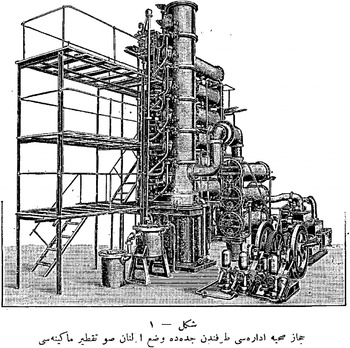
This first experiment with desalination produced mixed results. As Dr. Kasım İzzeddin, who became the director general of the Hijaz Sanitary Administration in 1910, explained, the original machine's water smelled disgusting and was barely palatable. In any event, its capacity was insufficient and it soon broke down. Jidda's water saga dragged on until the Hijaz Sanitary Administration in 1911 secured a Board of Health loan to purchase a new machine and the facilities to house it. Under İzzeddin's direction, a condenser (kondansa) machine capable of filtering 100 tons per day was purchased for the new plant. The plant's opening was the culmination of a decades-long struggle and occasion for celebration. İzzeddin recalled how the opening of the facility housing the condenser, filtration apparatus, ice machine, coal depot, and electric generators was marked by a joyful ceremony attended by the foreign consulates, local notables, and steamship agents. Rams were slaughtered and prayers were recited in the name of the Caliphate. They even “opened the doors of the factory to the public and all of the people around came to see the machines and were happy.”Footnote 83
Water distillation machine installed at Jidda in 1911. Reproduced from Kasım İzzeddin, Hicaz'da Teşkilat ve Islahat-ı Sıhhiye ve 1330 Senesi Hacc-ı Şerifi: Hicaz Sıhhiye İdaresi Senevi Rapor (İstanbul: Matbaa-ı Amire, 1911/1912).

Although the machines were undoubtedly a novelty, the plant itself was of equal import. Pipeline sabotage was overcome by relocating water production to a secure site or “technological zone” that could be policed in ways that Jidda's watercourses had not been. A technological zone is “a space within which differences between technical practices, procedures or forms have been reduced.” The plant represented a “border” distinguishing an outpost of internationally accepted technical expertise from the unwanted corruption of the local economy and society outside.Footnote 84
On this triumphant occasion, İzzeddin could not have known that Ottoman rule would be swept away just five years later, or that his plant was destined to become a pillar of a new technopolitical state.
BEFORE THE “PETROLIZATION” OF THE STATE: THE ROOTS OF SAUDI ENVIRONMENTALITY
One of the enduring myths featured in most studies of the Saudi state has been that the kingdom's rulers and its society “are essentially ‘traditional’ and that each has historically been and continues to be culturally and socially determined by a timeless Islam.” This historiography tends to “look uncritically at the importance of religion, and even adopt the official state narrative that the Saudis are the guardians of the faith and Saudi society is essentially ‘conservative’ as an article of faith.”Footnote 85 As Toby Jones concedes in his groundbreaking work, Desert Kingdom: How Oil and Water Forged Modern Saudi Arabia (2010), Wahhabi interpretations of Islam have played a key role in legitimizing the Saudi regime since its inception. However, he cautions, “religion was not the only instrument of power,” and often, “it was not even the most important” or effective tool. Saudi Arabia was forged through a series of bloody campaigns to conquer and unite the kingdom. Violence compelled submission, but resulted in “the establishment of a weak polity vulnerable to various pressures, including from a mutinous army, a contentious clergy, and legions of imperial subjects who bristled at Saudi rule.” This situation was made more precarious by unyielding demands of conformity to the state's strict Wahhabi vision of Islam and Najdi cultural traditions. While Wahhabism was a legitimizing force among some communities, for others it was an alienating symbol of subjugation. Despite official claims to the contrary, for most of the twentieth century state-sponsored Islam failed to foster a widespread sense of national unity.Footnote 86
Jones warned that by attributing too much power to the relationship between the House of Saud and Islam scholars have paid too little attention to the other ways in which Saudi leaders sought to consolidate power and build a modern state, most notably their efforts to control the Arabian Peninsula's natural resources. During the fledgling monarchy's first decades, water and then oil emerged as the twin pillars of the Saudi state's geological conquest of most of the peninsula. In this respect the state's evolution has been far from exceptional. Like other post-colonial and developing states of the twentieth century, Saudi officials “jumped aboard the development bandwagon.” Saudi rulers came to believe that mastery over science, technology, and the environment held the keys to the monarchy's power and legitimacy both at home and abroad. But Saudi Arabia did not become a petro-state overnight; it first became a “modern technostate, one in which science and expertise, scientific services, and technical capacity came to define the relationship between rulers and ruled.”Footnote 87 Gradually, this regime achieved the ability to deliberately deploy technology and scientific methods of management to establish its political authority and re-engineer society in its own image.Footnote 88 The result was the elaboration of a potent brand of “environmentality.”Footnote 89 This marriage of environmental management with biopolitical governmentality linked together “power over people, their bodies, their purses, their movements, and the ways they used space and land.”Footnote 90
By panning out to consider the broad contours of the evolution of environmentality and technopolitics in Saudi Arabia, Jones opens up new spaces for us to imagine stages of development before the “petrolization” of the state.Footnote 91 Jones argues that the early Saudi technostate was initially motivated by a desire to manage its water resources. And yet, there remains a tendency to underestimate the degree to which the kingdom's program of hydro-centralization preceded and aided its transformation into a wealthy petro-state. Despite the discovery of oil in 1933, oil revenues did not begin to radically alter the Saudi state's capacity for development and authoritarian control until after World War II.Footnote 92 The teleological projection of the postwar or even post-1970s image of Saudi Arabia back onto its early decades elides several critical steps in the state's consolidation. Such distortions have made it difficult to recognize the striking similarities to the technopolitical agenda of infrastructural and sanitary development pursued by the late Ottoman state in the Arabian Peninsula.
During the kingdom's first decades, its main revenue stream continued to come from taxes generated by the hajj.Footnote 93 At this stage, the young Saudi state wisely built upon the Hijaz's existing urban hydraulic infrastructure and human expertise in order to build a base of social support and prove its capacity as custodian of the hajj. Jones contends that this was partly achieved by coopting Mecca's guild of water carriers, a force that the Ottoman state had never managed to tame. The Saudis charged this group with collecting the head tax on pilgrims. By securing their cooperation, the Saudis attached themselves to the heart of the pilgrimage service industry, which provided the means to discipline and control the tank operators who dominated water collection and storage.Footnote 94 Despite the importance that Jones ascribes to the water carriers, he says nothing about how this group acquired such significance and little about how these arrangements related to the Hijaz's longer history of water and public health crises.
In addition to the hajj's central position in the state's economic priorities, safeguarding the Hijaz's water supply was an ongoing, international challenge to Saudi sovereignty and legitimacy. Although the Ottoman Board of Health had passed away, international regulation of the hajj's public health was merely reconstituted. In 1926 a new international sanitary convention was drafted in Paris and an office was established there to coordinate control over Mecca with the Egyptian Quarantine Board. This arrangement remained in force until the World Health Organization's creation in 1948. Though the Saudis gained political and religious authority over the hajj in 1926, they would not achieve full control over the hajj's public health until 1957.Footnote 95
For Jones's purposes, Mecca's water supply is a footnote requiring only a quick gloss. His work is understandably tilted toward the Najd and the oases of the oil-rich Eastern Province. While this geographical orientation is well suited to the history of oil, understanding the kingdom's “conquest of water” necessitates further exploration of the Hijaz's longer history of water insecurity. Jones is primarily concerned with how Saudi rulers used water and land tenure as tools to subdue potential rivals among the kingdom's unsettled populations. Like their Ottoman predecessors, Saudi rulers came to see nomadic populations as a constant threat, and they pursued a “sedentarization-cum-agricultural program” aimed at transforming Bedouin raiders into tax-paying farmers. Through this program, surveying and establishing control over water resources took on greater political significance, enabling the kingdom's rulers to maintain strategically placed military and agricultural outposts in order to subdue their loosely held conquests.Footnote 96 As important as the Bedouin component is, it should not overshadow the centrality of the pilgrimage's urban water supplies in Saudi calculations.
“SAVE US FROM THE CLAMOUR OF AL-KANDĀSA”: DRILLING FOR WATER … THEN OIL?
When the Saudis conquered the short-lived Hashemite Kingdom of the Hijaz in 1925, they inherited Jidda's chronic water problems. But by then the desalination facility completed by the Ottomans in 1911 and taken over by British engineers during World War I had become well known to locals as “al-Kandāsa” (the condenser).Footnote 97 It had become an integral part of Jidda's daily life. Indeed, it is only slight exaggeration to say that its installation was the first step in the dramatic transformation of Jidda from a town of thirty thousand at the turn of the century to today's metropolis of over three million.
Despite the importance of desalinated water, it still provided only a fraction of the city's daily needs and was subject to frequent service disruptions. As a result of the Allied embargo on coal imports during World War I and subsequent shortages during Saudi-Hashemite fighting in 1924–1925, the condenser plant's operators were forced to use firewood as a substitute, which caused irreparable damage to the original machinery, and by 1927 it had broken down. King ‘Abd al-‘Aziz ibn Sa‘ud recognized how effective the Ottoman desalination project had been, and in 1926 and 1928 he imported two new desalination machines to meet Jidda's rising water demands.Footnote 98
Distilled water remained both a luxury and source of hardship for many of the city's inhabitants. In 1933, the cost of desalinated water was estimated at 2.25 Saudi piasters for a four-gallon kerosene tin.Footnote 99 This meant that condenser water was generally used for cooking, drinking, and making tea. Washing, bathing, and other domestic tasks still required water from the cisterns and reservoirs.Footnote 100 As Muhammad Said Otaili's satirical poem suggests, even this arrangement was too expensive for most residents:
Oh men of thought, reason and understanding
Save us from the clamour of al-Kandāsa
We get trouble for a cup of water
If you were thirsty as we had been
You would have cried out with vehemence and zeal
Have mercy on the poor as he is weak
Poverty has ruined his mind and senses
He buys two water tins for one Rial
After having sold his mats and household effects
Oh, the man in charge may say unabashed
The water is finished, may God break his head….Footnote 101
Given the cost and inadequate supply of condenser water, even during al-Kandāsa's inter-war heyday many of the city's poor still relied on other, questionable water sources. Rainwater tanks, which carried the greatest chance of illness, remained a substantial part of the city's hydraulic economy. Even at mid-century it was normal to purchase “small jugs” of tank water “full of worms and the remains of flood” debris and “mud.” As a result, Jiddawis suffered disproportionately from chronic illnesses including malaria, gallstones, kidney disease, enteritis, and dysentery. Despite their obvious risks, most residents continued to turn to these sources before drinking well water. Although numerous wells were situated within the city's environs, their output was brackish and barely palatable due to their proximity to the sea. This lesser-grade saline water was cheaper and used for street cleaning and gardening, but under extreme duress many Jiddawis were forced to consume it.Footnote 102
Saudi leaders were desperate to rescue Jidda from its dependency on condenser and tank water. The king was wary of Britain's imperial designs and hoped to secure American development assistance instead. In 1930, he invited to Jidda Charles R. Crane, a New York industrialist famous for his role in the King-Crane Commission appointed by Woodrow Wilson in 1919 to plan for the Middle East's post-Ottoman future. The king requested Crane's “assistance in development of sorely needed water supplies for his country, especially Hijaz.”Footnote 103 Several years earlier Crane had enlisted his chief geologist and engineer Karl Twitchell to work on a similar project for Imam Yahya in Yemen, and following his visit to Jidda Crane cabled Twitchell in Yemen and sent him to Saudi Arabia.Footnote 104
Twitchell recalls in his memoir that it quickly became clear that the king's “principal desire was to find ample water supplies, especially flowing artesian wells in the Hijaz and Najd.”Footnote 105 In 1911 the Ottomans had sent a drilling apparatus capable of boring to a depth of 610 meters with the goal of establishing artesian wells, but to no avail.Footnote 106 In April 1931 Twitchell undertook a vast survey of the Hijaz's water resources that covered some 1,500 miles (roughly 2,400 kilometers), but it found “no geological evidence to justify the hope for flowing artesian wells.”Footnote 107 The Saudis were disappointed but undaunted. Recognizing the precariousness of relying on the pilgrimage as their principle revenue stream, they asked Twitchell to explore “alternative possible sources of revenue.” Following Twitchell's suggestion that there might be commercial quantities of minerals and oil, ‘Abd al-‘Aziz authorized him to secure American capital for exploration.Footnote 108
This did not mean that oil instantly became the Saudis' top priority. Despite Twitchell's discouraging reports, the Saudis still believed water was key to their consolidation of the peninsula. Twitchell continued to work on water questions even as prospects of oil and mineral wealth entered the picture. Jidda being the kingdom's most immediate problem, he set out to resurrect the Ottoman-era ‘Ayn Waziriyya pipeline and raise its output. With Crane's assistance, in late 1931 he imported and installed a 16 foot-diameter windmill, an auxiliary gas engine, and pumping equipment.Footnote 109 This revived the ‘Ayn Zubayda Commission's interest in Jidda's water supply, and under the direction of the Indian engineer Shaykh Muhammad Dehlavi the commission discovered a new spring to the southeast of the original one and connected it to the old Ottoman pipes. By August 1933, the renovated ‘Ayn Waziriyya system produced an average of 40 gallons per minute. By contrast, British estimates put al-Kandāsa's output at 8.5 gallons per minute. The British engineers running the desalination plant were hopeful that Twitchell's revitalization of the spring would greatly benefit the poor. Raising the specter of sabotage, however, they doubted that demand for desalinated seawater would decrease. “The better-to-do will still buy condenser water for drinking purposes,” they reasoned, “as ‘Ayn Waziriyya water though potable at present, is peculiarly vulnerable to persons of evil intent.”Footnote 110
The doubts expressed by the British legation were not unfounded given the city's history of water profiteering, but they also reveal their fears that the king's favor for Twitchell signaled an alternative to British influence and expertise in Saudi Arabia. Following Twitchell's survey of the Hijaz and the ‘Ayn Waziriyya project, in 1931 the king asked him to undertake a similar geological survey of al-Hasa and the Persian Gulf coast. It was in al-Hasa that Twitchell and his fellow geologists would encounter the oil-rich environment that would eventually ensure Saudi Arabia's global might. Twitchell recalled that ‘Abd al-‘Aziz worried that without a substantial infusion of foreign capital the dwindling numbers of pilgrims arriving during the Great Depression would derail all of his development plans.Footnote 111 In 1932, the anxious king asked Twitchell to find an American investor to begin oil exploration.Footnote 112 In May 1933 his efforts culminated in the signing of Saudi Arabia's oil concession agreement with the Standard Oil Company of California, which ultimately led to creation of the oil giant known as the Arabian American Oil Company (Aramco).Footnote 113 The concession granted exclusive rights to explore for and extract oil in al-Hasa in exchange for royalties in the event that commercial quantities were discovered. As a show of good faith the Standard Oil Company of California secured a loan of £33,000 gold sovereigns as an advance. What had ostensibly begun as a philanthropic project to alleviate the Hijaz's water insecurity wound up being the midwife of arguably the most important commercial partnership in the histories of both the United States and Saudi Arabia. In 1938 the first commercially viable oil was discovered at Jabal Dhahran and within decades Aramco would discover the world's largest oil field at Ghawar, which freed Saudi Arabia from dependency on pilgrimage revenues for the foreseeable future.Footnote 114
In the wake of the Aramco concession, Twitchell would once again return to Saudi Arabia at the head of a U.S. Agricultural Mission in 1942. The mission produced the first systematic survey of the kingdom's water, geological, and agricultural resources. It also drew up recommendations to bring a new source of freshwater from Wadi Fatima sufficient to relieve Jidda's chronic water troubles.Footnote 115 In 1947, the 40-mile ‘Aziziyya pipeline project was completed by the British firm Gellatly, Hankey and Co. with assistance from their local contractor, Muhammad bin Laden.Footnote 116 However, in the 1950s and 1960s rising population and demand rapidly depleted the aquifer's capacity. In 1958, additional capacity from Wadi Khulays was added, but this too was only a stopgap measure. As it turned out, even after the demise of the al-Kandāsa plant during World War II, the age of desalination was only just beginning.
CONCLUSION: NATURE OR THE NATURE OF THE STATE?
Having catalogued the Ottoman roots of the Saudi hydro-state, we are left to consider the divergent outcomes these two states produced. Was it drought and increased demand from pilgrims that produced water scarcity, or water profiteering and pipeline sabotage? Put slightly differently, was it nature itself, or did the nature of the state's approach to infrastructure and centralization produce resistance and exacerbate scarcity? While both states embarked on ambitious water projects, their capacity to instrumentalize that infrastructure differed considerably.
Ottoman hydraulic projects were hobbled and reshaped by local resistance. Although Ottoman administrators were unable to provide enough freshwater to eliminate the demand for rainwater, they remained in open conflict with the Hijaz's tank owners and water carriers. Not unlike their Bedouin counterparts, who frequently attacked the Hijaz's rail and telegraph lines, these urban elites waged their own campaign of sabotage against Ottoman water infrastructure. In a sense, all of these technologies represented “points of vulnerability” and provided the “infrastructure of political protest” for locals to resist Ottoman centralization.Footnote 117 Ultimately, the Ottomans proved incapable of governing the spaces that these projects traversed. While the state was able to execute ambitious technological feats, it could never fully leverage its expertise as a means to produce the intensity of territoriality or the thickness of biopolitical control over the population, Bedouin or urban, necessary to eliminate autonomous forms of frontier political life.
By contrast, Saudi rulers wisely co-opted and coexisted with the Hijaz's tank magnates and water carriers rather than hastily trying to eliminate them. The Saudis converted the Hijaz's existing water producers from potential opponents to agents of the state. In the longer term, the Saudis were able to use their access to foreign expertise (and later oil revenue) to monopolize the production of potable water. In this way, Saudi environmentality achieved a level of symbiotic mastery over natural resources, technical expertise, territory, and population that remained beyond the grasp of their Ottoman predecessors.
Despite these differences, we should not discount the degree to which the Saudi state benefited from decades of Ottoman infrastructural development and state building. For nearly a half-century now, Ottoman-era water projects and their tremendous impacts on the development of the early Saudi state have been obscured by the devastating success of the kingdom's environmental statecraft. In reality, remarkably little separated the hydraulic histories of the Ottoman and Saudi Hijaz until Saudi Arabia embarked on its path toward industrial-scale desalination in the 1970s.
With its vast oil reserves, the kingdom was eventually able to invest billions in massively expensive and energy-guzzling desalination (osmosis) technology. In 1970, Saudi Arabia built its first modern desalination plant in Jidda, designed by the U.S. Department of the Interior's Office of Saline Water and built by a subsidiary of the Coca-Cola Company. It was the first of more than thirty such plants operating in Saudi Arabia today.Footnote 118 As the kingdom plotted its embrace of large-scale desalination, it rapidly became clear that the project would assume gigantic proportions. Initially controlled by the Saline Water Conversion Department, it quickly outgrew the Ministry of Water and Agriculture. Three years later, in 1974, a royal decree created an independent government body, the Saline Water Conversion Corporation, armed with broad powers to exploit desalination technology on a scale that verges on science fiction.Footnote 119
Since the 1970s, the technical and social processes involved in securing and governing pipelines, oil refineries, and desalination facilities have come to closely mirror one another. In this way, the Ottoman construction of Jidda's first desalination plant foreshadowed one of the cornerstones of Saudi governance. The plant was a rudimentary model of the kind of technological zone identified by Timothy Mitchell, which became one of the keys to the Saudi and international systems' insulation of oil production and distribution from local political and labor opposition.Footnote 120 The turn to desalination made the extraction of potable water a technical process that only the state was capable of practicing, which effectively eliminated local participation in water production.
Ever since the turn to desalination, oil and water have become completely interdependent. Not only have oil revenues subsidized water for the kingdom's subjects; oil itself has become a necessary ingredient in water's production.Footnote 121 But water is no ordinary public handout produced by petro-state rentierism. Unlike the alchemy of turning oil into government revenue and private wealth, the production and consumption of desalinated water has created even more fundamental forms of material dependency. Through the magic of turning oil into water the Saudi state has arguably cast its most awe-inspiring and terrifying spell over its subjects.Footnote 122
The Saudi state's post-1970 move to total reliance on desalination marked the beginning of a new era from which there could be no turning back. The kingdom's embrace of this technology has essentially remade the entire country in Jidda's thirst-stricken image. As of 2010, Saudi desalination operations consumed a staggering 1.5 million barrels of oil per day, representing nearly 15 percent of the kingdom's daily oil production.Footnote 123 This resource-intensive solution is predicated on the conceit that oil production and revenues will be able to perpetually keep up with the unbridled development that they have enabled. Today, the Saline Water Conversion Corporation provides the majority of Mecca and the entire kingdom's water, while Jidda still teeters on the brink of environmental disaster, depending on desalinated water for more than 90 percent of its consumption.Footnote 124 In the end, the very assemblage of technical processes that saved the twentieth-century Hijaz from its chronic water insecurity may also have ensured its unsustainability in the twenty-first century. After all, technopolitics is but a slight of hand, the arranging of human ideas and nature in such a way that human intellect appears to be controlling and organizing nature. Inevitably, though, the human elements are eventually overrun.Footnote 125