Substance use in adolescence is a serious public health problem. Adolescent alcohol and drug use are associated with academic problems, impaired driving, violent behaviors, and increased risk for unprotected sex and HIV transmission (National Institute on Drug Abuse, 2010; Windle et al., Reference Windle, Spear, Fuligni, Angold, Brown and Pine2008), and adolescent substance use is associated with greater cognitive and neural alterations than adult substance use in animal models (Crews, Braun, Hoplight, Switzer, & Knapp, Reference Crews, Braun, Hoplight, Switzer and Knapp2000; White, Ghia, Levin, & Swartzwelder, Reference White, Ghia, Levin and Swartzwelder2000). Further, substance use during adolescence (from early through late adolescence) predicts substance use disorders and antisocial activities in adulthood (Brook, Balka, Ning, & Brook, Reference Brook, Balka, Ning and Brook2007; Chassin, Pitts, & Prost, Reference Chassin, Pitts and Prost2001).
One group of youth who are particularly vulnerable to substance use and abuse are those who were prenatally exposed to drugs. These youth are exposed to chemical teratogens in utero, and likely other stressors both prenatally and postnatally. According to prenatal stress theory and theories of teratogen exposure, these prenatal insults impact the structure and function of developing systems in the child's body and brain, create alterations that persist throughout the child's lifetime, and could lead to risk for substance abuse (Mayes, Reference Mayes1999; Welberg & Seckl, Reference Welberg and Seckl2001). In addition, youth whose parents use drugs may model their parent's drug-taking behavior, consistent with social learning theories of child behavior (e.g., Bandura, Reference Bandura1969). Finally, youth with drug-using parents are likely exposed to suboptimal parenting, which is theorized to lead to substance use (e.g., Brook, Brook, Gordon, Whiteman, & Cohen, Reference Brook, Brook, Gordon, Whiteman and Cohen1990). Consistent with these theories, research on prenatally cocaine exposed (PCE) youth finds that PCE is linked to increased substance use rates in adolescence in animal model studies (Rocha, Mead, & Kosofksy, Reference Rocha, Mead and Kosofsky2002) and, recently, in human studies (Bennett, Bendersky, & Lewis, Reference Bennett, Bendersky and Lewis2007, for boys only; Delaney-Black et al., Reference Delaney-Black, Chiodo, Hannigan, Greenwald, Janisse and Patterson2011; Frank et al., Reference Frank, Rose-Jacobs, Crooks, Cabral, Gerteis and Hacker2011).
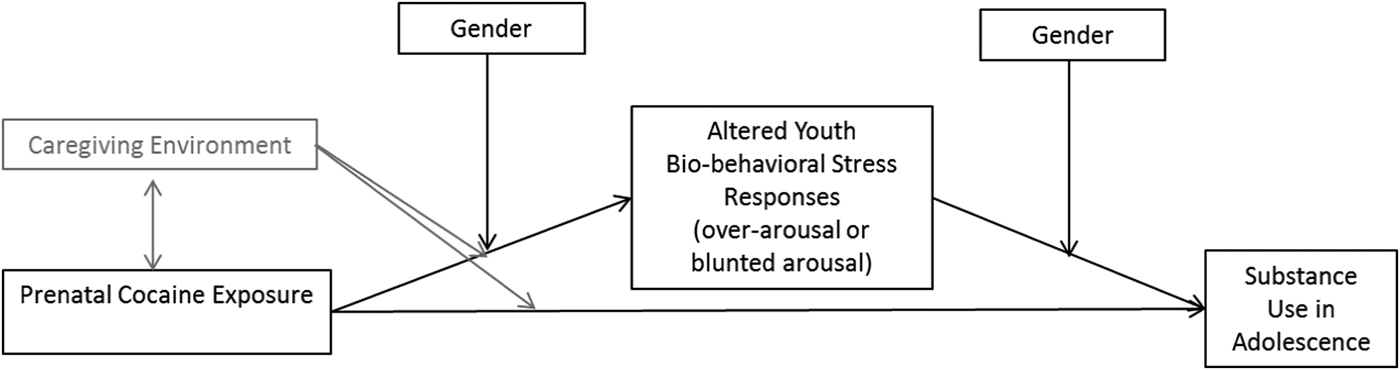
It is important to understand pathways by which prenatal exposures lead to increased risk for substance use in adolescence. One potential pathway may be through PCE effects on stress arousal systems. We propose a conceptual model (see Figure 1) positing that prenatal exposure to cocaine, particularly in the presence of compromised postnatal caregiving environments, leads youth to develop altered emotional and physiological arousal in response to stress. Theories of PCE effects have proposed that cocaine specifically impacts developing monaminergic neurotransmitter pathways in the fetus, pathways directly involved in arousal regulation (Mayes, Reference Mayes2002). Our model posits that PCE youth would specifically show alterations in arousal regulation, including arousal in response to stress (see also Mayes, Reference Mayes2002). We propose that these altered stress responses (among other factors, such as peer environments; Hawkins, Catalano, & Miller, Reference Hawkins, Catalano and Miller1992) then lead to risk for youth substance use. We propose, consistent with diathesis-stress models of substance use (e.g., Tarter et al., Reference Tarter, Vanyukov, Giancola, Dawes, Blackson and Mezzich1999) that the altered stress responses in PCE youth may lead the youth to react to environmental stressors in ways that lead to substance use.
Conceptual model of associations between prenatally cocaine exposed (PCE) status, adolescent stress response, and adolescent substance use.

This may occur in one of two ways. First, PCE youth may be overly aroused by stress and then may seek out substances to downregulate their heightened arousal responses, consistent with self-medication and stress-reduction theories of substance use etiology (Khantzian, Reference Khantzian1985; Sinha, Reference Sinha2001). Second, PCE youth may be underaroused by stress and may seek out substances to upregulate their blunted physiological arousal, consistent with sensation-seeking theories of substance use (Wills, Vaccaro, & McNamara, Reference Wills, Vaccaro and McNamara1994). In our conceptual model, we propose that the pathway from PCE to stress responses and from stress responses to substance use may differ by child gender, with at-risk girls taking a heightened arousal response/self-medication pathway and at-risk boys taking an underaroused/sensation-seeking pathway, as we discuss below (see Gender Section). Finally, we propose that negative caregiving environments may exacerbate effects of PCE on stress response and substance use outcomes, as has been proposed (and found) previously in the prenatal drug exposure literature (Bada et al., Reference Bada, Das, Bauer, Shankaran, Lester and LaGasse2007; Behnke et al., Reference Behnke, Eyler, Warner, Garvan, Hou and Wobie2006).
PCE and Stress Responses
Some prior empirical research has demonstrated links between PCE and alterations in children's attentional and emotional arousal and regulation, and physiological stress responses (Brooks-Gunn, McCarton, & Hawley, Reference Brooks-Gunn, McCarton and Hawley1994; Frank, Augustyn, Knight, Pell, & Zuckerman, Reference Frank, Augustyn, Knight, Pell and Zuckerman2001; Mayes, Reference Mayes1999; Tronick, & Beeghley, Reference Tronick and Beeghley1999). Specifically, studies of PCE youth in early childhood have found that PCE children show greater irritability and excitability along with heightened hypothalamic–pituitary–adrenal (HPA) axis arousal in response to stressful tasks as compared to nonexposed children (Bendersky, Bennett, & Lewis, Reference Bendersky, Bennett and Lewis2006; Chaplin, Fahy, Sinha, & Mayes, Reference Chaplin, Fahy, Sinha and Mayes2009; Dennis, Bendersky, Ramsay, & Lewis, Reference Dennis, Bendersky, Ramsay and Lewis2006; Eiden, Veira, & Granger, Reference Eiden, Veira and Granger2009; Mayes, Bornstein, Chawarska, Haynes, & Granger, Reference Mayes, Bornstein, Chawarska, Haynes and Granger1996). There are relatively few prospective studies of PCE and biobehavioral stress responses in adolescents. Two studies of 9- to 12-year-olds found blunted HPA axis responses to stress in PCE children (Fisher, Kim, Bruce, & Pears, Reference Fisher, Kim, Bruce and Pears2012; Lester et al., Reference Lester, LaGasse, Shankaran, Bada, Bauer and Lin2010). Our group found PCE × Gender differences in biobehavioral stress responses in an initial report on stress responses in the first 82 participants in the current cohort (Chaplin, Freiburger, Mayes, & Sinha, Reference Chaplin, Freiburger, Mayes and Sinha2010). In that study, PCE adolescents showed higher cortisol levels at baseline and 1 hr poststressor as compared to non–cocaine-exposed (NCE) youth, PCE girls showed heightened emotional responses to stress, and PCE boys showed blunted blood pressure responses (Chaplin et al., Reference Chaplin, Freiburger, Mayes and Sinha2010).
Stress Responses and Youth Substance Use
As noted in our conceptual model, these PCE × Gender differences in biobehavioral stress responses may have implications for risk of adolescent substance use. One important factor in the development of substance use is emotional and physiological responses to stressful events (Anderson & Teicher, Reference Anderson and Teicher2009; Wills, Sandy, Yaeger, Cleary, & Shinar, Reference Wills, Sandy, Yaeger, Cleary and Shinar2001). Research has shown that high levels of chronic life stress and particular coping responses to life stressors (e.g., less “active” coping responses) predict increases in substance use in adolescents (e.g., Dubow, Tisak, Causey, Hryshko, & Reid, Reference Dubow, Tisak, Causey, Hryshko and Reid1991; Wills et al., Reference Wills, Sandy, Yaeger, Cleary and Shinar2001). Further, research with adults with substance use disorders finds that they show altered biobehavioral stress responses, with heightened emotional and cardiovascular (heart rate [HR] and blood pressure [BP]) responses found in cocaine- and alcohol-dependent adults and blunted HPA axis (e.g., salivary cortisol) responses in alcohol-dependent adults (Adinoff, Junghanns, Kiefer, & Krishnan-Sarin, Reference Adinoff, Junghanns, Kiefer and Krishnan-Sarin2005; Fox, Hong, Siedlarz, & Sinha, Reference Fox, Hong, Siedlarz and Sinha2008; Sinha et al., Reference Sinha, Fox, Hong, Bergquist, Bhagwagar and Siedlarz2009; Sinha, Garcia, Paliwal, Kreek, & Rounsaville, Reference Sinha, Garcia, Paliwal, Kreek and Rounsaville2006). Some research suggests gender differences in the stress responses of addicted adults, with addicted women showing heightened subjective emotional (e.g., anxiety; Back, Brady, Jackson, Salstrom, & Zinzow, Reference Back, Brady, Jackson, Salstrom and Zinzow2005) and frontolimbic brain activation (Li, Kosten, & Sinha, Reference Li, Kosten and Sinha2005) compared to addicted men in response to stressors.
Less is known about how biobehavioral stress responses are associated with substance use in adolescents, even though adolescence is a time of increased emotional arousal, stress, and substance use and abuse (Chambers, Taylor, & Potenza, Reference Chambers, Taylor and Potenza2003; Johnston, O'Malley, Bachman, & Schulenberg, Reference Johnston, O'Malley, Bachman and Schulenberg2001; Steinberg, Reference Steinberg2004). A few initial studies with adolescents have found positive correlations between higher basal cortisol levels and future substance use (Huizink, Ferdinand, Ormel, & Verhulst, Reference Huizink, Ferdinand, Ormel and Verhulst2006; Huizink, Greaves-Lord, Oldehinkel, Ormel, & Verhulst, Reference Huizink, Greaves-Lord, Oldhinkel, Ormel and Verhulst2009; Rao, Hammen, & Poland, Reference Rao, Hammen and Poland2009). Studies examining cortisol responses to stressors as these relate to adolescent substance use have been less common. In the two reports on this topic that we know of, one paper found associations between higher cortisol (and emotional and cardiovascular) responses to stress and current alcohol use (Chaplin et al., Reference Chaplin, Sinha, Simmons, Healy, Mayes and Hommer2012) and one paper found associations between lower cortisol stress responses and current substance use (van Leeuwen et al., Reference van Leeuwen, Creemers, Greaves-Lord, Verhulst, Ormel and Huizink2011). Thus, there are very few studies of biobehavioral responses to stress and adolescent substance use and no longitudinal studies.
Gender
As noted above in our conceptual model, gender may be important to consider when examining links between biobehavioral stress responses and risk for substance use, particularly among adolescents. Sex differences in biobehavioral stress responses have been well documented in adolescents and adults (Kudielka & Kirschbaum, Reference Kudielka and Kirschbaum2005; Taylor et al., Reference Taylor, Klein, Lewis, Gruenewald, Gurung and Updegraff2000). A number of studies have reported gender differences in stress responses in youth, with girls showing higher levels of sadness, anxiety, and HR in response to stressful tasks than boys (Brody, Reference Brody1999; Chaplin & Aldao, Reference Chaplin and Aldao2013; Kudielka, Buske-Kirschbaum, Hellhammer, & Kirschbaum, Reference Kudielka, Buske-Kirschbaum, Hellhammer and Kirschbaum2004). We propose (see Figure 1) that there may be different pathways to substance use for girls versus boys (Amaro, Blake, Schwartz, & Flinchbaugh, Reference Amaro, Blake, Schwartz and Flinchbaugh2001; Kandel, Yamaguchi, & Chen, Reference Kandel, Yamaguchi and Chen1992; Nolen-Hoeksema, Reference Nolen-Hoeksema2004). There is some empirical evidence for this. Moss, Vanyukov, Yao, and Kirillova (Reference Moss, Vanyukov, Yao and Kirillova1999) reported that blunted salivary cortisol in prepubertal boys predicted substance use in adolescence, but no such association has been reported in girls. At-risk boys may develop a blunted physiological stress responses, which could then lead them to seek out substances to upregulate arousal, as proposed in sensation-seeking models of adolescent substance use (Wills et al., Reference Wills, Vaccaro and McNamara1994). In contrast, girls may be more likely than boys to cope with stressors by experiencing heightened emotional arousal (Nolen-Hoeksema & Girgus, Reference Nolen-Hoeksema and Girgus1994), leading girls to be at greater risk for internalizing problems, such as depressive symptoms, and for using substances to downregulate arousal, as in self-medication and stress-reduction models of substance use (Khantzian, Reference Khantzian1985; Sinha, Reference Sinha2001). Thus, it is possible that different biobehavioral stress response profiles predict substance use for girls versus boys. However, to date, there has been little research on this topic.
The Present Study
The present longitudinal study examined multiple biobehavioral measures, including cardiovascular (HR and BP), HPA axis (cortisol), sympathetic nervous system (SNS; salivary alpha amylase [sAA]), and emotional (reported anxiety, anger, and sadness) measures, in response to a social stressor as predictors of future (6–12 months later) substance use in a group of low-income middle adolescent boys and girls aged 14–17 years who were followed since birth, half of whom were PCE. We examined youth in middle adolescence because this is a critical period for the development of emotion and stress regulatory systems (Casey, Jones, & Hare, Reference Casey, Jones and Hare2008; Spear, Reference Spear, Romer and Walker2007) and for initiation of and increases in substance use (Johnston et al., Reference Johnston, O'Malley, Bachman and Schulenberg2001; Steinberg, Reference Steinberg2004). Although it is true that patterns of substance use change from relatively low rates of use at age 14 (e.g., 28% use alcohol at age 14; Duncan, Strycker, & Duncan, Reference Duncan, Strycker and Duncan2012) to more common use, and more binge drinking, at age 17 (e.g., 24%–41% use substances at 12th grade; Johnston et al., 2010), the present study collapsed data across youth aged 14–17 when examining prediction of substance use from stress responses, given that substance use across adolescence has been shown to have negative sequelae in adulthood and all adolescent substance use may be linked to alterations in stress responsivity. We studied substance use rather than substance abuse because substance abuse is relatively uncommon in middle adolescence, whereas substance use during adolescence is common and is associated with substance abuse in adulthood (Chassin et al., Reference Chassin, Pitts and Prost2001). Thus, we studied substance use in adolescence, which can be considered a marker for substance abuse risk.
One strength of the present study is the inclusion of multiple measures of stress responses in these youth. Stressors acutely engage both sympathetic and HPA axis systems and lead to increased subjective feelings of emotional arousal. However, arousal in these different systems is often not correlated, indicating that each measure may provide unique information about stress responsivity (Baum et al., Reference Baum, Grunberg and Singer1992). We hope to more fully capture stress arousal pathways to substance use by using a multimethod biopsychosocial approach, because such approaches have been recommended in the literature to understand the development of psychopathology and other risk behaviors (Susman, Reference Susman1997).
Hypotheses
First, based on the emerging literature on links between prenatal cocaine exposure and adolescent substance use, we hypothesized that PCE youth would show higher rates of substance use at age 14–17 years (Time 1) and at the 6- to 12-month follow-up relative to NCE youth. Based on findings by Bennett et al. (Reference Bennett, Bendersky and Lewis2007) of gender differences in PCE effects on youth substance use, we tested whether the association between PCE and substance use would differ by gender.
Second, based on our conceptual model and on previous findings (e.g., Lester et al., Reference Lester, LaGasse, Shankaran, Bada, Bauer and Lin2010), we hypothesized that PCE youth would show altered stress responses compared to NCE youth. We also examined whether the alteration would differ by gender. For all analyses of PCE effects on substance use and stress responses, we also conducted secondary analyses to examine whether PCE group differences were moderated by caregiver–child relationship quality, because negative caregiving may exacerbate negative effects of drug exposure (see Bada et al., Reference Bada, Das, Bauer, Shankaran, Lester and LaGasse2007). Third, based on our conceptual model, we hypothesized that HR, BP, cortisol, sAA, and emotional responses to stress would predict adolescents' future use of substances. Given our conceptual model and some research suggesting different pathways to substance use for females versus males, we explored whether this prediction differed by gender.
Method
Participants
Participants were drawn from a larger longitudinal study of the emotional and cognitive development of prenatally cocaine and other drug exposed (PCE) and NCE children. Children in the larger study cohort (N = 372) were followed since birth, with biannual assessments. Youth in the larger cohort ranged in age from 11 to 17 years, and those who were aged 14 to 17 years (the age range was chosen to coincide with middle adolescence and the high school period) were invited to join the present laboratory stress study if they met criteria for the laboratory study (no acute serious psychiatric condition, no serious medical condition, not currently pregnant, and IQ > 80). Based on these criteria, 13 adolescents (6.3%) were excluded: 5 for acute psychiatric disorders requiring multiple psychotropic medications (e.g., bipolar disorder and posttraumatic stress disorder), 1 for HIV+ diagnosis, 1 for insulin-dependent diabetes, 4 for IQs < 80, 1 who was blind, and 1 for pregnancy. One-hundred-ninety-three adolescents met criteria and were invited to participate. Of these, all agreed to participate in the study. These 193 were not different from the overall sample of 372 on demographic variables (sex, age, race, and mother education level), obstetric complications at birth, parent–child relationship quality, prenatal cocaine exposure status, or amount of mother's cocaine use in pregnancy (ps > .18).
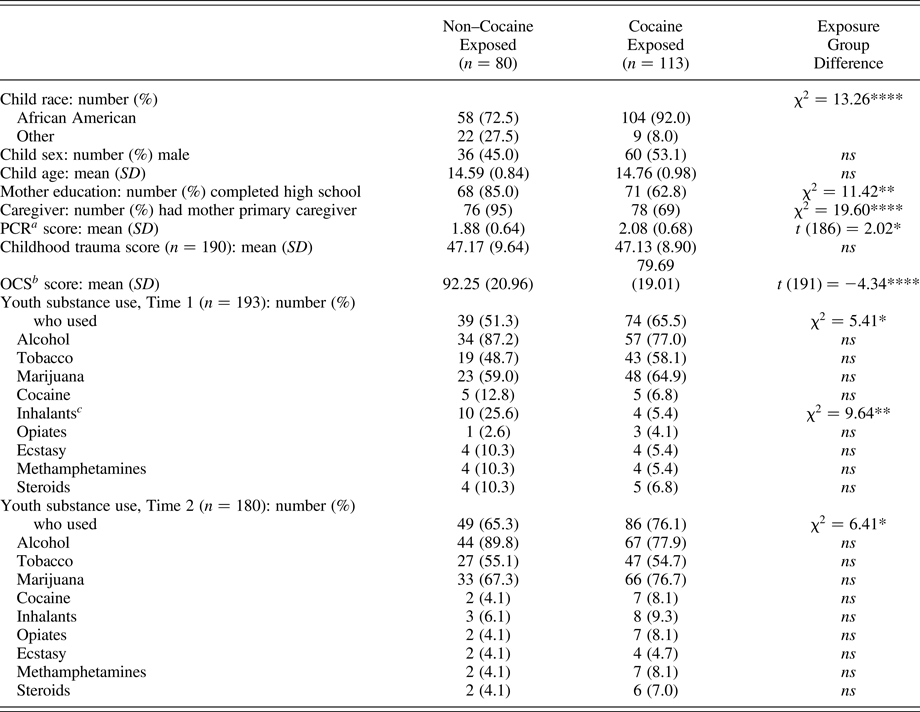
The 193 participants in the present study (96 boys, 97 girls) had a mean age of 14.69 years (SD = 0.93 years, range from 14 to 17 years; for demographic information, see Table 1). One-hundred-thirteen (59%) were PCE and 80 (41%) were NCE (PCE children were originally oversampled in anticipation of greater attrition in that group). Caregivers accompanying the adolescents to the present study were their current primary caregivers. These were mostly biological mothers (69.0% PCE, 95.0% NCE), with some grandmothers (9.7% PCE, 2.5% NCE), biological fathers (5.3% PCE, 1.3% NCE), aunts/uncles (4.4% PCE, 0.0% NCE), familial foster care or adoptive parents (6.2% PCE, 1.3% NCE), and nonfamilial foster care or adoptive parents (5.3% PCE, 0.0% NCE).
Demographic, risk factor, and youth substance use information
Note: PCR, Parent–child relationship; OCS, Obstetric Complications Scale.
aHigher PCR scores indicate more negative parent–child relationship.
bHigher OCS scores indicate more optimal birth conditions.
cReported inhalant use included “sniffing glue, breathing the contents of aerosol spray cans, or inhaling any paints or sprays to get high.”
*p < .05. **p < .01. ****p < .0001.
Recruitment and prenatal drug exposure categorization
Participants' mothers were recruited over a 5-year period from women registering for prenatal care at a women's center of a large urban hospital in the Northeast or, for those who did not receive prenatal care, upon admission to the postpartum ward. The Women's Center provided care for inner-city women and served a low-income, primarily ethnic minority population. Trained research associates screened women for substance use. Self-report information was obtained through a detailed interview (based on the Addiction Severity Index [ASI]; McLellan, Luborsky, O'Brien, & Woody, Reference McLellan, Luborsky, O'Brien and Woody1980), which covered lifetime use (number of years using) and frequency and amount of use in the previous 30 days for cocaine, tobacco, alcohol, marijuana, and other drugs (e.g., sedatives and opiates). Interviews were conducted either during the first prenatal visit or (for those not receiving prenatal care) immediately following delivery. For all women, regardless of reported drug use, urine samples were obtained for toxicology either several times throughout the pregnancy (for those women attending prenatal visits) and/or at delivery. Every mother had a urine screen at delivery. Urine was screened for metabolites of cocaine (e.g., benzoylecognine), opioids, benzodiazepines, and marijuana, using the Abbott TDx system, employing the recommended cutoff levels (Poklis, Reference Poklis1987). In addition, meconium screening was also instituted after 2 years of recruitment into the project. Meconium screening did not identify any additional cocaine users who were both interview and urine toxicology negative.
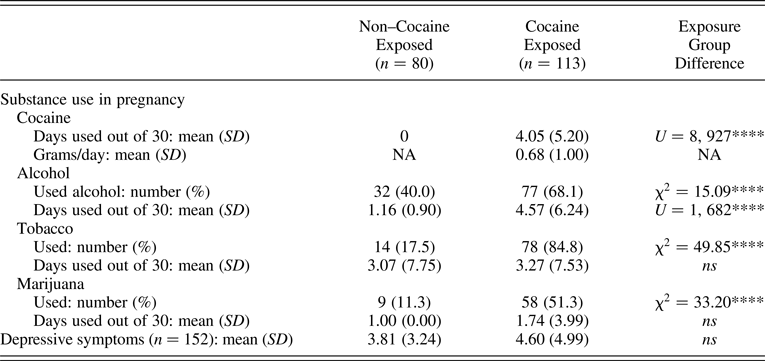
Mothers who used opiates were excluded from the study because the study was interested in effects of cocaine exposure specifically. The rest of the mothers were invited to participate in the study. Mothers were considered to be in the cocaine-using group (PCE) if they either reported cocaine use during pregnancy or if urine toxicology results were positive for cocaine. Because cocaine use frequently co-occurs with use of tobacco, alcohol, and/or marijuana (Withers, Pulvirenti, Koob, & Gillin, Reference Withers, Pulvirenti, Koob and Gillin1995), mothers in the cocaine-using group were not excluded if they used these other substances. Mothers were considered to be in the NCE using group if they were negative for cocaine use during pregnancy on self-report and on urine screens. The NCE group included mothers who used some substances (typically alcohol, tobacco, and/or marijuana) during pregnancy and mothers who did not use any alcohol or drugs during pregnancy. PCE mothers' cocaine use and PCE and NCE mothers' use of alcohol, tobacco, and marijuana (the most frequently used other drugs) are described in Table 2.
Mothers' substance use and depressive symptom history for prenatally cocaine exposed and non-cocaine exposed groups
Note: Depressive symptoms were measured by average Beck Depression Inventory total scores when the child was 3 and 6 months old. NA, Not applicable.
****p < .0001.
Procedure
At Time 1, adolescents attended three study sessions (each about 2–2.5 hr), spaced about 1 week apart, with caregivers also attending the first two sessions. In the first two sessions, youth and caregivers completed questionnaires, computer tasks, and interviews assessing cognitive and emotional functioning, substance use, parenting, and psychiatric disorders. In the third, the laboratory stress session, adolescents completed the Trier Social Stress Test—Child version (TSST-C; Buske-Kirschbaum et al., Reference Buske-Kirschbaum, Jobst, Wustmans, Kirschbaum, Kirsh and Rauh1997). Adolescents and caregivers were compensated $50 and $25, respectively, for each session. Informed parental consent and adolescent assent was obtained. The study protocol was approved by the university's institutional review board.
Adolescents and caregivers were invited to return to the lab at 6- and 12-month follow-ups. At these sessions, adolescents again completed questionnaires, computer tasks, and interviews assessing cognitive and emotional functioning and substance use. One hundred and eighty youth (92 boys, 88 girls) attended the 6- and/or 12-month sessions and are included in analyses predicting Time 2 substance use. These youth were not significantly different from the overall sample of 193 on most demographic variables (sex, age, and mother education level), PCE status, obstetric complications, or youth substance use at Time 1 (ps > .09). African American youth were more likely to attend the Time 2 sessions than were non–African American youth (χ2 = 9.36, p < .01).
TSST-C laboratory stress session
On the stress session day, adolescents arrived at 4:00 p.m. This time was chosen because it coincides with the nadir in the diurnal variation of cortisol, and hence stress-induced cortisol increases are easier to detect. Adolescents were brought into the testing room with a trained research assistant and seated at a table. A pulse sensor (NELLCOR SpO2 sensor) was placed on the adolescent's forefinger on the nonwriting hand and a BP cuff (Critikon SESNSA CUF) was placed on the adolescent's other arm to monitor BP and to obtain a measure of HR using the Critikon Dynamap system. Adolescents were asked to have a snack 1 hr prior to the session to control for effects of food intake on SNS and HPA axis functioning, and youth were not allowed to eat during the session. Youth were asked to refrain from alcohol and drug use prior to the session to control for acute drug effects on biobehavioral responses.
Adolescents were asked about their medication use on the day of the stress session, and adolescent girls who were regularly menstruating were asked about menstrual cycle day, because medication use and menstrual cycle can affect HPA axis functioning and cortisol determination in saliva (Hibel, Granger, Kivlighan, Blair, & Family Life Project Investigators, Reference Hibel, Granger, Kivlighan and Blair2006; Kirschbaum, Kudielka, Gabb, Schommer, & Hellhammer, Reference Kirschbaum, Kudielka, Gaab, Schommer and Hellhammer1999). Nine adolescents (two boys, seven girls) reported taking medications. One reported using Motrin, one used Tylenol Allergy, one used Advil, one used Clindamycin, one used Concerta and Claritin, one took a birth control pill, one used Albuteral, one used Albuterol, Singulair and Flonase, and one used Advair and Singulair. Medication use and menstrual cycle phase were considered as covariates for analyses (see Data Analysis Plan below).
Then, from 4:15 to 4:55 p.m., there was an adaptation period during which the participants were led through progressive muscle relaxation for 5 min by the research assistant and then were told to practice relaxing. At 4:55 p.m., pre-TSST (“baseline”) HR, BP, saliva, and emotion measures were taken. At 5:00 p.m., adolescents participated in the TSST-C (Buske-Kirschbaum et al., Reference Buske-Kirschbaum, Jobst, Wustmans, Kirschbaum, Kirsh and Rauh1997), as described below. The TSST-C procedure lasted 20 min and was videotaped. During the TSST-C, HR was measured at the beginning of the speech task and the beginning of the math task. After the TSST-C, HR, BP, saliva, and emotion measures were taken immediately (posttask) and once every 15 min through a recovery period of 60 min (+15, +30, +45, +60). Twenty minutes after the conclusion of the TSST-C (5:40 p.m.), adolescents completed a manipulation check questionnaire (based on Buske-Kirschbaum et al., Reference Buske-Kirschbaum, Jobst, Wustmans, Kirschbaum, Kirsh and Rauh1997), which asked how difficult/stressful they found the math and speech tasks to be. Adolescents were then debriefed regarding the TSST-C task.
TSST-C procedure
The TSST-C task was used as the laboratory stressor. The TSST (Kirschbaum, Wust, & Helhammer, Reference Kirschbaum, Wust and Hellhammer1992) is one of the most widely used social stress tasks with adults and children/adolescents (Dorn et al., Reference Dorn, Campo, Thato, Dahl, Lewin and Chandra2003; Kudielka & Kirschbaum, Reference Kudielka and Kirschbaum2005; Susman et al., Reference Susman, Dockray, Granger, Bladesa, Randazzo and Heaton2010). The TSST has been found to elicit a robust activation of the HPA axis system (Kirschbaum et al., Reference Kirschbaum, Wust and Hellhammer1992), the SNS as assessed by HR, BP, and sAA (Kajantie & Phillips, Reference Kajantie and Phillips2005; Strahler, Mueller, Rosenloecher, Kirschbaum, & Rohleder, Reference Strahler, Mueller, Rosenloecher, Kirschbaum and Rohleder2010), and emotional arousal as assessed by self-reported emotion (Hastings, Zahn-Waxler, & Usher, Reference Hastings, Zahn-Waxler and Usher2007) in children and adolescents. Furthermore, the TSST is a speech and math task, making it similar to events occurring in adolescents' lives at school (Klimes-Dougan, Hastings, Granger, Usher, & Zahn-Waxler, Reference Klimes-Dougan, Hastings, Granger, Usher and Zahn-Waxler2001), and it is a social-evaluative stressor, which may be particularly anxiety provoking for adolescents (Elkind & Bowen, Reference Elkind and Bowen1979).
The TSST-C was performed according to instructions provided by Buske-Kirschbaum et al. (Reference Buske-Kirschbaum, Jobst, Wustmans, Kirschbaum, Kirsh and Rauh1997), except that in this study the adolescent prepared and delivered the speech in the same room (rather than in a “preparation room”). At 5:00 p.m., two unfamiliar adults (the “judges”) entered the laboratory room and told the adolescent that he/she would have to finish writing a story. The panel told the adolescent to “make the story as exciting as possible” because he/she would be “competing against other teenagers.” The judges gave the adolescent a story stem (used by Buske-Kirschbaum et al., Reference Buske-Kirschbaum, Jobst, Wustmans, Kirschbaum, Kirsh and Rauh1997) and then left the room. The research assistant collected measures (not used in the present report) and then told the adolescent to prepare a 5-min story (from 5:05 to 5:10 p.m.). At 5:10 p.m., the judges reentered the room. One judge placed an audiorecorder in front of the adolescent and asked him/her to stand up and recite the story for 5 min while he/she was video- and audiotaped. If the adolescent finished reading what he/she had written, the judges asked the adolescent to continue telling the story. After the 5 min, the second judge asked the adolescent to remain standing and to complete a mental arithmetic task (“subtract the number 13 from 1,023 over and over as quickly and accurately as possible”) for 5 min. Each time the subject made an error, he/she was asked to start over. The judges were trained research assistants who had not interacted with participants prior to or during the session. Judges were instructed to maintain a neutral expression and not to assist the adolescent during the tasks. Periodic fidelity checks ensured that the judges consistently followed the prescribed script.
Stress response measures
Cardiovascular response
A Critikon Dinamap 120 Patient Monitor was used to assess systolic BP (SBP) and diastolic BP (DBP). A pulse sensor was attached to the participant's forefinger on his/her nonwriting hand and was connected to the Dinamap Monitor to provide a measure of HR (HR). For each time point, HR was recorded once every 10 s for 1 min and then averaged.
HPA axis response
Salivary cortisol levels were measured as a marker of HPA axis activation. Saliva was collected with the Salivette collection device. Participants were instructed to place a cotton swab between their tongue and cheek for approximately 2 min until the swab was completely saturated. The saliva swab was collected in a plastic tube, which was placed directly on ice and stored at –20 °C. Saliva samples were assayed in duplicate following standard radioimmunoassay kits with no modifications (Coat-A-Count Cortisol Kit, Diagnostic Products Corporation, Los Angeles) at the Yale University Core Laboratories (New Haven, CT). The intraassay coefficients of variation ranged from 3.0% to 5.1%.
SNS response
sAA levels were collected as a surrogate marker of SNS activation. sAA was assayed at the Biomarker Core Laboratory at Pennsylvania State University using a kinetic reaction assay kit (Salimetrics, LLC, State College, PA) that employs a chromagenic substrate, 2-chloro-p-nitrophenol, linked to maltotriose (Granger et al., Reference Granger, Kivlighan, Blair, El-Sheikh, Mize and Lisonbee2006). The enzymatic action of sAA on this substrate yields 2-chloro-p-nitrophenol that is spectrophotometrically measured at 405 nm using a standard laboratory plate reader. The amount of sAA activity present in the sample is directly proportional to the increase (over a 2-min period) in absorbance at 405 nm. Samples were tested in singlet per assay kit instructions. The intra- and intervariations for this assay are less than 7.5% and 6%, respectively. sAA has been found to increase following stressors in adolescents (Gordis, Granger, Susman, & Trickett, Reference Gordis, Granger, Susman and Trickett2006) and correlates with measures of SNS activity, including plasma norepinephrine, BP, and HR (e.g., Chatterton, Vogelsong, Lu, Ellman, & Hudgens, Reference Chatterton, Vogelsong, Lu, Ellman and Hudgens1996; Klein, Bennett, Whetzel, Granger, & Ritter, Reference Klein, Bennett, Whetzel, Granger and Ritter2010).
Emotion
Adolescents' self-reported negative emotions (anxiety, anger, and sadness) were assessed with the Differential Emotions Scale—Revised short form (DES-R; Izard, Reference Izard1972). Each subscale consists of five adjectives describing a particular emotion state. The adolescent rated on a 5-point scale the extent to which each word describes the way he or she felt in that moment. The DES shows excellent psychometric properties (Izard, Reference Izard1972) and has been used with children and adolescents (Blumberg & Izard, Reference Blumberg and Izard1985; Chaplin, Reference Chaplin2006). To further ensure validity of the DES, at the start of the session, the research assistant read each item to the adolescent aloud and defined any words that were unfamiliar to him/her.
Missing stress response data
Data were missing at one or more time points for seven youth for BP (due to equipment malfunction), five for cortisol and sAA (insufficient saliva), and two for emotion (refused to answer items). These subjects are excluded from analyses involving those variables.
Other measures
History of birth complications
Youth's history of birth-related complications were measured with the Obstetric Complications Scale (OCS; Littman & Parmelee, Reference Littman and Parmelee1974). The OCS is a checklist of 41 conditions during the pregnancy and delivery that could affect the health of the newborn, including birth weight, gestational age, parity, mother age, bleeding during pregnancy, and infections or acute medical conditions during pregnancy. Higher scores on the OCS represent more optimal birth factors. The OCS was completed through mother interview and medical chart abstraction. OCS scores were calculated as the percentage of optimal scores and then changed to the “converted raw score,” following Littman and Parmelee (Reference Littman and Parmelee1974).
Mothers' history of depressive symptoms
Youth's mothers' depression histories were measured with the Beck Depression Inventory (BDI; Beck & Steer, Reference Beck and Steer1984), a widely used self-report depression scale that was administered to mothers when the youth were infants (BDI scores were averaged for age 3 month and age 6 month sessions; BDI scores were missing for 41 families).
Mothers' history of substance use in pregnancy
As noted above, maternal drug use in pregnancy was based on responses to an interview (based on the ASI) and urine screen taken at the time of delivery or, for those mothers coming for prenatal care, at prenatal visits.
Substance use
Youth's lifetime substance use was assessed at both Time 1 and at Time 2 (6–12 months later) with a combination of the following: self-report on the Youth Risk Behavior Survey (Brener et al., Reference Brener, Kann, McManus, Kinchen, Sundberg and Ross2002); interview using the Teen ASI (Kaminer, Bukstein, & Tarter, Reference Kaminer, Bukstein and Tarter1991); urine toxicology screens with the TESTCUP5 Drug Screen for opiates, cocaine, THC, PCP and barbiturates, as well as a urine test for Ethyl Glucuronide for alcohol use and a urinary cotinine test for nicotine use; and breath screens with the Alcosensor III Intoximeter for alcohol use and a CO monitor for smoked tobacco use. Youth were considered substance users if they endorsed lifetime use of any substance (including tobacco, alcohol, marijuana, cocaine, inhalants, opiates, and others) on the questionnaire or interview or if they had a positive urine or breath screen (alcohol breath screen > 0.00, CO breath screen ≥ 10 ppm) at the questionnaire/interview session (youth were asked to refrain from use on the day of the TSST lab session). Time 2 substance use scores were based on youth report or urine/breath screens at either the 6-month assessment or the 12-month assessment or at both points, depending on which assessments the particular youth attended. If youth were negative for substance use at both 6- and 12-month assessments, they were coded as negative for substance use at Time 2.
Several measures were taken to increase the likelihood of youth reporting honestly about substance use. First, at the start of the study, adolescents were told that their responses to the questions about drug use were confidential and would not be shared with their caregivers (except in cases of concerns about imminent risk of death). Second, a Certificate of Confidentiality was obtained for the study, and youth were told that the confidentiality of their reports of illegal behaviors (including substance use) was protected by the certificate. Third, the Youth Risk Behavior Survey was self-administered by computer (with each question read aloud through headphones) to increase feelings of privacy.
Missing substance use data
For the substance use data, as noted above, 13 youth did not attend either of the Time 2 sessions and thus are not included in analyses of Time 2 substance use.
Caregiver–child relationship quality
Caregiver–child relationship quality was measured by the parent–child relationship (PCR) subscale of the Parenting Stress Index (PSI; Abidin, Reference Abidin1990; Sheras & Abidin, Reference Sheras and Abidin1999), a parent-report scale. The PSI is a widely used caregiver-report measure of parenting stress and parent–child relationship quality. The PCR subscale measures caregivers' dissatisfaction with their interactions with their children and with their children generally. Higher scores on this measure indicate a more problematic caregiver–child relationship. The PCR subscale has shown good reliability and validity, correlating with self-reported and observed parenting behavior (Haskett, Ahern, Ward, & Allaire, Reference Haskett, Ahern, Ward and Allaire2006). Primary caregivers completed the PSI at a session prior to the laboratory stress session.
In this study, the PSI for parents of children aged 0–18 (Abidin, Reference Abidin1990) was used at first and then the study switched to using the PSI version designed specifically for parents of adolescents aged 12–17 (Sheras & Abidin, Reference Sheras and Abidin1999) partway through the study (52 adolescents had child PSI data, 136 had adolescent PSI data, 5 were missing PSI data). The PCR subscale in the child version had 12 items, whereas the adolescent version had 16 items. Because of the different numbers of items, an average score for the subscale was used in analyses, similar to previous research (Chaplin, Freiburger, Mayes, & Sinha, Reference Chaplin, Freiburger, Mayes and Sinha2010). The average score ranged from 1 to 5.
Data analysis plan
Covariates
We considered the following as potential covariates for analyses, because of their associations in the literature with prenatal cocaine exposure status and/or with emotional and physiological stress responses: age, race, mother education level (a variable related to socioeconomic status), childhood trauma history, number of obstetric complications at birth, caregiver status (biological mother or other caregiver), maternal history of depressive symptoms, maternal alcohol, cigarette, and marijuana use during pregnancy (yes/no), and child's medication use and menstrual cycle phase (early folicular, late folicular, ovulation, and early, mid, and late luteal) on the day of the TSST session. Caregiver–child relationship quality was included as a moderator variable in analyses, as described below. We planned to add as a control variable any of the above-listed variables that showed a statistically significant association with both the independent variable (PCE status, TSST response, or gender) and the dependent variable (TSST response or youth substance use) in the particular analysis, in order to control for any variable that could be a potential confound. We tested these associations with separate correlations or logistic regressions. We found that PCE status and youth substance use were both associated with race (with PCE youth and substance-using youth more likely to be African American), and so race was included in analyses examining PCE × Gender effects on substance use. No other covariates were found or used in analyses.
Stress response scores
Stress response variables were created for each TSST-C response index (HR, BP, cortisol, sAA, and emotions). Stress response variables were calculated as the score at the time point (or the average of time points) after the TSST when the response index was still elevated for the sample of youth (i.e., before recovery) minus the pre-TSST (baseline) score. This change from baseline approach is commonly used when interested in predicting outcomes from stress response variables in youth (e.g., Rudolph, Troop-Gordon, & Granger, Reference Rudolph, Troop-Gordon and Granger2010). We decided to examine data only to the peak time point and not through recovery because we were interested in arousal (reactivity) response to the stressor versus recovery. Each reactivity index had a different peak time point, consistent with the typical time courses of cardiovascular, HPA, SNS, and emotional responses (see Figure 2). Heart rate peak was the average of the two time points at the beginning of the TSST-C speech and math tasks. SBP and DBP peaks were collected immediately (0 min) after the TSST-C. Cortisol peak was the average of the 15- and 30-min post-TSST scores. The sAA peak was immediately (0 min) post TSST. Emotion peak was an average of the time point immediately after the TSST (0 min) and 15 min post TSST.
(Color online) Average responses on all indices over time to stress, with peak response periods marked.
Analyses
Logistic regressions were conducted to test the first hypothesis predicting youth substance use (yes/no) from PCE Status × Gender, covarying for race (dummy coded with 0 = other, 1 = African American). Analyses of variance (ANOVAs) were conducted to test the second hypothesis predicting youth stress responses from PCE Status × Gender. Secondary analyses included PCE Status × Parent-Reported Caregiver–Child Relationship Quality interactions to test whether parent–child relationship moderated effects of PCE status on youth substance use and stress response outcomes. For the regression analyses, a PCE Status × Parent-Reported Caregiver–Child Relationship Quality interaction term was entered into the regression. For the ANOVA analyses, parent-reported caregiver–child relationship quality was median split into high and low quality and PCE Status × Relationship Quality Median Split Variable was examined. Logistic regressions were conducted to test the third hypotheses predicting youth substance use at Time 2 (yes/no) from stress responses (and from stress responses by gender), controlling for use at Time 1. Follow-up analyses for statistically significant or trend-level (p < .10) interactions with gender were conducted with separate logistic regressions or ANOVAs for boys and girls. For significant ANOVA findings, Cohen d effect sizes were calculated. For significant logistic regression findings, the odds ratio (Exp[B]) is reported as a metric of effect size. Analyses were also conducted for baseline (pre-TSST) levels of the stress response variables.
Results
Demographics and birth factors by PCE status
Demographics, birth status, childhood trauma history, parent–child relationship quality, and youth substance use information is shown in Table 1. As shown in Table 1, there were PCE group differences in mother education, child race, caregiver status, and parent–child relationship quality, with fewer mothers completing high school in the PCE group than in the NCE group (no mothers reported education beyond high school), a higher percentage of African American youth in the PCE group than in the NCE group, caregivers more likely to be biological mothers in the NCE than in the PCE group, and more negative parent–child relationship quality in the PCE group than in the NCE group. There were no PCE group differences in child gender or age. Birth status of the youth, as measured by scores on the OCS, is also listed in Table 1. Youth in the PCE group had lower (less optimal) OCS scores than did those in the NCE group.
Mothers' use of cocaine and other drugs in pregnancy and mothers' history of depressive symptoms are listed in Table 2. In addition to cocaine use, PCE mothers had greater rates of alcohol use, tobacco use, and marijuana use than did NCE mothers during pregnancy. PCE mothers were not different from NCE mothers in their depressive symptoms on the BDI when the youth were infants.
Manipulation check
Youth on average reported that they found the TSST to be moderately stressful. The mean ratings for the speech and math tasks were 5.63 (SD = 3.11) and 6.26 (SD = 3.11), respectively, on a 0 to 10 scale (10 = very stressful). The ratings of the tasks were not associated with PCE status, gender, PCE × Gender, or substance use. We also conducted separate repeated measures ANOVAs, and all of the stress response variables (HR, SBP, DBP, cortisol, sAA, and emotion) increased on average following the task, indicating that the task did produce a stress response. Figure 2 shows mean scores on all stress response variables across response and recovery time points. Note that the stress response scores used in analyses below use only the initial time points after the task (Time 0 or +15), before recovery.
Data inspection and transformations
Data were examined for normality. For cortisol and sAA, there were one and five outlier data points (>3 SD above the mean), respectively. These data points were reassigned a value equal to the next highest value that was within 3 SD from the mean. Similar procedures have been used in previous studies of cortisol (e.g., Kertes & Gunnar, Reference Kertes and Gunnar2004; Susman et al., Reference Susman, Dockray, Schiefelbein, Herwehe, Heaton and Dorn2007). Following this, cortisol and sAA response scores were created. Cortisol and sAA response scores were skewed and so square root transformations were performed on these scores, with a constant added to bring the values above 1 (square root [cortisol or sAA score + constant]). Transformed scores (for cortisol and sAA) were used in analyses, but untransformed scores are presented in figures for ease of interpretation.
Covariates
As noted above, we planned to add as a control variable any of the theoretically relevant variables (listed above) that showed a statistically significant association with both the independent variable (PCE status, TSST response, or gender) and the dependent variable (TSST response or youth substance use) in the particular analysis. We found that PCE status and youth substance use were both associated with race (with PCE youth and substance-using youth more likely to be African American), and so race was included in analyses examining PCE × Gender Effects on substance use. No other covariates were found or used in analyses.
Missing data analysis and multiple imputation
A small portion of data was missing on study variables due to nonresponse by participants or to equipment malfunction (missing data ranged from 2 participants for emotional stress responses to 13 participants for substance use at Time 2). A Little test was conducted to examine the nature of the missing data (58.81, p < .01), and results indicated that the data were not missing completely at random. As such, multiple imputation was deemed an appropriate strategy for handling missing data because it results in less bias than alternative procedures, such as listwise or pairwise deletion (Enders, Reference Enders2010; Little & Rubin, Reference Little and Rubin2002). Thus, we used multiple imputation for all study analyses presented below. Following Rubin's guidelines (Reference Rubin1987), three imputed data sets were found to yield appropriate efficiency for the amount of missingness in the data set and were generated using SPSS version 20 Missing Values package. All of the following analyses were conducted separately for each data set and were pooled across estimates. Pooled values are shown in the text. Results from imputed data analyses are presented in the text, in the correlation table, and in the figures. Raw (unimputed) data are presented in the tables presenting descriptive data (Tables 1 and 2) to give the most accurate picture of the descriptive data.
Baseline analyses
Analyses were first conducted for pre-TSST (baseline) scores. There were no significant PCE Status × Gender interactions. There were significant main effects of PCE status, with PCE < NCE, for pre-TSST HR, F (1, 189) = 13.45, p < .0001, and DBP, F (1, 184) = 4.01, p < .05. There was a significant main effect of gender for pre-TSST SBP, with boys showing higher SBP than girls, F (1, 184) = 8.53, p < .01. Associations between baseline variables and substance use were not significant.
Correlations
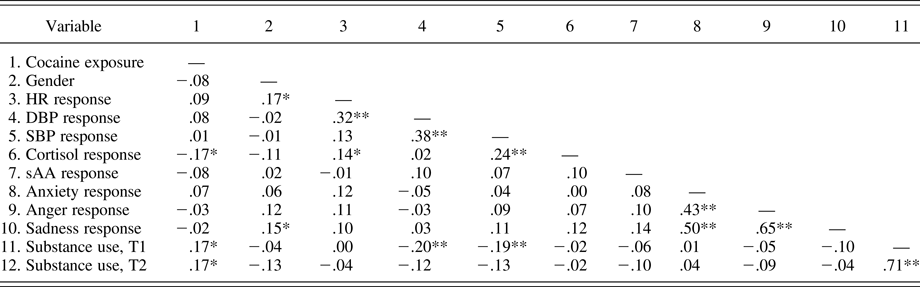
Correlations among PCE status, gender, stress response variables, and youth substance use are presented in Table 3. As shown in the table, several of the response variables were correlated, with HR responses positively correlated with DBP and cortisol responses, DBP responses correlated with SBP responses, SBP correlated with cortisol responses, and anxiety, anger, and sadness correlated with one another. However, not all response variables were correlated with one another, a common occurrence in biobehavioral research (Baum et al., Reference Baum, Grunberg and Singer1992). Table 3 also shows that prenatal cocaine exposure was correlated with lower cortisol responses and with higher chances of substance use at Time 1 and Time 2. Finally, Table 3 shows that DBP and SBP responses were associated with lower substance use at Time 1, and that Time 1 and Time 2 substance use were correlated with one another.
Correlations among main variables
Note: For cocaine exposure status, non–cocaine exposed = 0, cocaine exposed = 1. For gender, male = 0, female = 1. HR, Heart rate; DBP, diastolic blood pressure; SBP, systolic blood pressure; sAA, salivary alpha amylase; T1, Time 1; T2, Time 2.
*p < .05. **p < .01. ***p < .001.
Hypothesis 1: PCE × Gender predicting youth substance use
The logistic regression analyses predicting Time 1 and Time 2 substance use from PCE × Gender, controlling for race, did not show significant PCE × Gender interactions or main effects of PCE status or gender.
Hypothesis 2: PCE × Gender predicting stress responses
HR and BP
The ANOVA did not show a significant PCE × Gender interaction or PCE main effect for HR response. There was a significant gender main effect on HR response, F (1, 189) = 6.31, p < .05, d = 0.35, with girls showing higher HR response to the stressor than boys (for girls, mean HR change scores = 19.64, SD = 10.98; for boys, M = 15.98, SD = 10.06).
The PCE × Gender interaction and PCE and gender main effects for DBP and SBP were not significant.
Cortisol
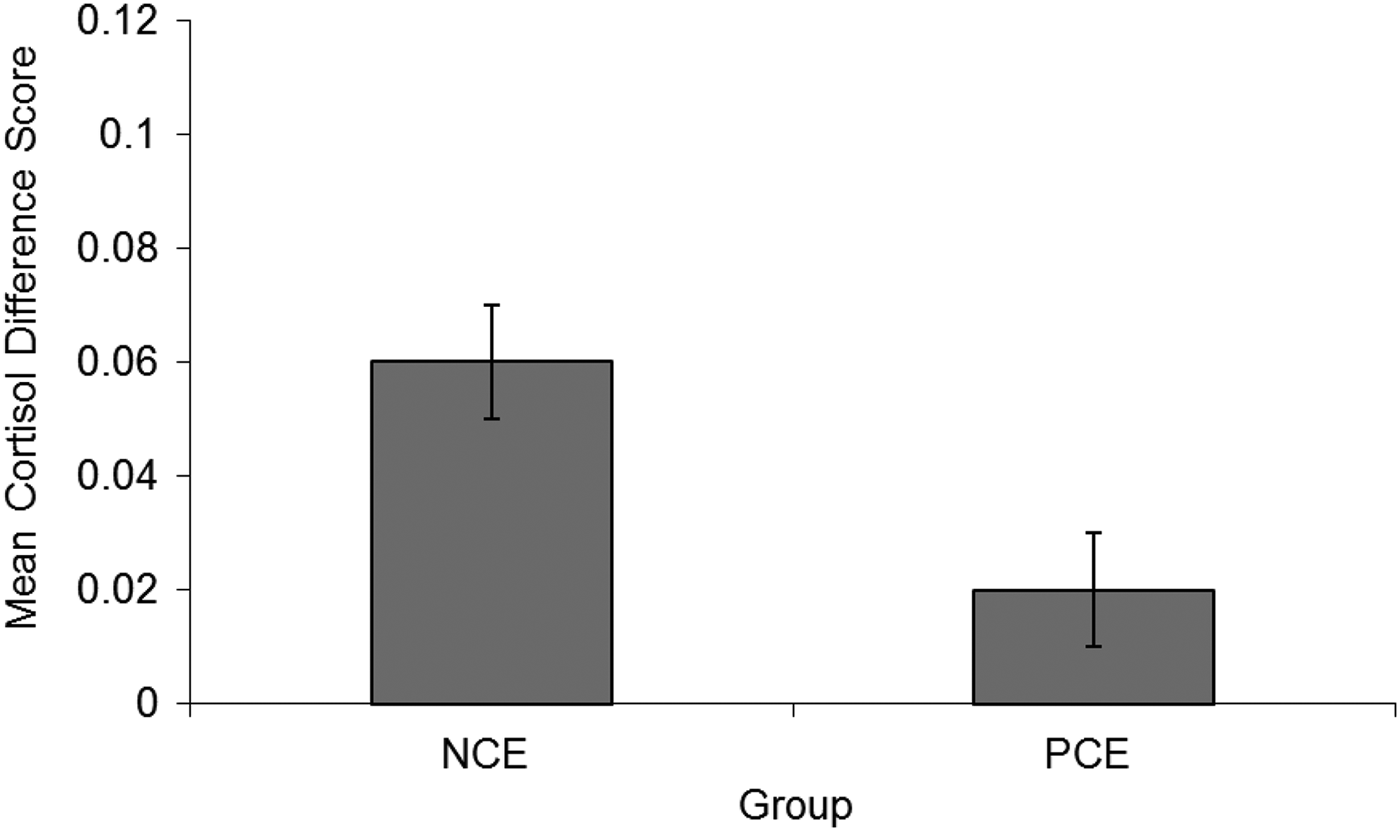
There was not a significant PCE × Gender interaction for cortisol response. There was a significant main effect of PCE status, F (1, 184) = 6.32, p < .05, d = –0.40, with PCE youth showing lower cortisol response to the stressor than did NCE youth, for PCE, mean cortisol change score (in untransformed scores) = 0.08, SD = 0.05; for NCE, M = 0.10, SD = 0.06 (see Figure 3). The gender main effect for cortisol response was not significant.
Average cortisol stress responses by prenatally cocaine exposed (PCE) status.
sAA
The PCE × Gender interaction and the PCE and gender main effects for sAA were not significant.
Emotion
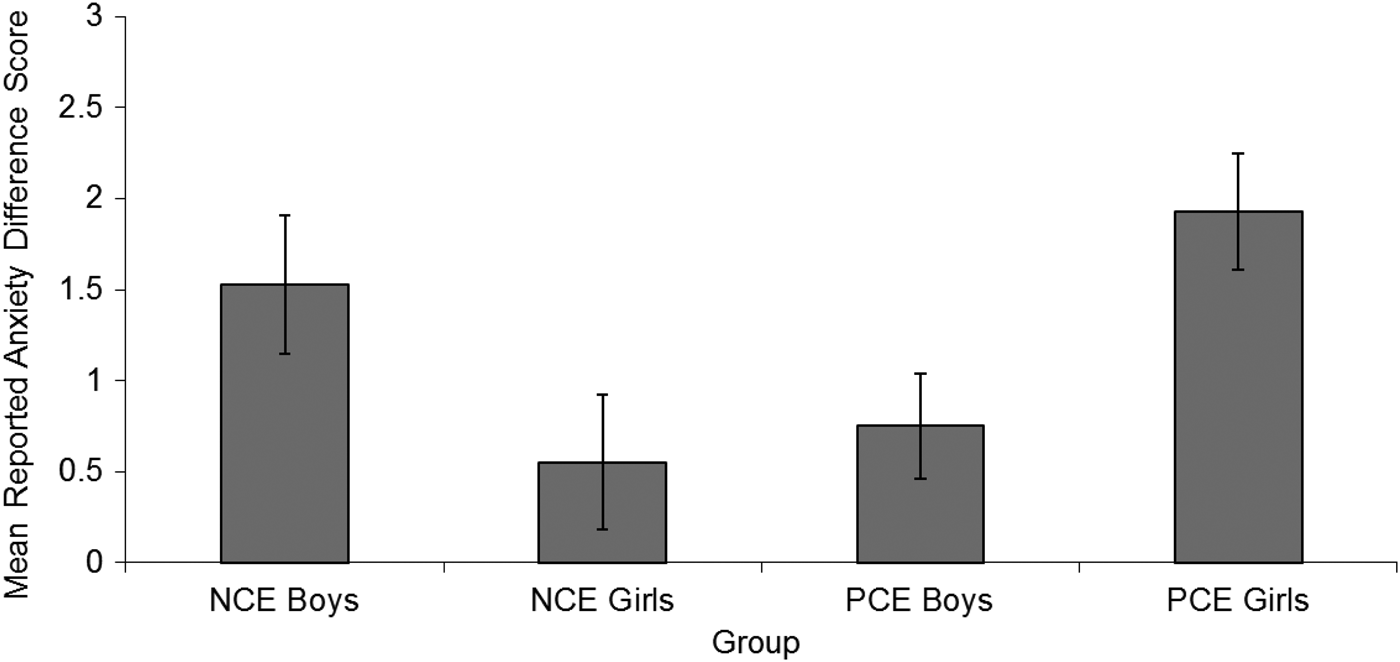
The ANOVA showed a significant PCE × Gender interaction for anxiety response, F (1, 189) = 10.68, p < .01 (see Figure 4). Follow-ups indicated that, in the PCE group, girls were significantly higher than boys, F (1, 110) = 7.75, p < .01, d = 0.50, in anxiety response. PCE girls also showed higher anxiety response than did NCE girls, F (1, 93) = 9.02, p < .01, d = 0.56, although PCE boys were not different from NCE boys. The main effects of PCE and gender for anxiety response were not significant.
Average anxiety stress responses by prenatally cocaine exposed (PCE) status and gender.
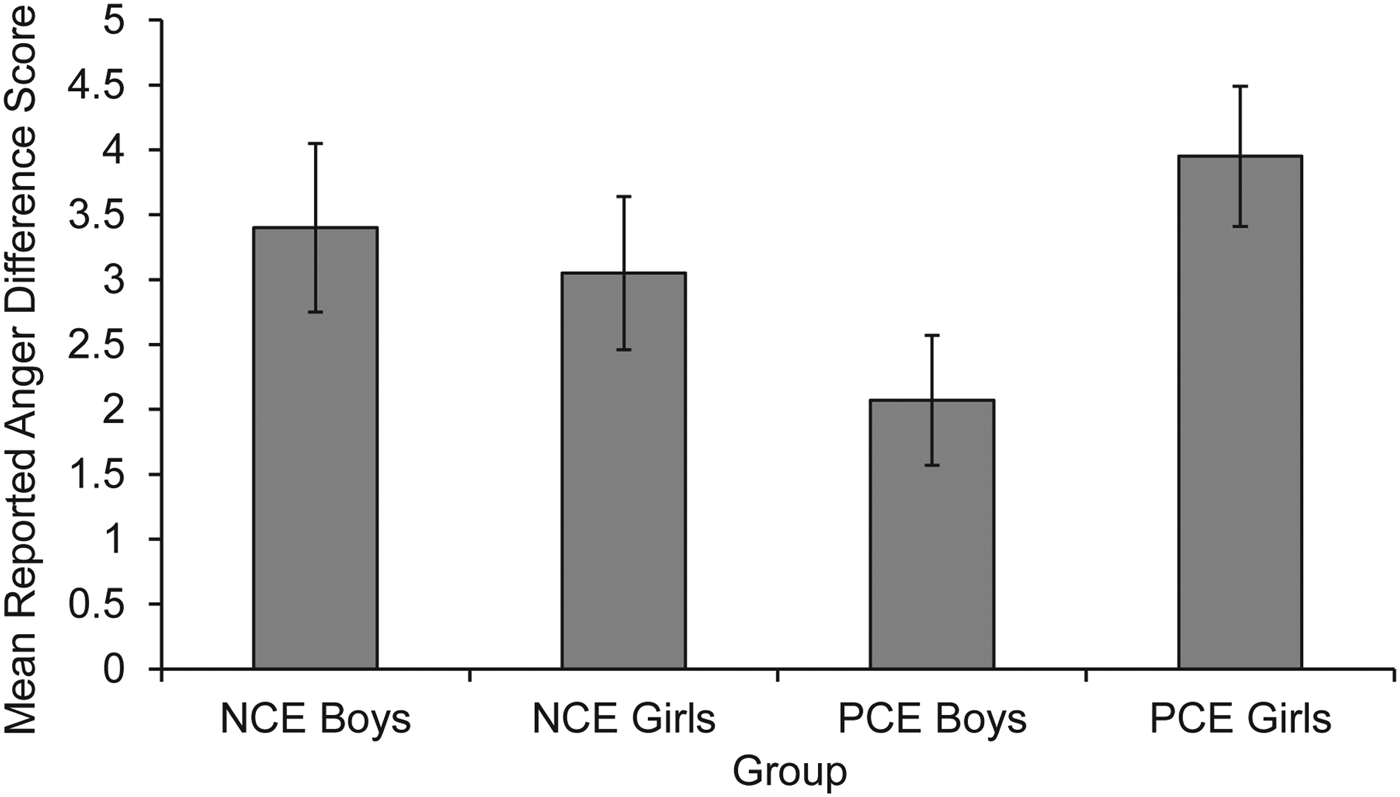
For anger response, a PCE × Gender interaction was found, F (1, 189) = 3.81, p < .05 (see Figure 5). In the PCE group, girls were higher than boys in anger response to stress, F (1, 110) = 6.54, p < .05, d = 0.47; in the NCE group, girls and boys were not different. Differences between PCE and NCE boys and between PCE and NCE girls were not significant. The main effects of PCE and gender for anger response were not significant.
Average anger stress responses by prenatally cocaine exposed (PCE) status and gender.
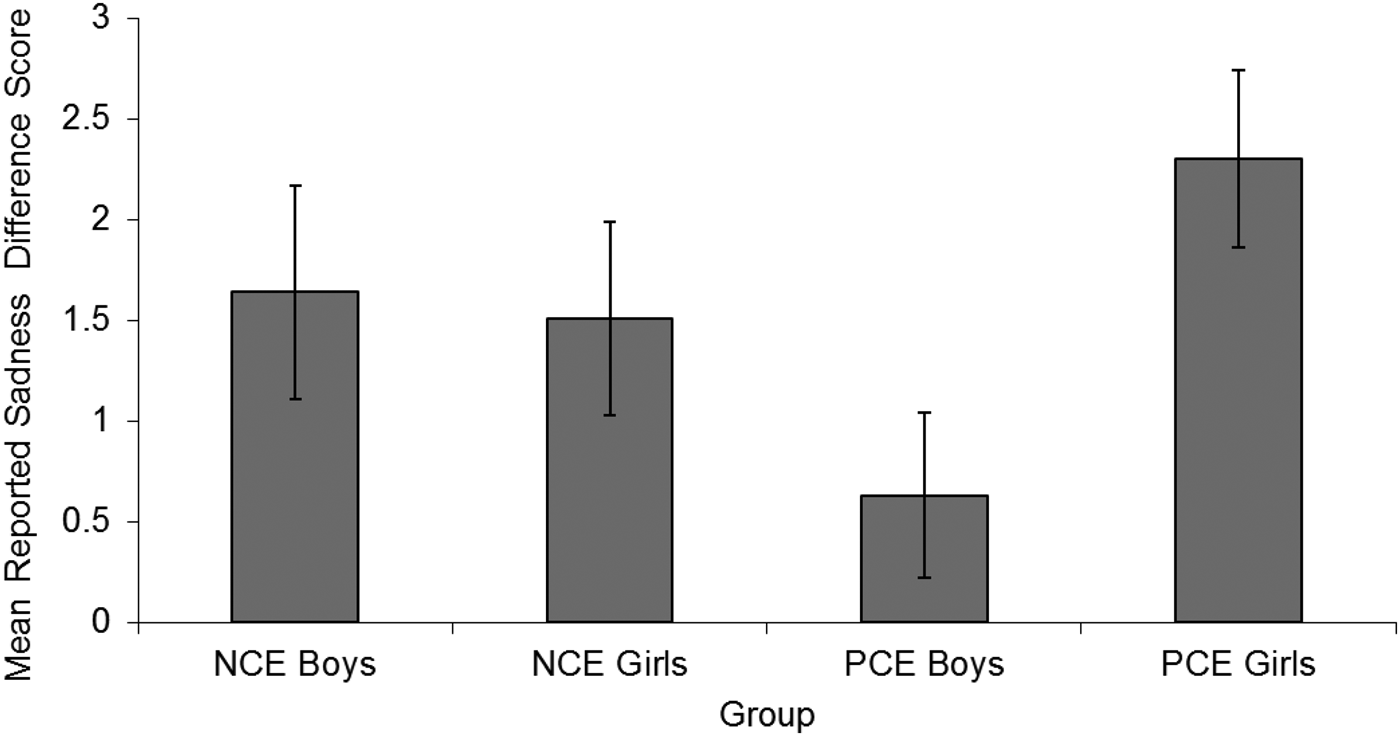
For sadness, a similar PCE × Gender interaction was found, F (1, 189) = 3.77, p = .05 (see Figure 6). Follow-ups indicated that, in the PCE group, girls were higher than boys in sadness F (1, 110) = 7.85, p < .01, d = 0.51; in the NCE group, girls and boys were not different from each other. The main effects of PCE and gender for sadness response were not significant.
Average sadness stress responses by prenatally cocaine exposed (PCE) status and gender.
Summary
In sum, for anxiety, anger, and sadness, the results suggest that PCE boys showed a dampened response to stress relative to PCE girls. For cortisol, PCE youth showed blunted cortisol responses to stress as compared to NCE youth regardless of gender.
Caregiving quality as a moderator of PCE effects
Interactions between PCE status and caregiver–child relationship quality were not statistically significant in predicting any of the stress response measures or in predicting substance use, and so our moderation by caregiver–child relationship quality hypothesis was not supported.
Hypothesis 3: Stress responses predicting substance use at Time 2
Time 1 results
Analyses described below examined relations between stress responses and adolescents' future substance use at Time 2. We also examined associations between stress responses (by gender) and concurrent substance use at Time 1, but these were not significant. Although correlations between BP responses and Time 1 substance use were significant (see Table 3), these main effects were not significant in the overall logistic regressions predicting Time 1 use.
HR and BP
The Response × Gender interactions and response and gender main effects predicting substance use at Time 2 for HR and BP were not significant.
Cortisol
The Cortisol Response × Gender interaction and the cortisol response and gender main effects on substance use were not significant.
sAA
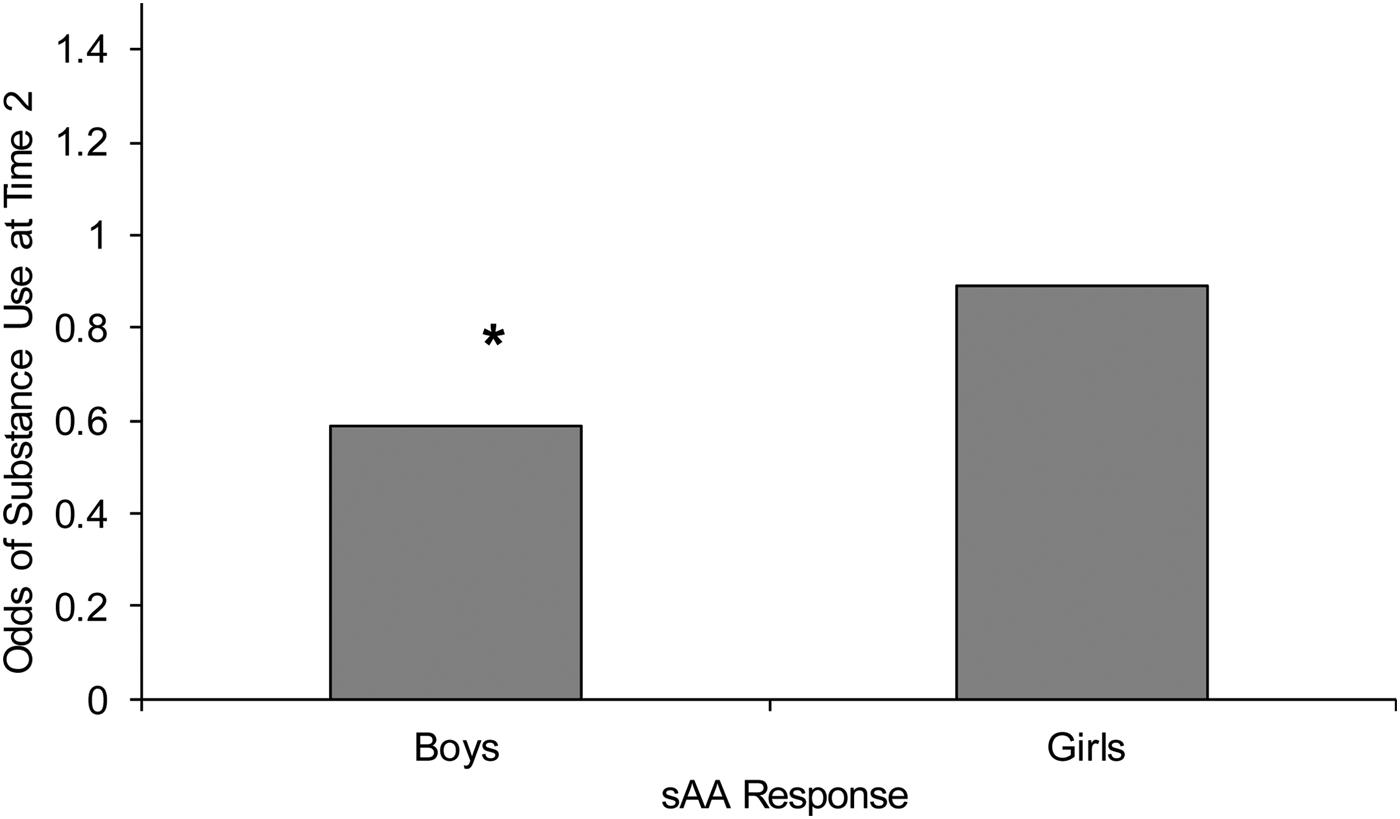
There was a significant sAA Response × Gender interaction predicting substance use, β = 0.55, Wald = 3.79, p < .05, exp(B) = 1.72 (95% confidence interval [CI] = 1.00–2.96). Follow-up analyses indicated that, for boys, lower sAA responses predicted greater chances of using substances, β = –0.53, Wald = 4.52, p < .05, exp(B) = 0.59 (95% CI = 0.38–0.99) (see Figure 7). This indicates that for every 1 point decrease in sAA response scores (which were square root transformed scores), boys were 1.69 times more likely to use substances at Time 2, controlling for Time 1 use. Follow-up analyses for girls were not statistically significant. There was also a significant main effect of sAA response predicting substance use, β = –1.07, Wald = 4.38, p < .05, exp(B) = 0.35 (95% CI = 0.13–0.94). This indicates that for every 1 point decrease in sAA response scores (which were square root transformed scores), youth were 2.86 times more likely to use substances at Time 2, controlling for Time 1 use. The gender main effect predicting substance use was not significant.
Odds ratio for salivary alpha amylase (sAA) stress responses to predict substance use at Time 2 (controlling for substance use at Time 1) for boys and girls.
Emotion
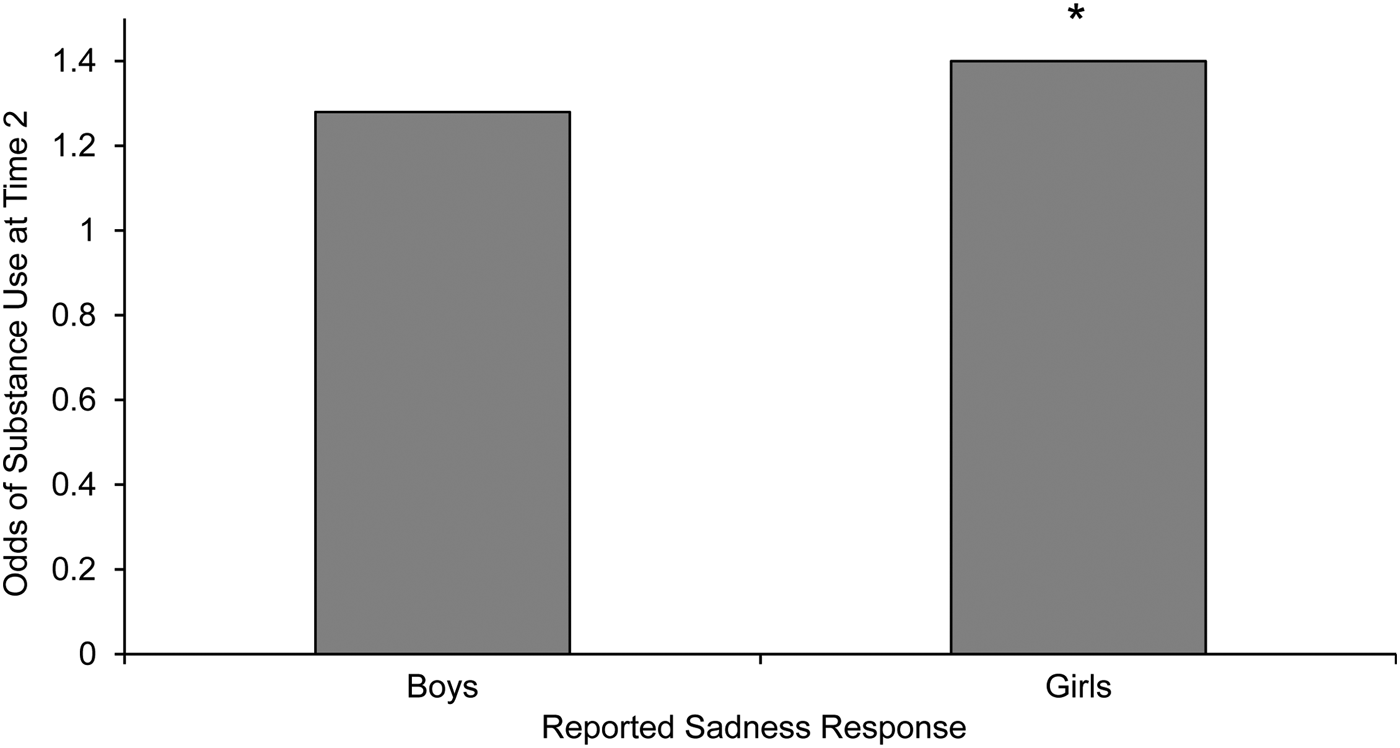
The logistic regression showed a significant Sadness Response × Gender interaction predicting substance use at Time 2, β = 0.33, Wald = 4.36, p < .05, exp(B) = 1.32 (95% CI = 1.00–1.76). Follow-ups indicated that, for girls, higher sadness response predicted greater chances of using substances at Time 2, β = 0.22, Wald = 4.00, p < .05, exp(B) = 1.40 (95% CI = 1.02–1.91) (see Figure 8). This indicated that for every 1 point increase in sadness response, girls were 1.40 times more likely to use substances at Time 2, controlling for Time 1 substance use. The follow-up analysis for boys was not significant. Sadness response and gender main effects predicting substance use were not significant.
Odds ratio for sadness stress responses to predict substance use at Time 2 (controlling for substance use at Time 1) for boys and girls.
Anxiety Response × Gender interactions, Anger Response × Gender interactions, and main effects of anxiety response, anger response, and gender were not significant.
Summary
In sum, there were gender differences in associations between physiological and emotional stress responses and future substance use. For girls, higher sadness responses to stress predicted future substance use, whereas for boys lower sAA responses predicted substance use.
Discussion
The present study was the first laboratory study to examine biobehavioral responses to stress and the prediction of future substance use longitudinally in PCE adolescents. We found that associations between stress responses and both prenatal/family risk status (prenatal cocaine exposure) and future substance use often depended on gender. PCE history was associated with higher stress responses for girls than for boys, and higher stress responses were associated with future substance use for girls. In contrast, PCE boys showed lower biobehavioral stress responses than PCE girls and lower stress responses predicted future substance use in boys. Overall, findings suggest different emotional and physiological risk profiles for adolescent girls versus boys.
Gender differences in PCE effects on stress responses
PCE girls showed heightened anxiety, anger, and sadness responses to the stressor as compared to PCE boys, and the pattern of means suggested that PCE girls also showed heightened emotional responses compared to NCE girls (see Figures 4–6), although this was only statistically significant in the case of anxiety. In contrast, PCE boys showed lower anxiety, anger, and sadness responses to stress as compared to PCE girls, and there was a nonsignificant pattern suggesting that PCE boys may also show blunted responses as compared to NCE boys (see Figures 4–6). Prenatal cocaine (and other drug) exposure, combined with potential postnatal exposure to compromised home and neighborhood environments, has been shown to lead to alterations in developing emotional stress response systems in children (for reviews, see Dow-Edwards, Reference Dow-Edwards2011; Eiden, Stevens, Scheutze, & Dombkowski, Reference Eiden, Stevens, Schuetze and Dombkowski2006; Kandel, Griesler, & Schaffran, Reference Kandel, Griesler and Schaffran2009; Mayes, Reference Mayes1999). Our findings suggest that the alterations continue into adolescence and that the type of alteration differs by gender, with at-risk girls showing heightened emotional arousal responses to stress and at-risk boys showing dampened stress responses. It is of note that we did not find PCE × Gender interactions or PCE effects for HR, BP, or sAA, suggesting that not all biobehavioral indicators show the same pattern. For the emotional responses, though, our findings suggest heightened stress responses among PCE girls and blunted responses among PCE boys.
The gendered patterns of emotional stress responses for PCE youth suggest that the risk associated with PCE status manifests itself as higher arousal responses to stress for PCE girls than for PCE boys. These heightened arousal responses in PCE girls relative to PCE boys involved not only gender-role consistent responses of anxiety and sadness but also gender-role inconsistent responses of increased anger. This is similar to other research finding that girls from low-income urban environments are socialized to express anger to appear “tough” and protect themselves in dangerous neighborhoods (e.g., Chaplin, Casey, Sinha, & Mayes, Reference Chaplin, Casey, Sinha and Mayes2010; Miller & Sperry, Reference Miller and Sperry1987). Several researchers suggest that gender differences in stress responses may contribute to the known gender differences in vulnerability to psychiatric disorders (Chaplin & Cole, Reference Chaplin, Cole, Hankin and Abela2005; Keenan & Hipwell, Reference Keenan and Hipwell2005; Klein & Corwin, Reference Klein and Corwin2002). Adolescent girls are more at risk for internalizing disorders, including depression and anxiety, than are boys, and heightened emotional responses to stress have been found to be risk factors for the development of internalizing problems (Chaplin, Reference Chaplin2006; Klimes-Dougan et al., Reference Klimes-Dougan, Hastings, Granger, Usher and Zahn-Waxler2001). Conversely, boys are more at risk for externalizing psychopathologies such as oppositional defiant disorder and conduct disorder, disorders that have been linked to blunted emotional and physiological arousal in response to stress (Gordis et al., Reference Gordis, Granger, Susman and Trickett2006; Raine, Venables, & Mednick, Reference Raine, Venables and Mednick1997; Susman, Reference Susman2006; Susman et al., Reference Susman, Dockray, Granger, Bladesa, Randazzo and Heaton2010). Thus, gender differences in effects of PCE may reflect risk for different psychological vulnerabilities in at-risk (cocaine exposed) boys versus girls.
Stress responses predict future substance use
In addition to different psychological outcomes for boys versus girls, there may be different pathways to the same outcome by gender. The present study examined gender differences in longitudinal pathways from stress responses to future substance use in adolescence. We found that heightened sadness in response to stress predicted substance use for girls whereas blunted sAA responses predicted substance use for boys. Thus, in this high-risk low-income sample, there were different pathways to substance use for boys versus girls, at least for these two markers of emotional and SNS responses. Other literature has identified different pathways to alcohol and drug use in youth, with some youth taking an internalizing pathway characterized by depression and feelings of negative affect, and some taking an externalizing pathway characterized by behavior problems, disinhibition, and sensation seeking, a pathway that may be linked to blunted physiological arousal (Zucker, Ellis, & Fitzgerald, Reference Zucker, Ellis, Fitzgerald, Babor, Hesselbrock, Meyer and Shoemaker1994). Our pattern of findings with low-income PCE and NCE youth suggests that girls may be more likely to take the internalizing pathway and boys more likely to take the externalizing pathway to substance use and potentially to later substance abuse or dependence. This is consistent with a previous finding that drinking behavior was associated with high levels of depression for girls and with high externalizing problems and low depression for boys (Chassin et al., Reference Chassin, Pitts and Prost2001) and also consistent with theories of gender differences in biobehavioral responses to stress and their sequelae (e.g., Chaplin & Aldao, 2012; Taylor et al., Reference Taylor, Klein, Lewis, Gruenewald, Gurung and Updegraff2000). Our findings suggest that stress response profiles are important to consider in understanding the development of substance use behavior in adolescence and for understanding the particular needs of boys versus girls in the prevention of adolescent substance use and risk for abuse. Stress responses could be measured and used to identify boys and girls in need of substance use prevention programs and could help to tailor these programs to be gender sensitive.
Main effects of PCE
Prenatal cocaine exposure also had main effects on stress responses that did not depend on gender. PCE youth were lower in baseline HR and DBP, and showed a lower cortisol change score in response to the stressor as compared to NCE youth. The cortisol finding suggests a blunted HPA axis response to stress in PCE youth. In our past findings with this cohort, we found PCE youth to have higher cortisol at baseline and 1 hr poststress than did NCE youth (Chaplin et al., Reference Chaplin, Freiburger, Mayes and Sinha2010). However, when looking at change from baseline to poststress, the PCE youth were relatively flat (they started high and stayed high). Thus, taken together with the current study's findings, this suggests that PCE youth have elevated basal cortisol levels, but a lack of cortisol increase following stress. This pattern of dampened cortisol stress responses in PCE youth is consistent with other research with early adolescent PCE youth (Fisher et al., Reference Fisher, Kim, Bruce and Pears2012; Lester et al., Reference Lester, LaGasse, Shankaran, Bada, Bauer and Lin2010) and with theories that prenatal stressors and early life stressors (such as the poverty and compromised home and neighborhood environments often experienced by youth with a drug-abusing mother) lead to an attenuated HPA axis response in youth (Gunnar & Vasquez, Reference Gunnar and Vazquez2001). A similar pattern of elevated basal cortisol levels and flattened cortisol response to stress has been shown in alcohol-dependent adults (e.g., Sinha et al., Reference Sinha, Fox, Hong, Bergquist, Bhagwagar and Siedlarz2009) and in boys with substance-abusing fathers (Moss, Vanyukov, & Martin, Reference Moss, Vanyukov and Martin1995), and so this pattern of blunted cortisol response to stress may also have implications for PCE youth's risk for addiction.
In our study, PCE status was not significantly associated with greater rates of substance use, after controlling for race, although as shown in Table 1, the simple association between PCE status and Time 1 substance use was significant. This lack of PCE effect on adolescent substance use diverges from previous findings (e.g., Delaney-Black et al., Reference Delaney-Black, Chiodo, Hannigan, Greenwald, Janisse and Patterson2011; Frank et al., Reference Frank, Rose-Jacobs, Crooks, Cabral, Gerteis and Hacker2011, Rocha et al., Reference Rocha, Mead and Kosofsky2002). It may be that PCE effects on substance use are not strong, but that PCE affects youth's progression from initial use in adolescence to the development of substance use disorders in early adulthood. It will be important to follow cocaine and other drug exposed youth into young adulthood to examine this important hypothesis.
Conclusions
Overall, we found that biobehavioral responses to stress across several physiological and emotional indicators were associated with prenatal cocaine exposure and predicted future substance use in low-income urban adolescents. Prenatal/family risk and substance use outcomes were linked to different patterns of emotional and SNS stress responses for boys versus girls. For girls, a heightened emotional stress response was linked to prenatal cocaine exposure risk status and, for sadness, to future substance use. For boys, a blunted emotional and sAA stress response was associated with PCE risk status and future substance use. In addition, regardless of gender, PCE youth showed a blunted cortisol response. It is notable that cocaine exposure was associated with certain forms of dysregulation (altered emotional and HPA axis responses to stress) whereas other forms of dysregulation (altered sadness and sympathetic responses) were associated with substance use risk. There were low-level correlations among cortisol, alpha amylase, and emotional responses, and thus, perhaps altered cortisol responses may contribute to alterations in sympathetic arousal and sadness, which then lead to risk for substance use.
It is important to note that PCE “effects” on youth stress responses reflect not only the biological effects of cocaine exposure in utero but also effects of other drugs used in pregnancy by cocaine-using mothers, genetic factors, and/or compromised postnatal caregiving environments experienced by children of cocaine-using mothers. Our parent-report measure of parent–child relationship quality did not moderate PCE effects, but future studies should use more in-depth characterization of parenting, including observational measures and also measures of parental monitoring and relations with peers, to more fully determine the role of parenting and other relationships. It is also notable that the participants in the present study were only a subset of our overall cohort of PCE children. Although this subsample was not different from the overall sample on demographic or birth variables, it is possible that they may be less severe than the overall sample. However, we still find significant PCE effects on stress responses even in youth that potentially had less severe exposure. Finally, while we examined substance use as an outcome, it may be that substance use is simply a marker for general distress or levels of psychopathology. Future research should determine specific pathways to substance use versus other forms of psychopathology for girls and boys.
Despite these limitations, this study is one of the first laboratory studies to examine prospective longitudinal associations between biobehavioral responses to a laboratory stressor and substance use in a group of low-income urban adolescents with prenatal and family-based risk for substance abuse. It is important to examine adolescent substance use in this at-risk sample because substance use in adolescence is predictive of later substance use disorders and other harmful risk behaviors such as risky sex. In the PCE youth in our study, who likely encounter many chronic life stressors, heightened emotional responses to stress were linked to prenatal cocaine exposure status and to future substance use for girls, whereas blunted emotional and sAA responses were linked for boys. These findings suggest different stress-related pathways to substance use for at-risk girls versus boys. Our findings indicate that it would be useful to target girls with high stress responses and boys with low stress responses for interventions to help prevent substance use disorders. Such interventions could be gender sensitive and address different forms of responses to stress in girls versus boys.