INTRODUCTION
Understanding the processes by which large herbivores modify terrestrial ecosystems is of key interest to ecologists, particularly with regard to the impacts on species diversity (Olff & Ritchie Reference OLFF and RITCHIE1998, Rogers Reference ROGERS, du Toit, Rogers and Biggs2003). The conversion of savanna woodlands to grassland is one such process that has been well documented across the African continent (Buechner & Dawkins Reference BUECHNER and DAWKINS1961, Dublin et al. Reference DUBLIN, SINCLAIR and MCGLADE1990, Laws Reference LAWS1970, Mapaure & Campbell Reference MAPAURE and CAMPBELL2002).
Elephant (Loxodonta africana (Blumenbach)) are believed to be one of the main drivers behind such changes due to their large body size, potentially high population densities and ability to remove mature trees from the ecosystem, either by pushing them over using their formidable bulk, or by ring barking them with their tusks (Dublin et al. Reference DUBLIN, SINCLAIR and MCGLADE1990, Midgley et al. Reference MIDGLEY, BALFOUR and KERLEY2005, Shannon et al. Reference SHANNON, PAGE, DUFFY and SLOTOW2006a, van de Vijver et al. Reference VAN DE VIJVER, FOLEY and OLFF1999). As a result concern has been expressed about the negative impacts of elevated elephant densities on both vegetation structure and diversity (Cumming et al. Reference CUMMING, FENTON, RAUTENBAUCH, TAYLOR, CUMMING, CUMMING, DUNLOP, FORD, HOVORKA, JOHNSTON, KALCOUNIS, MAHLANGU and PORTFORS1997, Johnson et al. Reference JOHNSON, COWLING and PHILIPSON1999, Lombard et al. Reference LOMBARD, JOHNSON, COWLING and PRESSEY2001, Owen-Smith et al. Reference OWEN-SMITH, KERLEY, PAGE, SLOTOW and VAN AARDE2006, Whyte et al. Reference WHYTE, VAN AARDE and PIMM1998).
However, the savanna dynamic is inherently complex with a range of drivers predicted to determine vegetation structure, including fire (Higgins et al. Reference HIGGINS, BOND and TROLLOPE2000), climate (Zeng & Neelin Reference ZENG and NEELIN2000) and herbivory (Prins & van der Jeugd Reference PRINS and VAN DER JEUGD1993, van de Koppel & Prins Reference VAN DE KOPPEL and PRINS1998). Further-more, elephant foraging behaviour provides important ecosystem benefits, through the cycling of nutrients (Ruess Reference RUESS and Walker1987), dispersal of seeds (Cochrane Reference COCHRANE2003) and opening up of dense habitats (Owen-Smith Reference OWEN-SMITH1992); an important process considering that many savannas are currently undergoing relatively high levels of bush encroachment (Wiegand et al. Reference WIEGAND, SALTZ and WARD2006).
In this study we focused on the elephant utilization of large trees (≥5 m in height) in a South African savanna. Large trees are integral to savanna structure, providing foraging opportunities and refuges for a myriad of species (Dean et al. Reference DEAN, MILTON and JELTSCH1999, Jeltsch et al. Reference JELTSCH, MILTON, DEAN and VAN ROOYEN1996), whilst also playing a key role in the cycling and distribution of nutrients (Belsky Reference BELSKY1994, Scholes & Archer Reference SCHOLES and ARCHER1997).
The persistence of large trees is therefore a key consideration in assessing the magnitude of potential threats such as over-utilization from elephant, fire and disease (Eckhardt et al. Reference ECKHARDT, VAN WILGEN and BIGGS2000). The Kruger National Park (KNP) is a case in point. From 1966–1994 elephant were culled at an annual rate of approximately 7% to maintain a park population of between 7000–8500 individuals – the predicted ecological carrying capacity (Whyte et al. Reference WHYTE, VAN AARDE and PIMM1998). Culling was suspended in 1994 and by 2006 the elephant population had increased to approximately 12 400 individuals. There is now concern that increasing elephant densities are having substantial impacts on the large trees of the KNP with negative consequences for ecosystem functioning (diversity and process) (Trollope et al. Reference TROLLOPE, TROLLOPE, BIGGS, PIENAAR and POTGIETER1998, Whyte et al. Reference WHYTE, VAN AARDE, PIMM, du Toit, Rogers and Biggs2003).
The hypotheses that we tested were: (1) The dynamic nature of the savanna coupled with relatively high levels of disturbance (herbivory, fire and disease), will result in significantly fewer large trees in each successive height class. (2) Elephant will exhibit species preferences with regard to both their foraging behaviour and the intensity of utilization. (3) Tree survival following pushing events will depend largely on tree height and species characteristics. (4) Trees closer to water points are more likely to be utilized as a result of elephant being a water-dependent species.
METHODS
Study site
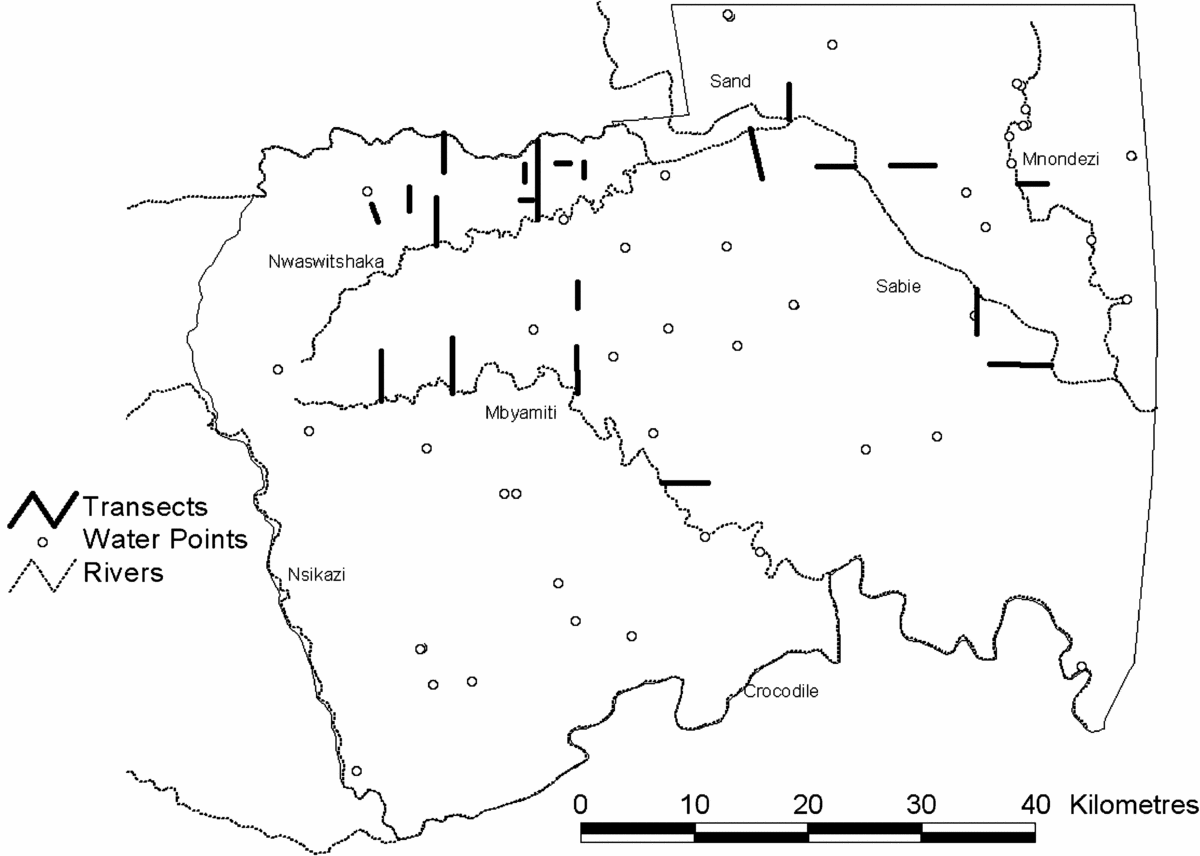
The study site (approximately 2100 km2 in size) was located in the southern section of the KNP (Figure 1: 25°28′–24°91′S; 31°95′–31°32′E). The KNP is divided roughly in half (north to south) according to the dominant basaltic and granite geological formations. The clay soils of the east (basalt) are considered to be of higher nutrient status than the sandier soils of the west (granite) (Venter et al. Reference VENTER, SCHOLES, ECKHARDT, du Toit, Rogers and Biggs2003). The study site receives approximately 500–700 mm y−1 of rainfall and experiences hot, wet seasons and cooler, dry seasons. The average maximum temperature during the wet season is 33 °C, whilst the average minimum temperature in the dry season is 6 °C (Venter et al. Reference VENTER, SCHOLES, ECKHARDT, du Toit, Rogers and Biggs2003). The southern section of the KNP is classified into eight broad vegetation types: Acacia thickets, riverline thickets, lowveld sour bushveld, mountain bushveld, mixed Combretum/Terminalia woodland, Combretum woodland, Acacia marula woodland and thornveld. There are four perennial rivers that flow west to east in the KNP, including the Sabie and the Crocodile in the southern section of the park. There are also a substantial number of ephemeral rivers that flow through the park during the wet season in addition to point water sources such as springs, pans and artificially pumped water points maintained by KNP management (Figure 1). The average elephant density of the study area increased from 0.75 elephant km−2 to 1.13 elephant km−2 over the past 20 y (Grant pers. obs.).
Map of the southern section of Kruger National Park indicating the location of major rivers, water points and the large tree transects.

Data collection
Large trees were defined as being equal to or greater than 5 m in height; this included mature trees whilst avoiding too many shrubs and saplings. Twenty-two transects were completed during a 3-wk period in April 2006; 14 of these were aligned perpendicular to rivers. The other eight transects traversed existing photo-points that were established to monitor changes in vegetation structure (Figure 1). The transects were 10 m wide and followed a predetermined line of latitude or longitude. A GPS was used to record the exact position of each tree, a maximum of 5 m either side of the transect line. The species name was recorded and the height of the tree calculated using one of the observers as a 1.8 m scale. The same technique was used to measure the height below canopy and the canopy diameter. The stem diameter(s) of the tree was recorded at 1 m above ground level and the number of stems was counted. The extent of elephant utilization was categorized (tree pushing, debarking or branch removal) depending upon the parts of the tree targeted (small/secondary and large woody/primary branches, stem, bark and roots) and the relative impact (percentage of available biomass removed), using six categories: (1) 1–10%, (2) 11–25%, (3) 26–50%, (4) 51–75%, (5) 76–90% and (6) 91–100%. Mortality and coppicing were also noted and the cause(s) stated if known. Finally, the age of the utilization was classified on a simple two-point scale, less than 6 mo and greater than 6 mo, this was done by comparing utilization with elephant foraging events that had been accurately dated.
Data analysis
The relative abundance and utilization of each species and height class was calculated as a proportion of the total dataset. The height classes were distinguished using 1.5 m increments up to 15 m, the final category included all trees >15 m. An ANCOVA determined whether the utilization of trees was related to the abundance in each height class, which required log10-transformation of the numbers of trees and calculation of the mean height of trees within each height class to provide a covariate. The intensity of utilization was determined by taking the mean percentage utilization (using the mid-point of each category) for all the trees in a particular height class/species. All of the data were tested for normality using the Kolmogorov–Smirnov test.
The proportion of trees utilized, pushed over and debarked was established for each of the height classes and the five most common species. Tree pushing was further analysed for Acacia nigrescens and Sclerocarya birrea – two frequently targeted species with similar growth forms. A Kruskal–Wallis test was used to compare the heights, canopy diameters, stem diameters and the height below canopy of trees that were pushed over with those that were not, to establish whether there were structural differences in the trees targeted for pushing. The same analysis was carried out for debarked trees. The levels of elephant utilization and tree pushing were also determined for the four main geological substrates, basalt, granite, rhyolite and gabbros.
Regression analyses were used to investigate the influence of permanent water on the utilization of large trees by elephant. A GIS (ArcView 3.2©) categorized the data into distinct 200-m buffers (0–4000 m) depending upon the distance from permanent water. The combined length of the transects in each buffer was measured using the X-tools function and the number of trees per hectare was calculated. The proportion of trees utilized, debarked and pushed over was determined for each buffer. The intensity of utilization was calculated by taking the mean values of biomass removed (%). To further explore the relationship between elephant utilization and the distribution of large trees, the densities of the three most commonly targeted tree species were calculated with regard to distance from permanent water.
RESULTS
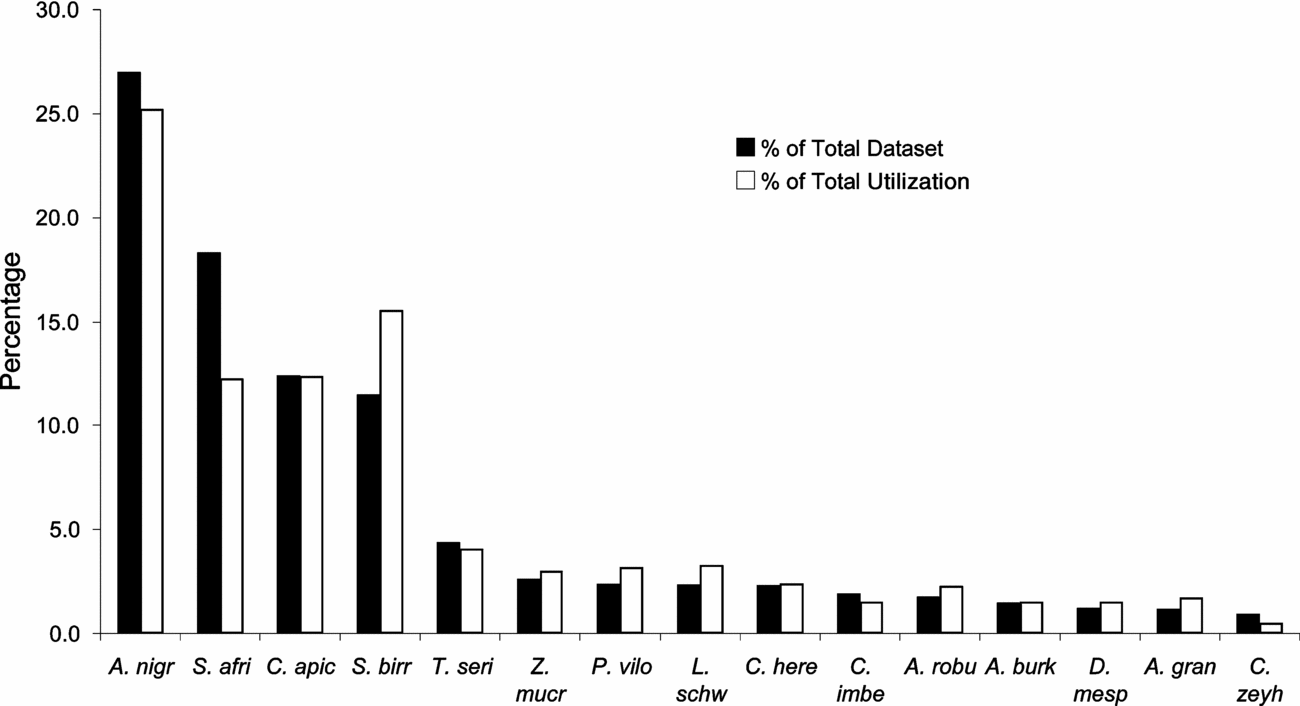
A total of 3082 large trees was sampled using 22 transects with a combined length of 67 km. Forty-eight species were recorded, with five species accounting for 65% of the dataset (Acacia nigrescens, Spirostachys africana, Combretum apiculatum, Sclerocarya birrea and Terminalia sericea (Coates Palgrave Reference COATES PALGRAVE2003)). Acacia nigrescens was the most common species (27% of the dataset). Of the 15 most abundant species, only Sclerocarya birrea accounted for a greater proportion of the total observed elephant utilization (16%), in comparison to its proportional representation (12%) within the dataset. In contrast, Spirostachys africana exhibited a lower proportion of the total utilization (12%) compared to its proportional abundance (18%) (Figure 2). Of the large trees sampled, 10% were dead with elephant directly accounting for 4% of the mortality, fire a further 2%, whilst the remaining 4% were dead due to unspecified causes. It is likely that the combined effects of elephant and fire played a significant role in the mortality cases which were not classified, however this is difficult to assert without repeat sampling.
The proportional representation of the 15 most common large tree species in the southern section of KNP, and their relative utilization by elephant (Acacia nigrescens, Spirostachys africana, Combretum apiculatum, Sclerocarya birrea, Terminalia sericea, Ziziphus mucronata, Philenoptera violacea, Lannea schweinfurthii, Combretum hereroense, Combretum imberbe, Acacia robusta, Acacia burkei, Diospyros mespiliformis, Acacia grandicornuta and Combretum zeyheri).

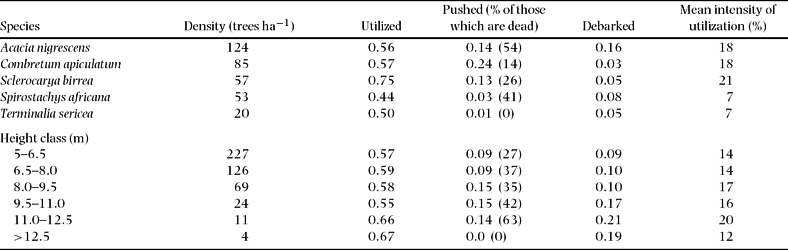
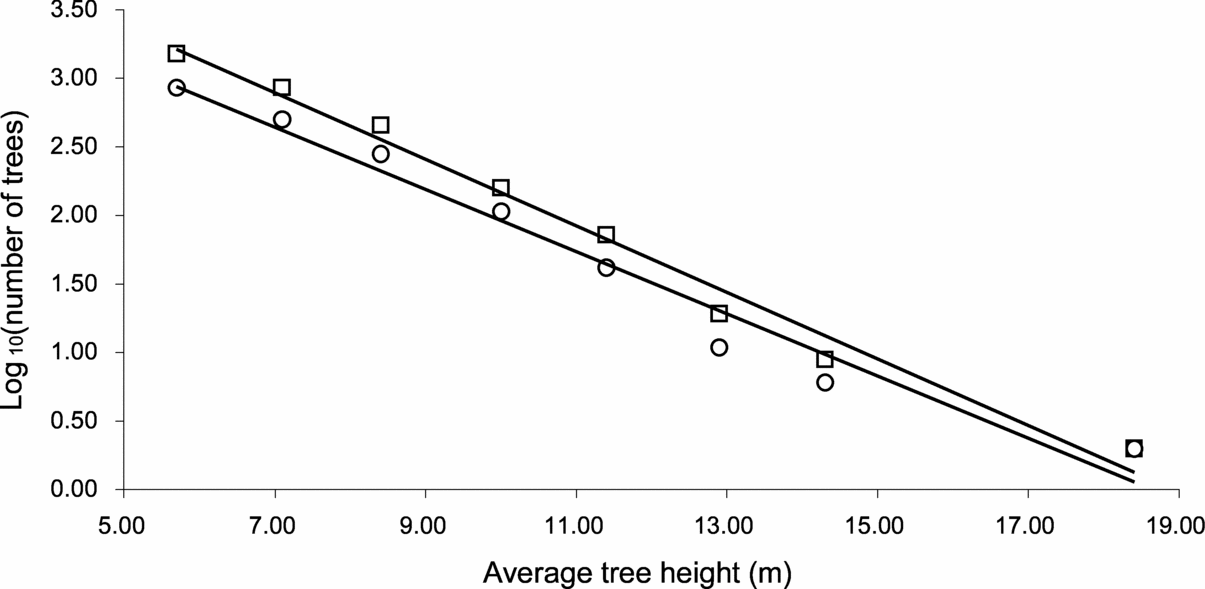
Trees in the 5–6.5-m height category were the most abundant (Table 1). Furthermore a negative linear re-lationship was demonstrated with increasing tree height and log(abundance) (F1,7 = 385, P < 0.001, r 2 = 0.99; Figure 3). Despite the fact that a larger number of trees were targeted by elephant in the 5–6.5-m category (F1,7 = 188, P < 0.001, r 2 = 0.97), the actual proportions of trees utilized in each height class were similar, with a mean of 61% for trees between 5 m and 15 m in height. An ANCOVA (comparing the regression slopes for abundance and utilization across height classes) confirmed that the number of trees utilized was directly correlated with abundance (F1,12 = 0.561, P > 0.4; Figure 3). The types of utilization varied among height classes and there also appeared to be a preference for trees on the gabbro substrate (n = 451), with an associated higher level of utilization (70%) and tree pushing (19%) when compared with the granite (n = 2282), basalt (n = 203) and rhyolite (n = 146) substrates (60% for utilization and 10% for tree pushing).
Patterns of elephant utilization for the five most common species (Acacia nigrescens, Spirostachys africana, Combretum apiculatum, Sclerocarya birrea and Terminalia sericea) and six height classes. Utilization, pushing and debarking are recorded as proportions of the total within each category.

A regression analysis of the number (log10) of large trees (open squares) in each height class (F1,7 = 385, P < 0.001, r 2 = 0.99) and the number (log10) of trees utilized by elephant (open circles) in each height class (F1,7 = 188, P < 0.001, r 2 = 0.97).

Elephant pushed over trees of 5.0–12.5-m in height with the greatest proportion being in the 8.0–12.5-m height categories (Table 1). Trees in the smaller height classes were more likely to survive when pushed over, with 63% survival in the 5.0–6.5-m category, compared with only 35% at the 11.0–12.5-m scale (Table 1). Pushed over trees were significantly taller ( , P < 0.01) and had a greater height below canopy (
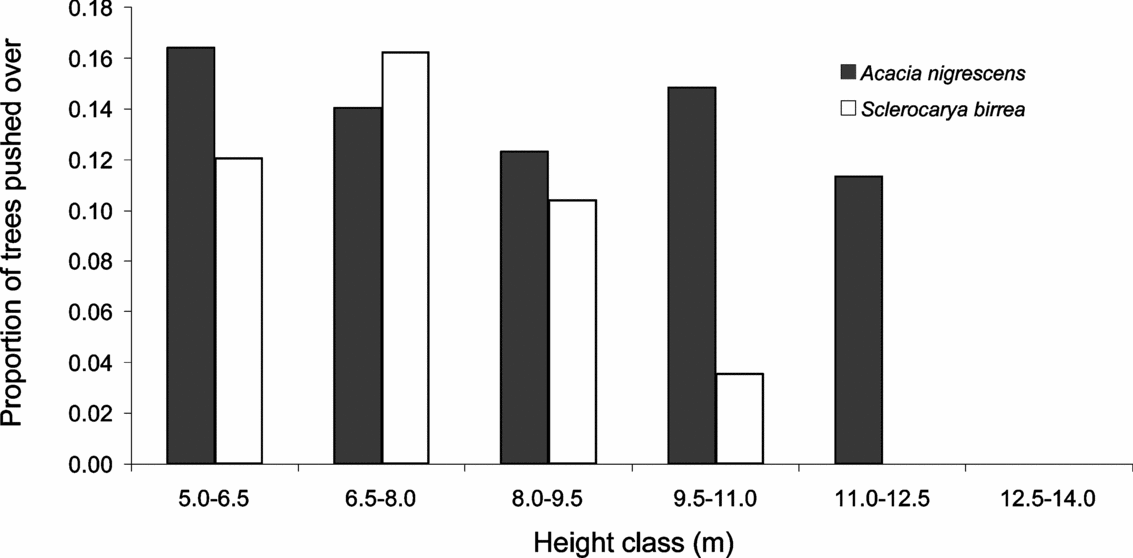
 ) than non-pushed trees. Combretum apiculatum was proportionately the most targeted tree species with regard to pushing events. Despite this it exhibited relatively high survival when compared to Acacia nigrescens, which had a >50% chance of being killed when pushed over (Table 1). A comparison of Acacia nigrescens and Sclerocarya birrea revealed that there were different patterns in the pushing over of these common species. Acacia nigrescens exhibited a fairly consistent proportion of pushing up until the 11–12.5-m height class, whilst Sclerocarya birrea exhibited a peak at the 6.5–8.0-m class and decreased steeply thereafter (Figure 4).
The proportion of Acacia nigrescens and Sclerocarya birrea that were pushed over by elephant.

Acacia nigrescens experienced the highest proportion of debarking, three times greater than the levels experienced by Sclerocarya birrea (Table 1). Debarked trees also exhibited statistically different dimensions from those that were not debarked, with larger stem diameters (χ21 = 6.12, P < 0.02), heights (χ21 = 11.3, P = 0.01) and canopy heights (χ21 = 5.78, P < 0.02). The 11.0–12.5-m height class had the highest relative levels of debarking amongst the different height classes (Table 1). The intensity of utilization varied between species as well, with Sclerocarya birrea being targeted to the greatest extent, whilst Spirostachys africana and Terminalia sericea had significantly less biomass removed on average. The 8.0–12.5-m height classes of tree experienced the highest intensities of utilization.
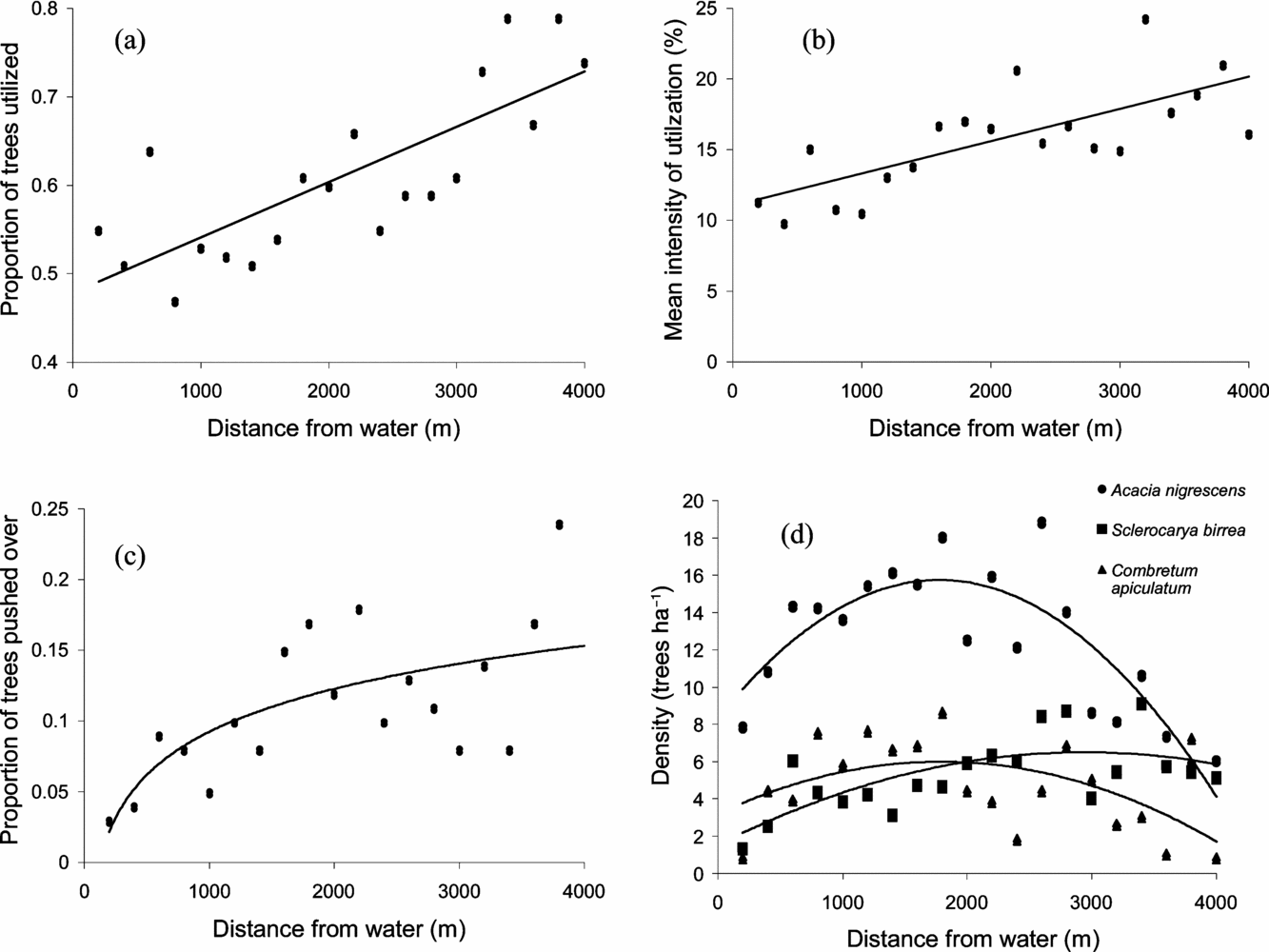
The proportion of trees utilized (F1,18 = 28.7, P < 0.001, r 2 = 0.62; Figure 5a), and the intensity of utilization (F1,18 = 20.2, P < 0.01, r 2 = 0.53; Figure 5b) exhibited a positive linear relationship with distance to water, whilst the proportion of trees pushed over (F1,17 = 13.7, P < 0.01, r 2 = 0.45; Figure 5c) showed a logarithmic relationship. There was no relationship between the proportion of trees that were debarked and distance from water (F1,18 = 0, P = 1.00, r 2 = 0.00). The densities of the three most commonly utilized species demonstrated a quadratic relationship with distance from water. Acacia nigrescens (F1,16 = 13.5, P < 0.001, r 2 = 0.61) densities peaked at approximately 2000 m, whilst Combretum apiculatum (F1,16 = 6.5, P < 0.01, r 2 = 0.43) at 1500 m and Sclerocarya birrea (F1,16 = 6.6, P < 0.01, r 2 = 0.44) at 3000 m (Figure 5d).
The utilization of large trees by elephant as a function of distance from permanent water, including the proportion of trees utilized (F1,18 = 28.7, P < 0.001, r 2 = 0.62) (a), mean intensity of utilization (F1,18 = 20.2, P < 0.01, r 2 = 0.53) (b), proportion of trees pushed over (F1,17 = 13.7, P < 0.01, r 2 = 0.45) (c) and the densities of the three most commonly utilized species; Acacia nigrescens (F1,16 = 13.5, P < 0.001, r 2 = 0.61), Combretum apiculatum (F1,16 = 6.5, P < 0.01, r 2 = 0.43) and Sclerocarya birrea (F1,16 = 6.6, P < 0.01, r 2 = 0.44) (d).

DISCUSSION
Large-tree structure and diversity
Large-tree structure in the Southern KNP was dominated by a comparatively small number of species that exhibited a type two survival curve – where mortality is relatively constant with age (Begon et al. Reference BEGON, HARPER and TOWNSEND1996). The majority of trees were <10 m in height with only 1% reaching 15 m or more. These very large trees were generally found close to the main river courses, where soil moisture and nutrient levels are at their highest (Scholes & Archer Reference SCHOLES and ARCHER1997). As predicted by hypothesis 1, we conclude that trees >15 m in height are rare in the savanna biome due to the dynamic nature of the system and high levels of disturbance (e.g. herbivory, fire and drought).
Elephant utilization
Elephant utilized 60% of the trees sampled, of which 7% (or 4% of the total) had been killed as a direct result of their foraging behaviour. However, these are cumulative results (over time) and large trees commonly exhibited utilization that occurred approximately 2–5 y prior to our study. To elucidate this point further, only 2% of the trees had been utilized in the previous 6 mo. Data from the Phinda Private Game Reserve and the Mkuze Game Reserve concur with our findings, with approximately 50% of trees above 5 m having been utilized to some extent (Repton Reference REPTON2007).
Elephant did not generally exhibit a strong species preference as predicted by hypothesis 2. However there were two notable exceptions, Spirostachys africana which was under-utilized and Sclerocarya birrea which was actively selected for and exhibited the highest mean intensity of utilization. Spirostachys africana is often associated with low-lying thickets and has high levels of secondary compounds that are known to deter large herbivores (Midgley et al. Reference MIDGLEY, BALFOUR and KERLEY2005). Sclerocarya birrea on the other hand is a highly palatable species favoured by elephant (Owen-Smith Reference OWEN-SMITH1992, Trollope et al. Reference TROLLOPE, TROLLOPE, BIGGS, PIENAAR and POTGIETER1998) and as a result, could be sensitive to the effect of increased elephant populations (Gadd Reference GADD2002, Jacobs & Biggs Reference JACOBS and BIGGS2002). At the landscape scale there appears to be a preference by elephant for the gabbro soil type and this may well be linked to higher nutrient status. However, further investigation is required to fully understand the influence of geology.
The number of individuals utilized by elephant in each height class exhibited a linear relationship with abundance, suggesting that elephant target trees as they encounter them, rather than specifically targeting a particular height class. Such an approach is indicative of the generalized foraging behaviour which elephant adopt in order to meet their substantial energetic demands (Owen-Smith Reference OWEN-SMITH1992, Shannon et al. Reference SHANNON, PAGE, DUFFY and SLOTOW2006a). Nonetheless, the actual mode of utilization depended upon height class, with the dimensions of the tree being statistically significant for both the debarking and pushing events. The increased height below the canopy of larger height classes makes the trunk more accessible and increases the likelihood of the tree being pushed over in order to access the canopy. Thus the average height was greater for trees targeted for pushing as opposed to the ones that were not pushed. Similarly, the trees that are targeted for debarking are likely to have a wide stem and thick, easy-to-strip bark (e.g. Acacia nigrescens).
Acacia nigrescens was the most commonly pushed over tree species and in addition to abundance, this may also be linked to its shallow roots and tall growth form, which enables it to be pushed over with greater ease than Sclerocarya birrea for example. Larger trees were more likely to die after being pushed over due to the increased probability that the main stem or root system was snapped. In the smaller height classes, species such as Combretum apiculatum re-sprout with increased vigour following a pushing event (Eckhardt et al. Reference ECKHARDT, VAN WILGEN and BIGGS2000, Thrash et al. Reference THRASH, NEL, THERON and DU TOIT1991). These findings concur with hypothesis 3, which proposed that mortality following a pushing event is directly linked to the characteristics of the tree (e.g. species, height and stem diameter).
It is important to note that due to their larger body size, greater energetic requirements and independent ranging behaviour, male elephant are more likely to target large trees and exhibit destructive foraging behaviour than females (Shannon et al. Reference SHANNON, PAGE, DUFFY and SLOTOW2006a). Furthermore, male elephant push over large trees for social reasons, including impressing rivals during their annual musth cycle (pers. obs.).
Water availability and large tree utilization
Elephant are water dependent and the location of drinking points has a significant bearing on their distribution and population densities (Chamaillé-Jammes et al. Reference CHAMAILLÉ-JAMMES, VALEIX and FRITZ2007, Owen-Smith Reference OWEN-SMITH1996, Redfern et al. Reference REDFERN, GRANT, BIGGS and GETZ2003). Interestingly, our study suggests that the utilization of large trees increases with distance from water (up to 4 km), a result that contradicts the fourth hypothesis proposed in the introduction. However, this situation may reflect the densities of the three most commonly utilized species in KNP, which peaked at 1.8–3.5 km from rivers and water points (particularly pertinent for tree pushing – a species-specific behaviour). Previous studies have indicated that elephant preferentially browse in open woodland habitats that are commonly situated on well-drained soils at intermediate distances from permanent water (Owen-Smith Reference OWEN-SMITH1992, Shannon et al. Reference SHANNON, PAGE, DUFFY and SLOTOW2006b). Furthermore, Nellemann et al. (Reference NELLEMANN, MOE and RUTINA2002) demonstrated that terrain ruggedness is a significant factor relating to elephant use, due to the provision of nutrient hotspots on the catena and improved forage quality.
Tree pushing is also likely to be facilitated by the shallow soils associated with open woodlands compared with the deeper clay soils which predominate close to rivers (Shannon et al. Reference SHANNON, PAGE, DUFFY and SLOTOW2006b). These findings have significant implications for understanding the utilization and mortality of large trees, especially in KNP where 80% of the park is within 5 km of permanent water sources (Gaylard et al. Reference GAYLARD, OWEN-SMITH, REDFERN, du Toit, Rogers and Biggs2003), and well within the daily range of an elephant (Owen-Smith Reference OWEN-SMITH1992).
Large-tree decline
Eckhardt et al. (Reference ECKHARDT, VAN WILGEN and BIGGS2000) demonstrated that the large trees on basalt soils decreased by 38% from 1984 to 1996. Interestingly KNP management culled elephant until 1994. Therefore if elephant were driving these reductions in large trees it was occurring long before the moratorium on culling. The authors did however note a significant correlation in the reduction of trees with increasing fire frequency as did Trollope et al. (Reference TROLLOPE, TROLLOPE, BIGGS, PIENAAR and POTGIETER1998), but this was not sufficient alone to explain the decline in large trees. Instead it is postulated that the effects of fire and large herbivores are inextricably linked (Baxter & Getz Reference BAXTER and GETZ2005, Dublin et al. Reference DUBLIN, SINCLAIR and MCGLADE1990, van de Koppel & Prins Reference VAN DE KOPPEL and PRINS1998).
Moreover, whilst there may be a decline in the numbers of large trees, this is not necessarily indicative of ecological degradation. During the late 19th century the densities of herbivores in southern and eastern Africa decreased sharply after a series of large-scale episodic die-offs, caused by rinderpest (Prins & van der Jeugd Reference PRINS and VAN DER JEUGD1993, Skarpe et al. Reference SKARPE, AARRESTAD, ANDREASSEN, DHILLION, DIMAKATSO, DU TOIT, HALLEY, HYTTEBORN, MAKHABU, MARI, MAROKANE, MASUNGA, MODISE, MOE, MOJAPHOKO, MOSUGELO, MOTSUMI, NEO-MAHUPELENG, RAMOTADIMA, RUTINA, SECHELE, SEJOE, STOKKE, SWENSON, TAOLO, VANDEWALLE and WEGGE2004). As a result, the equilibrium between herbivores and vegetation shifted in favour of woody species (van de Vijver et al. Reference VAN DE VIJVER, FOLEY and OLFF1999). Since then, the herbivore densities in many protected areas have recovered and the equilibrium may well be readdressing itself. For example, Skarpe et al. (Reference SKARPE, AARRESTAD, ANDREASSEN, DHILLION, DIMAKATSO, DU TOIT, HALLEY, HYTTEBORN, MAKHABU, MARI, MAROKANE, MASUNGA, MODISE, MOE, MOJAPHOKO, MOSUGELO, MOTSUMI, NEO-MAHUPELENG, RAMOTADIMA, RUTINA, SECHELE, SEJOE, STOKKE, SWENSON, TAOLO, VANDEWALLE and WEGGE2004) highlighted the decline in large trees along the banks of the Chobe River, which they suggest are likely to have established as a cohort during the late 1890s when herbivore densities were suppressed.
In conclusion, high densities of large trees are unlikely to be a common feature of dynamic savanna ecosystems. It is also improbable that the decline of large trees in KNP is linked solely to the foraging behaviour of elephant, despite their well-documented impacts and the augmentation of water. Large trees experience fluctuating levels of mortality due to a combination of drivers (e.g. herbivory, fire, drought and disease). More importantly, the role of senescence in mortality of large trees is poorly understood. If recruitment was episodic (Skarpe et al. Reference SKARPE, AARRESTAD, ANDREASSEN, DHILLION, DIMAKATSO, DU TOIT, HALLEY, HYTTEBORN, MAKHABU, MARI, MAROKANE, MASUNGA, MODISE, MOE, MOJAPHOKO, MOSUGELO, MOTSUMI, NEO-MAHUPELENG, RAMOTADIMA, RUTINA, SECHELE, SEJOE, STOKKE, SWENSON, TAOLO, VANDEWALLE and WEGGE2004, Staver et al. Reference STAVER, BOND and FEBRUARY2007), mass mortality from senescence in the future may override ongoing attrition from factors such as elephants. The key issue for retention of ecological process of large trees is the indirect effect, by elephant, fire, drought etc., on the recruitment of smaller individuals into the large tree class to replace losses. Further study is required on the potential for synchronous senescence, recruitment into the large tree class, and the ecological role of large trees for nutrient cycling and provision of habitat to specialist species on a spatially explicit scale.
ACKNOWLEDGEMENTS
We are grateful to SANParks for providing access to the study site, whilst SANParks game scout Samuel Nkuna is thanked for providing valuable knowledge and ensuring our safety during the fieldwork. This study was funded by Distell (Pty) Ltd through a donation to the Amarula Elephant Research Programme, University of KwaZulu-Natal, and the National Research Foundation (Grant to RS: FA2006032300024).