Introduction
Between 2009 and 2011, five new refugee camps, known as the Dollo Ado camps, were opened within 100 km of the Ethiopian-Somali border. Created to house 160,000 Somali refugees fleeing a combination of conflict, famine, and drought, they were located in an arid region, with limited infrastructure, and few natural resources. Furthermore, the camps were economically isolated from much of the rest of Ethiopia due to an internal armed conflict between Oromia and the Somali region of Ethiopia. During the next decade, the United Nations Refugee Agency (UNHCR) collaborated with the national government and the private sector to build refugee and host community livelihoods for the region.Footnote 1
The Dollo Ado camps have benefited in particular from the largest ever private sector investment in a refugee-hosting region, with the IKEA Foundation contributing over $100 million to support infrastructure and livelihoods opportunities for refugees and the host community. Together, UNHCR and the IKEA Foundation created a ‘cooperatives’ model of income-generating groups in sectors such as agriculture, livestock, and retail commerce. These investments have made a measurable difference to improving levels of employment, income levels, and social cohesion among refugees and Ethiopian citizens.Footnote 2
Despite these improvements, the overall proportion of the adult population employed in these target sectors remained below 10 per cent, and the majority of the refugee population earned incomes below the poverty line by 2020.Footnote 3 Meanwhile, several of the cooperatives failed or had limitations because they were unable to establish adequate market linkages within the wider Ethiopian economy. And yet, our research revealed that for many refugees found other ways – beyond humanitarian aid or the UNHCR livelihoods programmes – to make a living, support entrepreneurial activity, and access additional sources of aid. In particular, many relied upon their own cross-border activities and strategies – either moving back and forth across the Ethiopian-Somali border themselves or relying upon the mobility of others to create opportunities.
The importance of cross-border exchange should be unsurprising. The Somali region of Ethiopia was long perceived as part of Greater Somalia,Footnote 4 and the Ethiopian border town of Dollo Ado is connected to Doolow by a bridge that crosses the Dawa River. Dollo Ado itself is a market town buying and selling goods imported mainly from South Central Somalia, or to a lesser extent brought from Kenya across the Mandera border. Our research reveals that refugees regularly cross the Dawa River, access assistance in internal displacement camps in Somalia, return to tend farms and livestock in their homeland, or participate directly and indirectly in cross-border trade.
And yet these cross-border activities and strategies are systematically and strategically ignored by the United Nations organisations that seek to serve refugees and to create sustainable livelihood opportunities for refugees and the host community. It is not that United Nations staff are individually unaware of the importance of cross-border and transnational activities; many acknowledge and speak openly about them. It is that, at an institutional level, there is systematic unwillingness and inability to recognise and take into account transnational economic activity within the design of livelihoods programmes.
These observations lead to an important empirical puzzle: how and why do United Nations humanitarian organisations systematically and strategically ignore refugees’ cross-border activities? Exploring this question in the context of the Ethiopian-Somali border offers a case study for analysing the broader issue of how humanitarian and development programmes become institutionally blind to transnational activities, despite their clear relevance to stated organisational objectives such as improving livelihoods and socioeconomic outcomes for refugees.
Exploring these questions has broader theoretical implications for the study of international institutions. Related questions have been explored by the so-called ‘post-development’Footnote 5 and ‘post-humanitarian’Footnote 6 literatures to examine the work of development and humanitarian organisations from a broadly Foucauldian perspective.
James Scott's Seeing like a State highlights how modern nation-states adopt a particular lens for viewing their subject populations.Footnote 7 He highlights the techniques that states use to render their populations ‘legible’ for the purposes of governance, such as the census, standardised measures, and uniform language. However, these techniques often disregard the contextual and local knowledge that are critical for managing the complexities of sociocultural life, sometimes leading to counterproductive or even disastrous consequences for people's daily lives. Such ideas have been applied to international development to consider the how ‘top-down’ development practice distorts organisational perspectives relating to subject populations.Footnote 8 James Ferguson's Anti-Politics Machine,Footnote 9 which through an ethnography of the World Bank's work in Lesotho, revealed the sources of repeated failure to achieve stated objectives. This failure, Ferguson attributed to the Bank's inability to understand local-level, context-specific dynamics. While Scott is interested in the ‘top-down’ gaze of the nation-state, Ferguson shifts our attention to international organisations.
However, studying the interaction of international organisations and their subject populations has generally been marginal to the mainstream study of international institutions, particularly within International Relations. For example, there has been relatively little empirical exploration of how international humanitarian organisations’ programmatic assumptions relate to the lived realities of crisis-affected communities.
Our findings show intriguing parallels with Ferguson's Anti-Politics Machine. While the cross-border activities of refugees are widely documented in forced migration scholarship,Footnote 10 we demonstrate that the international refugee regime, represented by UNHCR primarily, generally does not recognise such movements and rarely incorporates them into assistance policies or programmes. Meanwhile, Ferguson's ethnography of the World Bank's programmes in Lesotho reveals the inability of an international organisation to recognise a population's cross-border and transnational activities with South Africa. The Bank's dominant analytical and programmatic tools imply that livestock activities represent the local population's most important livelihood activities when, in practice, livestock mainly represents a savings mechanism. We show likewise that UNHCR's livelihoods focus in Dollo Ado systematically sidelines the centrality of the cross-border practice embedded in this border area. As in Ferguson's account this has distorting effects on the effectiveness of international programmes and is rooted in state-centric discursive frames.
However, our case study provides additional insights that critically engage with Ferguson's ethnography. Specifically, we end up with a different interpretation of the disjuncture between UNHCR institutional blindness and the practical reality of refugees’ socioeconomic strategies. Ferguson's approach is structural in orientation; adopting a Foucauldian approach he regards the World Bank's perspective as driven by a dominant discourse.Footnote 11 In doing so he is widely critiqued for under-playing the role of agency.Footnote 12 In contrast, the Dollo Ado case reveals particular UNHCR field staff are fully aware of the importance of cross-border dynamics. However, they are unable to formally institutionalise these observations within programming because of a combination of the organisation's relationship with a government concerned to discourage cross-border movement, and an organisation that is structurally ordered on a nation-state level basis.
In that sense, we go beyond Ferguson's view that international institutions’ misperception of their subject populations can be explained by ‘discourse’ because the source of the ‘anti-politics’ lies not simply in discourse, but also in the agency of aid workers as well as bureaucratic politics and political economy. Unpacking this requires us to explore the range of actors and interests that underlie the systematic and strategic blindness to transnationalism. It also necessitates methodological tools that go beyond Ferguson's reliance on discourse analysis. Through our empirical findings, we contribute to the debates within Development Studies relating to the post-development literature and particularly James Ferguson's analysis of international institutions. We further contribute to the vast International Relations literature on international institutions, which has seldom engaged with the post-development literature nor considered the ways in which international organisations may systematically and strategically fail to recognise or engage with the activities and behaviour of the populations they ostensibly serve.Footnote 13
In order to make these contributions, we draw upon qualitative and quantitative methods to explore Somali refugees’ cross-border movements in Ethiopia-Somalia border camps and sheds light on international organisations’ responses and perspectives to refugees’ socioeconomic strategies that span across international borders. Methodologically, our approach moves beyond the discourse analysis-based approach of the post-development and post-humanitarian literatures in order to embrace a mixed methods approach. We collected both first-hand qualitative and quantitative data – including an original survey of over five thousand refugees and host community members.
Following this introduction, first, we present an overview of relevant bodies of literature on refugees’ cross-border movements and aid agencies’ perspectives on such mobility. Second, we explain the context of Dollo Ado and our research methodology. Third, we demonstrate how refugees strategically use cross-border mobility to improve their current socioeconomic situation and to make plans for the future. Fourth, we explore the international organisation perspective, and the reasons underlying institutional ‘blindness’. Finally, we conclude by discussing key implications for theory and practice.
Literature and contributions
As one of the defining features of globalisation, the increased spatial mobility of goods, capital, people, and information across national borders and state jurisdictional boundaries has attracted significant attention from scholars in the last few decades. There is a substantial volume of literature on a range of informal activities taking place in border areas, especially in the Global South where the national borders are frequently less tightly controlled by states.Footnote 14
Relatedly, forced migration scholarship has identified various examples of refugees’ transnational cross-border movement in their daily lives in exile.Footnote 15 In this case cross-border movement of forced migrants does not refer to the one-time crossing of a border from a home country in order to flee from conflict or persecution, but usually refers to regular circulatory movement between a country of refuge and a country of origin.Footnote 16 By circulating across borders, refugees often pursue or diversify livelihoods, maintain family and other social ties, check on properties or even evaluate the possibility of return.Footnote 17
Among existing studies on refugees’ multi-directional movements, Alessandro Monsutti's pioneering research sheds light on complex patterns of movements among Afghan refugees across Afghanistan, Pakistan, and Iran. According to Monsutti, prewar mobility often continues during displacement as a survival strategy; border movements of Afghans are neither definitive nor temporary, but rather cyclical and ongoing.Footnote 18 Through cross-border movements, refugees aim to set out strategies that improve their access to opportunities, welfare and protection for themselves.Footnote 19
Outside of forced migration studies, which thus far has primarily consisted of ethnographic work with a focus on individual- or household-level perspectives, Ferguson's Anti-Politics Machine offers an institutional perspective on similar cross-border strategies in the development sector.Footnote 20 Ferguson's ethnography of the World Bank's work in Thaba-Tseka, Lesotho revealed the sources of repeated failures of ‘development’ projects in the country, examining the paradox of how – despite repeated failure – ‘development’ is able to retain its conceptual legitimacy, and repeatedly reinvent itself.
The book comes to two main conclusions. First, the distinctive discourse and conceptual apparatus of development experts effectively screens out and ignores the political dynamics and historical contexts surrounding beneficiary populations, even in cases where the realities suggest that little can be accomplished by apolitical ‘development’ interventions. Second, the ‘development apparatus’ unconsciously selects for approaches in which it appears possible for development agencies to deliver the goods and services. Because development agencies must operate through existing national governments, these agencies inherently favour representations that promote the power of national policy instruments, and have little use for representations that emphasise the role of extra-national determinations.Footnote 21 Critically, Ferguson shows how and why transnational economic strategies often appear invisible to the international organisations due to a state-centric framework that fails to see that the Lesotho economy is based upon transnational migrant labour, which is intertwined with the economy of South Africa.
The empirical examples above demonstrate how the connection between the abstract concept and the concrete, physical reality of a border is often contested. On the one hand, in refugee producing regions, borders have often been of little real importance to citizens on either side prior to the eruption of conflict and the arrival of international actors in the region.Footnote 22 On the other hand, even if borders are viewed as abstractions by refugees, the boundaries do matter to the humanitarian community, whose actions reflect the ‘assumed primacy of the nation-state’.Footnote 23 Because the international refugee regime only ‘sees’ refugees within a bounded nation-states paradigm, historically, UNHCR has treated irregular movement by refugees as being problematicFootnote 24 and occasionally questioned the ‘authenticity’ of these mobile refugees, suggesting that they may be undeserving of international protection.Footnote 25
UNHCR's approach to refugee cross-border movement draws strong parallels with James Scott's concept of ‘legibility’. In Seeing like a State, Scott describes the ways in which as states emerge they seek to attain legibility: the ability to render their populations transparent and knowable through various forms of standardisation, from currencies to weights and measures to language to freehold tenure, as part of an approach to enable effective governance.Footnote 26 Put differently, states – or in some cases, other large bureaucratic organisations – tend to view human activity that is of interest to them primarily through simplified and static abstractions as a means of control, governance, and management.
Attempts to increase institutional legibility by the international refugee regime over the past decades have led to accusations of ‘paternalism’.Footnote 27 Paternalism here is defined as interference with a person's liberty on the grounds that it is in his or her best interests. Of course, this notion is inherent to the idea of humanitarianism. The urgency generated by characterising something as a ‘threat to life’, and the presumption that a community cannot self-govern, legitimates the role of an outside ‘protector’. In refugee assistance, the dominant model is usually premised upon a provider-beneficiary relationship: international organisations are the protectors and refugees are the protected.Footnote 28 The underlying assumption for justifying organisational paternalism is that UNHCR or its partner agencies know ‘what is the best interests of refugees’.Footnote 29 For instance, refugees’ movements to their country of origin can be interpreted as a potential threat to their own security insofar as refugees need to be protected from forcible return to their country of origin.
However, the state-centric gaze of the refugee regime, reinforced by both paternalism and the desire for greater legibility, has implications for refugees’ well-being, aspirations, and livelihoods. First, this perspective fails to understand the dynamic interaction of space, place, and mobility embedded in the everyday lives of refugees. Similar to Ferguson's account of the ‘anti-politics machine’, as putatively apolitical organisations, humanitarian agencies often fail to recognise how historical and political dynamics play out in local contexts and shape people's strategies.Footnote 30 This can lead to dehistoricised and decontextualised understandings of refugees’ lives and livelihoods.
Second, the state-bounded view limits the scope and attention to the defined border, and simultaneously sets out ‘the limit of the known world’Footnote 31 in terms of its coverage and inclusion. Consequently, it may even end up failing to recognise existing sociocultural assets across national borders in aid programming. These points are especially relevant for the Somalia-Ethiopia border where mobility and interconnectedness across borders have been extensively embedded in their day-to-day social and economic practices.Footnote 32
Third, state-centric thinking can neglect refugees’ agency and alternative forms of refugee-led self-protection or mutual aid. As ample evidence shows, in assessing the often-limited range of options open to them, refugees tend to choose strategies that increase access to opportunities and protection – and these strategies are frequently set up over multiple sites beyond the national border. This is particularly relevant in protracted refugee situations in which the life-saving mandate of UNHCR plays a more limited role and refugees are instead encouraged to devise their own livelihoods and seek self-reliance.
While current scholarship provides useful insights into the cross-border movements of refugee individuals or households, research that explores institutional-level perspectives remains rather scarce. While it is essential to understand the ways in which refugees develop their own mobile strategies to actively contest the national boundaries, equally important is to shed light on how the humanitarian organisations, adhering necessarily to state-bounded principles, direct their gaze to the border activities of refugees whom they are mandated to protect, and what the consequences are on the ground.
In addition to making an obvious contribution to the subfield of Refugee Studies, examining how international organisations perceive and interact with the strategies of their subject populations has wider implications for the study of international institutions, particularly within International Relations. The focus of institutional approaches to International Relations has long been at the intergovernmental level.Footnote 33 The autonomy of international organisations has often been understood through the lens of principal-agent theory.Footnote 34 And while international organisations have been gradually understood from organisational sociological and bureaucratic political perspectives,Footnote 35 a focus on international organisations’ activities at the ‘field-level’ and particularly their interaction with ‘subject populations’ remains relatively rare.Footnote 36
However, several pockets of literature within International Relations suggest this is gradually changing. First, there has been an ‘ethnographic turn’ in the study of international institutions, especially in policy fields such as peacekeeping, using qualitative methods to explain the behaviour of UN organisations in ‘local’ contexts.Footnote 37 Second, there has been a growing recognition of the strategies adopted by subject populations, as autonomous actors in world politics, notably in relation to civilian self-protection in armed conflict.Footnote 38 Third, there has been a broader call to understand and explore what global governance looks like ‘bottom-up’ from the perspective of the ‘globally governed’.Footnote 39
Despite this, the insights of the post-development literature have remained largely estranged from the mainstream study of international institutions within International Relations. This is surprising given that the core interest of Ferguson in particular is to study how international organisations interact with their subject populations.Footnote 40 Ferguson's Foucauldian approach to international institutions is paralleled in work that integrates governmentality and global governance. However, the key insights of the post-development literature, we suggest, lie not in a particular epistemological (post-positivist) or methodological (discourse analytical) disposition, but in its three-part empirical research agenda, with its aim to understand: (1) how international organisations understand their subject populations; (2) whether there is a disjuncture between the analytical lenses of such organisations and the lived experiences of subject populations; and (3) why such gaps exist and endure even when revealed and highlighted to the relevant organisations. To us this is a valuable and neglected research agenda within the study of international institutions, but there is no axiomatic reason why we need study these kinds of ‘top-down’ and ‘bottom-up’ interaction from an exclusively post-positivist perspective.
Research context
The five Dollo Ado camps – Bokolmanyo, Melkadida, Kobe, Hilaweyn, and Buramino – are located in Somali Regional State, one of the nine regional states that constitute the Federal Democratic Republic of Ethiopia. Dollo Ado is one of 47 woreda (districts) of the Somali region. With 300–500 mm annual average rainfall and 20–45 degree celsius range of temperature, the Somali region climatically falls in either semi-arid or arid zones.
The Somali region is politically and economically marginalised from Addis Ababa, but has important historical connections to neighbouring Somalia.Footnote 41 The region was incorporated into the Ethiopian Empire at the end of the nineteenth century during the imperial partition.Footnote 42 The vast majority of the host community in this region identify as ethnically Somali, Muslim, and having Somali as a first language. Dating back to the imperial state expansion at the end of nineteenth century, Somali inhabitants in the region have experienced state-led violence, mass atrocities, and human rights violations. During the Ethio-Somali war in the 1970s, refugee fled the region into Somalia.Footnote 43 Since the introduction of ethnic federalism and the redrawing of administrative boundaries in early 1990s, the Somali region, especially border areas with Oromia, remains unstable. While Somalis and Oromos are often aligned politically, economically, and through marriage and kinship ties, the ethnic federal nationalism changed the relationship between two neighbouring groups and resulted in increased resource conflicts and political tensions between the Somali and Oromo communities.Footnote 44 Even today, there is an ongoing internal armed conflict between Oromia and the Somali region, which resulted in mass killing and displacement on both sides. On the other side of border in Somalia, there are several areas where Al-Shabaab maintains a presence and exerts control over the territory and roads between Dollo Ado and Mogadishu.
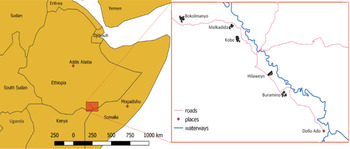
The Ethiopian Government and UNHCR opened Bokolmanyo camp in 2009 and Melkadida camp in 2010 as a response to Somali refugees fleeing across the border from violence and insecurity. A severe drought in 2011 led to a new influx and the creation of three more camps: Kobe, Hilaweyn, and Buramino. The camps are geographically sequenced in age order, with the oldest, Bokolmanyo, being the furthest from the border with Somalia, and the newest, Buramino, being the nearest (see Figure 1). A single dirt road, running parallel to the Genale River, connects the camps and leads to Dollo Ado town at the border. To the north of Bokolmanyo town, the small market town next to Bokolmanyo refugee camp, the road leads to the Oromia-Somali region border, which is beset by internal armed conflict. At the time of our research, Ethiopian legislation required refugees to remain in camps, with very rare exceptions for health, education, or resettlement reasons.Footnote 45 In 2019, new refugee legislation was passed expanding refugees’ socioeconomic rights, but it remains to be implemented.
Refugee camps and communities in Dollo Ado.

The Dollo Ado area is generally considered to have unfavourable conditions for socioeconomic development. The region has few natural resources and little industry. Despite the presence of the Genale River, agriculture has historically been limited by the arid climate and occasional flooding. Economically, pastoralism is the backbone of the economy and the major livelihood of local dwellers. Commercial activity exists but generally on a small scale. It is therefore an ongoing challenge to create a sustainable economy for refugees in the Dollo Ado camps.
The trajectory of humanitarian interventions in the camps has gone through three main phases. Between 2009 and 2011, the focus was on stabilisation and emergency response, ensuring the camps had basic infrastructure and services. Between 2012 and 2014, the focus shifted to shelter and site planning, with a greater focus on the environment, energy, water, livelihoods, and education initiatives. Due to the ongoing conflict in Somalia, together with the prolonged stay of the refugees in Ethiopia, humanitarian agencies called for a departure from the traditional humanitarian aid model. Between 2015 and 2017, their focus shifted towards self-reliance and the creation of innovative approaches aimed at providing more sustainable opportunities for refugees and the host communities.Footnote 46
Throughout this time, a unique and defining feature of Dollo Ado has been the unprecedented role of the private sector. In particular, the IKEA Foundation invested 75 million euros in the five camps over a seven-year period between 2012 and 2018 – the largest private sector investment in a refugee-hosting area in the history of the international refugee system. Its aim was to transform the lives of refugees and host communities living in Dollo Ado, in collaboration with UNHCR, based on a long-term vision in which ‘addressing needs goes beyond care and maintenance, considering self-reliance from the beginning, to prevent dependence on aid, and looking to long-term sustainability, where refugees and their hosts thrive side-by-side, where refugee inclusion stimulates peaceful co-existence’.Footnote 47
The investment of the IKEA Foundation has significantly increased the scale and scope of UNHCR activities in the camps. It has also led to a significant emphasis on innovation relating to market-based approaches and refugee self-reliance. For example, in each of the camps ‘cooperatives’ have been created to create livelihood opportunities for both refugees and the host community in sectors such as agriculture, livestock, and energy. These cooperatives have been complemented with the construction of complementary infrastructure. Retrospective impact evaluations reveal that these interventions have had a generally positive impact on both the refugee and host communities, particularly on the approximately three thousand direct beneficiaries.Footnote 48
However, on a structural level, it is clear that significant challenges remain. Although there is a considerable amount of international aid, refugees living in the camps have few economic opportunities. Most refugees report that they do not have any income-generating means. According to our survey results, only 21 per cent of refugees report having an income-generating activity. The majority of these are employed by aid agencies as so-called ‘incentive workers’ – those who work for humanitarian NGOs and international organisations or government agencies like the Agency for Refugee and Returnee Affairs (ARRA) with significantly lower payment compared to host employees.
Our aim is not to criticise the achievements that have been made by UNHCR and its partners within a very challenging environment. Rather, it is to highlight one of the key findings from our research: that there has been a ‘gap’ between the analytical lenses used by international organisations to understand the economic lives of refugees in the region, and the lived economic experience of refugees in the region. In particular, the state-centric approach of the United Nations, coupled with the absence of adequate baseline studies,Footnote 49 has led the United Nations to neglect and marginalise one of the population's most important economic assets: the cross-border economy.
Given their location, the camps are heavily influenced by their proximity to Somalia. There are several distinct and long-established trade routes through and beyond Somali Region that connect the region with the outside.Footnote 50 In particular, Dollo Ado town is a large and busy market centre near the border between Ethiopia, Somalia and Kenya. Through this border town, money, goods and information flow back and forth across the border at a tremendous rate.Footnote 51 While the majority of exports from the Somali Region are live animals and perishable produce, most imports are non-perishable food items and durable goods (clothes, utensils, electronic goods). Almost all of these imports are informal and considered ‘contraband’ by the Government of Ethiopia. The federal government's hostility to informal cross-border trade, both into and out of Somali Region, is a major source of contention and risk for livelihoods in the Somali region.Footnote 52
Methodology and methods
In contrast to FergusonFootnote 53 and most of the existing literature on the cross-border economic strategies of refugees,Footnote 54 we adopted a mixed-methods approach. The general presumption is that the post-development literature is epistemologically post-positivist and methodologically grounded in discourse analysis, and therefore relies upon mainly qualitative data collection methods. By adopting a mixed-methods approach, which includes the use of quantitative data, we unsettle that assumption, and aim to show that it is possible to engage with a critical theoretical agenda using a broadly positivist epistemology and a combination of first-hand qualitative and quantitative data collection methods.
Our fieldwork in and around the five Dollo Ado camps took place between October and December 2018. The data collection was designed and spearheaded by an interdisciplinary team of three researchers from different disciplinary backgrounds, including political science, anthropology, and economics. An anthropologist took a lead of qualitative research strand. Our qualitative data was collected through focus groups and semi-structured interviews. In each camp, we began fieldwork with focus group discussions, each of them with around 10–14 refugee participants. In order to nurture a good contextual understanding of their camp lives, we always included refugee representatives of each camp in focus group discussions. Across five camps, we organised a total of ten focus group discussions with refugees. Then, the lead anthropologist conducted 43 one-to-one semi-structured interviews, comprising 16 refugees, 15 staff members of relevant UN agencies and NGOs, 7 host community members, and 5 local and national government officials in charge of refugee affairs. In order to maintain the consistency and quality of data, the lead anthropologist conducted all of these qualitative interviews by himself with translation support by research assistants. In addition, taking advantage of living inside the UNHCR compound, we were able to use ‘hanging out’ as a means to engage in informal discussions and participant observation.
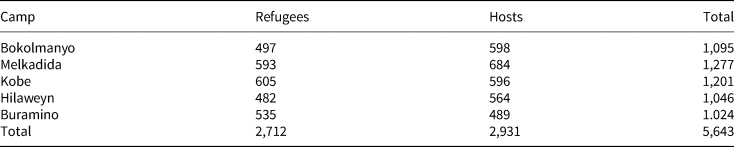
Our quantitative research, led by an economist, draws upon data collected during a household survey with a total sample size of 5,643 adults, constituting of 2,712 Somali refugees and 2,931 Ethiopians (Table 1). To maximise synergy of different strands of methodologies, the lead anthropologist worked closely with the lead economist to inform the development of quantitative survey and was also involved in training of enumerators and survey implementation.
Sample size.

Our objective was to interview 250 households in each of the five camps, and 300 households in each of the five host communities adjacent to each camp. Within each household, we aimed to interview up to three adult members (aged 18 to 65) – the head of household, the main food preparer and one other randomly selected member – in order to also explore intra-household dynamics. For the refugee community, our sampling frame was based on a list of households provided by UNHCR. Households were sampled at random from this list in each of the five camps. ARRA's community health teams worked with us to provide updated block-level information and to facilitate our initial interaction with the community. For the host community, a census of host communities surrounding the camps was undertaken by enumerators to create a comprehensive list of host households; a random sample of households was then selected from the list. In households with three or fewer adults, all adults were interviewed. When the number of adults was higher than three, we interviewed the household head as well as the main food preparer, and one other randomly selected adult. In cases where the household head was also the main food preparer, we selected two other adults to be surveyed, giving a total of three adults per household.
We used a participatory approach. In total, we worked with more than sixty refugees and members of the host community, employed as peer researchers and enumerators across the five refugee camps and the surrounding areas. Based on consultation with aid organisations, we selected individuals with previous research experiences, extensive networks within and across the research sites, and proficiency in both English and Somali. Before we embarked on data collection, we provided them with several days of intensive training on social research methods, particularly sampling and survey implementation. Also, during the training sessions, we provided guidance on research ethics and emphasised the importance of informed consent, confidentiality, and anonymity for respondents in order to avoid harm.
Throughout the research period, our research assistants played an active role in data collection. They assisted us in contextualising and refining our survey questionnaire and semi-structured interview questions. They also helped us to appropriately interpret the meaning of responses, triangulate findings, and develop an emic understanding of the realities, challenges, and opportunities faced by the communities.
Furthermore, it is important to note a major challenge that we experienced in the context of researching refugees’ cross-border movement, with particular implications for our quantitative research. While border-crossing activities are an ‘open secret’ within the Dollo Ado camps, refugees are not allowed to cross the international border with Somalia without written permission from the Ethiopian authorities (and such permission is rarely provided). Due to the illicit nature of such movements, many of those who crossed the border were initially reluctant to discuss their cross-border activities. Even though the survey was conducted by refugee researchers working within their own communities, our quantitative estimates of cross-border movement are likely to be underestimates.
In anticipation of the possibility of under-reporting, we carefully prepared our qualitative interviews on cross-border movement. In order to select refugee interviewees, we relied on pre-existing connections and trust-building by our research assistants. In addition, Somali-Ethiopian staff of UNHCR, who are also well trusted by the refugee communities, ensured the camp residents that the interview information would not be shared with UNHCR and ARRA. For each interview, we rented a room at one of the camp facilities in order to maintain privacy. We asked our refugee research assistants to work as translators during interviews, and all interviews were undertaken without the presence of UNHCR or ARRA officials. Thanks to these preparatory efforts, we were able to interview refugees who had recently visited Somalia. Given the sensitivity of this research, all names of respondents are pseudonyms in order to protect their privacy and security.
Refugees’ socioeconomic lives across borders
The socioeconomic lives of refugees in the camps should not be separated from the regional and historical context of Dollo Ado area. In particular, Dollo Ado town plays a key role in connecting refugee camps with wider regional economy. The town is the biggest commercial centre in the area, and its economy is based on a three-country nexus between Ethiopia, Somalia, and Kenya. It is only 500 km away from Mogadishu, the Somali capital. On the Kenyan side, Mandera town is only 37 km away.
Dollo Ado town: A commercial hub
According to Somali-Ethiopian elders who have been living in the area for decades, Dollo Ado town has long been an important economic hub. After the camps were established, the town became more active and larger as many people moved to this area, including both Ethiopian and Somali traders. Elders echoed that the border between Somalia and Ethiopia is quite permeable, given the historical and ethnic bonds that traverse it. The livelihoods officer of an NGO explained the established trade networks that intersect in Dollo Ado town:
From Mogadishu, many electronic items such as mobile phones, televisions and fridges are imported [to Dollo Ado], since it is cheaper than importing them from Addis. Food items such as rice, pasta, soft drinks, as well as clothing and shoes are coming from Mogadishu … Also, there is a trade of livestock like goats and sheep from Ethiopia to Somalia. Khat is brought from other parts of Ethiopia like Negele and taken to Somalia. Some khat comes from Mandera [Kenya].
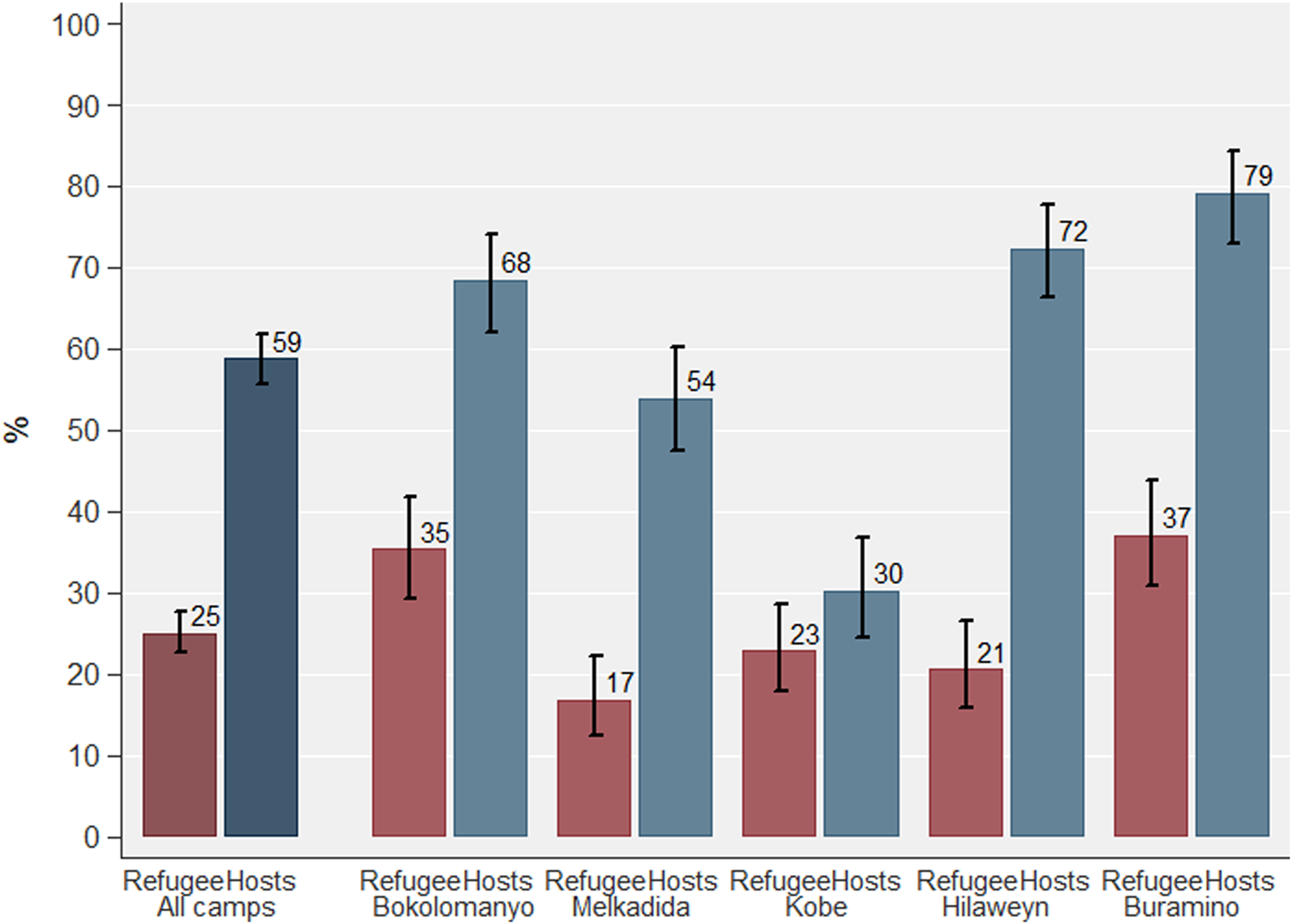
Refugees and the host population living around the camps visit Dollo Ado town regularly for various purposes. As many as 25 per cent of refugee households and 59 per cent of host households had at least one member who had travelled to Dollo Ado the year preceding the survey (Figure 2). These rates are very high compared to the fact that only 2.6 per cent of refugee households and 17 per cent of host households had a member travelling to another city in Ethiopia.
Proportion of households with at least one member who travelled to Dollo Ado during the year preceding the survey.

In Dollo Ado, refugee shop owners purchase commodities unavailable in the camps – sugar, wheat flour, iron sheets, hardware, construction materials, electronic items, sim cards, and clothing – from Ethiopian traders and sell them inside the camp. One such shop owner, Abdulahi, is a Somali refugee who started a small retail shop in Kobe camp five years ago dealing with food items and other household materials, and travels frequently to Dollo Ado town. He notes, ‘I visit Dollo Ado two times per month. [In Dollo Ado town] I buy rice, pasta, flour, sugar, stationary, and soap. I buy items from [Somali Ethiopian] wholesalers there.’ He initially worked as a casual labourer, shining shoes and working on construction projects both in and outside the camp, which enabled him to save the capital needed to open the shop.
Some refugees draw upon pre-existing business connections with Somali Ethiopians who are now based in the town. For instance, a Somali male refugee runs a clothing shop in Melkadida camp explained:
I have a Somali Ethiopian friend in Dollo Ado town. He runs a wholesale clothing shop … I knew him from Mogadishu. I was running a clothing shop in Mogadishu and he was one of the regular customers at my place … He was living in Dollo Ado but often travelled to Mogadishu to buy from my shop there … When I met him here, I asked him to help my clothing business in Dollo Ado. He gave me clothing on credit to start a business in the camp.
Some refugees informally stay in Dollo Ado town to engage in economic activities. In focus groups with refugees in Melkadida camp, we learned that some rent a small house in the town and work as casual labourers in the local markets. By residing there, they save the cost of transportation between Dollo Ado and the camp. For instance, we met one female refugee who owns a retail shop in the town. She is officially registered in Hilaweyn camp but works with a Somali Ethiopian partner who regularly does business in Dollo Ado town.
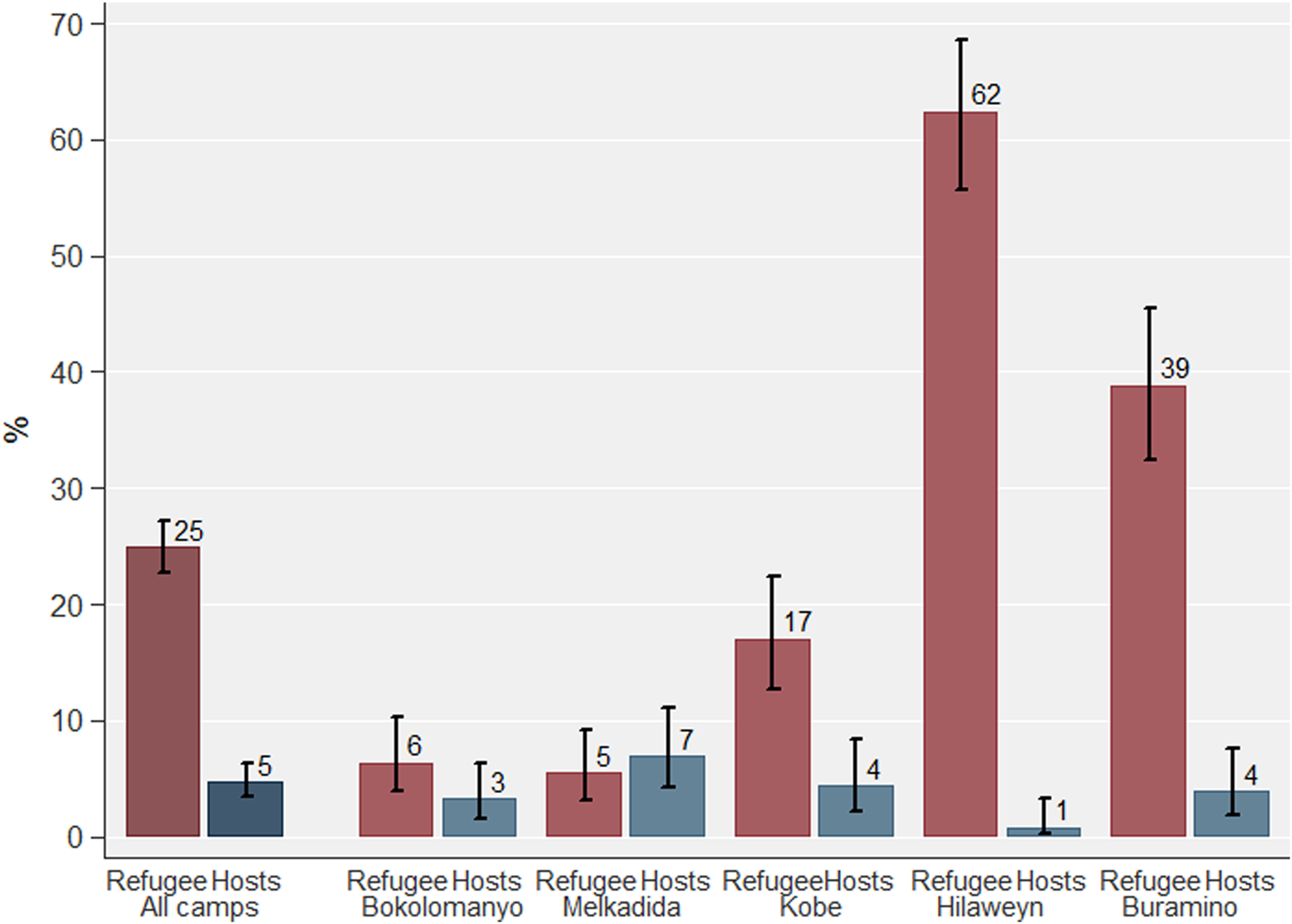
In addition to commercial links, Dollo Ado town serves as a communications gateway between Ethiopia and Somalia. Across all five Dollo Ado camps, the only mobile network access is Ethio-Telecom, which cannot be used to reach contacts in Somalia. But nearby Dollo Ado town, refugees can access Hormuud, the major telecommunications network service in Somalia, and make international calls to their relatives and friends living in Somalia. Only 5 per cent of refugee households living in Bokolmanyo and in Melkadida made a phone call to Somalia the month preceding the survey (Figure 3). These two camps are the furthest away from the border. By contrast, 62 per cent of those living in Hilaweyn and 39 per cent of those living in Buramino made a phone call to Somalia the month preceding the survey. These latter two camps are situated only 20–30 km from the Somali border. Calls from the host community to Somalia are much less frequent.
Proportion of households who made at least one phone call to Somalia the month preceding the survey.

Access to Hormuud services enables refugees to use Somali money transfer services to send and receive remittances to and from Somalia. According to one Ethiopian money transfer agent in the town, many refugee customers in the area receive money via this service. In this way, Dollo Ado town is an integral hub where even national communication infrastructural systems cross over.
In addition, Dollo Ado town gives refugees access to needed social services and contacts, as the following comment of Abdizak and Abdifata, both male refugees in their early twenties living in Buramino camp indicates: ‘We go to Dollo Ado town for education because there is no university and high school in the camp. Some visit friends. We made Ethiopian friends or schoolmates living in Dollo Ado.’
Due to these benefits of proximity with Somalia, refugees in Dollo Ado camps prefer to live closer to this border town. At one group interview with several UNHCR staff members, the participants said: ‘Requests of transfer from other camps to Buramino camp [the camp located nearest to Dollo Ado town] are very frequent. Many want to have easy access to Dollo Ado town.’
Cross-border livelihoods
Since Dollo Ado town has been a commercial conduit with established trade routes across Ethiopia and Somalia, for those native to Dollo Ado area crossing the border into Somalia is part of their day-to-day lives. Yusuf, a Somali Ethiopian local chief who was born and raised in Dollo Ado town, notes:
Many [local people] are pastoralists so they move back and forth across the border. Many visit Dollo Somalia. This is a daily scenery here … It is common to have relatives on the other side [Somalia]. Some people even work there [Dollo Somalia] … There is no need to use passport [when crossing the border]. We know people on each side by faces … Dollo Ado is part of wider Somalia, not a different country.
Similarly, refugees in Dollo Ado camps also take trips to Somalia, although it is officially prohibited by the camp authorities. During a series of focus group discussions with refugee representatives across five camps, it was revealed that many refugees visit Somalia, for a variety of reasons. This was triangulated by the UN aid workers whom we spoke to. Based on experience working with refugees as both an International Organization for Migration (IOM) and United Nations High Commissioner for Refugees (UNHCR) staff member in Hilaweyn camp, one Somali-Ethiopian staff member suggested three reasons for such border-crossing:
First, they want to keep and cultivate their land in Somalia. Many residents here are displaced due to drought, so they were concerned about their land. In fact, many refugees go back to their land during farming seasons in Somalia. Second, many people feel that there are insufficient livelihood opportunities in the camp. Only a small number of refugees enjoy meaningful livelihoods. Outside the camp, they have no right to work and their movement is restricted. Third, some people want to check the security situation in Somalia.
While most refugee interviewees admitted that such movement happens regularly, the illicit nature of cross-border movements makes it difficult to calculate the frequency and scale at which it occurs across the camp populations. One UNHCR staff member suggested that to openly discuss border-crossing is discouraged among refugees:
Many return Somalia but fear to express real reasons for returning. Some ARRA staff have very negative view to cross border movement so refugees tend to hide their travels … This is understandable given ARRA's concern over security.
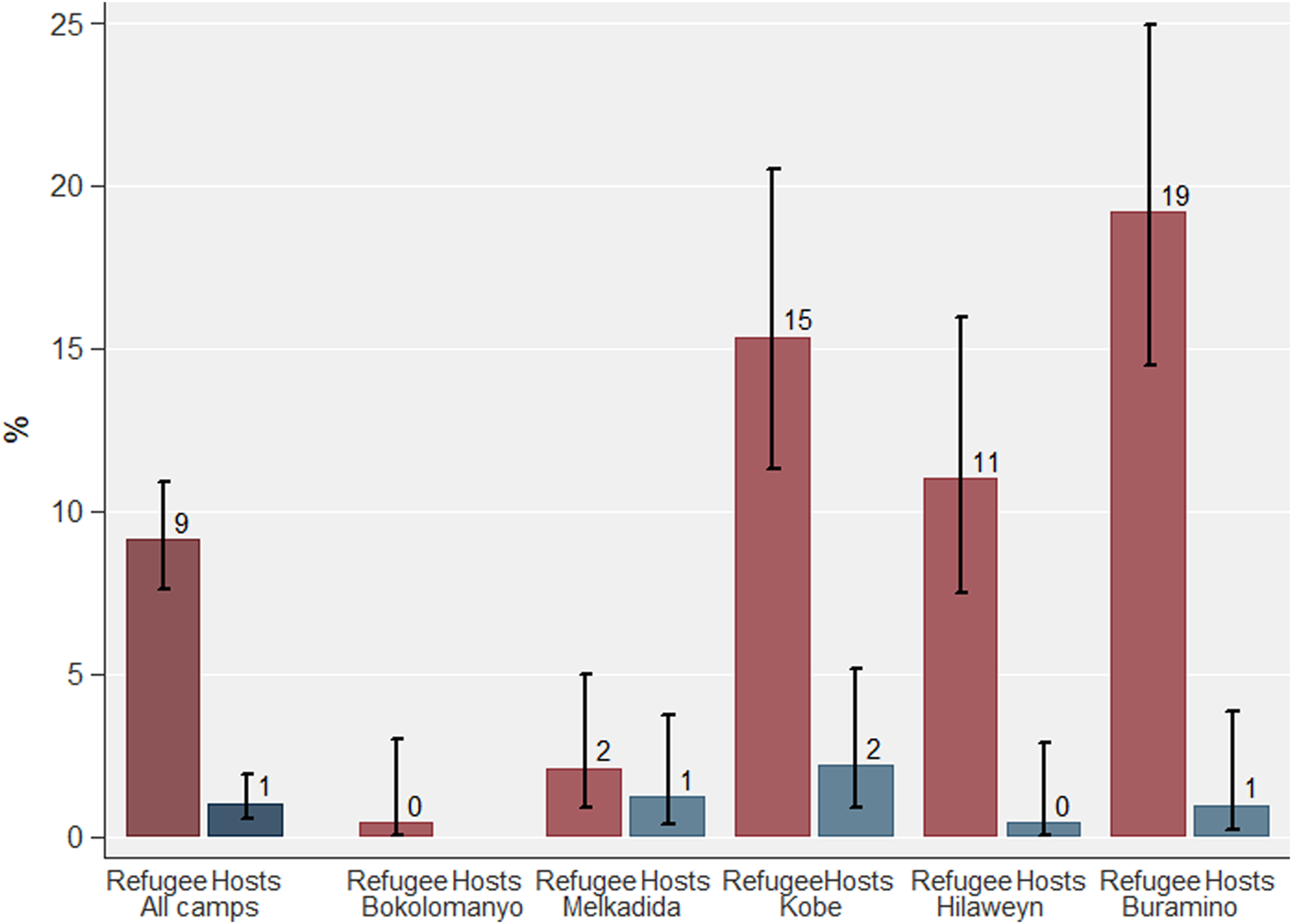
However, numerous sources corroborate the high frequency of refugees’ border-movements. During our survey, a substantial proportion of refugee households reported that at least one of their members travelled to Somalia during the year preceding the survey (Figure 4). Such behaviour appeared to be much more prevalent in camps that are closer to the border: only 0.5 per cent for households living in Bokolmanyo, the camp that is the furthest away from the Somali border, but 19.2 per cent for households from Buramino, the camp which is the closest from the Somali border. About half of those who travelled to Somalia undertook multiple round trips. But these rates are likely to be underestimates, and other sources indicate a higher frequency of cross-border movement.
Proportion of households with at least one member who travelled to Somalia during the year preceding the survey.

IOM in Dollo Ado used to monitor the number of people crossing the border bridge connecting Somalia and Ethiopia, which is the sole route between two sides. We interviewed a former staff member, who commented: ‘For each day, we have about 1,000 movements crossing the border, including both refugees and non-refugees coming from both sides.’ While IOM did not check nationality, based on his observation, this former staff member estimated that refugees constituted about 20 per cent of those crossing. In addition, according to Chris Eweillar, MSF's operations manager in Dollo Ado,
While many of the refugees will remain permanently in the camp, many others will travel back across the border when the drought and security situation calm down. Very often, women come across with their children to the other side of the border while their husbands stay and look after their homesteads. When things improve, word will be sent to the camp that the family should return.Footnote 55
Thanks to support from our research assistants, refugee representatives in each camp, and UNHCR local staff who are well-trusted by refugee communities, we interviewed refugees who had recently visited Somalia about the reasons for their trips, under the condition of strict confidentiality.
Despite restrictions on visiting Somalia, a considerable number of refugees in the Dollo Ado camps confirmed that they did undertake cross-border movement to their country of origin. Given scarcity of economic opportunities in the camp, one of the common reasons given by interviewees was that they went to Somalia to access livelihood opportunities. The following is an excerpt of interview with a Somali male refugee who recently visited Somalia:
I went there between May and November 2018. I just came back five days ago. I went to my hometown to see my relatives … [During this period] I also went to Dollo Somalia and made money by doing construction labour. There was major construction happening there.
As he highlights, many of those who undertake cross-border movement to Somalia point to a dearth of economic opportunities as one of the main reasons for movements. Other refugee interviewees echoed that due to scarcity of meaningful livelihoods in the camps, it was inevitable for them to exploit ad-hoc economic opportunities in Somalia. When we triangulated this observation with the local UNHCR/IOM staff member who works as a ‘Return Help Desk’ officer in Bokolmanyo camp since 2017, he confirmed: ‘One of the major reasons for return is the lack of livelihoods [inside the camps]. They say they cannot make enough income to meet basic needs. Some said to me: “We have no work here so we go back.”’
Several refugees told us that they went to Somalia to access economic opportunities provided by aid agencies supporting internally displaced persons (IDPs). For example, the Kabasa IDP camp was set up near Dollo, Somalia in May 2018. Unlike the refugee camps in Dollo Ado, Kabasa provides cash assistance for beneficiaries, which attracted many refugees. A male refugee from Hilaweyn camp described his trip to Kabasa IDP camp in October 2018:
I visited Kabasa IDP camp. I wanted to register myself to access cash support in order to assist my family. I learned they give US $100 per household … Food rations in Dollo Ado are too small. Alternative livelihoods [in the camp] are few. I can only do casual labour like farming and construction work, which pays little money.
However, these mobile strategies appeared to beyond the imagination of country-based operation system of international aid organisations. One expatriate UNHCR staff in Dollo Ado camps frankly told us: ‘I heard about this IDP camp. But I have not had much communications with them [aid workers in charge of Kabasa camp].’ For some aid organisations operating in Dollo Ado camps, refugees’ cross-border movements to Kabasa came as a ‘surprise’. The head of IOM in Dollo Ado explained the inflationary impact of Kabasa's cash assistance model:
The provision of cash [in Kabasa camp] caused many issues. In Dollo Ado Ethiopia, suddenly the price of animals went up sharply. One goat here is usually between 500–800 birr [around US $18–28]. 800 birr is the maximum I have ever seen but at one point, it went up to 1,200–2,000 birr [around US $42–70]. The price of chickens was 70–80 birr [around US $2.5–2.8] but it went up to 200 birr [US $7]. The cash offered in IDP camps was flowing here and used in Dollo Ado town.
As the existing literature indicates, while refugees’ economic strategies transcend the border, UN agencies’ programmes struggle to take into account these cross-border movements. One WFP employee told us:
When food rations are reduced in [Dollo Ado] camps, more refugees move to Somalia to seek cash benefits offered in Kabasa camp … [But] UN agencies in Somalia and Ethiopia operate separately so if refugees are doubly registered in two sites, there is nothing we can do. For WFP, these are two different operations and we don't exchange such information.
While we came across several refugees who visited Kabasa camp, none of them intended to remain in the IDP camp. Another refugee in Buramino camp who went to Kabasa camp explained that there is a trade-off:
Buramino gives us peace, good education and health facilities, as well as food rations. Kabasa gives people cash support, but there is no peace there. Al-Shabaab is still active in that area. I prefer peace over cash. Many refugees who went there were attracted to the cash programme, but most of them came back [to Ethiopia].
As these examples demonstrate, the Dollo Ado economy and linkage with Somalia play a vital role in refugees’ economic lives in the camps.
The camp as a site for ‘social security’
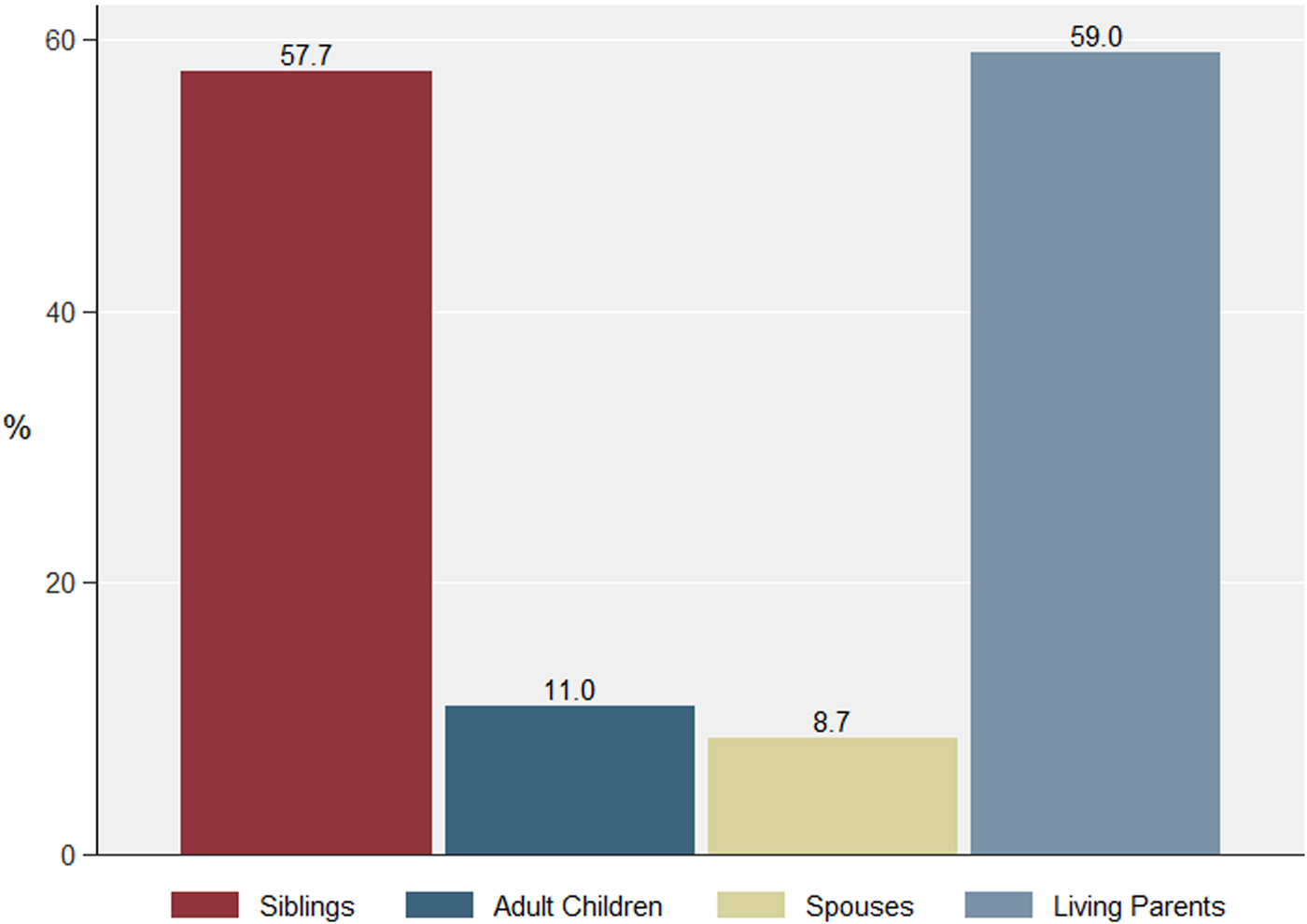
However, contrary to our expectations prior to our research, economic purposes were not the most frequent reason for visiting Somalia. According to our interviewees, the most popular reason for traveling to Somalia was to visit family members. We discovered that many refugees in the Dollo Ado camps left behind some of the immediate relatives, in particular elderly parents, in Somalia when deciding to flee (Figure 5). We interviewed one of them – a thirty-five-year old male refugee who came to Hilaweyn camp in 2011 and now lives with his wife and eight children. He recently returned to Somalia. Below is an excerpt of our interview with him.
Interviewer: When did you visit Somalia?
Refugee: From April to May 2018. I stayed about one month.
Interviewer: Where did you go?
Refugee: My home village
Interviewer: Why did you go there?
Refugee: I visited my father. He was very ill. He asked me to come and see him. He is already seventy years old.
Interviewer: Why did he stay in Somalia?
Refugee: He was too old to take a long journey. He stayed with my sister's family.
Percentage of households with family members living in Somalia.

Whereas these refugees who went to Somalia were aware of the illicit nature of border-crossing, most of them expressed that certain personal circumstances, such as visiting family members with serious illness or attending funerals of immediate family members, made their cross-border trips imperative. Refugee representatives across all camps suggested that fulfilling family obligations and maintaining familial bonds justifies illict border crossing.
Others visited family in order to borrow money. A widowed refugee who visited her village in Somalia between June and August of 2018, explained:
I needed to borrow some money from my family. I had to pay debts … [In the camp] I bought clothing for my children and food items like pasta and milk powder on credit from the shops … In total, I had debts of 20,000 birr [around US $700].
Through our interviews, we learned that the refugees who visited Somalia claimed to have informed their (refugee) camp representatives in advance of their trip and immediately reported their return. These camp representatives were fully aware of who is travelling at any given time and for what purposes. They were also reporting these cross-border trips to ARRA. This internal monitoring system by refugees themselves seems to function both as a form of indirect government surveillance but also as a way to avoid criminalisation of these illicit activities. Put simply, practices of open collaboration with ARRA are viewed as a quid pro quo for low-level governmental official tolerating such activities.
Our interviews also revealed that a considerable number of refugees deliberately keep a dual foothold in both the Dollo Ado camps and Somalia, and occasionally move between two sites. Of those who move back and forth between Somalia and Dollo Ado camps, most retain some family members in their home villages in Somalia to maintain their properties, especially farmland.Footnote 56
While refugees undertake frequent cross-border movement, it is interesting to note that none of our interviewees intended to repatriate to Somalia in the foreseeable future despite retaining homes and connections across the border. One reason is that the refugee camps are valued by refugees as a place to access social services. Across all the camps, most refugee interviewees valued better access to education and health facilities compared to Somalia. Children and women are more likely to remain in the camps, where they can access to such services. One Somali refugee who lives in Bokolmanyo camp with his wife and ten children, recently went back to Somalia alone to see his relatives but returned to the camp. He explained his long-term residency plans:
One day, I would like to go back [to Somalia]. But now my children are getting access to education in the camp. Until they finish schooling, we should stay in the camp … Education in the camp is better than in my village in Somalia. In fact, there is no primary and secondary school in my village … Another reason to stay here is security. For my children, the camp is more peaceful.
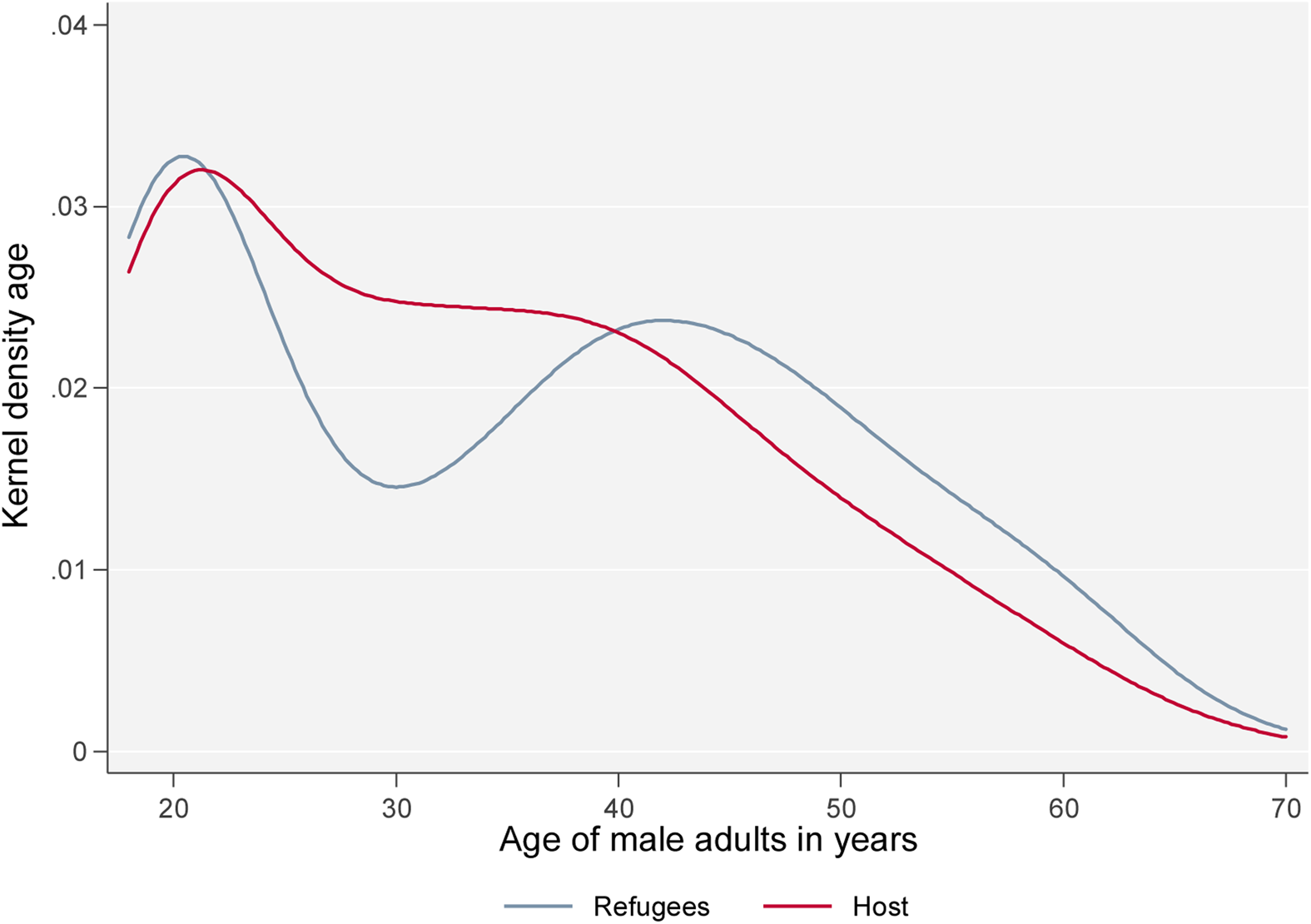
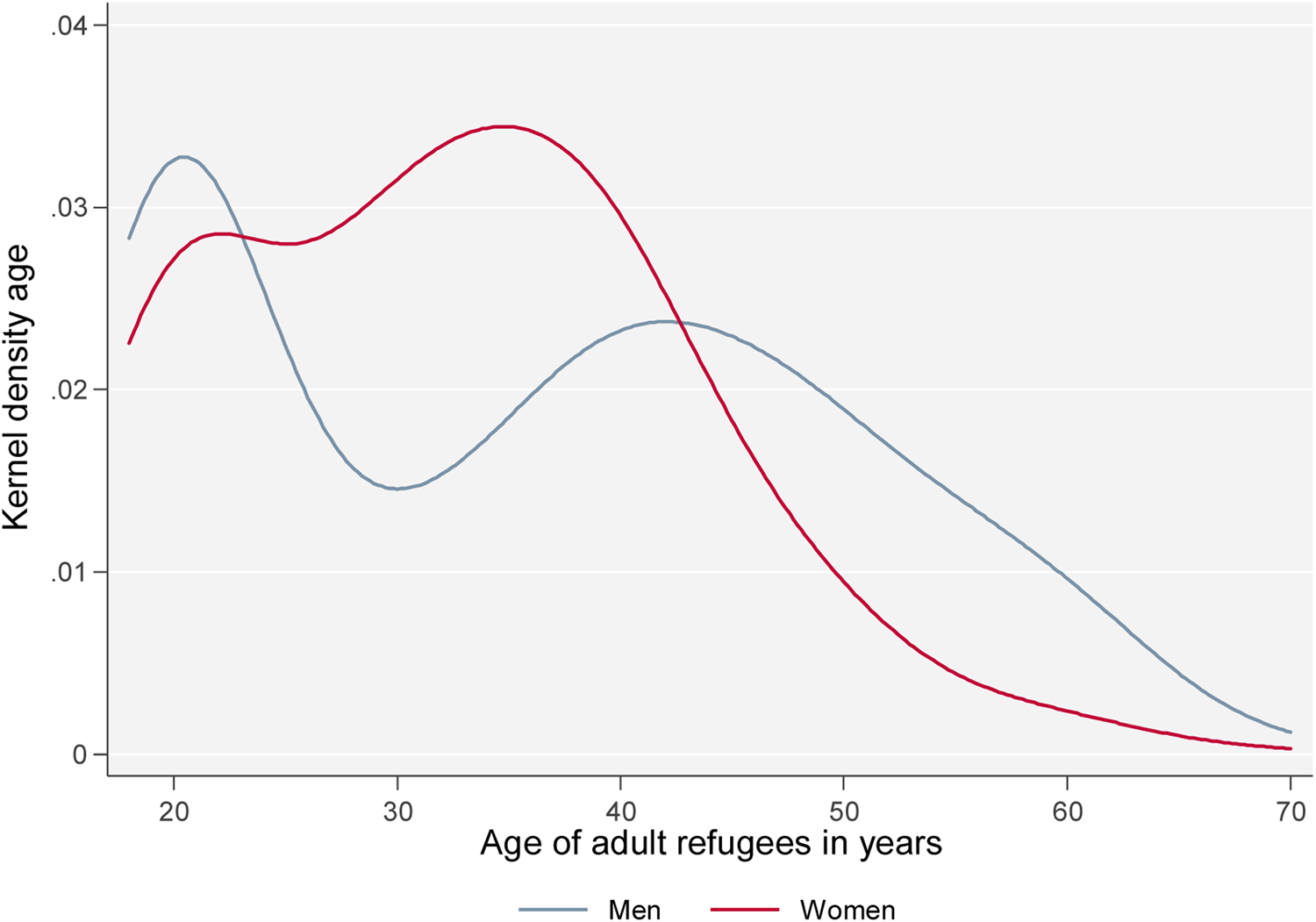
Another source of evidence for the commonality of so-called ‘split-family strategies’ is the demographic profile of refugees who were actually in the camps at the time of the survey. In particular, there was a disproportionately low percentage of male refugees in the age groups of 25–30 and 30–35, especially when compared to the demographic profile of men in the host community (Figure 6) and when compared to the demographic profile of female refugees (Figure 7). These findings suggest that a substantial proportion of young men from these families are not living in the camps.
Age profile of refugees and host community.

Age profile for refugee adults.

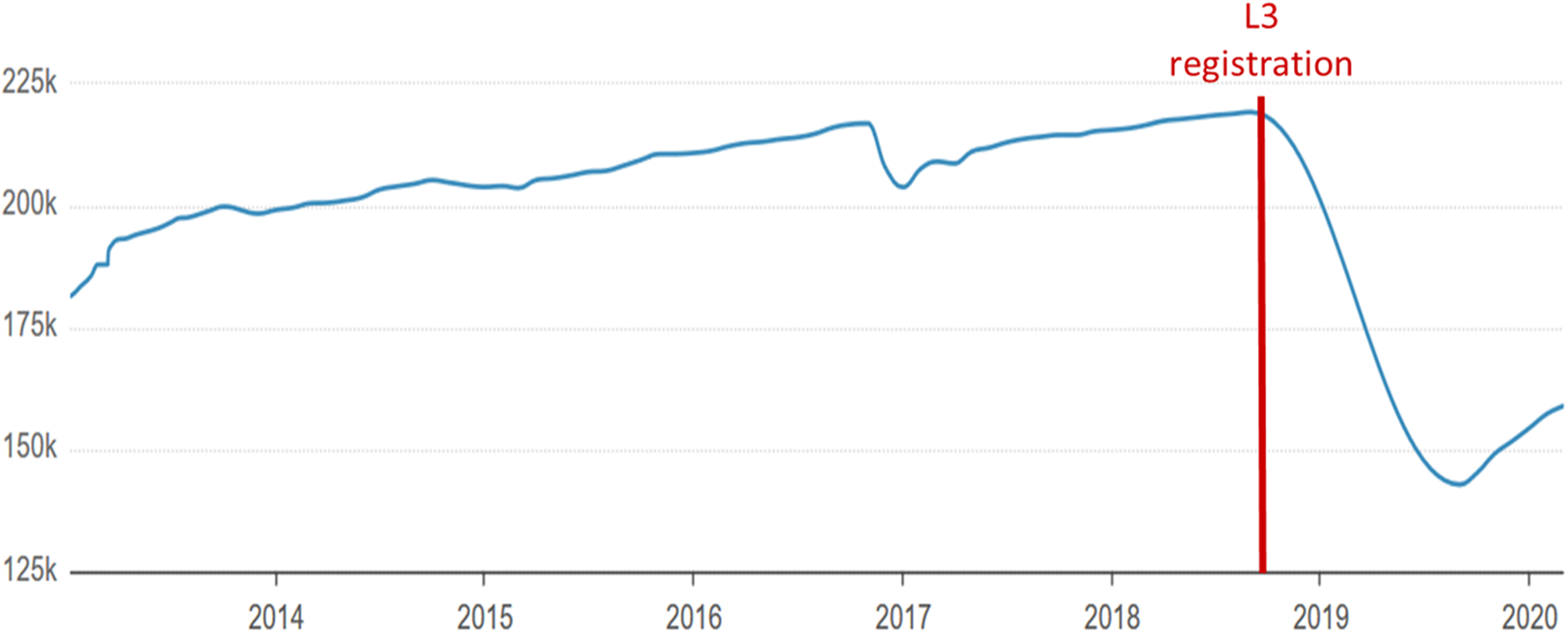
UNHCR data on the number of refugees living in the five Dollo Ado camps also provide indirect evidence of refugee movements. Around December 2019, a massive verification exercise (‘L3 registration’ in UNHCR organisational terminology)Footnote 57 was undertaken in the five Dollo Ado camps. The objective of the exercise was to update and improve UNHCR internal data system, which, ultimately, should facilitate access to a broader range of complimentary services and opportunities for all refugees while allowing humanitarian actors to increasingly tailor assistance to their specific needs.Footnote 58 Figure 8 shows that about seventy thousand refugees ‘disappeared’ from UNHCR listing following the verification exercise. Many of these missing people had probably moved temporarily or permanently to Somalia without notifying UNHCR and ARRA, to avoid reducing the food rations of their family members remaining in the camps.
Number of refugees living in one of the five Dollo Ado camps according to UNHCR progress data.

ARRA and the local government staff, who are mostly Somali-Ethiopians from Dollo Ado, are aware of refugees’ movements to Somalia as they collect information from appointed refugee representations in the camps. One ARRA staff member in Kobe camp explained how the government views refugees’ cross-border movements:
We are aware that many refugees visit Somalia. The main reasons are family visits and keeping their properties there. They also have to attend some important family ceremonies and events, like funerals … For ARRA, security is the biggest concern due to Al-Shabaab movements near the border areas. But if people's reasons for visiting Somalia are not security related, we allow them to go, although with a warning.
Contrary to refugees’ fear of being accused of crossing border, local government officials with a Somali-Ethiopian background recognise the historical ties that precede and transcend the border. The head of IOM in Dollo Ado, who has worked in the area since 2012, confirmed the informal practice of tolerating movement:
Refugees need a pass permit at the border, in theory. But border officials do not enforce this very rigorously, as long as they don't see security concerns. If travelers show refugee documents, the officials usually let them go. These are ‘tacit rules’ here [due to a long history of cross-border movement] … I see Dollo Ado town as part of Greater Somalia. Many residents here don't have the same sense of international borders as expatriates. This is indeed ‘Somali Land’.
The significance of this local sense of being part of a ‘Greater Somalia’ was emphasised even more when we interviewed Somali-Ethiopian village authorities in Dollo Ado camp areas. In one of the focus group interviews with them, they resonated:
In this area, Somali bond is more important than nationality differences like Somali or Ethiopian … King Abdille is the Somali king in Leban area. He made the order to us to treat refugees well. He said ‘refugees are our Somali people, don't disturb them’ … Leban zone is in Ethiopia but is part of Greater Somalia. In this area, the king is our leader and we follow his instructions.Footnote 59
In Dollo Ado area, hosts and refugees, as well as Somali-Ethiopian staff members of UNHCR and ARRA, acknowledge the same sociocultural and political structures, which are run by ‘Somali’ people. They also share the similar understanding of ‘borders’ situated within the historical context of Greater Somalia. These factors seem to be functioning as ‘mediating factors’ for refugees’ border-crossing activities and to give some space for refugees to move back and forth, unless imminent security issues are present.
‘The eyes refuse to see’: Institutional blindness to cross-border strategies
As discussed above, UN humanitarian workers generally acknowledge the fact that refugees move back and forth between Somalia and refugee camps. In particular, Somali-Ethiopian staff who are familiar with the regional context view refugees’ movements without surprise. At the time of our survey, UNHCR staff in Dollo Ado knew that the number of refugees actually living in the camps was much lower than the number of refugees listed in their registration data (Figure 8). They were also aware that a significant proportion of households registered in the camp were not actually collecting their food rations because they had moved temporarily or permanently to Somalia. Nevertheless, these individual understandings are not reflected – and indeed are completely absent – at institutional and policy levels.
To the best of our knowledge, no publically available UNHCR documents Ethiopia or Dollo Ado explicitly discuss refugees' cross-border strategies with Somalia, even while seeking to highlight the significance of promoting refugees’ self-reliance and sustainable livelihoods. For example, in one of UNHCR's key strategic documents, entitled Working Towards Inclusion of Refugees Within the National Systems of Ethiopia,Footnote 60 whenever the term ‘border’ appears, it is always related to border control and surveillance for security reasons. Similarly, Comprehensive Refugee Response Framework: The Ethiopia Model,Footnote 61 the other crucial policy document of UNHCR, has no mention of border activities at all as a means of impacting refugees’ livelihoods or development.
In addition to these national policy documents, local documents relating to the Dollo Ado camps also remain silent on refugees’ border activities and linkage with Somalia. UNHCR Briefing Note on Melkadida does not include anything relating to cross-border activities of refugees and in fact does not even acknowledge linkages with Somalia although it emphasises the need for creating ‘new opportunities’ for refugees to improve living conditions.Footnote 62 In the Dollo Ado area, proximity to Somalia is one of its most salient features; yet none of the UNHCR documents highlight this as a regional asset or recognise cross-border movements as socioeconomic assets. Instead, solutions are considered and compartmentalised within a bounded national context.
More importantly, UNHCR's scope of livelihood support for refugees in Dollo Ado camps does not account for socioeconomic ties with Somalia. Instead, the UN refugee agency has chosen to focus on three main pillars – farming, livestock, and retail commerce – in their programmes to support livelihoods. One staff member of UNHCR in charge of livelihoods explained:
In agriculture, we are providing 1,000 hectares of farmland to produce 2,000 jobs (1,000 for refugees and 1,000 for hosts). There is an MoU with the hosts about usage of land for farming. Crops are onions, maize, watermelon, etc. … The main livestock are goats, donkeys, camels, and cattle. We provide support for animal health workshops and hygiene training for refugees and hosts. Local hosts are mostly pastoralists so they are more active in this area … For business activities, we target retail shops, hotels, restaurants, and theatres. We provide access to group loans to encourage refugee entrepreneurship.
In one of UNHCR's documents, the UN refugee agency highlights the need for innovative and creative approaches to generate ‘new opportunities’ and ‘introduce new business models’ in this ‘remote and ardent part of the country’.Footnote 63 In reality, the UN refugee agency has ended up with traditional sedentary support areas, which do not leverage the close proximity of the Dollo Ado camps to the Somali-Ethiopia border.
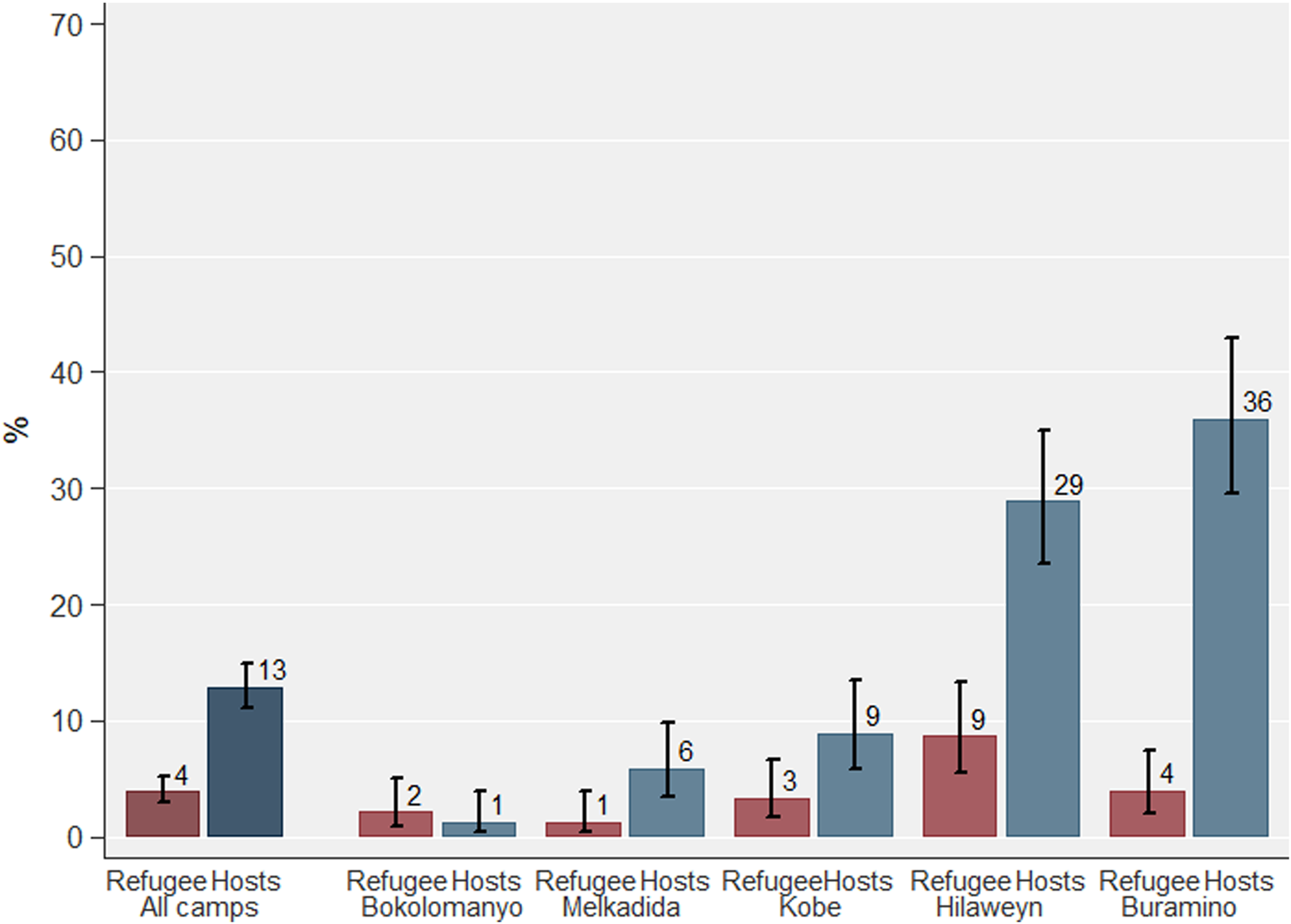
More problematically, the areas in which there has been investment may, by themselves, have limited scope for expansion. In terms of agriculture, very few refugee households are engaged in agriculture: 1 to 4 per cent across all the camps, except Hilaweyn, where it is 9 per cent (Figure 9). The combination of an arid climate and seasonal flooding risks from the river makes farming unpredictable. In some camps, like Bokolmanyo camp especially, because of the lack of access to river and alternative water sources, farming is not suitable at all.
Percentage of households involved in agriculture.

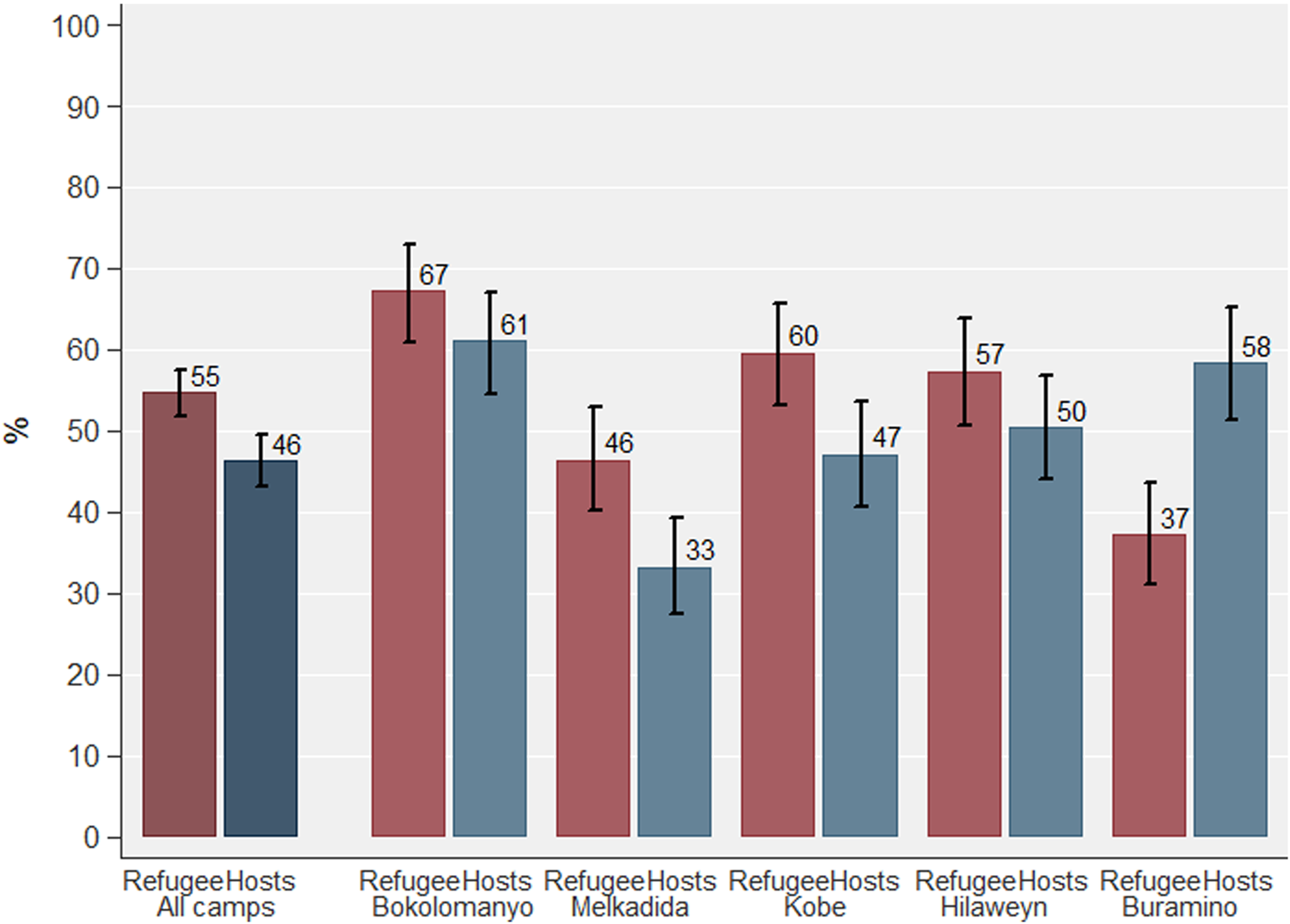
Regarding livestock, many refugees keep small animals like chickens, goats, and sheep. Although there is some variation across the camps, an average of around 55 per cent of refugee households have animals (Figure 10). For most households, however, livestock ownership is not viewed as a commercial activity; it is rather a savings mechanism or a source of food. According to our survey data, only 1.7 per cent of the refugees see animal husbandry as a primary economic activity.
Percentage of households with animals.

Interestingly, the fact that livestock is not a major source of income but viewed as a form of wealth storage resonates with Ferguson's observation about development agencies’ programming in Lesotho. The World Bank's programming models failed to understand that the role of cattle in Thaba-Tseka is not primarily to provide income but is rather a source of savings and an overt sign of status.
Compared to farming and livestock, commercial retail shows greater uptake; 28 per cent of refugees with an income-generating activity identify themselves as a self-employed entrepreneur. But, that is still only 5 per cent of the overall adult population. Most business owners are operating on a small scale in the informal sector. One of the biggest reported barriers to entrepreneurship is the lack of access to start-up capital. Few refugees have bank accounts in Ethiopia. Even participation in informal savings schemes is low. More importantly, UNHCR's support for refugee commerce does not capitalise on and makes no strategic linkage with cross-border movements and the trade routes within which Dollo Ado is socioeconomically embedded.
Meanwhile, cross-border movements are well known among local staff, especially Somali-Ethiopian members of UNHCR. However, institutionally, UNHCR is unable to recognise such regional cultural assets. Behind this, what emerges is a view analogous to Ferguson's notion of ‘anti-politics’. The head of the UNHCR Dollo Ado office explained:
It [border economy] is well established here. Many items are traded from and to Mogadishu and Mandera to Dollo. So many people here rely on this informal economy. This is the lifeline of locals and camps. Addis is far away from here so Dollo Somalia (and Somalia) is more important for this area.
While he was emphatic about the importance of cross-border movements in the Dollo Ado area, he also warned the sensitivity of the findings.
This area [The Somali region] gets so much attention nationally and globally due to Al-Shabab's presence … In academic arena, you can write and publish whatever you want but in official public sphere you should understand the findings [on cross-border activities] can be very sensitive and even damaging to this area. For instance, all know many items are from Mogadishu but there is no proper tax or custom on these items collected at borders.
He wanted to avoid making the cross-border activities of refugees more visible, particularly given the volatility of the Somali region and its tense relationship with the federal government. He was concerned that any news about informal cross-border mobility could exacerbate this tension and give more reason for the central government to discriminate against the Somali region. In fact, during our fieldwork, he had concerns about our research exploring cross-border movement and requested a meeting to share our findings with him. His responses highlight the priority that UNHCR places on evading political involvement and a strong desire to avoid provoking political scrutiny from a central government preoccupied with maintaining security and control within the Somali-Ethiopian border region.
Implications
Drawing upon the findings above, our analysis has several implications for theory and practice. First, our analysis of UNHCR's livelihoods work in Dollo Ado resonates with but also challenges Ferguson's analysis of the World Bank's role in Lesotho.Footnote 64 In Ferguson's case study, development agencies are largely unaware of connections with neighbouring South Africa; in the context of Dollo Ado, several UNHCR staff members, especially those originally from the region, recognise patterns of cross-border movement. Yet individual awareness has not been reflected in institutional policy and practice. While Ferguson's largely structural analysis identifies the source of the sedentary bias and the inability to recognise the cross-border economy as lying in the dominant discourse of the Bank, our account places greater emphasis on bureaucratic politics and political economy.
Individual staff are aware of the importance of refugees’ cross-border strategies. However, they are unable to act upon them in ways that shape policy and programmes. One UNHCR staff member explained: ‘UNHCR pays less attention to this phenomenon. It [the lack of attention] may be related to the way our work is defined based on national borders and the country-based approach.’ In addition, since UNHCR's access to refugees and provision of support within this area are largely contingent on permission from the state and regional government, it is important for UNHCR as a humanitarian agency to stay away from issues or debates that are politically sensitive for these governmental stakeholders. Institutional blindness to cross-border activities can be understood as the result not only of a predominantly state-centric approach but also the ‘non-political’ character of the organisation’ creating an institutional inertia to formally recognise dynamics that the host government prefers to ignore.
Second, this institutional state-centrism in turn contributes to the creation of particular forms of ‘conceptual and institutional apparatus’Footnote 65 that shape livelihoods programmes. Similar to the World Bank in Lesotho, UNHCR selected economic sectors that are largely sedentary and have weak foundations for success in Dollo Ado, such as agriculture, which is severely affected by climatic conditions, and livestock, which is largely viewed as a savings device rather than a primary income source. In fact, our survey shows that the three main focus areas for livelihoods support – agriculture, livestock, and retail commerce – employed less than 10 per cent of refugee adults at the time of our research. Given heightened security and border politics at Ethiopia-Somali, UNHCR is largely constrained by the government's desire to limit or sideline cross-border movement, and its ‘non-political’ character restricts its capacity to formally recognise the key socioeconomic role of the cross-border activities. Consequently, this leads to decontextualised and dehistoricised programme designed to avoid transgressing areas of potential political sensitivity.
Third, and relatedly, this anti-political and state-centric modus operandi risks sidelining refugees’ own activities. In practice, UNHCR and its implementing partners struggle to incorporate dynamic regional economic flows or the transnational sociocultural assets of Somali refugees into aid programming,Footnote 66 in ways that clearly have the potential to strengthen livelihoods and self-reliance opportunities for refugees. A further risk is that a state-bounded approach leaves little space for refugees’ self-protection initiatives or their own networks to play a meaningful role.Footnote 67 The cross-border strategies employed by Somali refugees represent a form of agency; for instance, using camps as avenues for accessing ‘social security’ that are not available in Somalia while retaining assets and ties with other family members in their homeland through cross-border movements. These should be viewed as rational strategies to maximise asset portfolios and improve future prospects, since current assistance for refugees from international organisations have extremely limited prospects for leading to increased development and self-reliance for refugees in the Dollo Ado camps.
Fourth, humanitarian agencies have largely under-estimated the importance of refugees’ kinship bonds spawning beyond the national borders. Despite the official restriction on cross-border movement, Somali refugees travel to attend funerals and visit elderly parents or members with illness as they try to meet these familial duties in Somalia. Among refugees, these trips are perceived as ‘justifiable’ reasons to breach the movement restriction. This, in turn, implies that for Somali refugee households, preserving kin networks and meeting familial obligations remain crucial despite physical separation. While some Somali-Ethiopian aid workers are aware of such aspects of border-crossing, at the institutional level, UNHCR and other humanitarian NGOs are largely blind to the significance of kinship bonds across the border.
Finally, neglecting the border with Somalia can consequently reinforce institutional hierarchical appraoches to humanitarian governance. The international humanitarian regime aspires to relieve suffering and improve the welfare of those in needs, and generally claims to do so on the ground that they know best and that those who need help are unable to help themselves. As Michael Barnett warns, however, humanitarian organisations are increasingly perceived by local populations as being paternalistic.Footnote 68 If UNHCR aims to enhance welfare and improve socioeconomic outcomes for refugees, it must recognise emic forms of protection, including by recognising the cross-border strategies of refugees.
Conclusion
In the decade since their creation, the Dollo Ado camps have evolved from a predominantly humanitarian setting to include a significant focus on sustainable development. In particular, UNHCR has focused on creating ‘innovative solutions that will create new livelihood opportunities for refugee and host communities in the area’, including through its collaboration with the IKEA Foundation.Footnote 69 Many of these livelihoods programmes have had a measurably positive impact on the direct project beneficiaries, increasing employment and income levels, and improving levels of social cohesion between refugees and hosts.
However, the proportion of the overall refugee population served by these international livelihood programmes has been relatively small. Moreover, the approach adopted by the United Nations and its partner organisations has tended to marginalise refugees’ own socioeconomic strategies. Most notably, international institutions’ predominantly state-centric approach to considering livelihoods has systematically rendered refugees’ cross-border activities invisible, and in some cases hindered those activities, despite their significance for refugees’ socioeconomic outcomes.
In addition to empirically highlighting the disjuncture between international institutions’ state-centric livelihoods programming and refugees’ own transnational economic lives, the article has tried to explain the reasons underlying this. One of the striking features of the case study is that humanitarian organisation staff have often been aware of the importance refugee’ cross-border activities and yet this has not translated into institutional recognition. Rather than finding the explanation purely in discursive accounts, as much of the post-development and post-development literature tends to do, the article has also pointed to bureaucratic politics and political economy as key elements of the explanation.
These findings have policy implications for international institutions in general, and humanitarian organisations in particular. In order to develop truly innovative approaches, UN agencies and their partners need – to paraphrase James Scott – shift from ‘seeing like a humanitarian’ to also ‘seeing like a refugee (and/or host community member)’. International institutions such as UNHCR cannot and should not be detached from the local realities and historical and cultural context of the regions in which they operate. Our analysis suggests that UN agencies’ programmes need to move beyond state-centrism and instead have greater regard for transnationalism, kinship ties, and cross-border socioeconomic networks, whether within the Dollo Ado area or elsewhere. Of course, there are legitimate government security concerns relating to cross-border movement due to Al-Shabaab presence and its control parts of the road network between Dollo Ado and Mogadishu. However, following the developmental principle of ‘build upon what there is’, interventions that aim to promote refugees’ sustainable livelihoods should be based on existing socioeconomic structures within which refugees are already making a living.
Our findings have wider relevance for other regions of Ethiopia. The majority of the country's refugees live in camps in peripheral border regions. In 2019, the Ethiopian Parliament passed a new Refugee Proclamation, giving refugees to right to work and freedom of movement. Although this is expected to be implemented gradually, it can offer an opportunity to think beyond long-term encampment for refugees in Ethiopia's peripheral border regions, including in Dollo Ado. Our research reveals that Somali refugees in the Dollo Ado camps regularly employ mobility between the camps, and visits to Dollo Ado town and villages in Somalia as part of broader familial socioeconomic strategies. These dynamics are not unique to Ethiopia or even Somali refugees, and can be seen in other refugee-hosting border regions from Turkana County in Kenya to the North-West Frontier Province of Pakistan. From an academic perspective, it is important not only to recognise and describe these cross-border strategies but also to account for how and why they are systematically invisible to and marginalised within the programming of international organisations.
Our analysis also has theoretical implications for International Studies, broadly conceived, on two levels. First, it contributes to the subfield of Refugee Studies by showing the value of connecting the literatures on post-development, refugee livelihoods, and transnationalism. Second, it reveals the potential for drawing the post-development literature – and particularly the work of James Ferguson – into the mainstream study of international institutions in International Relations. Although Ferguson's work is epistemologically post-positivist and methodologically based on discourse analysis, our analysis show that it is possible to fruitfully adapt a post-development research agenda to engage with a range of questions relating to international institutions’ interaction with their subject populations and the ways in which it is mediated by power, without axiomatically following a Foucauldian approach. From a practitioner perspective, our analysis shows that work on refugee livelihoods should consider an approach that systematically incorporates a deeper understanding of refugees’ own strategies, and in particular regional-level analysis of the role of transnational and cross-border strategies.
Acknowledgements
We would like to thank the IKEA Foundation, UNHCR, and ARRA for supporting our research. We are also grateful to Raphael Bradenbrink, Abis Getachew, Jonathan Greenland, Hiwot Mekonen, and Halefom Nigus who worked as research assistants with us on the data collection relating to this article, as well as the large number of refugees and host community members who contributed to our research.