

INTRODUCTION
The blackmouth catshark, Galeus melastomus Rafinesque, 1810 is a small, bottom-dwelling scyliorhinid shark widely distributed on the continental shelves and upper slopes of the North-eastern Atlantic Ocean, from the Faroe Islands to Senegal and the Mediterranean basin (Compagno, Reference Compagno1984b). Galeus melastomus demonstrates a wide bathymetric range. It mainly occurs at depths of 300–400 m, although it has been captured at depths between 55 and 1740 m (Stefanescu et al., Reference Stefanescu, Lloris and Rucabado1992; Relini et al., Reference Relini, Bertrand and Zamboni1999; Abella & Serena, Reference Abella and Serena2005). Its mode of reproduction is oviparity, producing 13–14 egg-capsules per litter and measuring up to 60 × 30 mm in the Mediterranean (Compagno, Reference Compagno1984b; Moreno, Reference Moreno1995; Mojetta, Reference Mojetta1997; Bannister, Reference Bannister1998; Muus et al., Reference Muus, Nielsen, Dahlström and Nyström1998). As many other scyliorhinids, female blackmouth catsharks have a functional right ovary and a vestigial or absent left ovary (Capapé et al., Reference Capapé, Guélorget, Vergne and Reynaud2008). Egg deposition occurs throughout the year but it usually peaks during summer (Tursi et al., Reference Tursi, D'Onghia, Matarrese and Piscitelli1993; Moreno, Reference Moreno1995). Although blackmouth catshark are of limited interest to fisheries, it is incidentally caught, on bottom trawl hauls, demersal nets and long-lines targeting red shrimp (Aristeus antennatus Risso, 1816), pink shrimp (Parapenaeus longirostris Lucas, 1847), common pandora (Pagellus erythrinus Linnaeus, 1758), large-eye dentex (Dentex macrophthalmus Bloch, 1791), European hake (Merluccius merluccius Linnaeus, 1758), mullets (Mullus barbatus Linnaeus, 1758 and Mullus surmuletus Linnaeus, 1758) and anglerfish (Lophius piscatorius Linnaeus, 1758 and Lophius budegassa Spinola, 1807). Nonetheless, despite the low commercial value of the species, it is often utilized fresh or dry-salted for human consumption and in the manufacturing of fishmeal, the basic feed ingredient used in farmed animal production (Serena & Abella, Reference Serena, Abella, Relini, Bertrand and Zamboni1999).
In the Mediterranean Sea, the distribution and biology of this species have been widely studied in the central-western part, including the Tunisian coasts (Capapé & Zaouali, Reference Capapé and Zaouali1977), Ionian Sea (Tursi et al., Reference Tursi, D'Onghia, Matarrese and Piscitelli1993), Adriatic Sea (Ungaro et al., Reference Ungaro, Marano and Musci1997), Tyrrhenian Sea (Rinelli et al., Reference Rinelli, Bottari, Florio, Romeo, Giordano and Greco2005), southern French coasts (Capapé et al., Reference Capapé, Guélorget, Vergne and Reynaud2008) and the Alboran Sea (Rey et al., Reference Rey, De Sola and Massutí2004; Rinelli et al., Reference Rinelli, Bottari, Florio, Romeo, Giordano and Greco2005). Overall, high abundance of the blackmouth catshark has been recorded in the Alboran Sea in the Western Mediterranean (Rey et al., Reference Rey, De Sola and Massutí2004). In the Eastern Mediterranean, studies on the species are still scarce and mainly focus on its abundance fluctuations, diet composition and its feeding ecology (Anastasopoulou et al., Reference Anastasopoulou, Mytilineou, Lefkaditou, Dokos, Smith, Siapatis, Bekas and Papadopoulou2013; Tserpes et al., Reference Tserpes, Maravelias, Pantazi and Peristeraki2013). Signs of decline in the abundance of Galeus melastomus has been observed from commercial fishing data collected between 1995 and 2006 in the Aegean Sea (Damalas & Vassilopoulou, Reference Damalas and Vassilopoulou2011). On the other hand, experimental surveys from 1998–2008 have failed to show changes in Galeus melastomus abundance trends in the same area, indicating the stability of the local population (Tserpes et al., Reference Tserpes, Maravelias, Pantazi and Peristeraki2013). However, considering the fact that the species are under high fishing pressure as by-catch of the widely applied bottom trawl fishery in the Eastern Mediterranean, the lack of abundance trends over time could point at an ‘overfishing steady state’, a situation that has already been debated for most of the Mediterranean (Lleonart & Maynou, Reference Lleonart and Maynou2003; Tserpes et al., Reference Tserpes, Maravelias, Pantazi and Peristeraki2013). Therefore, continued monitoring and management are important for the conservation of demersal shark populations such as Galeus melastomus.
The present study firstly aims to elucidate the population composition of the blackmouth catshark in the Eastern Mediterranean Sea, increasing our knowledge regarding their incidental landings. Another objective of the study is to provide insights on the reproductive biology of blackmouth catshark, increasing our understanding regarding the regional differences observed for the species.
MATERIALS AND METHODS
Sampling
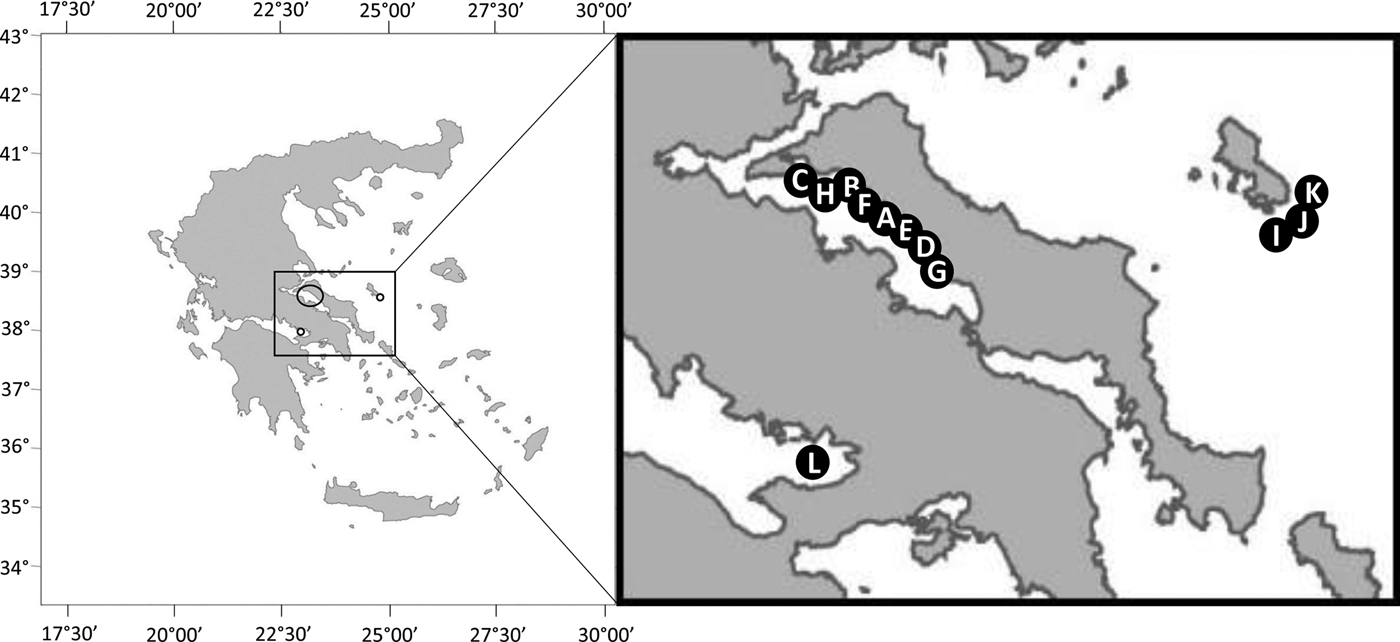
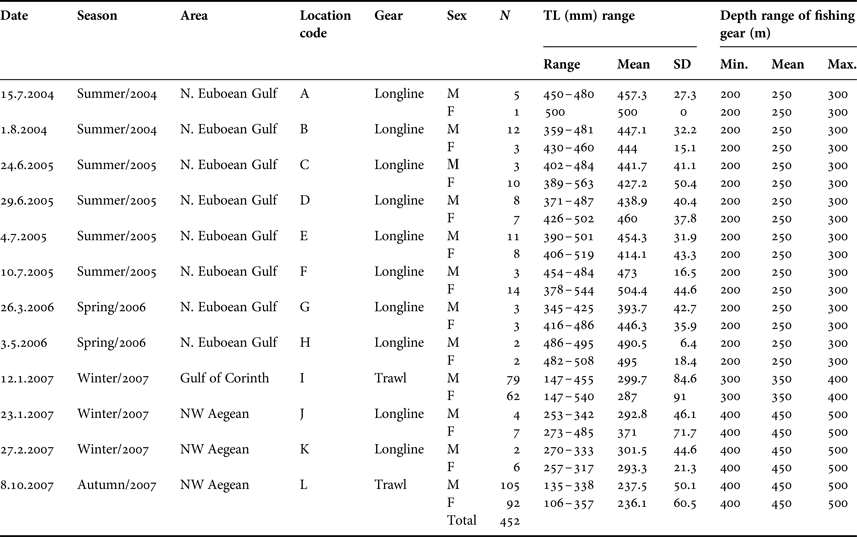
Blackmouth catsharks were incidentally captured along the continental shelf and the upper slope by commercial fishing vessels operating in the northern part of the Gulf of Euboea (38°50′N 23°00′E, 200–300 m) (location codes A–H), eastern part of the Gulf of Corinth (Halkyon Bay, 38°00′N 23°00′E, 300–400 m) (location code I) and the north-western (NW) part of the Aegean Sea (38°50′N 24°50′E south-eastern -SE- of Skyros Island, 400–500 m) (location code J–L) (Figure 1 and Table 1). Sampling operations were conducted between August 2004 and October 2007. The initial aim was to homogeneously distribute sampling during all months in one area. However, due to adverse weather conditions, seasonal changes in the type of fishing gear employed by the vessels and at times uncooperative fishing crews, samples of only 8 months and three areas were finally used. Blackmouth catsharks from the Gulf of Euboea were caught using demersal longlines (using size 6, 1/0 and 2/0 circle hooks) targeting European hake, whiting (Merlangius merlangus Linnaeus, 1758), sparids and anglerfish in the summer and spring of 2004, 2005 and 2006. A very small proportion of the sampled Galeus melastomus population was caught by commercial longline vessels operating in the NW Aegean targeting the aforementioned fish species in the course of two fishing trips during winter 2007. Samples from the Corinthian Bay and NW Aegean were caught by bottom trawl vessels (mesh size of 55 to 65 mm) targeting red shrimp and pink shrimp during the winter and autumn of 2007.
Maps of Greece and Central Greece with the sampling locations.

Summary data for G. melastomus examined in each season.

Measurements
The specimens were preserved in ice until their transfer to the facilities of the Department of Zoology and Marine Biology, Faculty of Biology, National and Kapodistrian University of Athens (Greece) where they were frozen at −20°C until studied. Each batch of captured samples was processed within 3 months from their collection and storage point. For each specimen the following measurements were recorded: total length to the nearest millimetre (TL defined as the length from the snout tip to the posterior tip of the caudal fin according to Compagno, Reference Compagno1984a) and total weight (TW) to the nearest gram. TL and TW data for each sex were assessed for normality (Anderson–Darling test) using Minitab.16.0. Distributions of the data were considered not normal at P-values < 0.05. TL and TW data for both sexes were assessed with Kolmogorov–Smirnov two sample t-test (using IBM SPSS Statistics 21) for differences in TL frequency distributions. Since TL and TW data for sampled catsharks were not normally distributed, Kruskal–Wallis test (using Minitab.16.0) was used to assess for any sex-related differences in median TL and TW.
Inner clasper length (CLI) was measured from the distal tip of the clasper to the point of insertion at the cloaca for all samples (Compagno, Reference Compagno1984a). The length of both left and right testes from each individual were recorded to the nearest millimetre using Vernier calipers (defined as LTeL and RTeL, respectively) and their weight to the nearest 0.01 g (defined as LTeW and RTeW, respectively). The total weight of the testes was also recorded (TTeW).
For females the length and weight of the right ovary (defined as OvaL and OvaW respectively) and uterus (or oviduct) width were recorded. Moreover, average oviducal gland lengths and widths (defined as OvGlL and OvGlW respectively) were recorded for the maturing and mature individuals.
Maturity assessment
Sexual maturity was determined following Stehmann (Reference Stehmann2002). Males were grouped in four maturity stages (from I to IV) taking into account the clasper size and flexibility or rigidity, size of the testis, presence of coiling in the sperm ducts and absence or presence of sperm in the seminal duct. Testes size data were firstly tested for normality as previously described using the statistical package Minitab.16.0. Non-parametric Kruskal–Wallis test was used to compare the median values for left and right testes size measurements (weight and length) in male individuals (since data for both left and right testes presented similarly shaped distributions). Differences were considered statistically significant at P-values < 0.05 (Zar, Reference Zar1996). Females were grouped into six maturity stages (from I to VI), which were divided into two reproductive activity sub-cycles: uterine and the ovarian. In the ovarian stage, length and width of ovaries, absence or presence and size of oocytes as well as the uteri width are important determinants. Moreover, the presence of large yolky eggs in the fallopian tubes, the presence or absence of egg capsules in the uteri and the shape and rigidity of the formed egg cases are considered to be the predominant indicators for the uterine maturity stage.
Sex and maturity stage ratios
The sex ratio (S R) was defined as the proportion of females to males. The chi squared (χ 2) goodness of fit test (Zar, Reference Zar1996) was used to explore differences between the observed and expected S R. The test was repeated twice by either comparing the S R values for each location/timepoint, depth stratum, season and gear with an expected S R of 1.0 or a proportional value to the actual S R of the study (S R = 0.91 female to male individuals). The chi squared goodness of fit test was also applied to assess the differences in the percentage of the different maturity stages by season, fishing ground, fishing gear and the average depth stratum from the expected values, estimated from the overall proportions of the whole sampled population. The same analysis was used to assess demographic differences (regarding the proportions of maturity stages) between the two areas where longlines were used and the other two areas where bottom trawl hauls were deployed in order to assess the effect of the areas where similar fishing gears were deployed on the collected composition of the species (overall the broader fishing areas were sampled at discrete seasons and depth ranges). Differences were considered statistically significant at P-values < 0.05 (Zar, Reference Zar1996).
Maturity predictors and size at first maturity
For male and female Galeus melastomus, measurements of the reproductive structures including CLI, LTeW, LTeL, RTeW, RTeL and TTeW for males and OvaL, OvaW, UtWi for females, were plotted against TL as previously described by Kousteni et al. (Reference Kousteni, Kontopoulou and Megalofonou2010), in order to provide rough estimates of the length at which G. melastomus individuals start maturing. By fitting the maturity ogives to the plots displaying the relationship between reproductive structure size and TL, the range at which immature G. melastomus started developing reproductively was visualized by the sharp increase in the slope of the curve. The power equation for each combination of measurements was estimated using Excel 2013. Kendall's tau test (using IBM SPSS Statistics 21) was used for the assessment of the strength and direction of the association of TW or each one of the reproductive structure sizes with TL (TL vs TW, TL vs CLI, TL vs LTeL, TL vs RTeL, TL vs LTeW, TL vs RTeW, TL vs TTeW, TL vs OvaL, TL vs OvaW, TL vs UtWi). Correlations between each pair-set of measurements was revealed at P-values < 0.05 (Zar, Reference Zar1996). Kendall's tau correlation test values range between +1 and −1, with values over 0 revealing positive correlation between two variables, 0 revealing no correlation and negative values revealing negative correlations. The test was chosen over Pearson correlation test, due to the non-normal distribution of the datasets and the fact that non-linear relationships could also be tested with this method. Regression coefficients of the relationships between the logarithmically transformed values of TL and TW (for further normalization of the data and the achievement of a linear relation between the two size measurements) in male and female populations were compared using regression analysis whilst the test for equal slopes was used for the detection of any sex-related differences in the regression slopes (IBM SPSS Statistics 21).
Overall, maturation stage I and II specimens (for both sexes) were considered ‘non-mature’ and specimens from other stages (III, IV, V, VI) were considered as ‘mature’ (Kousteni et al., Reference Kousteni, Kontopoulou and Megalofonou2010). After assigning a maturity stage to each specimen, the data were tabulated by 1 mm size classes. The logistic function was fitted to the binomial maturity data using the following equation:
 $$P_{\rm i} = \displaystyle{1 \over {1 + e[^{- ({\rm TL} - L_{50})^{/b}}]}}$$
where P i is the proportion of mature individuals in length class I, L 50 the length at which 50% of the catsharks attained maturity (size at first maturity) and b is the slope of the logistic curve. The L 50 and the b values were determined by performing logit analysis and binomial logarithmic regression in Minitab.16.0 software and Sigma Plot 13.0 for the graphic representation of the data. Difference between male and female L 50 values was assessed using a maximum likelihood method of the logistic regression analysis (Minitab.16.0) while a test for equal slopes was used for the assessment of differences in the estimated slopes.
Ovarian oocyte and in utero egg capsule measurements
No attempt to estimate the fecundity or to assess the reproductive cycle of Galeus melastomus in the studied area was attempted. This was attributed to the opportunistic sampling strategies, using both samples from commercial trawlers and longline vessels operating in most cases at shallower bathymetric ranges than the ones in which the species usually occurs and the low number of captured mature male and female individuals. Regardless, the number of vitellogenic follicles (yellow coloured, yolky oocytes) in the ovaries and in utero egg capsules (all together termed as mature eggs) of reproductively mature females were recorded as exploratory data.
RESULTS
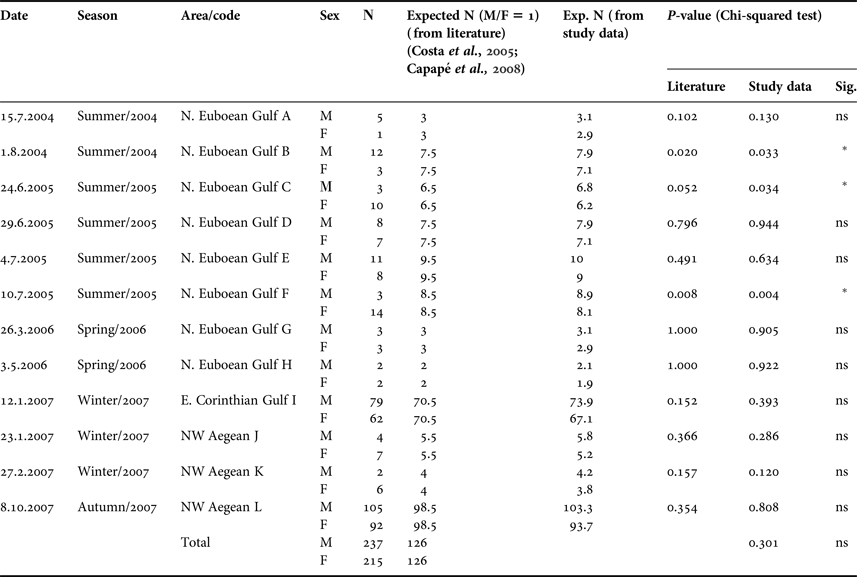
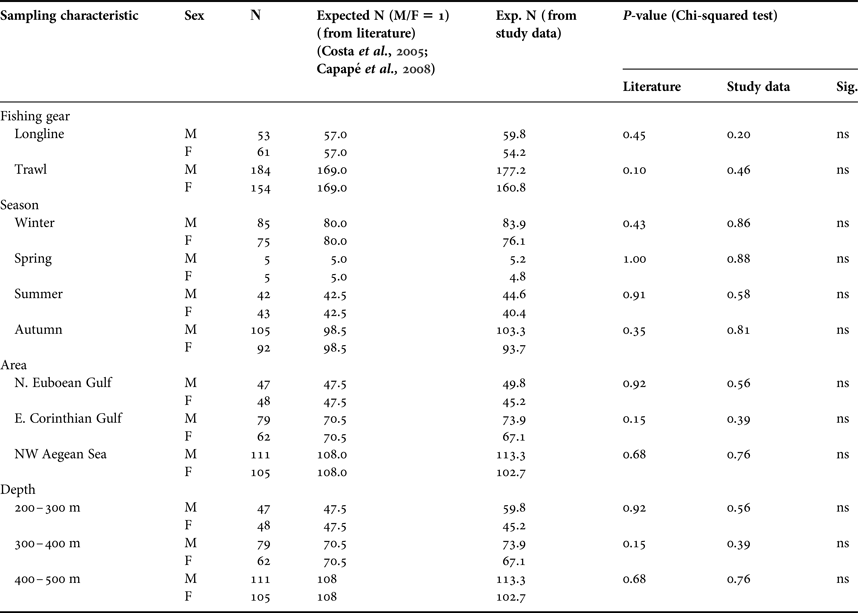
A total of 452 blackmouth catsharks were captured in 12 trips during 2004 and 2007 (Table 1), of which 114 (25%) specimens were caught by longline vessels in 10 trips and 338 (75%) specimens were captured by demersal trawlers in two trips. Overall, 215 specimens (47.6%) were identified as females and 237 individuals (52.4%) were determined as males. The overall S R of females to males was 1:1.1. No significant differences between the observed and expected S R were obtained, while no differences in the seasonal, gear- or depth-related S R were observed (P-values related to these variables were >0.05, exact values are given in Tables 2 & 3). The only three locations at which S R exhibited significant differences from the expected values (according to previous studies or according to proportional values from the overall S R of the present study) were the locations B, C and F (locations P-values: B = 0.033, C = 0.034, F = 0.004).
Galeus melastomus sex ratios by sampling timepoint and corresponding Chi squared results.

*Statistically significant chi-squared test (P-value < 0.05); ns, not significant (P-value > 0.05); Costa et al. (Reference Costa, Erzini and Borges2005) and Capapé et al. (Reference Capapé, Guélorget, Vergne and Reynaud2008) reported a M/F ratio of 1 for the species.
Galeus melastomus sex ratio by sampling characteristic (fishing gear, season, fishing area and fishing depth) and corresponding Chi squared results.

ns, not significant (P-value > 0.05); Costa et al. (Reference Costa, Erzini and Borges2005) and Capapé et al. (Reference Capapé, Guélorget, Vergne and Reynaud2008) reported a M/F ratio of 1 for the species.
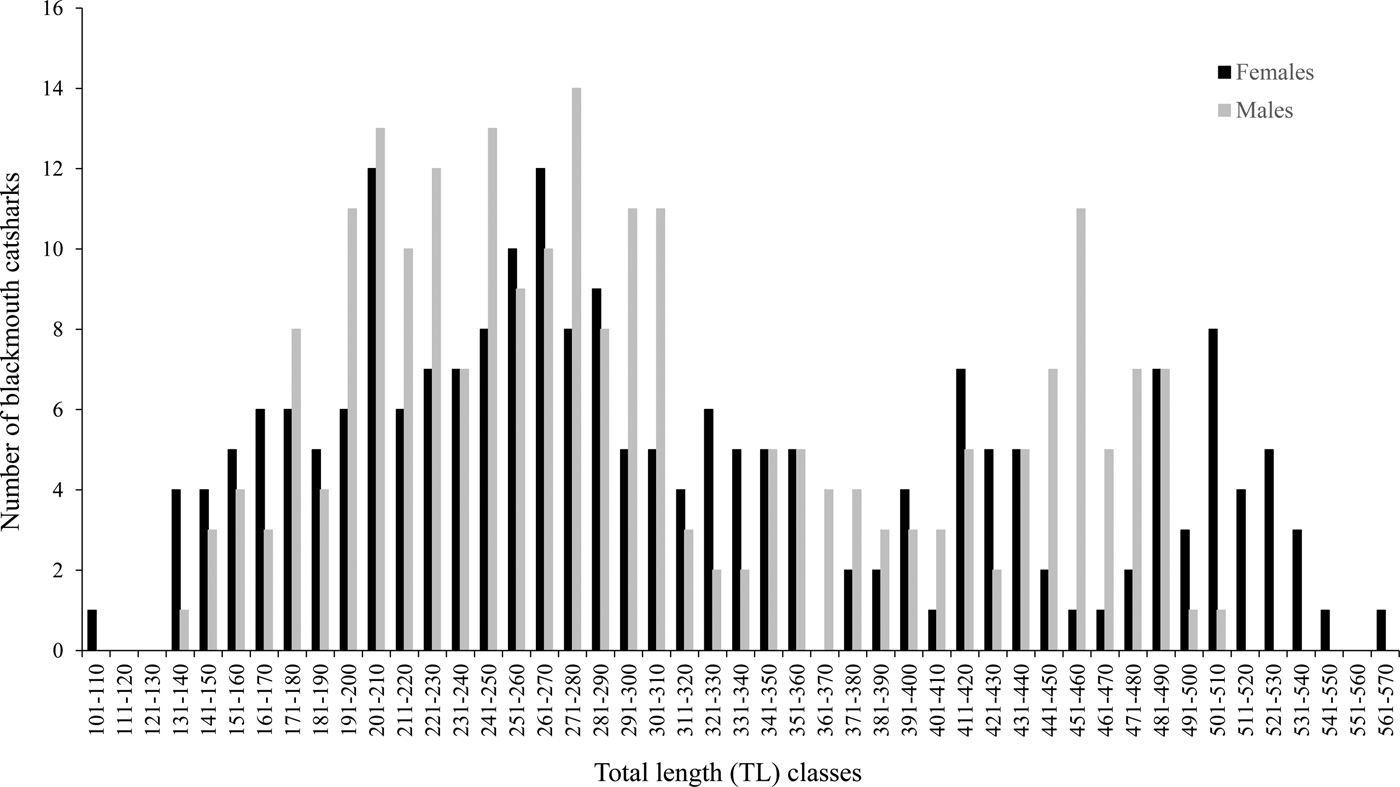
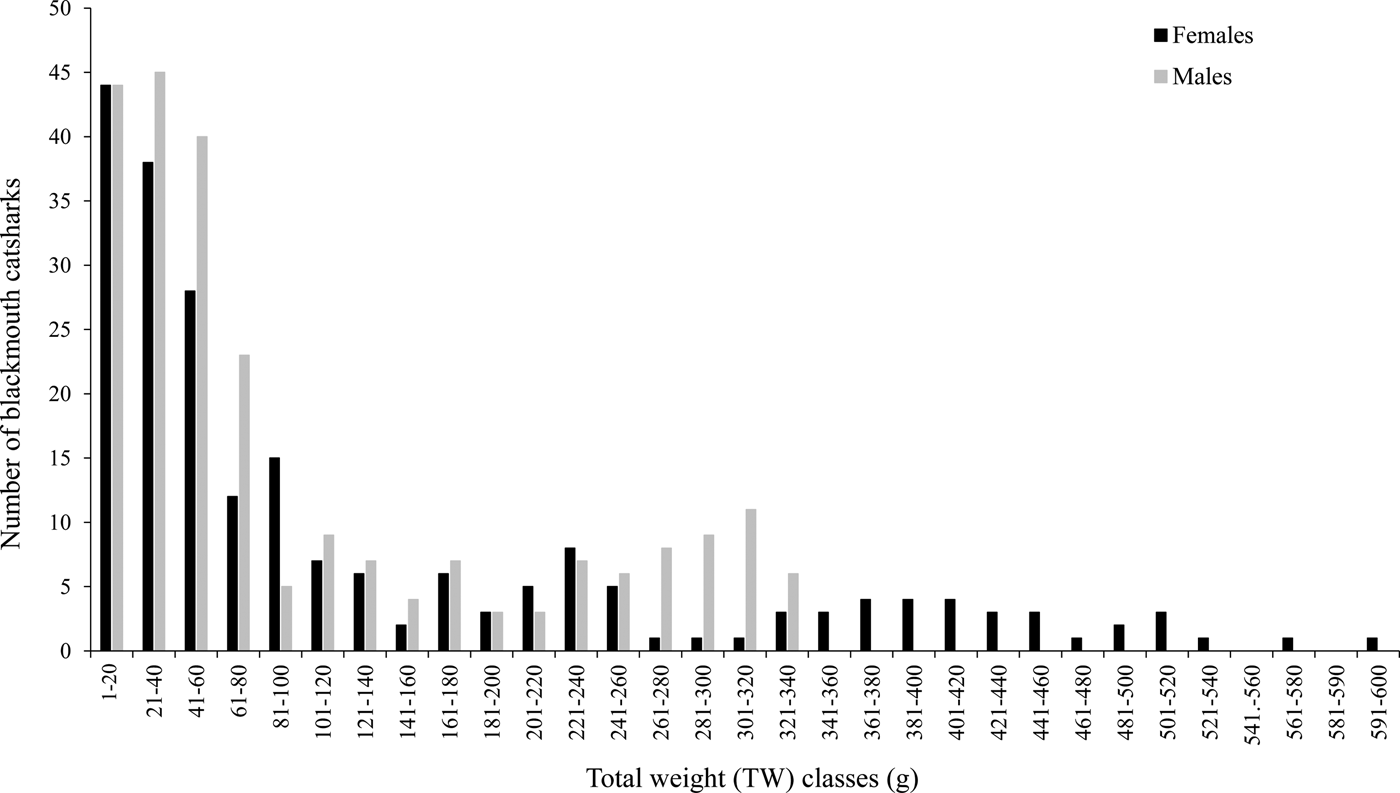
The proportions of the length classes for both sexes are shown in Figure 2. Specimens ranged in TL from a minimum of 106 mm to a maximum of 563 mm for females and from 135 to 501 mm for males. The mean TL for females was 310.9 mm (Standard deviation (SD) = 116.3 mm) while the mean TL value for males was 301.6 mm (SD = 99.5 mm). From the whole sample lot, male and female catsharks of 180–320 mm TL (Figure 2) were mostly abundant. Kolmogorov-Smirnov two sample t-test analysis indicated that males and females did not have significantly different TL frequency distributions (KS two-sample t-test P-value = 0.07). The proportions of the weight classes are given in Figure 3. Specimens ranged in TW from a minimum of 2 g to a maximum of 596 g for females and from 5 to 334 g for males. The mean TW for females was 128.6 g (SD = 145.7 g) while the mean TW value for males was 101.9 g (SD = 101.1 g). From the total of sampled catsharks, specimens of 1–100 g TW (Figure 2) were the most abundant. Only female samples attained higher TW values than 340 g. Kolmogorov–Smirnov two sample t-test analysis indicated that females demonstrated significant differences in TW frequency distributions compared with males (KS two-sample t-test P-value = 0.03). The distributions of both TL and TW datasets were not normal and for this reason non-parametric Kruskal–Wallis analysis was chosen for the assessment of sex-related differences in shark sizes (TL data analysis for normality: females: Anderson–Darling test P-value < 0.005, A2 value = 4.57, Skewness = 0.49, Kurtosis = −0.90, N = 215; Males: A-D test P-value < 0.005, A2 = 5.79, Skewness = 0.46, Kurtosis = −1.00, N = 237; TW data analysis for normality: females: Anderson–Darling test P-value < 0.005, A2 value = 18.27, Skewness = 1.37, Kurtosis = 0.75, N = 215; males: A–D test P-value < 0.005, A2 = 19.14, Skewness = 1.06, Kurtosis = −0.35, N = 237). Kruskal–Wallis test revealed the absence of significant differences in median TL and TW of male and female specimens (TL: H-value = 0.34, P-value = 0.56, DF = 1, Median = 281.0 mm, 1st quartile = 216 mm, 3rd quartile = 412 mm, Minimum = 196.0 mm and Maximum 563.0 mm for female individuals vs Median = 276.0 mm, 1st quartile = 221.0, 3rd quartile = 387.5, Minimum = 135.0, Maximum = 501.0; TW: H-value = 0.52, P-value = 0.47, DF = 1, Median = 58.0 g, 1st quartile = 25.0 g, 3rd quartile = 202.0 g, Minimum = 2.0 g and Maximum 596.0 g for female individuals vs Median = 57.0 g, 1st quartile = 24.5 g, 3rd quartile = 163.5 g, Minimum = 5.0 g, Maximum = 334.3 g).
Total length (TL) frequency distribution of male and female Galeus melastomus.

Total weight (TW) frequency distribution of male and female Galeus melastomus.

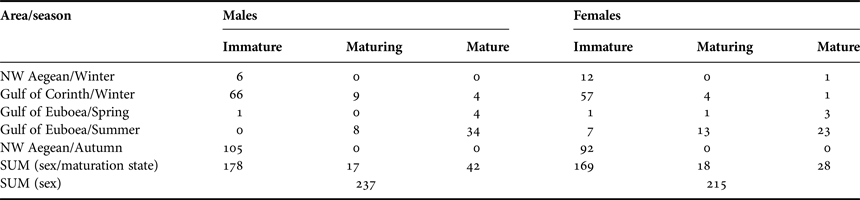
The collected population sample of the blackmouth catshark was mainly composed by juveniles (<300 mm) (77% of immature specimens from which 39.4% males and 37.4% females) accounting for 347 catsharks in total. Most of the immature juvenile catsharks were caught off the NW Aegean Sea (215 catsharks/111 males and 104 females) and the Corinthian Gulf (123 catsharks/66 males and 57 females) by bottom trawl hauls. More detailed outputs of the landings are given in Table 4. Juvenile male specimens presented short and flexible claspers while their testes and genital ducts were inconspicuously developed and thread-like. Immature females exhibited whitish and undeveloped ovaries, thread-like oviducts and inconspicuous oviducal glands.
Frequency distribution of Galeus melastomus by sex, maturity stage, location and season.

Maturing individuals accounted for only 8% (37 catsharks/19 males and 18 females) of the total catch and with the exception of one female that was captured in spring, all other catsharks from the same stage were caught off the Euboean by longline vessels (eight males and 13 females) and the Corinthian Gulf by bottom trawlers (11 males and four females) during summer and winter respectively. In maturing male catsharks claspers were longer than pelvic fins and their rigidity due to the calcification was increased compared with immature specimens. The testes increased in mass, but had no visible external spermatocysts while no sperm was apparent in the seminal vesicles. The genital duct was slightly convoluted anteriorly. Maturing females exhibited primarily white ovarian follicles and a well-differentiated genital duct and the oviducal glands were visible and slightly rounded.
Mature catsharks accounted for the 15% of the total catch (68 individuals/34 males and 23 females) and were mainly captured during summer, off the northern coasts of the Euboean Gulf with demersal longlines (13%). The rest of the mature samples were captured in spring (four males and three females with longlines) and winter (two males from the Corinthian Gulf and two females from the Corinthian Gulf and NW Aegean respectively) while no mature specimens were captured in autumn. Mature males had well-elongated, calcified and rigid claspers that were enveloped by the pelvic fins. Testes were well-developed and exhibited externally visible spermatocysts while the genital duct was twisted and sperm was present in the seminal vesicles. Adult females exhibited fully developed genital ducts and a single functional ovary containing batches of vitellogenic yolky oocytes ranging from 5 to 18 mm in diameter and 0.6 to 2.0 g in weight. The presence of yolky oocytes was simultaneous to the presence of immature oocytes ranging from 0.5–5 mm. The number of vitellogenic follicles, with a diameter greater than 5 mm were mainly present in spring and summer catches. The average number of mature ovarian (in ovary) oocytes was 15/single ovary spanning from 8–26 (12–16 in winter, 8–12 in spring and 12–26 in summer) with the highest count of mature oocytes recorded from a female individual of 502 mm TL, captured in summer. Moreover, in adult female specimens, the oviducal glands were conspicuously rounded and their mass considerably increased. Nineteen females bore egg capsules within their oviducts and these specimens were captured in spring and summer (May, June and July). No marked differences were found in the number of egg capsules between the right and left oviducts. The number of egg capsules ranged from 1 to 6 in each oviduct and from 1 to 12 in egg case bearing females. The greater majority of egg case bearing females (16 females) had an equal number of egg capsules in each oviduct, one female presented five egg cases in the right uterus and four in the left, whereas two individuals had only one, all in the right oviduct. Egg capsules ranged from 38–55 and 14–20 mm in length and width, respectively while their weight spanned from 1.8–3.5 g.
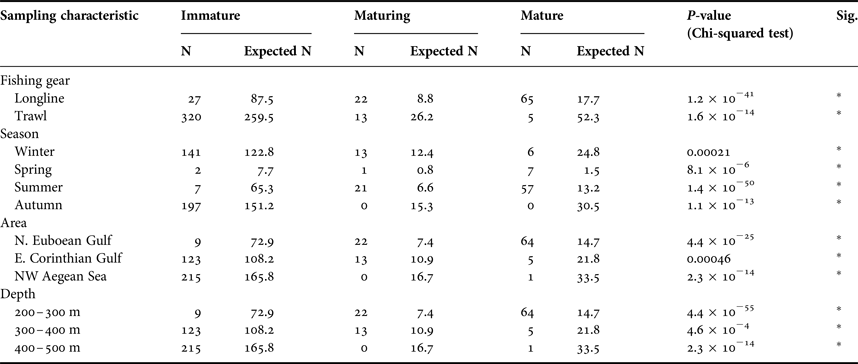
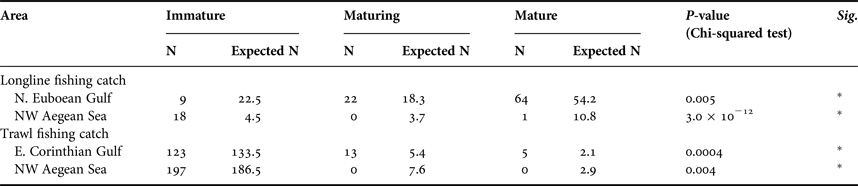
Chi squared goodness of fit tests revealed highly significant differences in the proportions of maturity stages at different fishing areas (Table 5). The summer and spring catches from the Northern Euboean Gulf were mainly composed of large sized mature and maturing individuals (fishing areas P-values: N. Euboean = 4.4 × 10⁻²⁵, E. Corinthian = 0.00046, NW Aegean = 2.3 × 10⁻¹⁴; seasons P-values: summer = 1.4 × 10−50, spring = 8.1 × 10⁻⁶). The winter catch (141 catsharks captured in Corinth by bottom trawlers and 19 caught off the NW Aegean by longline vessels) was largely composed of immature individuals (13 maturing and six mature were also caught during this season and only one mature out of the six reported came from NW Aegean catches) (P-value for Corinthian Bay = 0.00046, P-value for winter = 0.00021). Lastly the autumn catch was entirely composed by immature specimens caught off the NW Aegean (P-value for NW Aegean = 2.3 × 10⁻¹⁴, P-value for autumn = 1.1 × 10⁻¹³). Chi squared tests revealed highly significant differences in the proportions of maturity stages collected by different fishing gear with an estimated P-value of 1.6 × 10⁻¹⁴ for bottom trawl tows, having a greater impact on small sized (<250 mm TL) immature Galeus melastomus and an estimated P-value of 1.2 × 10−41 for longlines, having a higher impact on large size catsharks (>250 mm TL, mature specimens mainly followed by maturing and large sized immature catsharks). Significant differences in the proportions of the maturity stages collected at different depths (depth strata P-values: 200–300 m = 4.4 × 10−55, 300–400 m = 4.6 × 10⁻⁴, 400–500 m = 2.3 × 10⁻¹⁴) were also detected, with the shallower stations of Northern Euboean Gulf, mainly characterized by the increased presence of mature catsharks. Increased prevalence of immature samples was apparent at the deeper strata of the Corinthian Gulf and NW Aegean while the representation of mature and maturing samples was very low. Chi squared tests comparing the demographic composition of the longline catches from the Euboean Gulf and NW Aegean and the trawl catches from the Corinthian Gulf and NW Aegean revealed significant differences in the proportions of the maturity classes (longline sites P-values: N. Euboean = 0.005, NW Aegean = 3.0 × 10⁻¹²; trawl sites P-values: E. Corinthian = 0.0004, NW Aegean = 0.004). These are summarized in Table 6.
Galeus melastomus maturity stage ratios by sampling characteristic (fishing gear, season, fishing area, fishing depth) and corresponding chi squared results.

*Statistically significant chi squared test (P-value < 0.05).
Galeus melastomus maturity stage ratios by fishing gear at different fishing areas and corresponding chi squared values.

*Statistically significant chi squared test (P-value < 0.05).
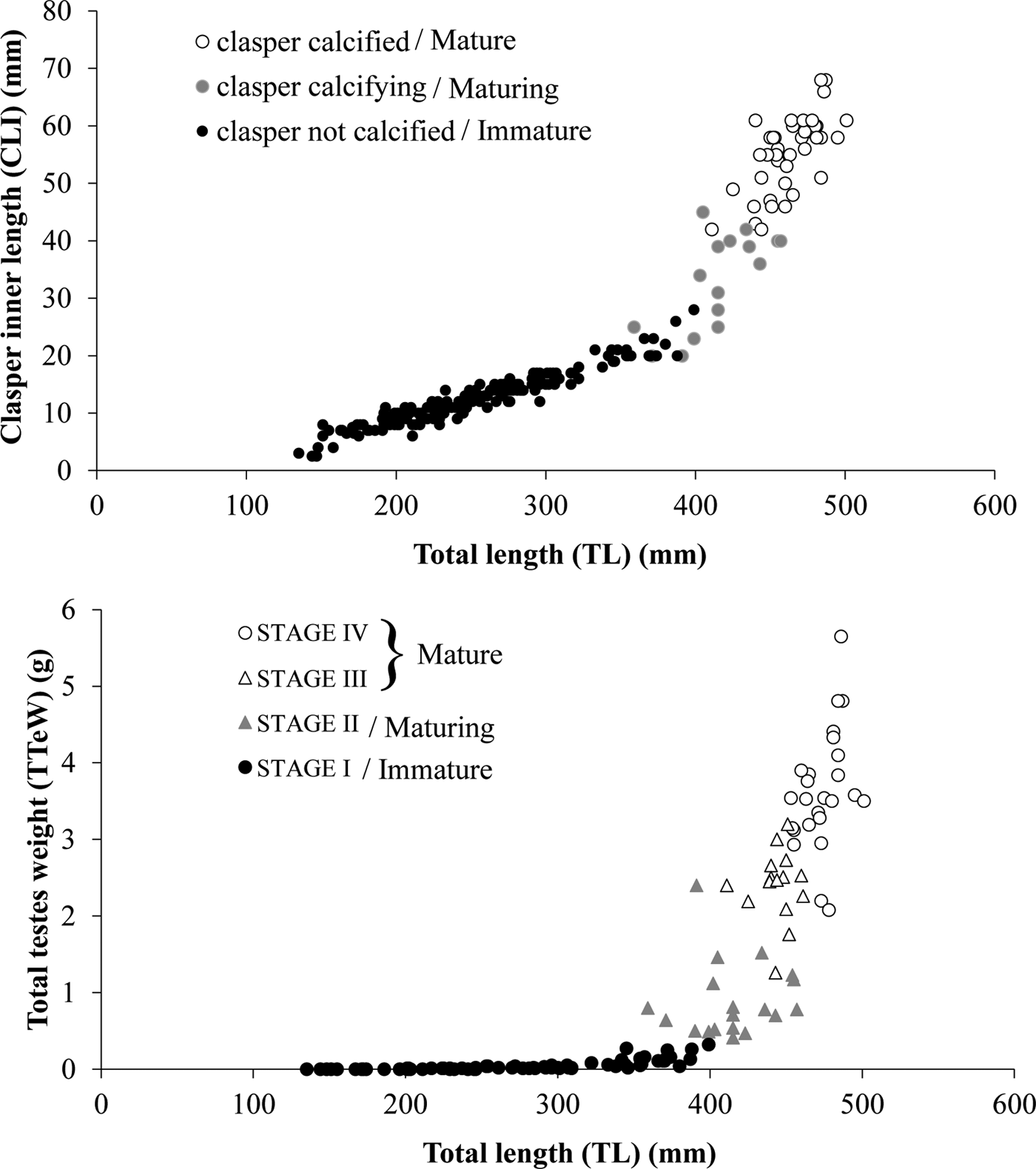
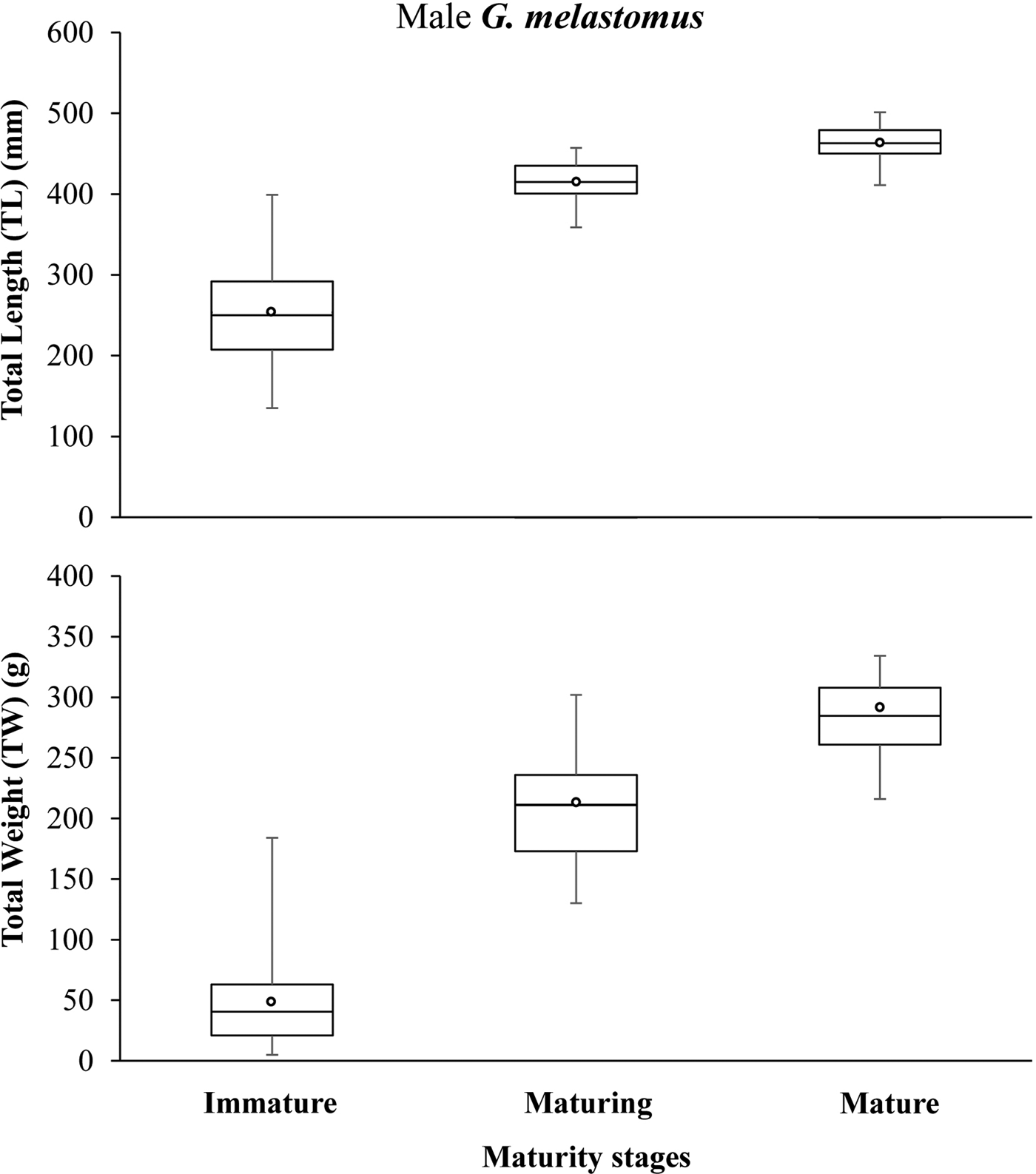
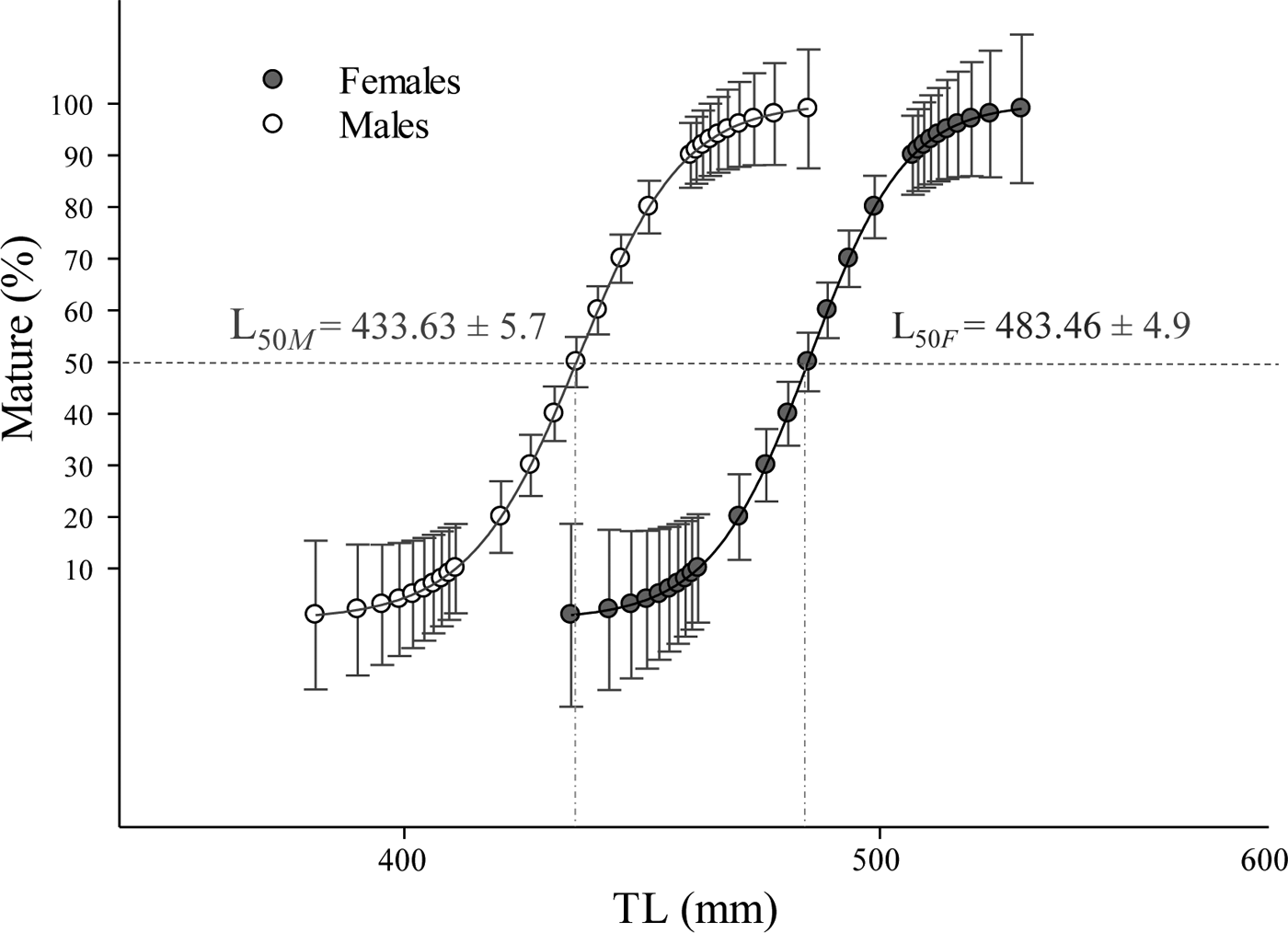
The relationship between TL and TW for males was: TW = 4.0 × 10⁻⁷ × TL3.3098, R = 0.99, N = 237 (Kendall's tau correlation test (TL vs TW) = 0.93, P-value = 0.000). The measurements of the external and internal reproductive structures of Galeus melastomus males are given in Table 7. CLI was the structure most positively correlated to TL and maturation in males (Kendall's tau correlation (TL vs CLI) test value = 0.89 and P-value = 0.000). The relationship of TL to CLI was: CLI = 0.0002 × TL2.0518 and R = 0.96 (N = 237). A noticeable increase in CLI and clasper calcification status occurred when specimens attained a TL of 440 mm, giving a rough estimate of the initiation of sexual maturation. At 460 mm TL onwards all male specimens were recorded as mature (CLI range 46–68 mm) (Figure 3). The corresponding relationships TL against left and right testes weights and lengths and total testes weights were the following: LTeW = 3.0 × 10⁻²³ × TL8.4391 and R = 0.91 (N = 237), RTeW = 9.0 × 10⁻²³ × TL8.272 and R = 0.91 (N = 237), LTeL = 8.0 × 10⁻⁶ × TL2.564 and R = 0.90 (N = 237), RTeL = 0.00001 × TL2.4579 and R = 0.90 (N = 237), TTeW = 2.0 × 10⁻²² × TL8.2832 and R = 0.91 (N = 237). Kendall's tau correlation test values (for linearity) for each pair-set of measurements were: TL vs RTeW = 0.79 and P-value = 0.000; TL vs LTeW = 0.78 and P-value = 0.000; TL vs RTeL = 0.74 and P-value = 0.000; TL vs LTeL = 0.73 and P-value = 0.000; TL vs TTeW = 0.79 and P-value = 0.000. Beyond 440 mm of TL, testes weights increased rapidly with most male specimens being mature, pointing at the start of male sexual maturation (Figure 3). Above 460 mm TL all males were identified as mature with total testes weights ranging from 2.08–5.65 g (Figure 4). The distributions of LTeL, LTeW, RTeL and RTeW data were not normal and for this reason non-parametric Kruskal–Wallis analysis was chosen for the assessment of size differences in left and right testes (Left testes data analysis: Length: Anderson–Darling test P-value < 0.005, A 2 value = 1.46, Skewness = 0.032, Kurtosis = −1.23, N = 92; Weight: P-value < 0.005, A 2 = 9.20, Skewness = 0.65, Kurtosis = −0.76, N = 184; Right testes data analysis: Length: Anderson–Darling test P-value < 0.005, A 2 = 1.37, Skewness = 0.023, Kurtosis = −1.17, N = 92; Weight: Anderson–Darling test P-value < 0.005, A 2 = 9.05, Skewness = 0.59, Kurtosis = −0.93, N = 184). No significant differences in the weight (Kruskal–Wallis: H-value = 0.05, P-value = 0.831, degrees of freedom (DF) = 1) or length (Kruskal–Wallis: H-value = 0.45, P-value = 0.654, DF = 472) of left and right testes were detected. Figure 5 gives an explicit output of the male length structure by stage of maturation. Size at first maturity (L50) for Galeus melastomus males was estimated at 433.6 mm TL. Based on clasper calcification the logistic curve giving this estimation was:
 $$P_{\rm i} = \displaystyle{{\rm 1} \over {{\rm 1} + e[^{ - ({\rm TL} - {\rm 433}.{\rm 6})/{\rm 1}0.{\rm 9}} ]}}$$
The estimated error for L 50 was 5.7 and the 95% confidence intervals for L 50 ranged from 424.1 to 443.2 mm while for b the estimated error was 3, 3 and the 95% confidence intervals spanned from 6.8 to 17.5. An output of the logistic curves for both sexes is given in Figure 6.
Relationships between total lengths (TL) to inner claspers length (CLI) and total testes weight (T.TeW) in Galeus melastomus samples, according to a four maturity stage scale described by Stehmann (Reference Stehmann2002) (I, II, III, IV): (I) Immature: narrow testes, unformed seminal vesicle and soft claspers, smaller than pelvic fins. (II) Maturing: developing soft claspers, passing pelvic fins and no sperm in vesicle, wide, white coloured testes. (III) Mature: calcified claspers, coiling sperm ducts (epididymes) and abundant sperm in vesicle, beige-coloured testes. (IV) Mature/spawning: expanded, full of sperm vesicle, wide testes.

Box plots of male Galeus melastomus TL (mm) and TW (g) ranges at each maturation stage (immature, maturing, mature). Whiskers indicate the maximum and minimum values of the ranges. Upper and lower horizontal box lines show the 1st and 3rd quartile values. The line within the box shows the median value. The circle within the box shows the average values.

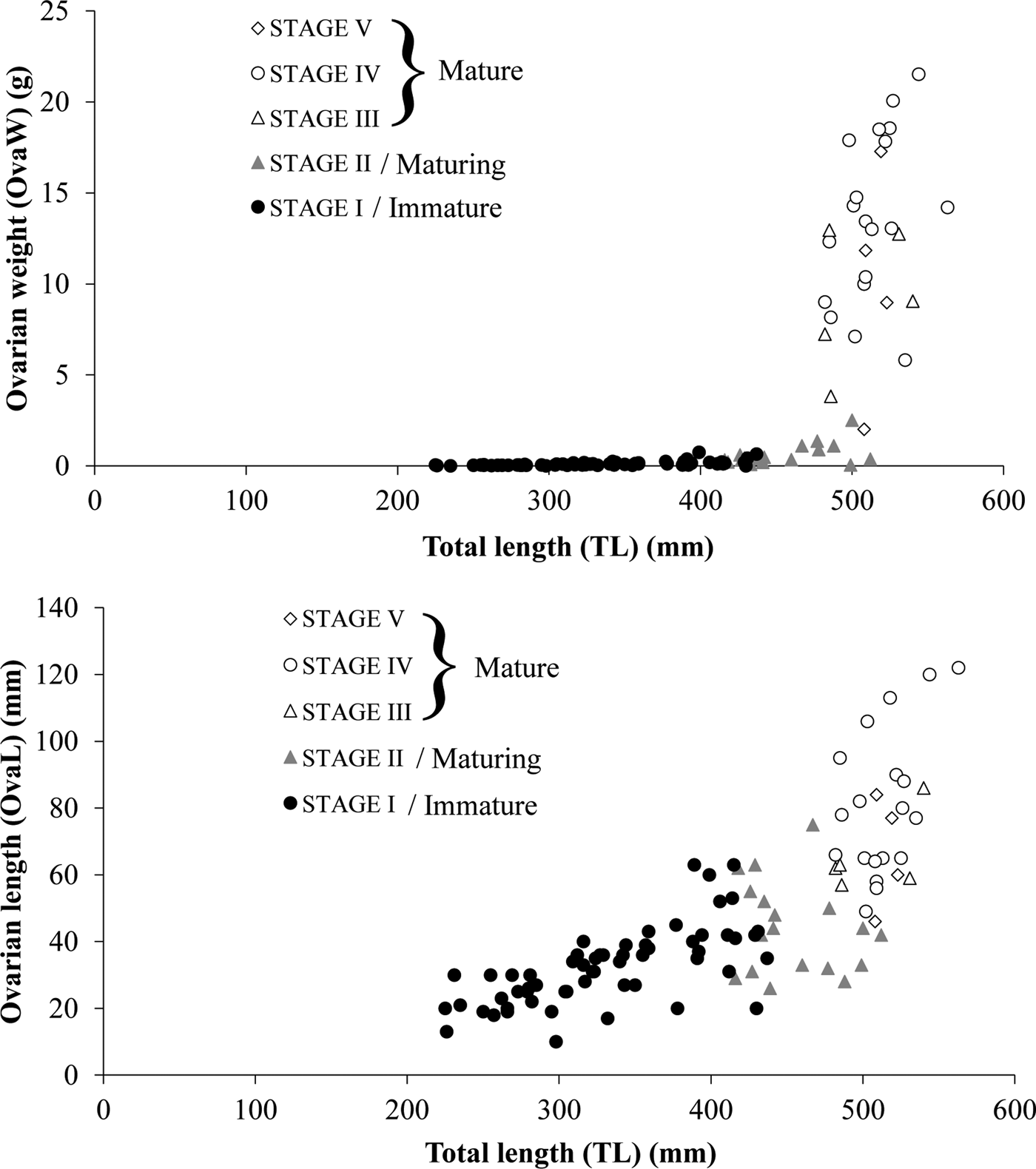
Relationships of total lengths to ovary weight (OvaW) and ovary length (OvaL) in female Galeus melastomus samples, according to five maturity stage scale described by Stehmann (Reference Stehmann2002) (I, II, III, IV, V): (I) Immature: Narrow uterus or not appreciable, formless capsule gland. (II) Maturing: The lowest part of the uterus is wider, clear capsule gland. (III) Mature: Wide uterus and oviducal glands, which are fully formed. (IV) Mature/spawning: Capsules in the uterus or the fully developed oviducal glands. (V) Mature/extruding or advanced stage: The uteri might be projected out of the cloaca and the oviducal glands are rounder due to their increment in width.

Internal reproductive structure measurements of G. melastomus males in each maturity stage.

N, Number of males from which measurements on reproductive structures were made.
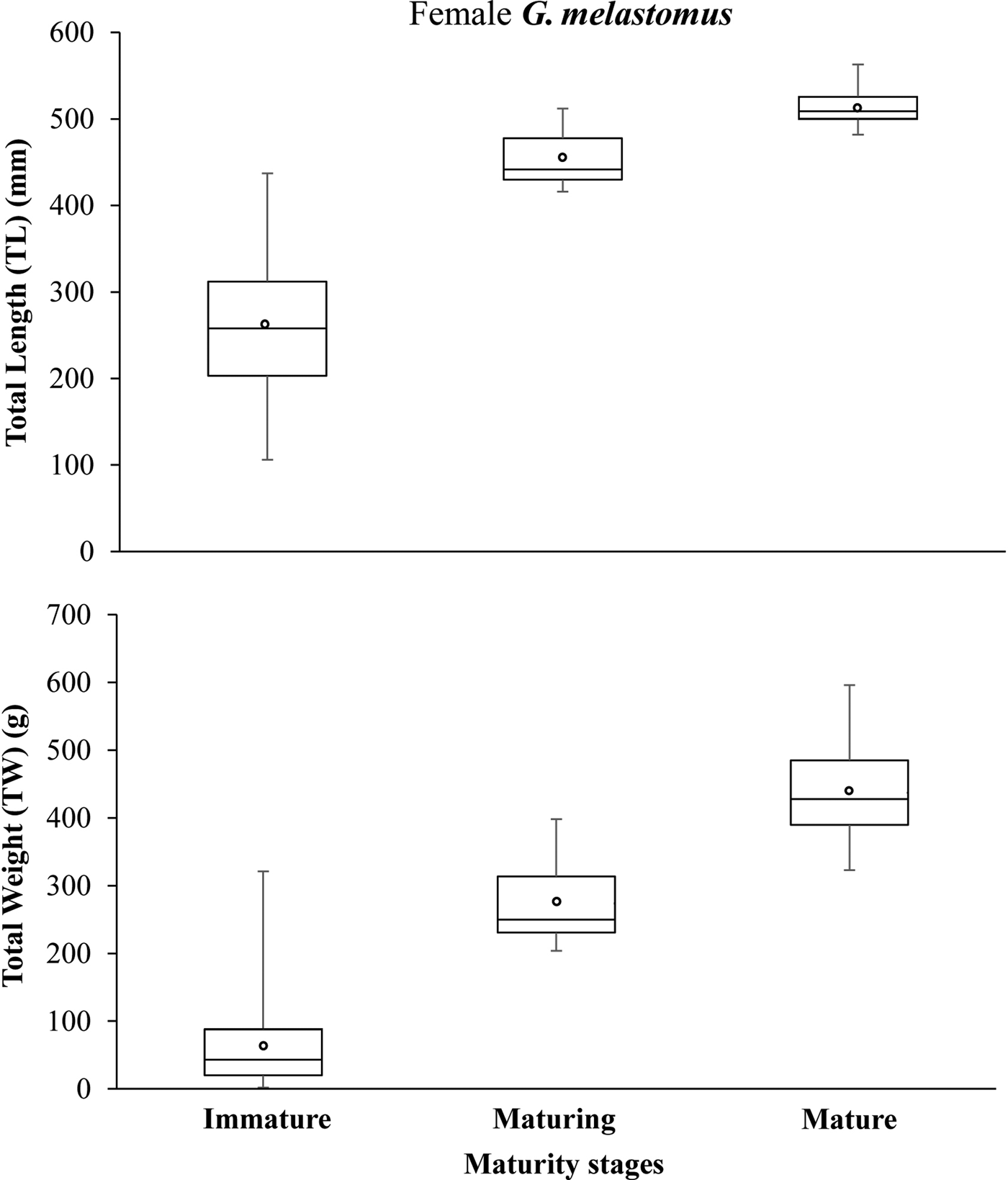
The relationship between TL and TW for females was: TW = 4.0 × 10⁻⁷ × TL3.3483, R = 0.99 (N = 215) (Kendall's tau correlation(TL vs TW) test value (for linearity) =0.94 and P-value = 0.000). Regression coefficient comparison of the relationships between TL and TW in males and females, using their logarithmically transformed values (normalization of the data), revealed no significant sex-related differences suggesting that TL is not a stronger predictor for females (B coefficient value = 3.348) compared with males (B coefficient value = 3.317) and vice versa (t-value = 0.911 and P-value = 0.363). No significant differences in the slopes of the TL vs TW regressions (log transformed data) in males and females were revealed (Chi-square value = 1.324, DF = 448, P-value = 0.186). The general TL vs TW relationship for the population (males and females) was: TW = 4.0 × 10⁻⁷ × TL3.3347 (Kendall's tau correlation (TL vs TW) test value (for linearity) =0.94 and P-value = 0.000). The measurements obtained from female reproductive structures are given in Table 8. The relationship between OvaL and TL was: OvaL = 0.0036 × TL1.5678 and R = 0.92 (N = 215) while the one between OvaW and TL was: OvaW = 1.0 × 10⁻¹⁴ × TL5.2801 and R = 0.87 (N = 215). The corresponding relationship between UtWi and TL was: UtWi = (1.0 × 10 −8 × TL3.1825 and R = 0.92 (N = 215). Kendall's tau correlation test values for each pair-set of measurements were: TL vs OvaW = 0.80 and P-value = 0.000; TL vs OvaL = 0.78 and P-value = 0.000; TL vs UtWi = 0.68 and P-value = 0.000. Overall, the size of female reproductive structures increased with TL at the onset of maturation (Figure 6) in the same manner male reproductive organs did. OvaL, OvaW and UtWi demonstrated a rapid increase from about 480 mm TL onwards, above which most female specimens were mature with the exception of four individuals that were still found to be at the maturing stage (Stage II) having a TL of 488, 499, 500 and 512 mm. Over 512 mm TL, all female specimens were found to be mature with OvaL and OvaW ranging from 59 to 122 mm and from 5.81 to 21.52 g and UtWi from 9–17 mm. Female individuals from 106 to 477 mm TL were all found to be immature or adolescent maturing females. In Figure 7 female length structure by maturity stage is more explicitly provided. Egg capsules were found in 19 Galeus melastomus females, with three females in advanced stage (V), while four females from the summer catches exhibited mating scars on the trailing end of their pectoral fins and the flanks between the pectoral fins and the dorsal fins. Size at first maturity (L50) for Galeus melastomus females was estimated at 483.5 mm TL (Figure 8). The logistic curve giving the estimated L50 value for females was:
 $$P_{\rm i} = \displaystyle{{\rm 1} \over {{\rm 1} + e[^{ - ({\rm TL} - {\rm 483}.{\rm 5})/{\rm 11}.{\rm 1}} ]}}$$
The estimated error for L 50 was 4.9 and the 95% confidence intervals for L 50 ranged from 472.4 to 494.6 mm while for b the estimated error was 6.2 and the 95% confidence intervals spanned from 2.6 to 19.8. The maximum likelihood method of the logistic regression test indicated that males reach maturity earlier than females (Z-value = 4.28, P-value = 0.000). The test for equal slopes showed no differences between the slopes (Chi-square value = 0.002, DF = 1, P-value = 0.958).
Box plots of female Galeus melastomus TL (mm) and TW (g) ranges at each maturation stage (immature, maturing, mature). Whiskers indicate the maximum and minimum values of the ranges. Upper and lower horizontal box lines show the 1st and 3rd quartile values. The line within the box shows the median value. The circle within the box shows the average values.

Maturity ogives showing the proportion of male and female mature Galeus melastomus caught off the Greek coasts. Size at first maturity (L50)±SEM (Standard Error of the Mean value) for each sex is given in the graph.

Internal reproductive structure measurements of G. melastomus females in each maturity stage.

N, Number of males on which measurements of reproductive structures were made.
DISCUSSION
The absence of significant differences in the overall, seasonal and by area/depth strata S R of Galeus melastomus by-catch was in line with the ones reported by Capapé & Zaouali (Reference Capapé and Zaouali1977) from the Tunisian coasts, Tursi et al. (Reference Tursi, D'Onghia, Matarrese and Piscitelli1993), Relini et al. (Reference Relini, Bertrand and Zamboni1999), Rinelli et al. (Reference Rinelli, Bottari, Florio, Romeo, Giordano and Greco2005) from the Adriatic and Ionian Seas, Capapé et al. (Reference Capapé, Guélorget, Vergne and Reynaud2008) from the Languedocian coasts and Ragonese et al. (Reference Ragonese, Nardone, Ottonello, Gancitano, Giusto and Sinacori2009) from the Sicilian Strait, confirming the presence of both female and male catsharks at equal proportions at various grounds of the Mediterranean basin and/or even at different bathyal strata. Moreover, the applied fishing gear did not influence differences in Galeus melastomus S R.
In the present study, there were indications of a segregation by size/maturation stage occurring seasonally and at various areas and/or depth strata. A weak point of the present study was the use of incidental catches from fisheries utilizing either trawl hauls targeting shrimps or longlines targeting fish of over 200 mm such as European hake, anglerfish and large-size sparids. All the samples captured using the latter type of fishing gear came from the Northern Euboean Gulf at depths ranging from 200–300 m and the NW Aegean at depths between 400 and 500 m and were specimens of over 250 mm. However, when comparing the longline catches from the two areas, it was apparent that the catch from Northern Euboea was characterized by a high frequency of large-sized mature specimens. Low presence of maturing and immature specimens was reported for the same area while the NW Aegean catch was almost exclusively composed of immature individuals. Hence, it is suggested that the selectivity exerted by the use of longline mainly concerns the size of the fish and that seasonal and geomorphological factors seem to be more strongly influencing the demographic structure of Galeus melastomus by-catch at different timepoints or fishing grounds. Bottom trawl fishing characterized by larger volumes of by-catch and the lack of size selectivity could explain primarily the fact that the vast majority of the total catch was obtained from the Corinthian Gulf and NW Aegean in only two fishing trips and secondarily that most of these specimens were identified as immature (Koslow et al., Reference Koslow, Boehlert, Gordon, Haedrich, Lorance and Parin2000). Similarly to the longline catches, significant differences in the composition of the two trawl catches were obtained, with the Corinthian catch being represented by all maturity classes and the NW Aegean catch composed solely of immature specimens. This is another indication that periodic and/or geographic differences seem to be the predominant variables affecting the demography of the species by-catch at different time or area points in this study. Capapé & Zaouali (Reference Capapé and Zaouali1977) reported that adult specimens of Galeus melastomus were more abundant at lower depths in contrast to juveniles which were more abundant at greater depths, off the Tunisian coasts. Similar patterns were also demonstrated in several other areas of the Mediterranean including the Ionian (Tursi et al., Reference Tursi, D'Onghia, Matarrese and Piscitelli1993), Adriatic (Ungaro et al., Reference Ungaro, Marano and Musci1997), Alboran (Rey et al., Reference Rey, De Sola and Massutí2004 in Rinelli et al., Reference Rinelli, Bottari, Florio, Romeo, Giordano and Greco2005) and Tyrrhenian Seas (Rinelli et al., Reference Rinelli, Bottari, Florio, Romeo, Giordano and Greco2005). Moreover, Rinelli et al. (Reference Rinelli, Bottari, Florio, Romeo, Giordano and Greco2005) pointed that there was no apparent sexual segregation in relation to the bathyal zone in which the fish were caught, which is in line with the results of the present study.
The high prevalence of reproductively active mature catsharks in the Northern Euboean Gulf (87% of total mature specimens) could suggest that this area is used as a mating and perhaps as a nursery ground for the species. In fact, Tursi et al. (Reference Tursi, D'Onghia, Matarrese and Piscitelli1993) reported that mating of mature catsharks takes place in the shallowest depths of the G. melastomus bathymetric range which seems to be in line with our observations. In accordance, D'Onghia et al. (Reference D'Onghia, Matarrese, Tursi and Sion1995) reported that various geomorphological and environmental parameters in the Aegean could favour the development of nursery areas at lower depths (Castro, Reference Castro1993), for several scyliorhinid species including the smallspotted catshark, Scyliorhinus canicula, Linnaeus, 1758. On the contrary, Galeus melastomus catches from the Eastern Corinthian Gulf and NW Aegean were almost exclusively composed of immature individuals. These differences could be primarily related to bathymetric differences known to characterize the broader fishing areas from which the samples came. The deepest point in the broader area of the Northern Euboean Gulf is found at 450 m while the deepest point of the Corinthian basin is at 900 (Bathymetric data viewers-Maps, https://maps.ngdc.noaa.gov/viewers/bathymetry/). Finally the deepest point recorded next to the fishing grounds, south-east of Skyros is at 1140 m (Bathymetric data viewers-Maps, https://maps.ngdc.noaa.gov/viewers/bathymetry/). Ragonese et al. (Reference Ragonese, Nardone, Ottonello, Gancitano, Giusto and Sinacori2009), Gouraguine et al. (Reference Gouraguine, Hidalgo, Moranta, Bailey, Ordines, Guijarro, Valls, Barbera and De Mesa2011) and Tserpes et al. (Reference Tserpes, Maravelias, Pantazi and Peristeraki2013) reported that mature G. melastomus of the Sicilian and Aegean coasts demonstrated higher abundances at depths from 500 to 800 m while immature sharks are more abundant at lower depths. This seems to be the reason for the general absence of mature individuals from the Eastern Corinthian Gulf and the NW Aegean as the fishing depths exploited (≤ 500 m) in these areas, only covered a small part of the shallower bathyal range of the species in these areas. On the contrary, a larger part of the species bathyal distribution was covered in the Northern Euboean, given that the deepest point is at 450 m, increasing the probability of catching large-sized individuals.
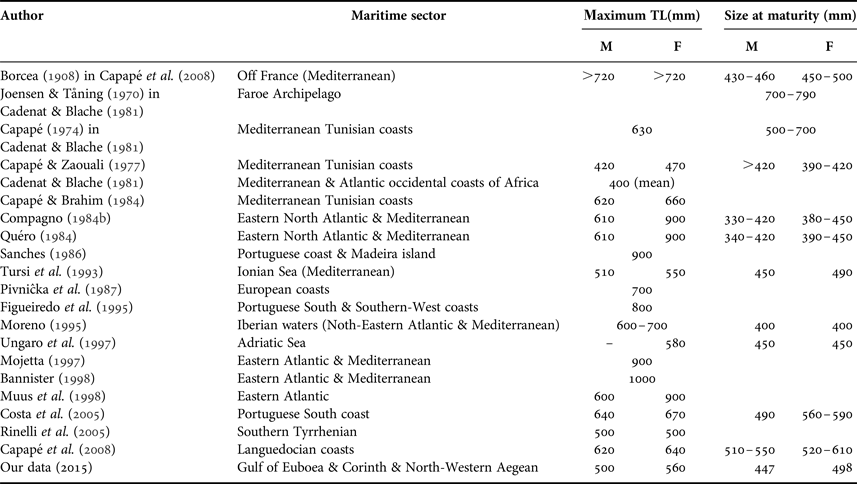
Clasper inner length (together with clasper calcification status) was found to exhibit an almost linear positive correlation to the increment of TL, in accordance to previous studies by Costa et al. (Reference Costa, Erzini and Borges2005), Rinelli et al. (Reference Rinelli, Bottari, Florio, Romeo, Giordano and Greco2005) and Capapé et al. (Reference Capapé, Guélorget, Vergne and Reynaud2008). Overall, obvious changes in clasper calcification as well as clasper and testes growth rates were observed over 440 mm TL while beyond 460 mm TL, claspers for all males were well elongated, fully calcified and rigid while testes were well developed with apparent external spermatocysts. Based on clasper calcification state and observations on male reproductive organs, the size at first maturity (L50) for Galeus melastomus males was estimated to be at 433.6 mm TL. Female blackmouth catsharks have a functional right ovary and a vestigial or absent left ovary, which was the case with the examined female specimens of the study. However, following the typical elasmobranch pattern both right and left oviducal glands and uteri were functional as evidenced by the presence of fully formed egg capsules in both uteri in most of the examined egg-case bearing individuals (Lutton et al., Reference Lutton, St George, Murrin, Fileti, Callard and Hamlett2005). In general, the ovarian size just as the size of the rest of the female reproductive structures increased noticeably beyond 480 mm TL. Ovarian weight among other reproductive structure measurements exhibiting positive correlation to TL, was the one best associated to the latter size. Size at first maturity (L50) for females based on generic observations of the female reproductive system, was determined at 483.5 mm TL and greater from the estimated L50 value for males. The sizes at first maturity for both sexes, estimated herein, are also similar to the ones reported by Rey et al. (Reference Rey, De Sola and Massutí2004), Borcea (Reference Borcea1908), Tursi et al. (Reference Tursi, D'Onghia, Matarrese and Piscitelli1993) and Ungaro et al. (Reference Ungaro, Marano and Musci1997) for specimens caught off the Alboran Sea, French Mediterranean coastal areas, the Adriatic and Ionian Seas respectively. Contrarily to the present findings, larger L50 values were reported by Capapé et al. (Reference Capapé, Guélorget, Vergne and Reynaud2008) for catsharks captured off the Languedocian coasts (Mediterranean coasts of France) (Table 9). Estimates of size at first maturity for both sexes, were lower than for specimens caught off the Atlantic Ocean (Joensen & Tåning, Reference Joensen, Tåning, Jensen, Spärck and Tuxen1970; Costa et al., Reference Costa, Erzini and Borges2005) (Table 9). Herein, no statistical differences in TL and TW values of male and female specimens, were observed. This could be attributed to the lower statistical power of non-parametric statistics (used for the assessment of sexual differences, comparisons of medians instead of means as datasets did not follow normal distribution) to detect differences among groups and the low number of sampled maturing and mature specimens (Zar, Reference Zar1996). Nonetheless, numerically greater maximal TW and TL were observed for female compared with male samples (see Figures 5 & 7 and Tables 7 & 8). Moreover, female TW frequency distributions were significantly different from that of males, towards greater TW classes. Several studies demonstrated that Atlantic specimens can attain greater maximal TL and lengths at first maturity than specimens from the Mediterranean Sea (Joensen & Tåning, Reference Joensen, Tåning, Jensen, Spärck and Tuxen1970; Costa et al., Reference Costa, Erzini and Borges2005) (Table 9). These differences could primarily be attributed to the oligotrophic characteristics of the Eastern Mediterranean in comparison to the Eastern Atlantic and the Western Mediterranean Sea (Bouchet & Taviani, Reference Bouchet and Taviani1992; Turley, Reference Turley1999; Huertas et al., Reference Huertas, Rios, Garcia-Lafuente, Navarro, Makaoui, Sanchez-Roman, Rodriguez-Galvez, Orbi, Ruiz and Perez2012). Additional causes for these differences could be the adaptation of catshark populations to different trophic relationships in these areas (due to the distinct differences in deep-sea faunal assemblages) as well as differences in geomorphology, environmental conditions and fishing patterns (Bouchet & Taviani, Reference Bouchet and Taviani1992; Massuti et al., Reference Massuti, Gordon, Moranta, Swan, Stafanescu and Merrett2004). Moreover, the results of the present study seem to be in accordance to the already published reports by Tursi et al. (Reference Tursi, D'Onghia, Matarrese and Piscitelli1993), Costa et al. (Reference Costa, Erzini and Borges2005) and Capapé et al. (Reference Capapé, Guélorget, Vergne and Reynaud2008), pointing at later sexual maturation and numerically greater maxima TL in female compared with male blackmouth catsharks at different areas of the Western and Central Mediterranean Sea and Eastern Atlantic (Table 9). The main benefit of females maturing at larger sizes is that greater maternal size could contribute to larger or more numerous young ones, therefore making them less susceptible to predation (Branstetter, Reference Branstetter, Pratt, Gruber and Taniuchi1990).
Comparison of maximum total length (TL), size at first maturity by sex of G. melastomus for various geographic subareas.

Tursi et al. (Reference Tursi, D'Onghia, Matarrese and Piscitelli1993) reported the presence of vitellogenic yolky oocytes of various sizes ranging from 13–16 mm in diameter, together with a large number of smaller non-vitellogenic white oocytes in the ovaries and added that the average number of mature oocytes in Galeus melastomus ovaries is 12. Capapé et al. (Reference Capapé, Guélorget, Vergne and Reynaud2008) reported an average number of 18 yolky oocytes in females which could be grouped in maturing and mature oocytes spanning between 7–12 and 15–18 mm and from 0.8–1.2 g and 1.6–2.2 g respectively. Moreover, Ungaro et al. (Reference Ungaro, Marano and Musci1997) found that ovarian oocytes are charged with yolk at about 4 mm. The aforementioned reports are in accordance to the present findings which indicated an average of 15 mature eggs per single ovary ranging from 5–18 mm in diameter and from 0.6–2.0 g. The dimensions of Galeus melastomus egg capsules can vary in size according to geographic area, the same way as size at first maturity.
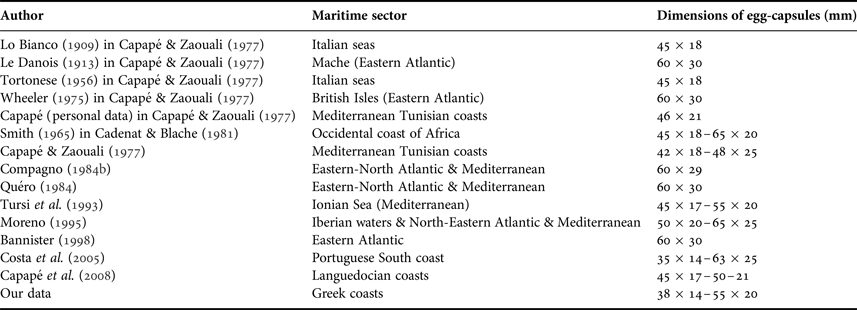
In the present study female specimens bore 1 to 12 egg cases which is in line with previous reports (Tursi et al., Reference Tursi, D'Onghia, Matarrese and Piscitelli1993; Iglesias et al., Reference Iglesias, Du Buit and Nakaya2002; Costa et al., Reference Costa, Erzini and Borges2005). According to Table 10, the egg cases found in Atlantic female specimens are obviously larger than those from the Mediterranean ones (Capapé & Zaouali, Reference Capapé and Zaouali1977). The dimensions of the egg cases collected from the Greek coasts during the present study (from 38 × 14 mm to 55 × 20 mm) are in fact smaller than those reported from Atlantic and Mediterranean specimens. Closer to the size of the egg cases recovered in the present study are the ones reported by Tursi et al. (Reference Tursi, D'Onghia, Matarrese and Piscitelli1993) from catsharks caught off the Ionian Sea. In general, it could be mentioned that egg cases from catsharks caught in the Mediterranean have more similar size to the ones recovered in the present study (Table 10). This could be linked to the smaller size of egg bearing female blackmouth catsharks in the Mediterranean basin compared with the ones found in the Atlantic Ocean which consequently result in larger individuals upon hatching of the egg cases as reported by Mellinger (Reference Mellinger1983) for Scylliorhinus canicula.
Comparison of egg capsules dimensions of G. melastomus for various geographic subareas.

The present study is the first describing the size, age and sexual composition as well as aspects of the reproductive biology of Galeus melastomus by-catch in the Greek Seas. It was shown that male Galeus melastomus by-catches attain size-at-first maturity earlier than their female counterparts and that females presented greater mean TL than males. Overall, no differences in female to male ratios were observed either by area/depth strata or season while there were indications of a segregation by size/age occurring seasonally and various areas/depths. Furthermore, it was shown that TL, male and female L50, number and size of the egg cases presented similarities to specimens previously caught in the Mediterranean and were smaller than those of Atlantic specimens. Further studies regarding Galeus melastomus reproduction, especially in the Eastern Mediterranean, could be useful, as better knowledge regarding the reproductive strategies of the species could contribute to better management of this shark.
ACKNOWLEDGEMENTS
We would like to express our gratitude to the fishermen for their collaboration, support and assistance during the collection of the specimens. Part of this research was sponsored by Pythagoras II Research Plan. This study was coordinated by Dr Megalofonou Persefoni.