Albert Ballin was one of Imperial Germany's most successful business leaders. He early recognized the impact and possibilities of the expansion and integration of global markets. Within little more than a decade after he had joined the management of the Hamburg-Amerikanische-Paketfahrt-Aktien-Gesellschaft (HAPAG) in 1886, he turned an already significant enterprise into the world's largest steamship line. As a leading manager and later as HAPAG director general, Ballin was a major force behind Hamburg's rise to Imperial Germany's second largest city. Due in no small part to HAPAG's spectacular growth, Hamburg emerged as a key global port for passengers and freight by the turn of the century. But Ballin was not just a gifted business leader in a highly innovative economic sector; he also had access to some of the highest figures in Berlin. Ballin repeatedly met with the Kaiser and government members, and he used his long-standing contacts in England on several diplomatic missions to ease rising tensions between the two powers, albeit without lasting success.
Ballin's career and the wide respect he enjoyed are even more astonishing if his background is taken into account. The HAPAG director did not hail from the tight-knit upper bourgeoisie of Hamburg, the königliche Kaufleute (royal merchants), but was an outsider twice over: a self-made man who had grown up in humble circumstances, as the youngest child of a struggling Jewish ticket broker who had moved to Hamburg from Denmark. His rise betrays exceptional talent but also illustrates the social transformation Imperial Germany underwent during his lifetime, and to which he contributed in no small part. Ballin enjoyed much respect but he was never fully accepted in the upper echelons of Hamburg's society. Unlike his friend, banker Max M. Warburg who belonged to an old Hamburg Jewish family with long-established links to the city's economy, Ballin remained a homo novus, a self-made man who had risen from very modest circumstances and whose business and career took him far beyond Hamburg.Footnote 1
His biographers assess Ballin primarily within a German, German Jewish, and Hamburg context.Footnote 2 Yet Ballin successfully managed one of the most globally networked businesses of his time. Indeed, as this article hopes to show, under Ballin's leadership, HAPAG became an influential transnational non-state actor: HAPAG employees operated checkpoints for migrants crossing Germany's border with the Russian and Austro-Hungarian Empires, and the company was an important player in the 1904/05 Russian-Japanese War. Among Ballin's lasting legacies are several formal agreements between leading European and American steamship lines, regulating the transatlantic passenger and freight business, which was considerable between 1890 and 1914. HAPAG liners regularly served ports around the world.
Many of its employees were not German, and they tended to work out of sight on the lower decks of the huge HAPAG liners, underneath the opulent first- and second-class quarters, in the engine rooms and steerage quarters. Even before 1900 HAPAG and other European steamship lines hired Chinese workers for labor-intensive tasks, primarily but not exclusively within southeast Asia, where HAPAG and its Bremen-based competitor, the North German Lloyd, were heavily involved in the lucrative “Coolie” trade. But not just an increasing number of the HAPAG crew was foreign. The German transatlantic migration, the main business for both lines since their earliest days, was still significant when Ballin joined HAPAG in 1886. But by 1880 most German migrants originated in the underdeveloped Prussian east, rather than north and south German regions—considerable numbers were Polish-speakers with Prussian citizenship. The much-improved economic prospects in central Europe made a decline of the migration from Imperial Germany increasingly likely. During the 1880s the number of eastern European passengers traveling via Hamburg and Bremen began to rise. Ballin grasped the enormous long-term potential of the transatlantic passenger market beyond Germany's borders earlier than many of his contemporaries, and he very successfully exploited it.Footnote 3
The HAPAG director general was one of the chief architects of a hugely profitable and innovative transport system that enabled millions of Europeans and Asians to migrate to other continents and improve their living conditions. Even his recent biographers do not recognize this remarkable feat, let alone the ambiguities involved with it. The company, its management, and its stockholders benefited from the eastern European mass migration to America (and rising return migration). But can the same be said about the steerage passengers themselves? This question does not really aim at the conditions on the ships. The accommodation and general comfort on the large ocean liners improved significantly toward the end of the century, in no small part thanks to innovations HAPAG introduced on its transatlantic routes. Rather, this article discusses Ballin's important role in organizing the transit of millions of eastern Europeans through Germany. By the late 1880s, HAPAG handled the transport of its own passengers from the border to Hamburg. Yet in 1894 HAPAG and Lloyd effectively took over the management of Germany's eastern border crossings.
This article attempts to answer two questions related to the transit migration: Why and under which conditions did the Prussian government entrust two private companies to decide who could be admitted across the border (and who not)? And more important, did HAPAG and Lloyd handle their role as gatekeepers responsibly? In order to shed more light on these questions, this article will focus on a particularly critical moment in the history of the transit system, the 1904 “Atlantic Rate War,” a conflict between leading European steamship lines over the lucrative eastern European passenger market. One of the most contentious issues was the HAPAG and Lloyd control of Germany's eastern border crossings.
The two German steamship lines were not the only transnational non-state actors present at Germany's eastern border, however. Jewish aid committees provided support to Jewish transmigrants in the vicinity of the border crossings, along the main transit routes, and at different European ports since the early 1890s, in some places even since the late 1860s. Their influence on state authorities, railroad officials, and the steamship lines was limited but they were recognized as trustworthy guarantors for migrants in need. The Hilfsverein der Deutschen Juden (Aid Association of the German Jews) was founded in 1901 partly to coordinate the work of various local aid societies better in a period of strongly increasing transit migration from eastern Europe. Jewish spokesmen had long lobbied for Jewish migrants behind the scenes, but the Hilfsverein pursued a more proactive strategy. At the height of the Atlantic Rate War, the Hilfsverein blamed Albert Ballin publicly for the abuse of migrants at the border crossings. The credit for this new course belongs largely to Paul Nathan. And it was he who lodged the personal attack on Ballin in 1904.
Nathan was not as prominent as Albert Ballin, but in 1904 he was a well-known German Jewish leader. Apart from the same age, the two men had little in common. Nathan hailed from a well-to-do bourgeois family in Berlin. Against the wishes of his father, he did not go into business but began working as a political journalist before graduating from Heidelberg University with a Ph.D. on the French Renaissance writer and humanist Rabelais. In the mid-1880s, when Ballin joined the HAPAG management, Nathan was the editor of a respected liberal weekly in Berlin, the Nation, and belonged to the wider leadership circle of the left-liberal Freisinnige party. During the 1880s and 1890s, Nathan helped to organize the fight against the rising anti-Semitic movement in Imperial Germany and the Austro-Hungarian Empire. Through this work he became familiar with the situation of Jewish populations in eastern Europe and in the Ottoman Empire who suffered from economic hardship and, especially in the Russian Empire and Romania, from increasing persecution.Footnote 4
In 1901 Nathan helped to establish the Hilfsverein. The organization was modeled on already existing Jewish philanthropic societies, especially the Paris-based Alliance Israélite Universelle, founded in 1860. In its first year, the Hilfsverein recruited 3,000 donors and continued to expand, thanks largely to Nathan's organizational skills. Following in the footsteps of the Alliance, the Hilfsverein soon built up and managed dozens of schools and training facilities for poor Jews across the Ottoman and Austro-Hungarian Empires, in Romania, and in Bulgaria. The Hilfsverein president James Simon was a wealthy textile entrepreneur and philanthropist who enjoyed much respect in Berlin's society and at the Imperial court, thanks to his generous donations to the capital's museums and other civic causes. While Simon was the official representative, Nathan was the chief executive who managed the organization and shaped its policy in innovative ways. Indeed, Nathan turned the Hilfsverein into a forerunner of contemporary humanitarian non-governmental organizations (NGOs).Footnote 5
A decisive factor leading to the organization of the Hilfsverein was the significant rise of Jewish migration from eastern Europe—through Germany—in the 1890s. Until then, Jewish leaders in Europe and America had relied on a situational strategy to deal with Jewish transmigrants en route to America. In times of crisis, notably in 1868/69 and in 1881/82, when large numbers of migrants were stranded along border crossings or along the transit routes, impromptu local aid committees were organized. Across Europe and in the United States, Jewish aid committees and individual philanthropists coordinated their efforts through the Jewish press and frequently with the support of the Alliance. From its Paris offices the Alliance leaders negotiated with governments in different countries and transport companies, coordinated fund-raising activities, and more important, connected and mediated between Jewish communities in different parts of Europe and the United States to find alternative destinations (if necessary), and to guarantee a safe journey for migrants in need. Local aid committees on the border helped many migrants who were not prepared for the journey and would have faced rejection return home. These efforts explain why state officials concerned about the immigration of destitute men and women early on accepted Jewish aid committees as legitimate partners.Footnote 6
Once the crisis had passed, the committees quickly dissolved. Nathan reasoned the Hilfsverein had to develop a more systematic approach to represent the interests of Jewish migrants better. At first glance, this policy would suggest the Hilfsverein and the steamship lines were on a collision course. Yet a closer analysis of Nathan's 1904 attack against Ballin and of the origins of the border checkpoints shows a complex relationship between two transnationally linked non-state actors with different motives but a common interest, to keep the Prussian and the American states on the sidelines, in order to prevent migration restrictions.
HAPAG and the Eastern European Transmigration before 1891
In 1847, in a period of strongly rising emigration from the German states to North America, several Hamburg merchants established HAPAG. Gradually, the company and the port of Hamburg captured an increasing share of the massive transatlantic migration and freight business, emerging as a competitor of the North German Lloyd (founded in 1857), its younger but larger rival in Bremen. Ballin grew up almost literally with the emigration business: his family lived in the immediate vicinity of the port, not far from various cheap hostels that accommodated migrants in transit. His father, Samuel Joseph Ballin, ran a small business from the family apartment selling tickets to emigrants. Ticket brokers such as Samuel bought steamship tickets in bulk and sold them to migrants, pocketing the price difference. They could also lose money when demand was lagging. HAPAG (and Lloyd) had an ambiguous relationship with freelance ticket brokers because they could not be controlled. Early on, around 1850, HAPAG began to boycott the brokers. Yet instead of bowing to HAPAG's conditions, several locked-out agents brought a powerful competitor into Hamburg by offering indirect passages from Hamburg across the Atlantic—via Britain. Initially, British competition did not constitute a serious problem for HAPAG because it could hardly cope with the strong German migration. The situation of Ballin's father is an indication of the modest impact of the indirect migration business in its early years. His income barely supported his family and he often struggled to pay off debts. Only in the mid-1870s, when Albert joined the small business soon after the death of his father, indirect migration from Hamburg became a matter of increasing concern for the still dominant HAPAG. Frequent trips to his British business partners gave the young man a thorough understanding of British business culture and the organization and transformation of the transatlantic steamship business.
In the early 1880s, after he had taken over his father's business, Ballin approached Edward Carr, a Hamburg-based ship owner from England, and suggested offering direct service to New York for passengers in the lowest class (or steerage) for substantially less than what HAPAG charged. Carr converted two freight steamers by installing large numbers of bunk beds below deck. Ballin managed the landside business, marketing, selling, and distributing tickets; Carr was responsible for maintaining and running the ships. Although the business relied exclusively on steerage passengers, it was profitable and expanded. Ballin can indeed be considered an early forerunner of the low-frills concept pioneered by airline founders Freddie Laker and Herb Kelleher in the 1960s. In 1886 HAPAG entered into talks with Ballin and Carr to bring the competitor under its wings. As part of a complicated deal, Ballin secured a prominent position in the HAPAG top management, the directorship of the newly created HAPAG passenger division. His success with the Carr line and detailed knowledge of the British market certainly recommended him for the position.Footnote 7
Just as Ballin moved into his new office, the transatlantic migration experienced a significant transition, forcing the big German and British lines as well as their Dutch, Belgian, French, and American competitors to explore new markets and strategies. Soon after 1880 HAPAG and the other lines launched larger and faster ocean liners that could transport hundreds of passengers more safely and faster for significantly less money. This shift coincided with a slow decline of the strong transatlantic migration from the British Isles (especially from Ireland) and central Europe, due in large part to better job opportunities for unskilled workers in Europe. At the same time, the long-distance migration from southern Europe and the Levant as well as eastern Europe began to increase. The rising migration from these regions, especially to the Americas and to a lesser extent to western and central Europe, was part of a global pattern. The expansion of the railroad, the modernization of ocean travel, and the spreading and easier exchange of information, and the lack of obstacles blocking the free movement of people unlocked new labor markets around the world. Migrants from east Asia (especially south China) moved within southeast Asia, to North and South America, Australia, and South Africa. South Asians migrated within the British Empire, to East and South Africa, the Caribbean, and the South Sea. Integrating markets for goods of all kinds, technological change, and open borders also created lucrative opportunities for steamship lines in the global freight and cargo business.Footnote 8
The intercontinental mass movement of people constituted a new phenomenon in the decades after 1850. The arrival of large numbers of people with different cultural and racial backgrounds led to mixed reactions in the receiving societies around the globe, from Australia to South Africa, North America, and Europe. New migrants provided cheap labor, especially for huge infrastructure projects such as the American railroad system, and as unskilled workers on agricultural estates, from California to Pomerania. But while big business and landowners as well as members of immigrant communities (and of course the steamship lines) welcomed free movement across open borders, xenophobes, conservatives, and trade unions favored restrictions and tighter border controls. The United States was one of the first countries to restrict migration for specific groups. The 1881 Immigration Act excluded so-called paupers, migrants with contagious illnesses, prostitutes, and convicts. The 1882 Chinese Exclusion Act for the first time formally prevented most subjects of a particular country from immigrating to the United States. An 1885 act banned contract laborers—workers recruited by American employers to undercut wages of unionized workers. And more important, American officials began to check arrivals more closely as they stepped off the boat. By the mid-1880s migrants who were ill, judged too poor to support themselves, or were suspected of being contract laborers were often returned to European and Asian ports. The steamship lines had to shoulder the costs for the involuntary return journeys.Footnote 9
The United States was hardly alone in rejecting unwanted immigrants. In the same period, Germany, for decades a major emigration country, became a significant importer of migrants. Initially, as rising numbers of labor migrants from eastern Europe crossed the border, the authorities, especially in Prussia, opted for rejection. Between 1885 and 1888, the Prussian government expelled at least 30,000 foreign Poles and Jews from its territory; most were seasonal laborers, others had lived in Prussia for years. On the long eastern border with the Russian and Austro-Hungarian Empires, Prussian authorities also began to turn back some transmigrants, primarily because it was feared they might be rejected in America. In 1885, the Prussian government introduced stringent regulations requiring transmigrants to carry sufficient cash to cover the cost for an eventual return journey. For most the required minimum amount of 400 Marks per person (and 100 Marks for each child) was not even remotely affordable—apart from the risks associated with carrying so much cash.Footnote 10
These two related developments—increasing controls and rejections of immigrants in the most important destination country, and rigid Prussian policies against transmigrants from eastern Europe—had a direct bearing on the business interests of HAPAG and Lloyd. Just as they began to exploit the eastern European market, the Prussian government made it difficult for migrants to cross the eastern German border. At the same time, the Prussian (as well as Hamburg and Bremen) authorities were concerned about migrants rejected by the United States who might become a burden for the state upon their involuntary return. One of Ballin's first tasks as HAPAG manager was to persuade the Hamburg government and Prussia to grant safe passage through Germany for eastern Europeans possessing HAPAG tickets. In an April 1887 letter to the Hamburg Emigration Office, Ballin complained about arbitrary rejections on the Upper Silesian border with Austria. Prussia had apparently deported migrants with HAPAG tickets, although (in his opinion) they clearly conformed to the stricter American access criteria. Migrants from Galicia, he emphasized, already began to circumvent Prussia in rising numbers, choosing a route via Prague and south Germany to French and Belgian ports—where they opted for the services of competing lines. The Hamburg representative in Berlin confirmed the Prussian rejection policy was related to stricter American access rules. The lobbying in Berlin paid off: later that year Prussia exempted passengers with HAPAG or Lloyd tickets from carrying the required cash amounts, allowing them unhindered passage to Hamburg or Bremen. In return, both steamship lines formally promised to cover fully all costs, especially for passengers returned by the American authorities.Footnote 11
Ballin's successful intervention in Berlin constitutes an intriguing parallel to the simultaneous protests of Prussian landowners (the so-called Junkers) against the Prussian expulsion policy. The Prussian government stopped the expulsions in 1888. Under a new policy Polish and Ruthenian laborers from the Russian and Austro-Hungarian Empires were allowed in but subjected to a rigid control and rotation scheme. They had to carry identification papers and return home during the winter months. Yet, while HAPAG and the Junkers favored relatively open borders for eastern European labor migrants and transmigrants respectively, the Prussian landowners clashed with the steamship lines over the issue of protective tariffs. HAPAG and Lloyd were leading importers of meat and grain from North America. Both lines lobbied against repeated attempts by German conservatives to drive up protective tariffs for agricultural goods from abroad.Footnote 12
The eastern border remained a matter of great concern in Berlin. The Prussian government could not seal or sufficiently control the long land border with the Russian Empire which ran from the Baltic port Memel through hardly settled forests and swamps in central Poland to Upper Silesia. The Prussian border with the Austro-Hungarian Empire was even harder to police. Prussia's eastern neighbors could do little to prevent the mass migration of their subjects. Most migrants from eastern Europe had little choice other than crossing through Germany. It was the shortest route to the North Sea ports, and the rail service was fast and reliable. Leaving directly from Russian ports was an option only for relatively few subjects of the Russian Empire because passengers departing here could not avoid state officials as easily as on the long land border. The passport required to leave Russia officially was almost impossible to obtain, and service from the Imperial ports was limited and irregular. The Austro-Hungarian Empire did allow emigration but young men intending to evade military service were well advised to avoid official border crossings and ports on the Adriatic Sea. Circumventing Germany via Austria or Scandinavia en route to Italian, French, Belgian, Dutch, Danish, or British ports took longer, and these alternate routes involved high transit costs: for food, accommodation, and a complicated train journey. Geography and political circumstances favored Germany, turning it into a key transit country for eastern European migrants bound for western Europe and overseas, and providing the two established German steamship lines with a unique advantage over their foreign competitors.Footnote 13
In order to exploit this competitive edge, it was crucial for HAPAG and Lloyd to secure the cooperation of the Prussian government. Ballin, together with leading Lloyd managers, designed a system that gave the two German lines almost complete control over the overseas migration from eastern Europe and, at the same time, responded to the growing concerns of German and American authorities. The privately managed control stations on Prussia's eastern border illustrate the far-reaching influence of globally connected non-state actors such as HAPAG into the sphere of the state.
The Control Station System
Several interrelated developments expedited the reorganization of the transit migration between 1891 and 1894: a sudden and strong increase of Jewish migration from Russia in spring 1891, growing competition among the steamship lines, the 1892 Hamburg cholera epidemic and severe restrictions by German state authorities on cross-border mobility to contain the disease, and even tighter American access rules.
In early 1891 the United States Congress passed a new immigration act that appeared to herald a turn to a much more restrictive regime. On Ellis Island, in New York harbor, a large inspection center for immigrants opened its doors in January 1892. In the following months similar but smaller immigration stations went into operation at other American ports. In November 1891, only a few weeks before the first passengers were inspected at Ellis Island, the Prussian government set up an Auswandererbahnhof (emigrant train station) at Ruhleben, a small suburb on the western outskirts of Berlin. Throughout the 1880s Berlin authorities had been concerned that the mass transit migration might threaten the civil order, especially in the vicinity of the large Berlin train depots, so they decided to isolate migrants in transit and to streamline the process of transmigration. The initial function of Ruhleben was to remove transmigrants from central Berlin. At the Auswandererbahnhof migrants could change trains and wait under state supervision without the possibility of venturing into Berlin. In 1892, a large secluded barrack complex was built at Hamburg's Amerikaquai (America dock), in the immediate port area, for the same purpose. Even before 1891, some transmigrants traveled in organized transports from the border through Germany.Footnote 14
In spring and summer 1891, Jewish migration from the Russian Empire increased dramatically. The transport infrastructure could hardly cope, and hundreds were waiting at the main transit points along the border and at railroad hubs throughout central Europe. The sudden rise was triggered by systematic expulsions of Jews from Moscow and several cities across the southern part of the Pale of Settlement, but the underlying causes for the mass migration were economic.Footnote 15 In summer 1892, just as more people than before were crossing through Germany, a cholera epidemic hit Hamburg's working-class neighborhoods. The Hamburg authorities struggled for months to contain the disease, which eventually claimed 8,000 victims. The outbreak was blamed (wrongly) on Jewish migrants from Russia. The Prussian and Hamburg governments quickly responded by imposing a ban on the transmigration from Russia. Yet many migrants simply avoided the (ineffective) controls at the border and went to other German and European port cities. HAPAG faced a serious challenge. The Hamburg port was effectively closed. Ballin and his staff had to move several liners to other ports to maintain at least basic service across the Atlantic. Britain formally banned ships from Hamburg from docking at its ports. The United States, worried about the inability of the Prussian authorities to seal the Russian border, went further. In September 1892 the American government interrupted the transatlantic migration from all European ports for several months, stranding thousands of migrants. Only when the Hamburg cholera epidemic was finally contained in January 1893 did the United States reopen its gates. New American regulations required all migrants from the Russian Empire to undergo disinfection and remain in quarantine at the last European port of embarkation for several days. Yet just as the transatlantic migration recovered from this shock, a recession hit the American economy in 1893. HAPAG claimed the economic downturn affected its business more severely than the cholera epidemic.Footnote 16
Unlike the United States, the governments of Hamburg and Prussia refused to lift the travel ban against Russian subjects (many of whom continued to slip through anyway) because they feared a new disease outbreak and more severe American immigration restrictions. In this situation, Ballin opted for a heavy-handed tactic, which indicates the company's leverage. He threatened the Senate, Hamburg's government, that he would move the HAPAG operations from Hamburg to Bremen and Nordenham, a small port on the mouth of the Weser, opposite the Lloyd hub Bremerhaven. Facing the loss of a major employer and tax-paying corporation, the Senate caved in and lifted the ban.Footnote 17
Persuading the Prussian government to change its policy toward transmigrants, however, was a more difficult matter. According to an October 1893 decree, Prussia allowed only Russian subjects who were supported by the German Central Committee for Russian Jews, an impromptu aid association founded and supported by the larger German Jewish communities in 1891, to cross through its territory. The Prussian authorities knew that Jewish aid organizations covered the costs for destitute persons and persuaded many ill-prepared migrants to return home. The October 1893 decree illustrates the recognition of Jewish humanitarian organizations as legitimate partners by the state.Footnote 18 But HAPAG and Lloyd were aiming for a much broader reorganization of the transit migration. In 1893 and 1894 Ballin and Lloyd director general, Heinrich Wiegand, met several times with Count Botho zu Eulenburg, the Imperial interior minister and the Prussian prime minister. The agreement they reached provided the basis for a successful and profitable management of the mass transit migration from eastern Europe.
The accord addressed two interrelated issues: the more selective approach to immigration by the United States, especially the rejection of undesirable migrants at American ports; and the recognition that the long land border between Prussia and the two Empires could not be sealed effectively by conventional means. In his memoir, Wiegand recalls how Eulenburg complained bitterly about the difficulties of controlling the flow of people across the border. He accused the steamship lines of trafficking people into Prussia in clear violation of the law. Eventually Wiegand and Ballin managed to convince Eulenburg that Prussia would not be able to close the border by stepping up police controls or building and maintaining border fences. The only place where transmigrants became fully visible and could be examined was not in Prussia but at the respective port of departure, in Hamburg or Bremen. The steamship lines proposed to handle the transit from border to port, making sure only migrants who would not be rejected by American immigration officials would be admitted into the transit system. The steamship lines would fully cover the return journey of migrants who were refused admission at American immigration stations. Once it recognized the financial and administrative advantages, the Prussian government agreed to cede the border control, a key function of the state, in large part to two private companies.
In 1894/95 HAPAG and Lloyd erected several so-called control stations near the major crossings on the Prussian border with the Russian and Austro-Hungarian Empire. Personnel employed by HAPAG and Lloyd screened transmigrants according to American access rules. The model for the private control stations was Ruhleben. As early as 1893, Prussian authorities had installed disinfection facilities at Ruhleben. At the control stations transmigrants from the Russian Empire, their clothing, and their luggage were disinfected according to the Ruhleben model, and sometimes a second time in Ruhleben itself. HAPAG and Lloyd employees—not state officials—refused to admit migrants into the German transit corridor, who (in their opinion) were unlikely to be admitted at the U.S. port of entry. The only state official present at the control station, a local policeman whose salary was funded by the steamship lines, led them back across the border.Footnote 19
But how could transmigrants, who overwhelmingly crossed the border illegally, be persuaded to report voluntarily to a border control station, put their fate at the mercy of a private company that operated without state oversight, undergo an unpleasant disinfection procedure, and face the possibility of rejection without the possibility of appeal? To make sure migrants would enter the system voluntarily, Ballin and Wiegand very likely adapted a model developed by the United States Immigration Commissioner in 1893.
The opening of Ellis Island and other immigration stations at American ports in 1892 prompted a rising migration across Canadian ports and the unguarded U.S.-Canadian border. In 1893 the U.S. Immigration Commissioner imposed regulations on the major Canadian railway companies and the (mostly British) steamship lines serving Canadian ports to prevent this illegal traffic. From 1894 all immigrants arriving at a Canadian port were asked whether they intended to immigrate to the United States. If that was the case, they had to undergo inspection by U.S. immigration inspectors who were stationed at Canadian ports. Admitted immigrants received a certificate that was required to obtain a train ticket or ship passage from Canada to the United States. Migrants who were apprehended at the U.S.-Canadian border or inside the United States without the certificate were subject to deportation. Railway or ship companies faced penalties if they transported passengers without the certificate to the United States. This system was far from perfect and left many loopholes, but increased American controls at the major crossing points on the northern border made it risky for average migrants, for instance families with small children, to find a way to the United States through the Canadian back door.Footnote 20
In the German case, the unguarded land border lay at the beginning rather than the end of the journey. But Ballin and Wiegand must have recognized the usefulness of the certificate system—in a period when the large majority of migrants traveled without standardized identity documents. In Canada, transmigrants had to obtain a certificate at the port in order legally to cross a land border that was impossible to seal; in Germany transmigrants had to obtain a certificate at the unguarded land border in order to leave from the port to the United States. The control station personnel issued a certificate to migrants as proof that they had passed the border inspection. This certificate was required for the transit journey and for boarding the ship. It was only valid for a short period of time to ensure transmigrants would travel to the port of embarkation as quickly as possible. But even this decision was increasingly made for the migrants by the steamship lines. After the mid-1890s more and more transmigrants traveled in sealed trains from the border to the port, often with a short stop at Ruhleben for further inspection. Foreign labor migrants bypassed the control stations, but they carried Prussian-issued identity documents that indicated their status. Transmigrants who made the journey on their own and came to the attention of the police inside Prussia faced deportation when they could not produce a certificate issued at a control station. A deportation could only be avoided if a migrant could prove she or he had crossed the border at some distance from a control station. Usually these migrants were disinfected at Ruhleben or at the port of embarkation. The steamship lines also opened ticket offices at the control stations (and at Ruhleben), selling migrants package deals that included the rail journey to the port, accommodation at the port, and the ship journey to the United States (including meals). Migrants who had already obtained HAPAG or Lloyd tickets at their hometown or had been sent a prepaid ticket of either line by their relatives could expect favorable treatment at the border.Footnote 21
Yet what happened if migrants arrived at the border with the ticket of a non-German steamship line—as many did? The agreement Ballin and Wiegand negotiated with Prussia provided their businesses with a monopoly over the huge transit migration from eastern Europe. In theory, other steamship lines were allowed to transport passengers through Prussia if they had successfully applied for a “concession” that obliged them to cover fully all costs caused by one of their passengers during the transit to and especially from America. But obviously, the control station system made it possible for the two German steamship lines to reject passengers of other lines simply because they did not meet American access rules (regardless of whether that was true). Transmigrants en route not to the United States, but to Britain and other European countries who did not want to travel with HAPAG or Lloyd, especially often encountered serious problems. Neither the migrants nor the foreign steamship lines could appeal rejections because of the lack of supervision by the state and limited access by other neutral observers such as humanitarian organizations or the media. Yet before 1903/04, the major competitors of HAPAG and Lloyd, the Rotterdam-based Holland America line, the Red Star (Antwerp), the White Star (Liverpool and Southampton), and the Cunard (Liverpool) lines only lodged relatively few protests against a system that excluded them from the eastern European market. Instead of locking out his competitors, Ballin cleverly co-opted the large western steamship lines by offering each a small but fixed share of what promised to be a lucrative and growing market. As early as January 1892, when the migration from the Russian Empire appeared to increase substantially (and half a year before the Hamburg cholera epidemic), he had concluded a so-called pool agreement with the Holland-America line, the Red Star line, and the Lloyd. The lines participating in the “North Atlantic Steamship Conference” agreed on passage prices and fixed shares of the steerage passenger business from the European continent (excluding Scandinavia, the British Isles, and the Mediterranean), enabling a line to claim compensation if the actual migration dropped under the negotiated limit. In 1895, recognizing the futility of fighting the de facto monopoly of the two German lines in eastern Europe and following the substantial loss of business due to the American recession, the leading British lines joined Ballin's price-fixing cartel. The establishment of the control stations had strengthened the position of HAPAG and Lloyd whose combined share of the passenger market covered by the pool agreement—even after the inclusion of the British lines—exceeded seventy percent.Footnote 22
The reorganization of the transmigration proved to be a huge success for the two German lines. The United States Immigration Commissioner was full of praise for the new system before it was even implemented: Germany was “protecting itself against undesirable immigrants […] and at the same time protecting us.”Footnote 23 Especially the pool agreements owed much to Ballin's foresight and negotiation skills. Thanks not only to the exploitation of the strongly growing global freight business but also to its dominant position in the eastern European passenger market, HAPAG emerged as the world's largest steamship line by 1899. In the same year Ballin was promoted from director of the passenger division to the HAPAG director general.Footnote 24 Ballin's rising prominence and his ability to move with ease in the circles of the Berlin court society and abroad, especially in Britain, helps to explain why he, rather than the leading managers of the Lloyd, was identified with the remarkable success of the German steamship lines. But his fame also made him vulnerable to attacks.
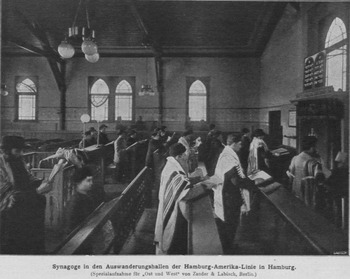
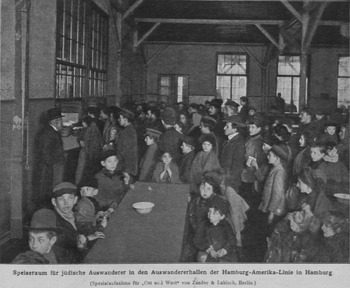
In 1902 HAPAG replaced the insufficient barracks at the Hamburg port with the modern Auswandererhallen (emigrant halls). This facility was located at a large compound, on the outer periphery of the port, several miles from the city center. Instead of finding (often substandard) accommodation on their own, running the risk of being robbed or cheated by criminals, and potentially spreading disease or creating social disorder, transmigrants, especially from the Russian Empire, traveled under close supervision in sealed trains from the eastern border, usually via Ruhleben, to the Hamburg Auswandererhallen, to Bremen, or to Germany's western border en route to western European ports. At the Auswandererhallen all arrivals were again inspected and, if necessary, disinfected. Men and women (together with children) were accommodated in separate quarters until their ship departed. Compared to the often unclean and overpriced hostels in most European port cities, the HAPAG-administered Auswandererhallen set a completely new standard. The sleeping halls were clean, equipped with heating facilities, and supervised by HAPAG staff. The migrants could attend religious services in a church or a small synagogue, as Figure 1 shows. Jewish migrants received kosher food in a special dining hall and had access to members of the Hamburg Jewish aid association, which represented the Hilfsverein, as Figure 2 illustrates. Often, a brass band would play as the migrants left the compound and headed to the ship. For most it was not possible, let alone feasible, to leave the compound other than by ship—or train when it was decided they would not meet the American access criteria. The transit facilities in Bremen and Bremerhaven were also modernized.Footnote 25
Synagogue in the Auswandererhallen of the Hamburg-America Line, ca. 1905. Source: Bernhard Kahn, “Die jüdische Auswanderung,” Ost und West 5 (1905): 458–491, here: 461–462.

Dining hall for Jewish emigrants in the Auswandererhallen of the Hamburg-America Line, ca. 1905. Source: Bernhard Kahn, “Die jüdische Auswanderung,” Ost und West 5 (1905): 469–470.

Within a few years Ballin and his colleagues at the Lloyd successfully reorganized the mass transit migration. Most migrants who were admitted by employees of the steamship lines across Germany's eastern border were channeled to Hamburg or Bremen; the transit journey via Ruhleben usually took not much longer than twenty-four hours. By 1900, the average HAPAG passenger from eastern Europe could expect to reach his or her destination in the United States in less than three weeks after passing the control station on the German border (including the obligatory quarantine for Russian passengers at the port of embarkation). This constituted indeed a remarkable achievement. Ballin and Wiegand deserve much credit for enabling millions of eastern Europeans to exchange difficult economic and social circumstances for a better life in America. The transit system made the journey easier, but it also created obstacles for some migrants, not least because the steamship lines operated the control stations in a legal gray zone. The Prussian state had effectively ceded the decision whether migrants could travel through Germany to two private companies; transmigrants were deprived of agency and usually could not appeal the decisions of HAPAG and Lloyd employees at the border and while in transit due to the lack of supervision by the state or humanitarian organizations. And the de facto monopoly of the two German lines prevented passengers from eastern Europe from choosing between competing lines, and they were overcharged. These related issues became the subject of a public controversy in 1904.
The 1904 Atlantic Rate War and the Hilfsverein Intervention
The pool agreement and the control station system gave foreign lines only limited access to the lucrative eastern European market. As the migration from eastern Europe, especially to North America, increased substantially after 1900, the dominant position of the two German lines became increasingly untenable. Moreover, the Russian and the Austro-Hungarian Empires were anxious to gain at least a small share of the huge passenger business by promoting their own ports. Thus it was not a great surprise when the Hungarian government announced a direct Cunard service from its Adriatic port Fiume to New York in 1903. At the same time, Cunard formally suspended its membership in the pool. The entry of a major competitor into the eastern European passenger market constituted a major challenge to the HAPAG and Lloyd supremacy, especially since Fiume was much easier to reach for many migrants from the Habsburg Monarchy and southeastern Europe than the German ports. In order to increase its market share, Cunard lowered the prices for its transatlantic passages, offering a second-class ticket for less than what HAPAG charged for third class (or steerage). Traveling second class had the added advantage that passengers were only superficially checked on the ship after arrival in New York. Only steerage passengers were required to pass through Ellis Island. The German lines, too, lowered their ticket prices. They even began to lure America-bound passengers from the British Isles to their continental ports. The fierce competition soon became known as the “Atlantic Rate War.”Footnote 26
One measure taken against Cunard especially triggered a fierce controversy in the German and German Jewish public. Ballin and the Lloyd management decided to reject all migrants at the control stations who possessed prepaid Cunard tickets, often sent to them from relatives or friends in America. As long as Cunard belonged to the pool, its passengers had been admitted into the control stations (if they were likely to pass the inspection at Ellis Island) traveling via Hamburg, Bremen, or a western European port to Britain and on to New York. Now, passengers with Cunard tickets reaching the Prussian border were confronted with a difficult choice: exchange their tickets for a more expensive passage with HAPAG or Lloyd, or return home. Cunard advised its passengers to avoid the Prussian border and cross through Bohemia and Bavaria to Rotterdam from where Cunard offered a service to its British ports. Yet the HAPAG and Lloyd management had anticipated this move. They persuaded the (state-owned) railroad lines across southern Germany to raise prices for Cunard passengers in transit. And Prussia set up a control station in Bingerbrück, near Mainz, along the main transit route to the Belgian and Dutch ports. The Prussian government, satisfied with the 1894 agreement, was not inclined to come to the aid of a large British line and even less of its eastern European passengers.
The Prussian protection of HAPAG and Lloyd pales in comparison with the support Cunard received from governments in London and Budapest. The British government provided generous subsidies to the Cunard operations since the line was established in the 1840s, but Whitehall did not take punitive action against the German lines, in contrast to the Hungarian government, whose response to the HAPAG and Lloyd blockade against Cunard, or rather passengers with Cunard tickets, illustrates even more clearly how high the stakes in the Atlantic Rate War were. During the spring and probably again in August 1904, Hungarian officials detained groups of migrants en route to Bremen and Hamburg (i.e., HAPAG and Lloyd passengers) and escorted them to Fiume where they were forced to board Cunard liners.Footnote 27 Nevertheless, while many unlucky passengers were caught up in the competition war, many more than usual made the journey across the Atlantic without having to make involuntary detours. It remains doubtful, however, whether the dramatic decline of the average ticket price explains the record migration wave in 1904. The number of registered immigrants to the United States in 1904 was the second highest ever recorded; yet the highest number had been reached only in the previous year 1903, before the price war. And that record was broken in 1905, after the Atlantic Rate War. The huge demand for labor in the United States appears to have been the main factor driving the mass migration.Footnote 28
The actions of the two German lines illustrate why the private and unsupervised handling of border controls and the de facto HAPAG and Lloyd monopoly put many migrants at a considerable disadvantage. The systematic rejection of Cunard passengers and the implicit backing of the Prussian government drew wider attention to the practices at the control stations. Members of local Jewish aid committees on the border could sometimes exchange tickets by paying the price difference for migrants without sufficient means. Yet Jewish community leaders in Germany and abroad were alarmed. Many of the rejected passengers hailed from the Russian Empire. After 1900, anti-Jewish violence had become much more widespread and extreme across Russia. Images of the notorious April 1903 Kishinev pogrom had shocked the world and triggered protests in the United States and Europe. Most Jewish periodicals in Germany and other countries covered the situation in Russia extensively. While only relatively few Jewish migrants from Russia can be described as refugees in the strict sense of the word, they were widely perceived as such in the Jewish and general public. In addition, the status of Jewish and other migrants from the Russian Empire was indeed precarious. They overwhelmingly crossed the border illegally without a passport and could not expect diplomatic protection if they encountered problems during the journey.Footnote 29 Against this unsettling background, the rejection of people facing massive persecution at home, who risked being arrested because they had left Russia illegally for the sole reason that they possessed the ticket of the “wrong” steamship line, constituted a sensitive issue in the wider public.
The main representatives of the German Jewish community could not ignore the dismal treatment of Jewish migrants on Germany's eastern border. The founding of the Hilfsverein in 1901 and of American Jewish philanthropic organizations such as the American Jewish Committee (1906) reflected a shift in the sphere of transnational Jewish philanthropy around the turn of the century. The cautious behind-the-scenes diplomacy of a small group of established Jews in Paris who managed the Alliance Israélite Universelle was replaced by a more proactive and professional approach that relied on more persistent lobbying and publicity. The two largest and wealthiest western Jewish communities—in Germany and the United States—now explicitly assumed responsibility for Jews in eastern Europe, especially for migrants. This was a response to the sheer scale of the migration; the United States was by far the most important destination, and Germany the leading transit country. The generous support of the Jewish establishment and Jewish donors in both countries for the migrants was, however, not only a matter of genuine compassion. Many German Jewish donors reasoned that a Jewish effort to move Jewish migrants speedily through Germany would help to deflect anti-Semitic attacks against an “invasion” of Jewish migrants.Footnote 30
Regardless of their different motives, until 1904 the Hilfsverein (and its locally based predecessors and partners) and the two German steamship lines largely pursued the same goal, to move (or help to move) as many Jewish migrants through Germany without problems, and as quickly as possible. There is no indication that Jews were specifically targeted for rejection at the control stations, not even in 1904. Rather, until 1904 and afterward Jewish transmigrants were actually at an advantage. Following the 1891 migration crisis, most Jewish border committees had not fully dissolved. Even in remote border towns on the Prussian side of the border, individual members of Jewish communities were connected to the transnational Jewish support network. HAPAG and Lloyd officials at the control stations and local state officials knew that local Jewish aid workers on the border usually supported individual migrants who required support or who had the wrong ticket (i.e., not a HAPAG or Lloyd ticket). Usually Jewish aid workers bought a HAPAG or Lloyd ticket for the respective migrant and exchanged the other ticket for cash; the Hilfsverein and its predecessors funded the price difference. But the aid committees did not support every migrant: after short interviews, Jewish aid workers convinced migrants who clearly did not meet American access criteria (and frequently were not prepared for the migration) to return home voluntarily. The support network for Christian transmigrants was never as sophisticated; migrant support associations such as the St. Raphael's Association had branches in Hamburg and other Atlantic ports but not at the border crossings.Footnote 31
The systematic rejection of Cunard passengers in 1904 constituted a violation of the tacit cooperation between the Hilfsverein (or rather its local representatives) and the steamship lines. The Hilfsverein had to act, especially against the background of the widely reported atrocities against Jews across Russia. Indeed, around 1900, Jewish philanthropic organizations in Europe and America became increasingly concerned about the increasing threat for Jewish life especially in the Russian Empire and to a growing extent in Romania. The threat of immigration restrictions in the United States and Britain demanded a more professional and concerted Jewish response. Between the 1860s and 1890s Jewish organizations had primarily assisted migrants who were destitute or had somehow gotten into trouble. But with the rise of the control station system in the mid-1890s, even the large majority of Jewish migrants, who had carefully planned their journey and who neither asked for nor needed special assistance, encountered obstacles. Yet the scale of the movement made it more difficult for Jewish aid organizations to reach individual migrants. In 1904/05 Jewish papers, ranging from the mainstream German Jewish weekly Allgemeine Zeitung des Judenthums to the pro-Zionist Ost und West and the Vienna-based Zionist Die Welt, extensively discussed the “organization” of the Jewish mass migration. Of course, western Jews were not in a position to control or “organize” the Jewish migration from eastern Europe. In 1904 alone, more than 100,000 Jews immigrated into the United States. But Jewish aid organizations could work toward a more systematic protection and indirect support of migrants against arbitrary decisions by private companies and state officials. The Hilfsverein devised a professional lobbying strategy, sent reports about the abuse of migrants to the general press, and began to collect and spread information about the conditions in the destination countries and about travel options and potential risks among Jewish communities across eastern Europe.Footnote 32
Throughout 1904 the situation for Jews remained precarious, especially in the Russian Empire; in Romania, too, Jews faced violent attacks and an openly hostile government. The Jewish press documented these events in great detail. During the summer, Hilfsverein chief executive Paul Nathan traveled to Russia to collect information about the impact of the continuing anti-Jewish violence. He met with Jewish community elders and even with high-ranking government representatives, including the Russian prime minister. The Hilfsverein had no influence on events inside Russia, but the systematic rejection of Cunard passengers on the eastern German border was a different matter. A representative of the Alliance had already negotiated with HAPAG following the first rejection cases, but without success. The Hilfsverein opted for a less diplomatic approach after initial talks it conducted with HAPAG and Lloyd representatives also failed to yield tangible results.Footnote 33
In early October 1904, Nathan undertook a second journey, this time to the eastern border region to assess the scale of the problem. Instead of resuming the negotiations with the two steamship lines upon his return, Nathan made his position known in the general press. He blamed not HAPAG or Lloyd, or Heinrich Wiegand, but explicitly Albert Ballin as HAPAG director general “personally” for the abuse of destitute and desperate Jewish refugees. As a leading German Jewish representative, Nathan implicitly attacked Ballin as a Jew for his unacceptable treatment of other Jews. This was indeed a remarkable move. Nathan was a respected and known member of the German Jewish establishment whose views mattered. Public attacks by leading German Jewish representatives on other Jews regarding Jewish matters were extremely rare, not least because of the prevailing anti-Semitic climate. For example, during a January 1904 Reichstag debate, Otto Böckler of the anti-Semitic Deutsche Reformpartei lamented, “the highest parts [of the state] have been verballinisiert [ballinized]; the strangers from Palestine and America have gained access to the highest steps of the throne.” For anti-Semites, “Ballin” had become a synonym of an alleged takeover and corruption of the state by “the” foreign Jews. Böckler combined this attack with a call to defend the “simple hardworking German people” against this alleged assault, shrewdly exploiting fears of his constituents in rural Prussia of globally integrating markets and free trade represented by the “Jewish” HAPAG. But Nathan decided the situation on the eastern border could not be resolved behind the scenes, even if an attack by a leading Jewish representative on Ballin as a Jew would be exploited by anti-Semites. Indirectly, Nathan's public criticism of the practices on the border aimed at the Prussian government, which tolerated the rejections of Cunard passengers. But clearly the steamship lines were to blame. Within days after the publication of Nathan's well-documented allegations, Ballin agreed to a meeting with him and Hilfsverein president James Simon; no Lloyd representative participated. Confronted with Nathan's “dossier of facts,” Ballin promised fair treatment of all transmigrants, and crucially, allowed Hilfsverein committees at the border a continuous presence inside the control stations. Nathan's press attack thus led to a greater degree of transparency in the control stations, which constituted an extra-legal space. But that was not the only concession Ballin made. In late October 1904, HAPAG and Lloyd stopped the rejections of Cunard passengers.Footnote 34
Why did Ballin yield so quickly to the demands of a relatively small Jewish philanthropic organization? Nathan's criticism of Ballin was actually rather tame compared to descriptions of the HAPAG director general in the left-wing press. In order to understand the focus on Ballin rather than Wiegand, Nathan's carefully calculated timing, and Ballin's quick reaction, it is necessary to look at the public debate about the practices at the control stations, and at events unfolding far beyond Germany's borders. Nathan launched his attack in mid-October 1904 when criticism against the practices at the control stations in the German and international press was mounting and directed especially at Ballin.Footnote 35
Ballin's Left-Wing Critics
In late September 1904, the Social Democratic Party convened in Bremen for its annual congress. The SPD leadership was known for its outspoken support of Russian Jewish transmigrants in Imperial Germany. Party chairman August Bebel and prominent member Eduard Bernstein brought up the lack of protection of foreigners in Germany against arbitrary arrest and deportations for debate. In the discussion, Reichstag deputy Karl Liebknecht protested against the “scandalous” treatment of Russian subjects at the Russian border with Prussia, accusing Lloyd and especially Ballin of “blackmail.” If migrants refused to pay an extra charge to the German steamship lines, they were returned to Russia, or rather handed over to Russian officials. Army deserters were particularly at risk. That two businesses performed a state task for profit, trampling on migrants' rights, constituted in his eyes the “greatest scandal.” Liebknecht's complaint was not without justification. In fall 1904, Russia was drafting large numbers of soldiers for its war against Japan. More than a few young men were trying to avoid the draft by leaving for America; some certainly were deserters.Footnote 36
A short time after the Bremen congress, two weeks before Nathan's intervention, the left-wing writer Georg Halpern accused the HAPAG director general personally, and indirectly the German state, of “raping transmigrants.” According to Halpern, the control station system gave a private company the leverage to decide the fate of deserving and often desperate migrants. The obligatory bathing and disinfection were used as a pretense to exclude migrants who threatened the HAPAG (and Lloyd) monopoly. The title of the piece, “Bade bei Ballin” (“take a bath with Ballin”) was an ironic comment on the cleaning procedures at the control stations. Like Liebknecht, Halpern condemned in particular the complete lack of state supervision.Footnote 37
If Halpern used much stronger language than Nathan, his criticism pales in comparison to the widely read Social Democrat daily Vorwärts. This was not surprising; as one of the country's leading employers and capitalists, Ballin ruthlessly fought organized labor and had a difficult relationship with his employees and with the Social Democrats.Footnote 38 For Vorwärts, “Ballin” was a synonym for the abuse and brutal exploitation of workers—and of destitute and vulnerable migrants. During summer and fall 1904, the paper scolded the HAPAG director general almost daily, inventing countless polemical distortions of his name: “Ballin economy” (for the alleged exploitation of migrants), “Ballin press” (for liberal papers not sufficiently critical of HAPAG), or “Ballin bandits” (HAPAG employees on the border). In late August, Vorwärts sharply denounced the “ghastly Tsarist-Prussian-Ballinish emigration-policy,” alleging a tacit collaboration between HAPAG and the Russian tsar. Yet Vorwärts did not touch on Ballin's Jewish background. The paper strictly opposed anti-Semitism and expressed compassion with Jewish refugees from the Russian Empire who were caught up in the “Ballin economy.” Footnote 39
A seemingly unrelated event helps to explain why left-wing authors loathed Ballin in 1904/05, why he rather than Wiegand attracted so much criticism, and why Vorwärts alleged a tacit collaboration between HAPAG, Prussia, and Russia regarding the rejections of migrants at the eastern border. The HAPAG annual report for 1904 provides a clue. According to the report, the “war of competition” with the Cunard line had forced HAPAG to make “considerable financial sacrifices.” Somewhat surprisingly, 1904 was one of the more successful years in the history of the company: HAPAG reported a profit of twenty-seven million marks and paid its stockholders a nine-percent dividend. How could HAPAG not just compensate the losses in the transatlantic passenger division but realize a substantial profit? The explanation is a seemingly far-fetched event, the Russian-Japanese War.Footnote 40
In the first phase of the war in early 1904, the Japanese navy besieged the Russian navy base at Port Arthur in Manchuria after destroying the bulk of the Russian Pacific fleet. To relieve the embattled troops, Russia began to draft more soldiers, and it mobilized its Baltic fleet. In the previous year, Russia had already bought several older liners to prop up the obsolete fleet—from HAPAG, as Lamar Cecil has shown in a detailed article. In spring 1904, the Russian admiralty faced another challenge: even an overhauled Baltic fleet could not make the long journey through the Atlantic and the Indian Ocean to Port Arthur without logistical support. The St. Petersburg government approached Britain, which controlled several ports along the route. But Whitehall was not inclined to sacrifice its good relations with Japan. Again Ballin offered the services of HAPAG. In June 1904, HAPAG formally promised to provide the Baltic fleet with coal through its own supply network. Ballin procured more than 300,000 tons of coal through a British firm without consulting the German or British government. When a London newspaper exposed the deal in August 1904, the governments in Berlin and London were hugely embarrassed. Both were drawn into the conflict and faced a serious crisis in their relations. Imperial Chancellor Bernhard von Bülow immediately summoned Ballin to his summer resort. Yet instead of reneging on the deal, the HAPAG director general managed to dispel Bülow's concerns. This was a powerful illustration of his negotiating skills, although both men knew the Kaiser was backing HAPAG in this matter.Footnote 41
Apart from proving the influence of non-state actors on international politics, Ballin's dealings with the Russian government added an important dimension to his public perception, especially among German Social Democrats and Jews. From a left-wing perspective, the tsar was a notorious oppressor, responsible for the suffering of millions of destitute peasants and workers, for the persecution of political opponents, and for the notorious pogroms against Jewish civilians. Ballin's open support of this man, in a senseless war that would claim many more lives, fully confirmed the worst fears of German Social Democrats. This background also explains why Liebknecht highlighted the fate of Russian deserters. It remains open to interpretation whether these men were refused access to the transit corridor because they did not want to exchange Cunard prepaid tickets, did not meet American immigration criteria, or perhaps because they were deserters. Nevertheless, the HAPAG leader, in this view, was not just a ruthless capitalist who belonged to the entourage of the much-despised Kaiser, he had openly associated himself with one of the most brutal rulers of the time.
Jewish Silence and Rising Liberal Criticism of Ballin
Assessing reactions by Jewish leaders to Ballin's deal with the tsar and the simultaneous rejections of Cunard passengers on Germany's eastern border represents a more complex matter. The main Jewish papers remained stoically silent regarding Ballin's dealings with the Russian government and the rejections at the border, at least at first glance. The leading German Jewish weekly, Allgemeine Zeitung des Judenthums, for instance, did not comment on these two issues. But it covered the deplorable situation of Jews in the Russian Empire extensively, just when the public learned of Ballin's Russian deal and of HAPAG's treatment of Cunard passengers on the eastern border. How can this silence be explained? Jewish criticism of Ballin would have associated Ballin with other Jews in the public perception. Anti-Semitic agitators would certainly have cherished such a story.Footnote 42 Rather, the silence betrays the acute embarrassment Ballin had caused for the Jewish community. For most readers of Jewish papers in central and eastern Europe, the extensive reporting on the persecution of Jews in Russia spoke for itself. The endless chain of depressing news from the Russian Empire constituted sufficient criticism of Ballin; nothing more had to be said.
A close reading of the Jewish press illustrates how meticulously the Jewish public in the west watched business deals with Russia. American Jewish leaders collected information on Jews who conducted business with Russian officials in this period. In a private letter, Philip Cowen, the editor of the American Hebrew, stressed such men were either converts or could not really be considered Jewish.Footnote 43 Leading Jews in the United States did not publicly comment on Ballin's Russian deal, either. In the United States, Jewish leaders had to move cautiously for another reason. The year 1904 saw a new record rise in transatlantic migration. In this year, the number of Jewish immigrants crossed the 100,000-threshold for the first time; the immigration from southern Europe also increased, fueling calls by nativist groups for immigration restrictions. The reaction by Britain, another important destination for Jewish immigrants, was hardly encouraging. In fall 1904, the Conservative British Prime Minister Arthur Balfour introduced a restrictive immigration bill to the House of Commons. The bill eventually passed as the Aliens' Act in July 1905 after the Liberal opposition had successfully watered down most of the provisions envisioned by Balfour. Nevertheless, it constituted an alarming precedent and potential blueprint for American lawmakers. In this situation, speaking up publicly against Ballin, even in an inner-Jewish context, would certainly have been counterproductive. Yet like Nathan and the Hilfsverein, American Jewish leaders did not remain passive bystanders when it came to act in the interest of distressed Jews in Russia. In particular, the prominent American Jewish philanthropist and banker Jacob Schiff was an outspoken critic of the Russian regime. He repeatedly, and openly, called for the overthrow of the tsar. As Ballin negotiated with the Russian government, Schiff successfully secured several loans for Japan. He tried to convince leading bankers such as J. P. Morgan not to do business with Russia. These efforts earned him the nickname the “Japanese banker.” After Japan claimed victory over Russia in 1905, it awarded Schiff its prestigious Order of the Rising Sun. Schiff repeatedly corresponded with Nathan in this period concerning possible relief projects for Russian Jewish emigrants. In 1906 Schiff was one of cofounders of the American Jewish Committee, an organization that resembled the Hilfsverein.Footnote 44
Until Nathan broke the silence in October 1904, German Jewish papers did not mention Ballin's name in connection with Russia or the eastern border. In fact, the Hamburg Israelitisches Familienblatt began to raise concerns about the situation at the eastern border only in late September. In early October, the Allgemeine Zeitung des Judenthums urged Jewish migrants from eastern Europe who did not want to travel with HAPAG or Lloyd to avoid traveling through Germany. Yet the paper did not blame the German lines for rejecting migrants. But in its October 13 issue, shortly before Nathan returned from Eastern Prussia, the Familienblatt openly accused the two German lines (but not Ballin personally) of abusing and exploiting helpless migrants for profit.Footnote 45 This closely mirrors the approach taken by the liberal German press.
Initially the Familienblatt's coverage differed greatly from the polemical tone of Vorwärts. In early September, Vorwärts sharply attacked the “bourgeois press,” scolding it for its silence.Footnote 46 An analysis of the Berliner Tageblatt shows a gradual change, beginning in late September. Previously, the Atlantic Rate War was treated strictly as a business matter. An article in the September 23 issue hints at a changing attitude. On the first business page, a lengthy piece explained the background of the rejections. HAPAG and Lloyd were asked to treat Cunard passengers “a little less rigorously” for “reasons of humanity.” A few days later, on September 27, the paper opened its pages to a critic of the rejections. On the first page, an unnamed correspondent “from the German east” sharply condemned the treatment of migrants by HAPAG and Lloyd. He wondered especially why two private companies performed the task of the state in an extra-legal sphere: “The [steamship line] agent decides: America—or Russia!” And, “is there no justice in Germany?” To balance this view, the Tageblatt had asked another (anonymous) author to present the position of HAPAG and Lloyd. This short article, probably written by a HAPAG or Lloyd employee, hinted at the high costs of operating the control stations and stressed that any case of abuse would be investigated. A week later, on October 4, the Tageblatt gave up its cautious position. A short editorial on the first page, “Renewed Bullying of Russian Emigrants,” did not mince any words. The rejection policy of HAPAG and Lloyd was openly rebuked: “It cannot be tolerated that private business interests and the business of the state are intertwined in an illegitimate manner… . Justice and humanity are ridiculed, and Germany is discredited abroad.” In its October 9 issue, the Tageblatt went even further, describing the case of a migrant from Russia “who has been raped by the Bremen and Hamburg steamship lines.” But the Tageblatt did not mention Ballin (or Wiegand). A few days later, Nathan launched his attack on Ballin. In its October 23 issue, the Tageblatt reported the meeting between the Hilfsverein leaders and Ballin, and congratulated Nathan. The improvements reached by the Jewish organization would apply to “all” eastern European migrants, not exclusively to Jews. The Hilfsverein's demands, the Tageblatt concluded, were legitimate and reasonable. The agreement protected “the interests of humanity and the good reputation of Germany.”Footnote 47
Ballin had expected harsh criticism from the Left. He knew he could not overcome the protectionist position (and the anti-Semitism) of most German conservatives. But the rising and increasingly acerbic criticism expressed by the respected Berliner Tageblatt must have been deeply unsettling. The changing position of the Tageblatt gave Nathan sufficient cover to break the Jewish silence and openly blame Ballin in the name of a Jewish philanthropic association (and humanity). But Nathan's attack and Ballin's reaction were also influenced by another development. Mid-October 1904 was one of the most critical moments in the journey of the Russian Baltic fleet. On October 15, HAPAG had delivered the first shipment of coal off the Danish coast; a few days later the Russians sank several British fishing vessels off Dogger Bank in the North Sea, mistaking them for the vanguard of the Japanese fleet. The British government was incensed over this incident, not least because several fishermen had lost their lives.Footnote 48
Nathan attacked Ballin just before he (and the public) learned of the Dogger Bank incident, but it may have contributed to Ballin's willingness to yield to the demands of the Hilfsverein and the liberal critics of the rejections at the border. Suffice it to say, the British government, already irritated by Ballin's sale of British coal to the Russian admiralty, regarded the treatment of Cunard passengers by the two German lines as unacceptable. While Ballin could shrug off left-wing and right-wing criticism, the loss of liberal support, the uncertain outcome of the precarious Russian deal, and the growing resentment of the British government forced him to yield to the Hilfsverein—and Cunard. The readmission of Cunard passengers removed a major stumbling block in the negotiations with the British line. This was also the explanation the Berliner Zeitung presented to its readers on October 28. Mounting criticism by Vorwärts and other liberal papers, and the Berliner Tageblatt, as well as rising protests in Britain, Russia, and Germany, had convinced Ballin and Wiegand to abandon their “usurped monopoly.” According to the Berliner Zeitung, the losses caused by the rate war were so significant that HAPAG and Lloyd's eastern European monopoly could not be justified any longer. At a quickly organized conference in Berlin on November 11 and 12, Ballin, Wiegand, Cunard chairman Lord Inverclyde, and executives of the other big lines settled their differences and resurrected the “North Atlantic Steamship Conference.” The German lines formally guaranteed the passengers of other lines with a Prussian concession access to the transit corridor. The western lines were allowed to operate their own ticket offices near the control stations, and Cunard could continue its Fiume service, albeit on a reduced basis.Footnote 49 Following the Dogger Bank incident, Ballin must have reasoned a major concession to Cunard would appease the British government and discourage it from foiling the journey of the Baltic fleet, for instance by interrupting the crucial coal deliveries from Wales.
In the years following 1904, Fiume emerged as an important emigration port. But to the disappointment of the Budapest government, many migrants from the Hungarian part of the Habsburg Monarchy shunned Fiume, preferring to travel via Bremen and Hamburg. A Russian attempt to promote a direct service from its Baltic port Libau to New York a few years later remained unsuccessful. The refusal or inability of Russia and, to a lesser extent, Austria-Hungary to liberalize the emigration of their subjects hampered attempts to organize a competing transatlantic service from their ports. In hindsight, the concessions required to save the North Atlantic Steamship Conference did not seriously affect the dominance of the German lines over the eastern European migration. Ballin and Wiegand could afford to give up their monopoly position on the eastern border of Germany because the western lines could not easily penetrate a market that HAPAG and Lloyd controlled through established networks of ticket agents since the 1880s. Even though access for the passengers of the western lines was better organized after 1904, the two German lines continued to manage the control stations on their own.Footnote 50 The dramatic rise in transatlantic migration in 1906/07 and again in 1913/14 yielded record profits for HAPAG and Lloyd. And of course, employees of the German steamship lines continued to reject migrants judged to be unfit for immigration to the United States or with tickets from smaller steamship lines without a Prussian concession. In 1912, a Dutch steamship line, the Royal Holland Lloyd, negotiated with Bavaria to erect its own control station in collaboration with a German partner, the Phönix Transportgesellschaft, at the Marktredwitz train station. Apart from Prussia and Saxony, Bavaria, of course, was the only other German state that shared a border with the Austro-Hungarian Empire. Although relatively few transmigrants traveled via Marktredwitz and other Bavarian border crossings, the Prussian government and the two German steamship lines anxiously watched this attempt to undercut “their” established system. Yet before Bavaria and its Dutch partner could test the limits of Prussia's power (and that of HAPAG and Lloyd), World War I intervened. The aptly named “königlich bayerische Auswanderer-Kontroll-Station” at Marktredwitz, although completed in early 1914, seems not to have processed transmigrants.Footnote 51
In March 1905, the SPD faction took issue with the control stations in a Reichstag debate. Deputy Hugo Haase described the control station system as “Menschenfalle” (trap for humans). In April 1905, Vorwärts reported the suicide of a Jewish couple from Russia at the Ostrowo control station. They had been turned back because they lacked funds for a possible return journey. According to a sarcastic comment in Vorwärts, these “Ballin Opfer” (“Ballin victims”) were too destitute to be “exploited” by Ballin.Footnote 52 But the reality was more complex. According to the files of the Hamburg Auswandereramt, complaints by migrants about their treatment during the journey were sometimes investigated. Several officials who abused or even punched migrants were prosecuted. In one case, a Hamburg official went back to the border with two migrants to check whether ticket agents at the control station had overcharged them. This was clearly a consequence of increasing transparency following the intervention of the Hilfsverein and critical press reports.Footnote 53
American Remote Control and its Implications
Why did the Prussian government allow two private businesses to manage the checkpoints on its eastern border that was also the outer border of Imperial Germany? As this article has shown, Prussia was not able to guard its long land border in the east by conventional means, especially as the migration from eastern Europe to and through Prussia increased significantly in the 1880s. Although the Prussian state resorted to harsh measures against unwanted migrants, including mass expulsions, its actions were ineffective. Other countries around the world, not least the United States, also faced strongly rising immigration in the same period. The United States, however, was in an advantageous position compared to continental European states. Migrants from Europe and Asia could reach North America only by ship, and most could not evade inspections by U.S. state officials as they stepped off the boat. Thus exclusionary measures taken by the United States against unwanted immigrants after the 1880s were quite effective.
Migration scholar Aristide Zolberg has coined the term “remote control” to describe how geography made it possible to shift the decision to admit immigrants from the United States to an alien's home country or the port of embarkation. For Zolberg remote control “triumphed” with the 1921 and 1924 Immigration Acts when aliens were required to apply for an immigration visa at the U.S. consulate or embassy in their respective home country. This article has shown the significant impact remote control had already made in the 1880s and especially following the creation of the control stations on Prussia's eastern border in 1894/95. The relatively low rejection rates at Ellis Island between 1892 and 1924 (ca. two percent) betray much higher numbers of migrants who failed to pass the examinations performed at European and Asian ports by the steamship lines, and increasingly after the early 1890s, by American consuls or health professionals employed by the U.S. Surgeon General. The German control station system was unique because it stopped “problematic” migrants at an early stage in their transit journey. Indeed, none other than the United States Immigration Commissioner congratulated Germany (and indirectly the steamship lines) in 1894 for “protecting” itself and the United States against “undesirable immigrants.”Footnote 54
U.S. officials were already returning unwanted persons in the mid-1880s, thus forcing the steamship lines and transit countries to deal with the consequences. The steamship lines had to cover the ticket price for the return journey of frequently indigent persons. The costly repatriation of such rejected migrants or of persons the steamship lines refused boarding en route to America was particularly challenging for Prussia. It was the first state most eastern European migrants crossed on their way to America, and as the last state involuntary return migrants traversed on their way back to the Russian or Austro-Hungarian Empire, Prussia had to pay the bulk of the charges. This explains why the Berlin government introduced the requirement for steamship lines to apply for a concession to transport “their” passengers through Prussia. The concession was granted only if the steamship line formally agreed to cover all the costs resulting from an involuntary return journey. Yet the American remote control system suffered from one important weakness: the long land borders with Canada and Mexico. These were (and are) impossible to seal. The deployment of U.S. immigration inspectors at Canadian ports and the issuance of admission certificates required for legally entering the United States after 1893 were an attempt to close this “loophole.”
The American certificate system formed the backbone of the control station model Ballin and Wiegand conceived in 1894. After some persuading by the steamship lines, the Prussian government recognized the advantages of privately handled and financed border checkpoints. The local policemen stationed at major border crossings were unable to cope with large numbers of people, many of whom simply bypassed the official crossings. Regardless of the benefits of migration for its economy in the long run, mass migration meant, for both the Prussian and American states, higher expenditures in the short term for more officials, indigent deportees, and infrastructure projects at or near the border crossings, at train stations, and in the ports. HAPAG and Lloyd took over tasks that the Prussian state was hardly capable of performing in return for the guarantee of relieving the state of the financial burden represented by the mass transmigration. For the steamship lines, mass migration represented not a problem or threat but a lucrative market. The HAPAG and Lloyd control system guaranteed that only healthy migrants with sufficient means to support themselves crossed through Prussia. If some of these migrants were refused entry into the American port of arrival, the steamship lines could easily cover the costs.
Did HAPAG and Lloyd handle their role as Germany's gatekeepers responsibly? This article has quoted numerous critics who pointed to the lack of state supervision. Like contemporary facilities for “undesirable” migrants at major international airports that legally are extraterritorial spaces, the control stations did indeed constitute the points of entry into an extra-legal sphere. Migrants could not (and today cannot easily) appeal a decision that denied them access, in this case to the German transit corridor and indirectly to the United States. Admittedly, at Ellis Island—the American exit point of the transit corridor—migrants had access to legal counselors and could appeal decisions.Footnote 55 Lacking state supervision partly was balanced by the presence of Jewish aid workers. Nathan's protest gave the Hilfsverein full access to the most sensitive component of the German transit system, the control stations. The role of the Hilfsverein as an officially recognized guardian is comparable to the status various ethnic and religious associations enjoyed at Ellis Island, and to the roles performed by contemporary NGOs on behalf of refugees.
Apart from the Hilfsverein, the press, especially Vorwärts, and the American state watched the control stations after October 1904. In order to get a firsthand impression of the transit system, Vorwärts and the United States Immigration Bureau both relied on clandestine methods. In December 1904, investigative reporter and Vorwärts editor Julius Kaliski made the trip from the control station in Tilsit to Hamburg, disguised as a “Russian-Polish Jew.” In his polemical reportage, Kaliski noted hygienic problems and encountered anti-Semitic insults by HAPAG employees. He highlighted especially the exploitation of poor eastern Europeans by “Ballin.” Shortly after Kaliski dropped his cover at the Hamburg Auswandererhallen, Ballin's secretary informed the Hamburg authorities, “the director general was of the opinion that the incident should be overlooked.”Footnote 56 HAPAG continued to shrug off left-wing criticism. In contrast, repeated inspections by American officials were a different matter. As final arbiter, the United States determined the access rules for the German transit system.
A few years after the Atlantic Rate War, in 1907, the Dillingham Commission of the U.S. Congress inspected the handling of migrants en route to the United States across Europe (and east Asia). Apart from the official delegation, which visited several control stations, U.S. inspector Anna Herkner traveled incognito through the German transit system in late 1907. Like Kaliski she registered hygienic problems and complained about overcharging for food items, but she was seen by a doctor and had no real possibility of leaving the transit corridor. Her report is a remarkable document; it illustrates what the absolute minimum in standards meant for a woman traveling on her own from the border crossing to Ellis Island. The Dillingham Commission characterized the control stations in its final report as “one of the most interesting instances of emigrant inspection in Europe.” For the commission, which included several proponents of a more restrictive U.S. immigration policy, the control stations deserved special praise because HAPAG and Lloyd were rejecting “thousands” each year—“undesirables” who never reached America's shores. Other European countries did not receive such a clean bill of health. Interestingly, one of the most notorious ports was Fiume. On its announced visit, the Dillingham Commission did not notice any major problems. Yet as Dorothee Schneider has recently shown on the basis of additional sources, the rejection rate of Fiume passengers at Ellis Island remained suspiciously high.Footnote 57 This may explain why many migrants from southeastern Europe bypassed Fiume after 1904—and preferred the German transit. Even though they had to pass one or more inspections before even reaching Hamburg or Bremen, the good reputation of the German steamship lines in the United States gave them a better chance to be admitted at Ellis Island.
The two German steamship lines and the Hilfsverein pursued different policies but both shared one important goal, to move Jewish migrants from eastern Europe quickly through Germany—and to keep the Prussian and the American states on the sidelines. Only when HAPAG and Lloyd instrumentalized their gatekeeper role during the 1904 Atlantic Rate War did the Hilfsverein join the critics of the border control system and reach improvements. The privately managed control station system deprived migrants of agency and constituted an extra-legal sphere, but its main objective was to move as many people as the American access regulations allowed through Germany and across the Atlantic. For all its flaws, the privately managed and incentive-driven system with limited supervision by a recognized NGO was preferable to a fully state-administered border regime. For the Prussian state, more migrants meant higher expenditures, and not even foreign labor migrants were particularly welcome. The harshly and arbitrarily applied deportations of unwanted Jewish and other immigrants before 1914 suggest how Prussia probably would have dealt with transmigrants.Footnote 58
The advantages of the partly flawed but highly efficient transmigration system that Albert Ballin and Heinrich Wiegand conceived, and that Paul Nathan helped to modify in 1904, became apparent in 1918. In the aftermath of the “Great War,” the conditions for cross-border migration in Europe changed completely. New nation-states were literally defined by their (frequently contested) borders, and the border regime became a key function of the state. Closely guarded and fortified national borders replaced the relatively permeable Imperial borders across eastern Europe and beyond. The stronger presence of the state at the border made the crossing much more cumbersome and left little room for non-state actors. Severe migration restrictions excluded many groups from crossing specific borders. Some states, such as the Soviet Union, restricted emigration; the United States and many other states made immigration difficult. Frequently migrants did not even come close to actual borders because they faced insurmountable “Paper Walls.”Footnote 59 After 1918, all migrants had to carry valid passports, and they had to apply for transit and immigration visas before their journey, an indication of the lack of trust between states. With the implementation of restrictive immigration quotas and visa requirements for eastern and southern Europeans (and Asians), the United States overhauled the admission system in 1921, depriving the steamship lines of their erstwhile gatekeeper role. Yet to this day, employees of airlines can only board international passengers who—often in their subjective judgment—meet the admission standards of the United States (and other destination countries). And of course, transnational NGOs and the media continue to watch the treatment of migrants and refugees, but their influence remains limited.