Introduction
Elective tonsillectomy is among the most common paediatric out-patient operations and should be as safe as possible. However, recovery after tonsillectomy may be complicated by such morbidities as bleeding, intense pain, post-operative nausea and vomiting, dehydration, respiratory complications, and fever.Reference Windfuhr1, Reference Randall and Hoffer2 A systematic review of paediatric out-patient tonsillectomy reported an overall complication rate of 8.8 per cent within the first 24 hours of operation and an unplanned re-admission rate of 3–16 per cent.Reference MacCallum, MacRae, Sukerman and MacRae3 Prospective research from our institution revealed that 17 per cent of patients’ caregivers called healthcare professionals for instructions and 13 per cent visited a physician in person following tonsillectomy.Reference Kanerva, Tarkkila and Pitkäranta4
The risk of post-tonsillectomy haemorrhage varies in different reports because of inconsistent criteria. Registry-based studies tend to underestimate the frequency of post-tonsillectomy haemorrhage, as they include only the most severe cases.Reference Wei, Beatty and Gustafson5
Post-tonsillectomy haemorrhage is often divided into two categories based on timing. Primary post-tonsillectomy haemorrhage occurs within 24 hours of the operation. Secondary post-tonsillectomy haemorrhage occurs after 24 hours following the operation, with a maximal occurrence on post-operative days 6–7.Reference Liu, Anderson, Willging, Myer, Shott and Bratcher6
Post-tonsillectomy pain has been reported as the most common reason to contact healthcare professionals, yielding a re-admission rate of 5–10 per cent.Reference Valtonen, Qvarnberg and Blomgren7, Reference Drake-Lee and Stokes8 Non-steroidal anti-inflammatory drugs (NSAIDs) have an opioid-sparing effect and are suitable for post-operative analgesia at home.Reference Beaulieu9 The association between NSAID administration and increased risk of post-tonsillectomy haemorrhage has been studied over the years, with conflicting results.Reference Marret, Flahault, Samama and Bonnet10, Reference Cardwell, Siviter and Smith11 Local anaesthetics have been used as part of a multimodal anaesthesia and their beneficial effect has been confirmed in some studies.Reference Hollis, Burton and Millar12, Reference Grainger and Saravanappa13
The reported incidence of post-operative nausea and vomiting after tonsillectomy is 35–75 per cent without anti-emetic prophylaxis; it results in poor oral intake, dehydration, an inability to take oral analgesics and prolonged hospital stay.Reference Patel and Hannallah14 Dexamethasone and 5-HT3 antagonists are effective in preventing post-operative nausea and vomiting.Reference Patel and Hannallah14–Reference Gan, Meyer, Apfel, Chung, Davis and Habib16 Dexamethasone also reduces post-operative pain; however, its use in tonsillectomies has been questioned for safety reasons.Reference Holte and Kehlet17–Reference Czarnetzki, Elia, Lysakowski, Dumont, Landis and Giger19
Post-operative fever is common, usually low-grade and benign, and does not correlate with bacteraemia; it is considered being part of the acute phase reaction to surgical trauma.Reference Anand, Phillipps, Allen, Joynson and Fielder20
To characterise the safety of paediatric tonsillectomy, we retrospectively analysed the incidence of post-operative complications and their possible association with the use of NSAIDs, dexamethasone, acetaminophen and 5-HT3 antagonists, local infiltration of lidocaine with adrenaline, and haemostatic agents.
Materials and methods
The study was performed at the Department of Otorhinolaryngology, Helsinki University Hospital, Finland, with approval of the institutional ethics committee.
We retrospectively collected data for patients aged 1–16 years who underwent out-patient tonsillectomy, with or without adenoidectomy, during a 12-month period (from 1 May 2007 to 30 April 2008). National Statistics Finland provided the 28-day mortality data for patients with a benign post-operative diagnosis. Each patient's medical records provided details regarding demographics, indication (post-operative diagnosis), operation time, peri-operative medication and type of post-operative complications. A complication was defined as any unplanned contact with the hospital's healthcare professionals that resulted in medical treatment within a one-month post-operative period.
Bleeding episodes were classified according to the criteria proposed by Windfur and Seehafer: grade I = bleeding stopped spontaneously or after clot removal; grade II = direct pressure or minor electrocautery under local anaesthesia required; and grade III = re-operation under general anaesthesia required.Reference Windfuhr and Seehafer21 If a patient experienced multiple episodes of post-tonsillectomy haemorrhage, only the first bleeding episode was considered for that patient, to ensure that only post-tonsillectomy haemorrhage associated with the primary operation was included in the analysis.
The haemostatic procedure for paediatric patients aged under seven years is usually performed under general anaesthesia, and for older patients it is carried out either under local or general anaesthesia depending on their co-operation.
Dehydration was diagnosed as reported in the medical record based on the clinical examination. Infection was determined based on empirical antibiotic treatment given in light of the clinical presentation. Pneumonia was diagnosed with a clinical examination and chest X-ray.
Patients are not routinely screened for haemostasis abnormalities; however, a questionnaire is used to assess their history of unexceptional bleeding or tendency for bruises. Patients with positive results receive a more thorough questionnaire and specific laboratory tests are ordered.
During the study period, 272 patients underwent tonsillectomy and 422 patients underwent adenotonsillectomy. Three tonsillectomies were performed as part of a combined surgical procedure (neck cyst operations); these patients were excluded from the analysis. Thus, the study patient population consisted of 691 patients (269 primarily operated on for tonsillectomy, and 422 for tonsillectomy combined with adenoidectomy). A total of 626 patients (91 per cent) were discharged on the day of the operation.
Two age groups were analysed separately: 1–7 years (median of 5.0 years) and 8–16 years (median of 10.9 years). The two groups were comparable in terms of demographics, except for the female-to-male ratio (Table 1). In the younger age group, males were over-represented, whereas in the older group they were under-represented (Table 1).
Patients’ characteristics

*n = 691; †n = 393; ‡n = 298. NA = not applicable; ns = non-significant; ASA = American Society of Anesthesiology risk classification
All 43 surgeons used the same technique of cold dissection with bipolar cautery haemostasis. The most frequent indications for the operations were: hypertrophy of tonsils, with or without adenoid hypertrophy (69 per cent), and chronic tonsillitis (14 per cent).
All operations were performed under standard general anaesthesia; the airway was secured with an intubation tube, and anaesthesia was maintained with sevoflurane 1.5–3 per cent and nitrous oxide 50 per cent in a mixture of oxygen. Intravenous dexamethasone and 5-HT3 antagonists were used to prevent post-operative nausea and vomiting.
Non-steroidal anti-inflammatory drugs, acetaminophen and tramadol were used to prevent and treat post-operative pain peri-operatively. An intravenous haemostatic agent (systemic tranexamic acid) was used in cases of increased bleeding tendency. Twenty-eight surgeons used peritonsillar infiltration of lidocaine 10 mg ml−1 containing adrenaline 10 µg ml−1 for 130 patients before tonsil removal to facilitate the operation and prevent post-operative pain. Twenty-one surgeons used the topical haemostatic agent bismuth subgallate paste for 52 patients, and 14 surgeons used a combination of lidocaine with adrenaline and topical bismuth subgallate for 47 patients. Patients were monitored in the post-anaesthesia care unit for adverse effects. Intravenous oxycodone served as a rescue analgesic.
We analysed the data to determine the incidence of adverse events and post-operative complications and examine their association with peri-operative medication. The results are presented as medians with ranges. We performed the statistical analysis using the Mann–Whitney U test for continuous data and the Pearson chi-square test for categorical data. We calculated the odds ratio with 95 per cent confidence interval (CI) for factors predisposing to post-operative complications. Multicollinearity and confounding factors were analysed using a regression analysis. Statistical significance was set at p < 0.05. IBM SPSS Statistics version 22 was used to perform the statistical analysis. Confidence interval analysis software, CIA version 2.1.2 (Trevor Bryant, London, UK), was used to calculate the CI limit of the difference.
Results
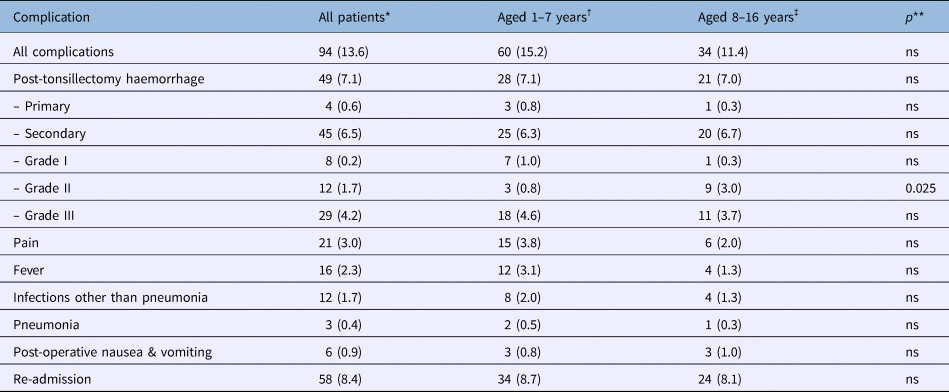
Of the 691 patients included in the study, recovery was complicated (i.e. there was unplanned contact with the hospital) in 94 patients (13.6 per cent) (Table 2). Sixty-nine patients (10.0 per cent) visited a physician and 58 patients (8.4 per cent) were re-admitted to the ward.
Post-operative complications after tonsillectomy with or without adenoidectomy

Data represent numbers and percentages of patients. *n = 691; †n = 393; ‡n = 298. **P-value calculated for the difference between patients aged 1–7 years and 8–16 years. ns = non-significant
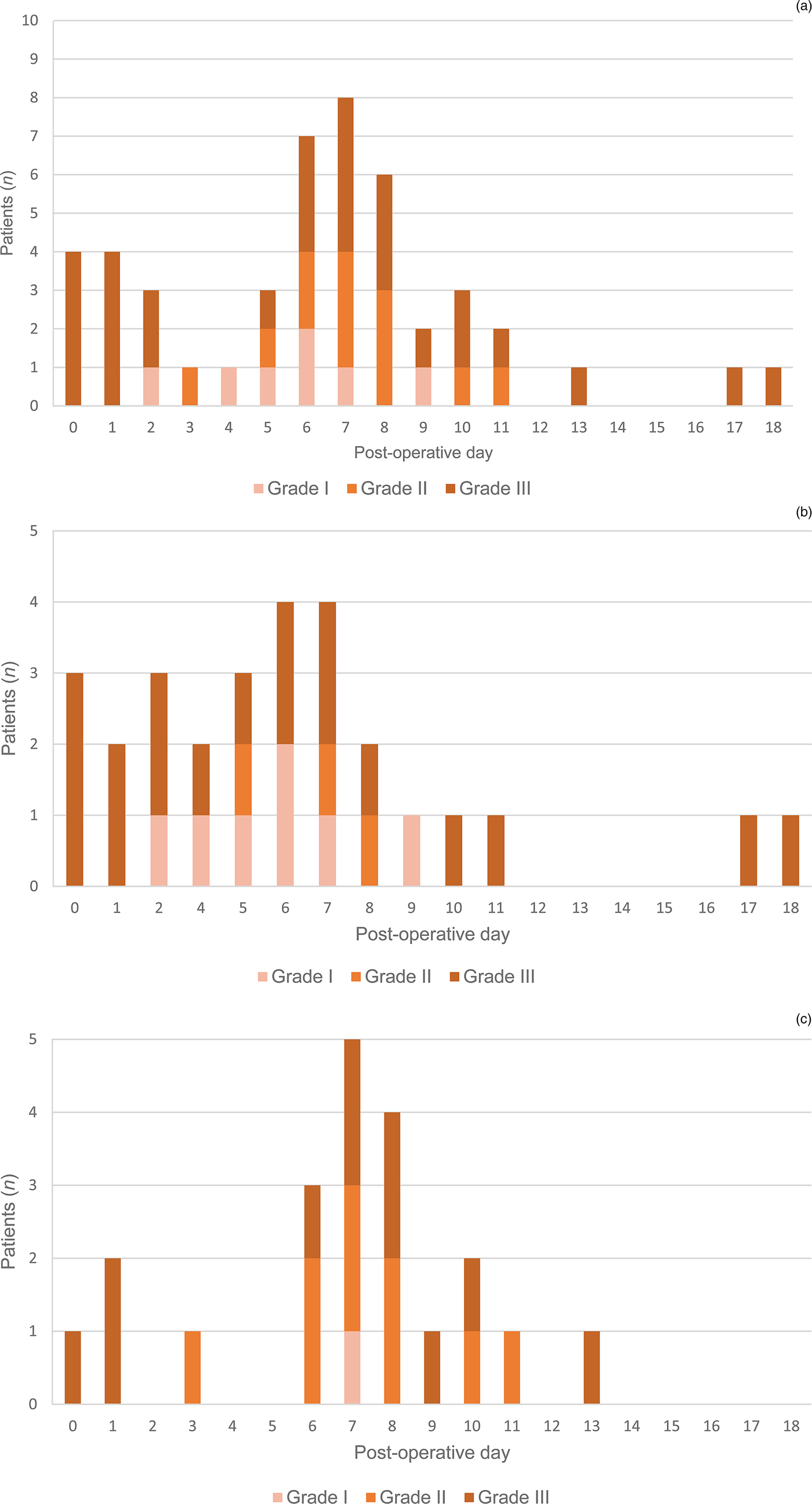
The most common post-operative complication was post-tonsillectomy haemorrhage. This was experienced by 49 patients (7.1 per cent), all of whom were admitted to the ward for follow up (Table 2). Twenty-nine patients experienced grade III post-tonsillectomy haemorrhage (4.2 per cent risk of re-operation). Seven patients experienced several episodes of post-tonsillectomy haemorrhage (five patients had two episodes and two patients had three episodes). Five patients required red blood cell transfusion because of secondary post-tonsillectomy haemorrhage, of which three had received either lidocaine with adrenaline, or lidocaine combined with adrenaline and bismuth subgallate (all were male). All post-tonsillectomy haemorrhage episodes occurred within 18 days of the primary operation; the highest number (of first bleeding episodes) occurred on post-operative day 7 (Figure 1). Two patients suffered two types of complications, both after secondary post-tonsillectomy haemorrhage; one suffered pneumonia (above), and the other experienced fever and cough with a normal chest X-ray and without the need for antibiotics. There were no 28-day or 1-year mortalities.
Grade of post-operative haemorrhage episodes in relation to post-operative days for: (a) all patients, (b) patients aged 1–7 years and (c) patients aged 8–16 years. Grade I = bleeding stopped spontaneously or after clot removal; grade II = bleeding required direct pressure or minor electrocautery under local anaesthesia; and grade III = bleeding required re-operation under general anaesthesia. If a patient experienced several post-tonsillectomy haemorrhage episodes, only first one was included.

Post-operative complication rates were comparable between the younger (1–7-year-old) and the older (8–16-year-old) patients. However, older patients experienced more grade II bleeding events than younger patients (3.0 per cent vs 0.8 per cent, p = 0.025). This is explained by the more common use of haemostatic procedures performed under local anaesthesia in the older age group.
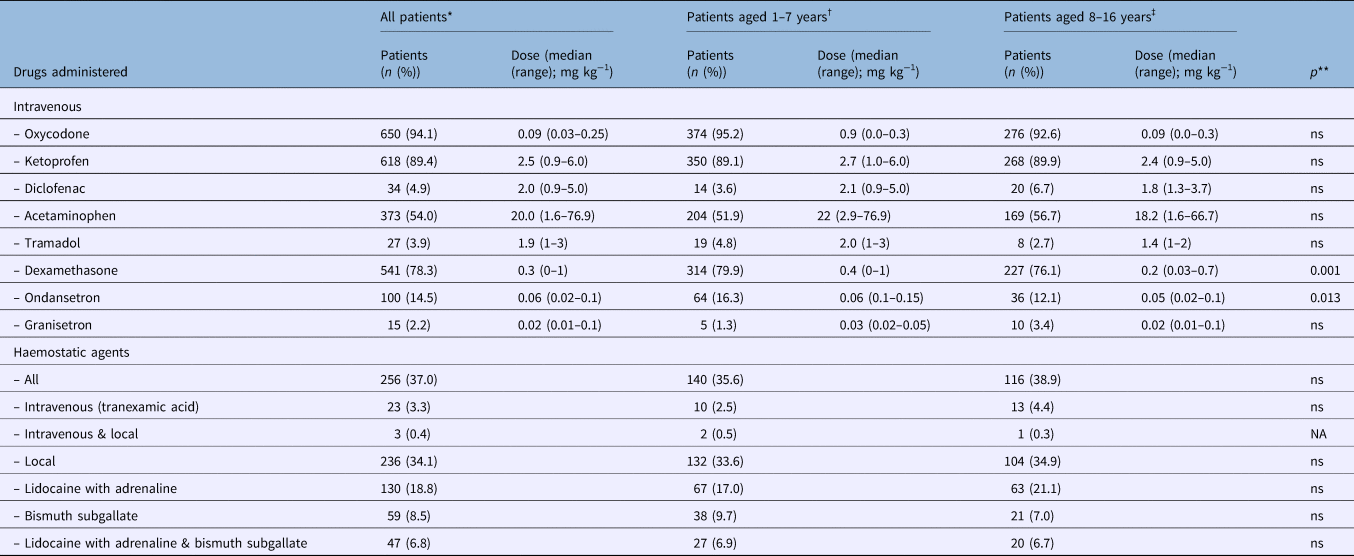
Non-steroidal anti-inflammatory drugs, acetaminophen, oxycodone, dexamethasone and 5-HT3 antagonists were used commonly (Table 3); they were not associated with an increased risk of any post-operative complications.
Drugs administered on operation day and differences between age groups

*n = 691; †n = 393; ‡n = 298. **P-value is calculated for the difference between patients aged 1–7 years and 8–16 years. ns = non-significant; NA = not available
Patients who received intravenous tranexamic acid had a comparable risk of post-tonsillectomy haemorrhage as those patients who did not (p = 0.6). Patients who received local anaesthetic or topical haemostatic agents, or both, experienced post-tonsillectomy haemorrhage more often than those who did not (13.6 per cent vs 3.8 per cent, p < 0.001; 9.8 per cent difference (95 per cent CI of difference = 6 to 1 per cent), odds ratio = 4.0 (95 per cent CI = 2.2 to 7.4)).
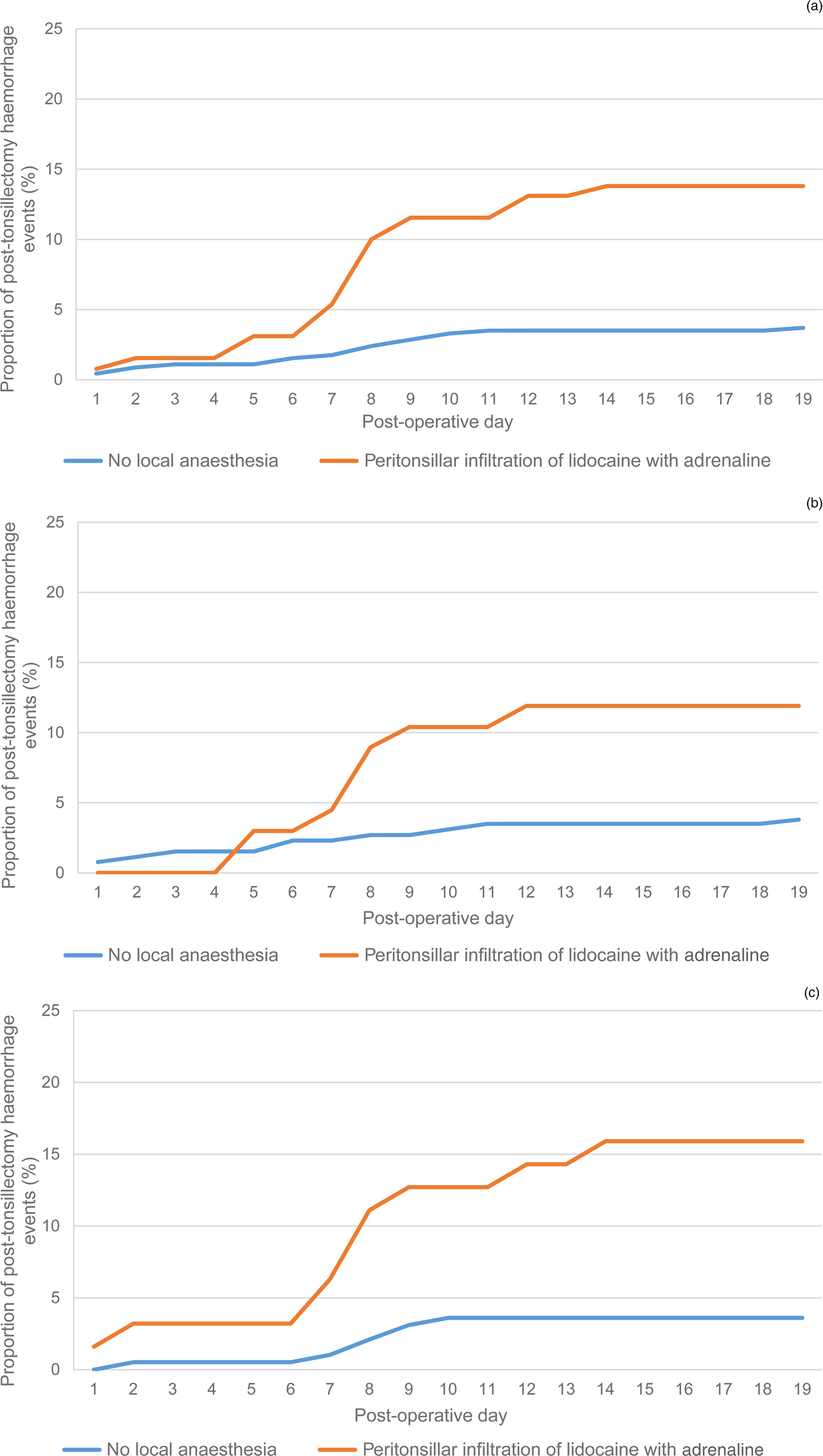
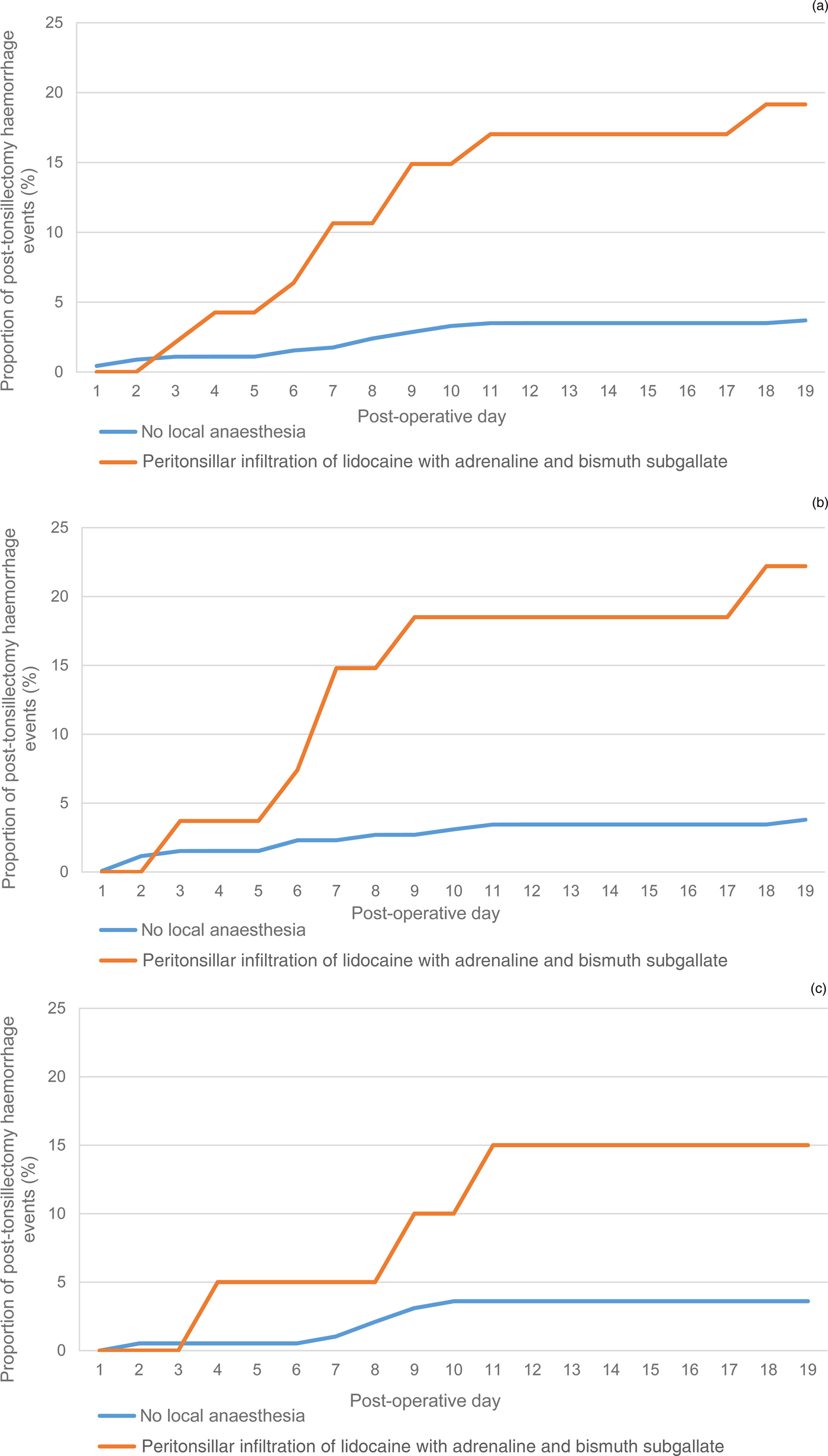
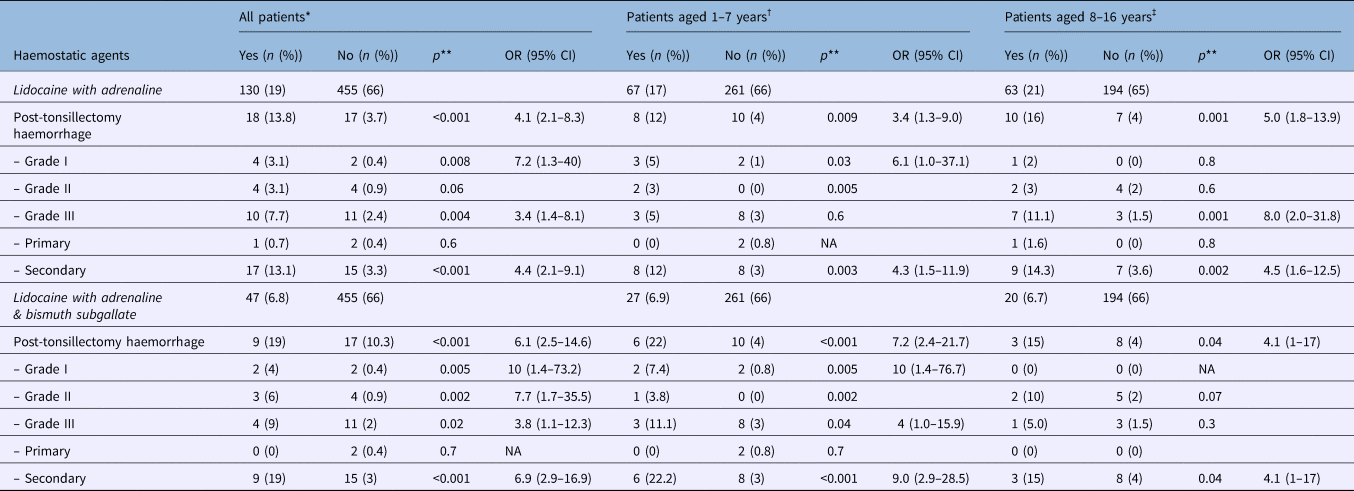
The use of lidocaine with adrenaline was associated with an increased risk of secondary post-tonsillectomy haemorrhage in both age groups, and a risk of grade III post-tonsillectomy haemorrhage among patients aged 8–16 years (Table 4). Bismuth subgallate alone did not alter the risk of post-tonsillectomy haemorrhage. The combination of lidocaine with adrenaline and bismuth subgallate increased the risk of secondary post-tonsillectomy haemorrhage in both age groups, and increased the risk of grade III post-tonsillectomy haemorrhage among patients aged one to seven years (Table 4). The frequency of secondary post-tonsillectomy haemorrhage started to increase on post-operative days 6–7 (Figures 2 and 3). The use of NSAIDs, acetaminophen, dexamethasone or tramadol did not have any multicollinearity regarding the association with an increased risk of post-tonsillectomy haemorrhage due to lidocaine with adrenaline, or the combination of lidocaine with adrenaline and bismuth subgallate.
Cumulative proportion of post-tonsillectomy haemorrhage events in relation to peritonsillar infiltration of lidocaine with adrenaline for: (a) all patients (p < 0.001), (b) patients aged 1–7 years (p = 0.009) and (c) patients aged 8–16 years (p = 0.001).

Cumulative proportion of post-tonsillectomy haemorrhage events in relation to peritonsillar infiltration of lidocaine with adrenaline and bismuth subgallate for: (a) all patients (p < 0.001), (b) patients aged 1–7 years (p < 0.001) and (c) patients aged 8–16 years (p = 0.02).

Association of local lidocaine with adrenaline alone and in combination with topical bismuth subgallate to post-tonsillectomy haemorrhage

*n = 691; †n = 393; ‡n = 298. **P-value is calculated for the difference between patients who received lidocaine with adrenaline alone or in combination with bismuth subgallate, and those patients who did not receive any local anaesthetic or topical haemostatic agents. OR = odds ratio; CI = confidence interval; NA = not available
In order to evaluate the influence of surgeons on the risk of post-tonsillectomy haemorrhage, they were divided into two categories based on their individual overall risk of post-tonsillectomy haemorrhage. Group 1 surgeons had less than 14 per cent risk of post-tonsillectomy haemorrhage (39 surgeons). Group 2 surgeons had more than 14 per cent risk of post-tonsillectomy haemorrhage (4 surgeons). When no local anaesthetic or topical haemostatic were used, the risk of post-tonsillectomy haemorrhage was similar in both groups (group 1 = 3.6 per cent; group 2 = 4.4 per cent). Local anaesthetic or topical haemostatic was used in 28 per cent of cases in group 1, and in 58 per cent of cases in group 2.
In group 2 surgeons, the risk of post-tonsillectomy haemorrhage was higher among patients who received lidocaine with adrenaline compared to those who did not receive any local anaesthetic or haemostatic agent (24.6 per cent (14 out of 57) vs 4.4 per cent (3 out of 68), p = 0.001; 20.2 per cent difference (95 per cent CI of difference = 8 to 33 per cent), odds ratio = 7.1 (95 per cent CI = 1.9 to 26.1)); whereas, in group 1, the risk was similar (7.1 per cent (4 out of 73) vs 3.6 per cent (14 out of 387), p < 0.45; 3.5 per cent of difference (95 per cent CI of difference = −2 to 9.8 per cent)). In group 2, patients who received the combination of lidocaine with adrenaline and bismuth subgallate had a higher risk of post-tonsillectomy haemorrhage compared to those who did not receive any local anaesthetic or haemostatic agent (24.1 per cent (7 out of 29) vs 4.4 per cent (3 out of 68), p < 0.001; 19.7 per cent of difference (95 per cent CI of difference = 5.5 to 37.9 per cent), odds ratio = 12.7 (95 per cent CI = 2.9 to 55.9) (all bleeding episodes occurred with one out of two surgeons); whereas in group 1 the risk was similar (11.1 per cent (2 out of 18) vs 3.6 per cent (14 out of 387), p = 0.35, 7.5 per cent difference (95 per cent CI of difference = −0.9 to 29.2) (2 out of 12 surgeons).
Tonsillectomy performed with or without adenoidectomy was not associated with post-operative complication rates other than post-operative nausea and vomiting. Patients who underwent tonsillectomy experienced more post-operative nausea and vomiting than those who underwent tonsillectomy with adenoidectomy (5 out of 269 (1.8 per cent) vs 1 out of 422 (0.2 per cent), p = 0.025; odds ratio = 0.13 (95 per cent CI = 0.2 to 1.1)); however, the number of patients was small and the difference did not appear in separate age groups.
Discussion
In the present study, unplanned contact with the hospital (13.6 per cent), visits (10.0 per cent) and re-admissions (8.4 per cent) were less frequent than in the previous study conducted in our clinic, although more common than in some other studies.Reference MacCallum, MacRae, Sukerman and MacRae3, Reference Kanerva, Tarkkila and Pitkäranta4, Reference Ovesen, Kamarauskas, Dahl and Mainz22, Reference Duval, Wilkes, Korgenski, Srivastava and Meier23 In a prospective cohort study that included 614 out-patient tonsillectomy patients (73 per cent under the age of 16 years), unplanned post-operative hospital contact was observed among 23 per cent of patients (for pain in 12 per cent, bleeding in 4 per cent, and post-operative nausea and vomiting in 2.4 per cent), and 5 per cent were re-admitted to the hospital.Reference Ovesen, Kamarauskas, Dahl and Mainz22 In a registry-based study of 39 906 children aged under 18 years, unplanned return visits to the hospital were observed among 6.3 per cent of patients (for bleeding in 2.3 per cent, dehydration in 2.3 per cent and pain in 1.2 per cent), and 0.6 per cent were re-admitted.Reference Duval, Wilkes, Korgenski, Srivastava and Meier23
The most frequent post-operative complication was post-tonsillectomy haemorrhage; the overall institutional risk of post-tonsillectomy haemorrhage was 7.1 per cent and the risk of grade III bleeding was 4.2 per cent. These results are in line with other institutions. A literature review by Blakley reported a mean post-tonsillectomy haemorrhage rate (typically grade III post-tonsillectomy haemorrhage) of 4.5 per cent among various institutions, suggesting that rates around 5 per cent are typical and rates above 14 per cent require monitoring.Reference Blakley24 In our study, we included grade I post-tonsillectomy haemorrhage (minor bleeding events); this may appear as a higher overall risk of post-tonsillectomy haemorrhage in our institution compared to other institutions. Three of five patients who required red blood cell transfusion because of secondary post-tonsillectomy haemorrhage had received local anaesthetic or topical haemostatic agents. These transfusions could theoretically be related to an unprofitable effect of these agents; however, the number of patients was too small to draw any conclusions. All patients were male, which is a known predisposing risk factor for post-tonsillectomy haemorrhage.Reference Coordes, Soudry, Hofmann and Lenarz25
Lidocaine with adrenaline was unexpectedly associated with an increased risk of secondary post-tonsillectomy haemorrhage in all patient groups, and a risk of grade III post-tonsillectomy haemorrhage among patients aged 8–16 years. The combination of lidocaine with adrenaline and bismuth subgallate increased the risk of secondary post-tonsillectomy haemorrhage among all patients even more than lidocaine with adrenaline alone. Lidocaine with adrenaline has vasoconstrictor and platelet aggregation properties. Bismuth subgallate enhances factor XII function and accelerates the intrinsic clotting cascade that promotes coagulation. Both adrenaline and bismuth subgallate have been shown to reduce peri-operative blood loss, operation time, and incidence of primary post-tonsillectomy haemorrhage, with no influence on secondary post-tonsillectomy haemorrhage.Reference Thorisdottir, Ratnoff and Maniglia26–Reference Hatton28 Historically, lidocaine with adrenaline has been suspected of increasing the risk of post-tonsillectomy haemorrhage because it masks inadequate haemostasis arising from vasoconstriction, but to our knowledge this has not been reported.Reference Papangelou29
The frequency of secondary post-tonsillectomy haemorrhage associated with the use of lidocaine with adrenaline started to rise on days 6–7 post-operatively. Its appearance so many days post-operatively is surprising. It would have been more logical for secondary post-tonsillectomy haemorrhage to occur much earlier (e.g. on post-operative days 0–2), as the vasoconstrictive effect of adrenaline wears off. This phenomenon may be explained by an impaired wound healing process due to both adrenaline and lidocaine. Systemically or locally administered adrenaline has been shown to decrease cell migration and potentiate persistent inflammation, especially in infected wounds.Reference Sivamani, Pullar, Manabat-Hidalgo, Rocke, Carlsen and Greenhalgh30–Reference Dasu, Ramirez, La, Gorouhi, Nguyen and Lin32 Local anaesthetics have been reported to inhibit wound healing by their antiproliferative effect on many cell types including mesenchymal stem cells essential in wound healing (based on in vitro and animal models, in which local anaesthetics were administered in a dose-dependent manner).Reference Lucchinetti, Awad, Rahman, Feng, Lou and Zhang33–Reference Waite, Gilliver, Masterson, Hardman and Ashcroft36 Separation of the fibrin clot from the tonsillar bed on post-operative days 6–7 exposes regenerative capillaries in the vascular stroma, and if the healing process is impaired, post-tonsillectomy haemorrhage occurs more easily in this vulnerable time slot.Reference Isaacson37
The use of lidocaine with adrenaline was associated with an increased risk of post-tonsillectomy haemorrhage among patients operated on by surgeons in group 2 (with a more than 14 per cent risk of post-tonsillectomy haemorrhage). When none of these agents were used, the risk of post-tonsillectomy haemorrhage was similar in both surgeon groups (group 1 (with a less than 14 per cent risk of post-tonsillectomy haemorrhage) = 3.6 per cent; group 2 = 4.4 per cent). The reason why there were more bleeding episodes in group 2 is unclear – it may be because of the more common use of local anaesthetic and topical agents (two times more common than in group 1) or the surgeons’ skills.
It is unclear why the risk of post-tonsillectomy haemorrhage was even higher with the combination of lidocaine with adrenaline and bismuth subgallate than with lidocaine with adrenaline alone. Although the combination was mainly used out of habit, it may have also been used for haemostasis in patients who received lidocaine with adrenaline and nevertheless had a bleeding tendency, and thus the underlying need for surgical haemostasis was missed. The groups were small, and a significant difference was observed only among patients operated by one surgeon in group 2; thus, the finding is without clinical significance.
Twenty-one patients (3 per cent) contacted the hospital because of post-operative pain. Non-steroidal anti-inflammatory drugs were used commonly (in 94 per cent of patients), and, fortunately, they did not increase the risk of post-tonsillectomy haemorrhage. A meta-analysis (published in 2003) that included both children and adults reported an increased risk of re-operation in those who received NSAIDs; the incidence was 0.8 per cent for control individuals and 4.2 per cent for NSAID-treated patients.Reference Marret, Flahault, Samama and Bonnet10 However, a Cochrane review (published in 2005) on NSAIDs and peri-operative bleeding in paediatric tonsillectomy did not demonstrate an increased risk of post-tonsillectomy haemorrhage.Reference Cardwell, Siviter and Smith11 An updated Cochrane review (published in 2013) concluded that insufficient data exist to refute an increased risk of post-tonsillectomy haemorrhage; the use of NSAIDs was associated with a non-significant increased risk of post-tonsillectomy haemorrhage requiring surgical intervention.Reference Lewis, Nicholson, Cardwell, Siviter and Smith38 A recent retrospective study on paediatric tonsillotomy demonstrated an increased overall risk (primary and secondary) of post-tonsillectomy haemorrhage requiring re-operation when ibuprofen was used, compared with analgesics other than NSAIDs (1.6 per cent vs 0.5 per cent).Reference D'Souza, Schmidt, Xie, Adelman and Nardone39
The US Food and Drug Administration has banned the use of codeine for post-tonsillectomy pain in patients aged under 18 years. This is because of the sudden deaths of children operated on for obstructive sleep apnoea who had received codeine for post-tonsillectomy pain.40 The respiratory depressant effect of codeine results from its rapid metabolism to morphine due to cytochrome CYP2D6 polymorphism, and sleep apnoea patients are especially sensitive to this effect.Reference Ciszkowski, Madadi, Phillips, Lauwers and Koren41 Consequently, other analgesics need to be used. Based on our study findings, the existing evidence and the fact that post-tonsillectomy pain is intense for several days post-operatively, we consider the use of NSAIDs more beneficial than harmful. Improving patient education on the nature and intensity of post-tonsillectomy pain will help patients and reduce unplanned contact with the hospital.
The incidence of post-operative nausea and vomiting was very low in our study (0.9 per cent). This is because of the common use of the anti-emetics dexamethasone (78.3 per cent) and 5-HT3 antagonists (16.6 per cent). Although the dexamethasone dose was quite high (median of 0.3 mg kg−1 (range, 0–1 mg kg−1)), it was not associated with an increased risk of complications. In a prospective study by Czarnetzki et al., single-dose dexamethasone was reported to increase the risk of post-tonsillectomy haemorrhage in a dose-dependent manner.Reference Czarnetzki, Elia, Lysakowski, Dumont, Landis and Giger19
Debate on the subject of anti-emetics for tonsillectomy has been ongoing; post-tonsillectomy haemorrhage has been argued to be a secondary outcome and statistical tests have been considered inappropriate.Reference Gunter, Willging and Myer42 A Cochrane review on steroids and paediatric post-tonsillectomy bleeding (published in 2011) did not report increased bleeding rates with dexamethasone use, instead describing reduced post-operative morbidity.Reference Steward, Grisel and Meinzen-Derr43 Moreover, another systematic review did not demonstrate an increased risk of post-tonsillectomy haemorrhage with dexamethasone (with or without NSAIDs); however, a clinically relevant doubling in risk could not be excluded on the grounds of unavoidable imprecisions in statistical tests.Reference Bellis, Pirmohamed, Nunn, Loke, De and Golder44
The recent guideline from the American Academy of Otolaryngology – Head and Neck Surgery Foundation for tonsillectomy in children strongly recommends the use of single-dose dexamethasone in children undergoing tonsillectomy. This recommendation is based on benefit over harm, including decreased throat pain, decreased post-operative nausea and vomiting, and earlier resumption of oral intake, which are crucial in terms of hydration, especially when NSAIDs are used.Reference Baugh, Archer, Mitchell, Rosenfeld, Amin and Burns45
Given the complicated nature of post-tonsillectomy haemorrhage pathophysiology, several other simultaneous factors influence the risk of post-tonsillectomy haemorrhage. These include the heterogeneity of patients, indications for tonsillectomy (hypertrophy or chronic inflammation), surgical technique, extent of tonsil removal and possible undiagnosed bleeding disorders.
It could be argued that the usefulness of the results is limited given the time when data were collected. In fact, the use of local lidocaine with adrenaline in tonsillectomies has decreased over the years in our clinic. However, it is used commonly when tonsillotomies are performed. The observed effect of lidocaine with adrenaline on the increased risk of bleeding in tonsillectomies may be similar in tonsillotomies, which is worth exploring in future prospective studies.
• Recovery after tonsillectomy was mostly uneventful; 14 per cent of patients reported post-operative complications and 5 per cent were re-admitted
• The most common post-operative complication was haemorrhage (7.1 per cent)
• Paracetamol, non-steroidal anti-inflammatory drugs, tramadol, oxycodone, dexamethasone and 5-HT3 antagonists were not associated with post-operative complications
• Lidocaine with adrenaline was a risk factor for secondary post-tonsillectomy haemorrhage, which may result from impaired wound healing due to their use
• Paediatric out-patient tonsillectomy is considered safe
• Local infiltration of lidocaine with adrenaline is questionable because of increased post-tonsillectomy haemorrhage risk
In conclusion, every seventh paediatric tonsillectomy patient experienced a complicated recovery. The most frequent post-operative complication was post-tonsillectomy haemorrhage. The use of local anaesthetic with adrenaline may create better surgical conditions, but may carry an increased risk of post-tonsillectomy haemorrhage.
Competing interests
None declared