Introduction
Acquired brain injury (ABI) is characterised by a wide range of physical, functional, cognitive, behavioural and psychosocial disorders, impairments and handicaps. Disturbance of behaviour is enduring and creates severe difficulties for people with ABI and their families (Hall et al., Reference Hall, Karzmark, Stevens, Englander, O'Hare and Wright1994). ‘Neurobehavioural disability’ (NBD) is a term that has evolved to highlight the combination of neurological and neuropsychological origins of behaviour disorders observed amongst people with ABI (Wood, Reference Wood and Wood1990). NBD comprises elements of executive and attentional dysfunction, poor insight, problems with awareness and social judgement, labile mood, poor impulse control and a range of personality changes (Wood, Reference Wood, Wood and McMillan2001). These result in serious long-term social handicap and poor psychosocial outcome (Kreutzer, Marwitz, Seel, & Serio, Reference Kreutzer, Marwitz, Seel and Serio1996).
Aggression is a distressing and debilitating consequence of NBD (Fleminger, Greenwood, & Oliver, Reference Fleminger, Greenwood and Oliver2006) and creates particular challenges for management. When this occurs in the context of rehabilitation, it can potentially prevent people with ABI from achieving their full potential for recovery (Burke, Wesolowski, & Lane, Reference Burke, Wesolowski and Lane1988). Some people are excluded from rehabilitation altogether (Prigatano, Reference Prigatano1987). When this happens, people with ABI gravitate to placements for management purposes that are ill-equipped to meet their needs, including forensic services (Alderman, Reference Alderman, Wood and McMillan2001).
Prevalence and Progression of ABI Aggression
Aggressive behaviour disorders are a legacy of ABI that have particularly damaging effects, but how commonly they occur remains uncertain. This paper is concerned with aggression as an enduring sequela of ABI as opposed to behavioural disregulation characteristic of recovery from the immediate post-acute stage. In a review of the literature, Tateno, Jage and Robinson (Reference Tateno, Jage and Robinson2003) found that reports of aggression following traumatic brain injury (TBI) varied from 11 to 96%. In their own study, 33.7% had engaged in significant aggressive behaviour within 6 months of injury. Baguley, Cooper and Felmingham (Reference Baguley, Cooper and Felmingham2006) investigated outcome amongst a large sample of TBI survivors at 6 months, 24 months and 5 years post-injury. At each of these times, 25% met the authors’ criteria for ‘significant’ aggressive behaviour, and they concluded it was both a frequent and long-term sequela of TBI. Kelly, Brown, Todd and Kremer (Reference Kelly, Brown, Todd and Kremer2008) investigated challenging behaviour profiles of people with ABI in the community. Aggression was especially prolific: nearly 86% were found to have been verbally aggressive, 41.1% made assaults on other people, and 35.3% had been physically aggressive towards objects. This study also highlighted the longevity of aggression, as mean time since injury was nearly 10 years and as long as 41.3 years.
This apparent variability in the prevalence of aggression is partly attributable to the non-homogeneous nature of ABI (Wilson, Reference Wilson and Martin1991). However, a more consistently reported finding is the alarming tendency for symptoms of NBD, including aggression, to increase over time. Brooks, McKinlay, Symington, Beattie and Campsie (Reference Brooks, McKinlay, Symington, Beattie and Campsie1987) reported that 64% of individuals with TBI had temper control problems 5 years post-injury, and 20% exhibited increased violent behaviour. Fifteen per cent of relatives of people with ABI reported ‘threats of violence’ 1 year after injury, but 54% complained of this after 5 years. Similarly, although Johnson and Balleny (Reference Johnson and Balleny1996) found that a small minority people with ABI demonstrated verbal and physical aggression while still in hospital (6%), this increased significantly, according to relatives, after they had been discharged home 18 months or more after injury (55.5%).
Information about levels of aggression occurring within services organised to manage challenging behaviour arising from NBD has only recently become available. This also suggests considerable variability. For example, in a neurobehavioural service that supports people with ABI, challenging behaviour and long-term needs, Giles, Wagner, Fong and Waraich (Reference Giles, Wagner, Fong and Waraich2005) reported 49 incidents of aggression amongst 40 residents over a 20-month period. In contrast, Alderman (Reference Alderman2007) described 5548 aggressive events, including 729 physical assaults on other people. While this was exhibited by a larger sample (108), observations were made over a much shorter time (14 days). Some of this variability is because Giles and colleagues only reported ‘client-to-client’ assaults and did not include verbal aggression or aggression against objects. The figure would also have been higher if assaults on staff had been included, as the authors acknowledged that half the participants in their sample repetitively assaulted staff. In addition, the sample described by Alderman was engaged in active rehabilitation, whereas those described by Giles and colleagues were resident in a slow-stream care pathway, so expectations regarding activities and performance may have differed. The rates usefully indicate variability between services (further studies are required to elaborate this) and further highlights that aggression is problematic in many people with ABI admitted to them.
Of course, aggressive behaviour is not confined to people with ABI and it does occur within the neurologically healthy population too. However, this will, to a large extent, reflect the context in which such behaviour occurs, rendering direct comparisons between these two populations difficult. While data such as those reported by Alderman (Reference Alderman2007) are almost certainly uncharacteristic of the general population and represent the extreme amongst people with ABI (as only a small minority require admission to a neurobehavioural facility), there is evidence that supports change in aggressive behaviour following injury. For example, Baguley and colleagues (Reference Baguley, Cooper and Felmingham2006) also obtained self-report data regarding prevalence and types of aggression from neurologically healthy controls. Six months after injury, rates of aggression were higher amongst people with TBI than controls. Although at 24 and 60 months post-injury reported overall rates of aggression were comparable between the two groups, controls reported slightly higher rates of verbal aggression, but people with TBI reported rates of physical aggression more than three times in excess of that of controls.
Causes of ABI Aggressive Behaviour Disorders
NBD, including aggression, has complex origins. It might be expected that there is a linear relationship between severity of injury and increased likelihood of aggressive behaviour. However, this cannot be definitively concluded from the current literature. For example, while Ferguson and Coccaro (Reference Ferguson and Coccaro2009) found aggression was more characteristic of people with moderate than mild TBI, Baguley et al. (Reference Baguley, Cooper and Felmingham2006) did not find severity of injury predictive of this behaviour. Lack of standardised definitions regarding what constitutes ‘aggressive behaviour’ undermines the current knowledge base, as few papers are directly comparable and the ABI population is so non-homogeneous. There are too many methodological inconsistencies and other confounding factors in the literature to definitively state the implications of severity of injury on the likelihood of aggression, but we can conclude that its origins are complex and multivariate (for example, the sample studied by Baguley et al. (Reference Baguley, Cooper and Felmingham2006) largely comprised a severe group). Rather than being attributable to a single factor, alterations in behaviour, including aggression, are the product of interaction between damaged neural systems, neurocognitive impairment and pre-morbid personality traits, exacerbated by post-injury learning as a result of environmental influences (Alderman, Wood, & Williams, Reference Alderman, Wood and Williams2011). The diverse, complex aetiology of behaviour change has resulted in numerous attempts to produce taxonomies of factors believed to underpin ABI aggression. These generally distinguish explanations of behaviour change that have a predominantly neurological basis from those attributable to neurocognitive impairment (Wood, Reference Wood, Wood and McMillan2001).
Regarding neurological causes, lesions to specific brain areas are associated with aggression, especially the orbitofrontal cortex (OFC) and its connections with other brain structures. The orbito-temporal-limbic feedback loop is particularly implicated, in which the inhibitory function of the cortex over the amygdala is disrupted, depriving the cognitive functions of any ability to suppress instinctive emotional reactions (Starkstein & Robinson, Reference Starkstein, Robinson, Levin, Eisenberg and Benton1991). Aggressive behaviour with this aetiology is provoked by clear antecedents (Medd & Tate, Reference Medd and Tate2000). Reduction in inhibitory control probably accounts for increased aggressive behaviour in people with a pre-morbid history of violence (Dyer, Bell, McCann, & Rauch, Reference Dyer, Bell, McCann and Rauch2006).
Another category of neurologically mediated aggression that typically emerges some time after injury is the episodic dyscontrol syndrome (EDS), one of the post-traumatic tempero-limbic disorders characterised by paroxysmal changes that reflect behavioural sequelae of electrophysiological disturbance in the brain. EDS aggression tends to be brief, clear-cut and ‘out of character’, without obvious triggers or preceded by minor frustration to which the magnitude of the behavioural response is grossly out of proportion. Its development parallels that of post-traumatic epilepsy in that its onset is marked by a delay (sometimes years) after insult and it shows little tendency to improve over time (see Eames, Reference Eames and Wood1990, Reference Eames, Wood and McMillan2001; Miller, Reference Miller1994).
Another important causal factor is neurocognitive impairment, especially disorders of the executive functions. Reduced ability to initiate use of preserved abilities, monitor performance and utilise feedback effectively to regulate behaviour results in lack of ‘error awareness’, observed as disinhibition, impulsiveness and poor response to cues. This can result in frustration and aggression because of concurrent difficulties with response inhibition, as described earlier (Alderman, Reference Alderman2003).
Environmental factors are also important (Demark & Gemeinhardt, Reference Demark and Gemeinhardt2002; Kim, Reference Kim2002; Medd & Tate, Reference Medd and Tate2000), including interaction with carers and clinicians (Pryor, Reference Pryor2004). Post-injury learning also plays a significant role, especially when aggression serves an avoidance/escape function (Alderman, Reference Alderman, Wood and McMillan2001).
Although taxonomies regarding causes of aggressive behaviour are useful in informing formulation, causes of post-morbid ABI aggression are likely to be multifarious (Dyer et al., Reference Dyer, Bell, McCann and Rauch2006). In the study described by Baguley and colleagues (Reference Baguley, Cooper and Felmingham2006) significant aggression following TBI had multiple causes and was associated with younger age, post-injury depression and low satisfaction with life, while other factors, including severity, demographics or pre-injury characteristics, were not. Alderman (Reference Alderman2007) demonstrated how interaction between individual characteristics and environmental factors resulted in different types of aggression. Identifying between types of aggressive behaviour disorder, what factors drive them and how they interact is essential to create effective treatment interventions. Utilising knowledge from the literature about ABI aggression, information about the patient, including data from appropriate assessment measures, are essential in facilitating this process.
Management and Treatment of ABI Aggressive Behaviour: General Considerations
Numerous options for the management of ABI aggressive behaviour disorders have been advocated in the literature. Intervention should be preceded by an assessment which results in a formulation regarding the causes of aggression and its likely function. This working hypothesis about behaviour will influence the type of intervention used and how this is specifically tailored to meet individual needs. Once implemented, intervention will be subject to evaluation, which will determine its effectiveness and, if successful, at what point it can be removed or, if not, how it can be changed (Alderman, Reference Alderman, Wood and McMillan2001).
Assessment
Deciding It's ‘Right’ to Intervene
Management of ABI aggression benefits from a multidisciplinary process that begins with comprehensive assessment (Yody et al., Reference Yody, Schaub, Conway, Peters, Strauss and Helsinger2000). It has to be agreed that it is acceptable to try and change a person's behaviour, and that debate brings a moral and ethical dimension to clinical decision making. Tolerance of behaviour will vary within and between families, communities (which will influence referrals to neurobehavioural rehabilitation services) and clinical teams in the setting and context in which they work. It is dependent on a range of factors, including age, culture, context in which the behaviour takes place, local norms, expectations and the belief structures and values of communities, family members, carers and healthcare professionals. With regard to ABI, behaviours that increase vulnerability, limit or delay access to community resources and decrease likelihood of attaining full recovery potential are factors likely to support the need for intervention (Alderman, Reference Alderman, Wood and McMillan2001). A ‘zero tolerance’ approach regarding aggression directed against healthcare staff has been encouraged in the UK, as it has long been recognised that such behaviour has serious consequences (Stubbs, Winstanley, Alderman, & Birkett-Swan, Reference Stubbs, Winstanley, Alderman and Birkett-Swan2009). Nevertheless, agreeing that intervention is necessary must involve consideration of context, risks to self and others of allowing aggressive behaviour to continue, appreciation of what will be lost and gained by not intervening, and determining whether those supporting the person with ABI have the skills and resources required.
People with ABI presenting with prolific aggression that increases risk to themselves and others, such as those described by Alderman (Reference Alderman2007), ideally require admission to residential neurobehavioural facilities that operationalise aspects of physical, procedural and relational security. For example, services will require sufficient clinical staff to maintain a safe and therapeutic environment, provide specialist training in the management of aggression and violence, and have the ability to legally detain people when required.
Collecting Relevant Information about Aggression
Having made the decision to intervene, relevant information is collected as part of the assessment. This will identify factors that drive and maintain aggression, create a formulation and, from this, plan intervention. It is beyond the scope of this paper to completely catalogue what should be considered, but it would ordinarily comprise obtaining a detailed history, including onset and development of aggressive behaviour. Whenever possible, the person with ABI who is the intended recipient of rehabilitation should contribute, although it needs to be acknowledged that disorders of self-awareness result in unrealistic self-appraisals and a tendency to understate difficulties, casting doubt on the validity of self-report in reliably informing treatment (Hillier & Metzer, Reference Hillier and Metzer1997; Port, Willmott, & Charlton, Reference Port, Willmott and Charlton2002).
A prospective system for collecting information about aggressive behaviour is desirable. Asking people to recall details about previous events should not be entirely relied on, as incidents may have taken place some time ago and the level of detail recalled degraded as a consequence. Formation of new memories is not a passive process and is subject to bias from beliefs, knowledge, expectations and emotions, which shape and potentially distort recall of events. Observing, or being subject to, an act of aggression is a stressful experience; consequently, high levels of cortisol released into the bloodstream have a further degrading effect on memory for events. Different neural systems process information resulting in emotion-induced memory enhancement and amnesia, and there is evidence that recall of emotional experience is enhanced while that of neutral stimuli is degraded (Buchanan, Tranel, & Adolphs, Reference Buchanan, Tranel and Adolphs2006). Consequently, memories of behaviour are fragmented and disorganised. A further point is that beliefs and attitudes also prejudice perception of why the person with ABI is behaving as they are, adversely impacting the formulation and relevance of the treatment implemented.
These sources of bias can be reduced by using observational recording measures. These prompt documentation of standardised variables, which might otherwise be neglected, as soon as possible after aggressive incidents, and provide objective information that can be used to test assumptions about behaviour. They also have known psychometric qualities underpinned by operational definitions of what constitutes aggression. One reason for variability in prevalence of aggressive behaviour disorders, such as the 11–96% reported by Tateno and colleagues (Reference Tateno, Jage and Robinson2003), is inconsistency in definitions employed. Concepts used by clinicians, such as ‘violence’, ‘irritability’ and ‘agitation’, are insufficient for collecting reliable, valid measures; it is also important to distinguish between different types of aggression to achieve consistent reporting. Operational definitions of behaviours within observational recording scales enable reliable and valid measurement of aggressive behaviour that informs treatment and can also be used to measure outcome.
Measuring Aggression
One such measure is the ‘Overt Aggression Scale – Modified for Neurorehabilitation’ (OAS-MNR) (Alderman, Knight, & Morgan, Reference Alderman, Knight and Morgan1997) which was developed using an operant conceptual framework to create a standardised method of reporting aggression in residential neurorehabilitation programmes. The OAS-MNR has operational definitions based on observable criteria of four categories of aggressive behaviour: verbal aggression, and aggression against objects, self and other people. Each category of aggression is rated regarding four levels of severity equating to mild, moderate, severe and very severe, each of which is defined using objective criteria. The measure comprises a valid and reliable means of capturing information on the type and severity of individual episodes of aggression, along with associated settings, events, antecedents and interventions. It has good inter-rater reliability, with weighted Kappa values in excess of 0.90 (Alderman et al., Reference Alderman, Knight and Morgan1997) and good convergent validity (Alderman, Reference Alderman2007; Giles & Mohr, Reference Giles and Mohr2007). The OAS-MNR has been employed successfully in clinical work, research, outcome measurement and service evaluation (for example, see Alderman, Reference Alderman2003; Alderman, Davies, Jones, & McDonnell, Reference Alderman1999; Watson, Rutterford, Shortland, Williamson, & Alderman, Reference Alderman, Wood and McMillan2001). While there are many measures of aggression, only the OAS-MNR and an extended version of this (Giles & Mohr, Reference Giles and Mohr2007) have been validated specifically for use with people with ABI. Using the OAS-MNR, a set of codes is employed as a shorthand means of capturing complex sequences of behaviour. The ‘St Andrew's Sexual Behaviour Assessment’ (SASBA) scale, a version of the OAS-MNR modified to capture potentially inappropriate sexual behaviour, was subsequently developed (Knight et al., Reference Knight, Alderman, Johnson, Green, Birkett-Swan and Yorston2008).
The OAS-MNR and SASBA comprise so-called ‘focal’ measures, which provide information about very specific areas of function or behaviour. As the OAS-MNR captures a great deal of objective knowledge about individual episodes of aggression, it yields detailed information that is very sensitive to change, for example, from a rehabilitation intervention. However, in some settings it is not possible to capture every incident. When this is the case, use of ‘global’ assessment tools that provide an overview of a person's strengths and weaknesses will make a useful contribution to assessment, alongside other benefits (Turner-Stokes, Reference Turner-Stokes1999). The ‘Overt Behaviour Scale’ (OBS) (Kelly, Todd, Simpson, Kremer, & Martin, Reference Kelly, Todd, Simpson, Kremer and Martin2006) was developed to record challenging behaviours, including aggression, displayed by people with ABI in community settings. The ‘St Andrew's–Swansea Neurobehavioural Scale’ (SASNOS) (Alderman et al., Reference Alderman, Wood and Williams2011) consists of 49 items that measure five domains of NBD, including ‘Aggression’, differentiating between provocative behaviour, irritability and overt aggression. Both the OBS and SASNOS were conceptualised for ABI, are straightforward to administer and score, provide a profile of strengths and weaknesses that aid rehabilitation planning, and have known psychometric properties, enabling them to make valuable contributions to the assessment/formulation process and in determining outcome.
Once relevant information has been collected, it is used with reference to an appropriate conceptual framework to create a hypothesis about what is driving and maintaining ABI aggression. This hypothesis directly informs treatment. The formulation process also considers what is known from the literature regarding ABI and aggressive behaviour. Interpreting results gleaned from the assessment stage within this wider context further enriches understanding of behaviour and helps ensure formulations are valid, reliable and consequently likely to result in effective treatment. For detailed information regarding formulation see Sturmey (Reference Sturmey2009), and for ABI challenging behaviour specifically, see Alderman (in press).
Treatment Approaches for ABI Aggressive Behaviour Disorders
As there are multiple causes of ABI aggression it is desirable to have a broad range of treatment options to draw from. Consistent with this need, several broad approaches, evolved from different conceptual frameworks, have been described, including pharmacological and rehabilitative interventions (Rao & Lyketsos, Reference Rao and Lyketsos2000). Non-pharmacological treatment methods include cognitive therapies, relaxation-based therapies, skills-training programmes, exposure-based treatments, cathartic treatments, behavioural interventions and multicomponent treatments (Alderman, Reference Alderman2003, Reference Alderman and Ponsford2004; Demark & Gemeinhardt, Reference Demark and Gemeinhardt2002). Assessment results will assist in indicating the relevance of particular types of treatment: for example, a person with severe amnesia is unlikely to benefit from ‘talking therapies’.
Information regarding efficacy of the different types of intervention are of variable quality regarding the degree of methodological rigour employed; ideally, scientific methods should be employed to determine their value (see Alderman, Reference Alderman, Priebe and Slade2002). Continuous monitoring of aggression using observational recording scales such as the OAS-MNR enables treatment effects to be closely scrutinised and fine tuned, whereas intermittently rating rehabilitation participants on global measures, including the OBS and SASNOS, will generate rehabilitation ‘snapshots’ that can be compared to determine progress. Not all contexts or settings will support continuous behaviour monitoring and, in these instances, rating scales such as the OBS and SASNOS will themselves be a primary source of information that informs assessment, formulation and tracks response to rehabilitation. The OBS was created specifically for this purpose (Kelly et al., Reference Kelly, Todd, Simpson, Kremer and Martin2006).
Numerous treatment approaches that can be applied to the management of ABI aggressive behaviour disorders have been described in the neurorehabilitation literature. It is beyond the scope of this paper to attempt a comprehensive review of all of these, but a brief assessment of the evidence will follow.
Pharmacological Management
Pharmacological approaches may be especially relevant when aggression is driven primarily by organic factors (Eames, Reference Eames, Wood and McMillan2001; Kim, Reference Kim2002; Rao & Lyketsos, Reference Rao and Lyketsos2000). Dopamine agents are indicated when anterior brain structures are involved, whereas anticonvulsants have a potentially important role to play in the treatment of EDS (Alderman, Reference Alderman and Ponsford2004). However, lack of trained, experienced neuropsychiatrists, the temptation to employ sedative medication, and the sensitivity of people with ABI to debilitating side-effects remain potential areas of concern (Alderman, Reference Alderman2003). Surprisingly, a recent, comprehensive review of pharmacological management of ABI aggressive behaviour disorders concluded there was no firm evidence base for this, and that large-scale randomised controlled trials are required to substantiate claims from small studies and anecdotal case descriptions (Fleminger et al., Reference Fleminger, Greenwood and Oliver2006).
Cognitive Behaviour Therapy
Cognitive behaviour therapy (CBT) utilises an information-processing model which makes a direct causal link between people's perception and interpretation of their experience, with alteration and shaping of their behaviour (Hawton, Salkovskis, Kirk, & Clark, Reference Hawton, Salkovskis, Kirk and Clark1989). Bias or faulty processing of information can underpin disorders of mood and behaviour, including aggression. CBT attempts to help people understand links between beliefs, thinking and behaviour, identify thinking distortions, and help generate rational interpretations of events. This ‘hypothesis testing’ approach to therapy ideally results in a shift to a more objective appraisal of experience and, with this, modification of distorted cognitive schema used to process information and subsequently change in belief systems. CBT has been employed successfully with many different clinical populations, covering a broad range of disorders (Scott, Reference Scott1997). It is popular, time-limited and has an evidence base. CBT has been applied successfully to management of anger in mental health service users (Bradbury & Clarke, Reference Bradbury and Clarke2007) and has high face validity for treatment of similar difficulties in ABI, with ‘how to’ manuals being available (O'Neill, Reference O'Neill2006).
Successful outcomes have been demonstrated regarding ABI mood disorders (Arundine et al., Reference Arundine, Bradbury, Dupuis, Dawson, Ruttan and Green2012); however, the evidence base for ABI challenging behaviour, including aggression, is lacking. One reason for this may be because it remains an under-researched area and, as a consequence, robust conclusions regarding the effectiveness of CBT in this domain cannot yet be made (Manchester & Wood, Reference Manchester, Wood, Wood and McMillan2001). There is lack of scientific rigour in single case-reports described in the literature, which further undermines judgements about the usefulness of CBT. However, accounts of individual therapeutic interventions suggest that programmes required heavy modification and implementation over much longer periods than ‘standard treatments’ for the management of aggression applied to other populations. Further challenges to implementing CBT include neurocognitive impairment, disorders of self-awareness and severity of challenging behaviour (Alderman, Reference Alderman2003). These potential limitations may constrain the extent to which cognitive schema and belief systems are altered, to the extent that the emphasis is on the ‘behaviour’ component of therapy rather than the ‘cognitive’.
In contrast, accounts of group-delivered CBT for managing aggression amongst people with ABI are more prolific (Demark & Gemeinhardt, Reference Demark and Gemeinhardt2002; Medd & Tate, Reference Medd and Tate2000; Walker et al., Reference Walker, Nott, Doyle, Onus, McCarthy and Baguley2010; Whitehouse, Reference Whitehouse1994). Group treatment has obvious benefits for resource allocation, costs and mutual support, so using this platform is an attractive proposition (Alderman, Reference Alderman2003; Psalia & Gracey, Reference Psalia, Gracey, Wilson, Gracey, Evans and Bateman2009). However, inspection of inclusion criteria for participation in studies examining group effectiveness tend to be highly selective, including the need to be fully oriented, have good communication skills, preserved ability to learn, capable of attaining goals, co-operate with requests, have no drug/alcohol dependency and no premorbid psychiatric history. As a result, conclusions regarding the general efficacy of group interventions using CBT for people with ABI and aggressive behaviour disorders remain poorly understood at present.
Behavioural Interventions
Management of ABI challenging behaviour using treatment approaches based on learning theory have been reported in the literature for more than three decades. These are often delivered within the context of a neurobehavioural approach to the treatment of such difficulties across a range of rehabilitation, residential and community settings. Learning theory also provides a conceptual structure that facilitates understanding of the relationship between behaviour and environmental contingencies, while also acknowledging the role of neurocognitive impairment in the development and maintenance of disorders, and the constraints to adaptive learning it imposes. Recent reviews have highlighted the success of this approach to managing aggression in both children and adults with ABI (Cattellani, Zettin, & Zoccolotti, Reference Cattellani, Zettin and Zoccolotti2010; Wood & Alderman, Reference Wood and Alderman2011; Ylvisaker et al., Reference Ylvisaker, Turkstra, Coehlo, Yorkston, Kennedy, Moore Sohlberg and Avery2007).
Methods from operant theory are most frequently reported and the importance of consequences in maintaining aggression is especially highlighted. The probability of behaviour operating on the environment and reoccurring is, in part, dependent on what contingencies are available; that is, whether it is rewarded (positive and negative reinforcement), not rewarded, an expected reward being withheld (extinction), it results in aversive consequences (positive punishment) or loss of something of value (negative punishment). The functional analytical approach provides a methodology that highlights relationships between behaviour and the environment, and tools such as the OAS-MNR are especially useful in determining these (Alderman et al, Reference Alderman, Davies, Jones and McDonnell1999). Identifying what purpose behaviour serves through functional analysis directly informs the formulation. Aggressive behaviour has been frequently found to fulfil an escape or avoidance function, for example, in response to therapy demands, and is consequently maintained through positive reinforcement (Alderman, Reference Alderman2007). Having a clear understanding of the function of behaviour and how it is being maintained will signpost particular operant methods that are most likely to be effective.
The operant conceptual framework also brings a pragmatic, structured ‘step-by-step’ approach to the management of ABI aggression. This includes: (1) designation of a clear set of procedures to follow when designing and implementing treatment interventions, to ensure a consistent and objective approach by staff; (2) detailed assessment of social and environmental contingencies that drive aggression; (3) individually designed interventions derived from a functional analysis of antecedents that trigger aggression, or consequences that maintain it; (4) continuous monitoring of intervention efficacy using objective criteria; (5) attempts to withdraw interventions when goals have been met and generalise benefits to other environments; (6) further functional analysis when intervention is unsuccessful to revise the original formulation (Alderman, Reference Alderman, Wood and McMillan2001).
Contingency Management vs. Positive Behaviour Supports
The earlier literature of the application of behavioural approaches in neurorehabilitation emphasised managing contingencies to behaviour, that is, the deliberate manipulation of consequences to encourage or discourage behaviour. A wide range of contingency management methods with a good evidence base for use in ABI are known about, including differential reinforcement (Alderman & Knight, Reference Alderman and Knight1997; Wood & Alderman, Reference Wood and Alderman2011), token economies (Wood, Reference Wood1987), extinction procedures such as situational time-out (Stewart & Alderman, Reference Stewart and Alderman2010) and response cost time-out (Alderman, Fry, & Youngson, Reference Alderman, Fry and Youngson1995). However, more recently, methods that successfully manage setting events and immediate antecedents to behaviour have been advocated in the management of children and adults with ABI (see, for example, Ylvisaker, Turkstra, & Coelho, Reference Ylvisaker, Turkstra and Coelho2005; Ylvisaker et al., Reference Ylvisaker, Turkstra, Coehlo, Yorkston, Kennedy, Moore Sohlberg and Avery2007). These approaches have attracted a range of descriptors, including ‘non-aversive’ (Giles, Wilson, & Dailey, Reference Giles, Wilson and Dailey2009), ‘errorless rehabilitation’ (Ducharme & Harris, Reference Ducharme and Harris2005) and ‘low arousal’ (McDonnell, Reference McDonnell2010), although the term ‘positive behaviour supports’ (PBS) appears to be most widely cited (Johnston, Foxx, Jacobson, Green, & Mulick, Reference Johnston, Foxx, Jacobson, Green and Mulick2006). All these approaches endeavour to increase the likelihood that individuals will engage in behaviours that enable them to succeed in their social contexts, and are applicable to many settings, including the community and people's own homes. The chief component of PBS is antecedent control, for example, avoiding triggers of aggression (Narevic et al., Reference Narevic, Giles, Rajadhyax, Managuelod, Monis and Diamond2011), but a range of other characteristics also apply, including: promoting choice and control; daily routine; setting expectations to ensure success; errorless learning to avoid frustration and optimise skill acquisition; alternative strategies to aggression and other challenging behaviour which serve an escape–avoidance function; increased positive interaction between staff and neurorehabilitation participants; and increasing cue saliency and anticipation. Examples of the application of PBS are numerous and include reduction of absconding from hospital (Manchester, Hodgkinson, Pfaff, & Nguyen, Reference Manchester, Hodgkinson, Pfaff and Nguyen1997), and decreasing disruptive behaviour and improving therapy attendance in children and adolescents with ABI (Slifer & Amari, Reference Slifer and Amari2009; Slifer et al., Reference Slifer, Tucker, Gerson, Sevier, Kane, Amari and Clawson1997).
PBS often forms part of a multicomponent intervention, which may include contingency management procedures as well (Ylvisaker et al., Reference Ylvisaker, Turkstra, Coehlo, Yorkston, Kennedy, Moore Sohlberg and Avery2007). For example, Rothwell, LaVigna and Willis (Reference Rothwell, LaVigna and Willis1999) described a case (‘Rose’) where a variety of methods were used to reduce aggressive behaviour driven by anxiety, low self-esteem and cognitive impairment. The multicomponent intervention included PBS techniques to bring about ecological change (maximising choice in planning activities, use of a timetable) and applying ‘positive programming’ (anxiety management training, automated cues to regularly enable this, daily feedback to emphasise strengths and achievements, and counselling regarding the effects of ABI). The intervention also incorporated contingency-based approaches, specifically, not responding to aggression when possible, delivery of social reinforcement when it had stopped, and provision of a 15-minute fixed-interval differential reinforcement programme. This combination of PBS and contingency management approaches successfully reduced the frequency of verbal and physical aggression over a 17-week period.
This combination of methods is ideally suited to meeting the complex needs of participants in neurobehavioural rehabilitation services. They can be used to create a therapeutic milieu which generates a social climate that can increase awareness, improve motivation, and create conditions that encourage success by setting expectations about performance at a level that maximises success, and reinforces appropriate behaviour and skills. Daily fixed-interval reinforcement schemes prompt staff to regularly interact positively with people participating in rehabilitation and, as in Rothwell et al.'s (Reference Rothwell, LaVigna and Willis1999) case ‘Rose’, aggression and other challenging behaviours are ignored as far as possible. Combined use of PBS and contingency methods create conditions in which staff are more likely to interact consistently and systematically as a team with individuals, to optimise conditions that support effective learning (Alderman, Reference Alderman2003). This is important because challenging behaviour can be learned and maintained when, for example, it serves an avoidance–escape function – using aggression to avoid undesirable activities (Stewart & Alderman, Reference Stewart and Alderman2010). In these conditions, staff, carers and family members reduce expectations and may avoid ‘problematic’ people altogether, resulting in social isolation. When people are habitually ignored for long periods of time, social contact may be limited to when others intervene to manage aggressive behaviour, thereby paradoxically strengthening it. By setting expectations at an appropriate level, identifying antecedents, equipping people with positive skills and alternative ways to meet their needs, encouraging positive interaction, and directing social reinforcement at desirable behaviour, aggression can be minimised or eliminated (Alderman, Reference Alderman2003). Well-managed operant methods are instrumental in creating enriched environments because they work to change the behaviour of other people in the first instance, promoting constructive engagement with recipients and mediating expectations about what can realistically be achieved. This encourages development of positive social climates that promote therapeutic relationships and good treatment outcomes (Alderman & Groucott, Reference Alderman and Groucott2012).
Despite its strong evidence base and widespread use, the application of methods from learning theory has many critics. However, it has been argued that much of this criticism arises from misunderstanding, arising from insufficient education. For example, in the UK there is almost no training provision within university programmes for teaching behavioural approaches to professionals, or even at undergraduate level, despite their proven record in dealing with a wide range of social problems (Keenan, Reference Keenan2004).
One such criticism is that for new learning to take place, especially in a clinical population characterised by acquired neurocognitive impairment, requires a high level of consistency. This need originally led to the development of dedicated neurobehavioural rehabilitation services designed to incorporate high levels of structure that enable delivery of these treatment programmes. However, the evolution of contingency management and PBS methods now enables more people with ABI who exhibit aggression to be managed successfully in a variety of residential settings (for example, see Alderman, Reference Alderman2003; Crane & Joyce, Reference Crane and Joyce1991; Watson et al., Reference Watson, Rutterford, Shortland, Williamson and Alderman2001; Woodhead & Edelstein, Reference Woodhead and Edelstein2008). PBS interventions have played an important role in helping to maintain people in the community despite aggressive behaviour. In their well-cited systematic review, Ylvisaker and colleagues (Reference Ylvisaker, Turkstra, Coehlo, Yorkston, Kennedy, Moore Sohlberg and Avery2007) demonstrated that over a 25-year period there was a downward trend in the number of published accounts of contingency management (or ‘traditional ABA’) approaches in the literature regarding behavioural interventions for children and adults with behaviour disorders following TBI. However, in the same period there was an increase in the number of studies and participants reported in which PBS and multicomponent interventions were employed: more importantly, at the time of the review, only PBS and multicomponent interventions were used to manage aggressive behaviour in a range of community settings. Examples of individual case studies in which both verbal and physical aggression were reduced include: use of PBS through an outpatient clinic, delivered by a clinician and family members (Uomoto & Brockway, Reference Uomoto and Brockway1992); a multicomponent intervention via an outpatient clinic, home and school, delivered by a range of providers, including parents (Teichner, Golden, & Giannaris, Reference Teichner, Golden and Giannaris1999); in two TBI cases, using PBS given by teaching staff in the classroom (Feeney & Ylvisaker, Reference Feeney and Ylvisaker2003); reduction in verbal and physical aggression at home and in the community as a consequence of PBS through staff and family (Willis & LaVigna, Reference Willis and LaVigna2003); and, in two further TBI cases, in the classroom where PBS was delivered by teaching staff (Feeney & Ylvisaker, Reference Feeney and Ylvisaker2006).
A further criticism is that behavioural approaches are over-simplistic in accounting for behaviour through its relationship with the environment. Although external factors may partly underlie ABI aggression, other factors contribute too. For example, poor ‘error awareness’ secondary to neurocognitive impairment is associated with unresponsiveness to cues and lack of knowledge regarding appropriateness of behaviour. Results of neuropsychological assessment are especially informative in such cases. Some operant methods help circumvent this problem by providing a structured and consistent method for staff to give frequent feedback about behaviour at regular intervals (for example, those based on differential reinforcement). A cognitive-operant approach to ABI aggressive behaviour disorders can prove informative regarding both formulation and intervention, and illustrate the point made by some researchers that assessment and treatment using behavioural methods are inseparable (Wilson, Reference Wilson, Pearce and Wardle1989).
Yet another criticism of using methods from learning theory is that of allegedly reducing people to a mechanistic level, lacking humanity. The authors strongly refute this view. For example, functional analysis has demonstrated how aggressive behaviour exhibited by people with ABI can be unwittingly maintained by those who provide their care (Rahman, Oliver, & Alderman, Reference Rahman, Oliver and Alderman2010). Presence of aggression is one reason why this clinical population is unpopular with rehabilitation professionals (Miller & Cruzat, Reference Miller and Cruzat1981). Consequently, aggressive behaviour is maintained as it leads to avoidance–escape from undesirable activities and, as described earlier, well-managed behavioural interventions can reverse this unfortunate situation. The application of methods from learning theory in this way discourages aggression while actively promoting new learning, skill acquisition, promotion of independence and a collaborative approach to rehabilitation, giving people with ABI more choice, control and freedom as they progress.
To illustrate the potential benefits of using behavioural approaches in the management of challenging behaviour, and in particular aggression, two case studies will be described briefly.
In both examples, aggressive behaviour was ultimately a consequence of injury to the brain, but they show how other factors subsequently influenced its progression. In the first case, aggression served an avoidance–escape function and the behavioural intervention sought primarily to encourage and reinforce engagement in rehabilitation to the extent that this was more fulfilling than opting out. In the second case, neurocognitive impairment resulting in poor awareness and reduced ability to self-monitor prevented the patient from attempting to exert inhibitory control at times when he was irritable. In this example a behavioural intervention was used to create a prosthetic environment that served to circumvent these difficulties and enable him to increase opportunities to exercise inhibition. In both cases, the approach also served to enrich the social environment and foster positive therapeutic relationships.
Case 1
AK lived with his young family and was working in the construction industry when he experienced hypoxic brain injury following a sudden cardiac arrest. After a short period of acute care he was transferred to the local neurorehabilitation facility. AK appeared disorientated at times, restless, agitated and confused. He was reported to wander the ward and became verbally aggressive towards other people. He threatened to stab others with a knife. In addition, there was sexually inappropriate behaviour towards female members of staff. He was subsequently admitted to another neurorehabilitation unit but his behaviour deteriorated further, characterised by numerous attempts to abscond from the building and aggression directed towards anyone who attempted to persuade him to stay. As a consequence of the difficulties caused by his challenging behaviour, AK was eventually admitted to a neurobehavioural rehabilitation service.
Neuropsychological examination suggested that AK had difficulties with memory and new learning for both verbal and non-verbal information. Speed of information processing was severely impaired. Executive functioning was very poor, and he was impulsive and perseverative. AK reported anxiety, consistent with observed agitation and restlessness.
Both the OAS-MNR and SASBA were used to help assess AK's aggressive and sexually inappropriate behaviour. These confirmed that AK tended to display both verbal and physical aggression during structured activities and frequently when prompted by staff to get out of bed, engage in personal care or attend rehabilitation sessions. It was hypothesised that these behaviours may have been negatively reinforced while in his previous units, where they had fulfilled an avoidance–escape function leading to evasion of these effortful activities. AK preferred to be left to lie on his bed if possible and did not express interest in any activities he had previously enjoyed. Recordings on the SASBA indicated that AK's apparently sexually disinhibited behaviour included verbal comments and touching of female staff. It was characterised by lack of overt antecedents, suggesting that the behaviour was attributable to lack of inhibitory control. AK would often apologise to females later in the day, an observation that further supports that these aspects of his behaviour were beyond his immediate control.
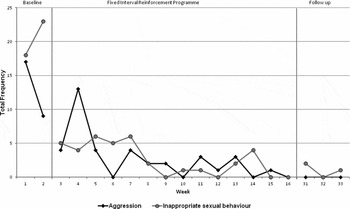
A behavioural intervention was put in place shortly after admission, to help AK manage the risk created by symptoms of NBD by reinforcing behaviour incompatible with aggression and inappropriate sexual behaviour (see Wood & Alderman, Reference Wood and Alderman2011). AK was given the opportunity to earn a point every for every 15-minute period during the day in which he did not exhibit physical assaults on other people, touching others and non-cooperation. He was given feedback regarding his behaviour at these times every 15 minutes: if he had earned his point, he was given social praise; if he had not, he was given specific information for the reason(s) for this. The clinical team negotiated a tangible reward that AK had access to at the end of the day if he had earned a minimum number of points. The reinforcer he chose was a favourite game with a member of staff. Information about the programme was put on his bedroom wall and he was encouraged to record his success in a diary he maintained to help circumvent memory impairment.
AK responded well to the behavioural programme. Figure 1 shows there was a marked reduction in the total frequency per week of aggression and sexually inappropriate behaviour. This success enabled AK to progress with his wider rehabilitation. Initially this was ward-based, but as control over his challenging behaviour grew, it was extended into the community. He also attended a vocational programme that further increased his independence, attending a horticulture workshop where he undertook small gardening tasks. After 6 months the reduction in symptoms of NBD was such that he was able to progress to a smaller community-based rehabilitation unit.
Reduction in the total frequency/week of AK's aggression and sexually inappropriate behaviour following introduction of a 15-minute fixed-interval reinforcement programme.

Case 2
RF sustained a TBI at the age of 25 which included demonstrable lesions to anterior brain structures. Additionally, he had a pre-morbid history of mental health issues. Following TBI, RF's presentation changed. He was described in reports as being irritable, impulsive and displaying a range of challenging behaviours which included aggression and sexual disinhibition. As a consequence, RF could not be maintained independently in the community and subsequently had numerous admissions to psychiatric inpatient services.
Five years after sustaining TBI, RF was admitted to a neurobehavioural rehabilitation service. This was the first time he had contact with a service specialised to meet the needs of people presenting with severe behaviour disorders arising as a consequence of neurobehavioural disability. The principal reason for admission was RF's aggression, which included verbal and physical aggression towards objects and other people. He also engaged in self-harm, and frequently made sexually explicit comments and touched others.
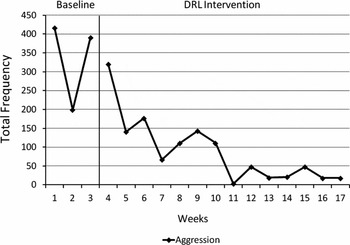
On admission, exhibited aggressive behaviour was captured using the OAS-MNR. In the first week of admission, 416 incidents were recorded, including verbal aggression, self-harm and physical aggression towards objects and others. Neuropsychological assessment indicated that RF's general cognitive functioning fell below the average range, his memory was poor and he had gross difficulties in executive functioning. Speed of information processing was also poor on testing and he was noted to have specific impairments regarding attentional control. At interview and through responses to various questionnaire measures, RF demonstrated poor awareness and insight regarding both his cognitive difficulties and his aggressive behaviour.
In addition to incidents of aggression being recorded on the OAS-MNR, the clinical team also rated RF using the SASNOS (Alderman et al., Reference Alderman, Wood and Williams2011) in order to obtain a comprehensive overview of the extent of symptoms associated with NBD. Ratings were generally well below those made regarding neurologically healthy controls. The subdomain of ‘overt aggression’ was especially highlighted in the context of ratings that reflected increased irritability, provocative behaviour, difficulties in inhibiting behaviour and poor interpersonal relationships, especially social interaction and engagement with others.
Assessment resulted in a formulation that suggested aggression was driven by irritability; however, impairment of attentional skills, reduced ability to monitor his own actions and low awareness regarding his behaviour resulted in RF failing to make attempts to inhibit any arising urge to be aggressive.
As a consequence, an intervention based on operant principles was implemented to reinforce behaviour incompatible with aggression while also helping circumvent neurocognitive factors that helped maintained it. Alderman and Knight (Reference Alderman and Knight1997) described applications of three major variants of differential reinforcement that can help people with ABI to recognise which behaviours result in some form of reward and which do not. An intervention using one of these variants, Differential Reinforcement of Low rates of responding (DRL) was initially employed to reduce verbal aggression and physical assaults of other people, the most frequent and severe manifestations, respectively, of RF's aggressive behaviour disorder. A DRL programme operates on the principle of rewarding successively lower incidence of whatever behaviours are targeted, and is especially indicated when the frequency of these are high; however, this intervention has also been advocated as useful with people whose neurocognitive impairment results in reduced self-awareness, a factor that contributes to maintenance of some challenging behaviours (Alderman & Knight, Reference Alderman and Knight1997). Initially, a target is set which, using baseline recordings, is unlikely to be exceeded by the patient, so he or she experiences success with the programme from the start, thereby helping to harness motivation to engage. With this success, the target number of behaviours not to exceed is gradually decreased.
In RF's case, OAS-MNR records were reviewed and used to set a readily achievable initial target number of aggressive behaviours not to exceed in order to obtain a monetary reinforcer agreed beforehand with the clinical team: 20 per 15-minute period. However, in order to circumvent neurocognitive impairments resulting in poor attentional control, self-monitoring and reduced awareness, the DRL intervention was further modified to include giving RF immediate verbal and visual feedback each time he engaged in a target behaviour. Provision of immediate feedback in this way through the consistency and structure of a behavioural programme has been noted previously to make a major contribution in providing an environmental ‘prosthetic’ that subsumes some of the executive functions primarily undertaken by anterior brain structures (Alderman, Reference Alderman, Wood and McMillan2001; Wood & Alderman, Reference Wood and Alderman2011) – in RF's case reduced ability to attend to relevant cues and monitor his own behaviour. Provision of cues in this way was noted to interrupt aggressive behaviour, facilitate RF's self-awareness of his conduct, and gradually increased the likelihood of him exerting inhibitory control. RF's progress on the programme was frequently reviewed with him using graphical outputs from the OAS-MNR data. He was noted to become very motivated through his success with the programme.
The initial target not to exceed was reduced from 20 to 10 aggressive episodes per 15-minute period after 1 week; this further reduced, commensurate with increased behavioural control, until the expectation was that no aggression should occur (at this point the DRL programme effectively became a ‘Differential Reinforcement of Incompatible’ or DRI intervention). As RF's aggression continued to decrease; he was able to access aspects of his rehabilitation that his behaviour had previously prevented. Figure 2 clearly demonstrates the efficacy of the programme in helping RF to reduce the frequency of aggressive incidents, to the extent that after week 17 he moved on within the care pathway to a unit with less overt structure and a greater emphasis on community/vocational rehabilitation. This was able to take place because of the increased control he acquired over his aggression and challenging behaviour, which continued to be maintained using the DRI programme.
Use of DRL to increase RF's self-awareness of his behaviour and reduce the total frequency/week of aggression.

Summary and Conclusions
Symptoms of NBD as a sequela of ABI are associated with poor prognosis; aggression is a particularly severe disabling factor. Lack of standardised operational definitions of what constitutes ‘aggression’ has led to uncertainty regarding prevalence, but there is good evidence that aggressive behaviour disorders are a serious legacy of ABI for some people, so intervention is essential.
This article has presented some of the principal issues from the literature which considered prevalence, causes and rehabilitation of aggressive behaviour disorders associated with ABI. It has also debated the merits of intervention, the information that should be harvested, and how, in the assessment of such disorders. Collection of good-quality information is essential in order to create a hypothesis about behaviour that, in turn, drives treatment. Interpreting data through an appropriate conceptual framework, and in the light of what is known from the literature, will further enhance this process. Behaviour has primarily an organic or neurocognitive basis, but is shaped further by other factors, including the environment. The multivariate origins of ABI aggression confirm that there is no single ‘one fix’ solution and further highlight the need for detailed, individual assessment.
Treatment follows formulation, and is subject to constant evaluation and modification as required. Many treatments have been proposed, and the major approaches have been considered here briefly. Insufficient large-scale randomised control studies are available to underpin effectiveness of pharmacological approaches in the management of ABI aggressive behaviour disorders. There is a similar lack of evidence for CBT, but formal evaluations published in the literature may be subject to too rigorous inclusion/exclusion criteria. Nonetheless, the multivariate origins of ABI aggression and presence of neurocognitive impairment challenge application of CBT to the extent that it has been used successfully with other clinical populations. In contrast, there is a good evidence-base for the efficacy of behavioural approaches for reducing ABI aggression. These include contingency management methods and, more recently, PBS interventions, especially in the management of aggression amongst people with ABI living in the community.
In conclusion, several interventions are available for the management of ABI aggressive behaviour disorders. More evidence for these, gathered using appropriate scientific methodologies, is required to further clarify what works, with whom, and for what type of aggression. The need to conduct a proper analysis to get the best formulation and treatment is fundamental to success. Again, this process must be balanced against the need to do something to reduce risk, especially when managing physical aggression. Input from skilled, experienced practitioners will increase the likelihood of arriving at a reliable formulation in the shortest time. Such clinicians are embedded in neurobehavioural services, but the need highlighted over a decade ago by McMillan and Oddy (Reference McMillan, Oddy, Wood and McMillan2001) to increase such resources remains outstanding. More ABI behaviour consultants need to be trained so the challenge of aggression exhibited by people with ABI in forensic, residential and community settings can adequately be met.