


Introduction
There have been increasing calls to ‘scale-up’ evidence-based psychosocial interventions like cognitive behaviour therapy (CBT) and family interventions (FI) in low- and middle-income countries (LMICs) (Patel et al., Reference Patel, Saxena, Lund, Thornicroft, Baingana, Bolton and Eaton2018) given the high rates of mental disorders and associated disease burden within their populations (Murray et al., Reference Murray, Vos and Lozano2012). In terms of schizophrenia, approximately 41.7 million people in LMICs are in need of treatment, with a majority in Asia (70%) (Mari et al., Reference Mari, Razzouk, Thara, Eaton and Thornicroft2009). The discrepancy between what treatment is needed and what treatment is available, or the ‘treatment gap’, has been the focus of the large-scale global mental health (GMH) movement (Patel et al., Reference Patel, Saxena, Lund, Thornicroft, Baingana, Bolton and Eaton2018; p. 1566). Proponents of the movement highlight inequities due to the social determinants of health which ‘include a range of social and economic factors that influence the mental health of populations, such as structural social and economic arrangements’ (Patel et al., Reference Patel, Saxena, Lund, Thornicroft, Baingana, Bolton and Eaton2018; p. 1566). In LMICs, structural challenges include lack of a trained workforce, paucity of mental health policy, laws and legislation, limited allocation of financial resources to mental health, and poor infrastructure (Rathod et al., Reference Rathod, Pinninti, Irfan, Gorczynski, Rathod, Gega and Naeem2017). For example, in Pakistan only 0.4% of the total health spending is allocated to mental health (World Health Organization, 2018) and the cost of treatment falls on patients and their families.
Despite the focus on psychosocial interventions (Patel, Reference Patel2014) and social determinants of health (Patel et al., Reference Patel, Saxena, Lund, Thornicroft, Baingana, Bolton and Eaton2018) the GMH movement has been critiqued for advocating a symptom-focused, biologically oriented, and individualistic (versus family or community oriented) evidence base that was developed in high-income countries where local contexts, and structural and cultural considerations differ significantly (Cosgrove et al., Reference Cosgrove, Mills, Karter, Mehta and Kalathil2020; Jacob, Reference Jacob2011; Whitley, Reference Whitley2015). Additionally, at the community level, low levels of accessing formal mental health services may be due to people in LMICs accessing care through non-formal or traditional routes of healing (e.g. faith healers) that are more aligned with their explanatory models of understanding psychosis (see for example Burns and Tomita, Reference Burns and Tomita2015; Gureje et al., Reference Gureje, Abdulmalik, Kola, Musa, Yasamy and Adebayo2015). These routes often provide them with recovery or wellness strategies in alignment with their values, rather than interventions like CBT or FI which they may not believe are culturally aligned (Rathod et al., Reference Rathod, Kingdon, Phiri and Gobbi2010; Read and Doku, Reference Read and Doku2012).
In the context of Pakistan, there have been a few studies that have examined patients’ explanatory models of illness (Naeem et al., Reference Naeem, Habib, Gul, Khalid, Saeed, Farooq and Kingdon2016). Awan and colleagues (2017) used the Short Explanatory Model Interview (SEMI) to interview 103 patients with a diagnosis of schizophrenia at a hospital in Peshawar and found that the most frequently cited cause of illness was supernatural, with several patients also attributing their condition to spiritual reasons and stress. In line with their causal explanations, approximately 50% of the patients visited spiritual healers for treatment. Other studies have focused on South Asian immigrant populations (including immigrants from Pakistan) and concurred that non-biological, supernatural, relational (e.g. previous wrongdoing) and social factors are more likely to be cited as causes for psychosis (Bhikha et al., Reference Bhikha, Farooq, Chaudhry, Naeem and Husain2015; McCabe et al., 2003; Rathod et al., Reference Rathod, Kingdon, Phiri and Gobbi2010). However, these studies also found such explanatory models do not preclude individuals or families from seeking symptomatic relief through mainstream or medical sources of care.
Thus, instead of focusing on promoting ‘insight’ or acceptance of a Western biomedical/biopsychosocial model for understanding psychosis, there is a need to adapt interventions like CBT and FI in ways that are based on cultural and local priorities (e.g. valued goals and social roles), social considerations (e.g. stigma) and culturally relevant explanatory models. Consistent with the critique of the GMH movement, within the research literature, most interventions are based on Eurocentric epistemological assumptions or explanatory models and fall short of accounting for understandings of culture that are fluid and context-dependent (Cooper, Reference Cooper2016). Interventions that are not culturally sensitive can lead to higher drop-out rates and poorer outcomes (Rathod et al., Reference Rathod, Kingdon, Smith and Turkington2005; Rathod et al., Reference Rathod, Kingdon, Phiri and Gobbi2010; Rathod et al., Reference Rathod, Gega, Degnan, Pikard, Khan, Husain, Munshi and Naeem2018). Additionally, across LMICs there is important cross-cultural and within-culture heterogeneity in attributions for psychosis. This warrants a focus on an emic or culturally specific perspective (Yang et al., Reference Yang, Chen, Sia, Lam, Lam, Ngo, Lee, Kleinman and Good2014) in developing interventions or modifying existing interventions.
The present study focused on eliciting an understanding of the way individuals with psychosis, their carers, and health care professionals, typically view psychosis, its origin, and management to inform the development of culturally and locally informed adaptations of evidence-based interventions like CBT and FI to make them more acceptable and relevant.
Method
Study design
The study adopted an over-arching qualitative methodology informed by an ethnographic approach (Richie and Lewis, Reference Richie and Lewis2003). This approach to data gathering allowed focus on understanding the perspective of people participating in the study within their cultural context (Spradley, Reference Spradley1980). Recognizing the sensitive nature of the topic explored, cutting across mental illness, culture and religion, and the vulnerability of individuals and caregivers, in-depth face-to-face semi-structured individual interviews with participants were performed.
Study centres
The study was conducted with participants attending the department of psychiatry at a mental health rehabilitation centre, Hope Fountain House in the metropolitan Muslim-majority city of Lahore, Pakistan.
Study participants
Participants were recruited from three groups, namely.
-
(1) Individuals with diagnosis of schizophrenia/schizoaffective disorders or psychosis with a need for or experience of psychological interventions.
-
(2) Family members such as parents, siblings or offspring, actively involved in the care of patients with a diagnosis of schizophrenia or psychosis.
-
(3) Mental health practitioners (MHPs) with experience of working with patients diagnosed with schizophrenia or psychosis. This group included a mixed workforce in the healthcare services with varying levels of training.
Sampling and recruitment
Purposive targeted sampling (Palinkas et al., Reference Palinkas, Horwitz, Green, Wisdom, Duan and Hoagwood2015) was adopted to recruit the study participants. Sample size was determined pragmatically by three considerations, as follows:
-
(1) Likely number of informants required to gather meaningful data (see Krueger, Reference Krueger1994; Merton et al., Reference Merton, Fiske and Kendall1990; Stewart and Shamdasani, Reference Stewart and Shamdasani1990).
-
(2) Extent to which data were saturated and no ‘new information’ was being generated.
-
(3) Availability of participants from the ethnic groups concerned.
Recruitment of participants
The local mental health team at Hope Fountain House recruited participants. The consultants identified individuals with an established diagnosis of schizophrenia/schizoaffective disorders or psychosis. Participants were given information leaflets outlining the study. Patients were approached only after their consultant psychiatrist had given permission. Written informed consent was obtained from participants before the interviews were conducted.
Inclusion criteria
Eligible participants met the following inclusion criteria:
-
Diagnosis of schizophrenia/schizoaffective disorder or psychosis as per the DSM-5 criteria (with at least 6 months since diagnosis) OR first degree relatives living with individuals with schizophrenia/schizoaffective disorders or psychosis for at least 6 months OR MHP from private or government sectors involved in care of individuals with schizophrenia/schizoaffective disorders or psychosis.
-
Out-patients to the service/family members or MHP receiving or delivering services.
-
Ages between 18 and 65 years for individuals with the diagnosis, and 18 years or above for carers.
-
Willing to participate in the interview and have notes made and/or be audio-recorded.
-
Had capacity to consent and capability to understand the interview.
Exclusion criteria
Exclusion criteria were:
-
Severe illness that affected mental capacity or markedly affected their ability to participate in interview, e.g. very thought-disordered or distressed by symptoms.
-
Individuals who, in the opinion of the key worker, would become distressed by the interview.
-
Primary diagnosis of drug and alcohol use.
-
Caregivers with a diagnosis of severe drug abuse, physical or learning disability/illness or diagnosed with any type of psychological disorder that would affect their mental capacity to consent or participate in the study.
-
MHP not working with patients diagnosed with schizophrenia or psychosis.
-
Not agreeing to consent.
Data collection and analysis
A total of 45 interviews were facilitated by a clinical psychologist in Lahore, using the participants’ native language, Urdu. Data collection commenced on 26 January 2020 and temporarily paused during the COVID-19 pandemic; the last interview was completed on 9 June 2020. Interviews were conducted at a time and place convenient to the participants. All interviews were securely audio-recorded and transcribed. Transcripts were coded and anonymized. Transcripts were later translated to English with support of local professional translators. Access to data was limited to the research team.
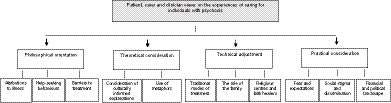
The data were analysed using reflexive thematic analysis (Braun et al., Reference Braun, Clark, Hayfield, Terry and Liamputtong2019). Analysis involved the researchers immersing themselves in data by reading and re-reading the interview transcripts carefully, identifying, and conceptualizing themes or patterns derived from participants’ open-ended verbatim datasets (Braun et al., Reference Braun, Clarke, Hayfield and Terry2019). Accordingly, Brulé and Finnigan (Reference Brulé and Finnigan2020) argue that this process expresses the meanings and representations held by the participant as interpreted by the researcher. The codebook (Barrett et al., Reference Barrett, Gonsalvez and Shires2020) collated verbatim material and interpretive notes, grouped by provisional themes and subthemes, with definitions for each subtheme (to avoid overlap), and illustrative quotes (following Howitt, Reference Howitt2013). We constructed codes/themes within a pre-defined classification system (Rathod et al., Reference Rathod, Kingdon, Pinninti, Turkington and Phiri2015; Fig. 1), focusing on the ‘philosophical orientation’ and ‘practical consideration’ categories.
Map of themes on caring for individuals with psychosis using the cultural adaptation framework.

NVivo 10 (computer-assisted qualitative data analysis software) was used in the first instance to manage and explore the qualitative data in-depth. Following the initial review of transcripts, a sample of codes and identified themes were independently reviewed by a qualitative methodology expert and two members of the research team. This was primarily to conduct a validity check to ensure that the themes generated by the researcher were from the raw data to increase inter-rater reliability (Burr, Reference Burr2015). Verbatim excerpts from the raw data are included in the Results section, not only to support identified themes but also to allow the reader to make their own interpretation of results.
Results
Final sample and demographics
Overall, the dataset consisted of 45 participants recruited into the study as follows:
-
(i) Individuals with a diagnosis of schizophrenia/schizoaffective disorder or psychosis (n=15);
-
(ii) Carers (n=15);
-
(iii) MHPs (n=15) from a single site in Lahore.
Face-to-face individual semi-structured interviews were conducted in Urdu, their native language.
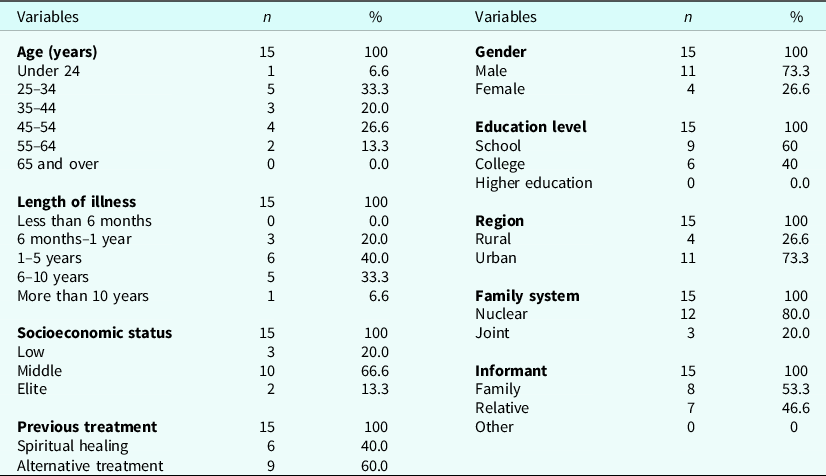
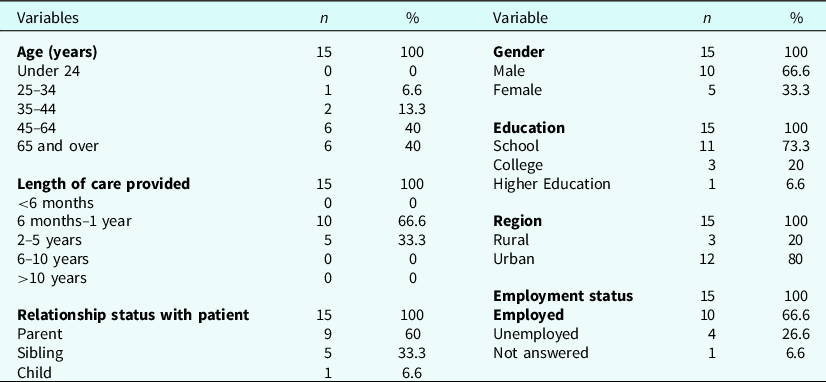
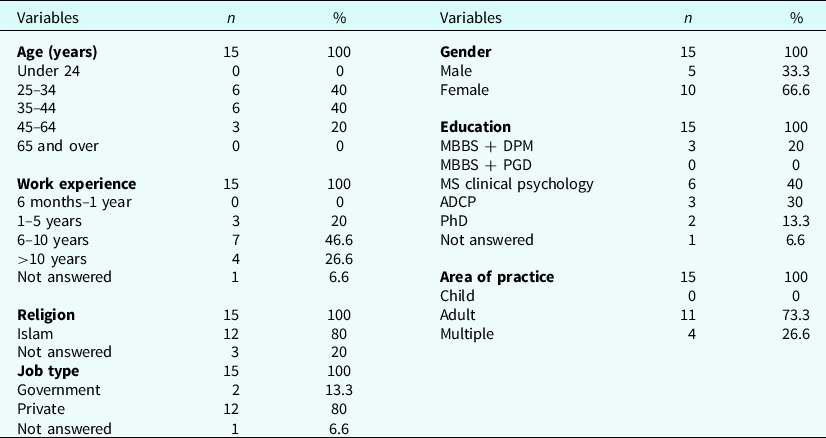
Tables 1A–C present the demographic characteristics of the participants.
Demographic characteristics: individuals with a diagnosis of schizophrenia or psychosis

Demographic characteristics: carers

Demographics characteristics: mental health practitioners (MHPs)

MBBS, Bachelor of Medicine and Bachelor of Surgery; DPM, Doctor of Podiatric Medicine; PGD, Postgraduate diploma; MS, Masters; ADCP, Advanced Diploma in Clinical Psychology; PhD, Doctorate of Philosophy.
Themes
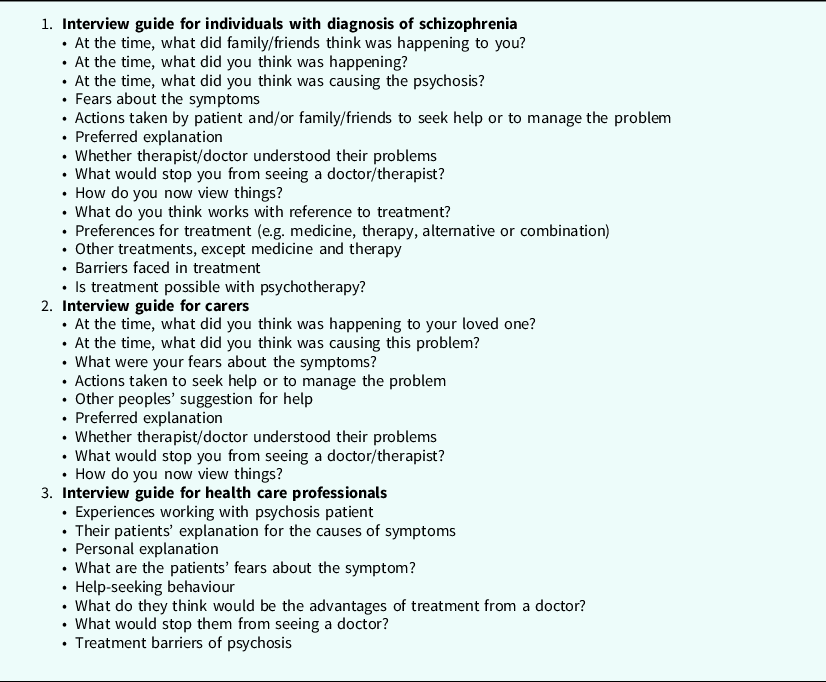
The interview guide for face-to-face interviews with study participants is outlined below in the Appendix (Table A1). The guide used the philosophical orientation and practical consideration categories of the cultural adaptation framework developed by Rathod and colleagues (Rathod et al., Reference Rathod, Kingdon, Pinninti, Turkington and Phiri2015). Narrative examples or verbatim quotations from the interviews conducted are provided to illustrate the findings.
Philosophical orientation
Attributions to illness (health beliefs or explanatory models of mental illness in particular schizophrenia or psychosis)
The following themes describe the way in which Pakistani participants explained causes of schizophrenia or psychosis-related disorders. The interview schedule included questions such as: What did you think was happening at the time?; At the time, what did you think was causing the problem?; and What do you believe causes such issues – supernatural/destiny/jinns/previous sins/biological/genetic?
Table 2 reports attributions to psychosis by group – explanatory models of what causes mental illness, particularly psychosis. Patients and carers were relatively similar overall. They did not name the illness (i.e. ‘psychosis’ or ‘schizophrenia’) and very few related the cause to mental health in general. Both patients and carers recognized abnormal behaviour such as frequent hand washing ritual (as possibly associated with obsessive-compulsive disorder (OCD)/anxiety) but did not recognize this may be a precipitating and perpetuating factor or symptoms of mental illness. One patient and a carer referred to schizophrenia.
Attributions to psychosis by group

The more + symbols present the strength of the theme as mentioned.
The key discussions centred on the following attributions.
Supernatural beliefs
Patients and carers endorsed multiple health beliefs simultaneously. For instance, they stated psychosis was related to ‘wrongdoing’ (i.e. sins and punishment); ‘destiny/fate’, social factors such as educational or family pressures/expectations, and supernatural causes. Both patients and carers frequently cited sociocultural causes for illness, particularly supernatural beliefs such as Black Magic, Jinn (possession) and spells by someone – usually a relative or other known person – who was deemed to be jealous of them or was taking revenge for a rejected marriage proposal. The following quote illustrates that these beliefs were commonly held by other community members as well:
At that time, we were unable to understand his situation because we were not aware of the psychiatric issues. We think someone had done magic on him and we took him to spiritualists in this regard. We visited many spiritualists for two years, but he did not recover. We were really worried about him and don’t know what to do with him … We think it was due to supernatural powers because once he had slept under the tree in a village. We thoughts maybe he got ill due to Jinn. We were not clear about it. Some people said he is a victim of magic and some people said he is possessed with demons and witches. [Carer 14]
Interestingly though, MHPs did not typically endorse supernatural beliefs and unlike patients or carers, they seemed to understand that families’ attributions varied as a result of factors like educational status or geographical location (rural versus urban).
Religious attributions
Religious attributions for psychosis were typically described by patients and carers as punishment for sins or by some, as fate associated with religion such as on Shab-e-barat Footnote 1 night. Some attributed the cause of illness to avoidance of religious activities or punishment for not respecting the religion.
At that time, I felt that something bad is happening to me. I did not know what is going wrong for me. I was suspicious about my sister as she left me here in the … I was involved in illegal sexual activities, as my friends were also involved in sexual activities. Due to these sins, I just developed fear in my heart. [Patient 1]
One MHP also suggested that past sins did play a role in the cause of illness:
According to my opinion, many factors involved in psychosis like social factors, biological factors and psychological factors. The religious factors and guilt of sins are also main factors of illness in psychosis. [MHP 13]
Attributions to social factors
All three groups (patients, carers and MHPs) identified similar social factors as a cause of mental illness. For patients this included educational and financial difficulties, for carers it was primarily the breakdown of relationships, and for MHPs it was financial struggles and family conflicts. The following quote highlights association of psychosis to stress resulting from educational pressures:
I failed in my 10 class and before that I was a brilliant student. The guilt of not passing my class leads extreme stress, in start I use to wash my hands a lot and later on I became victim of hallucinations. The voices disturb me a lot but with passage of time I got recovered … The whole problem started because of my restlessness and lack of sleep and guilt of not passing the exam. [Patient 11]
Attributions to psychological and genetic factors
MHPs were much more likely to highlight the importance of untreated, or delayed treatment for mental and psychological difficulties such as obsessive-compulsive disorder (OCD), depression and anxiety. They were also more likely to mention the role of genetic factors. However, they placed a significant emphasis on the interplay between social, psychological and genetic factors. One MHP, similar to individuals with psychosis and carers, mentioned ‘wrongdoing’ and two MHPs noted the ‘lack of insight’ or knowledge concerning mental health:
Firstly, I think it’s a genetic cause and we cannot ignore the psychosocial too, because our country situation is not so good, we are developing country and people expectation are very high and when they did not achieve their goals and become depressed and due to lack of awareness of stress, they go toward psychosis gradually. [MHP 14]
Some patients attributed mental illness as resulting from physical factors such as restlessness, lack of sleep and aggression:
No, I think this is happening because of my restlessness. I don’t believe on supernatural powers … The whole problem started because of my restlessness and lack of sleep and guilt of not passing the exam. [Patient 11]
Help seeking behaviours and pathways
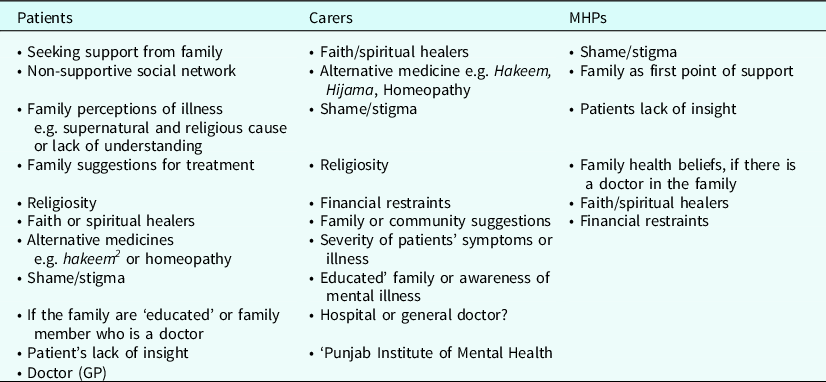
See Table 3 for a summary of factors influencing health-seeking behaviours and pathways. For most patients, the family decided on the initial steps to seeking help. Perceived cause for illness influenced avenues for management and treatment of patients. In addition, suggestions from other relatives and neighbours influenced by shame and stigma in the community were moderators to help-seeking behaviours and pathways. Patients and carers reported being multi-faceted in their help-seeking behaviours, for instance using alternative medicine, non-medical care providers such as traditional spiritual or faith healers, or a combination of both. Use of spiritual or faith healers was associated with religiosity such as recitation of Islamic verses from the Quran. Alternative treatments included traditional or cultural help such as herbal remedies from the Hakeem Footnote 2 as well as homeopathy or Hijama Footnote 3 treatment. Few respondents referenced visiting a doctor, which probably referred to a general practitioner (GP). MHPs suggested that patients’ lack of insight or understanding was associated with their choice of pathway. Findings suggest professional mental health treatment is often delayed in participants, whilst other traditional healing avenues are sought first.
Factors influencing health-seeking behaviours and pathways

Moderators influencing help-seeking behaviours from a patient perspective included family support and health perceptions, religiosity, faith/spiritual healers or alternative treatment followed by stigma. However, for family and carers, shame, stigma and religiosity were key. In addition to the above, the MHPs identified lack of insight and level of education as key moderators.
When asked about help-seeking behaviours and pathways, the respondents identified the following: (1) religious or faith healers (sometimes referred to as ‘Rohani treatment’ Footnote 4 delivered by ‘Maulvi’ Footnote 5 , ‘Pir’ Footnote 6 (Peer), ‘Fakirs’ Footnote 7 or ‘Murshad’ Footnote 8 ); (2) Hakim (or Hakeem); and (3) homeopathy. Respondents were thus more likely to seek treatment from traditional healers before approaching formal mental health services. Religious and faith healers relied mainly on psychotherapeutic methods of prayers and ‘Dam Darood’ Footnote 9 as a treatment of mental illness or to ward off evil spirits. Hakims and homeopathy practitioners mainly prescribed physical treatments such as majon (i.e. paste), whilst Hijama draws out ‘bad’ blood from the body. Very few patients and carers identified doctors or hospital as first choice. This was echoed by MHPs who reiterated the role of spiritual and faith healers as first choice preference for both patients and carers.
I had taken treatment from a hakim, his medicine disturbed me a lot but usually I took proper treatment from the doctors. I had also visited spiritual healers. The spiritual treatment was also done and I felt better with it … I got help from masjid Footnote 10 molvi, he provided me Islamic verses to practice in case of my psychological issues. [Patient 3]
… Yes, my mamu said to take her to spiritualists and I had taken her to our family murshad for spiritual healings. He recommends some Ayat Footnote 11 of Quran. The Ayat really impacts her and we had continued both treatments… Yes, I told about mamu referral to spiritualist. [Carer 2]
In start, they did not go to the doctor for treatment, they do remedies, taweez Footnote 12 , and herbal treatment their last option is to go to the doctor. Sometimes, they continue spiritual treatment with the treatment of a doctor. [MHP 12]
Barriers to treatment
Opinions regarding treatment
Seven respondents highlighted that psychotherapy was an acceptable treatment option, and helpful in that it provided clarity and understanding with its ‘clear-cut’ explanations. Furthermore, they believed psychotherapy would be acceptable in combination with another form of treatment, including faith-driven treatment. It was acknowledged that faith healers often recommended patients and carers seek psychiatric and psychological treatment. Most participants reported a positive experience during their engagement with mental health services and related feeling better, more positive and optimistic. Thirteen patients preferred talking therapy in conjunction with medication. One service-user also suggested intravenous treatments (drips) as helpful. Religion was reported to have a positive influence in treatment. MHPs emphasized the role of psychoeducation to help families manage and support patients. Table 3 highlights respondent’s treatment preferences and choices. The following quotes illustrate the benefits of mental health services and talking therapies:
I feel good due to my treatment with psychotherapy. Before that I had no insight about my illness. Now I am quite stable … Doctors and psychologists are greatly understanding me and I have no issues in this regard … I think psychologists help me a lot in my treatment … Now I am stable and want to spend a healthy life … I will prefer combination of medicine and psycho-therapy. [Patient 4]
I am thankful to peer shab who recommend us treatment of psychiatry. We feel satisfaction with psychologist explanation and doctor also guide us about impact of medicine very well … They were very cooperative towards us really. They told us how to take care about medicine and what type of behaviour is required with him … Things are quite better now, he is stable and cooperative. We pray to ALLAH Footnote 13 to maintain his health. We hope for best in future. [Carer 1]
The advantage of treatment is that family will be aware of the treatment format and recovery phase. The psychoeducation of family is important in this regard. The other important thing is also the psychoeducation of the patient, because it leads to better outcomes in treatment. [MHP 15]
Barriers to CBT and interventions for psychosis
When participants were asked what barriers they faced in treatment, most patient respondents identified lack of insight into illness, whilst some mentioned shame and stigma. At least six patients suggest a lack of insight or awareness of mental health. This was derived from comments such as ‘I was not in my sense’ [Patient 4], ‘had no awareness’ [Patient 8], and ‘out of my senses’ [Patient 14]. This is despite their responses describing what would usually indicate a potential deterioration in mental health. Respondents also suggested a ‘lack of awareness’ as a causal factor consequently resulting in other non-medical beliefs. The following verbatim statements highlight this:
I was very aggressive at time and I had fear from my own self, I was not in my senses and had no awareness about my illness… I don’t know the reason of illness and in Fountain House I just want to go to home. I feel like prisoner in this centre in start. But now I am bit satisfied about my treatment. [Patient 7]
In start she was aggressive in start and become threatening. She was too much irritable. She became disturbed suddenly. I don’t know the reason of her illness. She was washing her hands a lot. She is still not recovered, and I am really worried about her. Sometimes she laughs a lot and also talk with own self. She also reports about the voices. Voices orders her to do odd things. [Carer 3]
Due to lack of awareness, patients become victim of different type of false belief. They do not know about their illness. [MHP 12]
They don’t prefer to see a doctor because they believe they don’t need treatment and if they go to a doctor, they will get the label of psychotic patient and also, they have to get medicines … The biggest barrier in treatment of Psychosis is the “lack of awareness” in our society. When the patient shows minor symptoms, their family members or near ones don’t take them and their abnormal or unusual behaviour serious, until they developed severe symptoms. [MHP 4]
Carers and MHPs also highlighted financial implications and a general lack of awareness or understanding regarding mental health. The following verbatim statements illustrate barriers identified by respondents.
Stigma is a barrier to accessing treatment. For example, the unease of describing what may be judged negatively as well as impacting medicine compliance as illustrated below:
I face no major barrier in my treatment, but I feel the guilt of being dependent and useless. My family bear my expenses and I feel bad about it. [Patient 15]
We came to know about his psychiatric illness, we were afraid of the reaction of society and relatives. He was already notorious in neighbors due to behavioral issues. We feel bad due to his issues. Even when he came back from rehabilitation center people disturb him by saying that you were living in a mental asylum. We are facing financial issues as well. All siblings collect money for his treatment… The behavior of society is disturbing because they did not accept our patients. Last time he was stable and also taking medicine but due to bad comments of neighbors he got disturbs and left medicine. [Carer 14]
Many people did not accept that they have some behavioral issues because they did not expose himself, they fear they will be labelled, people will not cooperate with such people so we should as professional counsel them about the disease and enable them to spend their life in society. [MHP 14]
Practical considerations
Fear and expectations
We identified themes relating to patient and carers’ fears about symptoms and expectations from others regarding recovery. MHPs were also asked about what they thought their patients feared about their symptoms. The themes are stated in order of strength. Five key themes emerged: no fear, relapse, threat to self or others, stigma, and diminished ability to function, continue to live an ordinary life able to work and able to get married. Patients mostly reported no fear of relapse and were less concerned about being a threat to self and others. On the other hand, carers more often reported fear of relapse and threat to self or others. In contrast, MHPs suggested that their patient’s main fear was stigma and diminished ability to function because of symptoms and inability to meet expectations. The following are illustrative quotes from each category of respondents:
I have so many good friends, but I am worried about them that they shouldn’t leave me alone. I don’t want relapse because after recovery I just get my friends back in my life. The important thing was that they start to understand about my illness. I feel anxiety of relapse. [Patient 4]
He is quite better and don’t listen the voices now. The fear is about the relapse of her symptoms. We don’t him to become ill again really. [Carer 4]
Related to his/her symptoms the patient feel anxiety. They have fear of being labelled. They feel fear to move in society because they have also fear of stigmatization. They thought that people will mock by seeing them. They feel fear of rejection in society. [MHP 2]
Stigma and discrimination
Patients, carers and MHPs highlighted that mental illness was associated with being perceived as ‘mad’ by members of their wider community, which resulted in some avoiding mainstream services and presenting only when there was a crisis.
If you are healthy, there is no need to visit the doctor. The stigma to get labelled as mad refrain them from visiting the doctor. When you visit the psychiatrist or live in any rehabilitation centre it labels you as mad and society does not accept you as a normal person again, although a person is stable on medicine. [Patient 15]
Well, there is no hurdle except neighbours, as neighbours stigmatized our patient. They call him mad and my brother said that, I will not visit the psychiatrist because people usually call me mad. [Carer 4]
Stigmatization and labelling are major factors that are stopping them to see the doctor. As what will society say? Society does not understand mental illness… Patients and their families face many difficulties regarding this. Many families hide mental illness because they worry what people will say about it; in this way they delay the treatment of the disease. Many families and patients have no awareness about the mental illness. [MHP 10]
Financial and political landscape
The interviews did not generate any information under these sub-themes.
Discussion
The aim of this study was to elicit Pakistani patients’, carers’ and mental health practitioners’ experience, views and opinions of psychosis to inform culturally relevant and adapted treatment. Overall, the results indicate that patients and carers endorsed multiple attributions for psychosis simultaneously. This included key themes such as supernatural beliefs, religious attributions, social factors, lack of insight or psychological understanding of mental health; physical factors such as a lack of sleep; and genetic factors. Supernatural and religious attributions to developing psychosis resonated with patients and family/carers more strongly than MHPs who were more likely to emphasize the interaction between biopsychosocial, relational and religious factors.
Interestingly, an area of convergence between all three groups was attributing psychosis to social factors such as high expectations and stressors associated with living in a developing country. Additionally, all groups endorsed that shame and stigma related to psychosis had an influence on help-seeking behaviours which is consistent with the study of Naeem et al. (Reference Naeem, Habib, Gul, Khalid, Saeed, Farooq and Kingdon2016), where MHPs in particular talked about the negative effects of stigma on accessing care. Carers highlighted unusual behaviours related to diagnostic categories like OCD and anxiety, but did not recognize or acknowledge the potential relationship to psychosis.
The findings on service-user attributions to psychosis reiterate other research findings, which indicate that patients and families from non-Western cultures are more likely to explain psychosis as a result of supernatural rather than biological causes (McCabe and Priebe, Reference McCabe and Priebe2004; Rathod et al., Reference Rathod, Kingdon, Phiri and Gobbi2010). In other low-income countries such as India or Morocco, participants also attributed symptoms of schizophrenia to supernatural factors, drug abuse and stressful life events (Kadri et al., Reference Kadri, Manoudi, Berrada and Moussaoui2004).
In the present study, the most frequently mentioned causal factors for mental health illness were phenomena, like spirits (i.e. Jinn), Black Magic, and other religious concepts. Faith-based explanations included previous wrongdoing (i.e. sins), lack of faith (denoted by not praying regularly) and, to some extent, fate or God’s will. Given the centrality of spirituality and religiosity in making sense of psychosis, these findings suggest that individuals in Pakistan may have better experiences and therapeutic engagement with mental health services if there could be an integration or consideration of patients’ spiritual, supernatural and religious beliefs in treatment. Traditionally in the literature, religion has been criticized for its negative impact. For instance, it has been suggested that religion drives guilt, obsessive behaviours and psychiatric disorders (Watters, 1992, cited in Durà-Vilà et al., Reference Durà-Vilà, Hagger and Leavey2011). However, there is growing recognition of the potential helpfulness of spiritual explanations for psychotic experiences as highlighted in this study. For instance, McCarthy-Jones and colleagues (2013) highlight the benefits of alternative meanings in terms of their ability to provide a greater sense of comfort and control, access to coping or wellness strategies, increased social support, and encouragement of forgiveness which may be a cause for stress and thus mental health symptoms. Therefore, spiritual explanations can be mobilized to harness ‘cultural healthcare strategies’ (Sodi and Bojuwoye, Reference Sodi and Bojuwoye2011). Similarly, Johnson and colleagues (2012) found in a South Indian sample that non-medical, supernatural and externally oriented illness explanatory models provided patients with culturally accepted mechanisms of coping with the disabling effects of schizophrenia. Similarly, the findings from this study indicate that faith or a belief in a higher power like God may provide a coping mechanism that promotes optimism and positive thinking in the face of adversity. Such mechanisms can also be activated by adapting evidence-based interventions in culturally consonant ways. Naeem and colleagues (2015a, 2015b, 2015c) incorporated a culturally adapted CBT intervention for those with depression in Pakistan by including a spiritual dimension in formulation, understanding and the therapy plan, and by using folk stories and examples relevant to the local population’s beliefs.
Another significant attribution for psychosis endorsed by all three groups was social factors. In this study this was predominantly family-related stresses, relational, academic stresses and expectations (Srinivasan and Thara, Reference Srinivasan and Thara2001, cited in Awan et al., Reference Awan, Zahoor, Irfan and Naeem2015) indicating that family interventions could be helpful.
The primacy of supernatural and religious beliefs of mental illness is further highlighted in patient and carers’ help-seeking behaviours. Thus, cause and concept concerning psychosis appears directly relational to treatment choice (Rathod et al., Reference Rathod, Kingdon, Phiri and Gobbi2010). As has been described elsewhere, explanations and understanding of mental illness is a key moderator that influences the initial choice of non-medical or psychological treatments by patients in Pakistan (Zafar et al., Reference Zafar, Syed, Tehseen, Gowani, Waqar and Zubair2008). In the present study, participants described seeking treatment first from spiritual healers such as ‘Pirs’ and accessing alternative treatment types such as homeopathy before approaching more Western-oriented professional mental health services. In fact, some faith healers were the ones who referred their patients to seek professional psychiatric help. In addition to treatment choice being influenced by health beliefs, other impacting practical factors include financial implications, advice from family and friends, and fear of shame. Community or public stigma attached to mental illness is a repetitive universal barrier to accessing care and leads to internalized negative beliefs or self-stigma (Corrigan, Reference Corrigan2016). Families make attempts to cover up mental illness to avoid being exposed and having their lives impacted negatively. Similarly, Cinnirella and Loewenthal (Reference Cinnirella and Loewenthal1999) reported that the Muslim Pakistani participants in their study indicated both a fear of community stigma and the act of seeking help. This can result in delayed professional help from mainstream mental health services, non-compliance, and relapse (Rathod et al., Reference Rathod, Kingdon, Phiri and Gobbi2010).
Limitations
The following methodological limitations are important to note:
Sample bias. Pakistan is divided into four parts based on ethnic backgrounds. The participants interviewed in this study are affiliated with one mental health service in the Pakistan province of Lahore, a metropolitan city. Other major districts were not represented. Pakistan is a diverse country with several ethnic and religious groups, and should not be considered homogenous. It is possible that patients, carers and MHPs in other parts of the country will have different experiences. Furthermore, the gender representation of participants was unequal – the majority of patients and carers were males (n=11 and n=10, respectively) and educated only to school or college level whilst MHPs were mostly females (n=10).
Language and communication. It is important to consider language, with respect to the way in which questions were asked, including translation of psychological concepts and the translation of transcripts from Urdu to English. In addition, non-Pakistani researchers conducted the analysis and so faced some difficulty when interpreting some of the speech and meaning in the transcripts for analysis purposes. However, this limitation was mitigated by the presence of experienced researchers from Pakistan on the team as well as discussions with the team in Pakistan which helped facilitate better understanding.
Research and clinical implications
Implications of current findings
The findings drawn from this project have practical relevance and implications for the overall concept of, or approach to, delivering culturally informed and adapted psychosocial interventions like CBT or FI to the local population in Pakistan. Pakistani patients and carers interpreted psychotic symptoms and experiences within a cultural, spiritual and religious framework, and first sought help from faith leaders. This exposes significant issues in relation to the accessibility, acceptability and appropriateness of current Western, Eurocentric interventions developed in high-income countries. Culturally adapted CBT and other evidence-based interventions that consider families’ explanatory models of illness are more acceptable and lead to better outcomes, making such interventions more appropriate. Such adaptations also account for patients and families who are varied in their levels of education and attributions of psychosis, offering flexibly tailored interventions.
This paper suggests changes are needed in traditional Western understanding that underpin much of the theory and practice of psychiatry and psychology, often excluding cultural diversity and other groups of people. There is a particular need for adaptations to interventions and developing:
-
cultural, religious, and spiritual competencies;
-
understanding health beliefs and religious attributions;
-
seeing help-seeking pathways as parallel to their traditional non-allopathic treatment;
-
the notion of collectivism instead of individualism;
-
the role of the family both as support and potential barrier to accessing care;
-
the impact of societal shame and stigma impeding early access to professional help.
Collectively, consideration of the preceding issues can help culturally inform and improve therapy. The principles articulated above may also be applicable to MHPs involved in psychotherapy or CBT/FI work with minority populations in the UK or elsewhere.
In this study, and in line with other literature, participants primarily attributed spiritual and religious causes for the onset of illness (Rathod et al., Reference Rathod, Kingdon, Phiri and Gobbi2010). In developed countries, social factors are usually the most important causative factors for mental illness (Kadri et al., Reference Kadri, Agoub, Assouab, Tazi, Didouh, Stewart, Paes, Toufiq and Moussaoui2010). In some cultures, the solution to the problem tends to sit within the parameters of traditional and faith-based healers. Furthermore, some individuals from eastern cultures like Pakistan downplay individualism in preference of a collectivistic, community and family system (Awad and Ladhani, Reference Awad and Ladhani2007). People in South Asian cultures may therefore behave and think with respect to their families and communities rather than only themselves. There are also pragmatic considerations – family may be the only safety net that patients have, particularly in countries like Pakistan where government support is minimal and the incidence of shame and stigma in the community is high (Gopalkrishnan, Reference Gopalkrishnan2018). Although Western models of care recognize the importance of family involvement, they are more likely to focus on individuals and view families as over-involved or interfering (Naeem et al., Reference Naeem, Gul, Irfan, Munshi, Asif, Rashid, Khan, Ghani, Malik, Aslam, Farooq, Husain and Ayub2015a, Reference Naeem, Phiri, Munshi, Rathod, Ayub, Gobbi and Kingdon2015b, Reference Naeem, Phiri, Munshi, Rathod, Ayub, Gobbi and Kingdon2015c).
The nature of the community and the notion of collectivism, as well as the significance of family members, can have significant implications in delivering therapy. Consideration is required around the role and inclusivity of family or faith leaders in therapy and what they can, or cannot, bring to the treatment process. Rather than try to replace traditional practices, there is scope to utilize and draw on the help of what can be a positive resource. This can help better deliver mental health services through collaborations and partnerships with family or faith leaders to promote positive mental health and early professional engagement. As a means of overcoming barriers such as community stigma, mental health services may consider supporting patients at home or in places of worship where therapy may be more acceptable than in mental health centres. Alternatively, providing facilities within formal mental health systems that enable patients to express themselves spiritually or religiously may also be acceptable. For instance, Ng and colleagues (2012; p. 144) suggest, ‘integrating mental health services into primary health care is a highly practical and viable way of closing the mental health treatment gap in settings where there are resource constraints’ (cited in Gopalkrishnan, Reference Gopalkrishnan2018).
Even in circumstances where therapist and patients are from the same culture, the health practitioner still risks bringing their own ‘professional’ culture. As described in Rathod et al. (Reference Rathod, Kingdon, Phiri and Gobbi2010). MHPs should be encouraged to increase awareness and integration of cultural and religious explanations for psychopathology in their practice. In addition, the implementation of religion, e.g. Quran and Ayaats (i.e. verses of Quran), or Islamic traditions or sayings can encourage acceptance and change of circumstances. Refraining from conversations of religion, culture, spirituality and social factors such as marriage and family expectation may also negatively affect the therapeutic alliance, as well as overlook possible coping mechanisms. Acknowledging cultural and religious beliefs can be an effective way to engage and facilitate change.
Research implications
Based on our findings, a range of possible research implications are recommended. Firstly, further in-depth research is required with a bigger sample size of participants to delve deeper into understanding the subjective experiences of South-Asian populations and those from minoritized communities living in the West, and address limitations of generalizability and sample bias in this study. Secondly, community engagement initiatives and events are required to bring together both affected and non-affected members of the South Asian and/or Muslim community with mental health services and professionals in order to share information and experiences, and tackle stigma and discrimination. Thirdly, there is an opportunity for joint work or partnership with faith leaders. For example, religious centres may be able provide safe spaces for therapy. Finally, clinical trials are needed to develop effective and evidence-based culturally adapted CBT and spiritually guided psychoeducation and family interventions, or, in other words, a bio-psycho-social-spiritual approach to care. To address these findings, a combined effort is required from professionals of multiple disciplines including policy-makers, researchers, mental health services and third sector services.
As the Muslim population continues to rapidly increase all over the world (Pew Research Centre, 2020), meeting their mental health needs and providing culturally appropriate interventions in the West is also essential. Findings from this research suggest two important components for a culturally adapted CBT: (1) to integrate cultural values and spirituality into psychotherapy and (2) joint partnership with family and faith leaders through community engagement and spiritually guided psychoeducational family interventions tailored to local values, goals and culture. This could develop under-served populations’ understanding and insight of mental health, highlight to practitioners specific mental health needs, and provide patients and carers with better and more appropriate interventions.
Findings in this study show that families in Pakistan can have a significant impact on the course of patients’ mental health including attributions, treatment decisions or pathways and illness outcomes. In the West, the family tends to be replaced by social workers and care coordinators taking the lead role in many people’s lives. Thus, there may be an opportunity to positively involve family and faith leaders by empowering them to provide cultural competency training for MHP; but also, for MHPs to provide them with training to recognize mental illness, manage illness and to educate communities to tackle stigma. Further research is needed to establish whether findings and recommendations are cost-effective and applicable across high- and low- and middle-income countries.
Conclusion
Similar to other studies in the literature review, the findings from this study suggest that Pakistani participants and carers from a centre in Lahore lean more towards cultural explanations of mental health experiences. Their explanatory models incorporate sociocultural and religious factors; for example, supernatural beliefs and faith-driven practices. Consequently, they may seek help from traditional spiritual healers and alternative treatment modalities. They avoid mental health services in fear of community shaming. To address this, modification to Western theory and practice is required that takes into account cultural epistemology of theories of knowledge. The study findings should be considered in the context of their methodological shortcomings around generalizability. However, this should not detract from efforts and contribution of this study to help develop psychotherapy for South-Asian or Muslim populations. This relatively small-scale project requires further robust research – testing a more culturally appropriate therapy and enabling easy accessibility in developing countries. Such therapies should also be compared with standard therapies in terms of their treatment outcomes and cost-effectiveness.
Key practice points
-
(1) We consider the cultural explanatory models of illness when working with patients from different cultures without stereotyping.
-
(2) We address the effects of internalized stigma and shame with patients and families.
-
(3) We should develop person-centred bio-psycho-social-spiritual formulations with patients and families.
-
(4) We should incorporate local priorities and values (e.g. marriage and academic success as values outcome) when using concepts like the Stress Vulnerability model.
Data availability statement
The authors will consider sharing the dataset gathered upon request.
Acknowledgements
We would like to thank all the participants and team at Fountain House, Lahore for their support.
Author contributions
Shanaya Rathod: Conceptualization (equal), Formal analysis (equal), Methodology (equal), Supervision (equal), Writing – original draft (equal), Writing – review & editing (equal); Afzal Javed: Funding acquisition (equal), Methodology (equal), Project administration (equal), Resources (equal); Rehmina Iqbal: Investigation (equal), Project administration (equal), Writing – review & editing (equal); Ayaat Al-Sudani: Project administration (equal), Writing – review & editing (equal); Akansha Vaswani-Bye: Investigation (equal), Methodology (equal), Writing – review & editing (equal); Imran Haider: Investigation (equal), Methodology (equal), Project administration (equal), Resources (equal), Writing – review & editing (equal); Peter Phiri: Investigation (equal), Supervision (equal), Writing – review & editing (equal).
Financial support
This study was not funded.
Competing interests
Dr Rathod has received educational support from Janssen, Otsuka, Lundbeck, Boehringer, Viatris and has also attended an advisory board for Boehringer. Dr Phiri has received a research grant from Novo Nordisk, an educational grant from Queen Mary University of London, and other grants from John Wiley & Sons and Otsuka, outside of the submitted work.
Ethical standards
Ethics approval for the study was obtained from the ethics board at Hope Fountain House, Lahore. The authors have conformed to the standards of the Declaration of Helsinki.
Appendix
Interview guide for face-to-face interviews with study participants





Comments
No Comments have been published for this article.