Introduction
Helminth parasites transmissible between animals and humans under natural conditions are referred to as zoonotic helminths. They are generally classified into two phylogenetic groups: nematoda, which are commonly called roundworms (e.g. Ascaris, Toxocara, Trichinella spiralis), and platyhelminthes, which include cestodes (e.g. Echinococcus species, Hymenolepis nana, Taenia species) and trematodes (e.g. Fasciola species, Gongylonema pulchrum and Eurytrema pancreaticum). Infections are acquired principally through the consumption of contaminated pasture or tissues of infected animals, and direct skin penetration (Nejsum et al., Reference Nejsum, Parker, Frydenberg, Roepstorff, Boes, Haque, Astrup, Prag and Sorensen2005; Uysal et al., Reference Uysal, Boral, Metiner and Ilgaz2009).
Zoonotic helminths are associated with significant economic losses as a result of direct disease causation in humans and animals, which are manifested by sub-clinical, clinical infections and death. Indirect losses caused by these parasites are incurred through the cost of ensuring safety in the food chain (Torgerson, Reference Torgerson2013; Devleesschauwer et al., Reference Devleesschauwer, Ale and Torgerson2014). Major public health problems associated with zoonotic helminths of food-animal origin globally may include ocular and neuro-cysticercosis caused by metacestodes of Taenia solium, which is incriminated in the majority of cases of epilepsy in Africa (Diop et al., Reference Diop, de Boer, Mandlhate, Prilipko and Meinardi2003). Others are human hydatidoses, caused by members of the genus Echinococcus, as well as cutaneous, ocular and visceral larval migrans due to certain nematodes (Tamminga et al., Reference Tamminga, Bierman and de Vries2009; González et al., Reference González, Galilea and Pizarro2015).
Substantive evidence has shown that zoonotic helminths are endemic in humans in Nigeria (Dada, Reference Dada1980; Weka et al., Reference Weka, Ikeh and Kamani2013; Adedoja et al., Reference Adedoja, Tijani, Akanbi, Ojurongbe, Adeyeba and Ojurongbe2015; Odinaka et al., Reference Odinaka, Nwolisa, Mbanefo, Iheakaram and Okolo2015). The threat of these parasites to public health is on the increase in Nigeria, probably due to the absence of an effective food-control system, which is supposed to provide regulatory measures, monitoring systems and policies to ensure public-health protection, thus reducing the risk of food-borne illnesses and maintaining consumer confidence (Umoh & Odoba, Reference Umoh and Odoba1999; Omemu & Aderoju, Reference Omemu and Aderoju2008). The aim of the present study, therefore, was to harness epidemiological information, including endemic zoonotic helminths, published in Nigeria between 1970 and 2016, and to determine their prevalence and distribution across Nigeria. It is envisaged that this information will help in enacting disease-control policies, encourage on-farm good agricultural practices, and adequate hygiene and sanitation in abattoirs and meat-processing plants, with the aim of ensuring meat safety and thus protecting public health.
Materials and methods
Study areas
Studies included in this meta-analysis were carried out in Nigeria, a country situated in Sub-Saharan Africa between latitudes 4 and 14°N and longitudes 3 and 14°E, covering a surface area of 923,768 km2 (see supplementary fig. S1). Nigeria has two distinct seasons: the rainy and the dry seasons. While the rainy season runs from March to November in the southern region and from May to October in the northern region, the dry season runs from December to February in the south and November to April in the north (Iloeje, Reference Iloeje2001). The major occupation of its inhabitants is agriculture, particularly crop and livestock production.
Literature search strategy and data source
The present study conducted a systematic review based on the Preferred Reporting Items for Systematic Review and Meta-Analysis (PRISMA) guideline published by Moher et al. (Reference Moher, Liberati, Tetzlaff and Altman2009). Data from relevant studies were then meta-analysed to determine the prevalence and geographical distribution of zoonotic helminths in Nigeria. Inclusion of relevant information was based on the PRISMA checklist, and the infection of slaughtered food animals with zoonotic helminths was the outcome of interest.
Databases, including African Journals Online (AJOL), Google Scholar, Medline and PubMed, were systematically searched between December 2016 and May 2017 for literature on the subject of zoonotic helminths in slaughtered food animals. Several combinations, including zoonotic helminths of food animals, camels, cattle, goats, pigs and sheep, were employed during the search. Broader searches for zoonotic cestodes, nematodes and trematodes of livestock in Nigeria were also conducted. More specific searches for species of zoonotic helminths of livestock including, but not limited to, Ascaris suum, Dicrocoelium species, Eurytrema species, Fasciola gigantica, Moniezia expansa, Oesophagostomum species, Paramphistomum species, Strongyloides species and Toxocara species endemic in Nigeria, were also employed. Other keywords employed in the search were Nigeria, North-central, North-eastern, North-western, South-eastern, South-south, South-western regions, as well as the 36 states of the Nigerian federation. Reference lists of resultant publications were also screened to identify more studies.
Inclusion and exclusion criteria
Studies were first selected by scanning through titles and abstracts. Selected studies were further screened by detailed review of abstracts and full texts. Studies were considered for inclusion only if they fulfilled the following criteria: (1) published in English, (2) conducted between 1970 and 2016, (3) carried out within the Nigerian federation, (4) state of the Nigerian federation where the study was carried out was reported, (5) study design was cross-sectional or a prevalence study, (6) involved zoonotic helminths in slaughtered food animals as the outcome of interest, (7) number of cases and sample size were clearly provided, (8) method of diagnosis was clearly stated and (9) zoonotic helminths were identified at least to the genus level. Studies were excluded if they did not fulfil these inclusion criteria.
Extraction of data
Data extracted from the 42 eligible studies included: surname of first author for single-authored publications, surnames of both authors for studies authored by two persons and surname of first author, followed by et al. for studies authored by more than two people. Other data were: study design, sample size, number of cases, state and region of study, zoonotic helminths identified at least to the genus level, host, year of survey and publication, as well as method of diagnosis.
Data analysis
Data were first entered into Microsoft Excel for preliminary analysis and further transferred into Graph-Pad Prison Version 4.0 (https://www.graphpad.com/scientific-software/prism) and Comprehensive Meta-Analysis Version 3.0 (https://www.meta-analysis.com) for statistical and meta-analysis, respectively. The proportions of positive cases to sample sizes were expressed as percentages, to determine the prevalence of the individual eligible studies. The exact binomial confidence interval (http://statpages.info/confint.html) was employed to determine the 95% confidence interval (95% CI). Since the studies included in the meta-analysis were not from the same population, with varying sample sizes and diagnostic methods, it was assumed that the true-effect sizes might differ between studies and so the random-effects model was used to determine the pooled prevalence estimates of zoonotic helminths among food animals (Hedges & Vevea, Reference Hedges and Vevea1998). The percentage of total variation across studies due to heterogeneity was quantified using the formula I 2 = 100% × (Q − df)/Q, where Q is Cochran's heterogeneity statistic and df the degrees of freedom, which is equal to the number of studies minus one. Negative and zero values of I 2 were all considered as zero and I 2 values of 0%, 25%, 50% and 75% were considered as having no, low, moderate and high heterogeneities, respectively (Higgins & Thompson, Reference Higgins and Thompson2002; Higgins et al., Reference Higgins, Thompson, Deeks and Altman2003).
Results
Literature search and eligible studies
The selection process of eligible studies and the list of excluded studies are presented in supplementary fig. S2 and supplementary text S1, respectively. A total of 115 studies resulted from the search of databases (n = 86) and lists of references of articles (n = 29). Forty-eight duplicate studies were removed after screening titles. Twenty-five others were excluded because: (1) they were not abattoir-based (n = 13), (2) they did not report any zoonotic helminth (n = 2), (3) helminths were not identified at least to the genus level (n = 6), (4) method of diagnosis (serology) was not reliable for helminths (n = 2) and (5) numbers of positive cases and/or sample sizes were not clearly stated (n = 2). Finally, 42 studies were eligible and were included in the analysis.
Characteristics of the eligible studies
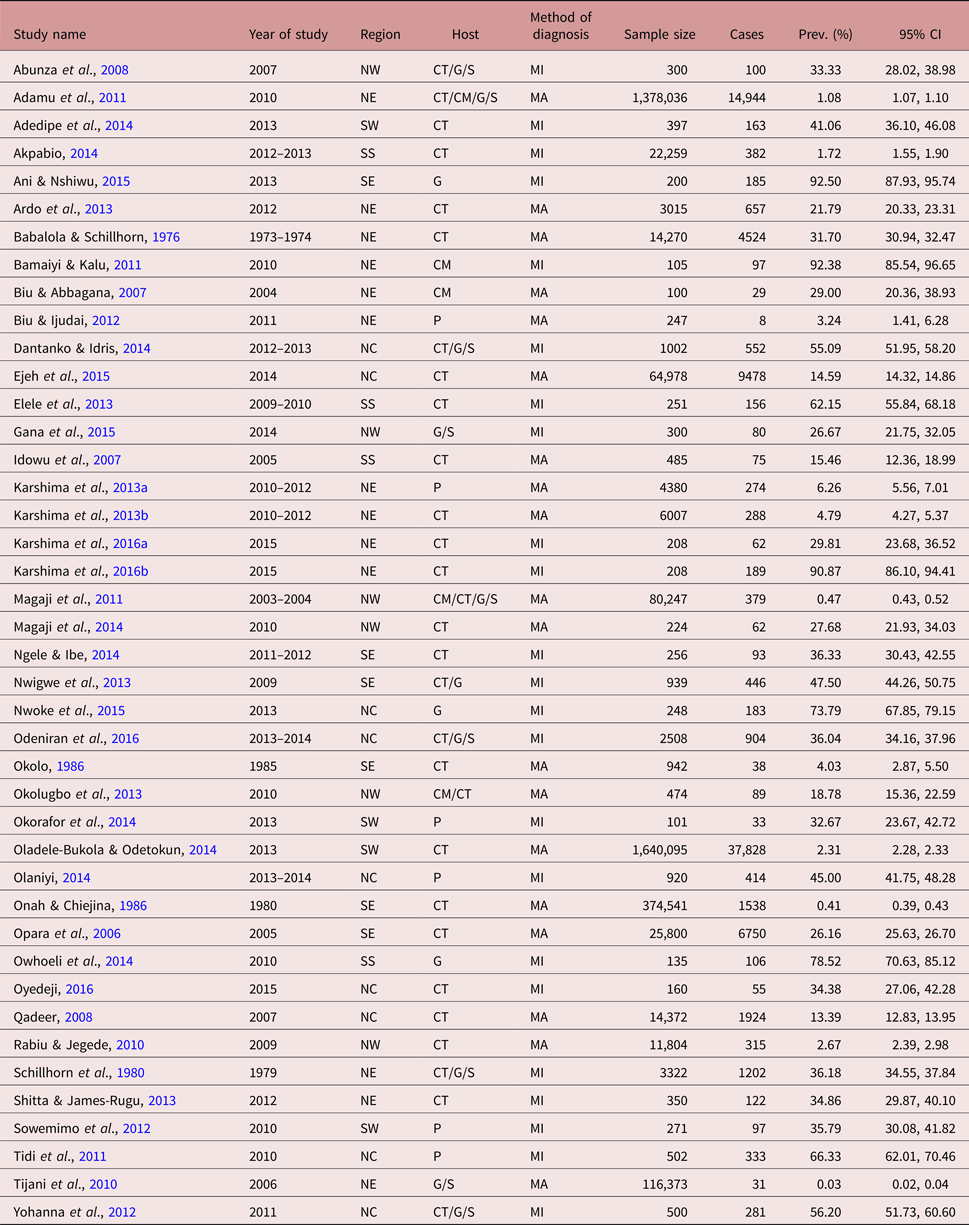
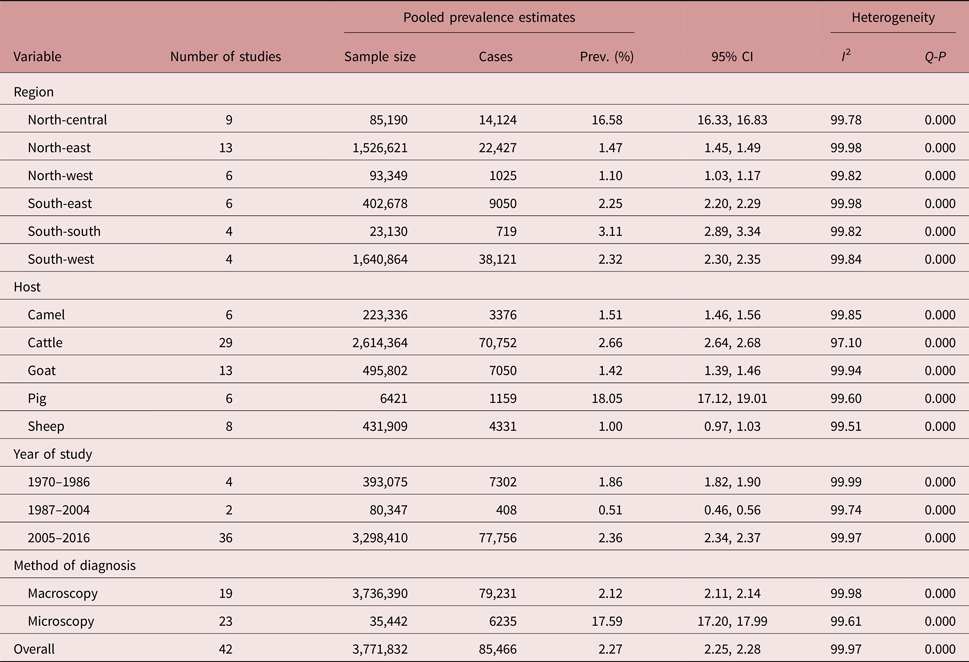
The list and characteristics of the 42 eligible studies included in the meta-analysis are presented in table 1. Eligible studies were carried out between 1973 and 2015 and published between 1976 and 2016. A total of 85,466 positive cases of zoonotic helminths were reported from 3,771,832 food animals slaughtered during the period under review. Nine and 13 studies were reported from north-central and north-east regions, respectively, six each from north-west and south-east regions, and four studies each from south-south and south-west regions. Six studies each reported zoonotic helminths in camels and pigs, while 8, 13 and 29 of the studies reported zoonotic helminths in sheep, goats and cattle, respectively. Four of the studies were carried out between 1973 and 1986, 2 between 1987 and 2004 and 36 between 2005 and 2015. Nineteen and 23 of the studies were diagnosed using macroscopy and microscopy, respectively (table 2).
List and characteristics of eligible studies included in the meta-analysis.

CI, confidence interval; CM, camel; CT, cattle; G, goat; MA, macroscopy; MI, microscopy; NC, north-central; NE, north-east; NW, north-west; P, pig; Prev., prevalence; S, sheep; SE, south-east; SS, south-south; SW, south-west.
Pooled prevalence estimates and heterogeneity analyses
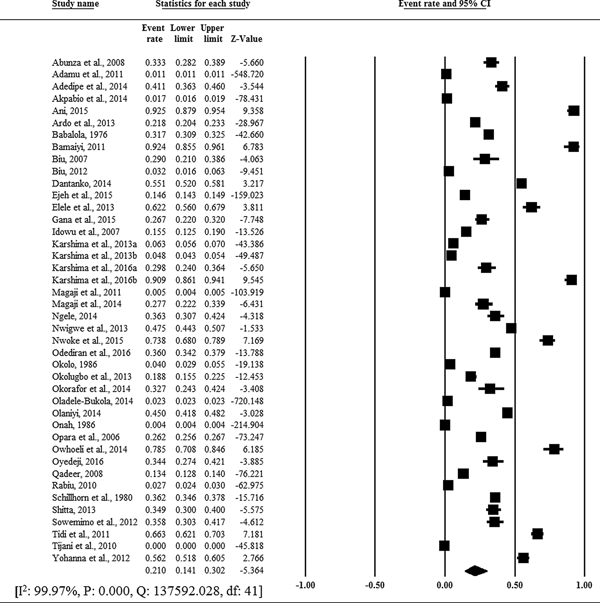
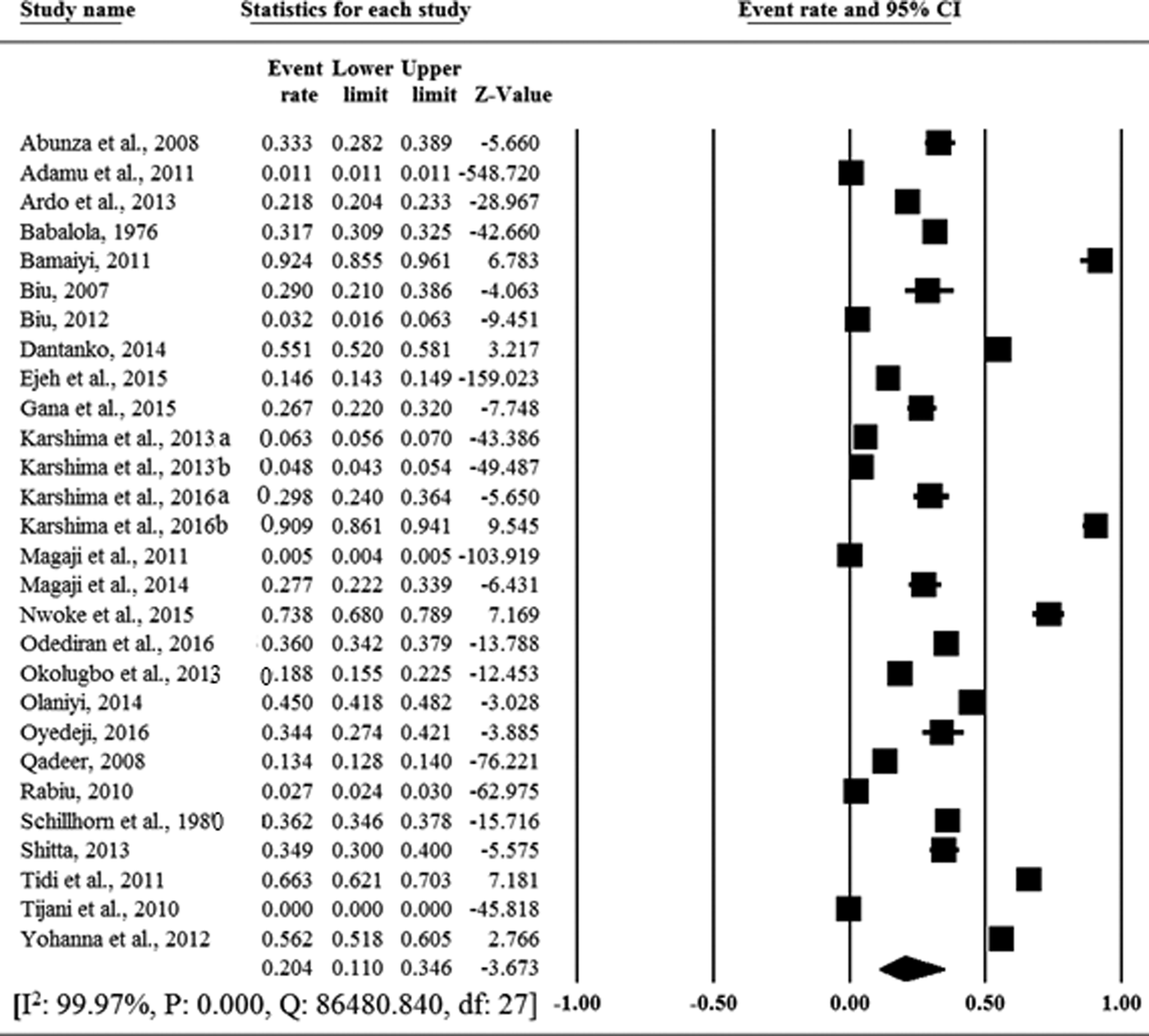
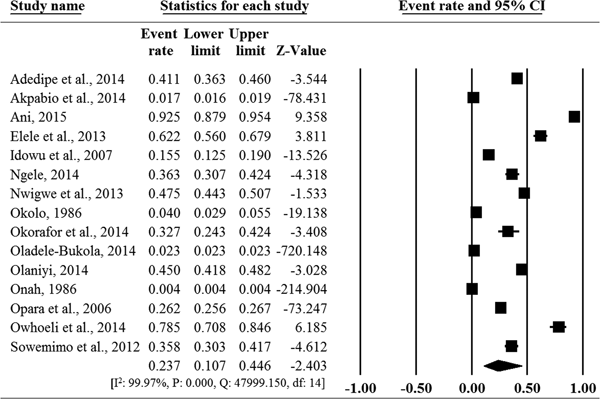
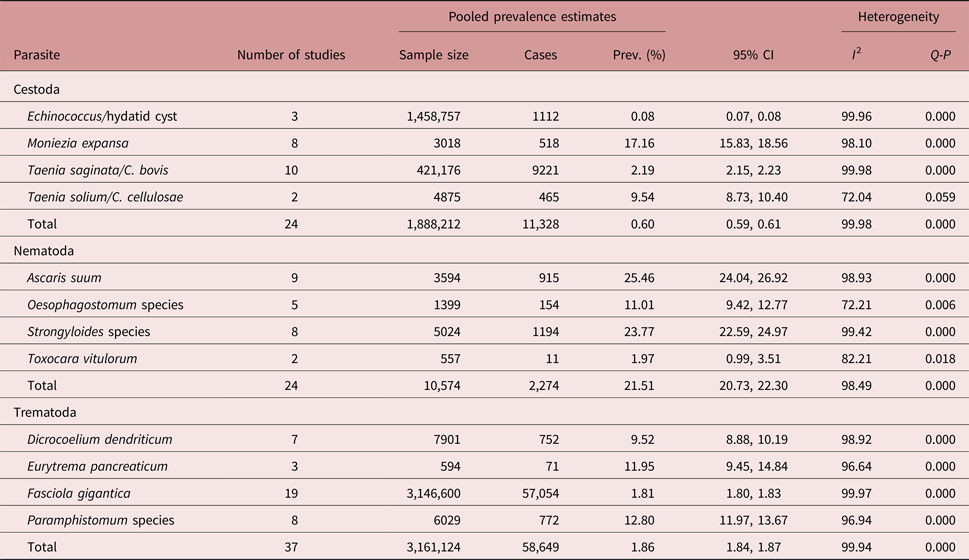
Pooled prevalence estimates and heterogeneities are presented in table 2, figs 1–3 and supplementary figs S3 and S4. An overall pooled prevalence estimate (PPE) of 2.27% (95% CI: 2.25, 2.28%) was observed from 42 eligible studies that reported 85,466 cases from 3,771,832 food animals slaughtered in Nigeria during the period under review. PPEs across the six geographical regions ranged between 1.10% (95% CI: 1.03, 1.17%) and 16.58% (95% CI: 16.33, 16.83%). PPEs for hosts ranged between 1.00% (95% CI: 0.97, 1.03%) and 18.05% (95% CI: 17.12, 19.01%). The PPEs ranges for survey dates and diagnostic methods were 0.51% (95% CI: 0.46, 0.56%) to 2.36% (95% CI: 2.34, 2.37%) and 2.12% (95% CI: 2.11, 2.14%) to 17.59% (95% CI: 17.20, 17.99%). Substantive heterogeneities ranging between 97.10% (95% CI: 2.64, 2.68%, P: 0.000) and 99.99% (95% CI: 1.82, 1.90%, P: 0.000) were observed within studies and sub-groups. Ascaris suum was the most prevalent helminth, with a prevalence of 25.46% (95% CI: 24.04, 26.92%), followed by Strongyloides species 23.77% (95% CI: 22.59, 24.97%), while Echinococcus species recorded the lowest prevalence of 0.08% (95% CI: 0.07, 0.08%) (table 3).
Forest plot for the prevalence of zoonotic helminths in slaughtered food animals in Nigeria. Only the first names of authors are given.

Forest plot for the prevalence of zoonotic helminths in food animals slaughtered in northern Nigeria. Only the first names of authors are given.

Forest plot for the prevalence of zoonotic helminths in food animals slaughtered in southern Nigeria. Only the first names of authors are given.

Pooled prevalence of zoonotic helminths in food animals stratified according to sub-groups.

CI, confidence interval; I 2, inverse variance index; Prev., prevalence; Q-P, Cochran's P value.
Pooled prevalence of zoonotic helminths in food animals stratified according to phylogenetic groups.

CI, confidence interval; I 2, inverse variance index; Prev., prevalence; Q-P, Cochran's P value.
Regional distribution of eligible studies and helminth species
A total of 42 studies reported zoonotic helminths in food animals slaughtered across Nigeria between 1970 and 2016. Nine (21.43%) of the studies were reported from the north-central region and were distributed as follows: Benue and Kogi, 1 study (2.38%) each; Abuja and Kwara, 2 studies (4.76%) each; and Plateau, 3 studies (7.14%). The distributions of the 13 (30.95%) studies reported from the north-east were as follows: Yobe, 1 (2.38%); Adamawa, 2 (4.76%); Borno and Taraba, 3 studies (7.14%) each; and Bauchi, 4 (9.52%). Of the 6 studies (14.29%) reported from the north-west region, 1 (2.38%) each was from Kaduna and Kano states and 4 (9.52%) were from Sokoto state. Another set of 6 studies (14.29%) reported across the south-east region were distributed as follows: Anambra, 1 (2.38%); Enugu, 2 (4.76%); and Ebonyi, 3 (7.14%). Four studies (9.52%) were reported in Rivers, south-south region, while 1 (2.38%) and 3 studies (7.14%), respectively, were reported from Ogun and Oyo states, south-west region, as presented in supplementary fig. S1.
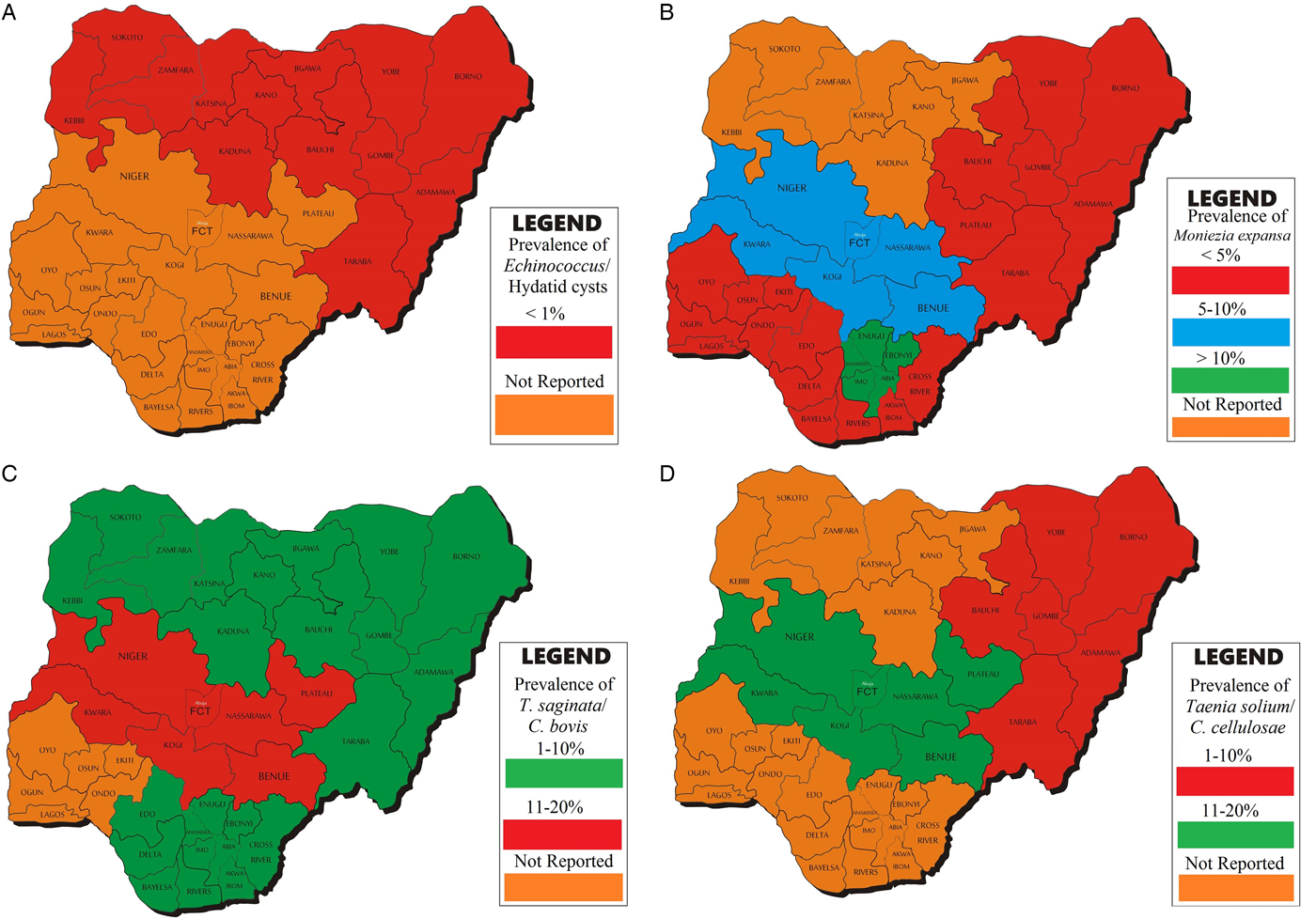
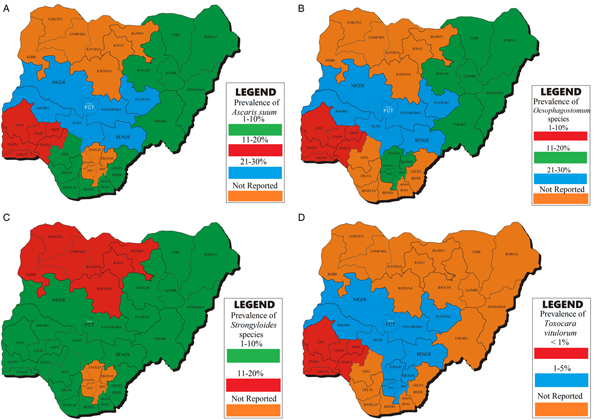
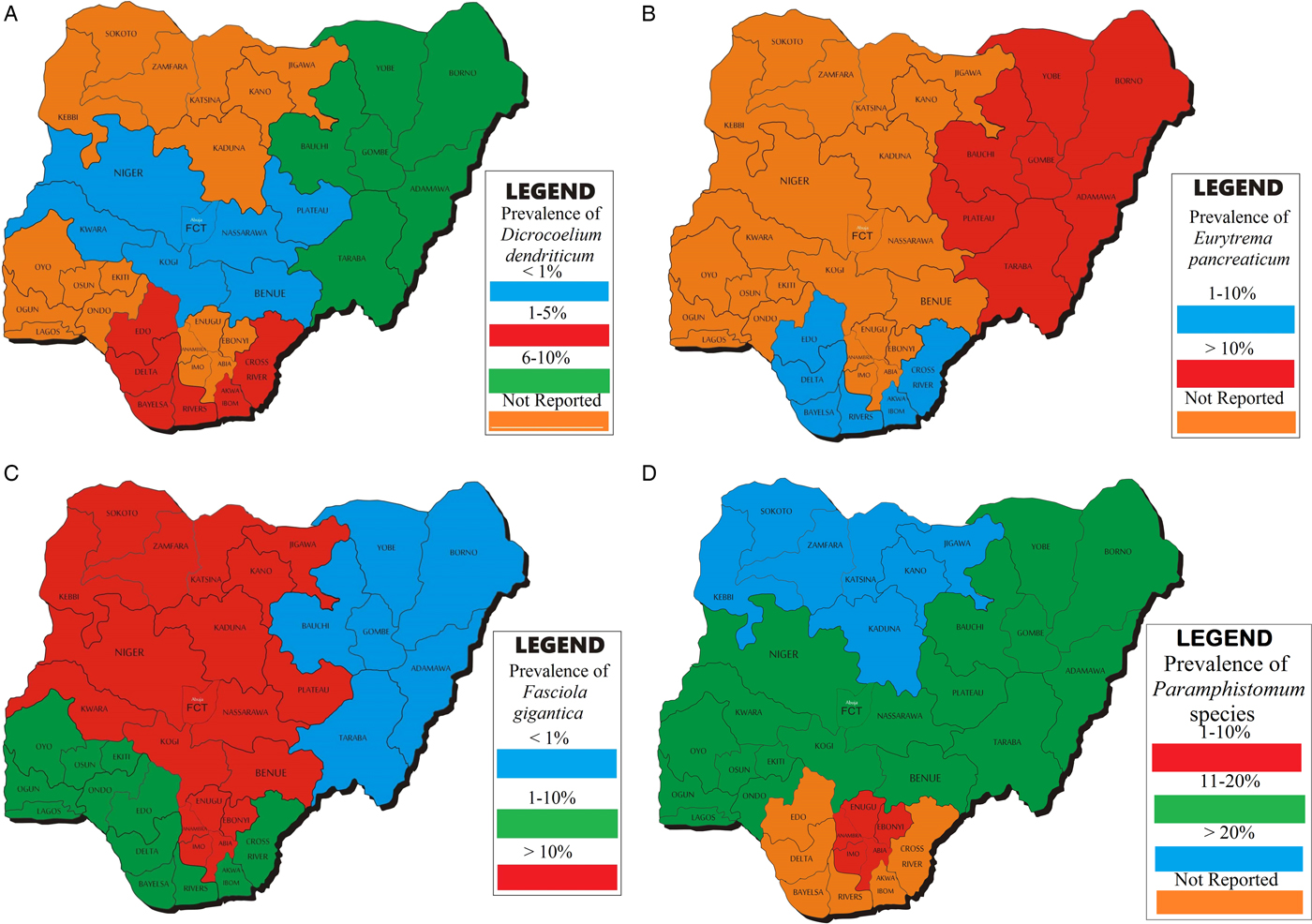
Fasciola gigantica, which was reported in 19 (45.24%) of the 42 eligible studies, had the widest geographical distribution. This was followed by A. suum, which occurred in 9 (21.43%) of the studies (table 3). Fasciola gigantica was the only species reported across the six geographical regions of Nigeria. This was followed by M. expansa, Paramphistomum, Strongyloides and Taenia saginata/Cysticercus bovis, which occurred in at least five of the regions. Echinococcus/hydatid cysts, which occurred in only one region, had the lowest regional distribution (figs 4–6).
Regional prevalence of zoonotic species of cestodes in slaughtered food animals in Nigeria.

Regional prevalence of zoonotic species of nematodes in slaughtered food animals in Nigeria.

Regional prevalence of zoonotic species of trematodes in slaughtered food animals in Nigeria.

Discussion
Knowledge of endemic helminths in a resource-limited country such as Nigeria is essential for their diagnosis, treatment and cost-effective control. In view of this, the present study, which provides epidemiological information on endemic zoonotic helminths in slaughtered food animals, their prevalence and distribution across Nigeria, was necessary to provide national data on these parasites, which were presently lacking. For this purpose, the study meta-analysed 42 published studies with 85,466 positive cases from 3,771,832 food animals, including camels, cattle, goats, pigs and sheep. To the author's knowledge, this meta-analysis is the first to report the prevalence and distribution of zoonotic helminths in slaughtered food animals in the entire Nigerian federation.
Results revealed an increase in the pooled prevalence of zoonotic helminths in food animals slaughtered for human consumption in Nigeria in recent times. This may be due to poor hygiene and sanitation, inadequacy of veterinary services, indiscriminate and open defecation by animals and humans, lack of effective policies on disease control, as well as uncontrolled importation of food animals from neighbouring countries, including Niger, Chad and the Republic of Cameroon, for slaughter in Nigerian abattoirs. This suggests the need to improve the existing control programmes for zoonotic helminths and to prevent uncontrolled importation of food animals.
The high prevalence among pigs may be explained by the omnivorous nature of this animal species, which might have resulted in the consumption of pasture contaminated with eggs or larvae of these parasites, tissues of infected animals or even human stools infected with these zoonotic helminths. The majority of Nigerian pigs are usually raised under extensive management systems, especially during the dry season when farm crops have already been harvested, and this may be an influencing factor for contact with these infections.
The north-central region recorded the highest prevalence estimate, which might be due to variations in environmental factors, including temperature, humidity, altitude and rainfall. Other human-related factors that might have contributed to this prevalence are inadequate knowledge of the risk of acquiring zoonotic helminths from food animals, poor agricultural practices on farms, lack of strategic de-worming of food animals (World Health Organization, 2002) and season of study (Brooker & Michael, Reference Brooker and Michael2007). Most of the studies (30.95%) documented in Nigeria during the period under review were in the north-eastern region, probably due to collapse of disease control programmes in the region as a result of political insecurity.
The literature showed that the zoonotic helminths reported in this study were also reported in slaughtered animals elsewhere (Theodoropoulos et al., Reference Theodoropoulos, Theodoropoulos, Petrakos, Kantzoura and Kostopoulos2002; Kabir et al., Reference Kabir, Eliyas, Mohiuddin and Miazi2010; Khanjari et al., Reference Khanjari, Bahonar, Fallah, Bagheri, Alizadeh, Fallah and Khanjari2014; Mhoma et al., Reference Mhoma, Kanyari and Kagira2014). The overall prevalence estimate observed in this study is higher than the 0.26% reported in Greece (Theodoropoulos et al., Reference Theodoropoulos, Theodoropoulos, Petrakos, Kantzoura and Kostopoulos2002). This prevalence is, however, much lower than the range of 23.3–81.3% reported in other resource-limited countries (Ntonifor & Ndaleh, Reference Ntonifor and Ndaleh2012; Ezatpour et al., Reference Ezatpour, Hassan, Azami, Mahmoud and Anbari2014). These variations may be attributable to differences in levels of hygiene and sanitation, as well as factors including temperature, humidity and soil moisture, which influence the survival of helminth eggs and larvae in the environment.
The high fecundity of helminths of the genus Ascaris and the sticky nature of the shell of their eggs, which increases their chances of attachment on pasture in grazing areas, may explain the higher prevalence of A. suum observed in the present study. Reports of Fasciola, Eurytrema and Dicrocoelium species in humans in other countries (Ishii et al., Reference Ishii, Koga, Fujino, Higo, Ishibashi, Oka and Saito1983; Jack et al., Reference Jack, Adusu and Jelinek2004; Le et al., Reference Le, De, Agatsuma, Nguyen, Nguyen, McManus and Blair2008; González et al., Reference González, Esteban, Bargues, Valero, Ortiz, Náquira and Mas-Coma2011) suggest that the presence of these parasites in food animals in Nigeria is a potential public-health threat.
Individual prevalence estimates for helminths of public-health importance, such as Cysticercus cellulosae (9.54%), C. bovis (2.19%), hydatid cyst (0.08%) and F. gigantica (1.81%) were all on the lower limits of the ranges of 0.7–34.4% (Porphyre et al., Reference Porphyre, Rasamoelina-Andriamanivo, Rakotoarimanana, Rasamoelina, Bernard, Jambou and Cardinale2015; Qekwana et al., Reference Qekwana, Oguttu, Venter and Odoi2016; Thomas et al., Reference Thomas, Harrison, Toye, de Glanville, Cook, Wamae and Fèvre2016), 0.16–77.3% (Otupiri et al., Reference Otupiri, Adam, Laing and Akanmori2000; Garedaghi et al., Reference Garedaghi, Saber and Khosroshahi2011; Fonteh et al., Reference Fonteh, Kouam, Zibi, Tjeega and Aidrou2016), 3.4–90.65% (Kabir et al., Reference Kabir, Eliyas, Mohiuddin and Miazi2010; Taghavi et al., Reference Taghavi, Mirzaei and Fartash2013; Mhoma et al., Reference Mhoma, Kanyari and Kagira2014) and 2.15–26.51% (Otupiri et al., Reference Otupiri, Adam, Laing and Akanmori2000; Yilma & Mesfin, Reference Yilma and Mesfin2000; Jean-Richard et al., Reference Jean-Richard, Crump, Abicho, Naré, Greter, Hattendorf, Schelling and Zinsstag2014), respectively, documented in other resource-limited countries. The fact that the prevalence rates reported in this study are pooled estimates of several studies may explain why they were at the lower limits of these documented ranges.
Mapping of individual helminth species shows that F. gigantica was the only species distributed across all the six geographical regions of the country. This may be attributed to the abundance of freshwater snail intermediate hosts, as is shown by published literature in Nigeria (Prasertphon, Reference Prasertphon1990; Okpala et al., Reference Okpala, Ajayi, James-Rugu and Emelike2010; Kalu et al., Reference Kalu, Kalu, Ukwe and Onyeuwu2012; Luka & Mbaya, Reference Luka and Mbaya2015), and the ability of one miracidum from a single Fasciola egg to produce 4000 infective metacercariae through vegetative multiplication (Uhuo et al., Reference Uhuo, Odikamnoro, Okafor, Ikeh, Ibiam, Oko and Nwuzo2013). Mapping also revealed a wide distribution of helminth species transmitted by arthropods (Moniezia, Paramphistomum), gastropods (Fasciola, Eurytrema), soil and pasture (Oesophagostomum, Strongyloides) and meat (C. cellulosae, cystic echinococcosis) across different regions of Nigeria. This finding is a clue that helminth control in Nigeria must adopt a more inclusive strategy, involving public education, hygiene and sanitation, strategic use of anthelmintics, rotational grazing and the control of arthropod and gastropod intermediate hosts.
Macroscopy (gross identification of parasites) and microscopy (the use of light microscopy) were the two methods employed by the individual studies analysed. While macroscopy was used for the identification of F. gigantica and cystic conditions caused by metacestodes during veterinary meat inspection in abattoirs, microscopy was used for the detection of eggs and larval stages of helminths. Current molecular techniques, which are highly sensitive and specific, are recommended for use in present research on helminths, for a better understanding of the epidemiology of zoonotic species of helminths in Nigeria.
The implications of this finding on public health are that some of the reported cases of human zoonotic helminth infections in Nigeria would have resulted from the consumption of these food animals. The association of C. cellulosae in ocular cysticercosis, neuro-cysticercosis and epilepsy, as well as hydatid cysts, and F. gigantica in liver injuries are particularly of great concern. The poor attitude of veterinarians towards veterinary meat inspection, the dilapidated state of Nigerian abattoirs, lack of standardized equipment for meat inspection and inadequate policies on disease control are possible factors that may influence transmission to humans in Nigeria.
This analysis revealed a high degree of heterogeneity between studies and even sub-groups, which may be due to variations in study designs, sample sizes, diagnostic methods and study populations of the eligible studies, among others. This implies that, despite the valuable epidemiological information provided by this analysis, it might not give a completely true picture of the prevalence of zoonotic helminths in the whole of Nigeria. The fact that other states of the Nigerian federation were not included in the meta-analysis, due to lack of literature on this subject or absence of inclusion criteria in published studies, also suggests that this may not be absolutely the true situation for Nigeria. Another limitation is that studies were unevenly distributed across the six regions of Nigeria and over time.
The present study revealed a low prevalence of zoonotic helminths in food animals slaughtered for human consumption in Nigeria. Fasciola gigantica had the widest geographical distribution, while A. suum was the most prevalent of all the zoonotic helminths. Although the highest numbers of cases were reported in the north-east, the north-central region recorded the highest prevalence of zoonotic helminths. The study also revealed: (1) that cattle may be the most important source of human zoonotic helminth infections; (2) an increase in the prevalence of zoonotic helminths in recent times; and (3) a high degree of heterogeneity between studies. Adequate zoonotic disease control policies, which ensure monitoring systems across the food chain, good agricultural practices, proper cooking of meat from food animals, adequate hygiene and sanitation, and attitudinal changes are recommended to ensure the wholesomeness of meat and to curtail the transmission of zoonotic helminths from food animals to humans.
Supplementary material
To view supplementary material for this article, please visit https://doi.org/10.1017/S0022149X18000196.
Financial support
This research received no specific grant from any funding agency, commercial or not-for-profit sectors.
Conflict of interest
None.