

INTRODUCTION
The Iberian Peninsula is the largest of the southern European peninsulas and has played an important role as one of the multiple faunal and human refugia during the harshest glacial cycles of the Pleistocene. Despite its southern latitude, a significant proportion of this peninsula’s territory exceeds 700 m above mean sea level (AMSL) and there are different mountain systems that separate/border the main fluvial basins. Together with the geology of the area, this results in a complex landscape and ecological conditions that explain its rich biodiversity with high endemism, despite being the cul-de-sac of the so-called European peninsula.
The northern Iberian plateau (meseta norte) is the section of the central Iberian plateau that is located north of the Central system (Fig. 1). It is characterized by a Mediterranean climate with continental climate traits. Thus, the northern plateau, even in current conditions, registers low temperatures during its long winters and an extreme range of temperatures during its short summers, which would have made it a challenging environment during the cold phases of the Pleistocene. In fact, during Marine Isotope Stage (MIS) 2 the northern plateau was sparsely populated and locally depopulated (Straus et al., Reference Straus, Bicho and Winegardner2000; Delibes and Díez, Reference Delibes and Díez2006), but just how is still largely unknown.
In the last 15 years, new human fossil remains, new sites, and new analytical approaches have resulted in a better understanding of the cultural diversity, chronology, and occupation dynamics of Neanderthals in southern Europe (see below). These new results mainly refer to coastal areas of the Iberian Peninsula, which show milder conditions than those of the Iberian interior. In the northern Iberian fringe, the important site of El Sidrón is remarkable, having yielded new and important paleobiological (including genetic) and cultural data (Lalueza-Fox et al., Reference Lalueza-Fox, Sampietro, Caramelli, Puder, Lari, Calafell, Martínez-Maza, Bastir, Fortea, de la Rasilla, Bertranpetit and Rosas2005; Rosas et al., Reference Rosas, Martinez-Maza, Bastir, Garcia-Tabernero, Lalueza-Fox, Huguet and Ortiz2006, Reference Rosas, Estalrrich, García-Tabernero, Bastir, García-Vargas, Sánchez-Meseguer and Huguet2012). Additionally, the integrative study of the lithic remains from different Iberian Basque sites (e.g., Axlor) has resulted in a better understanding of cultural changes occurring in the northern fringe of the Iberian Peninsula (Rios-Garaizar et al., Reference Rios-Garaizar, Eixea and Villaverde2015a, Reference Rios-Garaizar, Garate Maidagan, Gómez-Olivencia, Iriarte, Arceredillo-Alonso, Iriarte-Chiapusso and Garcia-Ibaibarriaga2015b; Rios-Garaizar, Reference Rios-Garaizar2017).
The Iberian Levant has yielded new fossil remains from sites such as El Gegant, Cova Negra, Cova Foradà, Sima de las Palomas (Quam et al., Reference Quam, Arsuaga, Bermúdez de Castro, Díez, Lorenzo, Carretero, García and Ortega2001, Reference Quam, Sanz, Daura, Robson Brown, García-González, Rodríguez and Dawson2015; Daura et al., Reference Daura, Sanz, Subirá, Quam, Fullola and Arsuaga2005; Arsuaga et al., Reference Arsuaga, Villaverde, Quam, Martínez, Carretero, Lorenzo and Gracia2007; Walker et al., Reference Walker, Ortega, López, Parmová and Trinkaus2011a, Reference Walker, Ortega, Parmová, López and Trinkaus2011b; Lozano et al., Reference Lozano, Subirà, Aparicio, Lorenzo and Gómez-Merino2013), and a large amount of information regarding Neanderthal occupations comes from Abric Romaní (e.g., Vallverdú et al., Reference Vallverdú, Allué, Bischoff, Cáceres, Carbonell, Cebrià and García-Antón2005, Reference Vallverdú, Alonso, Bargalló, Bartrolí, Campeny, Carrancho and Expósito2012; Burjachs et al., Reference Burjachs, López-García, Allué, Blain, Rivals, Bennàsar and Expósito2012, Rosell et al., Reference Rosell, Cáceres, Blasco, Bennàsar, Bravo, Campeny and Esteban-Nadal2012; Vaquero et al., Reference Vaquero, Bargalló, Chacón, Romagnoli and Sañudo2015; Allué et al., Reference Allué, Solé and Burguet-Coca2017). The southern coast of the Iberian Peninsula is providing new data regarding landscape use, including the use of marine and avian resources (Stringer et al., Reference Stringer, Finlayson, Barton, Fernández-Jalvo, Cáceres, Sabin and Rhodes2008; Blasco et al., Reference Blasco, Finlayson, Rosell, Marco, Finlayson, Finlayson, Negro, Pacheco and Vidal2014).
Despite the growing evidence (e.g., Álvarez-Alonso et al., in press; Domingo et al., Reference Domingo, Peña-Monné, de Torres, Ortiz and Utrilla2017, and references therein), the data available regarding the interior of the peninsula is still sparse. The Pinilla del Valle sites have provided human fossils and new information on the Neanderthal presence during MIS 5–4 (Baquedano et al., 2011–Reference Baquedano, Márquez, Pérez-González, Mosquera, Huguet, Espinosa, Sánchez-Romero, Panera and Arsuaga2012; Arsuaga et al., Reference Arsuaga, Baquedano, Pérez-González, Sala, Quam, Rodríguez and García2012). The cave of Gabasa has yielded a long stratigraphic sequence and several human remains (Lorenzo and Montes, Reference Lorenzo and Montes2001; Utrilla et al., Reference Utrilla, Montes, Blasco, Torres and Ortiz2010). In the southern Iberian plateau, Los Casares has yielded evidence of Mousterian occupations and one metacarpal bone (Basabe, Reference Basabe1973; Alcaraz-Castaño et al., Reference Alcaraz-Castaño, Weniger, Alcolea, de Andrés-Herrero, Baena, de Balbín and Bolin2015). In the northern plateau, Valdegoba has yielded several Neanderthal remains (which have also provided ancient DNA) and an abundant archaeo-paleontological assemblage (Díez et al., 1988–Reference Díez, García, Gil, Jordá, Ortega, Sánchez and Sánchez1989; Quam et al., Reference Quam, Arsuaga, Bermúdez de Castro, Díez, Lorenzo, Carretero, García and Ortega2001, Arceredillo et al., Reference Arceredillo, Gómez-Olivencia and García-Pérez2011; Dalén et al., Reference Dalén, Orlando, Shapiro, Durling, Quam, Gilbert, Díez Fernández-Lomana, Willerslev, Arsuaga and Götherström2012). Additional Mousterian occupations have been detected around Hortigüela (Burgos): the sites of La Ermita, Millán, and La Mina (Díez et al., Reference Díez, Alonso, Bengoechea, Colina, Jordá, Navazo, Ortiz, Pérez and Torres2008 and references therein). The area surrounding the Sierra de Atapuerca was also occupied by Neanderthals during MIS 4-3. The surface surveys performed at and around the Sierra de Atapuerca led to the discovery of 31 open-air sites with Middle Paleolithic lithic industries (Navazo et al., Reference Navazo, Alonso-Alcalde, Benito-Calvo, Díez, Pérez-González and Carbonell2011; Navazo and Carbonell, Reference Navazo and Carbonell2014), which show that the Sierra de Atapuerca was inhabited by Neanderthals. Moreover, the dates of two of these sites (Hotel California and Hundidero) have yielded a chronological range from ca. 71 to 48 ka BP (Arnold et al., Reference Arnold, Demuro, Navazo, Benito-Calvo and Pérez-González2013). Furthermore, the Valle de las Orquídeas site, located at the top of the hill, was the first late Pleistocene open-air locality excavated at Sierra de Atapuerca. It yielded two thermoluminescence dates from the terra-rossa forming the stratigraphic sequences: 27,507±2,295 years and 29,955± 2,319 years. The archaeological record includes 306 artifacts, which reflect a Middle Palaeolithic technical background with some Upper Palaeolithic features. No bone remains were preserved (Mosquera et al., Reference Mosquera, Ollé, Pérez-González, Rodríguez, Vaquero, Vergès and Carbonell2007).
Despite the fact that Middle Paleolithic sites in the central Iberian plateau are known for both karstic and open-air environments, we lack information about how the abrupt climatic changes during the late Pleistocene potentially affected the ecological conditions in this large region of the Iberian Peninsula and whether or not Neanderthals changed their adaptive strategies in order to cope with these changes. Here we present the first results obtained from a new Middle Paleolithic site, Galería de las Estatuas (GE), located in the Sierra de Atapuerca, which provides a rich archaeological and paleontological (both macro and micro-vertebrate) assemblage, as well as important information on landscape changes based on pollen analysis. We provide a preliminary integrative analysis of this site, including the stratigraphy, the macro- and microfaunal analysis, and the taphonomic assessment of the macrofaunal remains, results from the palynological study of the sequence, and the study of the lithic assemblage.
SITE DESCRIPTION
The Galería de las Estatuas (GE) site within the Sierra de Atapuerca cave system
The Sierra de Atapuerca is located at the end of the Bureba corridor that connects the two most important basins (Ebro and Duero) of the Iberian Peninsula, and is also located between two mountain ranges (cordillera Cantábrica to the north, and Sierra de la Demanda to the south; Fig. 1). The Sierra de Atapuerca site complex (Burgos, northern Iberian plateau) is well known for its important middle and early Pleistocene human fossil remains, as well as its rich archaeological and paleontological assemblage that constitutes a window to more than 1 Ma of ecological and cultural changes (Arsuaga et al., Reference Arsuaga, Martínez, Gracia, Carretero and Carbonell1993, Reference Arsuaga, Martínez, Arnold, Aranburu, Gracia-Téllez, Sharp and Quam2014, Reference Arsuaga, Carretero, Lorenzo, Gómez-Olivencia, Pablos, Rodríguez and García-González2015; Bermúdez de Castro et al., Reference Bermúdez de Castro, Arsuaga, Carbonell, Rosas, Martínez and Mosquera1997; Carbonell et al., Reference Carbonell, Bermúdez de Castro, Arsuaga, Díez, Rosas, Cuenca-Bescós, Sala, Mosquera and Rodríguez1995, Reference Carbonell, Bermúdez de Castro, Parés, Pérez-González, Cuenca-Bescós, Ollé and Mosquera2008; Rodríguez et al., Reference Rodríguez, Burjachs, Cuenca-Bescós, García, Van der Made, Pérez González and Blain2011). Three additional sites (El Portalón, Galería del Sílex, and El Mirador) offer important information about the recent prehistory (Neolithic–Bronze age) in the northern Iberian plateau, and, in some cases, their sequences range from the end of the late Pleistocene to Medieval times (e.g., Carretero et al., Reference Carretero, Ortega, Juez, Pérez-González, Arsuaga, Pérez-Martínez and Ortega2008). Thus, several human species and populations have taken advantage of the Sierra de Atapuerca’s strategic location during the last million years. There are some open-air sites surrounding the Sierra that have yielded Middle Paleolithic lithic remains, but no paleoecological information has been published to date. Therefore, the GE site provides new information, comprising both chronological and paleoecological aspects of the Neanderthal occupations of the Sierra de Atapuerca and the northern Iberian plateau. This information helps to fill the gap between the middle Pleistocene remains/occupations from Sima de los Huesos, Gran Dolina-TD10, upper levels of Trinchera Elefante and Trinchera Galería sites, those of the final late Pleistocene (Valle de las Orquídeas), and the Holocene sites of El Portalón, Galería del Sílex, and El Mirador.
(color online) General location of the Sierra de Atapuerca sites (red star) in the Iberian Peninsula, and its position at the end of the Bureba corridor (small image; modified from Ortega et al., Reference Ortega, Benito-Calvo, Pérez-González, Martín-Merino, Pérez-Martínez, Parés, Aramburu, Arsuaga, Bermúdez de Castro and Carbonell2013). In this image we also show selected geographical elements, as well as selected Mousterian sites mentioned in the text. Foradà, Cova Foradà; Gegant, Cova del Gegant; Gibraltar, Vanguard cave and Gorham’s cave; Hortigüela sites, La Mina, La Ermita, and Cueva Millán; Palomas, Sima de las Palomas site; Pinilla del Valle, Camino, Buena Pinta, Navalmaíllo, and Des-cubierta sites. (For interpretation of the references to color in this figure legend, the reader is referred to the web version of this article.)

The GE site is located in the upper level of the multilevel Torcas system, within the Cueva Mayor-Cueva del Silo complex (Fig. 1; Ortega, Reference Ortega2009). This upper level is a long (ca. 615 m) sub-horizontal passage, which is developed at the base level of the fluvial terrace T2 (+82/+86 m above Arlanzón River; Benito-Calvo and Pérez-González, Reference Benito-Calvo and Pérez-González2015). This passage has an average size of over 10 m in width and 15 m in height, with places reaching 25 m (Ortega et al., Reference Ortega, Benito-Calvo, Pérez-González, Martín-Merino, Pérez-Martínez, Parés, Aramburu, Arsuaga, Bermúdez de Castro and Carbonell2013).
GE is located inside the cave and we interpret it as an ancient entrance to the cave system, which is currently closed and sealed by a stalagmitic flowstone (see below). Therefore, the site must presently be reached from one of the current entrances to the cave system, named El Portalón. The site is at ca. 1020 m AMSL and its approximate distance to the current external topography, extrapolating the orientation of the gallery, is around 18–20 m (Ortega, Reference Ortega2009). A first test pit (GE-I, ca. 2 m2) was excavated in 2008 in order to assess the potential of this location as an archaeo-paleontological site. In 2009, a second test pit (GE-II, ca. 2 m2) was opened, located west of GE-I and closer to the ancient cave entrance. In 2010, the first test pit was enlarged to ca. 9 m2 and the second to ca. 6 m2 (Fig. 2). Between these two pits, in the middle of the gallery, there is a large bell-shaped speleothem formation (ca. 1.5 m above the surrounding speleothem). Georadar analysis (Aranburu et al., Reference Aranburu, Martínez-Pillado, García, Arsuaga, Alcázar de Velasco, Bonmatí and García2012) detected that this place had different accommodation space during the deposition of the sedimentary sequence, which resulted in a kind of step from the more proximal to the cave entrance GE-II to the more distal GE-I, and which likely differentially affected the sedimentary processes in these two areas. Thus, for practical reasons, the study of the paleontological and lithic assemblages recovered from both test pits will be discussed separately. The potential correlations between the two test pits will be discussed later.
(color online) (A) General geological map of the Sierra de Atapuerca and the location of the Cueva Mayor cave, one of the entrances to the Cueva Mayor-Cueva del Silo cave system (modified from IGME). (B) Cross-section of Cueva Mayor-Cueva del Silo cave system on a topographical profile showing the highest point of the Sierra (modified from Ortega, Reference Ortega2009) and (C) a topographical profile closer to the galleries (modified from Ortega et al., Reference Ortega, Benito-Calvo, Pérez-González, Carbonell, Bermúdez de Castronez and Arsuaga2014). (D) Map of the Cueva Mayor-Cueva del Silo cave system, with the location of the Galería de las Estatuas (modified from Ortega et al., Reference Ortega, Benito-Calvo, Pérez-González, Martín-Merino, Pérez-Martínez, Parés, Aramburu, Arsuaga, Bermúdez de Castro and Carbonell2013). (E) Detailed view and cross-section of the end of the Galería de las Estatuas and the position of the test pits GE-I and GE-II (based on Ortega, Reference Ortega2009). General view of the GE-I and GE-II test pits at the end of the 2015 field season. In the GE-I, the first test pit may be observed, before the enlargement of the excavation (the place where the stairs are located).

MATERIALS AND METHODS
Geological and geochemical analyses
Eight samples were taken from GE-I in order to perform the geological analysis (from clays to 3 cm clasts). Except for the first sample from lithostratigraphic (LU) unit 1 (LU1), which was taken from the excavation surface of square L30, the rest of the samples were taken from the M29-M30 northern profile, now partially destroyed due to the 2010 enlargement of the GE-I test pit. In GE-II, seven samples were analyzed: two from LU1, which were taken from squares D34 and E33, and five more belonging to LU2, sampled from the western profile of squares D32 and D33.
Each 100 to 150 g sample was weighed in dry conditions to determine the total weight before undergoing laboratory procedures. The samples were sieved into different fractions, to separate clay, sand and gravel using 1, 2 and 4 mm mesh sizes. This sieving was carried out in wet conditions, to decant the clay. The resulting samples were dried in an oven around 50ºC, while periodically controlling the evaporation to avoid firing the clay fraction. Once dry, the samples were weighed again to determine the proportion of each fraction based on the total initial weight. Fractions of more than 4mm (coarse gravels), between 2 and 4 mm (fine gravel), and between 1 and 2 mm were studied visually when possible and under a binocular loupe. An approximate count was performed to determine the percentage of the different lithologies present in each sample, identifying authigenic materials from those outside of the cavity. Those grains of rock or mineral that were too small to be identified in hand specimens were prepared in a solution of epoxy resin (Norsodyne® O AL 13155 with a PMEK catalyst) to make thin sections and study them under optical microscopy.
The <1mm fraction sediment was divided to perform X-ray diffraction. The analysis of the total rock composition and clay mineralogy was conducted in the SgiKer laboratories of the Universidad del País Vasco/Euskal Herriko Unibertsitatea. Diffractograms were measured using a diffractometer PANalytical Xpert PRO equipped with a copper tube (λCuKα mean ¼ 1.5418 Å, λCuKα1 ¼ 1.54060 Å and λCuKα2 ¼ 1.54439 Å), a vertical goniometer (Bragg-Brentano geometry), a programmable divergence slit, an automated simple changer, a secondary graphite monochromator and a PixCel detector.
Palynomorph extraction
The standard protocol for palynomorph extraction (Coûteaux, Reference Coûteax1977) and pollen concentration (Girard and Renault-Miskovsky, Reference Girard and Renault-Miskovsky1969) was followed. The number of grains counted always exceeded 300. Pollen taxa were quantified using pollen diagrams with the computer package TILIA and TILIA-GRAPH (v.2; Grimm, Reference Grimm1987, Reference Grimm1992). Taxa were grouped as arboreal, shrubby, and herbaceous. Frequencies were computed from supreme base, excluding the pollen and spores from the aquatic vegetation. These percentages were calculated as the total sum of the palynomorph content in every sample.
Macrofaunal analysis
The taxonomical assessment was performed using osteological collections, as well as both standard atlases and specialized literature (Pales and Garcia, Reference Pales and Garcia1981a, Reference Pales and Garcia1981b; García, Reference García2003; Sala et al., Reference Sala, Pantoja, Arsuaga and Algaba2010). All the bone fragments were identified and quantified following the Number of Identified Specimens (NISP), Minimum Number of Elements (MNE), and Minimum Number of Individuals (MNI), according to skeletal element and portion (Lyman, Reference Lyman1994 and references therein). All the taxonomically identifiable remains and the fossil remains that provided a size of the animal were studied. Body size was established based on body mass and age-at-death of the animals (Bunn, Reference Bunn1986). In this study we divided taxa into three size classes: small, medium, and large. Small carnivores (i.e., Vulpes vulpes, Meles meles) are considered small-sized taxa; b) Cervus elaphus are considered medium-sized taxa; and c) large-sized ungulates (i.e., adult Bos/Bison, Equus sp.) are considered large-sized taxa.
Genetic analysis of equid remains
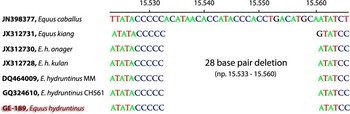
In order to identify the presence of Equus hydruntinus using a molecular approach, genetic analysis was performed on a lower right molar (M1 or M2, sample GE-189) recovered from GE-I, and based on external morphology, tentatively associated with Equus hydruntinus. The GE-189 DNA extraction was performed in the ancient DNA laboratory at Centro Mixto UCM-ISCIII (Madrid, Spain) using silica spin columns (Lira et al., Reference Lira, Linderholm, Olaria, Brandström Durling, Gilbert, Ellegren, Willerslev, Lidén, Arsuaga and Götherström2010). Primers 15.425F–15.625R from Vilà et al. (Reference Vilà, Leonard, Götherström, Marklund, Sandberg, Lidén, Wayne and Ellegren2001) were incorporated into the mtDNA hypervariable region I (HVR-I) amplification step (nucleotide positions according to the newly proposed Equus caballus Reference Sequence, JN398377 from Achilli et al., Reference Achilli, Olivieri, Soares, Lancioni, Kashani, Perego and Nergadze2012). Polymerase chain reaction setup was performed as in Lira et al. (Reference Lira, Linderholm, Olaria, Brandström Durling, Gilbert, Ellegren, Willerslev, Lidén, Arsuaga and Götherström2010). These primers amplify a fragment with a 28 base pair deletion between np. 15.533–15.560, only detected in Equus kiang, Equus hemionus, and Equus hydruntinus (Orlando et al., Reference Orlando, Mashkour, Burke, Douady, Eisenmann and Hänni2006).
Microfaunal analysis
All the sediment recovered from the site was wet-sieved using 0.5-mm screens. The mammals were classified in accordance with works by Chaline (Reference Chaline1972), van der Meulen (Reference van der Meulen1973), and Cuenca-Bescós (Reference Cuenca-Bescós, Canudo and Laplana1999, Reference Cuenca-Bescós, Straus, González Morales and García Pimienta2009).
Taphonomic analysis
The taphonomic analysis was restricted to the macro-mammal assemblage. We studied all the taxonomically identifiable bone remains, as well as those that provide information about the size of the animal. In addition, non-identifiable bone fragments larger than 2 cm were also considered for the taphonomic analysis. The dental remains were studied but excluded from the taphonomic quantification. A total of 601 bone remains were studied, from all LUs from both GE-I (Number of remains, NR=500) and GE-II (NR=101).
The taphonomic study included: anthropogenic traces, fracture patterns, carnivore modification, and post-depositional alterations. All bones were macroscopically and microscopically examined (using a Nikon SMZ800 stereoscopic zoom microscope and a DINO-LITE digital microscope). Photographs were taken with the digital video microscope DINO-LITE AM-TFVW-A (DinoCapture 2.0 software).
Stone-tool modifications were classified as: cut marks (including incisions or slicing cut marks, scrape marks, and chop marks) and percussion marks (percussion pits, conchoidal scars and flakes, and adhered flakes; Shipman and Rose, Reference Shipman and Rose1983; Blumenschine and Selvaggio, Reference Blumenschine and Selvaggio1988; Capaldo and Blumenschine, Reference Capaldo and Blumenschine1994; Blumenschine et al., Reference Blumenschine, Marean and Capaldo1996; Saladié et al., Reference Saladié, Huguet, Rodríguez-Hidalgo, Cáceres, Esteban-Nadal, Arsuaga, Bermúdez de Castro and Carbonell2012; Rodríguez-Hidalgo et al., Reference Rodríguez-Hidalgo, Saladié, Ollé and Carbonell2015). The location of cut marks was recorded since they may be used as criteria for distinguishing different butchery activities (Binford, Reference Binford1981; White, Reference White1992; Saladié et al., Reference Saladié, Huguet, Rodríguez-Hidalgo, Cáceres, Esteban-Nadal, Arsuaga, Bermúdez de Castro and Carbonell2012). For the study of burned bones we followed the stages defined by Stiner et al. (Reference Stiner, Weiner, Bar-Yosef and Kuhn1995).
The breakage patterns were analyzed on long bone fragments, following the methodology proposed by Villa and Mahieu (Reference Villa and Mahieu1991; see also Sala et al., Reference Sala, Arsuaga, Martínez and Gracia-Téllez2015). The following parameters were taken into account: fracture outline (longitudinal, transverse, or oblique/curved), fracture angle (right or oblique), fracture edge (smooth or jagged), shaft circumference (1=less than half of the circumference; 2=more than half of the circumference; 3=complete circumference), and shaft fragment (1=less than one-quarter of the total diaphysis; 2=between one-quarter and one-half of the total diaphysis; 3=between one-half to three-quarters of the diaphysis; 4=more than three-quarters of the diaphysis). The presence or absence of peeling was also recorded (White, Reference White1992; Pickering et al., Reference Pickering, Domínguez-Rodrigo, Heaton, Yravedra, Barba, Bunn and Musiba2013).
Tooth marks on bone surfaces were classified as pits, punctures, furrowing, scores, and dissolution due to gastric acids. Punctures, scores, and pits were measured (length and width) in accordance with previous studies (Selvaggio and Wilder, Reference Selvaggio and Wilder2001; Domínguez-Rodrigo and Piqueras, Reference Domínguez-Rodrigo and Piqueras2003; Sala et al., Reference Sala, Arsuaga and Haynes2014; Sala and Arsuaga, in press). The length and breadth of tooth marks were measured using DINO-LITE digital microscope software tools.
Lithic analysis
The lithic assemblage was studied using the Logical Analytical System (LAS) method (Carbonell et al., Reference Carbonell, Guilbaud and Mora1983, Reference Carbonell, Mosquera, Ollé, Rodríguez, Sala, Vaquero and Vergès1992; Rodríguez, Reference Rodríguez2004; Ollé et al., Reference Ollé, Mosquera, Rodríguez, de Lombera-Hermida, García-Antón, García-Medrano and Peña2013). The LAS approaches the study of technological processes based on the stage at which the objects were produced during the reduction sequence. All the pieces, including the fragments, were analyzed, which involved the raw material, the technical attributes of every lithic category, and the integrity of the reduction sequences.
The Sierra de Atapuerca and its surroundings offer a wide range of raw materials, with outcrops not further than 3 km from the sites. Five primary types of rocks were archaeologically identified in previous work (Mallol, Reference Mallol1999; Navazo et al., Reference Navazo, Colina, Dominguez-Bella and Benito-Calvo2008; García-Antón, Reference García-Antón2016) and all the lithic remains correspond to six groups of lithologies. Two of them, quartzite and metasandstone, are of metamorphic origin; two, including chert (Neogene and the Cretaceous varieties) and limestone (mainly fine mudstones), are of sedimentary origin; and macrocrystaline quartz is of filonian or hydrothermal origin.
Five lithic categories were taken into consideration: (1) hammerstones and percussive material (mainly pebbles and fractured pebbles, which we also refer to as “natural bases”); (2) cores; (3) flakes (whole flakes, broken flakes, and flake fragments); (4) flake tools or retouched flakes; and (5) knapping fragments. According to the LAS, there are two types of knapping sequences: exploitation sequences and configuration sequences (Rodríguez, Reference Rodríguez2004). The objective of the exploitation sequences (also called production sequences) is to obtain flakes. These processes for producing flakes consist of reducing the cores, which may be done using various knapping methods. Knapping methods were identified only when the technical features of the objects were clear. Knapping methods are defined by means of faciality (number of flaked faces), direction of extractions (unidirectional, bidirectional, centripetal), and arrangement of striking platforms (Rodríguez, Reference Rodríguez2004; Ollé et al., Reference Ollé, Mosquera, Rodríguez, de Lombera-Hermida, García-Antón, García-Medrano and Peña2013). Archaeologically, they have been identified both on cores and to a lesser extent in products, which are much more difficult to assign.
The aim of the configuration processes is to retouch flakes or pebbles in order to obtain cutting edges with a certain morphology and angle. The result of these configuration processes can be pebble tools or flake tools (retouched flakes). Configuration processes were studied in accordance with LAS analytical procedures (Rodríguez, Reference Rodríguez2004), which focus on faciality, retouch attributes (portion of the perimeter modified, angle, extent, direction, delineation, and morphology), as well as on typological aspects (Laplace, Reference Laplace1972).
RESULTS
Geological and geochemical results
In both GE-I and GE-II, a detrital sequence is sealed with a stalagmitic flowstone of varying thickness, depending on its location. The stalagmitic crust thickens from GE-I towards the ancient cave entrance (GE-II). The detrital phase is of a clearly allochtonous nature, based on the presence of quartz, phyllosilicates, and different extraclasts (sandstone, gneiss, and iron oxides; Aranburu et al., Reference Aranburu, Martínez-Pillado, García, Arsuaga, Alcázar de Velasco, Bonmatí and García2012; Fig. 3). The description of the sediment, clasts, and lithology from the detrital sequences for both GE-I and GE-II is presented in Table 1. The analysis of clay minerals from the detrital sequences for both GE-I and GE-II using X-ray diphractometry is given in Table 2.
(color online) Western profile of GE-I at the end of the 2015 field season. LU, Lithostratigraphical unit.

Description of the sediment, clasts, and lithology of the GE-I and GE-II detritic sequences. LU, lithostratigraphic unit.

Analysis of clay minerals by X-ray diphractometry of the GE-I and GE-II detritic sequences.

The smectite contents from level 1 of GE-II (especially LU1a) could be related to a recent intrusion of clays due to bioturbation (see text).
In GE-I, the excavations extend to a depth of ca. 2 m. From top to bottom, the geological sequence at the excavation zone starts with a stalagmitic flowstone, which is of varying thickness depending on its location, and which seals the site. This detrital sequence overlies an ancient flowstone that also occupies the east wall of the cave (Aranburu et al., Reference Aranburu, Martínez-Pillado, García, Arsuaga, Alcázar de Velasco, Bonmatí and García2012). The chronology of this flowstone appears to correspond to the Matuyama chron, but falls before 1.22 Ma, which is in concordance with the minimum age of the stabilization of the water table that matches the intermediate level of the karst (Parés et al., Reference Parés, Ortega, Benito-Calvo and Aranburu2016). There is a lack of available information regarding what happened between the deposition of the Matuyama age flowstone and the start of the GE-I detrital sequence. This detrital sequence has been divided into five LUs: LU5 is the oldest and LU1 is the most recent (Tables 1 and 2). LU5 is composed of pinkish degraded speleothem. LU4 is composed of dark clays with decimetric, planar, isolated, and very heterometric clasts. LU3 is composed of orangish silty clays, which are browner towards the base; it is matrix-supported and clasts are oblong at the base and more rounded at the top. LU2 is composed of black clays with silty orange sublevels and has abundant clasts, the size of which decreases towards the top of the level. LU1 is composed of orange clays with millimetric subhorizontal clast fragments. The detrital sequence is sealed by a speleothem, formed during the late Pleistocene (more than 14 ka, according to Martínez-Pillado et al., 2014) and evolves to dripping speleothem forms developed during the Holocene. Some ash-rich layers and charcoal fragments have been found within these stalagmites, corresponding to Neolithic and Bronze age human activity (Martínez-Pillado et al., 2014). A fine sediment layer, which contains some pottery fragments and is embedded inside the base of the stalagmites in certain areas of the site, is also attributed to these same periods.
In GE-II, the excavation has reached a depth of 1.5 m and there are differences in the composition from that of GE-I (Table 2), which could be due to the location of this sector (closer to the cave entrance, which is also evident from the abundance of plant roots in this sector of the cave), and/or to potential chronological differences between these two sectors. Future correlation analyses will provide more information about this particular aspect. The detrital sequence of GE-II has been divided into two LUs, the uppermost of which is further subdivided into two sublevels (see Tables 1 and 2). LU2, which is the lowermost level from GE-II, is composed of dark silty clay with decimetric, abundant, sharped-edged clasts. LU1b from GE-II is composed of orange clays with decimetric isolated clasts, while LU1a from GE-II is composed of light sands with subhorizontal, whitish, altered clasts.
Our current working hypothesis is that allochtonous sediment started entering the cave once GE opened to the exterior. The detrital LUs display a high content of limestone clasts that likely come from the cave entrance and were probably formed due to cryoclastic activity. Afterwards, these were transported into the cave via gravitational mass transport of variable density, embedded into the water-saturated clays. Neanderthal and (to a lesser extent) carnivore activities explain the archaeo-paleontological record recovered from this site (see below). Despite the similarity in the geochemistry, the differences in color between LU3 and LU4 are likely due to a higher content of organic matter in LU4, which is also slightly siltier and has a lower limestone content than LU3. LU2 presents the highest amount of organic matter, including charcoal fragments (visible during the geochemical preparation), and a high percentage of extraclasts, which were detected during a visual assessment of the clasts during the water-sieving of the sediment from this unit, likely the result of anthropogenic activities. At some point, the cave entrance closed and the flowstone started to form, which eventually became a dripping speleothem.
Chronological framework
The base of the dripping speleothem is dated to more than 14 ka, according to Martínez-Pillado et al. (2014), which should be viewed as a very conservative minimum age for the detrital sequence as there is still a laminar part of the speleothem that has not yet been dated. A series of radiocarbon dates performed on bone from both GE-I and GE-II are presented in Table 3 and compared to other sites from the province of Burgos. In GE-I, only the uppermost three levels have been dated so far (and those bones from level 1 likely belong to the interface between level 1 and 2). In GE-II, levels 1b and 2 were dated. In all cases, the results are close to the limit of resolution of the 14C techniques and five out of the eight dates are infinite. Thus, we prefer to cautiously interpret these results and we believe that the archaeologically and paleontologically rich levels from Galería de las Estatuas have a minimum age of ~45 ka.
Direct 14C dates (uncal BP) performed on bone remains in GE-I and GE-II compared to other dates of other sites from the northern plateau mentioned in the text. LU,Lithostratigraphic unit.

Calibration was performed with OxCal 4.2 (Bronk Ramsey, 2013), using the Intal13 atmospheric curve by Reimer et al., 2013. Before Common Era (BCE) calibrated results were obtained by subtracting 2000 years from the calBP (Before Present) dates.
The palynological record
In GE-I, we were able to obtain a composite sequence of ca. 2 m depth from the five detrital LUs that are found between the two stalagmitic flowstones. In Fig. 4, we show the raw data for the palynological analysis in depths relative to the cave floor. In Fig. 5, the percentage of presence was normalized, according to the maximum percentage presence for each of the groups.
(color online) The horizontal lines subdivide the sequence into the main zones and subzones (see Fig. 5). From LU5 to the middle of LU3 the palynological record is characteristic of open environments. The upper part of LU3 shows a development of shrubs, while LU2 shows an increase in arboreal pollen. The samples from LU1 did not reach the minimum necessary in order to be able to perform the necessary statistical analysis and, thus, only their presence is reported here. The depth (Z) is relative to the cave floor. The samples from LU1, LU2, LU4 and L5 were taken at the northern profile (N) of square M30. The samples from LU3 were taken in the eastern profile (E) of N30 which shows a thinner flowstone, thinner LU1 and LU2, and whose cave floor is lower topographically compared to the northern profile of M30.

Interpretative diagram of the palynological sequence of GE-I. Note that the samples have been represented one after the other regardless of the depth. Note that the zones based on the palynological content are different from the stratigraphy. GEN4-N5 was taken in the limit between LU 4 and LU5. AP, Arboreal pollen; NAP, Non-arboreal pollen; LU, Lithostratigraphical unit.

The GE-I palynological sequence can be divided into three pollen zones: Zone 3 is the lowermost one (LUs 5, 4 and lower part of 3) and is characterized by an open environment, indicative of a cool and dry climate; Zone 2 is the intermediate (the upper part of LU3) and shows a shrub expansion; and Zone 1 is the uppermost (i.e., the most recent, comprising LU2 and the base of LU1) and shows a more wooded environment (though it does not reach the threshold to be considered a closed forest), which is indicative of a relatively warmer and more humid climate. It is possible to further divide the oldest zone (Zone 3-open environment) into three phases (Fig. 5). The sequence starts with an open environment with very low taxonomic diversity, which likely indicates a very dry landscape (LU5 and base of LU4). There is a slight climatic improvement throughout most of LU4 with an increase in the percentage of Pinus pollen, followed by the development of other tree species, such as Betula, Fagus, and Corylus, which indicates a more mesic environment. Finally, the lower half of LU3 shows a more xeric climate (drier) with an expansion of Asteraceae, Chenopodiaceae, Artemisia, and Ephedra. The second zone, at the end of LU3, shows a transition towards the conditions of Zone 1, with a warmer and wetter environment and a higher taxonomic diversity demonstrated by non-arboreus pollen and the expansion of shrubs. The first zone (LU2 and the base of LU1) is characterized by a relatively warmer and more humid climate, and the expansion of forest dominated by Pinus; however, it becomes more taxonomically diverse. The information from LU1 is sparse. While the LU1 base is similar to the end of LU2, two additional samples in LU1 did not contain the minimum amount of pollen required for analysis (Figs. 4 and 5).
There is only a partial correspondence between the LUs and the pollen zones. This will be the object of further study in the near future. Zone 1 coincides with LU2. The upper part of LU1 has not yielded a significant amount of pollen and would correspond in our geological interpretation with the moment when the cave starts to close. Differences in the correspondence between Zones 2 and 3 and LU 3 and 4 could be related to either (or both): (a) slight paleoecological changes that may have not been strong enough to alter the geological conditions of sedimentation; and (b) changes in the occupation dynamics of the cave which could have occurred, leaving an imprint on the sedimentary record regardless of potential changes in the paleonvironment of the surroundings of the cave.
In GE-II, only a preliminary sampling was performed, limited to LUs 1 and 2. The sequence starts with an open environment but there is an expansion of forest, dominated by Pinus, which parallels the record in LU2 of GE-I. In LU1, the data are sparser and a deterioration of the climatic conditions may be detected, which leads to more open environment conditions.
Microfaunal remains
Remains of several bird species and a few fish have been recovered in both test pits, but are still under study. In GE-I, only LUs 2 to 4 have yielded micro-vertebrate remains (see Fig. 6 and Supplementary Table 1). The number of individuals and the taxonomic diversity is very limited in LU2, the spit (artificial excavation unit) intermediate between LU2 and 3, and LU 4. LU3, in contrast, yielded a larger sample (both in terms of MNI and diversity), which is dominated by open-environment dwellers (such as Marmota, and voles belonging to genera Pliomys and Microtus) and bats belonging to the genus Myotis. The presence of forest dwellers, such as Apodemus sp. and Eliomys quercinus, as well as the presence of the porcupine, Hystrix (Acanthion) vinogradovi, also indicates the presence of forest patches in the vicinity of the cave. Humid environments are inferred near the cave, based on the presence of Talpidae indet. and Microtus oeconomus.
(color online) Selected micro-mammal remains from Galería de las Estatuas. Myotis myotis/M. blithii: a right maxilla in (A) lateral and (B) occlusal views. (C) A right mandible with lower M3. Marmota marmota from GE-II-level 2: left lower M2. Hystrix (Acanthion) vinogradovi from GE-I-level 3: right upper M1. Pliomys lenki: lower left M1; Microtus: lower right M1 of one specimen of M. agrestis and two specimens of M. arvalis.

In GE-II, excavation of LU2 is currently being finished, and, thus, information is limited to levels 1 (1a and 1b) and 2. LU1 has not yielded a large micro-mammal assemblage. LU2 shows a microfaunal association dominated by open-environment dwellers such as Marmota, and voles belonging to genus Pliomys and Microtus, with the presence of forest dwellers, such as Apodemus sp. and Eliomys quercinus, as well as Castor fiber, which would be consistent with the presence of water courses in the vicinity of the cave. A large number of lagomorphs are also present. Both sites have also yielded a small herpetological assemblage that remains to be studied.
Macrofaunal remains
In terms of NISP, the macrofaunal assemblage is dominated by ungulate remains, though the presence of carnivores is significant in terms of taxonomic diversity (Fig. 7 and Supplementary Table 2). Ungulates are dominated by equids (Equus sp.) and red deer (Cervus elaphus). In the case of equids, the presence of Equus hydruntinus was suspected based on a morphological basis and confirmed based on genetic evidence (see below), while some postcranial remains have dimensions that are compatible with large size Equus ferus. Additional analysis will provide a more exact determination in the near future. In GE-I LU3, we have identified a scaphocuboid bone belonging to genus Bison (Bison cf. B. priscus based on the chronology of the deposit; Fig. 7). It should be noted that, despite its limited excavation surface, LU4 has yielded evidence for a minimum of four ungulates and four carnivores. Red foxes (Vulpes vulpes) and spotted hyenas (Crocuta crocuta) are the best-represented carnivores, though other species are represented, albeit more sparsely.
(color online) Selected macrofaunal remains from Galería de las Estatuas, including both ungulates and carnivores. Scaphocuboid of Bison cf. B. priscus (GE-1174; LU3 of GE-I) in proximal and distal views. Occlusal view of a Cervus elaphus right maxilla preserving the M1–M2 (GE-106; LU2 of GE-I). Occlusal view of a Equus sp. upper right molariform (GE-1051; LU2 of GE-I). Lateral view of a red fox (Vulpes vulpes) left hemimandible preserving P2–M2 (GE-348; LU3 of GE-I). Mesial view of a hyena (Crocuta crocuta) upper right canine (GE-407; LU3 of GE-I). Anterior view of a badger (Meles meles) left humerus (GE-420; LU4 of GE-I).

Equus hydruntinus mtDNA
We found the 28 base pair deletion in the mtDNA HVR-I nucleotide positions 15.533–15.560 in the fossil GE-189 from GE-I. Figure 8 shows the deletion previously detected in other Equus hydruntinus specimens and characteristic of the Equus hydruntinus/Equus hemionus/Equus kiang lineage (Orlando et al., Reference Orlando, Mashkour, Burke, Douady, Eisenmann and Hänni2006, Reference Orlando, Metcalf, Alberdi, Telles-Antunes, Bonjean, Otte and Martin2009).
(color online) Informative 28-base pair deletion found in mtDNA HVR-I Equus hydruntinus/Equus hemionus/Equus kiang lineage, which is also present in a lower right molar (M1 or M2, GE-189) from GE-I. JN398377 is the Equus caballus reference sequence (Achilli et al., Reference Achilli, Olivieri, Soares, Lancioni, Kashani, Perego and Nergadze2012). Complete mitochondrial genomes from Equus hemionus kulan (JX312728), Equus hemionus onager (JX312730), and Equus kiang (JX312731) from Vilstrup et al., Reference Vilstrup, Seguin-Orlando, Stiller, Ginolhac, Raghavan, Nielsen and Weinstock2013. Partial Equus hydruntinus mtDNA sequences DQ464009 and GQ324610 from Orlando et al., Reference Orlando, Mashkour, Burke, Douady, Eisenmann and Hänni2006, Reference Orlando, Metcalf, Alberdi, Telles-Antunes, Bonjean, Otte and Martin2009.

Taphonomic analysis
The taphonomic traits of the GE-I and GE-II pits differ depending on the LU analyzed. In general terms, anthropogenic modifications (cut marks and anthropogenic breakage) are more abundant than carnivore activity in all LUs (Supplementary Table 3). Due to the scarcity of remains recovered from LUs 1 and 5 of GE-I, the study will focus on LUs 2, 3, and 4 of this pit, and on LUs 1 and 2 of GE-II.
Sixty-eight bone remains from GE-I LU2 were analyzed. Anthropogenic activity (i.e., cut marks, anthropogenic breakage, and burned bones) is present in 35.3% of the analyzed sample (Supplementary Table 3). The types of cut marks (Supplementary Table 4) show that defleshing, periosteum removal, and marrow access took place mainly on ribs and long bone fragments. The analysis of breakage patterns (Supplementary Table 5) shows that fresh-bone fractures are dominant for all taxa. The presence of percussion marks and peeling suggests anthropogenic breakage as the origin for these fresh-bone fractures. Three bone fragments display evidence of combustion, though at a low degree (stages 1 and 2 of Stiner, 1995). In addition to the anthropogenic traces, one fossil remain (a long bone fragment of an indeterminate species) displays scores and tooth pits (Fig. 9) and two additional bones have features compatible with dissolution by gastric acids. None of these three remains display anthropogenic cut marks.
(color online) Selected (A) anthropogenic and (B) carnivore modifications on the Galería de las Estatuas fossil remains. (A1) General and detailed images of cut marks on the rib GE-545 from LU4 of GE-I. (A2) percussion pits on a long bone fragment (GE-369) from LU4 of GE-I. (A3) Burned and cut-marked long bone fragment (GE-791) from LU2 of GE-I. Note the slicing and scraping marks in the detailed view. (B1) Carnivore puncture on the vertebra GE-300 from GE-I LU3; B2) long bone fragment (GE-871 from LU2 of GE-I) with scores and tooth pits. (B3) Bone fragments (GE-669 and GE-661 from LU1 of GE-II unit 1) with evidence of corrosion by stomach acids. (B4) Carnivore ulna fragment (GE-576 from LU4 of GE-I) with tooth pits and punctures.

Two hundred and twenty-nine bone remains from GE-I LU3 were analyzed. Around 19% of the sample shows anthropogenic activity in terms of stone tool marks and anthropogenic breakage. No burned bones were identified in this LU. Cut marks, skinning, defleshing, and periosteum removal is evident on cranial remains, ribs, and long bones (Supplementary Table 4). Longitudinal and curved outlines, oblique angles, smooth surfaces, and incomplete diaphysis circumferences in long bones dominate, which indicates that long bones in all taxa represented in this LU were broken when they were fresh (Supplementary Table 5). Fourteen remains display conspicuous tooth marks (pits, scores, and punctures) and 12 remains show evidence of dissolution by gastric acids. Tooth marks affect both carnivores and large size ungulates (Fig. 9) and are also present in other, taxonomically indeterminate small fragments. Tooth marks appear together with anthropogenic cut marks in only three cases, including a leporid tibia. We cannot rule out the possibility that these tooth marks were made by humans.
Eighty faunal remains from GE-I LU4 were analyzed. Based on the type and location of cut marks on long and flat bones, nearly half of this sample (43.7%) shows anthropogenic modification, including defleshing, periosteum removal, and disarticulation (Supplementary Table 4). No burned bones were identified in this unit. In all the long bones, the type of breakage is consistent with fresh-bone breakage (Supplementary Table 5). Tooth marks are present on five specimens belonging to both carnivores and medium sized ungulates, as well as on indeterminate bone fragments (Fig. 9). Only in a taxonomically indeterminate tibia fragment, tooth marks are associated with slicing marks. The tooth marks could correspond to human tooth marks.
As in the case of GE-I, in GE-II the anthropogenic traces on the bones are more abundant than those produced by carnivore activity. In the LU1 of GE-II, 36.4% of the remains show cut marks and/or evidence of intentional breakage and three remains show signs of combustion. No conspicuous tooth marks were recorded in this upper unit, though evidence of corrosion from gastric acids was identified in two remains (indeterminate bone and antler fragments). In LU2 from GE-II, 52.8% of the remains display anthropogenic modifications, either cut marks or signs of intentional breakage. In addition, five indeterminate bone fragments show tooth marks; however, due to the small sample size it was not possible to statistically compare the dimensions of the tooth marks with experimental and archaeological samples.
Lithic tool analysis
To date, excavations at GE have yielded a total of 499 lithic objects in both test pits. The study of the GE’s lithic industry shows a clear Mousterian affinity for the entire assemblage (Fig. 10).
(color online) Selection of stone tools from the Galería de las Estatuas. (a) Centripetal flake core on chert (GE-II, LU2). (b) Chert core with a clearly hierarchised exploitation surface (GE-II, LU2). (c) Chert flake (GE-II, LU2). (d) Quartzite flake (GE-I, LU3). (e) Chert double marginal sidescraper (GE-I, LU1). (f) Quartzite convergent scraper (GE-II, LU2). (g) Chert sidescraper with Quina retouch (GE-II, LU1A). (h) Chert sidescraper with marginal retouch (GE-I, LU1-2).

In general terms, chert is the most common (83.8%) raw material in both pits, and additional raw materials include quartzite, sandstone, quartz, and limestone, among others (Supplementary Table 6). It should be noted that all of these raw materials are present in the Sierra de Atapuerca and surroundings (Ollé et al., Reference Ollé, Mosquera, Rodríguez, de Lombera-Hermida, García-Antón, García-Medrano and Peña2013 and references therein). Therefore, the raw material procurement was local. The size of the lithic remains varies depending on the raw material. For example, in LU3 from GE-I the mean size of the flakes made of chert are smaller (from the 12 complete flakes, 5 are<5 mm) than those made of quartzite (all of them>36 mm). This could be indicative of differential management of the raw material.
Most of the artifacts recovered are knapping products (simple flakes, broken flakes, and flake fragments; n=402, 80.56%) (Supplementary Table 7). The low number of cores (n=8, 1.6%) and their high degree of exploitation make it difficult to identify the strategies employed for the production of the flakes. Analysis conducted on the cores and on some of the flakes reveals centripetal knapping, huowever, some of which depict the characteristic features of Levallois débitage. Additionally, one small quartzite core shows evidence of bipolar-on-anvil technique. There is also one Kombewa chert flake on in LU2 of GE-I. Most (88.8%) of the flakes lack cortex in their striking platforms. Only 4.5% of the flake platforms are completely cortical. Platforms are mainly plain or unifaceted (46.1%), but it is noteworthy that 20.2% of the striking platforms are dihedral and 29.2% multifaceted. Dorsal surfaces of flakes are non-cortical (85.4%), and there is only one flake (0.5%) with a completely cortical dorsal surface. These data likely indicate that the earlier stages of flake production are not represented in this lithic assemblage. Pebbles and broken pebbles were recovered at both test pits, of which three were classified as hammerstones (two of quartzite and one of limestone), with an average size of 58.7 × 52.3 × 43.3 mm.
Retouched flakes represent 8% (n=40) of the assemblage. From a typological point of view, the most common elements are side-scrapers (n=18; some of which have “Quina”-type retouching), and denticulates (n=12). There are also points (n=3), endscrapers (n=2), and one piece with abrupt retouching (Supplementary Table 8).
The fact that 64.3% of the lithic objects have a maximum length of <20 mm suggests that retouching was more common than débitage, which is scarce, particularly with regard to the initial stages of the cores exploitation, as we mention previously. For example, LU2 of GE-I (including the contact between LUs 1-2) shows a large amount (76.5%) of small sized-flakes that are smaller than 20 mm, which suggests that some retouching activities took place there. However, the percentage of retouched tools in this LU is very small (1.7%). Therefore, retouched tools were used (and abandoned) elsewhere.
DISCUSSION
Interpretation of the site
The GE corresponds to a site located at an ancient entrance of the Cueva Mayor-Cueva del Silo karst system. Both GE-I and GE-II pits have yielded new information regarding the Neanderthal occupations of the site that include lithic remains and bone remains with anthropogenic marks. Additionally, the palynological sequence indicates that there was a climatic improvement from LU3 to LU2, as the latter was warmer and more humid.
The bone remains from GE display several features that indicate human manipulation in all the LUs (Fig. 9). Cut marks, including slicing marks, scrape marks, and chop marks, are present on different preserved anatomical parts. Most of the cut marks – mainly slicing and scraping marks – are present in long bone shaft fragments and ribs, which indicate that defleshing, evisceration, and periosteum removal took place. Most of the cut marks are present on unidentifiable bone fragments, however, making it difficult to interpret the butchering processes. In addition to the lithic tool traces, intentional breakage was also recorded in all LUs. None of the carnivore fossil remains from GE-I display cut marks, but tooth marks are present in LUs 3 and 4. Cut marks are more common in large-sized ungulates (equids and bovids) than in any other taxa in all LUs from GE-I. Although no hearths were documented in the cave site, some bone fragments show evidence of fire activity in the LU2 from GE-I and LU1 from GE-II (Fig. 9). The scarcity of tooth marks on the GE sample makes it difficult to statistically compare their dimensions with experimental and archaeological samples, in order to assess the carnivore taxa that produced them.
The results from the taphonomic analysis indicate that, although carnivores occupied the cave sporadically, this site was mainly used by hominins during the late Pleistocene. This is consistent with the presence of lithic artifacts in all LUs. Carnivore modification on bones could be interpreted as a result of occasional scavenging activities. Future analyses, once larger samples are available, will test whether or not there are significant differences in the taphonomic traits and in the lithic sample, which could indicate changing subsistence strategies along the stratigraphic sequence.
Galería de las Estatuas and the Mousterian in the northern plateau
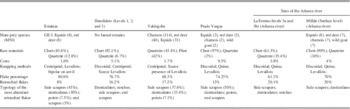
The best sites for contextualizing the Middle Paleolithic occupations in the GE within the northern plateau are the open-air contexts found at and around the Sierra de Atapuerca, the Valdegoba and Prado Vargas sites, and three additional sites in the Arlanza River valley (Hortigüela): the La Ermita and La Mina cave sites and the Millán rock-shelter. Direct dating completed on these sites indicate that Neanderthals occupied the Sierra de Atapuerca and the northern plateau, at least from the end of MIS 4 and throughout MIS 3 (Table 3). The comparison of the lithic remains and the main prey species found at these sites reveals some similarities and some slight discrepancies (Table 4). Equids, red deer, wild goat, and chamois are the most abundant prey species in the northern plateau. The presence/absence of caprids (wild goat and chamois) at different sites could be the effect of ecological differences among them. Additionally, some differences in technology could be the result of differences in the raw materials available and, therefore, differences in the management of these raw materials and/or the nature of the occupation at the site. A common feature of the lithic industry of these sites is the predominance of small-sized (<40 mm) flakes. Moreover, the Mousterian sites found on the northern plateau extend for more than 20 ka, as is the case for the Mousterian occupations of the Sierra de Atapuerca (including both cave and open-air sites). Therefore, differences in lithic technology are to be expected: for a similar time frame, differences have been detected in the Mousterian sites on the northern Iberian Peninsula (Rios-Garaizar, Reference Rios-Garaizar2017).
Comparison of the main prey species and lithic raw materials and technological aspects between Galería de las Estatuas and other northern Iberian Plateau sites.

Information from Galería de las Estatuas from this work.
Navazo et al. (Reference Navazo, Alonso-Alcalde, Benito-Calvo, Díez, Pérez-González and Carbonell2011) believe that the tendency towards microlithism observed in some of the open-air sites of Atapuerca (e.g., Hundidero), which can also be found in GE, is due to cultural tradition. This microlithism cannot be explained by the need to exploit the raw materials to the maximum due to their scarcity, because of the presence of abundant raw materials (especially Neogene flint) found close to these sites (Navazo et al., Reference Navazo, Alonso-Alcalde, Benito-Calvo, Díez, Pérez-González and Carbonell2011). The re-use/recycling of stone tools detected in Hundidero indicates repeated visits, though short in duration (Navazo et al., Reference Navazo, Alonso-Alcalde, Benito-Calvo, Díez, Pérez-González and Carbonell2011; Navazo and Carbonell, Reference Navazo and Carbonell2014). In the Arlanza valley, La Ermita seems to reflect specialized short visits, while Millán were longer and/or more diversified occupations (Díez et al., Reference Díez, Alonso, Bengoechea, Colina, Jordá, Navazo, Ortiz, Pérez and Torres2008).
Galería de las Estatuas: completing the Sierra de Atapuerca record
The Sierra de Atapuerca site complex has yielded not only important archaeo-paleontological assemblages from the lower and middle Pleistocene (Arsuaga et al., Reference Arsuaga, Martínez, Gracia, Carretero and Carbonell1993, Reference Arsuaga, Lorenzo, Carretero, Gracia, Martínez, García, Bermúdez de Castro and Carbonell1999, Reference Arsuaga, Martínez, Arnold, Aranburu, Gracia-Téllez, Sharp and Quam2014, Reference Arsuaga, Carretero, Lorenzo, Gómez-Olivencia, Pablos, Rodríguez and García-González2015; Carbonell et al., Reference Carbonell, Bermúdez de Castro, Arsuaga, Díez, Rosas, Cuenca-Bescós, Sala, Mosquera and Rodríguez1995, Reference Carbonell, Bermúdez de Castro, Parés, Pérez-González, Cuenca-Bescós, Ollé and Mosquera2008; Bermúdez de Castro et al., Reference Bermúdez de Castro, Arsuaga, Carbonell, Rosas, Martínez and Mosquera1997), but also important stratigraphic sequences that are providing a plethora of data on the macro- and microfaunal assemblages, as well as on the lithic technology, among others. While the Holocene is well-represented by several sites in the Sierra de Atapuerca as well, the late Pleistocene was only scarcely represented (Mosquera et al., Reference Mosquera, Ollé, Pérez-González, Rodríguez, Vaquero, Vergès and Carbonell2007) up until now. Thus, the GE sequence provides important technological, paleoecological and taphonomic information about the derthal populations that inhabited the Sierra de Atapuerca.
There are clear differences between the lithic tools found in the GE and the technological complexes found in the middle Pleistocene levels of Gran Dolina or Trinchera Galería (Ollé et al., Reference Ollé, Mosquera, Rodríguez, de Lombera-Hermida, García-Antón, García-Medrano and Peña2013 and references therein). For example, while Neanderthals used local raw materials in a fashion similar to the previous human populations that inhabited the Sierra de Atapuerca, there is a clear trend towards the use of better quality materials. Additional differences refer to the absence of large-sized tools in GE, the type of débitage, and the consolidation of hierarchized exploitation strategies like the Levallois débitage. Indeed, many of the technical features from GE are shared with the Valle de las Orquídeas assemblage, particularly regarding the knapping methods (Mosquera et al., Reference Mosquera, Ollé, Pérez-González, Rodríguez, Vaquero, Vergès and Carbonell2007).
The GE site provides new information regarding the Sierra de Atapuerca Neanderthal occupations, which adds to the already known Middle Paleolithic open-air sites (Navazo et al., Reference Navazo, Alonso-Alcalde, Benito-Calvo, Díez, Pérez-González and Carbonell2011; Navazo and Carbonell, Reference Navazo and Carbonell2014; see above). From a paleontological point of view, some of the faunal species represented were already present in older levels at different sites within the Sierra de Atapuerca karst complex. In other cases, GE provides the first evidence of certain taxa present at the Sierra de Atapuerca sites. Starting with carnivores, the hyena Crocuta crocuta and lynxes (Lynx sp.) have inhabited the Sierra de Atapuerca since the end of the early Pleistocene, while the fox Vulpes vulpes and the badger Meles meles appeared at the middle Pleistocene site of Sima de los Huesos (Rodríguez et al., Reference Rodríguez, Burjachs, Cuenca-Bescós, García, Van der Made, Pérez González and Blain2011). In GE, the only remain attributed to genus Panthera corresponds to a phalanx of an immature individual, which, based on the chronology of this site, likely belonged to either a lion (P. leo/spelaea) or a leopard (P. pardus). If these remains belonged to the latter species, it would be the first appearance of this taxon in the Sierra de Atapuerca.
In the case of the ungulates, Sus scrofa and Cervus elaphus, they are known in the Sierra de Atapuerca starting at the end of the early Pleistocene. Equus hydruntinus and E. ferus make their first appearance in the middle middle Pleistocene. In GE, it has been possible to identify Bison cf. B. priscus among the scarce large bovid remains. This is the first evidence of this taxon in the Sierra de Atapuerca and the second for the northern plateau after that of the Cueva del Búho-Zarzamora cave complex (Sala et al., Reference Sala, Pantoja, Arsuaga and Algaba2010), though the latter would be younger chronologically.
In the case of the microfaunal assemblage from the GE, bats from genera Myotis and Miniopterus were known to be present in the Sierra de Atapuerca since the end of the Early Pleistocene, as well as shrews from the genus Sorex and talpids (Rodríguez et al., Reference Rodríguez, Burjachs, Cuenca-Bescós, García, Van der Made, Pérez González and Blain2011). Hystrix (Acanthion) vinogradovi, Microtus arvalis, Microtus agrestis, Pliomys lenki, and Arvicola sapidus were present in the Sierra de Atapuerca since the middle Pleistocene (Cuenca-Bescós, Reference Cuenca-Bescós, Canudo and Laplana1999) while marmots (genus Marmota), field mice belonging to genus Apodemus, and the dormouse Eliomys quercinus were present since the end of the early Pleistocene. Beavers are a scarce taxon in Atapuerca, limited to the lower Pleistocene levels from Gran Dolina and Sima del Elefante (ca. 0.9 Ma in TD6 and ca. 1.2 Ma in TE9) and to the Holocene remains from El Portalón (Cuenca-Bescós et al., Reference Cuenca-Bescós, Rosell, Morcillo-Amo, Galindo-Pellicena, Santos and Moya Costa2017), and, therefore, their presence in the GE expands their chronological range in the Sierra de Atapuerca record. Finally, the GE provides the first reference for several species: Terricola lusitanica/duodecimcostatus, Terricola gerbei/pyrenaicus, Microtus oeconomus, and there is potentially an Iberomys cabrerae remain.
Paleoenvironmental and paleoecological changes during the late Pleistocene in the Iberian Peninsula: new insights from the Galería de las Estatuas
During the late Pleistocene, there were not only dramatic climatic changes that occurred. There were also ecological changes, including extinctions of certain species at a local/global level. A better understanding of these dynamics can offer insights into the extinction of Neanderthals. Here, we discuss the palynological record compared to the chronological data provided by the radiocarbon direct dating, as well as aspects of the macro-mammal record.
The GE has yielded several Hystrix vinogradovi remains in LUs 3 and 4 of GE-I. The presence of porcupine in the Late Pleistocene of the Iberian Peninsula is restricted to 9–10 sites, most of which are associated or contemporaneous with Neanderthal occupations. The first porcupine remain was identified in Devil’s Tower (Gibraltar) by Bate (Reference Bate1928; see her figure 25), where Mousterian tools and the remains of a Neanderthal child were found (Buxton, Reference Buxton1928; Garrod, Reference Garrod1928). The Cueva del Camino site provides the earliest (MIS 5) evidence of Hystrix in the Iberian Peninsula (Arsuaga et al., Reference Arsuaga, Baquedano, Pérez-González, Sala, Quam, Rodríguez and García2012; Laplana et al., Reference Laplana, Blain, Sevilla, Arsuaga, Baquedano and Pérez-González2013). Additional sites that have yielded Neanderthal remains/occupations with the presence of this species include: two caves in the province of Burgos, Valdegoba (Díez et al., 1988–Reference Díez, García, Gil, Jordá, Ortega, Sánchez and Sánchez1989) and La Mina (Díez et al., Reference Díez, Alonso, Bengoechea, Colina, Jordá, Navazo, Ortiz, Pérez and Torres2008); level I of Cova del Gegant (Daura et al., Reference Daura, Sanz, Subirá, Quam, Fullola and Arsuaga2005, Reference Daura, Sanz, Pike, Subirà, Fornós, Fullola, Julià and Zilhão2010; López-García et al., Reference López-García, Blain, Cuenca-Bescós and Arsuaga2008); the nearby Cova del Muscle (López-García et al., Reference López-García, Agustí and Cuenca-Bescós2007); and Sima de las Palomas (Rhodes et al., Reference Rhodes, Walker, López-Martínez, Haber-Uriarte, López-Jiménez, Buitrago-López and Dewar2013). Finally, the youngest (in chronological terms) Hystrix on record was found in level IV at A Valiña (Fernández Rodríguez, Reference Fernández Rodríguez2006), dated to 31,730 + 2880/-2110 14C yr BP GrN-20833 (Ramil Rego and Fernández, 1995 in Fernández Rodríguez, Reference Fernández Rodríguez2006). There are other sites with the presence of Hystrix, such as Cova d’Olopte (Cova B; López-García et al., Reference López-García, Agustí and Cuenca-Bescós2007), the age of which is not certain (Villalta, Reference Villalta1972).
The Sierra de Atapuerca site complex has yielded evidence of the presence of different Bison species throughout the lower and middle Pleistocene (Rodríguez et al., Reference Rodríguez, Burjachs, Cuenca-Bescós, García, Van der Made, Pérez González and Blain2011 and references therein). However, the presence of the steppe bison Bison priscus in the Iberian Peninsula south of the Cantabrian mountain range during the late Pleistocene is almost unheard of. Its presence has been identified at only two sites, both of which are located on the northern plateau: the GE and the slightly younger Búho-Zarzamora site complex (Sala et al., Reference Sala, Pantoja, Arsuaga and Algaba2010). It should be noted that the paleoecological conditions of the latter site are those of an herbaceous-dominated open environment, based on both palynological and microfaunal studies. The dominance of equids, steppe rhinoceros (Stephanorhinus hemitoechus), and the presence of Bison priscus is consistent with the other paleoecological proxies (Sala et al., Reference Sala, Arsuaga, Laplana, Ruiz Zapata, Gil García, García, Aranburu and Algaba2011, Reference Sala, Algaba, Arsuaga, Aranburu and Pantoja2012). In the case of GE, the presence of Bison cf. B. priscus in LU3 is consistent with the open environments, as is also suggested by the palynological and microfaunal analyses. Nevertheless, the absence of this taxon in the record could be partially for biogeographical reasons, and the Cantabrian mountain range could have acted as a barrier, allowing only some animals to sporadically cross it, similar to that which occurred with other species (e.g., reindeer; Álvarez-Lao and García, Reference Álvarez-Laó and García2011; Gómez-Olivencia et al., Reference Gómez-Olivencia, Arceredillo, Álvarez-Lao, Garate, San Pedro, Castaños and Rios-Garaizar2014). However, since there are difficulties entailed in distinguishing between Bos and Bison remains, certain diagnostic elements are required in order to successfully do so (e.g., Altuna, Reference Altuna1972; Sala et al., Reference Sala, Pantoja, Arsuaga and Algaba2010).
The absence of other ungulates is also noticeable, such as the fallow deer (Dama dama), which is not present in any of the late Pleistocene sites from the northern plateau (Arceredillo, Reference Arceredillo2016). In fact, all these sites are from the second half of the late Pleistocene (ca.<70 ka). In older chronologies, such as the MIS 5 central Iberian site of Camino (Arsuaga et al., Reference Arsuaga, Baquedano, Pérez-González, Sala, Quam, Rodríguez and García2012; Álvarez-Lao et al., Reference Álvarez-Lao, Arsuaga, Baquedano and Pérez-González2013), Dama dama is the most abundant species of the fossil assemblage. However, the presence of fallow deer in the Buena Pinta cave, which has yielded chronologies around 60–70 ka (Laplana et al., 2015 and references therein), would suggest a more prolonged survival in this part of the Iberian Peninsula. Thus, the absence of Dama dama in GE could be related to the fact that the taxon had a more restricted biogeographical range that did not include the Sierra de Atapuerca. Therefore, additional chronological data from different sites are still necessary in order to assess the extinction of this taxon in Iberia during the late Pleistocene. In this case, it is easier to distinguish between genus Cervus and Dama than between Bos/Bison due to their differences in general size.
Finally, another important aspect that must be taken into account is the high micro-mammal biodiversity, likely linked to the strategic geographical location of the Sierra de Atapuerca within the northern plateau and the landscape variation within 5 km from the Sierra itself. The Sierra de Atapuerca is located in the Duero basin, at the entrance of the Bureba corridor that connects the Ebro and the Duero basins. This corridor is limited by the Cantabrian mountain range to the north and the Central system to the south. The Sierra de Atapuerca has several natural springs, and, together with the limestone nature of this hill, and the fact that it is surrounded by the terraces of the nearby Arlanzón River, it provides a variety of landscapes, which is reflected in high levels of biodiversity preserved in the different Atapuerca sites throughout the Pleistocene (Rodríguez et al., Reference Rodríguez, Burjachs, Cuenca-Bescós, García, Van der Made, Pérez González and Blain2011). The GE is no exception and the palynological and micro-paleontological studies presented here show that, despite the general rigorous climatic conditions, a varied plant and micro-mammal community inhabited the surroundings of the Sierra de Atapuerca.
SUMMARY AND CONCLUSIONS
The GE site, in which two test pits have been excavated, is located at an ancient entrance of the Cueva Mayor-Cueva del Silo karst system. Here a detrital sequence has yielded both stone artifacts of clear Mousterian affinity, as well as paleontological remains. In general terms, chert is the most common raw material and most of the artifacts are knapping products. Among the retouched flakes, side scrapers are the most common elements, and some of them have “Quina”-type retouching. The macrofaunal spectrum is dominated by ungulates, mainly equids and red deer, with the presence of large bovids (including Bison) and several carnivores (mainly red fox and spotted hyena). The taphonomic analysis reveals traces of both anthropogenic and, to a lesser extent, carnivore activity. Thus, although carnivores occupied the cave sporadically, this site was mainly used by hominins during the late Pleistocene. The current chronological framework is based on a series of 14C dates that indicate a minimum age of 45 14C ka BP for the human occupations of this site. The palynological analysis indicates a warming episode in a more open environment compared to that of the present day. This is consistent with the very diverse and rich micro-mammal assemblage, dominated by open-habitat taxa. GE provides insights into the Neanderthal occupations of the more inland Iberian Peninsula, which contrasts with the climatically milder, more coastal sites. Moreover, it also shows the diversity of strategies in which Neandertal engaged to survive in the different ecosystems/ecotones on the northern Iberian Plateau in which different species of prey existed (caprids in more mountainous areas; cervids and equids in more open environments). It indicates the resilience of these hunter-gatherer groups that inhabited the Sierra de Atapuerca despite ecological changes that occurred during the late Pleistocene. Finally, GE provides new evidence of the Neanderthal occupation at the Sierra de Atapuerca, which helps to complete the more than one million-year-old sequence of human occupations at this site complex.
ACKNOWLEDGEMENTS
We would like to acknowledge the entire GE excavation team, and especially the SH excavation team; this work was made possible thanks to their efforts. We also extend our gratitude to D. Arceredillo and J. Rios, for their help during different phases of the study. Thanks to L. Ames for correcting the English. We are grateful for the comments provided by the anonymous reviewers, the AE and the Editor that have helped to improve this paper. Fieldwork at Atapuerca is funded by the Junta de Castilla y León and Fundación Atapuerca. The study was supported by the Spanish Ministerio de Ciencia y Tecnología (Projects: CGL2012-38434-C03-01, CGL-2015-65387-C3-2-P, CGL-2015- 65387-C3-1-P) (MINECO/FEDER). AB and AP-P received a grant from Fundación Atapuerca. JLG receives a grant from Caja Viva Fundación Caja Rural de Burgos - Fundación Atapuerca. AGO is part of the Research Groups IT834-13 and IT1044-16 (Gobierno Vasco/Eusko Jaurlaritza) and also funded by the Research Group PPG17/05 (Euskal Herriko Unibertsitatea). AO, XPRA and MM also receive support from the Generalitat de Catalunya (Project 2014SGR899) and from URV (2014/2015/2016PFR-URV-B2-17). AA also receives support from the University of Basque Country (Project US-14/16).
Supplementary material
To view supplementary material for this article, please visit https://doi.org/10.1017/qua.2017.46