INTRODUCTION
Octopus mimus has been described for Peru and northern Chile (Norman et al., Reference Norman, Finn, Hochberg, Jereb, Roper, Norman and Finn2014). Recent genetic evidence suggests that Octopus hubbsorum, distributed off western Mexico, and O. mimus belong to the same taxon (Pliego-Cárdenas et al., Reference Pliego-Cárdenas, Hochberg, García de León and Barriga-Sosa2014). Thus O. mimus would range from the Gulf of California to northern Chile. It is the main octopus fishery in the Eastern Pacific, with combined annual catches ranging 3–6.5 × 10³ t, mostly taken with hookah or free diving (Zúñiga et al., Reference Zúñiga, Olivares, Rosas, Iglesias, Fuentes and Villanueva2014; Markaida & Gilly, Reference Markaida and Gilly2016). However, the fishery is only regulated in Peru and Chile, where regional and temporal closures have been considered, plus a minimum legal size (MLS) of 1 kg BW (Rodhouse et al., Reference Rodhouse, Pierce, Nichols, Sauer, Arkhipkin, Laptikhovsky, Lipinski, Ramos, Gras, Kidokoro, Sadayasu, Pereira, Lefkaditou, Pita, Gasalla, Haimovici, Sakai and Downey2014; Emery et al., Reference Emery, Hartmann and Gardner2016; Markaida & Gilly, Reference Markaida and Gilly2016).
Octopus mimus spawn year-round with a reproductive peak occurring mainly in summer off Peru and Chile and in winter-spring off western Mexico. Potential fecundity ranges from 60,000 and 400,000 eggs. Hatchlings are planktonic (Cardoso et al., Reference Cardoso, Villegas and Estrella2004; López-Uriarte & Ríos-Jara, Reference López-Uriarte and Ríos-Jara2009; Zúñiga et al., Reference Zúñiga, Olivares, Rosas, Iglesias, Fuentes and Villanueva2014).
In Ecuador the octopus fishery has no official status as there are no management measures as well as no catch records (Norman et al., Reference Norman, Finn, Hochberg, Jereb, Roper, Norman and Finn2014; Markaida & Gilly, Reference Markaida and Gilly2016). However, this fishery has some tradition among small fishing communities in the Santa Elena Peninsula, Manta and Salango (Mora, Reference Mora, Massay, Correa and Mora1993; Loor-Andrade, Reference Loor-Andrade2006; Naranjo-Tibanlombo, Reference Naranjo-Tibanlombo2009; Pliego-Cárdenas et al., Reference Pliego-Cárdenas, Flores, Markaida, Barriga-Sosa, Mora and Arias2016; Simbaña-Suquillo, Reference Simbaña-Suquillo2017), where fishermen target them by free diving or hookah. The species involved in the fishery has been identified as Octopus mimus based on morphological traits (Loor-Andrade, Reference Loor-Andrade2006; Carreño-Maldonado, Reference Carreño-Maldonado2012). Recent genetic analysis validated this identification, while showing that they are more closely related to specimens from Central America than those from the Peruvian province (Pliego-Cárdenas et al., Reference Pliego-Cárdenas, Flores, Markaida, Barriga-Sosa, Mora and Arias2016). Knowledge on the biology and fishery of this octopus in Ecuador is still scarce and unpublished.
We describe the population biology of octopus taken by the artisanal fishery in a marine protected area of the Santa Elena peninsula. The objective of this work is adjusted to obtain parameters of the reproductive biology and population structure in order to provide basic information for future management.
MATERIALS AND METHODS
Octopus fishing is performed in the morning by commercial fishermen using hooks by hookah at the rocky subtidal (5–22 m depth) inside the Reserva de Producción Faunística Marino-Costera Puntilla de Santa Elena (REMACOPSE) Marine Protected Area, which surrounds most of the Santa Elena peninsula in Ecuador. This area includes an artisanal fishing zone where sustainable commercial fishing is allowed (Samaniego-Rivera & Chalén, Reference Samaniego-Rivera and Chalén2010).
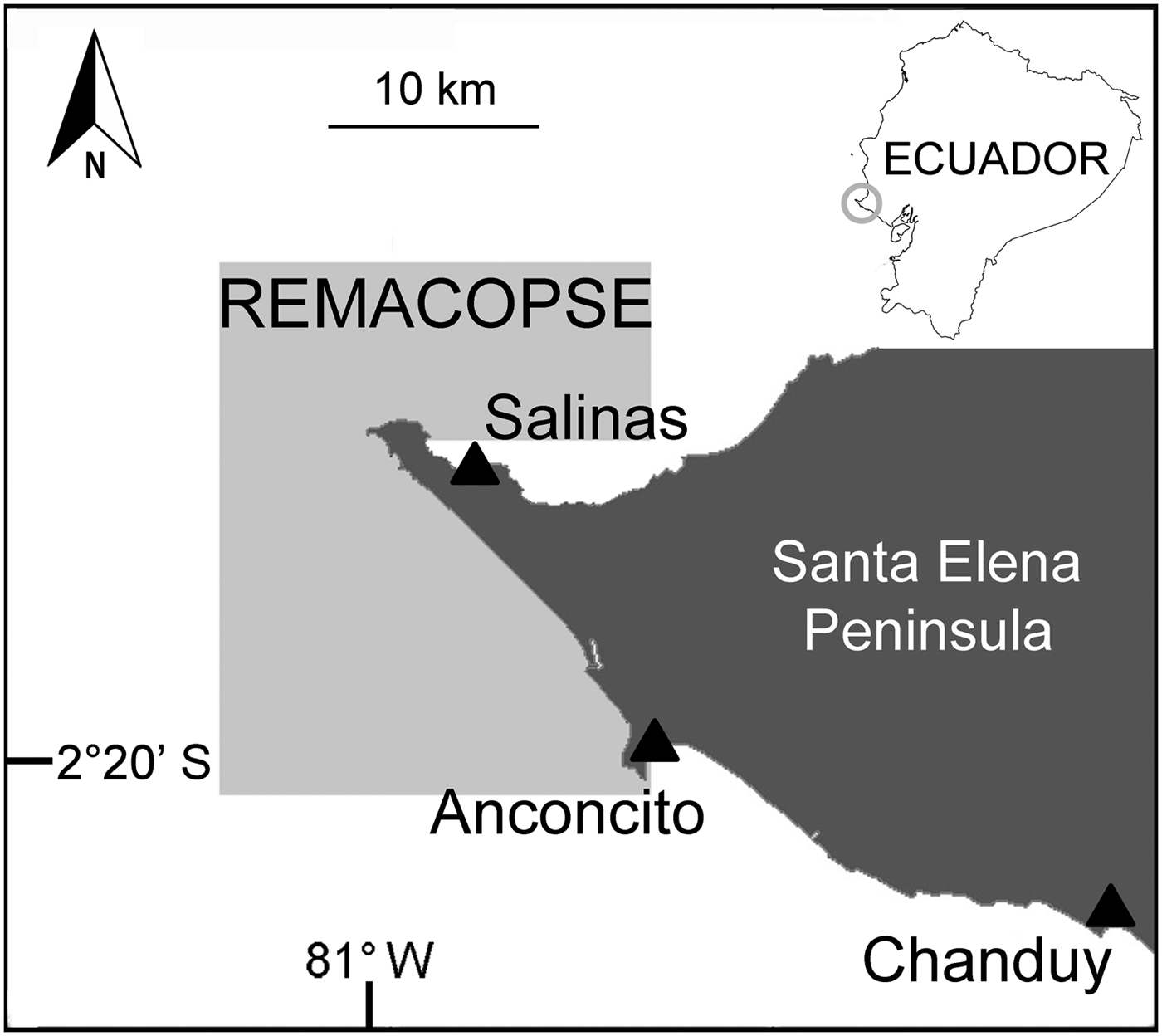
Octopus mimus landing places at Salinas, Anconcito and Chanduy in Santa Elena peninsula, south-western Ecuador, were visited from July to December 2013 (Figure 1). Financial constraints precluded the completion of a yearly sampling. Although octopus is fished all over the year, fishermen agree that the highest catches are obtained from July to December.
Location of the Reserva de Producción Faunística Marino-Costera Puntilla de Santa Elena (REMACOPSE) at Santa Elena peninsula in light grey, where the octopus fishery operates. Landing places at Salinas, Anconcito and Chanduy are shown with a triangle.

In total 4171 octopuses were sampled whole during the landings: 2919 at Salinas in all months, 1224 at Anconcito from September to December and 28 at Chanduy in December. In each octopus, the mantle length (ML) to the nearest mm and the body weight (BW) to the nearest gram were measured (Jereb & Roper, Reference Jereb, Roper, Jereb, Roper, Norman and Finn2014). Sex and maturity were assigned upon macroscopic examination of reproductive organs following a scale of four maturity stages for each sex: immature, maturing, mature (including spawning) and spent (Cortez et al., Reference Cortez, Castro and Guerra1995; Alejo-Plata & Gómez-Márquez, Reference Alejo-Plata and Gómez-Márquez2015).
Sex ratio was calculated for each month. Significant deviations from the 1:1 ratio were tested performing a χ2 test. Octopus BW distributions failed for normality test. Hence, Kruskal–Wallis non-parametric ANOVA and Mann–Whitney U test were performed when comparing BW from different sexes and months (Zar, Reference Zar1996). After K–W test, post-hoc comparisons of BW mean ranks of all pairs of months were performed using Statistica 7.0 software.
ML–BW relationships were fitted to the potential model BW = aMLb. Octopus size (ML or BW) at maturity (ML50% or BW50%) was estimated after fitting, to the relative ML (each 5 mm) or weight (each 100 g) distribution of mature and spent individuals, the logistic curve P i = 100/(1 + exp(α + βMLi)), where P i is the relative percentage of mature and spent individuals in size class MLi, α and β are regression constants and ML50% = −α/β (Markaida et al., Reference Markaida, Méndez-Loeza and Rosales-Raya2016). All model parameters were compared between sexes through an Extra sum of squares F test using GraphPad Prism 6.01 software.
RESULTS
Octopus maturation
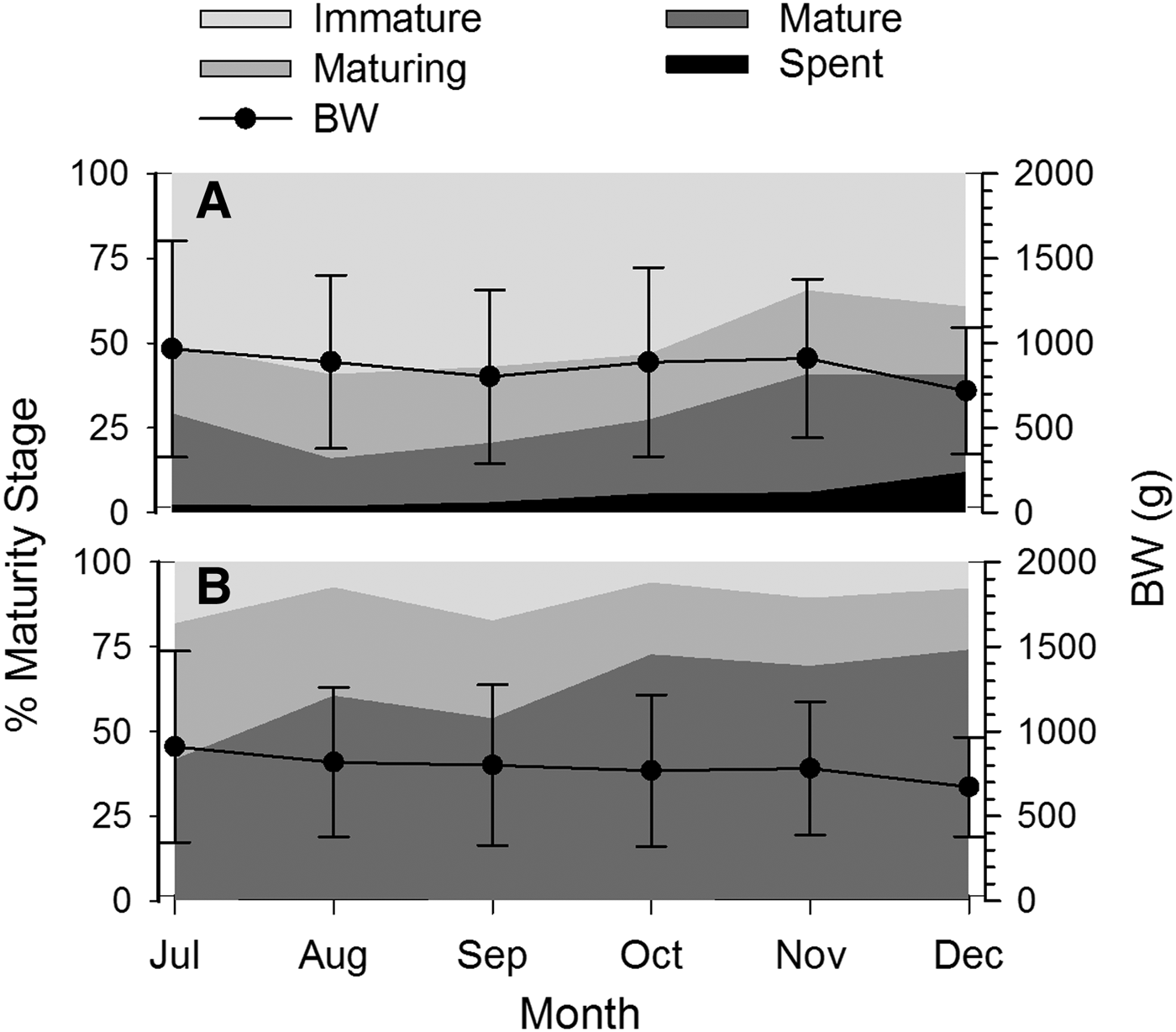
Half of the females were immature individuals, while 22% were maturing, 23% mature and 5% spent. All female maturity stages were found in every month. Immature females dominated from July to October. During November and December their numbers dropped to 35–39% while mature females reached 21–34% and those spent ranged 5–12% (Figure 2A). Mature males dominated catches (63%) while maturing individuals accounted for 26% and those immature were 10%. Mature males dominated catches in all months except July (41%) (Figure 2B).
Monthly relative frequency of maturity stages for Octopus mimus from Santa Elena by sex and month (July–December 2013) for (A) females and (B) males. Dots show mean monthly body weight (BW) and vertical bars standard deviation (right axis).

Sex ratio
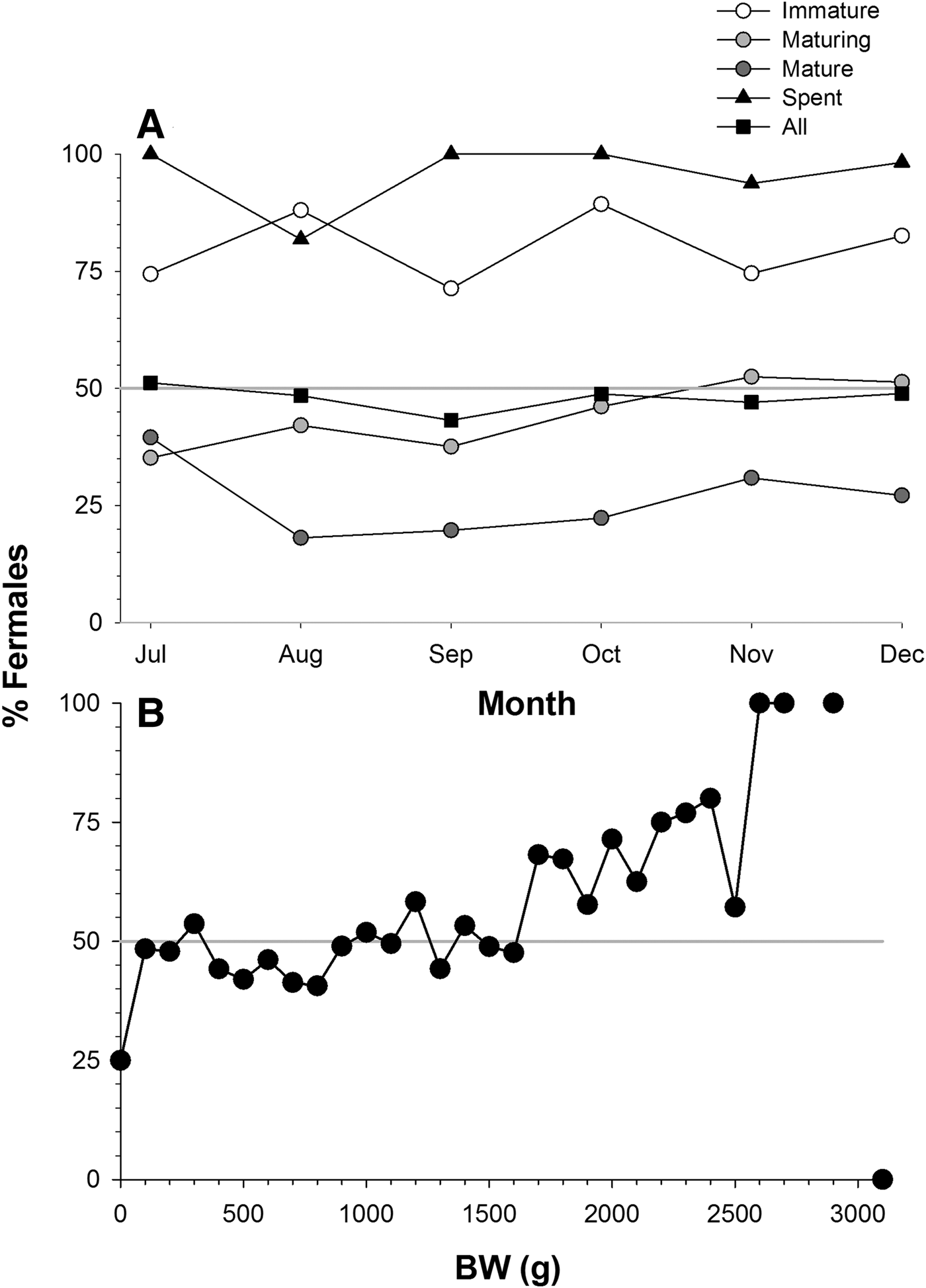
Overall sex ratio was statistically significant from the expected 1:1 (χ2 = 6.2, P < 0.05). However monthly sex ratio was only significant in September (χ2 = 10.1, P < 0.01), when males outnumbered females (Figure 3A). Immature females always outnumbered immature males in all months. Males dominated among maturing octopuses from July to September, although the sex ratio was equal from October to December (χ2 test, P > 0.05). Mature individuals were always dominated by males (Figure 3A).
Octopus mimus sex ratio expressed as percentage of females for (A) each month and maturity stage and (B) by 100 g body weight (BW) intervals. Expected 1:1 ratio is shown as a grey horizontal line.

Sex ratio in octopus varied with size. Males dominated in the 400–900 g BW range (χ2 = 23, P < 0.001). Sex ratio was not statistically significant from the expected 1:1 in the 900–1700 g BW range (χ2 = 0.03, P > 0.05), while females outnumbered males at BW > 1700 g (χ2 = 29, P < 0.001) (Figure 3B).
ML–BW relationships
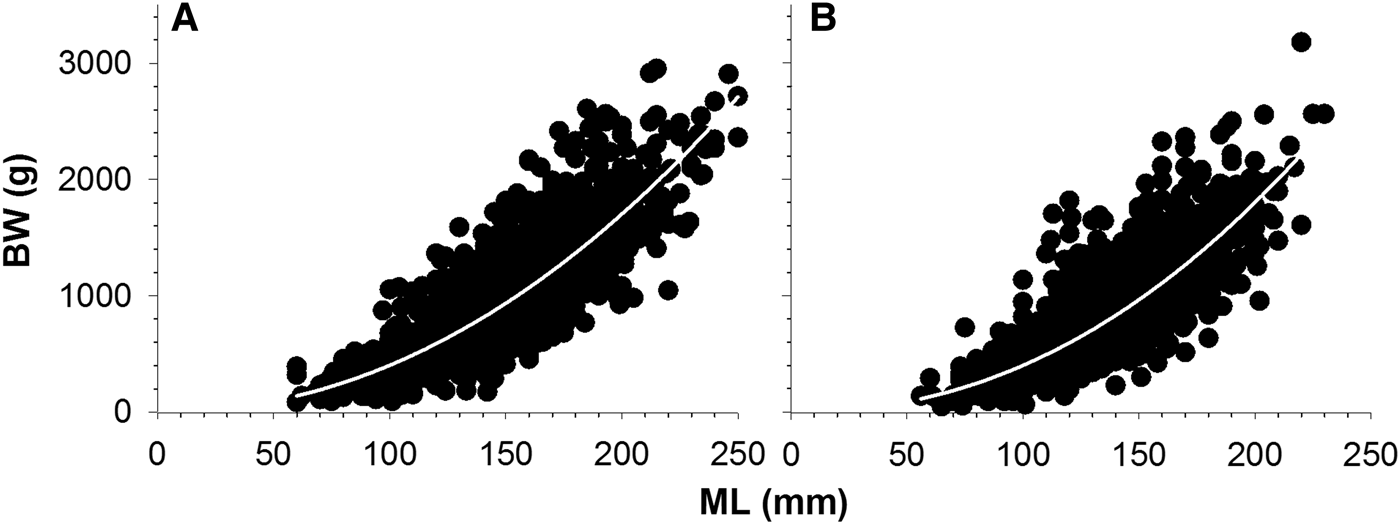
Morphometric relationships between ML and BW are described in Figure 4.
Morphometric relationships between mantle length (ML) and body weight (BW) by sex for Octopus mimus from Santa Elena, Ecuador, for (A) females and (B) males.

For females: BW = 0.0283 ML2.077, r 2 = 0.74, n = 1942
For males: BW = 0.0176 ML2.179, r 2 = 0.70, n = 2142
Relationships between sexes showed statistical differences in a and b parameters (F 2,4080 = 14.34, P < 0.001). Growth is allometrically negative (b < 3) for both sexes (females, F 1,1940 = 927; males F 1,2140 = 595; P < 0.001).
Size structure
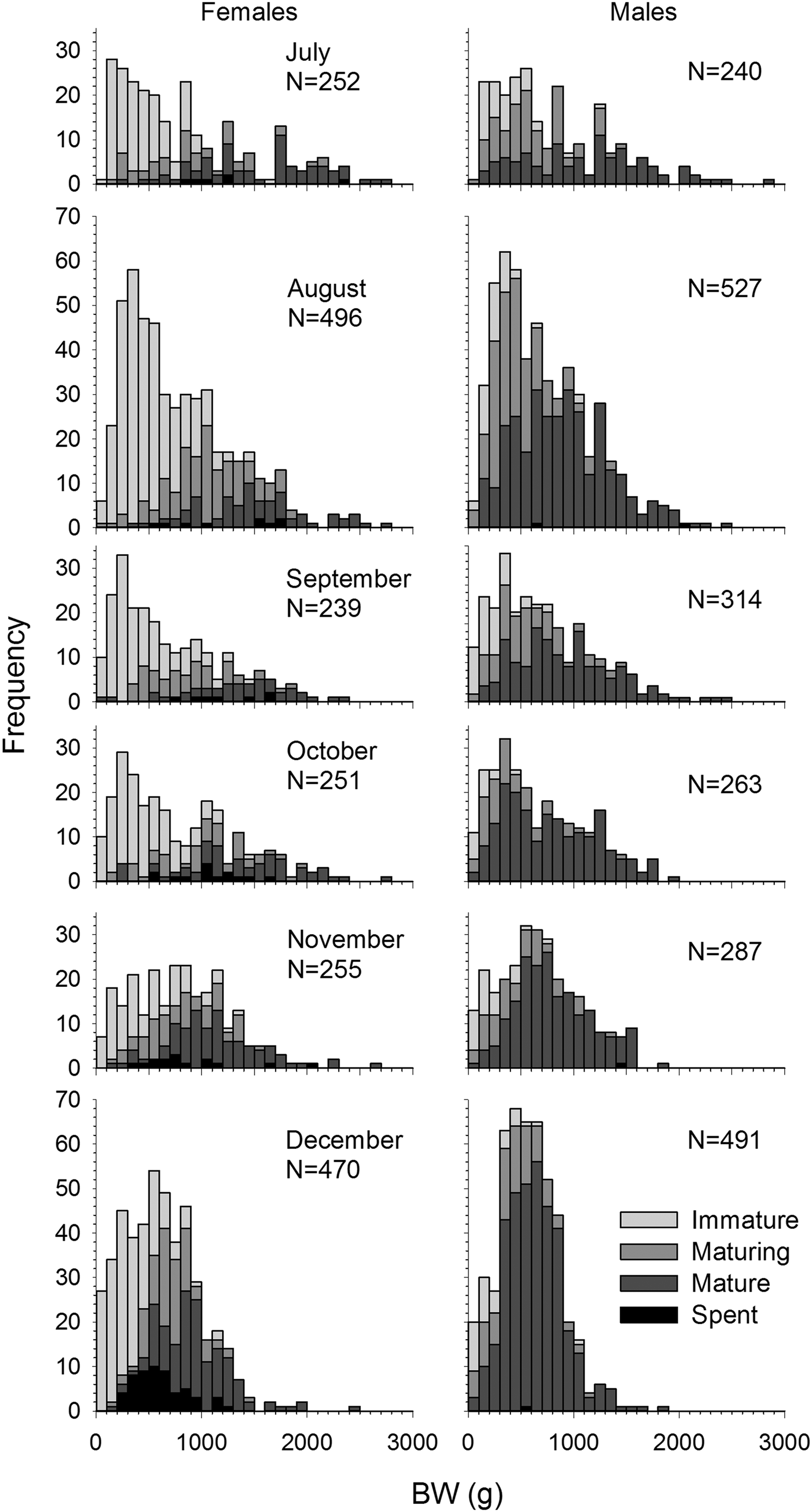
Octopus mimus size in catches ranged from 56 to 250 mm in ML and 45 to 3178 g in BW (Figure 5). Female mean BW (851 ± 509 g) was larger than that of males (783 ± 435 g) (Mann–Whitney U 1972,2141 = 1995538, P < 0.01). Octopus weights varied between months in both sexes (K–W non-parametric ANOVA, H 5,1972 = 38.1, P < 0.001 for females; H 5,2141 = 28.2, P < 0.001 for males). However, post-hoc comparison tests showed that there were no size differences between octopuses from July to November in both sexes. Only octopus from December (means of 718 and 673 g for females and males, respectively) were significantly smaller than those from other months (P < 0.001) (Figures 2 & 5).
Body weight (BW) frequency distribution of Octopus mimus from Santa Elena by month, sex and maturity stage.

Size at maturity
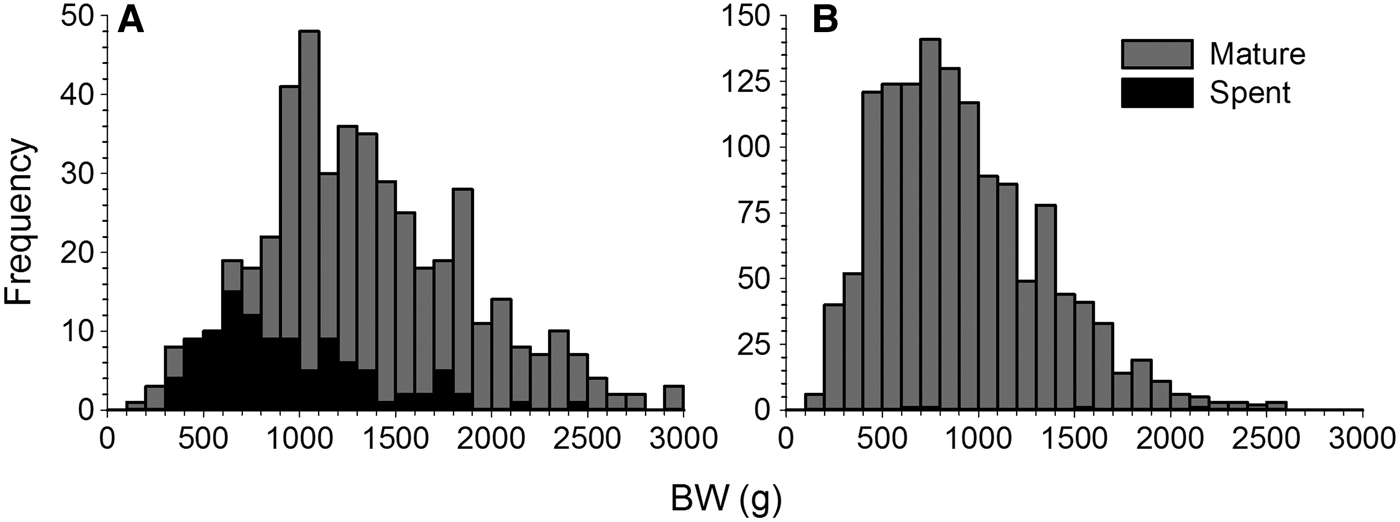
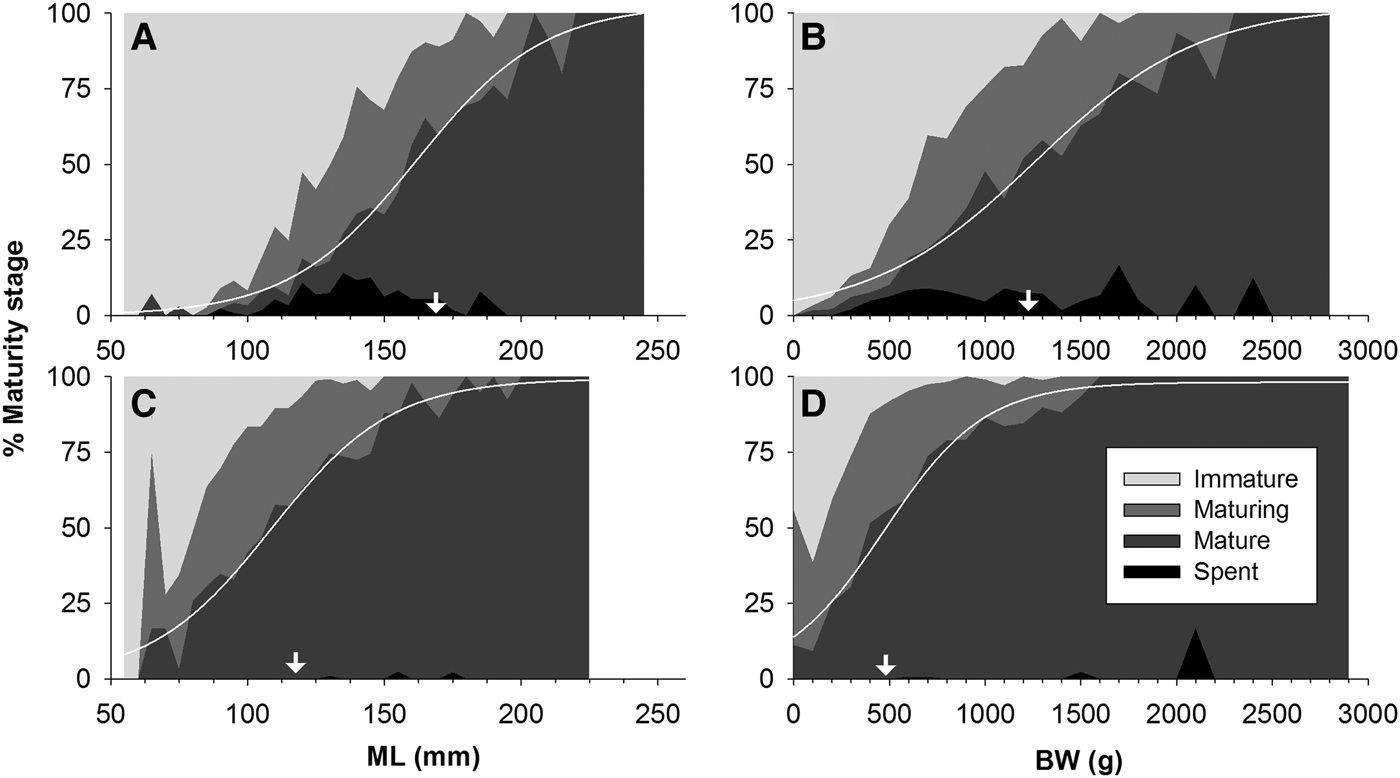
Octopus mimus matures at a wide range of body size. Mature females ranged 73–250 mm ML (145–2951 g BW) and males 73–230 mm ML (136–2560 g BW). Spent females were found at 98–195 mm ML (317–2497 g BW) (Figure 6). Only four spent males were found at 135–183 mm ML (690–2115 g BW). Almost all females (90%) were mature over 200 mm ML and 2000 g BW. Most males (90%) were all mature over 150 mm ML and 1000 g BW (Figure 7). Males mature at a smaller size than females. ML50% was 165 mm for females and 114 mm for males (F 1,71 = 695, P < 0.001). BW50% was 1234 g in females and 487 g in males (F 1,52 = 440, P < 0.001) (Figure 7).
Body weight (BW) distribution of mature and spent Octopus mimus from Santa Elena for (A) females and (B) males.

Octopus mimus maturity stage cumulative relative frequencies by 5 mm mantle length (ML) class (left) and by 100 g body weight (BW) class (right) for females (A and B) and males (C and D) from Santa Elena, Ecuador, during 2013. White logistic curves were fitted to mature plus spent frequencies. White arrows show size at 50% maturity. Blank areas denote no data.

DISCUSSION
We found a stable population structure in Octopus mimus at REMACOPSE during sampled months, with a persistent occurrence of maturity stages and size distributions. Although immature female octopuses dominated the catches, maturing and mature individuals were clearly present in all months, suggesting an extended reproductive seasonality. Spawning along the year is a common feature in other octopus populations, as restriction of spawning to a short period could have disastrous consequences (Cortez et al., Reference Cortez, Castro and Guerra1995; Boyle & Rodhouse, Reference Boyle and Rodhouse2005).
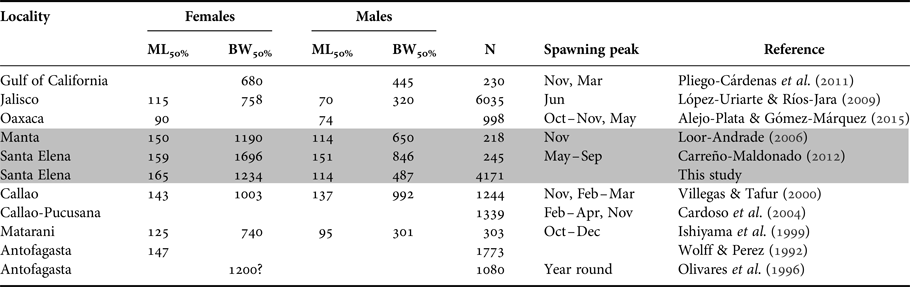
In Octopus hubbsorum from western Mexico a small proportion of mature females are found in all months (López-Uriarte & Ríos-Jara, Reference López-Uriarte and Ríos-Jara2009; Alejo-Plata & Gómez-Márquez, Reference Alejo-Plata and Gómez-Márquez2015), combined with distinct spawning peaks (Table 1). Spawning females of O. mimus from the Humboldt Current are also found all year round. In all cases spawning peaks were defined (Table 1). We could not clarify if a spawning peak for O. mimus exists at REMACOPSE due to sampling being limited to half a year. However, the rise in mature and spent female proportions in November and December could indicate a spawning peak. Off Manta, Ecuador, where most catches also take place from June to November, an increasing proportion of mature females (54%) was found toward November as well (Loor-Andrade, Reference Loor-Andrade2006).
Octopus mimus and Octopus hubbsorum size at maturity and main spawning peaks from different localities of the Eastern Pacific.

Localities in Ecuador are shaded in grey. Size at maturity for mantle length (ML50%) in mm and body weight (BW50%) in grams.
Spawning females of O. mimus occur inside the fishing grounds, as is evident from the catches. Lack of selectivity by diving with hooks accounted for up to 12% of females being spent in December. At Manta and at Salinas previously, occurrence of spent females was negligible (Loor-Andrade, Reference Loor-Andrade2006; Carreño-Maldonado, Reference Carreño-Maldonado2012), although they account for over 15% of females in most months in other regions (Cortez et al., Reference Cortez, Castro and Guerra1995; López-Uriarte & Ríos-Jara, Reference López-Uriarte and Ríos-Jara2009). Presence of spent females in catches raise some concern about the use of commercial diving with hooks for octopus.
No statistically significant shifts from the expected 1:1 sex ratio were found in most months, as reported by Loor-Andrade (Reference Loor-Andrade2006) and Carreño (Reference Carreño-Maldonado2012) for O. mimus from Ecuador. This is also true for O. hubbsorum from western Mexico (López-Uriarte & Ríos-Jara, Reference López-Uriarte and Ríos-Jara2009; Pliego-Cárdenas et al., Reference Pliego-Cárdenas, García-Domínguez, Ceballos-Vázquez, Villalejo-Fuerte and Arellano-Martínez2011) and O. mimus from Peru (Cardoso et al., Reference Cardoso, Villegas and Estrella2004). In other studies, predominance of O. mimus males has been explained as female post-spawning mortality (Pliego-Cárdenas et al., Reference Pliego-Cárdenas, García-Domínguez, Ceballos-Vázquez, Villalejo-Fuerte and Arellano-Martínez2011), or because spawning females retreat to their dens or migrate to deeper waters (Olivares et al., Reference Olivares, Zúñiga, Castro, Segura and Sánchez1996; Ishiyama et al., Reference Ishiyama, Shiga and Talledo1999). Otherwise, sexual rates did change with octopus size. Males dominated smaller size classes, while females were more abundant among larger octopuses (Wolff & Perez, Reference Wolff and Perez1992; López-Uriarte & Ríos-Jara, Reference López-Uriarte and Ríos-Jara2009; Pliego-Cárdenas et al., Reference Pliego-Cárdenas, García-Domínguez, Ceballos-Vázquez, Villalejo-Fuerte and Arellano-Martínez2011; Alejo-Plata & Gómez-Márquez, Reference Alejo-Plata and Gómez-Márquez2015).
Negative allometry in growth is a common feature in octopus due to the differential growth between arms and mantle (Boyle & Rodhouse, Reference Boyle and Rodhouse2005). Both sexes show a wide range in body size at maturity. We observed that the process of maturation is clearly different between sexes, with males maturing at smaller sizes as generally known for other species (Mangold, Reference Mangold and Boyle1987; Smith et al., Reference Smith, Groeneveld and Maharaj2006; Markaida et al., Reference Markaida, Méndez-Loeza and Rosales-Raya2016).
Our size at maturity estimation for females is larger than that of other studies out of Ecuador, including the minimum legal size (MLS) of 1000 g BW established in Peru and Chile. It is similar to the figure from Manta, but smaller than that previously calculated for Salinas (Loor-Andrade, Reference Loor-Andrade2006; Carreño-Maldonado, Reference Carreño-Maldonado2012; Table 1). As pointed out by Markaida et al. (Reference Markaida, Méndez-Loeza and Rosales-Raya2016), temporal differences in octopus size at maturity at the same locality are a common feature. Based on our estimation, we suggest a MLS of 1200 g BW for the REMACOPSE. This size at maturity figure underlines the concern on the high incidence of small octopus persistently found in catches in Ecuador. Most of our individuals (70%) were below 1000 g BW, the same as at Manta (72%; Loor-Andrade, Reference Loor-Andrade2006). In previous samplings from Salinas, the occurrence of octopuses <1000 g BW ranged 51–98% (Naranjo-Tibanlombo, Reference Naranjo-Tibanlombo2009; Carreño-Maldonado, Reference Carreño-Maldonado2012).
Management measures used in octopus fisheries are typically input controls including temporal/spatial fishery closures, MLS and technical gear restrictions (Emery et al., Reference Emery, Hartmann and Gardner2016). We strongly suggest performing a year-long complete sampling programme for O. mimus at REMACOPSE in order to define the presence of a spawning peak which could require establishing a seasonal closure on the fishery. A larger temporal coverage in the sampling would also improve our size at maturity estimation to use as a MLS. Lack of selectivity toward small individuals and spent females raise concerns about the use of hooks in this fishery. Besides that, this aggressive method often inflicts an irreversible damage to the catch, precluding the possibility to return octopuses that do not attain the MLS (Uriarte & Farías, Reference Uriarte, Farías, Iglesias, Fuentes and Villanueva2014). In that case, the usefulness of a MLS as a management measure is questionable. Finally, it is suggested that an octopus monitoring programme on a larger temporal scale should be designed and implemented, especially due to the recognized environmental effects on cephalopod life traits (Rodhouse et al., Reference Rodhouse, Pierce, Nichols, Sauer, Arkhipkin, Laptikhovsky, Lipinski, Ramos, Gras, Kidokoro, Sadayasu, Pereira, Lefkaditou, Pita, Gasalla, Haimovici, Sakai and Downey2014; Quetglas et al., Reference Quetglas, Rueda, Alvarez-Berastegui, Guijarro and Massutí2016).
ACKNOWLEDGEMENTS
We are greatly indebted for the facilities provided by the octopus fishermen ‘pulperos’ of the Cooperativa de Pesca Artesanal Sumergible y Afines ‘Las Palmeras’ who kindly allowed us to sample their catch. We also thank the students Geovanna Parra, George Moncada, Mayra Simbaña, Alexeis Morales and Angie Caceres (Universidad de Guayaquil) and Daniel Chiquito and Melany Pando (Universidad Estatal Península de Santa Elena), for their enthusiastic participation during sampling. This paper greatly benefited from the criticism of two anonymous reviewers.
FINANCIAL SUPPORT
This research is part of the project ‘Biología pesquera del pulpo (Octopus spp.) y su fauna acompañante en la Reserva de Producción Faunística Marino Costera Puntilla de Santa Elena’ funded by the National Fisheries Institute of Ecuador (Instituto Nacional de Pesca, INP), Programa 20-002. UM thanks the Secretaria de Educación Superior, Ciencia, Tecnología e Innovación (SENESCYT) for supporting his research at INP through the PROMETEO project.