1. Introduction
Listracanthus Newberry & Worthen, Reference Newberry, Worthen and Worthen1870 is a ‘form’ taxon representing an enigmatic chondrichthyan known only from its mostly small but elaborate spines and a few dermal denticles (ichthyoliths). It ostensibly ranges from the Carboniferous to the Triassic (Mutter & Neuman, Reference Mutter and Neuman2006) and was first described from Carboniferous strata in Illinois, USA (Newberry & Worthen, Reference Newberry, Worthen and Worthen1870). Elsewhere in the United States it has been reported from Ohio, Indiana, Missouri and Kansas (Newberry, Reference Newberry1873, Reference Newberry1875; Newberry & Worthen Reference Newberry, Worthen and Worthen1870; Hibbard, Reference Hibbard1938; Chorn & Reavis, Reference Chorn and Reavis1978; Schultze et al. Reference Schultze, Stewart, Neuner and Coldiron1982; Hamm & Cicimurri, Reference Hamm and Cicimurri2005), while in Europe the genus has been reported from the Carboniferous of England (Stobbs, Reference Stobbs1905; Edwards & Stubblefield, Reference Edwards and Stubblefield1948), Scotland (Woodward, Reference Woodward1891, p. 149), Belgium (Woodward, Reference Woodward1891; Koninck, Reference Koninck1878; Derycke et al. Reference Derycke, Cloutier and Candilier1995), Germany (Bolton, Reference Bolton1896; Schmidt, Reference Schmidt1950) and the Czech Republic (Lang, Reference Lang1979; Štamberg & Lang, Reference Štamberg and Lang1979). In Asia Listracanthus has been reported from the Carboniferous of northern China (Lu et al. Reference Lu, Fang, JI and Pang2002, Reference Lu, Zhang and Fang2005) and also from the Permian of the Ural region of Russia (Ivanov, Reference Ivanov2005). Turner (Reference Turner1993) reported Listracanthus in the Carboniferous of Queensland, Australia (the first occurrence in the southern Hemisphere) on the basis of a single spine, but several dermal denticles figured by her as ‘hybodontid’ also resemble those of Listracanthus. Listracanthus has also been considered present in the Triassic of Canada where its occurrence has been considered a part of the so-called Lilliputian recovery fauna after the Permian mass extinction event (Mutter & Neuman, Reference Mutter and Neuman2009). Although enigmatic, Listracanthus was considered by Patterson (Reference Patterson1965) to be a junior synonym of the holocephalan Deltoptychius, but recent workers accept that Listracanthus represents an early, although somewhat unusual, elasmobranch (e.g. Mutter & Neuman, Reference Mutter and Neuman2006). Here we describe a new specimen of elasmobranch with associated spines and denticles that resembles Listracanthus but displays a wide variety of dermal denticle morphotypes as well as several significant differences in spine structure from the holotype of Listracanthus.
Institutional abbreviations. UALVP – Laboratory for Vertebrate Paleontology – University of Alberta – Edmonton – Canada; YPM – Yale Peabody Museum – USA; NHMUK – Natural History Museum – London.
2. Locality
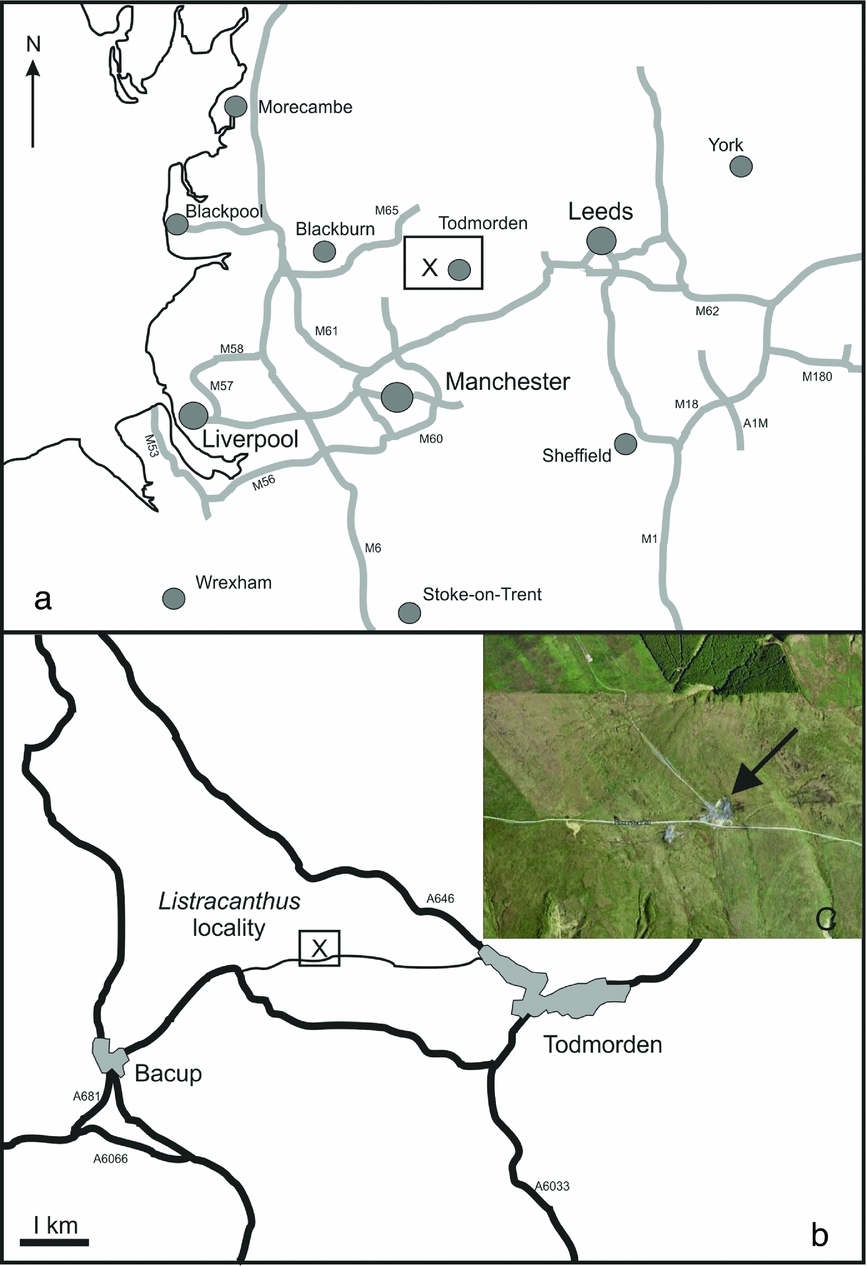
Material examined in this study was collected by one of the authors (PdS) on the east side of an old colliery spoil dump on Todmorden Moor, Calderdale District, West Yorkshire (NGR SD 89292 24865) (Fig. 1a). This spoil dump was generated from mine workings of the Sandy Road Colliery belonging to the East Lancashire Brick Co. Ltd., abandoned in 1966. It appears to be located close to the boundary between the Millstone Grit and the Lower Coal Measures (Wright et al. Reference Wright, Sherlock, Wray, Lloyd and Tonks1927) (Fig. 2). Presently there is very little exposure of the fossiliferous strata in this region, but the spoil dump is well-known for yielding so-called ‘coal balls’, carbonate concretions rich in 3D plant remains (Stopes & Watson, Reference Stopes and Watson1908), and goniatites from the Gasteroceras listeri marine band. There are few accounts of vertebrate remains from this locality; an early exception is the report of fish remains by Bolton (Reference Bolton1889) who described coelacanth and indeterminate fish bones from a locality east of Bacup and an occurrence of Listracanthus in shales above the Bullion Coal, also at Bacup (Fig. 1), but this specimen was lost at the time of its discovery (Bolton Reference Bolton1896). The abundance of ‘coal balls’ at this locality has made it an important historic site, which was collected by palaeobotanist Mary Stopes in 1903 (Briant, Reference Briant1962). Todmorden Moor is currently registered as a site of Local Geological Interest by the West Yorkshire Geology Trust.
Locality maps for the Todmorden Acanthorhachis occurrence. (a) Generalized map of central England showing the location of Todmorden with respect to main commercial centres. (b) The Acanthorhachis locality is an abandoned mine dump by the field road between Todmorden and Bacup. (c) Insert showing Google Earth image of abandoned mine dump.

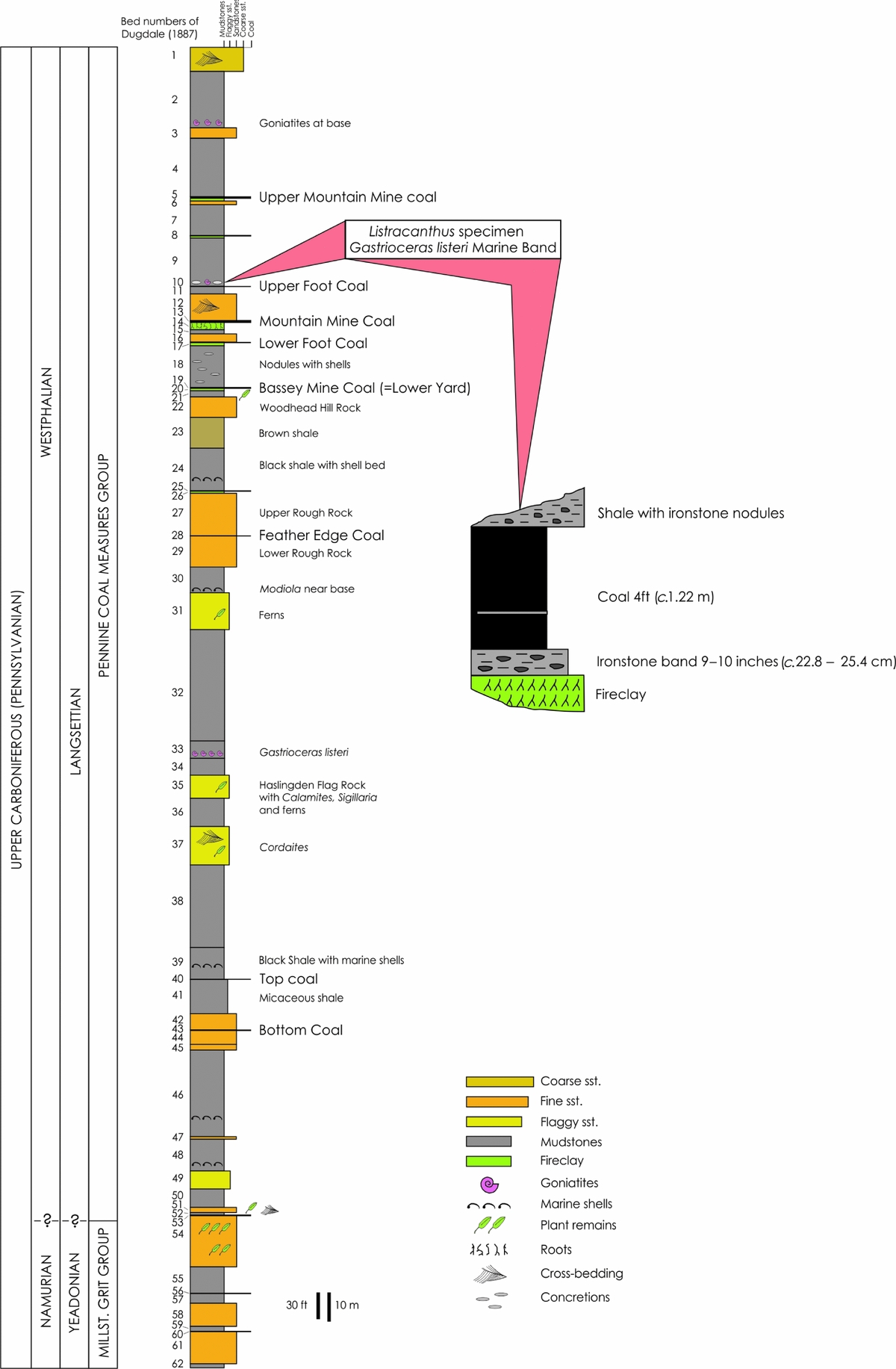
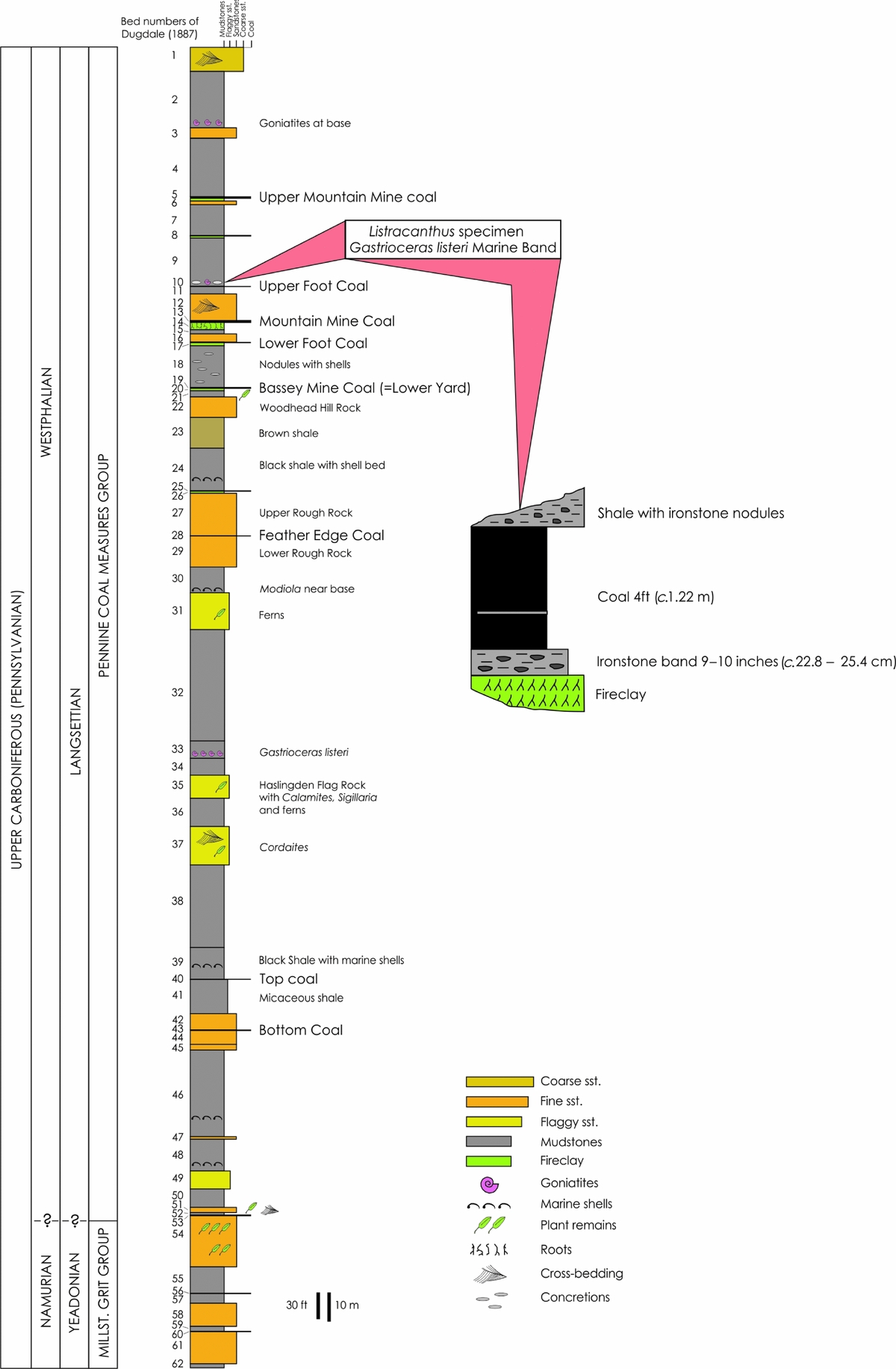
A generalized stratigraphic section for the Westphalian sequence in the vicinity of Todmorden. The insert (arrowed) is a more detailed section seen in the abandoned coal mine that yielded the Acanthorhachis specimen, from Dugdale (Reference Dugdale1887).
3. Material and methods
The associated spines and denticles examined in this analysis were all obtained from a concentration in a layer within a dark grey limestone fragment measuring c. 160 × 90 × 40 mm. Part of the fragment was broken and placed in acetic acid at 7–10% concentration until all the matrix had dissolved (approximately one month). A second piece was placed in acetic acid, but with an acid-resistant coating (paraloid) applied to the sides so that a bedding plane surface was partially etched to reveal several large spines without complete separation from the matrix. Acid-resistant residues were rinsed initially in tap water, with a final rinse in distilled water. Suspended clay was decanted off and the remaining insoluble residue contained only dermal denticles and did not require sieving. A similar process was also performed on pieces of Dinantian crinoidal limestone from Steeplehouse Quarry, Wirksworth, Derbyshire containing Petrodus denticles for comparative purposes. Specimens for electron microscopy analysis were mounted on flat aluminium stubs, sputter coated with gold and examined using a JEOL JSM 6100 machine.
Thin-sections were produced from remaining fragments and examined using a petrological microscope and photographed with an Olympus digital camera. Images have been manipulated using Corel Photo-Paint X5 and CorelDraw X5.
4. Geological setting and stratigraphy
4.a. Geological setting
The geology of Rossendale and Todmorden Moor is described by Aitken (Reference Aitken1868) and Wright et al. (Reference Wright, Sherlock, Wray, Lloyd and Tonks1927) with a more recent, though general, account provided by Aitkenhead et al. (Reference Aitkenhead, Barclay, Brandon, Chadwick, Chisholm, Cooper and Johnson2002). The fossiliferous strata are located on the eastern flank of the Rossendale Sub-basin of the Pennine Basin and are part of an anticline associated with the so-called Todmorden Smash Belt, where they dip gently to the SW. Exposures of the fossiliferous strata are rare on Todmorden Moor due to extensive cover by Holocene peat deposits, but a good section can be seen in the small stream on the eastern side of the Calder Valley at national grid reference [SD 90762 27215] near Coal Clough Farm.
4.b. Stratigraphy
A complete stratigraphic log for Todmorden Moor has not been published, but generalized accounts of the sequence of Coal Measures of Rossendale are given by Dugdale (Reference Dugdale1887) and are presented diagrammatically here (Fig. 2). The lithostratigraphy of the British Coal Measures, with details of the Pennine Basin and the scheme followed here, is given by Waters et al. (Reference Waters, Browne, Dean and Powell2007).
Although the material described here was not found in situ, there are very good reasons for being able to provide reasonable stratigraphic data for their occurrence. The material was found on a mine spoil dump derived from the working of coal seams lying towards the base of the so-called Lower Coal Measures (Westphalian, Langsettian) of the Pennine Coal Measures Group (Fig. 2) that are exposed on the summit of Todmorden Moor. Here a heterolithic sequence of shales, clays sandstones and thin coals overlies the Kinderscoutian (Stainmore Formation = Midgely Grit = Pule Hill Grit Formation = Todmorden Grit of earlier authors) of the Millstone Grit Group (Aitkenhead et al. Reference Aitkenhead, Barclay, Brandon, Chadwick, Chisholm, Cooper and Johnson2002). Several of the coal seams were worked, with the Sandy Lane Colliery working the Union Seam, a combination of the Lower Mountain and Upper Foot coal seams (Fig. 2). These two seams are indicated separately in the log described by Dugdale (Reference Dugdale1887) and occur towards the top of his section (Fig. 2).
4.b.1. Biostratigraphy
Much of the UK Westphalian is in non-marine facies and has been zoned using non-marine bivalves, with the lower part of the Lower Coal Measures of the Pennine Coal Measure Group lying within the Lenisculacata biozone. However, a number of marine bands occur within the Lower Coal Measures in the Pennine Basin, allowing more refined zonation and permitting correlation with marine sequences elsewhere. Nodules containing goniatites occur in the strata immediately overlying the Union Coal at Todmorden Moor, where they could be seen in the roof of the galleries (the miners calling them ‘Baum pots’; Wright et al. Reference Wright, Sherlock, Wray, Lloyd and Tonks1927). Brown (Reference Brown1841) and Wright et al. (Reference Wright, Sherlock, Wray, Lloyd and Tonks1927) record a number of fossils from the Baum pots, including the goniatites Gastrioceras subcrenatum, G. listeri, the bivalves Posidoniella sp. and Pterinopecten sp. and plant remains. During field work, we also found orthoconic nautiloids in these concretions.
4.b.2. Chronostratigraphy
The presence of the goniatites Gastrioceras subcrenatum and G. listeri permits correlation with sequences elsewhere, and indicates a Lower Westphalian, Langsettian (Bashkirian of Gradstein et al. Reference Gradstein, Ogg and Smith2004) age for the sequence at Todmorden Moor, with an age of c. 315 Ma (Davydov et al. Reference Davydov, Wardlaw, Gradstein, Gradstein, Ogg and Smith2004).
5. Sedimentology, diagenesis, taphonomy and palaeoenvironment
5.1. Sedimentology
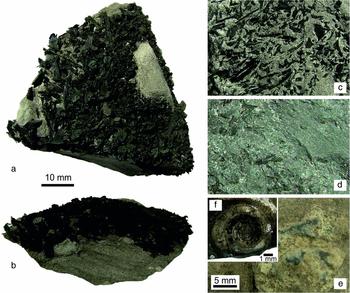
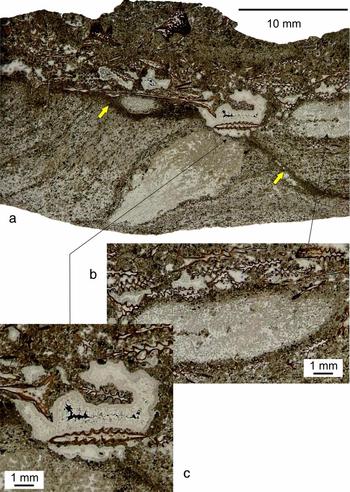
The observations made here are limited because of the ‘extra situ’ context of the sample containing the ichthyoliths, and are based solely on the hand specimen and petrographic sections taken from it. The matrix of the sample is a dark grey mudstone with numerous black, reflective ichthyoliths adding to its dark appearance (Fig. 3). Weathered surfaces are cream coloured, and mild etching by humic acids has revealed some fine-scale sedimentary structures including laminae and possible cross-stratification (Fig. 3e). Bedding is clearly present giving the specimen a tabular aspect. The way ‘up’ is not so easy to discern. The ichthyoliths are concentrated into a single layer of 10–20 mm thick. Contact of the ichthyolith layer with layers either side is well-defined, but the matrix of the bounding layers appears similar to that of the ichthyolith layer. Fine laminae of 1–2 mm revealed on an etched surface are evident, while a thin section reveals them to be truncated by the ichthyolith layer (Fig. 4a). This truncation suggests that the laminated layer predates the ichthyolith layer.
A portion of the specimen yielding the Acanthorhachis denticles after partial dissolution in 10% acetic acid: (a) looking down onto bedding plane surface (NHMUK P73205a); (b) etched section through the portion (NHMUK P73206b); (c) detail of the distribution of denticles on bedding after etching and (d) before etching showing fresh, unweathered colour of the matrix; (e) weathered surface showing cream colouration; and (f) goniatite cf. Gastrioceras listeri photographed under alcohol. The specimen is seen in sagittal section, showing this was not the original outer surface of the concretion.

Thin-section through the Acanthorhachis -bearing nodule (NHMUK P73207c). (a) Laminated mudstone with microspar cement overlain by non-laminated mudstone rich in Acanthorhachis denticles. The yellow arrows highlight the contact. (b) Ellipsoid carbonate ‘clast’ perhaps representing pinched-out lamina, overlain by denticle-bearing sediment. The flat-sided elongate spines of Acanthorhachis lie parallel to the bedding surface. (c) A vuggy cavity within the denticle-bearing lamina lined with at least three generations of calcite.

5.2. Diagenesis and taphonomy
Cementation of the clays to a carbonate mudstone appears to be of a relatively early diagenetic origin as there is no crushing and fracturing of the ichthyoliths or enclosed goniatites. The matrix of the ichthyolith layer comprises clays with a flocculated or pelletal texture cemented by calcite microspar (Fig. 4c). Two elongate, clast-like bodies may be a relic of a ‘pinched-out’ layer, suggesting some soft sediment deformation (Fig. 4b). It is therefore possible that the ichthyoliths occur in a small scour, or are part of an individual that sank into soft sediment in a similar manner to that reported for fishes from the Cretaceous Santana Formation of NE Brazil (Martill, Reference Martill1997). All of the ichthyolith remains pertain to a single taxon in which dermal denticle variation is considerable. The largest elements in the assemblage are spine-like denticles of up to 40 mm length associated with denticles of less than 1 mm diameter. There is a preferred orientation in that the laterally flattened spine-like denticles lie in the plane of the bedding, but otherwise do not appear to have a preferred directional orientation. All of the denticles are in excellent condition with numerous spines with unbroken tips. Damaged spines seen in acid prepared residues have been broken during preparation, as thin-sections show the spines to be intact. There are no examples with signs of physical abrasion.
5.3. Palaeoenvironment
Although shark remains usually occur more abundantly in marine strata, the occurrences of freshwater elasmobranchs both in the past (e.g. Sweetman & Underwood, Reference Sweetman and Underwood2006) and today (e.g. J. McEachran, unpub. data, 2004: http://www.fishbase.org) make isolated occurrences of sharks unreliable palaeosalinity indicators. The presence of a small (10 mm diameter) goniatite on the margin of the specimen however indicates a marine origin for the sample (Fig. 3f). The fine-grained nature of the matrix and the lack of abrasion and sorting of the ichthyoliths suggests a quiet, perhaps deepish, water setting for the sample. Water depth for a marine band associated so intimately with coal seams would probably not be excessively deep. The disaggregated but associated nature of the fish remains, all pertaining to a single taxon and most probably a single individual, suggests either disaggregation due to very gentle winnowing or, perhaps more likely, due to carcase collapse during decomposition in very quiet conditions.
6. Systematic palaeontology
CHONDRICHTHYES Huxley, Reference Huxley1880
?ELASMOBRANCHII Bonaparte, Reference Bonaparte1838
Family Listracanthidae fam. nov
Diagnosis. Dermal denticles and spines of osteodentine with broad, flatish basal body, conically hollowed basally and spine most-likely lacking enameloid outer layer. Elongate spines typified by rounded lateral ridges with occasional subsidiary lateral spines terminating in subsidiary spine at posterior and sometimes anterior margins. Spines and lateral ridges hollow. Other dermal denticles highly variable.
Content. Listracanthus Newberry & Worthen, Reference Newberry, Worthen and Worthen1870 and Acanthorhachis gen. et sp. nov. (see below).
Genus Listracanthus Newberry & Worthen, Reference Newberry, Worthen and Worthen1870
Type species. Listracanthus hystrix Newberry & Worthen, Reference Newberry, Worthen and Worthen1870.
Content. Listracanthus hystrix Newberry & Worthen, Reference Newberry, Worthen and Worthen1870; Listracanthus hildrethi Newberry, Reference Newberry1875; L. eliasi Hibbard, Reference Hibbard1938, Listracanthus pectenatus Mutter & Neuman, Reference Mutter and Neuman2006. Perhaps also L. beyrichi von Könen, Reference Könen1879 and L. woltersi Schmidt, Reference Schmidt1950.
Geographic and temporal range. Global within the palaeotropics and high latitudes in Australia. Upper Carboniferous – Lower Triassic.
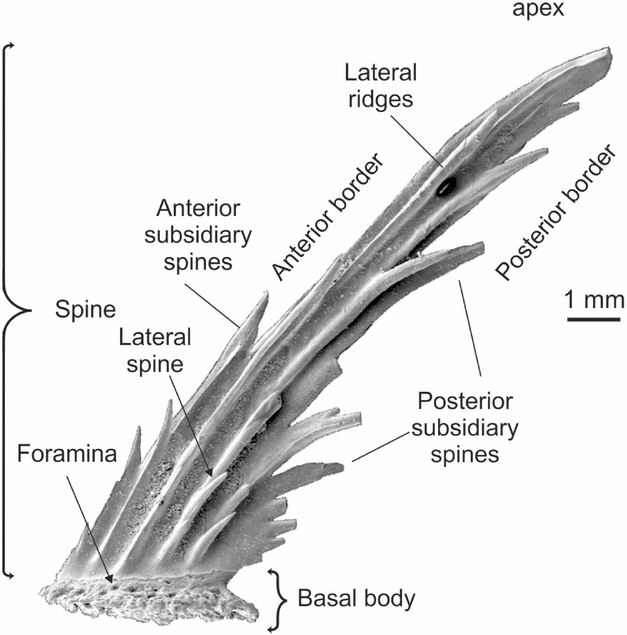
Revised diagnosis. Hollow, tapered, gently recurved spine with numerous parallel lateral ridges, terminating at posterior border progressively apically. ‘Fringe’ of small spines form continuous posterior border and extend over spine apex to continue a short distance along anterior border. Overall morphology (e.g. number of lateral ridges, number of spines, height/width ratio) variable. Morphological terminology is given in Figure 5.
A spine-like dermal denticle of Acanthorhachis gen. nov. showing main features and nomenclature used in text.

Discussion. The genus Listracanthus was erected by Newberry & Worthen (Reference Newberry, Worthen and Worthen1870) for a distinctive tapered spine fine characterized by being gently posteriorly curved and having lateral margins with prominent parallel ridges extending from a broad basal body to the tip of the spine. Those ridges that reached the posterior border before reaching the apex of the spine were deflected posteriorly and projected beyond the spine margin. The anterior-most lateral ridges reach the apex and form a ‘bristle-like tuft’ of spines which extend a little way down the anterior border of the spine. For this distinctive spine Newberry & Worthen (Reference Newberry, Worthen and Worthen1870) erected the species L. hystrix. Newberry (Reference Newberry1875) assigned an additional species, L. hildrethi to Listracanthus that differed mainly in being considerably smaller than L. hystrix. Later authors referred additional material to Listracanthus, erecting several new species including: L. wardi erected by Woodward (Reference Woodward1903) for material from the British Isles; L. beyrichi erected by von Könen (Reference Könen1879) for an example from Belgium; L. spinatus erected by Bolton (Reference Bolton1896) for specimens from the Lancashire coalfield; and L. woltersi erected by Schmidt (Reference Schmidt1950) and L. eliasi erected by Hibbard (Reference Hibbard1938) for spines from Missouri, USA. Listracanthus was also reported from Russia and China, but these examples were not assigned to new or existing species (Ivanov, Reference Ivanov2005; Lu et al. Reference Lu, Fang, JI and Pang2002, Reference Lu, Zhang and Fang2005). A series of ichthyoliths from the Triassic of western Canada were assigned to a new species of Listracanthus, L. pectenatus Mutter & Neuman (Reference Mutter and Neuman2006). This occurrence was particularly noteworthy, as it had been considered that Listracanthus had become extinct at or before the end of the Permian.
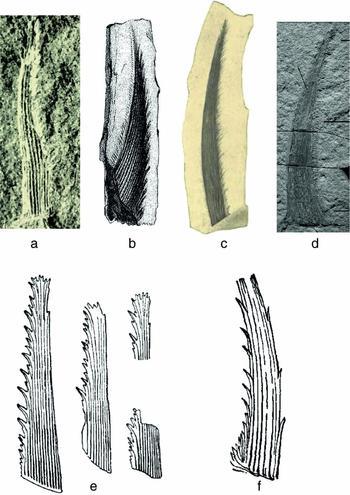
The holotype spine of Listracanthus (Fig. 6d) is highly distinctive, particularly for the presence of a large number of posteriorly located spines that form a ‘comb-like’ posterior margin extending from the basal body to the apex and then passing over the spine apex and continuing a short way along the distal anterior border. We consider this aspect of its anatomy to be diagnostic for the genus. Other species referred to Listracanthus that display this morphology include L. hildrethi Newberry, Reference Newberry1875 and L. eliasi Hibbard, Reference Hibbard1938. We have not seen figures of L. woltersi or L. beyrichi to comment on the validity of their placement in the genus.
Spines of the different species of Listracanthus and Acanthorhachis: (a) Listracanthus eliasi after Hibbard (Reference Hibbard1938); (b) Listracanthus beyrichi after von Könen (Reference Könen1879); (c) Listracanthus hystrix after Newberry & Worthen (Reference Newberry, Worthen and Worthen1870); (d) Listracanthus pectenatus Mutter & Neuman (Reference Mutter and Neuman2006), elongate dermal spine of holotype series UALVP 46551 from the Lower Triassic of western Canada (this spine compares closely with the type species of the genus from the Carboniferous of Illinois); (e) Acanthorhachis wardi after Woodward (Reference Woodward1903); (f) Acanthorhachis spinatus after Bolton (Reference Bolton1896). Not drawn to scale.

On account of the variability, we regard most of the species erected and placed within Listracanthus to be synonyms of the type species L. hystrix, excluding L. pectenatus Mutter & Neuman, Reference Mutter and Neuman2006, which we consider valid (see below).
Listracanthus hystrix Newberry & Worthen, Reference Newberry, Worthen and Worthen1870
Figure 6c
-
1870 Listracanthus hystrix Newberry & Worthen.
-
1875 Listracanthus hildrethi Newberry, p. 56, pl. LIX, fig. 6.
-
1938 Listracanthus eliasi Hibbard.
-
1978 Listracanthus (probably) hystrix Newberry & Worthen; Chorn & Reavis, p. 5, figures 2, 3c.
-
2005 ‘Listracanthus’ Ivanov, p. 132, figure 5k, l.
Holotype. YPM VP 007343.
Revised diagnosis. Spines as for genus, but subsidiary spines of posterior border directed posteroapically and of variable length.
Discussion. The holotype of Listracanthus hildrethi Newberry, Reference Newberry1875 from Ohio was based on an incomplete spine distinguished from L. hystrix on account of being somewhat broader, slightly more curved and ‘sharply marked’ (whatever that may mean). The variation found in the spines described here suggests strongly that spines of Listracanthus would also be similarly variable and we consider L. hildrethi to be a morph, and therefore junior synonym of L. hystrix. L. eliasi Hibbard, Reference Hibbard1938 is similar to L. hystrix, differing only in being somewhat straighter, and is here regarded as a junior synonym of that taxon. We tentatively include L. beyrichi Könen, Reference Könen1879 and L. woltersi Schmidt, Reference Schmidt1950 within L. hystrix.
Listracanthus pectenatus Mutter & Neuman, Reference Mutter and Neuman2006
Figure 6d
Holotype. UALVP 47002.
Revised diagnosis. Spines as for genus but with subsidiary spines of posterior border uniform in length, closely adpressed and directed posteriorly. Subsidiary spines of posterior border solid. Composite spines may occur, which Mutter & Neuman (Reference Mutter and Neuman2006) regard as aberrant. It is quite possible that these spines are simply specialized elements located in specific parts of the animal, perhaps as elaborate cephalic elements.
Discussion. This taxon was erected for spines similar to those of L. hystrix, but from the base of Triassic (probably Lower Smithian) of western Canada. This record was the first occurrence of Listracanthus in the Mesozoic. Measurements of numerous spines suggest that L. pectenatus was considerably smaller than Palaeozoic forms of Listracanthus. Consequently, Mutter & Neuman (Reference Mutter and Neuman2006) considered L. pectenatus to represent a ‘Lilliputian’ taxon surviving the biotic crisis at the end of the Permian. However, the largest spines of L. pectenatus (c. 40–70 mm) are comparable with those from the Carboniferous.
Genus Acanthorhachis gen. nov
Type species. Listracanthus spinatus Bolton, Reference Bolton1896
Content. Acanthorhachis spinatus (Bolton, Reference Bolton1896).
Derivation of name. Acanthos Gr. spine, and rhachis Gr. a suffix for spine, alluding to the numerous subsidiary spines on the spine-like dermal denticles of this shark.
Common name. The spiny spined shark.
Diagnosis. As for type and only species, described below.
Acanthorhachis spinatus (Bolton, Reference Bolton1896)
Figures 6f, 7–14
Holotype. Present whereabouts unknown. Formerly housed in Salford Museum, Greater Manchester, where most fossils were transferred to other museums including Manchester, Fleetwood, Bolton, Stockport, Leeds and Liverpool during the 1980s.
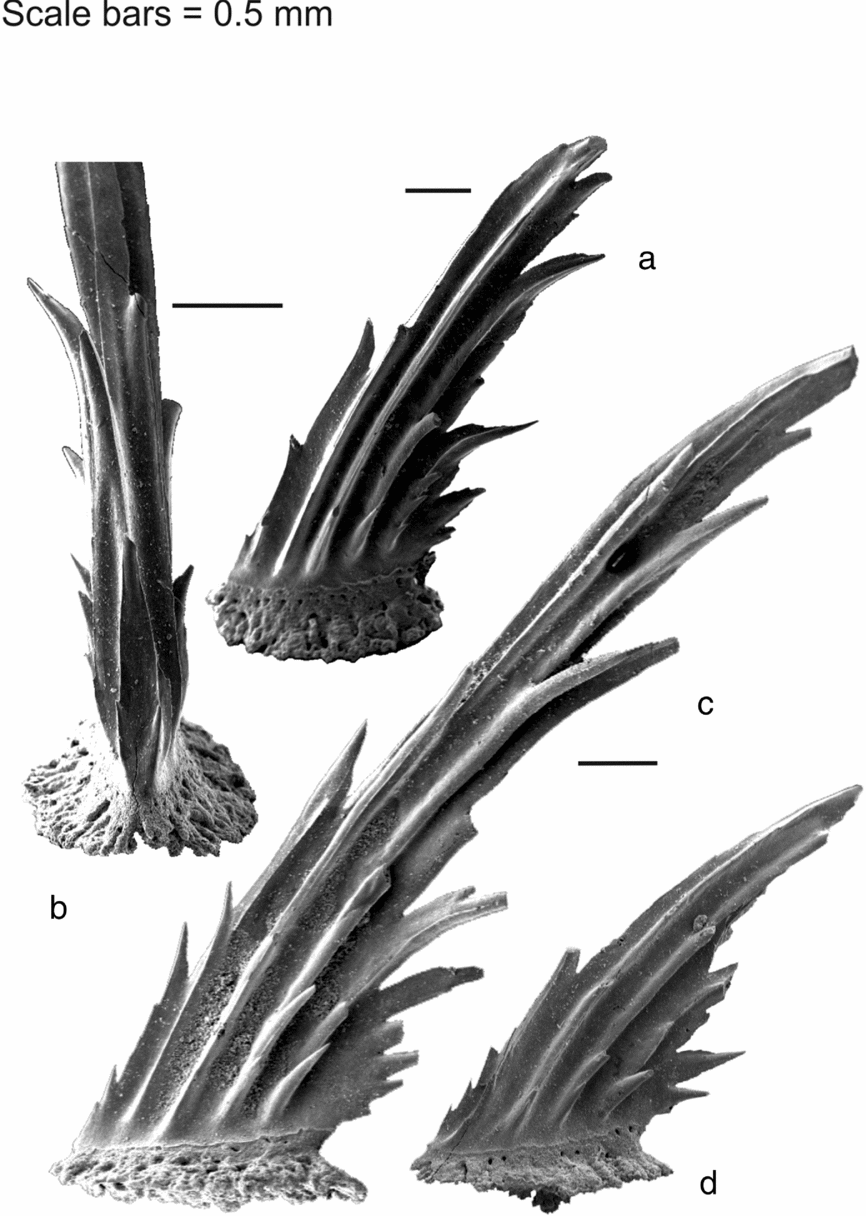
Acanthorhachis spinatus (Bolton, Reference Bolton1896). Scanning electron micrographs of elongate dermal denticles elongated into spines, possibly from dorsal surface of the animal (NHMUK P73208d): (a, b) medium height spine; (c) highly elongate spine; (d) short spine. (a, c, d) seen in left lateral aspect, (b) seen in anterior aspect. Scale bars 1 mm.

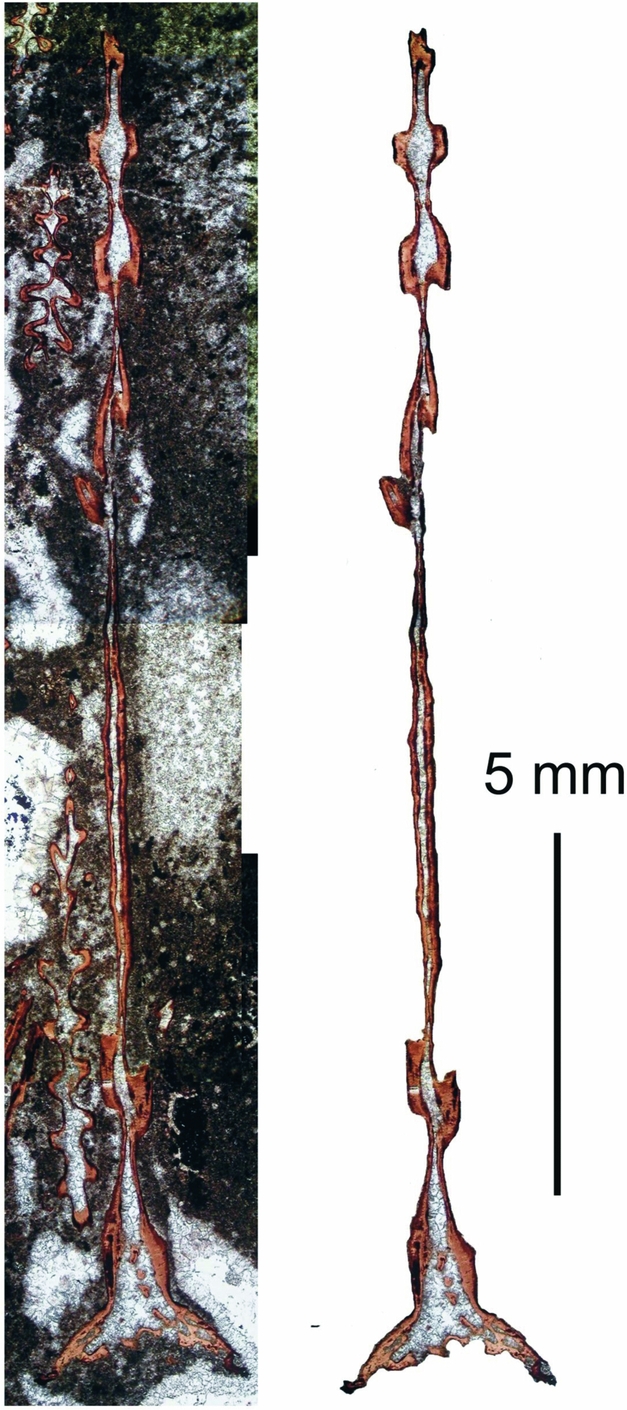
Acanthorhachis spinatus (Bolton, Reference Bolton1896). Longitudinal section through highly elongate spine showing hollow interior (NHMUK P73209e). Within matrix associated with other spines on left. On right digitally removed from matrix.

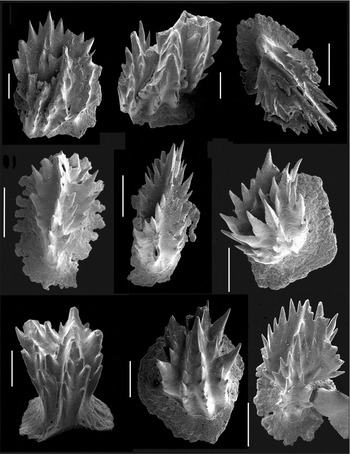
Acanthorhachis spinatus (Bolton, Reference Bolton1896). Variation in morphology of short, composite dermal denticles, assumed to be from flanks of animal (NHMUK P73210f).

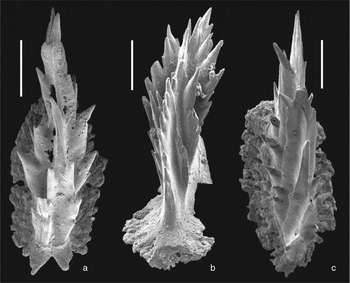
Acanthorhachis spinatus (Bolton, Reference Bolton1896). Dermal denticles intermediate between spines and short denticles (NHMUK P73211g). (a, c) in dorsal view, (b) in anterior view. Scale bars 1 mm.

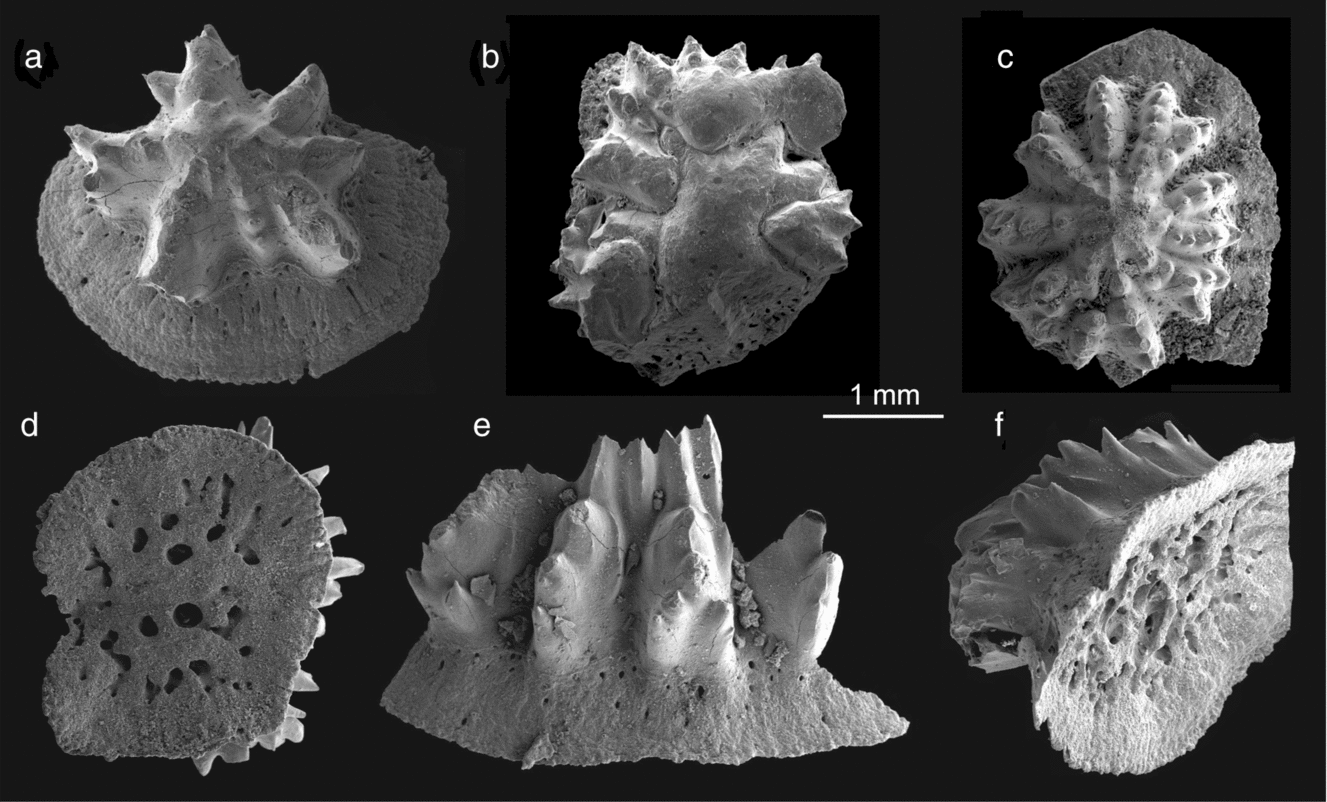
Acanthorhachis spinatus (Bolton, Reference Bolton1896). Robust, irregular and stellate denticles (NHMUK P73212h): (a) stellate with six main radials; (b) a robust, bulbous form, perhaps pathological; (c) stellate form with nine radial ridges, some of which are bifid; (d) view of basal body showing vascular ventral surface; (e) lateral view of stellate form; and (f) oblique view of stellate form showing characteristically dished ventral surface of basal body.

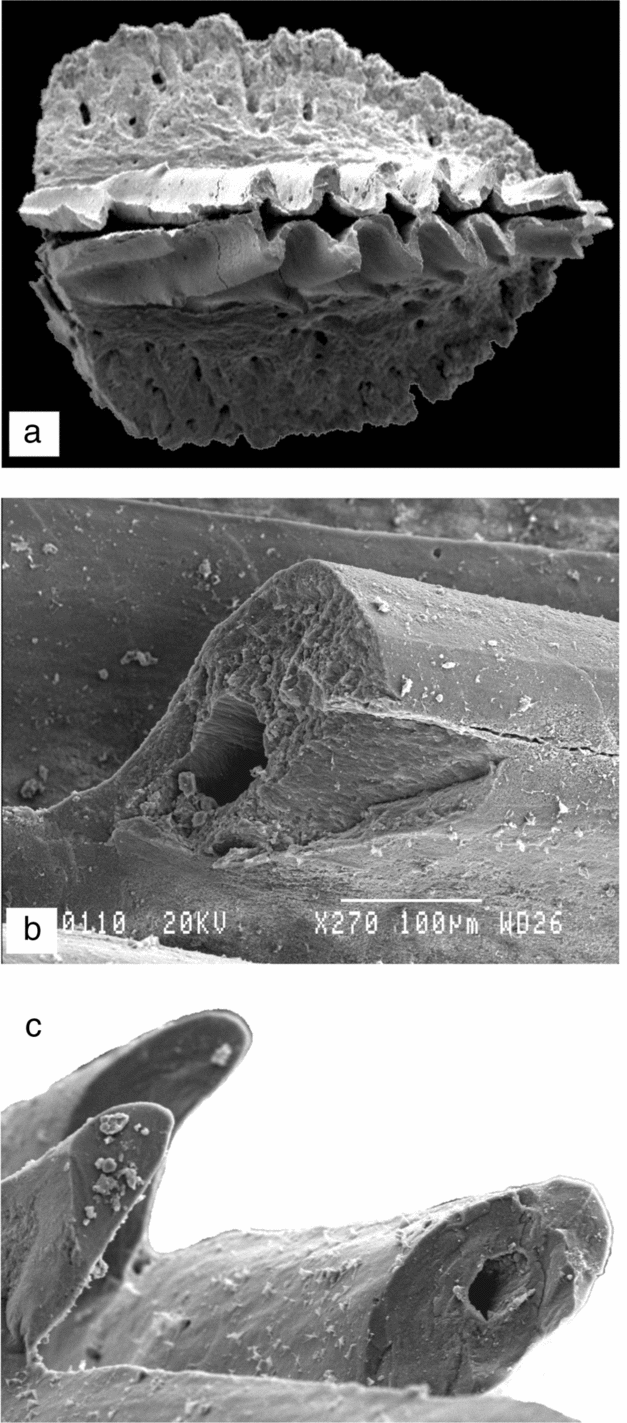
Acanthorhachis spinatus (Bolton, Reference Bolton1896): (a) broken surface of tall spine revealing hollow interior (pulp cavity); (b) broken lateral ridge just prior to branching away from main body revealing that hollow interior extends into subsidiary spines; and (c) tip of spine broken, revealing hollow interior extending almost to tip (right side of image). The broken tip on the left does not have a hollow interior (NHMUK P73216).

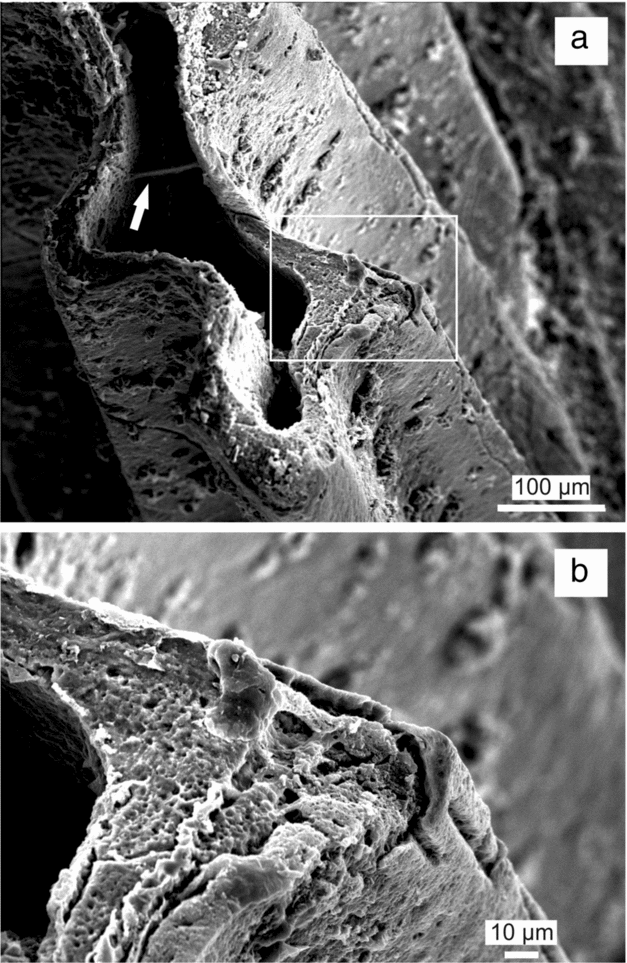
Acanthorhachis spinatus (Bolton, Reference Bolton1896). (a) Scanning electron micrographs of etched surface revealing internal tissue structure (NHMUK P73216). There appears to be a cross-strut internally traversing the internal cavity (arrow). (b) High-magnification image of spine wall in (a) showing a thin outer non-enameloid layer and thin inner layer sandwiching a vascular internal layer.

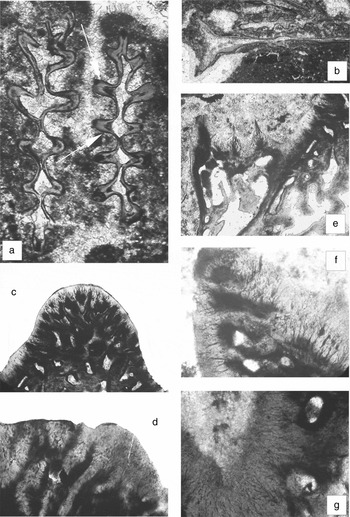
Acanthorhachis spinatus (Bolton, Reference Bolton1896). Thin-sections through spines showing internal ‘osteo’ histology (NHMUK P73215): (a) two elongate spines sectioned transversely revealing dark outer (arrows) and inner layers, sandwiching a lighter-coloured middle layer; (b) section through basal body of spine showing extent of internal void (pulp cavity); (c, d) distribution of mineralized tissue within one of the bulbous spines; (e, f) dense network of micro canals reaching periphery of denticle, suggestive of chemo- or electro-sensory function (note how the canals converge on the sharpened microspine in (e)); and (g) network of branching micro-canals within dentine.

Referred material described here. NHMUK P73205a, P73206b, P73207c, P73208d, P73209e, P73210f, P73211g, P73212h, P73215, P73216.
-
1896 Listracanthus spinatus Bolton, p. 425, unnumbered figure p. 425.
-
1903 Listracanthus wardi Woodward, p. 487, figs 1–8.
Geographic and temporal range. British Isles, Upper Carboniferous, Westphalian.
Revised diagnosis. Modified dermal spines resembling those of Listracanthus, but with irregular distribution of subsidiary spines on posterior border and not as many, and more widely spaced and of irregular length. Posterior subsidiary spines are hollow almost to their tips.
Discussion. The spine-like dermal denticles named Listracanthus spinatus by Bolton (Reference Bolton1896) are here regarded as generically distinct from those of Listracanthus hystrix Newberry & Worthen, Reference Newberry, Worthen and Worthen1870 on account of the arrangement of subsidiary spines that branch from lateral ridges at the denticles posterior border, and are referred to the new genus Acanthorhachis. Histologically the spines of Acanthorhachis and Listracanthus are similar in that both are hollow (at least in the main body of the denticle) and both appear to lack enameloid (Figs 12–14).
Dermal denticle variation. A wide variety of dermal denticle morphologies are present in Acanthorhachis including elongate, posteriorly curved laterally ribbed spine-like elements (Figs 7, 8) which were the basis for the erection of the type species A. spinatus. These elements may have as few as 4 rounded and as many as 10 lateral ridges which periodically give rise to lateral subsidiary spines and, where they reach the posterior margin, give rise to one or more subsidiary posterior spines. Some denticles are shorter multi-bladed elements with multiple branching lateral ribs and subsidiary spines (Figs 9, 10) giving them a ‘bushy’ appearance. There are also short flat-based boss-like elements (Fig. 11), some of which are similar to those called Petrodus (see Chorn & Reavis, Reference Chorn and Reavis1978; Elliot et al. Reference Elliot, Irmis, Hansen and Olson2004 for similar denticles in Listracanthus). These shorter elements are also highly variable, with some being stellate having 5–8 radial spiny ridges, some of which bifurcate distally (Fig. 11a, c). Irregular bulbous forms also occur (Fig. 11b). The degree of variation suggests a near continuum of form between denticle morphs.
In section many of the subsidiary spines contain a sub-endosteal network of fine capillaries that extend from the deep interior of the denticle and converge just beneath the tip of the subsidiary spine (Fig. 14). These may represent an arrangement of dentine tubules and provide the dermal denticle with an electro-sensory or chemosensory function, but this remains to be examined further. The dermal denticles of sharks appear to be mainly concerned with protection from macro predators and parasites, drag reduction and, with modified elements, sexual display and reproduction (Raschi & Tabit, Reference Raschi and Tabit1992). A role in dismembering prey has also been discovered for elongate dermal denticles in the dogfish Scyliorhinus canicula (Southall & Sims, Reference Southall and Sims2003). An electro-potential or chemo-sensory role has yet to be reported for the denticles themselves, although both chemo-sensing (Gardiner & Atema, Reference Gardiner and Atema2007), electro-potential (Murray, Reference Murray1960) and temperature-sensitive (Brown, Reference Brown2010) organs are well known in sharks.
7. Discussion
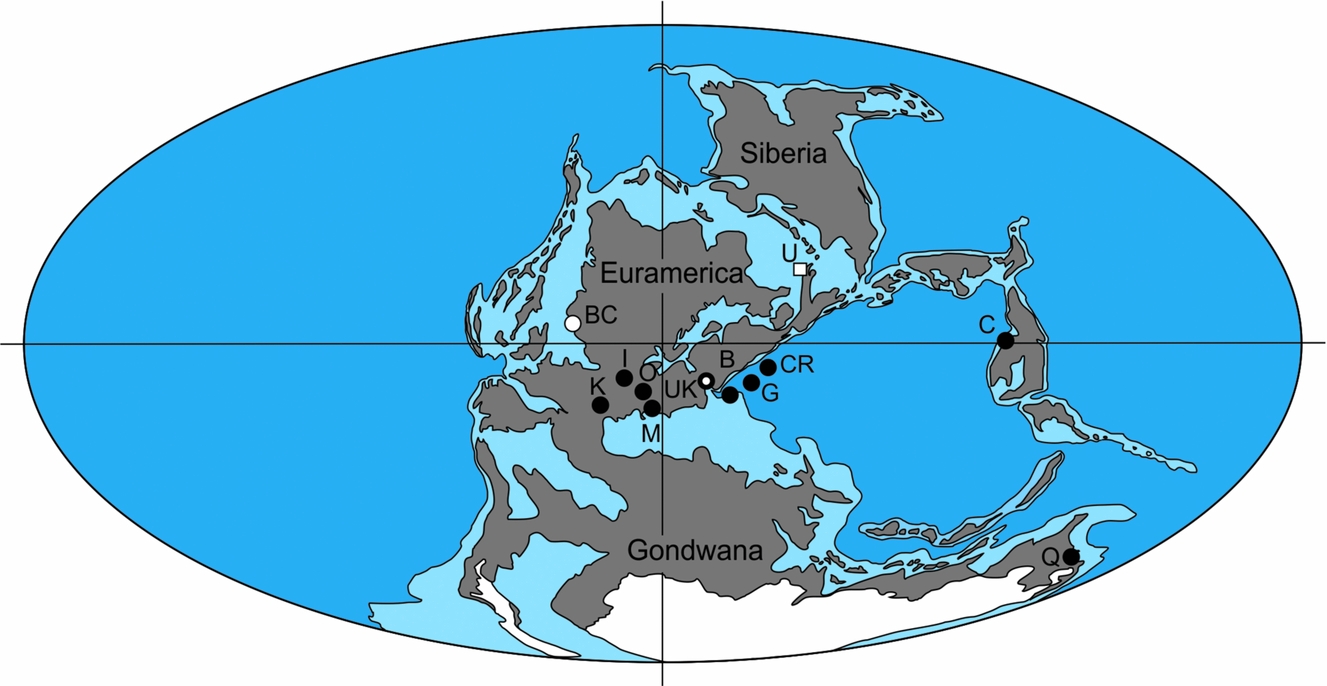
The enigmatic shark genera Acanthorhachis and Listracanthus are considered closely related on account of similarities in their overall morphology, the range of variation of their various ichthyoliths from spinose spines to short stellate forms with continuous variation. In addition, similarities in their histology, including hollow interiors and lack of enameloid, also suggest a close relationship. The two genera can be united within a family Listracanthidae nov., but the relationships of this clade within the Elasmobranchii remain unclear, and their affinities within the group must await the discovery of articulated material with well-preserved cranial cartilages. The two genera occur widely distributed with most occurrences in the equatorial belt, but an isolated occurrence in Queensland, Australia suggests at least periodic expansion of the range into waters of higher latitudes (Fig. 15). Survival of the family into the Mesozoic of western Canada represents one of only a few documented occurrences of fish genera surviving the end Permian extinction event. The claim by Mutter & Neuman (Reference Mutter and Neuman2009) that this represents the survival of a Lilliput taxon is not well supported however, as spines of Carboniferous forms are in the same size range as those from the Canadian Early Triassic.
Distribution of Listracanthus and Acanthorhachis plotted onto a global palaeogeographic map for the Late Carboniferous, based mainly on a global map produced by Professor Ron Blakey, NAU Geology. Grey – land; light blue – shelf and epeiric seas; dark blue – deeper seas and ocean basins; white – glaciated terrain; black circles – Carboniferous occurrences of Listracanthus; B – Belgium; C – China; CR – Croatia; G – Germany; I – Illinois; K – Kansas; M – Missouri; O – Ohio; Q – Queensland; black and white circle – occurrence of Acanthorhachis in UK; white circle – Triassic occurrence; BC – British Columbia; square – Permian occurrence; U – Urals.

Acknowledgements
We thank Mr Geoff Long for thin-section production, Dr Tony Butcher for assistance with scanning electron microscopy, Mrs Elaine Dyer for help in the laboratory and Mr Bob Loveridge for thin-section photography. We are especially grateful to Alison Tymon of the West Yorkshire Geology Trust who provided invaluable advice on the history of coal mining on Todmorden Moor. DMM thanks Dr Trevor Ford for introducing him to Steeplehouse Quarry, Wirksworth in 1979. This research was funded by the authors and the University of Portsmouth. Peter N. Ogilvie of Salford Museum is thanked for help in trying to locate holotype material. We are grateful to the referees Gilles Cuny and Michał Ginter for their helpful suggestions and to the handling editor Dr Graham Budd.