Introduction
Schizophrenia is a common disorder with high personal, social and economic impact. Most people with schizophrenia are unemployed, supported by benefits and require high levels of health and social care (Knapp et al. Reference Knapp, Mangalore and Simon2004; Schizophrenia Commission, 2012). In the UK, the direct and indirect costs of the illness reach an estimated £55 000 per person per year (Mangalore & Knapp, Reference Mangalore and Knapp2007), higher than cancer.
Although anti-psychotic medication is effective for positive psychotic symptoms, usually within the first few months of treatment (Crespo-Facorro et al. Reference Crespo-Facorro, Perez-Iglesias, Ramirez-Bonilla, Martínez-García, Llorca and Luis2006; Malla et al. Reference Malla, Norman, Schmitz, Manchanda, Bechard-Evans, Takhar and Haricharan2006), it is of less benefit for negative symptoms and cognitive deficits (Erhart et al. Reference Erhart, Marder and Carpenter2006; Kirkpatrick et al. Reference Kirkpatrick, Fenton, Carpenter and Marder2006; Goldberg et al. Reference Goldberg, Goldman, Burdick, Malhotra, Lencz, Patel, Woerner, Schooler, Kane and Robinson2007). Unfortunately, it is these features that cause most disability (Green, Reference Green1996; Albert et al. Reference Albert, Bertelsen, Thorup, Petersen, Jeppesen, Le Quack, Krarup, Jørgensen and Nordentoft2011; Rabinowitz et al. Reference Rabinowitz, Levine, Garibaldi, Bugarski-Kirola, Berardo and Kapur2012). This has been recognized by researchers and clinicians, and the National Institute for Health and Care Excellence (NICE; previously National Institute for Health and Clinical Excellence) guidelines for schizophrenia now recommended the use of adjunctive psychosocial interventions to facilitate complete and sustained recovery (National Institute for Health and Clinical Excellence, 2010). Cognitive–behavioural therapy, family therapy and skills training may reduce negative and cognitive symptoms, improve functioning and reduce long-term disability (Bustillo et al. Reference Bustillo, Lauriello, Horan and Keith2001; Kern et al. Reference Kern, Glynn, Horan and Marder2009). However, these interventions tend to be costly and access is poor (Schizophrenia Commission, 2012). Thus, new low-cost and accessible treatments that decrease negative symptoms, reduce cognitive deficits and promote functional recovery are needed.
In addition to its lack of efficacy for negative and cognitive symptoms, anti-psychotic treatment is also associated with the ‘metabolic syndrome’ (Hert et al. Reference Hert, Schreurs, Vancampfort and Winkel2009), a cluster of co-occurring risk factors for diabetes and cardiovascular disease such as obesity, high blood pressure and hyperglycaemia (Alberti et al. Reference Alberti, Zimmet and Shaw2005). At the onset of psychotic illnesses, the prevalence of these risk factors is no different from that in the general population (Foley & Morley, Reference Foley and Morley2011). However, over the first few years of taking antipsychotics, the incidence of the metabolic syndrome increases fivefold (De Hert et al. Reference De Hert, Schreurs, Sweers, Van Eyck, Hanssens, Šinko, Wampers, Scheen, Peuskens and Van Winkel2008) and body weight increases by up to 15 kg (Alvarez-Jiménez et al. Reference Alvarez-Jiménez, Gonzalez-Blanch, Crespo-Facorro, Hetrick, Rodriguez-Sanchez, Perez-Iglesias and Luis2008a ). This decline in physical health continues over time, and reduces the life expectancy of people with schizophrenia by 15–20 years (Hennekens et al. Reference Hennekens, Hennekens, Hollar and Casey2005; Laursen, Reference Laursen2011).
There are therefore two pressing issues in the management of schizophrenia: the need to develop feasible interventions for negative symptoms and cognitive dysfunction, and the need to reduce physical health inequalities. Exercise is one possible candidate that could meet both of these needs. For instance, exercise can reduce symptoms in clinical depression (Cooney et al. Reference Cooney, Dwan, Greig, Lawlor, Rimer, Waugh, Mcmurdo and Mead2013) and improve cognitive functioning in neurological disorders (Angevaren et al. Reference Angevaren, Aufdemkampe, Verhaar, Aleman and Vanhees2008; Smith et al. Reference Smith, Blumenthal, Hoffman, Cooper, Strauman, Welsh-Bohmer, Browndyke and Sherwood2010). The National Institute for Health and Care Excellence (2014) now recommends using physical activity and dietary advice to improve the physical health of people with schizophrenia, based on their recent systematic review. However, the National Institute for Health and Care Excellence (2014) review focused on behavioural interventions to promote healthy lifestyles, but did not evaluate the impact of directly administered exercise in schizophrenia. Furthermore, effects of physical activity on psychiatric symptoms were not considered.
Therefore, the effectiveness of exercise as a treatment for schizophrenia still needs to be established. A Cochrane review was conducted in 2010, but could not reach any strong conclusions due to the small number of trials (n = 3) (Gorczynski & Faulkner, Reference Gorczynski and Faulkner2010). Since then, many more trials have taken place. However, the currently available evidence has yet to be reviewed in full.
We conducted a systematic review and meta-analysis to provide a comprehensive summary of all exercise trials in schizophrenia, and to quantify effects on both physical and mental health. Physical outcomes include metabolic risk and physical fitness. Mental health outcomes include positive and negative symptoms, psychosocial functioning, co-morbid disorders and neurocognitive dysfunction. The feasibility of different exercise treatments will also be assessed by comparing adherence and attrition across trials. This has been overlooked in previous reviews but is a crucial factor for determining the clinical applicability of exercise in schizophrenia and informing future trial design.
Method
Eligibility criteria
Only original English-language, peer-reviewed research articles were included in the present review. Studies comprised entirely of participants with any non-affective psychotic disorder were considered, with no restrictions placed on the severity or duration of illness. However, studies published prior to 1994 were excluded to increase diagnostic homogeneity, since this is when the Diagnostic and Statistical Manual of Mental Disorders, fourth edition (DSM-IV) and International Classification of Diseases (ICD)-10 came into use. First-episode psychosis (FEP) studies were also eligible regardless of formal diagnostic status of participants since, in these early stages, diagnoses are often changed or postponed until temporal criteria are fulfilled (Schwartz et al. Reference Schwartz, Fennig, Tanenberg-Karant, Carlson, Craig, Galambos, Lavelle and Bromet2000).
Eligible studies must have reported the effect of exercise on at least one quantitative measure of physical or mental health. Within health research, ‘exercise’ is defined as any structured and repetitive physical activity that has an objective of improving or maintaining physical fitness (Caspersen et al. Reference Caspersen, Powell and Christenson1985). Any intervention using physical activity matching this description was considered, regardless of trial design. Interventions that only used yoga, muscular relaxation or adventure activities were excluded, since their effects are theoretically derived from factors distinct from exercise. Multi-modal programmes that incorporated exercise within a broader lifestyle or psychosocial intervention were also excluded, as the effects of exercise alone cannot be determined.
Search strategy
An electronic database search of Ovid MEDLINE, Embase, PsycINFO and the Cochrane Central Register of Controlled Trials (CENTRAL) was conducted on 1 November 2013 (with an updated search on 6 April 2014) using the following keyword search terms: ‘exercise’ or ‘physical activity’ or ‘sport*’ or ‘aerobic training’ or ‘anaerobic training’ or ‘endurance training’ or ‘resistance training’ or ‘walking’ or ‘muscle strengthening’ and ‘psychotic’ or ‘psychosis’ or ‘psychoses’ or ‘schizo*’ and ‘intervention’ or ‘treatment’ or ‘trial’ or ‘program*’. The reference lists of retrieved articles were searched to identify any additional papers.
Study selection and data extraction
Two reviewers (J.F. and J.C.) independently screened articles for eligibility; disagreements were resolved through discussion. A systematic tool was developed, and quantitative data from each study were extracted and categorized into the following domains:
-
P1: metabolic health – body composition and cardiometabolic risk factors;
-
P2: physical fitness – cardiorespiratory fitness and physical capacities;
-
M1: psychiatric symptoms – positive, negative and general symptoms;
-
M2: functioning and disability – quality of life (QoL), socio-occupational functioning and overall illness severity;
-
M3: co-morbid disorders – specific or subscale measures of depression/anxiety;
-
M4: neurocognitive effects – brain structure and neurocognitive functioning.
Secondary data on sample characteristics, study design, exercise details, adherence and attrition were also extracted to examine factors that may alter the effectiveness or feasibility of exercise.
Meta-analysis
Meta-analyses were conducted to examine effects on body mass index (BMI) and psychiatric symptoms, as these were the most commonly reported physical and mental health outcomes. Although single-arm studies, non-randomized trials and randomized controlled trials (RCTs) were all included within the review, only RCTs were used in the meta-analyses (to increase the validity of findings).
All analyses were performed in Review Manager 5, the recommended meta-analytic software of the Cochrane Collaboration (Higgins & Green, Reference Higgins and Green2008). The risk of bias for each RCT was also assessed using the Cochrane's Collaboration respective tool (Higgins et al. Reference Higgins, Altman, Gøtzsche, Jüni, Moher, Oxman, Savović, Schulz, Weeks and Sterne2011). This examines six different aspects of trial methodology that could potentially introduce bias; summaries are presented in the Appendix (Figs A1 and A2). To quantify the amount of variation in studies’ effect estimates due to heterogeneity, the I 2 test was used. These values can be described as small (0–25%), medium (25–50%) or large (>50%). Due to the considerable variation across exercise studies, a random-effects model (based on the method of DerSimonian & Laird, Reference Dersimonian and Laird1986) was applied throughout. This accounts for variation through providing conservative estimates adjusted in relation to the extent of heterogeneity.
When pooling outcomes data across studies, effects on BMI were calculated by pooling mean differences. Standardized mean difference (SMDs) was used for psychiatric symptoms, to allow for integration of various assessment measures. In both cases, effects were calculated by comparing change in the exercise condition with change in the control condition(s). In studies with more than two conditions, all data from non-exercise conditions were pooled into a single comparator group (Higgins & Green, Reference Higgins and Green2008).
Results
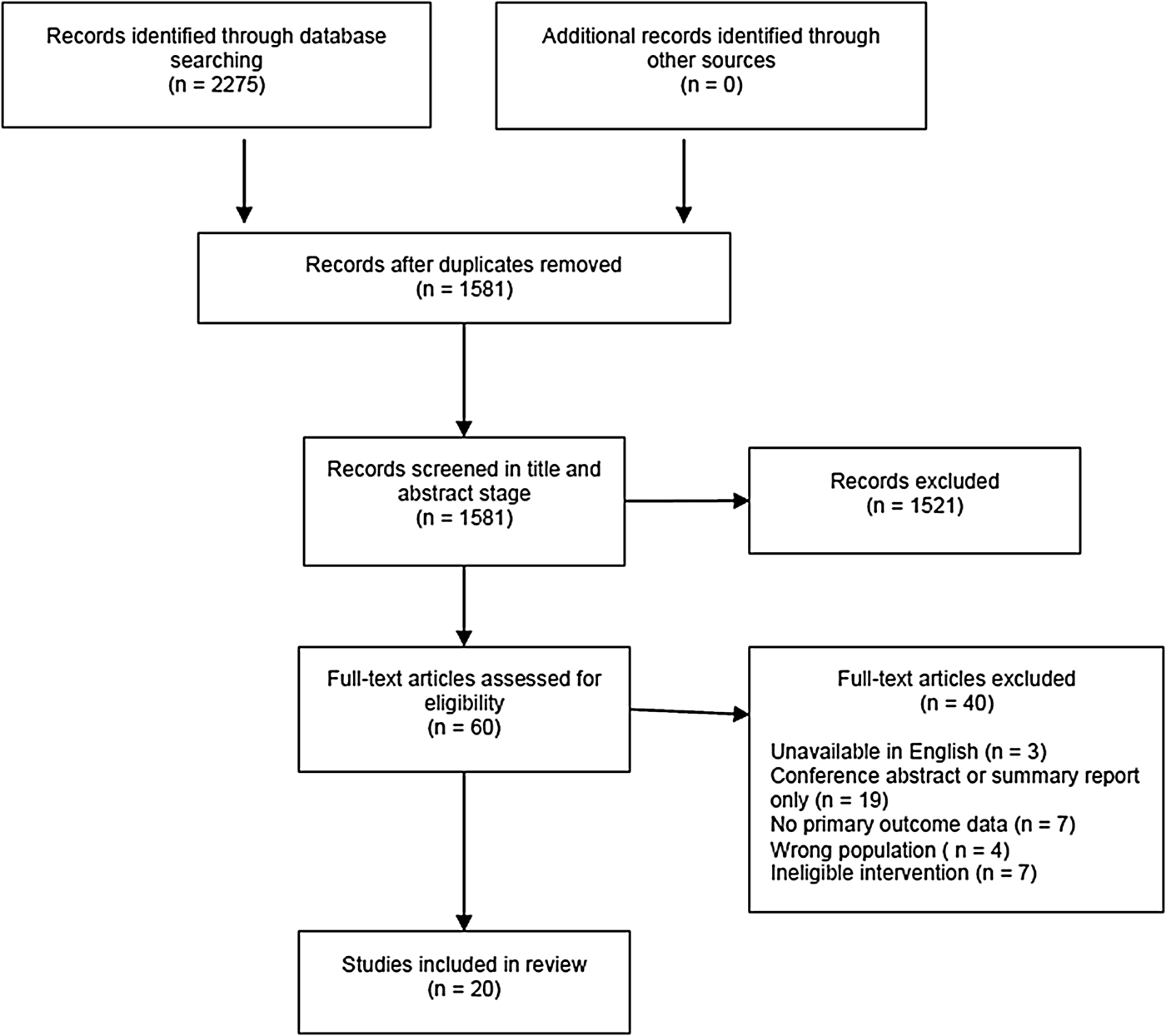
The database search returned 2275 results, providing 1581 unique citations after duplicates were removed. A further 1521 articles were excluded at the title–abstract stage. For the remaining 60, the full paper was sought. Of these, 20, reporting data from 17 different trials, met full eligibility criteria and were included in the review. Searching the reference lists of eligible studies did not identify any additional eligible studies. The full study selection process is shown in Fig. 1.
Preferred Reporting Items for Systematic Reviews and Meta-Analyses (PRISMA) flow diagram.

We could not evaluate publication bias using the Cochrane test for funnel plot asymmetry, since fewer than 10 studies were included in each analysis (Higgins et al. Reference Higgins, Altman, Gøtzsche, Jüni, Moher, Oxman, Savović, Schulz, Weeks and Sterne2011). To address publication bias, we applied our initial search terms to four ‘grey literature’ databases (MetaRegistry of Controlled Trials, Index to Thesis, Health Management Information Consortium and OpenGrey). The search returned 227 results, although 203 articles were removed by screening titles and deleting duplicates (including those from the main search). For the remaining 14 studies, all available details were examined and trial protocols were sought. This information revealed that all of these would be excluded from our review due to an ineligible sample (n = 1), ineligible intervention (n = 8) or both (n = 5). Therefore, there is no evidence of existing unpublished trials that would influence our results.
Study characteristics
Across all 17 trials, the total number of participants with non-affective psychotic disorders was 659. The median age was 33 years (range = 25–52 years). The median illness duration was 10 years. Only one study used a FEP sample (less than 5 years illness duration).
Of the trials, four implemented exercise as a physical activity control for assessing the effects of yoga (Duraiswamy et al. Reference Duraiswamy, Thirthalli, Nagendra and Gangadhar2007; Behere et al. Reference Behere, Arasappa, Jagannathan, Varambally, Venkatasubramanian, Thirthalli, Subbakrishna, Nagendra and Gangadhar2011; Varambally et al. Reference Varambally, Gangadhar, Thirthalli, Jagannathan, Kumar, Venkatasubramanian, Muralidhar, Subbakrishna and Nagendra2012; Manjunath et al. Reference Manjunath, Varambally, Thirthalli, Basavaraddi and Gangadhar2013). The 13 other trials investigated the benefits of exercise, with primary outcomes of physical health (n = 5), mental health (n = 5) or both (n = 3). Of the trials, 10 described themselves as pilots, with five stating their primary objective as assessing the feasibility of exercise (Archie et al. Reference Archie, Wilson, Osborne, Hobbs and Mcniven2003; Marzolini et al. Reference Marzolini, Jensen and Melville2009; Dodd et al. Reference Dodd, Duffy, Stewart, Impey and Taylor2011; Abdel-Baki et al. Reference Abdel-Baki, Brazzini-Poisson, Marois, Letendre and Karelis2013; Bredin et al. Reference Bredin, Warburton and Lang2013).
International physical activity guidelines structure their recommendations around time spent exercising at a moderate or vigorous intensity per week (World Health Organization, 2010; Garber et al. Reference Garber, Blissmer, Deschenes, Franklin, Lamonte, Lee, Nieman and Swain2011). Therefore, we recorded the amount of moderate or vigorous exercise applied by each exercise intervention per week, in order to provide an approximate measure of exercise quantity across studies. Moderate-to-vigorous exercise constitutes activities such as jogging, cycling, sports or resistance training, while stretching, warm-ups or self-paced walking are classified as low intensity (World Health Organization, 2010; Garber et al. Reference Garber, Blissmer, Deschenes, Franklin, Lamonte, Lee, Nieman and Swain2011). In all, 15 trials specified some moderate-to-vigorous intensity exercise. The median amount was 75 min per week (mean 72 min, range 25–160 min).
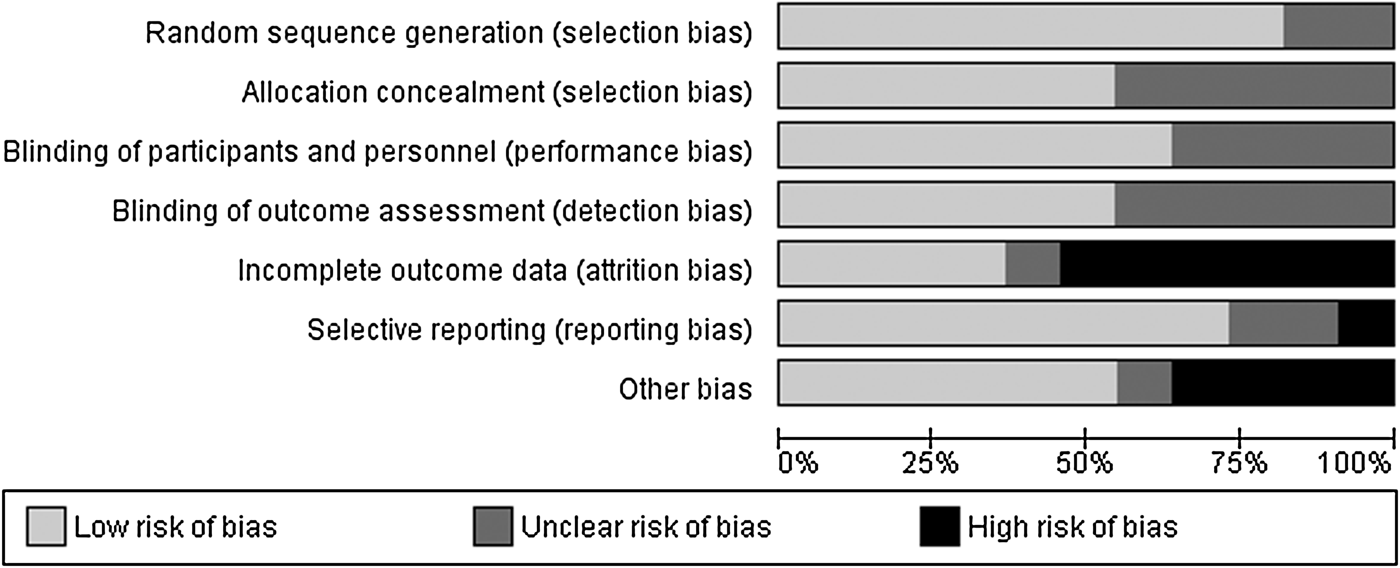
Of the trials, 11 were RCTs. Risk of bias assessments are presented in the Appendix (Figs A1 and A2). To summarize, nine used adequate random sequence generation, six had allocation concealment procedures, six stated that assessors were blinded to intervention status and eight may have been affected by attrition or reporting bias. As only one study used an intention-to-treat analysis, our analyses were based on per-protocol outcome data. Due to the very limited number of randomized trials, all RCTs were included in our analyses, regardless of their bias assessment.
Physical health outcomes (Table 1)
P1: markers of metabolic health
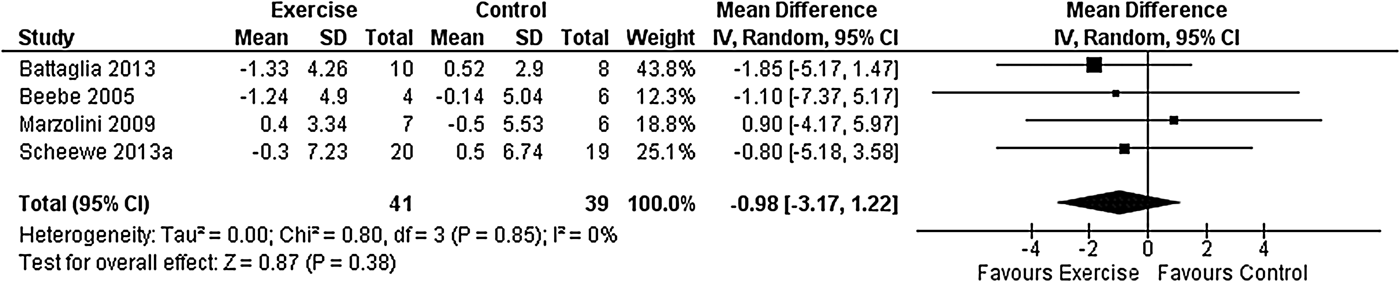
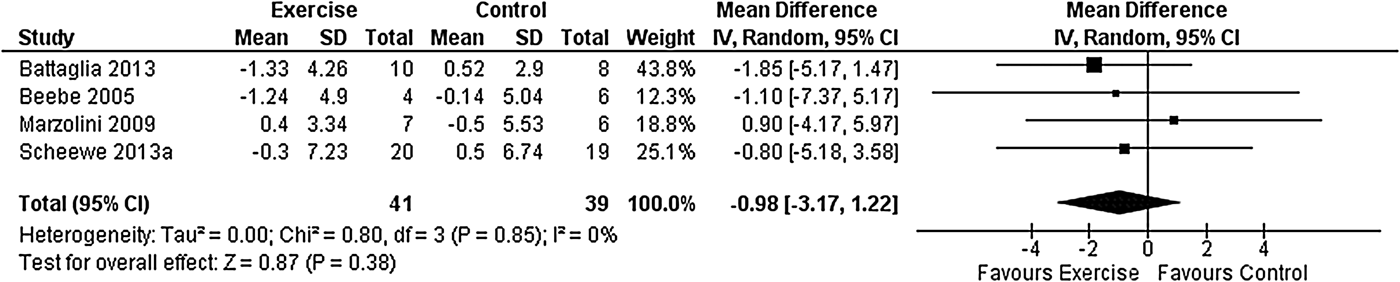
Of the 11 trials assessing physical health, 10 observed significant improvement from exercise in at least one measure. Body weight (or BMI) was the most common measure of physical health. This was examined in nine studies, four of which were RCTs. The pooled mean difference from the RCTs (Beebe et al. Reference Beebe, Tian, Morris, Goodwin, Allen and Kuldau2005; Marzolini et al. Reference Marzolini, Jensen and Melville2009; Battaglia et al. Reference Battaglia, Alesi, Inguglia, Roccella, Caramazza, Bellafiore and Palma2013; Scheewe et al. Reference Scheewe, Van Haren, Sarkisyan, Schnack, Brouwer, De Glint, Hulshoff Pol, Backx, Kahn and Cahn2013a ) was calculated using the random-effects model, and it was found that exercise did not significantly reduce BMI across 80 participants [mean difference = −0.98 kg/m2; 95% confidence interval (CI) −3.17 to 1.22 kg/m2] (Fig. 2).
Forest plot showing change in body mass index in exercise and control conditions. SD, Standard deviation; IV, inverse variance; CI, confidence interval; df, degrees of freedom.
Outcomes of exercise trials in psychotic disorders

RCT, Randomized controlled trial; FEP, first-episode psychosis; P1, metabolic health; ↓, decrease; WC, waist circumference; bpm, beats per min; P2, physical fitness; CV, cardiovascular; ↑, increase; VO2max, maximal oxygen consumption; M2, functioning and disability; GAF, Global Assessment of Functioning; SOFAS, Social Occupational Functioning Assessment Scale; CGI-S, Clinical Global Impressions Severity; QoL, quality of life; SZ, schizophrenia; TAU, treatment as usual; M1, psychiatric symptoms; SAPS, Scale for Assessment of Positive Symptoms; SANS, Scale for Assessment of Negative Symptoms; WHO-QOL-BREF, World Health Organization Quality of Life Abbreviated; BSI, Brief Symptom Inventory; M3, co-morbid disorders; SZ-AF, schizo-affective disorder; N/R, not reported; BMI, body mass index; SF-12, Short Form Health Survey – 12 items; PANSS, Positive and Negative Syndrome Scale; NFP, National Fitness Corps Programme; SOFS, Socio-Occupational Functioning Scale; PANSS-P, Positive and Negative Syndrome Scale, positive symptoms scale; PANSS-N, Positive and Negative Syndrome Scale, negative symptoms scale; PANSS-G, Positive and Negative Syndrome Scale; general scale; M4, neurocognitive effects; STM, short-term memory; HIT, high-intensity training; DD, delusional disorder; HDL, high-density lipoprotein; E-Net, net efficiency of walking; SF-36, Short Form Health Survey – 36 items; CGSS, Calgary Depression Scale for Schizophrenia; HAMD, Hamilton Depression Rating Scale; MHI, Mental Health Inventory; SZ-P, schizophreniform disorder; CAN, Camberwell Assessment of Need; MADRS, Montgomery–Åsberg Depression Rating Scale.
* p < 0.05; ** reported as ‘clinically significant’ improvement.
Six non-randomized trials also reported body weight/BMI. Two studies observed a significant reduction in body weight from group training programmes (Dodd et al. Reference Dodd, Duffy, Stewart, Impey and Taylor2011; Bredin et al. Reference Bredin, Warburton and Lang2013). Two other studies, using solitary exercise, observed clinically significant improvements among the few participants who attended exercise sessions, but experienced very high attrition (Archie et al. Reference Archie, Wilson, Osborne, Hobbs and Mcniven2003; Abdel-Baki et al. Reference Abdel-Baki, Brazzini-Poisson, Marois, Letendre and Karelis2013). Two further studies, using high-intensity interval training (Heggelund et al. Reference Heggelund, Nilsberg, Hoff, Morken and Helgerud2011) and maximal strength training (Heggelund et al. Reference Heggelund, Morken, Helgerud, Nilsberg and Hoff2012), observed no change in body weight.
Findings were inconsistent for several other measures of metabolic health. This was the case both within and between studies. For example, Bredin et al. (Reference Bredin, Warburton and Lang2013) and Abdel-Baki et al. (Reference Abdel-Baki, Brazzini-Poisson, Marois, Letendre and Karelis2013) reported substantial decreases in waist circumference, while others observed no change (Marzolini et al. Reference Marzolini, Jensen and Melville2009; Scheewe et al. Reference Scheewe, Backx, Takken, Jorg, Van Strater, Kroes, Kahn and Cahn2013a ). Heggelund et al. (Reference Heggelund, Nilsberg, Hoff, Morken and Helgerud2011) reported improvement in high-density lipoprotein (HDL) levels with no change in triglycerides, while Scheewe et al. (Reference Scheewe, Backx, Takken, Jorg, Van Strater, Kroes, Kahn and Cahn2013a ) reported the opposite of this (i.e. improved triglycerides with no change in HDL).
P2: physical fitness
Seven studies used VO2max as an assessment of fitness (Pajonk et al. Reference Pajonk, Wobrock, Gruber, Scherk, Berner, Kaizl, Kierer, Muller, Oest, Meyer, Backens, Schneider-Axmann, Thornton, Honer and Falkai2010; Dodd et al. Reference Dodd, Duffy, Stewart, Impey and Taylor2011; Heggelund et al. Reference Heggelund, Nilsberg, Hoff, Morken and Helgerud2011, Reference Heggelund, Morken, Helgerud, Nilsberg and Hoff2012; Abdel-Baki et al. Reference Abdel-Baki, Brazzini-Poisson, Marois, Letendre and Karelis2013; Bredin et al. Reference Bredin, Warburton and Lang2013; Scheewe et al. Reference Scheewe, Backx, Takken, Jorg, Van Strater, Kroes, Kahn and Cahn2013a ), which measures maximal oxygen consumption and reflects overall aerobic capacity. Three studies reported clinically significant increases in VO2max (Dodd et al. Reference Dodd, Duffy, Stewart, Impey and Taylor2011; Heggelund et al. Reference Heggelund, Nilsberg, Hoff, Morken and Helgerud2011; Abdel-Baki et al. Reference Abdel-Baki, Brazzini-Poisson, Marois, Letendre and Karelis2013), defined as sufficient to reduce cardiovascular disease risk by 15%, and mortality by 20% (Myers et al. Reference Myers, Kaykha, George, Abella, Zaheer, Lear, Yamazaki and Froelicher2004; Kodama et al. Reference Kodama, Saito, Tanaka, Maki, Yachi, Asumi, Sugawara, Totsuka, Shimano and Ohashi2009). These improvements occurred in as little as 8 weeks. Eight studies reported other fitness outcomes: seven of these observed significant increases in running/walking capacities (Beebe et al. Reference Beebe, Tian, Morris, Goodwin, Allen and Kuldau2005; Heggelund et al. Reference Heggelund, Nilsberg, Hoff, Morken and Helgerud2011, Reference Heggelund, Morken, Helgerud, Nilsberg and Hoff2012; Battaglia et al. Reference Battaglia, Alesi, Inguglia, Roccella, Caramazza, Bellafiore and Palma2013) and power output/strength (Marzolini et al. Reference Marzolini, Jensen and Melville2009; Heggelund et al. Reference Heggelund, Morken, Helgerud, Nilsberg and Hoff2012; Bredin et al. Reference Bredin, Warburton and Lang2013; Scheewe et al. Reference Scheewe, Backx, Takken, Jorg, Van Strater, Kroes, Kahn and Cahn2013a ).
Mental health outcomes (Table 1)
M1: psychiatric symptoms
Of the trials, 16 provided data for effects on mental health. The most commonly assessed mental health outcome was total change in positive and negative symptoms. For the eight RCTs examining total symptoms scores (357 participants), the pooled SMD was calculated, and showed no significant effect of exercise (SMD = −0.16, 95% CI −0.51 to 0.18) (Fig. 3). There was also substantial heterogeneity between studies (I 2 = 54%). However, four of these eight trials implemented exercise only as a ‘physical activity control’ for yoga (Duraiswamy et al. Reference Duraiswamy, Thirthalli, Nagendra and Gangadhar2007; Behere et al. Reference Behere, Arasappa, Jagannathan, Varambally, Venkatasubramanian, Thirthalli, Subbakrishna, Nagendra and Gangadhar2011; Varambally et al. Reference Varambally, Gangadhar, Thirthalli, Jagannathan, Kumar, Venkatasubramanian, Muralidhar, Subbakrishna and Nagendra2012; Manjunath et al. Reference Manjunath, Varambally, Thirthalli, Basavaraddi and Gangadhar2013) and their exercise interventions consisted almost entirely of low-intensity exercise such as walking, stretches and postures.
Forest plots showing change in psychiatric symptoms in exercise and control conditions. ‘Std. Mean Difference’ indicates the effect size, with 95% confidence intervals (CIs). The Z value and associated p value indicate whether the effect size differs significantly from zero. The squares in the figure indicate the weight of the particular study in the meta-analysis. SD, Standard deviation; IV, inverse variance; df, degrees of freedom.

Therefore, a sensitivity analysis was performed to exclude these interventions, and thus investigate the effects of moderate-to-vigorous exercise on psychiatric symptoms (by only including interventions that used >30 min of moderate-to-vigorous exercise per week). Four trials remained, which implemented an average of 90 min per week (range = 75–120 min) (Beebe et al. Reference Beebe, Tian, Morris, Goodwin, Allen and Kuldau2005; Acil et al. Reference Acil, Dogan and Dogan2008; Pajonk et al. Reference Pajonk, Wobrock, Gruber, Scherk, Berner, Kaizl, Kierer, Muller, Oest, Meyer, Backens, Schneider-Axmann, Thornton, Honer and Falkai2010; Scheewe et al. Reference Scheewe, Backx, Takken, Jorg, Van Strater, Kroes, Kahn and Cahn2013a ). These showed a strong effect of exercise on total psychiatric symptoms (SMD = −0.72, 95% CI −1.14 to −0.29) (Fig. 3). Furthermore, no heterogeneity was found amongst these trials (I 2 = 0%). Further analyses were carried out to determine the effect of moderate-to-vigorous exercise on separate scales of positive and negative symptoms. Both positive and negative symptoms were significantly reduced by moderate-to-vigorous exercise, with pooled SMDs of −0.54 (95% CI −0.95 to −0.13) and −0.44 (95% CI −0.78 to −0.09), respectively (Fig. 3).
Meta-analytic techniques were not applied to the other mental health outcomes (i.e. functioning, co-morbid disorders and neurocognition), as no common measures were used across the RCTs. Instead, effects in each domain were systematically reviewed (see Table 1) and summarized below.
M2: functioning and disability
Functioning and QoL were assessed in seven trials. Two RCTs, which both used 120 min of moderate-to-vigorous exercise per week, reported significant improvements in QoL (Battaglia et al. Reference Battaglia, Alesi, Inguglia, Roccella, Caramazza, Bellafiore and Palma2013) and functional disability (Scheewe et al. Reference Scheewe, Backx, Takken, Jorg, Van Strater, Kroes, Kahn and Cahn2013a ). Two RCTs which used low-intensity exercise as an active control for yoga observed increases in social functioning from baseline, although this improvement was significantly less than in the comparator condition (Duraiswamy et al. Reference Duraiswamy, Thirthalli, Nagendra and Gangadhar2007; Varambally et al. Reference Varambally, Gangadhar, Thirthalli, Jagannathan, Kumar, Venkatasubramanian, Muralidhar, Subbakrishna and Nagendra2012). Two non-randomized trials also assessed QoL, but observed no significant change (Heggelund et al. Reference Heggelund, Nilsberg, Hoff, Morken and Helgerud2011, Reference Heggelund, Morken, Helgerud, Nilsberg and Hoff2012).
Non-specific measures of overall illness severity were applied in three RCTs (Acil et al. Reference Albert, Bertelsen, Thorup, Petersen, Jeppesen, Le Quack, Krarup, Jørgensen and Nordentoft2008; Marzolini et al. Reference Marzolini, Jensen and Melville2009; Manjunath et al. Reference Manjunath, Varambally, Thirthalli, Basavaraddi and Gangadhar2013). All reported improvement following their exercise interventions, but did not find changes to significantly exceed control conditions.
M3: co-morbid disorders
Three trials used specific measures of depression (Heggelund et al. Reference Heggelund, Nilsberg, Hoff, Morken and Helgerud2011; Manjunath et al. Reference Manjunath, Varambally, Thirthalli, Basavaraddi and Gangadhar2013; Scheewe et al. Reference Scheewe, Backx, Takken, Jorg, Van Strater, Kroes, Kahn and Cahn2013a ). Scheewe et al. (Reference Scheewe, Backx, Takken, Jorg, Van Strater, Kroes, Kahn and Cahn2013a ) reported 120 min per week of aerobic–resistance exercise reduced depression significantly more than the occupational therapy control. The other two trials, both using ⩾75 min per week, observed no significant benefits of exercise (Heggelund et al. Reference Heggelund, Nilsberg, Hoff, Morken and Helgerud2011; Manjunath et al. Reference Manjunath, Varambally, Thirthalli, Basavaraddi and Gangadhar2013). Three trials also observed exercise to reduce depression/anxiety subscales within broader mental health assessments (Duraiswamy et al. Reference Duraiswamy, Thirthalli, Nagendra and Gangadhar2007; Acil et al. Reference Acil, Dogan and Dogan2008; Marzolini et al. Reference Marzolini, Jensen and Melville2009), although only in relation to baseline scores (rather than control conditions).
M4: brain structure and neurocognitive functioning
Two studies examined effects of exercise on brain volume. Only Pajonk et al. (Reference Pajonk, Wobrock, Gruber, Scherk, Berner, Kaizl, Kierer, Muller, Oest, Meyer, Backens, Schneider-Axmann, Thornton, Honer and Falkai2010) observed a significant main effect, as exercise increased hippocampal volume by 12% (significantly more than the table-football control). Both Pajonk et al. (Reference Pajonk, Wobrock, Gruber, Scherk, Berner, Kaizl, Kierer, Muller, Oest, Meyer, Backens, Schneider-Axmann, Thornton, Honer and Falkai2010) and Scheewe et al. (Reference Scheewe, Van Haren, Sarkisyan, Schnack, Brouwer, De Glint, Hulshoff Pol, Backx, Kahn and Cahn2013b ) found that increased physical fitness was significantly correlated with increases in brain volume. Pajonk et al. (Reference Pajonk, Wobrock, Gruber, Scherk, Berner, Kaizl, Kierer, Muller, Oest, Meyer, Backens, Schneider-Axmann, Thornton, Honer and Falkai2010) also examined cognition, and found that exercise improved verbal short-term memory by 34% (p < 0.05).
Different exercise types
Tables 1 and 2 reveal that significant improvements in mental health (in any domain) were only observed from interventions which used some form of aerobic exercise; with cycling (Pajonk et al. Reference Pajonk, Wobrock, Gruber, Scherk, Berner, Kaizl, Kierer, Muller, Oest, Meyer, Backens, Schneider-Axmann, Thornton, Honer and Falkai2010), treadmill walking (Beebe et al. Reference Beebe, Tian, Morris, Goodwin, Allen and Kuldau2005) and sports training (Battaglia et al. Reference Battaglia, Alesi, Inguglia, Roccella, Caramazza, Bellafiore and Palma2013) all proving beneficial. However, some aerobic interventions had no effect on mental health, perhaps due to the relatively low dose applied (less than 90 min per week) (e.g. Dodd et al. Reference Dodd, Duffy, Stewart, Impey and Taylor2011; Heggelund et al. Reference Heggelund, Nilsberg, Hoff, Morken and Helgerud2011).
Exercise intervention details and feasibility

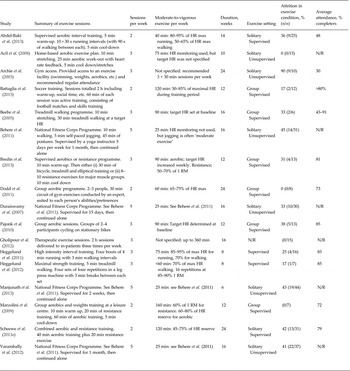
HR, Heart rate; max, maximum; N/R, not reported; 1 RM, one repetition maximum.
All three studies that incorporated aerobic with resistance training methods observed significant improvements in overall mental health (Marzolini et al. Reference Marzolini, Jensen and Melville2009; Bredin et al. Reference Bredin, Warburton and Lang2013; Scheewe et al. Reference Scheewe, Backx, Takken, Jorg, Van Strater, Kroes, Kahn and Cahn2013a ). No studies used traditional resistance training alone, so the relative effectiveness of aerobic versus resistance components cannot be determined. It should also be noted that three ‘high-intensity’ training interventions, involving short bursts of strenuous physical activity, had no effect on symptoms or functioning, despite improving physical strength/fitness (Heggelund et al. Reference Heggelund, Nilsberg, Hoff, Morken and Helgerud2011, Reference Heggelund, Morken, Helgerud, Nilsberg and Hoff2012; Abdel-Baki et al. Reference Abdel-Baki, Brazzini-Poisson, Marois, Letendre and Karelis2013).
Feasibility of exercise (Table 2)
All trials reported drop-out rates. Total attrition was 32.5% (118/362 participants). Attrition from group exercise was 22% (13/59 participants). However, attrition from solitary exercise, which mostly involved exercising alone after a briefly supervised introductory period, was almost double this, at 43% (96/223 participants). Adherence rate (i.e. attendance of exercise sessions) was reported in 10 studies. Group exercise adherence was substantially higher than solitary training interventions (78.8% v. 55%).
Another factor affecting exercise adherence was supervision. Across nine supervised trials, participant attendance averaged 77% (range = 48–85%). Only one unsupervised intervention monitored adherence effectively; by recording participants’ gym attendance after providing them with a free membership, a gym induction session and an advised exercise programme to complete by themselves three times per week (Archie et al. Reference Archie, Wilson, Osborne, Hobbs and Mcniven2003). Total adherence to the training routine was only 30%.
Discussion
This review aimed to capture all relevant studies of exercise in schizophrenia and related psychotic disorders by including single-arm trials, non-randomized trials and RCTs to provide a complete picture of the research. A total of 17 trials were reviewed in full and outcomes were categorized into six domains of physical and mental health. We found that exercise can improve cardiometabolic risk, functional disability, psychiatric symptoms, co-morbid disorders and neurocognition in schizophrenia (Table 1). Meta-analytic techniques were also applied to the most commonly reported outcomes for physical and mental health. Although there was no change in BMI, moderate-to-vigorous exercise was found to significantly improve positive and negative symptoms.
Exercise and physical health in schizophrenia
Reduction in body weight and BMI was not consistently found following exercise interventions. A more realistic goal may be the attenuation of expected weight gain, to which FEP patients are particularly susceptible (Alvarez-Jiménez et al. Reference Alvarez-Jiménez, Gonzalez-Blanch, Crespo-Facorro, Hetrick, Rodriguez-Sanchez, Perez-Iglesias and Luis2008a ). Thus, the finding of no weight gain after 14 weeks of exercise in FEP (Abdel-Baki et al. Reference Abdel-Baki, Brazzini-Poisson, Marois, Letendre and Karelis2013), along with a significant reduction in waist circumference (−4.3 cm), is noteworthy. Waist circumference may in fact be a more appropriate target than BMI for future exercise studies, especially if resistance training is included; reductions in body fat co-occurring with increases in muscle can improve overall body composition, while leaving BMI unchanged. Additionally, waist circumference is more useful than BMI for assessing cardiometabolic health (Janssen et al. Reference Janssen, Katzmarzyk and Ross2004).
Physical fitness is also more important than body weight for protecting against cardiometabolic diseases (Fogelholm Reference Fogelholm2010; McNamee et al. Reference McNamee, Mead, MacGillivray and Lawrie2013). Among the 11 studies measuring cardiovascular fitness and/or exercise capacity, 10 reported significant improvement from exercise. While the prevalence of cardiometabolic diseases is elevated in established schizophrenia (Hennekens et al. Reference Hennekens, Hennekens, Hollar and Casey2005; Vancampfort et al. Reference Vancampfort, Wampers, Mitchell, Correll, Herdt, Probst and Hert2013), this is not the case in early psychosis (Foley & Morley Reference Foley and Morley2011; Phutane et al. Reference Phutane, Tek, Chwastiak, Ratliff, Ozyuksel, Woods and Srihari2011). Since preventing these issues from arising is more effective than reversing them (Scott Reference Scott2003; Alvarez-Jiménez et al. Reference Alvarez-Jiménez, Hetrick, González-Blanch, Gleeson and Mcgorry2008b ), FEP could be the optimal phase for using exercise to increase fitness, minimize cardiometabolic risk, and thus reduce premature mortality in schizophrenia (Schizophrenia Commission, 2012; McNamee et al. Reference McNamee, Mead, MacGillivray and Lawrie2013).
Exercise and psychiatric symptoms
Eight RCTs were included in our meta-analysis of total symptom scores (Fig. 3). This found no effect of exercise. However, after excluding trials that used only very low-intensity exercise, we found that moderate-to-vigorous exercise significantly improved total symptom scores, along with the scores of both the positive and negative symptom subscales. Meta-analytic techniques were not applied to other domains of mental health due to the paucity of common measures across studies. Instead, effects of exercise in each mental health domain (detailed in Table 1) were systematically reviewed, and considered alongside the intervention characteristics in Table 2, in order to elucidate which factors may determine effectiveness. Aerobic exercise was a component in all interventions that improved mental health. However, some effective interventions also included resistance training, while several low-dose aerobic interventions had no effect (e.g. Dodd et al. Reference Dodd, Duffy, Stewart, Impey and Taylor2011; Heggelund et al. Reference Heggelund, Nilsberg, Hoff, Morken and Helgerud2011). In all, there was no clearly superior modality of exercise for improving mental health in psychotic disorders.
Rather, it was dose of exercise that seemed to determine effectiveness. Interventions using at least 90 min per week of any moderate-to-vigorous exercise, such as aerobic/resistance gym sessions (Marzolini et al. Reference Marzolini, Jensen and Melville2009; Bredin et al. Reference McGowan, Iqbal, Birchwood, Brooker, Repper and Brown2013; Scheewe et al. Reference Scheewe, Backx, Takken, Jorg, Van Strater, Kroes, Kahn and Cahn2013a ), football practice (Battaglia et al. Reference Battaglia, Alesi, Inguglia, Roccella, Caramazza, Bellafiore and Palma2013) or stationary bike training (Pajonk et al. Reference Pajonk, Wobrock, Gruber, Scherk, Berner, Kaizl, Kierer, Muller, Oest, Meyer, Backens, Schneider-Axmann, Thornton, Honer and Falkai2010), proved beneficial across all domains of mental health assessed, including psychiatric symptoms, functional disability and cognition. On the other hand, all interventions that failed to improve mental health beyond control conditions had used lower amounts, through either quick burst, maximal-effort training (Heggelund et al. Reference Heggelund, Morken, Helgerud, Nilsberg and Hoff2012; Abdel-Baki et al. Reference Abdel-Baki, Brazzini-Poisson, Marois, Letendre and Karelis2013), low-intensity interventions (acting as a control for yoga), or simply shorter durations of endurance exercise (Dodd et al. Reference Dodd, Duffy, Stewart, Impey and Taylor2011; Heggelund et al. Reference Heggelund, Nilsberg, Hoff, Morken and Helgerud2011). This is consistent with research in depression, which shows that benefits are most reliably observed from interventions that implement 90 min per week of any aerobic exercise, provided it is at least moderately intense (Perraton et al. Reference Perraton, Kumar and Machotka2010). A recent review commissioned by ‘Exercise and Sports Science Australia’ also concluded that interventions which use at least 90 min per week of moderate-to-vigorous exercise, regardless of modality, can be effective for a range of mental health problems (Morgan et al. Reference Morgan, Parker, Alvarez-Jimenez and Jorm2013).
Using exercise to improve outcomes of schizophrenia
Our review found that exercise can significantly improve both positive and negative symptoms (even when measured independently) and verbal short-term memory. Thus exercise could target aspects of schizophrenia that are resistant to conventional treatments. Indeed, exercise may be particularly effective in these areas, as correlational research shows that physical activity and fitness levels bear especially strong relationships with negative and cognitive symptoms (Vancampfort et al. Reference Vancampfort, Knapen, Probst, Scheewe, Remans and De Hert2012a , Reference Vancampfort, Probst, Scheewe, Knapen, De Herdt and De Hert b , Reference Vancampfort, Probst, Sweers, Maurissen, Knapen, Willems, Heip and De Hert c ).
The only study of exercise in FEP to date primarily examined physical health (Abdel-Baki et al. Reference Abdel-Baki, Brazzini-Poisson, Marois, Letendre and Karelis2013). Although single-item scales of mental health were included, the study had no control condition. Therefore, the effects of exercise in early psychosis have yet to be explored. Using exercise to treat negative and cognitive symptoms during FEP could facilitate long-term recovery, as early improvements in these areas reduce the likelihood of enduring symptoms and functional disability (de Haan et al. Reference De Haan, Linszen, Lenior, De Win and Gorsira2003; Alvarez-Jiménez et al. Reference Alvarez-Jiménez, Gleeson, Henry, Harrigan, Harris, Killackey, Bendall, Amminger, Yung and Herrman2012; Galderisi et al. Reference Galderisi, Mucci, Bitter, Libiger, Bucci, Wolfgang Fleischhacker and Kahn2013).
Exercise may also attenuate the neurological deterioration associated with psychotic disorders (Pajonk et al. Reference Pajonk, Wobrock, Gruber, Scherk, Berner, Kaizl, Kierer, Muller, Oest, Meyer, Backens, Schneider-Axmann, Thornton, Honer and Falkai2010). Since the neurological deficits present in schizophrenia occur mostly in the first few years after onset (Andreasen et al. Reference Andreasen, Nopoulos, Magnotta, Pierson, Ziebell and Ho2011; McIntosh et al. Reference McIntosh, Owens, Moorhead, Whalley, Stanfield, Hall, Johnstone and Lawrie2011), implementing exercise during this ‘critical period’ (McGowan et al. Reference McGowan, Iqbal, Birchwood, Brooker, Repper and Brown2008) may limit neurological deterioration, or prevent it from occurring. Future trials should explore both the immediate and long-term benefits of implementing exercise in the early stages of psychosis, as along with these theoretical benefits, a recent longitudinal study has also observed that greater amounts of physical activity during FEP predict better functional outcomes (Lee et al. Reference Lee, Hui, Chang, Chan, Li, Lee, Lin and Chen2013).
Feasibility of exercise in psychotic disorders
The average attendance of exercise sessions in final-sample participants was 72%. Supervised interventions and group exercise resulted in substantially higher attendance and retention than unsupervised or solitary exercise. Therefore, offering supervised exercise in a group setting could maximise adherence.
The drop-out rate across all participants was only 32.5% (118/362). This compares favourably with exercise interventions in the general population and antipsychotic medication trials, both of which have drop-out rates of around 50% (Dishman Reference Dishman1991; Robison & Rogers, Reference Robison and Rogers1994; Martin et al. Reference Martin, Pérez, Sacristán, Rodríguez-Artalejo, Martínez and Álvarez2006). Furthermore, in the Schizophrenia Commission (2012) report, exercise ranked as the third most desirable intervention (ahead of family therapy, art, self-help and others). Thus, exercise is a feasible and highly valued intervention for schizophrenia.
Limitations and future research
One limitation of this review is that we focused entirely on studies that administered exercise as the sole component of the intervention. Therefore, broader ‘healthy-living’ programmes were excluded. This prevented us from evaluating how exercise can work in synergy with other health behaviours, such as diet. Although we found no effect on BMI, other reviews have found that exercise does stimulate weight loss in schizophrenia when used alongside dietary advice (National Institute for Health and Care Excellence, 2014), while interventions that focus solely on diet or physical activity alone are unsuccessful for reducing body weight (Bonfioli et al. Reference Bonfioli, Berti, Goss, Muraro and Burti2012; Fernández-San-Martín et al. Reference Fernández-San-Martín, Martín-López, Masa-Font, Olona-Tabueña, Roman, Martin-Royo, Oller-Canet, González-Tejón, San-Emeterio and Barroso-Garcia2014).
Another limitation is that patients with schizophrenia who opt in to exercise interventions could be an atypical subgroup. If this is the case, the observed effects may not generalize across the whole population. Our findings were also based on outcome data from participants who completed the exercise interventions. This may also skew results, favouring individuals who fully engage with exercise. Indeed, the single study that did compare per-protocol and intention-to-treat analyses found that significant improvements in fitness, psychiatric symptoms and overall functioning only occurred in participants who attended ⩾50% of exercise sessions (Scheewe et al. Reference Scheewe, Backx, Takken, Jorg, Van Strater, Kroes, Kahn and Cahn2013a ).
Since improvements in mental health appear to depend upon the dose of exercise applied, rather than the modality, interventions could be tailored around patient preferences, so that they can readily achieve 90 min of moderate-to-vigorous exercise per week. Participation could also be maximized through use of groups and supervision. Future research should aim to establish the efficacy of exercise for psychotic disorders using large-scale RCTs, especially in early psychosis. Furthermore, there is a need to explore how effective and engaging interventions can be implemented in clinical practice.
Acknowledgements
This research received no specific grant from any funding agency, commercial or not-for-profit sectors. J.F. is supported by a Medical Research Council Ph.D. Studentship Award.
Declaration of Interest
A.R.Y. has received unrestricted research grant support from Janssen Cilag and honoraria from Janssen Cilag and Autifony Therapeutics. All other authors declare that they have no competing interests.
Appendix
Cochrane ‘risk of bias’ assessment: across trials.

Cochrane ‘risk of bias’ assessment: within trials.